Most outdoor spaces don’t have a furniture problem. They have a placement problem.
Get the layout right and a modest patio can feel like an actual room. Get it wrong and even expensive furniture looks like an afterthought.
Here’s how to arrange outdoor furniture in a way that works (no designer, no guesswork).
How to Arrange Outdoor Furniture?
Most people overcomplicate this. Three rules cover almost every layout decision.
1. Start With a Focal Point
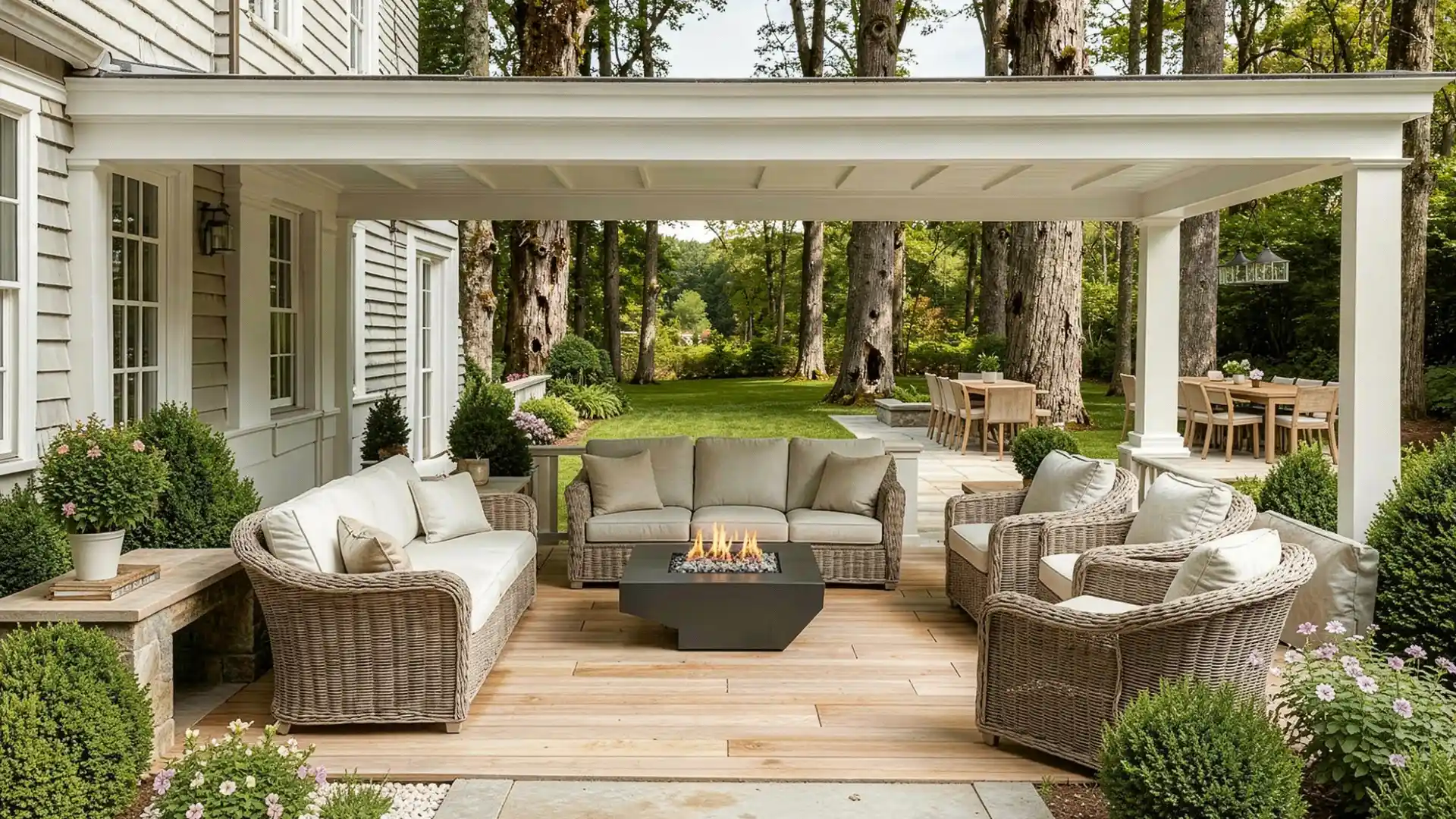
Pick one thing to build your seating around, be it a fire pit, coffee table, outdoor fireplace, or water feature.
Angling seats toward a focal point makes the space feel intentional and gives guests a natural place to gather.
2. Face Chairs Toward Each Other
Chairs lined up against walls kill conversation.
Face seats toward each other and cluster them in groups of two to four — that’s the layout shift that makes a patio feel like somewhere people actually want to stay.
3. Leave 30–36 Inches Between Pieces
Keep at least 30 to 36 inches of clear space between furniture pieces.
Also always leave open pathways to your back door, grill, and garden so the space stays easy to move through for everyone.
If you're starting from scratch: don't buy furniture until you've tested the layout. Arrange what you already own, mark the footprint with tape, and live with it for a week. You'll usually find you need less than you thought.
How Much Space Does Outdoor Furniture Actually Need?
Most layout mistakes come down to buying before measuring.
These are the clearances to plan around before a single chair goes outside.
| Situation | Minimum Clearance |
|---|---|
| Main walkway (door to grill, door to garden) | 36 inches |
| Between sofa and coffee table | 14–18 inches |
| Chair pull-out space behind dining chairs | 18–24 inches |
| Around each side of a dining table | 36 inches |
| Between chairs in a conversation grouping | 24–30 inches |
| Between seat edge and fire pit | 36 inches (3 feet) |
| Around pool edge | 60 inches (5 feet) |
| Between furniture and a wall or railing | 18–24 inches |
Quick tip for a dining area: Take your table length, add 72 inches (36 inches per side for chairs and movement). That’s the minimum floor space the dining zone needs. A 48-inch table needs at least 10 feet of total length.
If you’re not sure whether a piece will fit, skip the tape measure and use painter’s tape on the floor. Mark the furniture footprint before you buy.
It takes five minutes and has saved more than a few returns.
Also read: Tips for Measuring and Planning a Room for Furniture
Patio Furniture Layout Ideas That You’ll Love
Not every patio looks the same, and to make yours stand out from the rest, all you need is the right patio furniture layout.
These ideas not only bring your furniture placement to life but also give it the unique touch.
1. The Fire Pit Circle
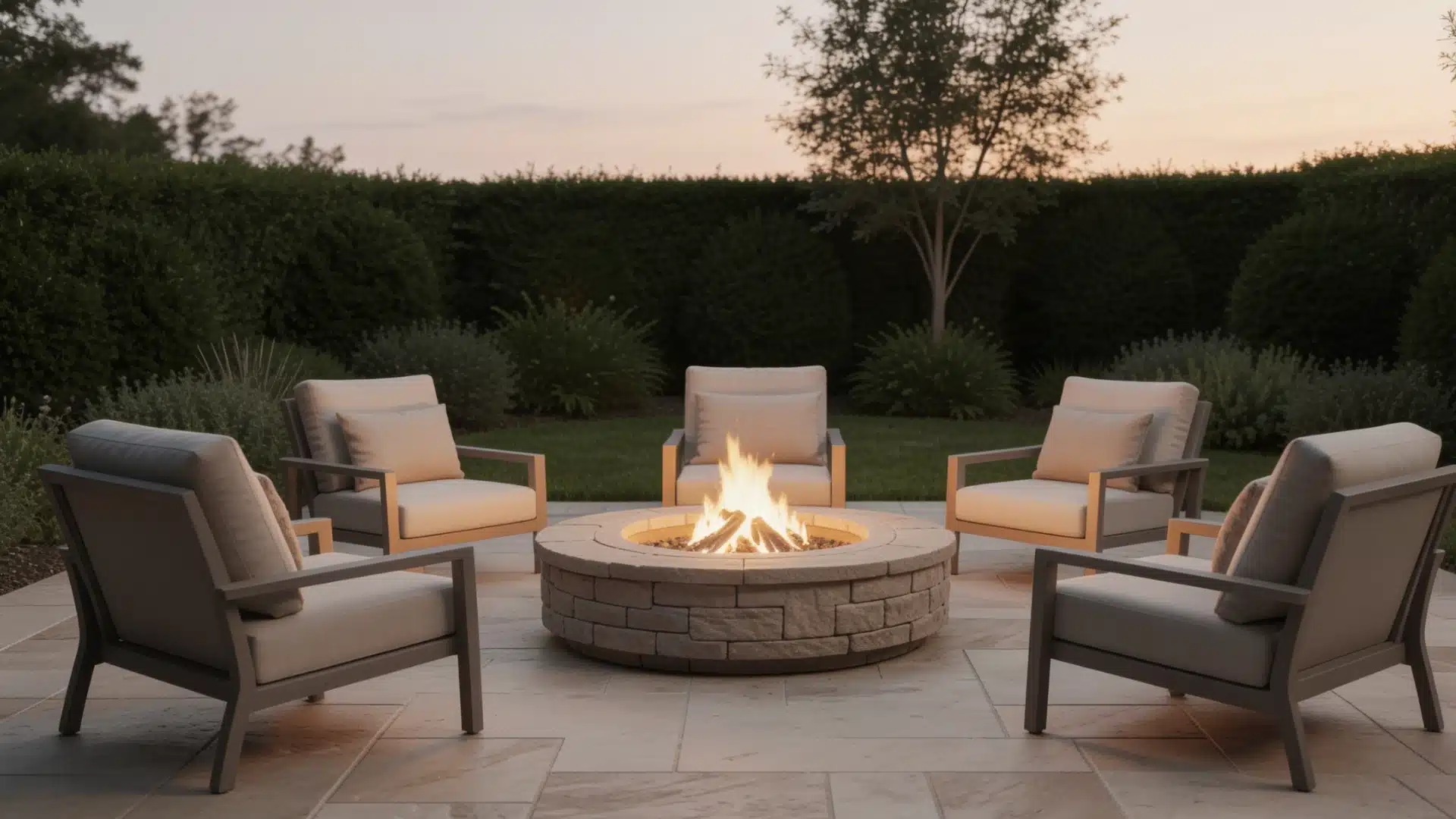
Place four to six chairs in a circle around a central fire pit.
Keep spacing even so everyone gets equal warmth. This layout works best on larger patios and creates an instant gathering spot for evenings outdoors.
Avoid placing chairs too close to the fire pit. Keep at least three feet of space between the seat edges and the pit for both comfort and safety.
2. The Outdoor Living Room
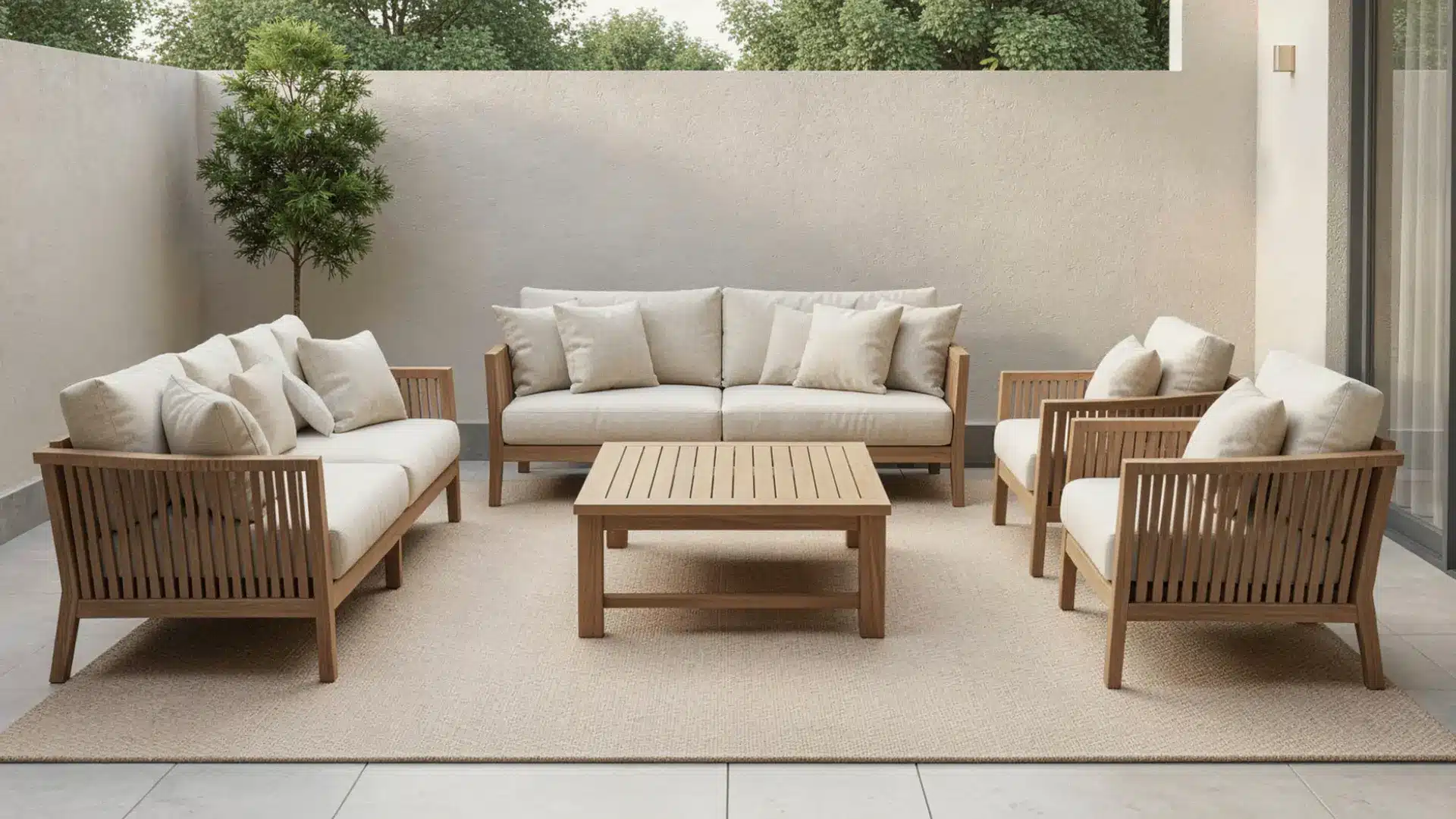
Arrange a sofa and two chairs around a central coffee table, just like an indoor living room.
This idea brings the comfort of your indoor space to your outdoor space.
Add an outdoor rug to define the space. It’s the single cheapest thing you can do to make a floating furniture arrangement look deliberate.
3. The Dining + Lounge Combo
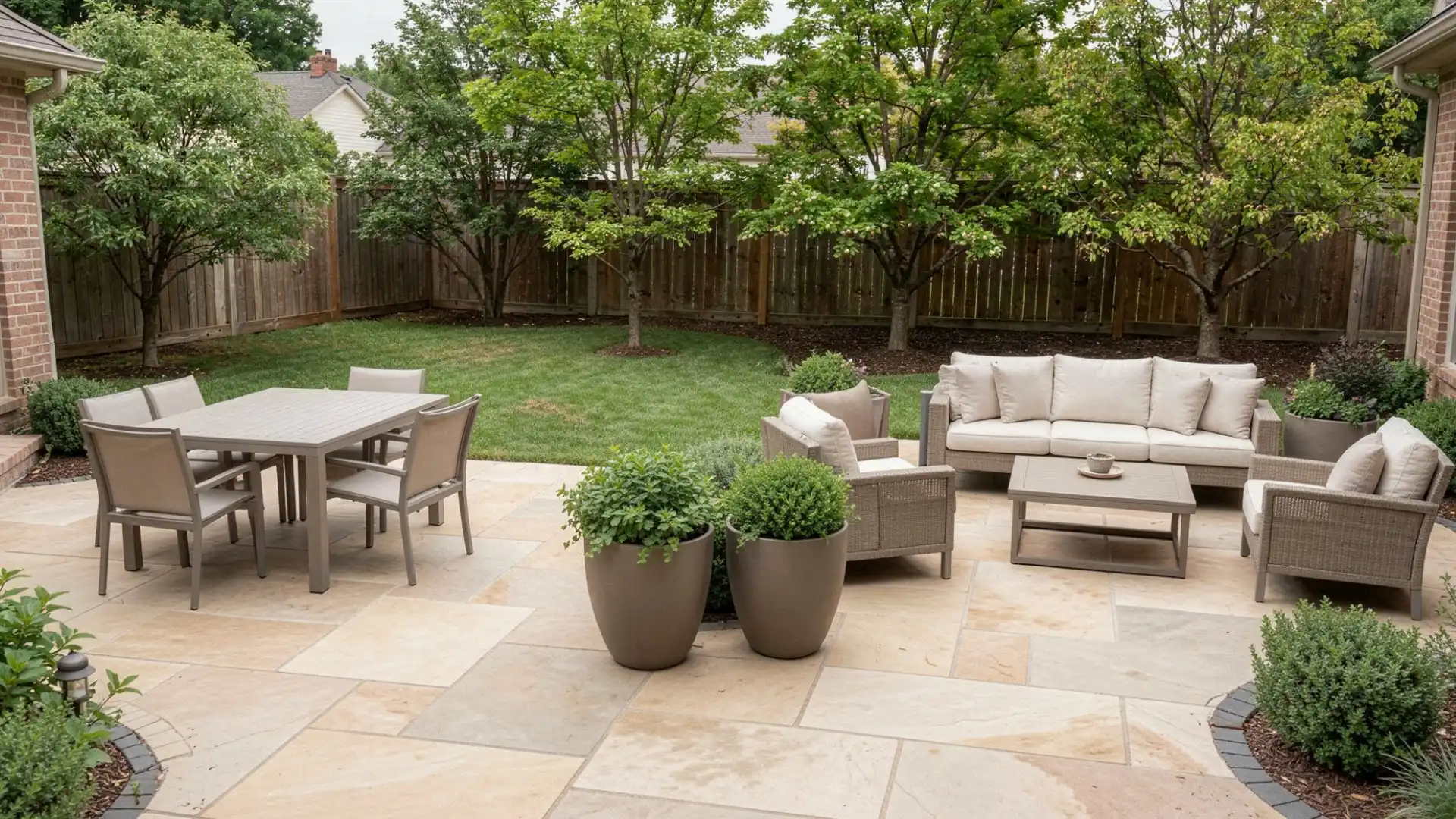
Split the patio into two distinct zones: dining table on one side, lounge seating on the other.
This is the layout that gets the most use — you eat, then migrate six feet to relax instead of clearing the table. Use planters or a low divider to separate the two zones visually.
Without a clear boundary, the two areas can start to feel like one messy, overcrowded space.
4. The Poolside Retreat
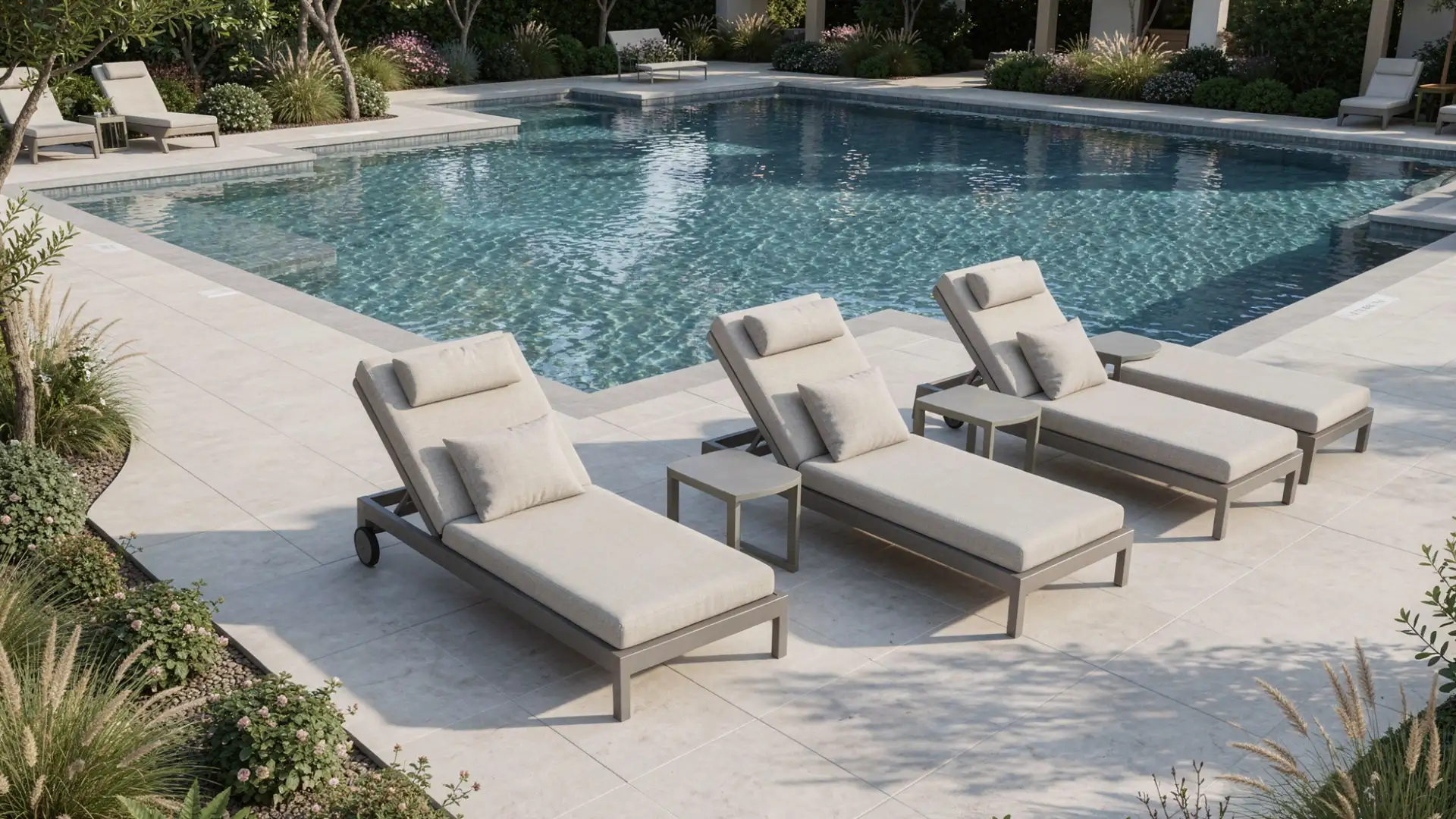
Line lounge chairs parallel to the pool with a small side table between each pair, and keep the area around the pool edge clear for easy movement.
The space between chairs matters as much as the chairs themselves — too close and it feels cramped; too spread out and it stops functioning as a social space.
Avoid pointing lounge chairs directly at the sun all day. Angle them slightly so guests have the option to turn toward shade when they need a break.
Small Deck? These Layouts Actually Work
If you’re worried that having a small deck is destined to feel cluttered, then it’s time to say goodbye to that worry.
A small deck can still feel roomy with the right approach. The key is to be smart about what you place and where you place it.
1. Float Furniture Away From Railings: Pushing everything against the walls is the default, and it makes small spaces feel smaller. Float the furniture a foot or two inward and the deck suddenly has room to breathe.
2. Use Benches Instead of Extra Chairs: Benches take up less visual space than multiple chairs. They seat more people in a smaller footprint and tuck neatly under tables when not in use, keeping the deck clear.
3. Choose Dual-Purpose Pieces: Look for ottomans that double as storage or benches that work as coffee tables. One piece doing two jobs means less clutter and more open space.
4. Use Corners Wisely: Corners are often wasted on small decks. A corner sectional or a small bistro set fits snugly into tight angles and frees up the rest of the deck for movement and flow.
Avoid oversized furniture on a small deck, and always measure your space before buying.
The Details That Make it Feel Like a Real Room
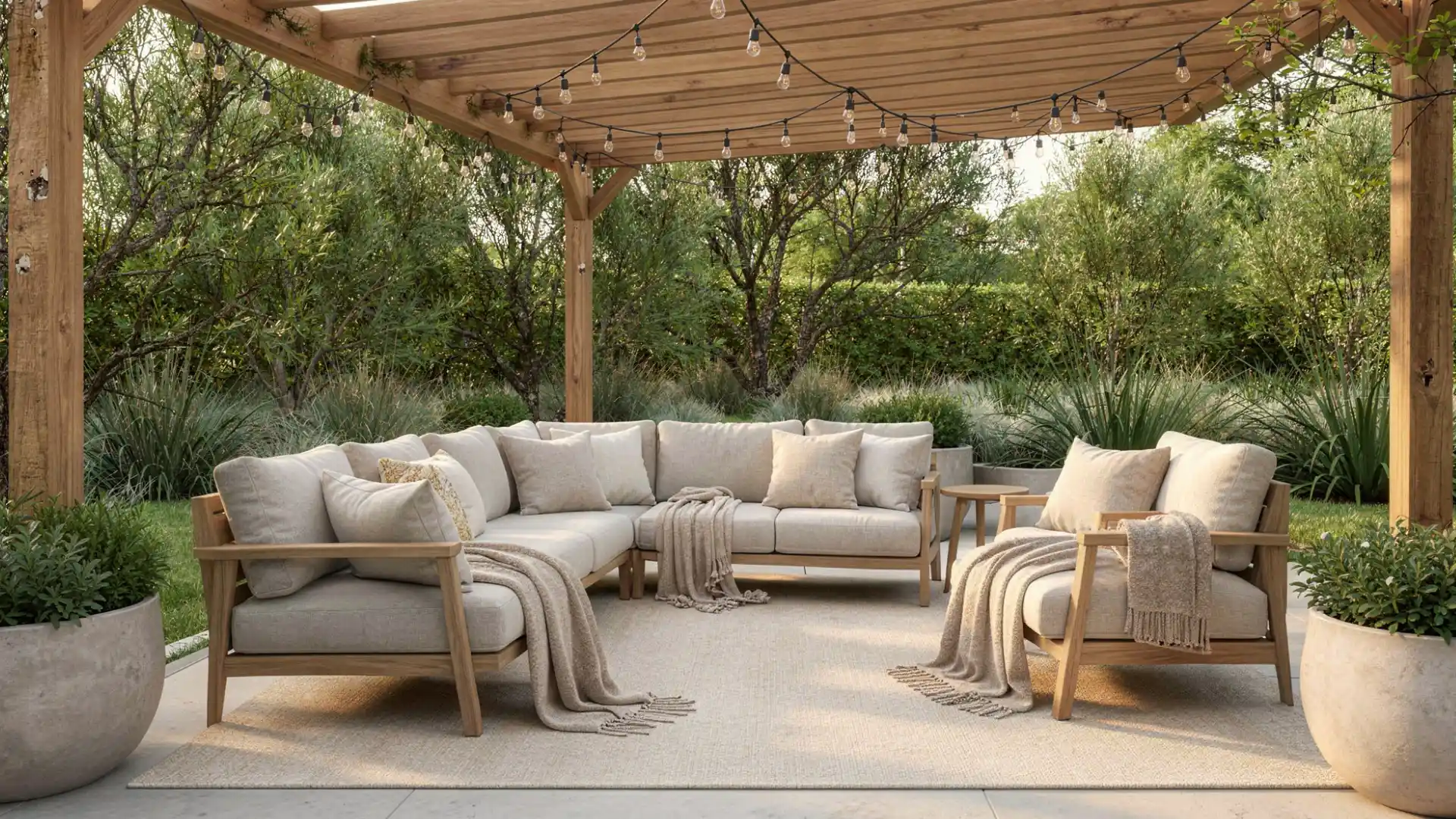
Who wouldn’t want to utilize the best of their outdoor space and make it feel just like home? Well, the secret to making it feel like home is layering.
Start with an outdoor rug to anchor your seating area; that does half the work.
Next, add side tables next to every seat so guests always have a spot for their drinks, and toss in some throw pillows and blankets to make the space feel lived-in.
Use planters to create soft boundaries between zones.
Lighting is underrated. String lights or lanterns do more to make a patio feel usable after dark than almost any other upgrade, and they’re cheap relative to the impact.
A shade solution: pergola, umbrella, or sail shade — determines whether the space actually gets used during the day.
Without one, most patios sit empty between 11am and 4pm.
Final Thoughts
Knowing how to arrange outdoor furniture comes down to three things: a focal point, seating that faces inward, and enough clear space to move.
Get those right first. Everything else like rugs, lighting, planters — is layering on top of a layout that already works.
Measure your space before buying anything. Then start with one zone, get it right, and expand from there.
Frequently Asked Questions (FAQs)
1. What is the New Trend in Outdoor Furniture?
Modular seating sets are trending right now. They let you rearrange pieces to fit any space.
2. What Color Furniture is in Style for 2026?
Warm, earthy shades like terracotta, olive green, sandy beige, and warm white are popular in 2026.
3. What Furniture Should You Avoid Placing Outdoor?
Avoid placing indoor upholstered furniture, untreated wood, or anything with metal parts that rust easily.