A small bathroom remodel can completely change how a compact space feels.
I’ve seen tiny bathrooms go from cramped and dated to genuinely stylish with just a few smart changes.
You don’t need a major expansion for that. The right layout, smart storage, and the right finishes can make a small bathroom feel twice the size it actually is.
I’ve pulled together ideas that actually work: layouts, storage tricks, and upgrades that won’t break the bank.
From small bathroom makeover ideas to smart shower and toilet combinations, I’ll show you how to make every single inch count.
What Actually Makes a Small Bathroom Feel Bigger?
Any remodel project works when you plan smart.
Before picking tiles or fixtures, they need to figure out how the space will actually be used.
That decides everything. Many people spend thousands on a bathroom that still feels cramped, just because the layout wasn’t thought through.
A simple layout change, like moving the vanity to a different wall, can fix what expensive tiles couldn’t. Clear floor space reduces visual clutter and makes the whole room feel larger.
Smart storage, like recessed cabinets, keeps things organized.
Good lighting, ceiling fixtures, sconces, and vanity lights keep it bright. Light-colored tiles and frameless glass screens make the room feel bigger, without costing a fortune.
Layout Ideas for Small Bathroom Remodel Projects
The right layout is the foundation of any bathroom remodel in small size. Get it right, and even a tiny bathroom feels comfortable.
- A single wall layout places all fixtures along one wall. It centralizes plumbing, cuts costs, and works well for narrow apartments and tight budgets.
- Keep a clear walking line from the door to the shower. Leave at least 30 inches between fixtures so the space never feels blocked or tight.
- A corner pedestal sink paired with a floating vanity frees up floor space instantly and opens the room up.
- Walk-in showers work best when placed along one wall. Use frameless glass and large-format tiles to keep the space feeling open and clean.
- Wet rooms slope the floor to a drain. No curb, no enclosure, just clean open space.
- Bathtub or shower? Pick based on how you actually use the space every day.
How I Made My Tiny Bathroom Feel Twice as Big: Before and After
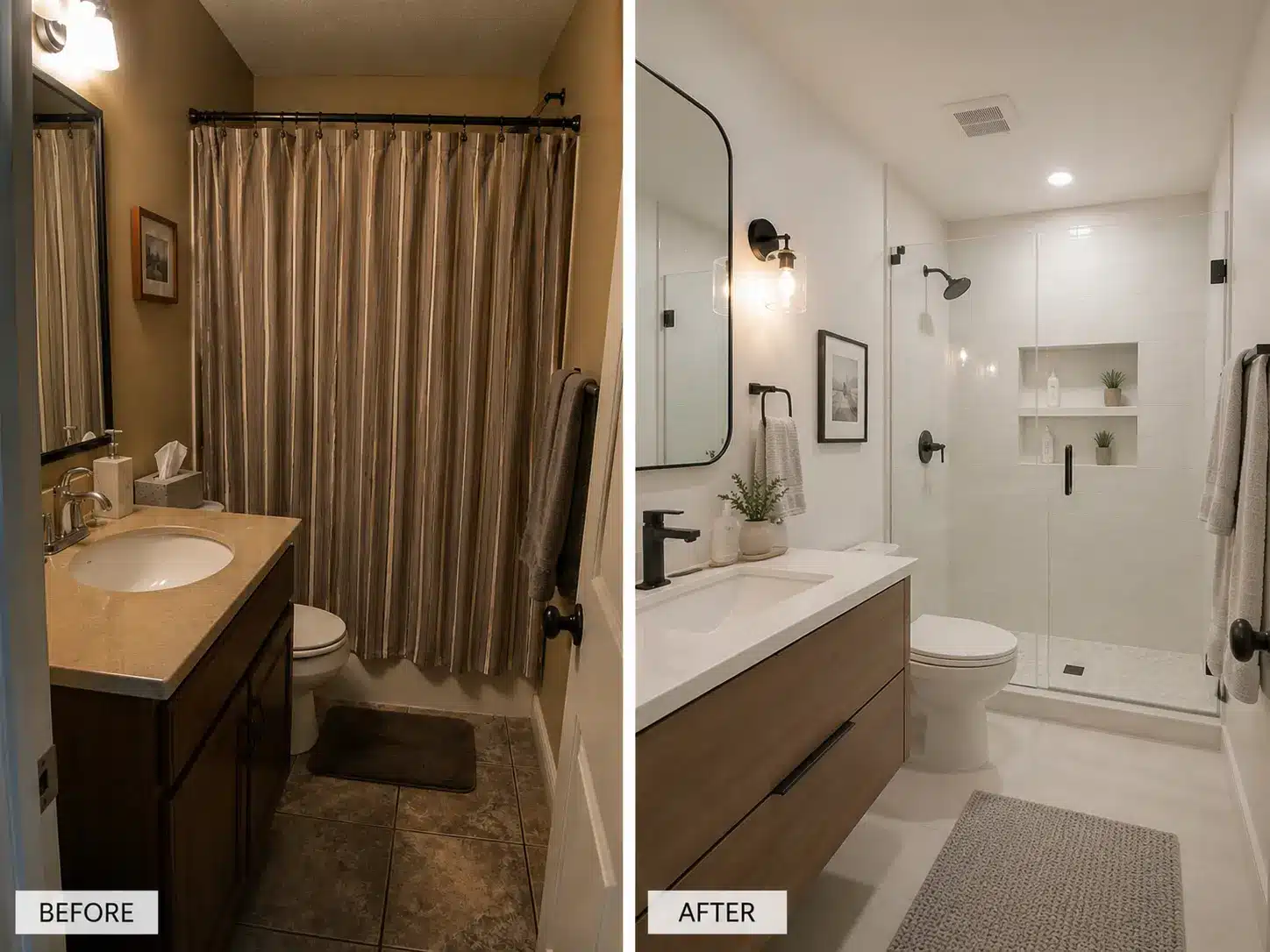
My bathroom remodel started with a hard truth. The space was just 35 square feet.
Before
It had no storage and absolutely no breathing room. Every morning felt like getting ready inside a closet.
The old vanity ate up half the floor. The shower curtain made the room feel closed off. It was the kind of space that drains you before your day even starts.
After
I set a $3,500 budget and decided to work with what I had. I kept it simple. No wall removals and no major plumbing changes.
First, I replaced the bulky vanity with a slimmer modern design that exposed more visual floor space. Instantly, the floor looked bigger.
Then I replaced the old shower curtain with a frameless glass panel.
That one change alone opened the whole room up. I added recessed shelves, brightened the walls with soft neutral tones, and switched to warm LED lighting.
The whole bathroom remodel took less than three weeks. The total spend came to $3,200, well under my original budget.
Bathroom Remodeling Ideas for Tight, Tricky Spaces
Not every idea you see online fits your space. These ones do. Each idea below solves a real problem: tight floor space, poor lighting, lack of storage, and awkward doors.
Some of these took me a weekend. Others needed a pro. Either way, every single one made a real difference.
1. Floating Vanity With Hidden Storage
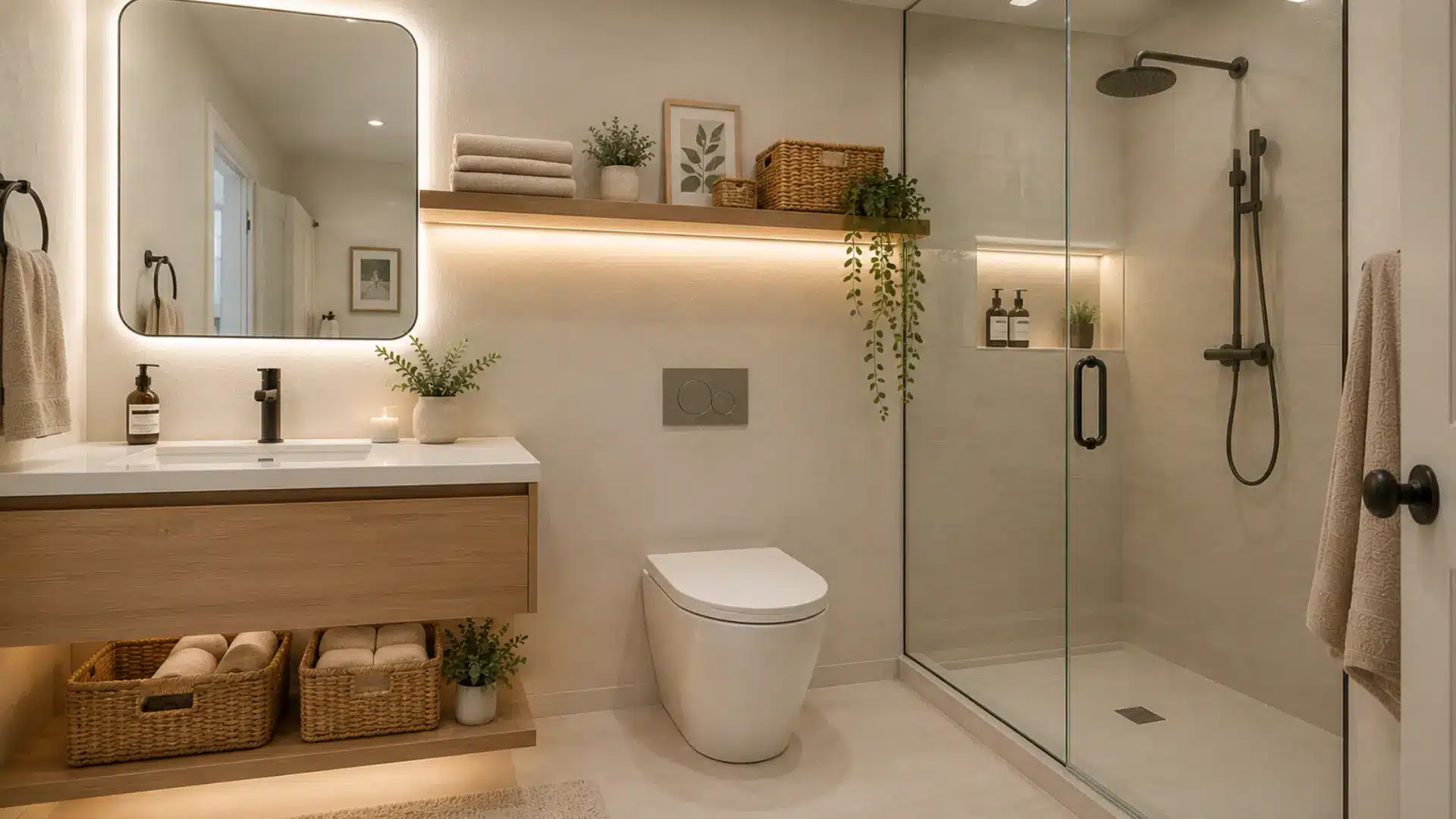
Floating vanities open up floor space and create an airy feel. They also allow room for storage baskets underneath, keeping essentials accessible yet tidy.
Go for shallow depth with smart drawers instead of bulky cabinet doors. Most people make the mistake of cramming oversized cabinets.
A floating vanity with built-in drawers solves both problems at once: storage and space.
2. Floor to Ceiling Vertical Tile Design
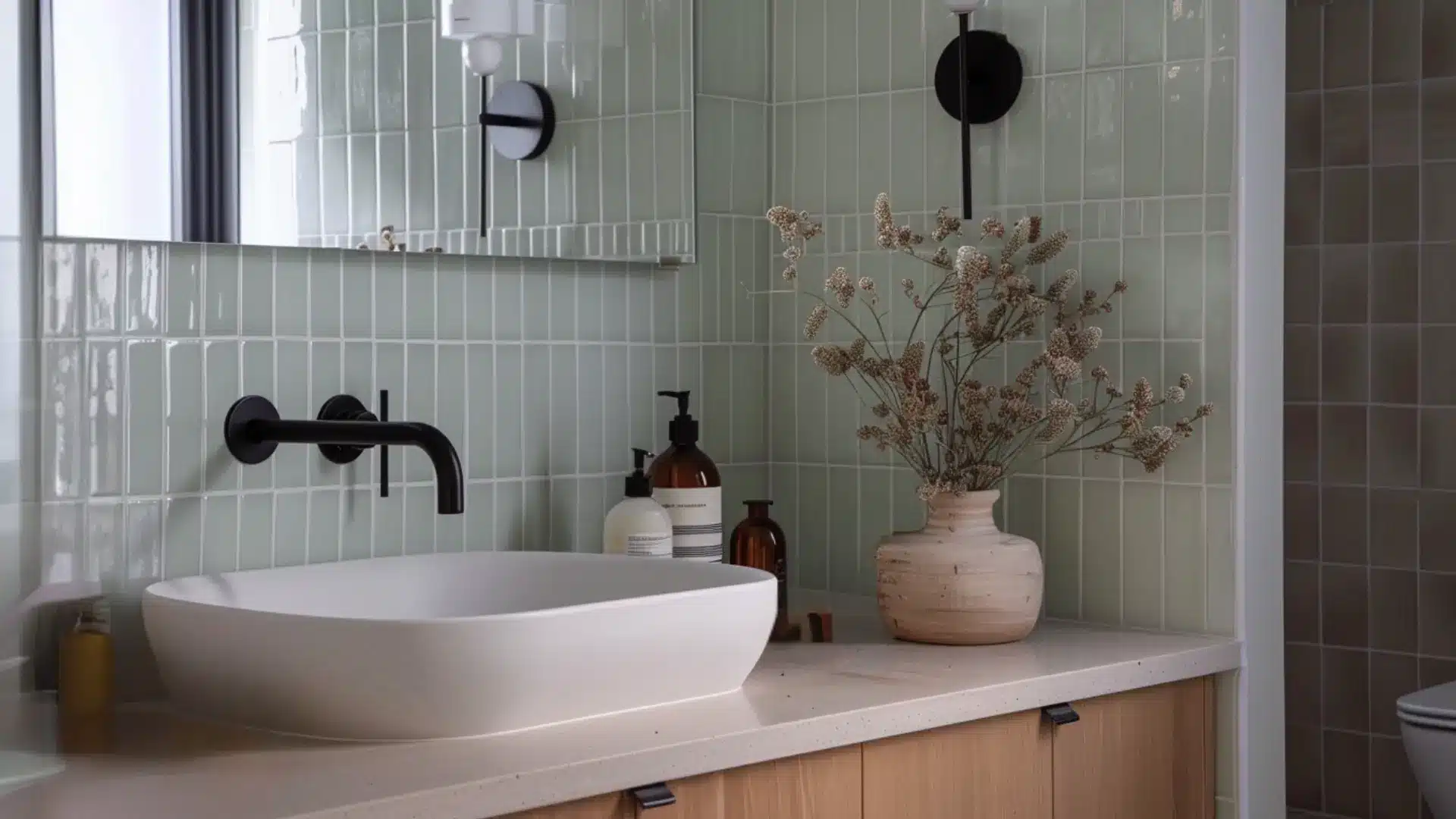
Vertical tile lines introduce rhythm and visually stretch the height of the space. This works especially well in narrow bathrooms where the ceiling feels low.
What to keep in mind:
- Run tiles from floor to ceiling on one feature wall only
- Stick to a single grout color to avoid visual clutter
- One tile style is enough. Mixing patterns always backfires.
Using too many colors or patterns is one of the most common mistakes in small bathroom remodels. Keep it simple and let the tile do the work.
3. Pocket Door Instead of Swing Door
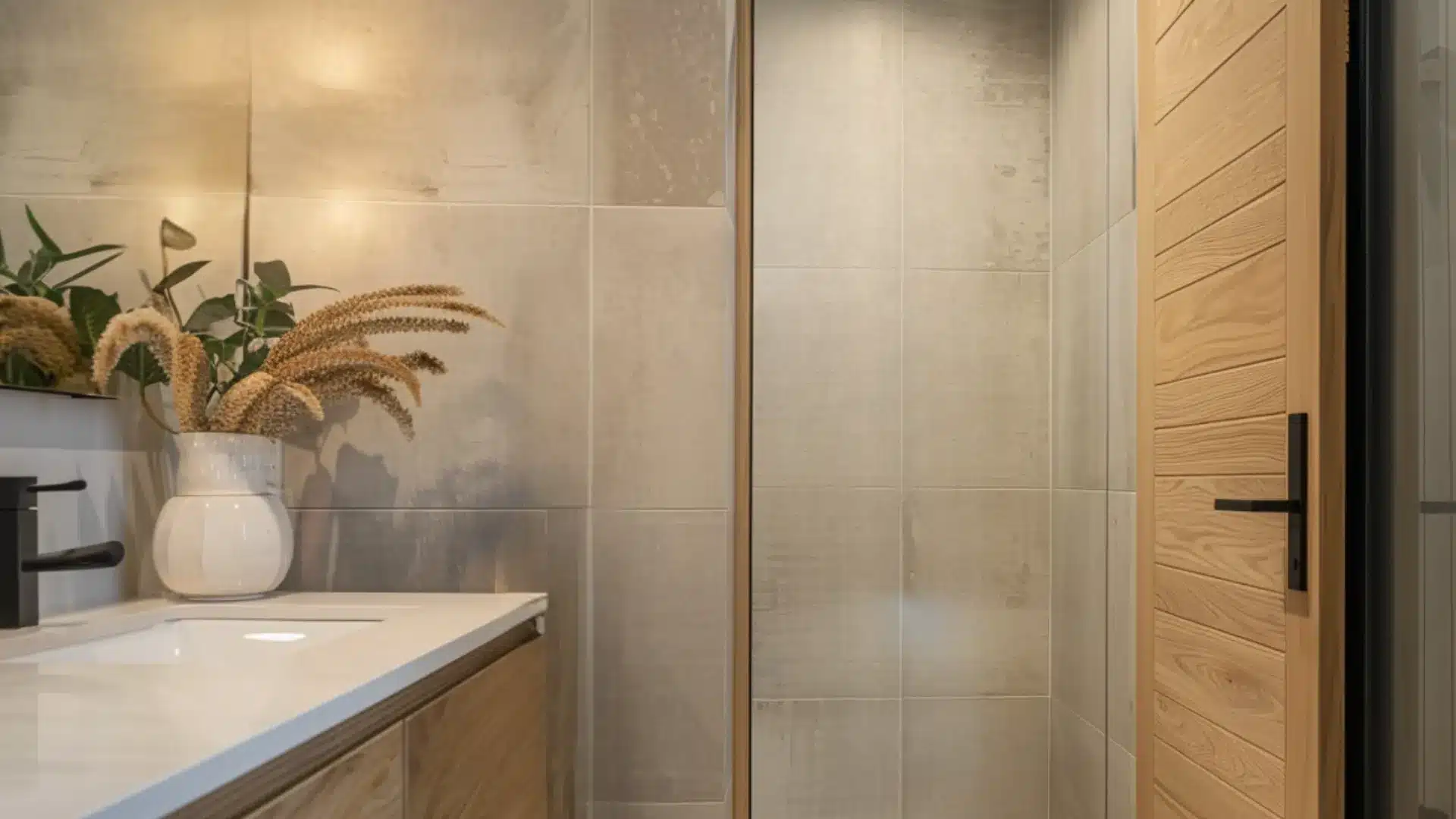
Most homeowners never think about the door until the bathroom feels cramped. Switching to a pocket door eliminates swing clearance, freeing up usable space for fixtures and movement.
In a bathroom under 50 square feet, that recovered space genuinely changes how the room feels.
I have seen this single swap make more difference than a full retile. It is one of the easiest changes with one of the biggest payoffs.
4. Curved Corner Shower Installation
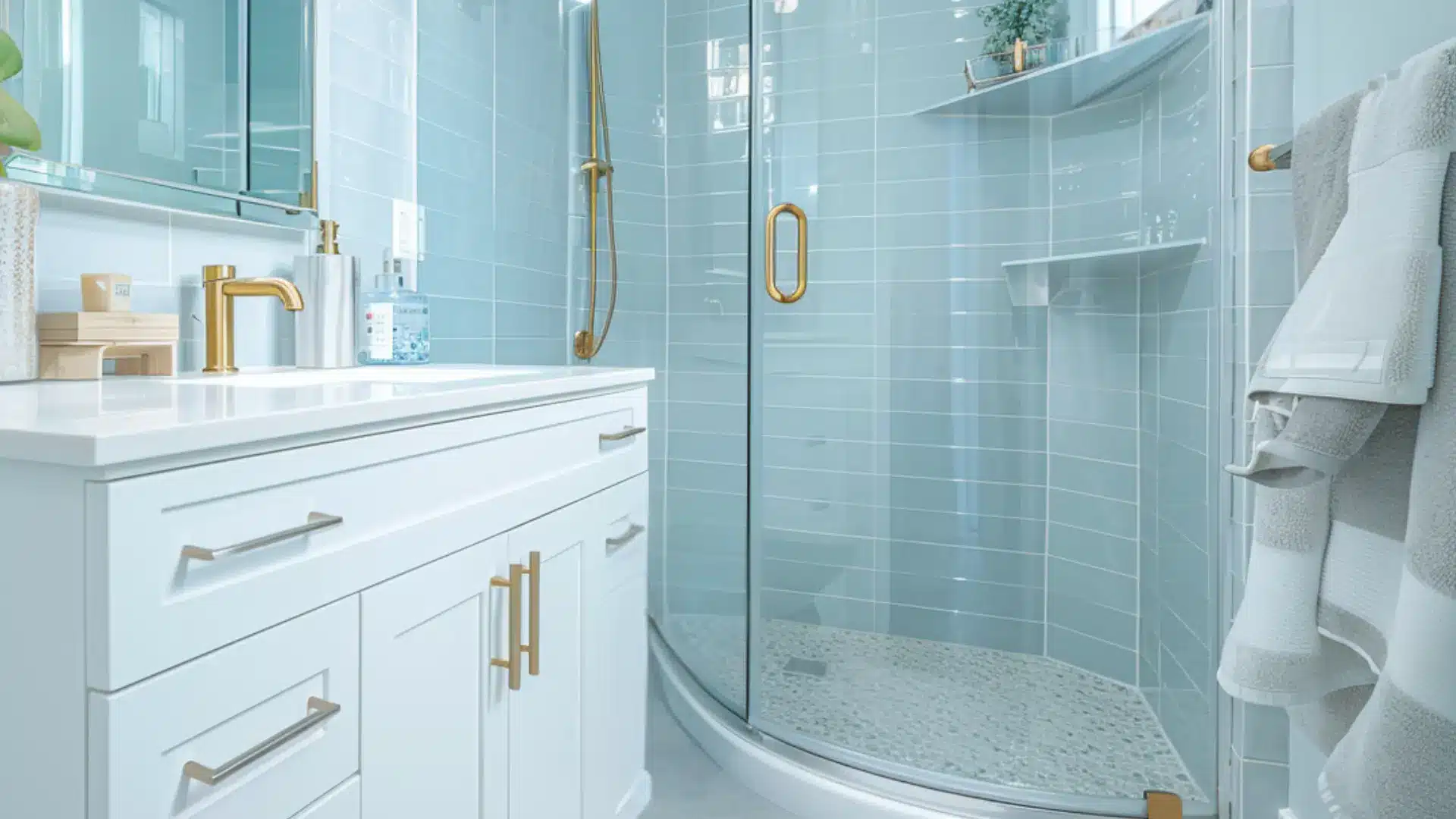
Corner space in a small bathroom almost always goes to waste. A curved corner shower fixes that. Opt for glass doors to make the room appear more spacious.
The curved front softens the layout and keeps the center of the room open.
It works best in square bathrooms where two walls meet, and there isn’t much else happening in that corner.
5. Skylight Addition for Natural Brightness
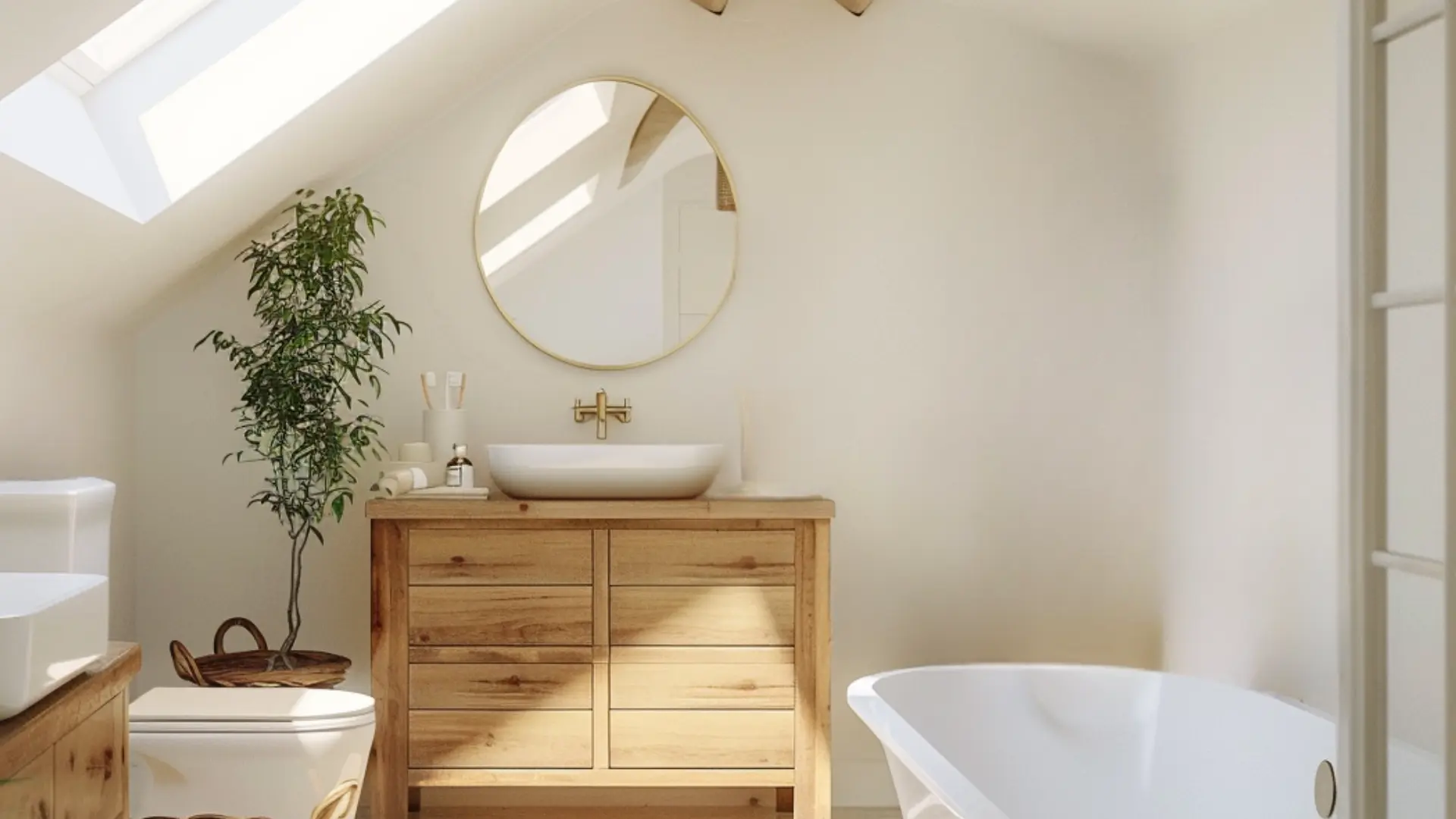
Installing a ventilated skylight overhead can instantly change a bathroom. Here is why it works so well in small spaces:
- Brings in natural light without using wall space
- Makes the ceiling feel higher
- Cuts down on artificial lighting during the day
- Doubles as ventilation, which helps control moisture
Poor lighting placement is a mistake many homeowners regret. A skylight solves that problem from the top down.
6. Wall Mounted Toilet for a Cleaner Layout
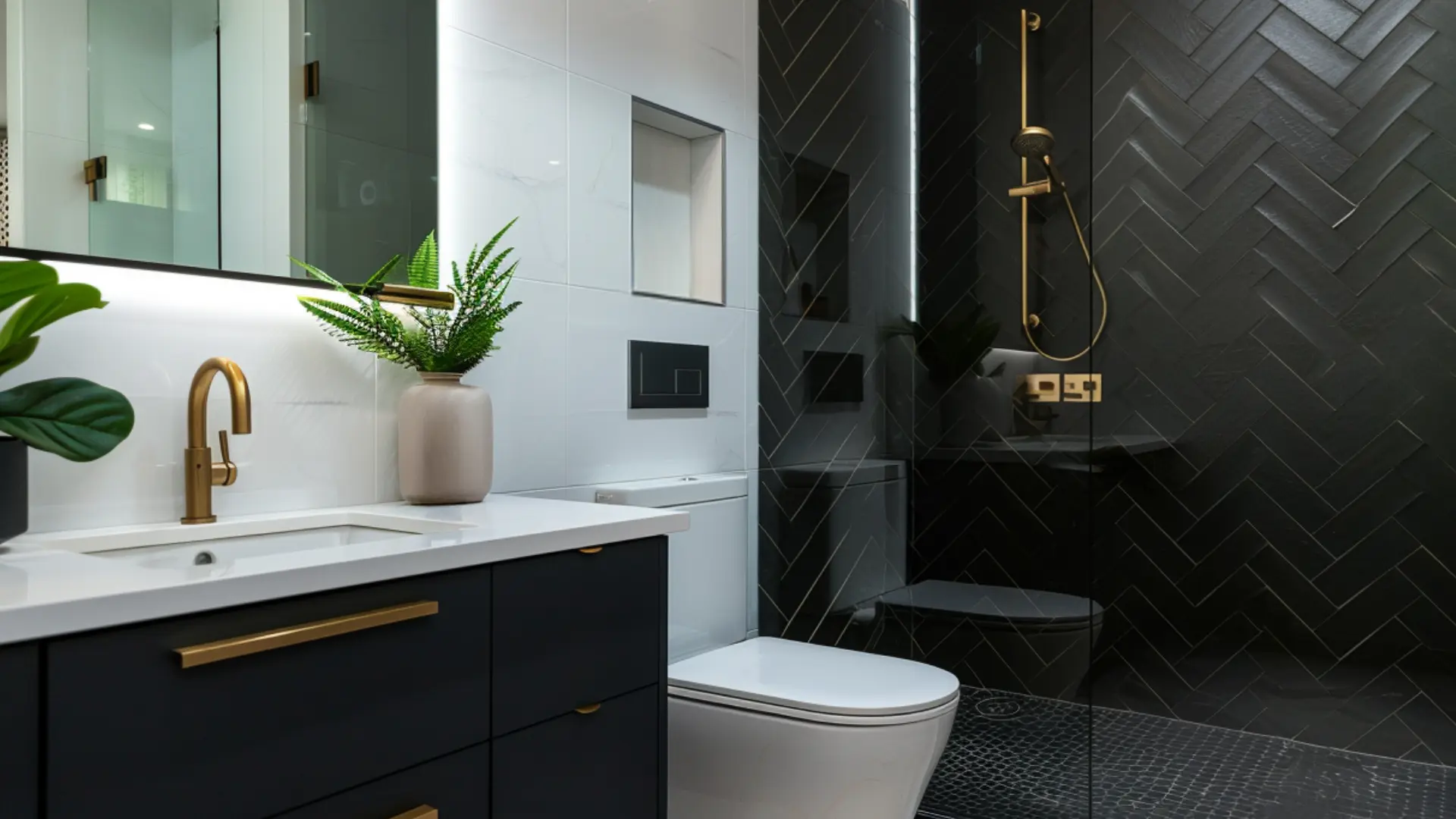
Wall-mounted toilets save floor space and create a clean, minimalist look.
The tank sits hidden inside the wall, so what you see is simple and uncluttered. They also make cleaning far easier, which matters in compact bathrooms.
Pair one with large format floor tiles, and the whole room feels pulled together. It is a small change that quietly upgrades the entire space.
7. Recessed Shower Niches for Storage
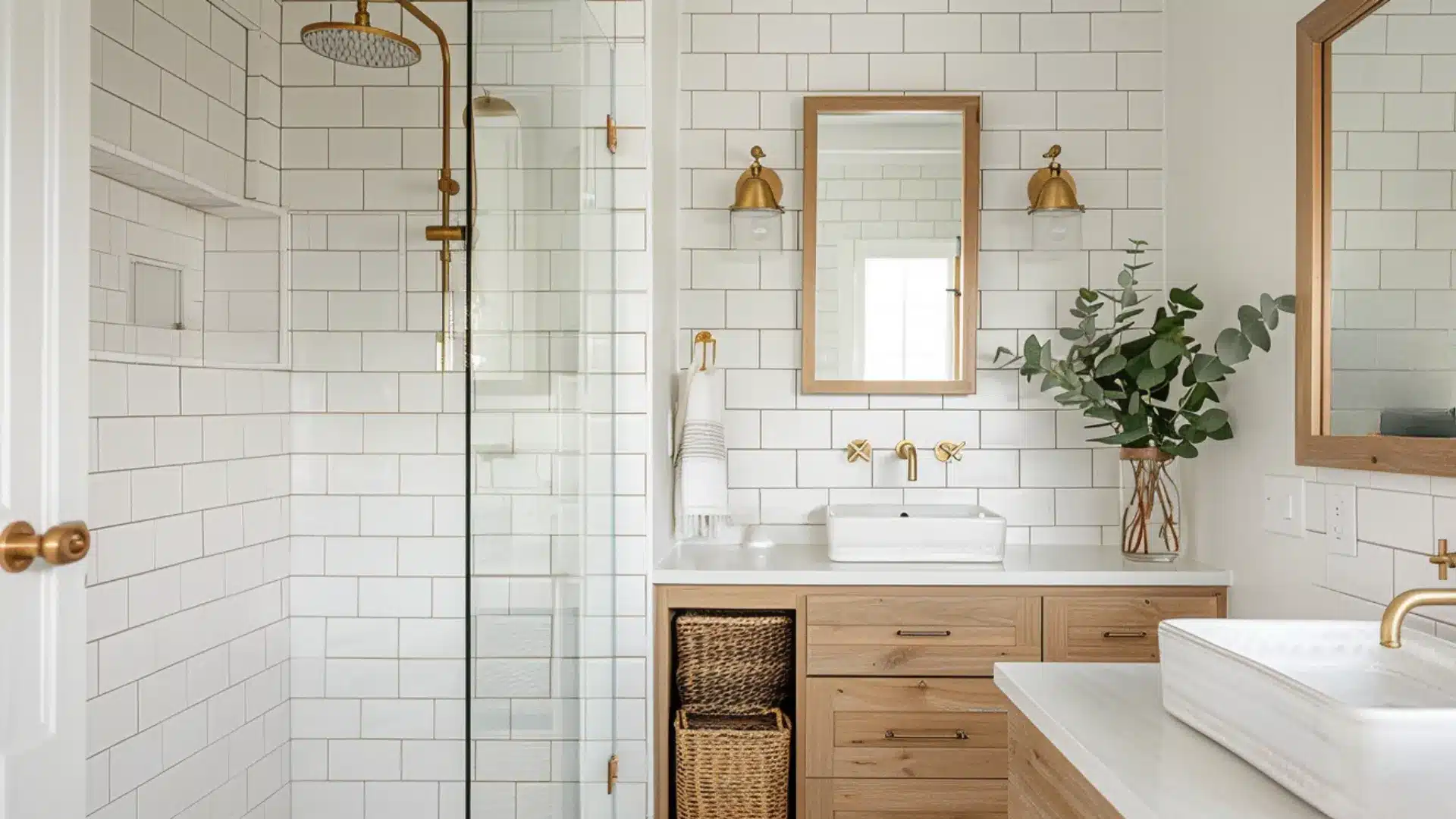
Freestanding shower caddies clutter the floor and make a small bathroom feel messy.
Recessed niches cut into the wall between studs give you storage without losing a single inch of floor space. It is one of the smartest storage moves in any remodel project.
Plan the niche before the tiles go in. Adding it later costs significantly more and often means retiling the whole wall.
8. Large Mirror Across the Vanity Wall
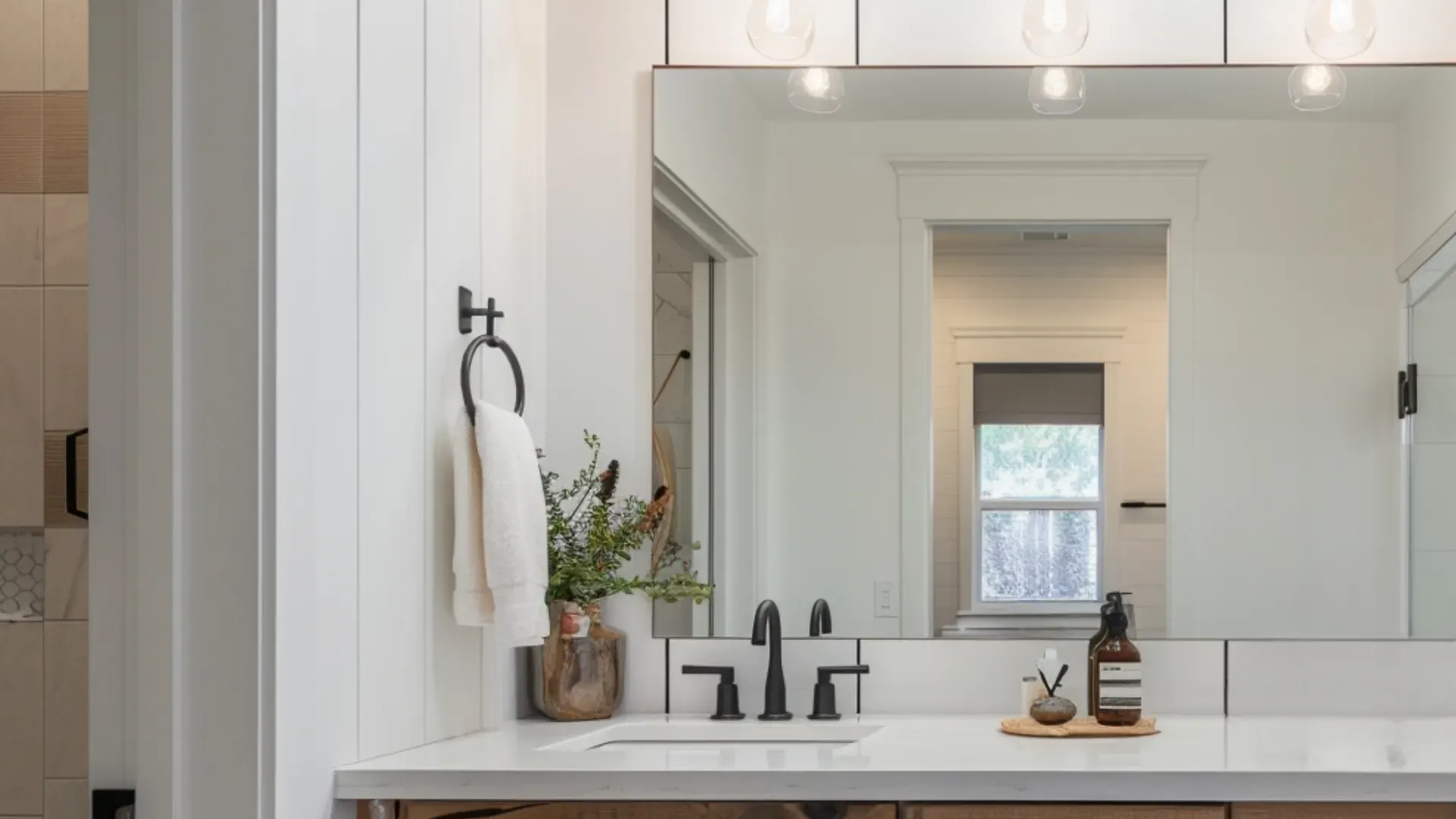
Running a mirror the full width of the vanity wall is one of the simplest ways to make a bathroom feel larger.
What to pair it with:
- Warm LED strip lighting behind the mirror for added depth
- A frameless design to keep the look clean
- Position it at eye level for the best light reflection
The mirror does not add square footage. But it makes the room feel like it has more to it.
9. Two Tone Wall Color Styling
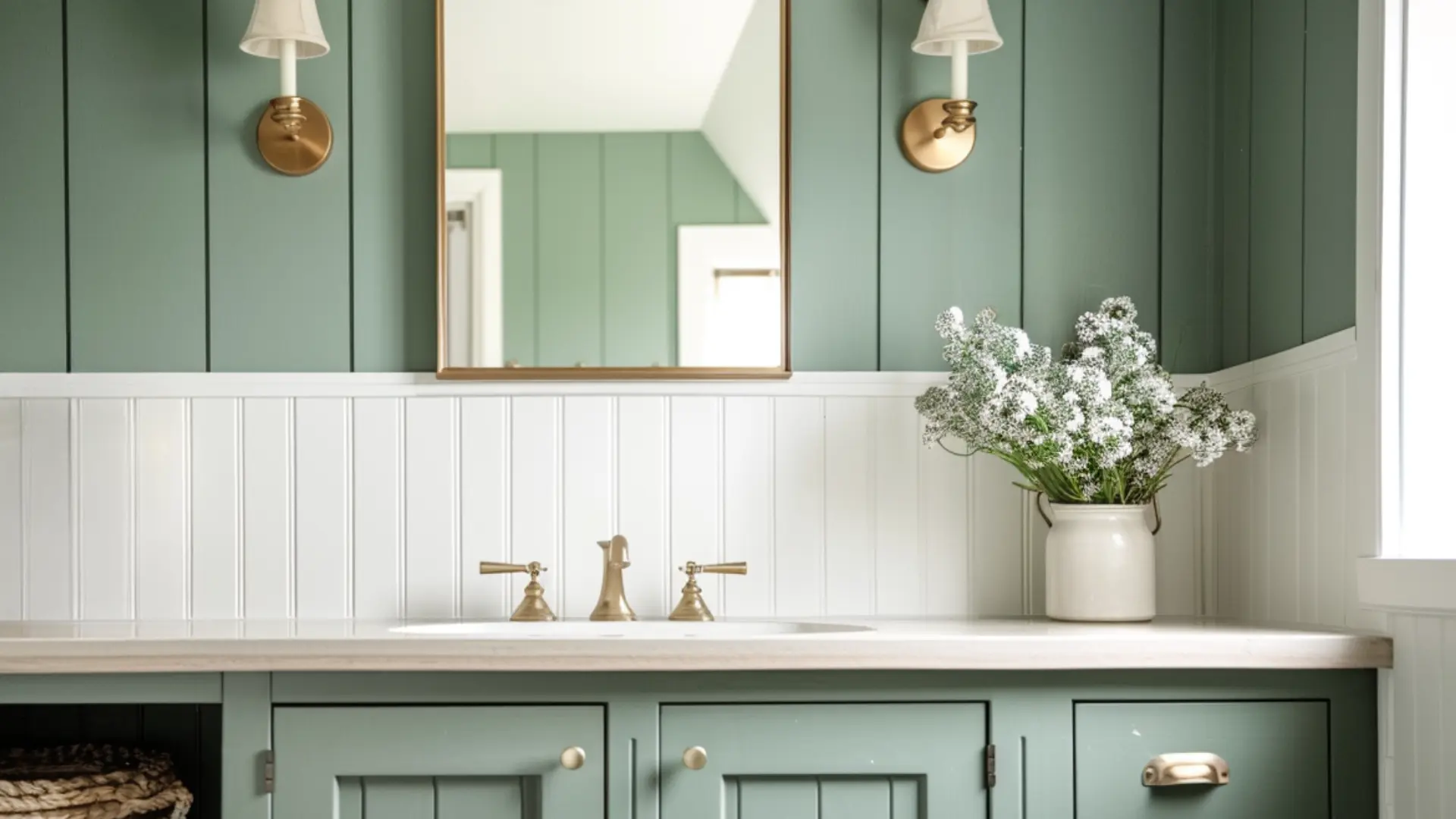
Paint the lower half of the wall a deeper tone and keep the upper half light. It draws the eye upward and makes ceilings feel taller without a single structural change. Stick to two colors maximum.
Using too many colors overwhelms a small space fast.
A matte finish on the lower half is also worth considering. It hides scuffs better in a high-use bathroom.
10. Open Shelf Ladder Storage
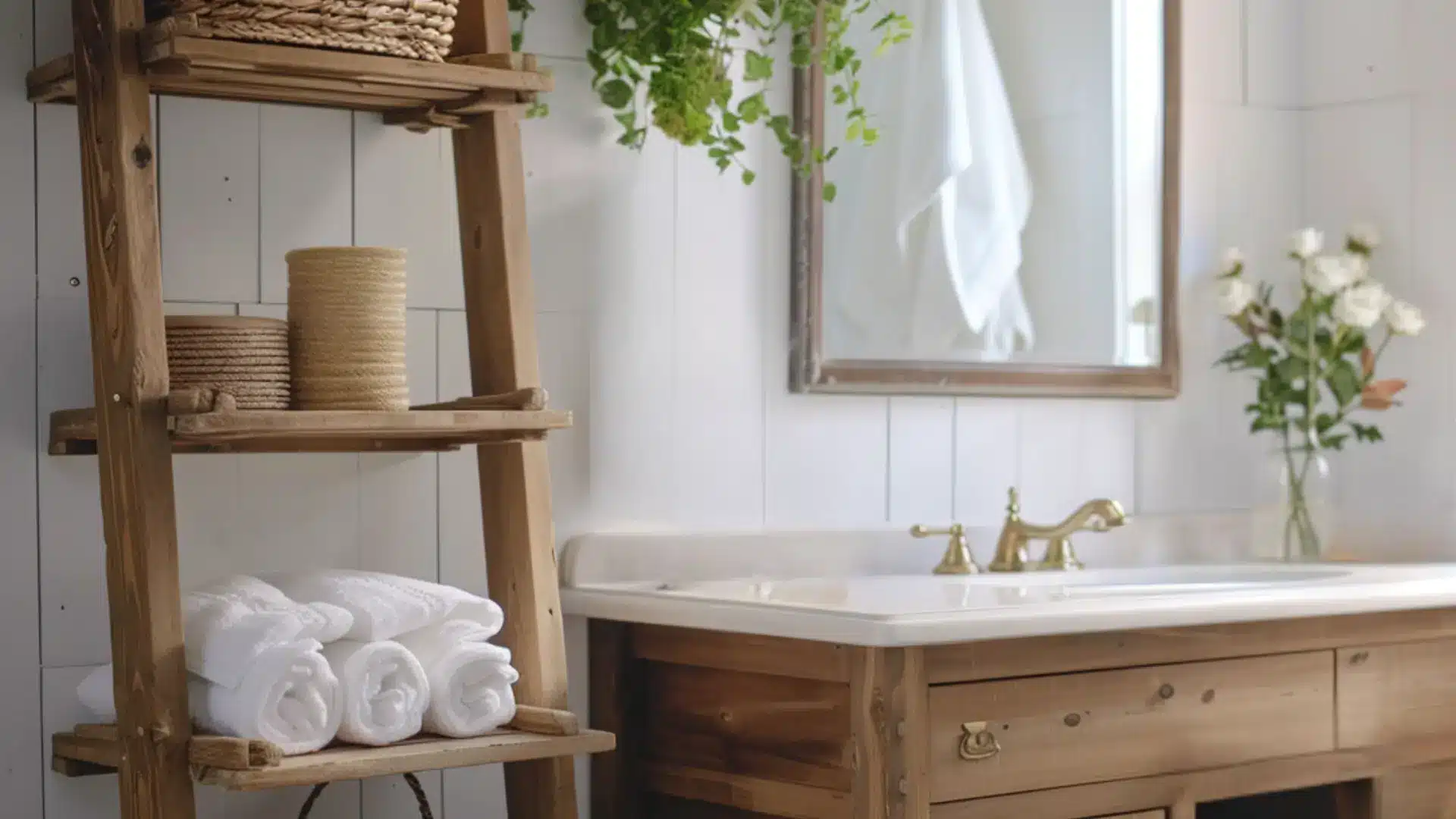
Ladder shelves add real storage without drilling a single hole into the wall.
Stack towels, baskets, and small plants on them. They work especially well in the corner beside the toilet, where floor space often goes unused. Keep it neat, though.
Overcrowding a ladder shelf with too much decor turns a storage solution into visual noise. Less works better here every time.
11. Frameless Glass Shower Partition
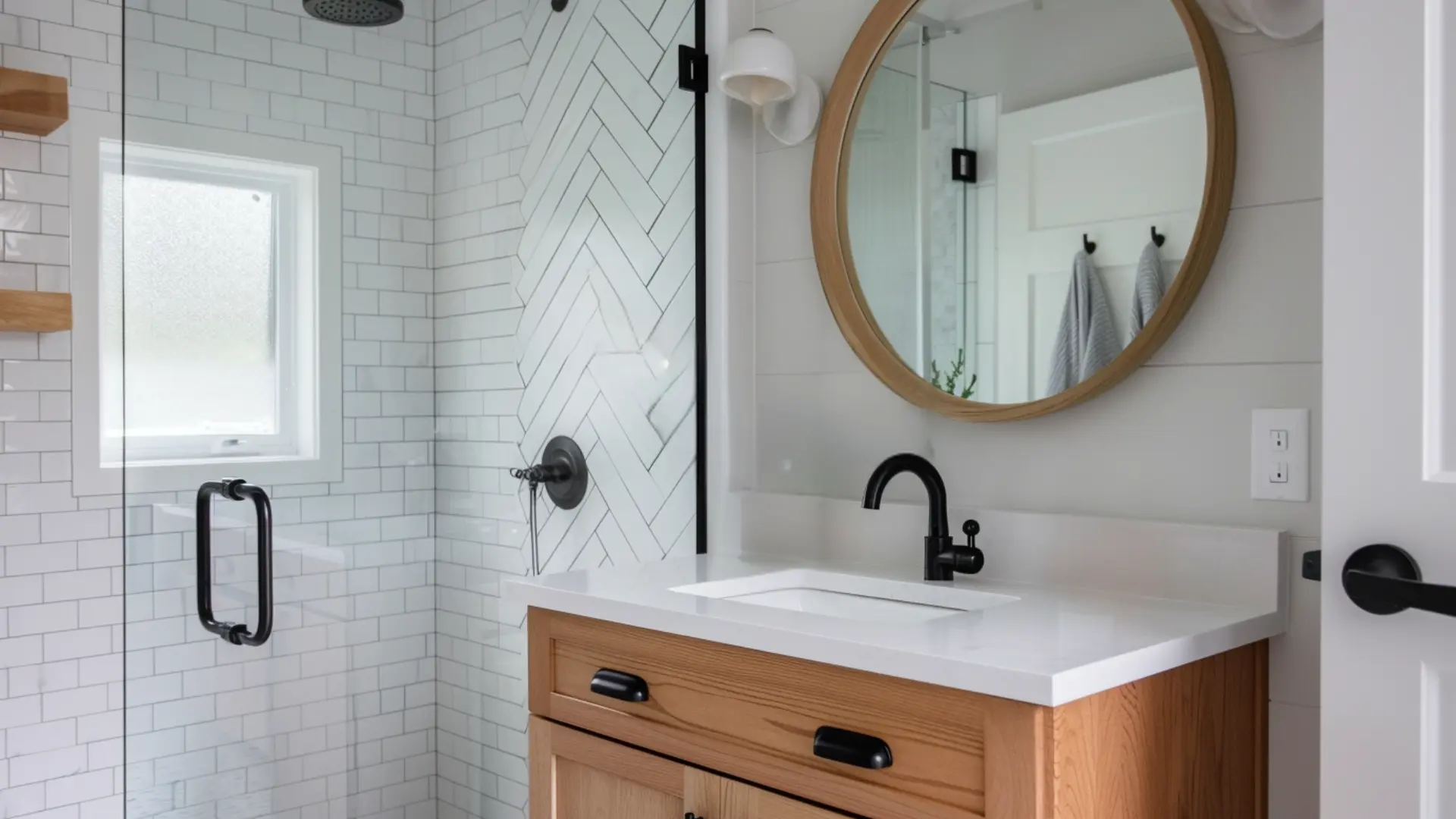
Replacing a framed shower curtain with frameless glass visually enlarges the space, letting light flow freely. It is also far easier to clean than framed alternatives.
What makes it worth the investment:
- No metal frame collecting soap scum
- Light passes through completely, opening the whole room
- Works with almost any tile or color scheme
- Adds a clean, modern finish without major renovation
12. Compact Double Duty Vanity Area
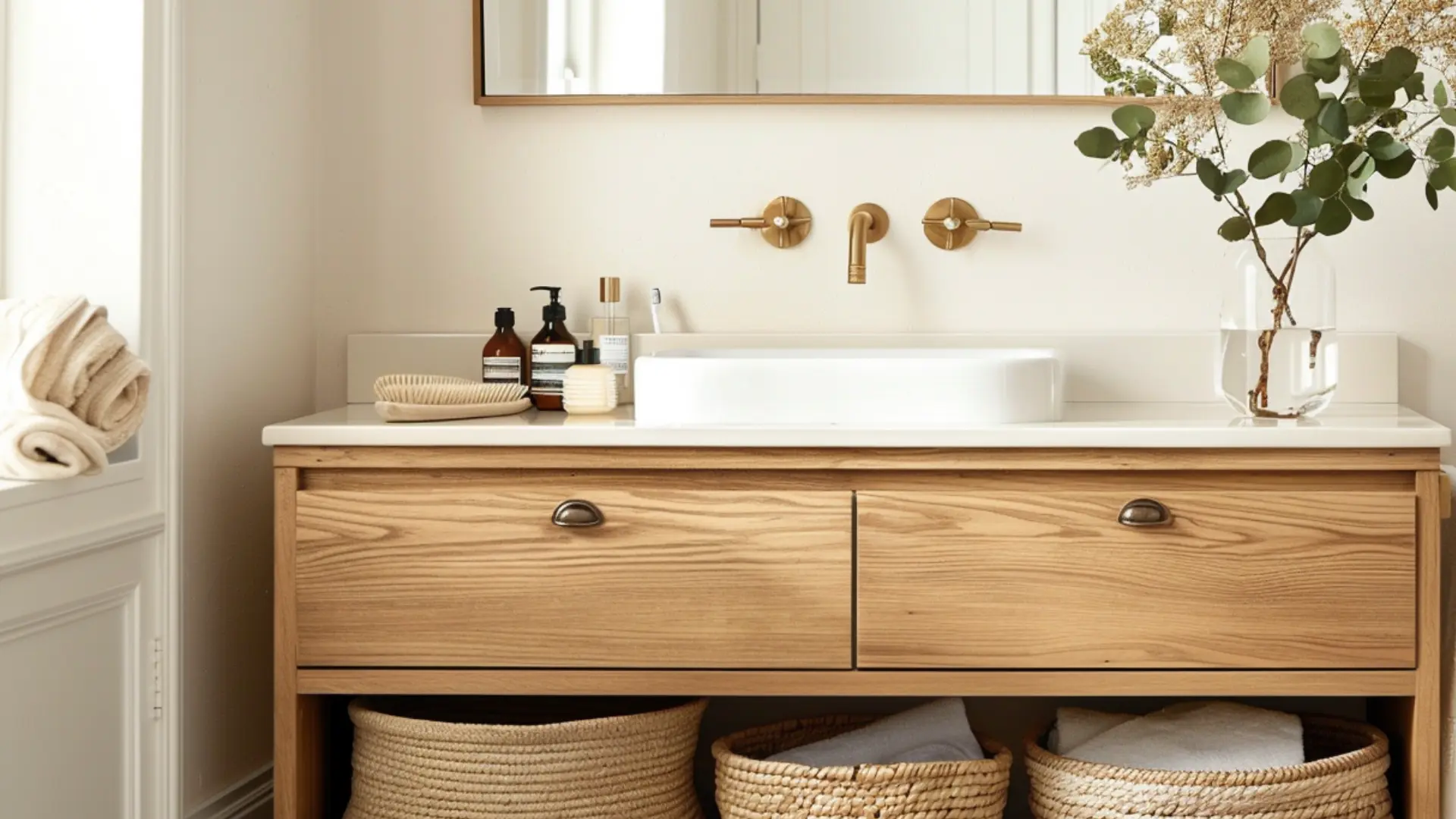
Choosing oversized fixtures is one of the most common mistakes in small bathroom remodels.
Always check dimensions before buying. Even a few extra inches can block movement and make the space feel tight. Pair a floating vanity with a large mirror to open up the area.
Add a mirror with hidden storage behind it, and you get two functions from one wall. Simple and space-saving.
13. Textured Lighting for Atmosphere and Depth
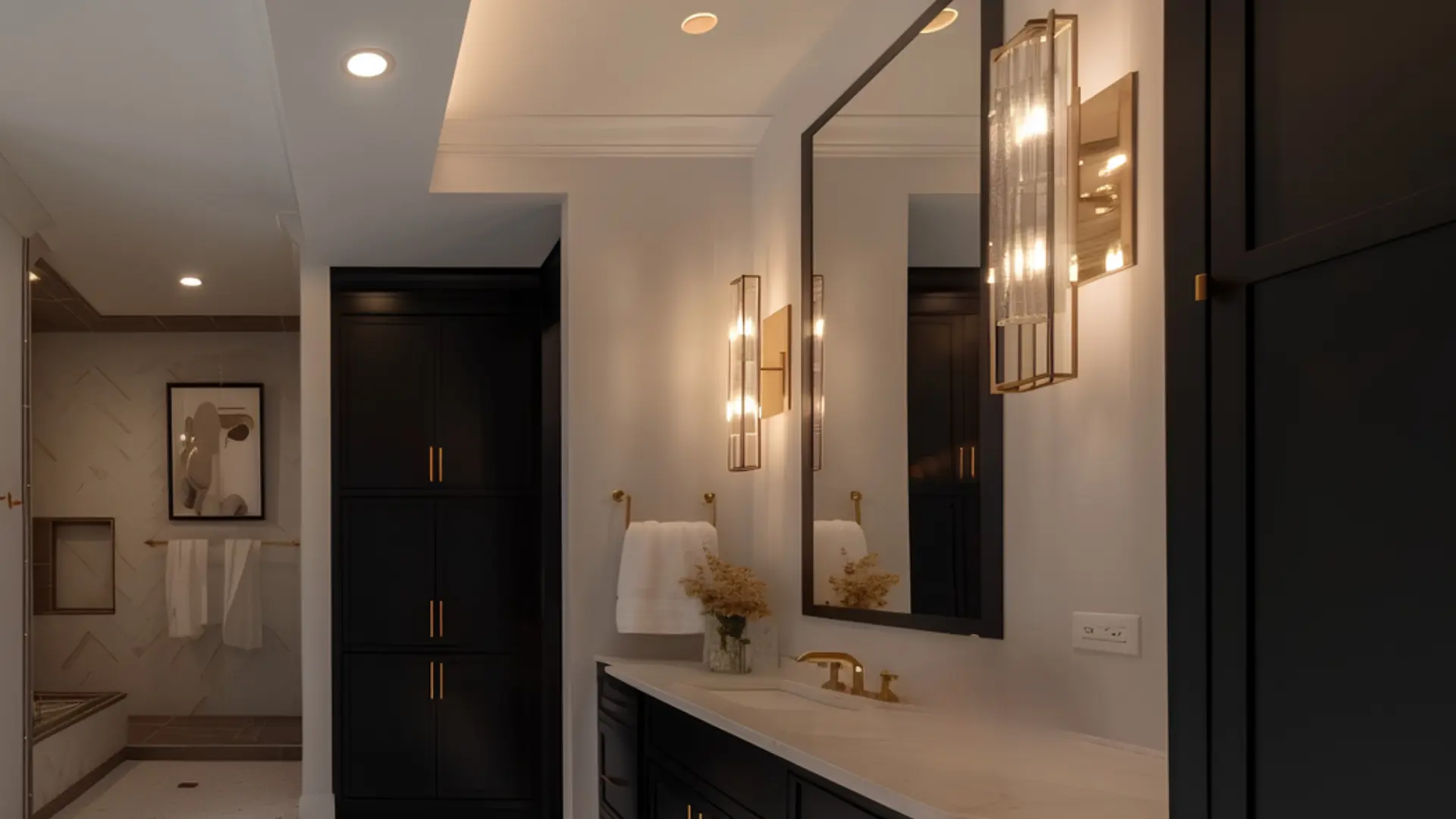
Most people plan one light source and regret it later. Good lighting in a small bathroom works in three layers:
- Task lighting: bright and direct, placed at the mirror
- Ambient lighting: soft overhead light for general use
- Accent lighting: subtle strips or sconces for added depth
Add a dimmer switch to shift between moods. Plan all of this before the tiles go in. Moving light fixtures later is expensive and disruptive.
14. Full Wall Floating Shelf Above the Toilet
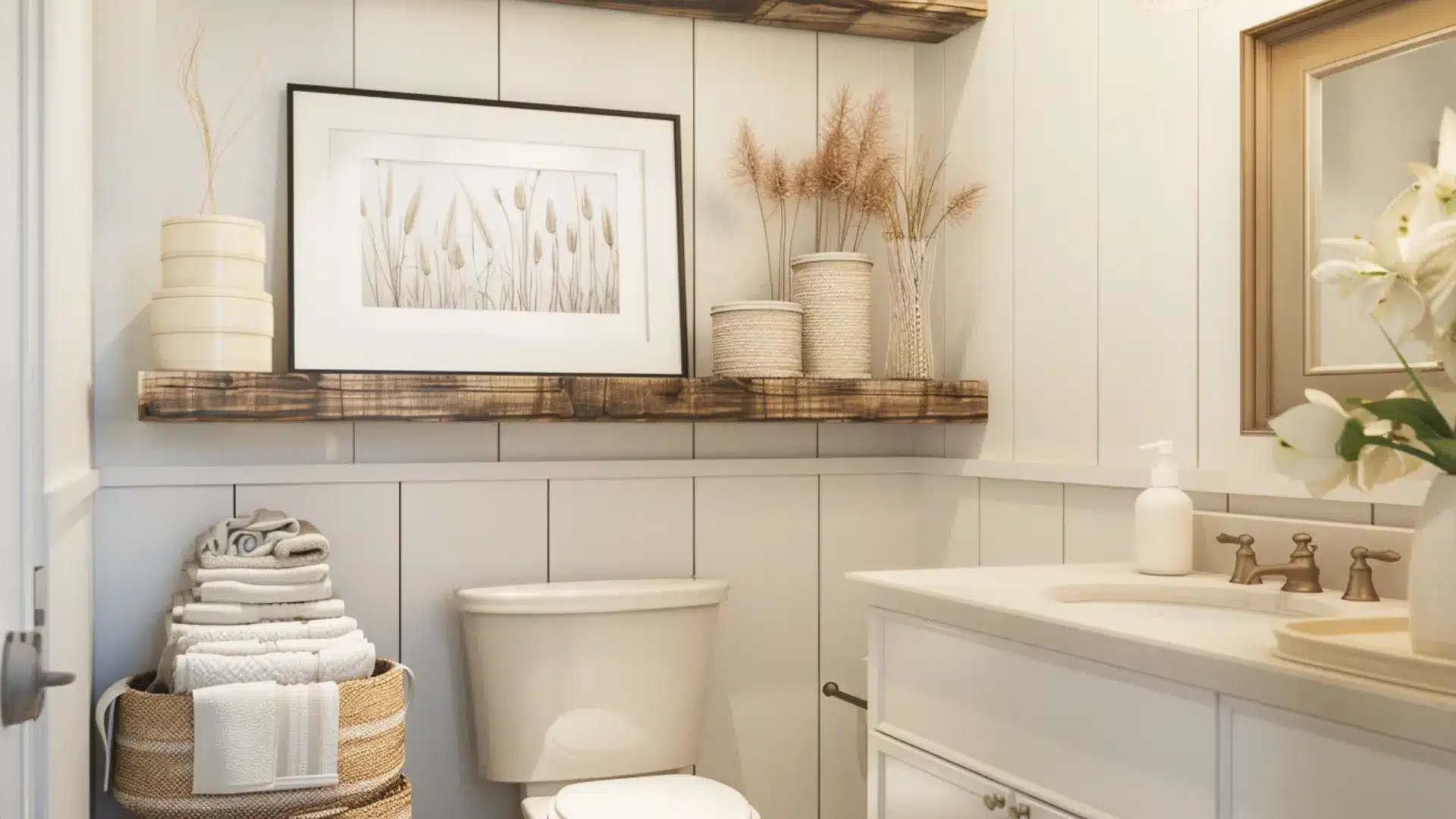
The wall above the toilet is almost always wasted.
A full-width floating shelf there gives you real storage: towels, baskets, plants, without touching the floor plan at all. Keep it at a height that feels comfortable to reach.
And before installing anything up there, check your ventilation first.
Ignoring ventilation needs is a mistake that shows up months later as mold, peeling paint, and damaged shelving.
Cost of Remodeling a Bathroom
It typically costs between $3,000 and $15,000.
Most owners fall within the $6,000 to $12,000 range for a standard full-bathroom update without major layout changes. Key factors include labor, materials, location, size, and whether the layout changes.
A minor refresh, like new paint, fixtures, and lighting, starts at around $3,000.
A full remodel with new tile, plumbing, and electrical work pushes costs higher. A small bathroom remodel does not have to break the bank.
Disclaimer: These figures are averages. Actual costs vary based on your location, contractor rates, material choices, and the scope of work.
One Last Thing!
A small bathroom remodel does not need a massive budget or a complete teardown.
The right layout, smart storage, and a few well-chosen upgrades can completely change how the space feels. Start with what bothers you most.
Fix that first. Everything else follows. A well-planned space adds real value to your home and makes daily life more enjoyable, too.
Have you tried any of these ideas? Drop your thoughts in the comments.
I would love to hear what worked for you!
People Also Ask
1. Does a Bathroom Remodel Increase Home Value?
Yes, a bathroom remodel typically offers a 60 to 67 percent return on the project cost at resale.
2. What Permits do I Need for a Bathroom Remodel?
Most structural, plumbing, and electrical changes require a permit, but simple cosmetic updates like painting or fixture swaps usually do not.
3. How Long does Small Bathroom Remodeling Take?
A basic refresh takes 3 to 5 days, while a full remodel with plumbing and tile work can take 2 to 3 weeks.