Most American bathrooms are perfectly functional. But modern Japanese bathrooms are something different.
From the thoughtfully designed Japanese shower to the smart toilet, the Japanese-style bathroom is built around the user.
Yet, despite the cultural curiosity about Japan’s bathroom culture, its wide adoption in the U.S. has been slow.
The gap between “interesting concept” and “standard fixture” is wider than it should be.
And the reasons behind it reveal a lot about how Americans think about design, hygiene, psychological resistance, and home investment.
What is so Special About Japanese Style Bathrooms?
Japanese style bathrooms are designed around one idea: the bathroom should feel like a retreat, not just a utility room.
Every part in it, from the deep soaking tub to the enclosed shower, is intentional.
Cleanliness and relaxation are built into the same space.
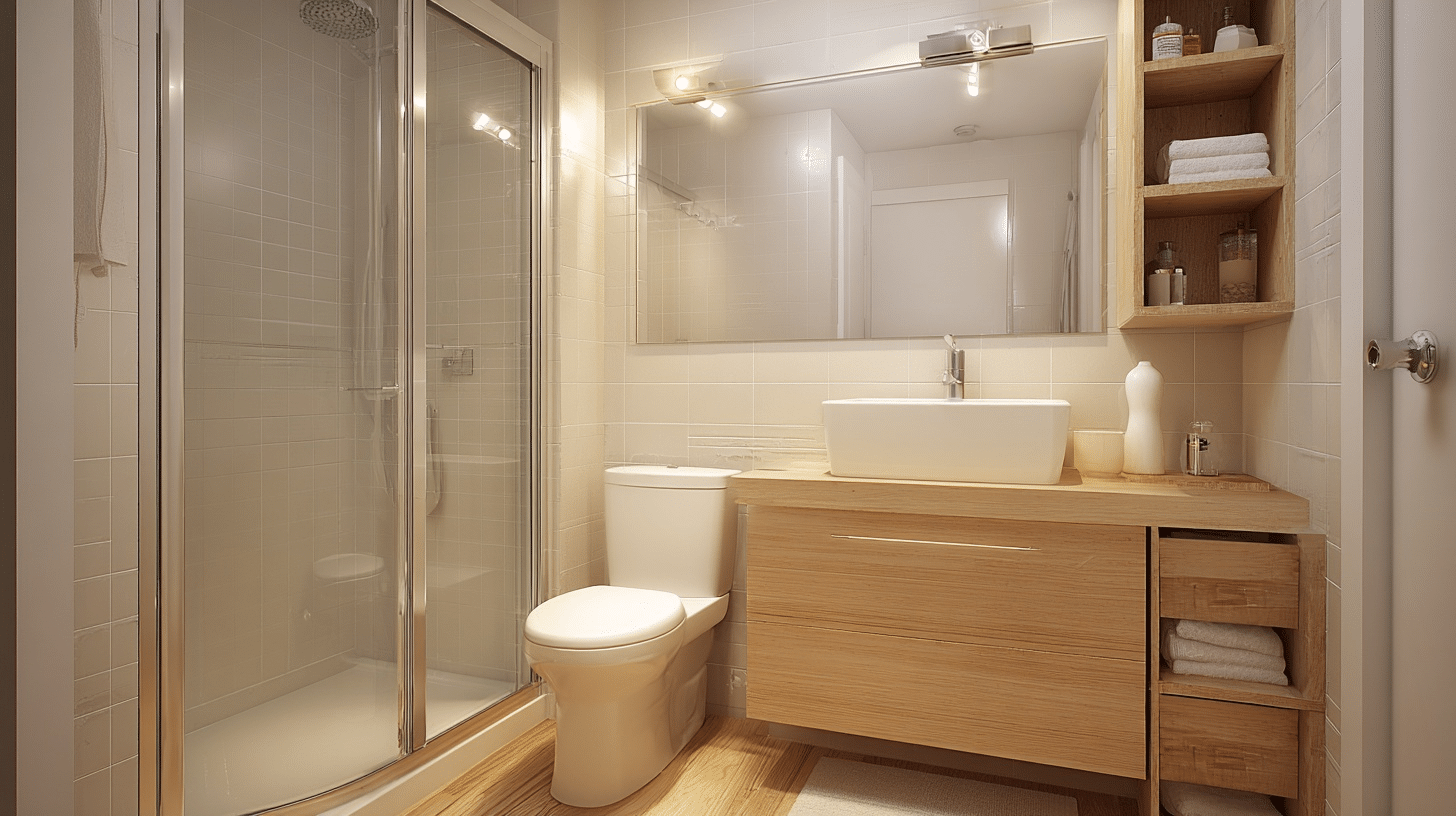
What makes a modern Japanese bathroom stand out is the separation of functions. The toilet, shower, and bath often have their own spaces, keeping the space feeling clean and uncluttered.
Add in heated floors, smart toilets, and minimalist finishes, and you have a bathroom that improves your routine.
What is Japanese Style Bathroom Design?
Japanese style bathroom design showcases simplicity, functionality, and calmness.
It is inspired by a design philosophy called wabi-sabi, which finds beauty in simplicity and natural imperfection.
In practice, this means clean lines, natural materials like stone and wood, and a muted color palette.
A Japanese shower is typically separate from the soaking tub, with a dedicated wet area designed for rinsing before bathing. It’s a hygiene ritual built into the architecture itself.
Frosted glass, bamboo accents, and deep soaking tubs create a spa-like atmosphere, and it’s common.
Natural stone and hinoki wood, a Japanese cypress, are popular choices because they’re moisture-resistant and age gracefully, unlike most Western bathroom materials.
Why the US Has Not Adopted the Japanese Toilet Even Today?
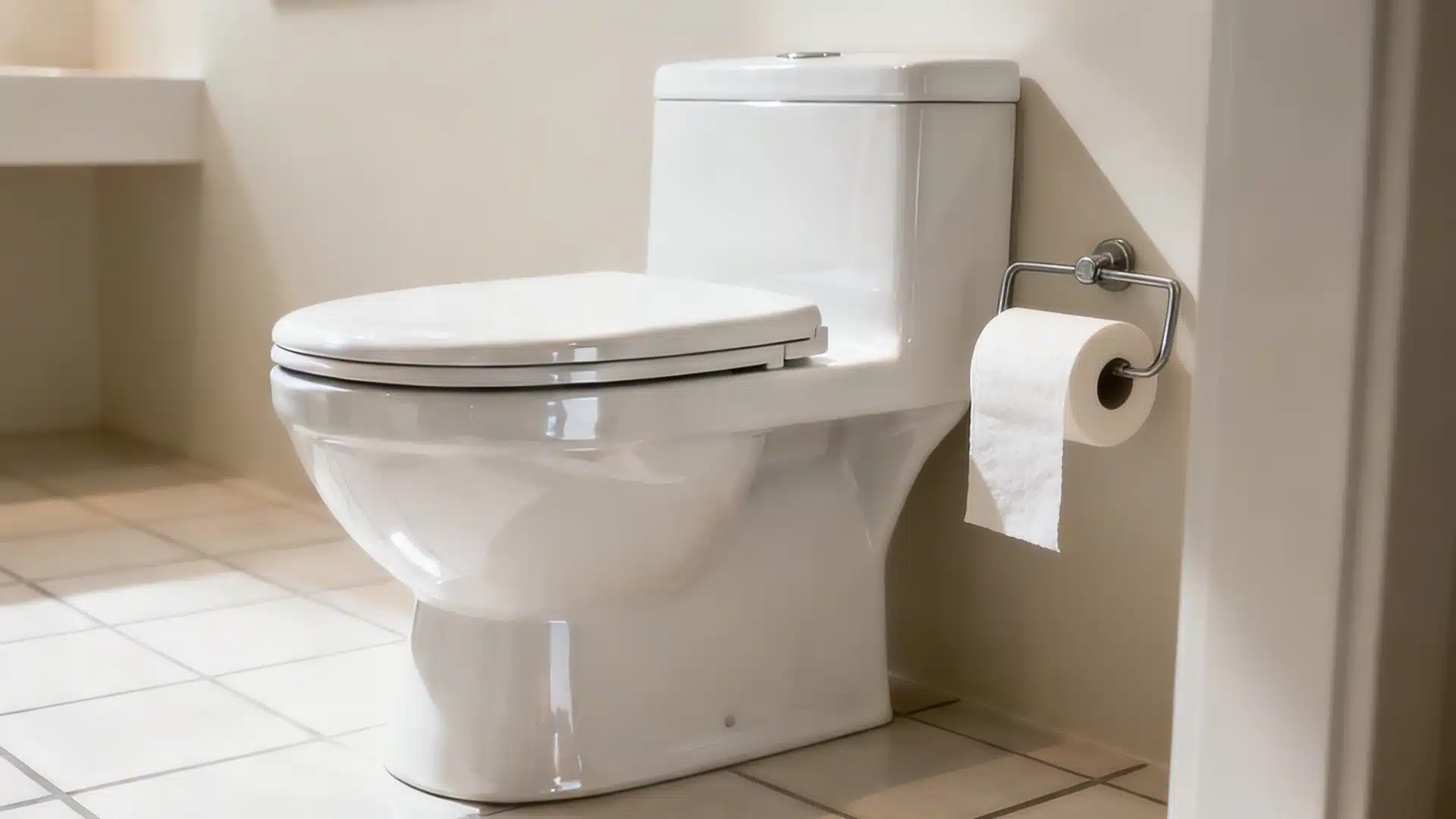
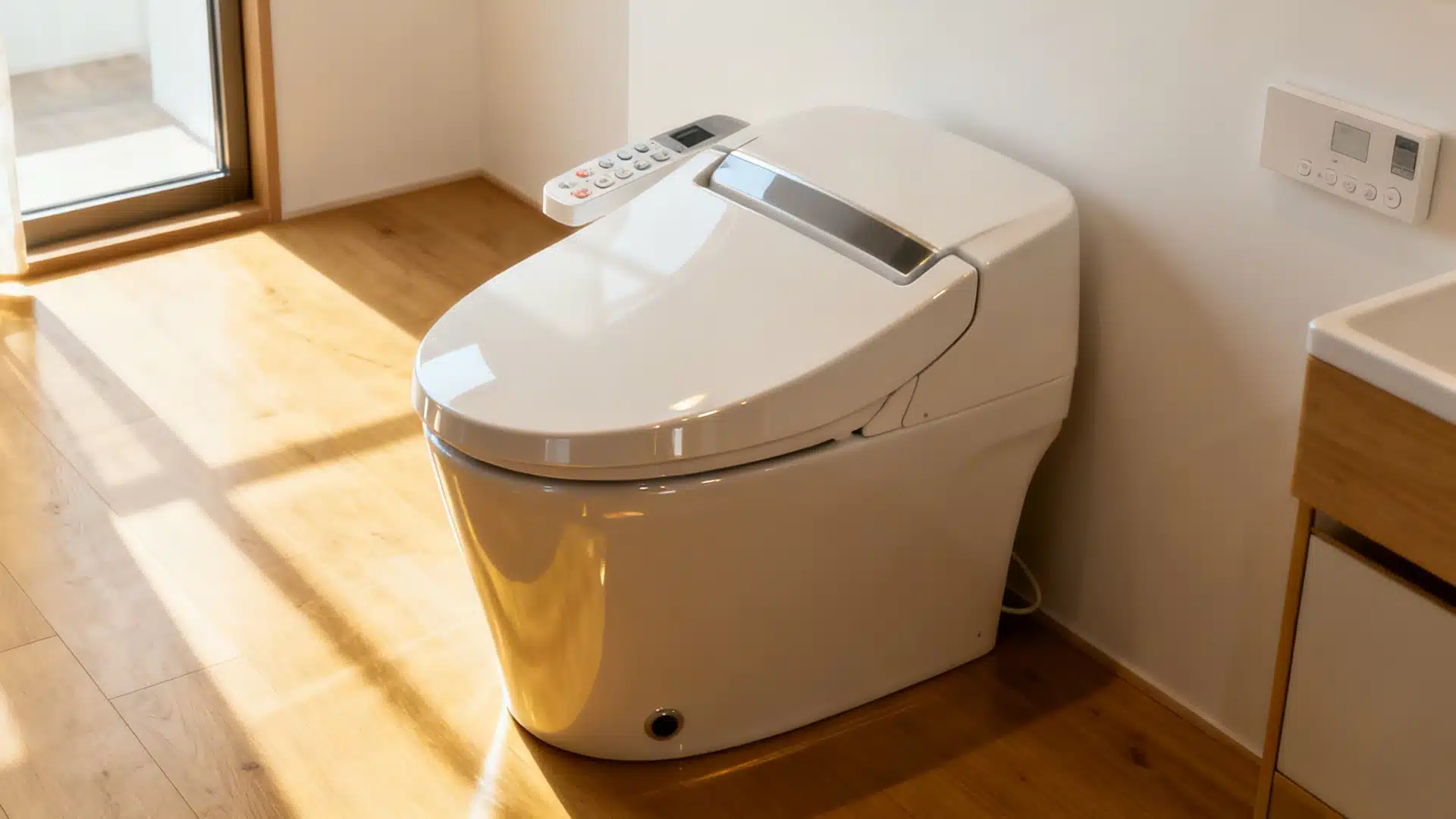
For a country that prides itself on innovation, the U.S. has been slow to adopt the Japanese toilet.
Infrastructure
American bathrooms don’t have an electrical outlet near the toilet, but a Japanese toilet needs it to function. Retrofitting that adds cost and complexity.
Americans have historically treated the bathroom as a purely functional space.
The idea of a toilet that washes, dries, and deodorizes can feel excessive to someone who’s never experienced it.
Most US bathrooms place the outlet 6-10 feet away from the toilet, fine for a hair dryer, but too far for a washlet’s 3-foot cord.
Cost
A quality modern Japanese bathroom fixture with full smart toilet functionality can run anywhere from $500 to over $2,000.
Installation labor typically adds another $150-$300 if an electrician needs to run a GFCI outlet to the toilet wall.
The concern is backflow contamination.
If a bidet isn’t fitted with an approved backflow preventer, there’s a theoretical risk that water from the toilet bowl could enter the clean water supply.
Some local plumbing codes have historically restricted or heavily regulated bidet installations for exactly this reason.
Along with the infrastructure and cost gaps, the Japanese toilet will remain a luxury upgrade in America rather than the bathroom standard it deserves to be.
US vs Japan Toilet Habits: Cultural Differences
The way a society thinks about hygiene, privacy, and bathroom rituals shows up in our floor.
| Category | United States | Japan |
|---|---|---|
| Standard toilet | Basic flush and toilet paper; bidets rare | High-tech washlet (bidet, heated seat, dryer) |
| Cleaning method | Toilet paper only | Water spray and air dry (paper optional) |
| Hygiene focus | Moderate priority | Very high, culturally embedded |
| Expected features | Flush and paper dispenser | Heated seat, bidet, sensors, deodorizer |
| Toilet paper use | High consumption | Lower, used minimally |
| Average cost | $150–$500 | $300–$17,000+ |
| Openness to change | Low (habit-driven) | High (tech-friendly culture) |
| Adoption rate | 1% | 81% households |
| View on innovation | Cautious, domestic preference | Embracing, improvement-driven |
| Bathroom infrastructure | No outlets near toilets common | Electrical setup standard |
Signs of Growing Adoption in the US
Here are the key signs that Japanese-style toilets are finally gaining traction in the US:
The pandemic toilet paper shortage sparked a surge; US demand leaped 20-fold in 2020 compared with 2019, as people scrambled for alternatives.
The US is now Toto’s fastest-growing market globally, with the last 10 million Washlets sold worldwide.
Comedian Ali Wong devoted a segment of her 2024 Netflix special to Toto’s “magical Japanese toilet,” and rapper Drake gifted four Toto units to DJ Khaled in 2022.
An industry report showed that more than two in five renovating US homeowners are now choosing toilets with specialty features, including bidet seats.
Toto’s profits in its Americas housing equipment business have grown more than eightfold over the past five years.
Japan’s international tourism boom has played a role, as visitors try the toilets in hotels and restaurants and then want them at home.
Conclusion
So, why hasn’t America adopted the bidet toilet seat revolution the way Japan has?
It’s a pile-up of plumbing standards, cultural habits, costs, taboos, and the comfort of the existing idea of how it has been done.
Japan took decades of conscious design and a cultural openness to change its rituals. But the US draws a hard line even when better options exist.
Younger people are going for this idea today.
The question isn’t why America hasn’t adopted Japanese toilets, it’s what’s taking so long?
Frequently Asked Questions (FAQs)
1. Do You Still Have to Wipe if You Have a Bidet?
Not always. With a built-in dryer, you can skip wiping entirely. Without one, most people do a quick pat-dry with toilet paper.
2. What do Doctors Say About Bidets?
Doctors say bidets clean better than toilet paper, are gentler on skin, and help people with hemorrhoids or mobility issues.
3. What do Amish Use Instead of Toilet Paper?
Traditional Amish communities use crumpled newspaper or magazine pages. Some historically used corn cobs. Now they use regular toilet paper.
4. What Toilet Brand do Plumbers Prefer?
Plumbers most often recommend Toto, Kohler, and American Standard.