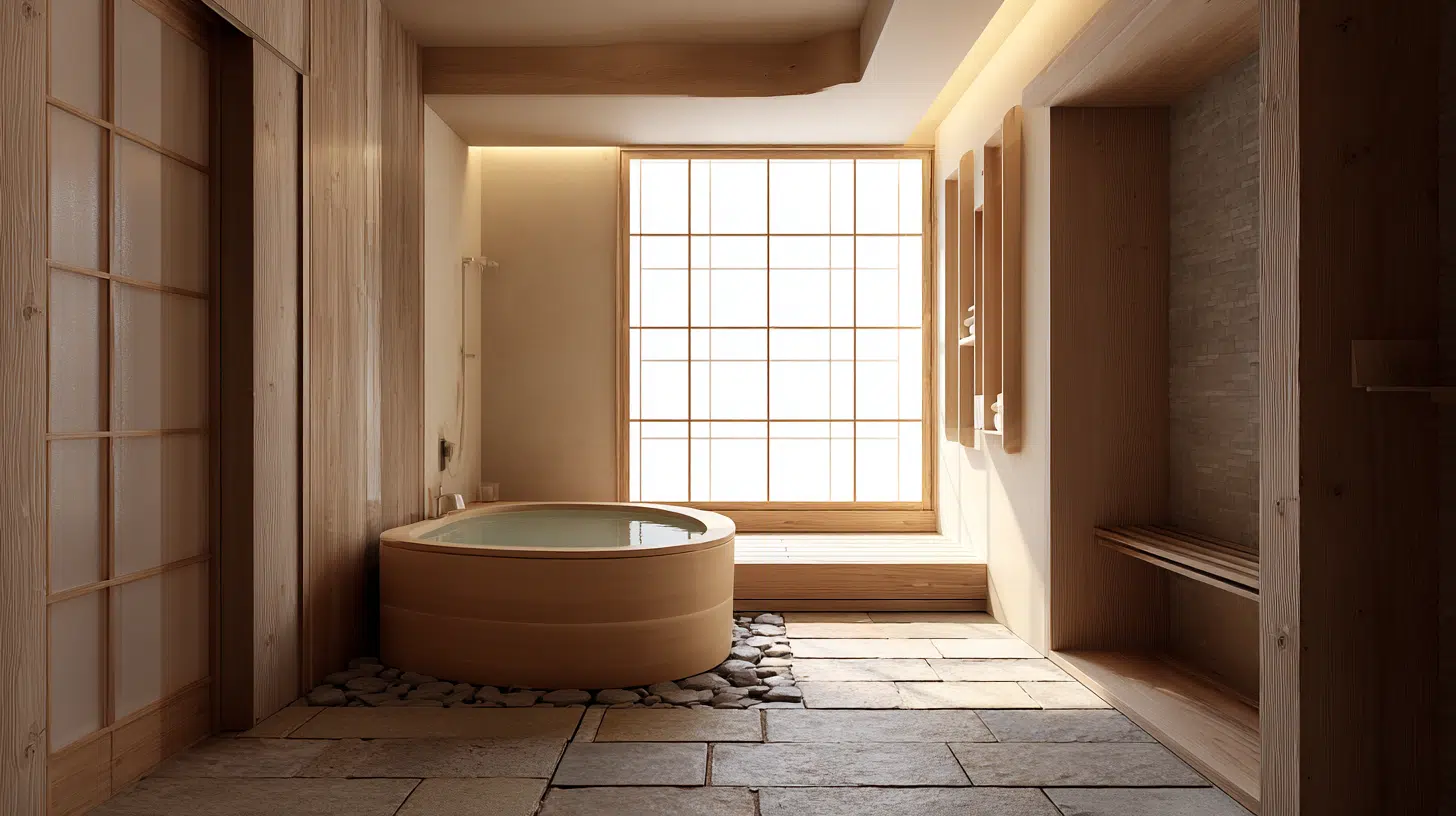
Japanese bathrooms stand apart from Western designs in many ways, focusing on creating calm spaces.
Homes nowadays adopt elements from Japanese bathroom design.
Including soaking tubs, wooden accents, and minimalist fixtures, that’s already calming to even think about.
The style brings a spa-like feel to everyday life.
Understanding these design principles helps create a peaceful bathing area at home.
What Actually Defines Japanese Bathroom Interior Design?
Japanese interior design follows specific principles that set it apart.
Japanese bathroom design is rooted in the concept of ofuro, the ritual of bathing, not just the act of washing.
The approach prioritizes three things above all: cleanliness, sensory calm, and deliberate use of space.
Several key elements work together to create this distinct style
Separating wet and dry areas improves functionality.
Natural materials like wood and stone add comfort, and minimal color palettes with neutral tones promote calmness. Built-in storage solutions keep spaces organized.
Best Materials to Use in a Japanese Bathroom

Natural materials form the foundation of this style. These options bring comfort and connection to nature indoors.
- Hinoki cypress wood – Naturally mold-resistant and releases a lemon-ginger scent when wet. Use Grade A hinoki for tubs and always apply a food-safe wood oil every 3-6 months.
- Stone tiles and river pebbles – Durable and visually grounding. For wet zone floors, look for a slip rating of R11 or higher. Unsealed natural stone is a maintenance risk in high-steam areas.
- Bamboo – Sustainable, moisture-resistant, and excellent for mats, blinds, and baskets. Avoid solid bamboo boards in direct contact with water.
- Cedar wood – Aromatic and naturally water-resistant due to its oils. Works beautifully for wall panels and shelving, but keep it away from direct shower spray.
- Ceramic and porcelain – Porcelain is denser and less porous than standard ceramic, making it the smarter choice for floors and wet walls. Rectified edges give you the clean, minimal grout lines.
Japanese Bathroom Design Ideas
These design elements bring authentic style to any bathroom. Each idea draws from traditional principles while fitting modern homes.
1. Hinoki Wood Soaking Tub
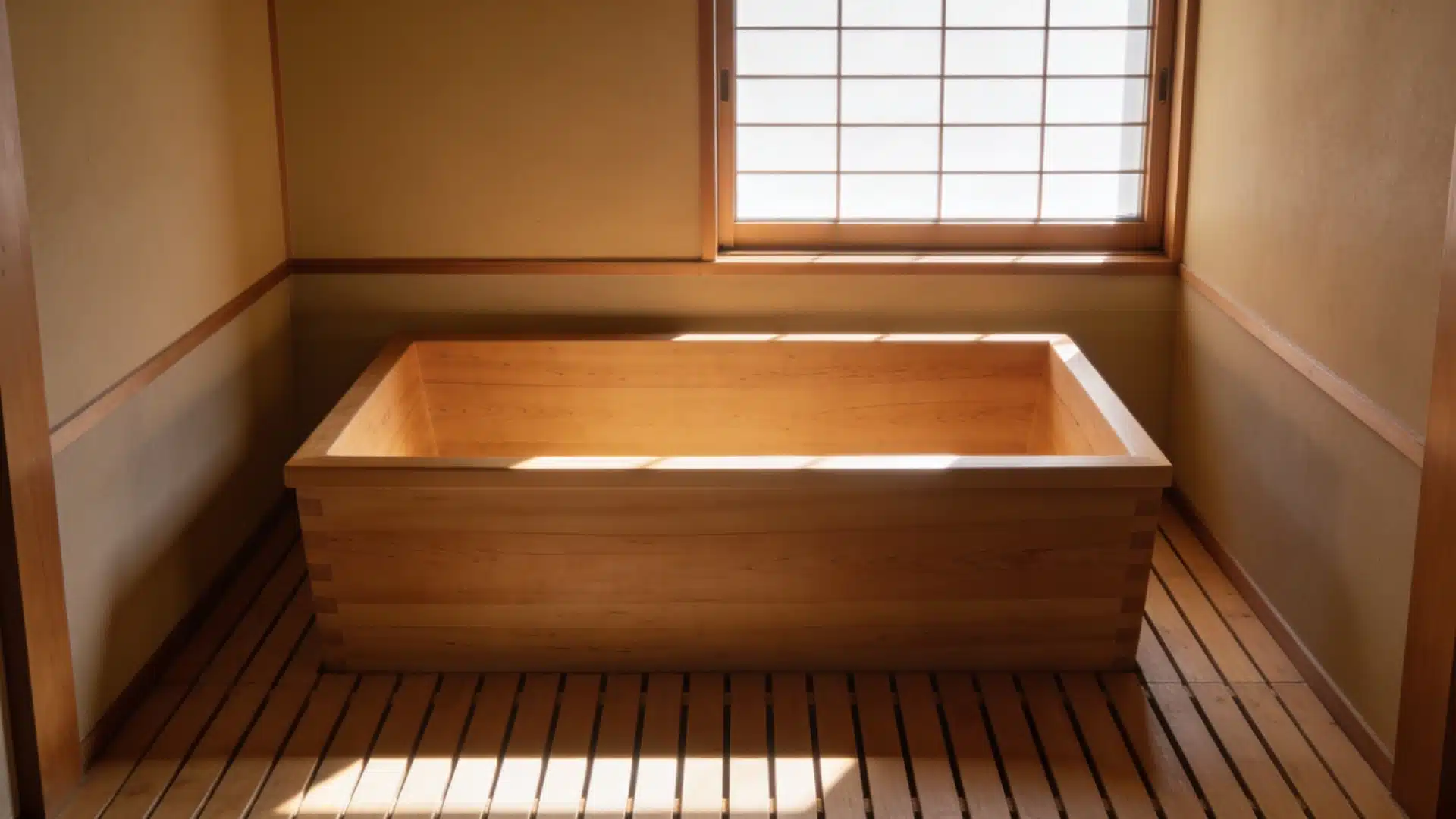
The ofuro stands as the centerpiece of authentic design. This deep tub is made of hinoki cypress wood. The wood releases a lemon-ginger scent when filled with hot water.
Bathers sit with their knees bent for a shoulder-deep soak. The compact shape saves floor space.
Traditional families pass these tubs through generations.
2. Separate Wet and Dry Zones
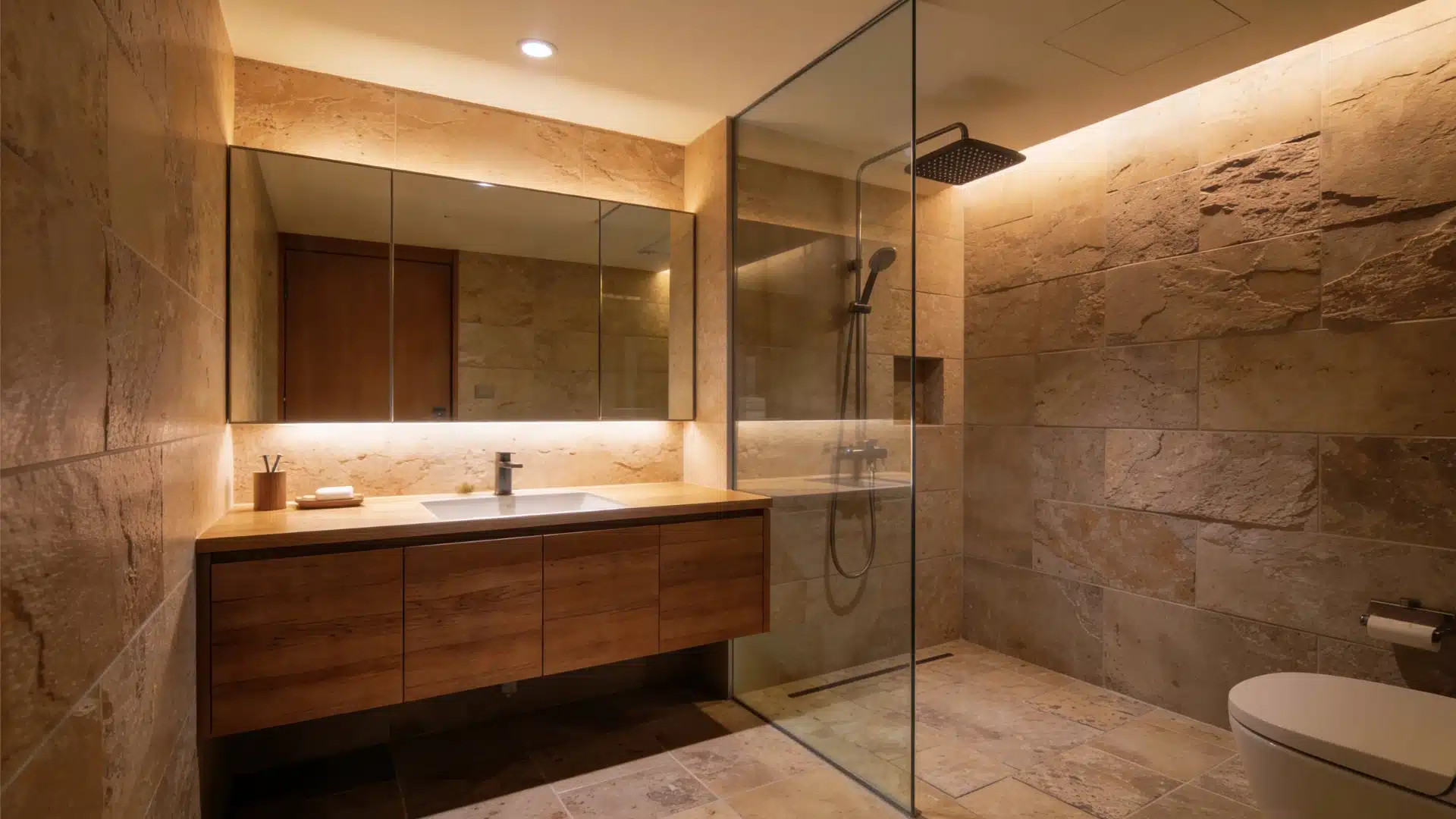
The layout divides the Japanese bathroom design into distinct areas. The toilet sits in one room.
The vanity occupies a dry zone. The shower and tub share a waterproofed wet space.
This separation improves hygiene significantly. Multiple family members can use the facilities at the same time.
3. Natural Stone Flooring
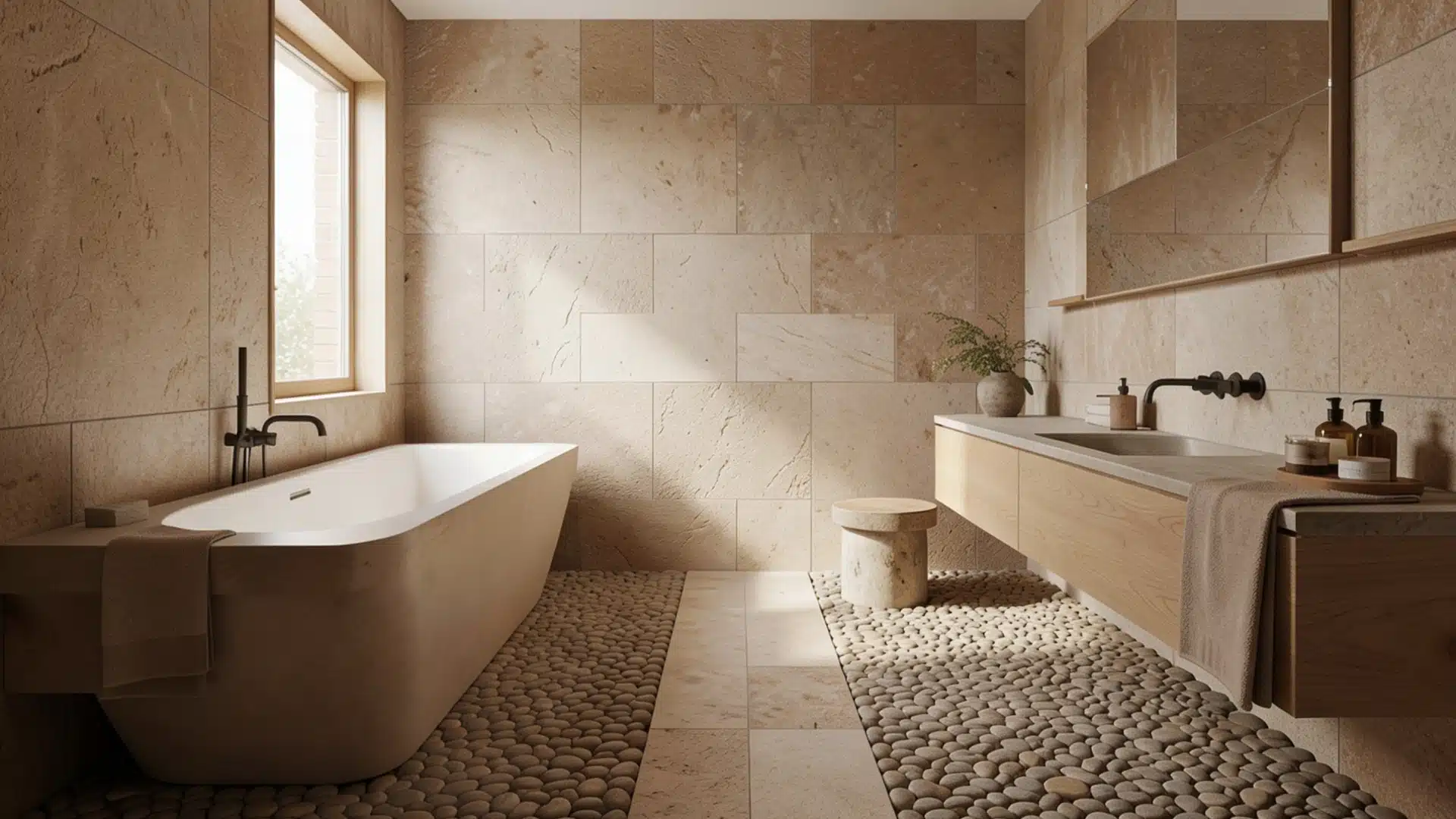
Stone tiles and pebbles ground the space. River rocks create tactile surfaces underfoot. Smooth gray tiles pair with organic pebble borders.
The texture echoes natural outdoor environments. Stone adds visual weight and permanence. Materials like slate work well in wet areas.
4. Wooden Wall Panels

Light wood planks cover walls from floor to ceiling. The panels create warm, sauna-like atmospheres. Vertical slats add rhythm and texture.
Cedar or cypress works well for moisture resistance. Wood reduces visual clutter in the space. The material softens hard bathroom surfaces.
5. Shoji Screen Doors
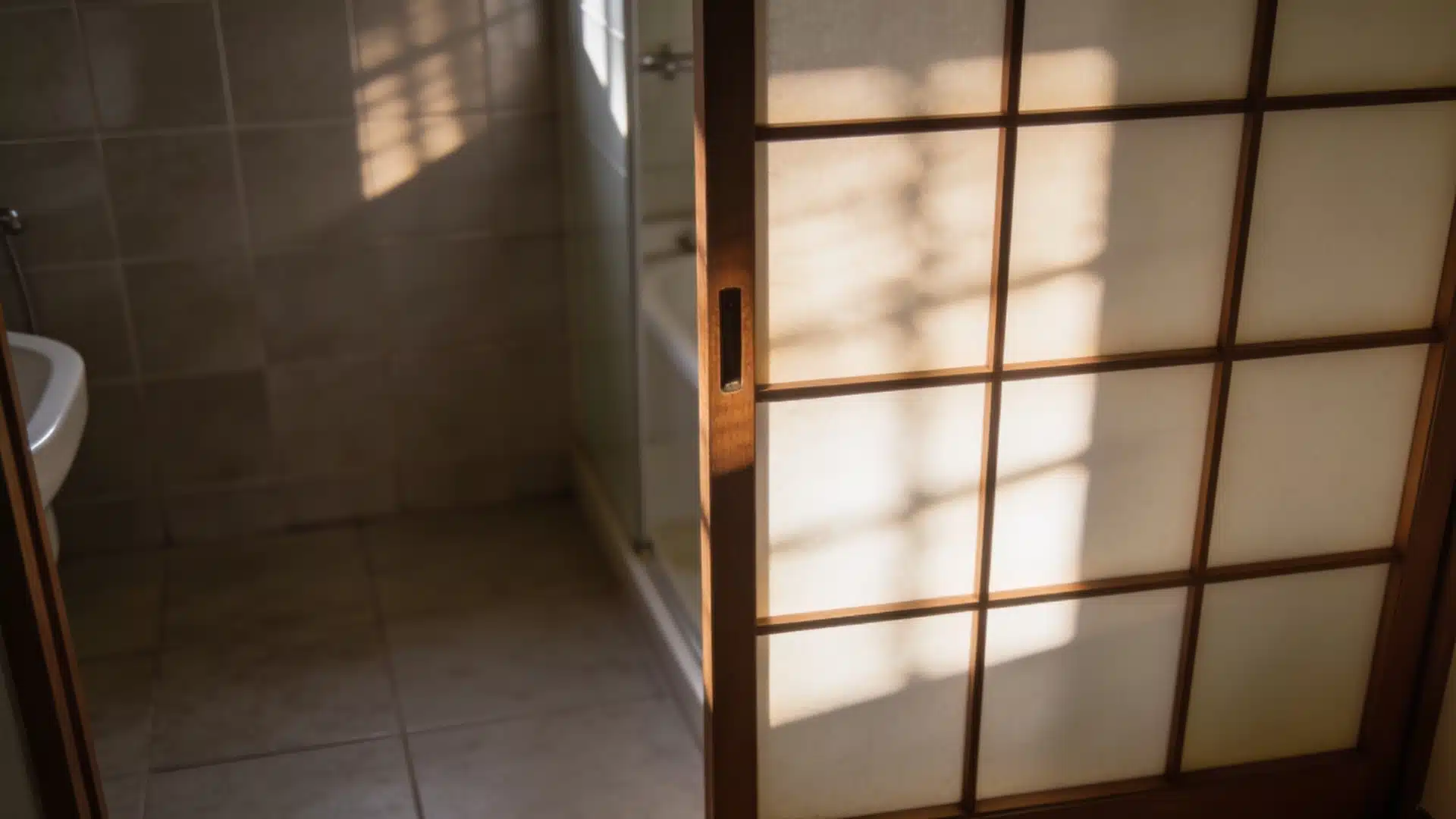
Translucent sliding screens filter natural light beautifully. The paper panels create soft, diffused glows. Shoji doors save space compared to swinging options.
They maintain privacy while allowing light to pass through. Traditional frames use wood and rice paper.
Modern versions may use frosted glass.
6. Bamboo Accents

Bamboo brings sustainable beauty to Japanese bathroom design. Bamboo bath mats dry quickly. Blinds and storage baskets add natural touches.
The material’s vertical lines suit a minimalist design. Bamboo resists moisture better than standard wood.
Small decorative elements provide textural contrast.
7. Neutral Color Palettes
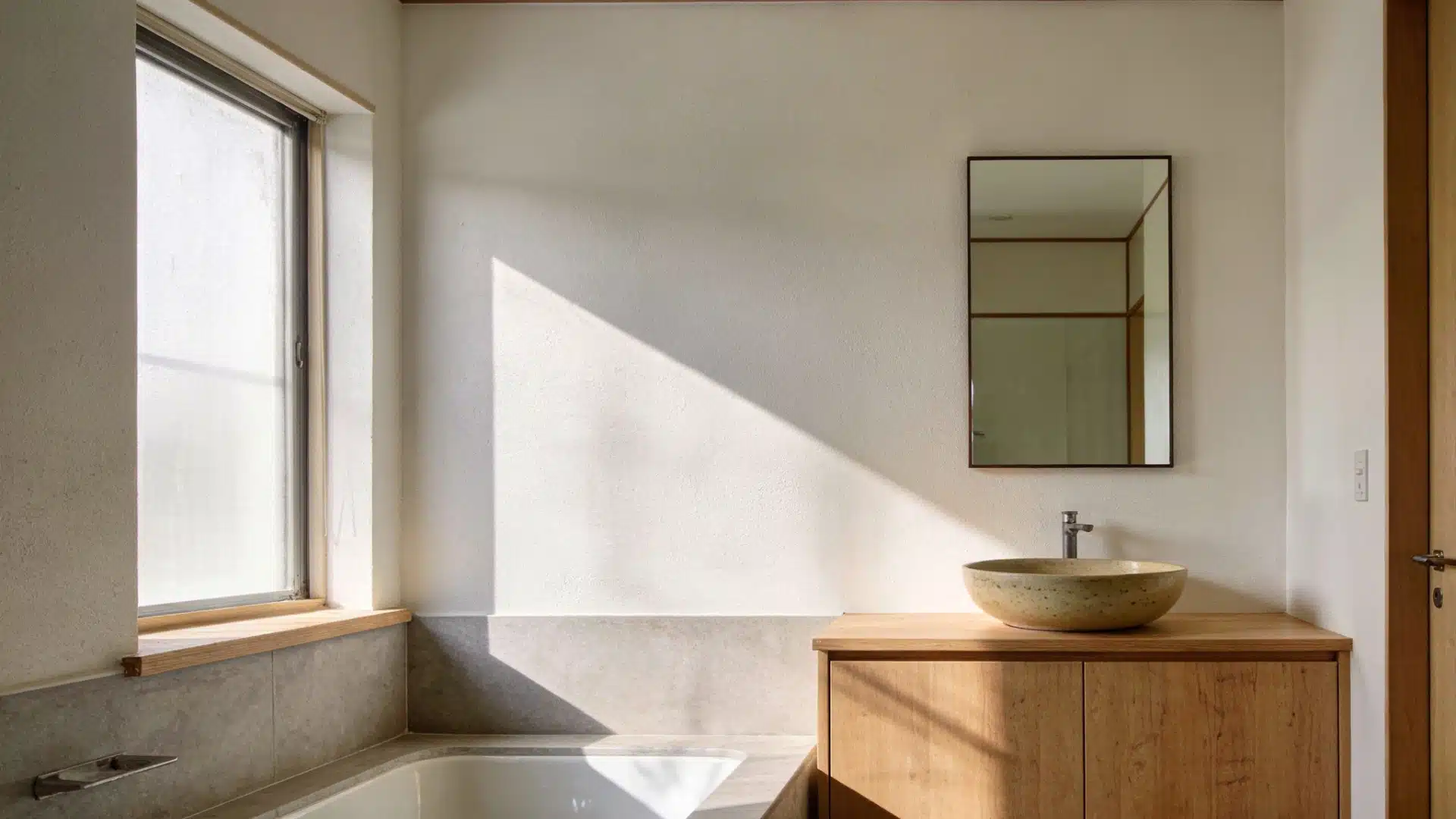
Soft whites and warm beiges dominate these spaces. Muted grays create visual calmness throughout. Earthy tones mimic natural outdoor environments.
Sandy hues make small bathrooms feel larger. The palette avoids bright or jarring colors.
Natural material tones provide enough visual interest.
8. Minimalist Vanity Design
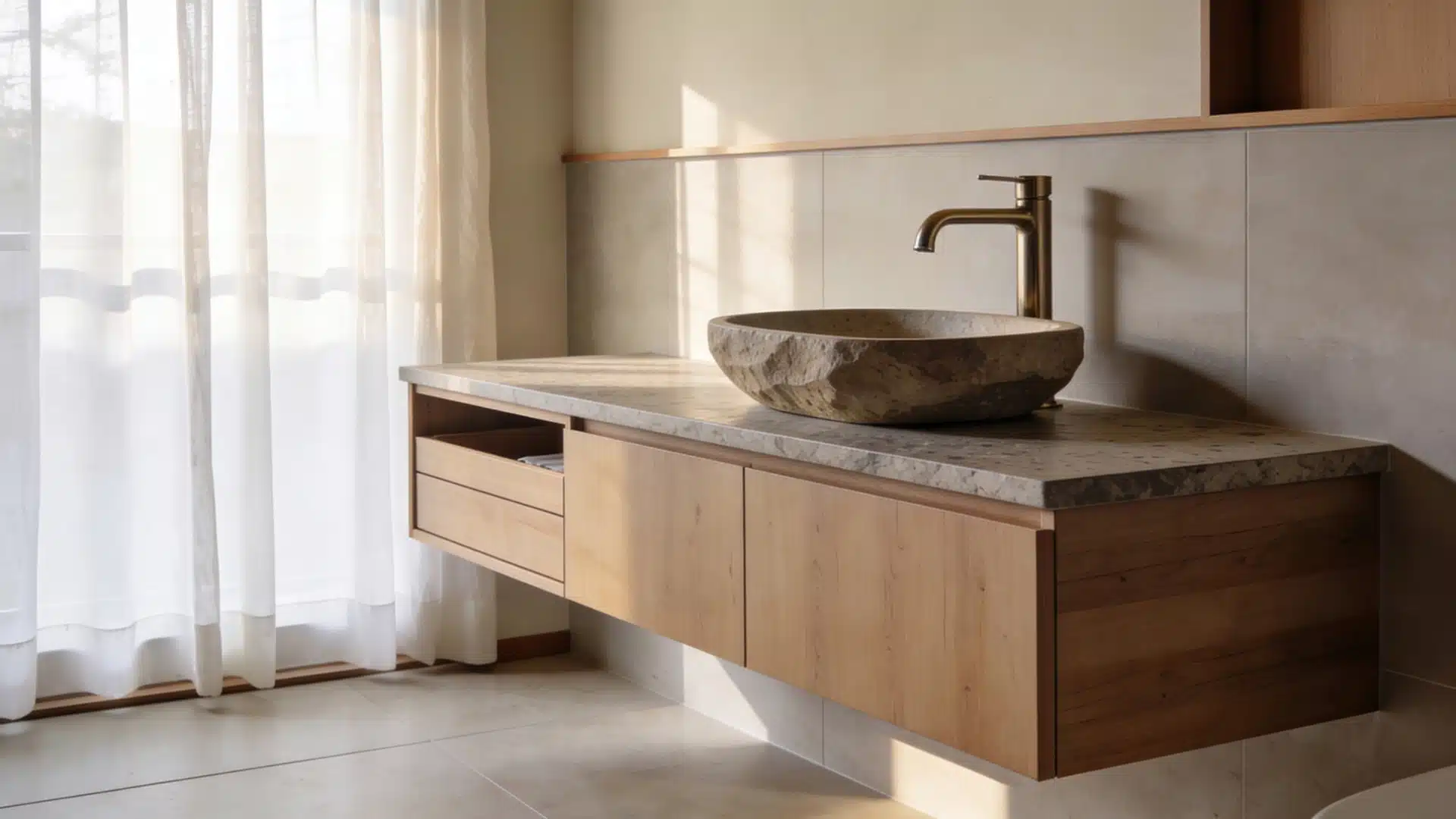
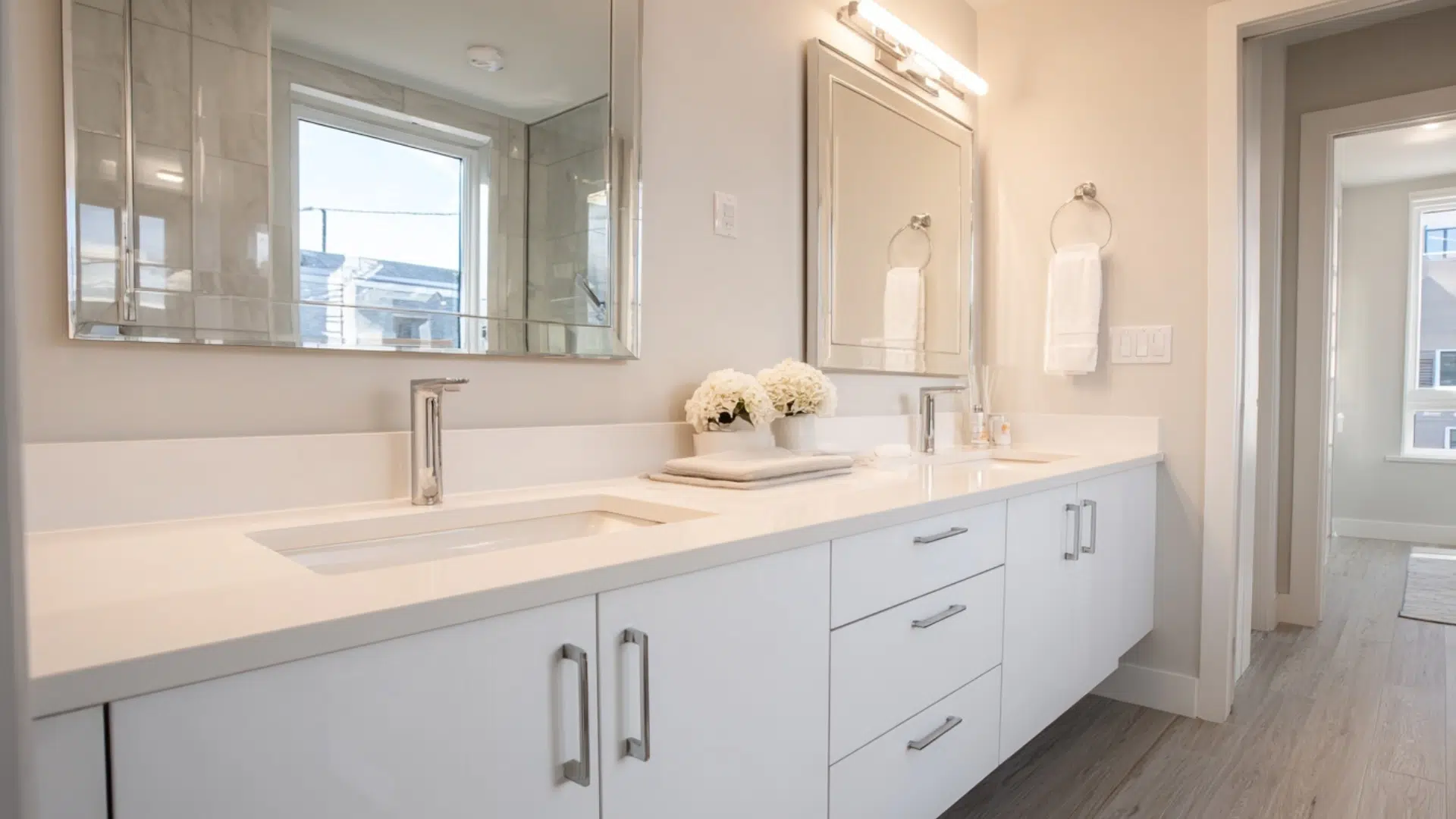
Floating vanities keep floors clear and open. Clean lines define simple cabinet forms. Storage stays hidden behind smooth doors.
Vessel sinks in stone or ceramic add organic shapes. Wood tones warm up the vanity area.
Chrome or matte black fixtures maintain simplicity.
9. Natural Light Maximization
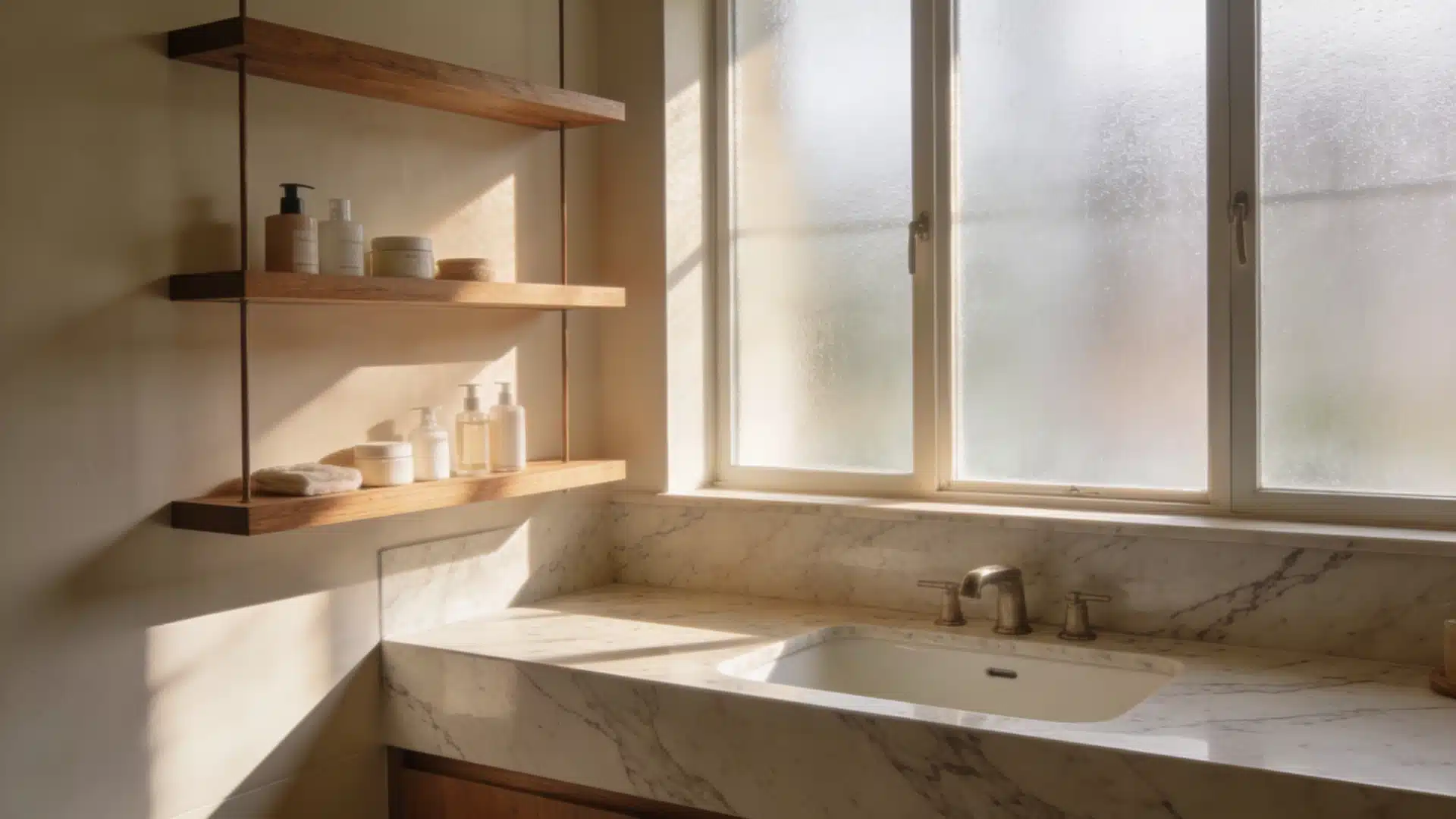
Large windows or skylights bring sunlight inside. Frosted glass maintains privacy while admitting brightness. The interplay of light and shadow creates atmosphere.
Windows may frame views of gardens outside. Daylight enhances the natural colors and textures of materials.
Soft illumination highlights wood grain patterns.
10. Wooden Bath Stool

Traditional low stools support seated washing rituals. Hinoki or teak wood resists water damage. The height allows comfortable bathing outside the tub.
Bathers should soap and rinse before entering clean water. This preserves water purity for multiple users.
The stool stores easily when needed.
11. Indoor Plants

Greenery adds life to Japanese bathroom design environments. Ferns and peace lilies tolerate high humidity. Bonsai trees provide sculptural focal points.
Plants purify air while enhancing visual appeal. Low-maintenance varieties suit busy households best.
Potted bamboo connects to cultural traditions.
12. Pebble Shower Floor
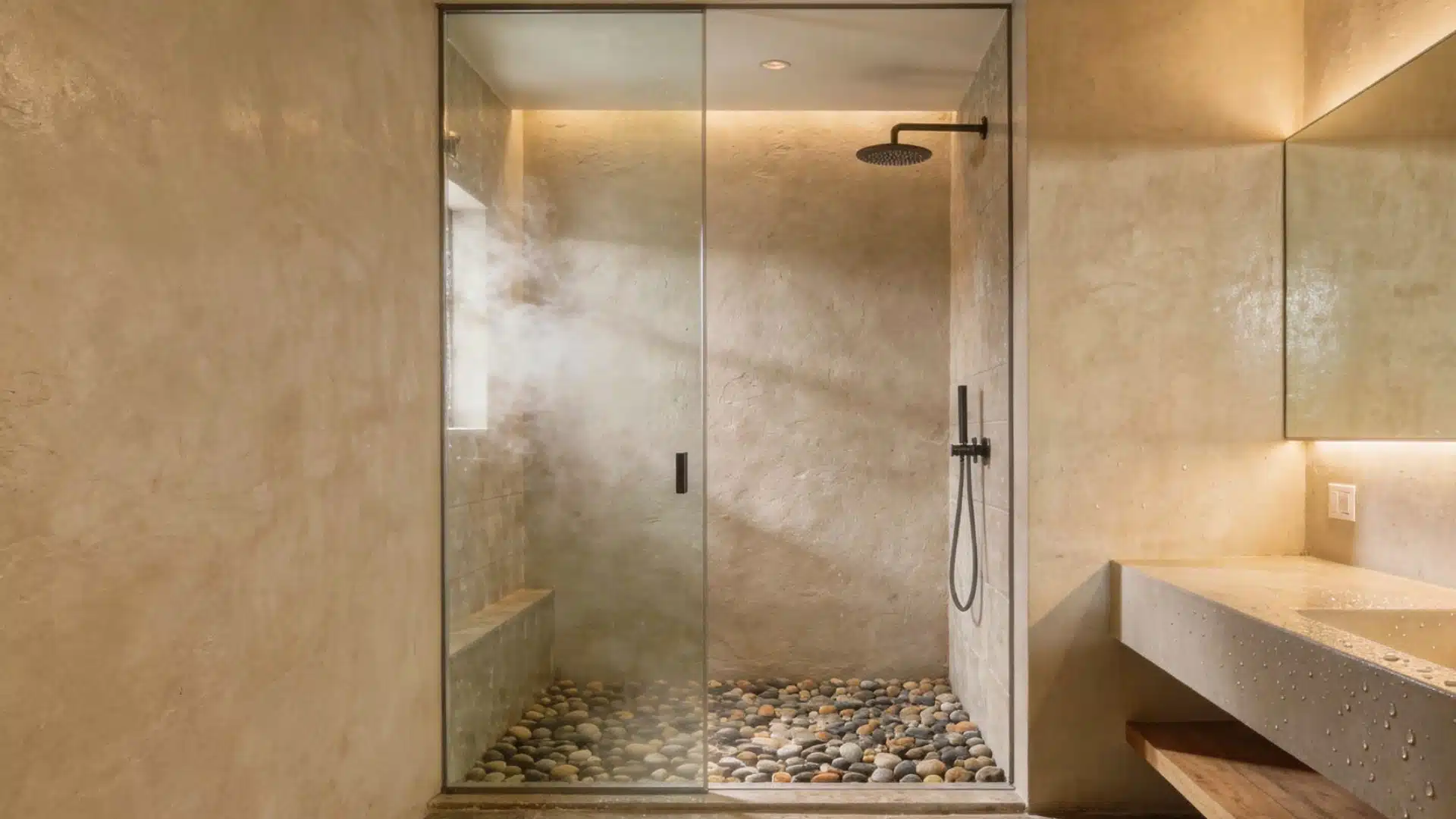
River stones create massage-like surfaces underfoot. The texture provides slip resistance in wet areas. Pebbles can be set in mortar or resin.
Natural colors blend with stone tile walls. The organic look evokes outdoor hot springs.
Proper drainage prevents water pooling.
13. Soft Ambient Lighting

Warm, dimmable lights replace harsh overhead fixtures. Wall sconces create gentle illumination pools. Paper lantern pendants diffuse light softly.
The glow complements natural materials and earthy tones.
Strategic placement highlights the soaking tub area. Lighting avoids bright spots that disrupt calmness.
14. Wooden Bath Caddy

Platforms span the tub to hold bathing items. Hinoki or cedar wood matches the tub material. The caddy keeps soap, oils, and towels within reach.
Slats allow water to drain off easily. This practical accessory looks attractive when displayed.
The simple design follows minimalist principles.
15. Wet Room Concept
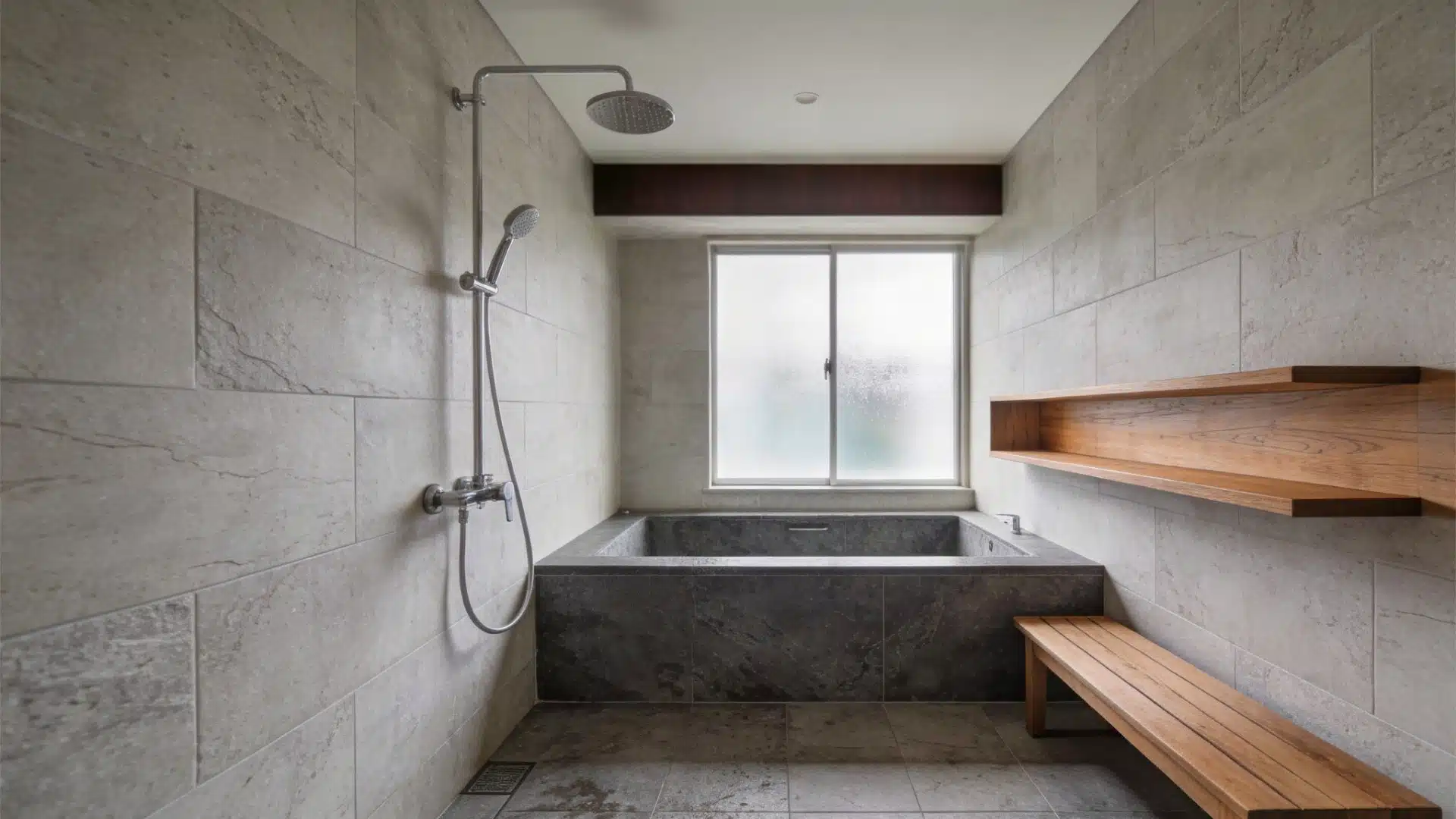
The entire bathing area becomes one waterproof space. Floors, walls, and ceilings are completely sealed. A single drain handles water from the shower and tub.
This eliminates the need for shower enclosures or curtains.
The open design makes small bathrooms feel larger. Cleaning becomes easier.
16. Stone or Ceramic Vessel Sinks
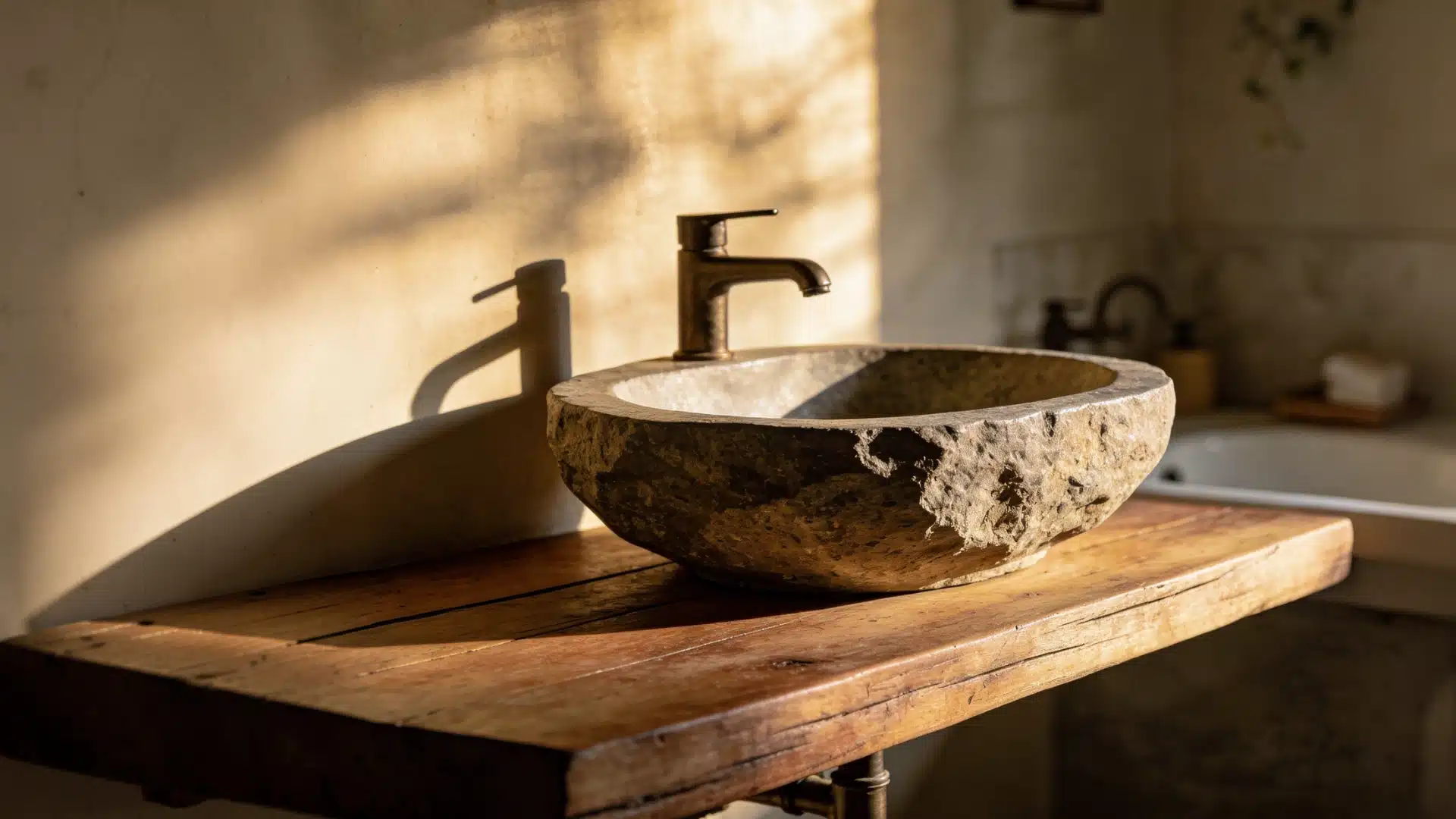
Round or oval basins sit atop vanity surfaces. Natural stone adds organic shapes and textures. Ceramic versions offer smooth, clean lines.
The bowls create visual interest on simple counters in this Japanese bathroom design. Wall-mounted faucets complement the elevated design.
This style saves counter space around the sink.
17. Frameless Glass Partitions

Clear panels separate wet areas without blocking views. The transparency maintains an open, airy feeling. Light flows freely through the entire space.
Glass requires minimal framing for clean aesthetics. This approach suits modern interpretations of traditional style.
The partition protects dry zones from spray.
18. Bonsai Display
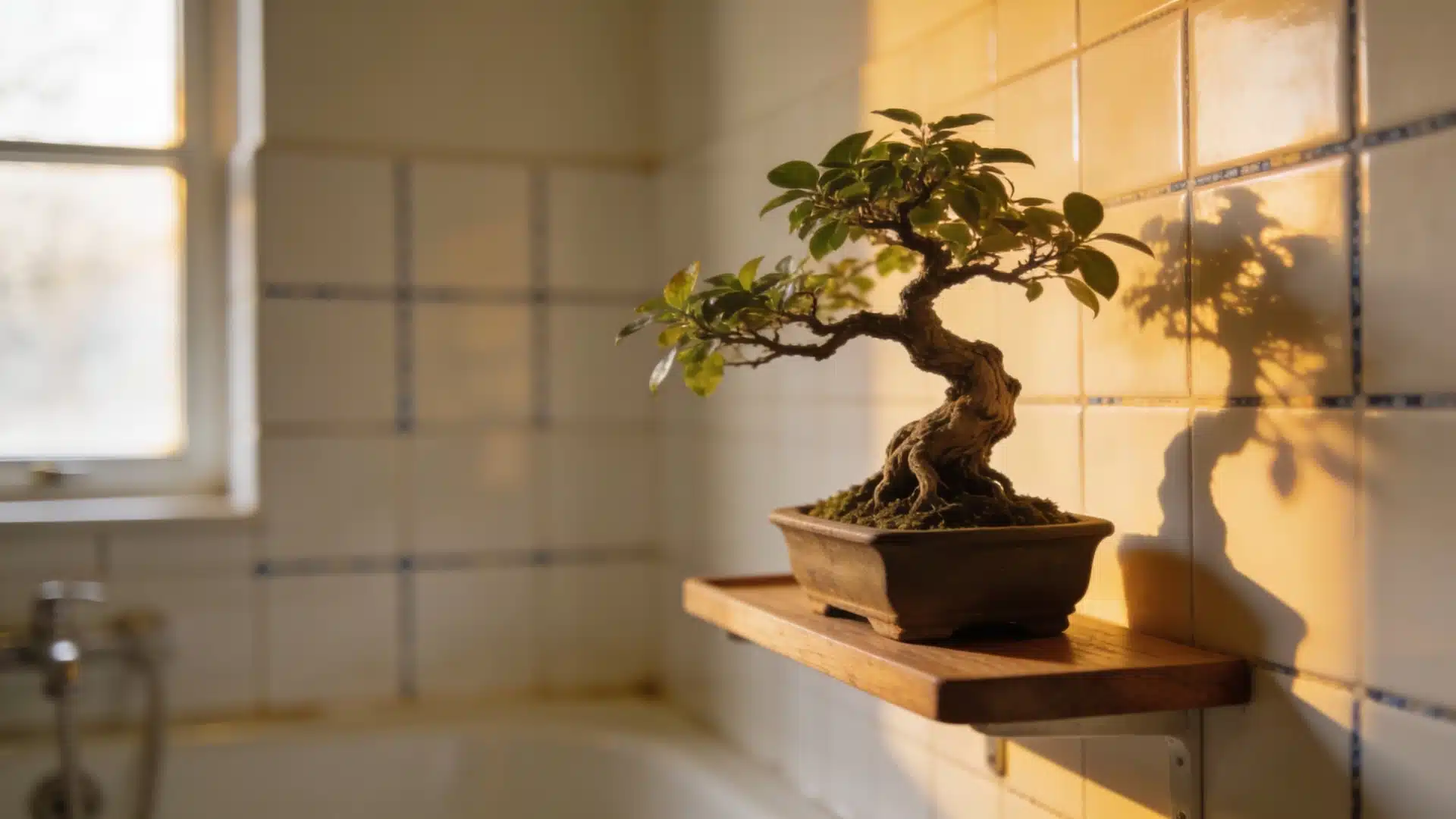
Miniature trees add living art to the space. The sculptural forms provide visual focal points. Bonsai connects directly to cultural traditions and philosophies.
The plants thrive in humid bathroom conditions. Shallow pots suit limited counter or shelf space.
This decorative element requires minimal daily maintenance.
19. Textured Plaster Walls
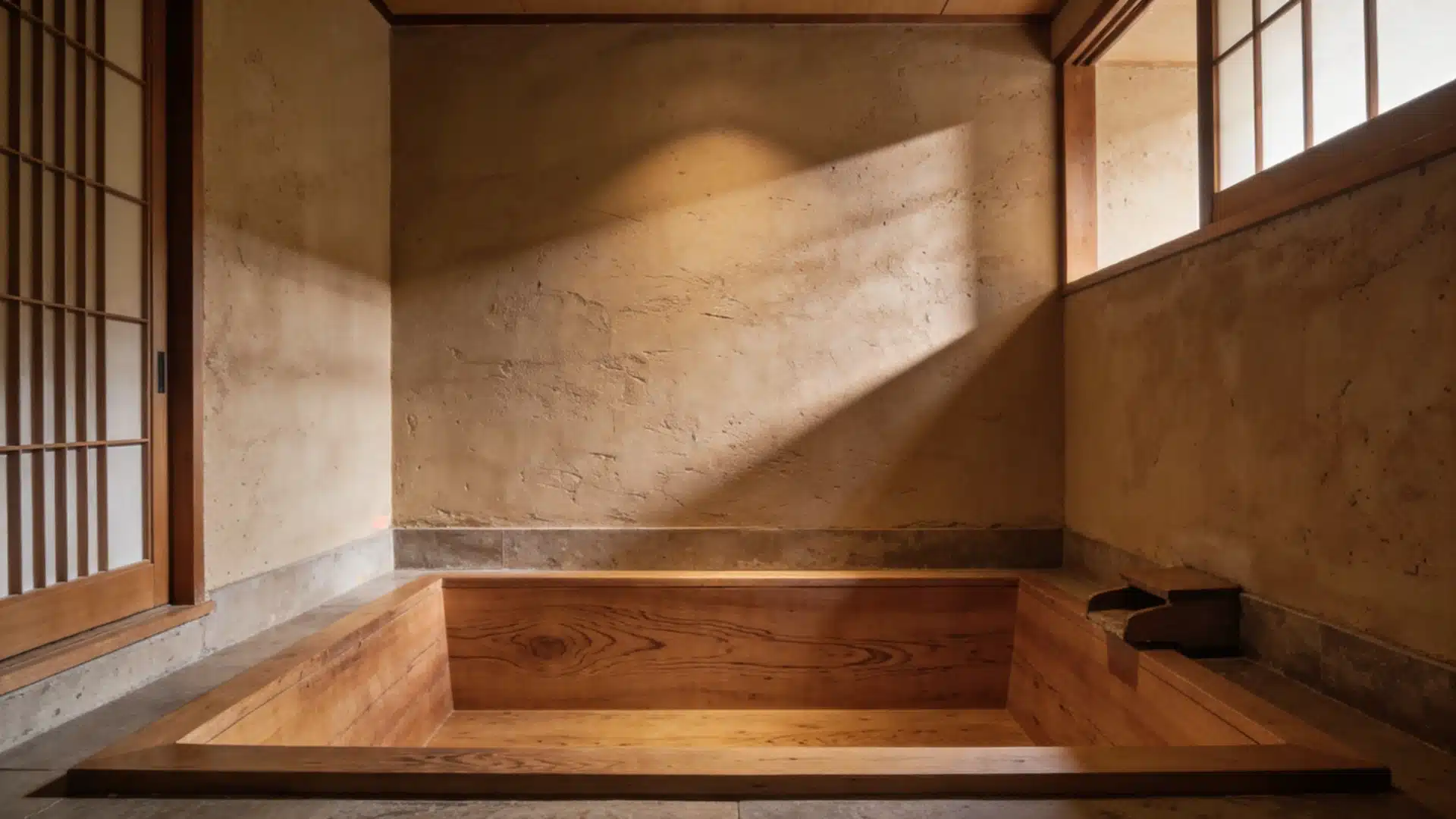
Sandy or earthy plaster creates tactile wall surfaces. The finish adds subtle depth and warmth. Natural tones complement wood and stone materials.
Seamless application highlights organic architectural forms. The texture beautifully catches and diffuses light.
This alternative to tile reduces visual busyness.
20. Wooden Tub Cover
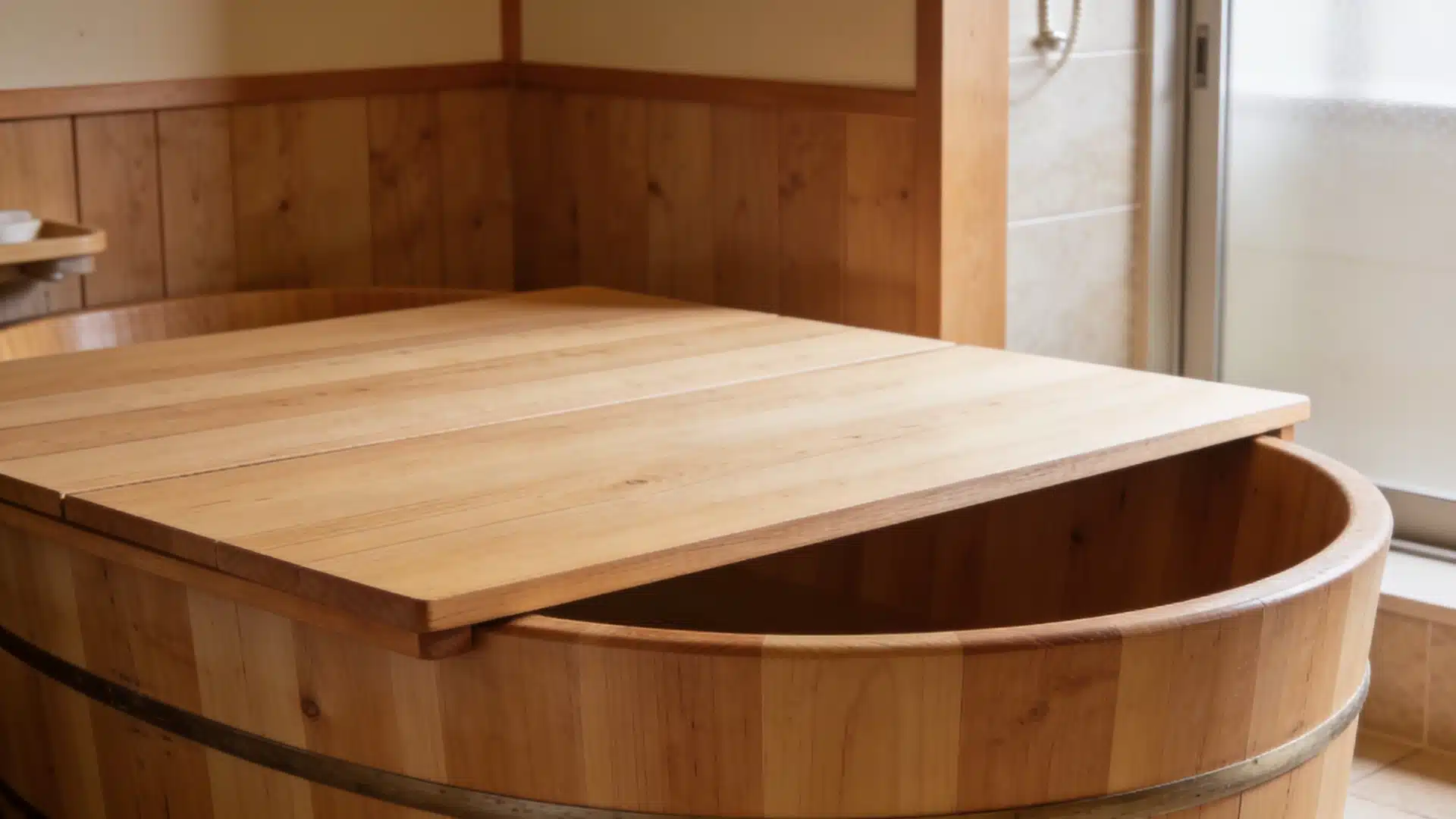
Hinoki wood lids keep bath water warm between uses. The cover doubles as a platform when closed. Traditional families conserve water by sharing clean tub water.
The lid prevents debris from falling in. Wood matches the tub material for visual continuity.
This practical accessory reflects resourcefulness.
21. Garden View Window
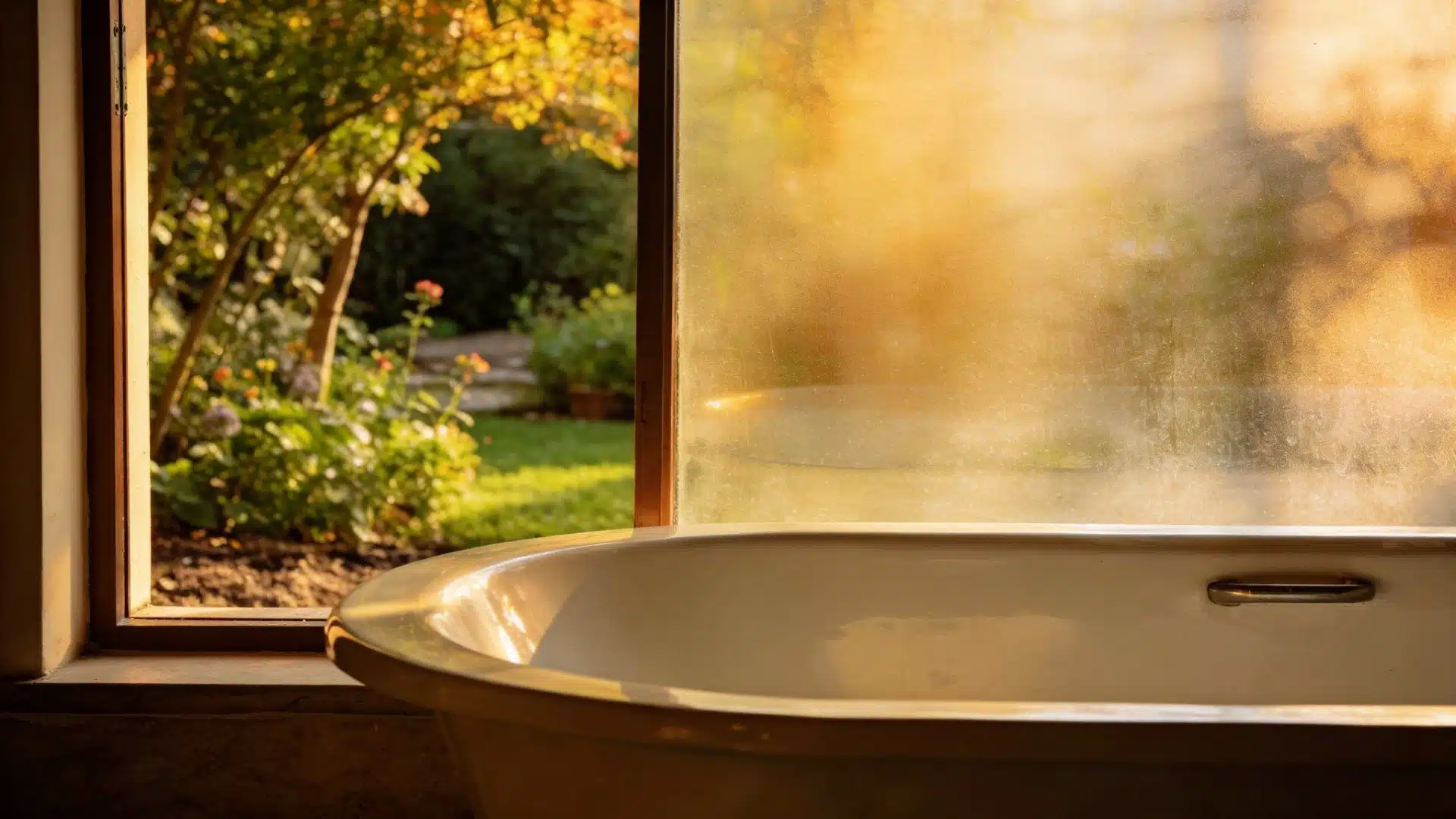
Large windows frame outdoor natural scenes. Views of courtyards or gardens enhance bathing experiences. The connection to nature calms the mind.
Frosted lower portions maintain privacy from the outside. Upper clear glass admits light and scenery. Tubs’ position to take advantage of the views.
22. Teak Wood Elements
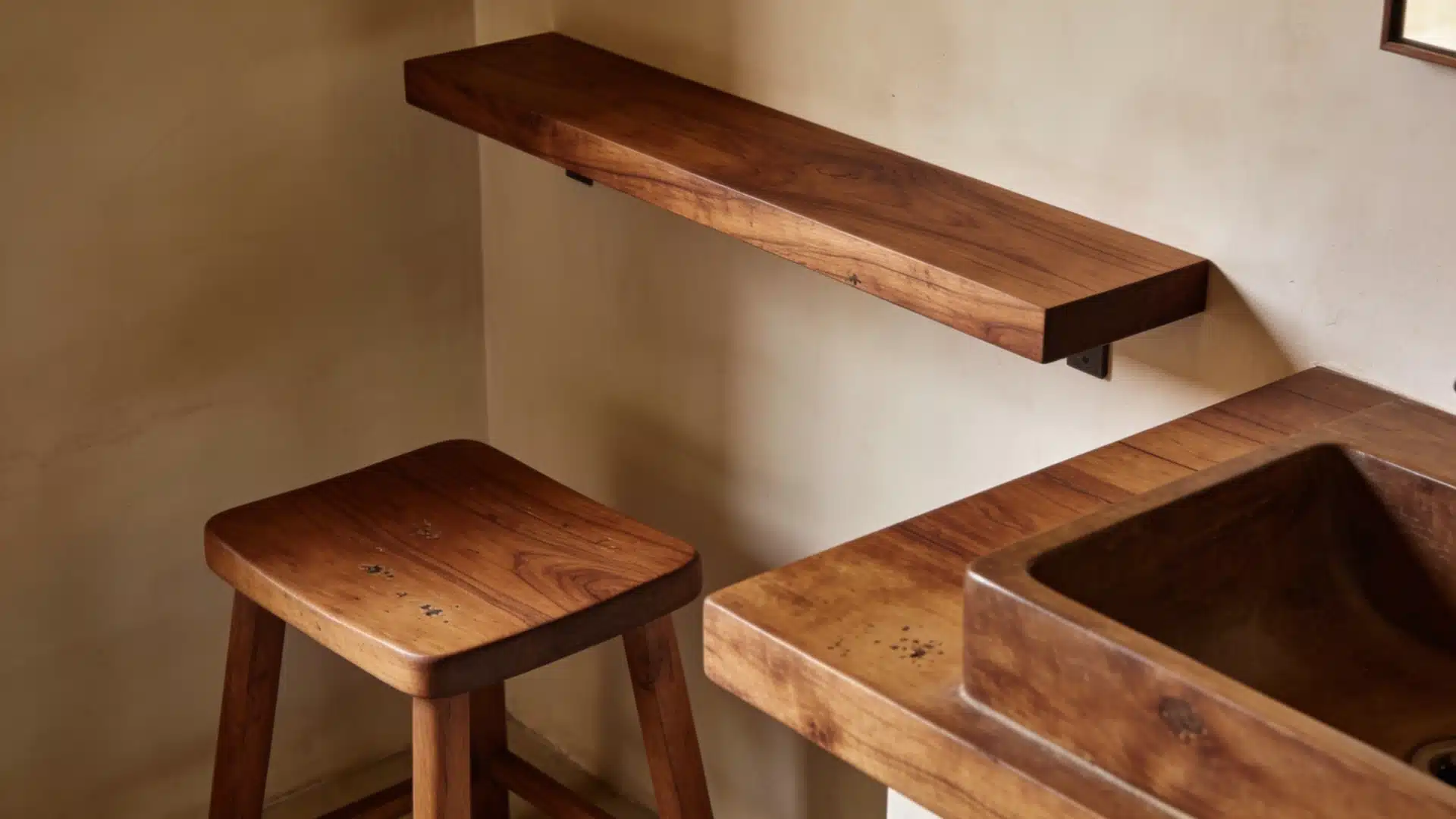
Teak wood offers exceptional durability in humid bathroom environments. The high oil content makes it extremely water-resistant.
Teak works well for bath stools, shelving, and vanity tops. The mocha color adds richness to neutral palettes.
This hardwood requires minimal maintenance over time.
23. Rain Shower Heads
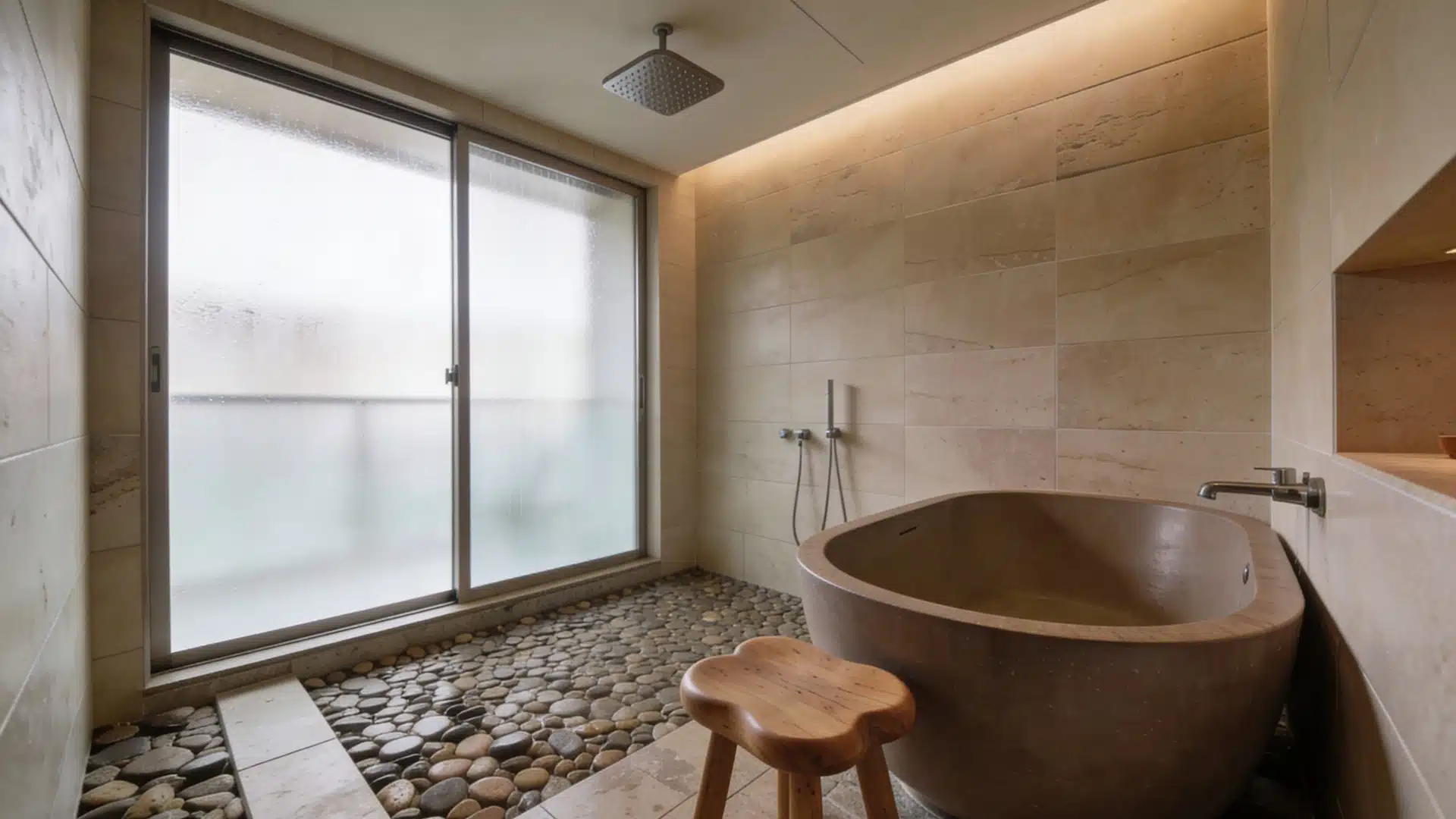
Overhead fixtures mimic the feel of natural rainfall. The gentle water flow creates a soothing bathing experience.
Rain showers work well in wet room layouts. Chrome or matte black finishes suit minimalist aesthetics.
This feature significantly enhances the spa-like atmosphere.
How to Adapt Japanese Bathroom Design to Modern Homes?
Modern homes can incorporate traditional elements without complete renovations.
- Start with a deep soaking tub, even in compact spaces, since soaks use vertical depth to save floor area.
- Install frosted glass partitions instead of curtains to separate wet zones while maintaining open sightlines throughout.
- Add wooden accents through bath stools, caddies, and shelving rather than covering entire walls with panels.
- Use neutral paint colors in beige, gray, and white to create the calm palette without costly tile work.
- Place potted plants like ferns and bamboo on shelves or counters to bring natural elements indoors easily.
- Choose floating vanities with hidden storage to achieve clean lines and uncluttered surfaces in any bathroom, regardless of size.
- Maintain wood elements by wiping moisture after each use and ensuring proper ventilation to prevent mold growth.
Wrapping Up
Natural materials, thoughtful layouts, and calm palettes work together to create a peaceful Japanese bathroom design.
Small changes can have a significant impact without complete renovations. Start with one element that speaks to the space and budget.
Whether adding a wooden stool or changing the color scheme, each step moves closer to tranquility.
Ready to create a serene bathing space?
Frequently Asked Questions (FAQs)
1. How Does Showering Work in Japan?
Japanese bathers shower seated on a wooden stool before entering the tub, washing and rinsing off completely first, then soaking in clean, hot water.
2. What Bathroom Color is Timeless?
Warm white, soft beige, and muted grey never date. These neutral tones work across every material and style.
3. Why are Japanese Bathrooms Different?
They treat bathing as a ritual, not a routine. Wet and dry zones are separated, natural materials dominate, and the entire space is designed around relaxation.