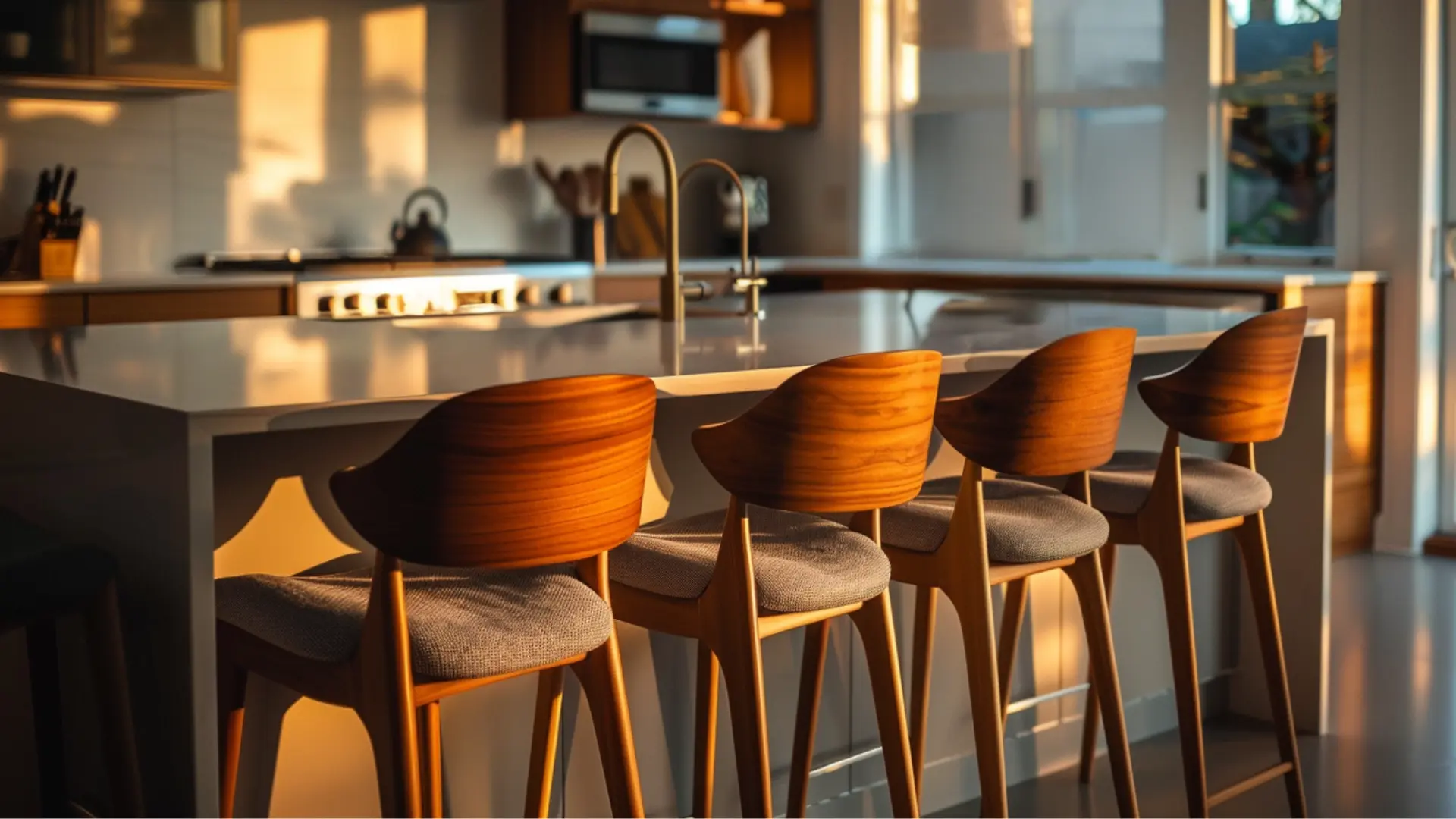
You’re scrolling through bar stools online, wondering which ones will actually work with your kitchen island, and the measurements all blur together.
Pick the wrong height and you’ll know immediately: knees hitting the cabinet face, shoulders too high at the counter, stools that technically fit but feel off every single time you sit down.
Nobody wants that.
Once you know the basic measurements, this decision becomes much easier.
Difference Between Height and Depth
Height and depth are two measurements that describe completely different things.
Height is the number everyone checks. Depth is the one they forget (until the counter feels too narrow to use properly or the overhang leaves no room for knees).
| Measurement | Standard Range | Why It Matters |
|---|---|---|
| Standard Counter Height | 36 inches | Affects posture and comfort during food prep |
| Bar Counter Height | 42 inches | Changes the feel from functional to social |
| Standard Depth | 24 to 25 inches | Determines usable prep area |
| Overhang Depth | 1 to 1.5 inches | Creates legroom and seating comfort |
| Island Depth | 25 to 27 inches | Allows two people to work comfortably on opposite sides |
A counter can be the perfect height and still feel frustrating if the depth is wrong.
Height controls comfort and posture. Depth controls function and usability. Both need to work together, because getting one wrong affects the entire workspace.
What Counts as Standard Counter Height?
The standard average counter height is 36 inches from the floor to the top of the counter.
This measurement became the norm because it works well for most adults when they’re cooking, chopping, or doing dishes.
Kitchens and dining areas stick with this height because it’s comfortable for everyday tasks.
You’re not bending too much or reaching too high. It also pairs easily with standard dining chairs, which are usually about 18 inches tall.
Taller users over 6 feet may find slightly higher counters reduce strain. Standard height still suits the majority of everyday cooking tasks.
The 36-inch standard is also the baseline referenced in ADA accessibility guidelines, which is why it works for the widest range of users, including wheelchair access.
Standard Dimensions and Heights of Different Counter Types
Most kitchens follow the exact counter measurements.
Knowing these numbers helps you pick the right stools and plan your space without guessing.
1. Standard Kitchen Counter Height and Depth
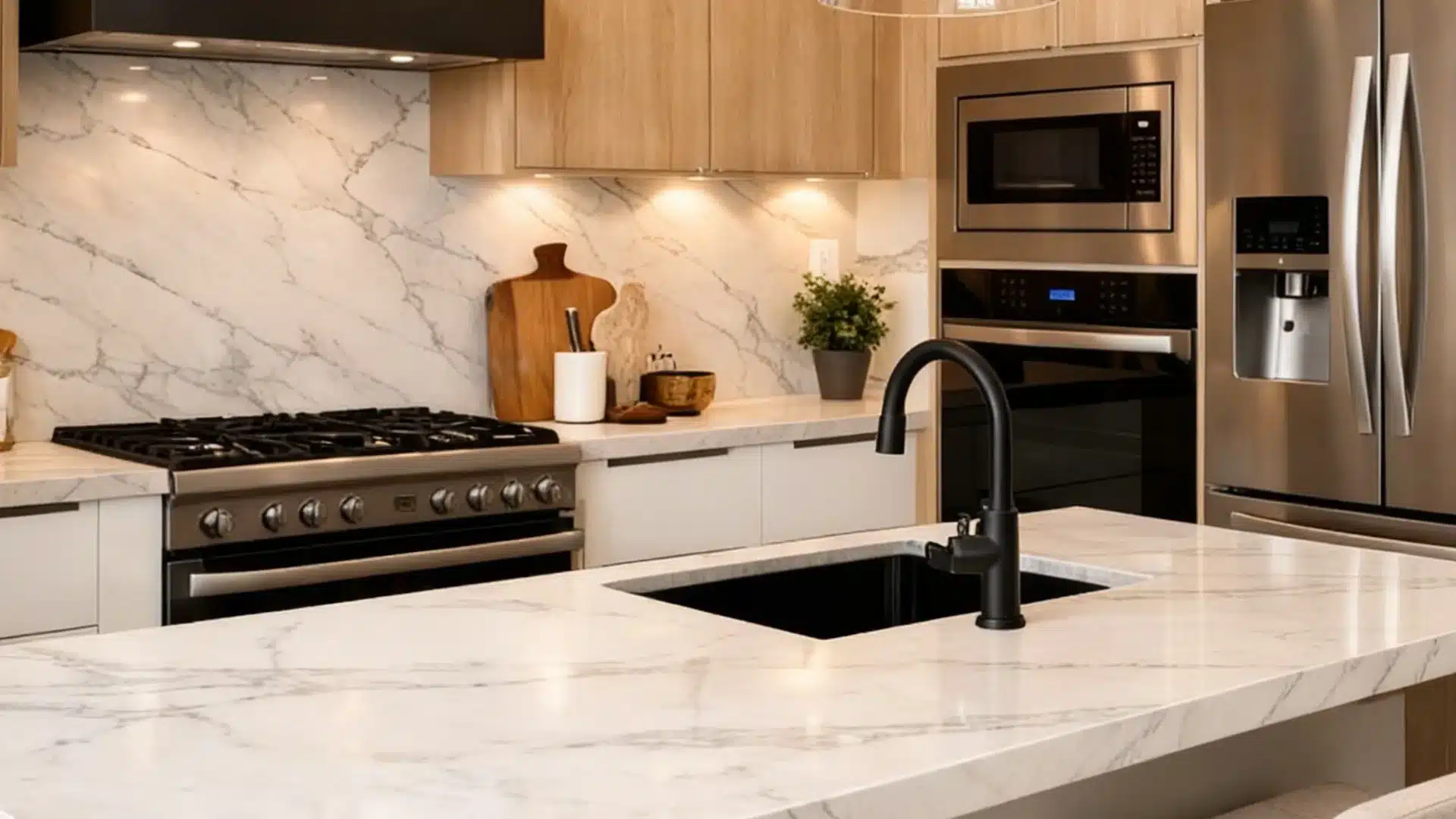
The standard kitchen counter sits at 36 inches high with a depth of 24 to 25 inches, but specifics shift depending on where the counter sits and what it needs to do.
- Perimeter counters follow the standard 36 inch height and align with base cabinet sizing
- Kitchen islands run slightly deeper at 25 to 27 inches and step up to 42 inches when doubling as a seating area
- Prep counters are sometimes dropped to 34 inches in custom kitchens to make heavy tasks like kneading less demanding
- Utility counters follow standard height but often run shallower at 20 to 22 inches
Prep counters dropped to 34 inches make a noticeable difference during longer cooking sessions. Worth considering in a custom build.
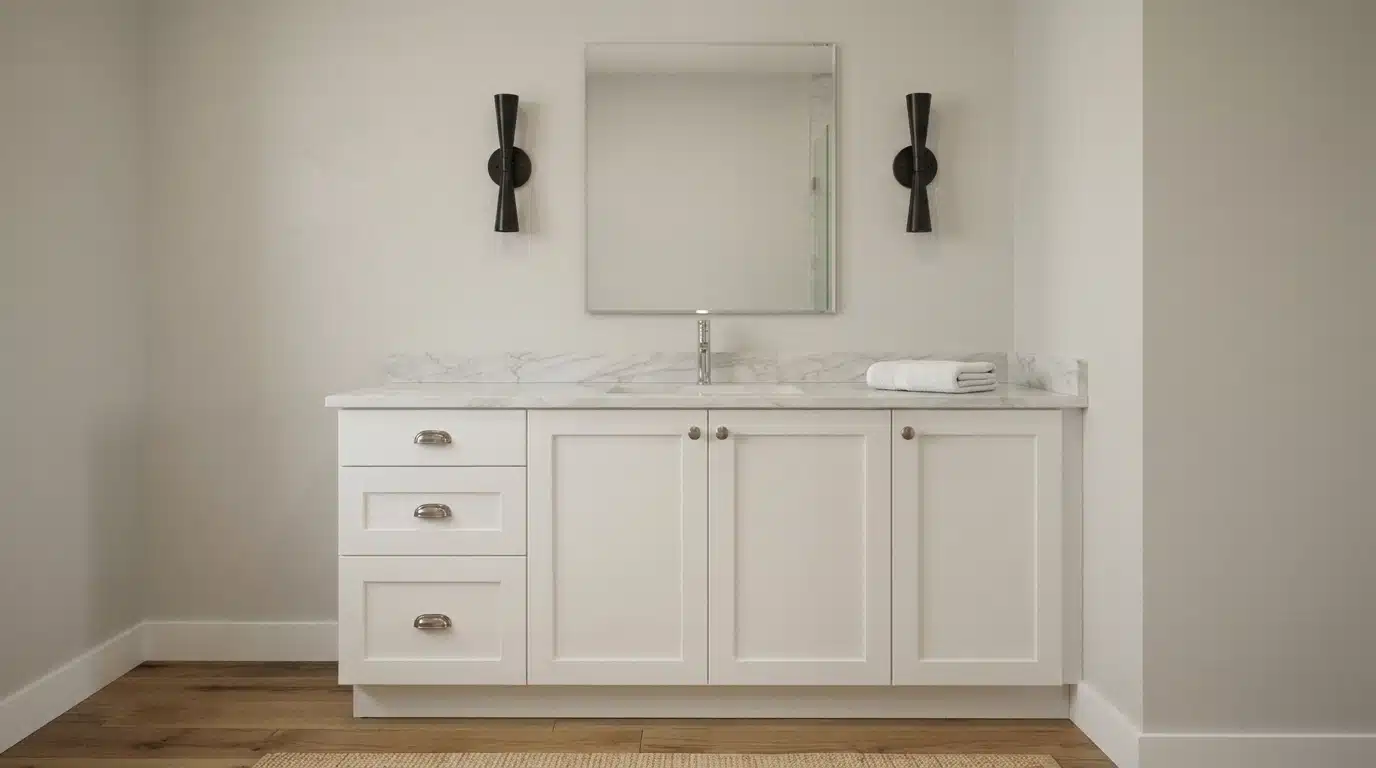
2. Standard Bathroom Counter Height and Depth
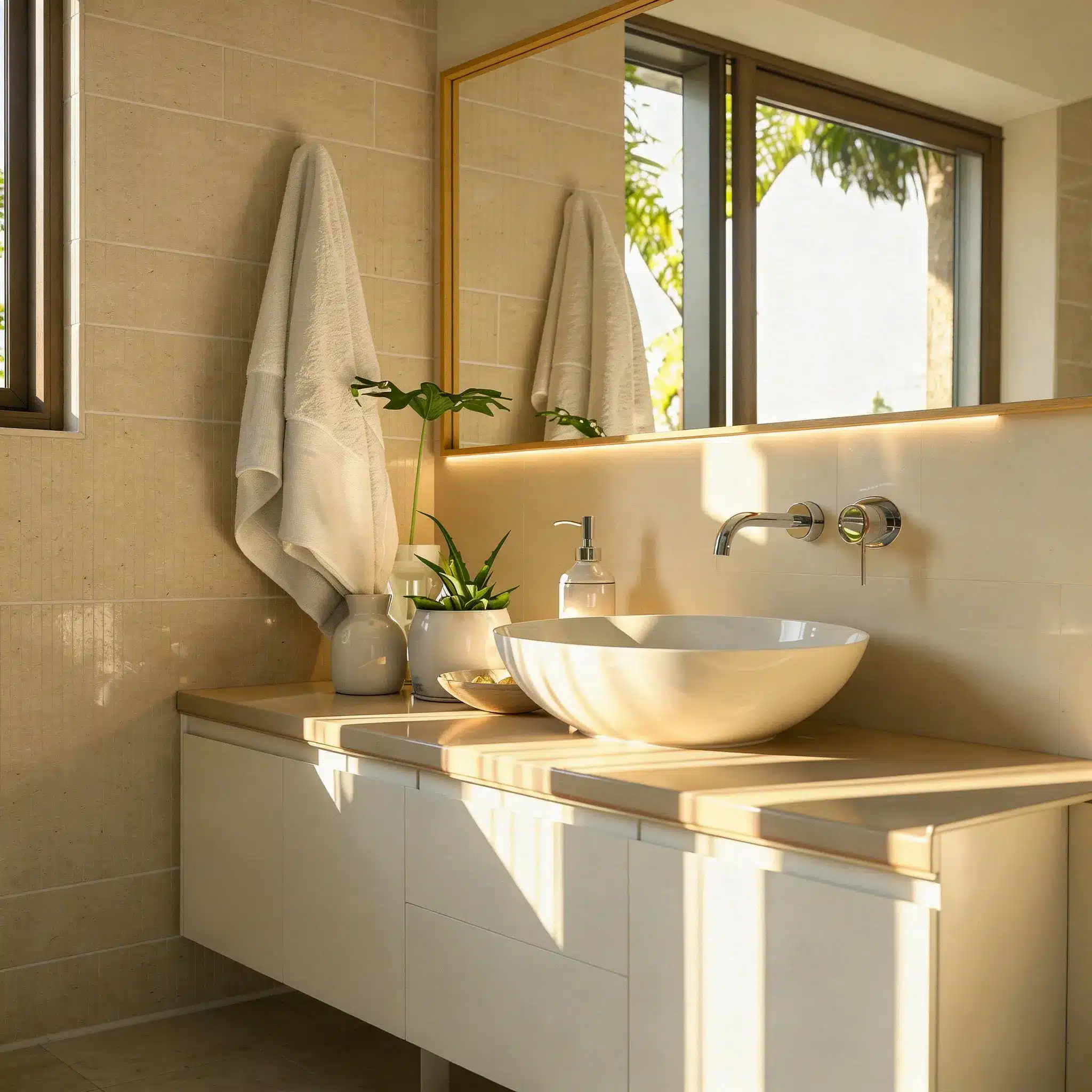
Bathroom counters traditionally sat at 32 inches, but most modern vanities now sit at 34 to 36 inches, which feels more natural for adults and reduces the need to bend forward at the sink.
Depth runs shallower than a kitchen at 20 to 22 inches to suit smaller floor plans.
A few things worth knowing:
- Vessel sink vanities work better at a lower base of 30 to 31 inches, so the combined height stays comfortable
- Shared family bathrooms suit 32 to 34 inches to accommodate a range of heights
- En suite bathrooms can go up to 36 inches for taller adults
Always factor in who uses the bathroom most before fixing the vanity height. A vessel sink changes the calculation entirely.
3. Bar Height and Depth
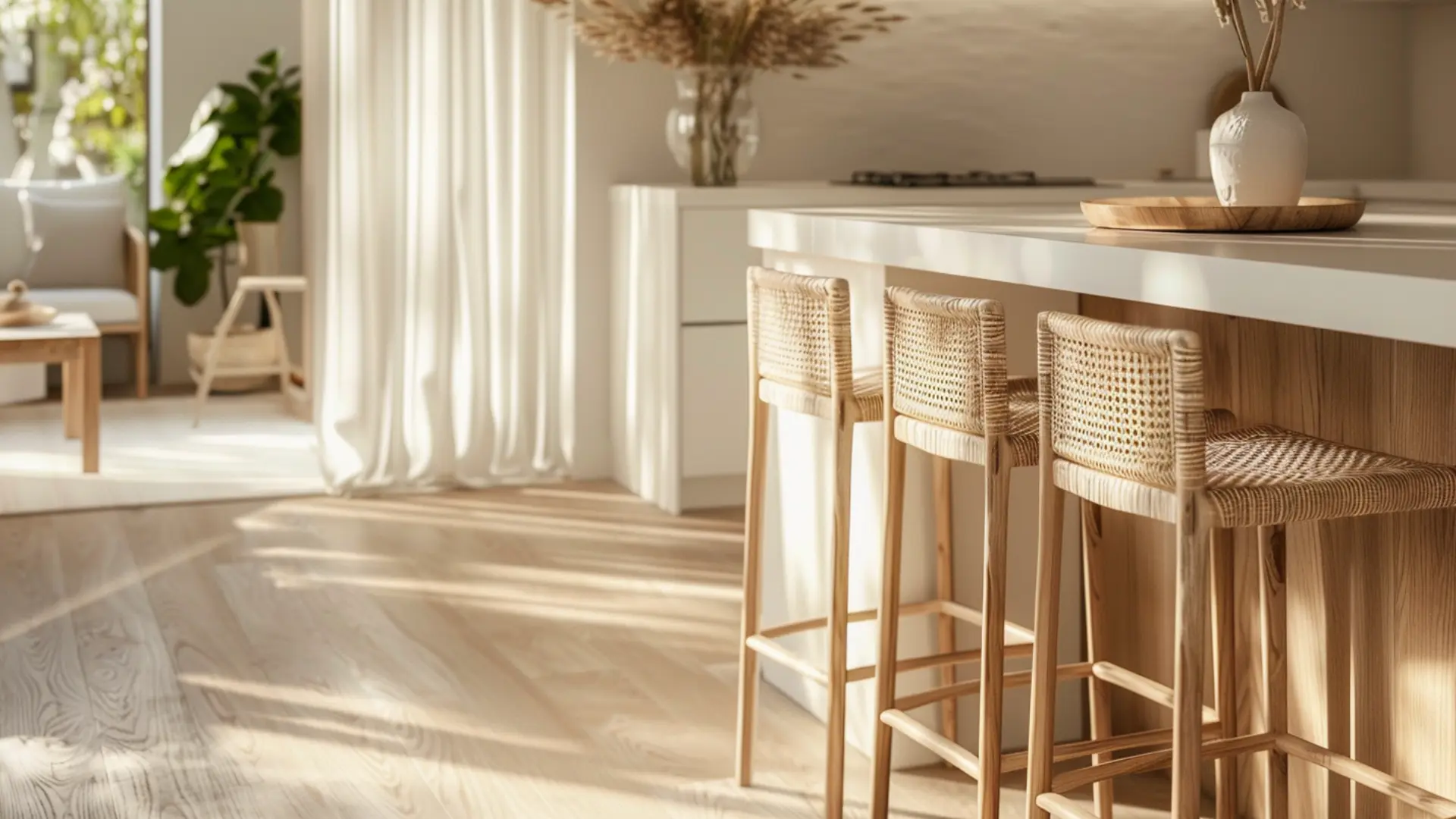
Bar counters are 42 inches high, 6 inches higher than a standard kitchen counter.
Depth is usually kept between 12 and 16 inches for seating-only counters, and closer to 24 inches when the surface also serves as a serving area.
Bar stools at 28 to 30 inches pair correctly with this height, maintaining the 10 to 12 inch legroom gap that keeps seating comfortable.
Why are these the Fixed Standards?
Standard counter measurements exist because they balance comfort, usability, and efficiency for most people.
Builders and designers settled on sizes like 36 inches high and 24 to 25 inches deep because they reduce strain during daily tasks like cooking, cleaning, and prepping.
These dimensions also align with appliance sizes, cabinet manufacturing, and building practices, making installation simpler and more cost-effective.
Keeping consistent standards ensures countertops, stools, and storage all work together without custom adjustments.
They suit most households well, though slight adjustments can always be made to fit specific needs.
Standard Counter Height vs Bar Height
Choosing between standard and bar height comes down to how the space gets used and who needs to access it.
A standard counter height of 36 inches is the practical choice for most households.
It suits food prep, works for a range of heights, and is the more accessible option for children, shorter adults, and anyone with mobility considerations.
A bar height of 42 inches works better in social spaces.
Both stool heights are designed to maintain 10 to 12 inches of clearance between the seat and the counter, the sweet spot for comfortable legroom without feeling cramped or too loose.
| Feature | Standard Counter Height | Bar Height |
|---|---|---|
| Height | 36 inches | 42 inches |
| Seating | Counter stools (24-26 inches) | Bar stools (28-30 inches) |
| Standing comfort | Easy reach for food prep | Requires reaching up slightly |
| Sitting comfort | Works with dining chairs, too | Needs taller stools only |
| Accessibility | Better for kids and shorter adults | More complex for children with mobility issues |
| Space feel | Opens up sightlines | Creates visual separation |
| Best for | Family kitchens, wheelchair access | Entertaining, hiding clutter |
How to Measure and Plan for the Correct Counter Height?
Getting accurate measurements means your new counters and stools will fit perfectly the first time.
Supplies You’ll Need
Measuring a kitchen counter sounds straightforward until something does not fit. Wrong depth, miscalculated length, or a missed custom feature can mean wasted materials and costly delays.
Taking the time to measure properly from the start makes everything that follows significantly easier.
| Item | Purpose |
|---|---|
| Tape measure | Measuring height, depth, and length |
| Pencil and paper | Recording measurements |
| Calculator | Computing square footage |
| Straightedge | Ensuring straight lines |
Step 1: Measure the Height
Start at the floor and measure straight up to the top of the counter.
Floors are not always perfectly level, so check multiple spots and write down each reading separately. Use the most consistent figure when planning.
Step 2: Measure the Depth
Place the tape measure at the front edge of the counter and pull it straight back to the wall.
Depth can vary slightly across a kitchen, so record each counter section individually rather than assuming they all match.
Step 3: Measure the Length
Break the counters into rectangular sections and measure each one from end to end.
Key things to keep in mind:
- Do not try to measure around fixtures in one go
- For sections with a sink or cooktop, measure both sides separately
- Label each section clearly so nothing gets confused later
Step 4: Calculate Square Footage
Multiply the length by the depth for each section to get square inches, then divide by 144 to convert to square feet. Add all sections together for the total counter area.
A few things worth doing:
- Round up slightly when ordering materials
- Add a small buffer for cuts and waste
- Keep each section’s calculation separate before adding the total
Step 5: Measure Custom Features
Planning a waterfall edge or an oversized island? Measure the height, depth, and length of each custom feature separately and keep them clearly labeled.
These details are easy to overlook but costly to get wrong once materials are ordered.
Step 6: Double Check Everything
This step gets skipped more often than it should.
Go back over every measurement before committing to anything.
The standard 36 inch height and 24 to 25 inch depth suit most kitchens, but adjustments may still be needed based on:
- Who uses the kitchen most, and their height?
- Whether accessibility needs to be considered.
- How is the space used day to day?
The standard 36-inch height and 24 to 25-inch depth work for most kitchens, but your space might need adjustments based on how you cook and who uses the kitchen.
Seating and Multiuse Counters – What to Know and How to Make Them Comfortable Spaces
%20(1).webp)
A counter that doubles as a seating area needs to work harder than a standard prep surface.
The height, depth, and overhang all play a role in how comfortable the space actually feels day to day. Too shallow, and there is no legroom. Too high and the stools never quite fit.
Not enough overhang, and sitting feels awkward against the cabinet face.
Getting these details right from the start means the counter works equally well for morning coffee, casual meals, homework, and everyday kitchen life, without compromise.
It is one of those planning decisions that feels small until it is wrong, and then it is all anyone notices.
Tip: A minimum 12 inch overhang is needed for comfortable seating. Less than that and knees hit the cabinet face every time.
Final Thoughts – Going for the Right Countertop Height
Standard counter height is 36 inches, while bar height is 42 inches.
The right choice depends on who uses your kitchen and how you use it. Families with kids usually do better with standard height.
Bar height works when you want a spot for casual meals or need to divide up an open floor plan.
Getting the height wrong means uncomfortable seating and wasted money.
What counter setup works best in your kitchen?
People Also Ask
1. Can Counter Height be Customized During a Kitchen Renovation?
Yes, custom counters can be built to any height depending on personal preference and specific needs.
2. What Material Works Best for a Bar Height Counter Overhang?
Quartz and granite are the most durable choices as they handle weight and daily wear without cracking.
3. Do Counter Height Standards Differ Between the US and Europe?
Yes, European kitchen counters typically sit at 34 to 35 inches, slightly lower than the American standard.
4. Can You Mix Standard and Bar Height Counters in the Same Kitchen?
Absolutely, many kitchens use standard height for prep areas and bar height for island seating successfully.
5. What is the Ideal Knee Clearance for Seated Counter Work?
A minimum of 10 to 12 inches between the seat and the underside of the counter keeps seating comfortable.