Your couch is against the wall. Your bed faces the door.
Everything looks fine on paper, so why does the house still feel wrong?
Feng shui house layout says the problem isn’t always what you see.
It’s about how energy moves through your home. A poorly placed mirror, a blocked front door, a bedroom next to the kitchen, small things quietly affect your mood, your sleep, and your relationships.
This blog lays out exactly how feng shui works room by room, so you can make changes that actually stick.
What Balance Signifies in a Feng Shui House Layout
Balance in feng shui isn’t about superstition.
It’s about how comfortable and usable your home feels day to day. When your layout works with your routine, not against it, mornings run smoother and evenings feel easier.
A perfect setup matters far less than one that simply flows.
In fact, moving a single chair or clearing a walkway can shift the whole mood of a room.
Balance is something you feel, not something you achieve once and forget.
How Energy Should Move Through a Home
In feng shui, energy called Chi is about movement, not decoration. It needs to enter, circulate, and settle naturally through your space.
- Chi moves; it doesn’t sit: It needs clear paths through every room, without getting stuck or rushing straight out.
- Straight-line layouts cause problems: When your front and back door line up, Chi moves too fast. It doesn’t get a chance to settle, and the home can feel restless because of it.
- Blocked pathways create quiet stress: A cramped hallway or furniture that cuts off a natural walkway doesn’t just look untidy, it affects how relaxed you feel as you move through the space.
The goal isn’t a showroom. It’s a home where movement feels natural from the moment you walk in.
Feng Shui House Layout Principles that Actually Work
Some principles sound complicated, but most come down to simple, common-sense decisions about space.
Keep the front entry open and clutter-free
A clear entrance lets energy settle into your home rather than getting stuck at the door.
Place seating with a solid wall behind it
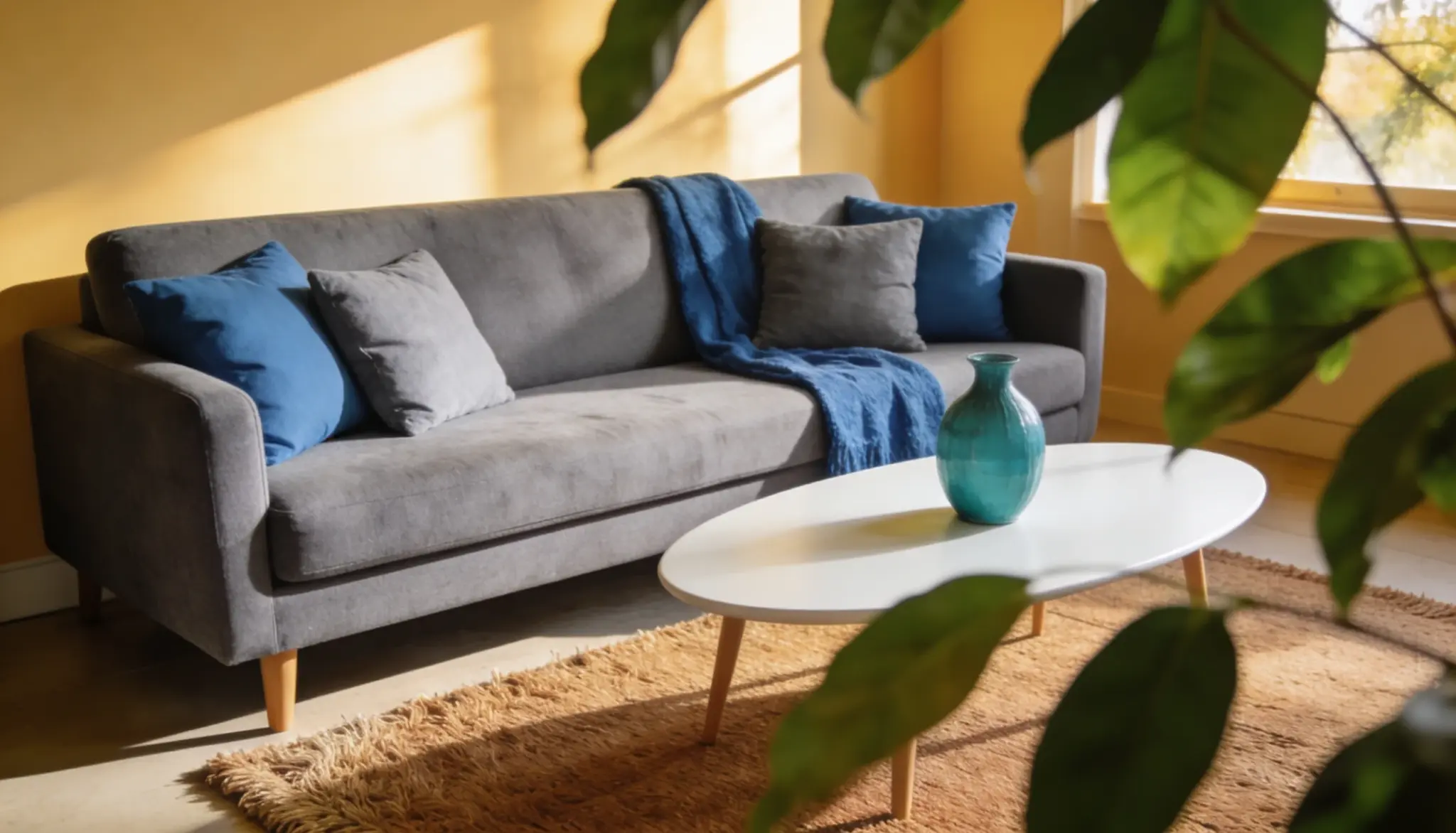
Chairs and sofas facing the room with a wall at the back create a sense of security and calm.
Keep the kitchen and bedroom separate
These two rooms carry very different energy. Having them side by side can quietly affect both sleep and appetite.
Let natural light reach the main living areas
Bright, well-lit spaces feel more alive and easier to spend time in.
Avoid placing beds directly opposite doors
It creates a sense of exposure that can interfere with rest, even if you don’t notice it right away.
Feng Shui House Layout Shapes and Direction that Work Best
Your home’s shape plays a bigger role in how it feels than most people realize.
| Layout Shape | Ideal Dimensions | How it Feels | Fix if Needed |
|---|---|---|---|
| Square | 20×20 ft or 30×30 ft | Stable, balanced | No major changes needed |
| Rectangle | 20×30 ft or 25×40 ft | Steady, easy to arrange | Works well as-is |
| L-Shape | 30×40 ft with 10×15 ft cut | Uneven energy flow | Add lighting to the corner |
| T-Shape | 40×30 ft with 10×20 ft wing | Scattered feeling | Define each zone clearly |
| Irregular | Varies, no clear ratio | Unsettled, hard to balance | Use furniture to fill missing corners |
Square and rectangular homes tend to feel grounded. Energy moves evenly, and rooms connect naturally.
Irregular shapes aren’t a dealbreaker, but they do need a little more thought. A well-placed lamp or a defined seating area can bring a tricky corner back into balance.
The Ideal Entry Layout: Setting up The Entire Home
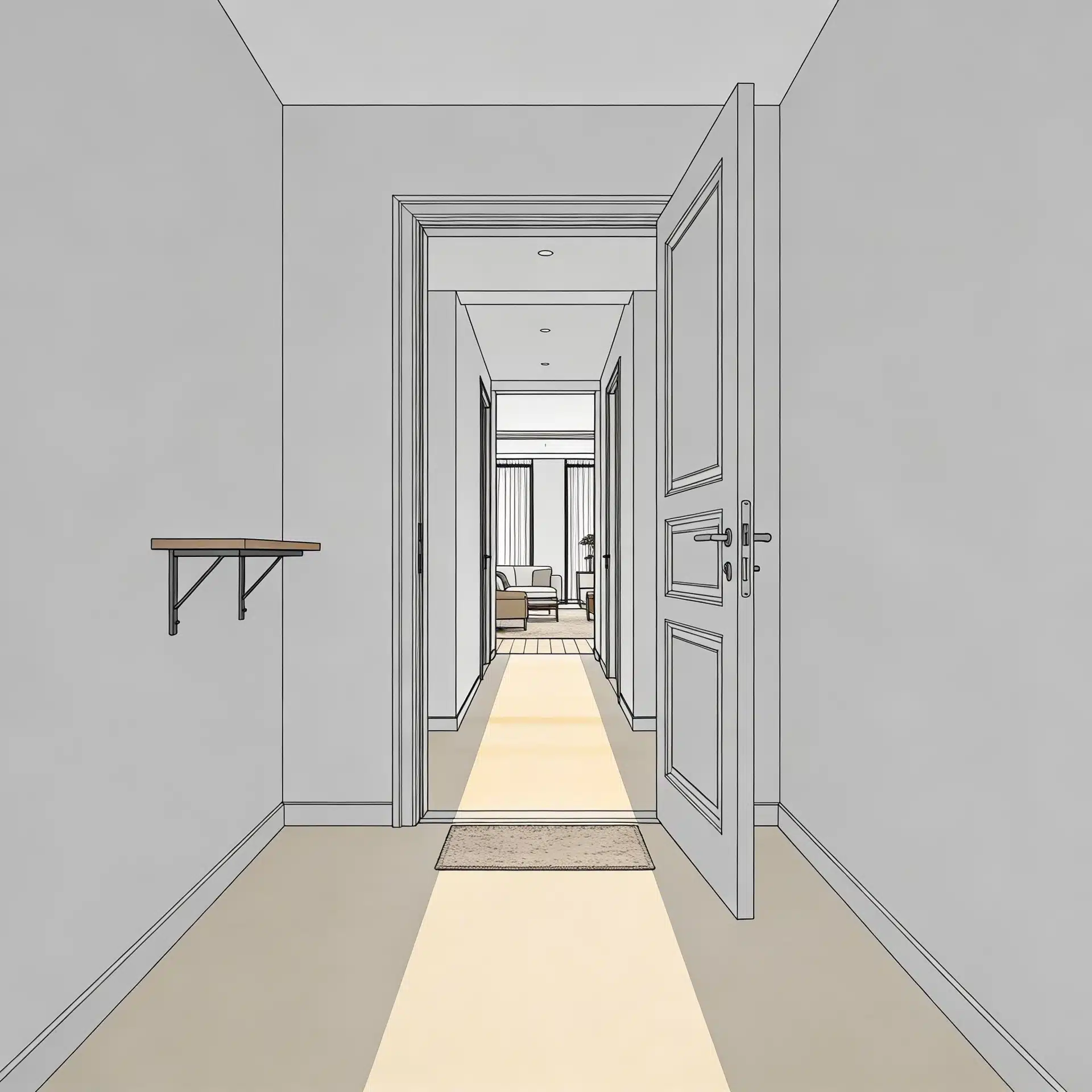
The front door sets the tone for everything inside.
A clear, open entry, ideally 6×8 ft or larger, gives energy a chance to settle before it reaches the main living areas. A small transition space, even as small as 3×4 ft, acts as a buffer between the outside world and your home.
Keep it free of shoes, bags, and clutter.
Signs Your Entry Layout Needs Fixing
Poor entry layouts show up in ways you might not connect to the front door at first.
- The door opens directly into a wall or furniture
- There’s no clear path from the entry to the main living area
- Shoes, bags, or storage crowd the entrance
- The entry feels dark even during the day
- The front door is blocked or hard to open fully
Living Room Placement
The living room feng shui works best when it sits close to the front entry but not directly in line with it. Standard sizes of 12×18 ft or 15×20 ft provide enough room to move freely.
Seating should face inward, creating a natural space for conversation. A grounded, open layout makes the room easy to be in without feeling exposed.
Keep a clear view of the entrance
Seating should face toward the door, not away from it, but avoid placing sofas directly in line with it.
Balance open space with furniture
Avoid empty spaces and heavy furniture; aim for a layout that makes movement natural and easy.
Pull furniture away from the walls
Pushing furniture to the edges makes a room feel cold and disconnected. Keep at least 18 inches between furniture and walls.
Kitchen Placement: Supporting Health and Daily Rhythm
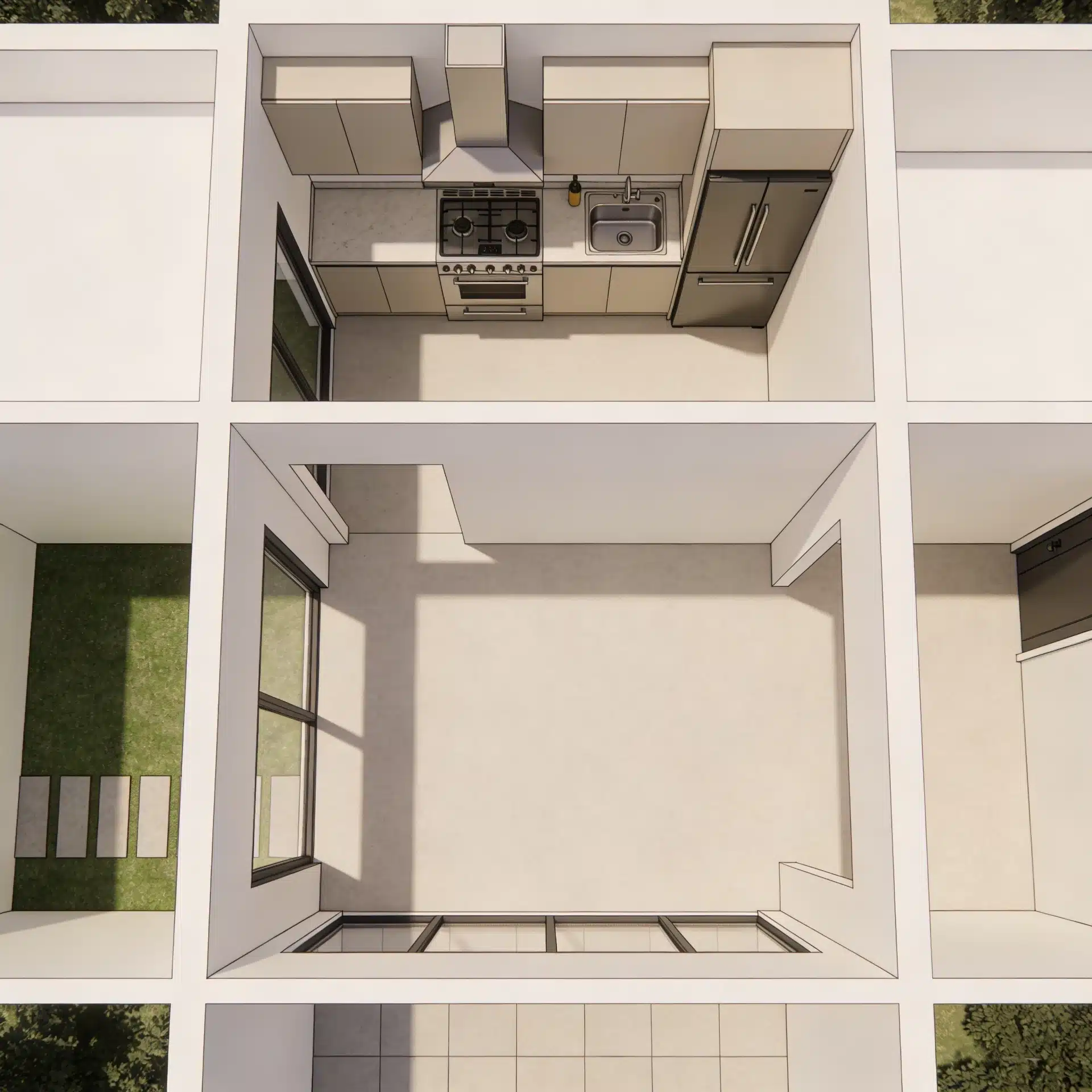
Ideally, it sits toward the back of the home, away from the front door.
A standard kitchen of 10×12 ft or 12×15 ft works well when it has a clear separation from the main entry.
The cook should face the room, not a wall, with a comfortable work triangle between the stove, sink, and fridge, each point at 4 to 9 ft.
Common Kitchen Feng Shui House Layout Issues:
A kitchen that opens straight into the entrance pulls attention to food and cooking.
The moment someone walks in, that constant visual connection drains the home’s sense of calm. A cramped work triangle makes daily cooking feel like a chore.
Cluttered counters in a kitchen block natural energy flow and make the room harder to work in.
Bedroom Positioning: Privacy, Rest, and Stability
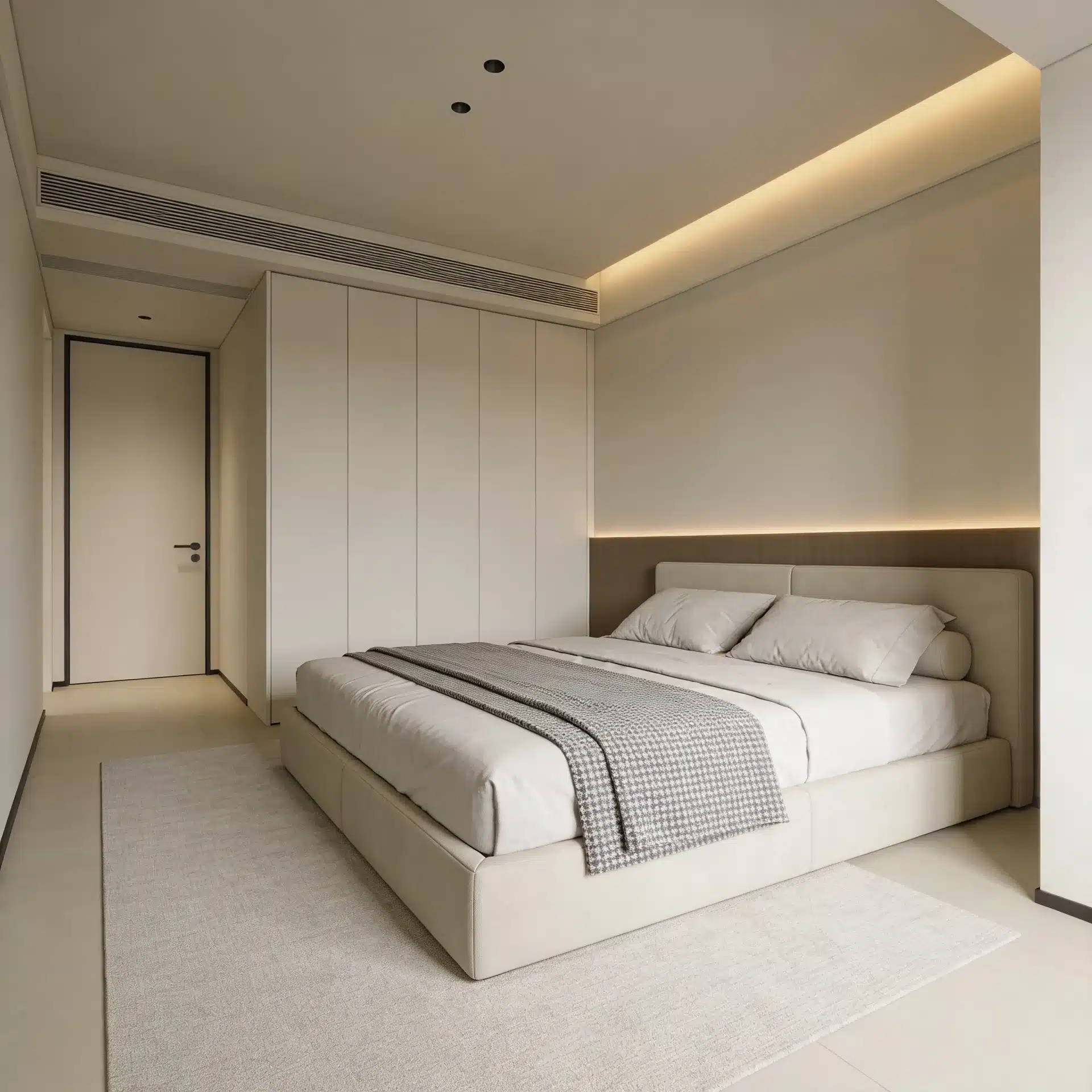
The bedroom needs to feel removed from the busier parts of the home.
Ideally, it sits at the back or far end of the layout, away from the kitchen, living room, and front entry.
- Place the bed where the door is visible: You shouldn’t lie in bed facing a wall with the door behind you. Seeing the entrance from the bed creates a natural sense of security.
- Keep bedrooms away from high-traffic areas: A bedroom next to the front door or the living room picks up noise and movement, both of which work against rest.
- A standard bedroom of 10×12 ft or 12×14 ft works well: When the bed sits diagonally opposite the door, with clear space on both sides.
What Goes Wrong that Affects Sleep Quality
Small positioning mistakes quietly affect how well you sleep, often without you realizing the layout is the cause.
| Issue | Why it’s a Problem | Simple Fix |
|---|---|---|
| Bedroom near the front entrance | Too much foot traffic and noise | Move the bedroom to the back of the layout |
| Bed directly aligned with the door | Creates unease and disrupts rest | Shift the bed to a diagonal position |
| No solid wall behind the bed | Feels exposed, affects deep sleep | Place the bed headboard against a wall |
Bathroom Placement – Feng Shui House Layout
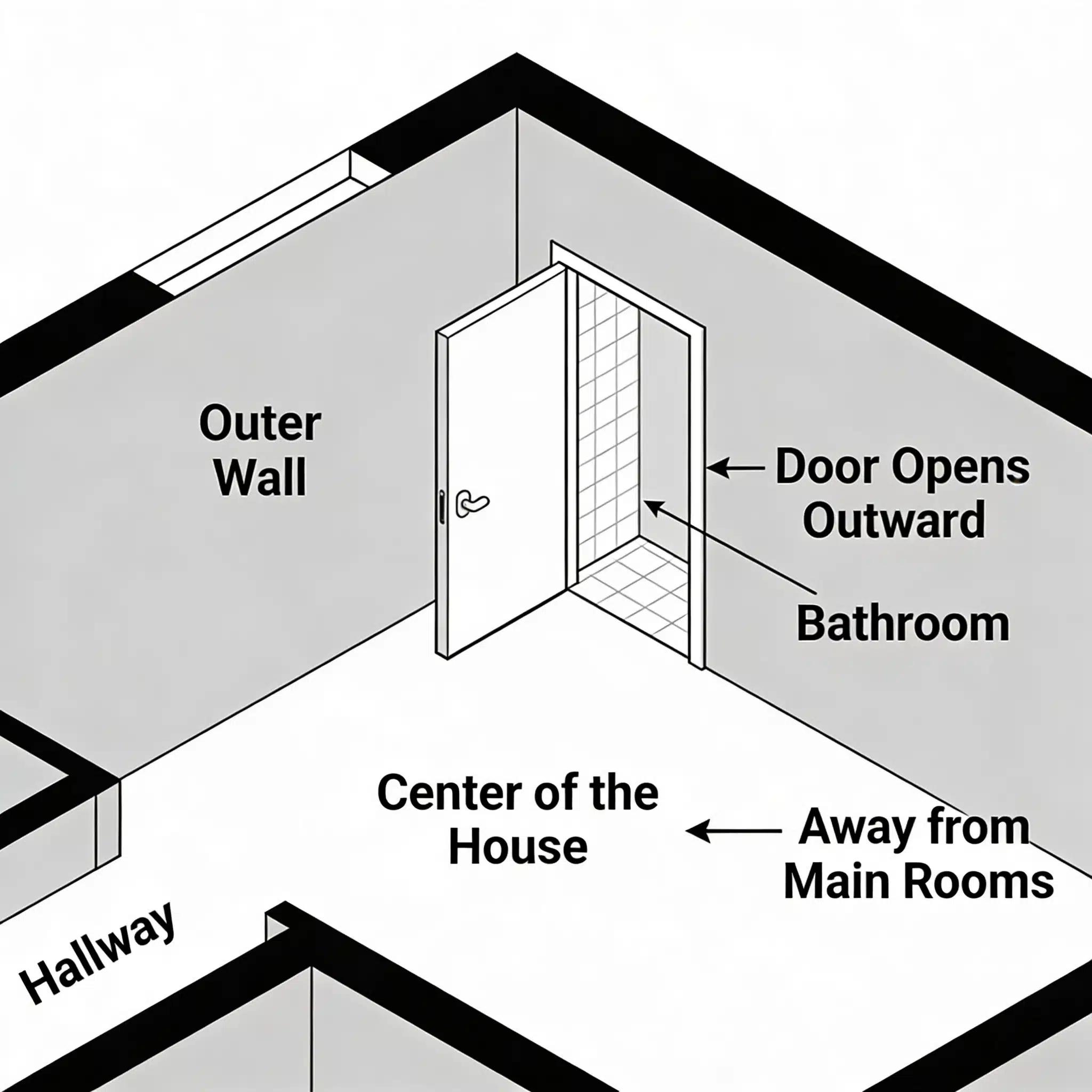
Bathrooms drain energy in feng shui, so placement is key.
Ideally, they sit along the outer walls, away from the home’s center, preferably tucked into a corner or a side.
Avoid placing them near kitchens or bedrooms. Keep doors closed, lids down, and ensure good ventilation and light to contain energy loss and prevent heaviness.
Treat the bathroom as a separate, functional space to maintain flow.
The Center of the Home: Why it Should Stay Open and Light
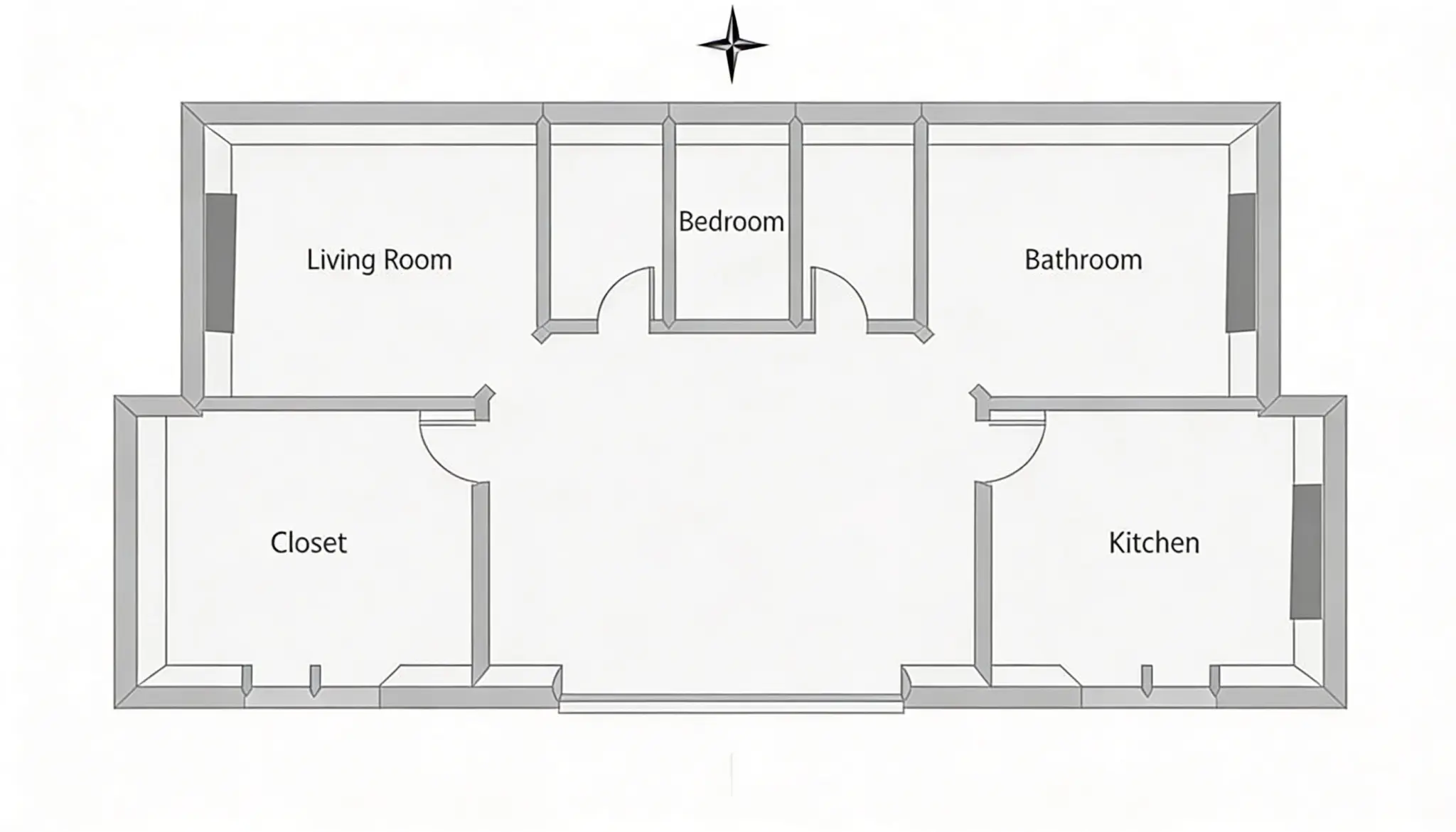
The center of your home acts as its core; it connects every room and keeps energy moving evenly.
A clear central space of at least 10 x 10 ft works best.
Heavy furniture, storage units, or cluttered surfaces in this zone slow everything down. In smaller homes, keeping a 6×6 ft central space free makes the room feel larger.
Balancing Open-Concept Homes without Losing Structure
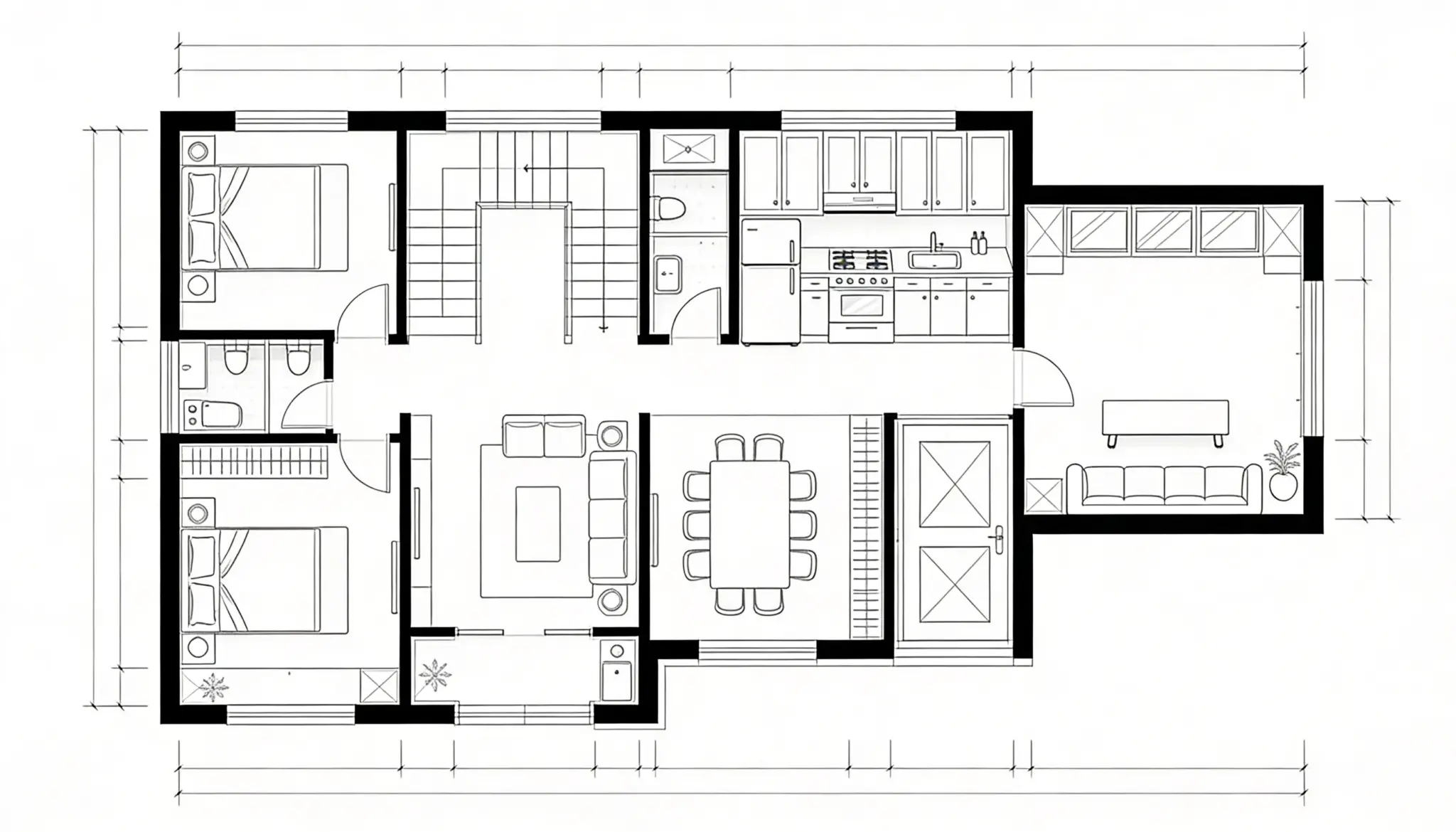
Too much openness creates its own problems, rooms blur together, and energy loses direction.
Define zones, furniture placement, and lighting instead of walls. An 8×10 ft rug anchors a seating area. A pendant light marks the dining zone.
These simple divisions give each area a clear purpose without closing the space off.
Practical Feng Shui House Layout Adjustments Easy Fixes You Can Apply Today
No home is perfect, and that’s okay. Small, practical changes often matter more than a full redesign.
| Issue | Simple Adjustment | Expected Result |
|---|---|---|
| Heavy furniture in the central space | Move to room edges or corners | The center feels open and lighter |
| Dark or dim areas | Add a floor or table lamp | Space feels more alive |
| Cluttered pathways | Clear to at least 3 ft wide | Movement feels natural |
| Misaligned seating | Reposition to face the room | Better sense of security |
| Strict rule-following over comfort | Prioritize what works for you | Home feels functional, not forced |
You don’t need a renovation to see results; a few small shifts go a long way.
- Reposition key furniture: Move the largest piece in the room so it faces inward, leaving pathways clear.
- Clear blocked walkways: Any path narrower than 3 ft creates friction, both physical and energetic.
- Fix the lighting: A poorly lit corner brings the whole room down. One well-placed lamp changes that quickly.
What is Not Good for a Feng Shui House
Mirrors facing the bed, sharp furniture corners toward seating, and dead plants in the corners hinder good energy flow. Broken fixtures, burnt-out bulbs, and squeaky doors signal neglect.
Rooms without natural light feel heavy and closed.
A home that feels hard to move through, physically or visually, is already telling you that something needs to change. Stairways facing the front door release energy too quickly.
These aren’t just style problems; they affect how comfortable and settled you feel at home every single day.
End Note!
A good feng shui house layout isn’t about following every rule perfectly.
Create a home that feels easy to live in by ensuring clear pathways, well-placed furniture, and attention to each room. Focus on one area, such as the entry, bedroom, or center.
Make one small change and see how it shifts the space. Your home should work with you, not against you.
That’s really what feng shui comes down to.
Frequently Asked Questions (FAQ’s)
1. How to Arrange Your House According to Feng Shui?
Keep entry clear, place furniture to face rooms, and maintain open pathways.
2. Is Dracaena Good Feng Shui?
Yes, dracaena plants bring clean air and steady, positive energy indoors.
3. Does Water Bring Wealth?
Flowing water near the entrance is said to attract positive energy and abundance.
4. What is the Luckiest Thing to Have in Your Home?
A clean, well-lit entrance is considered one of the luckiest home features.
5. What do You Put in an Entryway for Good Luck?
A small plant, good lighting, and an open, clutter-free space work well.