Most people who work from home rarely think about desk dimensions and height. Many simply use whatever desk they have.
It affects posture, comfort, and productivity throughout the workday.
The standard desk height that furniture manufacturers have used for decades doesn’t work for everyone.
When it’s wrong, workers experience neck pain, wrist strain, or lower back discomfort.
What is Standard Desk Height?
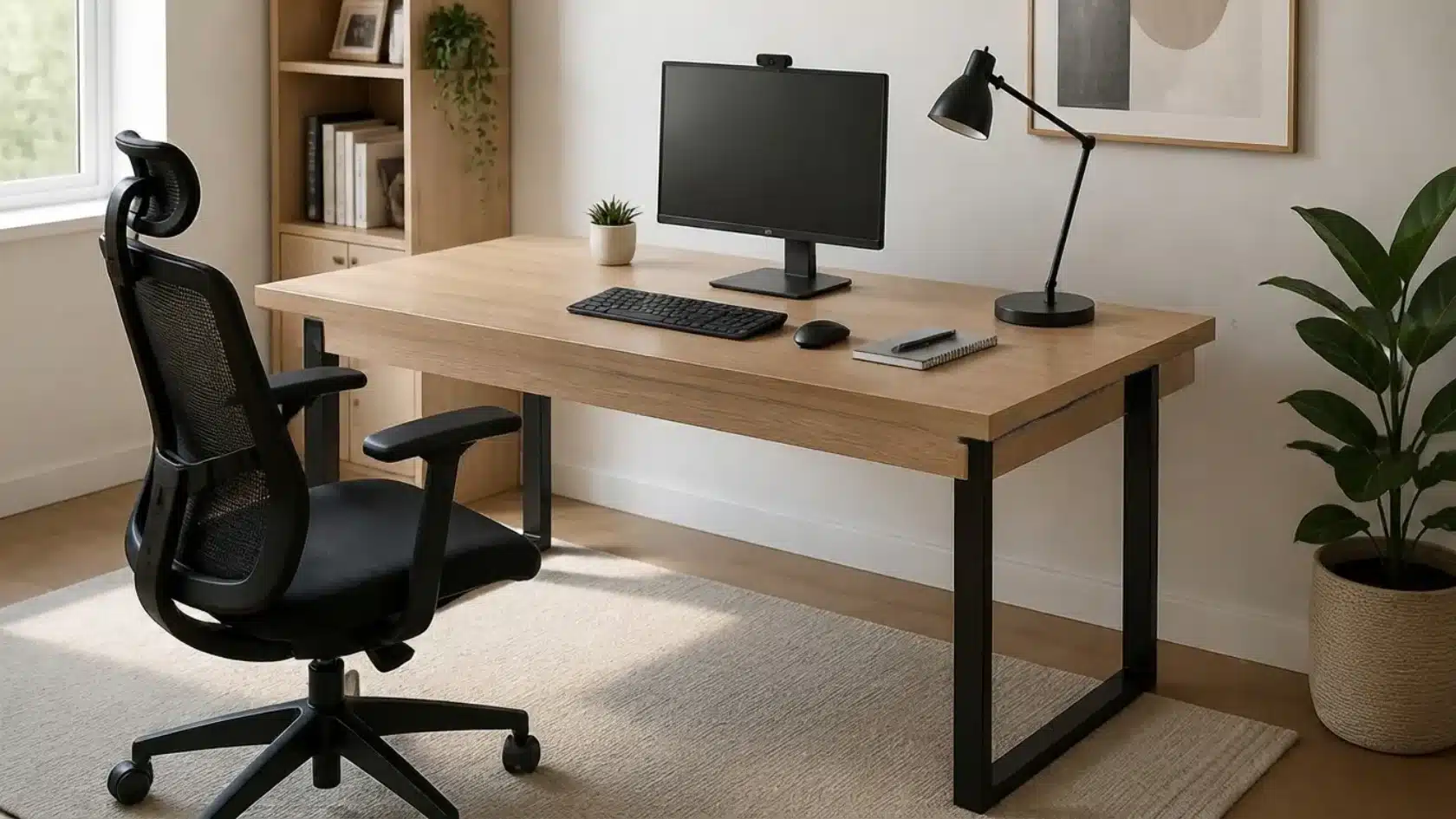
Most office desks are built to 28–30 inches (71–76 cm) tall. This became the industry standard in the 1970s and 80s based on average adult measurements.
Furniture manufacturers still use this range as the default because it works for most people, specifically anyone between 5’7″ and 5’10”.
For anyone shorter than 5’7″, the same desk sits too high. Wrists bend upward while typing, and shoulders creep toward the ears just trying to reach the keys. For those taller than 5’10″, the desk is too low, which forces hunching forward to reach the keyboard and see the screen.
Set Up the Ideal Desk Height Today
Instead of relying on standard measurements, the most accurate approach is to measure the individual’s body.
There’s no need for a complex plan. Here’s where to start:
Step 1: Measure elbow height while seated.
Step 2: Check the current desk height. Measure from the floor to the desk surface.
Step 3: Compare the two. If they’re off by more than 1 inch, you need to fix something.
Step 4: Choose the fix riser, monitor arm, footrest, or raised chair. Start with the cheapest option.
Step 5: Test it for 2–3 days. Notice if neck, shoulders, or wrists feel better. Adjust as needed.
Most people feel the difference within a few days. Neck tension eases. Wrists stop aching. Focus improves for longer periods without back pain.
Quick reference by body height:
- Under 5’2 “: Ideal height is 26–28 inches
- 5’2” to 5’6 “: Ideal height is 27–29 inches
- 5’6” to 5’10 “: Ideal height is 29–30 inches
- 5’10” to 6’2 “: Ideal height is 30–32 inches
- 6’2” and taller: Ideal height is 32–34 inches
These are approximations. An actual elbow measurement is more accurate than height alone because arm length varies independently of overall height.
Why Proper Desk Height Impacts Health and Work Performance
- Incorrect desk height forces poor posture. A desk too low causes forward hunching, straining the neck and shoulders.
- A desk too high bends wrists upward, restricting blood flow and potentially triggering carpal tunnel syndrome. Both positions stress the lower back.
- Beyond pain, proper alignment improves breathing, oxygen flow to the brain, and focus.
- Research shows proper ergonomics can boost productivity by 10–15% and reduce repetitive strain injuries.
Fixed vs. Adjustable Desks
Your height, budget, workspace constraints, and health considerations should guide which type works best for your needs and long-term work environment.
Fixed-height desks
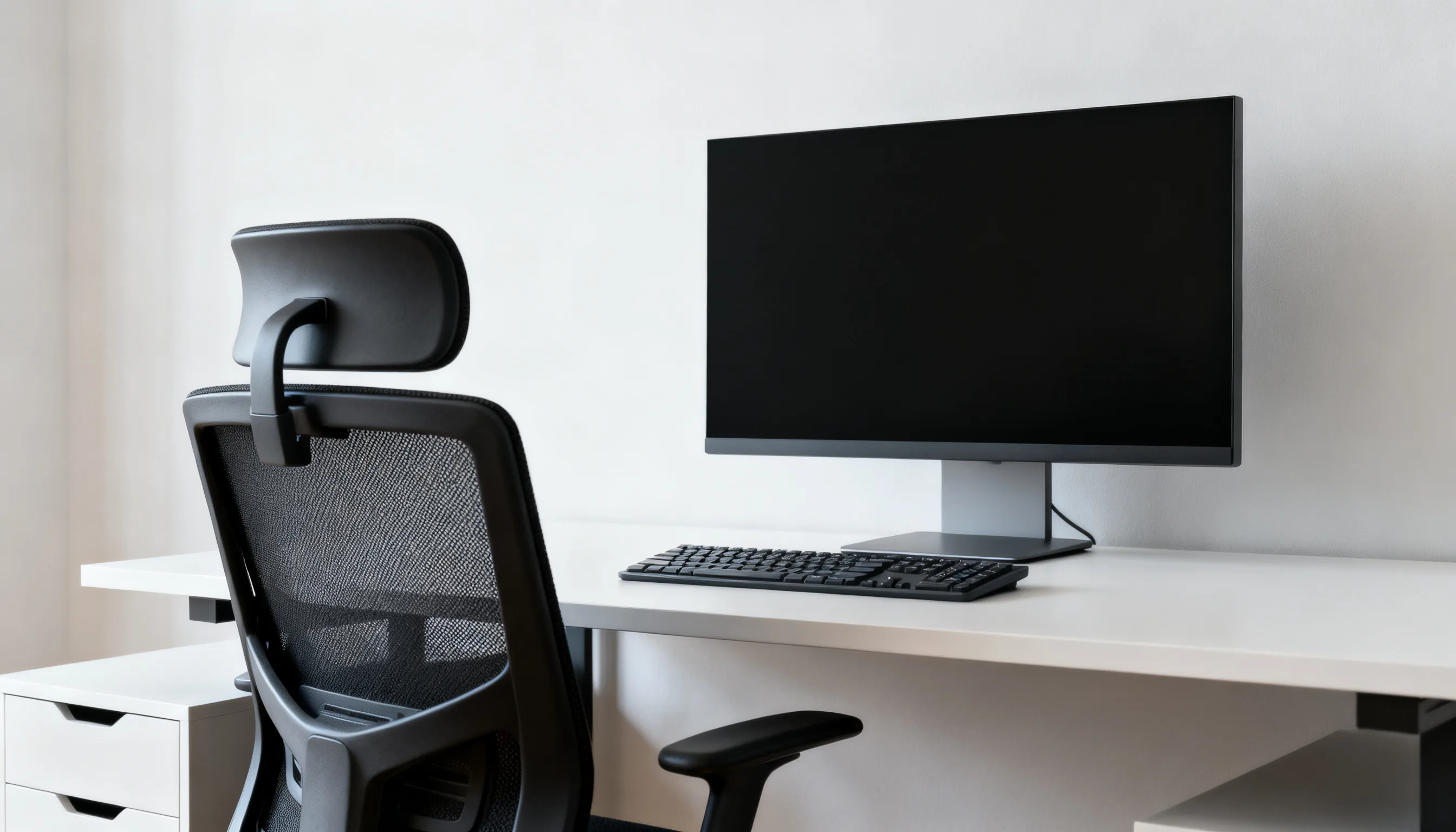
These are the standard office desks. The height doesn’t change.
They work best for people within the average height range (5’6″ to 5’10”) or those who can compensate with other solutions like monitor arms or footrests.
They’re affordable, costing $100–$400, stable, and require no maintenance.
Adjustable Desks (Standing Desks)
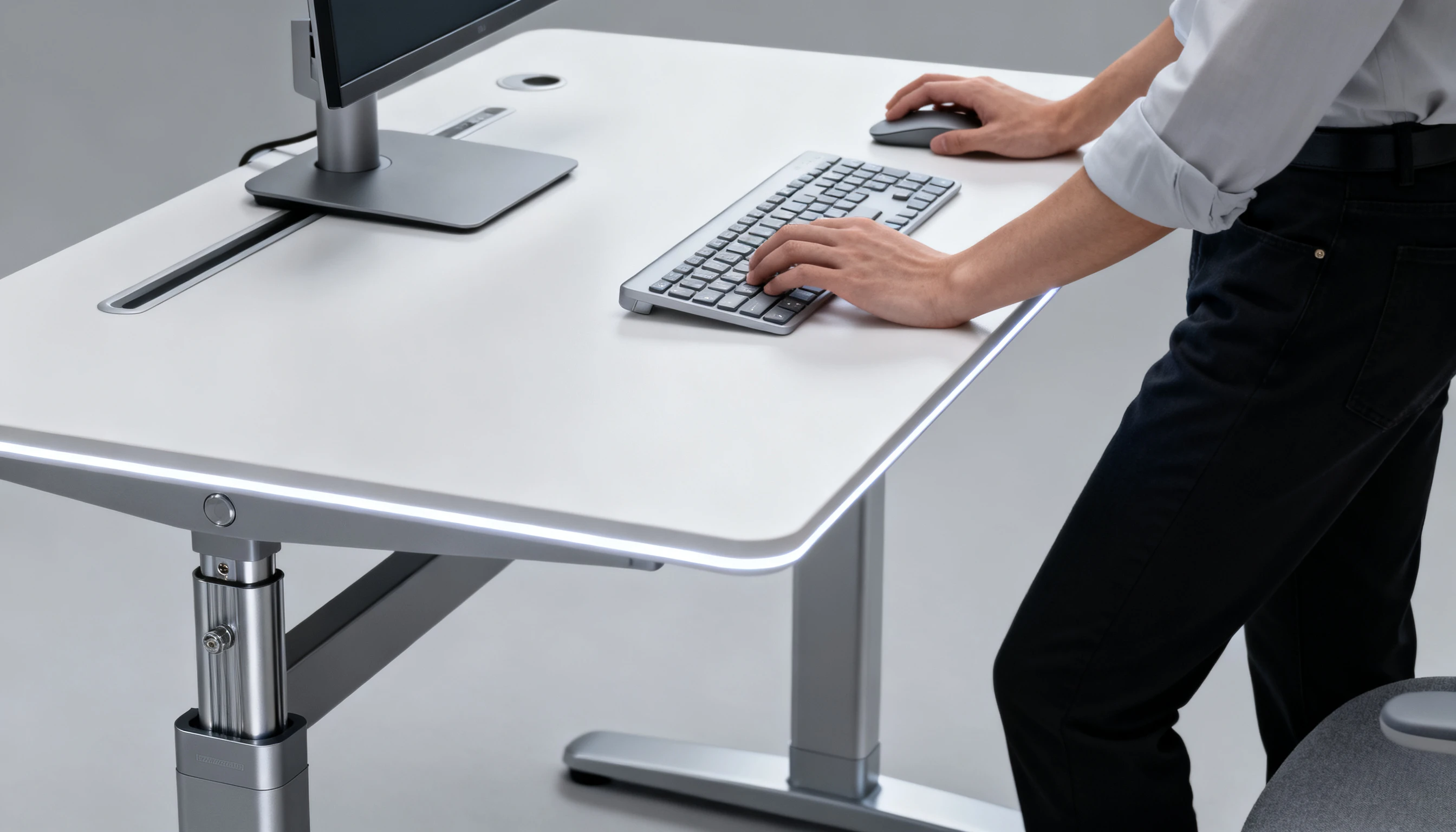
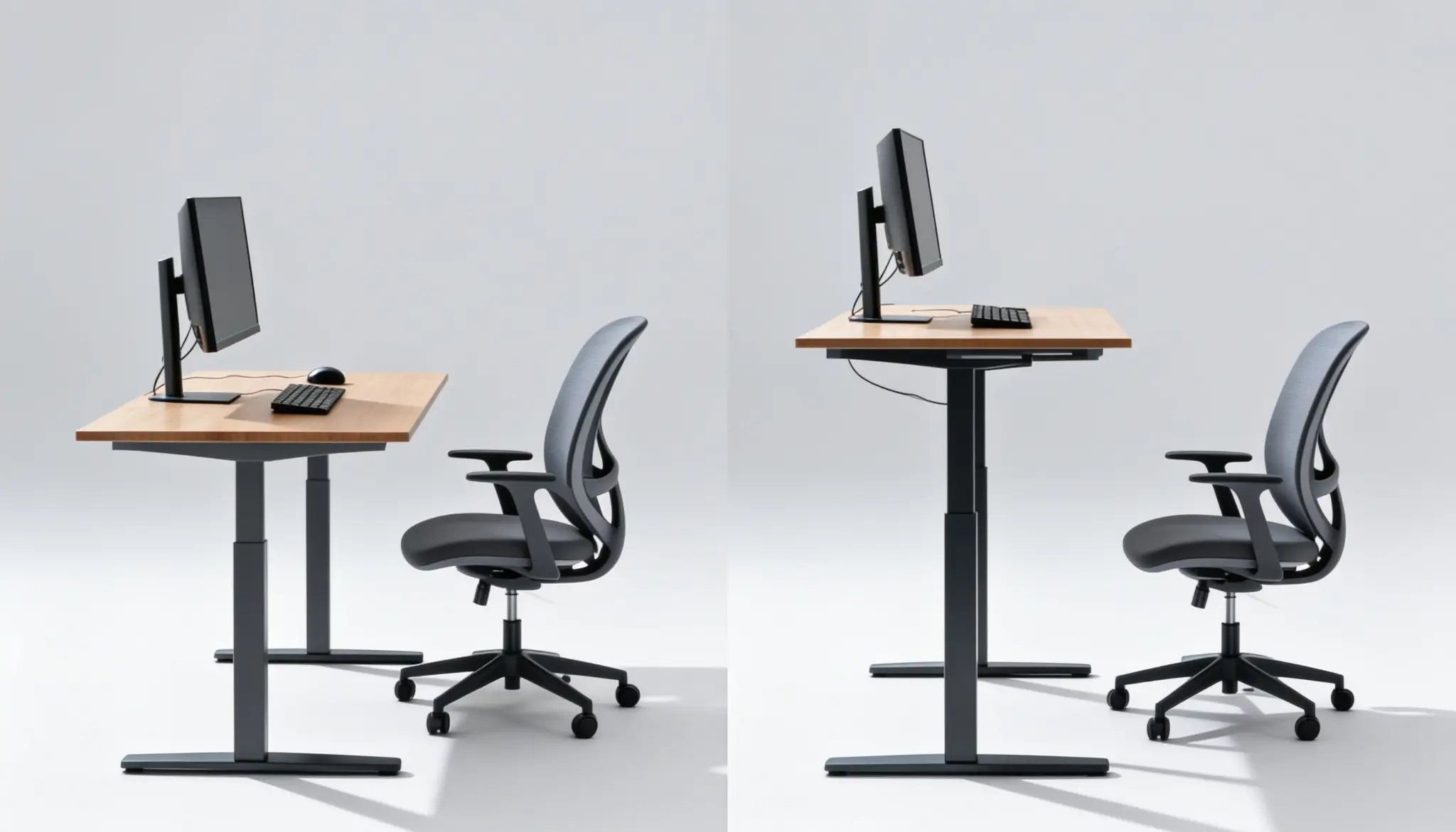
Adjustable desks work for anyone, regardless of height. Sitting height is typically 28–30 inches.
Standing height is around 38–48 inches, maintaining that 90-degree elbow angle when standing. Costing – $300–$1,200.
They accommodate multiple users if a workspace is shared.
There’s also a productivity benefit: alternating between sitting and standing every 30–60 minutes reduces fatigue and improves circulation.
The Bottom Line
Desk height affects how people feel during the workday. Small adjustments to height can meaningfully reduce discomfort.
The standard 28–30 inch desk height works for some, but it’s not universal.
Whether you go with a budget-friendly fix like a desk riser or invest in an adjustable standing desk, don’t skip on the measurement.
Making adjustments based on accurate measurement produces better results than using standard measurements.
Frequently Asked Questions (FAQs)
1. Should Workers Alternate Between Sitting and Standing?
Yes. Staying in one position all day- sitting or standing- causes fatigue and circulation problems.
2. How Do I Know if My Desk Height is Causing Pain?
If you experience neck tension, wrist aching, or lower back discomfort during work, your desk is likely misaligned.
3. What if Someone Can’t Afford an Adjustable Desk Right Now?
Start with a cheap fix. A monitor arm ($50) or desk riser ($30) solves most problems.