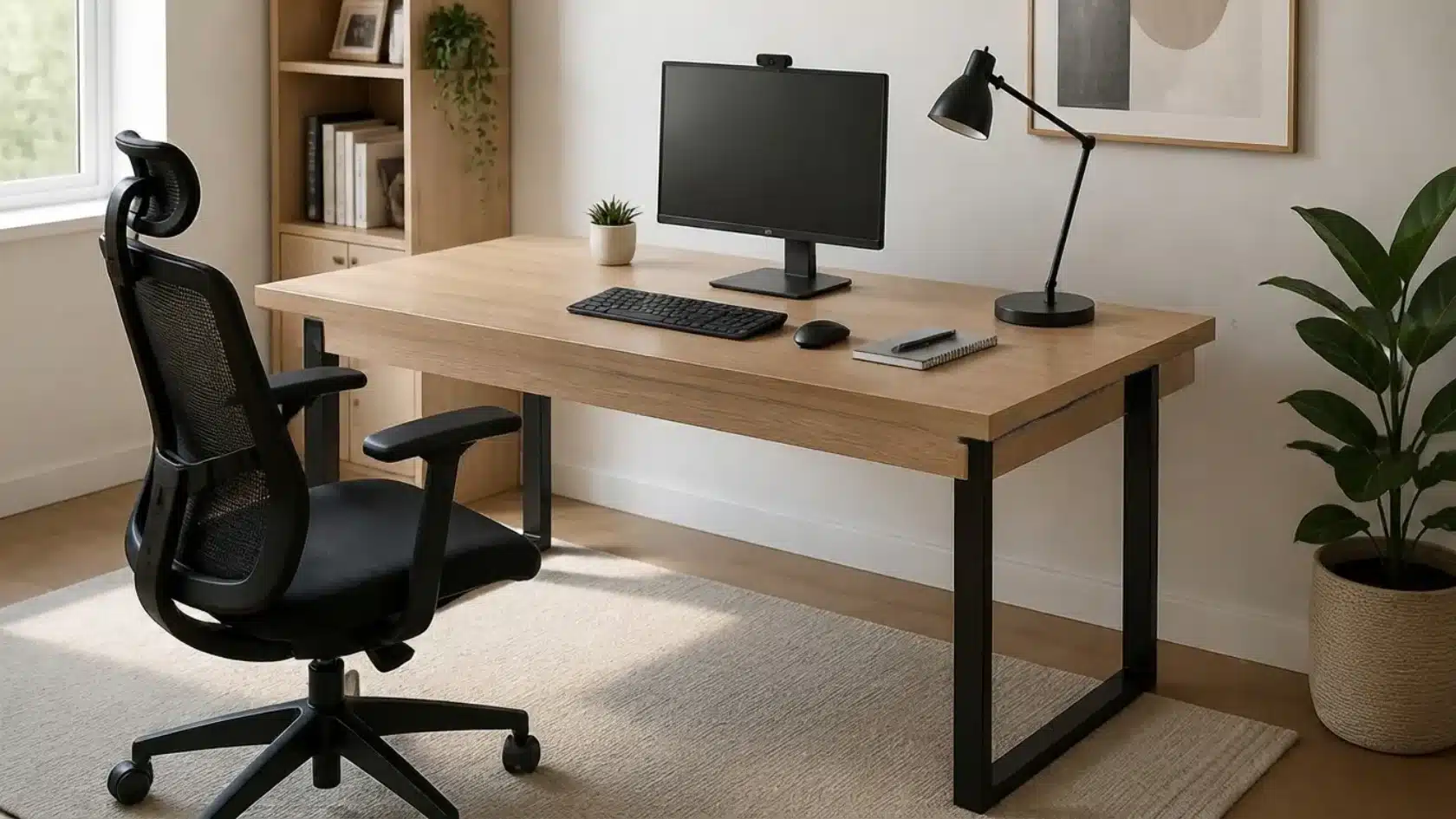
Most people never think twice about desk size until something feels off. The elbows sit at a strange angle, the monitor crowds too close, and the back starts to complain.
Most of that trouble goes away with the right desk dimensions.
Getting the width, depth, and height correct makes long work hours far more comfortable.
The numbers below cover what fits most setups, and they’re a decent starting point if you’re measuring a room for furniture before you buy anything, too.
A few simple figures can turn an awkward workspace into one that actually works.
Standard Desk Dimensions For Your Work Setup
Most desks stick to a common size range that fits the average adult. These numbers work because they track real human proportions and typical equipment.
Here’s the range for a standard sitting desk:
| Dimension | Standard range | Notes |
|---|---|---|
| Width | 48 to 72 inches (122 to 183 cm) | A 48- to 60-inch surface is suitable for general office work |
| Depth | 24 to 30 inches (61 to 76 cm) | A 24-inch depth fits a laptop. A 30-inch depth lets a full monitor sit back at a comfortable viewing distance |
| Height | 28 to 30 inches (71 to 76 cm) | Most fixed desks land near 29 inches (74 cm), which fits the average seated adult |
These three figures do most of the work.
Width sets the side-to-side surface. Depth decides how far back the screen can go. Height controls whether the elbows rest at a natural 90-degree angle, a rule that carries over from standard kitchen counter height, too.
This standard range suits people roughly 5’4″ to 6’0″ tall when paired with an adjustable chair.
Which Desk Type Actually Fits Your Space
Not every desk is built for the same task. Each type carries its own size range that suits a specific way of working.
1. Writing Desk
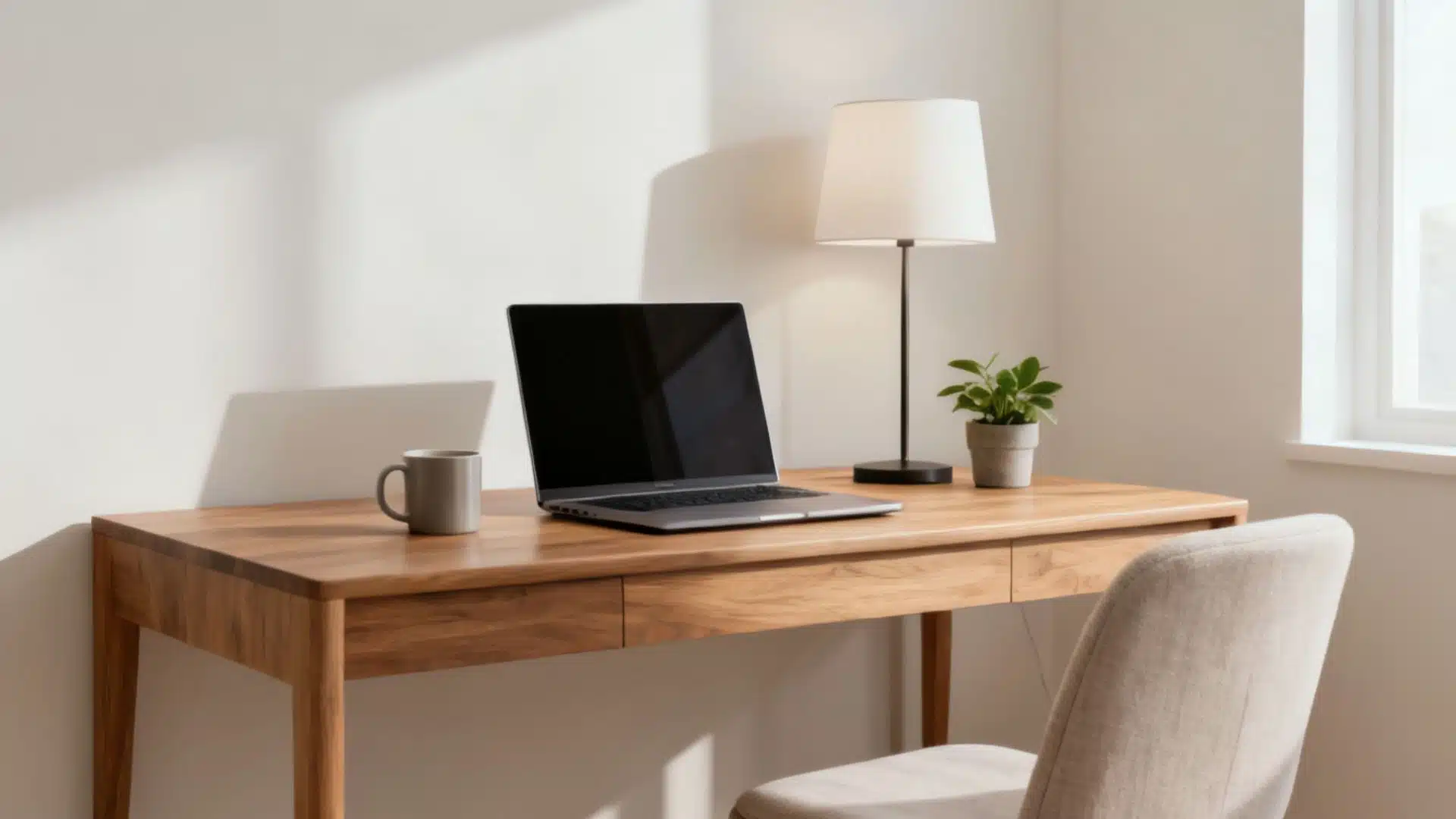
That compact size slots into apartments, spare rooms, and tight corners with ease.
The catch is that there is little room for a second monitor or spread-out papers. So they work best as a laptop spot or an extra desk, not your main one.
- Length: 36 to 48 inches (91 to 122 cm)
- Width: 24 to 30 inches (61 to 76 cm)
- Height: 28 to 30 inches (71 to 76 cm)
2. Computer Desk
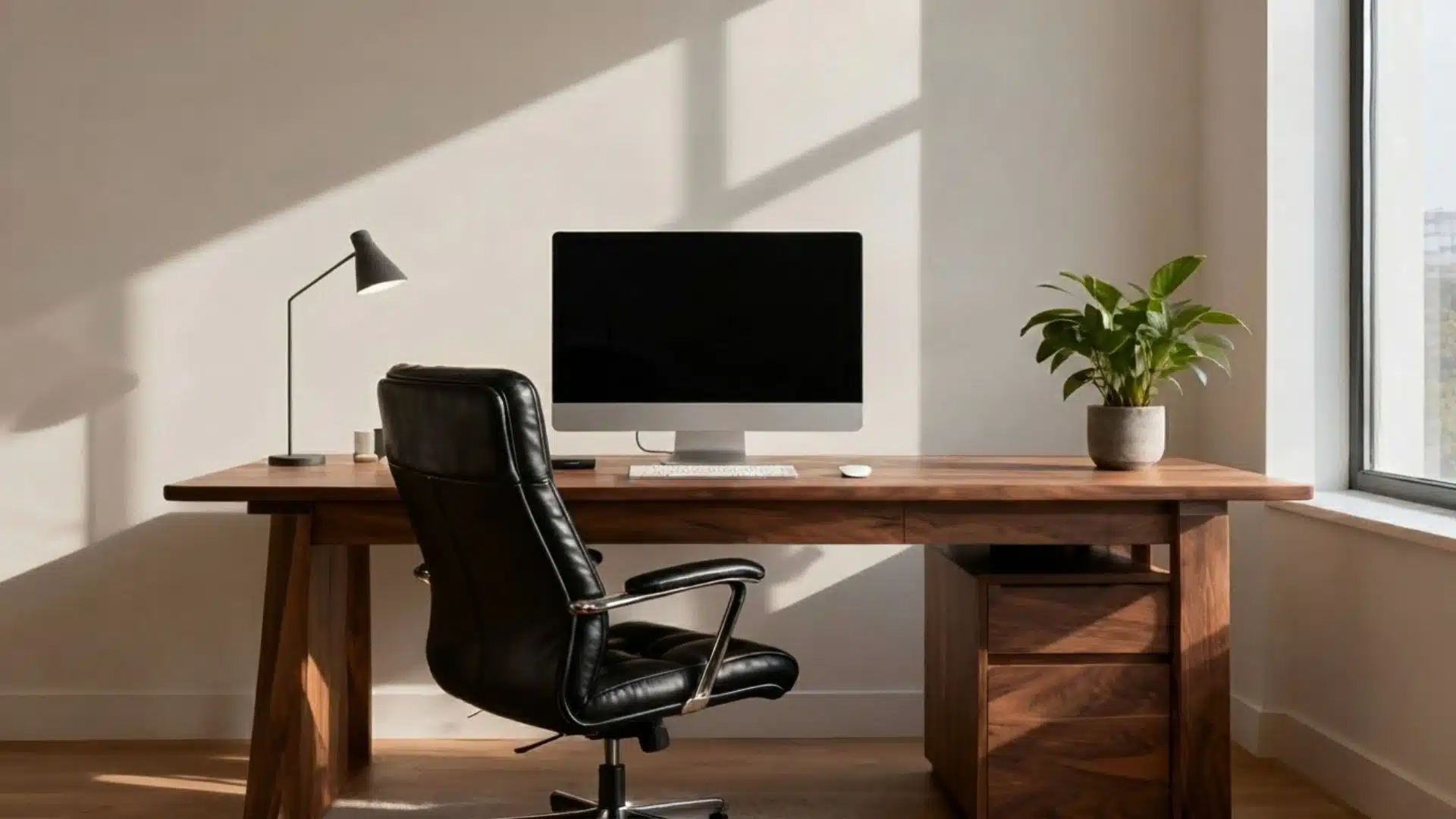
It holds a monitor, keyboard, and daily accessories with room to spare. That extra space keeps things tidy, so nothing feels cramped even during a long work session at the desk.
- Length: 48 to 72 inches (122 to 183 cm)
- Width: 24 to 30 inches (61 to 76 cm)
- Height: 28 to 30 inches (71 to 76 cm)
3. Executive Desk
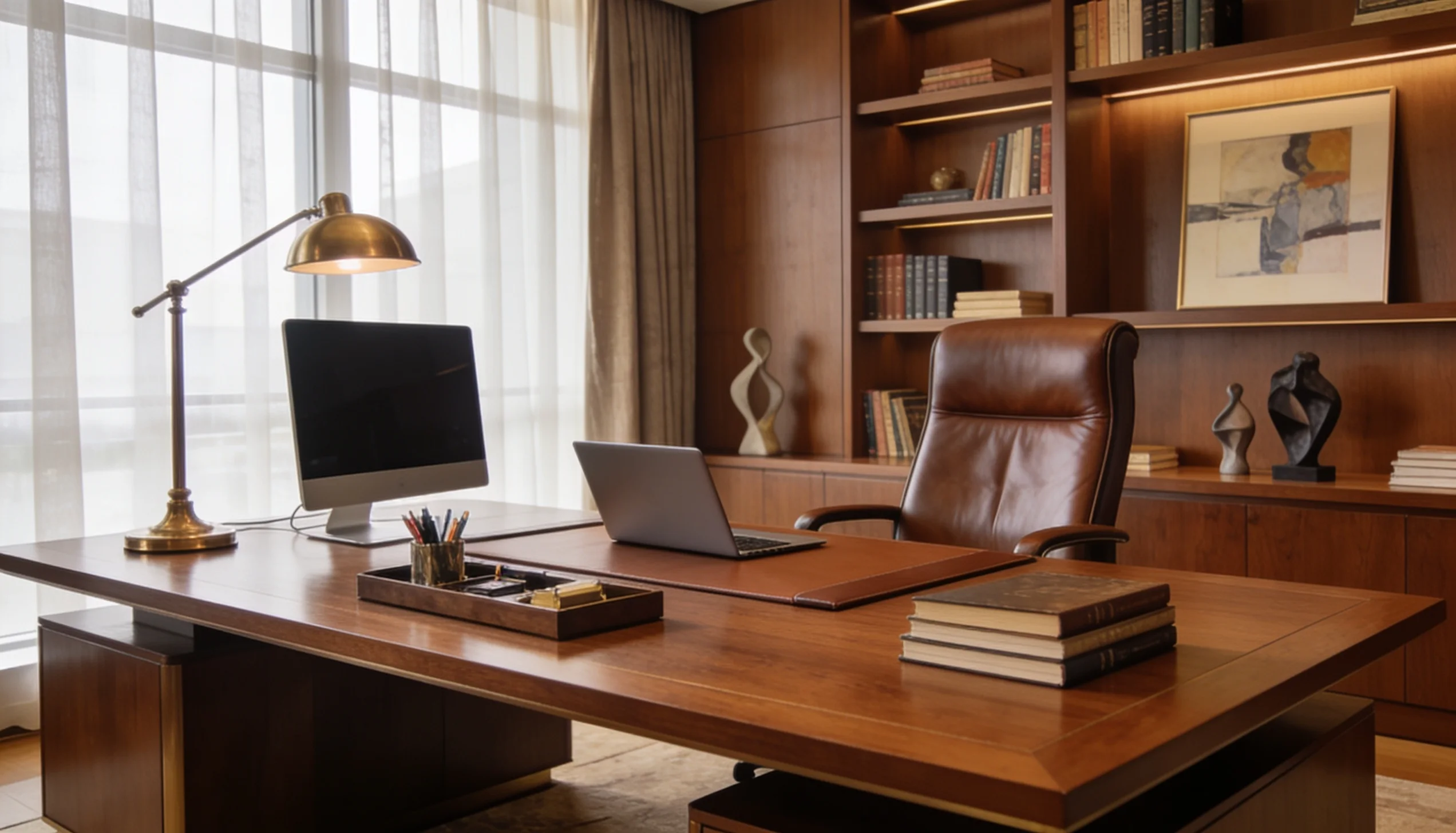
All that room easily holds dual monitors, files, and space for handwriting.
They suit big offices and corner rooms well, but they overwhelm a small space fast, so measure before buying one, much like sizing up seating for a large round table before it goes into a dining room.
- Length: 60 to 72+ inches (152 to 183 cm)
- Width: 30 to 36 inches (76 to 91 cm)
- Height: 29 to 30 inches (74 to 76 cm)
4. L-shaped Desk
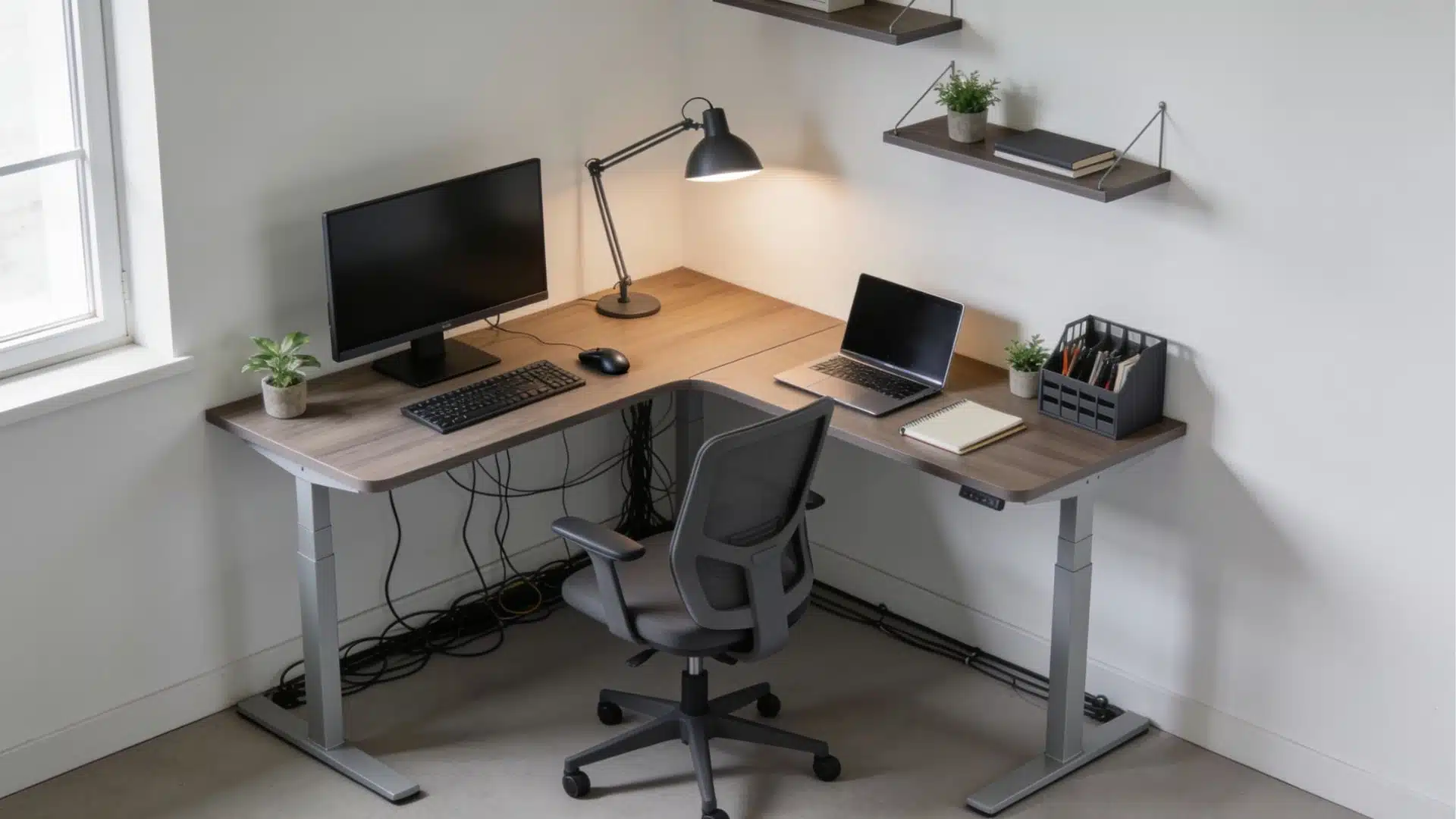
One wing can hold the computer and monitor, while the other handles paperwork or a laptop.
Both sections need enough width to stay useful. That extra surface makes an L-shaped desk a strong pick for multitaskers with room to spare.
- Length (per wing): 60 inches (152 cm) or wider
- Width (per wing): 24 to 30 inches (61 to 76 cm)
- Height: 28 to 30 inches (71 to 76 cm)
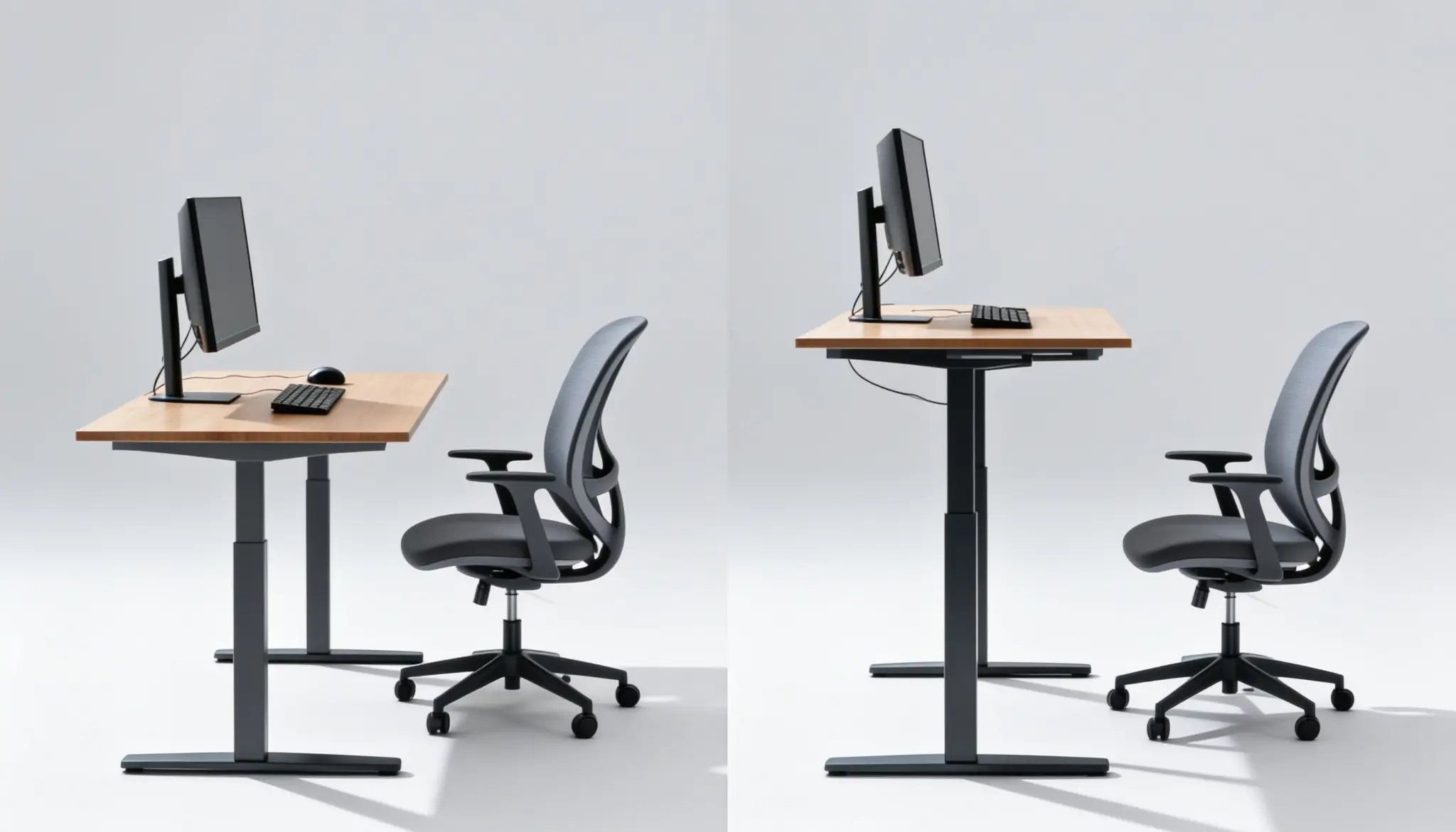
5. Standing Desk
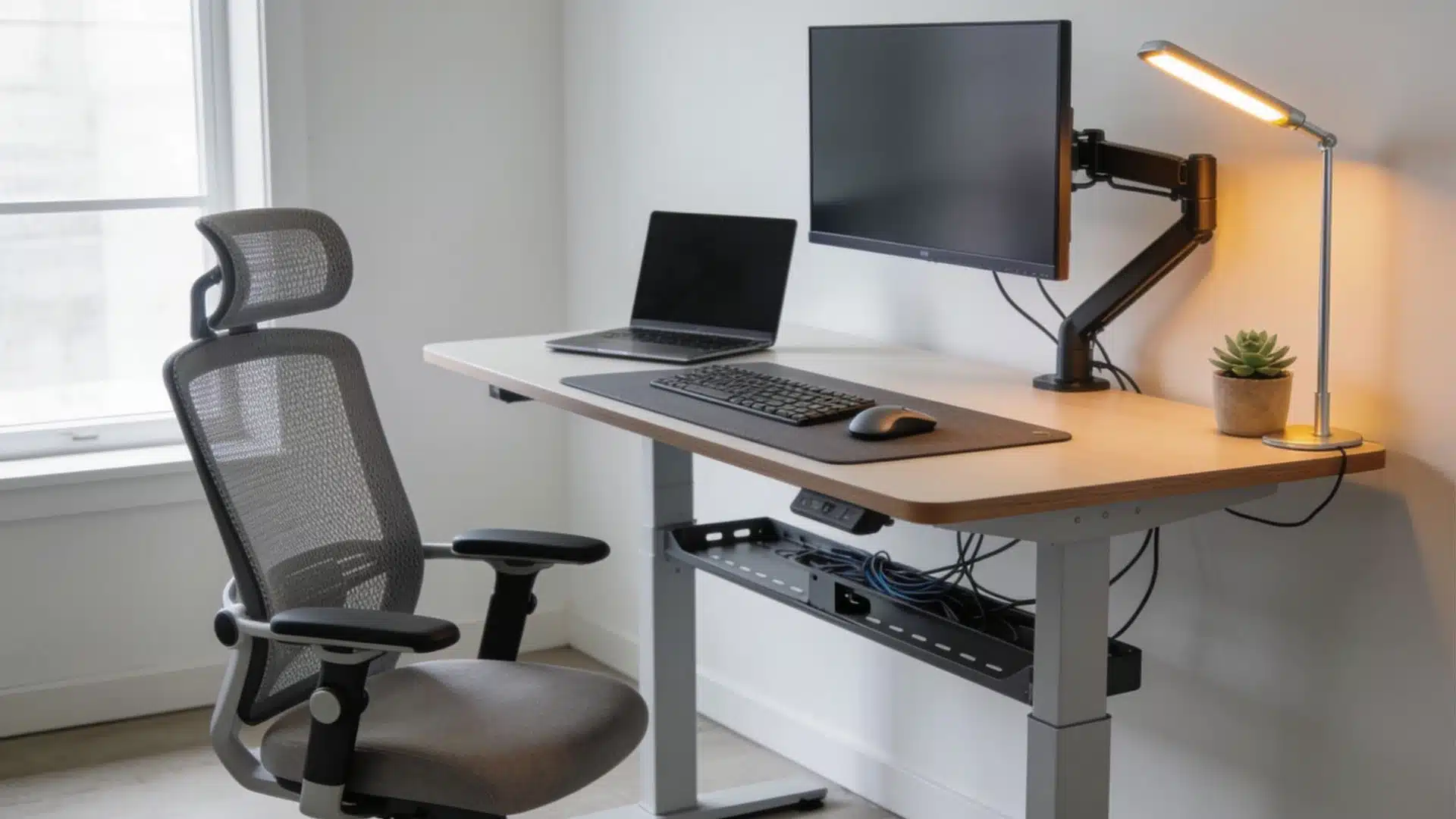
That range covers both seated and standing work on one desk. Installers often suggest the extra width to keep the moving surface stable.
These share the length and width of a standard desk. The real difference is the height.
- Length: 48 to 72 inches (122 to 183 cm), same as a standard desk
- Width: 24 to 30 inches (61 to 76 cm), plus 4 to 6 inches extra for stability
- Height: 26 to 48 inches (66 to 122 cm), adjustable
Ergonomic Desk Dimensions For Comfortable Working
Ergonomics is about keeping the body in a neutral, relaxed position all day.
That means joints stay naturally aligned and under the least stress. The right dimensions make that posture easy to hold, hour after hour.
A few key measurements:
- The desk surface should sit at elbow height with arms bent at 90 degrees. This keeps the shoulders loose and the wrists straight.
- Depth needs to place the monitor 20 to 40 inches from the eyes. That range reduces eye strain and stops the habit of leaning forward.
- Leave 36 to 48 inches (91 to 122 cm) of clearance behind the chair. That space lets a person push back and stand without hitting a wall.
- Seat height works best between 16 and 20 inches, with feet flat on the floor.
A desk that ignores these figures can force the body into awkward postures over time. That often leads to neck, back, and wrist fatigue by the end of a long day.
A fixed height never suits everyone, which is really the whole case for a height-adjustable desk. You set it to your spot, not the average of everyone else’s.
Final Thoughts
So the perfect desk really comes down to three numbers: width, depth, and height.
Nail those, and the aches, clutter, and eye strain mostly fade away. A standard fixed desk suits many people, but bodies and rooms vary.
That is why a quick measure of the space and a check against the charts above pays off. Grab a tape measure before the next purchase, and match the figures to the work at hand.
The right desk dimensions turn a plain corner into a spot that feels good to sit at every single day.
Frequently Asked Questions (FAQs)
1. How Deep Should a Desk Be?
A desk should be 24 to 30 inches deep, with 30 inches providing a healthy viewing distance for a full monitor.
2. What is the Ideal Desk Height For Ergonomic Use?
Most fixed desks work best near 29 inches, letting the elbows rest at a natural 90-degree angle.
3. What Are the Three Measurements of a Desk?
The three core measurements are width, depth, and height, and together they decide the whole fit.
4. Is a 48-inch desk big enough for working from home?
Yes, a 48-inch desk fits a single-monitor home setup well, though dual monitors need at least 60 inches.