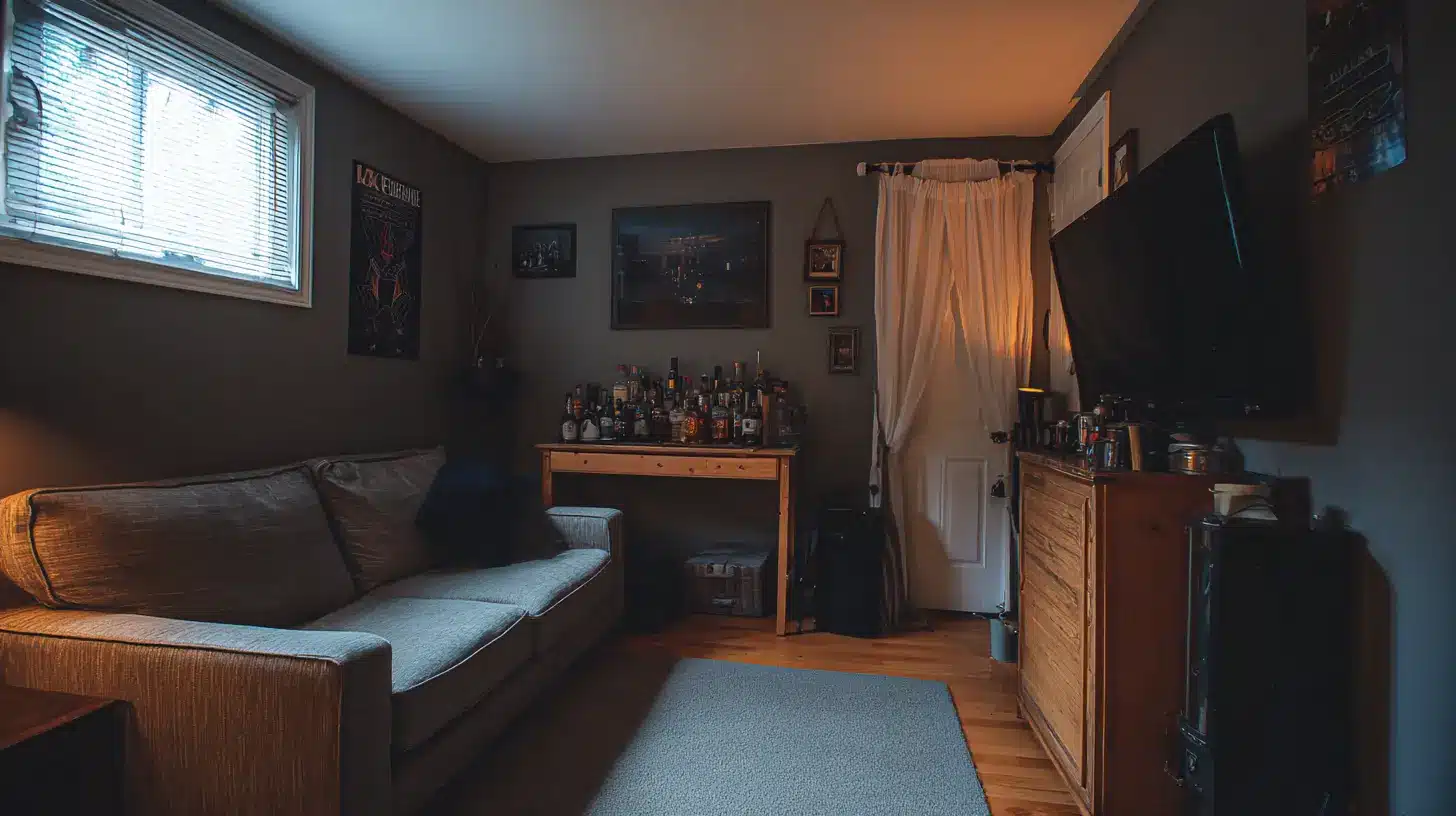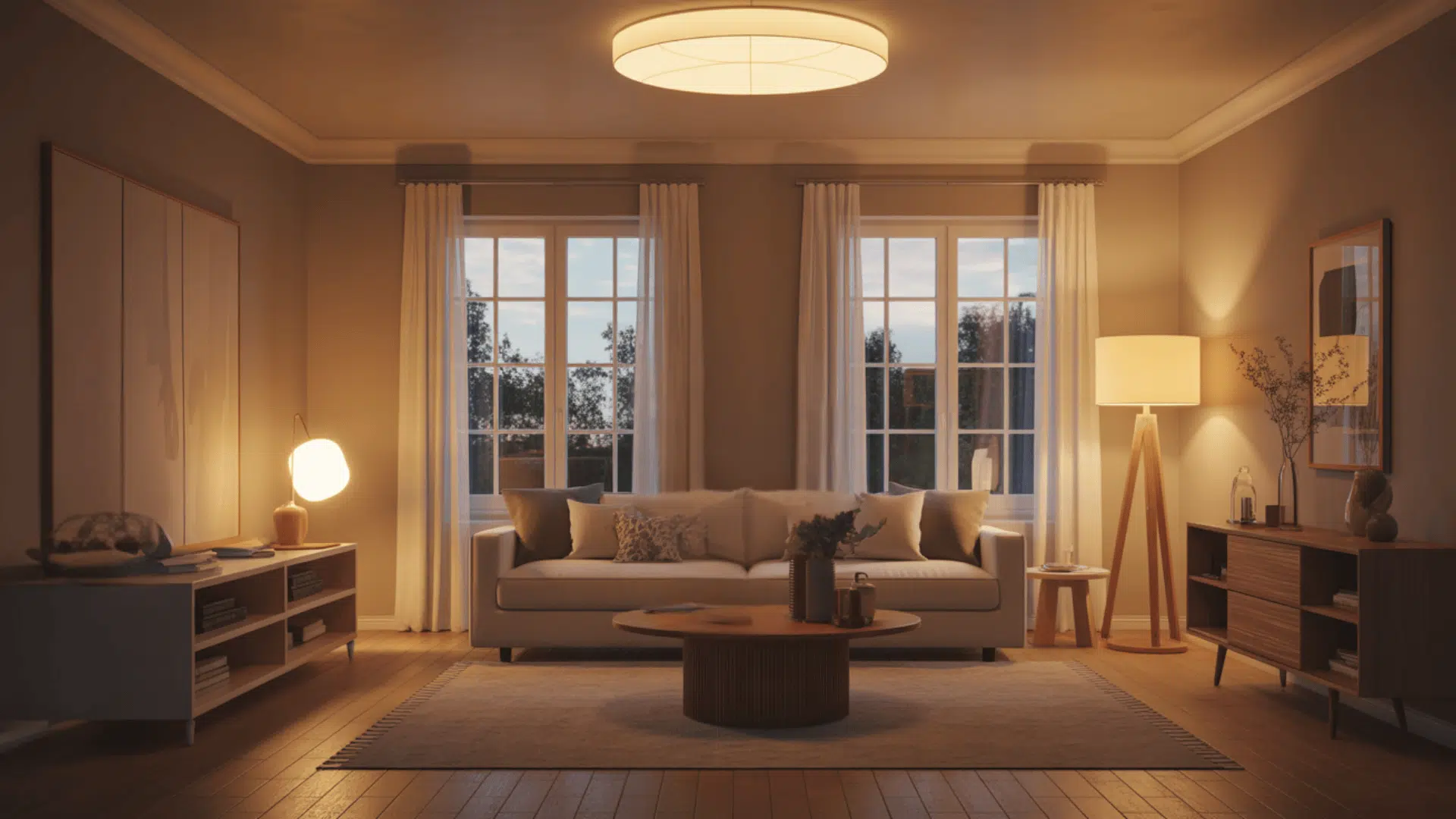
A small living room can feel draining and closed off, even when it looks tidy.
The furniture is in place, the room is clean, but something just feels wrong.
People blame the size. But the real issue?
It’s often the front door feng shui and the way the layout is set up around it. When the energy coming through the front door has nowhere to go, the whole room suffers.
It feels heavy, cramped, and hard to relax in. This blog gathers the solution.
Just smart placement that works with the space, not against it.
Why the Front Door Sets the Tone for Your Entire Living Room
In feng shui, the front door is called the mouth of Chi. It’s where energy enters the home.
In a front door feng shui small living room layout, that entry point matters even more.
There’s less space for energy to move around, so blockages form quickly. A chair placed too close to the door, a rug that cuts off the path, or even a cluttered corner near the entrance, all of it affects the flow.
A room can look great but still feel wrong, simply because the entry flow is off.
The 5 Feet Rule: managing energy right after the front door
The first five feet inside the front door are the most important.
This is where energy either settles in or gets stuck.
If a sofa arm juts into that zone, or shoes pile up right at the entrance, the flow breaks immediately.
Sharp furniture corners facing the door make the space feel tense rather than inviting. Small living rooms need a soft landing area and an open path to let energy flow naturally into the rest of the room.
Practical Entry Fixes for Small Living Rooms
A few smart swaps can make a big difference near the entry zone.
- A slim console table against the wall keeps the path clear and adds storage without eating into floor space.
- Wall hooks replace bulky coat stands, freeing up those first five feet completely.
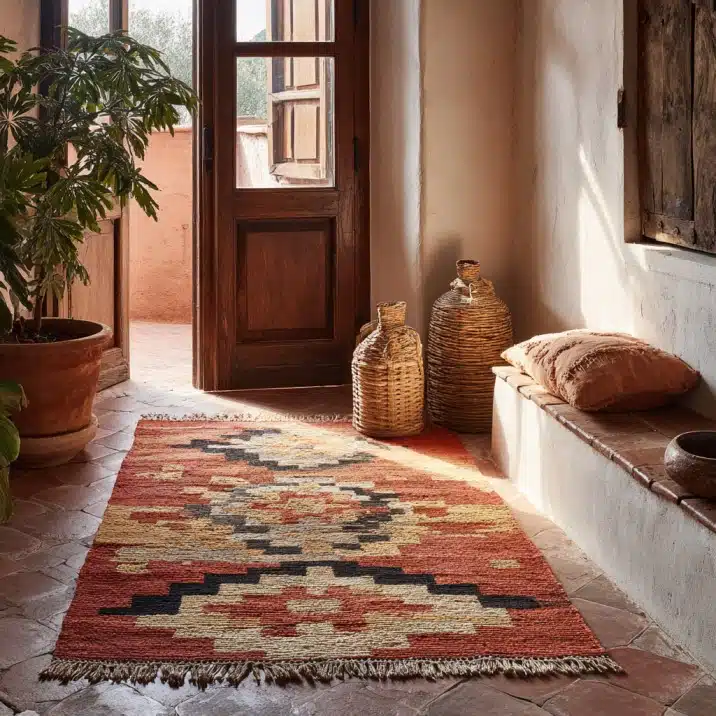
- A small rug placed just inside the door helps direct movement naturally into the room.
- Soft lighting near the entry, like a wall sconce or a small lamp, draws the eye inward gently.
- Vertical shelving pulls the focus upward, making the space feel taller and less crowded.
Keep pathways open; a clear line of sight from door to far wall makes the room feel less tight.
Couch Placement Near the Front Door Without Blocking Energy
A couch placed directly in front of the door completely blocks the entry path. It prevents energy from spreading into the room, making anyone sitting there feel exposed when the door opens.
Placing it fully against the door isn’t ideal; it creates an uneasy feeling, as if something is behind you.
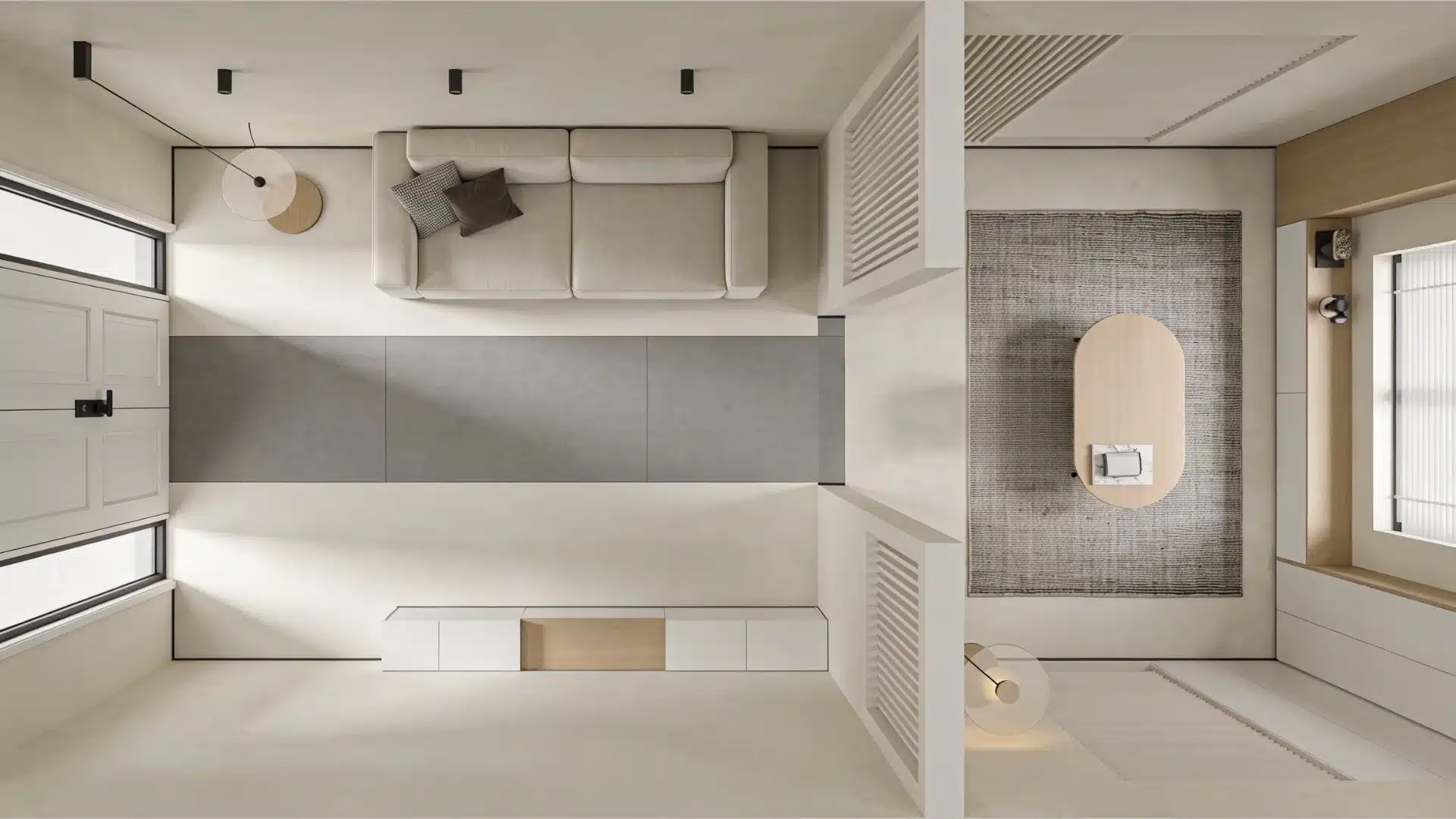
The best position is an angled offset. Pull the couch slightly to one side, keeping it diagonal enough to maintain a clear sightline to the door without sitting directly in its path.
If Your Couch Must be Near the Door
Sometimes the layout just doesn’t allow much flexibility.
In that case, a few simple additions can soften the placement of the couch without crowding the room.
- A tall plant placed beside the couch creates a natural buffer between the entry and the seating area.
- A narrow side table breaks up the straight line from door to couch, softening the direct hit of energy.
- A lightweight screen or open shelving unit adds a subtle visual break without making the room feel smaller.
The goal is a gentle separation, not a wall, to let energy settle before the seating area.
Creating a Natural Flow Path from the Door Through the Room
Energy needs a clear line to move through.
Think of it like water; it should flow in, spread out, and reach every corner without hitting a wall straight away. In a small living room, that means keeping the central floor area as open as possible.
No furniture legs crossing the main path. No piles breaking the line.
Small Living Room With a Door Layout Ideas
Here are practical layouts worth trying in compact spaces.
1. The Offset Entry Layout
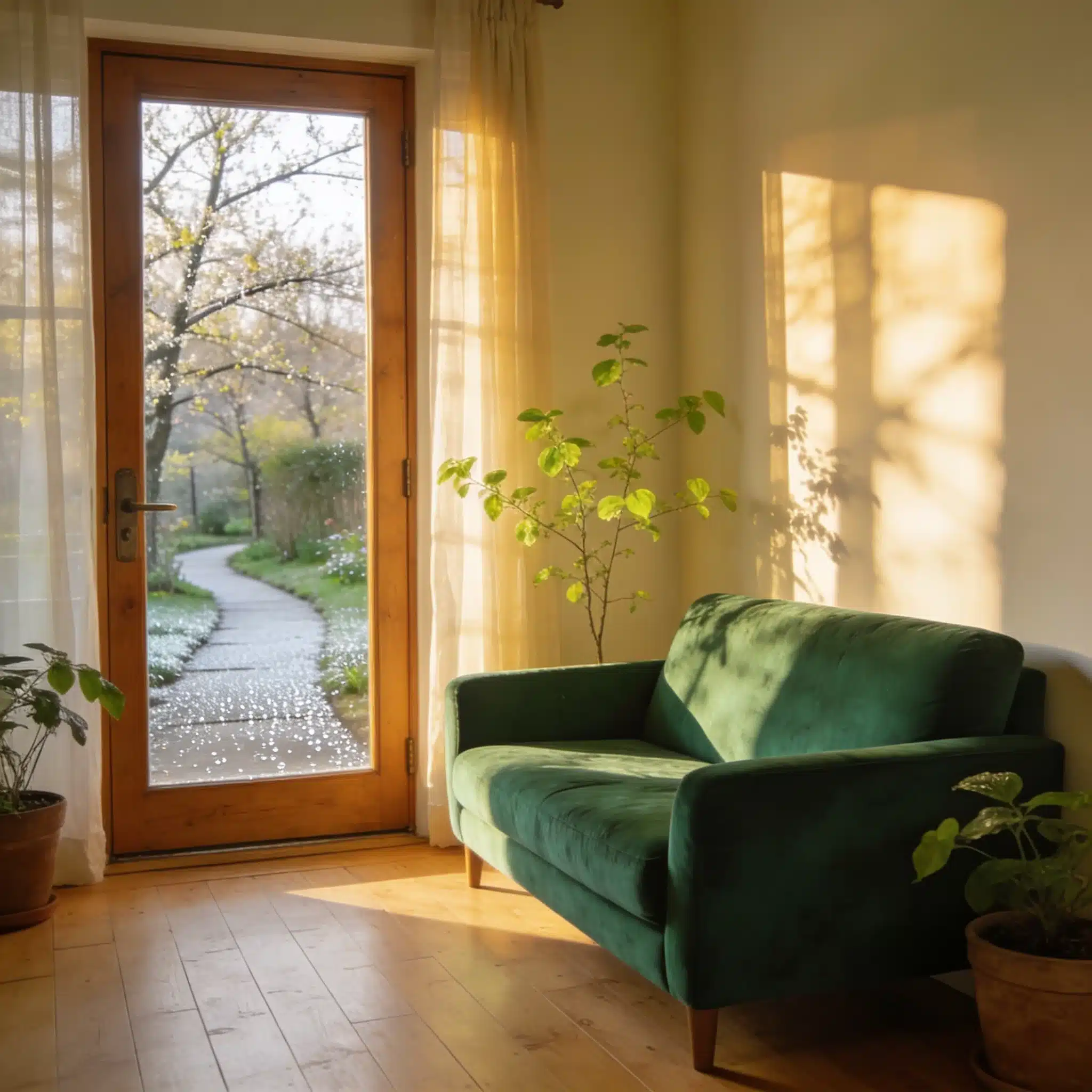
Place the sofa at least 18–24 inches away from the front door, shifted to one side.
This keeps the entry zone clear and gives energy room to spread before reaching the seating area. It works especially well in rooms between 10×12 and 12×14 feet.
2. The Diagonal Corner Layout
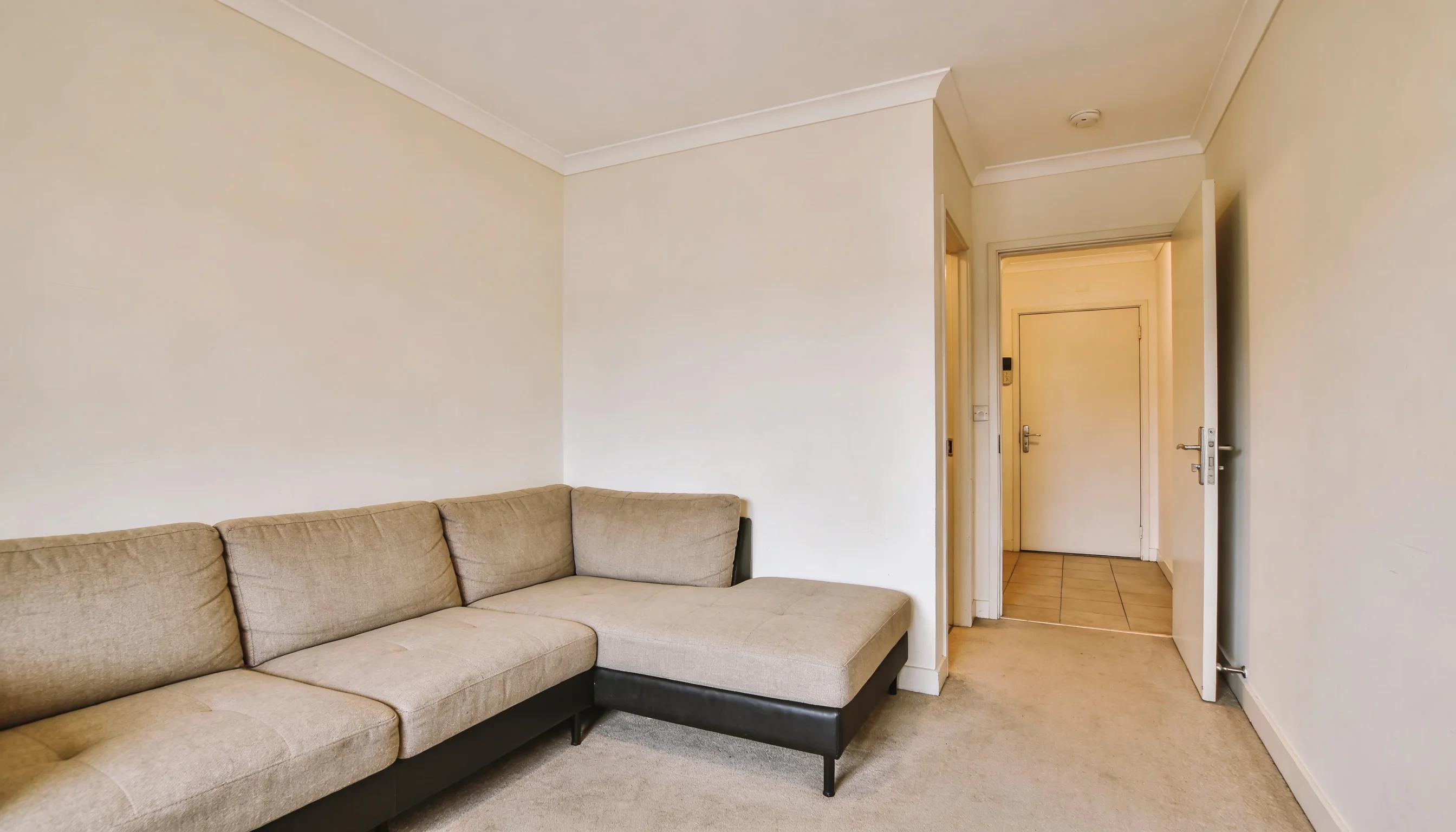
Angle the sofa 45 degrees from the corner farthest from the door. In rooms around 10×10 feet, this creates a natural sightline to the entry without sitting directly in its path.
It also frees up floor space along the walls.
3. The Room Divider Layout
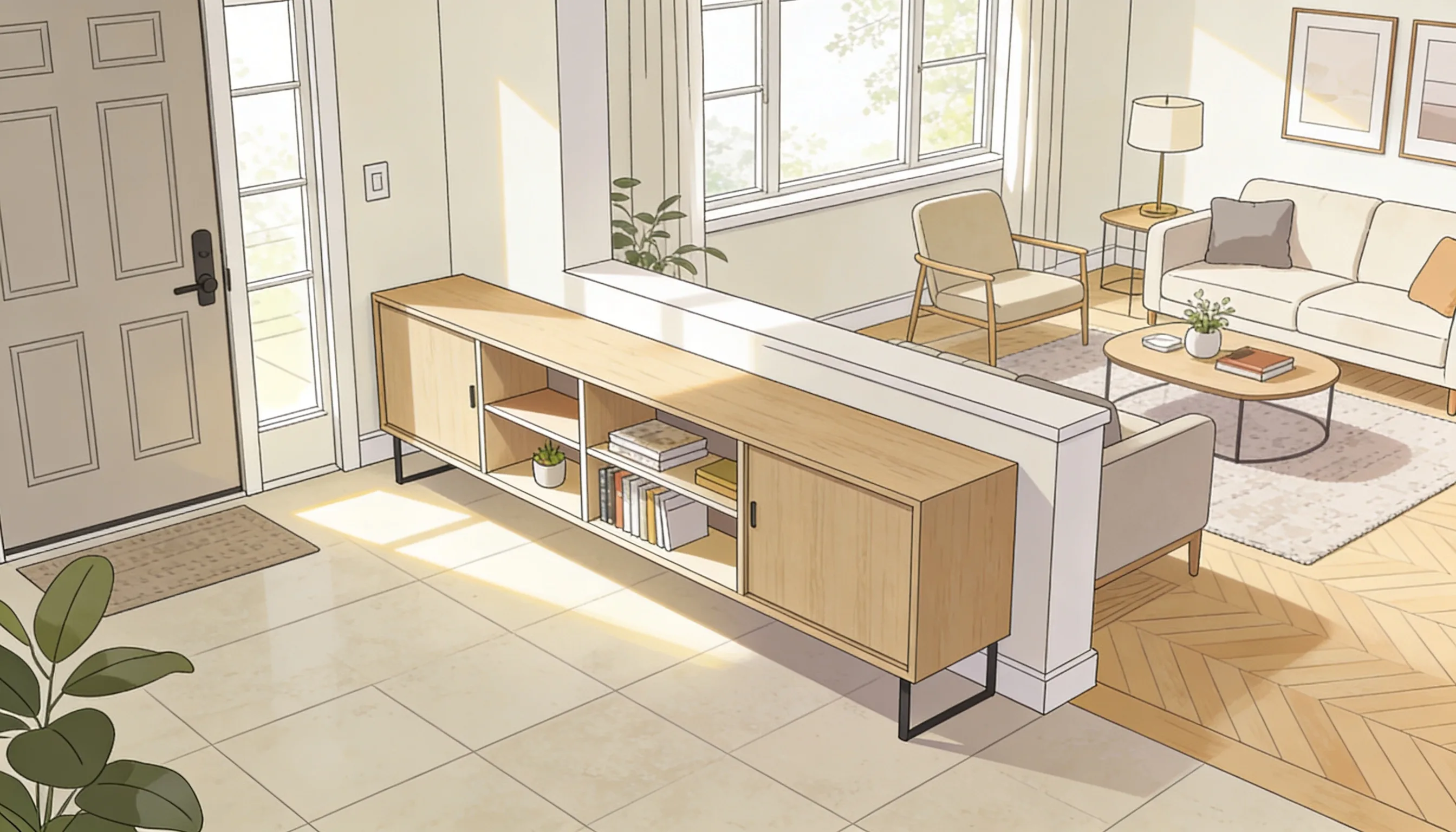
Use a low console or open shelf unit placed 4–5 feet from the front door to separate the entry from the seating zone. Works well in open-plan spaces or rooms 12×16 feet and above.
Keeps zones defined without closing anything off.
Using Furniture to Define Zones without Closing Off Energy
A small living room still needs structure. Without clear zones, the space feels scattered and hard to relax in.
The trick is separating areas without adding walls or bulk.
| Zone Type | What it Does | Best Option |
|---|---|---|
| Entry Zone | Receives incoming energy | Slim console, small rug |
| Seating Zone | Anchors the room | Low-profile sofa, armchair |
| Divider Zone | Separates without closing | Open shelving, low furniture |
| Floor Zone | Signals different areas | Layered rugs |
Low furniture keeps sightlines open. Tall, heavy pieces cut the room off visually and trap energy in one corner.
Smart Zoning Ideas That Actually Work
These simple ideas create separation without making the room feel smaller.
- A console table placed behind the couch marks the line between entry and seating without blocking anything.
- Open shelving acts as a soft divider; it separates zones while still allowing light and sightlines to pass through.
- Layering two rugs in different areas signals a zone change naturally, no walls needed.
Mirrors in Front Door Feng Shui Small Living Room Layout
Mirrors are one of the most useful tools in a small living room.
They bounce light around, make the space feel bigger, and help keep energy moving. But placement matters.
A mirror facing the front door directly reflects energy back out before it has a chance to settle.
Instead, place it on a side wall.
That way, it reflects light inward and keeps the flow circulating through the room rather than pushing it back out.
Final Thoughts
A small living room doesn’t need more space; it needs better placement.
The way energy moves from the front door through the room affects how the space looks and feels every single day. Fix the entry flow, position the seating thoughtfully, and define the zones clearly.
The room starts working for you instead of against you.
Start with one small change. Move a piece of furniture, shift a rug, or reposition a mirror.
Small adjustments add up. What change are you going to try first?
Frequently Asked Questions (FAQ’s)
1. How to Feng Shui a Small Living Room?
Keep pathways clear, use low furniture, and let natural light flow freely.
2. What are the Feng Shui Rules for Front Doors?
Keep the entry clean, well-lit, and free from blocked pathways or sharp edges.
3. What Not to Do in a Small Living Room?
Avoid pushing all furniture against walls or crowding the entry zone with clutter.
4. What is the Luckiest Front Door Color?
Red, green, and black are considered strong, positive front door color choices.