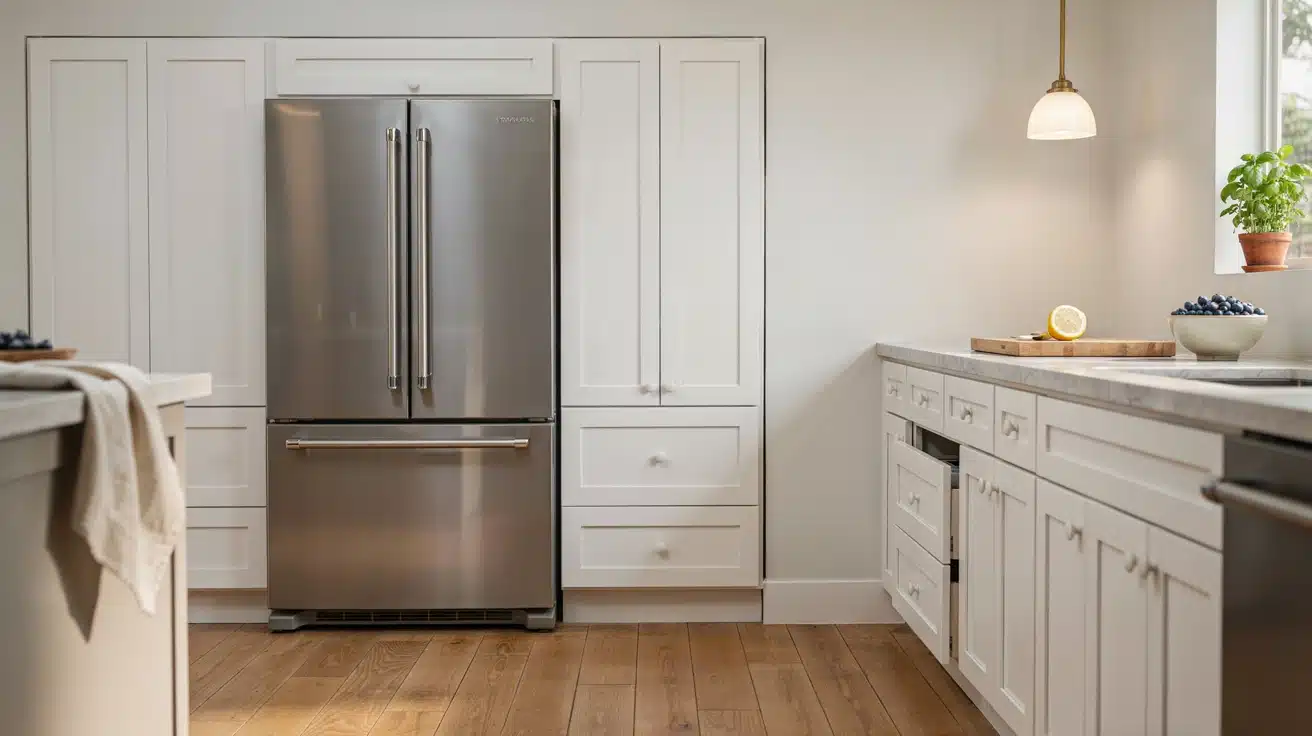
You walk into the kitchen showroom. You see two fridges that look almost the same. One sticks out a few inches, and the other sits flush with the counter. You don’t know which one to pick.
That’s the problem with most fridge shopping today. Brands throw around terms like “counter depth” and “standard depth,” but no one explains what they really mean for your kitchen.
Keep reading to learn about the size, storage, and appearance of both fridge types in this counter depth vs standard depth comparison.
Counter Depth vs Standard Depth: The Basics
A counter-depth refrigerator is built to sit flush with your kitchen counters. It doesn’t stick out past your cabinets.
Most counter- depth fridges measure between 24 and 30 inches deep. That’s a few inches shallower than what you’d find in a typical kitchen. This shallow build gives your kitchen a clean, built-in look.
The fridge blends into the cabinetry instead of jutting out. And you get that built-in style without paying for custom cabinetry work.
Counter-depth fridges caught on as kitchens opened up into living and dining spaces.
When the fridge sits in full view of the rest of the room instead of tucked into a closed-off kitchen, a unit that sticks out six inches reads as bulky.
Manufacturers shrank the depth to make the fridge look built-in without the homeowner paying for a fully custom panel job.
A standard- depth refrigerator is the more traditional option. It’s the type you’ll find in most homes.
These fridges measure between 30 and 36 inches deep. That extra depth means the fridge sticks out past your counter edge. It’s not a flaw, it’s just a different design choice.
Standard-depth installation is usually a straightforward swap, often $50 to $150 for delivery and haul-away if you're not doing anything else to the space. Counter-depth installs cost more mainly when the cabinets around the old fridge need adjusting, trimming a cabinet side panel or adding a small filler piece to close a gap can add another $100 to $300 on top of delivery, depending on your contractor and how much carpentry is involved.
Standard depth fridges have been the default for decades, so they’re easy to find in any style or budget.
Both types come in French door, side-by-side, bottom freezer, and top freezer styles. The real difference comes down to depth and how that depth affects your kitchen.
Counter Depth vs Standard Depth: Size, Storage, and Price
Size, storage, and price all come down to one core difference: depth.
| Feature | Counter Depth | Standard Depth |
|---|---|---|
| Depth | 24 to 30 inches | 30 to 36 inches |
| Width | 28¾ to 36 inches | 28¾ to 39¾ inches |
| Height | 61¾ to 71¼ inches | 61¾ to 71¼ inches |
| Protrudes past the counter | No, sits flush | Yes, by 5 to 6 inches |
| Storage capacity | 15 to 25 cu. ft. | 20 to 30 cu. ft. |
| Shelf depth | Shallower | Deeper |
| Walkway space | More open | Can feel tighter |
| Best kitchen fit for | Small or open-concept kitchens | Larger kitchens with room to spare |
| Price range | $1,800 to $4,500+ | $1,000 to $3,000 |
| Installation cost | Can be higher | Usually standard |
| Energy efficiency | Slightly lower, smaller compressors run more often to cool a shallower space | Slightly higher, larger compressors cycle less frequently |
| Noise level | Can run louder, compressor sits closer to the front due to the shallow body | Generally quieter, more room to insulate and position the compressor |
On looks, a counter depth fridge gives your kitchen a clean, seamless feel. A standard depth fridge has a bigger presence in the room.
That’s not bad, but it can make a small or galley kitchen feel cramped.
The efficiency gap isn’t dramatic on most Energy Star-rated models of either type, but it’s worth knowing that a counter-depth fridge works a bit harder to hold the same temperature, since there’s less interior air buffering the compressor’s workload.
If you’re set on counter-depth, checking the Energy Star rating before buying matters more than it does with standard-depth models, where the difference between units is smaller to begin with.
Pros and Cons of Counter Depth Refrigerators
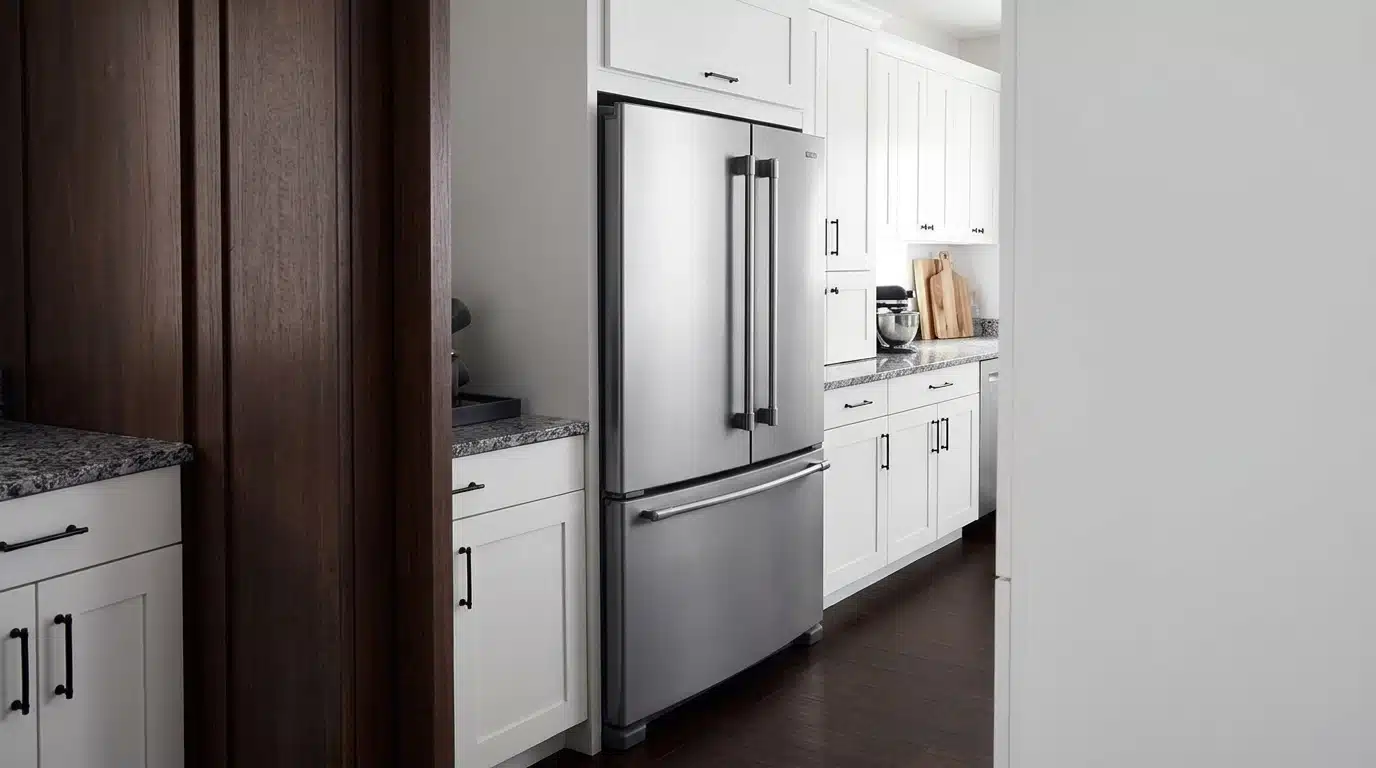
A counter depth fridge is built for kitchens that care about flow and style. It fits in close to your cabinets, so your kitchen feels more open. But that sleek build comes with a few trade-offs too.
Pros
- Sits flush with your cabinets for a built-in look
- Saves floor space in small or open kitchens
- Comes with panel-ready options to match your cabinetry
- Improves walkway flow during cooking
- Available in every major style, like French door and side-by-side
Cons
- Costs more than standard depth models
- Holds less food due to shallower shelves
- Limited room for bulky items like large platters or turkeys
- Fewer budget options to choose from
A counter depth fridge also helps if your kitchen is tight on space. But if you need to fit a lot of groceries, the smaller capacity might frustrate you.
Pros and Cons of Standard Depth Refrigerators
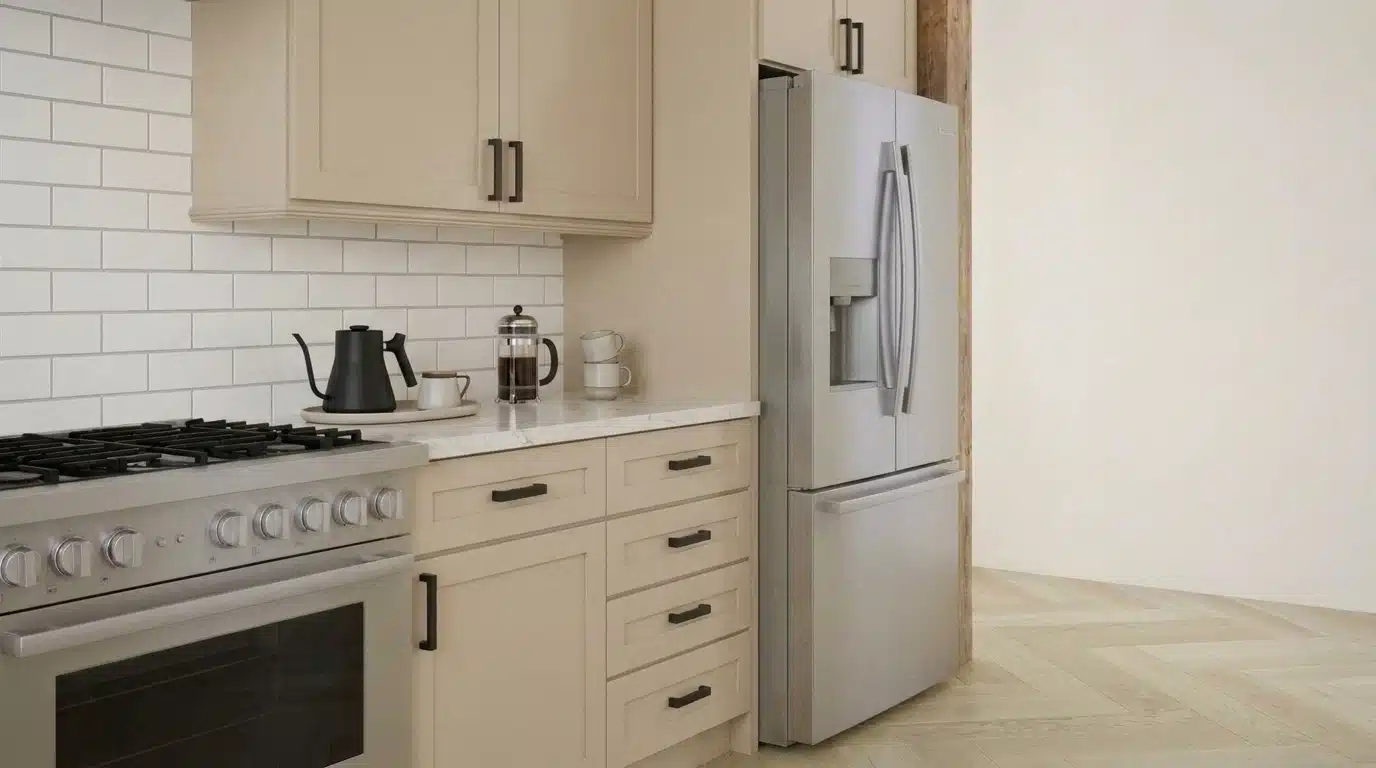
A standard depth fridge is built for kitchens that need space over style. It holds more food and costs less, making it the practical pick for most homes. But that extra bulk does affect how your kitchen feels.
Pros
- Holds more food with deeper shelves
- Fits bulky items like large platters and bigger trays
- Costs less on average
- Easier to find at every price point
- Simple to install without extra cabinetry work
Cons
- Sticks out past your counters by several inches
- Can disrupt walkway space in small kitchens
- Doesn’t give that flush, built-in look
- May feel bulky in open-concept or galley kitchens
A standard depth fridge also suits larger kitchens with room to spare. But if your kitchen is small or you want a sleek look, that extra depth might bother you every day.
Which One is Best for Your Kitchen?
So, which fridge should you actually pick? It depends on your space and your habits.
If you have a small or galley kitchen, go with counter depth. It keeps your walkway clear and avoids that bulky, sticking-out look.
If you have a large family or cook in bulk, go with standard depth. The extra storage space makes meal prep and grocery hauls much easier.
If you’re on a tight budget, standard depth is the safer pick. You’ll get more storage for less money.
If design matters more to you than storage, counter depth wins here. The flush, built-in look gives your kitchen a clean, modern feel.
If you’re renovating and want a custom look, counter depth with panel-ready doors blends right into your cabinetry.
If you’re just replacing an old fridge in the same spot, measure your current space first. If your old fridge was standard depth and fit fine, you can likely stick with that size.
There’s no single right answer. It comes down to your kitchen size, your household, and your budget.
Things to Measure Before You Buy
Before you buy any fridge, grab a tape measure. A few quick checks can save you a big headache later.
What to Measure
- Width: Measure the space at the counter, cabinet, and floor level. Use the narrowest point.
- Height: Measure from the floor to the bottom of the upper cabinet. Check both the front and back, and use the shorter number.
- Depth: Measure from the back wall to the front edge of your counters.
- Door swing: Make sure the fridge doors can open fully without hitting a wall or island.
- Ventilation space: Leave about 2 inches at the back and 1 inch on the sides for airflow.
Skipping these steps is how people end up with a fridge that doesn’t fit. A few minutes with a tape measure now saves you a return trip later.
Pick Based on Your Kitchen, Not the Showroom
Back to that showroom moment: the two fridges you saw weren’t really different products, just different depths solving different problems.
Measure your kitchen, decide whether floor space or storage space matters more to your household, and the choice mostly makes itself from there.
Frequently Asked Questions (FAQ’s)
1. Is a Counter Depth Fridge Worth the Extra Cost?
It depends on your priorities. If kitchen looks matter to you, yes. If you need more storage, standard depth gives better value.
2. Does a Counter Depth Fridge Fit All Kitchen Styles?
Yes. It works well in most kitchens, especially small or open-concept layouts where flush appliances improve the flow.
3. Which Type is More Common in Homes?
Standard depth. It’s been the traditional choice for years and comes in more styles and price points.