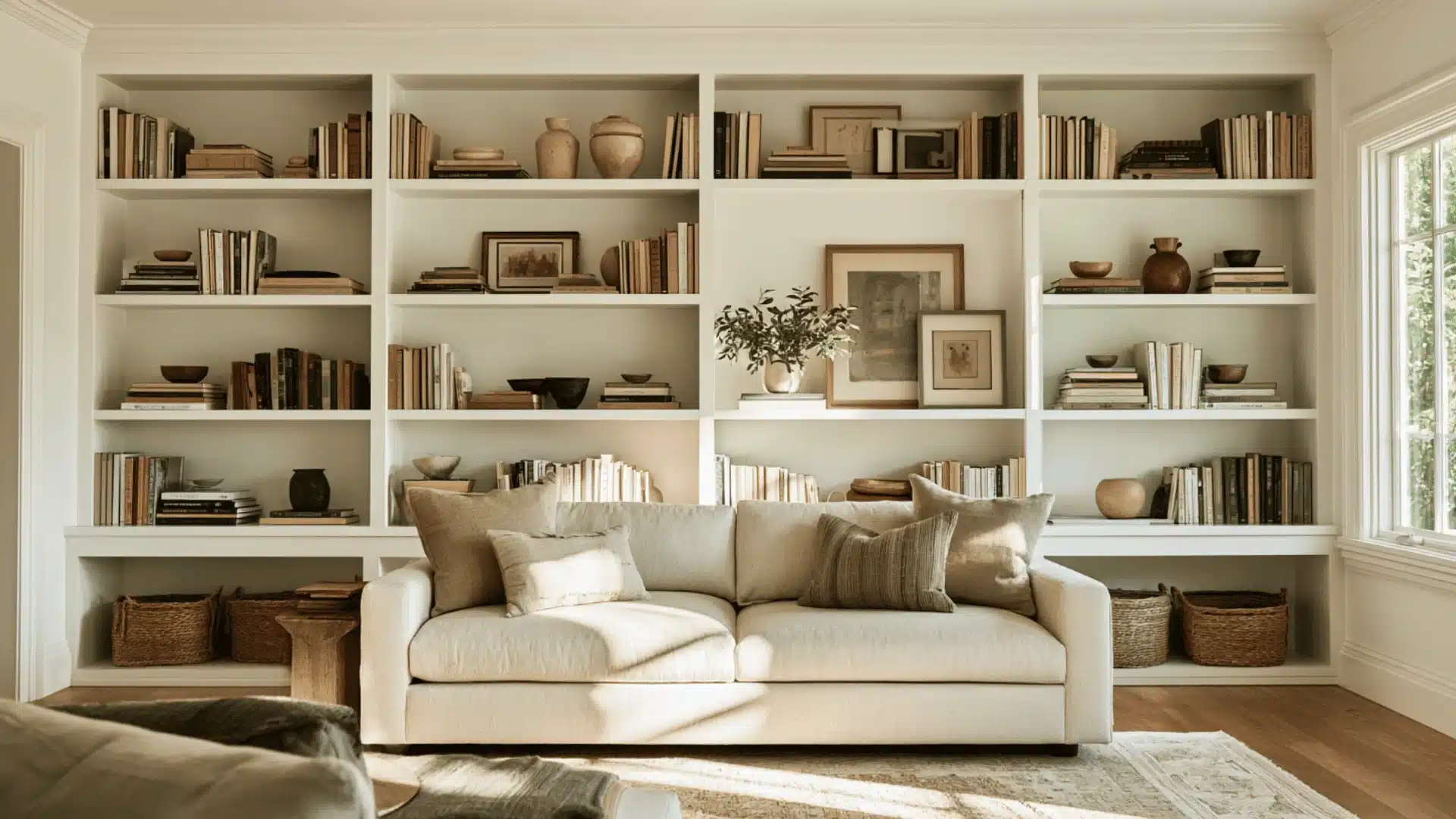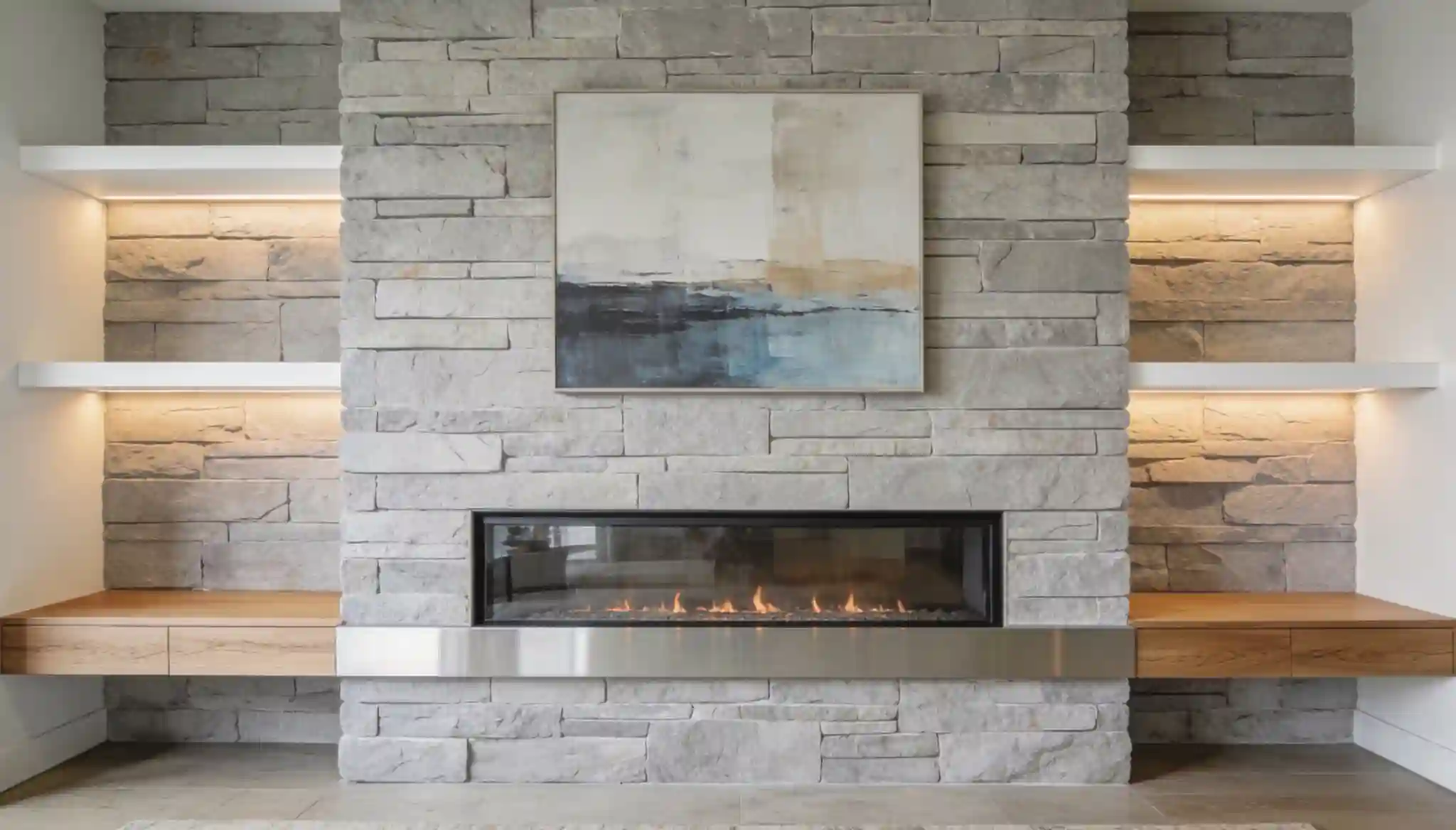
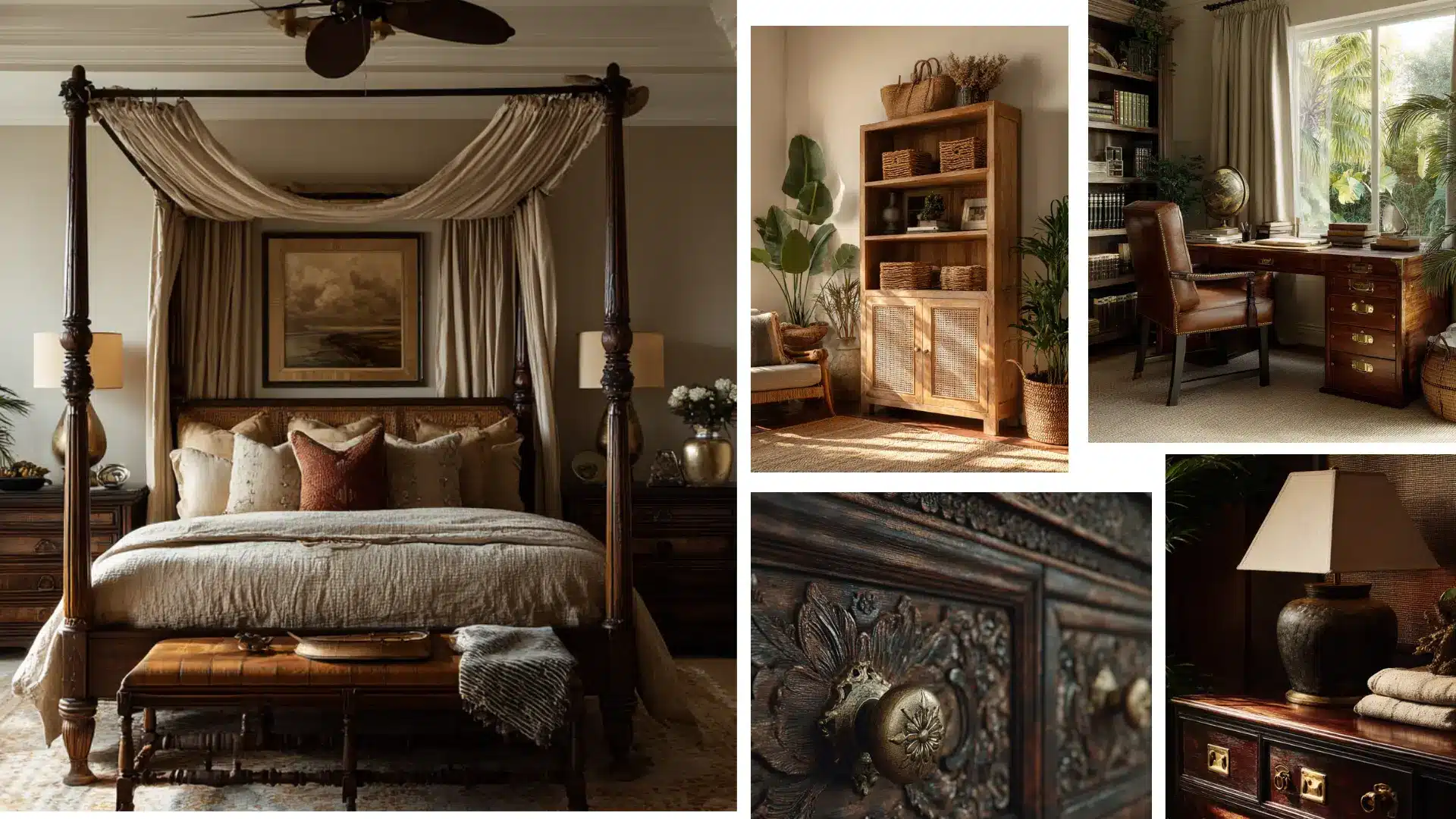
Some furniture just refuses to go out of style. British colonial furniture is a good example of that.
It has been showing up in homes for well over a century and still looks right at home next to modern pieces, warmish neutrals, and natural textures.
People keep coming back to it because it feels collected, not decorated.
You will find styling tips, buying advice, and real ideas for making it work in your space.
What is British Colonial Furniture?
It started with the British Empire spreading across Asia, Africa, and the Caribbean.
Local craftsmen built furniture from what they had on hand. Teak, rattan, cane, and mahogany. The result was sturdy, practical, and full of character.
You can spot it by the dark wood, the cane back chairs, the louvered panels, and the clean but heavy lines. Nothing fussy about it.
And it still sells today because it holds its own in any room. It does not need a matching set or a perfectly styled home. It just works.
Signature Characteristics of British Colonial Furniture
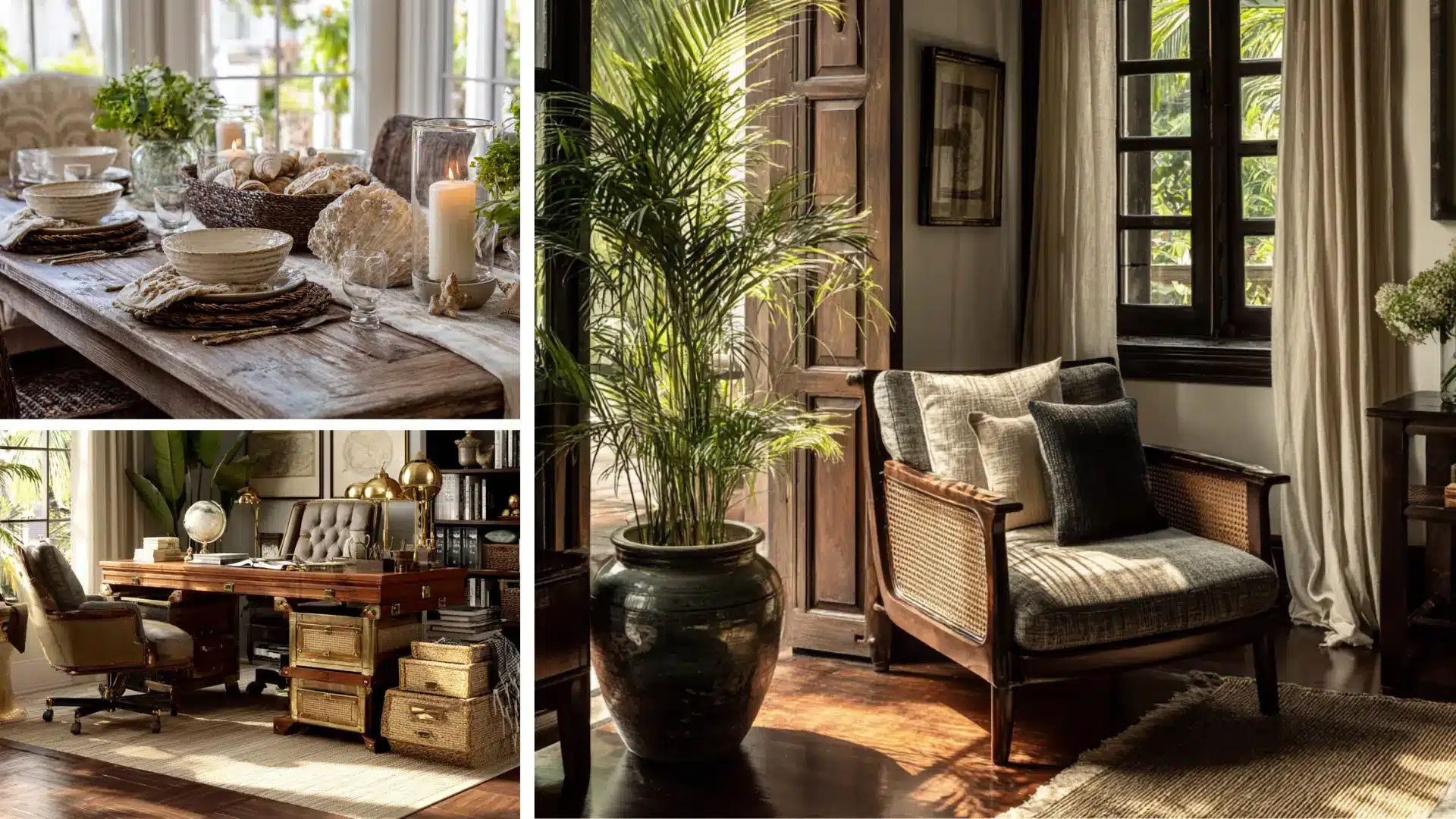
Every piece tells you where it came from.
Heavy wood, woven cane, and brass hardware that was built for real life in hot, humid climates.
1. Dark Wood Finishes and Rich Textures
Teak and mahogany dominate!
Teak is oil-rich and moisture resistant, which is why colonial craftsmen loved it. Mahogany runs redder and takes stain beautifully. Both age well.
The finish is usually hand-rubbed, not glossy. That is what gives the wood its warm, deep look rather than a factory shine.
2. Rattan, Cane, and Wicker Details
Rattan is a vine, not a wood. It has been used in colonial furniture since the 1800s because it bends without breaking.
A few things to know:
- Cane comes from the outer skin of rattan
- It is woven into chair backs, cabinet doors, and headboards
- Wicker is the weaving technique, not the material itself
- These details stop heavy wood pieces from feeling too dark or closed in.
These details stop heavy wood pieces from feeling too dark or closed in. If your room runs small, a cane back chair or a rattan side table is one of the easiest ways to add colonial character without the weight.
3. Handcrafted Carvings and Brass Hardware
The carvings are not decoration.
They are proof that something was made by hand. Lotus flowers, geometric borders, and leaf patterns are most evident. Brass hardware was chosen for function.
It does not rust in humidity. Today, it adds warmth and contrast against dark wood.
4. Functional Yet Sturdy Design
Every piece was built for use. Campaign chests that folded flat for travel.Planter chairs with extended arms to rest tired legs. Sideboards deep enough to store real things.
The design never prioritized looks over function. That is exactly why it holds up in modern homes.
You are not buying something to look at. You are buying something to actually use every single day
British Colonial Style Color Palette
The colors in a colonial room are never loud!
They pull from the natural world. Warm whites, dusty greens, deep teals, ochre yellows, and earthy terracotta.
These shades were everywhere in colonial interiors because they worked in hot climates and looked good next to dark wood.
On walls, warm neutrals and muted greens do the most work.
They let the furniture speak without competing with it. If you want depth, go for a deep teal or a tobacco brown on one wall. Keep the rest calm. That balance is what makes the whole room feel pulled together.
Benjamin Moore Newburyport Blue HC-155 and Sherwin Williams Rookwood Terra Cotta SW 2803 both work beautifully in colonial rooms. They hold up under warm artificial light without shifting tone.
Popular Types of British Colonial Furniture
It covers every room. From deep plantation chairs in the living room to solid writing desks in the office. Each piece was built for a purpose, and that purpose still holds today.
1. Living Room Furniture
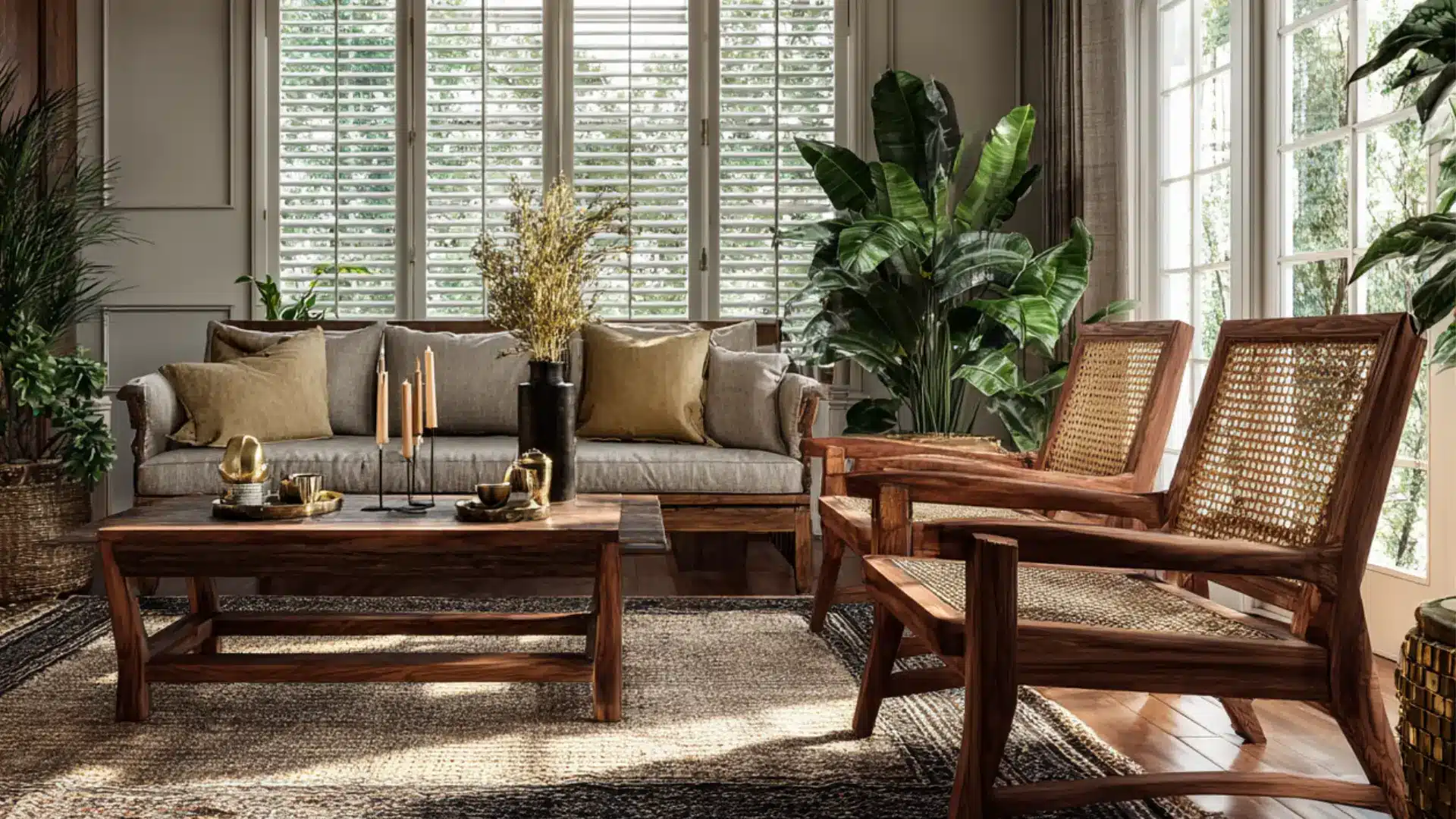
The living room is where colonial furniture feels most at home. Plantation chairs, with their wide arms and cane backs, are the standout pieces.
Pair one with a dark-wood coffee table and a glass-front display cabinet, and the room does the rest.
- Plantation chairs
- Coffee tables
- Display cabinets
2. Bedroom Furniture
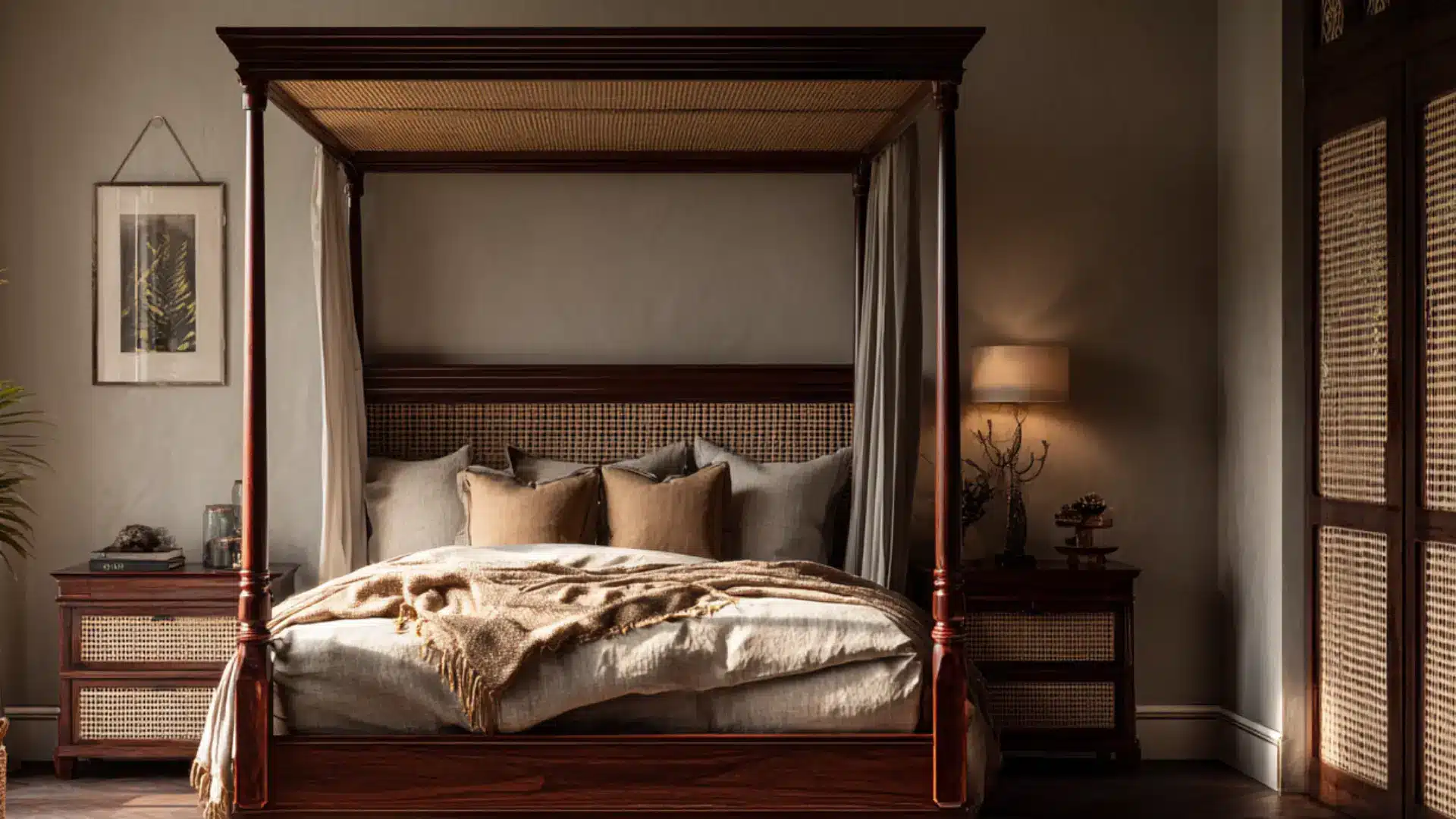
Four poster beds are the anchor. They are heavy, tall, and built to last generations.
Wooden dressers with brass ring pulls and low cane nightstands keep the rest of the room grounded without overcrowding it.
3. Dining Room Furniture
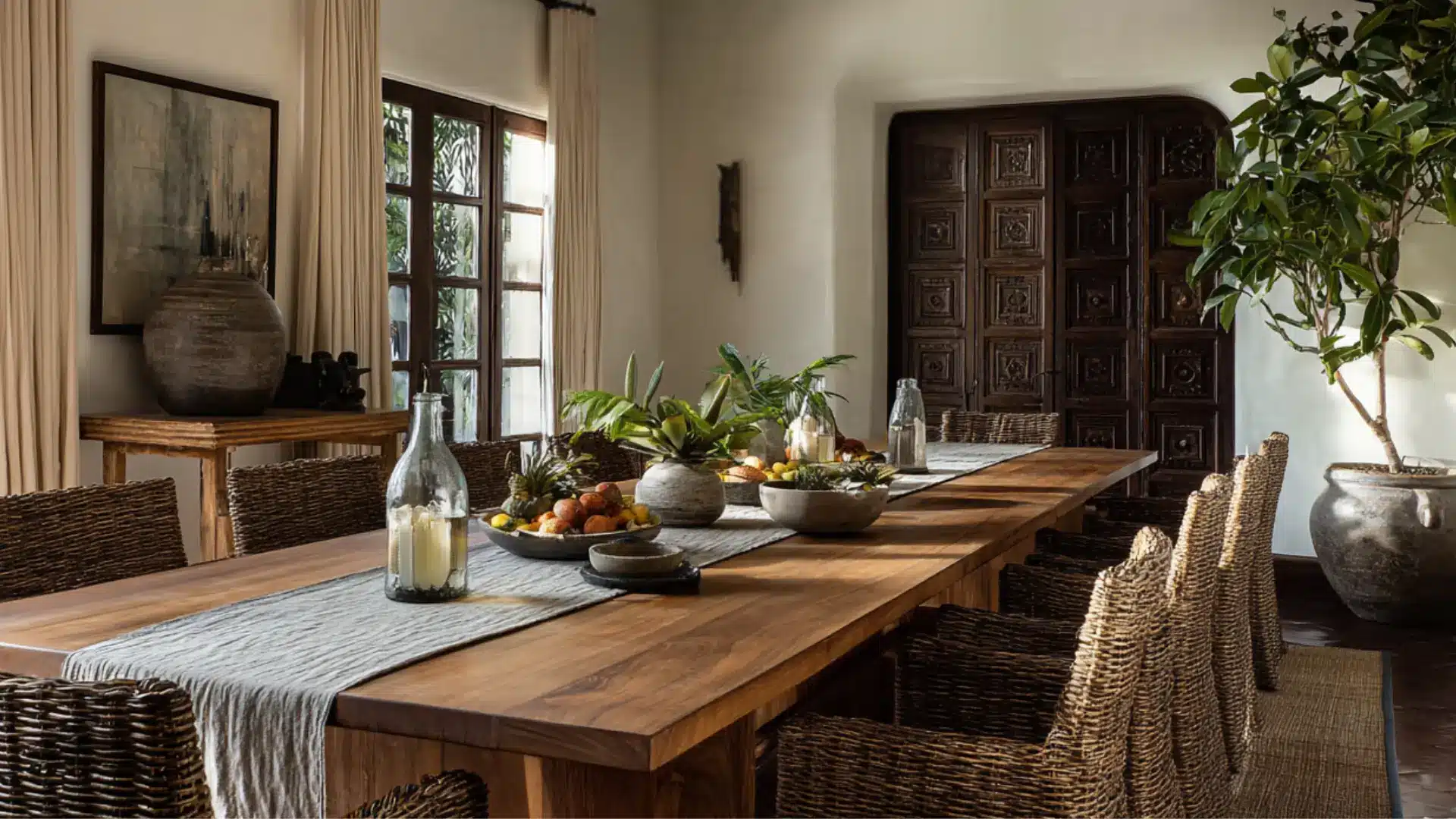
Colonial dining rooms were built for long meals and real conversation. The furniture reflects that. Sturdy, generous, and always practical.
- Long dark wood dining tables that seat eight without feeling cramped
- Sideboards deep enough for actual storage, not just display
- Cane dining chairs that keep the room from feeling too heavy
If your dining table is dark teak, keep your chair cushions in warmish linen or aged cotton. Bright white cushions pull the eye away from the wood. Warm off-white keeps everything connected.
4. British Colonial Office Furniture
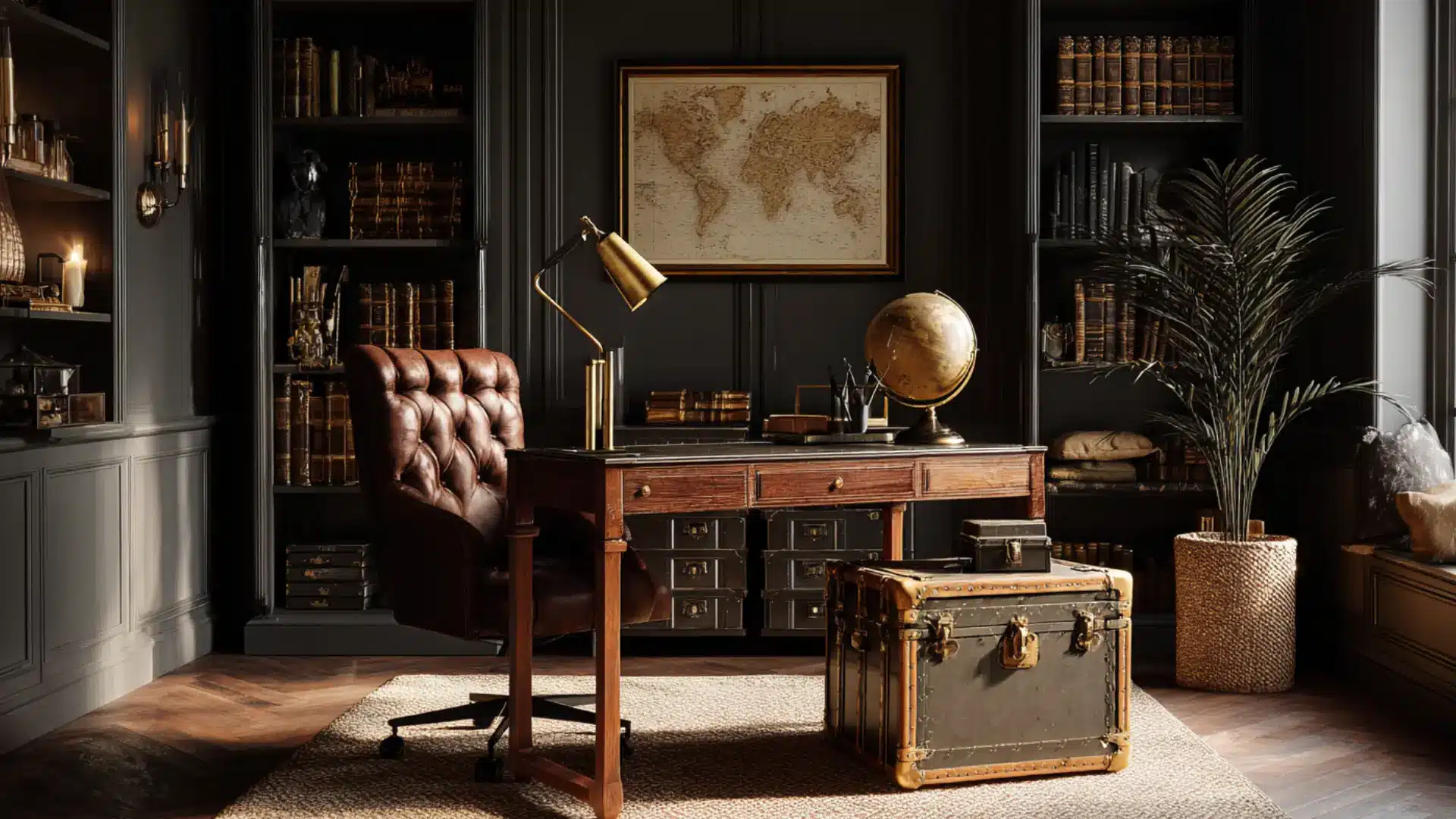
This is where the style gets underrated. Most people think colonial furniture stops in the living room. It does not.
A teak writing desk with brass hardware sets the tone immediately.
Campaign trunks serve as storage and double as side tables. Open bookshelves in dark wood add depth without closing the room in.
If you work from home and want a space that feels focused and warm, this setup is hard to beat.
How Does this style fit in Today’s Homes?
This style does not require a full-room commitment. One good piece in the right spot is enough to shift the whole feel of a space. The key is in the layering.
Dark wood against a warm neutral wall. A cane chair next to a linen sofa. A brass lamp on a teak side table.
Colonial interiors work because they mix weight with texture.
Heavy furniture sits better when it has something light around it. Natural fabrics, woven rugs, and indoor plants all pull the look together without making it feel like a set piece from another era.
British Colonial Style vs Modern British Colonial Style
Both styles come from the same root. The difference is in how much history you want in the room.
Traditional colonial leans heavier, darker, and more layered. The modern take keeps the bones but strips back the weight.
| Feature | British Colonial | Modern British Colonial |
|---|---|---|
| Wood | Heavy teak, mahogany | Reclaimed wood, lighter teak |
| Colors | Ochre, terracotta, warm white | Soft neutrals, muted greens |
| Hardware | Aged brass | Brushed brass, matte black |
| Cane and Rattan | Thick woven panels | Fine weave, lighter frames |
| Fabric | Heavy cotton, jute | Washed linen, soft cotton |
| Lighting | Brass lanterns | Rattan pendants, warm bulbs |
| Best For | Heritage homes, large rooms | Apartments, modern spaces |
Neither is wrong. It comes down to your space and the amount of contrast you want between old and new. Most rooms today sit somewhere in the middle, and that is usually where it looks best.
Wrap Up!
British colonial furniture is not a trend. It has been around long enough to prove it does not need to be.
The dark wood, the cane details, the brass hardware.
Every piece carries real craft and real history. You do not need a full room to make it work.
Start with one good piece, get the wall color right, and let the rest follow. That is really all it takes.
Frequently Asked Questions
1. Where Can I Buy Authentic British Colonial Furniture Today?
Specialist antique dealers, estate sales, and online platforms like Chairish or 1stDibs carry authentic pieces worth looking at.
2. How Do I Clean and Maintain Teak Furniture at Home?
Wipe it down with a damp cloth and apply teak oil once or twice a year to keep the wood from drying out.
3. Is British Colonial Furniture a Good Long Term Investment?
Solid teak and mahogany pieces hold their value well and often appreciate over time if kept in good condition.