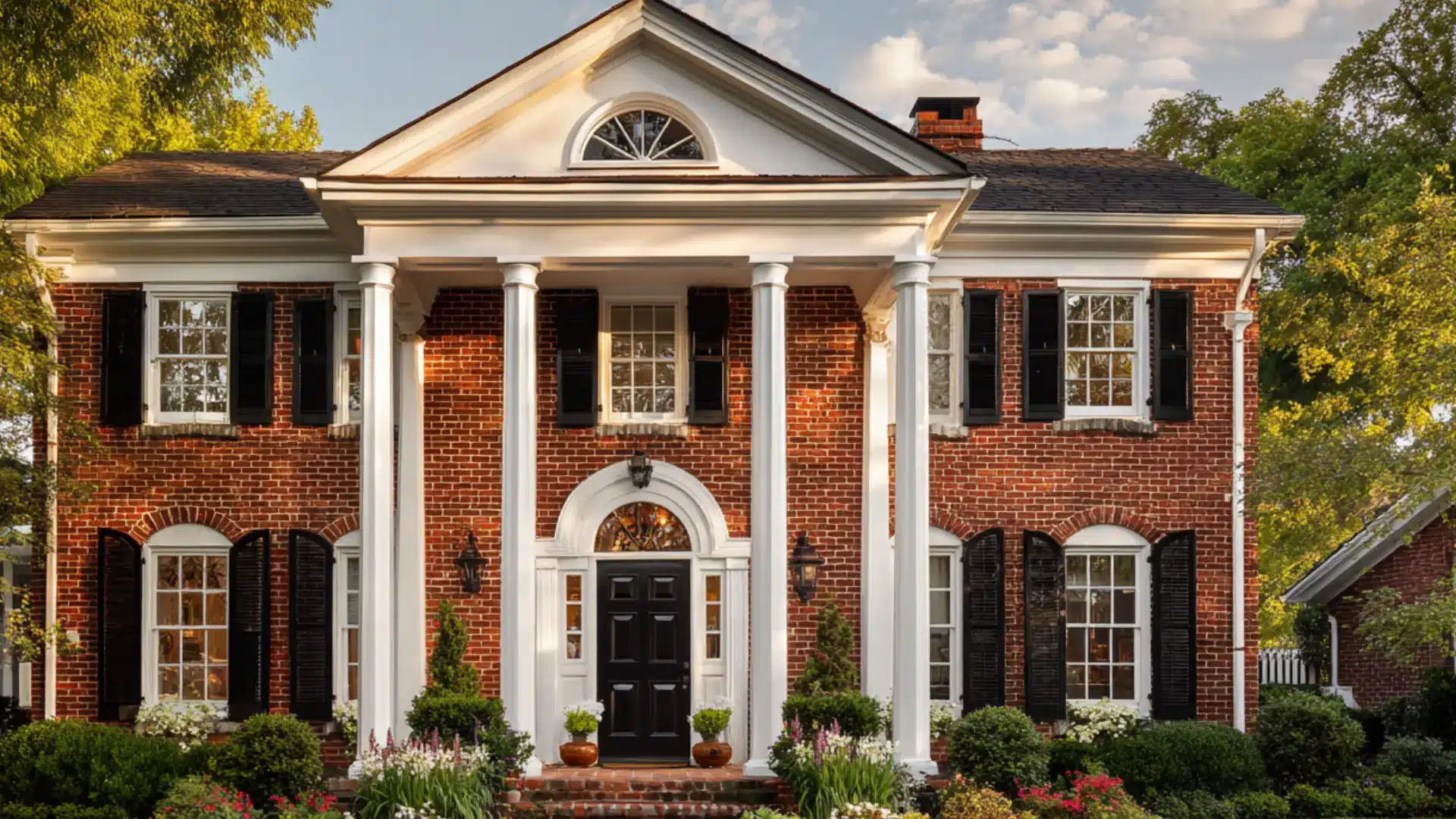
Brick does not go out of style. It weathers well, holds its color, and makes a house look like it was built to last, because it was.
A brick colonial house takes all of that and adds symmetry, tall windows, and a front door that means business. People keep choosing this style because it delivers curb appeal without asking for much in return.
Brick colonial homes that retain their original window placement and roofline consistently outperform updated versions on resale.
The buyers who know this style know immediately when something has been changed.
What is a Brick Colonial House?
Brick colonial homes trace back to the early 1700s when English settlers along the Eastern Seaboard started replacing timber frames with locally fired brick.
It was practical. Brick handled humidity, resisted fire, and lasted longer than wood in harsh coastal climates.
The style stuck because the proportions worked.
Symmetrical facades, centered entries, and evenly spaced windows created a look that felt ordered and permanent. That same quality is exactly why it still feels relevant today.
No trend drives the demand for brick colonial homes. Durability, character, and curb appeal that do not need updating do.
Features That Make a Brick Colonial House Look the Way it Does!
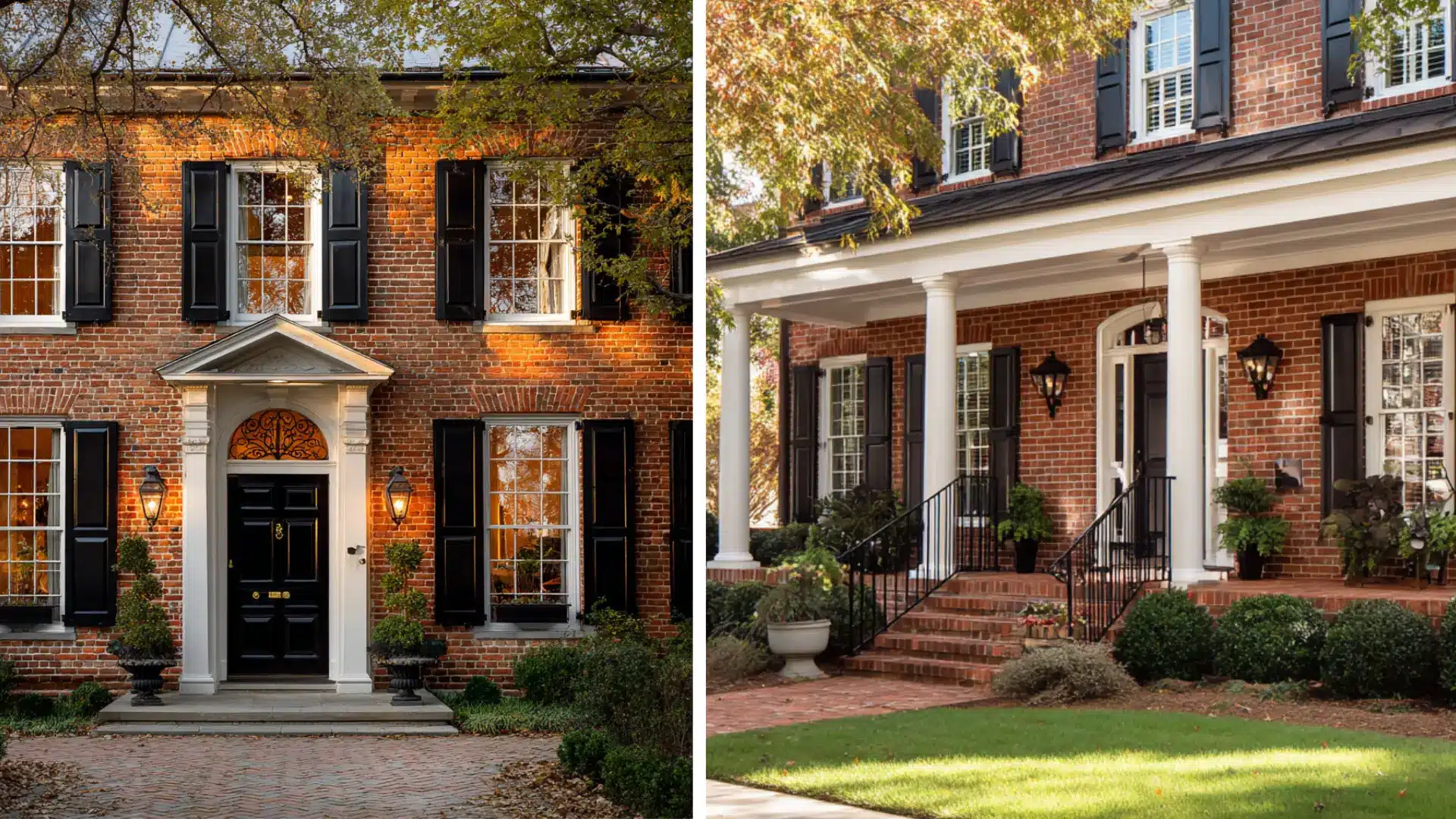
Every detail on a brick colonial exterior was placed with intention.
Nothing is accidental, and nothing is decorative for the sake of it.
Architect Robert A.M. Stern has called symmetry the defining discipline of colonial architecture.
His firm has completed several brick colonial projects across the Northeast, all built to preserve the original proportions.
1. Symmetrical Exterior Design
Symmetry is the whole foundation of this style.
The front door sits dead center. Windows line up in equal numbers on both sides. Even the chimney placement mirrors itself on the roofline.
Stand across the street, and the facade looks like it was drawn with a ruler. That is not a coincidence. It is the point.
2. Columns and Covered Entry
Full height columns on a brick colonial are load bearing and visual anchors at the same time.
‘They frame the entry, support the porch roof, and give the whole facade its sense of scale. Painted white against red or dark brick, they are the detail most people notice first and remember longest.
3. Tall Windows and Front Door Placement
Tall windows running nearly floor to ceiling and a centered front door with a transom above it.
That combination is what gives brick colonial homes their signature look from the street. The windows let in serious light.
The centered entry creates the balance that the whole facade is built around.
4. Rooflines and Chimneys
Gable roofs with moderate slopes and brick chimneys placed symmetrically on each end.
Simple, considered, and built to handle weather for centuries. The chimney is not decorative.
In original colonial homes, it served multiple fireplaces across two floors. Today, it gives the roofline the weight and punctuation it needs to look complete.
What Color Palette Works Best for a Brick Colonial Home?
Start with the brick itself. Red brick has warm orange and brown undertones.
Dark brown or charcoal brick runs cooler with gray and blue in it. Every color decision needs to work around that undertone first.
Think of the exterior in three layers. The brick is the base. The trim is the frame. The shutters and front door are the details.
Black shutters against red brick never look wrong. A deep navy or forest green front door adds color without fighting the brick.
For warm red brick, Benjamin Moore White Dove OC-17 on the trim reads warm in sunlight and never goes yellow in shade. For darker brick, Sherwin Williams Alabaster SW 7008 keeps the contrast clean.
Brick Colonial House Ideas
There are a hundred ways to style a brick colonial exterior.
These are the ones that actually work, along with a few mistakes worth knowing before you start.
1. Brick Colonial House With Black Windows
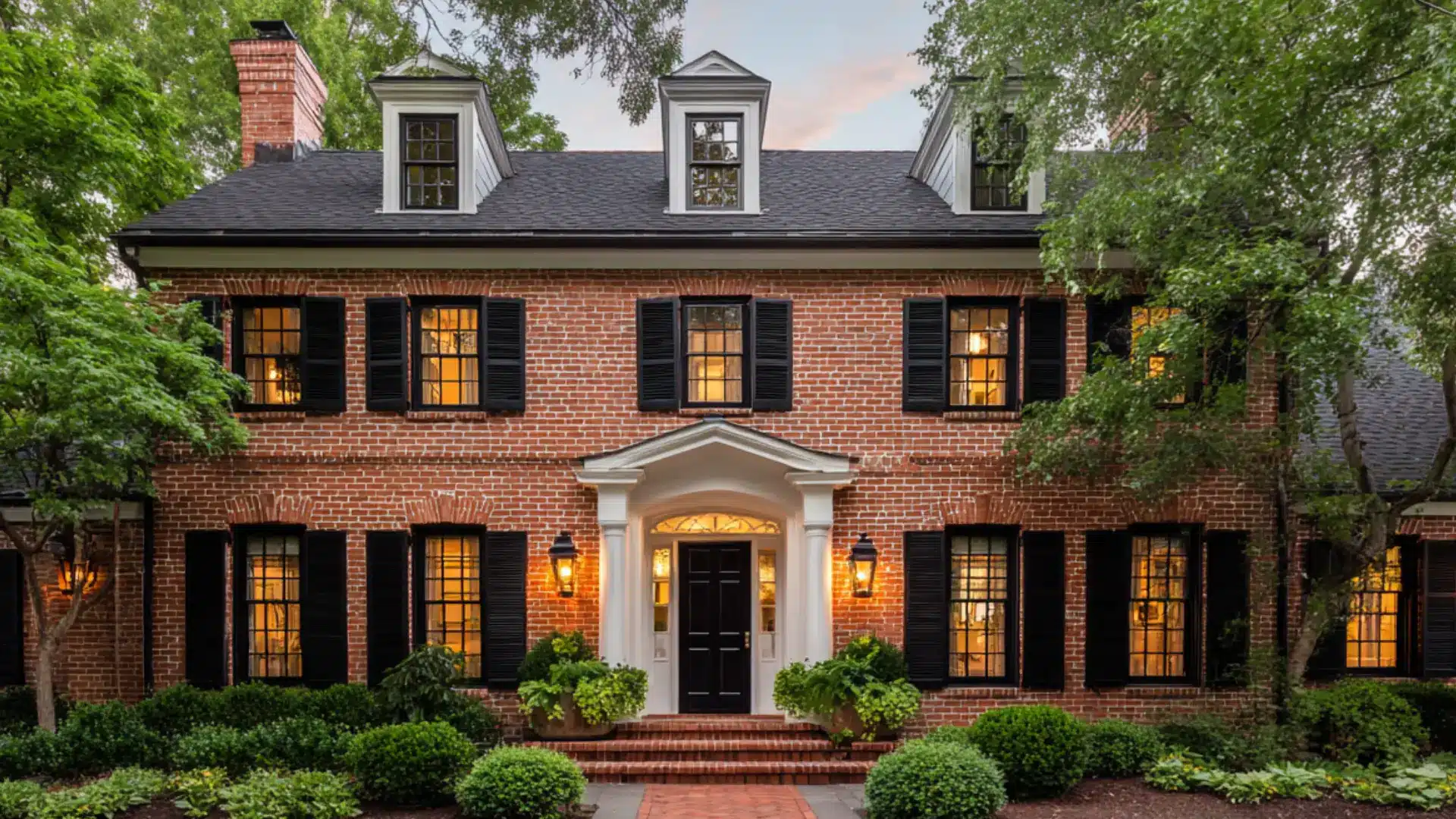
Black window frames give a brick colonial a modern edge without changing the architecture at all.
They sharpen the symmetry and make every window look deliberate.
- Andersen and Marvin both carry black frame options built to colonial proportions
- Pair with white trim for maximum contrast
- Avoid bronze frames on red brick as the undertones clash
Replacing original colonial windows with wide picture windows immediately breaks the symmetry. The vertical proportion is what holds the facade together. Replace like for like.
2. Brick Colonial House With White Columns
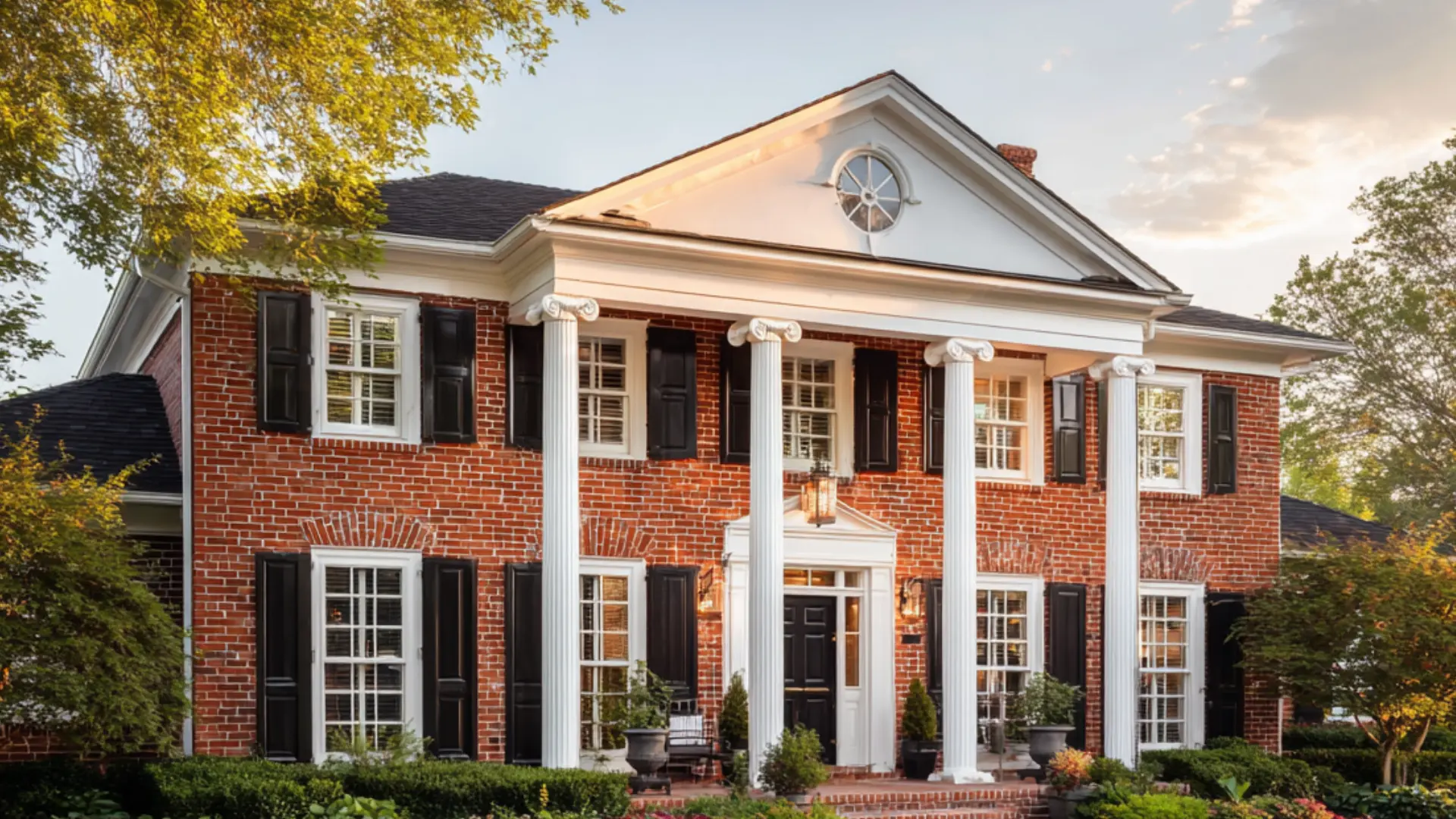
White columns against brick are the most timeless detail of this style.
Full height, evenly spaced, always crisp.
If the columns are wood, repaint them every four to five years to keep the contrast sharp against the brick.
Benjamin Moore Chantilly Lace OC-65 holds up cleanest against both warm and cool brick without looking flat in afternoon light.
3. Brick Colonial House With Front Porch
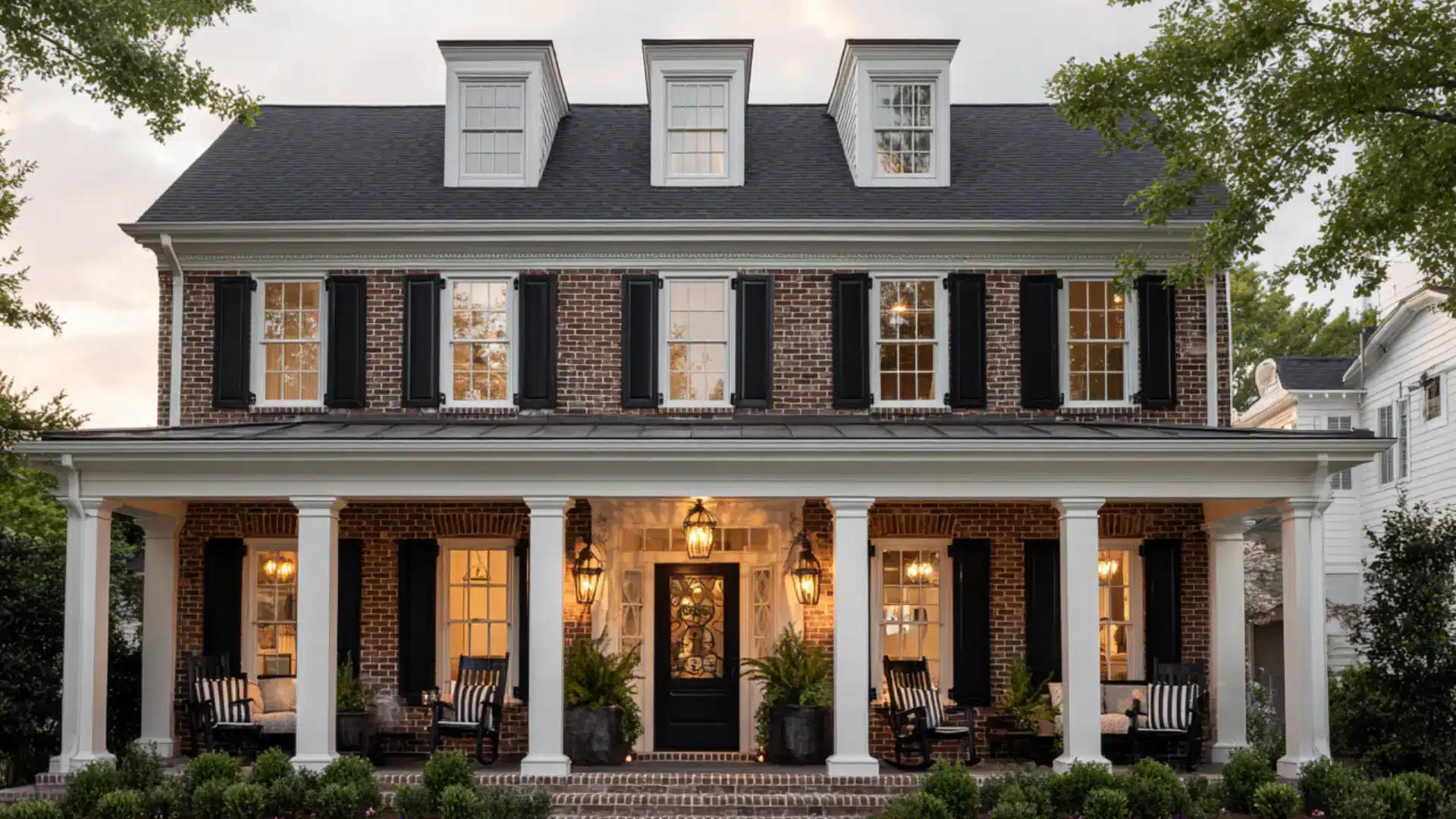
A front porch on a brick colonial feels like it was always supposed to be there.
Wide enough for two chairs and a small table. Keep the porch floor in natural wood stain or charcoal gray. Anything too light competes with the brick instead of grounding it.
The architecture is built on balance. The landscaping has to follow the same rule, or the front of the house looks unfinished, no matter how good everything else is.
4. Modern Brick Colonial House Exterior
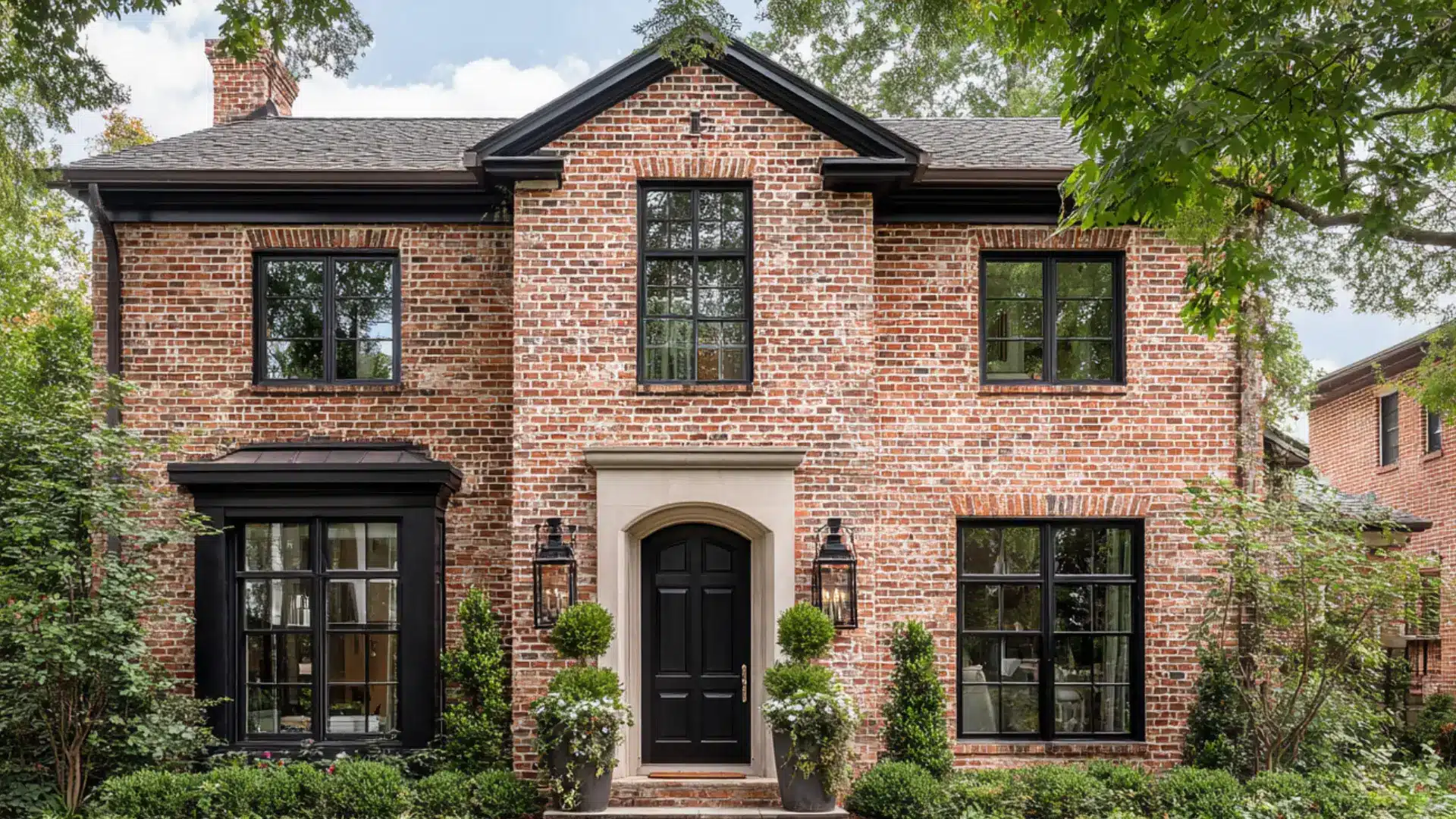
The best modern updates keep the bones and refresh the details. Black gutters, updated lantern lighting, and a bold front door.
That is genuinely all it takes to bring a brick colonial forward without losing what makes it worth having in the first place.
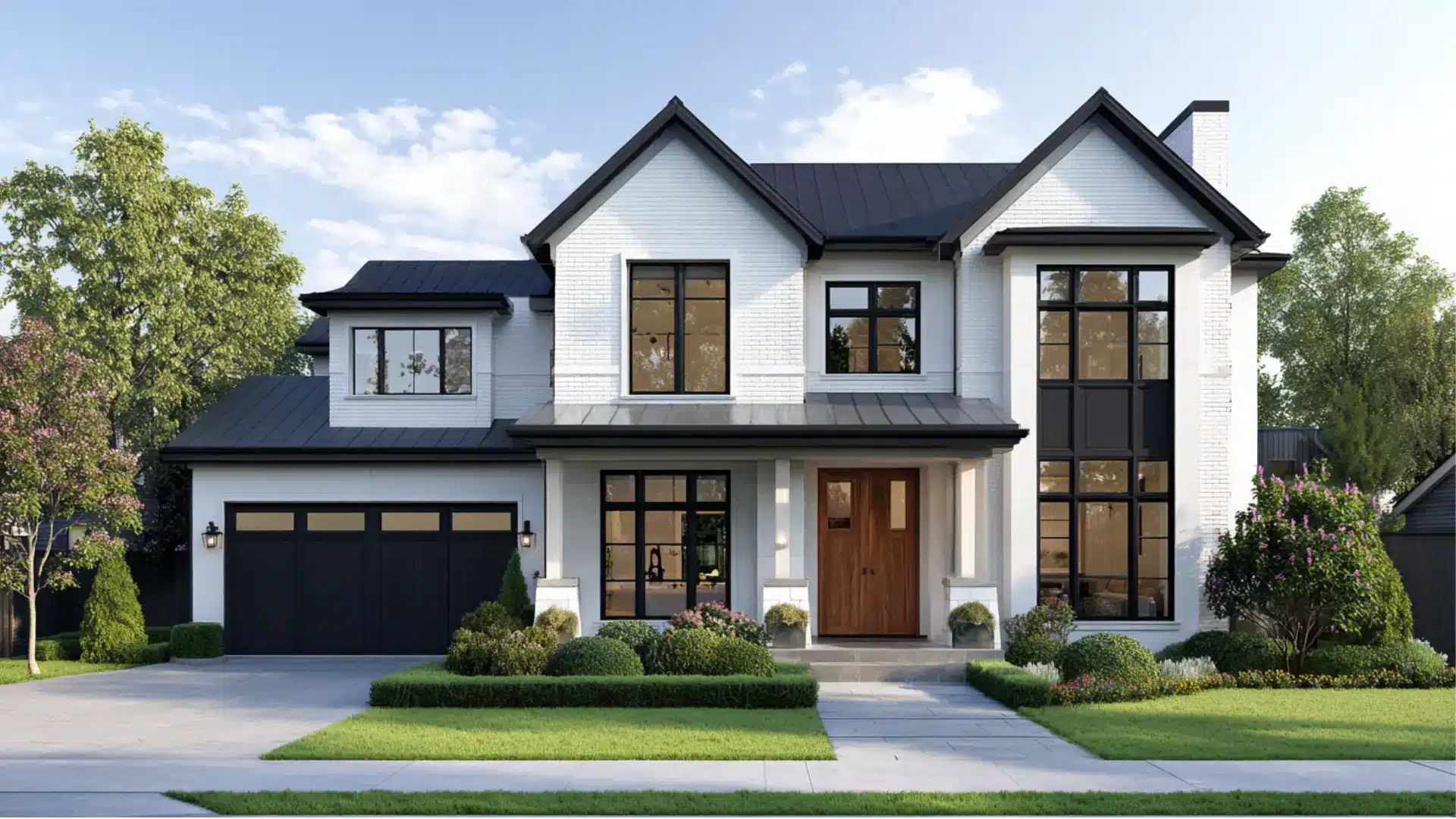
5. White Brick Colonial House Ideas
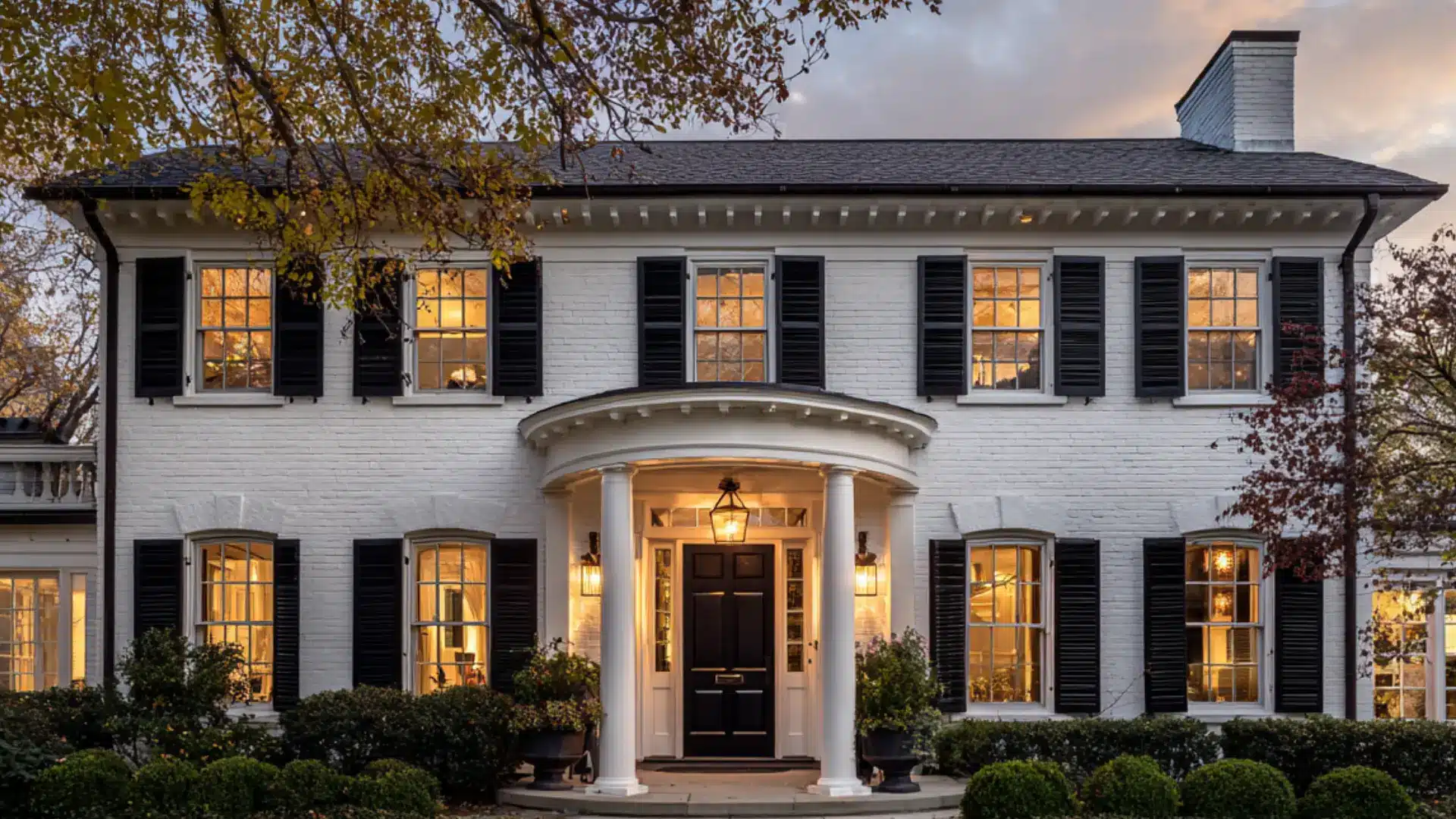
White-painted brick gives the entire exterior a lighter, more relaxed feel.
It works best paired with black shutters and a dark front door. A few things to keep in mind:
- Use a breathable masonry paint on any brick built before 1920
- Sealing old brick traps moisture and causes damage from inside the wall
- Limewash is a softer alternative to full paint and is fully reversible
Standard exterior paint on original colonial brick traps moisture, leading to spalling and cracking over time. Always use a lime-based or breathable masonry product on any brickwork built before 1920.
6. Brick Colonial House Landscape
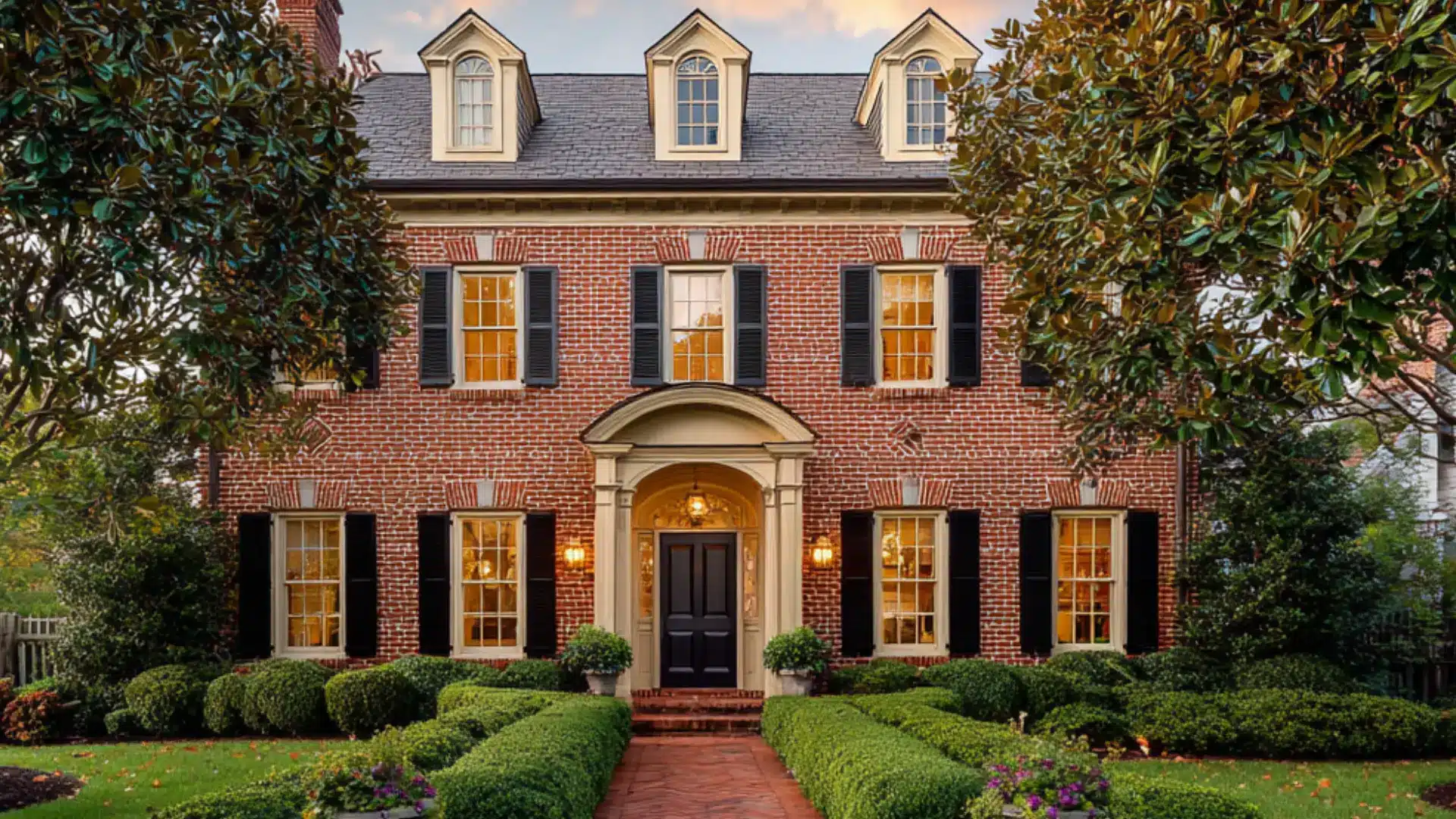
Symmetry comes first. Matching boxwood hedges along the front path, identical planters on either side of the entry, and a centered walkway leading straight to the front door.
Magnolia trees and crepe myrtles suit the scale of a two story brick colonial without crowding the facade or blocking the windows.
7. Brick Colonial House With Lantern Lighting
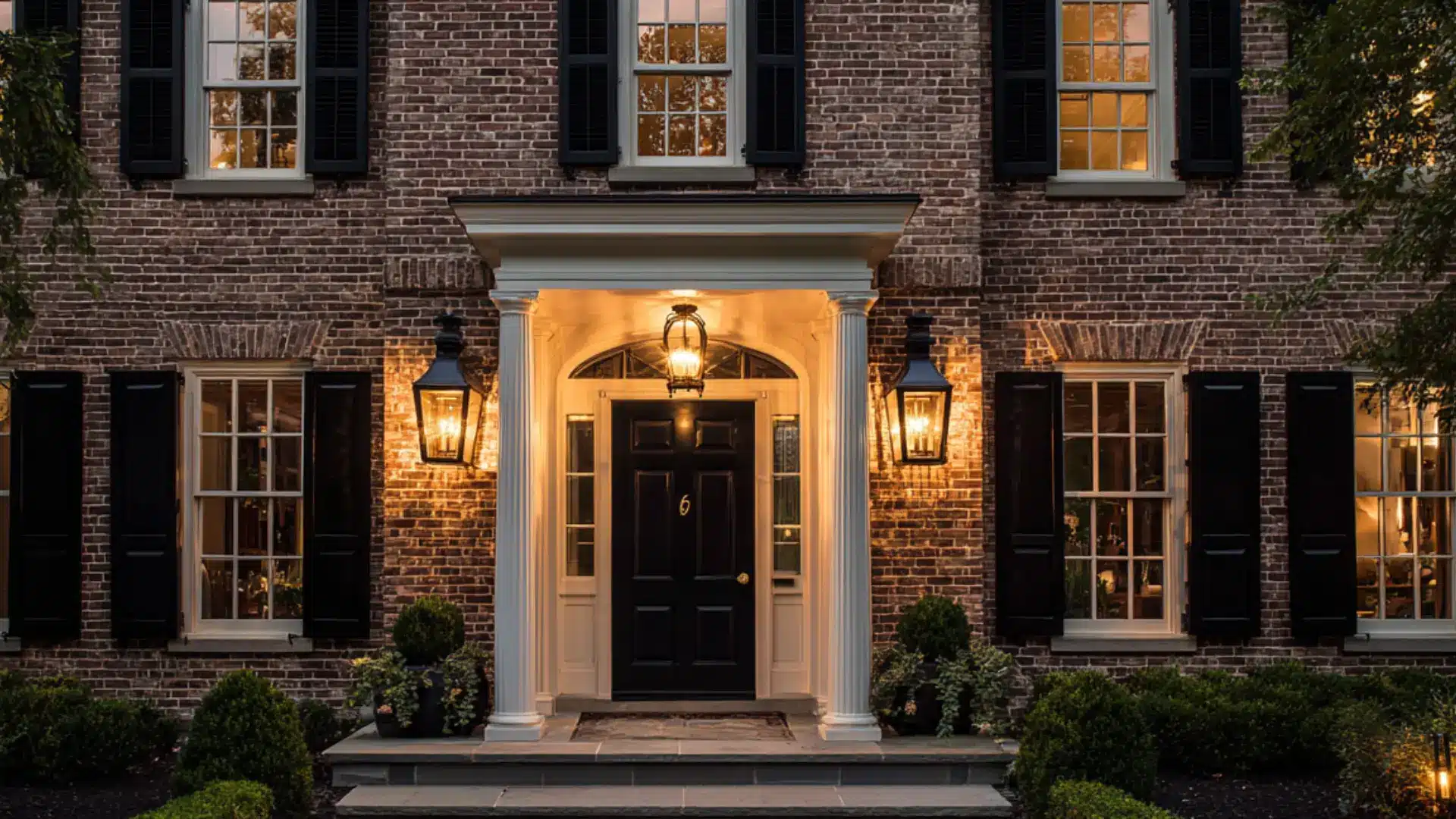
Lantern sconces on either side of the front door are the most historically accurate lighting choice for this style. Brass and aged bronze both work well against brick.
One rule worth keeping: keep the scale generous.
Small fixtures on a two story colonial disappear completely and look like an afterthought from the street.
8. Two Story Brick Colonial House Designs
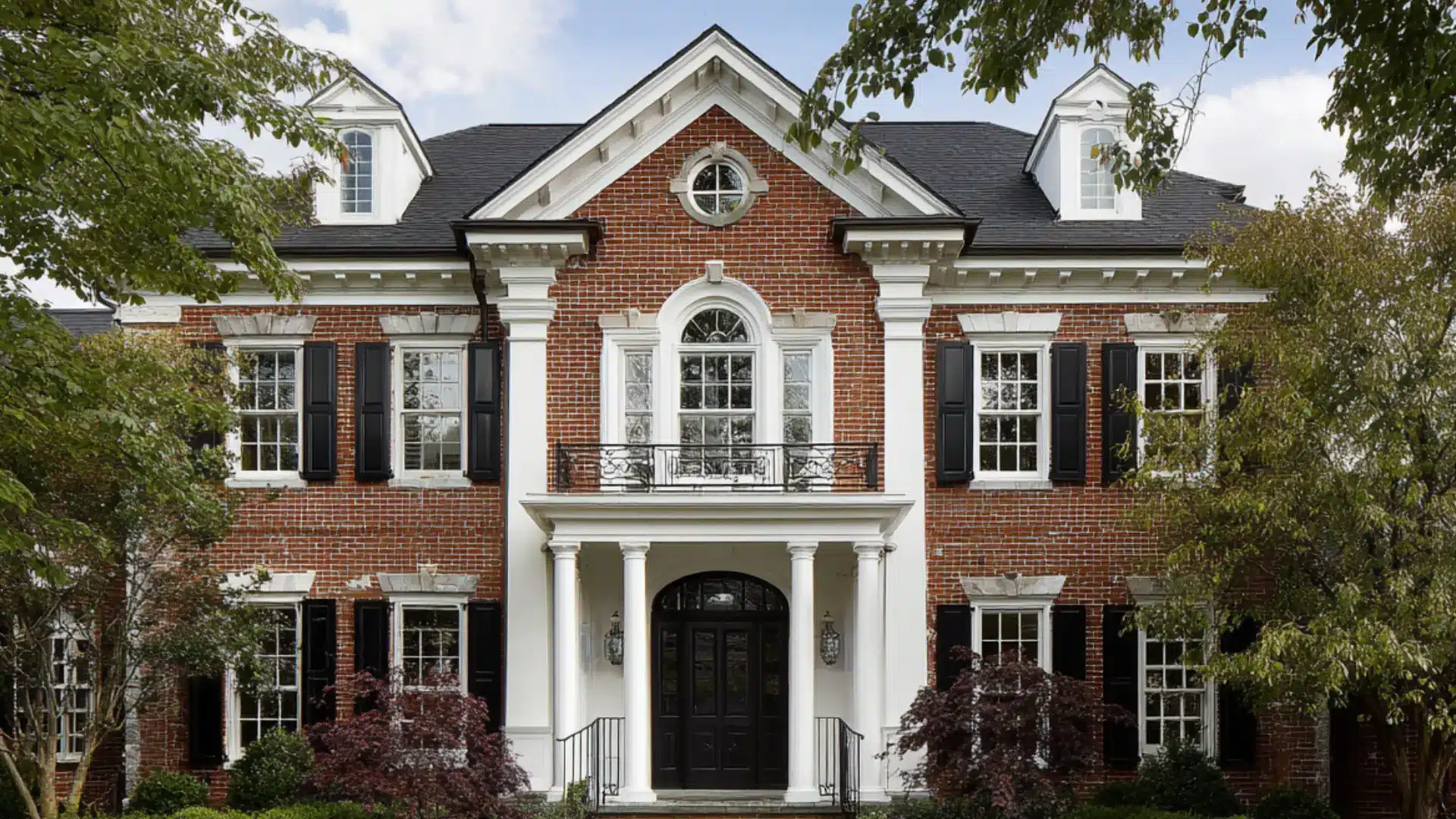
Two stories is where this style makes the most sense.
Full height columns, symmetrical window stacking across both floors, and a centered entry all read better at this scale.
- Keep the window height consistent across both floors
- Avoid mixing window sizes between the ground and upper floor
- The visual rhythm of stacked windows is what holds the whole exterior together
Brick Colonial House Exterior Makeover
A brick colonial exterior does not need a full renovation to look noticeably better.
Most of the biggest visual improvements come from small, focused updates.
Fresh trim paint, updated shutters, a new front door color, and better lighting can shift the entire look of the house without touching the brick or the structure.
The key is knowing what to update and what to leave alone. A brick that has weathered well does not need painting.
Columns that are structurally sound just need a fresh coat. Work with what the house already has, and the results almost always surprise you.
Brick Colonial House Plans
The floor plan is what makes or breaks how a brick colonial actually lives. The exterior draws you in, and the layout is what keeps you there.
The classic two-story setup places formal rooms on the ground floor, bedrooms above, and a central staircase in the entry hall.
For modern families, removing the wall between the kitchen and living area is the most requested update today. Just never drop the ceiling height, or the colonial character goes with it.
A wraparound porch is the one structural addition worth prioritizing if budget allows.
Wrapping Up!
Three hundred years, and this style still stops people on the street.
The brick holds its color. The symmetry holds its ground. The columns, the roofline, and the centered front door. None of it needs reinventing.
The smartest thing you can do with a brick colonial is understand what makes it work and then stay out of its way.
Get the colors right, keep the proportions intact, and the house handles everything else on its own
Frequently Asked Questions
1. How Long Does a Brick Colonial House Typically Last?
A well maintained brick colonial home can last well over 100 years with routine mortar repairs and proper drainage management.
2. What is the Average Cost to Build a Brick Colonial House Today?
Building a new brick colonial typically runs between $250,000 and $600,000, depending on size, location, and brick material selection.
3. Do Brick Colonial Homes Require More Insurance Than Other House Styles?
Brick colonial homes often qualify for lower homeowner insurance rates because brick is naturally fire resistant and highly durable against storm damage.
4. What Type of Brick Works Best for a Colonial Exterior?
Traditional red clay brick in a running bond pattern is the most historically accurate and widely recommended choice for colonial exteriors.
5. Are Brick Colonial Homes a Good Investment in Today’s Market?
Brick colonial homes consistently hold strong resale value, particularly in the Northeast and Mid-Atlantic, where the style has deep roots and steady buyer demand.