Some homes just feel different the moment you walk in.
The floors are warm. The walls have texture. Light falls soft through arched doorways. You slow down without even thinking about it.
That’s exactly what a hacienda Spanish style interior does to a space.
And right now, more homeowners across the USA are bringing this look into their homes – from California to Texas to Florida.
But most people hit the same wall. Too many ideas, too little clarity.
What even is hacienda style? How is it different from Spanish Colonial or Spanish Revival? And how do you do it right without overdoing it?
This guide answers all of that. I’ll cover the key elements, room-by-room ideas, and budget tips so you can make real decisions, not just save pretty pictures.
Let’s get started.
What is Hacienda Spanish Style Interior?
Hacienda style interior is a design rooted in Spanish colonial architecture.
It started in Mexico and the American Southwest, where large estate homes were built for durability and comfort in hot climates.
The style uses natural materials like adobe, clay, and wood.
Thick walls, terracotta floors, and hand-carved details are all part of it.
What makes it special is how it feels so warm and grounded. It’s a style built around real life, real materials, and real craftsmanship.
It helps to understand how hacienda style sits among the other Spanish style homes out there – but we’ll come back to that.
First, let’s look at what actually defines this style from the inside.
The Key Elements of a Hacienda Spanish Style Interior

Here are the elements that define this beautiful interior aesthetic design.
1. Terracotta and Saltillo Tile Floors
These handmade clay tiles are one of the most recognizable features of this style. They bring natural warmth underfoot and get better with age.
For those who don’t want terracotta covering their floors, stair risers are a practical and striking alternative.
2. Exposed Wood Beams
Dark, rough-hewn beams across a white ceiling add depth and character to any room.
Jenna Sue Design points out that darker wood tones have been central to Spanish interiors for centuries, rooted in Moorish, Gothic, and Renaissance influences.
They contrast beautifully against white walls and colorful tiles.
3. Talavera and Hand-Painted Tiles
These hand-painted ceramic tiles add color and personality to kitchens, bathrooms, and fireplaces. No two tiles are identical.
Etch Design Group describes them as central to celebrating craftsmanship in hacienda style.
4. Plaster and Stucco Walls
Smooth or textured plaster walls are a staple of this style.
I personally recommend starting with warm, earth-toned hues like terracotta, mustard yellow, or sandy beige.
These tones work as a neutral base that lets other elements stand out.
5. Wrought Iron Details
Iron appears throughout a hacienda home. Light fixtures, door handles, window grilles, stair railings.
Wrought ironwork blends naturally with light paint colors and transitional furniture. It grounds the space without overwhelming it.
6. Arched Doorways and Niches
Arches soften transitions between rooms. Built-in niches display pottery, candles, and handmade objects.
Together they give the interior its signature flow and character.
7. Earthy Color Palette
Terracotta, ochre, deep red, warm brown, and creamy white.
In homes with Moorish influence, you’ll also find deep blues, turquoise, and mustard yellow. The palette keeps the space warm and grounded without feeling heavy.
Room-by-Room Design and Decor Ideas
Hacienda Spanish Style Living Room Interior
The living room is where hacienda style does its best work.

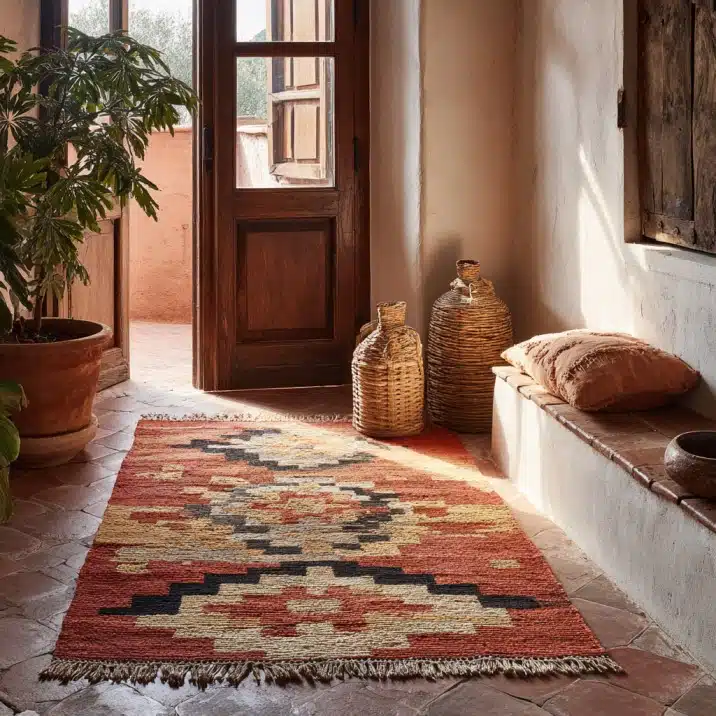
Start with the floor. Saltillo or terracotta tiles set the tone immediately. They bring warmth and texture that no painted surface can replicate.
Deborah Houston of Deborah Houston Interiors puts it clearly: “In a world of fake wood and porcelain everything, there is no substitute for the real thing: real stone, wood, metal, and ceramics. They are the key to achieving authentic beauty.”
Layer a handwoven rug in rust or ochre on top for softness.

For seating, go with substantial upholstered sofas in neutral linen or cream. Face them toward each other. Add carved wood side tables and a wrought iron floor lamp.
Keep walls light. Cream or warm white. Let the wood and iron do the contrasting work.
Going dark on walls, beams, and furniture all at once makes even a large room feel heavy and closed off.
Hacienda Spanish Style Kitchen
The backsplash is where most people start, and rightly so. Hand-painted Talavera tiles behind the range bring color and personality.
Pair the tiles with warm wood cabinetry. Add open shelving to display clay pots and ceramic dishes.

For countertops, leathered granite or honed stone works well. Finish with a wrought iron pendant light over the island in an aged or hammered finish.
Hacienda Spanish Style Dining Room Aesthetic
In a hacienda home, the dining room is meant to feel generous and unhurried. It’s a room built for long meals and good company.

Choose a solid wood dining table with visible grain and a slightly distressed finish.
The heavier and more substantial, the better.
Mix seating at the table. Carved wood chairs with leather seats on the ends, simpler upholstered chairs along the sides.
It looks natural rather than catalogue-perfect.
Add a built-in niche if the architecture allows, and place a cluster of ceramic vessels or candles inside it.
Hacienda Spanish Style Bedroom Interior

The bedroom in a hacienda home should feel calm and grounded. Not minimal, but not cluttered either.
Keep bedding simple. White or cream linen. Add one woven throw in rust or ochre for warmth.
Watch wood tones carefully here. If the headboard is dark walnut, the nightstands and door frames should sit in the same family.
Scattered wood tones make a hacienda bedroom feel unfinished rather than layered.

Hacienda style bedroom aesthetic has complete potential to be your favourite room in your house when done right (saying from complete experience).
Hacienda Spanish Style Looking Entryway

In a Spanish hacienda home, entryway should give an immediate sense of what the rest of the space feels like.
Terracotta or Saltillo tiles work well here. Durable, age well, and handle daily foot traffic.
Kathy Corbet of Kathy Corbet Interiors advises using tile floors in entryways specifically because they withstand daily wear while still looking considered and intentional.
Add a carved wood console table against one wall. A terracotta pot with a plant on top. Keep it clean.
Don’t treat this space as an afterthought. It sets the tone for everything beyond it.
A wrought iron lantern pendant, warm plaster walls in cream or sandy beige, and one well-chosen piece of furniture will do more than a room full of mismatched decor ever could.
Modern Hacienda Spanish Interior

Hacienda style doesn’t have to mean heavy, dark, or stuck in the past. It blends with modern Spanish interior design when done right.
A lot of homes today blend traditional elements with cleaner, more contemporary choices and it works really well.
The foundation stays the same. Terracotta floors, plaster walls, wood beams, iron details.
What changes is everything around them.
Here’s what that looks like in practice:
- Lighter wood tones on furniture instead of deep walnut
- Clean-lined sofas in neutral linen next to carved wood pieces
- Matte black or aged iron fixtures instead of ornate scrollwork
- Larger windows to bring in more light without touching the walls
The goal is warmth without weight.
Getting the Hacienda Look on a Budget – it’s possible, trust me
The parts that cost the most in a hacienda interior are real terracotta floors, hand-carved wood furniture, and custom ironwork.
If those are out of reach right now, work around them.
Start with what you can actually do today:
- Paint walls in a warm plaster tone. Cream, sandy beige, or terracotta. It costs very little and changes everything
- Swap out door and cabinet hardware for iron pieces. A set of handles runs $30 to $80
- Add Talavera tiles as accents only. A full tiled floor is expensive. A backsplash section or a few stair risers are not
- Shop estate sales and Facebook Marketplace for carved wood furniture. These pieces exist in abundance and usually go cheap
What not to do: don’t buy porcelain tiles printed to look like terracotta, or plastic-coated “wrought iron” fixtures from big box stores.
Both look wrong immediately and end up costing more when you replace them later.
Real materials in smaller quantities will always look better than fake materials everywhere.
Buy fewer things. Buy better things. That approach suits this style perfectly.
Now that you know what hacienda style looks like, let’s go ahead with how it actually differs from the other Spanish style homes people often confuse it with.
Types of Spanish Style Homes, And How They Differ
Spanish style is not one single look. Several distinct styles fall under that umbrella and they each have their own character.
Here is a quick overview followed by a detailed breakdown.
| Style | Key Feel | Typical Where |
|---|---|---|
| Spanish Hacienda | Warm, rustic, handmade | Texas, Arizona, California, New Mexico |
| Spanish Colonial | Grand, formal, ornate | Florida, California, Latin American influence |
| Spanish Colonial Revival | Polished, suburban, refined | California, Florida |
| Mediterranean Spanish | Light, coastal, colorful | Florida, coastal California |
| Modern Spanish | Clean, warm, contemporary | New builds across the Southwest |
| Pueblo Revival | Minimal, earthy, organic | New Mexico, Arizona |
Spanish Colonial Interior Design
Spanish Colonial is the broader category that hacienda falls under.
It refers to the architecture built across Latin America and the southwestern USA during the Spanish colonial period.
The interiors tend to be more formal than hacienda. Think ornate carved wood doors, decorative ironwork, and Moorish tile influences. Walls are often plastered white.
The overall feel is grander and more structured than a typical hacienda home.
Spanish Colonial Revival Interior
This is an American interpretation of Spanish Colonial architecture that became popular in the early 20th century, particularly in California and Florida.
It kept the signature elements like red clay tile roofs, arched windows, and stucco walls but adapted them to suburban American homes.
Less rustic, more refined.
Mediterranean Spanish
This style blends Spanish influences with broader Mediterranean design.
You will find turquoise, blue, and yellow color accents alongside the usual terracotta and ochre.
Natural stone features more prominently. Mosaic tiles are common. The overall feel is lighter and airier than hacienda, with a stronger connection to coastal living.
Modern Spanish Interior Design
This is where traditional Spanish elements meet clean contemporary design.
Arches, plaster walls, and iron details stay.
Heavy carved furniture and dark wood tones give way to lighter, simpler pieces. The color palette leans toward warm whites and soft neutrals.
Popular in newer builds across California, Texas, and Arizona where people want the warmth of Spanish style without the weight of full traditional interiors.
Pueblo Revival
Pueblo Revival is rooted in Native American adobe architecture from the American Southwest, particularly New Mexico.
Flat or stepped rooflines instead of clay tile. Rounded edges and organic forms on walls and ceilings. Earthy tones throughout. Less ironwork and tile, more raw adobe and rough plaster.
It definitely feels quieter and more minimal than hacienda.
Wrapping up
Hacienda Spanish style interior design is not something you finish in a weekend.
And honestly, that’s the point.
The best versions of this style are built slowly, with pieces that actually mean something and materials that get better with age.
In my experience, people who try to do it all at once end up with a home that looks assembled rather than lived in.
Start with one room. Get the floor right. Find one good wood piece. Build from there.
The warmth this style brings to a home is real. Once you feel it, everything else starts to make sense.
Frequently Asked Questions
1. What is the difference between hacienda style and Spanish Colonial style?
Hacienda style is rustic, warm, and built around everyday living. Spanish Colonial is more formal and ornate.
2. What floors work best in a hacienda Spanish style interior?
Saltillo and terracotta tiles are the most authentic choice. They bring natural warmth, age well, and work in almost every room of the home.
3. Can hacienda style work in a modern home?
Yes. Keep the core elements like plaster walls, wood beams, and iron details. Swap heavy carved furniture for cleaner, lighter pieces and the style adapts well.
4. How much does it cost to get the hacienda look?
It depends on how far you go. Small changes like paint, iron hardware, and tile accents can cost a few hundred dollars. A full renovation with authentic materials will run significantly higher.