Spanish colonial architecture did not stay in Spain. It traveled further and lasted longer than most building traditions in history.
From the plazas of Mexico City to the cathedrals of Cusco, building principles from the Iberian Peninsula crossed oceans through conquest, trade, and the movement of trained craftsmen.
These were not casual influences.
They were deliberate transplants carried by designers who had spent years working on significant structures in Spain before ever setting foot in the Americas.
Let’s learn more about these architects.
What is Spanish Colonial Architecture?
Spanish colonial architecture is the style of architecture that Spain introduced to its territories from the 16th century onward, spreading across the Americas.
The Philippines, and parts of Africa while adapting to new climates without losing its core identity.
| Key Trait | What It Did |
|---|---|
| Thick masonry walls | Handled heat naturally without mechanical cooling |
| Central courtyards | Kept interiors open, ventilated, and connected to the sky |
| Rounded arches | Framed doorways and walkways with structural and visual weight |
| Decorated stone facades | Concentrated ornamental detail around main entrances |
| Bell towers | Marked religious buildings across city skylines |
| Tiled roofs and carved wooden interiors | Added craftsmanship and durability from the outside in |
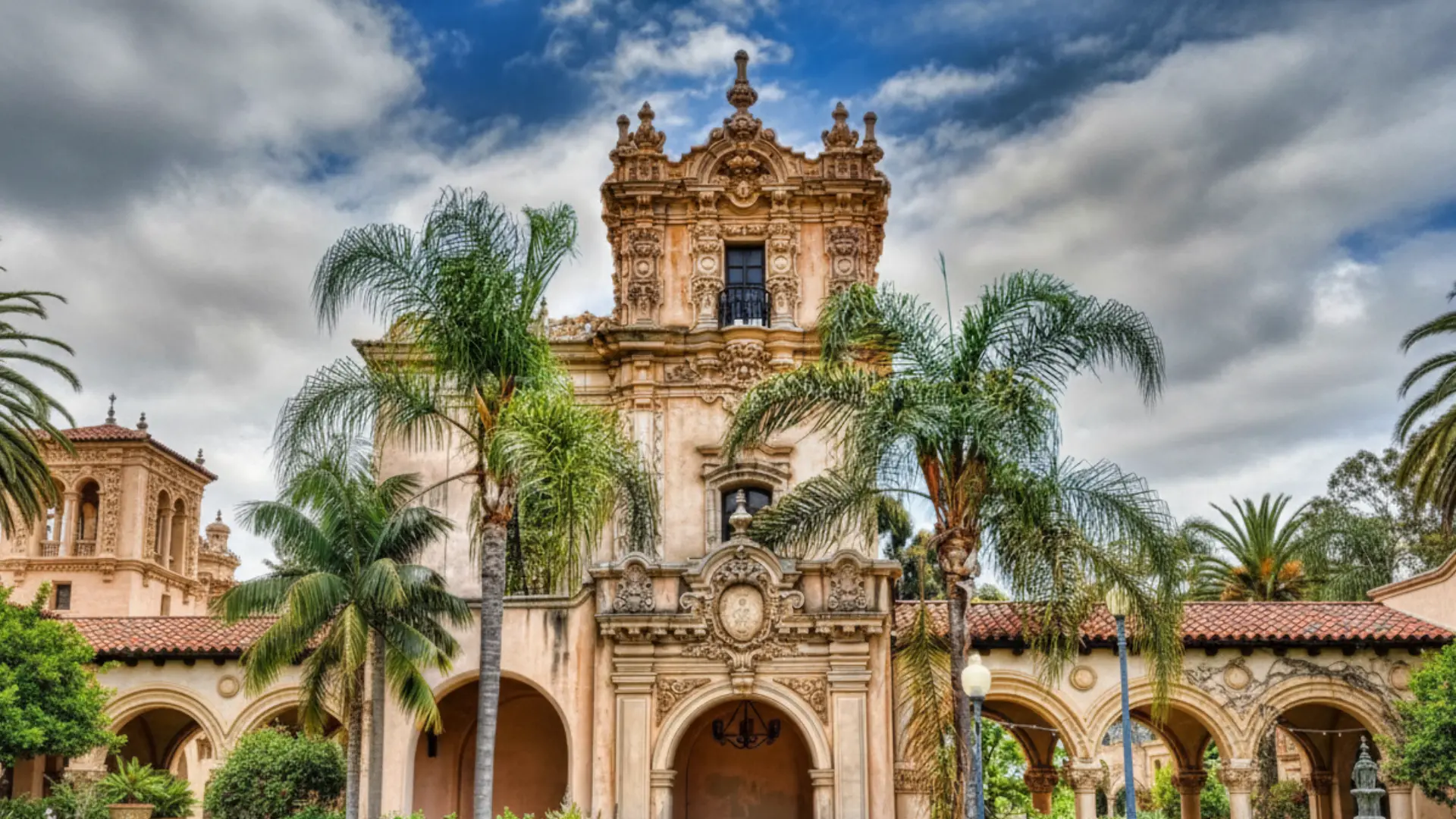
Spanish revival architecture, which gained popularity in the 19th and 20th centuries across the United States and Latin America, drew directly on these colonial foundations.
Famous Spanish Colonial Architects and Signature Works
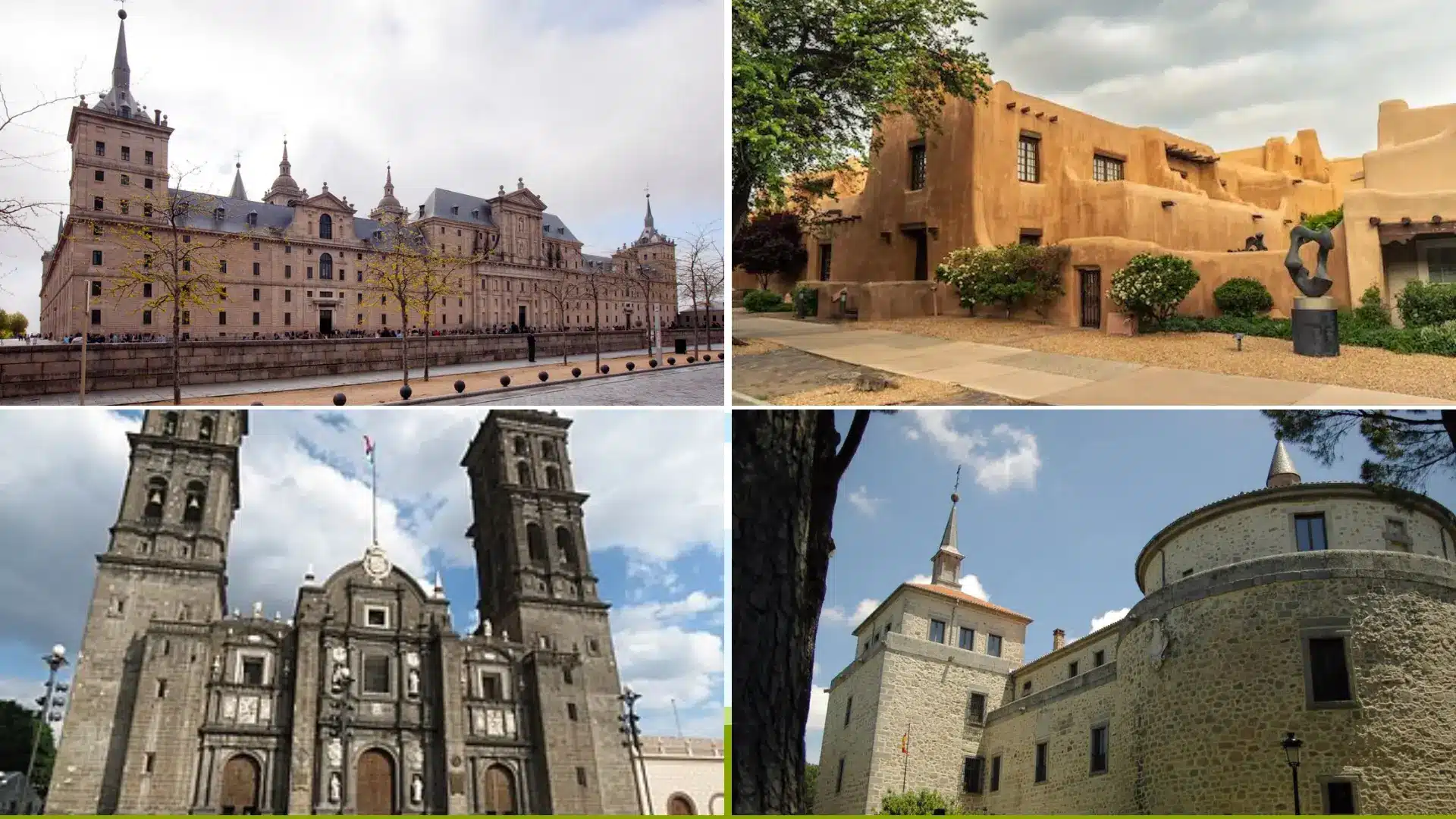
Each one brought something distinct to architecture in Spain and its territories.
None of them worked the same way twice.
1. Juan de Herrera: El Escorial, Madrid
Juan de Herrera completed the Royal Monastery of El Escorial, a complex of monastery, church, royal mausoleum, and palace near the Guadarrama Mountains.
His style, known as Herrerian, became the official visual language of the Spanish Empire.
- Symmetrical layouts with almost no surface decoration
- Dark slate roofs over square granite towers
- His influence is visible in later Spanish buildings, including Plaza Mayor and the Old City Hall in Madrid
The Herrerian style traveled directly to colonial government buildings across Latin America, where its formal severity communicated imperial authority.
2. Juan Gómez de Mora: Plaza Mayor, Madrid
Gómez de Mora was a fundamental figure in the urban reorganization of Madrid during the 17th century, working in the sober Herrerian style that dominated Spanish architecture and extended to the Americas.
His Plaza Mayor became a template for central squares in colonial city planning across the Americas.
Open, organized, surrounded by uniform facades.
That layout was repeated from Mexico City to Lima.
Pro tip: Plaza Mayor in Madrid still hosts markets and public events today, making it one of the most lived-in historic squares in Europe.
3. José Benito de Churriguera: Salamanca Plaza Mayor
The Churriguera family revolted against the sobriety of Herrerian classicism and promoted an intricate, exaggerated style of surface decoration that became known as Churrigueresque.
Where Herrera stripped buildings down, Churriguera loaded them up.
Salamanca’s Plaza Mayor is its most celebrated contribution, with ornate Baroque detailing covering every surface.
Colonial churches across Mexico and South America adopted this approach, treating facades as storytelling surfaces rather than plain stone walls.
4. Lorenzo Rodríguez: Sagrario Metropolitano, Mexico City
Rodríguez took the Churrigueresque style and pushed it further than anyone in the Americas had before.
His Sagrario Metropolitano, built between 1749 and 1769, is a principal Churrigueresque monument in the New World, with facades lavishly ornamented in the tradition of his native Andalusia, yet surpassing that style in richness and complexity.
His influence spread into the mining regions of Guanajuato, where followers built extensively in his decorative language.
Decor tip: The layered surface carving on the Sagrario shows how a single entrance facade can carry more visual information than an entire building’s interior.
5. Francisco Becerra: Puebla Cathedral, Mexico
Becerra is credited with designing the layout of Puebla Cathedral, characterized by classical ornamentation with certain stylistic parallels to El Escorial.
He brought Spanish Renaissance planning principles directly into colonial religious construction.
Construction began in 1575 under Becerra, who prepared the layout and model as well as the interior and exterior design.
He later moved to Peru, where he worked on the cathedrals of Quito and Cusco, spreading the same planning logic across South America.
6. Diego de Siloé: Granada Cathedral
Siloé blended Gothic structure with Renaissance detail at Granada Cathedral, producing a model that directly influenced colonial cathedral design across Latin America.
His circular main chapel was a formal innovation that Spanish builders carried to Mexico and beyond.
The combination of vaulted Gothic height with classical ornamentation gave colonial churches their characteristic interior drama.
7. Andrés de Vandelvira: Jaén Cathedral
Almost all the American cathedrals of the first Renaissance period follow the model of the Cathedral of Jaén, whose first stone was laid in 1540.
Vandelvira designed it with a rectangular plan and structural clarity that became the baseline for religious buildings across colonial Latin America.
His influence on famous buildings in Spain and abroad is hard to overstate.
Conclusion
Spanish colonial architecture was never just one person’s vision.
It built up layer by layer, each designer adding something to a tradition that kept moving across oceans and centuries.
Herrera set the formal baseline. Churriguera broke it open. Rodríguez took it somewhere Europe had never gone. Becerra carried it across continents.
What is Spanish architecture called in all its forms?
It is the record of people who built seriously, traveled far, and left structures that still define entire city centers today.
Frequently Asked Questions (FAQs)
1. What Is Spanish Colonial Architecture Called?
It is broadly called Spanish colonial architecture, with regional variations including Churrigueresque, Plateresque, and Spanish revival architecture.
2. Which Famous Buildings in Spain Influenced Colonial Design the Most?
El Escorial and Jaén Cathedral were the two most widely copied models in Latin American colonial architecture.
3. How did Spanish Buildings Influence Latin American Cities?
Spanish planners introduced central plaza layouts, thick-walled cathedrals, and courtyard buildings.
4. What Makes Churrigueresque Architecture Different?
It replaced the clean lines of Herrerian classicism with extreme surface decoration.
Q5. Is Spanish Revival Architecture the Same as Colonial Architecture?
No. The Spanish Revival is a later movement of the 19th and 20th centuries that borrowed colonial and Moorish visual elements for new buildings, particularly in the United States and Latin America.