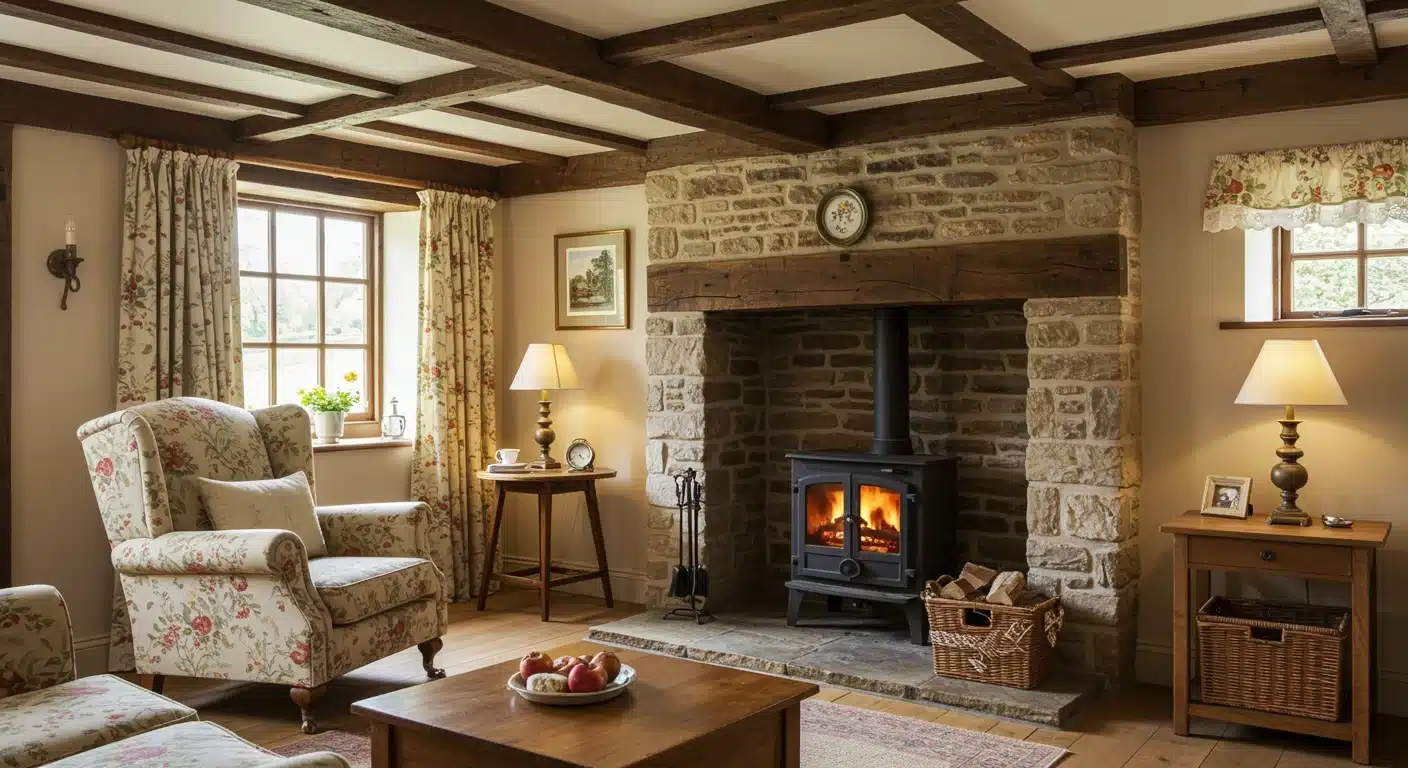
English cottage style has stayed relevant precisely because it resists being finished. There’s no point at which it looks “done” — and that’s the whole appeal.
The difficulty isn’t achieving the look, it’s calibrating it.
Too much tips into clutter. Too little and it reads like a beige rental flat with a jute rug.
This guide covers what defines the English cottage style, the colors and materials that underpin it, and specific ideas for bringing it into your home — interior and exterior.
What Actually Defines English Cottage Style
The most honest thing about a genuine English cottage interior is that it wasn’t designed at all, it accumulated.
Exposed beams, stone or flagstone floors, low ceilings, small windows – these are the structural signatures.
But the character comes from what fills the space: mismatched furniture that somehow works, worn fabrics, shelves that were clearly added as needed rather than planned.
Modern interiors tend toward coordination: one palette, one style, everything intentional. English cottage style works by different logic entirely.
Every corner has something worth looking at. The room tells you about the person who lives there, not the person who styled it for a photoshoot.
Color Palettes Used in English Cottages
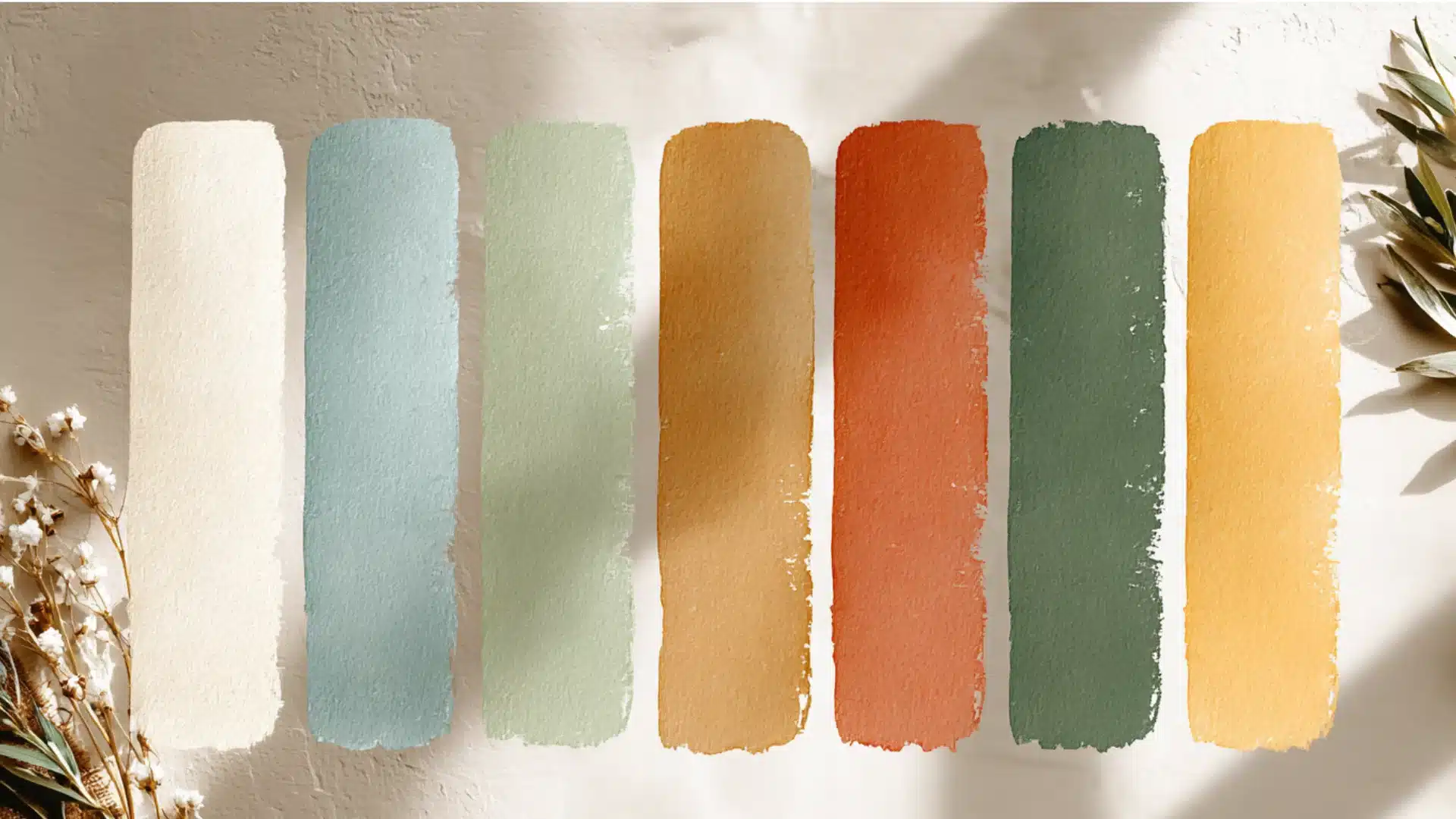
Traditional English cottage style homes lean on shades pulled straight from nature, garden greens, earthy neutrals, and soft florals. Nothing is too bold or too stark.
Getting the palette right is one of the quickest ways to shift a room in the right direction — even before you change a single piece of furniture.
| Colour | Shade Example | Best Used On |
|---|---|---|
| Cream | Warm off-white | Walls, ceilings |
| Pale Blue | Light washed blue | Walls, bedroom, crockery |
| Sage Green | Muted earthly green | Walls, cabinetry, front door |
| Warm Beige | Sandy neutral | Walls, upholstery, rugs |
| Terracotta | Warm burnt orange | Flooring, accent walls, and pots |
| Forest Green | Deep natural green | Front door, window frames |
| Butter Yellow | Soft muted yellow | Kitchen walls, soft furnishings |
Interior Ideas for English Cottage Style
Bringing that classic British countryside look indoors is less about following rules and more about layering pieces that feel personal and real. Some ideas worth trying:
1. Exposed Wooden Ceiling Beams
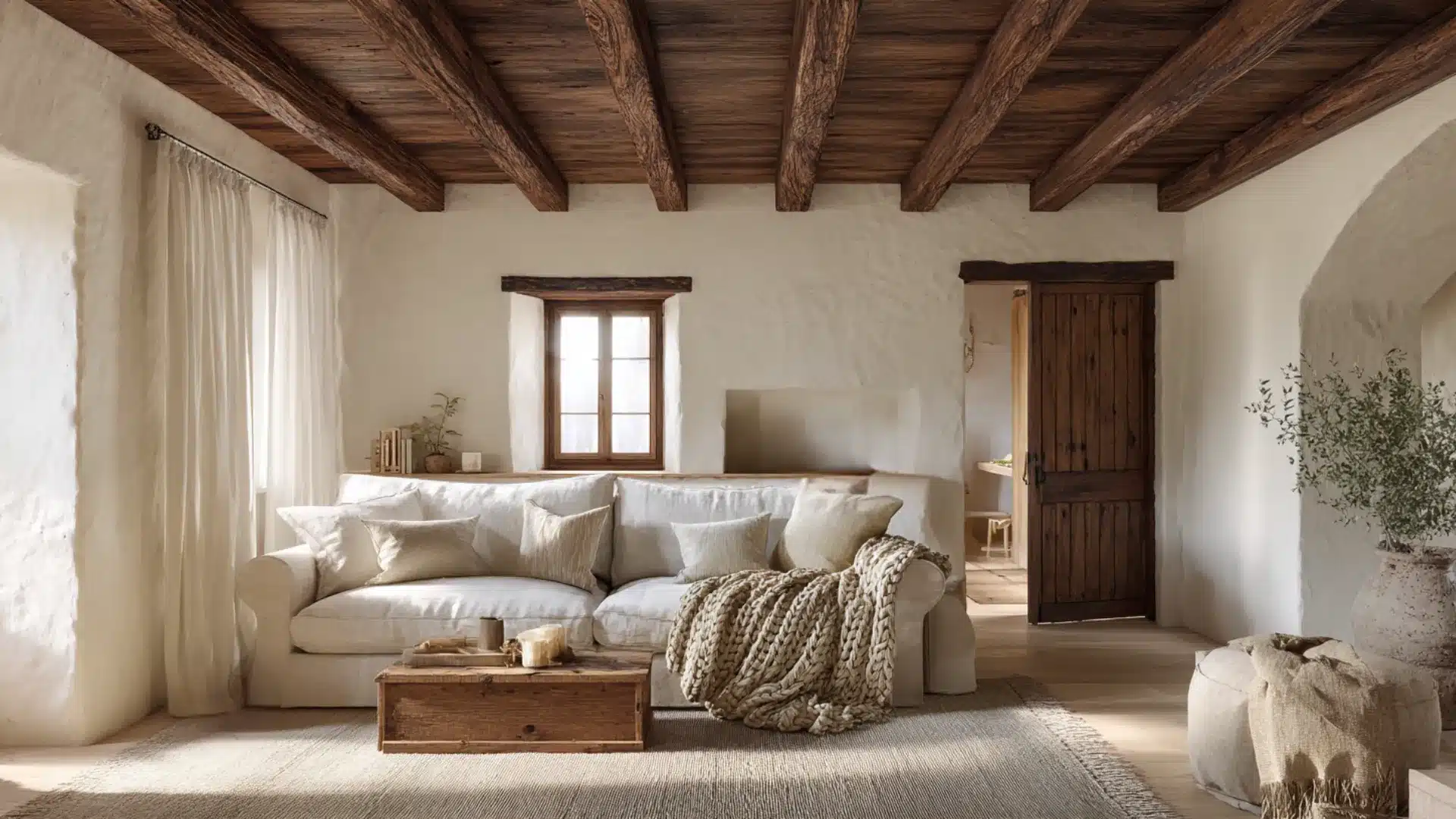
Dark wooden beams running across the ceiling instantly give a room that classic English countryside character.
They work best paired with light-coloured walls; the contrast keeps the space from feeling heavy. Original beams are ideal, but faux wooden beams work just as well and are far easier to install.
Most visitors can’t tell the difference between original and faux once they’re up.
Tip: Paint walls in off-white or cream to make the beams stand out more.
2. Floral Upholstery and Curtains
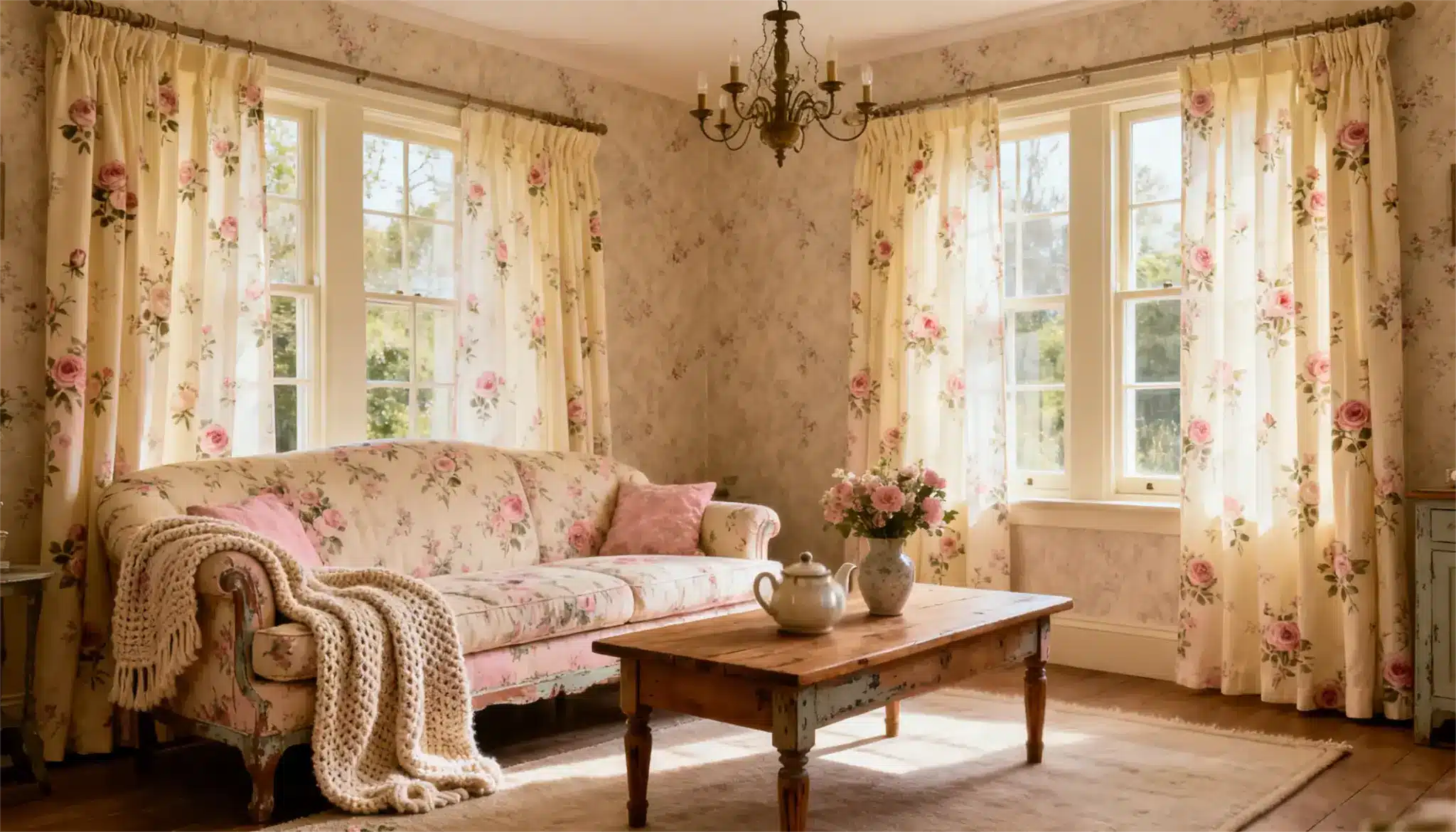
Floral prints on sofas, cushions, and curtains bring classic charm indoors while adding softness.
Different floral patterns can sit together naturally if they share similar tones. Linen and cotton fabrics work particularly well here.
The rule with mixing florals: keep the color palette consistent and vary the scale. Small print next to large print works; clashing colorways don’t.
3. Vintage Wooden Furniture
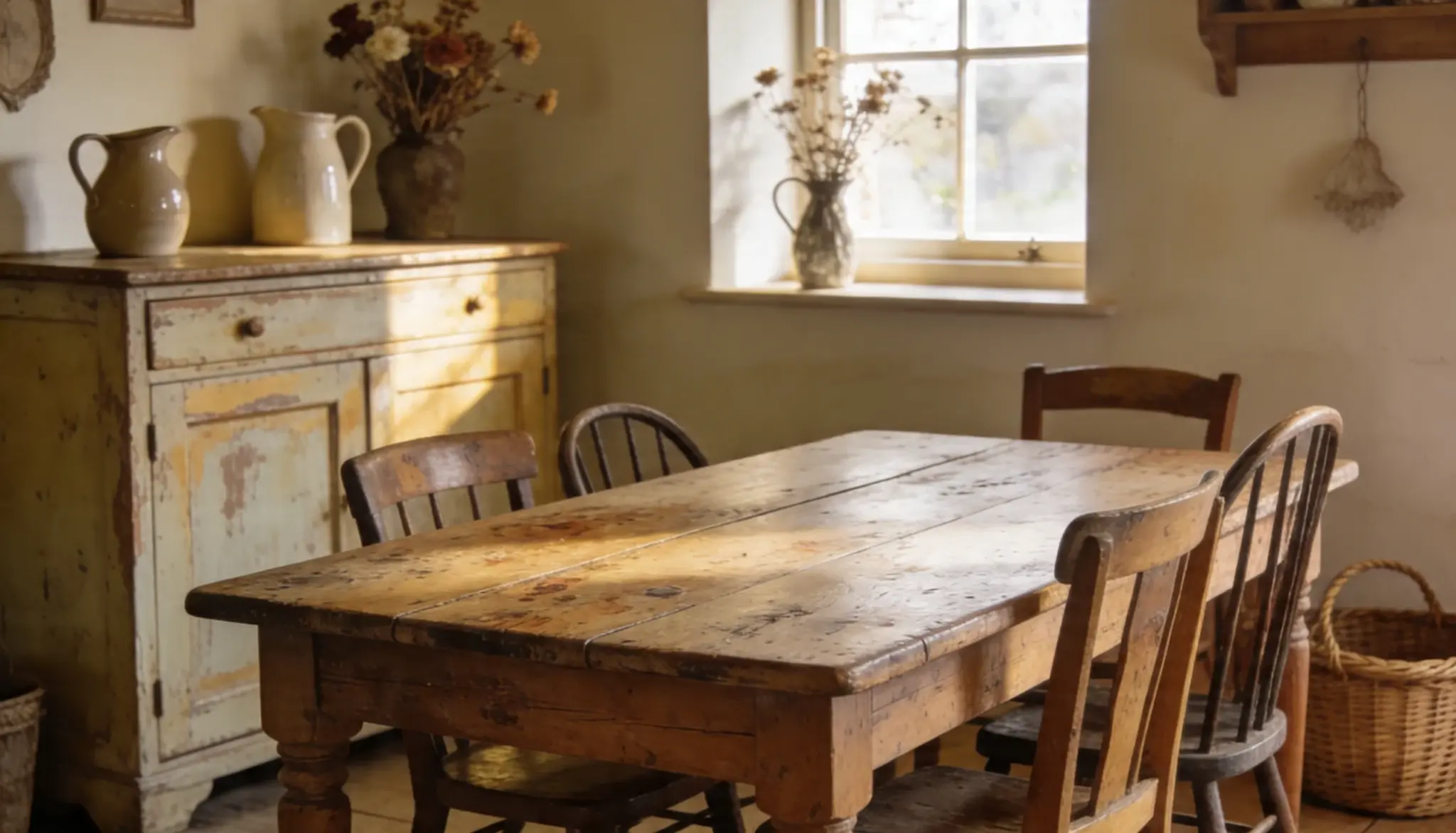
Antique or distressed wooden tables, cabinets, and chairs give any room an aged, welcoming character.
Pieces don’t need to match perfectly; slight mismatches improve the look. Charity shops, car boot sales, and antique markets offer genuine vintage pieces at reasonable prices, perfect for an English cottage-style home.
Tip: A light sand and rewax can bring tired wooden furniture back to life.
4. Stone or Brick Fireplace
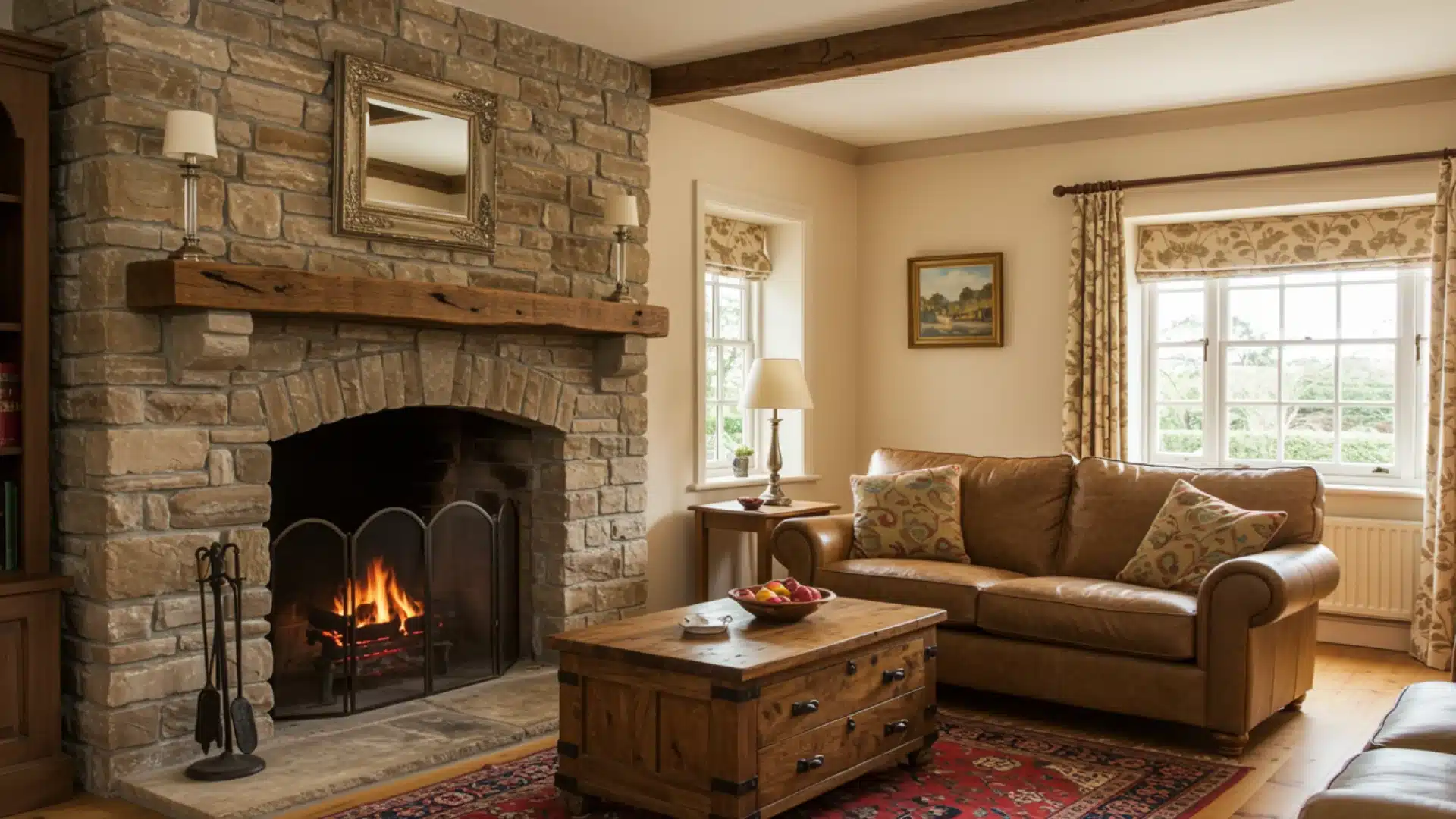
A rustic fireplace quickly becomes the heart of any living room.
Even a decorative brick fireplace, one that is not functional, adds a strong countryside feel to the space.
Candles, dried flowers, and a wooden mantle shelf are all you need around it. Resist the urge to do more — the fireplace itself is the feature.
5. Soft Neutral Color Palette
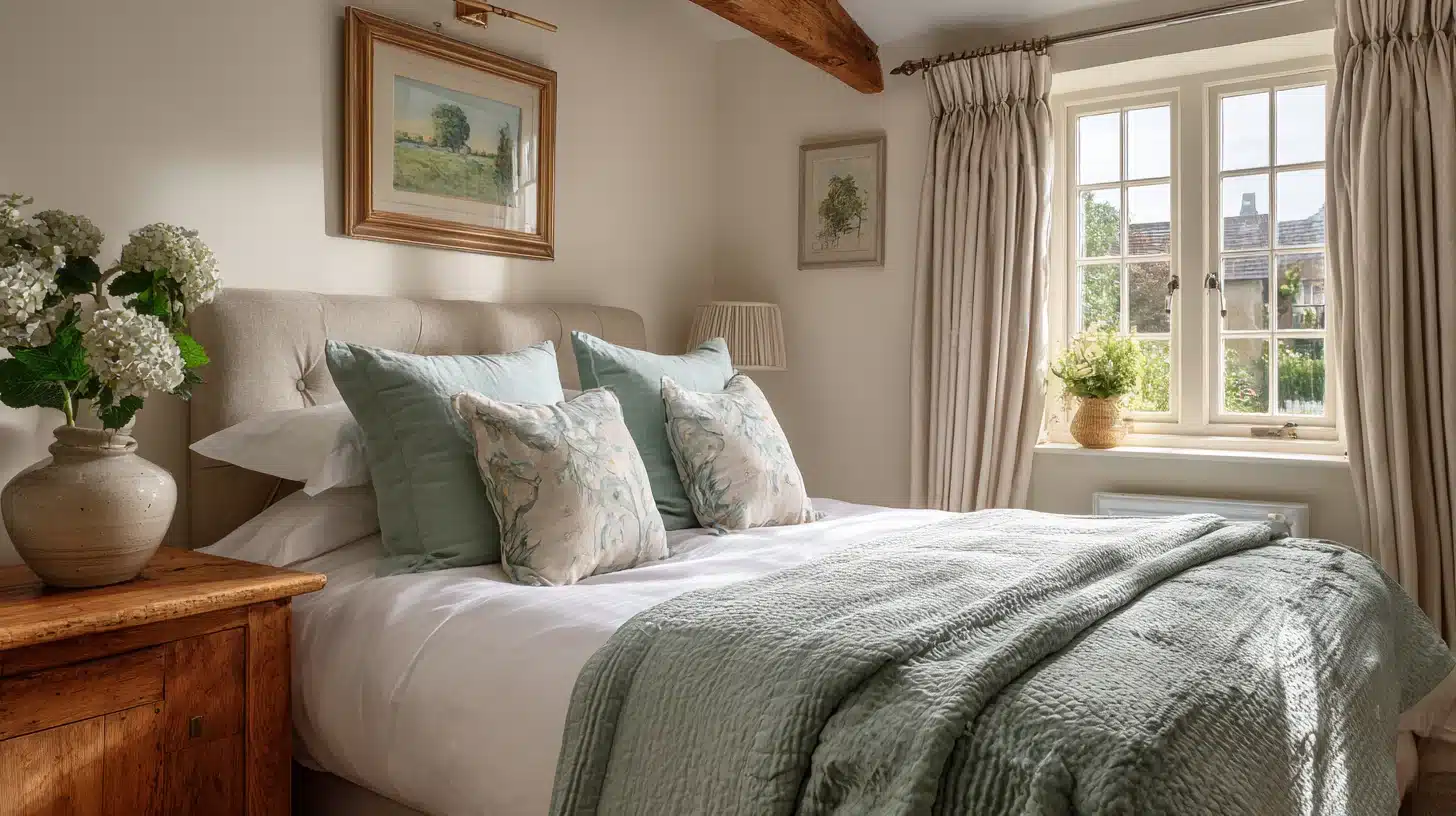
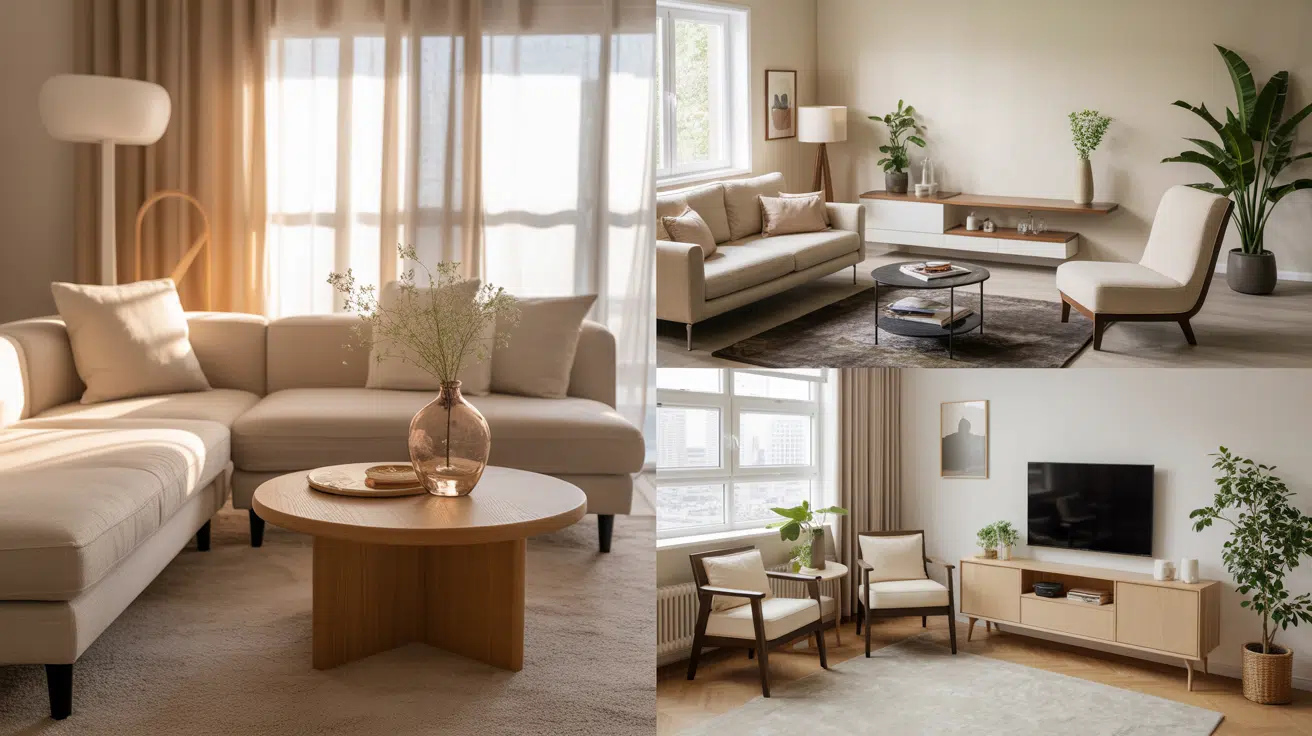
Cream, sage green, dusty rose, and light blue create a calm, relaxed atmosphere typical of traditional English homes. These shades complement each other and remain understated.
The goal is a space that feels quiet and settled, not stark or clinical.
Tip: Test paint samples on the wall in natural daylight before committing to a shade.
6. Open Shelving in the Kitchen
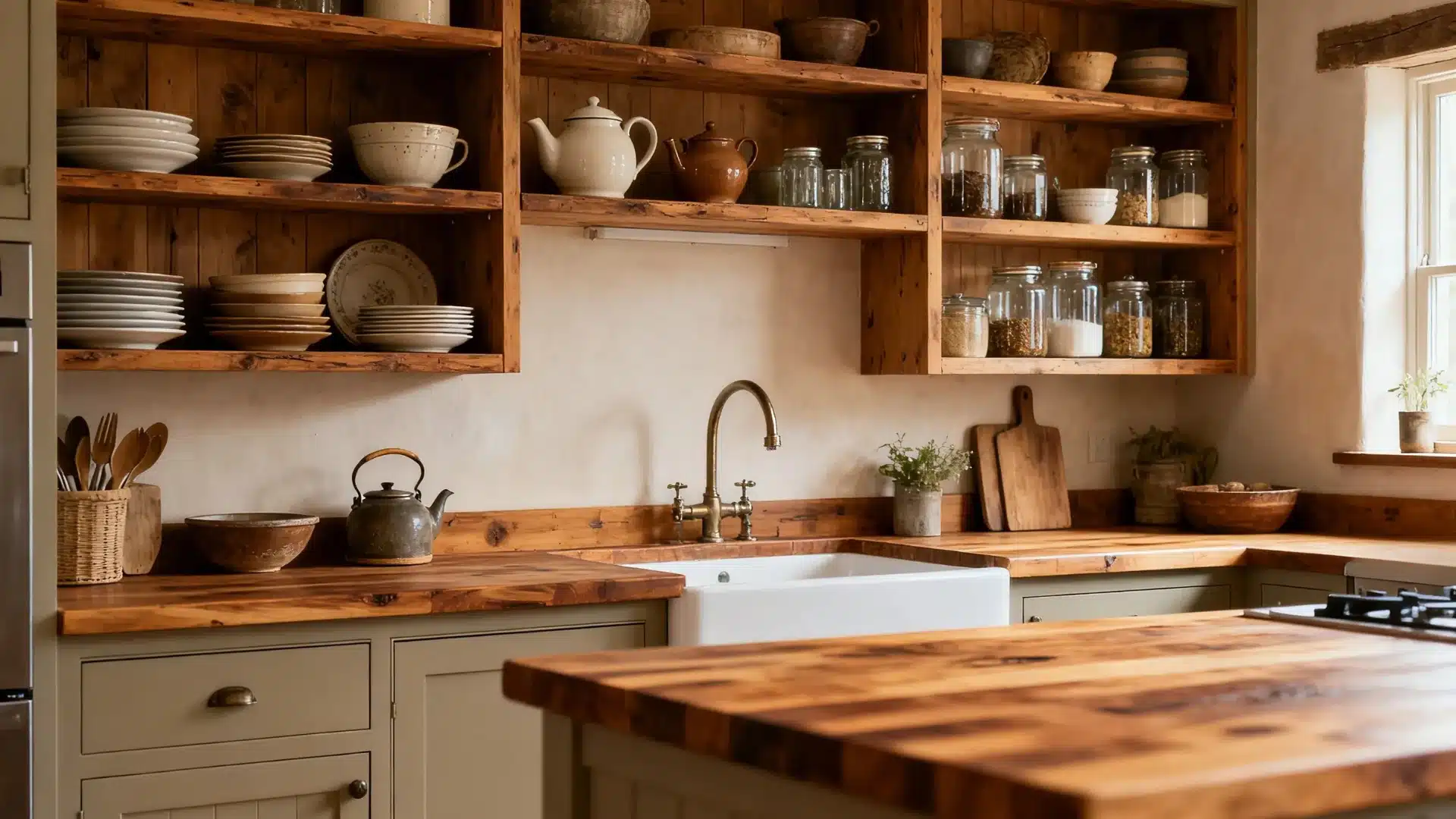
Wooden open shelves displaying dishes, jars, teapots, and cookbooks make the kitchen personal.
A simple change adds character by mixing everyday items with decorative pieces like a small plant or an old ceramic jug, keeping it natural rather than staged.
7. Layered Textiles
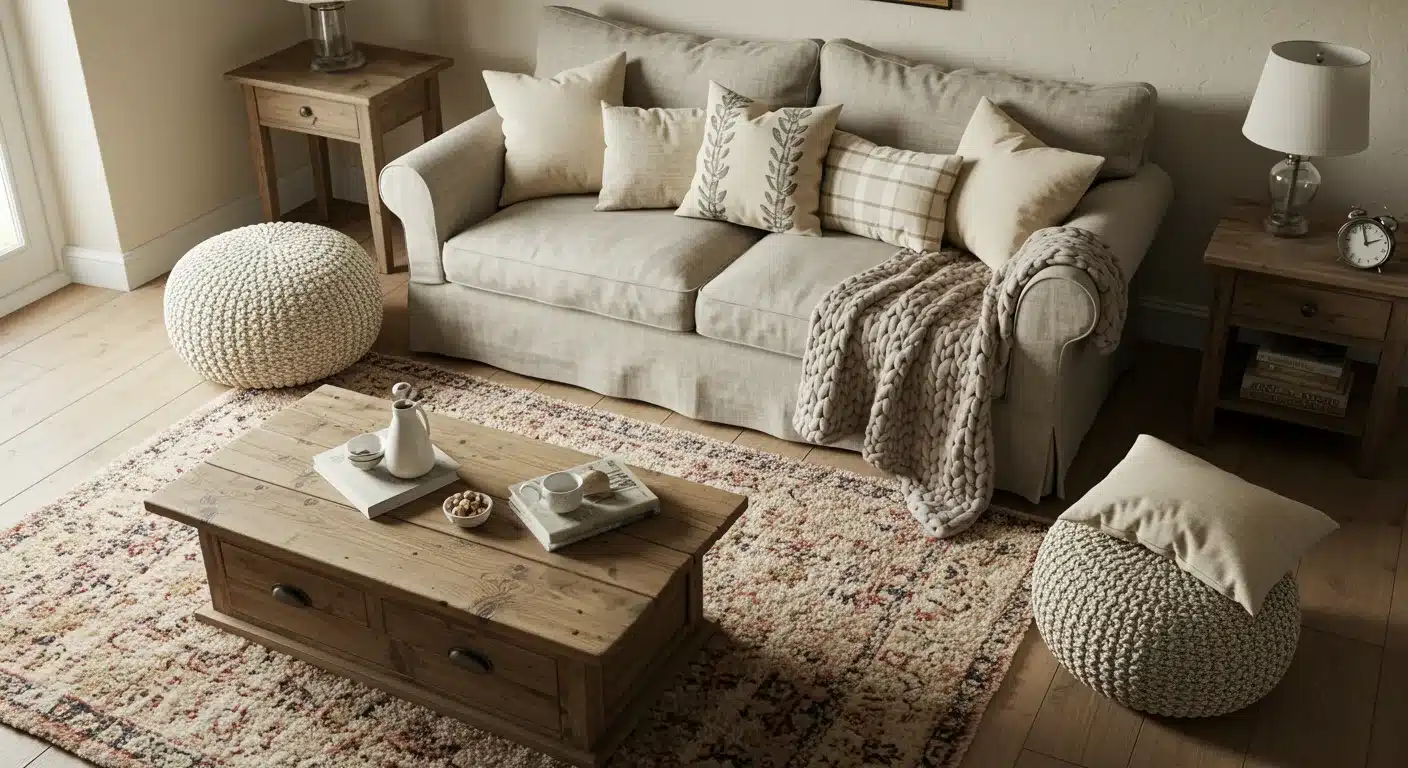
Layering blankets, cushions, and rugs made from linen, wool, or cotton adds real depth and comfort to any room.
Mixing different textures works better rather than sticking to one. A chunky knit throw over a linen sofa, paired with a wool rug underfoot, creates the relaxed, personal feel.
8. Classic Farmhouse Dining Table
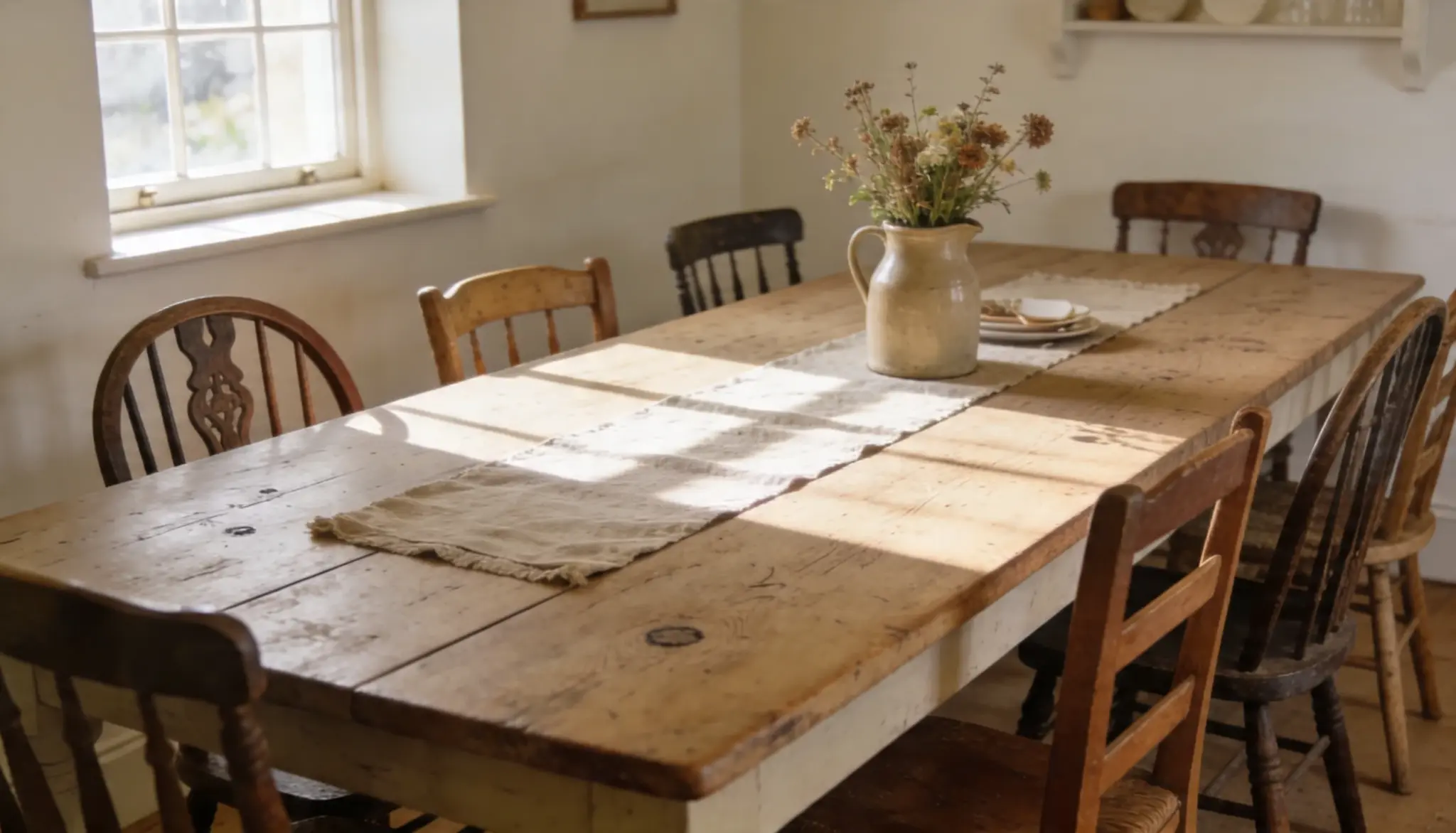
A long wooden dining table with simple chairs instantly becomes a centerpiece for any dining space.
Worn-in or slightly marked tables have more character than polished ones.
Pair with mismatched, complementary chairs for a gathered-over-time look.
9. Vintage Wall Art and Frames
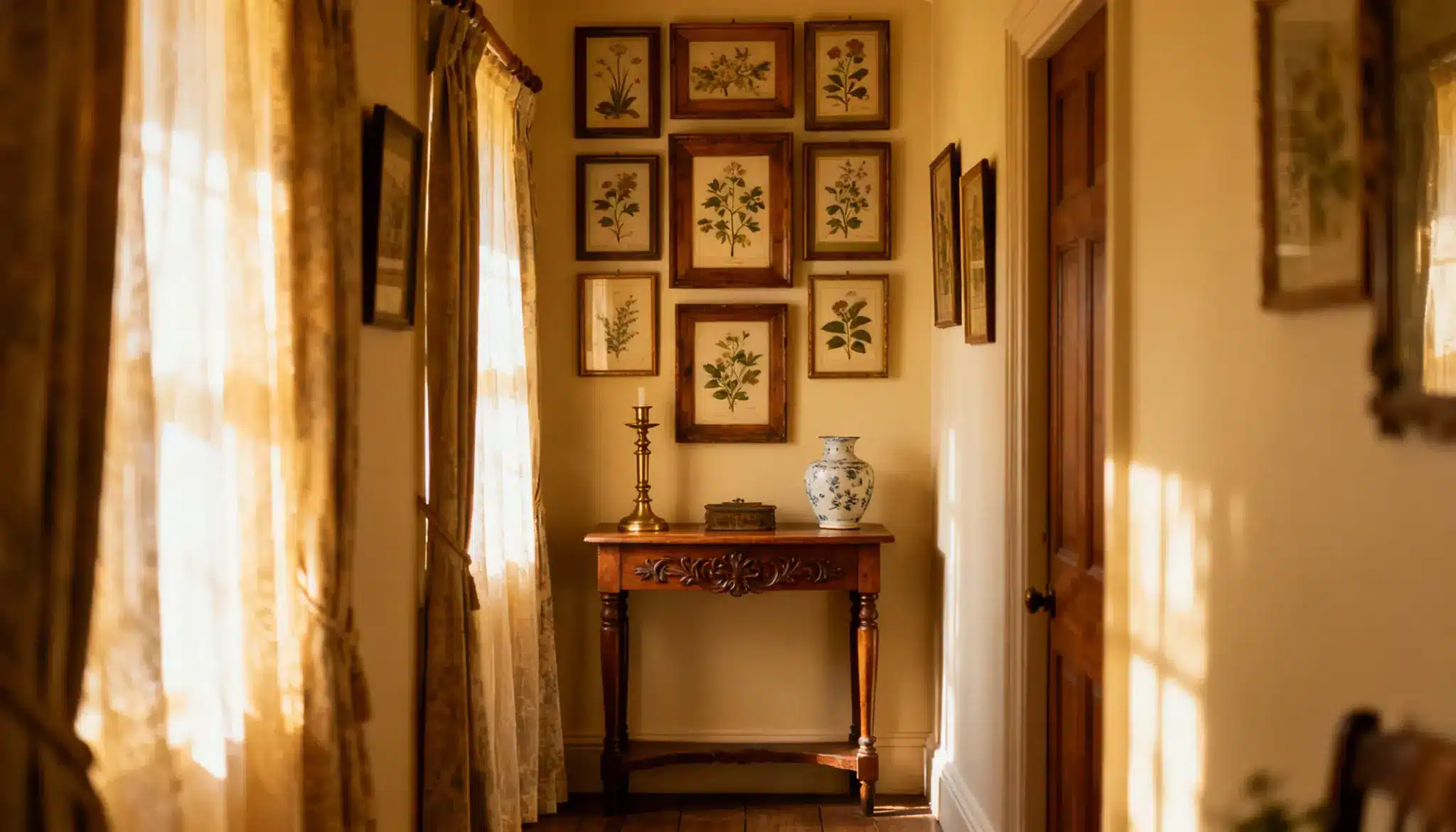
Botanical prints, countryside paintings, and old wooden frames add a nostalgic touch to walls.
Mixing frame sizes and styles works better than matching sets here.
A gallery wall built from pressed flowers, old landscape prints, and handwritten recipes feels personal precisely because it wasn’t bought as a set.
Tip: Black-and-white family photos paired with botanical prints add a lovely personal touch.
10. Built-In Bookcases
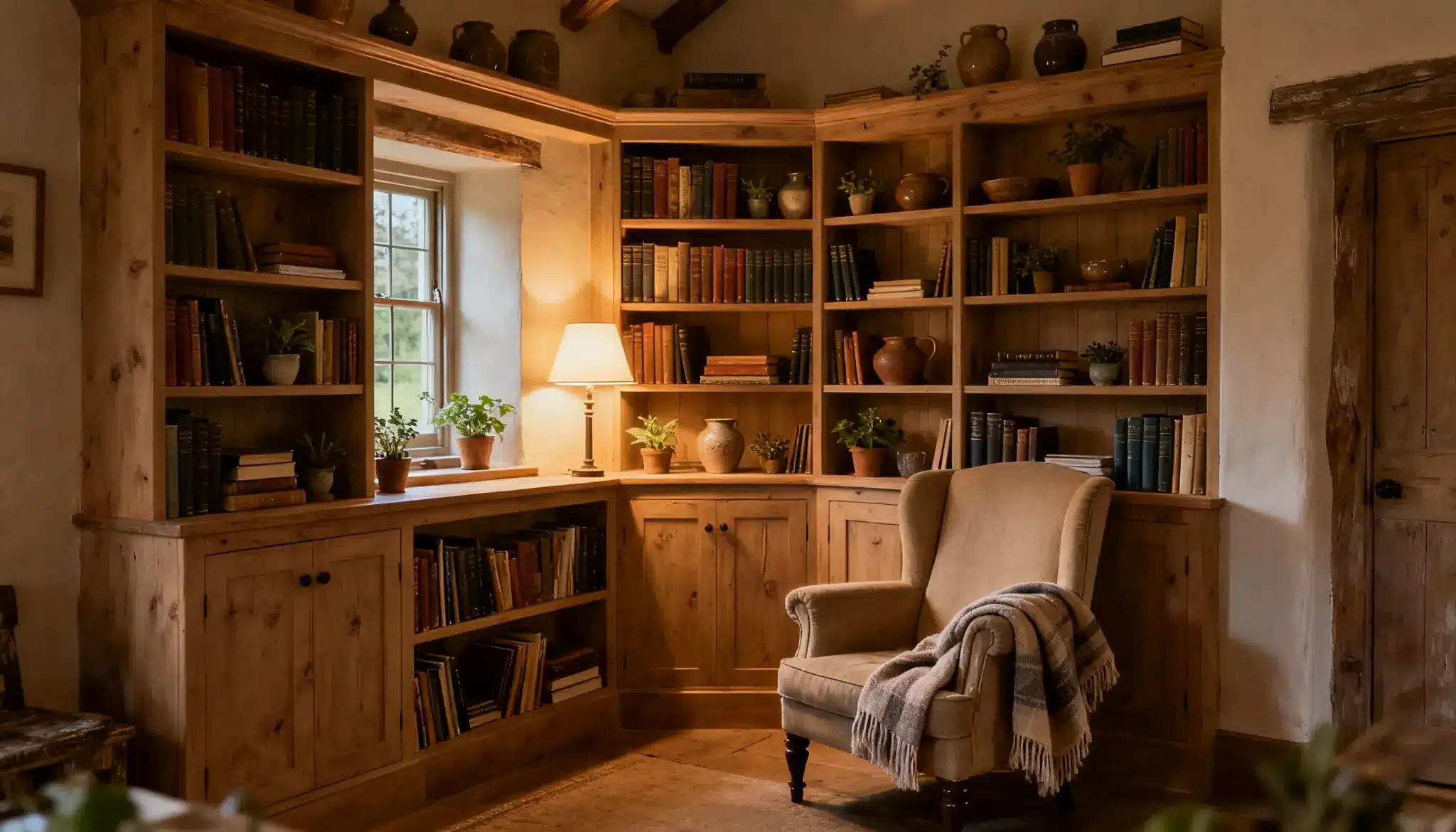
Built-in shelves look especially good in living rooms and studies.
They do not need to be perfectly organized; a relaxed, slightly imperfect arrangement suits the cottage look far better.
11. Patterned Area Rugs
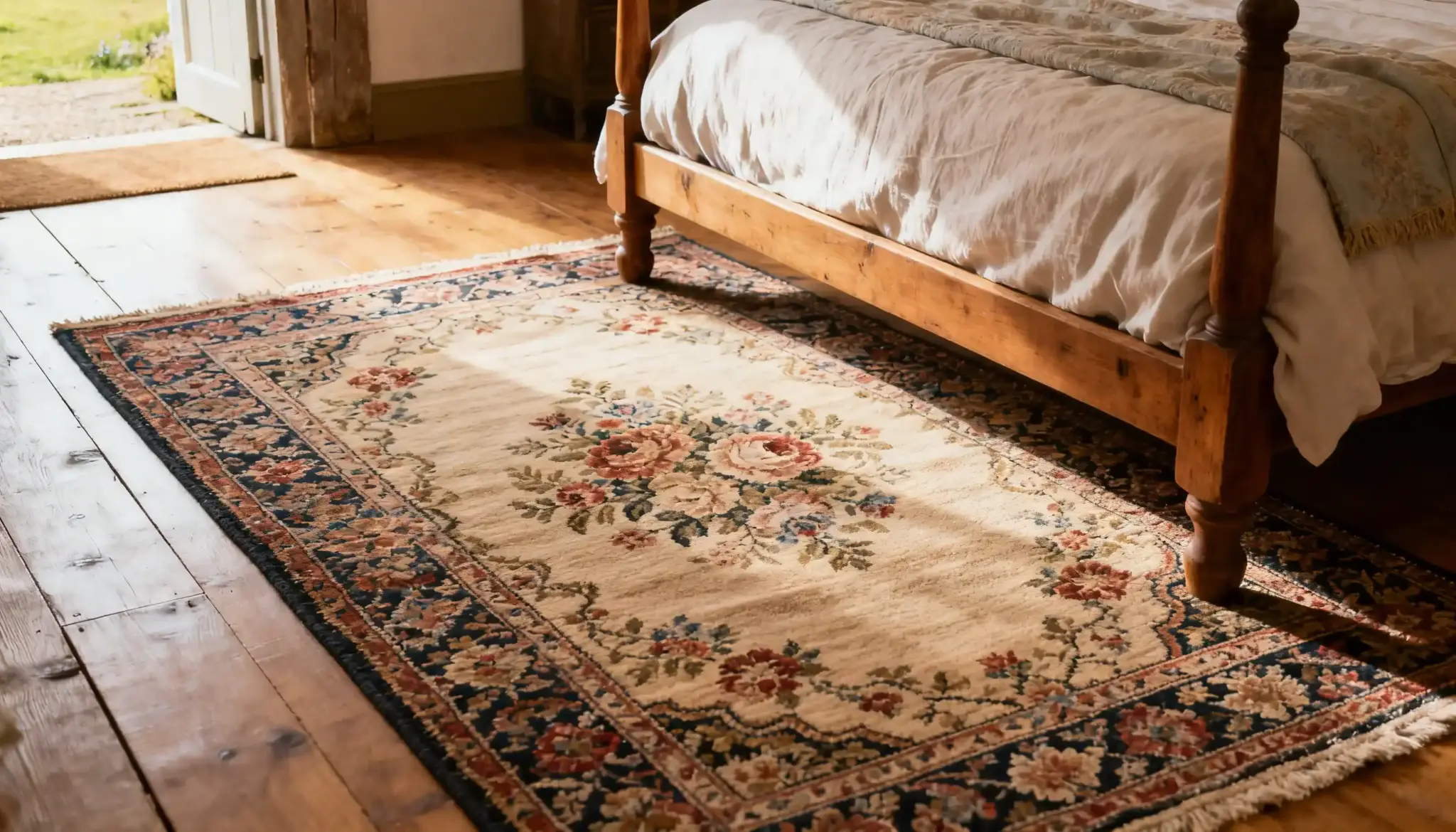
Persian or floral rugs soften wooden or stone floors and add color to an English cottage-style room.
Layering a smaller rug over a larger one is a simple trick that adds extra texture and depth.
Worn or faded rugs often look better here than brand-new ones.
12. Butcher Block Countertops
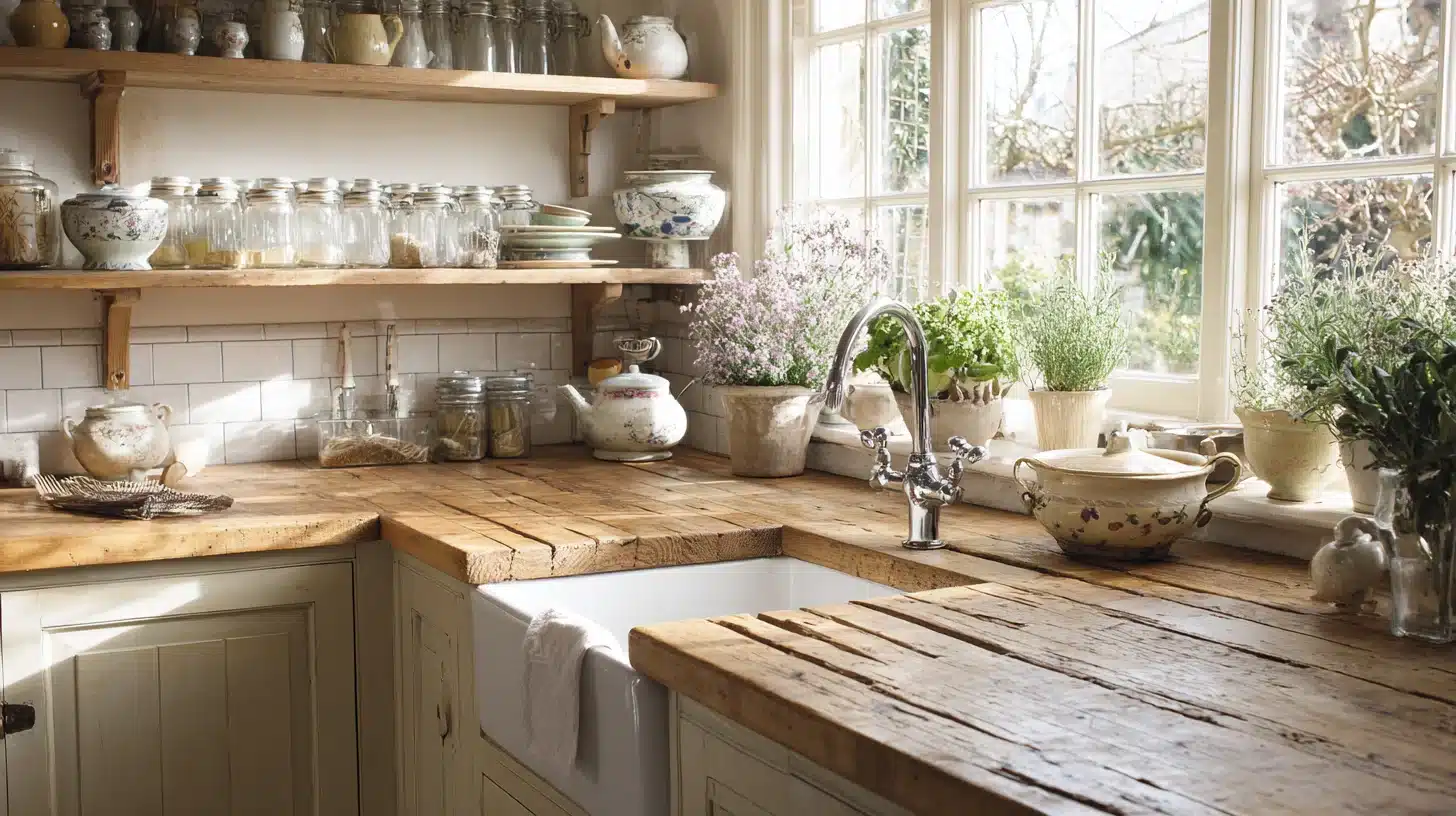
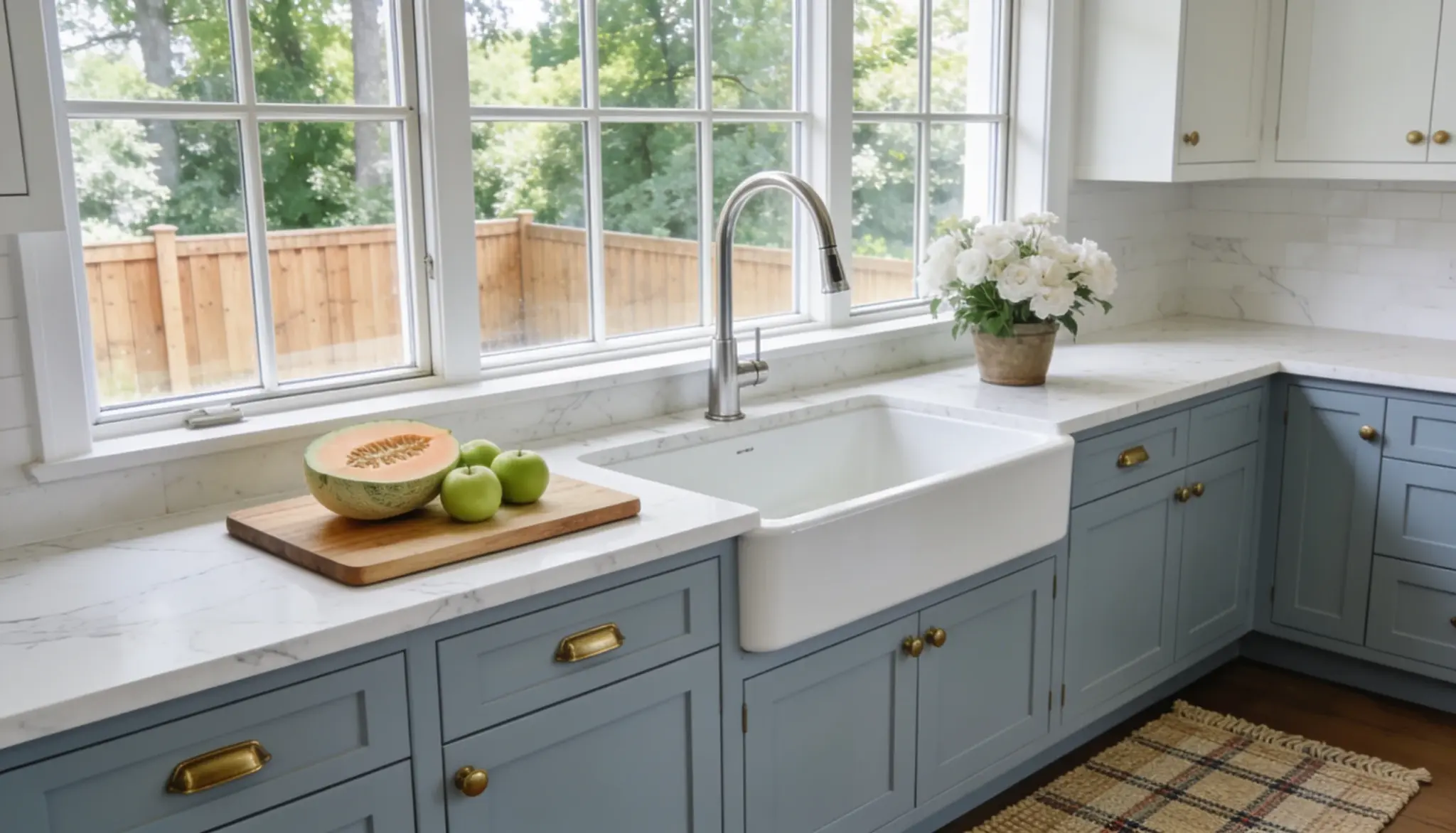
Wooden kitchen countertops add rustic texture and a handmade quality to the kitchen.
They pair well with open shelving and ceramic sinks. Regular oiling keeps them looking good over time and actually adds to their character as they age.
Tip: Use food-safe mineral oil to properly maintain wooden countertops.
13. Window Seats with Cushions
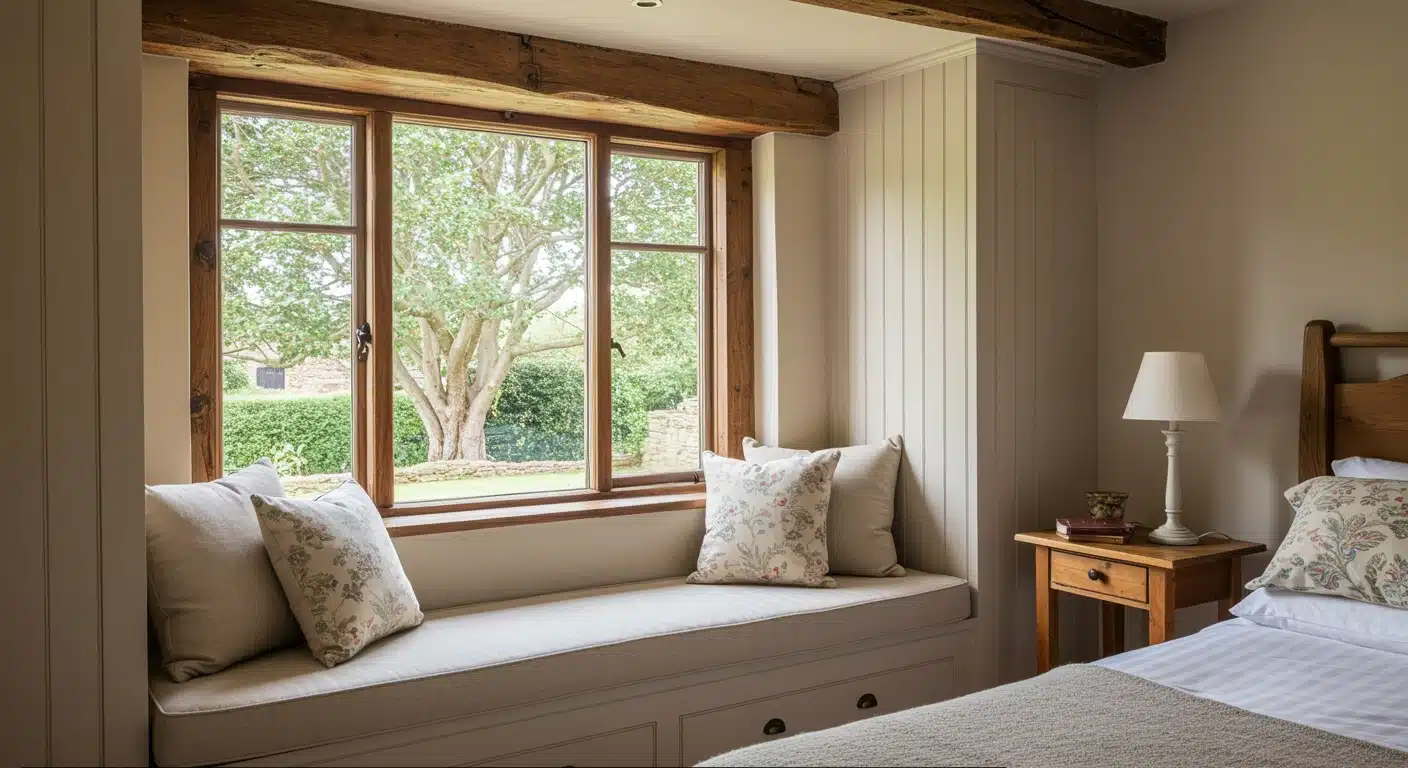
Built-in window benches with floral or plain linen cushions turn unused window spaces into favorite reading corners.
Adding a small side table and a lamp nearby makes the spot even more inviting. Storage built into the base of the seat is a practical bonus.
Where to Start
You don’t need a thatched roof or original stone floors to pull this off.
The look is built from details — paint colors, fabric choices, the specific table you found at a car boot sale. Start with one room and work outward.
A quick checklist to get started:
| What to Do | Difficulty | Approximate cost |
|---|---|---|
| Switch to nature-inspired paint colors | Easy | Low |
| Source vintage or distressed furniture | Easy | Low-Medium |
| Add floral fabrics to soft furnishings | Easy | Low |
| Install rustic architectural features | Medium-Hard | Medium-High |
| Collect antiques and handmade décor | Easy | Low |
| Build cozy corners with textiles and lighting | Easy | Low |
Mixing Old and New
Not only can you, but you should.
A cottage home that looks entirely period-faithful reads more like a museum than a home.
A vintage wooden dresser with a modern lamp. An antique rug under a contemporary sofa. These combinations work because the style was never about historical accuracy — it was always about feel.
Old pieces bring character and history. New pieces bring practicality and comfort.
Together, they create a home that feels real rather than staged.
English Cottage Style Home Ideas for the Exterior
The exterior of a home sets the tone before entry, with touches that make a real difference.
1. Stone or Brick Facade
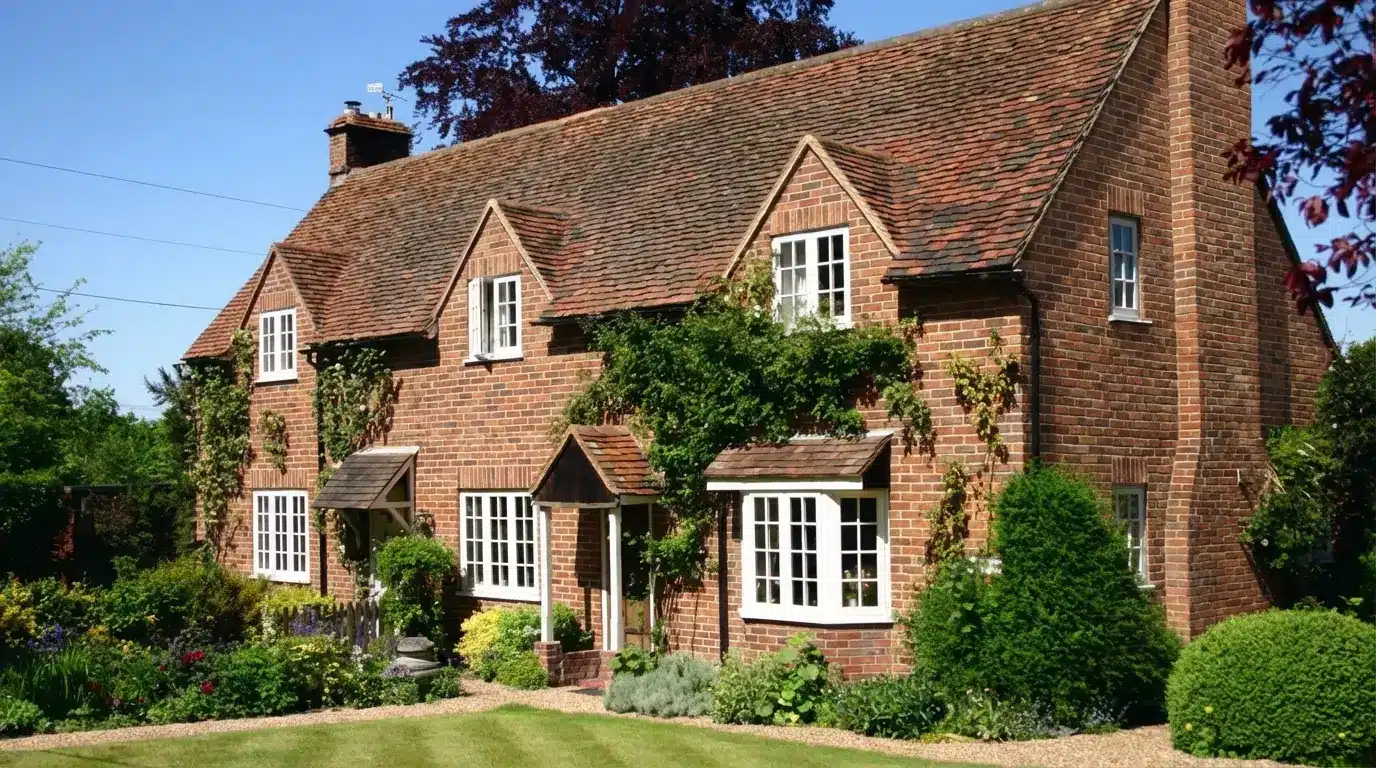
A stone or brick exterior is one of the most recognizable features of an English style home.
Real stone is ideal, but brick panels are a workable alternative — the texture and sense of age they give a facade is similar once plants and weathering soften the edges.
2. Steep Gabled Roofs
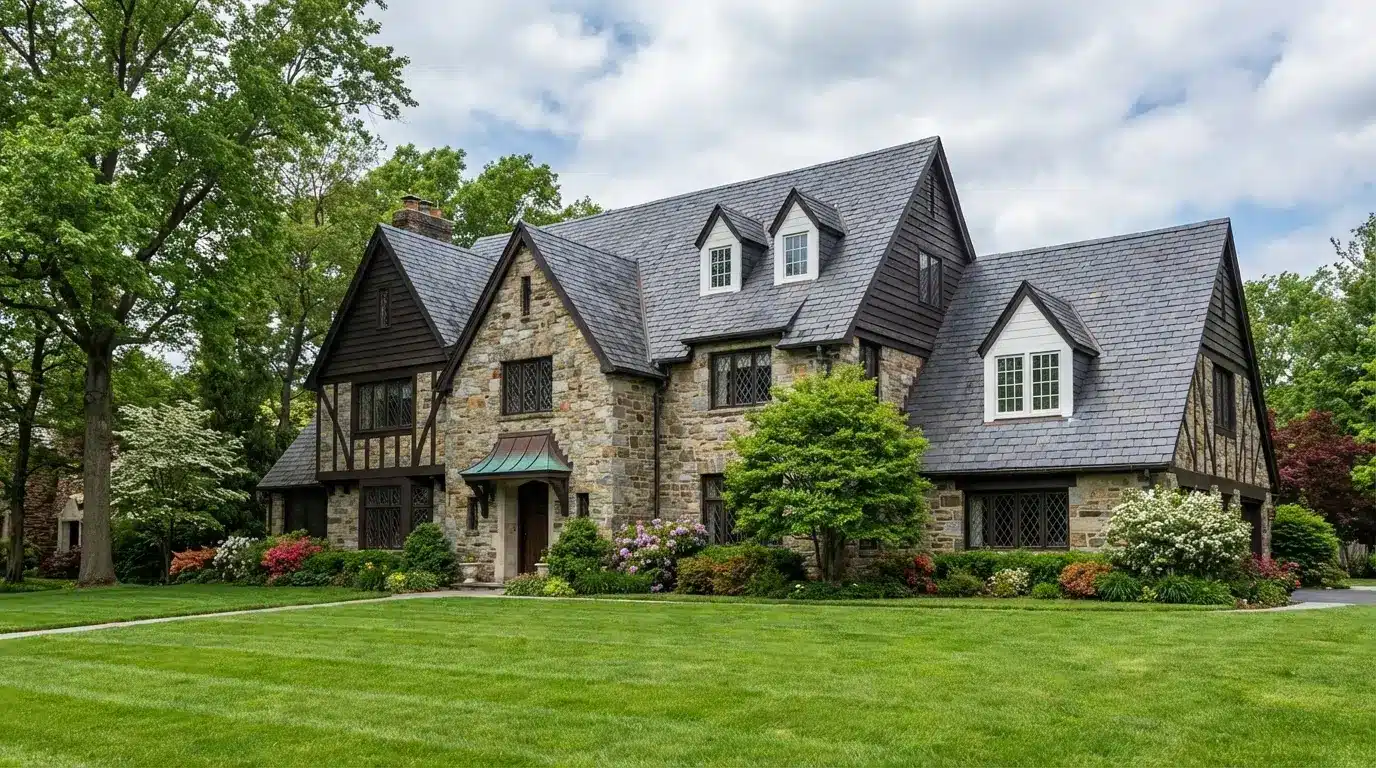
Steep, pointed rooftops give a cottage its classic look.
They stand out next to modern homes. Adding decorative trim along the roofline, seen on many older cottages, improves the home’s character.
It is a small detail that makes a big difference.
3. Charming Window Boxes
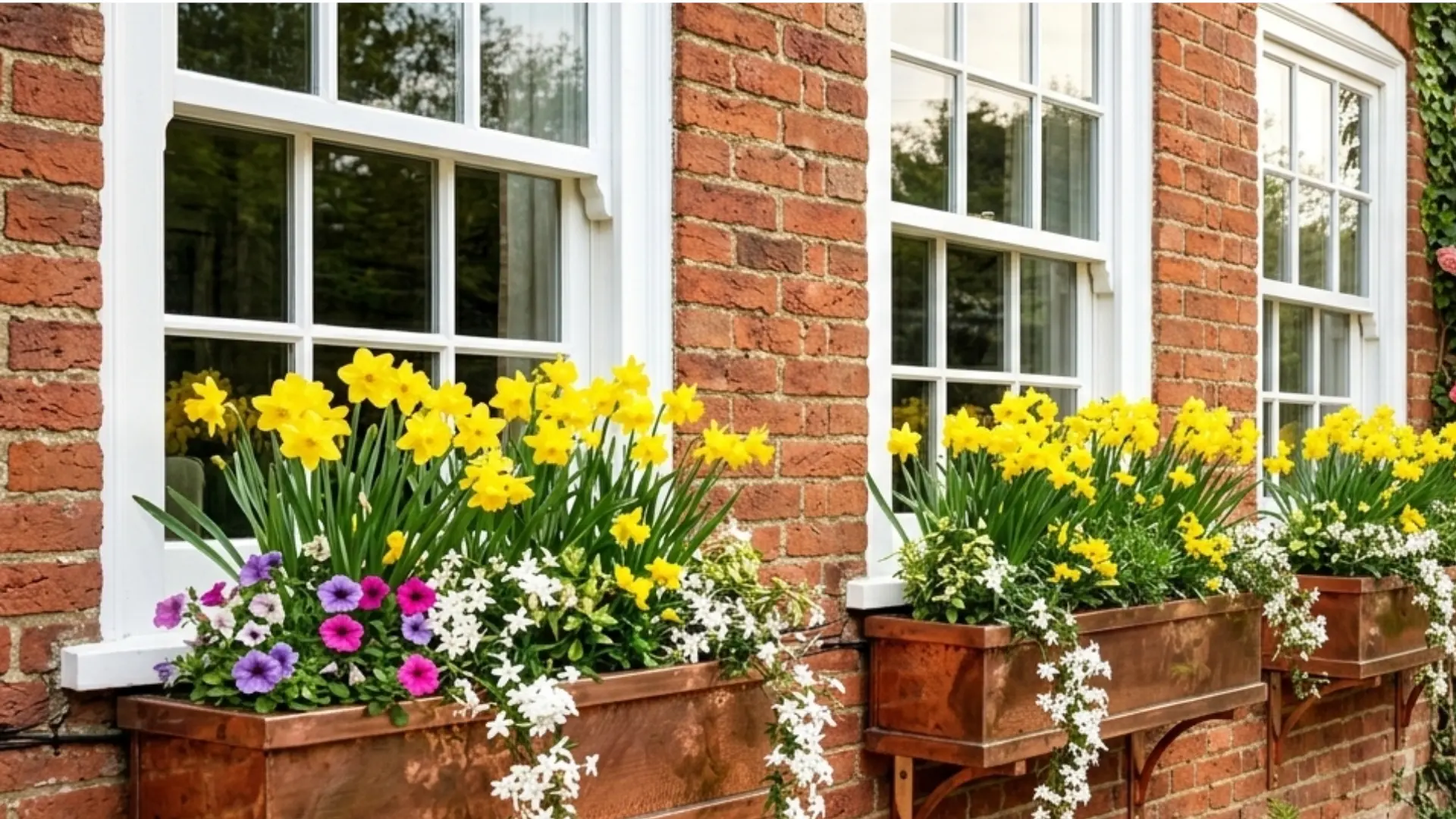
Window boxes filled with flowers are a simple addition that changes the whole front of a home. Plants like lobelia, ivy, or petunias trail down nicely and soften hard wall edges.
They bring color throughout the year. Even one window box can transform the front of a home.
4. Arched or Wooden Front Door
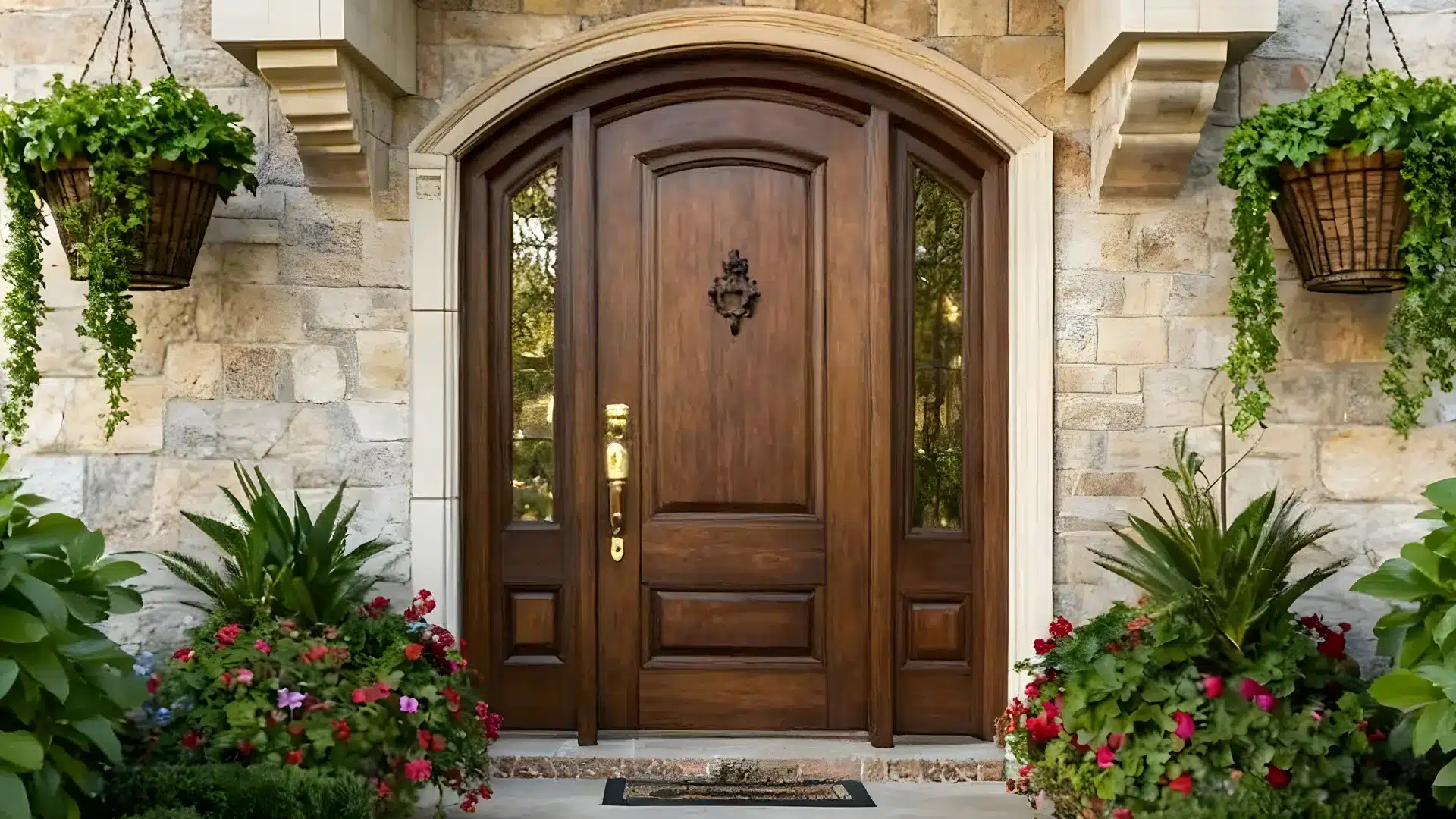
A solid wooden door, particularly one with an arched top, gives the entrance real cottage character.
Deep colors like forest green, navy, or brick red look great against stone or painted walls.
Add iron hardware and a simple door knocker. A stone step at the front ties the whole entrance together nicely.
5. Climbing Garden Plants
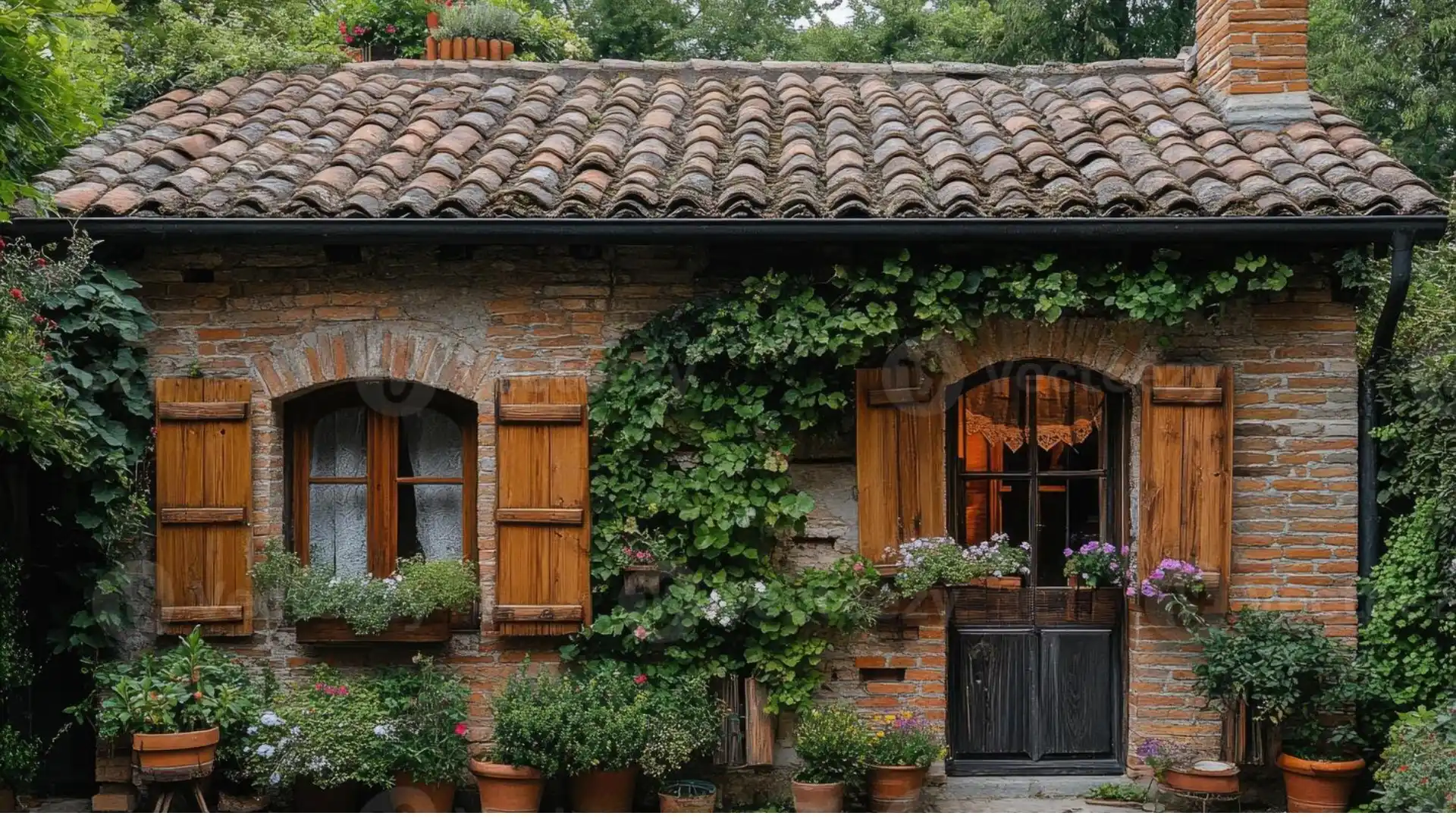
Climbing roses, wisteria, and ivy growing up the walls are perhaps the most well-known feature of a cottage home.
They do more than any paint color to make a house look rooted in its location.
Train them around the door frame or along a fence — within a few seasons they’ll look as though they’ve been there for decades.
Final Thoughts
English cottage style is one of the few interior aesthetics that actually improves the less you spend on it.
A charity shop dresser, the right paint color, a climbing rose – these things outperform anything bought new from a homeware chain.
Start with one room. Let it develop over time. That’s the whole method.
Frequently Asked Questions (FAQ’s)
1. What is the New Cottage Style Called?
The modern ‘cottagecore’ style updates traditional cottage elements with a lighter, more current feel.
2. What is the Difference Between French and English Cottage Style?
French cottage style features refined, symmetrical details, while English-style cottages are more relaxed, layered, and intentionally imperfect.
3. What Style is Replacing Farmhouse?
Cottage style is gradually overtaking, feeling more personal than the cleaner, structured farmhouse look.