Walk into a contemporary home, and it feels instantly different.
The space breathes. Clean lines meet soothing textures. And nothing feels overdone, with every detail feeling intentional.
Contemporary and modern are not the same thing, did you know?
Modern refers to a particular design era, while contemporary? It is always evolving. It reflects the present.
I’ll break down what makes a home contemporary, and how it differs from modern design.
What is a Contemporary Home?
A contemporary home reflects current design trends. It’s always changing, always adapting.
What’s contemporary today might look very different in, say, ten years.
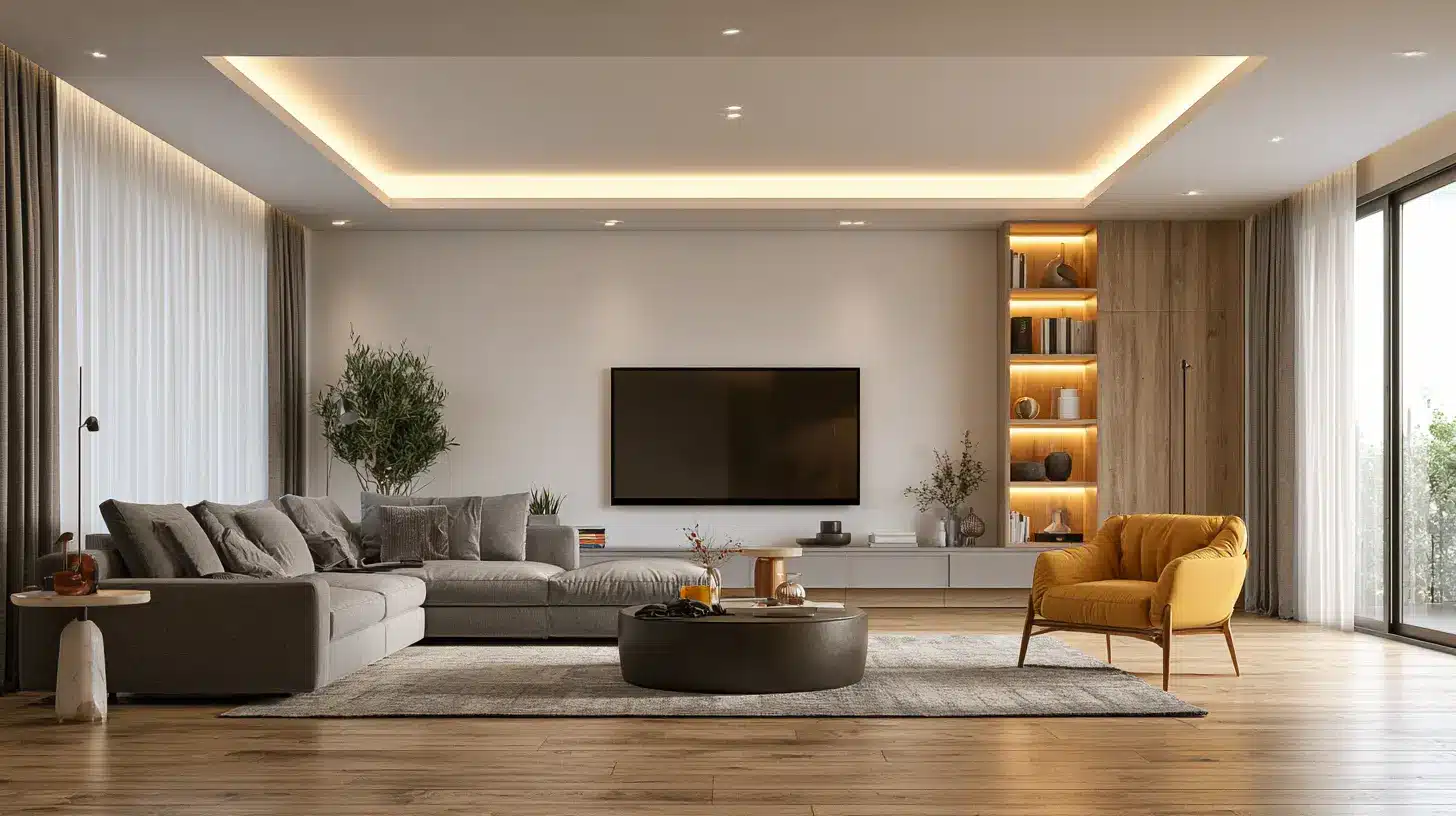
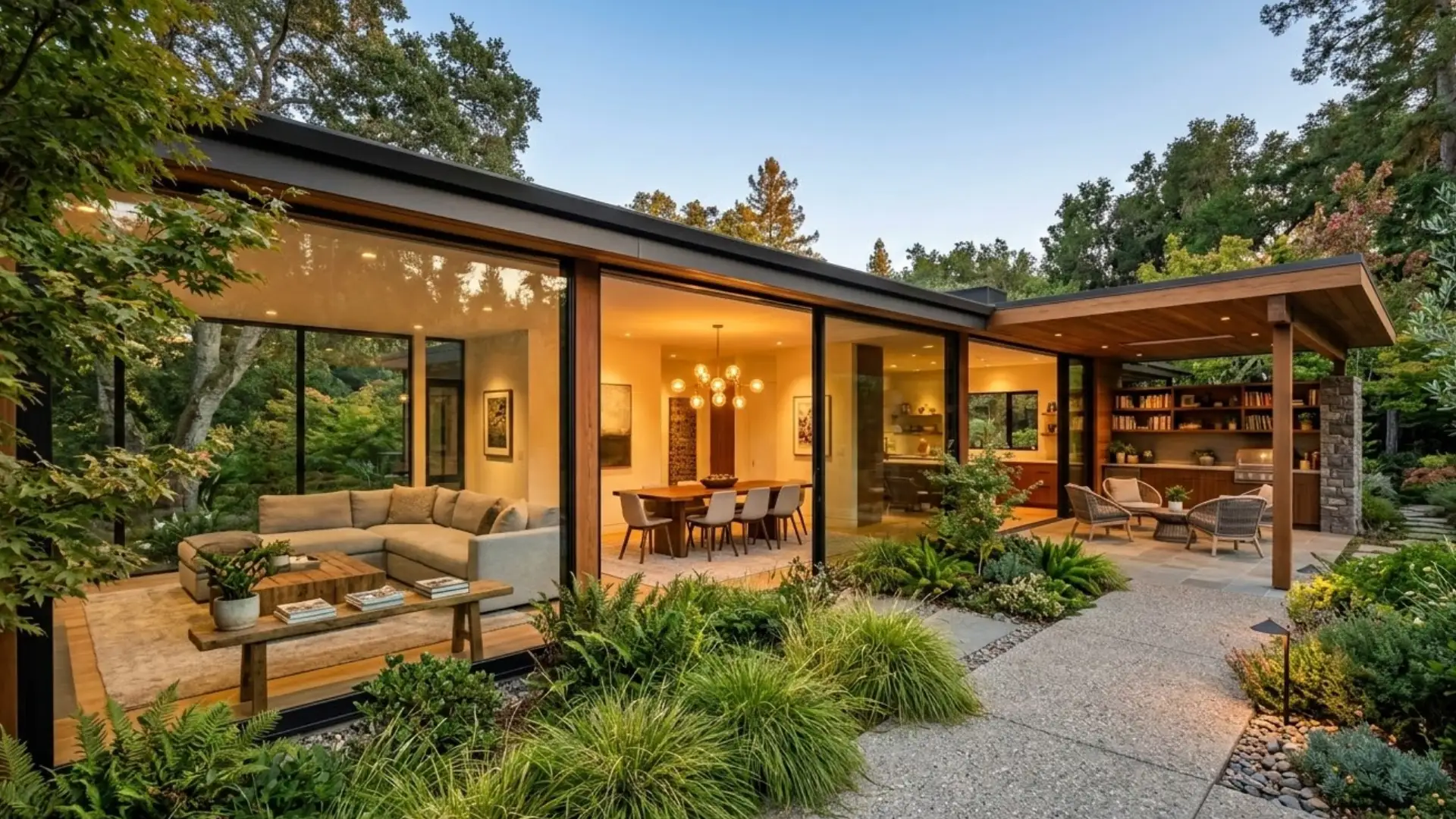
Contemporary design features clean lines, open floor plans, and a mix of materials, including glass, steel, and natural wood.
There’s a strong focus on light, both natural and artificial, which makes it feel open.
Large windows are very common. And high ceilings are normal.
The best contemporary homes feel comfy and livable, with soft textures, layered lighting, and carefully curated furniture.
Contemporary design comes with two powerful things – function and beauty.
What Makes a Home Contemporary?
Contemporary homes have a different look, both inside and out.
- Clean, simple lines: Contemporary homes avoid heavy ornamentation. Smooth surfaces and geometric shapes.
- Open floor plans: Walls are kept to a minimum, allowing spaces to flow naturally into each other. The kitchen, dining, and living areas are often a connected space.
- Large windows and natural light: They are non-negotiable in contemporary design. Floor-to-ceiling glass is common, blurring the line between indoors and outdoors.
- Neutral color palettes: They rule in these homes, like more of whites, grays, beiges, and blacks. Bold accents are used to create a little drama.
- Mixed materials: Steel, concrete, wood, and glass are often layered together in the same space.
- Smart storage solutions: They keep things clutter-free.
In a contemporary home, if something doesn’t serve a purpose, it usually doesn’t have a place.
What is a Modern Contemporary House?
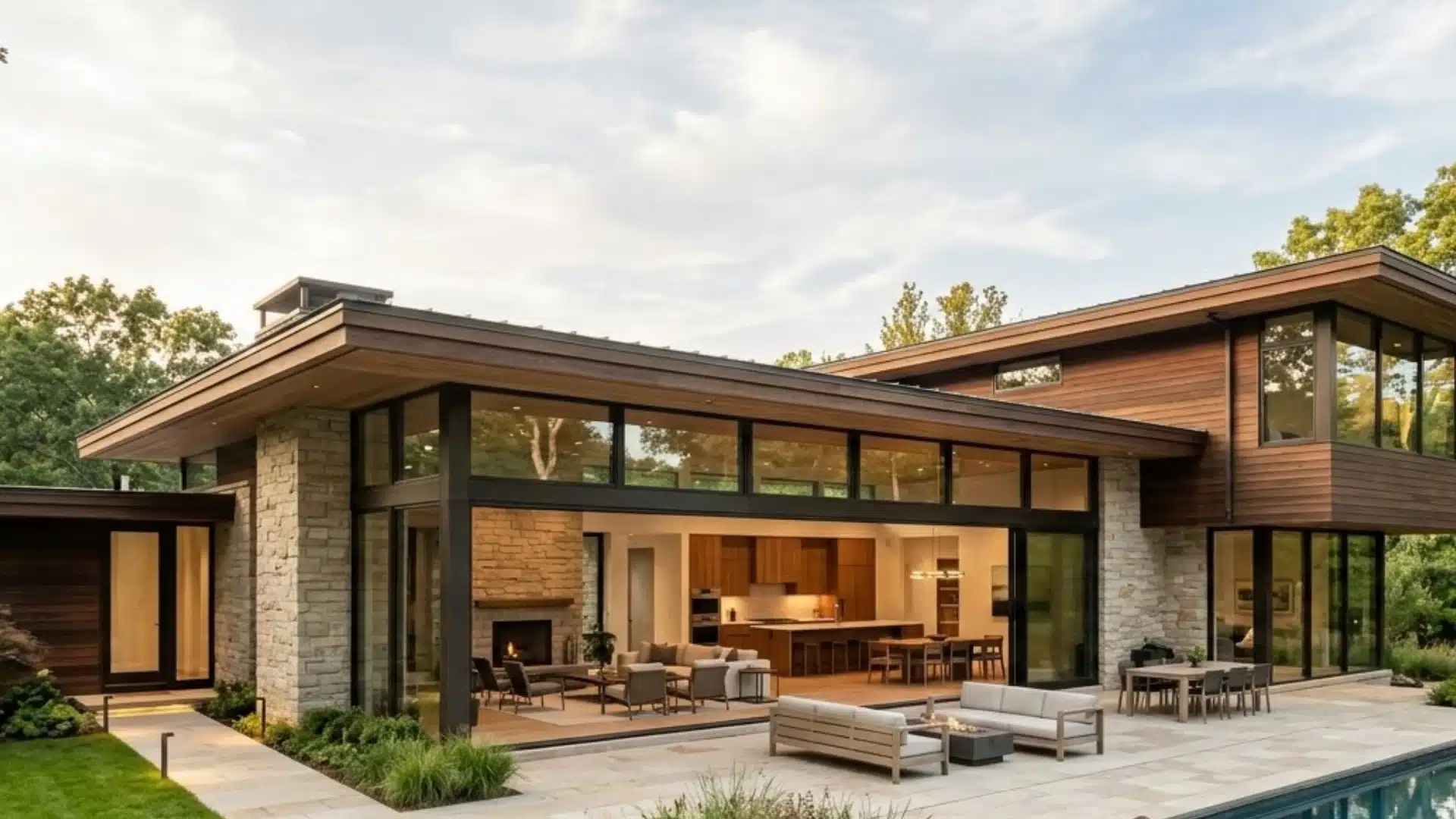
You’ve probably heard the term “modern contemporary house” in real estate listings, design blogs, and home tours.
But what does it actually mean? It’s a bit of a hybrid phrase.
“Modern” in architecture refers to the modernist movement, which is a design philosophy that took shape in the early to mid-20th century.
“Contemporary” means what’s current right now.
So when the two words are used together, it usually describes a home that incorporates modernist principles with today’s design practicalities.
Features of a modern contemporary house:
- Flat or low-pitched roofs
- Strong horizontal lines
- More focus on function over decoration
- Warmer material choices
- Smart layout ideas
I’ve seen poorly planned open layouts kill the feel of an otherwise great contemporary home. The flow should be intentional.
Modern vs Contemporary Home
Both styles have distinct identities, but understanding their similarities and differences helps you make smarter design decisions.
Quick Overview
| Feature | Modern | Contemporary |
|---|---|---|
| Time period | Early–mid 20th century | Present day |
| Lines | Strong, horizontal | Clean, fluid |
| Colors | Warm, earthy neutrals | Cool neutrals, bold accents |
| Materials | Wood, stone, leather | Glass, steel, concrete, mixed |
| Feel | Structured, minimal | Flexible, evolving |
| Ornamentation | None | Minimal but practical |
Modern Home
A modern home is a product of a moment in design history.
It emerged in the early 20th century, shaped by architects like Le Corbusier, Ludwig Mies van der Rohe, and Frank Lloyd Wright.
Their shared belief was simple. Remove the unnecessary. Let the structure speak for itself.
Modern homes are immediately recognizable.
- Flat roofs
- Strong horizontal lines,
- Large but carefully placed windows
Inside, you’ll find open spaces, but with a sense of order. Every room has a clear purpose.
- The material palette is natural: teak, walnut, leather, and stone.
- Colors: burnt orange, olive green, browns, and off-whites.
What makes modern design enduring is that it doesn’t chase trends. A well-designed modern home built in 1965 can feel just as intentional today as it did then.
Contemporary Home
A contemporary home is harder to pin down into something one, and that’s by design.
Unlike modern, it doesn’t belong to a fixed era. It belongs to right now. And right now is always changing.
Contemporary homes take the best ideas from multiple design movements and blend them together.
You might find the clean lines of modernism sitting alongside the rawness of industrial style.
It’s beautiful, isn’t it?
- The exterior is a mix of materials: wood, concrete, glass, and brick.
- Rooflines vary.
- Asymmetry is there.
Inside the home, there are open-plan layouts, natural light, and layered textures.
The color palette followed is white, gray, and soft black.
What defines a contemporary home most is its relationship with the present. It reflects how people live today, more connected, flexible, and comfort-driven.
Advantages and Disadvantages of a Contemporary Home
| Advantages | Disadvantages | |
|---|---|---|
| Design | Clean, clutter-free style | Can feel impersonal without proper styling |
| Space | Open layouts mean larger spaces | Less privacy between living areas |
| Light | Large windows flood spaces with natural light | More glass means higher energy costs |
| Materials | Durable, low-maintenance finishes | Hard surfaces can feel stark |
| Flexibility | Easy to update as trends change | Keeping up with trends can get expensive |
| Storage | Smart, built-in storage keeps spaces tidy | Custom storage solutions add build costs |
Contemporary Home Designs Today
Right now, a few clear trends are shaping how these homes look and feel.
And if you’re planning a build, renovation, or even a simple refresh, you need to know.
Biophilic Design
Biophilic Design is one of the biggest shifts in interior design today.
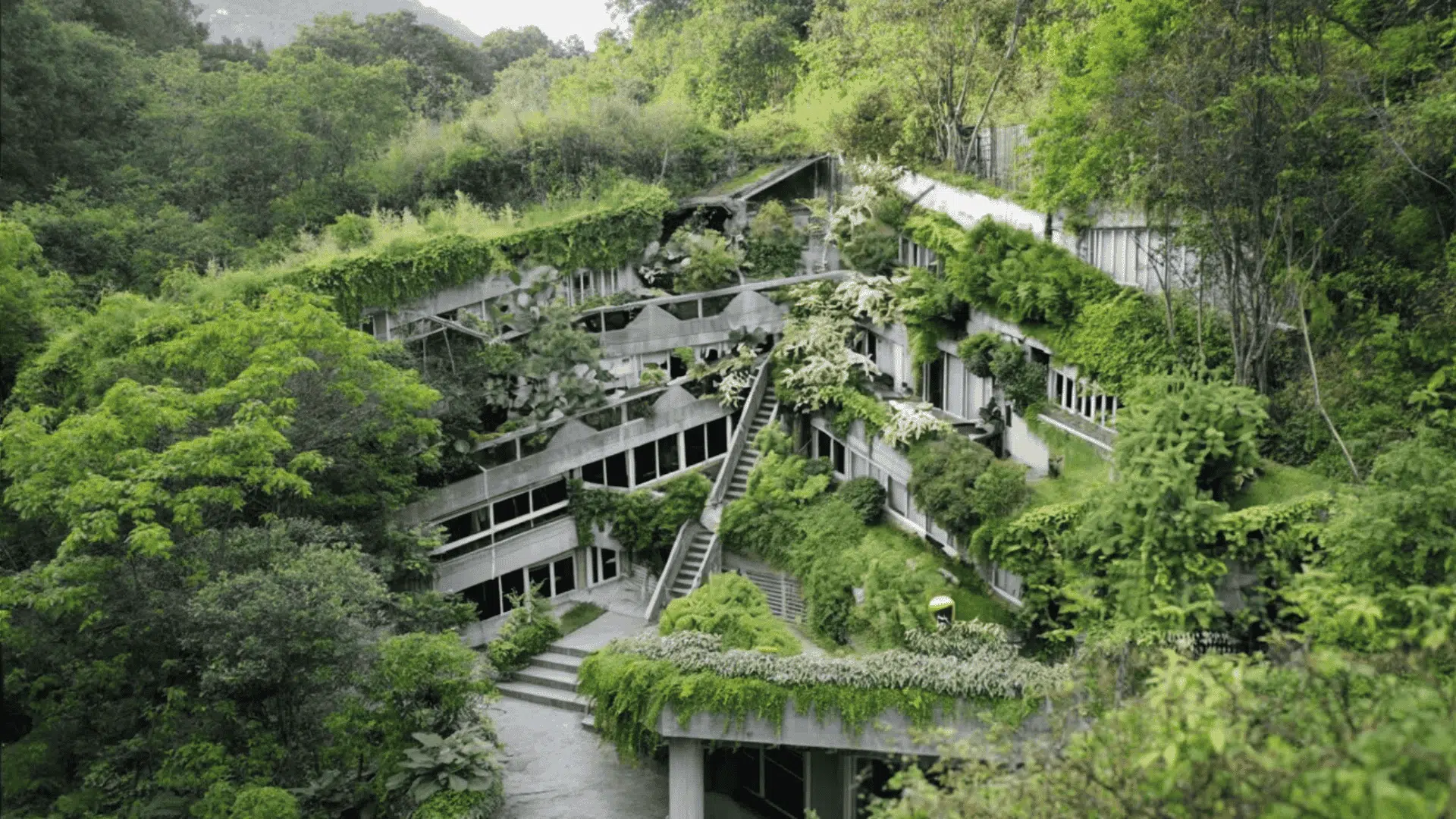
Homeowners are bringing nature indoors through living walls, natural wood features, stone surfaces, and plenty of indoor plants.
The goal is to create spaces that feel connected to the outside world.
Warm Minimalism
This is replacing the cold, stark visuals that contemporary design was once known for.
Minimalism features more minimal layouts, but with textured linens, curved furniture, soft ambient lighting, and clean spaces that still feel inviting.
Sustainable Materials
Sustainability is becoming a standard rather than an afterthought.
Reclaimed wood, recycled steel, and eco-friendly concrete alternatives are seen more in contemporary home throughout the world.
Smart Home Integration
It is now built into contemporary design naturally.
Lighting, temperature, and security systems are embedded into the architecture itself, invisible but always functional.
Curved Forms
Curves are making a strong appearance.
Beautiful arched doorways, rounded furniture, and softened edges are returning to counter the hard geometry that defined contemporary spaces before.
These trends reflect something bigger, a shift toward homes that are not just beautiful to look at, but good to live in.
Is Contemporary Home the Right Choice for You? Wrapping Up
Choosing a home style is deeply personal.
But in my experience, contemporary design works well for people who value flexibility, light, and open spaces.
If you like the idea of a home that best describes you, then contemporary is a strong fit.
It’s easygoing, adaptable, and seriously livable when done the right way. What matters most is that the space feels like you.
Considered, comfortable, and built to last.
Let me know in the comments about which style you’re going for.
Frequently Asked Questions (FAQs)
1. Why are Contemporary Homes so Expensive?
Contemporary homes use high-end materials like glass, steel, and concrete. Custom layouts, smart systems, and energy-efficient features.
2. What is the Opposite of a Modern House?
Traditional or classical homes are the opposite. They feature ornate detailing, symmetrical layouts, and pitched roofs.
3. What is the Most Expensive House Style?
Mediterranean and contemporary custom homes tend to top the list.
4. What are Some Common House Plan Mistakes?
The most common ones include poor natural light planning, awkward traffic flow, undersized storage, and rooms that don’t connect well.