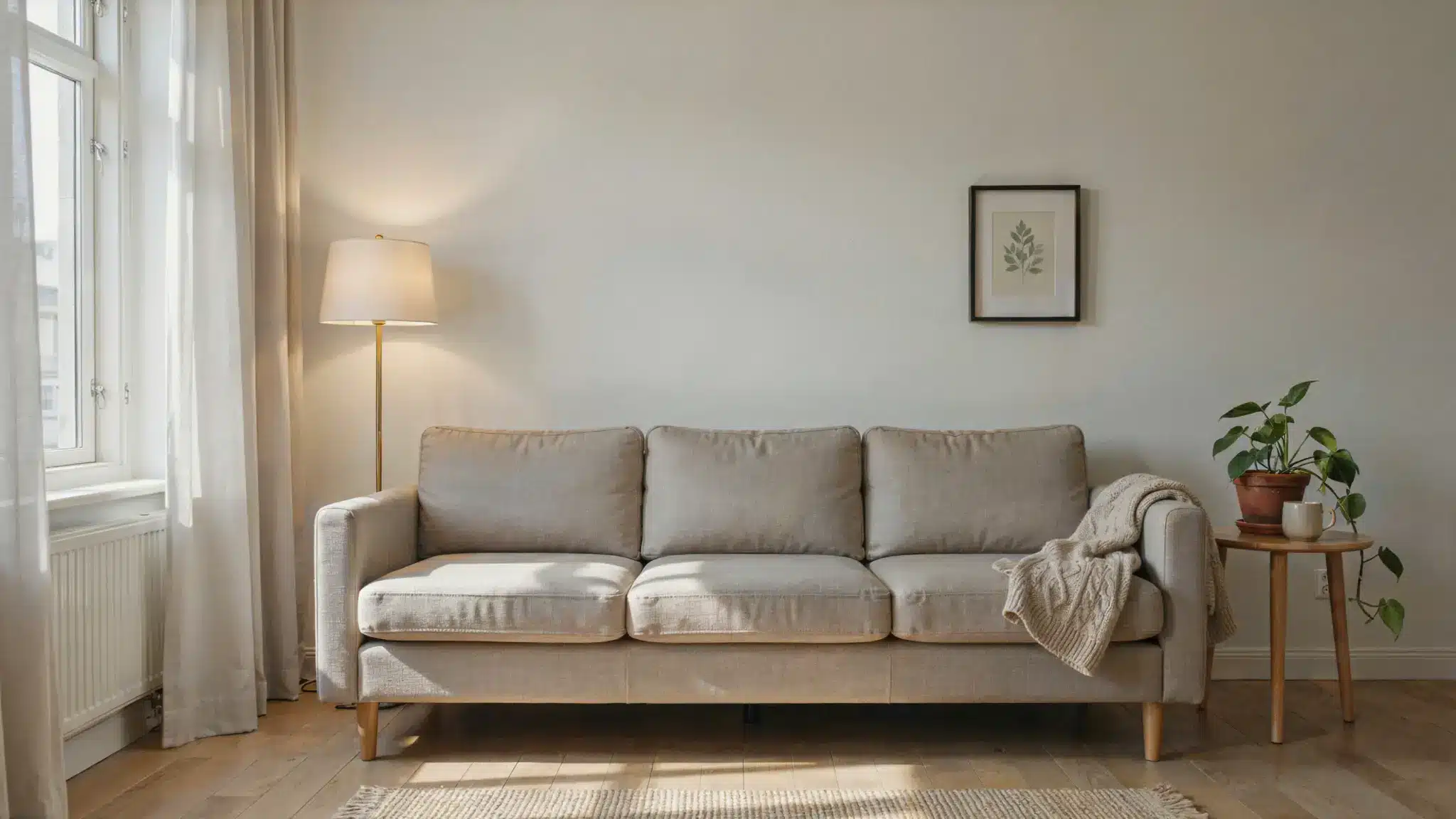
Getting the standard couch length right means knowing how a typical three-seater compares to your room, your doorways, and the walking space you’ll actually have left over.
This guide walks through those numbers by sofa type and room layout, so you’re not guessing and hoping once the delivery truck shows up.
And a quick note before we start: couch and sofa get used interchangeably here but they mean the same thing.
What is the Standard Couch Length?
The standard couch length is 72 to 96 inches, or 7 to 8 feet. This is the range that covers most three-seater sofas sold today.
Most people don’t think about couch length until they actually realise that the sofa they liked won’t actually fit.
Knowing the standard range ahead of time makes that whole process less stressful.
Depth and height shape how a sofa feels just as much as length, with depth affecting how comfortably you sit back and height changing how it looks next to other furniture.
Key Sofa Measurements You Should Know
A sofa can look perfect in the showroom and can still feel wrong the second it’s in your living room.
Usually it comes down to one of these four numbers, not the fabric or the color you agonized over:
Seat Depth
Seat Depth is the measurement from the front edge of the seat to the back cushion. Some find 20-24 inches just right, while shorter people will generally not like a deeper seat because they cannot sit up straight.
Tall people often like more depth in order to sprawl out.
Test the depth by trying to sit all the way back. Knees should bend normally, not hang rigidly before you.
Seat Height
The height between the floor and the top of a sofa cushion. An average sofa height is about 17 to 19 inches, similar to that of a dining chair.
A lower seat may be cozy but can be difficult to get up from, and the opposite is best if you are taller or if you have knee or hip discomfort.
If standing up from your chair is a chore, measure seat height first.
Back Height
This one’s easy to confuse with seat height, but it’s a different measurement: the distance from the seat cushion up to the top of the backrest, not from the floor.
Most sofa backs run 24 to 30 inches.
A taller back gives your neck and shoulders somewhere to rest, which matters if you’re over six feet or you fall asleep on the couch more nights than you’d like to admit.
A shorter back looks sleeker and works better under a low window, but it leaves taller sitters propping their head on a cushion.
Arm Height and Width
Arm height and width change how a sofa feels day to day. Arm height usually falls between 24 and 27 inches. Wider arms, around 8 to 12 inches, work well as a spot for a drink or a book.
Narrower arms save floor space and suit smaller rooms.
Think about how you actually use your arms before picking a style. Some people lean on them, others barely touch them.
Overall Width
Overall width is the span of a sofa from one end to the opposite end. You want this number; you have to think about how many inches of wall space the sofa calls for in your living room.
It isn’t rare for most 3-seater sofas to run in a wide array from 72 to 96 inches.
Be sure to account for another inch or two on each end for a sufficient area for walking.
Measure your doorway and hallway, too. A sofa that fits the room can still get stuck on the way in.
Couch Dimensions by Sofa Type
This chart explains how the main sofa types compare across length, depth, height, and the room size each one typically suits best.
| Sofa type | Length | Depth | Height | Recommended room size |
|---|---|---|---|---|
| Loveseat (2-seater) | 58 to 70 in | 30 to 36 in | 30 to 36 in | 8 by 10 ft |
| Sofa (3-seater) | 72 to 96 in | 32 to 38 in | 30 to 36 in | 10 by 12 ft |
| Sofa (4-seater) | 98 to 110 in | 36 to 40 in | 30 to 36 in | 12 by 14 ft |
| Sectional sofa | 90 to 120 in per side | 36 to 40 in | 30 to 36 in | 12 by 14 ft or larger |
2-Seater Loveseat
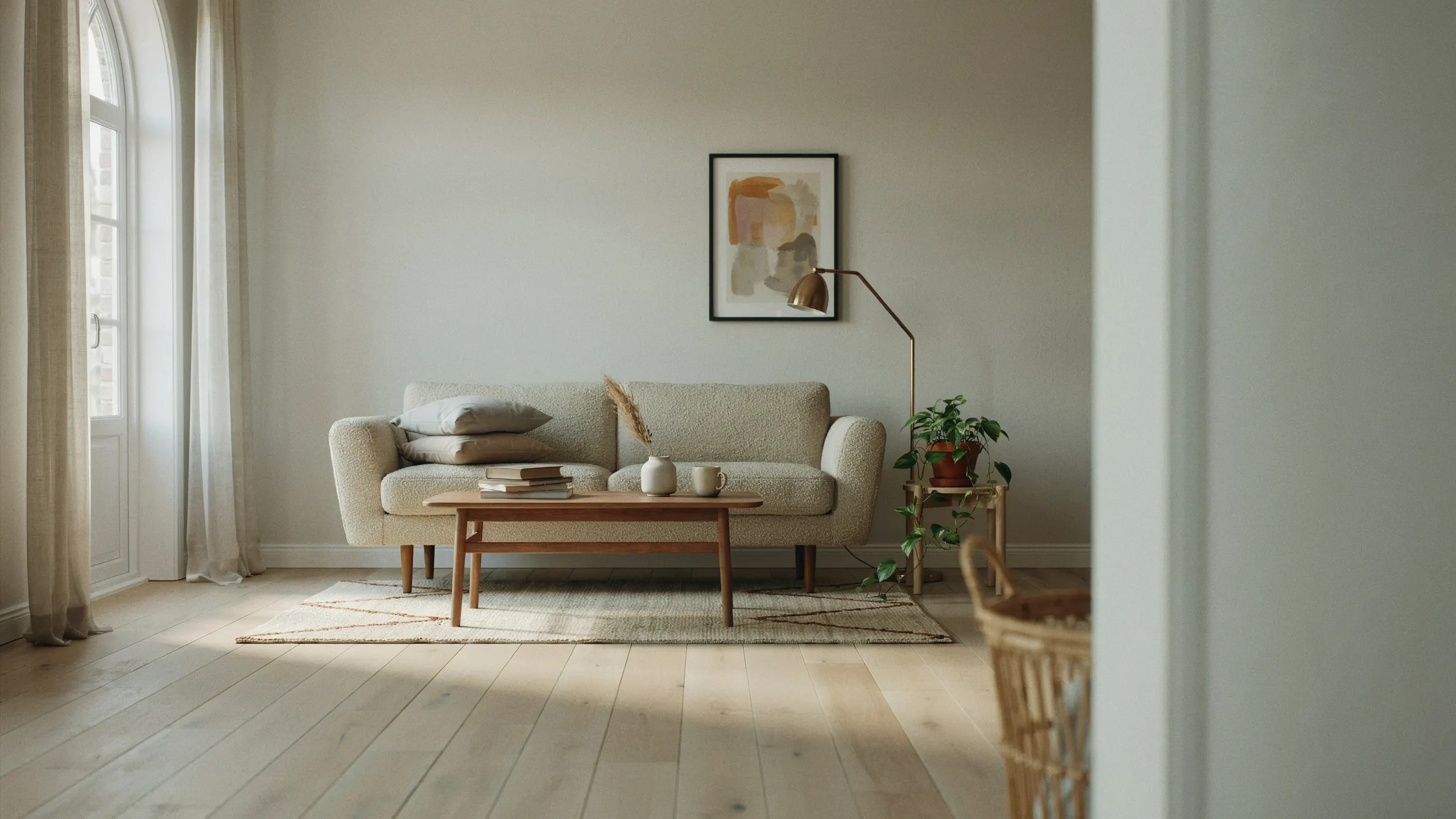
A loveseat is the smallest standard option in the sofa family, usually running 58 to 70 inches long.
Despite its compact size, it comfortably seats two people, making it a solid pick for cozy living rooms, apartments, or reading nooks.
It also works well as a second seating piece next to a larger sofa, adding extra seating without crowding the room, or as a standalone option for smaller spaces that still need comfortable seating.
3-Seater Sofa
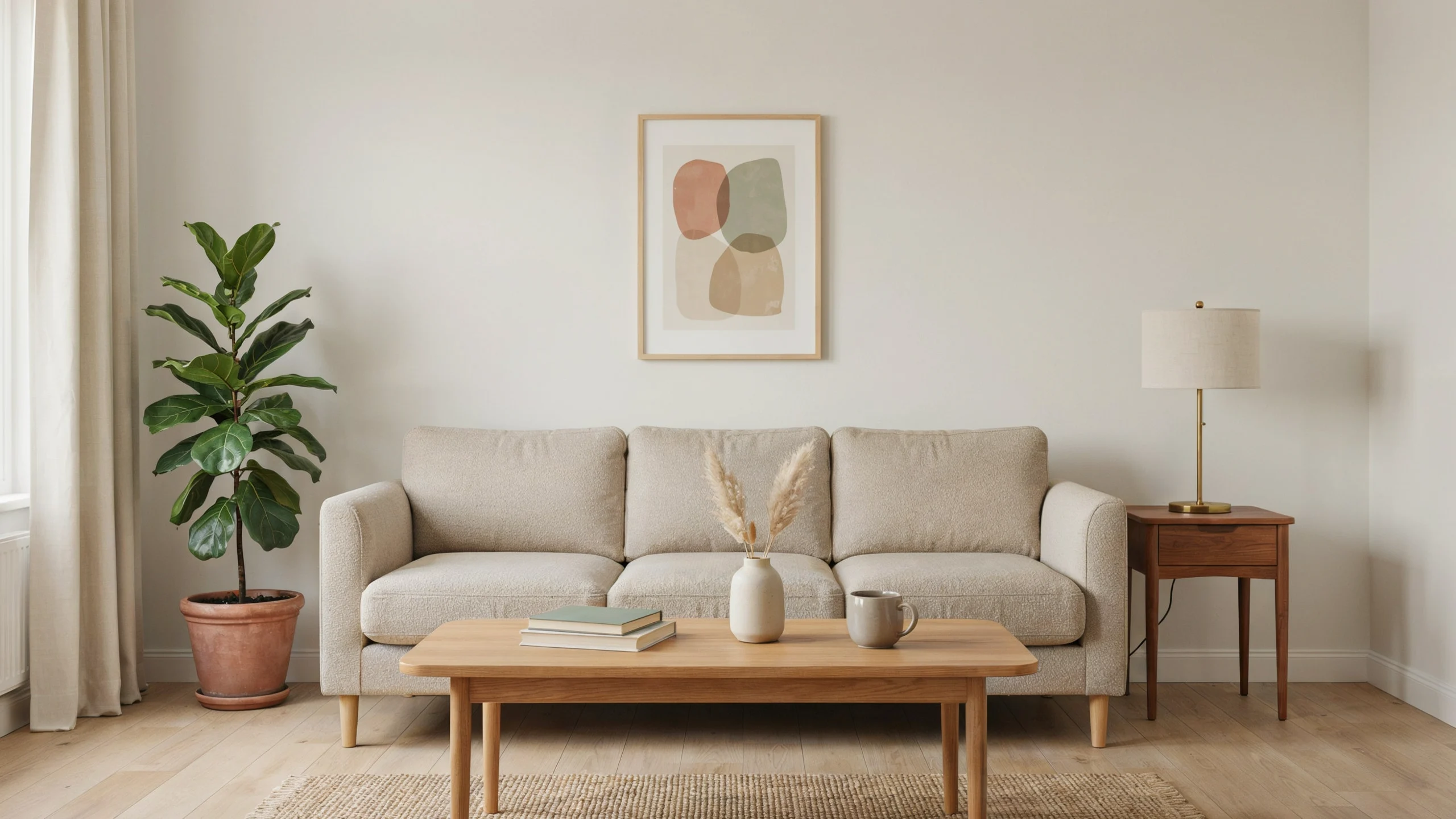
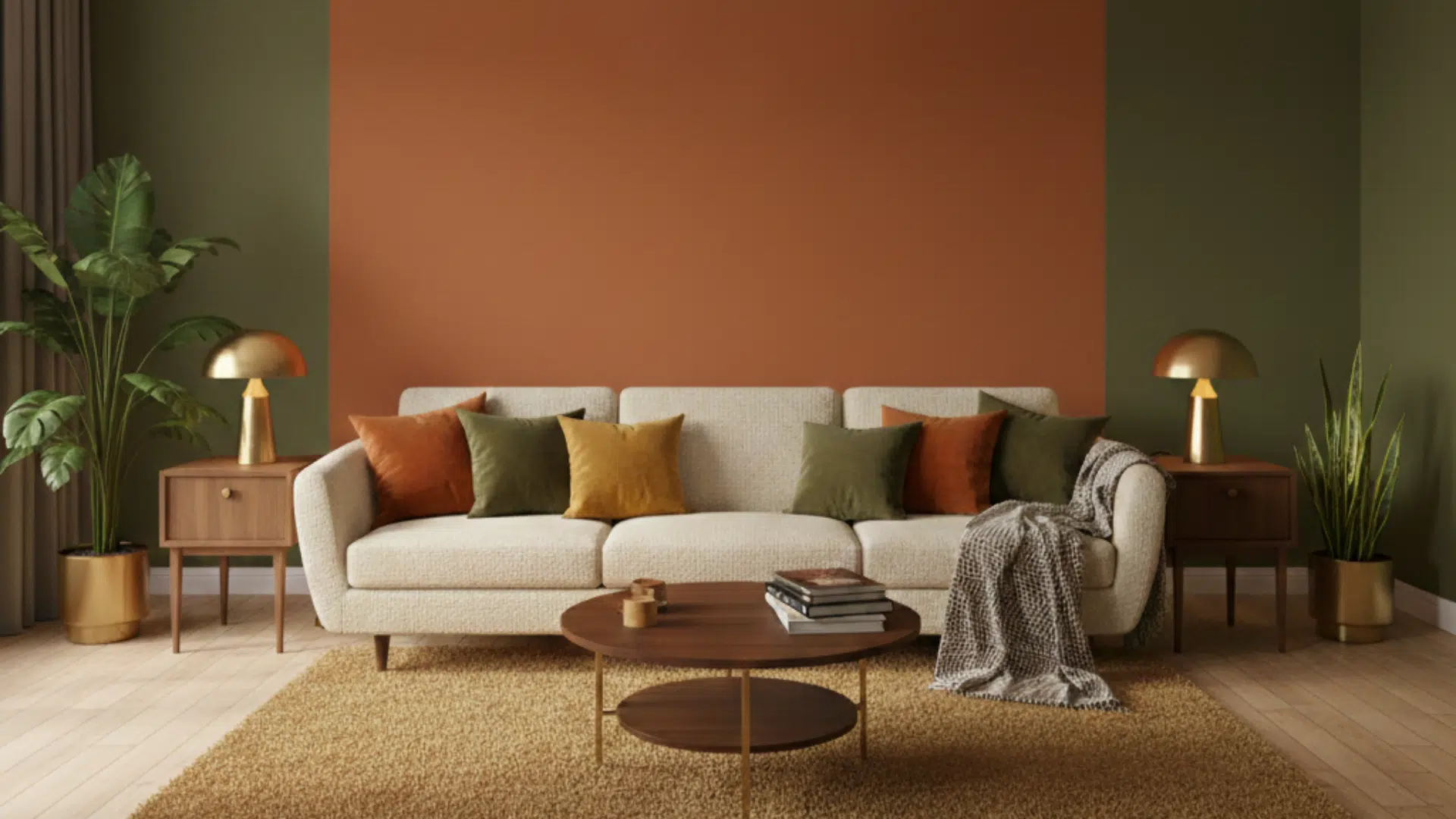
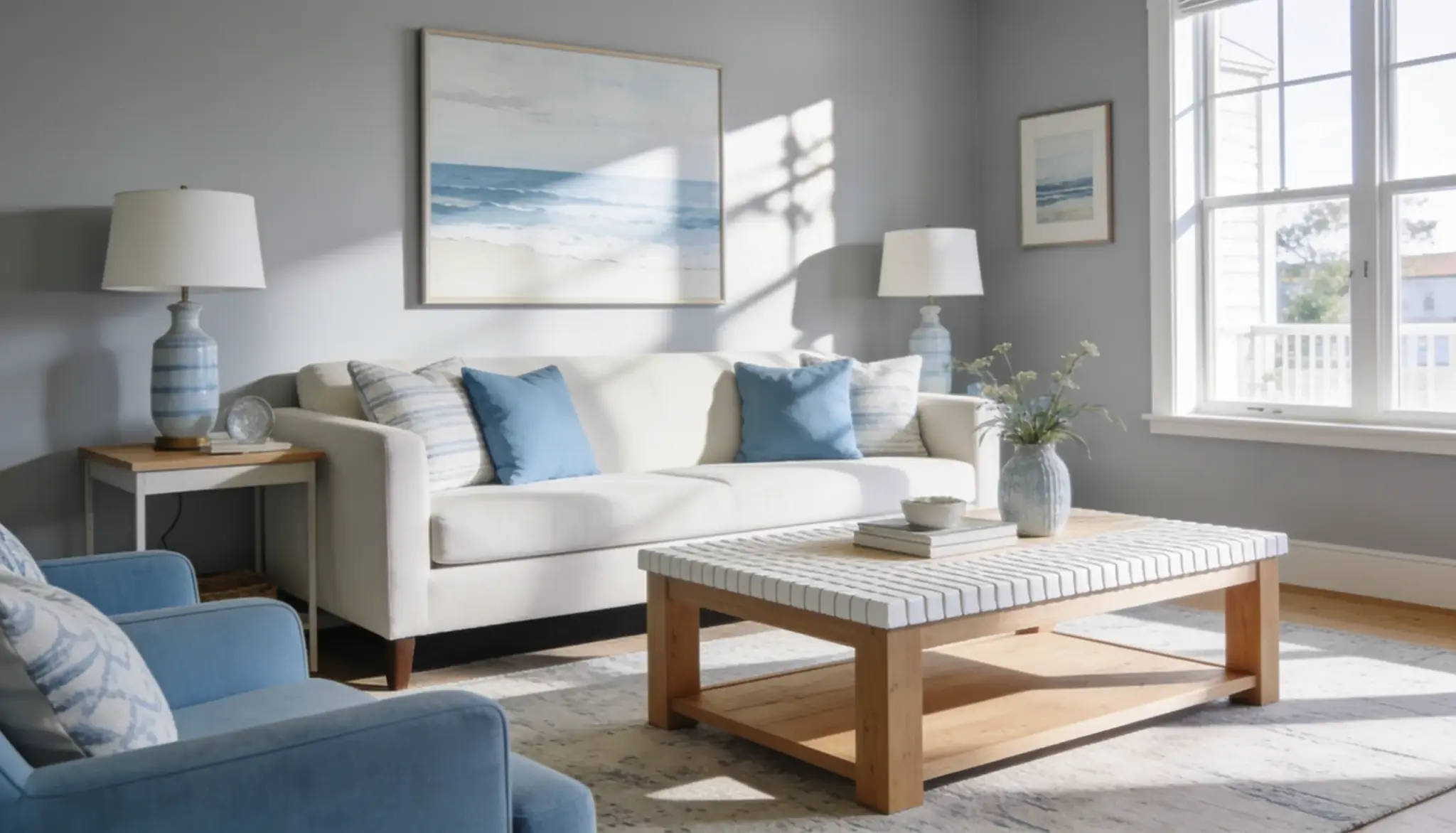
The most common option in most living rooms is typically measuring around 72 to 96 inches, with 84 inches being the most common, which comes to about 7 feet and is built to comfortably seat three people.
When it comes to the standard 3-seater sofa size in feet, most fall between 6 and 7.5 feet, depending on the style and design.
4-Seater Sofa
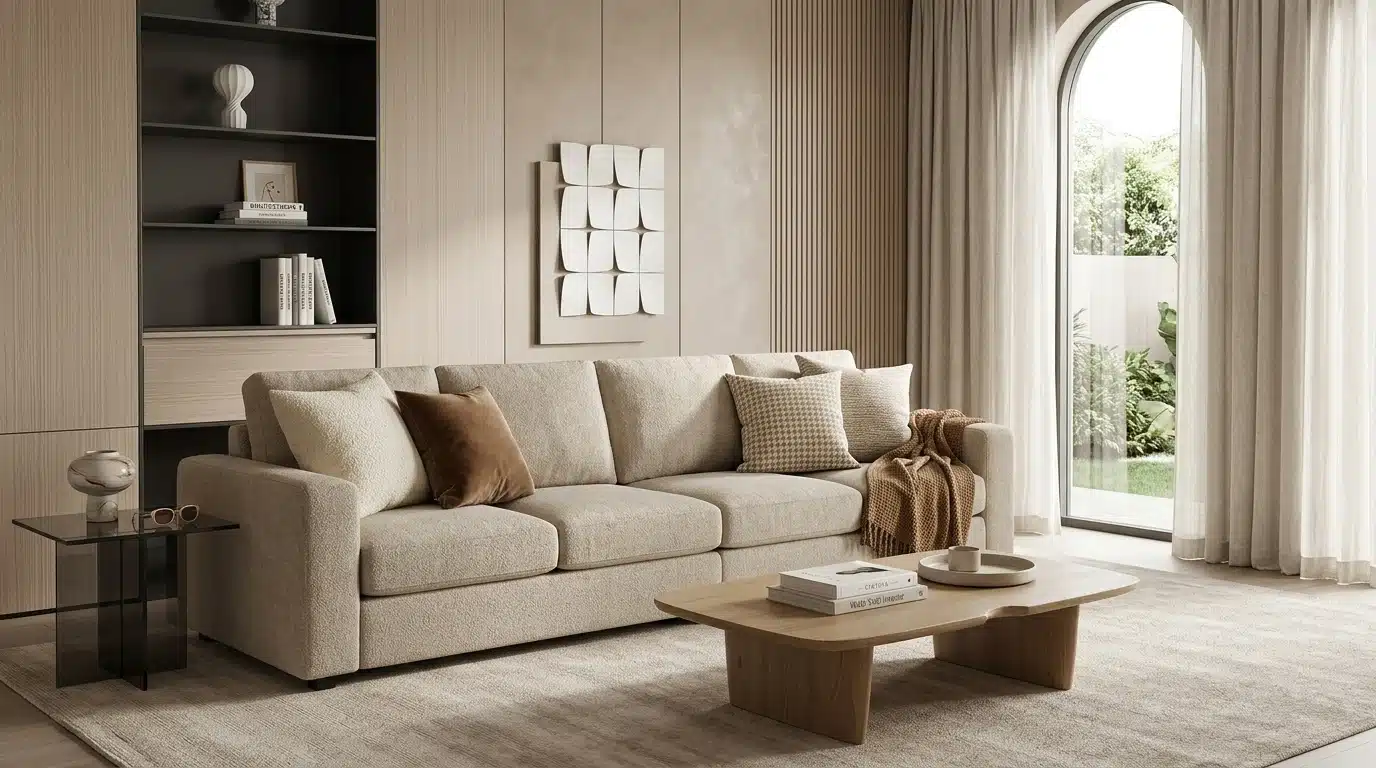
Larger households or bigger living rooms often look toward a 4-seater, which usually runs 98 to 110 inches long and needs a proportionally larger room to match.
This size works well for families who want everyone seated together without feeling cramped, or for open living spaces that can handle a bigger footprint.
- Length: Typically 98 to 110 inches
- Seating capacity: Comfortably fits four people
- Best for: Larger families, spacious living rooms, or open floor plans
- Room requirement: Needs ample floor space to avoid a crowded look
Sectional Sofa

Sectionals vary the most in size since they’re made of connected pieces, and this flexibility is exactly what makes them so popular for different room shapes.
A standard L-shaped sectional often runs 90 to 120 inches per side, depending on the configuration, giving buyers plenty of room to mix and match based on their space.
Since sectionals come in modular pieces, the overall footprint can be adjusted to fit anything from a small apartment corner to a large open-concept living room.
How to Measure Your Space for a Sofa in Three Simple Steps
Picking the right length comes down to more than looks. Room size, layout, and clearance all decide how well it works once it’s in place.
Step 1: Match Sofa Size to Room Dimensions
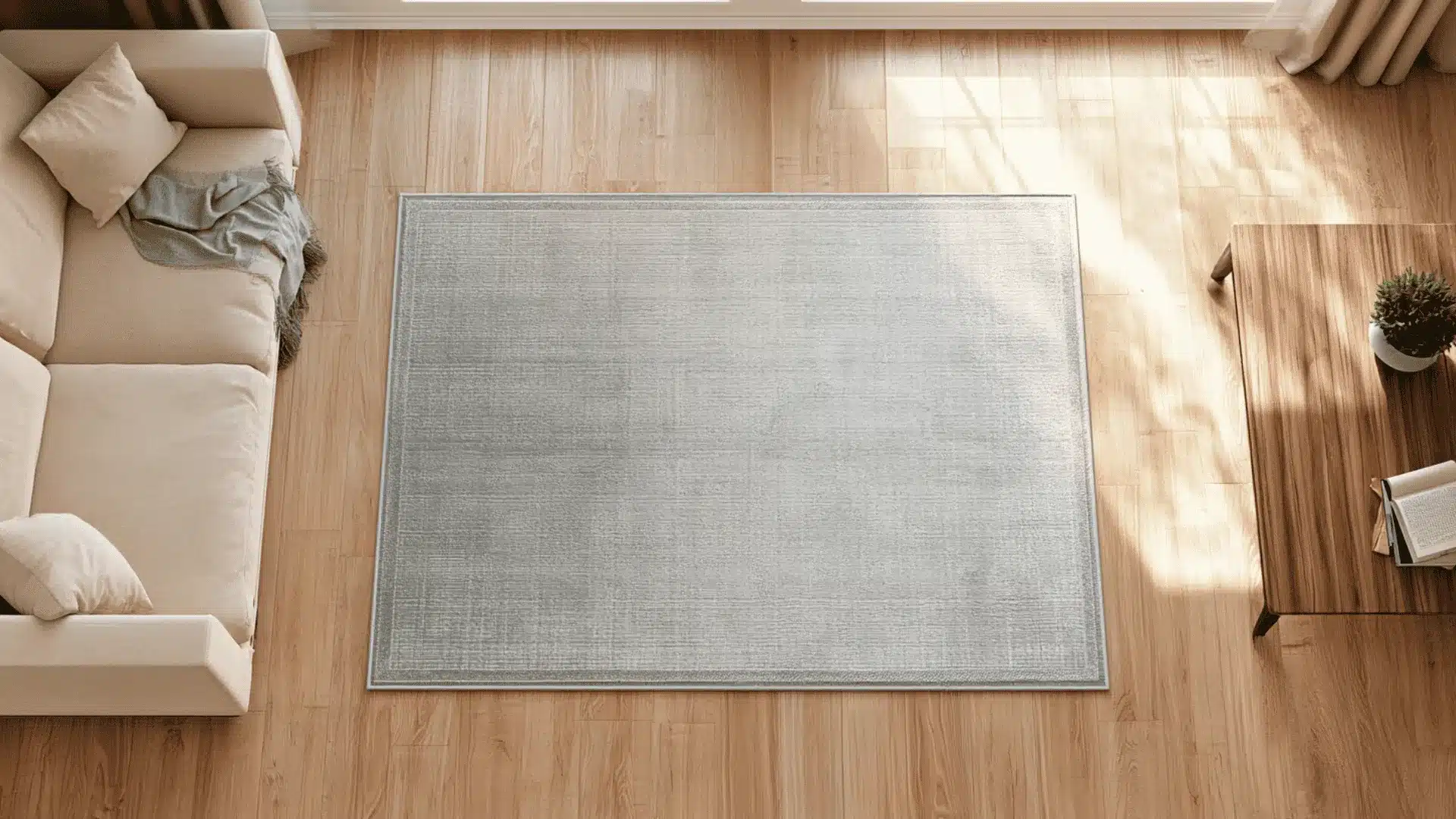
Measure out your space before you go sofa shopping. Give it some breathing space in every dimension, say, about 30 inches of walking room.
Don’t buy a huge sofa for a teeny tiny room because it will look out of proportion. And a small sofa in a huge room will look kind of silly.
Take into account your doorways, too, and the hallways you’ll need to manoeuvre it through the entrance of your home.
Step 2: Leave Enough Walking Space
Maintain 30 to 36 inches between furniture items. That’s plenty of room for traffic to flow without knocking into chairs and tables.
Narrow traffic paths only shrink a space and can get extremely uncomfortable if people need to squeeze past each other to exit and enter the room.
Wide open pathways allow traffic flow – and family – easy passage through an open living space, and trust us, your family will thank you in the long run.
Step 3: Measure Doorways Before Delivery
Check the width of doorways, hallways, and staircases before your sofa ships, since a piece that fits your room perfectly won’t help much if it can’t get through the front door.
A few overlooked details cause most sofa-fit problems after delivery.
The same few misses show up over and over: choosing a sofa on seat count alone and ignoring depth and height, underestimating how much room the armrests actually eat up, and forgetting to leave clearance for a coffee table.
Standard Length vs 3-Seater Sofa
These two terms get used interchangeably, but they’re not always the same thing.
Is Every Standard Couch a 3-Seater?
Not necessarily. It refers to a general size range, roughly 84 to 96 inches, that applies across several sofa types, not just 3-seaters.
A loveseat has its own standard range, a 4-seater has another, and a 3-seater happens to fall in the middle of that broader spectrum.
So while most 3-seaters do land within the standard couch length range, plenty of other sofa types share that same range too, just at different points along it.
Longer or Shorter (It Depends on the Room)
A smaller sofa is logical for rooms that aren’t large, rooms you utilize for a myriad of functions, and for you to ensure there’s sufficient space to stroll throughout the area unobstructed.
Go longer in bigger rooms, for larger families, or for a sofa bed that needs to sleep a guest comfortably.
Does Arm Style Affect Standard Couch Length?
Yes. Track arms or thin arms take up less space, so you get a shorter overall base for the same number of seats.
Roll arms or wide arms add extra inches on both outside ends. Two sofas both labeled 3-seat can end up 6 to 12 inches apart in actual length, just because of the arm style.
Conclusion
The standard couch length runs 72 to 96 inches, and knowing that number is the easiest way to start narrowing down options before you shop.
Beyond that baseline, the right fit really comes down to your room’s actual dimensions, the clearance you need around it, and how the sofa works with everything else in the space.
Measure first, then shop with those numbers in hand, since that single step prevents most of the sizing headaches people run into after delivery.
Frequently Asked Questions (FAQs)
2. Is an 84-Inch Sofa Considered Standard?
Yes, 84 inches falls right in the middle of the standard range for a 3 seater sofa.
3. How Much Space Should You Leave Around a Couch?
Leave at least 2 to 3 feet of walking clearance on all open sides for comfortable movement.
4. Can a Couch Be Too Big for a Living Room?
Yes. An oversized couch reduces walking space, makes the room feel cramped, and limits furniture placement and overall comfort.
5. Does Seat Cushion Thickness Affect Overall Couch Size?
Yes. Thicker cushions increase overall depth and seating comfort but don’t usually change the couch’s total length significantly.