Buying a door without checking the standard door size is one of the most common and costly mistakes homeowners make.
A door that’s too narrow creates an awkward entryway, and one that’s too wide simply won’t fit the frame.
Getting the right measurements before buying saves time and avoids costly mistakes.
This covers standard door widths, heights, and sizing for every door type, so your next installation goes smoothly. The right measurements make the whole process simpler, from shopping to installation.
What is a Standard Door Size?
An accurate door size is the measurement most doors are manufactured to by default.
Standard dimensions keep manufacturing efficient, costs manageable, and installation straightforward, without any custom work.
There are three measurements that define any door:
- Width: The horizontal span of the door slab
- Height: The vertical measurement from bottom to top
- Thickness: How deep the door is, front to back
Most people focus on width and height, but thickness affects how hardware fits and how well the door seals.
Standard Door Width in Residential Homes
Most residential doors range from 24 to 36 inches wide, depending on location and use.
Closet and bathroom doors sit at the narrower end, while bedroom and hallway doors fall in the middle.
Front entry doors are the widest in any home. They handle daily foot traffic, allow furniture to pass through, and need to meet basic accessibility requirements.
Standard Door Height in Residential Homes
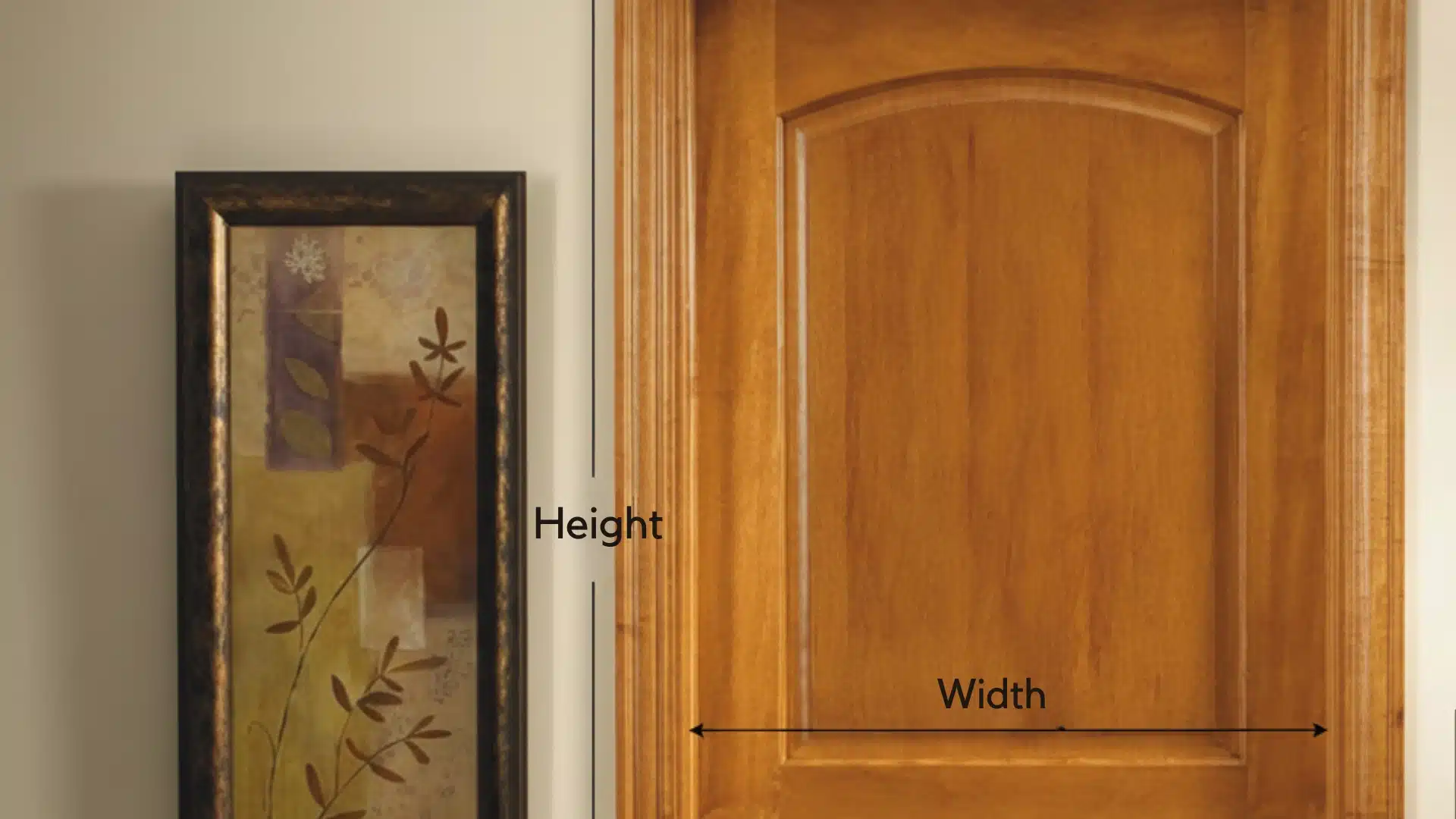
The standard door height in most residential builds is 80 inches (6 feet 8 inches).
This fits comfortably within typical ceiling heights and is the easiest size to find at any hardware store.
Newer homes are shifting toward taller options.
Heights of 84 and 96 inches are becoming more common, with higher ceilings standard. Older homes are a different story.
Sizes can vary from build to build, and even a 1-inch difference can affect how the door sits in the frame. Always measure before ordering, regardless of what the previous door measured.
Door Width by Location and Use
Most doors follow a set of accepted measurements, making buying, fitting, and replacing them far more predictable.
These numbers are based on decades of construction standards that balance practicality, cost, and accessibility.
The three key measurements are height, width, and thickness.
Height remains fairly consistent across most residential builds, while width and thickness vary depending on the door type and its use.
| Door Type | Height (Inches) | Width (Inches) | Thickness (Inches) |
|---|---|---|---|
| Narrow Closet / Utility | 80 inches | 24 inches | 1.375 inches |
| Small Bathroom / Hallway | 80 inches | 28 inches | 1.375 inches |
| Standard Bedroom Door | 80 inches | 30 inches | 1.375 inches |
| Main Bedroom / Bathroom | 80 inches | 32 inches | 1.375 inches |
| Front Entry Door | 80 inches | 36 inches | 1.75 inches |
| Exterior Door | 80 inches | 36 inches | 1.75 inches |
| Commercial Door | 80 to 96 inches | 36 to 48 inches | 1.75 to 2 inches |
Exterior and commercial doors are thicker for good reason. That added depth improves insulation, blocks drafts, and holds up better against weather and heavy daily use than a standard interior slab.
How Wide is a Standard Sliding Glass Door?
Sliding glass doors are wider than most standard interior doors because they are designed to connect indoor and outdoor spaces.
Most residential sliding glass doors come in three common widths:
- 60 inches (5 feet): Most common size for standard openings
- 72 inches (6 feet): Used for wider patios and deck entrances
- 96 inches (8 feet): Larger installations and open plan spaces
Each door has two panels, one fixed and one sliding.
On a standard 60 inch door, each panel measures about 30 inches wide. Height ranges from 80 inches for most builds to 96 inches with custom options.
For rough openings, add at least 2 inches to both width and height for proper framing clearance.
What is the Standard Door Size for a Garage?
Garage doors come in two configurations: single and double.
Single doors are built for one car and have a standard width of 8 to 9 feet.
The wider end of that range is more common in newer builds. This size gives enough clearance for most standard vehicles without eating into wall space.
Double doors are designed for two vehicles side by side, making them the better choice for households with multiple cars or those needing extra storage space.
How to Measure a Door Correctly
Doors are not returnable once they are cut or modified.
Taking accurate measurements before placing an order is the only way to ensure the door fits your existing space.
1. Width
Measure across the door slab at three points: top, middle, and bottom.
If the numbers differ, always use the smaller one. Older doors can bow slightly over time, so taking three readings gives you a more accurate picture than a single measurement ever would.
2. Height
Run the tape from the top of the slab straight down to the bottom. Keep it flush against the door, and do not include the frame in this measurement.
Most residential doors will read 80 inches here. If you are working with an older home, do not assume.
Some older builds used 78 inch doors, and ordering the wrong height means starting the whole process over.
3. Thickness
Thickness is easy to overlook, but it plays a bigger role than most people expect.
It affects how the hardware fits, how well the door seals when closed, and how much insulation or soundproofing the door can offer.
- Interior doors:1.375 inches thick, suitable for bedrooms, bathrooms, and closets
- Exterior doors:1.75 inches thick, built to handle weather, temperature changes, and security needs
Pro Tip: Always write down both numbers. The frame opening is larger than the door slab, and confusing the two is where most sizing errors start.
Measuring Mistakes Nobody Warns You About
The wrong door size does not just look bad; it is dangerous.
It affects how the door swings, how well it seals, and whether it meets local building code requirements.
These are problems that show up long after installation day.
- Always measure at three points, not just one, and use the smallest reading as your final number
- The frame opening and the door slab are two different measurements; never order based on one alone
- Write both numbers down before heading to the store
- A door that looks great but runs too narrow creates daily accessibility problems
- Exterior doors need at least 36 inches of width for practical everyday use
- Always confirm the size works for the space before committing to any style or finish
Final Thoughts
Getting the right door size is not just about measurements. It is about making sure the door works properly for years without issues.
A well-sized door closes cleanly, meets building code requirements, and fits the space without any awkward gaps or forced adjustments.
Knowing the correct standard door height and standard door size before buying saves time, money, and the frustration of a misfit installation.
The numbers covered here give you everything needed to make a confident, informed decision.
Frequently Asked Questions
1. Can a Standard Door be Trimmed Down to Fit a Smaller Opening?
Most interior doors can be trimmed by up to 2 inches in height and half an inch on each side without affecting structural integrity.
2. What is the Minimum Door Width Required for Wheelchair Accessibility?
A minimum clear width of 32 inches is required, though 36 inches is the recommended standard for full wheelchair accessibility.
3. Do Double Doors Follow the Same Standard Sizing Rules?
Double doors typically use two slabs, each measuring 24 to 30 inches wide, which combine to create an opening of 48 to 60 inches.
4. What is the Standard Door Size for a Garage?
Single Garage Doors Are Typically 8 to 9 Feet Wide and 7 to 8 Feet Tall, While Double Garage Doors Run 16 Feet Wide.
5. Does Door Thickness Affect Soundproofing?
Yes. Thicker doors with a solid core offer significantly better sound reduction than hollow-core doors of the same dimensions.