Not every window needs to be at eye level.
Clerestory windows prove it, doing their best work near the roofline where a normal window never reaches.
They solve three problems at once: dim rooms, lost privacy, and wasted wall space.
The trick is knowing which rooms benefit and how high to set the glass.
What is a Clerestory Window?
A clerestory window (pronounced “clear-story”) is a window set high on a wall, usually above eye level and often near the roofline. Instead of looking out at whatever is in front of you, it faces the sky and pulls light in from above.
The idea goes back to ancient Egyptian temples and Roman basilicas, and it later defined the tall, light-filled naves of Gothic cathedrals.
Mid-century modern architects like Frank Lloyd Wright and Joseph Eichler brought the same concept into houses, using long horizontal runs of high glass to open up low-slung roofs.
Today you’ll find them in everything from minimalist new builds to barn conversions.
Key Benefits: Why People Love Clerestory Windows
Homeowners keep coming back to these windows for good reason. Sitting high on the wall, they bring in daylight, hold onto privacy, help a room breathe, and make a space feel more open.
It is important to understand what each of those benefits looks like day to day.
More Natural Light
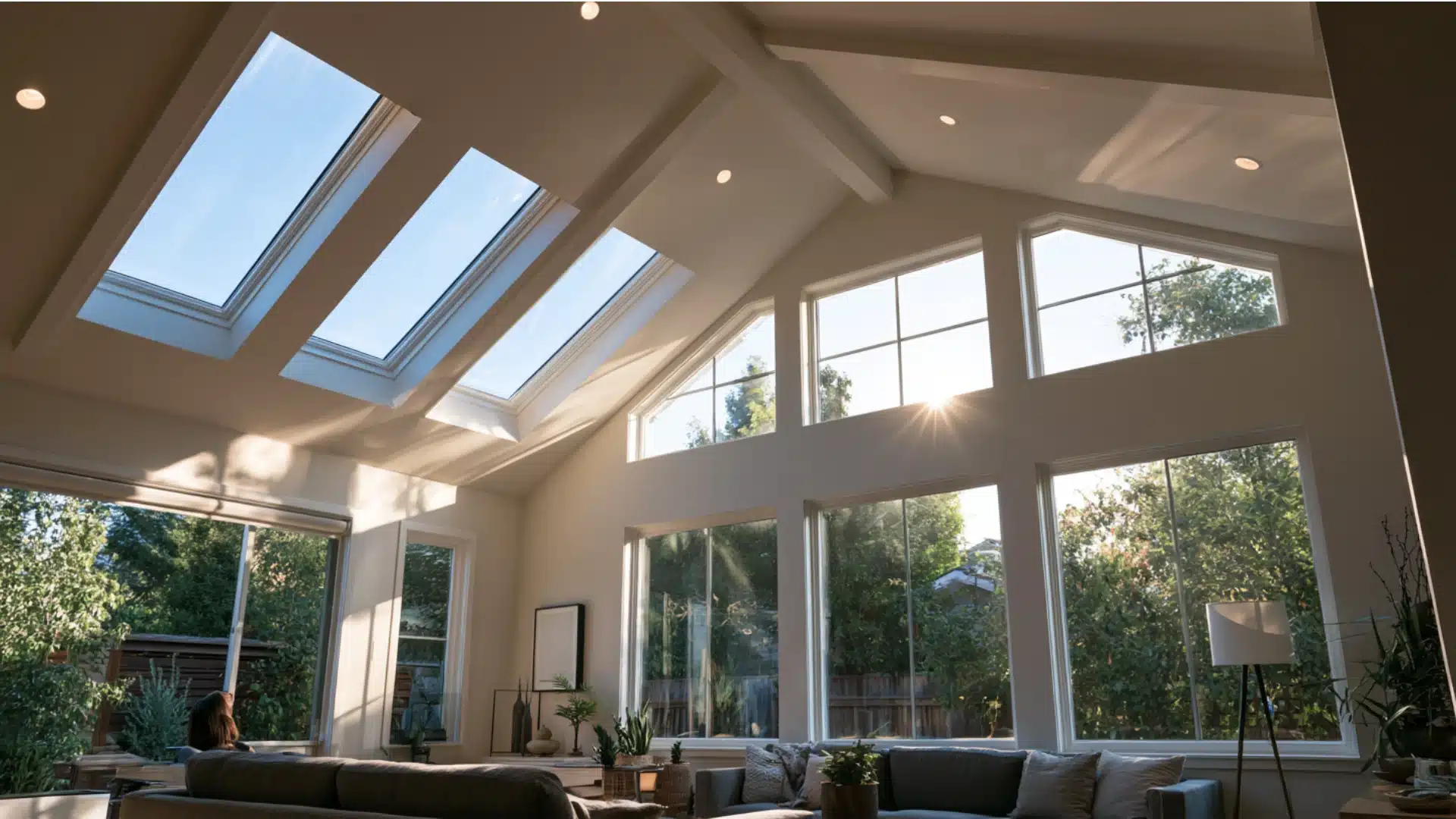
As these windows are situated at a high position on the walls, the daylight falls towards the ceiling, from where it reflects and spreads evenly throughout the entire room.
The reflected light illuminates areas a standard window cannot reach, so rooms deep inside and not connected to exterior walls can feel lit without turning on any lights.
North-facing clerestories give steady, non-glaring light all day, while south-facing ones let in more heat during winter. (Flip this if you’re in the southern hemisphere.)
Greater Privacy
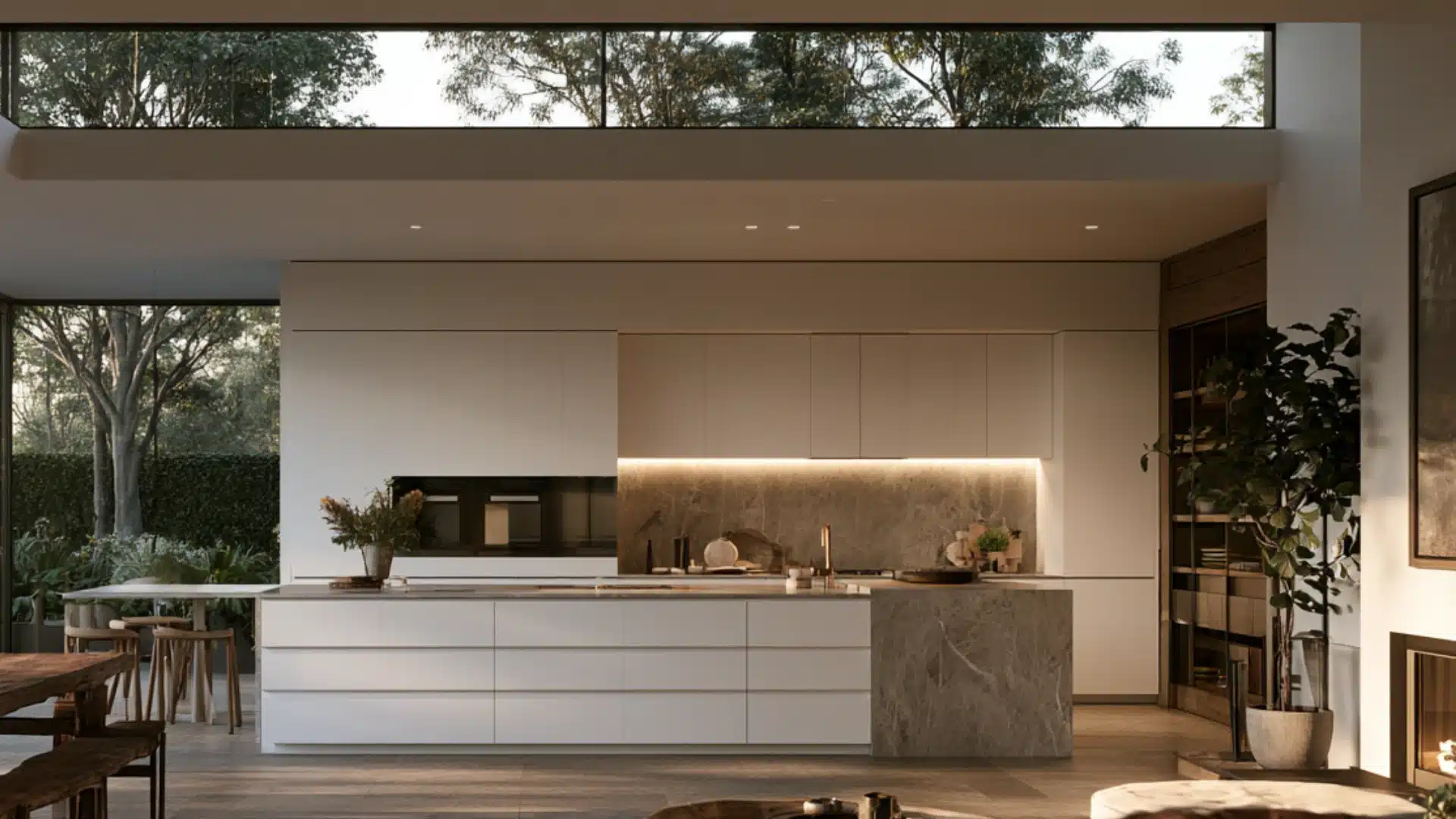
Set above eye level, these windows let light in while keeping sightlines out. Neighbors can’t see in, and you don’t need blinds or curtains to feel comfortable. That makes them a favorite for:
- Bathrooms and bedrooms, where privacy matters most
- Homes on tight urban lots with close neighbors
- Ground-floor rooms that face the street
More Usable Wall Space
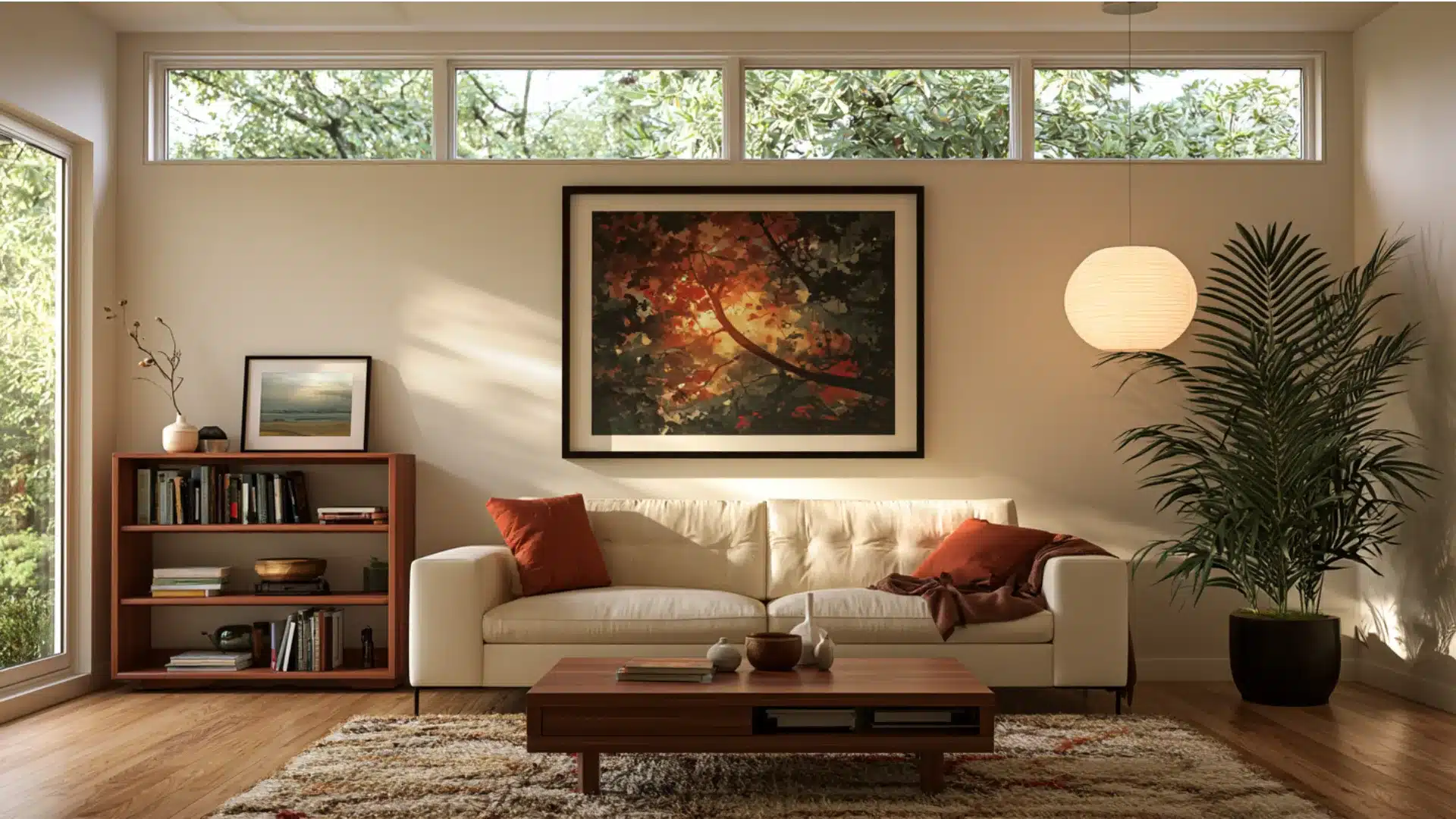
Standard windows sit in the middle of a wall, which limits where you can put a sofa, a bookshelf, or a piece of art.
These windows sit up near the ceiling and leave the rest of the wall free. You get the daylight of a big window and a full wall to furnish or decorate underneath it.
Connection With the Outdoors

Even from a seat, these windows frame a slice of sky, passing clouds, and treetops.
That changing view keeps you aware of the weather and the time of day in a way blank walls never do.
Watching the light shift from morning to dusk gives a room a calm, open feeling, especially in spaces where a full-height window wouldn’t be practical.
Architectural Interest
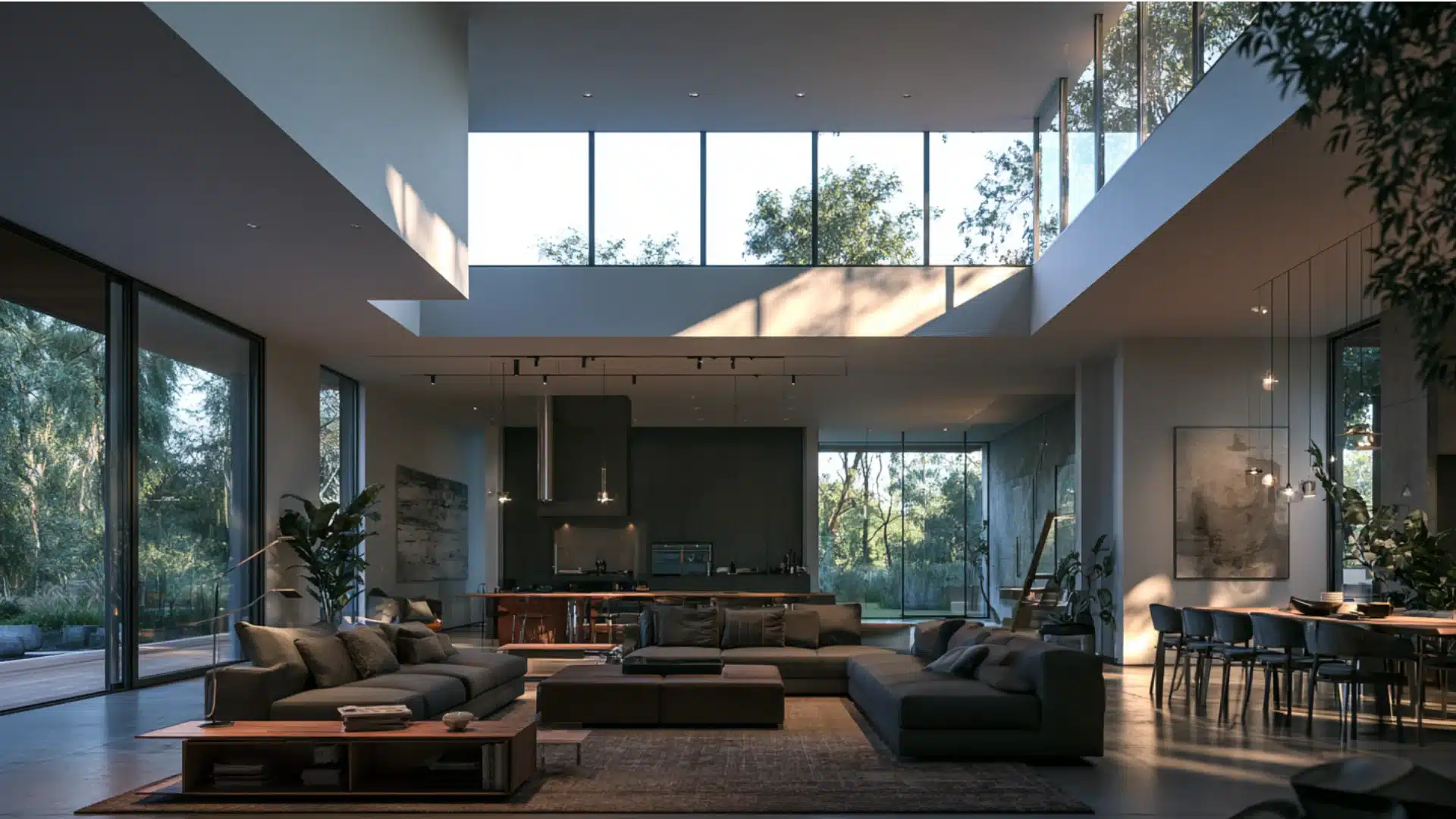
A row of high windows draws the eye upward, making ceilings feel taller and rooms feel bigger.
Architects use them to add rhythm and a clean, modern line to an otherwise plain wall. They pair especially well with:
- Vaulted or sloped ceilings
- Open-plan living areas
- Double-height entryways and stairwells
Natural Ventilation
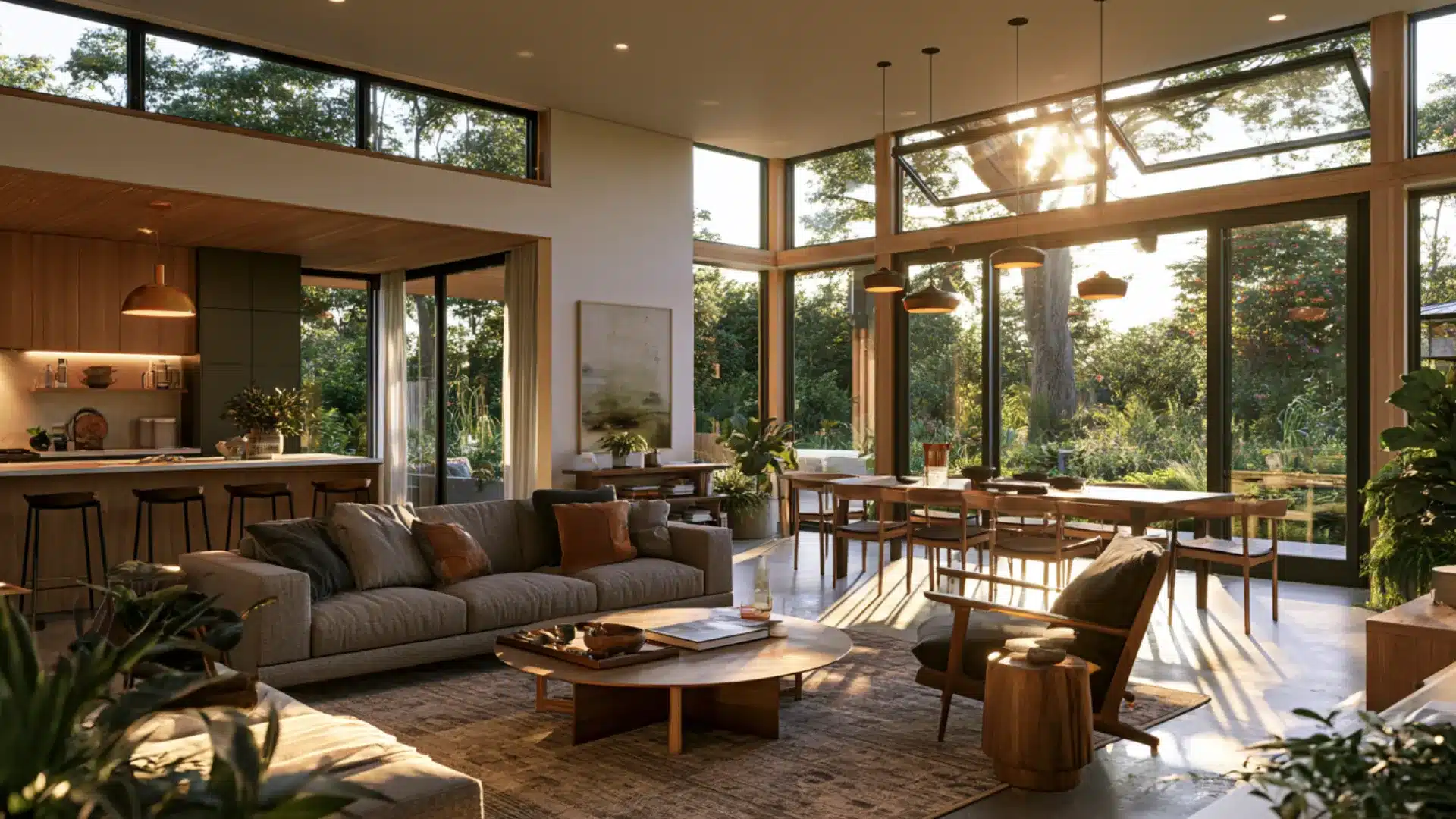
When the windows are operable, they become powerful vents. Hot air rises and escapes through the high openings, pulling cooler air in through lower windows or doors.
This stack effect cools a room without a fan or air conditioner, which is why passive-solar and energy-efficient homes rely so heavily on these windows specifically.
Clerestory Window Design Ideas
Once you know how these windows behave, the fun part is deciding where to put them. The design ideas show how the same high band of glass can work across very different rooms and rooflines.
1. Vaulted and Double-Height Spaces
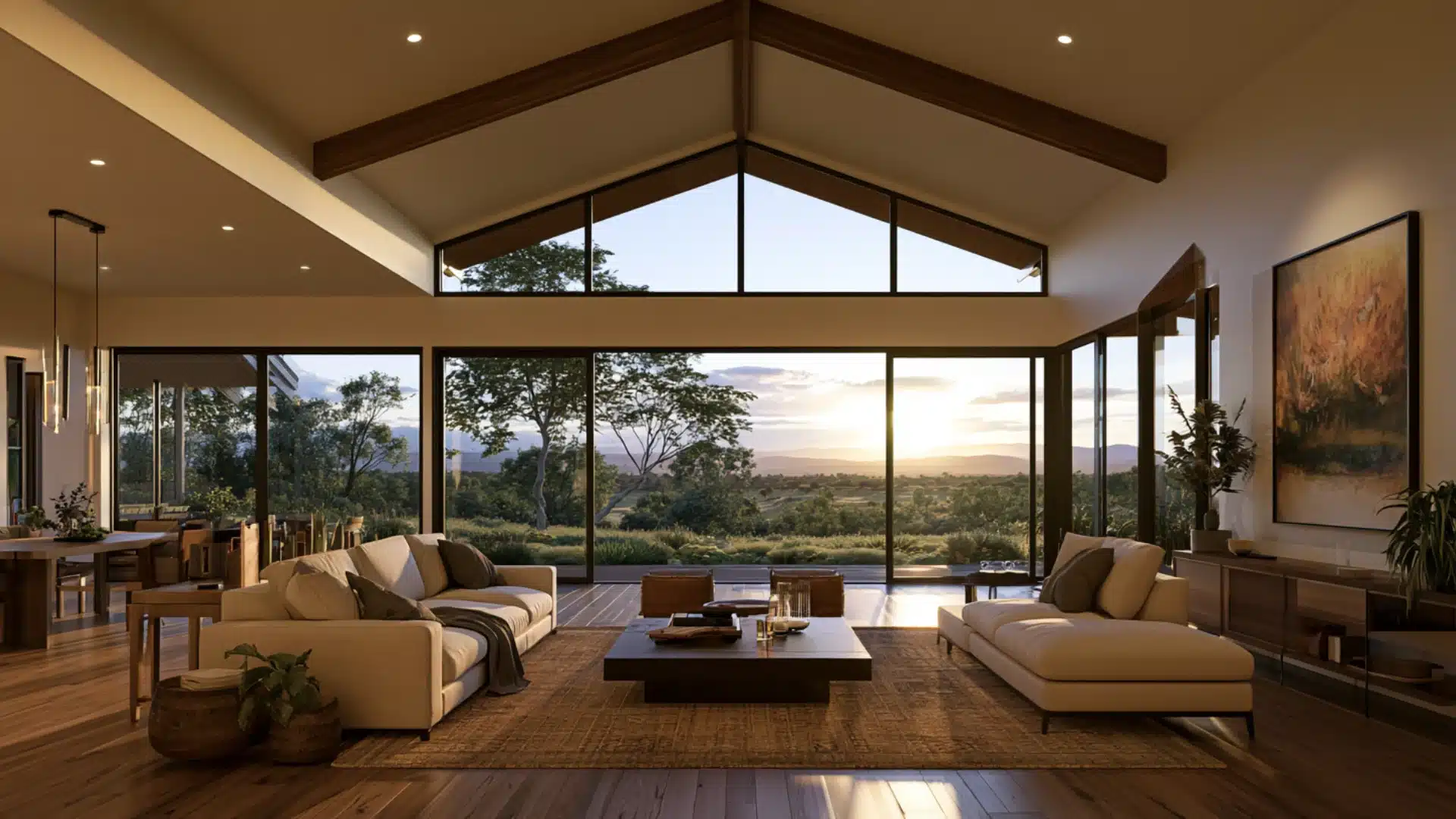
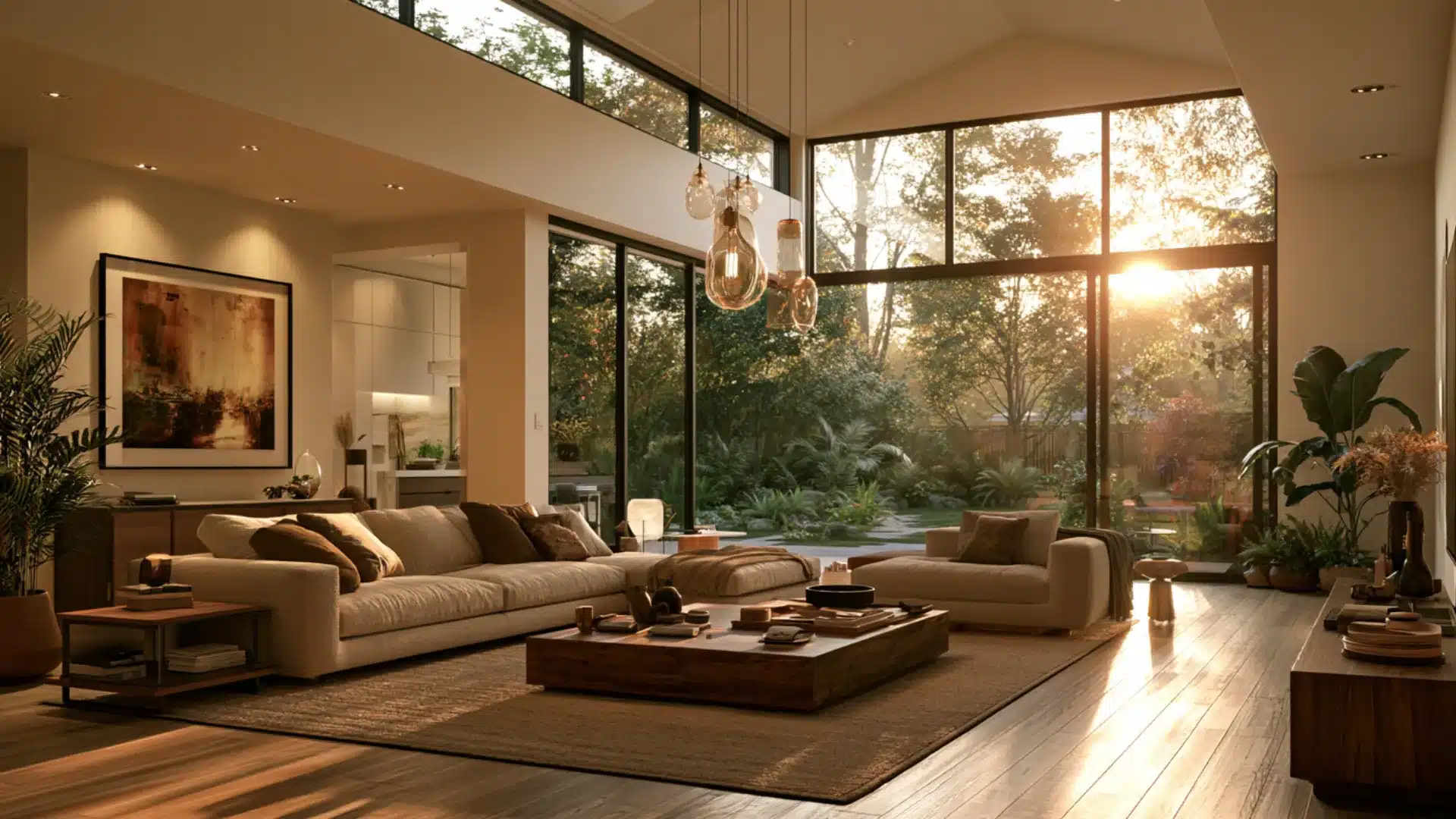
Tall, sloped, and double-height rooms are where these windows shine. Placed near the peak of a vaulted ceiling, they flood the upper volume with light that would otherwise go dark and wasted.
In a double-height living room or entryway, a run of high glass keeps the top half of the space feeling open instead of looming and shadowy.
2. Gable Roof Clerestory Windows
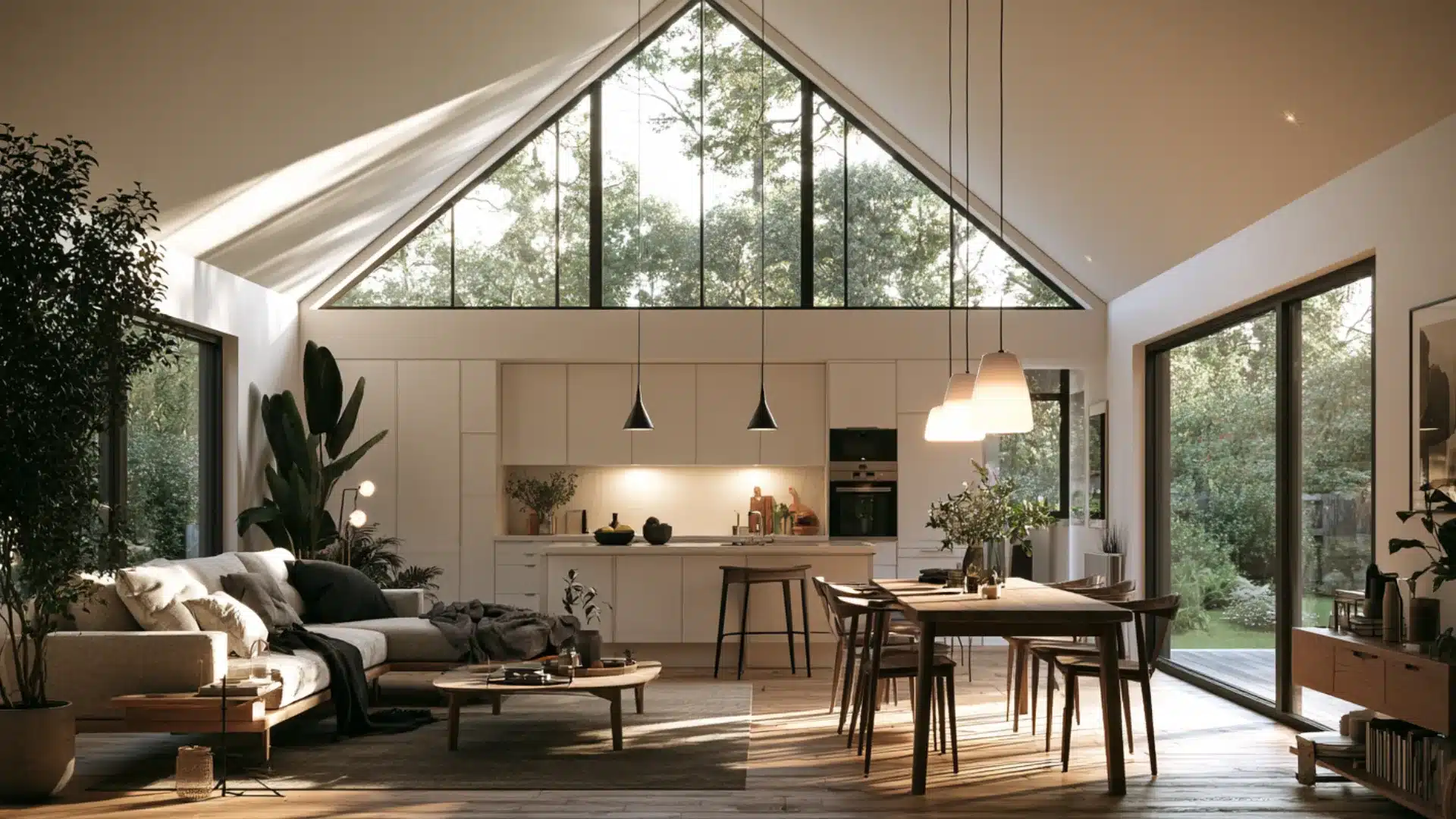
On a gabled roof, the triangular wall under the peak is a natural spot for clerestory glass. You can fit a single large window, a matched pair, or a stepped row that follows the roof slope.
This setup floods the ridge of the room with light and shows off the geometry of the roofline from inside.
It’s a common move in modern farmhouse and Scandinavian-style homes.
3. Clerestory Window Bands
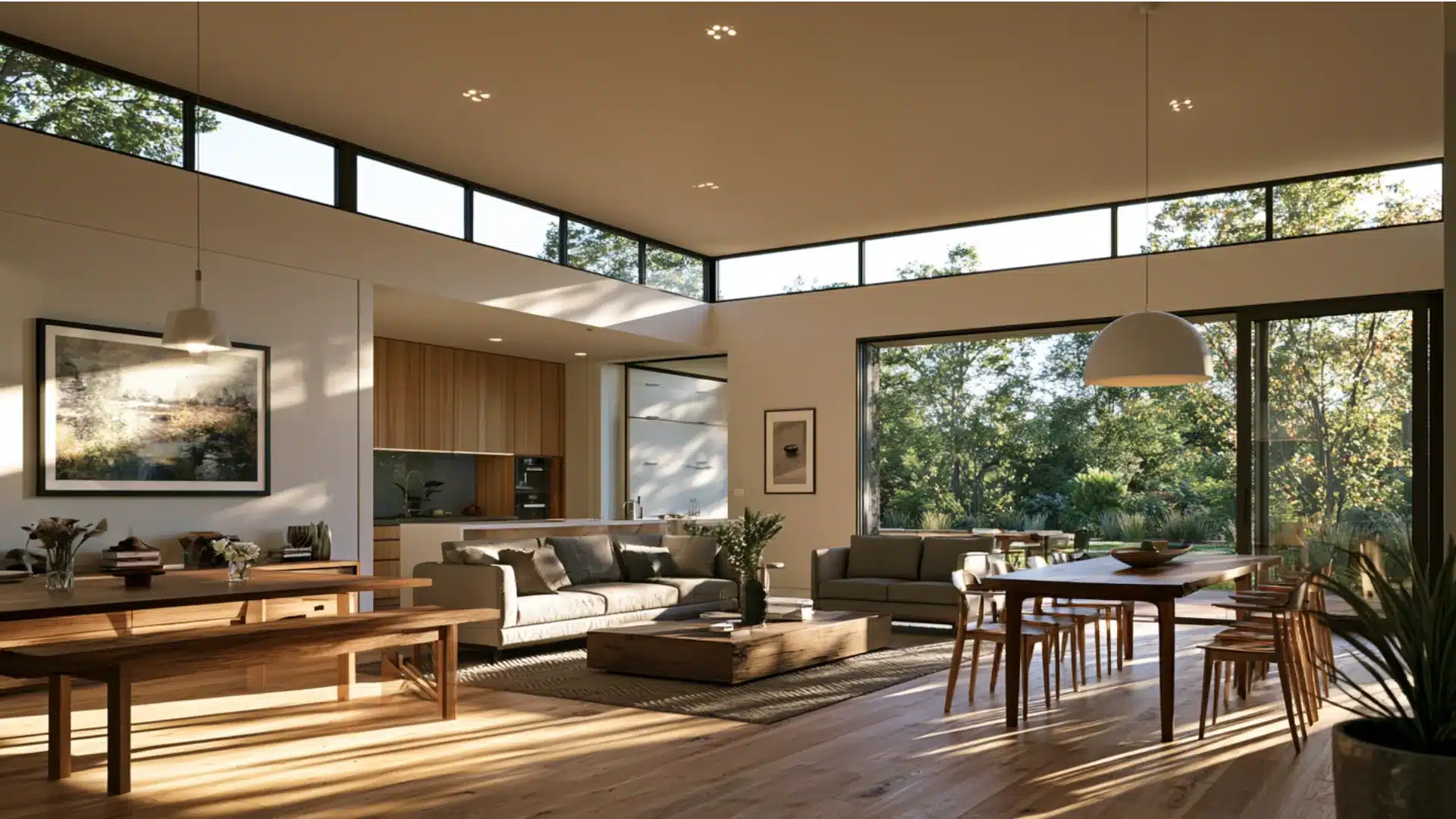
A continuous horizontal band of this type of window is the classic mid-century modern look, and it still feels fresh.
Running the glass wall-to-wall gives even light and a strong horizontal line. It works well:
- Above kitchen cabinets and countertops
- Along a hallway or a long living-room wall
- Wrapping a corner to light two sides of a room at once
4. Clerestory Windows in Bathrooms
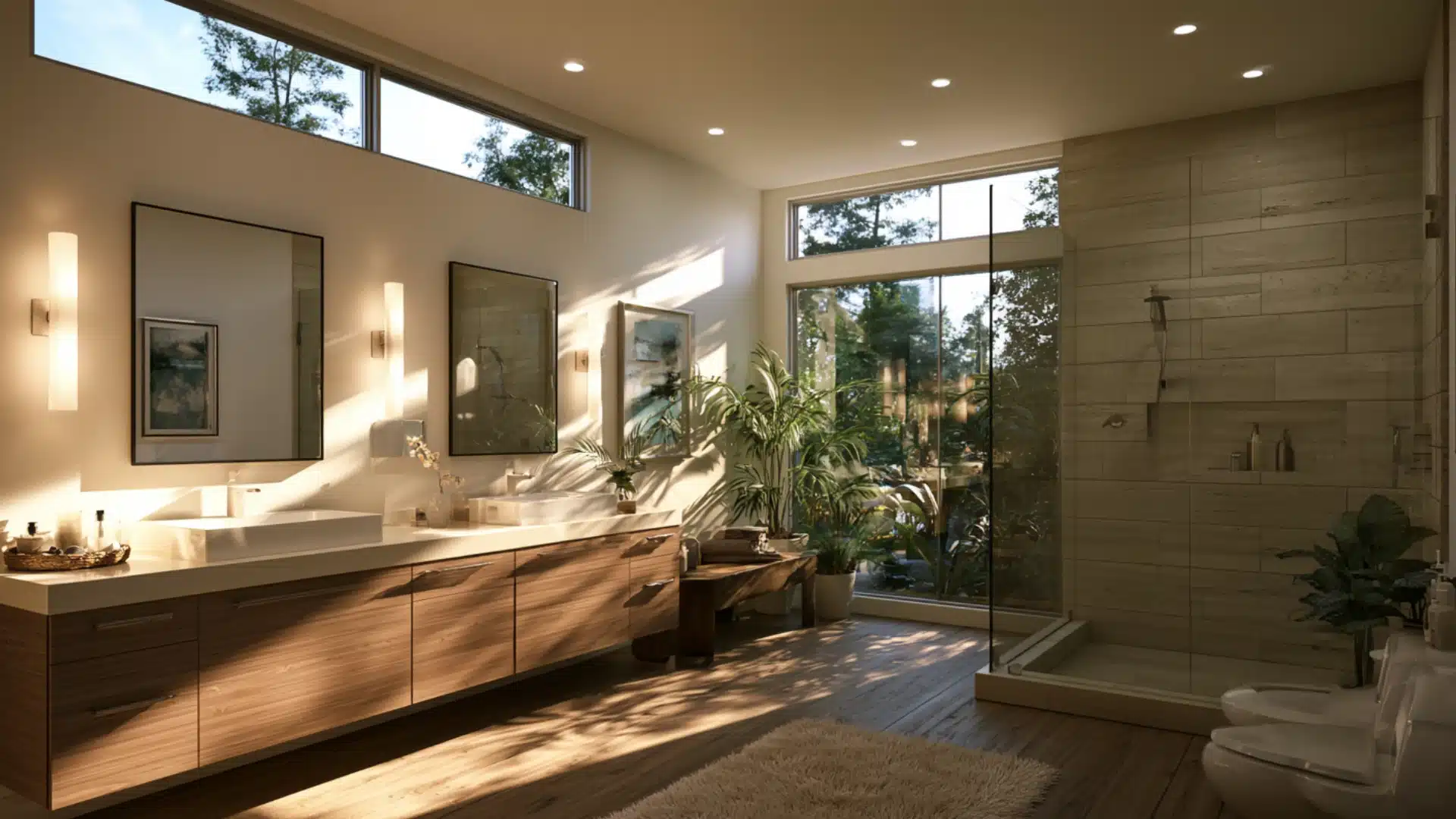
The bathroom might be the best argument for high windows in the whole house.
You get generous daylight and fresh air right where you want it, with zero privacy worries and no need for frosted glass or blinds.
Position one above the vanity mirror or the shower, and the room stays bright and airy while staying completely screened from view.
5. Clerestory Windows in Kitchens
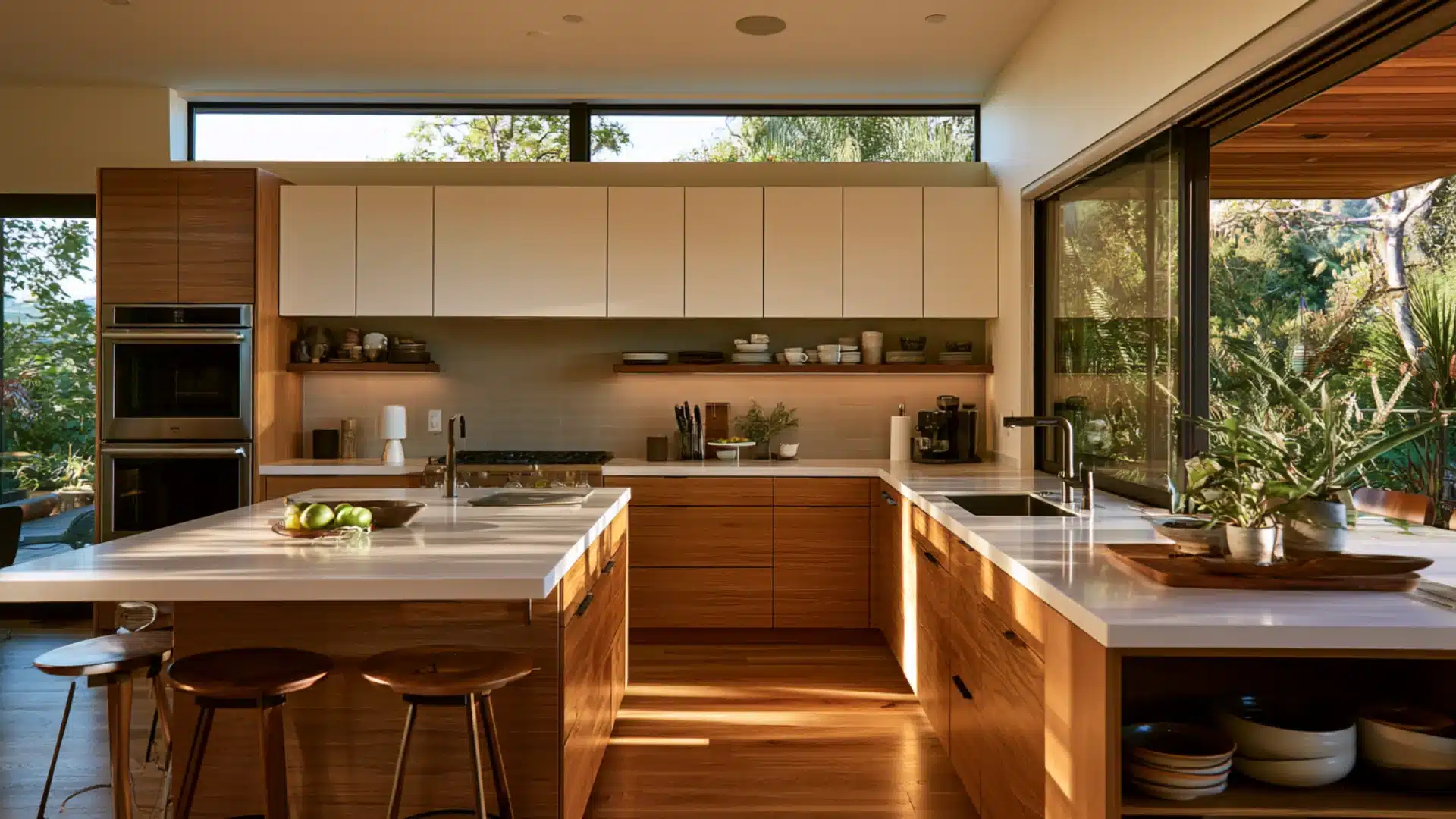
In a kitchen, wall space is precious, and cabinets usually claim it. These windows fix that by sitting above the upper cabinets, so you keep full storage and still get daylight over the counters.
If they open, they also vent cooking heat and steam. A band of high glass above the cabinet line is a clean, practical way to brighten a work-heavy room.
6. Clerestory Windows in Stairwells and Hallways

The stairway and hall are generally the most neglected portions of the building, as well as the darkest.
Add a clerestory window to a stairway, and it floods the space with daylight, making the stairs safer to use.
In the case of an interior hall with no windows, a high window in the roofline of an adjacent wall might provide the only daylight.
Clerestory Window vs. Other Windows
These are easy to confuse with a couple of other high or overhead window types. Here’s how they compare, so you know which one actually fits your project.
Clerestory vs. Transom Windows
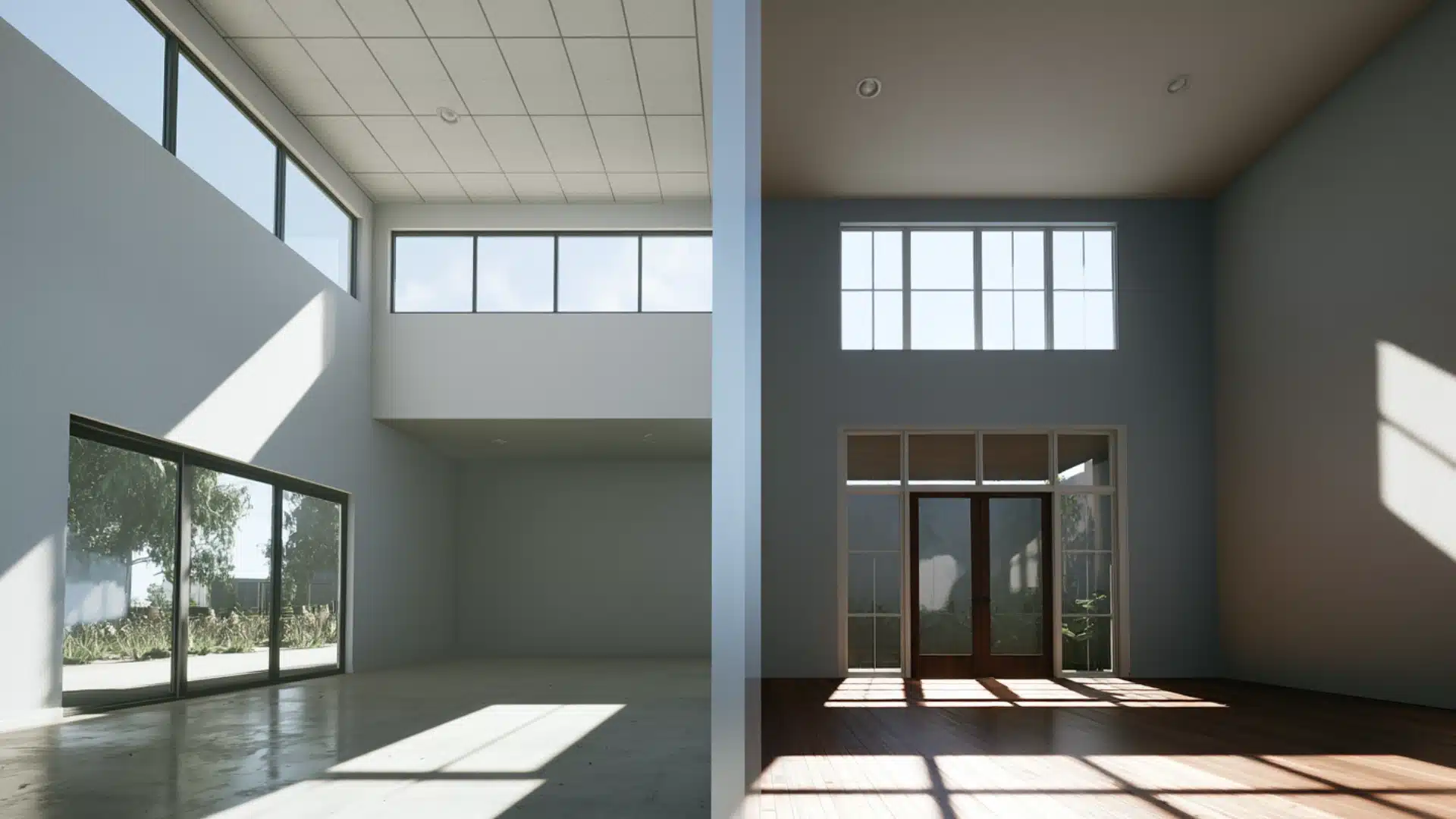
Both sit high on a wall, but the difference is position and purpose. A transom window sits directly above a door or another window, often as a decorative topper or a way to borrow light between rooms.
A clerestory sits high on an open stretch of wall near the roofline, works on its own, and is built mainly to pull daylight into the space. Transoms decorate; clerestories illuminate.
Clerestory vs. Skylights
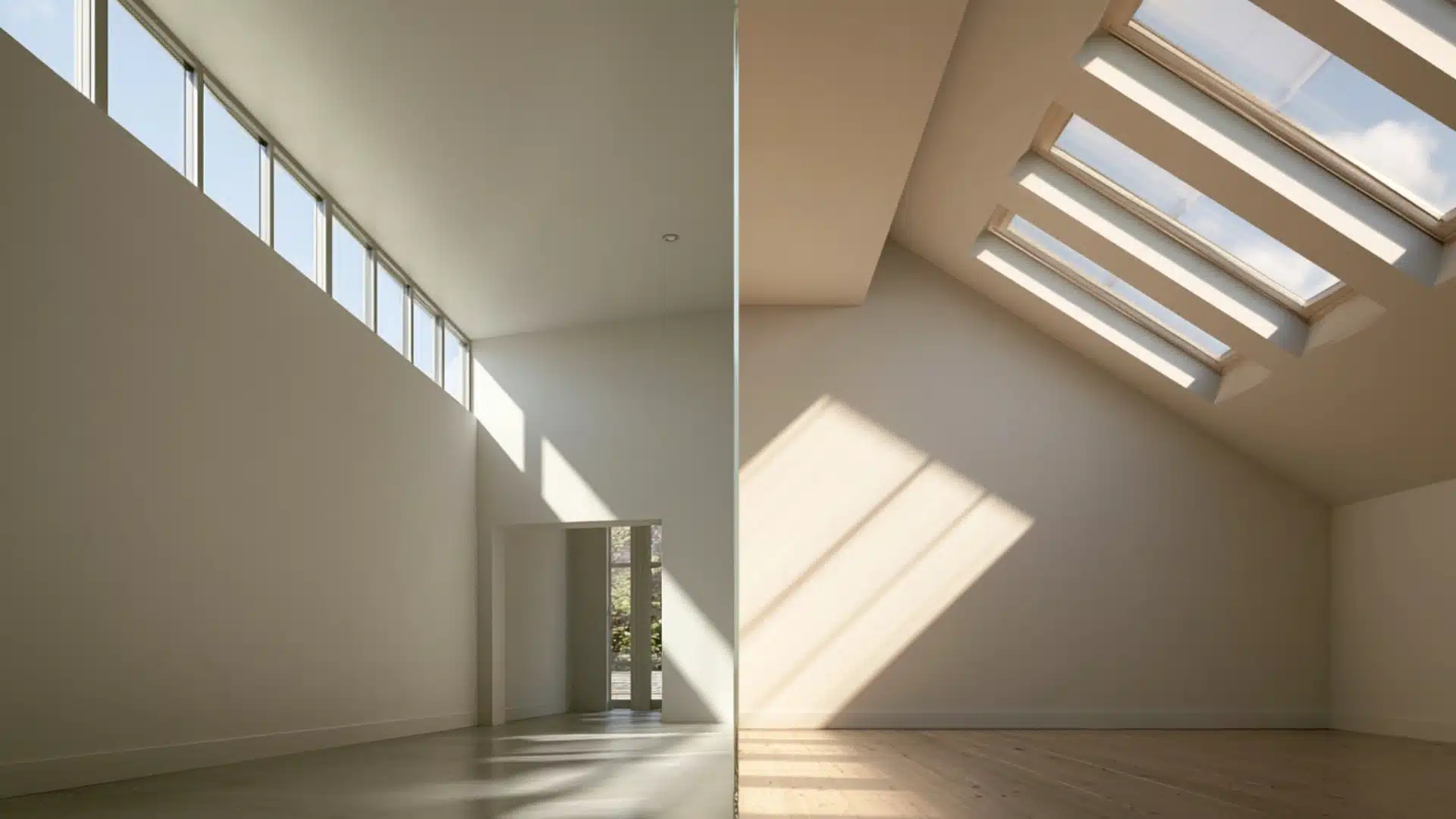
Skylights sit in the roof and face straight up, while clerestories sit in a vertical wall and face outward.
Skylights deliver more intense overhead light but are prone to leaks, heat gain, and glare, and they’re harder to clean or shade.
These windows give gentler, more controllable light and are usually easier to open, screen, and maintain over time.
Wrapping Up
Clerestory windows prove that some of the best design ideas are also the oldest.
From ancient temples to mid-century homes, that high band of glass has always done the same quiet work: more light, more privacy, and more usable space, all at once.
A bright bathroom, a stairwell that finally gets some light, a wall of glass under a gabled peak there’s a clerestory setup for most of these.
Take a look at where your home goes dark by mid-afternoon. That’s probably your best spot for one.
Frequently Asked Questions (FAQs)
1. Are Clerestory Windows Suitable for Small Rooms?
Yes. Sitting high on the wall, they brighten a small room and make it feel taller without using up furniture space.
2. Can Clerestory Windows be Added to an Existing Home?
Often, yes. It usually means opening an upper wall or raising the roofline, easiest during a renovation. Ask an architect first.
3. Do Clerestory Windows Need Blinds or Shades?
Not for privacy, since they sit above eye level. You may still want shades for heat or glare on sun-facing windows, usually motorized since the glass is out of reach.
4. Can Clerestory Windows Cause Too Much Heat or Glare?
Yes, if they face south or west and catch strong afternoon sun. North-facing windows give softer light. Overhangs, low-E glass, and shades all help.
5. What Type of Glass is Best for Clerestory Windows?
Low-E, double-glazed glass is the usual pick, cutting heat loss and heat gain. For sun-heavy rooms, tinted or solar-control glass reduces glare and fading.