Want a home exterior that looks modern and never goes out of style? Scandinavian house design offers exactly that balance.
Known for its simplicity and function, a Scandinavian house exterior blends clean lines, natural textures, and soft, calming colors to create spaces that feel both fresh and inviting.
A Scandinavian house focuses on what truly matters, removing excess while enhancing beauty and practicality.
If you are updating your current space or planning a new build, these ideas can help shape an exterior that feels peaceful, durable, and effortlessly stylish for years to come.
What Defines Scandinavian House Design?
The house design focuses on simplicity, light, and comfort.
A minimalist Scandinavian house exterior follows the same idea by removing clutter and highlighting only essential design elements.
Large windows bring in natural light, which is important during long, dark Nordic winters.
Walls are typically white, gray, or beige to make rooms feel bright and open. Natural materials define the look.
Light-colored woods like pine and birch are used for floors and furniture. Stone, leather, and wool add warmth and texture.
The color palette stays neutral with occasional soft blues or greens for accent.
Despite being minimal, Scandinavian homes feel cozy through a concept called hygge. Soft blankets, warm lighting, candles, and comfortable textiles create inviting spaces.
Scandinavian House Exterior Design Ideas
This is one of those designs that emphasizes minimalist beauty through clean lines.
Natural materials such as wood and stone, neutral color palettes, and functional architecture that fosters a connection between the home and nature.
1. Classic White Scandinavian Wooden House
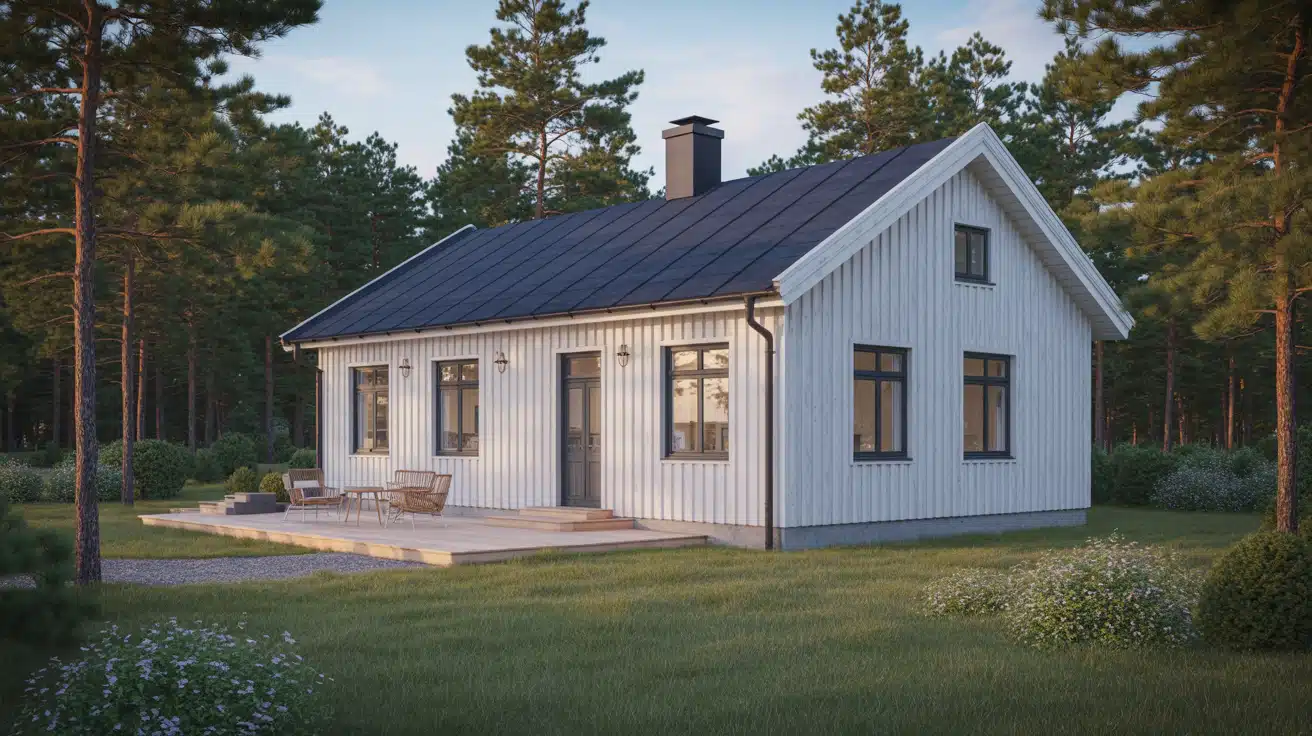
Traditional painted timber creates a bright, welcoming appearance that reflects maximum light.
White surfaces provide clean contrast against natural surroundings and work with any landscape.
Paired with dark roofing and window frames, this timeless style suits countryside and suburban settings.
2. Matte Black Modern Nordic Cabin
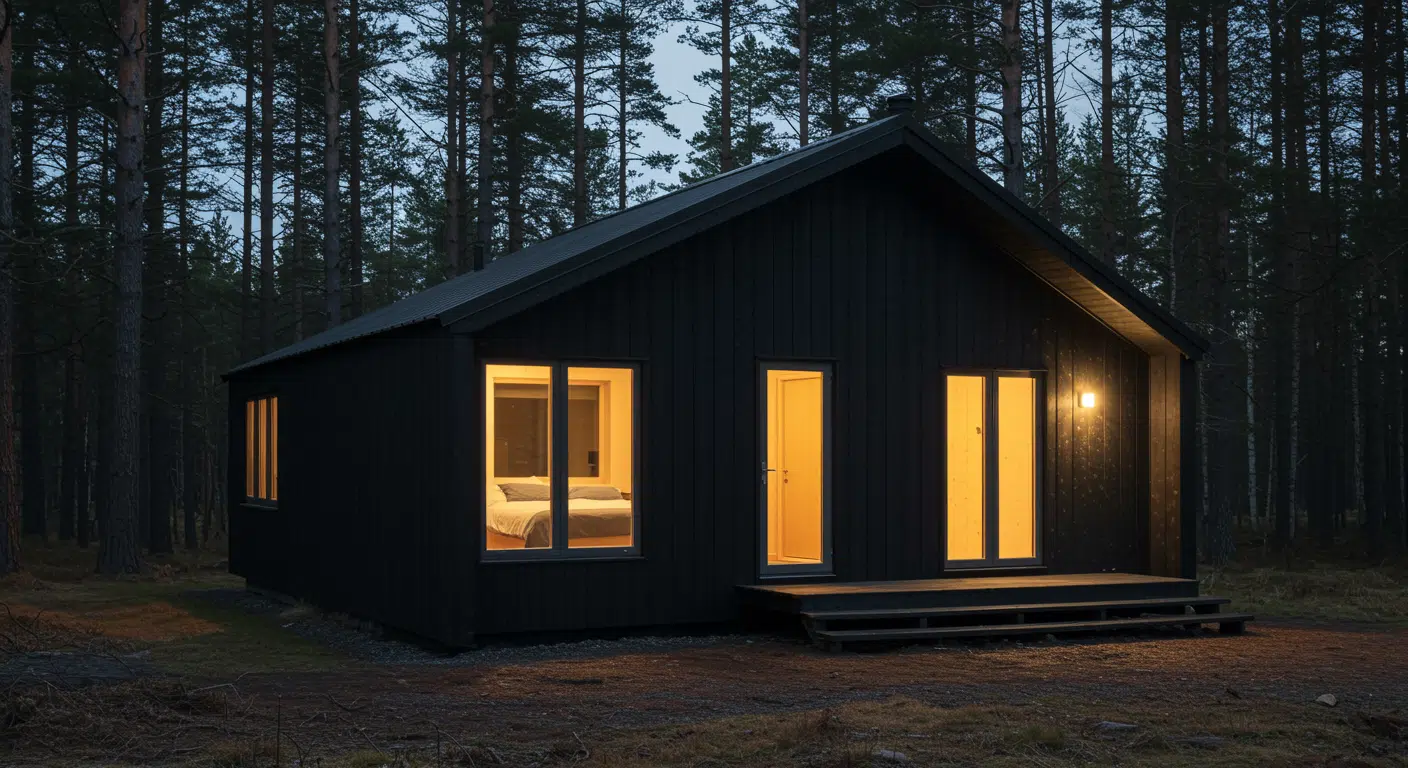
Contemporary dark finishes absorb sunlight and create a dramatic visual impact against natural landscapes.
The non-reflective surface highlights architectural lines while minimizing glare. Works exceptionally well in forested areas where the structure stands bold against greenery.
Black exteriors also age gracefully, hiding weathering and requiring less frequent repainting than lighter colors.
3. Light Gray Timber-Clad Façade
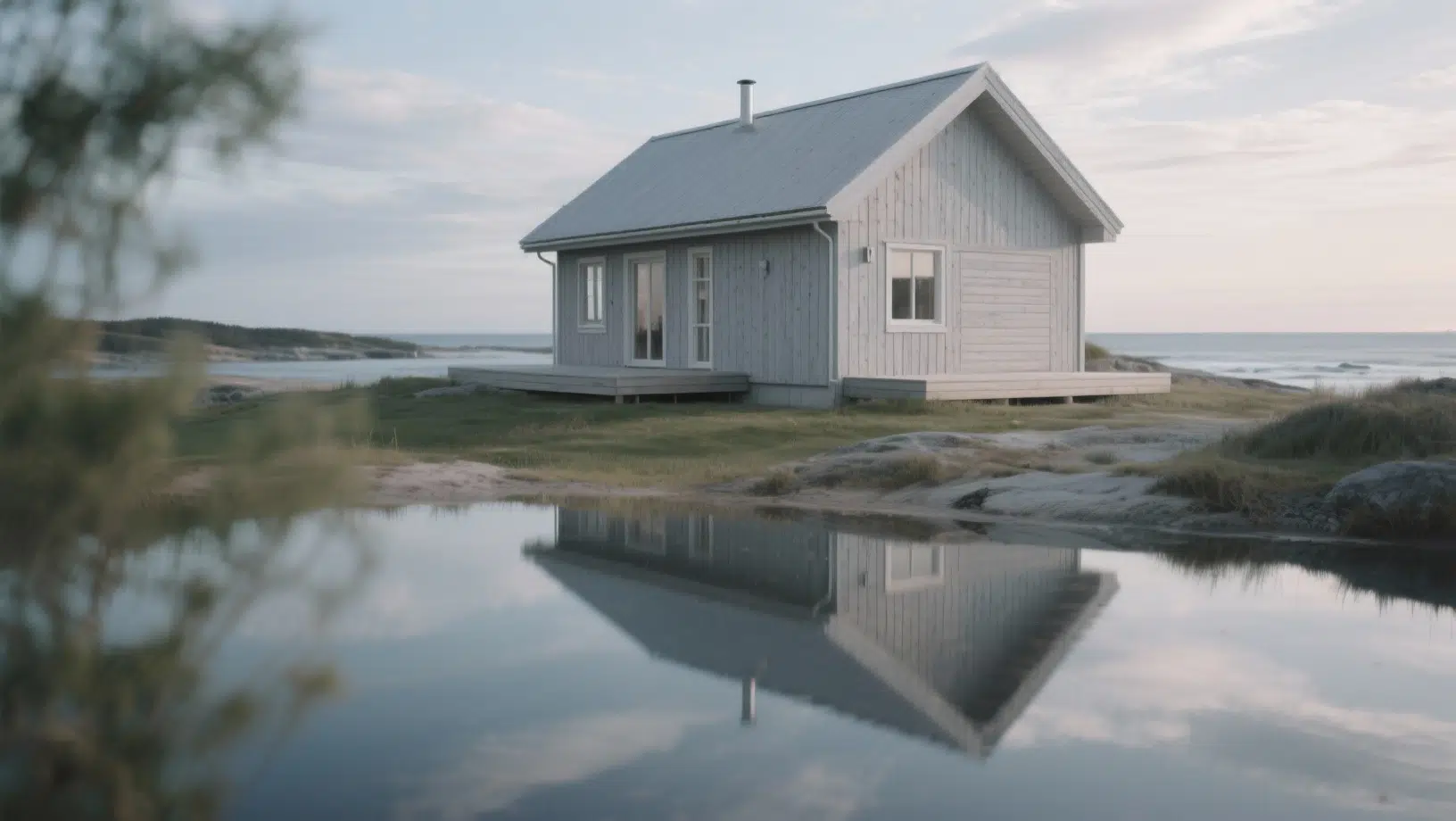
Soft neutral tones provide versatile appeal without stark contrast. Gray weathers beautifully over time, developing natural character.
This middle-ground color suits various landscapes while maintaining clean Scandinavian simplicity.
The shade works particularly well in coastal regions where it complements both water and sky.
4. Two-Tone White and Natural Wood Exterior
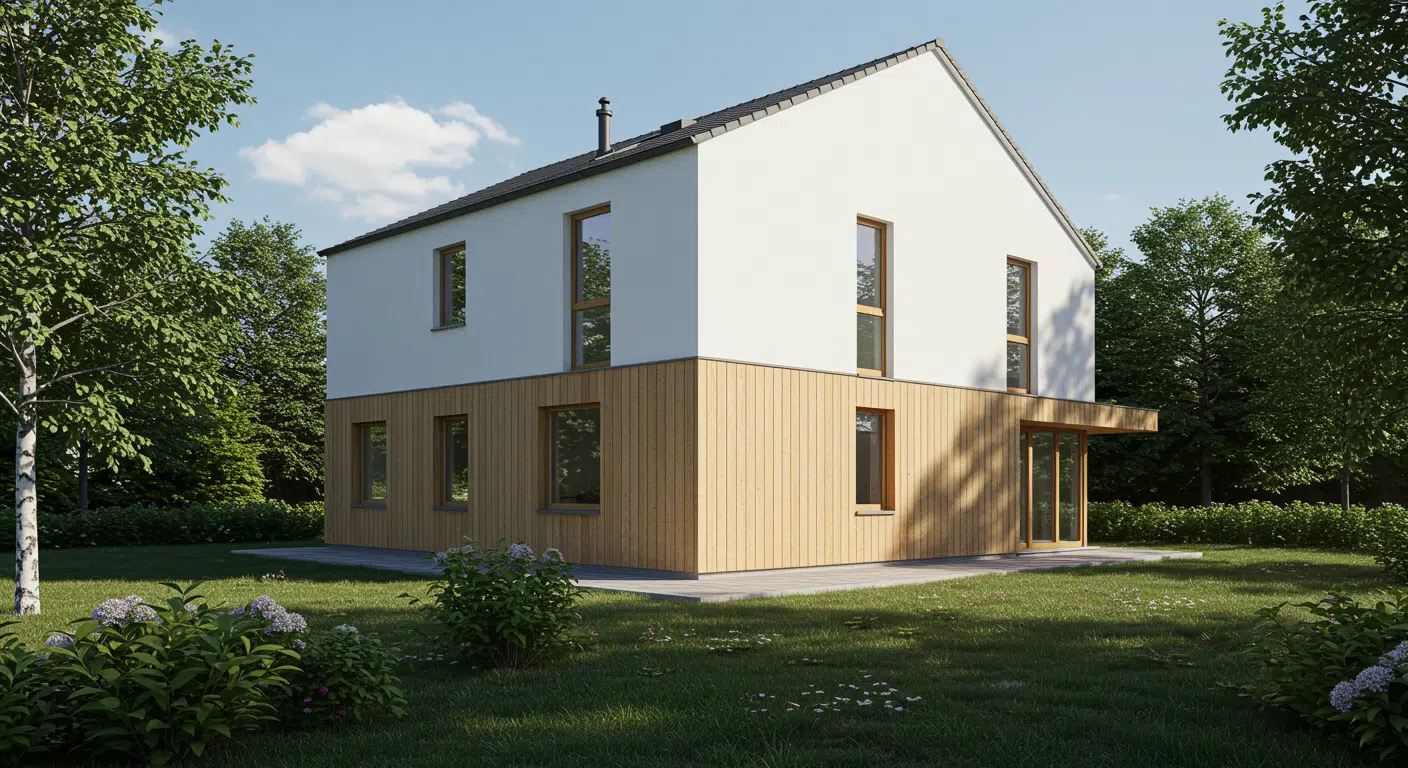
Combining painted and unpainted surfaces adds visual interest through material contrast. Upper levels in white keep the profile light while natural wood bases ground the structure.
This approach balances brightness with organic warmth.
The mixed finish creates depth without requiring additional decorative elements.
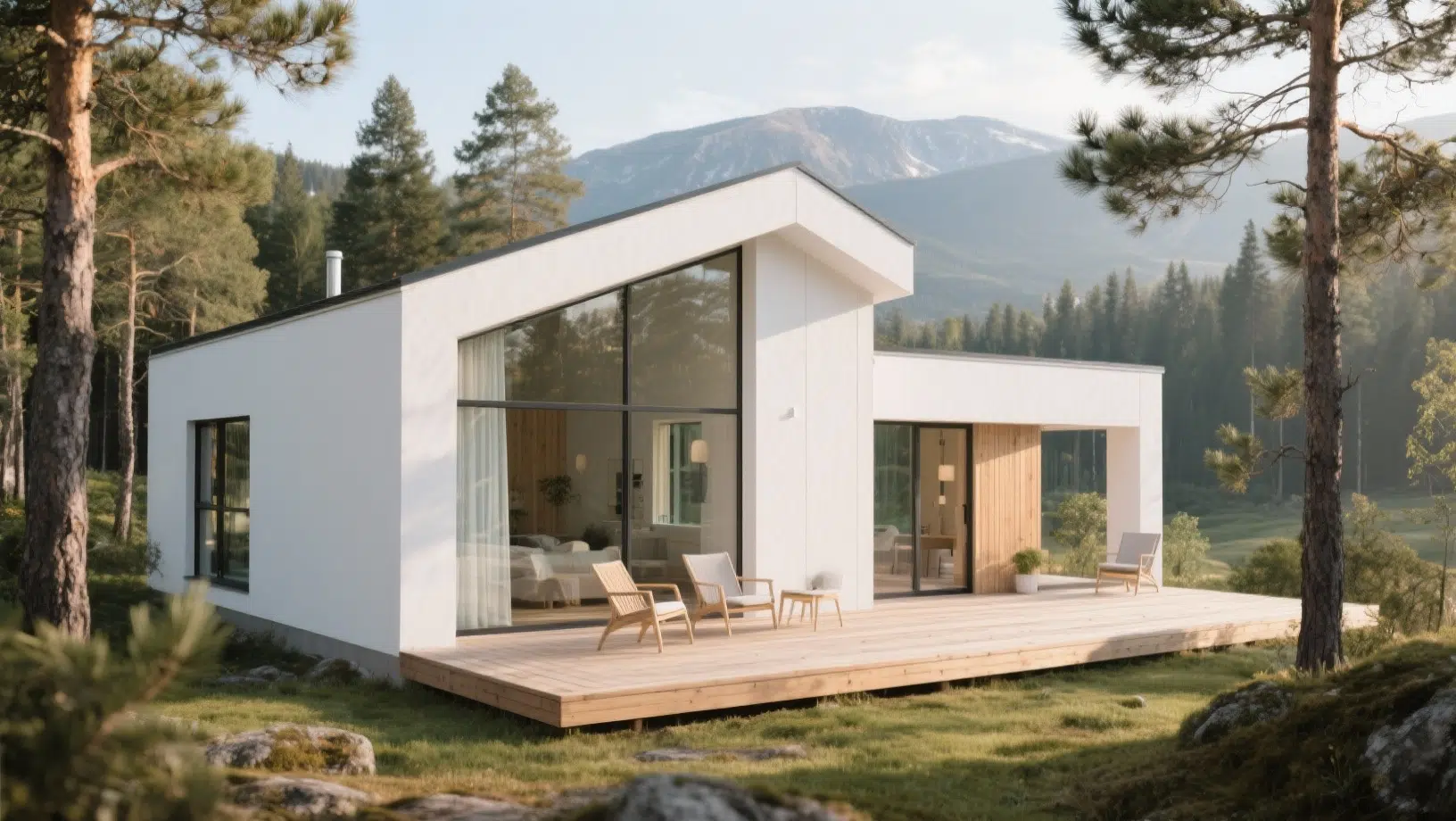
5. Minimalist Glass-and-Wood House in Forest Setting
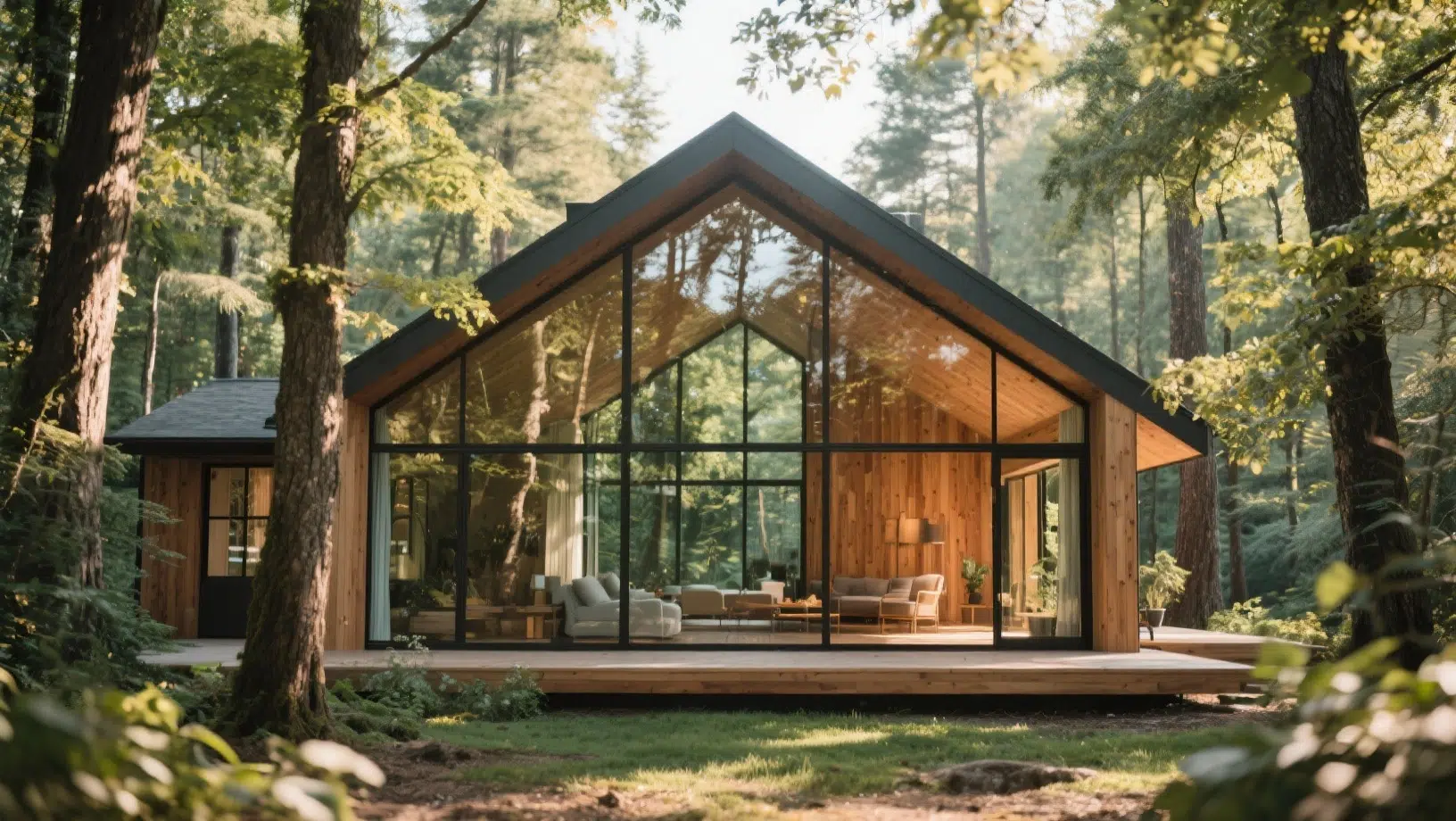
Transparent walls dissolve boundaries between interior and nature.
Wooden structural elements provide warmth against expansive glazing.
The design maximizes views while maintaining privacy through strategic placement. This approach reflects the simplicity and openness often seen in modern Scandinavian house design.
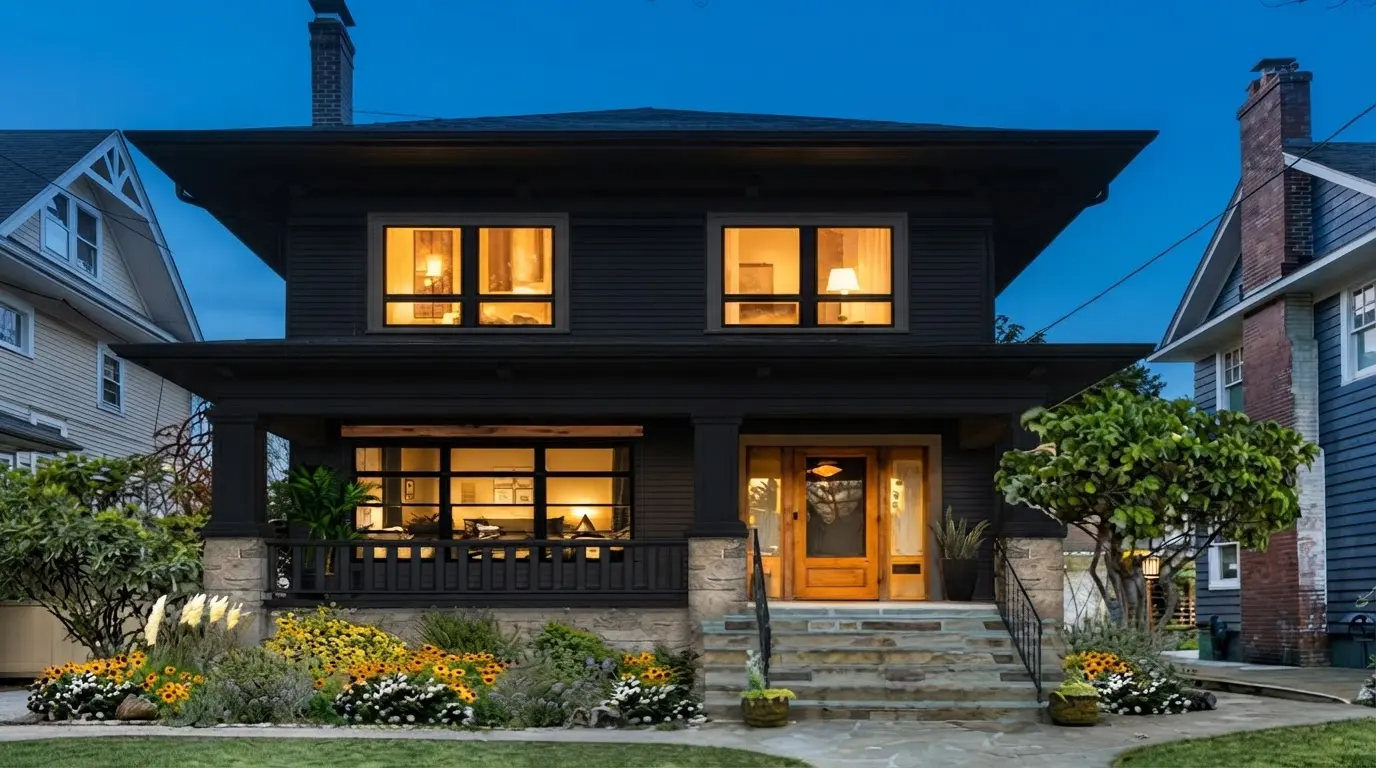
6. Black Vertical Timber Cladding with Warm Lighting
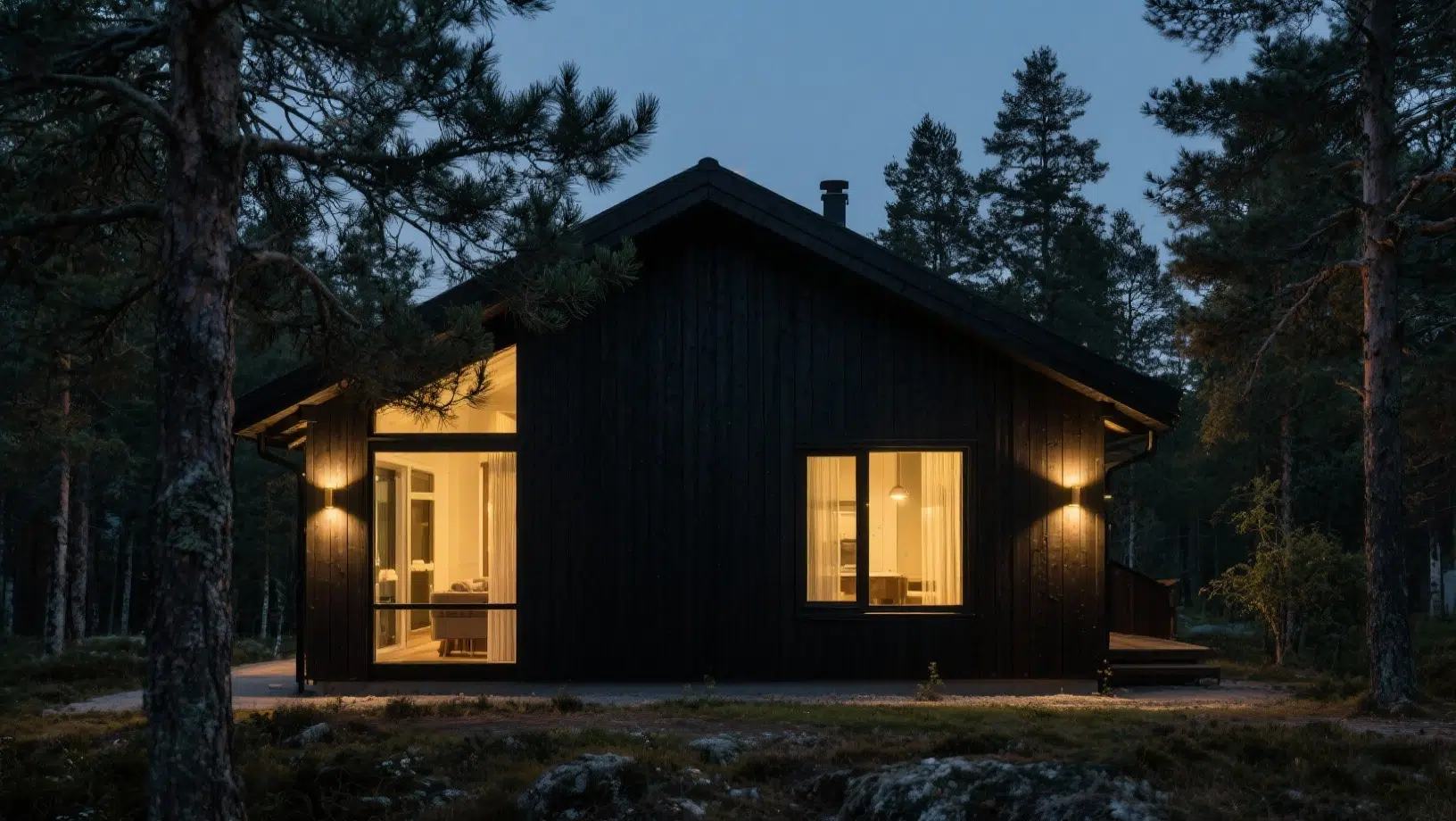
Upright boards create strong vertical lines that draw the eye upward.
Evening illumination transforms the dark exterior into a glowing focal point. The contrast between shadow and light enhances architectural depth.
Vertical orientation also helps water run off more efficiently, protecting the wood.
7. Traditional Red Swedish Countryside Home
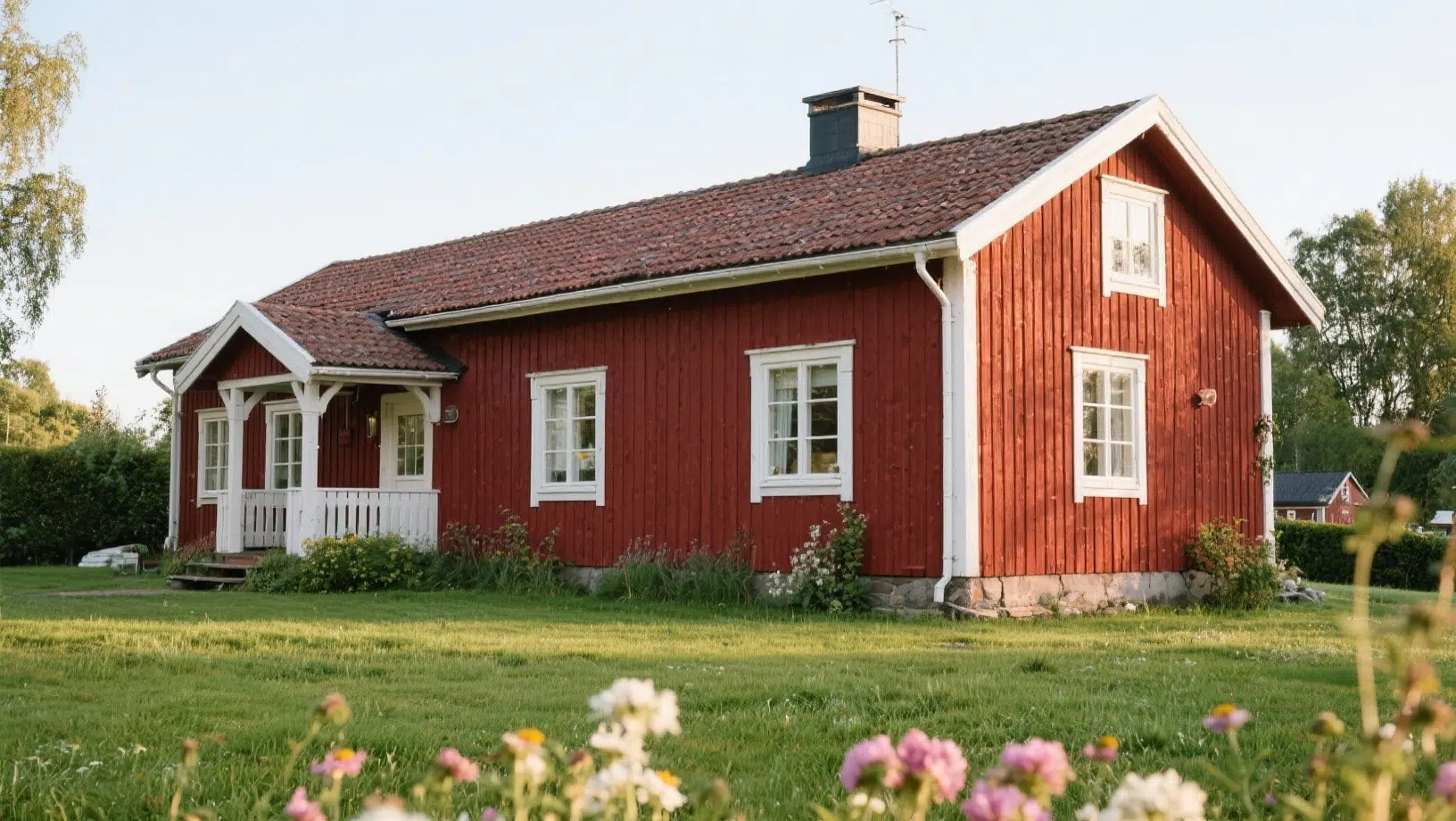
Falun red paint carries centuries of Swedish building heritage.
The rust tone comes from copper mining byproducts that naturally preserve wood.
White trim around windows and corners completes the iconic rural look. This historic color combination defines the Swedish countryside and rural villages.
8. Stone Base with Wooden Upper Levels
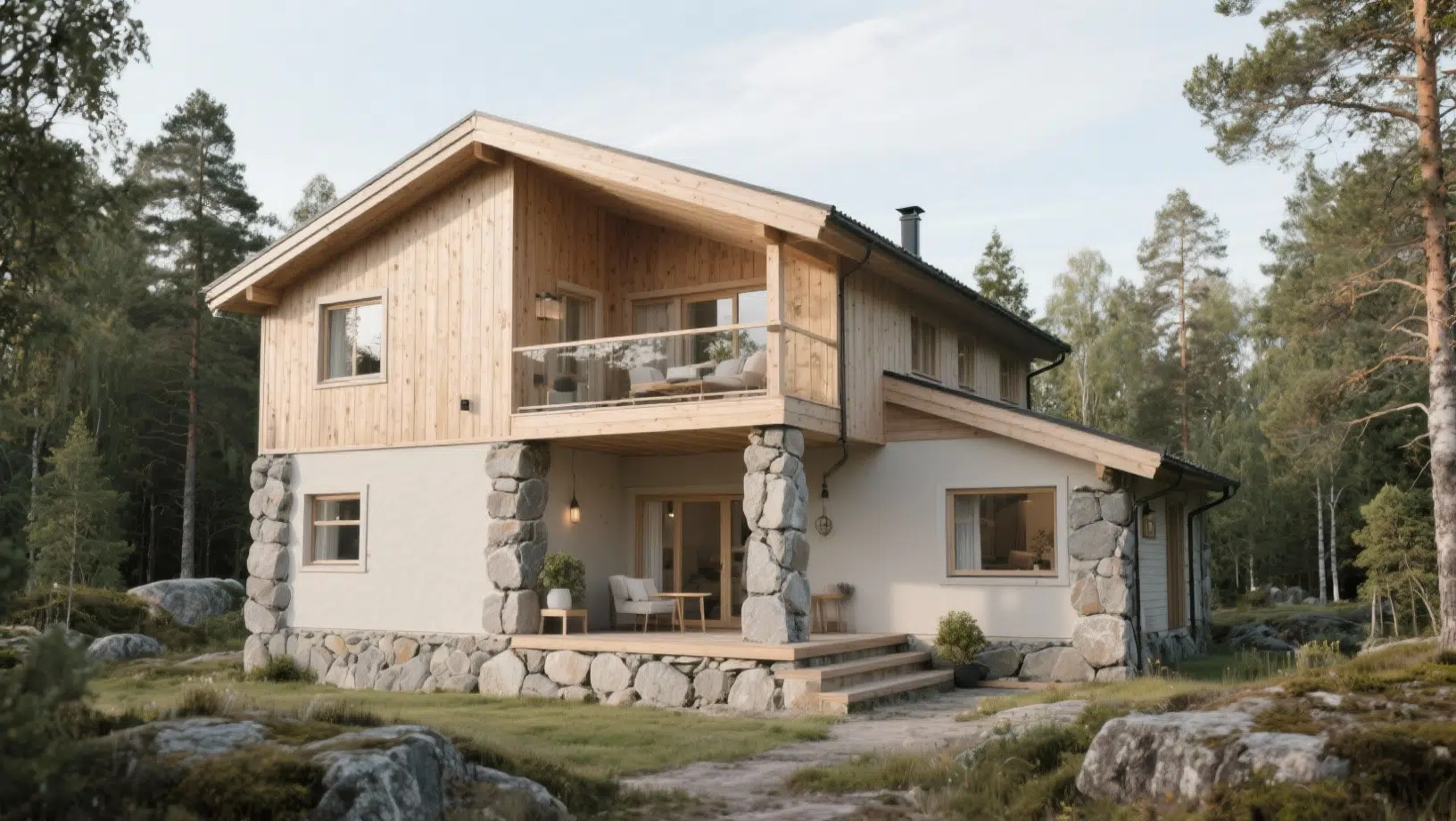
Lower masonry provides durability and weather resistance at ground level. Timber construction above reduces weight and offers better insulation.
This combination respects traditional building methods while creating textural variety.
The stone foundation also protects wooden elements from ground moisture and rot.
9. Flat-Roof Scandinavian Modern Villa
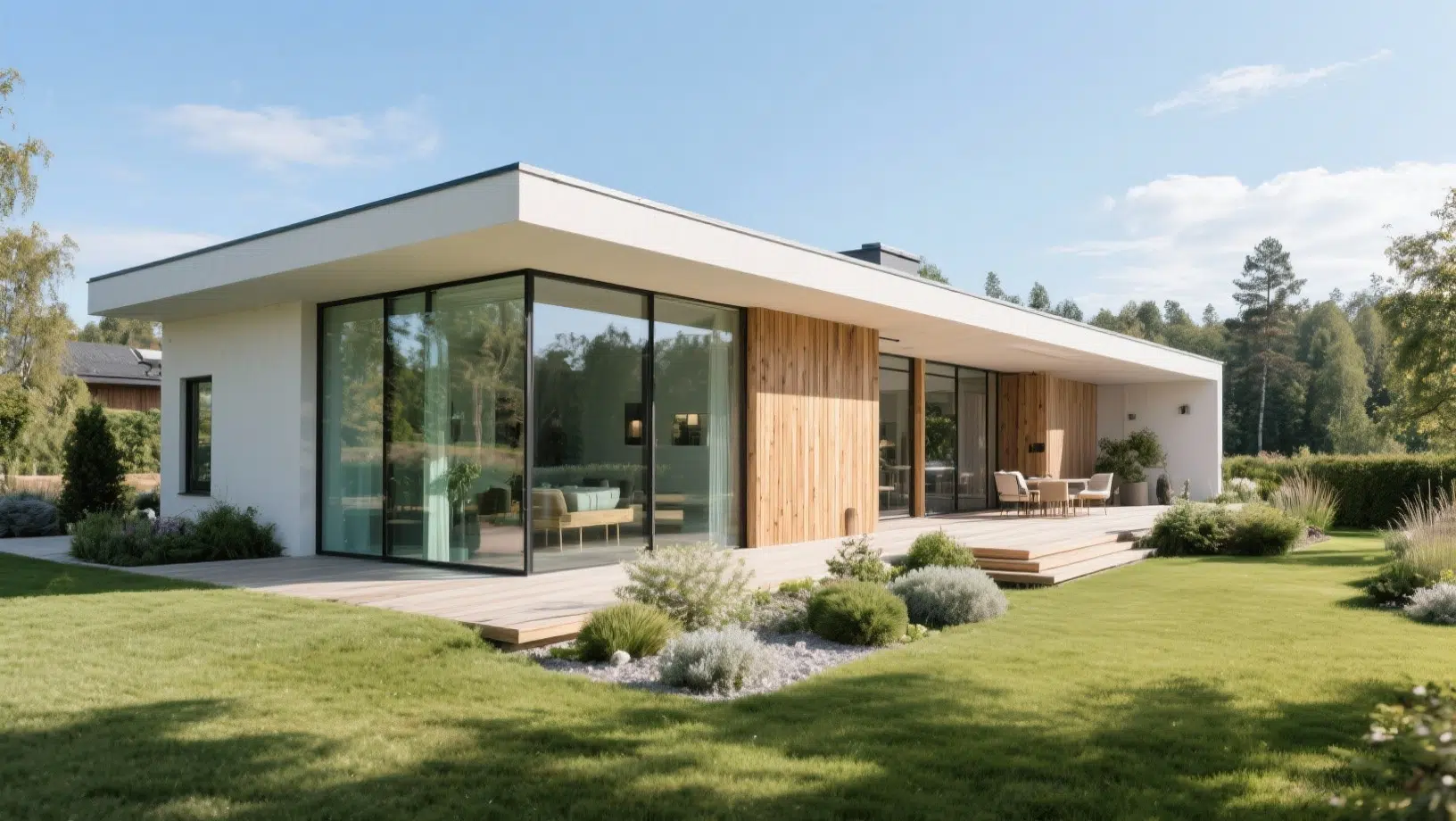
Horizontal rooflines emphasize width and create contemporary profiles.
The minimal pitch requires quality waterproofing but allows rooftop terraces.
This style suits warmer Nordic regions with lower snowfall. Clean geometric forms give these homes a distinctly modern, international appearance.
10. Sloped Metal Roof with Wood Panel Siding
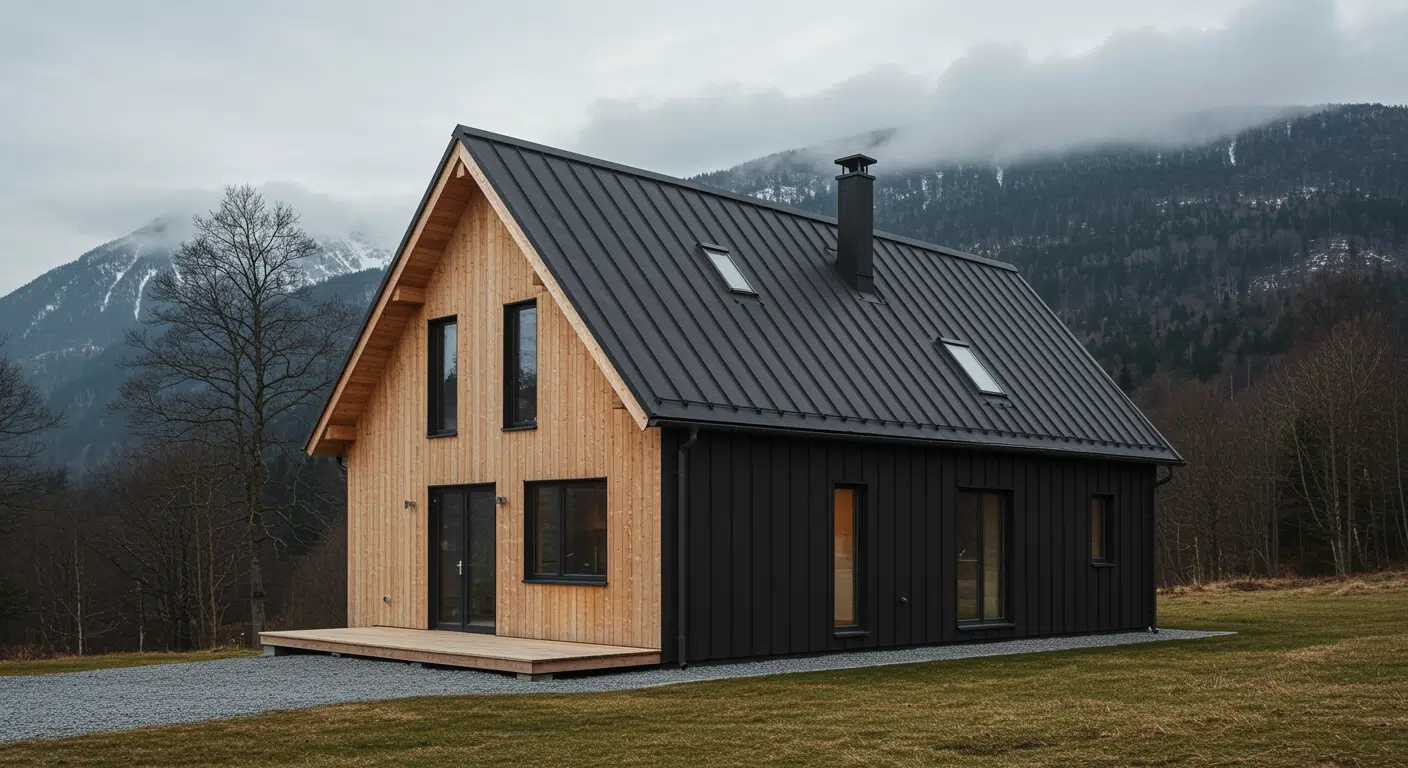
Angled metal sheds precipitation efficiently while lasting decades without maintenance. Wooden walls beneath provide thermal mass and natural beauty.
Many homeowners prefer this Scandinavian house design style because it combines durability with natural visual warmth
Metal roofing in dark colors complements nearly any wood tone or paint color.
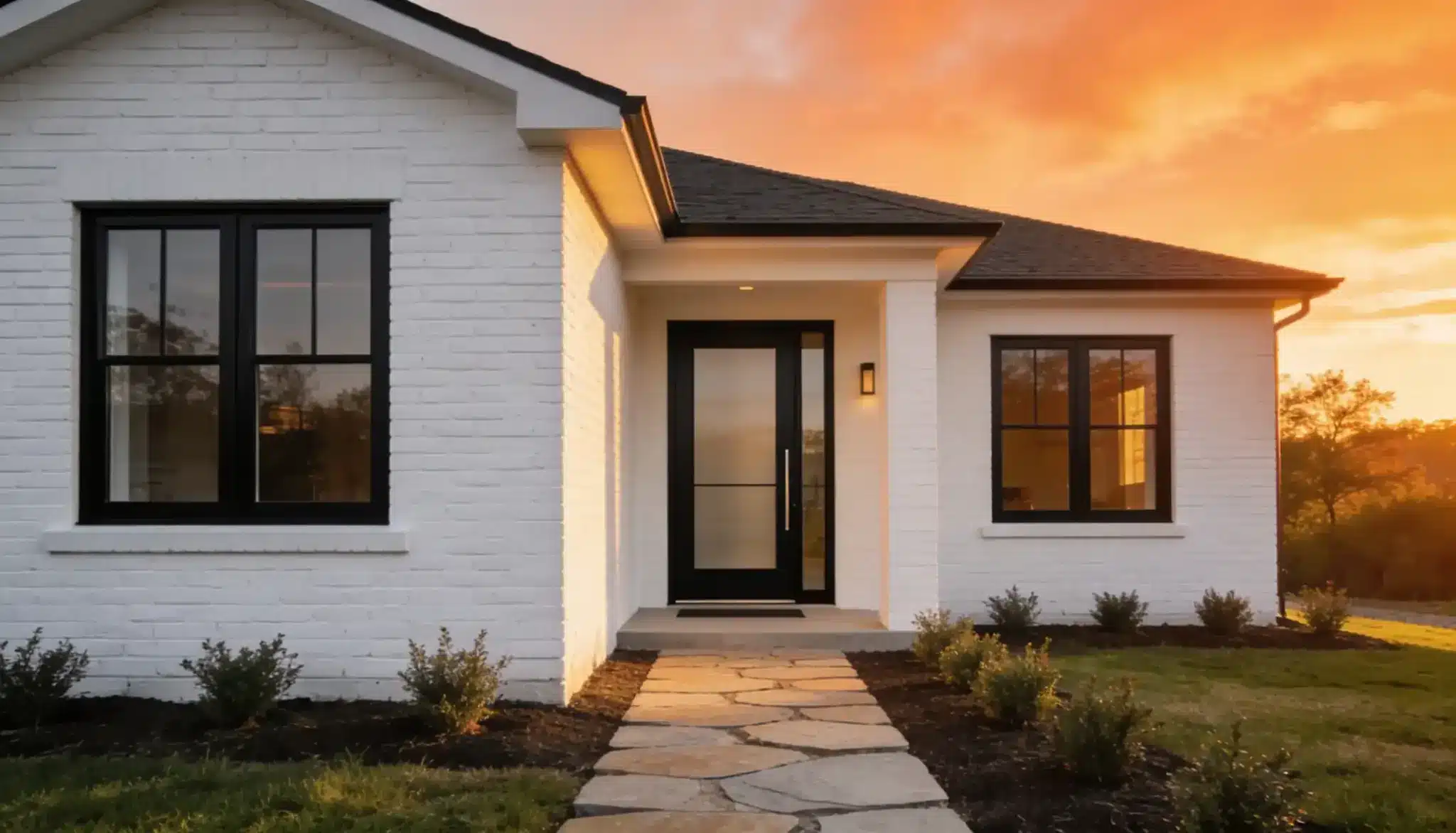
11. Scandinavian Farmhouse with Whitewashed Brick
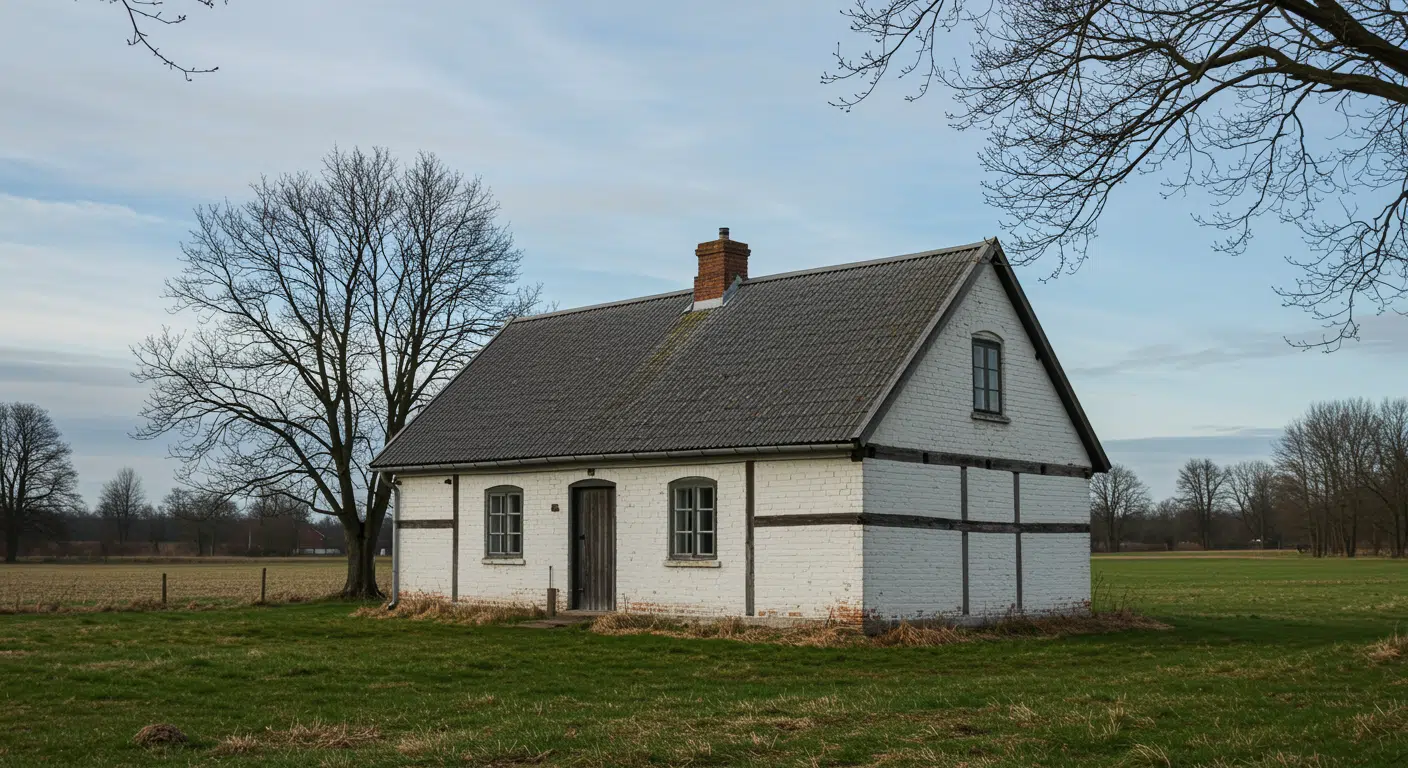
Painted masonry offers solidity and fire resistance in rural settings. The textured surface adds depth while maintaining light reflection.
This approach suits agricultural areas where stone and brick historically dominated. Whitewashed brick provides excellent thermal mass for temperature regulation.
12. Dark Gray Façade with Wooden Entryway
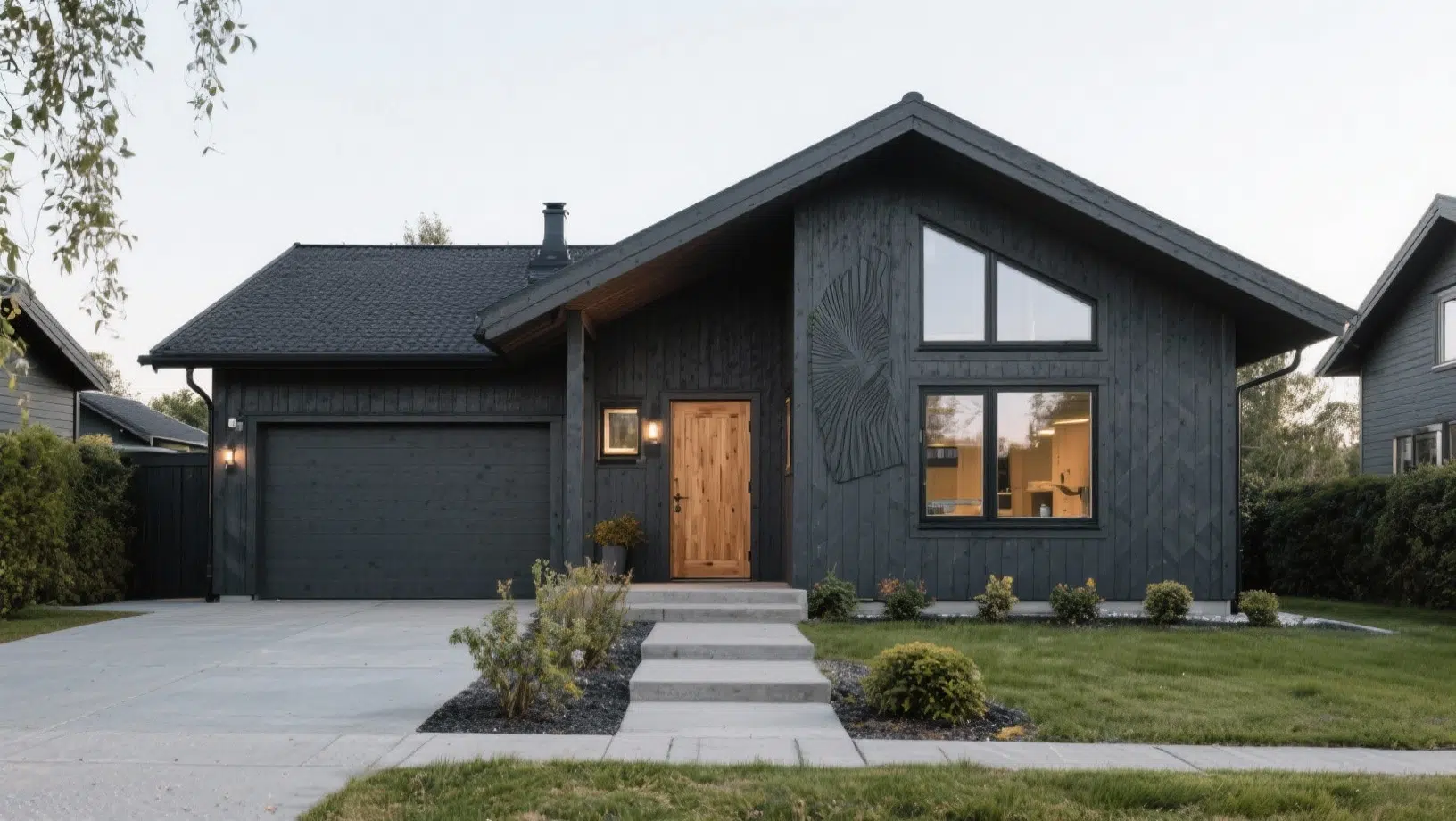
Charcoal walls recede visually while natural wood entries create welcoming focal points.
The contrast guides visitors toward the entrance naturally. This strategy works well for homes with simple rectangular forms.
Natural wood warmth at the door softens the bold exterior color.
13. Compact Urban Scandinavian Townhouse
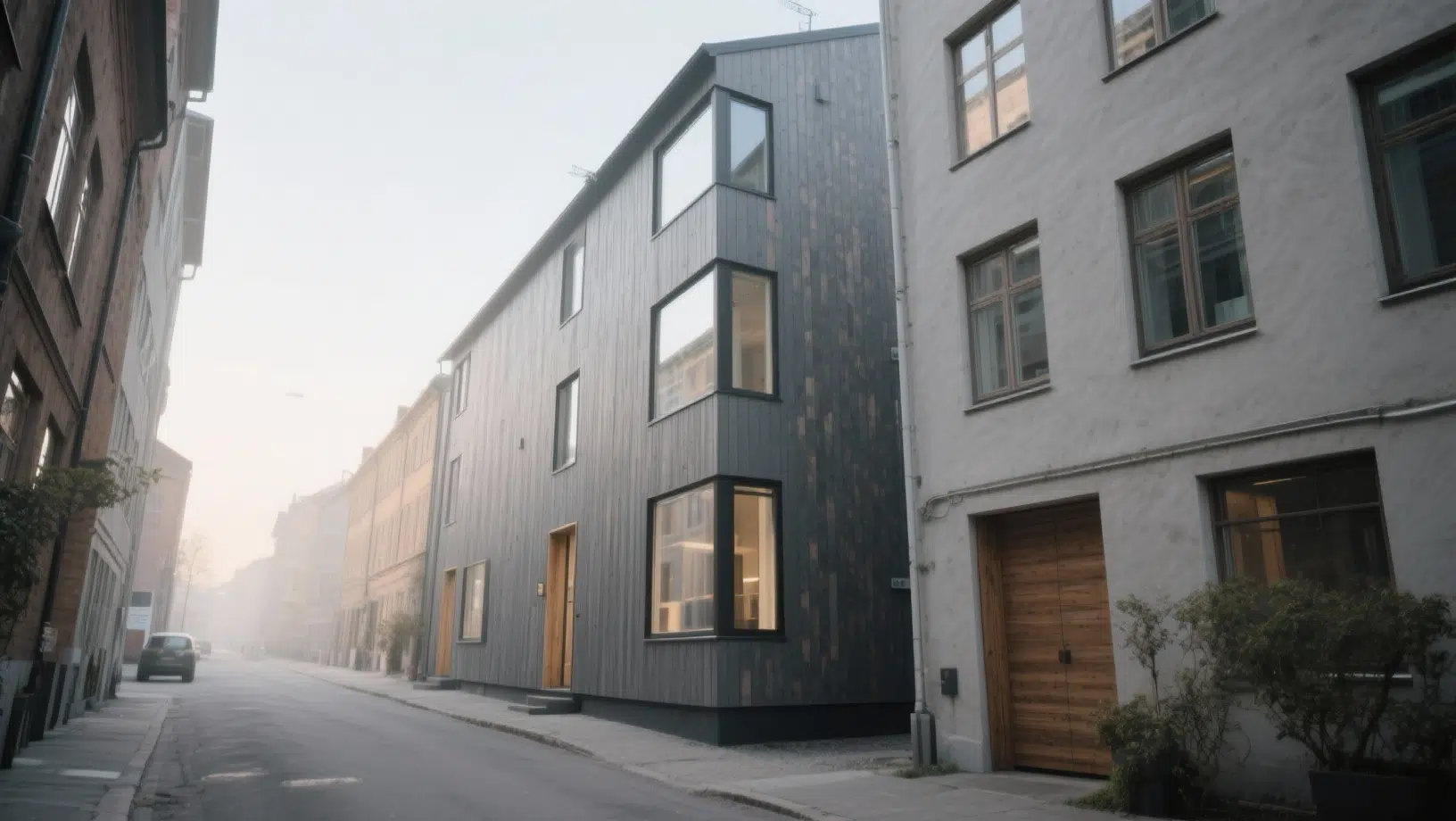
Narrow footprints maximize limited city lots without sacrificing style.
Vertical design makes efficient use of space across multiple floors. Large windows compensate for reduced square footage by connecting to the outdoors.
Multi-story layouts suit dense urban neighborhoods where land costs run high.
14. A-Frame Cabin with Panoramic Glass Front
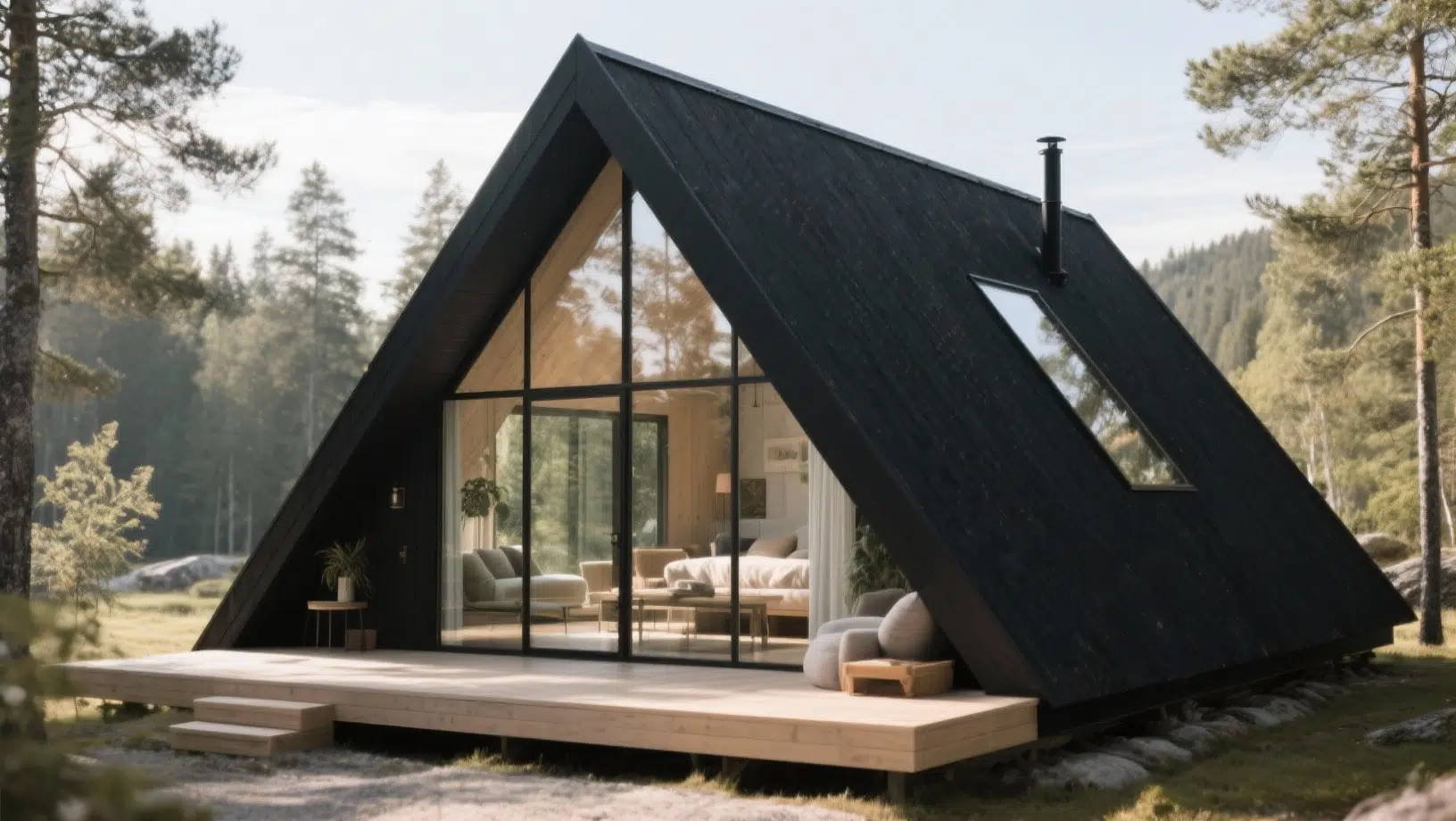
Triangular profiles shed snow effortlessly in mountain environments.
Full-height glazing on one end floods interiors with light and captures vistas. The iconic shape provides maximum interior volume with minimal materials.
Steeply angled walls also reduce wind resistance in exposed locations.
15. Scandinavian Beach House in Pale Sand Tones
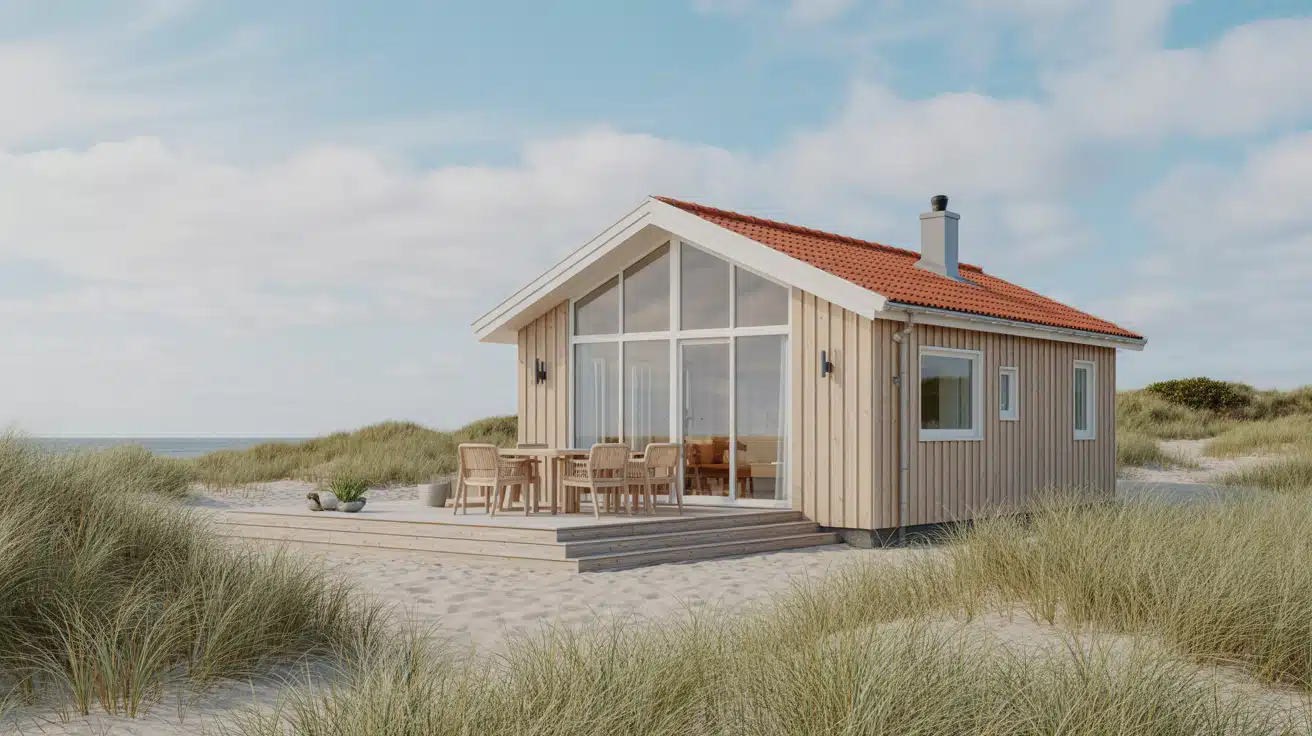
Beige and cream colors reference coastal dunes and weathered driftwood. Light tones resist heat absorption in sunny seaside locations. Salt-resistant treatments protect against harsh marine conditions.
These soft neutrals blend seamlessly with sandy beaches and coastal vegetation.
Sustainable features have become an important part of Scandinavian house design in both urban and rural settings.
16. Eco-Friendly Scandinavian Home with Green Roof
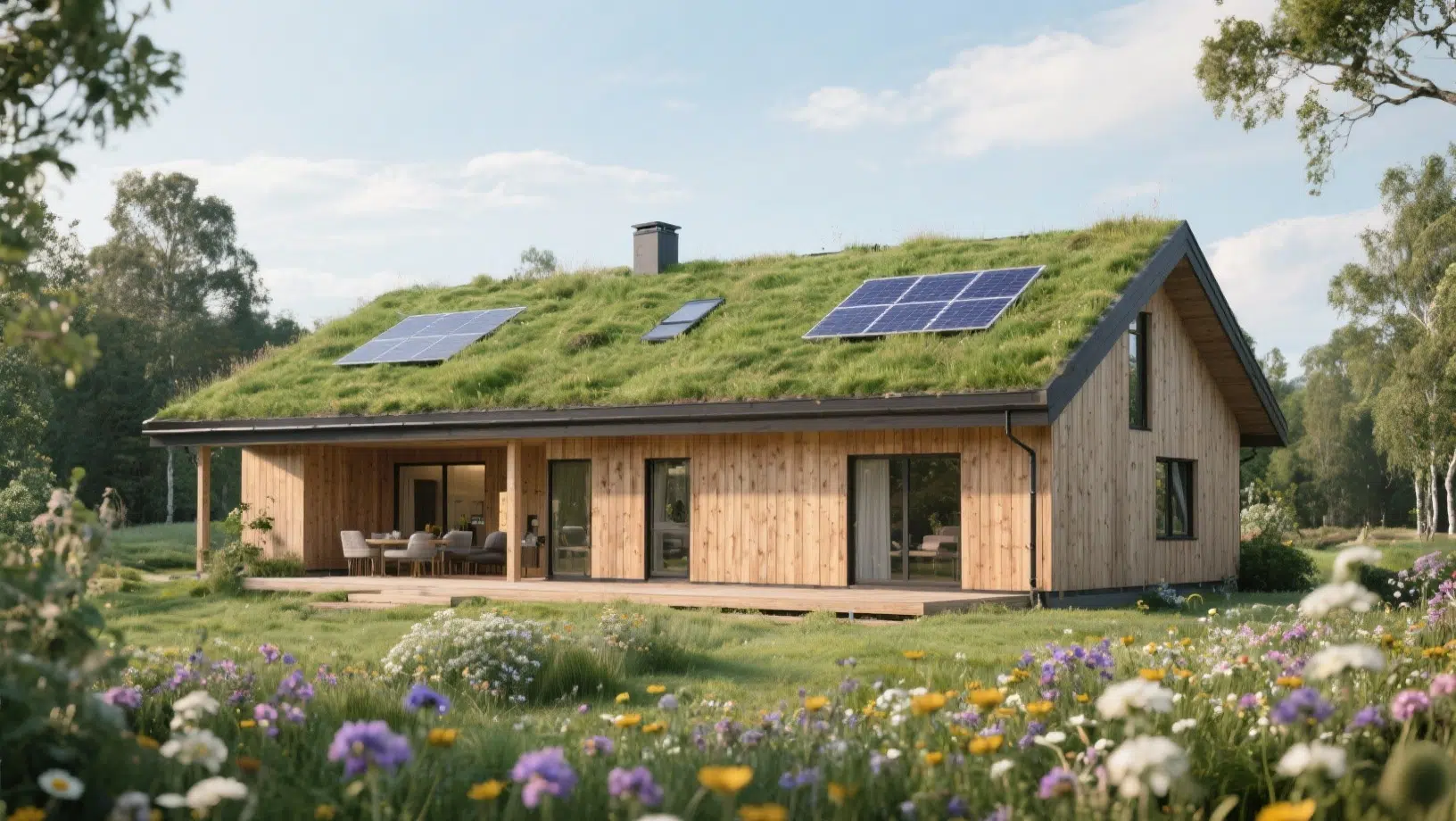
Living vegetation provides natural insulation and rainwater management.
Plants help structures blend organically into the surrounding terrain. This traditional technique sees renewed popularity in sustainable building.
Green roofs also support local biodiversity and reduce urban heat island effects.
17. Small Minimalist Cottage with Cedar Panels
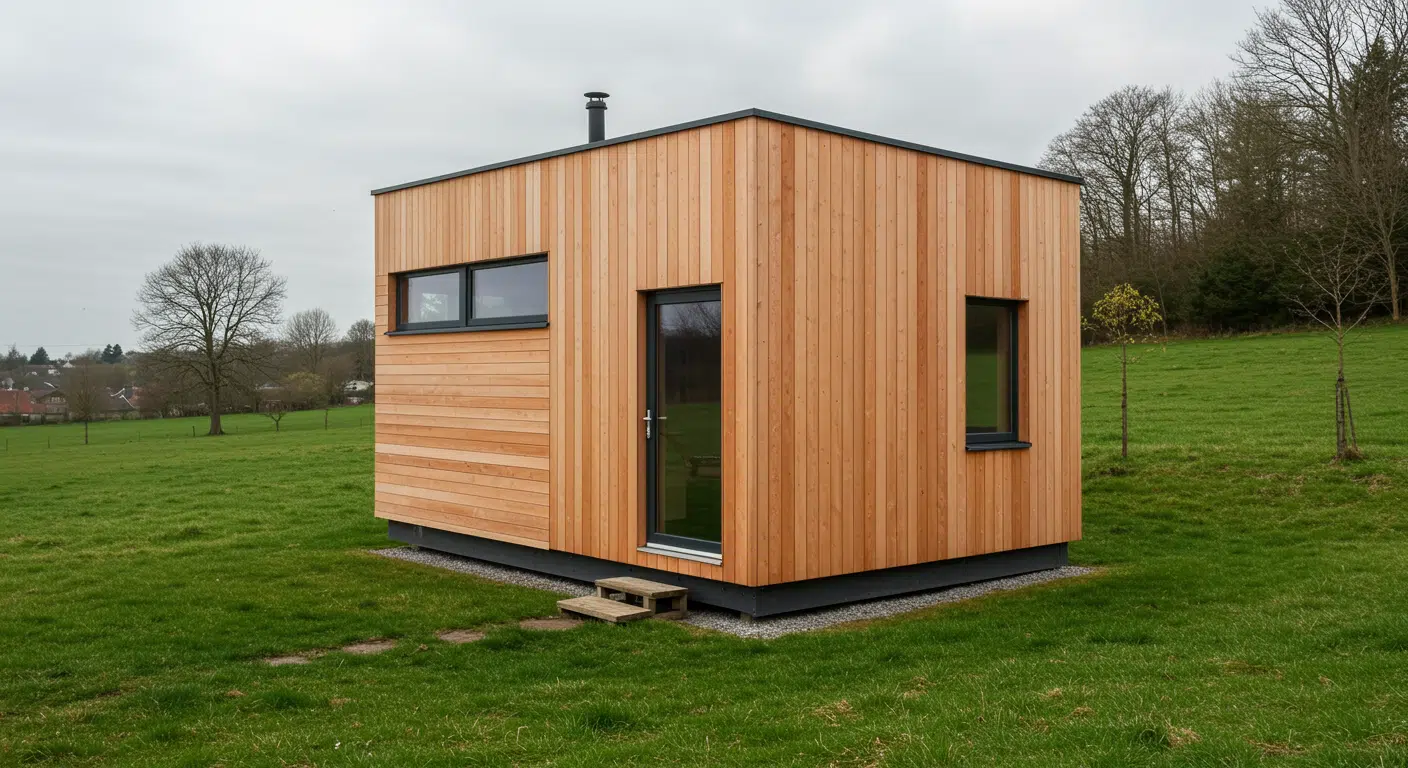
Naturally rot-resistant cedar ages to silvery gray without treatment. Compact dimensions reduce construction costs and environmental impact.
Simple forms prove that beauty doesn’t require a large scale. Cedar’s natural oils provide protection without chemical treatments.
18. Light Beige Wood with Charcoal Trims
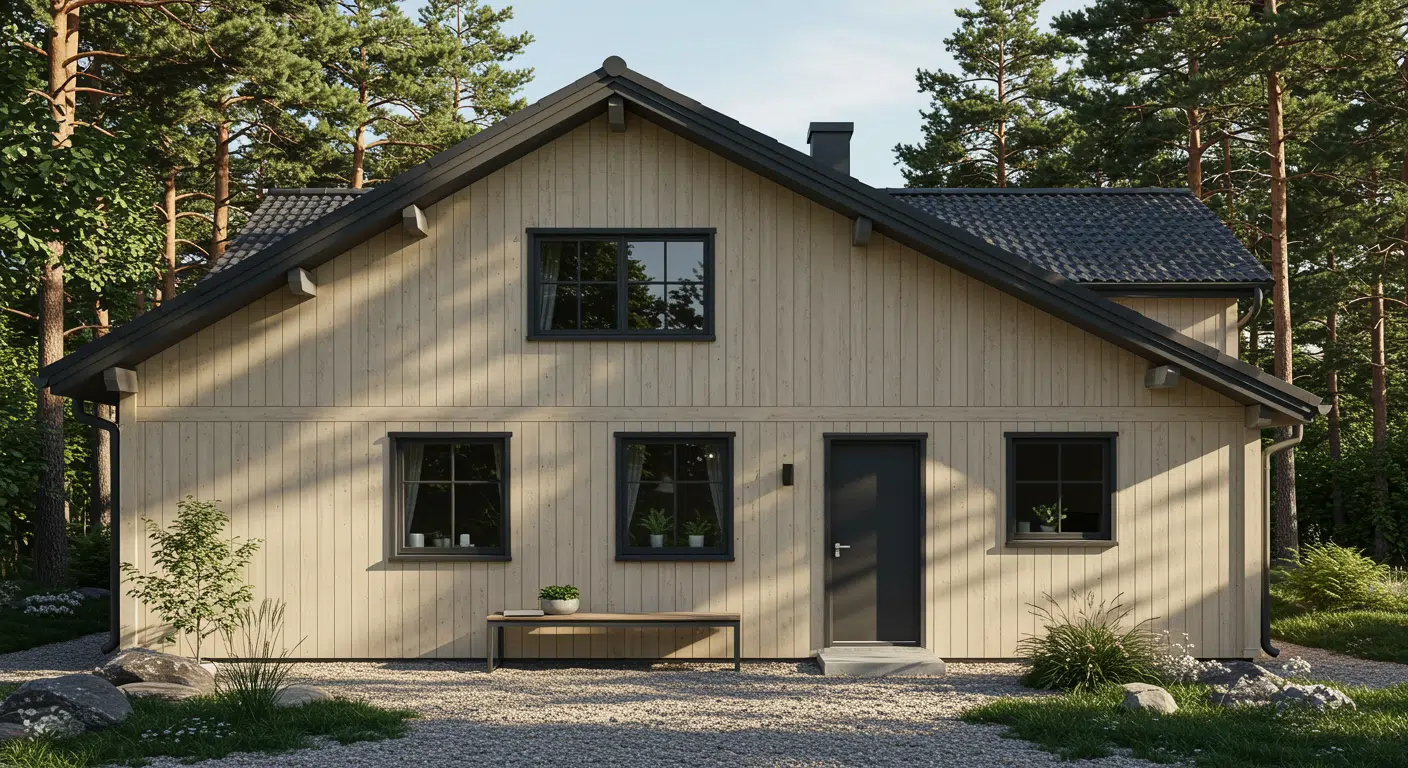
Warm neutral bases paired with dark accents create sophisticated depth. The subtle contrast feels more nuanced than stark black-and-white combinations.
This palette suits homes seeking understated refinement. Beige tones feel approachable while charcoal details add definition.
19. All-White Modern Nordic Minimalist Façade
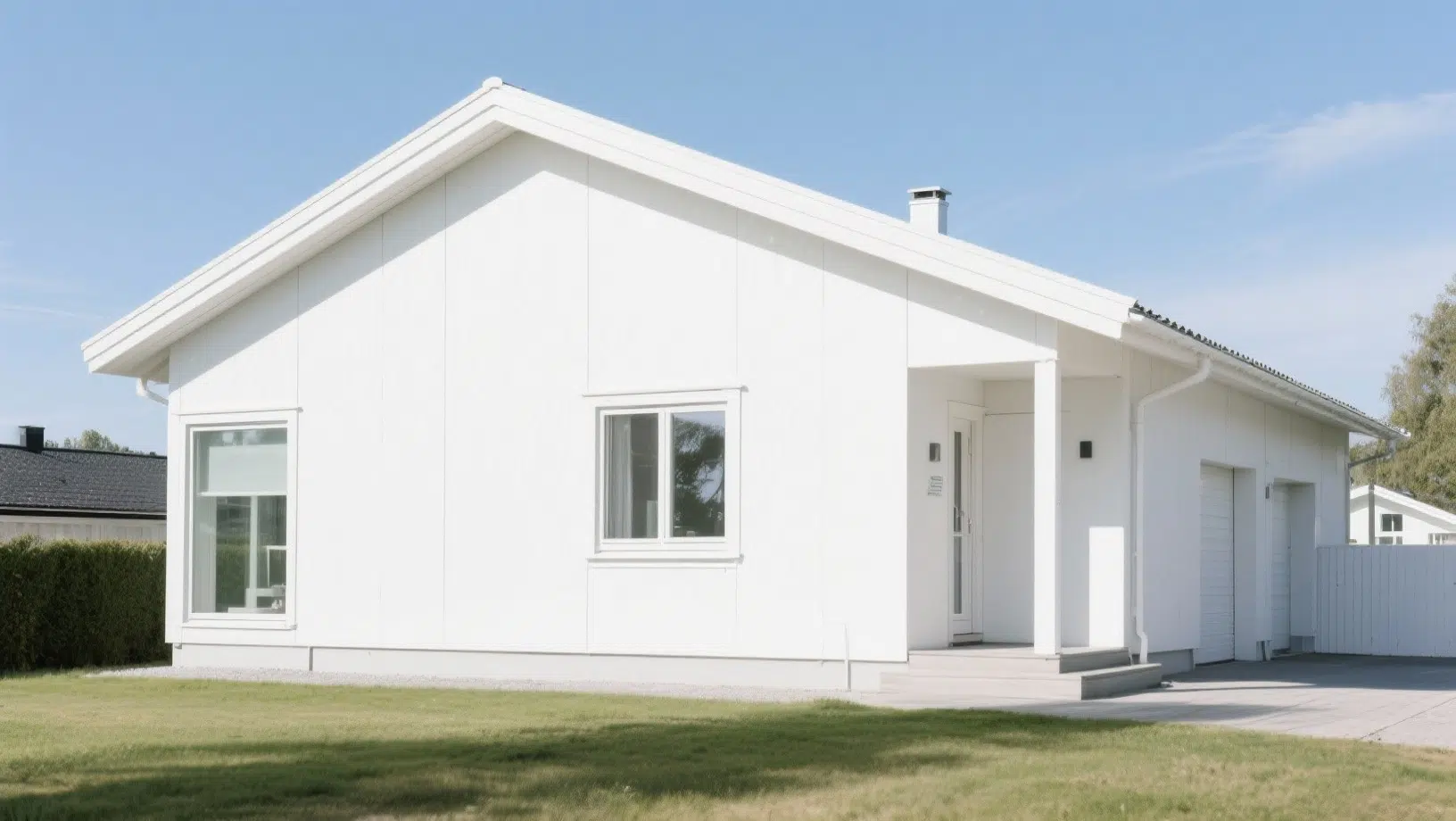
Pure monochrome exteriors emphasize form and proportion exclusively. Shadows and light create all visual interest across uninterrupted surfaces.
This style of Scandinavian house design highlights clean architecture by using simple shapes, bright surfaces, and carefully balanced exterior details.
White on white highlights architectural geometry through subtle dimension changes.
20. Rustic Cabin with Weathered Timber Walls
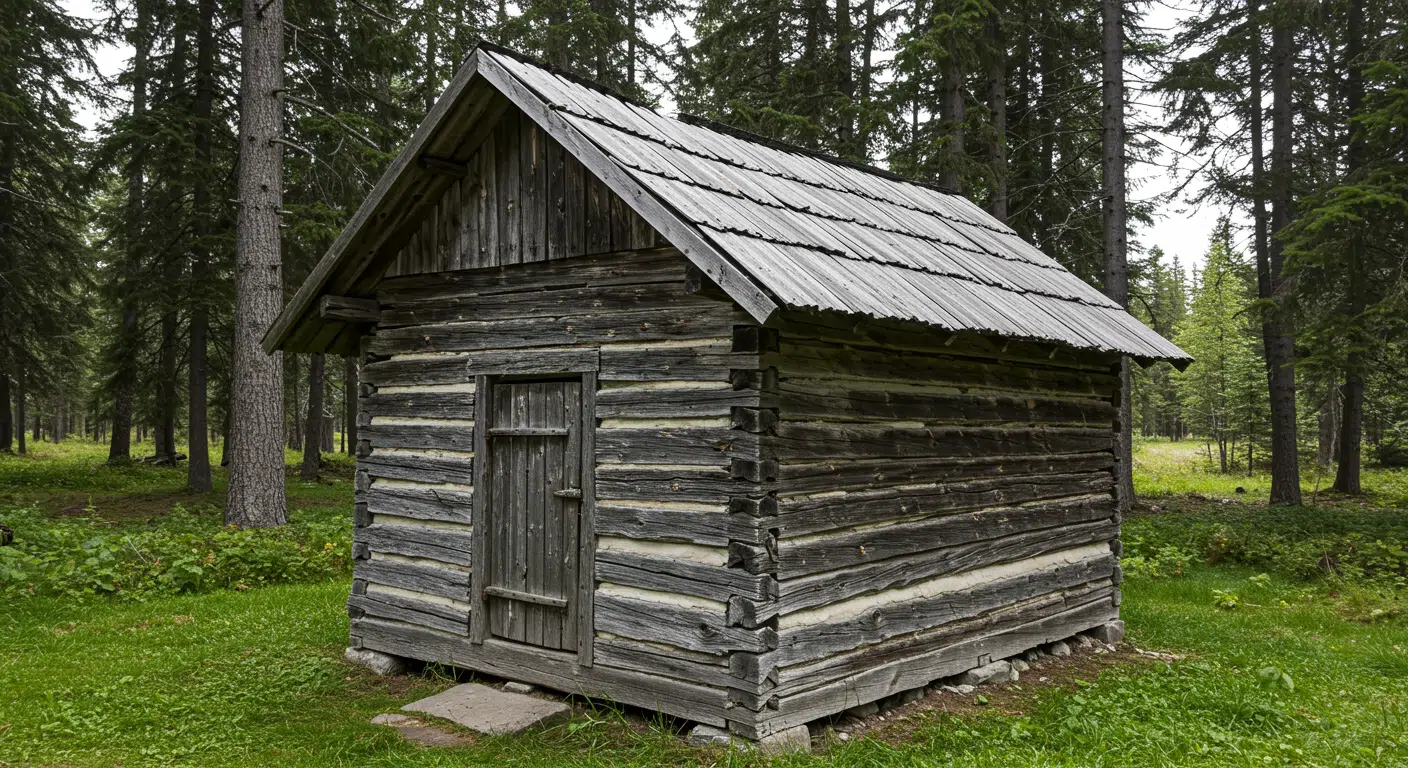
Naturally aged wood develops a unique patina reflecting the local climate.
Silver-gray tones emerge as UV light breaks down surface lignin.
This zero-maintenance approach celebrates the authenticity of materials and natural aging. Each board weathers differently, creating organic variation across the façade.
21. Scandinavian Boathouse with Gray Shingles
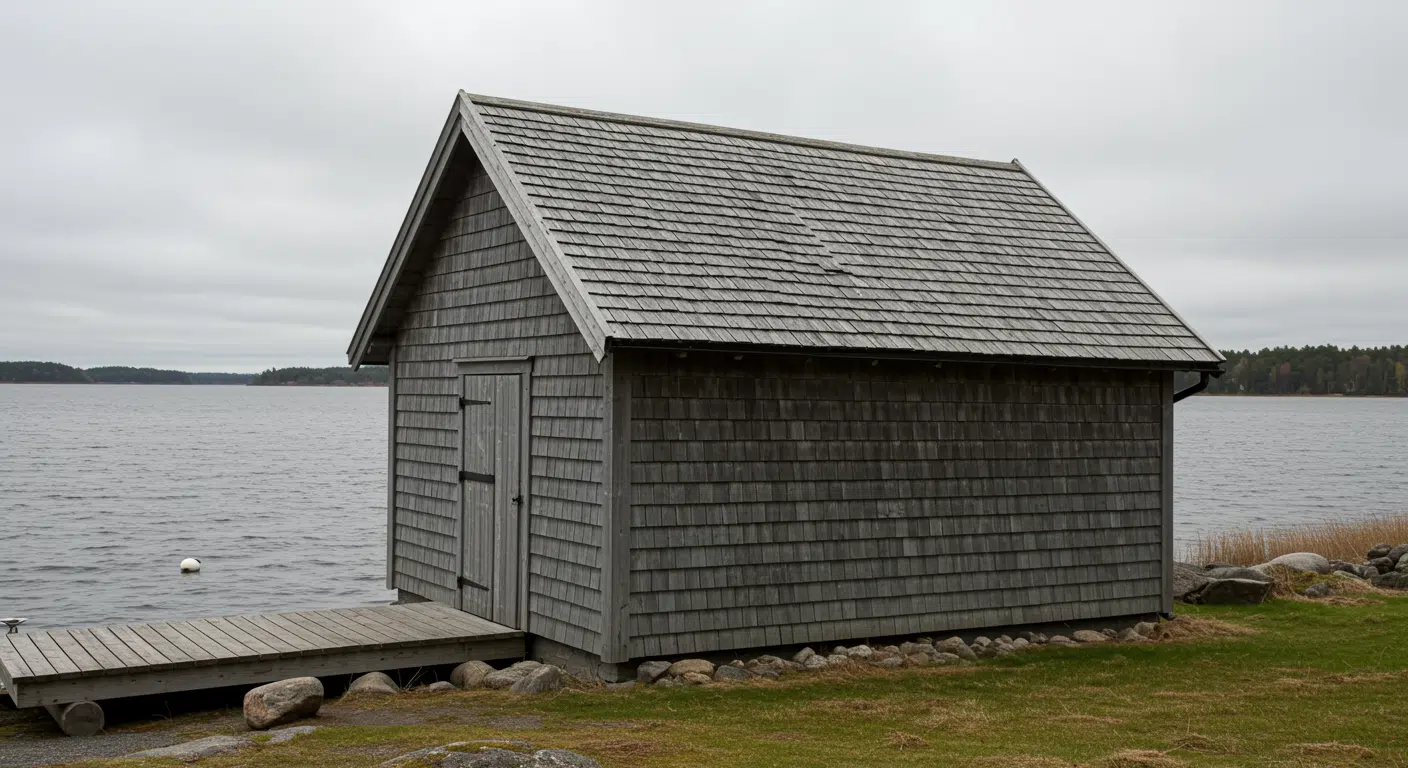
Traditional shingle cladding provides excellent water resistance near lakes and harbors.
Overlapping installation creates textured surfaces with strong horizontal lines.
Gray tones reference maritime heritage and weathered piers.
22. Monochrome Palette with Wood Details
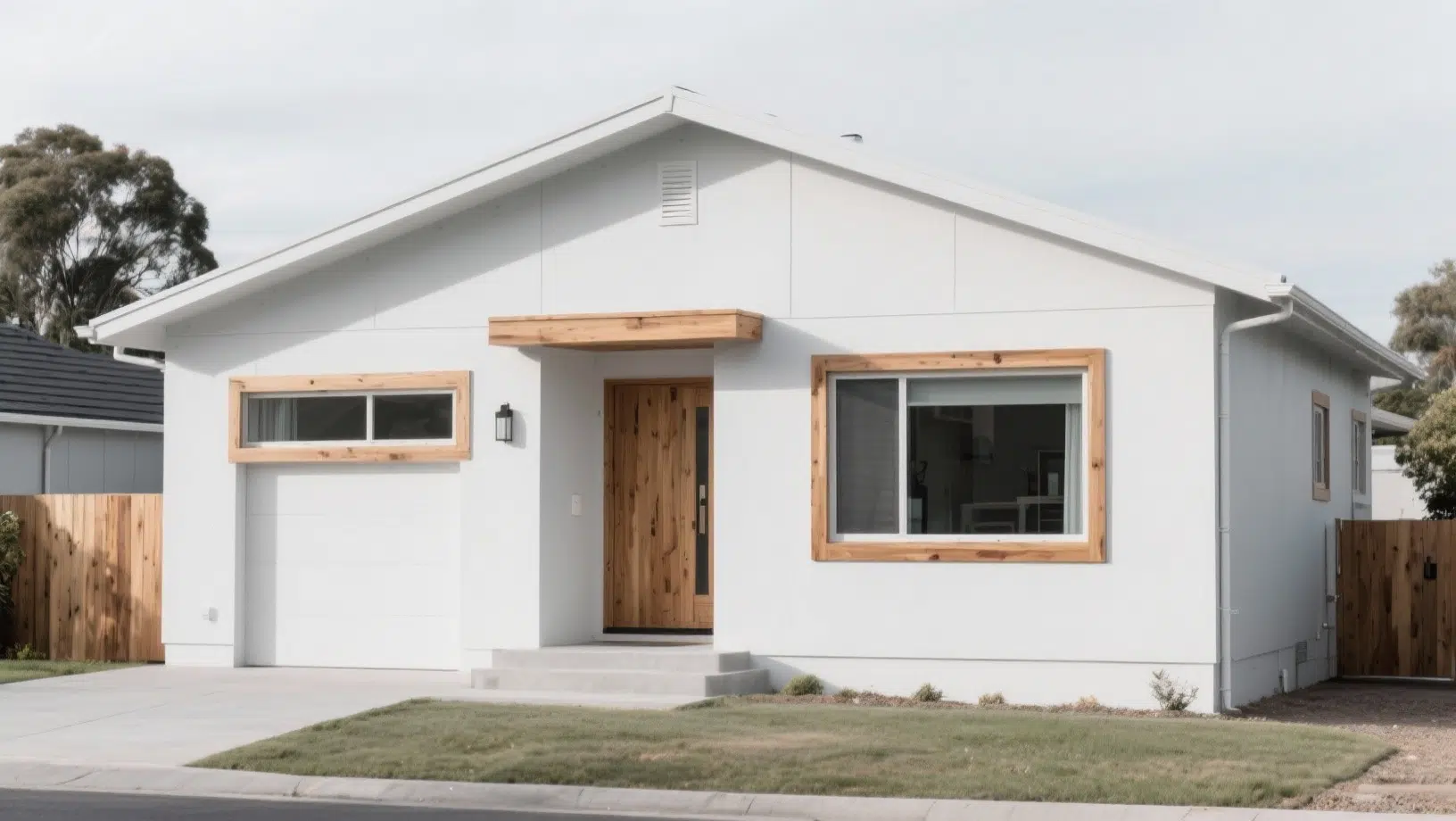
Single-color schemes with natural wood accents maintain simplicity while adding warmth.
The limited palette emphasizes architectural geometry and material quality. This restrained approach suits contemporary and traditional forms alike.
Wood details provide organic relief from painted surfaces.
23. Nordic Barn-Style Home with Metal Roof
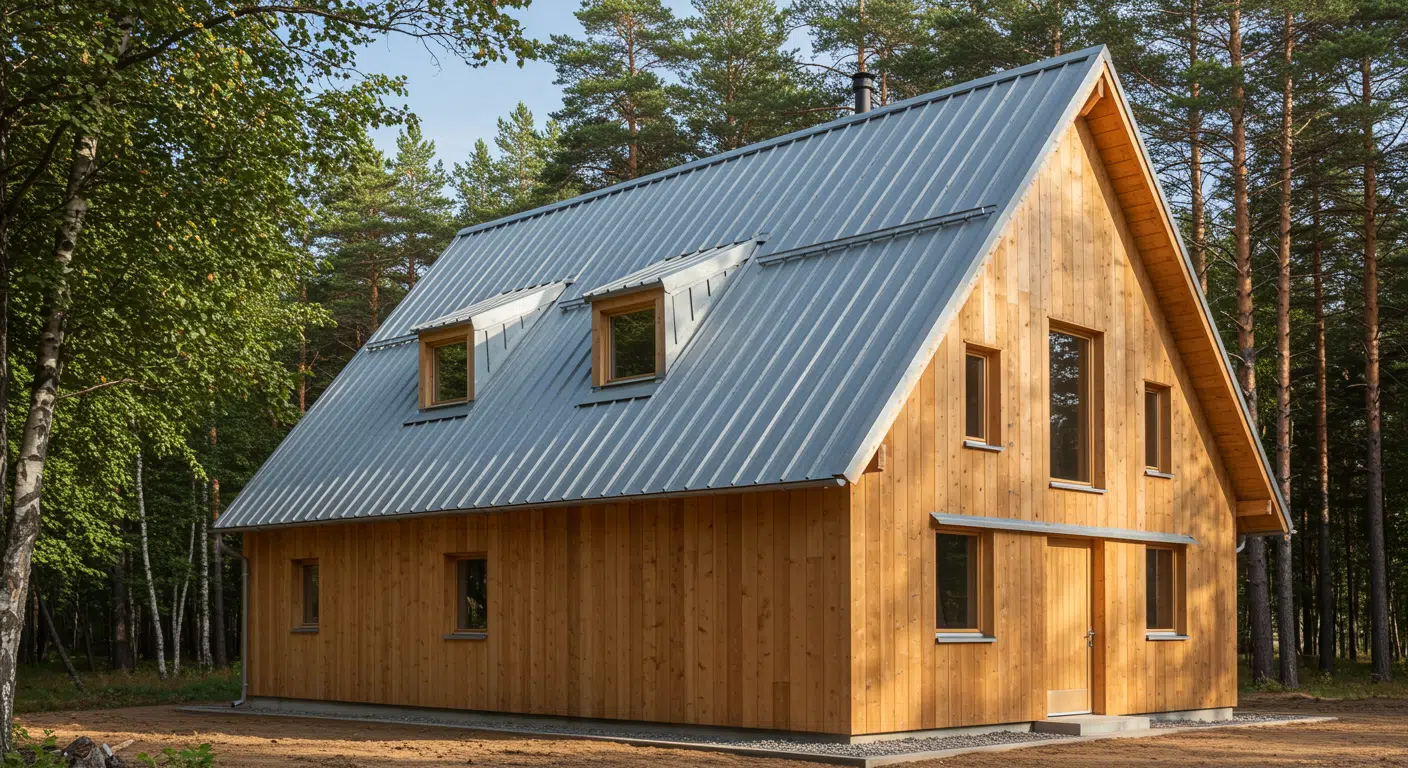
Agricultural building forms adapted for residential use offer spacious interiors. Simple rectangular volumes reduce construction complexity and cost.
Metal roofing provides decades of maintenance-free performance.
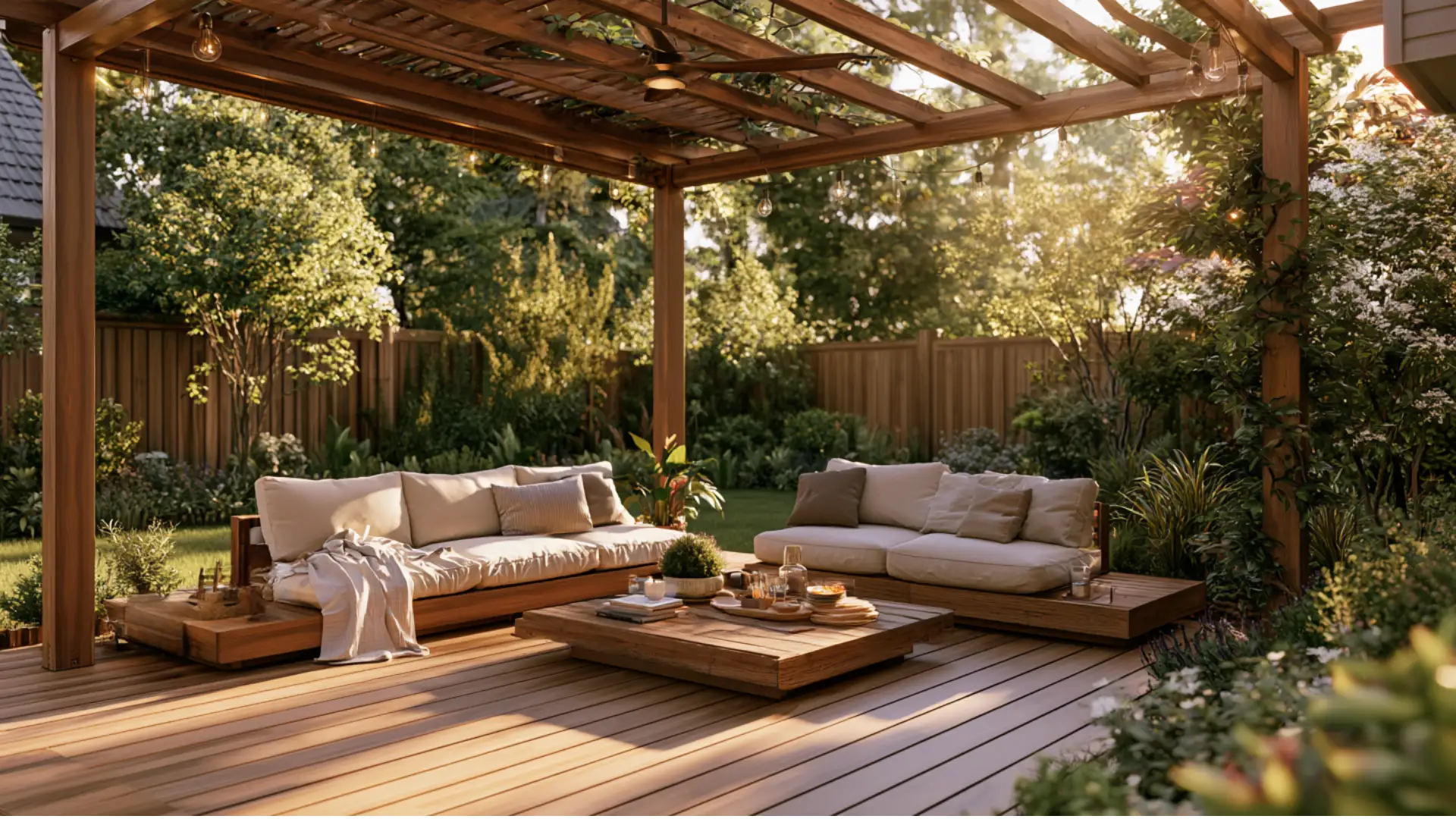
24. Lakeside House with Wrap-Around Deck
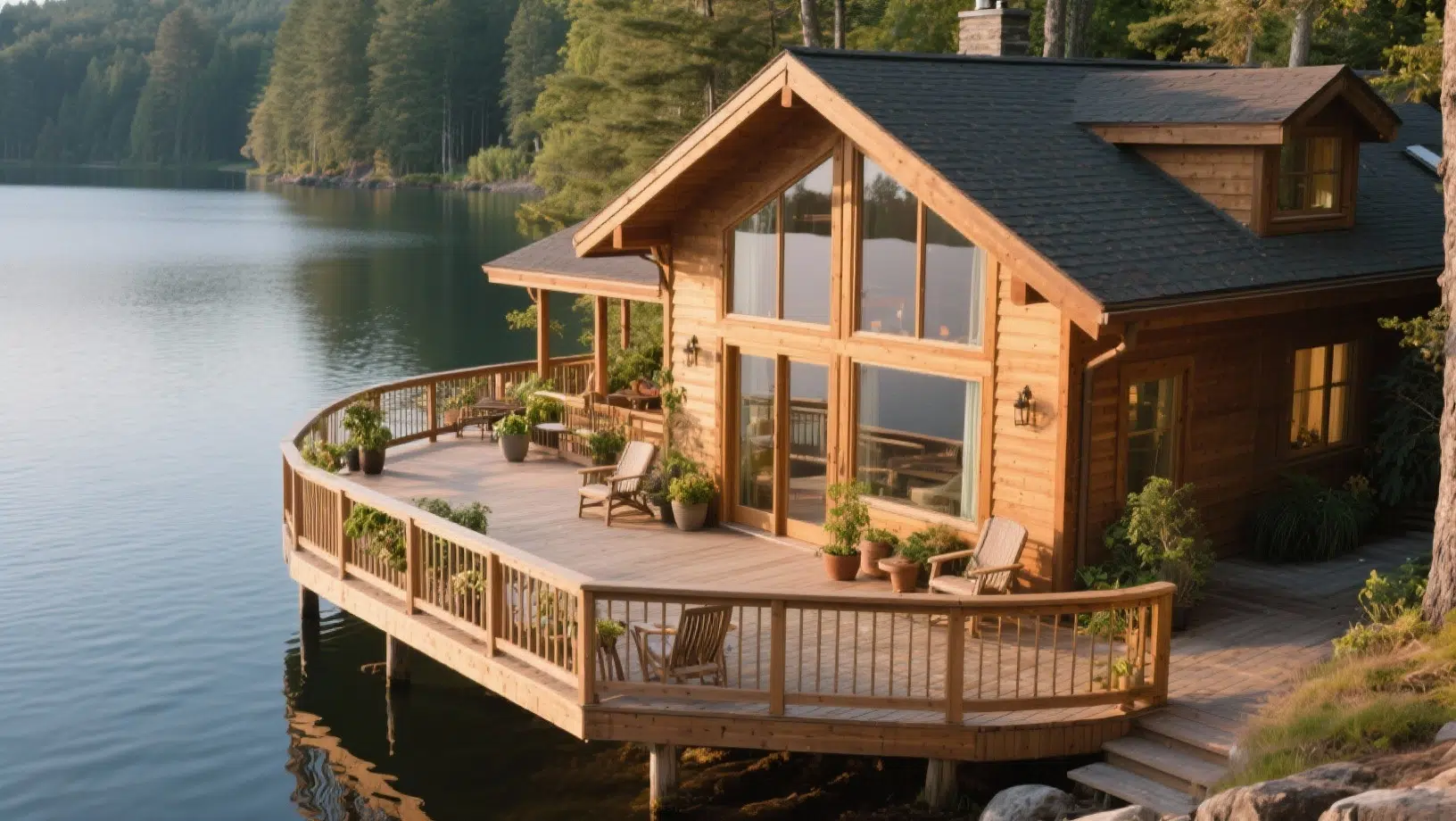
Extended wooden platforms create an outdoor living space on multiple sides.
Decks blur boundaries between structure and shoreline naturally. This design maximizes water views and summer enjoyment opportunities.
Multiple access points connect interior rooms directly to outdoor areas.
Large outdoor living spaces continue to influence contemporary Scandinavian house design trends.
25. Scandinavian Exterior with Vertical Black Slats
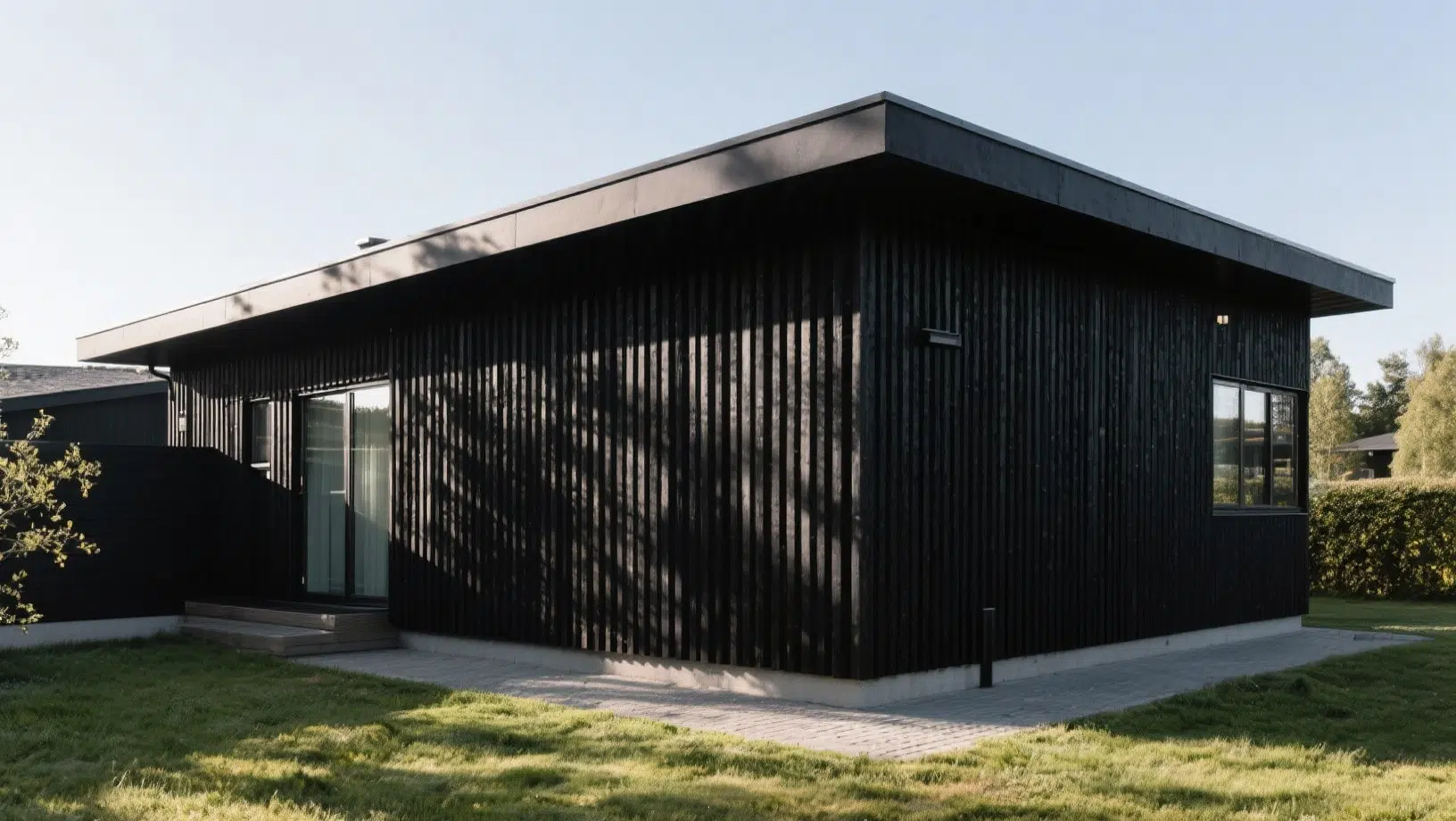
Slatted screens provide privacy while allowing air circulation and filtered light.
The vertical rhythm creates dynamic shadow patterns throughout the day.
This technique effectively adds dimension to otherwise flat walls. Slats can be fixed or operable depending on privacy and ventilation needs.
26. Tiny House with Natural Wood and Glass
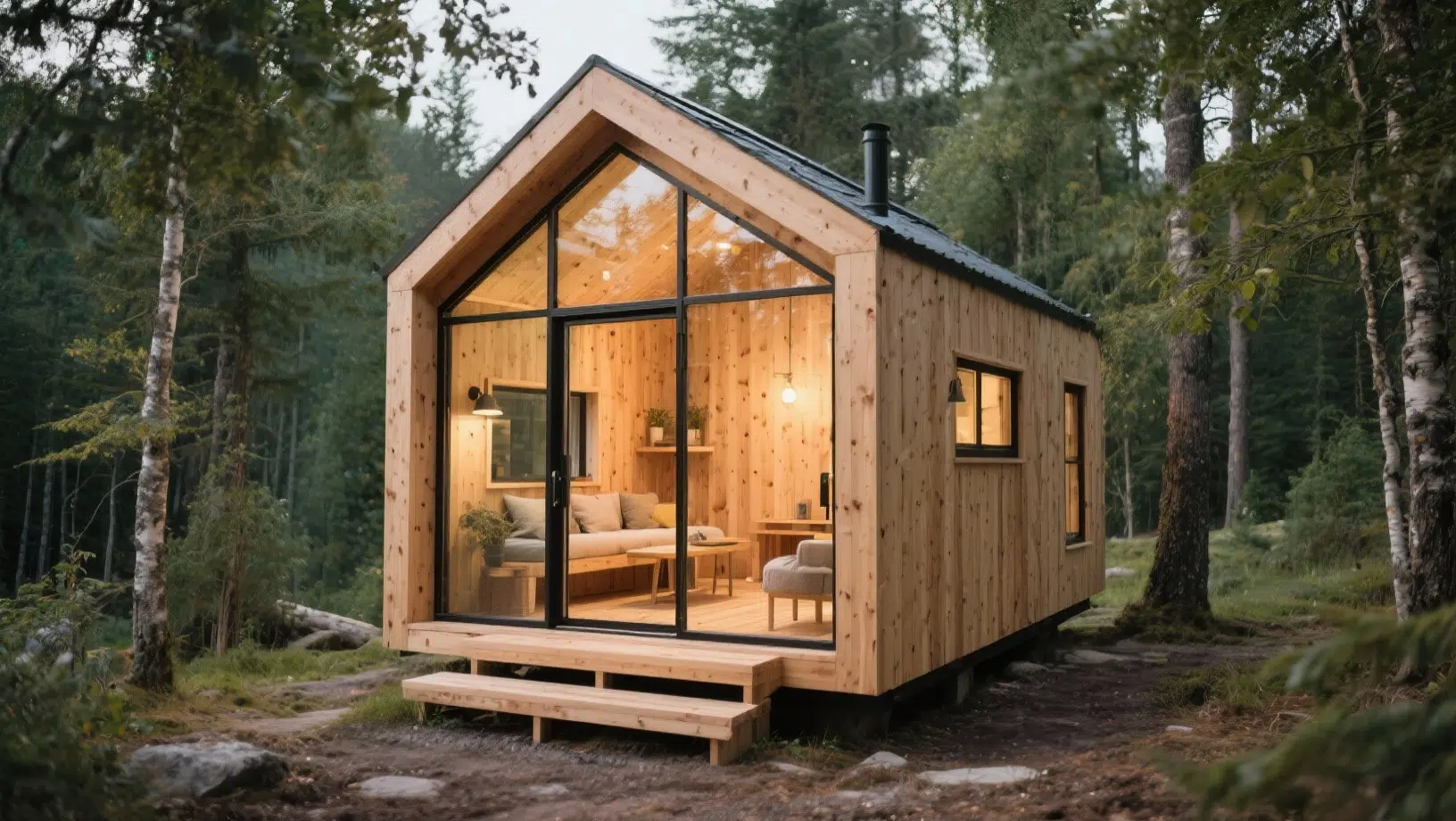
Compact footprints force efficient design and careful material selection.
Large windows make small spaces feel open and connected to the surroundings. Unfinished wood interiors and exteriors maintain material continuity throughout.
Tiny designs prove luxury comes from quality, not quantity.
27. Farmhouse-Inspired Exterior with Wooden Porch
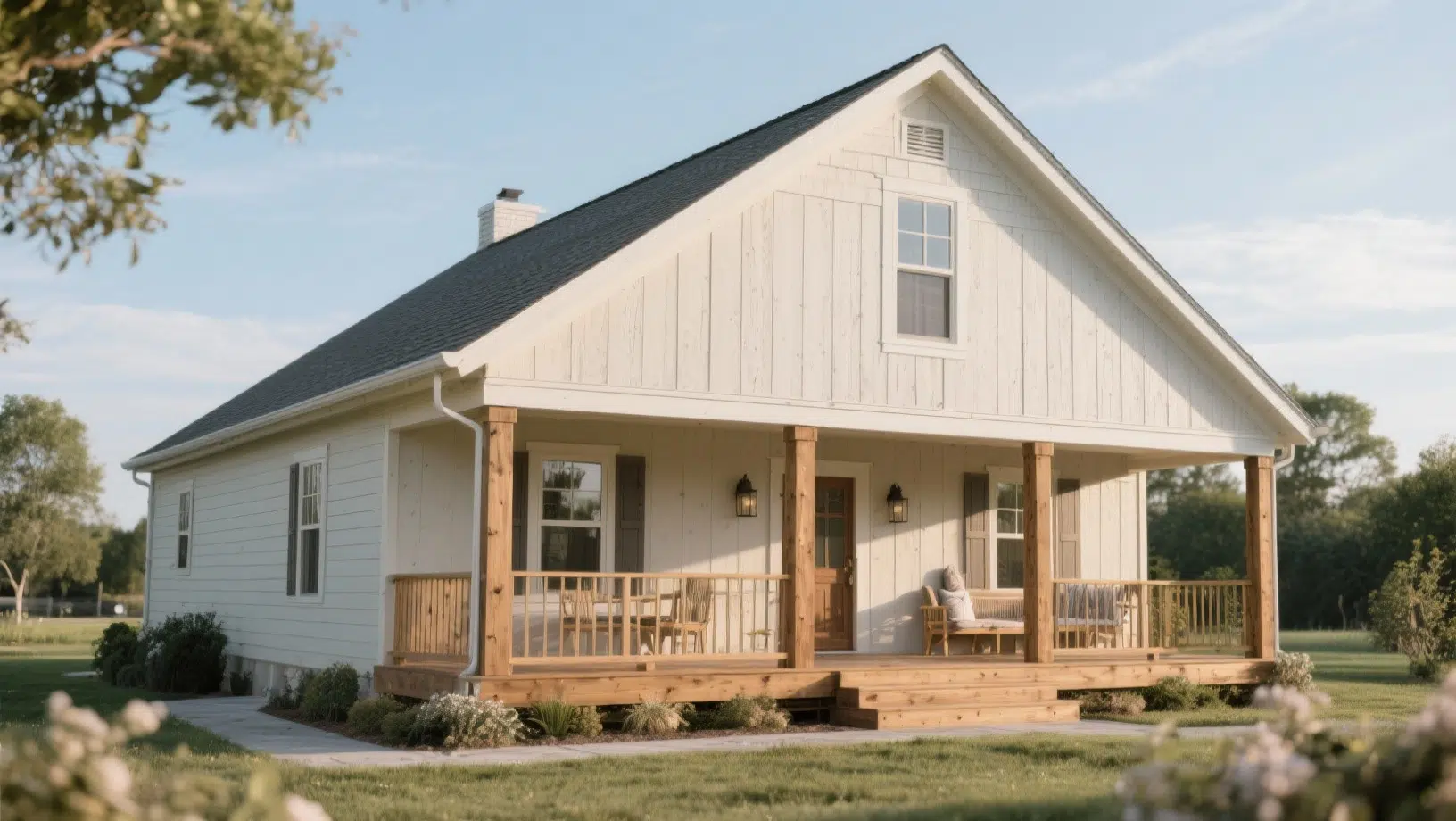
Covered entry platforms provide weather protection and transitional space.
Traditional agricultural forms adapt well to modern family living, making this style a popular choice in Scandinavian house design.
Simple gable roofs and board siding reference rural heritage.
Porches extend functional living space into protected outdoor areas.
28. Coastal Scandinavian Retreat with Pale Blue Tones
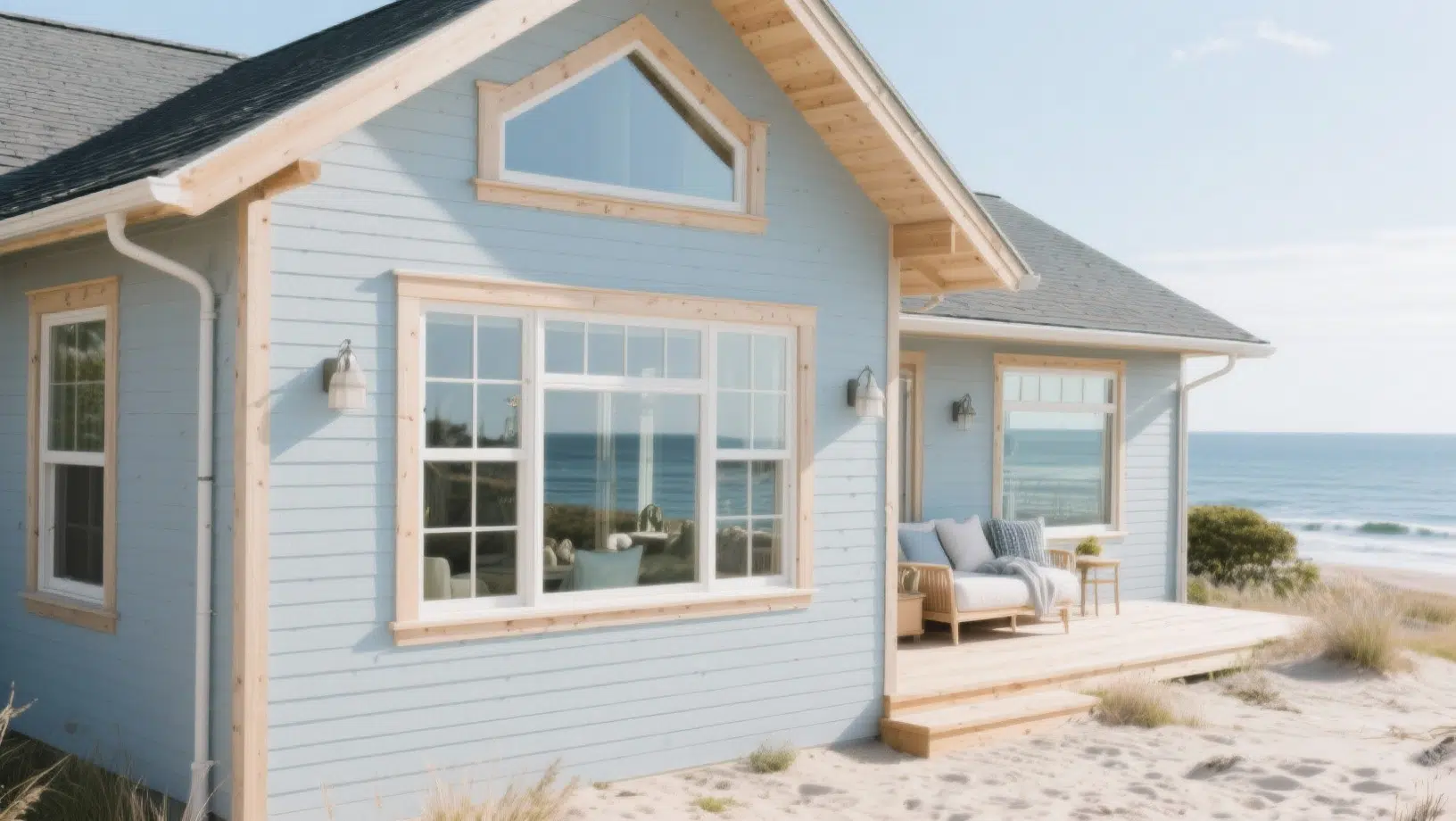
Soft blue-grays reference sea and sky in maritime environments.
Light colors reflect intense coastal sunlight effectively. Salt-resistant finishes protect against harsh seaside conditions.
These gentle hues create calm, relaxing atmospheres perfect for vacation homes.
29. Neutral Taupe House with Large Window Walls
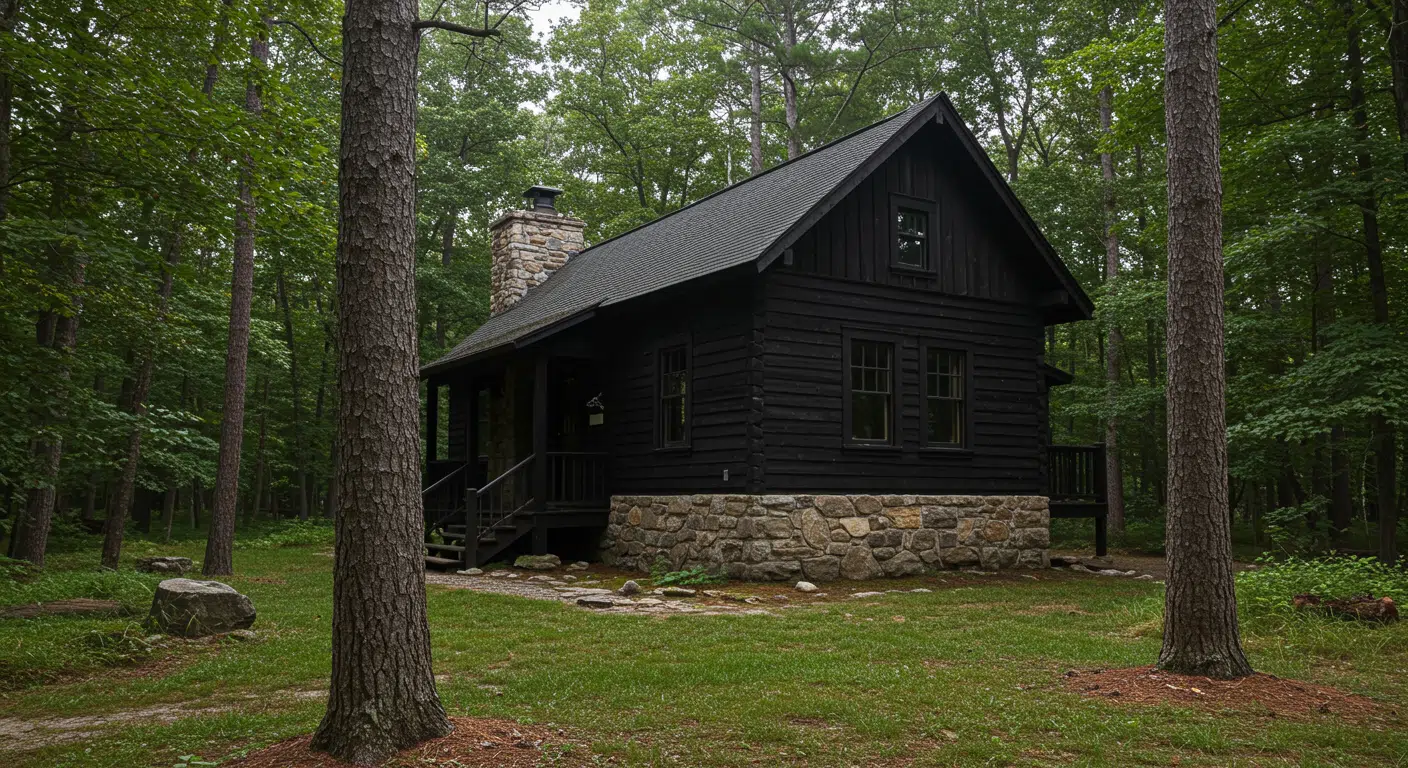
Warm beige-gray tones suit varied landscapes without strong contrast. Extensive glazing compensates for subdued exterior colors.
This palette works particularly well in transitional seasons. Taupe feels sophisticated and timeless without being stark or bold.
30. Compact Nordic Home with Slatted Sunshade Panels
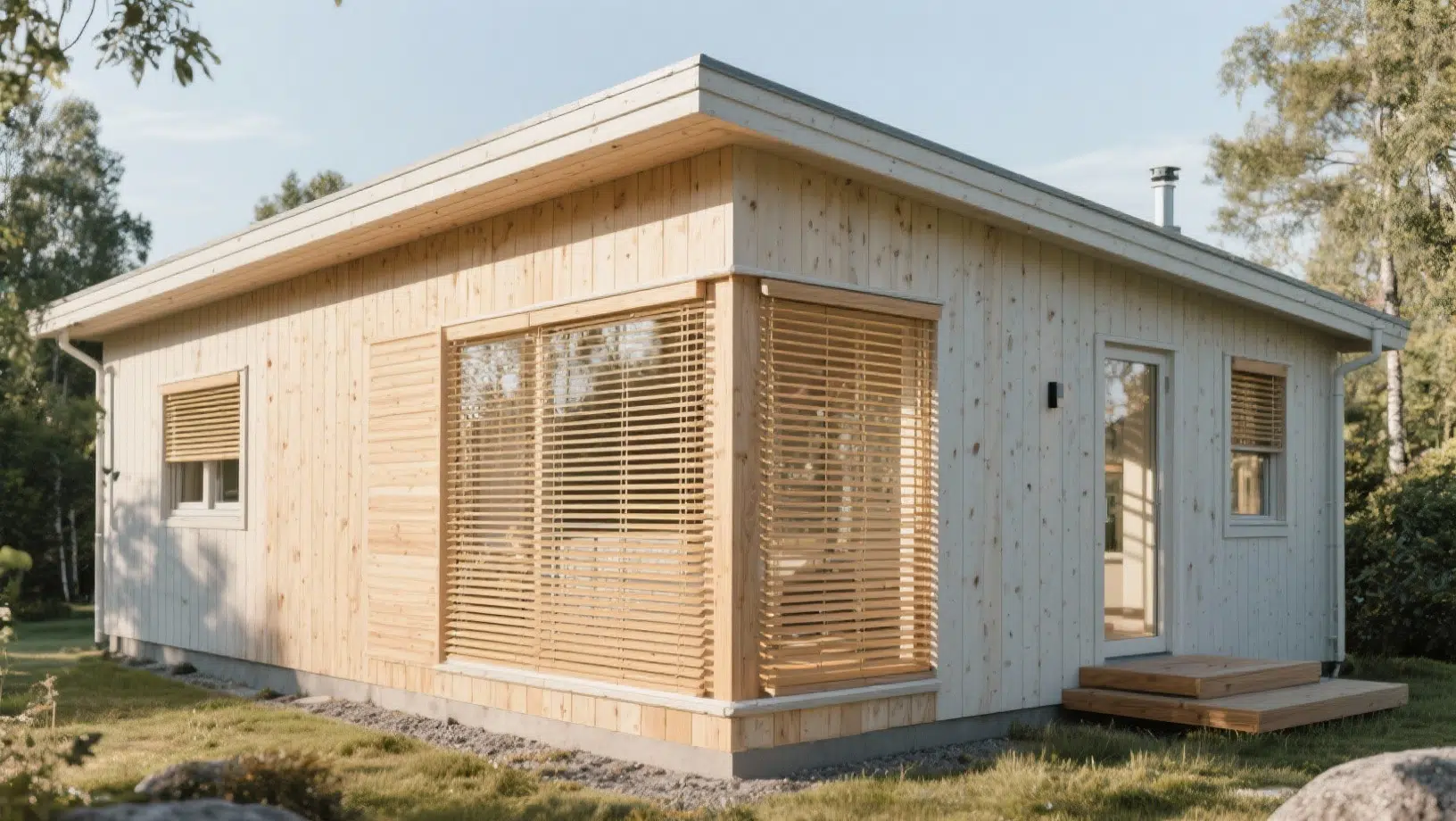
Wooden screens control solar gain on south-facing walls. Adjustable or fixed louvers filter harsh light while maintaining views.
This passive cooling strategy reduces the need for mechanical climate control.
Sunshades add architectural interest while serving practical functions.
31. Cottage-Style Scandinavian Exterior with Gable Roof
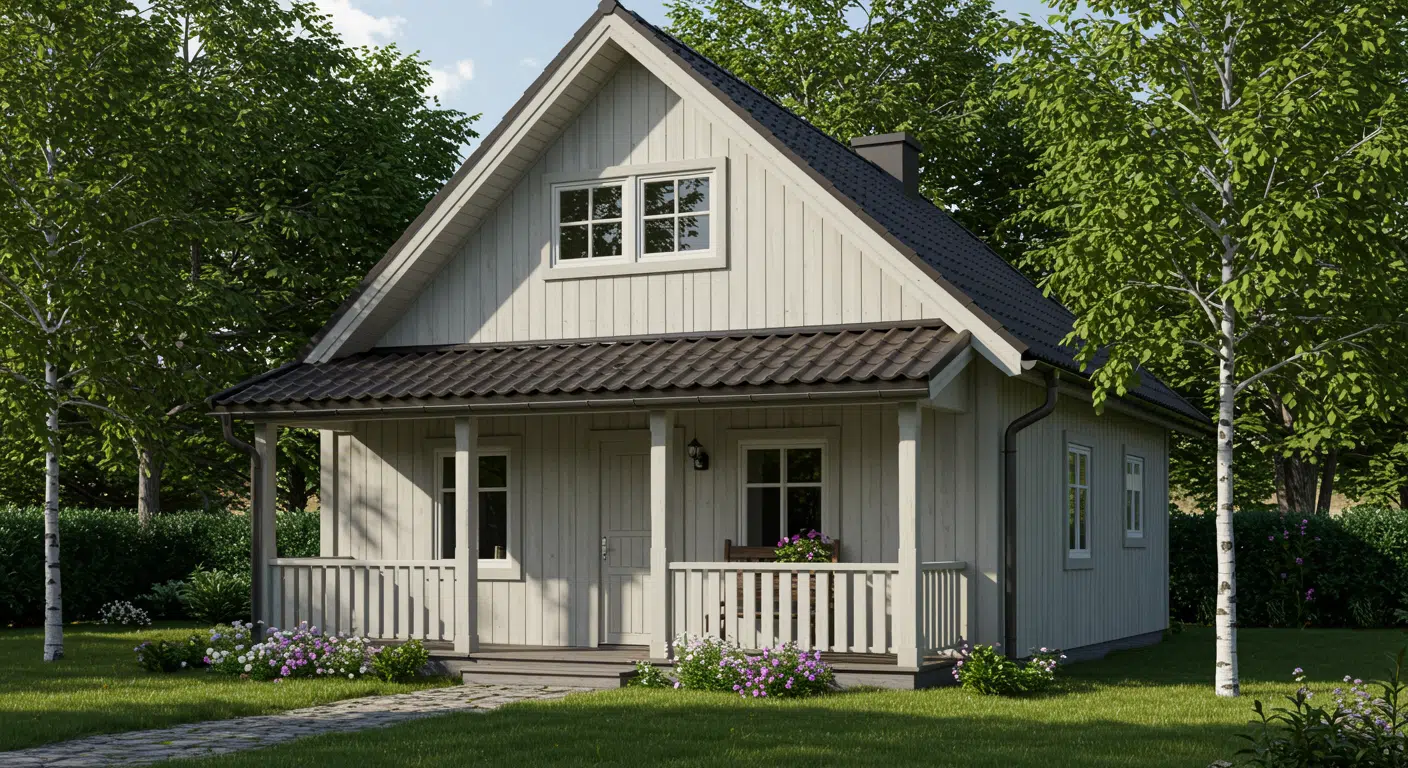
Traditional peaked roofs reliably shed rain and snow. Smaller scales feel intimate and approachable in residential neighborhoods. Painted wood siding offers endless color possibilities.
Gable roofs also provide generous attic storage or living space.
The Bottom Line
Scandinavian house design brings together beauty and everyday functionality in a natural way.
With its focus on neutral tones, organic materials, and simple structure stays visually appealing while standing the test of time.
Choosing a minimalist Scandinavian house exterior also supports energy efficiency and low-maintenance living.
No matter your preference, from crisp white finishes to warm wood details, small, thoughtful changes can make a big difference.
Start simple, and gradually create a home exterior that feels balanced, practical, and truly lasting.
Frequently Asked Questions (FAQ’s)
1. What Colors are Used in Scandinavian House Exteriors?
Neutral shades like white, gray, beige, and soft black dominate, often paired with natural wood accents for contrast.
2. Why are Large Windows Important in Scandinavian Design?
They maximize natural light, making homes feel brighter and more open, especially useful during long, darker seasons.
3. What Materials Define a Scandinavian House Exterior?
Wood, stone, and metal are commonly used, emphasizing durability, natural texture, and connection to the surrounding environment.
4. Is Scandinavian Exterior Design Suitable for Warm Climates?
Yes, with proper insulation and shading, it works well by keeping interiors cool and maintaining energy efficiency.