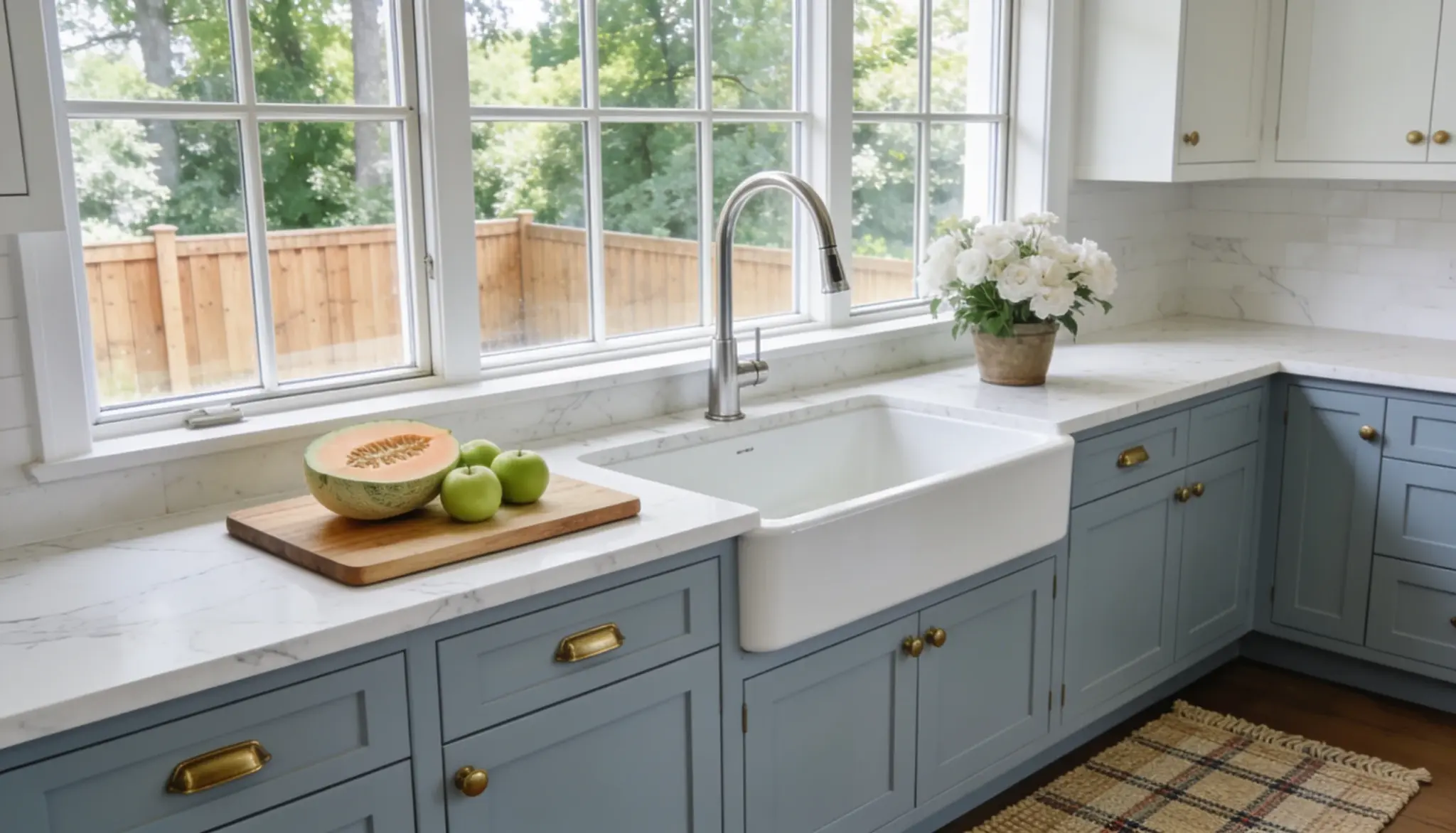
Two sinks, same deep basin, same exposed front, so why do buyers spend hours comparing “apron” versus “farmhouse” like they’re picking two different products?
The real choice still comes down to practical decisions about how the sink fits your cabinets, what it actually costs, and whether it will still look right in five years.
Here’s a side-by-side look at apron sink vs. farmhouse sink: design, cost, installation, and how each stacks up against an undermount sink too.
What is an Apron Sink?
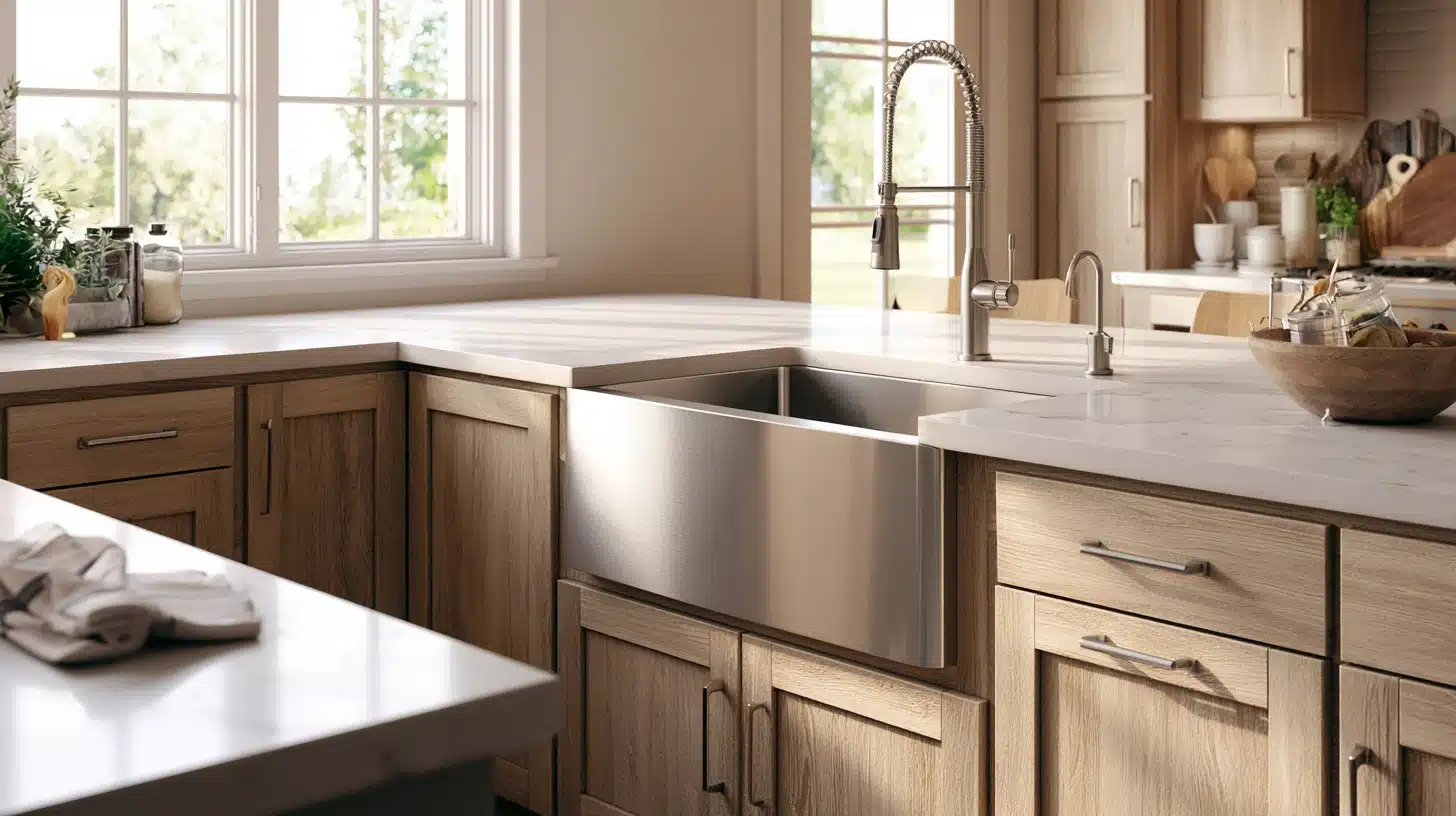
An apron sink is a deep sink with a front panel that shows, with no cabinet door hiding it. That exposed front gives it the “apron” name.
Sizes typically range from 24 to 36 inches wide, so many fit standard cabinets without major changes. This style suits kitchens that want a bold look without a full remodel.
The washing posture stays comfortable, with less leaning over the counter, and the large basin holds big pots and pans with ease.
The exposed front also creates a strong visual focal point in the kitchen.
That precision cuts both ways: cabinet and countertop measurements have to be exact, the exposed front shows every scratch and stain, and it costs more than a standard sink.
What is a Farmhouse Sink?
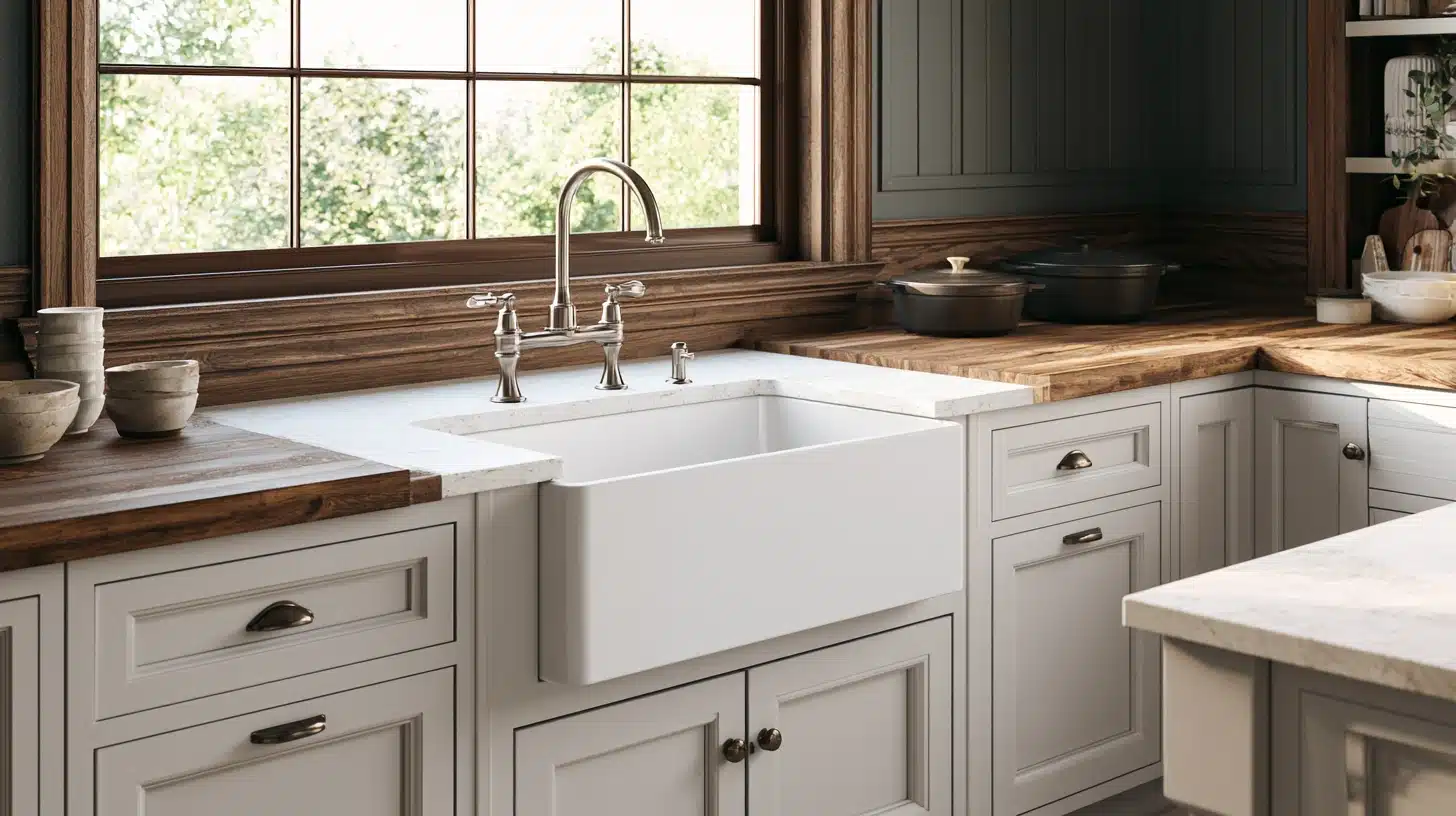
A farmhouse sink is the traditional version of this style. It’s deep, wide, and fully exposed at the front. It often sits flush with the cabinets rather than with standard countertops on both sides.
Sizes often start around 30 inches and go up from there, making this style better suited to kitchens with room to spare.
This sink offers the largest capacity of the two styles, along with a classic, rustic-to-transitional look and very durable material options that hold up well over time.
The tradeoffs: custom cabinetry is often required, the extra weight calls for strong support underneath, and the total cost climbs once installation gets factored in.
Apron Sink vs Farmhouse Sink
Both sinks look alike at first glance, sharing the same deep basin and exposed front. Yet a handful of practical details end up shaping the entire buying decision.
Design Differences
An apron sink often sits slightly forward of the cabinets. It creates a raised, protruding front edge.
A farmhouse sink usually sits flush with the cabinet line. The basin depth also differs, with farmhouse sinks running deeper and wider overall.
Material
Both styles share the same material pool. Fireclay, stainless steel, and cast iron are common choices.
Farmhouse sinks lean toward classic materials like fireclay and cast iron. Apron sinks offer more variety, including copper and granite composite.
Fireclay and cast iron stay quieter during daily use, while stainless steel apron sinks tend to clang more without a sound-dampening pad underneath.
Installation
Farmhouse sinks are typically heavier and often require custom cabinetry with reinforced support to handle the extra weight.
Apron sinks are generally easier to install and can fit many standard cabinet openings with fewer modifications.
Both styles require accurate countertop cutouts, especially with granite or quartz, so professional installation is usually the best option.
Choosing the right faucet height is also important to make the most of the sink’s deep basin.
Cost
Apron sinks are usually the more budget-friendly pick, often running $300 to $800 for the sink itself, with simpler installation costs on top.
Farmhouse sinks cost more overall, sometimes $600 to $1,500 or higher once labor and cabinetry work get added in.
The bulk of that gap comes from the extra construction work, not the sink price alone.
Color and Finish Range
Apron sinks offer more color choices. You’ll find matte black, gold-tone, and colored composite finishes.
Farmhouse sinks stick closer to classic tones. White, biscuit, and natural stainless are the most common picks.
Strip away those differences, though, and both still share the same deep single-bowl design and exposed front, and both work in traditional, transitional, and modern coastal kitchens.
Quick Overview Table
| Feature | Apron Sink | Farmhouse Sink |
| Design | Slightly more modern and versatile with an exposed front | Traditional, flush-front design with a classic farmhouse look |
| Material | Available in fireclay, stainless steel, copper, and granite composite | Commonly made from fireclay, cast iron, and stainless steel |
| Installation | Fits many standard cabinets with fewer modifications | Often requires custom cabinetry and reinforced support |
| Cost | Generally more affordable to buy and install | Usually costs more due to heavier materials and installation requirements |
| Color & Finish | A wide range of colors and finishes, including matte black, copper, and composite options | Mostly available in classic finishes like white, biscuit, and stainless steel |
Still Popular or Suitable for Your Remodel?
Kitchen trends come and go, but farmhouse and apron-front sinks continue to be a favorite.
They look great, work well, and fit just about any kitchen style.
Still Popular Right Now
Farmhouse and apron sinks remain among the top sink choices for new kitchen remodels. Design searches and renovation photos both show steady interest, not a decline.
A Timeless Shape, Not a Passing Trend
The deep basin and exposed front have stayed consistent for decades. Finishes and materials have changed, but the core design hasn’t needed to be reinvented to stay relevant.
Fits Almost Any Remodel Style
Traditional, modern farmhouse, transitional, and even minimalist kitchens can all work with this sink style. The cabinets, hardware, and color palette do most of the styling. The sink stays a safe, flexible choice.
Apron Sink vs Undermount Sink
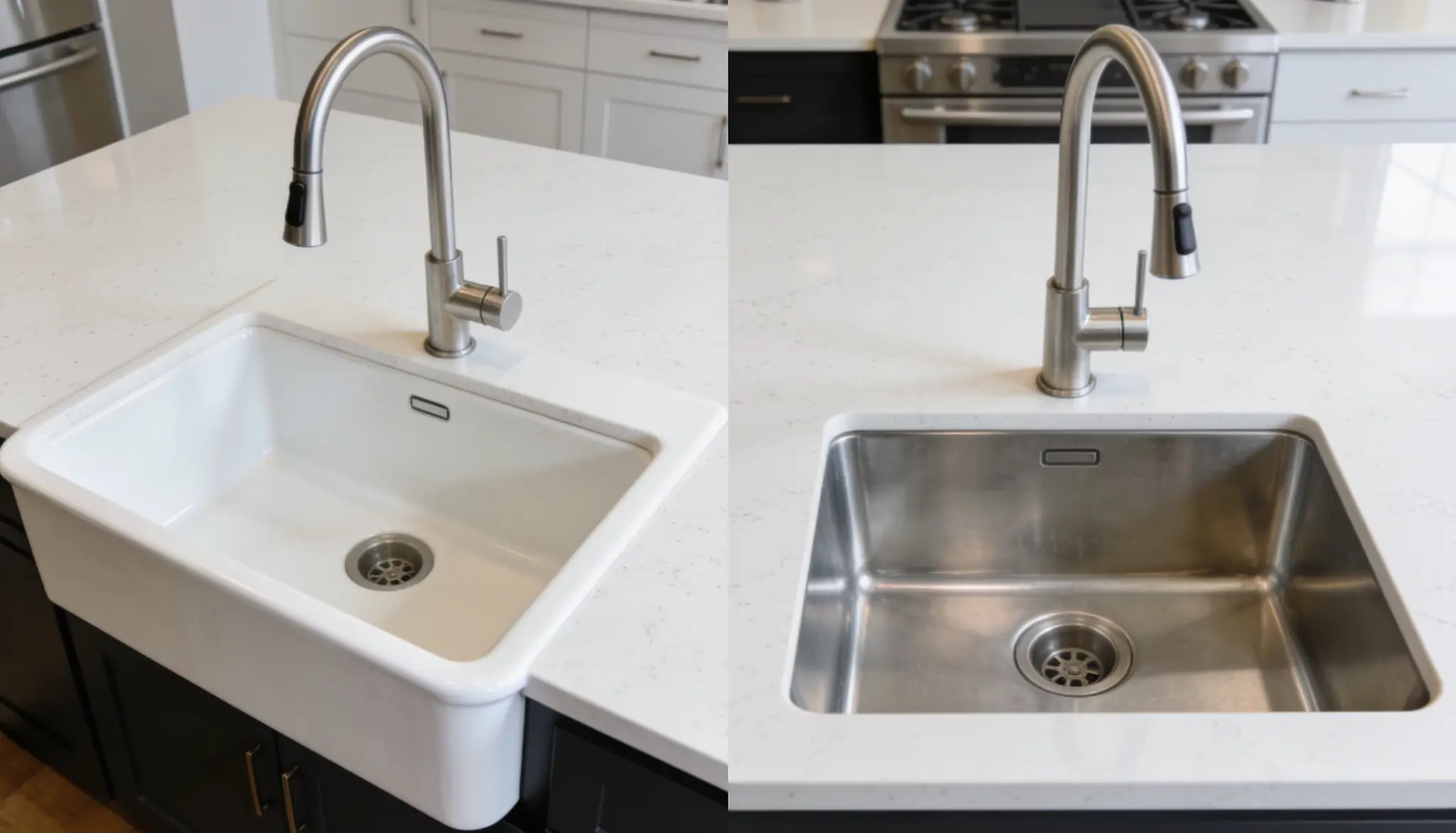
These two sink styles solve different problems, each built around a different kitchen priority.
One favors bold visual presence, the other favors a clean, low-maintenance look. The right pick depends on what matters most in the kitchen.
Appearance
An undermount sink is installed beneath the countertop, so only the basin is visible.
An apron sink features an exposed front that becomes part of the kitchen’s overall design, adding more character.
Functionality
Apron sinks offer a deeper basin and a closer washing position, which many find more comfortable.
Undermount sinks work well for daily use, but skip that extra depth and ergonomic edge.
Cleaning and Maintenance
With an undermount sink, crumbs and spills can be wiped straight into the basin, making cleanup quick.
Apron sinks are also easy to maintain, although the exposed front may need an occasional wipe to keep it looking its best.
Installation Complexity
Undermount sinks work with most standard cabinets and are generally easier to install.
Apron sinks often require cabinet modifications and additional support due to their size and weight, which can increase installation costs.
Which Sink to go For?
The best sink isn’t necessarily the one that’s more popular; it’s the one that fits your kitchen, your budget, and the way you use the space.
Both offer deep basins and eye-catching designs, but which one wins out depends on your remodeling plans and everyday needs.
When and When Not to go for an Apron Sink
An apron sink is a perfect choice if you want the look of an exposed-front sink without taking on a major renovation.
It works well in many kitchen styles, comes in a wider range of materials and finishes, and can often be installed with fewer cabinet modifications than a traditional farmhouse sink.
However, it may not be the best option if you want the simplest installation possible or prefer the clean, seamless appearance of an undermount sink.
When and When Not to go for a Farmhouse Sink
A farmhouse sink is ideal if you’re planning a kitchen remodel and want a classic look with plenty of space for large pots and pans.
It’s a durable, long-lasting option but usually requires custom cabinetry and stronger support.
If you’re keeping renovation costs low or working with standard cabinets, it may not be the most practical choice.
Matching the Sink to Your Kitchen
The right pick comes down to how the kitchen gets used, what the cabinets can support, and how much the budget allows.
Kitchen Style
Traditional and classic farmhouse kitchens suit a farmhouse sink well, thanks to its rustic, flush-front look.
Modern, transitional, and coastal kitchens often look better with an apron sink, since it fits a wider range of finishes and colors.
Budget
Farmhouse sinks fit larger budgets, given the cabinet work involved. Apron sinks suit mid-range budgets well, since installation stays simpler.
Tighter budgets may find an undermount sink the more practical pick.
Household Size and Cabinet Type
Larger households that cook frequently benefit from a farmhouse sink’s extra capacity, which usually calls for reinforced or custom cabinets.
Smaller households often do well with an apron sink’s compact sizing, since it fits most standard cabinets without extra work.
Key Takeaways
Apron and farmhouse sinks might look like twins from across the kitchen, but the details in installation, materials, cost, and everyday use decide which one actually belongs in your space.
Comparing them with an undermount sink also helps narrow down which style works best for your kitchen, whether you’re remodeling or replacing an existing sink.
Put apron sink vs farmhouse sink side by side, though, and the decision usually makes itself: pick the sink that fits how you actually cook and clean, not just the one that photographs well.
Frequently Asked Questions (FAQ’s)
1. Do Farmhouse Sinks Work with a Garbage Disposal?
Yes, the single-bowl design and standard drain size allow an easy connection with minor placement adjustments.
2. How Often Do Apron Sinks Need Resealing?
It depends on the material used. Fireclay and stainless steel need no resealing at all, while natural stone or composite finishes may need it every year or two.
3. Can a Dishwasher Fit Next to an Apron Sink?
Yes, a standard dishwasher fits fine. Just confirm counter depth and plumbing lines allow enough space for both.
4. Do Farmhouse Sinks Damage Cabinets Over Time?
Not usually, if installed correctly. Proper sealing and careful use prevent moisture issues. Poor installation raises that risk.