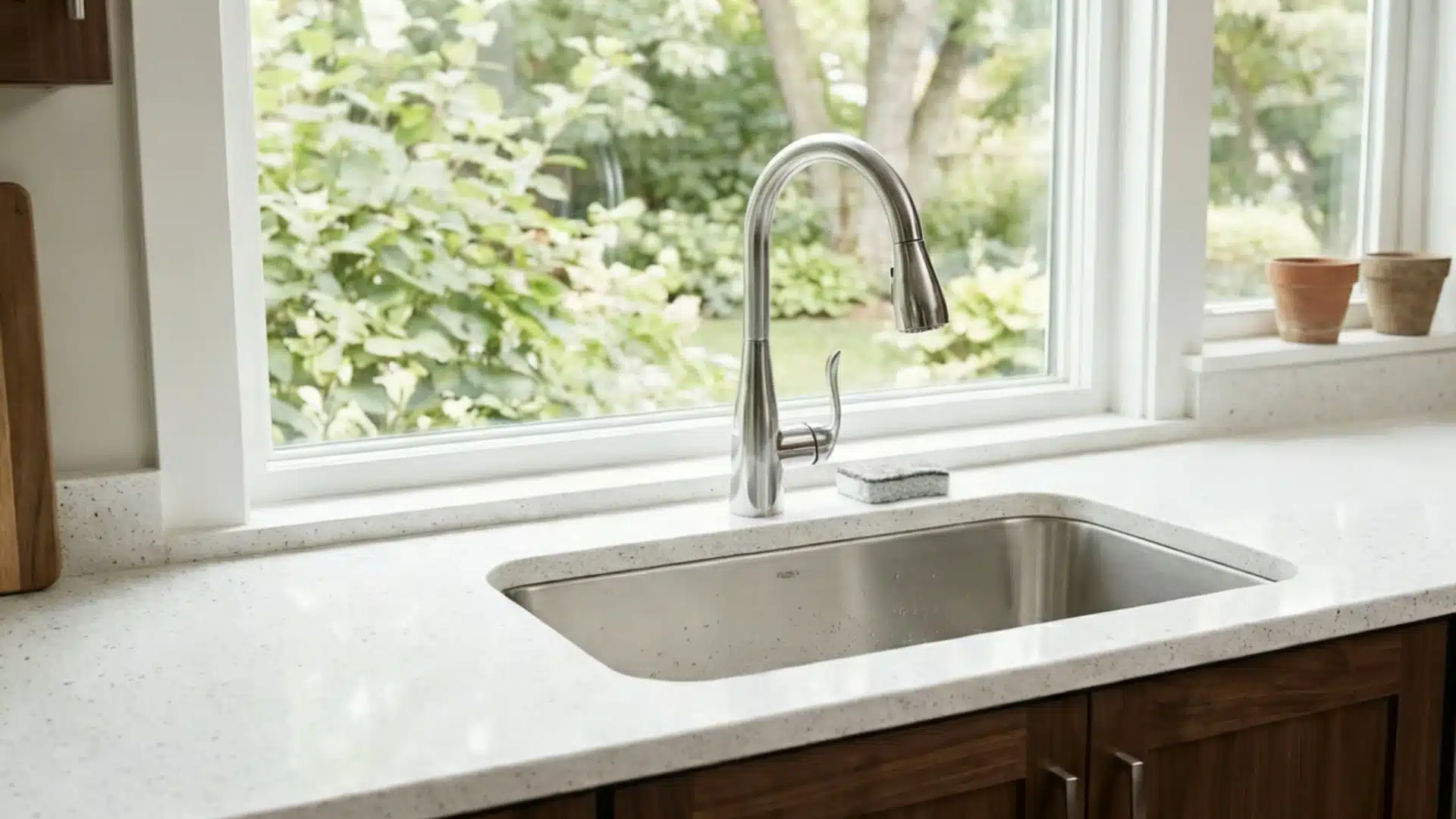
A kitchen sink is too big and takes up too much counter space. Too small, and you’re struggling to wash a large pot.
A bad fit wastes counter space and makes daily chores harder, but it doesn’t have to be this way.
This blog covers all the standard kitchen sink sizes, so you can pick the right one. We’ll briefly talk about bathroom sink sizes, too, so you can solve two problems at once.
Let’s get into it.
Types of Kitchen Sinks Sorted by Size
The wrong sink fit can make your kitchen feel off, and fixing it later costs time and money.
So before you buy, let’s make sure you know exactly what sizes are out there.
1. Small Kitchen Sinks (Under 24 Inches)
Small sinks work best in compact kitchens, bar areas, or secondary prep spaces.
If you have limited counter space, this size fits right in without crowding your layout. They’re practical, simple, and easy to install in tight spots.
- Single Bowl: 15″ x 15″ to 22″ x 18″
- Compact Single Bowl: 18” x 16”
2. Medium Kitchen Sinks (24 to 30 Inches)
This is one of the most common sizes you’ll find in standard homes.
It fits well in most kitchen cabinets and gives you enough room for everyday washing.
If you’re unsure which size to choose, this range is a safe and practical choice.
- Single Bowl: 25″ x 19″ to 27″ x 19″
- Double Bowl: 28″ x 18″ to 30″ x 18″
3. Large Kitchen Sinks (30 to 36 Inches)
Large sinks are great if you cook often or have a big household. You get more room to wash pots, pans, and large trays without any struggle.
Most large sinks need a 36-inch base cabinet to fit properly.
- Single Bowl: 30″ x 20″ to 33″ x 22″
- Double Bowl: 33″ x 19″ to 36″ x 20″
4. Extra-Large Kitchen Sinks (Over 36 Inches)
These sinks are built for serious kitchen work. If you entertain often or run a busy household, extra-large sinks give you all the space you need.
Make sure your cabinet and plumbing can support this size before buying.
- Single Bowl: 36″ x 21″ to 42″ x 22″
- Double Bowl: 38″ x 20″ to 48″ x 20″
- Farmhouse/Apron Single Bowl: 36″ x 20″ to 42″ x 20″
What are the Standard Kitchen Sink Sizes?
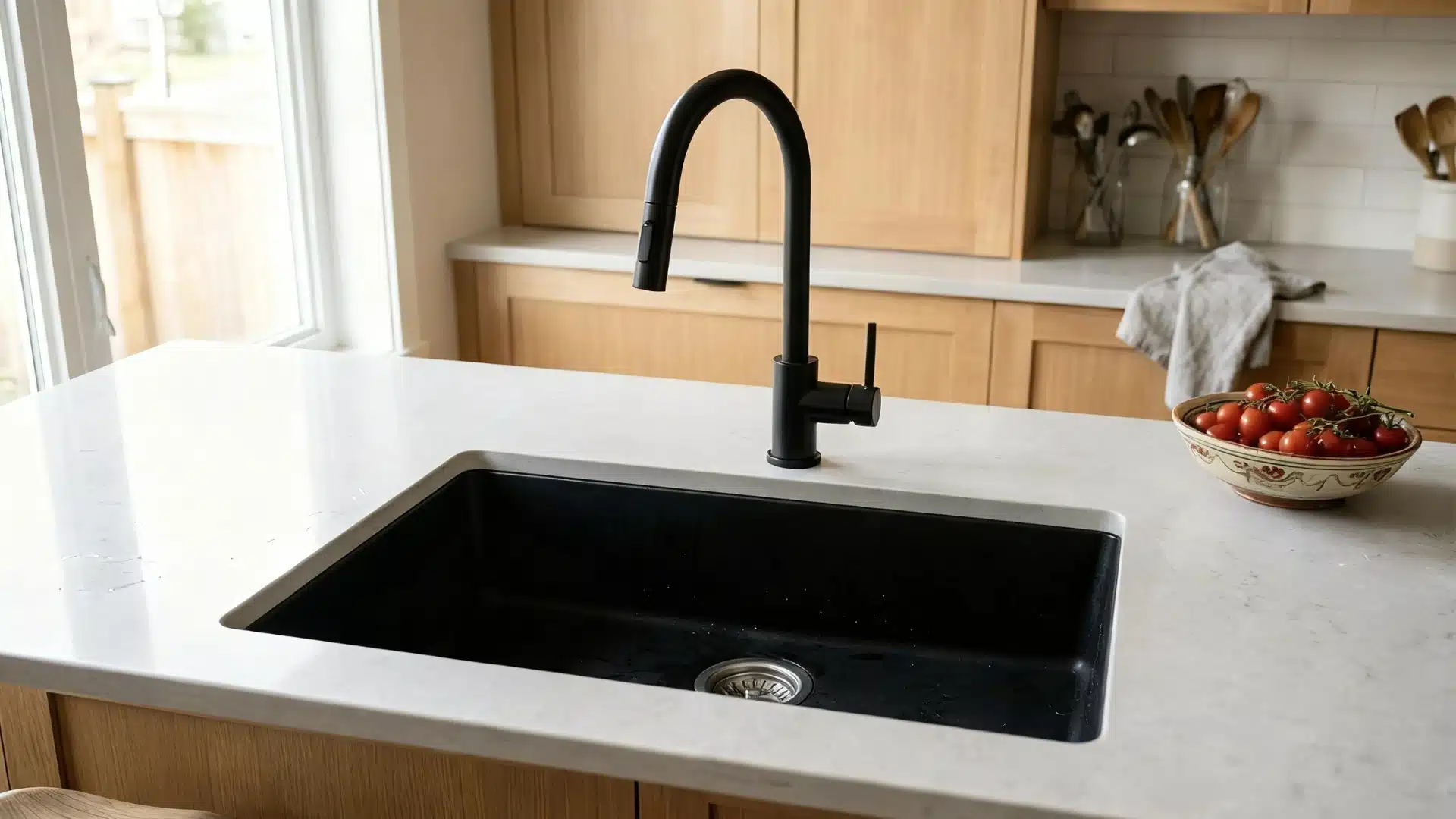
Most standard kitchen sinks are 24 to 36 inches wide.
The most common size you’ll find in everyday homes is around 30 to 33 inches. Depth usually runs between 7 and 10 inches, and the front-to-back measurement sits at about 19 to 22 inches.
That said, “standard” doesn’t mean one-size-fits-all. Your cabinet size, kitchen layout, and daily habits all shape what works best for you.
A single-person kitchen has very different needs than a busy family one.
Once you understand the basic numbers, the whole process gets a lot easier and less stressful.
A Quick Overview: Selecting the Appropriate Size for Different Kitchen Layouts
Your kitchen layout plays a big role in which sink size works best.
A sink that fits perfectly in one kitchen can feel out of place in another. Use this quick table to find your match.
| Kitchen Layout | Recommended Sink Size | Best Bowl Type |
|---|---|---|
| Small/Compact Kitchen | Under 24 inches | Single Bowl |
| Standard Home Kitchen | 24 – 30 inches | Single or Double Bowl |
| Large Family Kitchen | 30 – 36 inches | Double Bowl |
| Open-Plan/Entertainer Kitchen | 36 inches and above | Farmhouse or Double Bowl |
| Bar or Prep Area | 9 – 18 inches | Bar/Prep Sink |
How to Measure for a Perfect Sink Fit?
Your cabinet width, counter depth, and existing plumbing all affect what fits.
Take a few minutes to measure properly, and you’ll avoid a frustrating and expensive mistake.
1. Measure Your Cabinet Width First
Start with your base cabinet. Open the doors and measure the inside width from left to right.
Your sink should be at least 2 to 3 inches smaller than that number. This gives you enough room for clips and a proper seal.
2. Check Your Countertop Cutout
If you’re replacing an old sink, measure the existing cutout in your countertop. Measure the length, width, and corner radius; you need all three.
This tells you the maximum sink size that fits without cutting new material. It’s the easiest starting point you’ve got.
If this is your first replacement, take a photo of the cutout before heading to the store. It saves a lot of back-and-forth.
3. Measure the Countertop Depth
Don’t forget the depth of your countertop, front to back. Most standard counters run about 24 to 25 inches deep.
Your sink should sit comfortably within that space, leaving room at the back for the faucet and any plumbing connections.
4. Note the Sink Depth (Bowl Depth)
Bowl depth affects how comfortable the sink feels to use daily. Most standard bowls are 7 to 10 inches deep.
If you’re tall or short, this number matters more than you’d think. A deeper bowl means less splashing but more bending.
5. Account for Undermount vs. Drop-In Sizing
The way your sink mounts changes the measurements you need. Drop-in sinks sit on top of the counter, so the outer rim size matters most.
Undermount sinks attach from below, so the cutout size matters. Always check which type you’re buying before you measure.
6. Measure Plumbing Clearance Below
Open your cabinet and look at where the pipes sit. Your sink bowl should not hang so low that it blocks or crushes the drain pipes.
Leave at least 4 to 5 inches of clearance between the bottom of the bowl and the cabinet floor.
This step is easy to forget, but skipping it can mean a full reinstallation. Check it once and save yourself the trouble.
7. Double-Check Everything Before You Buy
Always measure twice; it’s old advice, but it works.
Write down every number: cabinet width, countertop cutout, depth, and plumbing clearance.
Bring that list to the store or use it when shopping online. One wrong number can turn a simple install into a full-day fix.
Common Kitchen Sink Sizes by Bowl Type
Sink sizes change depending on the bowl type you choose. A single bowl and a double bowl don’t follow the same measurements.
| Bowl Type | Standard Width | Standard Depth | Bowl Depth | Best For |
|---|---|---|---|---|
| Single Bowl | 24” – 36″ | 18” – 22″ | 8” – 10″ | Large pots, open washing space |
| Double Bowl | 30” – 48″ | 18” – 22″ | 7” – 9” each | Multitasking, separating tasks |
| Triple Bowl | 42” – 48″ | 18” – 22″ | 6” – 8” each | Large kitchens, heavy daily use |
| Farmhouse/Apron | 24” – 42″ | 18” – 24″ | 9” – 10″ | Statement kitchens, deep washing |
| Bar/Prep Sink | 9” – 18″ | 9” – 15″ | 5” – 6″ | Small spaces, secondary prep area |
| Corner Sink | 36” – 40” per arm | 18” – 22″ per side | 7” – 9″ | Corner cabinet spaces |
If you cook big meals often, the single bowl is your best friend. There’s nothing more frustrating than trying to wash a large roasting pan in a divided sink.
Standard Bathroom Sink Size
Bathroom sinks are smaller than kitchen sinks, but size still matters.
The most common bathroom sink width runs between 17 and 24 inches.
Depth usually falls between 16 and 23 inches. Bowl depth typically sits around 5 to 8 inches.
Wall-mounted and pedestal sinks usually measure around 20 to 24 inches wide. Undermount and drop-in vanity styles can be up to 24 inches wide.
Your vanity size decides what sink fits. A 24-inch vanity works best with a smaller sink. A 36-inch or wider vanity gives you more size options.
Top-Mount vs. Undermount Sizes
Top-mount and undermount sinks follow different sizing rules. One sits on your counter, the other hides beneath it.
Knowing the size differences upfront helps you plan your kitchen or bathroom layout without any surprises.
| Feature | Top-Mount Sink | Undermount Sink |
|---|---|---|
| Standard Width | 20” – 36″ | 18” – 36″ |
| Standard Depth | 17” – 22″ | 17” – 22″ |
| Bowl Depth | 7” – 9″ | 8” – 10″ |
| Overhang/Rim | 1” – 2” rim sits on counter | No rim, sits flush under the counter |
| Cabinet Size Needed | 24” – 36” base cabinet | 24″ – 36″ base cabinet |
| Cutout Required | Yes, slightly smaller than the sink | Yes, matches bowl size exactly |
| Best For | Easy DIY install, most budgets | Clean look, easier counter cleaning |
Top-Mount Sink
A top-mount sink drops straight into a hole cut in the counter.
The rim holds it firmly in place, so installation is pretty straightforward, no special tools or skills needed.
It works with almost any countertop material, including laminate and tile. And if it ever needs replacing, most people can do it without professional help
Undermount Sink
An undermount sink attaches from below the counter, leaving the top surface completely clear.
It pairs well with stone or solid-surface counters and gives the kitchen a clean, uncluttered look.
There’s no rim collecting crumbs or water, so wiping down the counter is quick and easy. It’s a practical choice that also looks great.
Wrap Up
You just need the right information before you buy a kitchen sink.
Now you know the standard sizes, how to measure properly, and how different bowl types and mounting styles compare.
Take your measurements, consider your daily habits, and match the size to your actual needs, not just what looks good in the store.
So measure once, choose smart, and get it right the first time.
Frequently Asked Questions (FAQs)
1. Will a 36” Sink Fit in a 36” Cabinet?
Technically, yes, but it’s tight. Most experts recommend a cabinet slightly larger for proper clearance and easier installation.
2. What is the 3×4 Kitchen Rule?
It refers to the ideal kitchen work triangle, which keeps the sink, stove, and fridge in a functional, efficient arrangement.
3. What is the Golden Rule in the Kitchen?
The golden rule in the kitchen is: keep it clean, stay organized, and always mise en place, prepare everything before you start cooking.