A patio door can completely change how a room feels. More light, better flow, and a view you actually want to look at every day.
But most people don’t think about it until it’s too late: size matters more than style.
Choosing the right standard patio door dimensions before you buy saves you time, money, and a whole lot of stress.
Stick around. I’ll help you figure out exactly what works for your space.
What are Standard Patio Door Dimensions
Not all patio doors come in the same size. The chart below gives you a quick look at the most common types and their typical sizes.
Use this as a starting point when planning your space.
Door Type | Common Width | Common Height | Best Use | Space Planning Note |
Sliding Patio Door | 60 in to 72 in | 80 in | Small to mid-size spaces | Needs clear wall space on one side for the panel to slide |
Two Panel Sliding Glass Door | 60 in to 96 in | 80 in | Larger openings, open plan homes | Works best with wider wall spans |
French Patio Door | 60 in to 72 in | 80 in to 96 in | Classic and traditional home styles | Both panels swing open, so clear floor space is needed |
Bifold Patio Door | 48 in to 144 in | 80 in to 96 in | Indoor-outdoor living spaces | Folds flat to one side, ideal for wide openings |
A quick note before you shop:
These are standard sizes, but actual measurements can vary.
The brand you choose, the frame material, the glass package, and the rough opening size of your wall can all affect the final fit.
Bifold Patio Doors
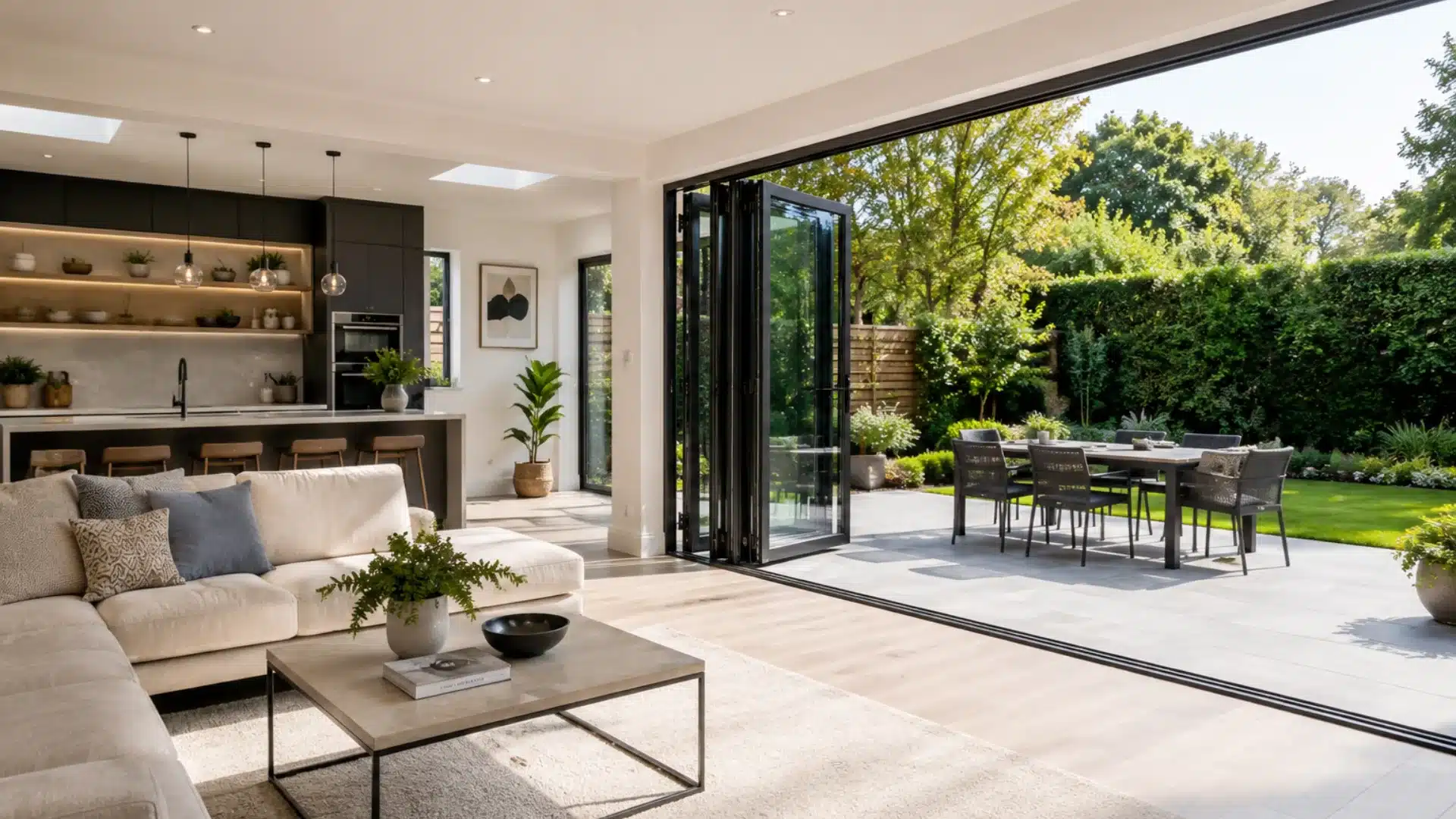
If you have a large patio, a wide deck, or an open-plan living area, bifold doors are worth a serious look.
They fold back on themselves in a concertina style, stacking neatly to one side. The result is a full, clear opening with nothing blocking the view or the walkway.
They do need more planning than a standard door, though. Here is what to think about before you choose them:
- The stacked panels take up wall space on one side when open
- The floor track must sit perfectly level or the panels will stick
- The surrounding wall may need extra structural support
- Track quality matters a lot since a cheap track wears out fast
They work best in open-plan kitchens, living rooms, and dining areas that connect directly to an outdoor space.
Sliding Patio Doors
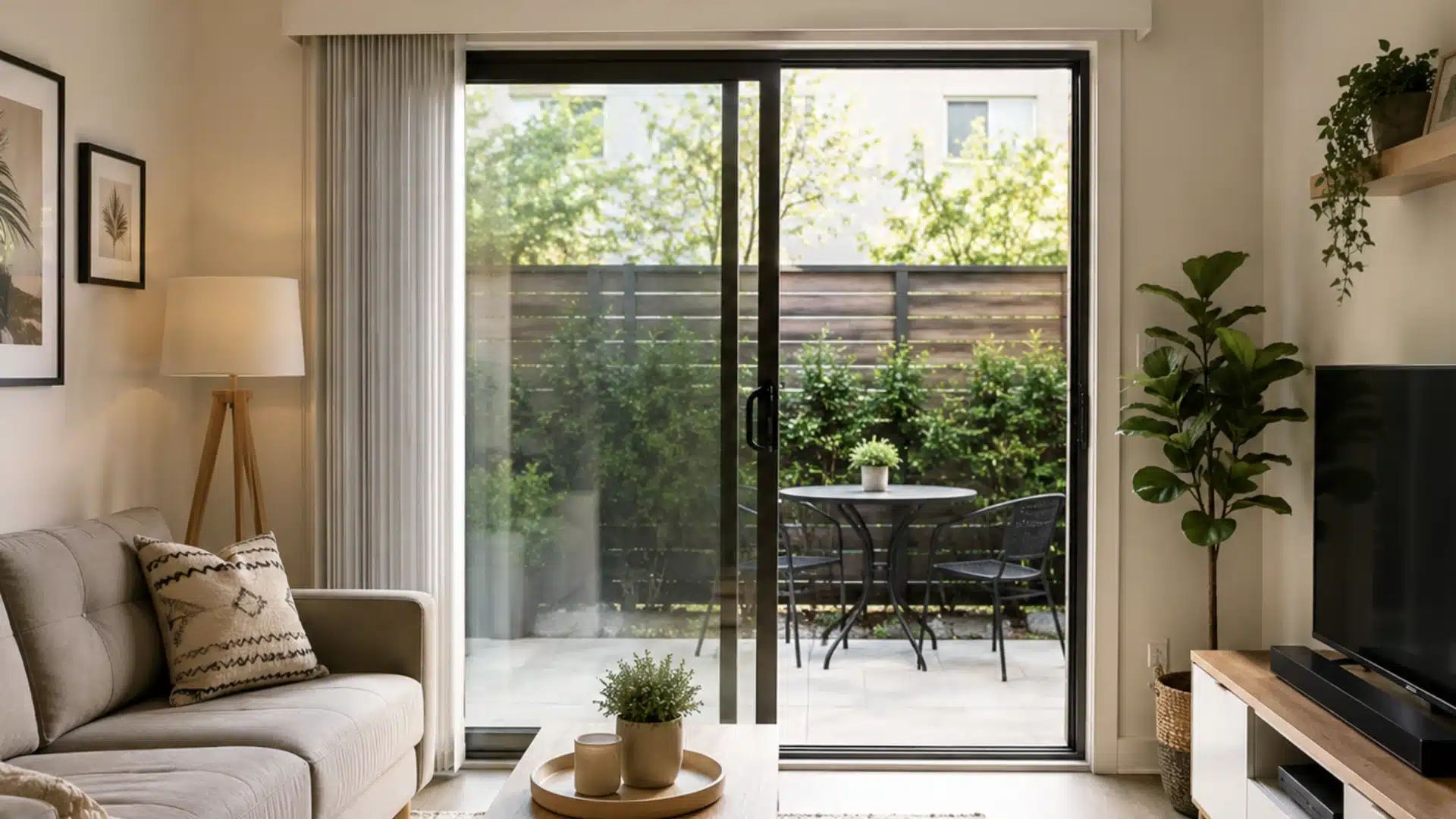
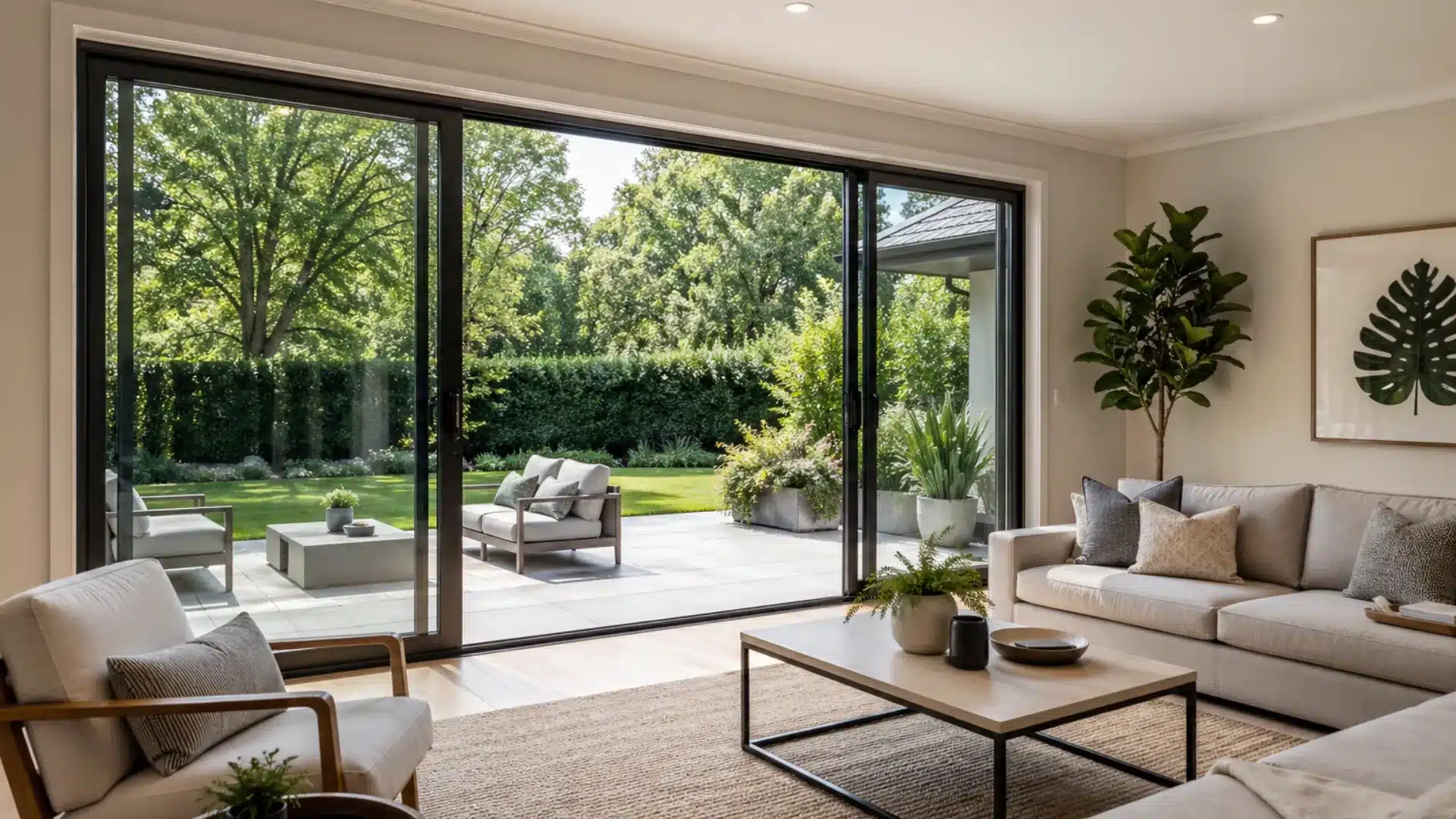
Sliding patio doors are a practical choice for homes where floor space is tight. One panel stays fixed while the other slides across it. No swing space needed and no furniture to rearrange.
They work best in smaller patios, compact backyard access points, and rooms where a swinging door would block walkways or furniture.
Track quality is more important than most people think. A well-made track keeps the door gliding smoothly for years.
A poor one starts sticking within months. Always check that the rollers are easy to clean and adjust.
The glass area is worth thinking about, too. A larger glass panel brings in more light but less privacy.
If your patio faces a neighbor or a busy street, frosted or tinted glass is a smart option.
French Patio Doors
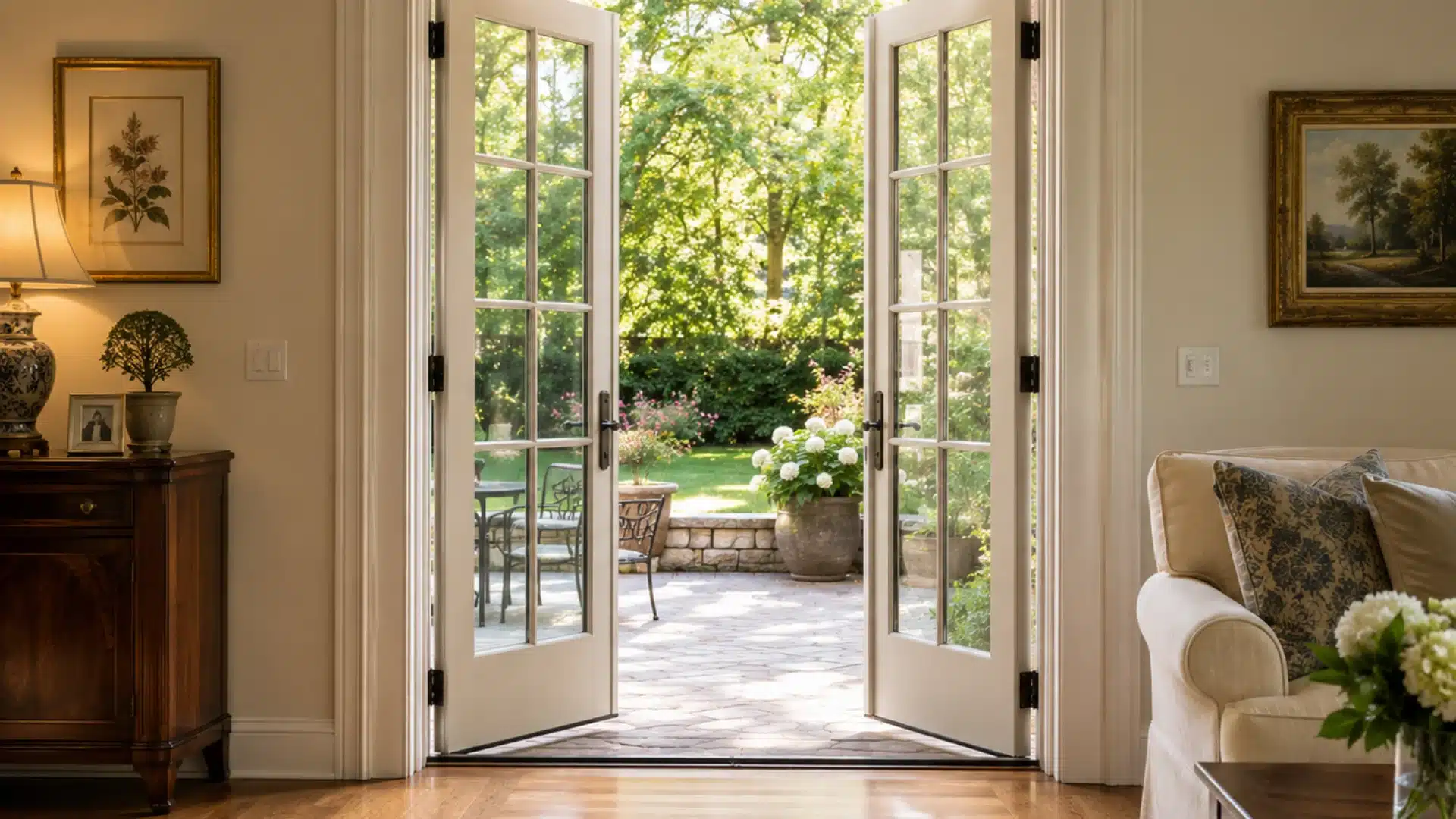
French patio doors bring a classic look to any home. They use two hinged panels that open from the center. That simple detail makes a big difference to how a room feels and functions.
The most important thing to plan for is swing clearance.
Both panels need room to open fully. That means the floor space directly in front of the door must stay clear at all times.
Inward or outward opening? This is a question most people forget to ask.
An inward-opening door gives better weather protection but takes up interior floor space.
An outward-opening door keeps the inside clear but needs free space on the patio side.
Decide this before planning your furniture layout. Moving a sofa after installation is not a fun afternoon.
Two Panel Sliding Glass Doors
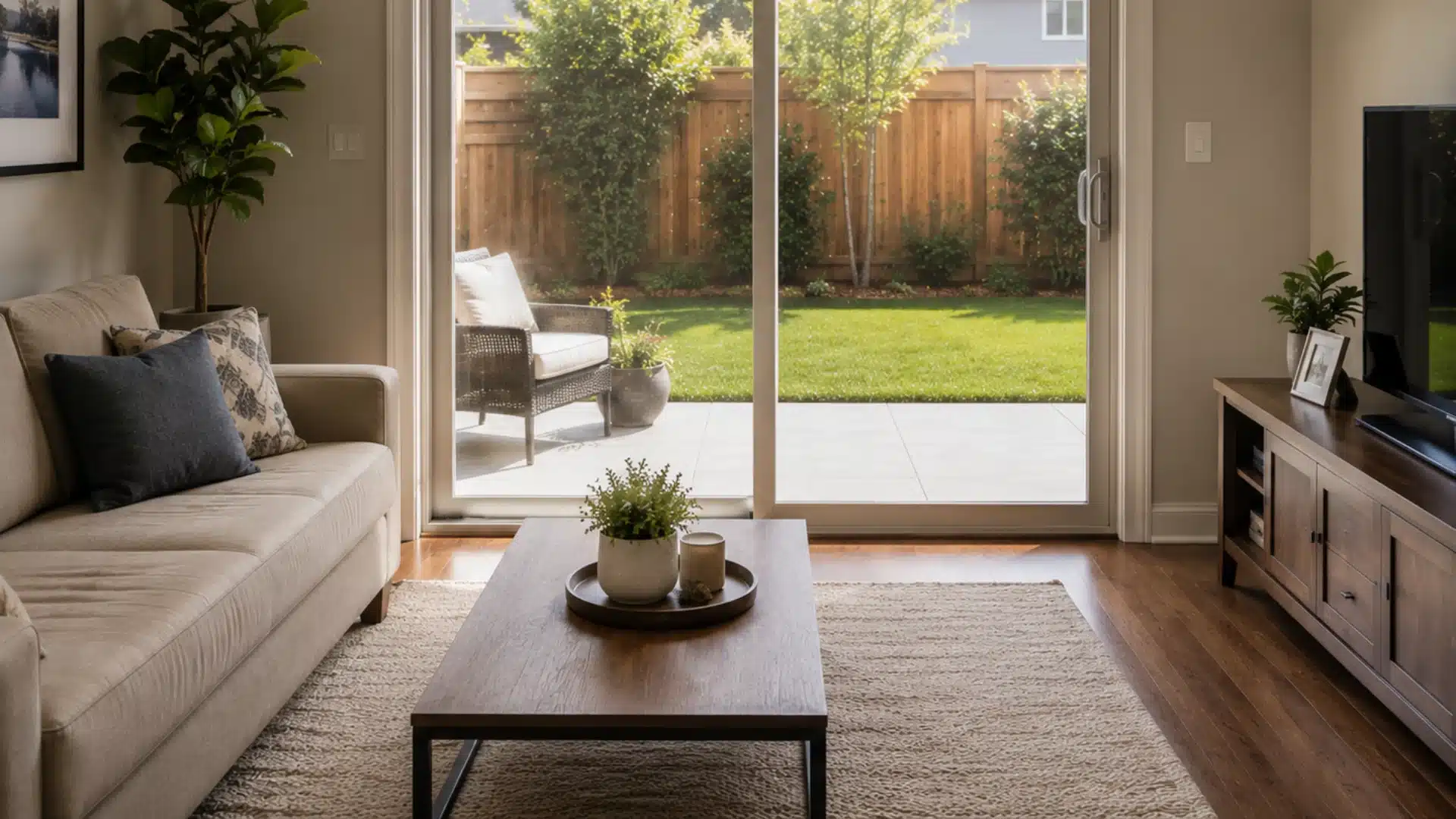
Two-panel sliding glass doors are one of the most common patio door choices for a good reason.
They are a good fit for:
- Compact patios where a wider door style is not practical
- Older homes where a like-for-like replacement is needed
- Budget-conscious projects where ease of installation matters
For everyday use, they are hard to beat. One panel slides, one stays fixed, and the whole thing operates without much thought.
Expert note: For replacement projects, always measure the existing rough opening first. A door that matches the current opening saves time and keeps costs down significantly.
What Are the Recommended Sliding Patio Door Sizes?
Choosing a sliding patio door size is not just about what fits the wall. It is about what works for the way you actually use the space. Here is a practical breakdown by room type.
Small Apartments or Balconies
A 60-inch wide door is the most practical choice here.
It gives you a clean exit point without overwhelming a smaller wall. It also keeps the room feeling balanced rather than dominated by glass.
Standard Living Rooms
A 72-inch-wide door is the sweet spot for most standard living rooms. It is wide enough to feel open and generous but does not require major structural changes.
Most homes are already built to accommodate this size, which makes it a popular choice for upgrades and replacements.
Large Patios or Garden-Facing Rooms
For a room that faces a garden or a large patio, an 84-inch wide door makes a noticeable difference.
The extra width brings in more light and makes the connection between inside and outside feel more intentional.
This size works best when the room has enough depth to balance the scale of the opening.
Custom or Oversized Layout
Anything beyond 96 inches moves into custom territory. Bifold doors often fall here.
These layouts need careful planning, a structural assessment, and a contractor who understands load-bearing wall requirements.
Before settling on a size, think about these three things:
- Wall space: Is there enough room on either side of the opening for the door style you want?
- Furniture movement: Will the door swing or slide into a path that disrupts how you use the room?
- Natural light: A wider door brings in more light but may need window treatments for temperature and privacy control
Conclusion
Getting the standard patio door dimensions right makes every other decision easier.
The right size fits your wall, suits your room, and works for the way you actually live.
Whether you go with a sliding door, a bifold, or a French style, the planning always comes before the purchase.
Measure twice, check your rough opening, and talk to your installer before you commit. A well-chosen patio door is one of the best upgrades a home can get.
Frequently Asked Questions (FAQ’s)
1. Are Patio Door Dimensions Measured by the Door or the Rough Opening?
They refer to the door unit itself. The rough opening is always slightly larger. Confirm both with your installer.
2. Can Patio Doors Be Custom-Sized?
Yes. Custom sizing is available for unusual openings. It costs more and takes longer, so get a professional measurement first.