Ever slammed a door and heard that satisfying click? That sound comes from more than just the door itself.
Most people never think about what holds a door in place.
But when something feels off, a draft sneaking in or a door that won’t shut right, it’s usually a problem with the parts of a door frame.
Let’s look into it together.
About the Anatomy of a Door
Have you ever looked at a door and wondered what keeps it standing straight?
A door is not just a flat slab of wood or glass. It is a system of parts that work together.
Each part has a job. Some parts hold the door in place. Some keep the weather out. And some ensure that the door opens and closes without any trouble.
Think of it like a picture frame. The frame around it is just as important as what is inside.
The same goes for a door. Without the right parts around it, even the best door would not work properly.
Now look at what makes up a door:
- The door slab: This is the flat panel you actually open and close
- The door frame: This is the structure that surrounds and supports the door slab
- The hardware: This includes hinges, handles, and locks
Parts of a Door Frame
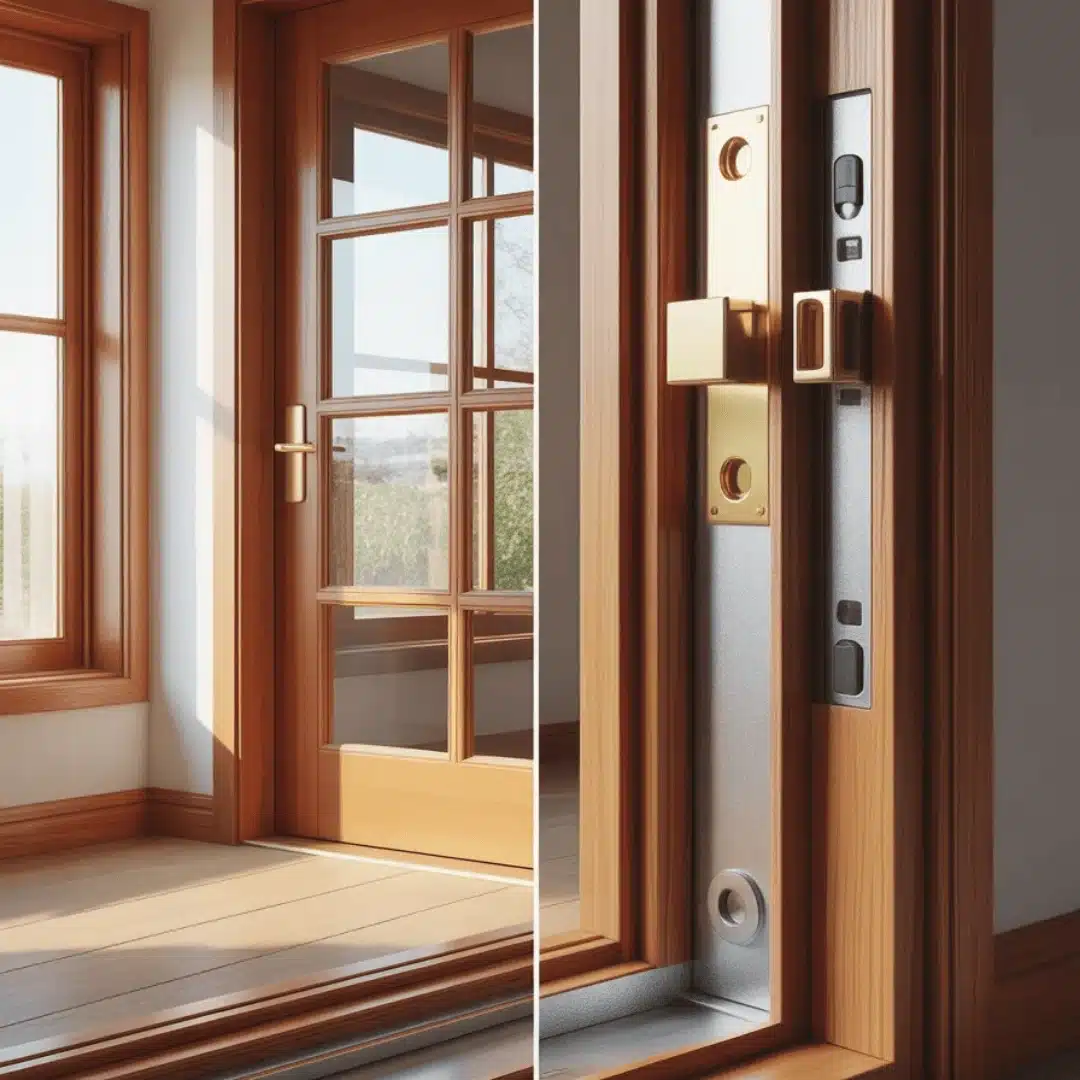
A door frame consists of several parts. Each part plays a specific role.
Knowing the parts of a door frame helps you spot problems early and fix them faster. Let’s go through each one.
1. Door Jamb
The door jamb is the vertical part on either side of the doorframe. There are two jambs in every door frame. One sits on the left, and one sits on the right.
The jamb is the part of the door frame that the door actually latches onto when it closes. It also holds the hinges in place.
So if your door is not closing properly, the jamb is usually the first place to check.
There are two types of jambs:
- Hinge jamb: This is where the hinges are attached
- Strike jamb: This is where the latch or lock meets the frame
2. Door Header
The header sits at the very top of the door frame. It runs horizontally across the top, connecting both jambs.
The header does a big job. It carries the weight of the wall above the door. Without a strong header, the wall could sag or crack over time.
- It supports the load from above the door opening
- It keeps the frame from shifting or warping
- It is usually made from thick, solid wood or engineered lumber
3. Door Sill
The door sill sits at the very bottom of the frame. It is the part you step over when you walk through a door.
Not every interior door has a sill.
But exterior doors almost always do. Why? This phenomenon is due to the sill’s ability to form a seal between the door and the floor. This keeps out rain, wind, and cold air.
A worn-out sill is one of the most common causes of drafts in a home.
4. Door Stop
The door stop is a small strip of wood inside the frame. It runs along the jambs and the header. Its job is simple but crucial.
When you close a door, the door stop is what it rests against. It stops the door from swinging too far in one direction.
Without a doorstop:
- The door would swing all the way through the frame
- It would be harder to create a proper seal
- Locks and latches would not line up correctly
5. Door Casing
The door casing is the trim you see around the door frame. It covers the gap between the wall and the frame. It provides the door with a clean and finished look.
Casing is mostly decorative. But it also helps seal the edges of the frame against the wall.
You can observe door casing in many styles, from simple flat boards to more detailed designs.
Most people notice the casing first because it is the most visible part of the frame.
6. Threshold
The threshold is closely related to the sill. It sits right at the base of an exterior door. The threshold bridges the gap between the door sill and the floor inside.
It works as a seal. It keeps outside air, water, and dust from getting in under the door. A good threshold also helps with energy efficiency in your home.
Signs that your threshold needs replacing:
- You can feel a draft near the bottom of the door
- You notice water seeping in during rain
- The threshold looks cracked or worn down
7. Rough Opening
The rough opening is the framed opening in the wall where the door frame sits. It is slightly larger than the actual door frame.
This extra space allows for adjustments during installation.
Builders use the rough opening to:
- Set the door frame level and plumb
- Make small corrections before the frame is fixed in place
- Ensure the door opens and closes without sticking
Getting the rough opening right is one of the most important steps in door installation.
Parts Beyond the Frame
The door frame does most of the heavy lifting. But a few extra parts work alongside it to make the door fully functional.
Strike Plate
The strike plate is a small metal plate. It sits on the strike jamb. When you close the door, the latch clicks into it.
It keeps the door shut and adds a layer of security.
Hinges
Hinges connect the door slab to the hinge jamb.
Most doors have two or three hinges. They carry the full weight of the door. If a hinge is loose, the door will drag or not close right.
Door Sweep
A door sweep attaches to the bottom of the door slab. It seals the gap between the door and the floor.
It keeps dust, bugs, and cold air from sneaking in.
Weatherstripping
Weatherstripping runs along the sides and top of the door frame. It fills the small gaps between the door and the frame.
It helps keep your home warm in winter and cool in summer
What are the Functions of a Door Frame?
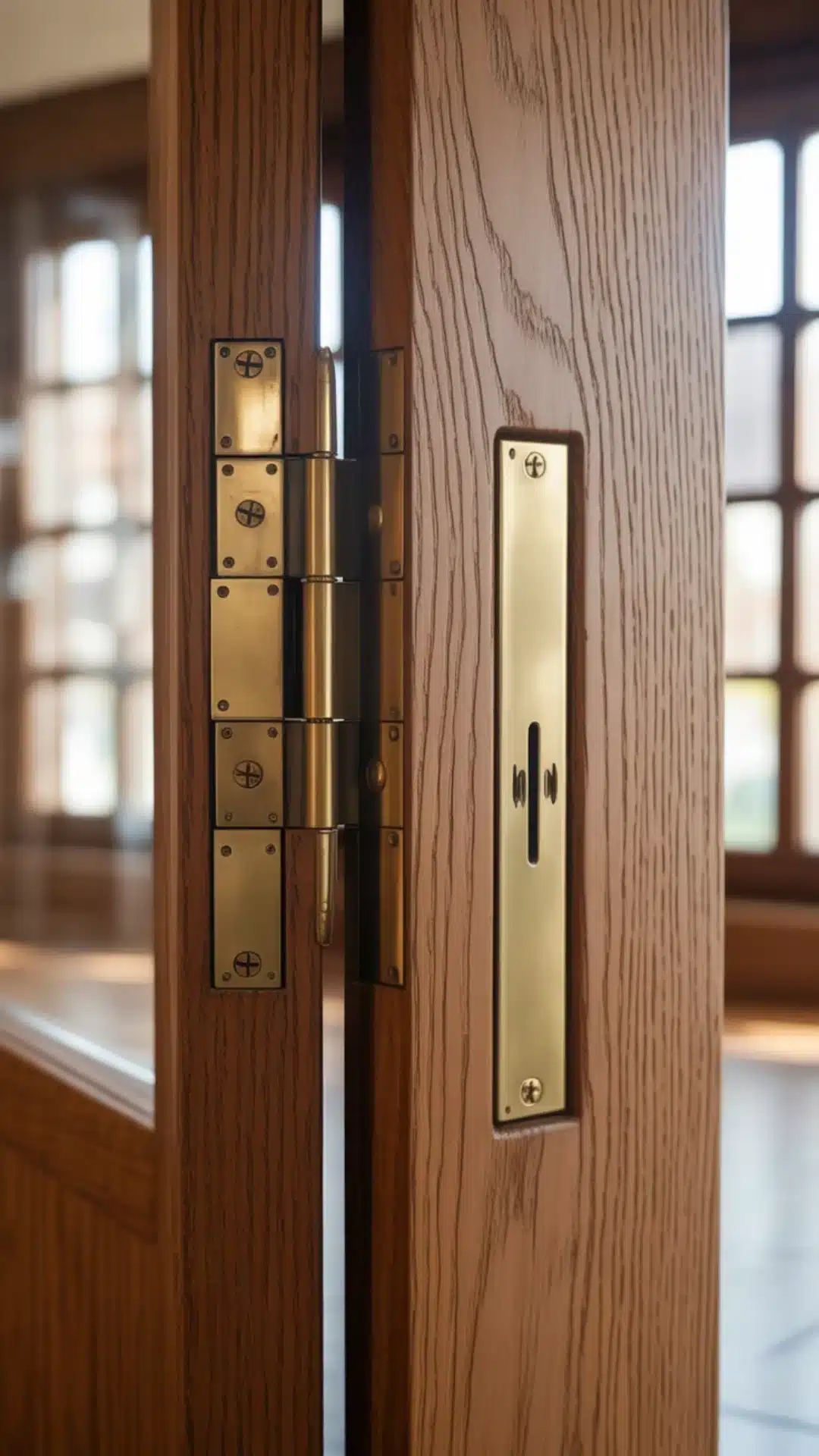
A door frame does a lot more than just hold a door in place.
Every part of it works together to keep your home safe, comfortable, and well-structured.
Provides Structural Support
The door frame carries the weight of the wall around the opening. It keeps the door from sagging or shifting over time.
Without it, the entire opening would lose its shape.
Holds the Door in Place
The frame provides the door with something solid to attach to. The hinges connect to the jamb. The latch connects to the strike plate on the jamb.
Everything lines up because of the frame.
Keeps out Drafts and Moisture
A well-fitted door frame seals the gaps around the door. The frame keeps cold air, wind, and rain from getting inside.
The sill and threshold play a big role in this process.
Adds Security to Your Home
The door frame is what makes a door lockable.
The strike plate sits inside the jamb. When you turn the key, the bolt goes into the jamb. A strong frame means a stronger, safer lock.
Helps the Door Open and Close Smoothly
The frame keeps everything aligned.
When the frame is level and plumb, the door swings freely. When it is not, the door sticks, drags, or refuses to close properly.
Door Jamb vs Door Frame
People often use these two terms interchangeably. But they are not the same thing. Here is a simple way to think about it:
The door frame is the whole structure. The door jamb is just one part of that structure.
Still confused? This table makes it easier and clearer to understand:
| Doorjamb | Door Frame | |
|---|---|---|
| What it is | A single vertical piece on the side of the door | The complete structure surrounding the door opening |
| Where it sits | On the left or right side of the frame | Around the entire door opening |
| Main job | Holds the hinges and strike plate | Supports and surrounds the entire door |
| Parts included | Just the jamb itself | Jambs, header, sill, casing, threshold, and doorstop |
| What attaches to it | Hinges, latch, and lock hardware | The entire door slab and all its hardware |
| Can it work alone | No, it is part of the frame | Yes, it is the complete unit |
| Visible from inside | Partially visible | Fully visible, including the casing |
Wrapping it all up
A door frame is more than just a border. Every part, from the jamb to the threshold, has a real job to do.
Now that you know the parts of a door frame, spotting and fixing door problems gets a whole lot easier.
Next time your door sticks or lets in a draft, you will know exactly where to look.
Got questions? Drop them in the comments. We would love to help!
Frequently Asked Questions
1. What is the piece of wood at the bottom of a door called?
The piece of wood at the bottom of a door is called the door sill or threshold.
2. What are the Main Parts of a Door Frame?
The main parts are the jambs, header, sill, threshold, casing, and door stop.
3. Why is a Door Frame Important?
A door frame supports the door, keeps out drafts, and helps the door close properly.