Have you ever walked past a home and felt like it belonged in another century?
That is precisely the feeling Tudor Revival architecture gives you. But most people get this wrong. This style did not begin in medieval times.
Architects who sought something authentic and grounded revived it centuries later.
So what made it so special? Keep reading to find out.
History of Tudor Architecture
Tudor architecture first appeared in England between 1485 and 1603. This was when the Tudor monarchs ruled, from King Henry VII to Queen Elizabeth I.
Builders moved away from the heavy Gothic style and began using red brick rather than expensive stone.
Hampton Court Palace, built in 1515, is one of the finest surviving examples of this style. It still stands today near London.
In the 1800s, architects in Britain and America looked back at this period with immense admiration.
And so this architecture style was born, bringing old-world charm into modern neighborhoods.
Characteristics of Tudor Revival Architecture
Here are the key traits that define the style.
1. Half Timbering

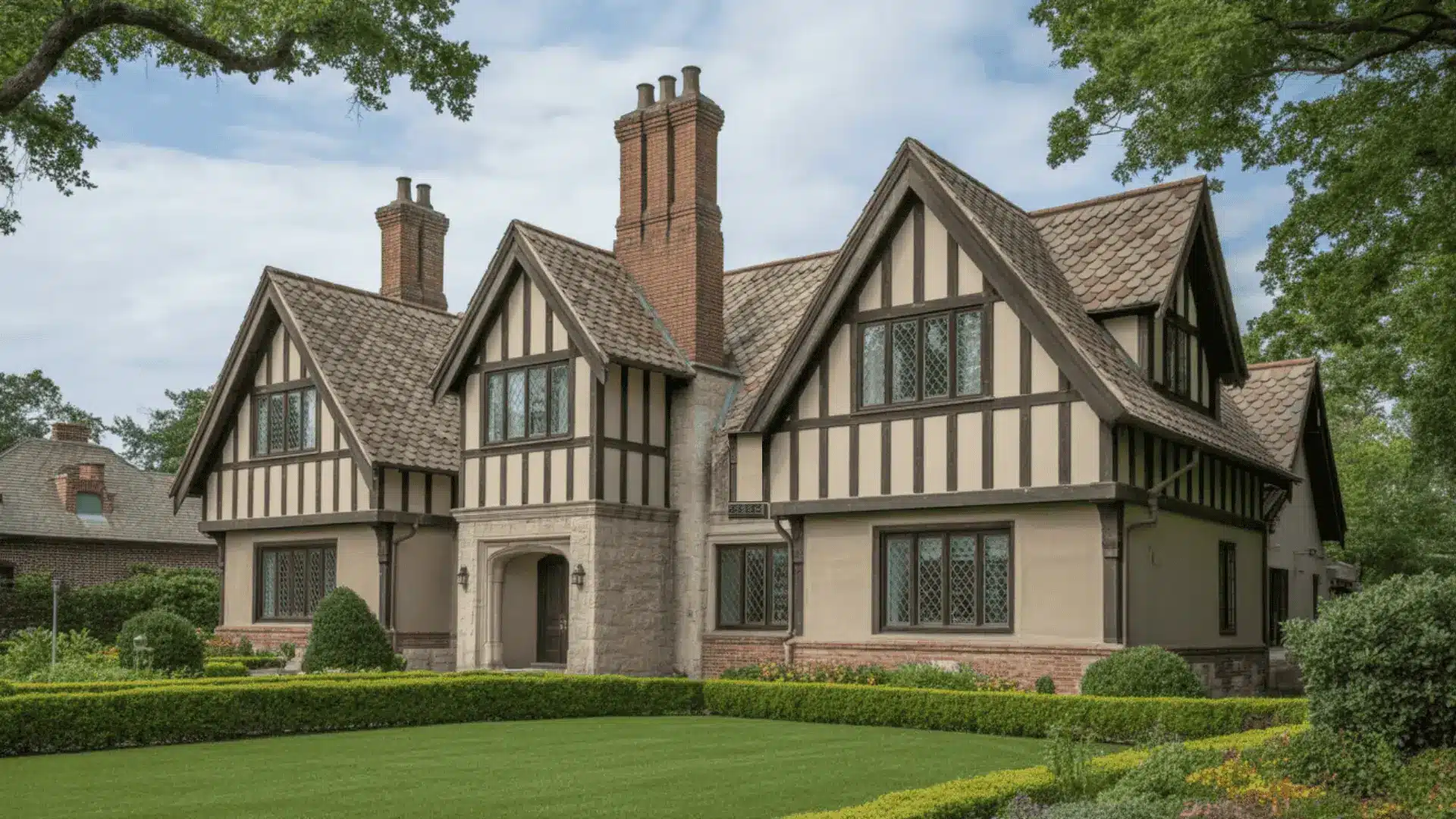
Dark wooden beams are placed against lighter stucco or brick walls.
This style shows up mostly on the upper floors and gives the home its signature two-tone look.
In original Tudor buildings, these beams were structural. In revival versions, they are decorative but just as striking.
2. Steeply Pitched Roofs

The roofs are tall and sharp and often have multiple gables, including cross gables.
They are built to shed water quickly and rarely have large overhangs.
3. Massive Chimneys

Tall brick chimneys sit prominently on the front of the building.
They are often detailed with decorative chimney pots that are difficult to miss. In many homes, the chimneys are so tall and detailed that they almost look like a design feature on their own.
4. Windows and Entries

Windows are tall and narrow, grouped together. They often feature diamond-shaped leaded glass panes.
Entrances are usually arched in a Tudor or round arch style.
5. Asymmetrical Facades
Most Tudor homes are two-story with irregular floor plans. The upper floors often overhang the lower ones, a feature known as jettying.
6. Exterior Materials

Buildings typically combine brick, stone, and stucco. A common pattern is brick on the lower floor and half-timbering on the upper floor.
This layered approach gives the exterior a rich, textured look that feels both solid and detailed.
Common Building Types
Tudor Revival architecture did not stay limited to grand country estates. It spread across different building types over the decades.
Residential Homes
This is where the style really took off. From the 1890s to the 1940s, regular neighborhoods in the US and UK started filling up with Tudor Revival homes.
Families loved them because they looked different from everything else on the street.
What’s beneficial about these homes is that many of them are still standing, and people still want to buy them.
Churches
Many churches adopted this Revival style. It gave them a sense of history and permanence that felt fitting for a place of worship.
Schools
Educational institutions loved this style too.
Yale University in the United States has several buildings built in the Tudor Revival style. The style gave schools a feeling of tradition and academic seriousness
Commercial Buildings
Some banks, hotels, and civic buildings also took on Tudor features.
Builders used the style to signal trust, stability, and tradition to the public. A Tudor Revival bank or hotel immediately felt solid and reputable.
It was a smart choice for businesses that wanted to build confidence with their customers.
Tudor House Style

The Tudor house style is the most loved version of this architecture. Walk through any older suburb in England or the American Northeast and you will spot them easily.
A typical Tudor Revival house has a brick or stone ground floor.
The upper floor is where half-timbering takes over. The contrast between the two levels gives the house its signature two-tone look.
What makes Tudor homes feel so livable? A few things stand out:
- Asymmetrical layouts that make each home feel unique and personal
- Cozy interiors with low ceilings, exposed beams, and wide fireplaces
- Lush landscaping that complements the storybook exterior beautifully
- Covered entryways that add both shelter and charm to the front of the home
In a world dominated by glass and steel, a Tudor house exudes a sense of history.
Architects today still draw inspiration from this style. Modern Tudor homes keep the iconic look but update the floor plans and materials for today’s living standards.
Conclusion
Tudor Revival architecture has endured for a good reason. It took something old and made it feel personal, warm, and full of character.
Every detail, from the steep rooflines to the half-timbered walls, narrates a story.
If you are thinking about building or buying a home with real personality, this style is worth a closer look.
If you just want to admire the homes you pass daily, you now know what to look for.
Have thoughts or questions about it?
Drop them in the comments below. We would love to hear from you.
FAQs
What is Common for Tudor Revival Architecture?
Half-timbering, steep roofs, tall narrow windows, decorative chimneys, and brick or stone walls are the most common features.
Why are Tudor Houses so Wonky?
The timber frames dried and shifted over centuries. Builders later copied this uneven look on purpose for charm.