In Southern California throughout the 1950s and 1960s, Googie architecture was everywhere!
And recognizing it wasn’t that difficult.
All you had to do was spot the neon starbursts, boomerang angles, and upswept rooflines. They were designed to catch a driver’s eye at forty miles per hour.
This architectural style added drama and a bold mid-century look to the public spaces, making them look attractive.
While most of the structures were demolished, altered, or redeveloped, some of them still stand and are carefully preserved.
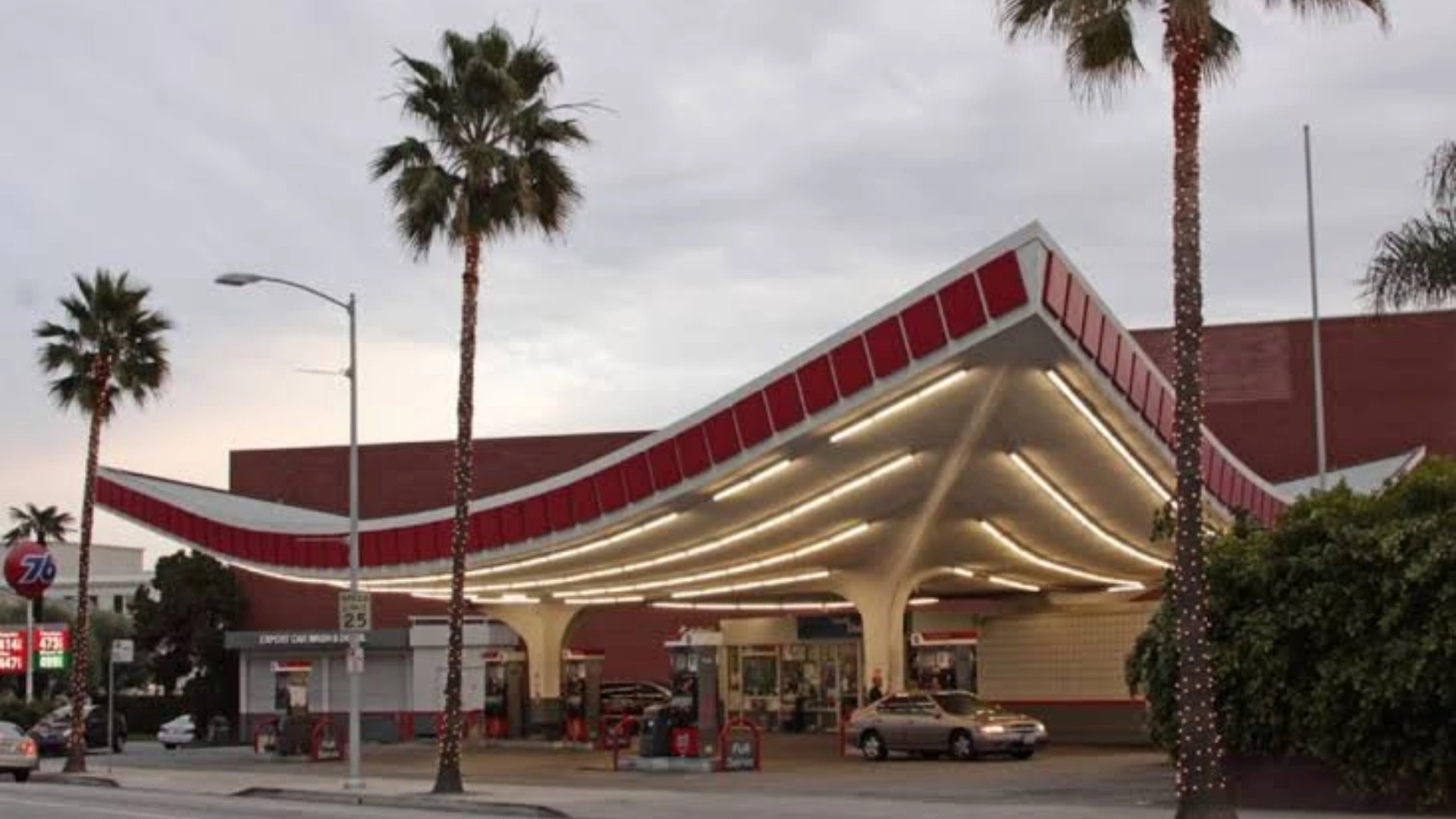
Norms, the Theme Building, and the Beverly Hills gas station are the best examples.
What is Googie Architecture?
This bold, futuristic architectural style exploded in Los Angeles and across Southern California after World War II, spreading across the U.S. from roughly 1945 to the early 1970s.
It came from the car culture, the Atomic Age, and Space Race optimism.
It turned everyday roadside spots like coffee shops, motels, gas stations, and diners into eye-catching beacons designed to attract drivers from the road.
Dramatic geometric shapes, upswept roofs, glass-filled facades, and eye-catching signs defined it.
It aimed to make commercial modernism louder and more fun.
Why is Googie Architecture Called Googie?
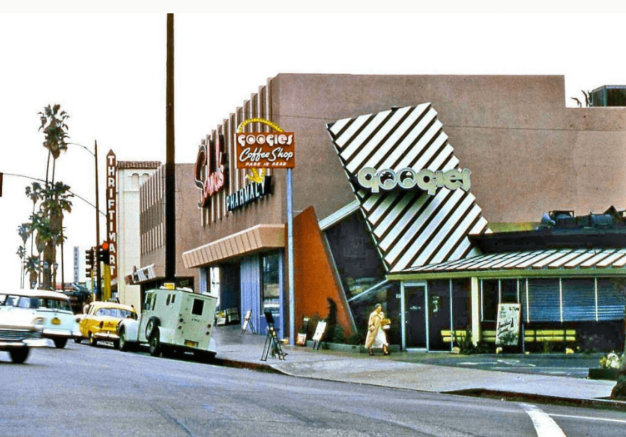
Credits: @Modern Living LA
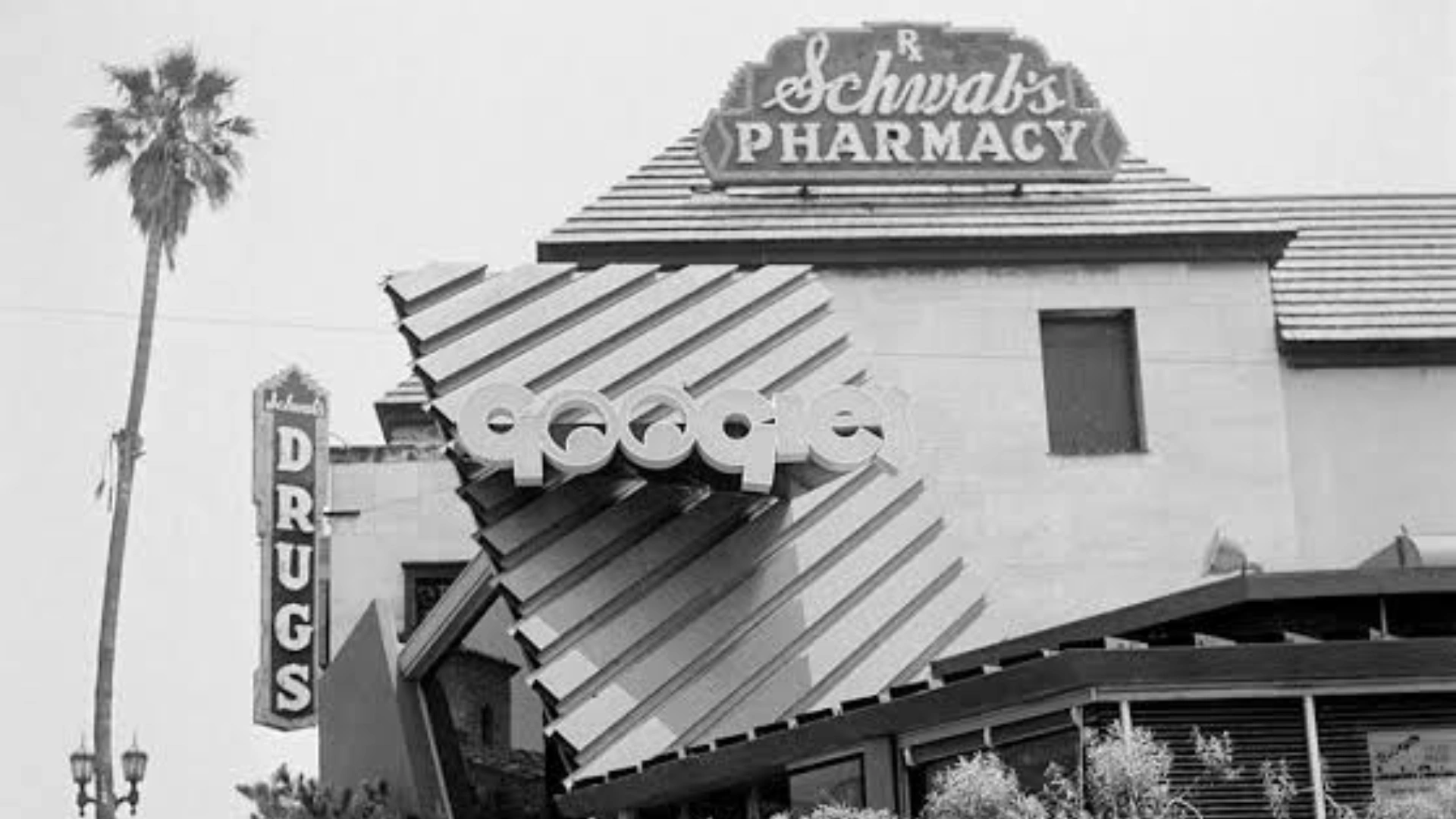
The name comes from Googie’s Coffee Shop on Sunset Boulevard in West Hollywood, designed in 1949 by John Lautner.
Critic Douglas Haskell christened the term in a 1952 House and Home article after spotting its dramatic form.
The original proprietor of the coffee shop’s wife, Lillian K. Burton, used the moniker as a family nickname. [Source: Water and Power Associates]
And hence, an entire architectural movement was named after a private moniker.
History of Googie Architecture
Credits: @Parametric Architecture
It grew out of an earlier streamlined style, flourished with America’s postwar car culture and space-race optimism, and then nearly vanished as both factors subsided.
Roots in Streamline Moderne (1930s)
Streamline Moderne used smooth, aerodynamic forms inspired by ships, trains, automobiles, and aircraft, and is Googie’s immediate progenitor.
After World War II, automobiles and airplanes took the role of ships and railroads as popular modes of transportation.
As a result, architects replaced Moderne’s smooth, ship-like curves with sharper, more aggressive ones, better suited to a driving public passing a structure quickly rather than approaching it slowly.
The Postwar Boom (Late 1940s-1950s)
A small group of Southern California architects drove the style’s success.
Helen Liu Fong worked for Armet & Davis, the firm behind these projects.
While she created iconic structures like Norm’s Restaurant on La Cienega and Johnie’s Coffee Shop on L.A.’s Miracle Mile, Wayne McAllister created the first example with a Bob’s Big Boy in Burbank in 1949.
Along the new car-culture highways, coffee shops, motels, and gas stations proliferated, all designed to be seen from behind a windshield.
Space Age Peak (Late 1950s-1960s)
The 1957 launch of Sputnik and the subsequent Apollo missions strengthened the futuristic imagery already present in Googie design.
Inspired by the vision of space stations and rockets, domes, starbursts, and saucer-like shapes began to appear.
Notable municipal initiatives like LAX’s Theme Building brought that same techno-optimism to public architecture, not just roadside shops.
Decline and Near-Extinction (Late 1960s-80s)
Googie’s optimism did not last long.
The style quickly became outdated because of the energy crisis of the 1970s, changing design preferences, and a general rejection of the idea.
By the late 1960s, even McDonald’s, one of its largest commercial users, had abandoned it for brick walls and mansard roofs.
Over the next twenty years, the majority of Googie buildings were either demolished, remodeled, or altered.
Preservation and Revival (1980s-Today)
Only a few structures endured long enough to be reevaluated.
As a result of decades of efforts by organizations like the Los Angeles Conservancy to have the remaining buildings designated as Historic-Cultural Monuments.
Las Vegas, where Googie motels and signage have survived longer than almost anywhere else, is now the best place to see the style preserved.
Commercial buildings once considered disposable are becoming increasingly valued as historical artifacts.
Features and Key Characteristics of Googie Architecture
Credits: @ArchDaily
Why make a boring roof when it can be just googie-fied? Everything was built around that one goal, from the front sign to the rooflines.
1. Upswept, Cantilevered Rooflines
On narrow structural supports, rooflines shoot upward and outward.
This makes the roof appear to float above the building.
Even on a building that isn’t moving at all, the effect reads as motion, which is the goal of a style designed to grab a driver’s attention.
2. Boomerang and Amoeba Shapes
These structures are free-form, angular boomerang designs on roof edges, canopies, and signs.
Curved, softer amoeba shapes on interior details, pools, and counters.
These shapes appear not only in the buildings themselves, but also in furniture, branding, and graphic design of the time, and it’s so amusing.
3. Starbursts and Atomic Motifs
Throughout the style, signage, screens, and facades include starburst patterns, which are radiating lines intended to depict an explosion of light or energy.
They directly reference atomic-age iconography.
They reflected Atomic Age interest in science, energy, and technology, and can be seen on both coffee shops and welcome signs in Las Vegas.
4. Large Sheet-Glass Facades
Building interiors were visible from the street thanks to floor-to-ceiling glass walls. This fulfilled both a functional and aesthetic marketing purpose.
Visible interiors helped attract passing motorists by showing activity inside.
Glass and exposed steel beams are frequently pierced with geometric holes to resemble rocket shapes.
5. Bold Neon Signage
Signs were designed to be read quickly and at a distance rather than to be viewed up close.
They were large and well lit.
In many instances, the sign had as much architectural weight as the building/business it promoted, echoing the boomerang and starburst designs on the building itself.
6. Domes and Saucer Forms
Large dome designs became feasible for the first time because of new developments in concrete construction, and Googie architects could employ them.
Referencing the science fiction of the time, domes resembled a flying saucer, while others leaned toward the appearance of a space station.
7. Mixed, High-Tech Materials
The structures used steel frames, concrete, glass, gunite, and occasionally rough stone.
This combination let architects create the transparent walls, floating canopies, and sharp tailfins that defined the style.
Working these materials into such free-form shapes was not only a stylistic decision at the time, but also a true engineering challenge.
Famous Examples of Googie Architecture
It demonstrates how the same visual language was adapted to create radically varied structures that were all designed to attract the attention of onlookers.
Below are some famous architectural structures that showcased this style.
Roadside Coffee Shops & Restaurants (Still Exist)
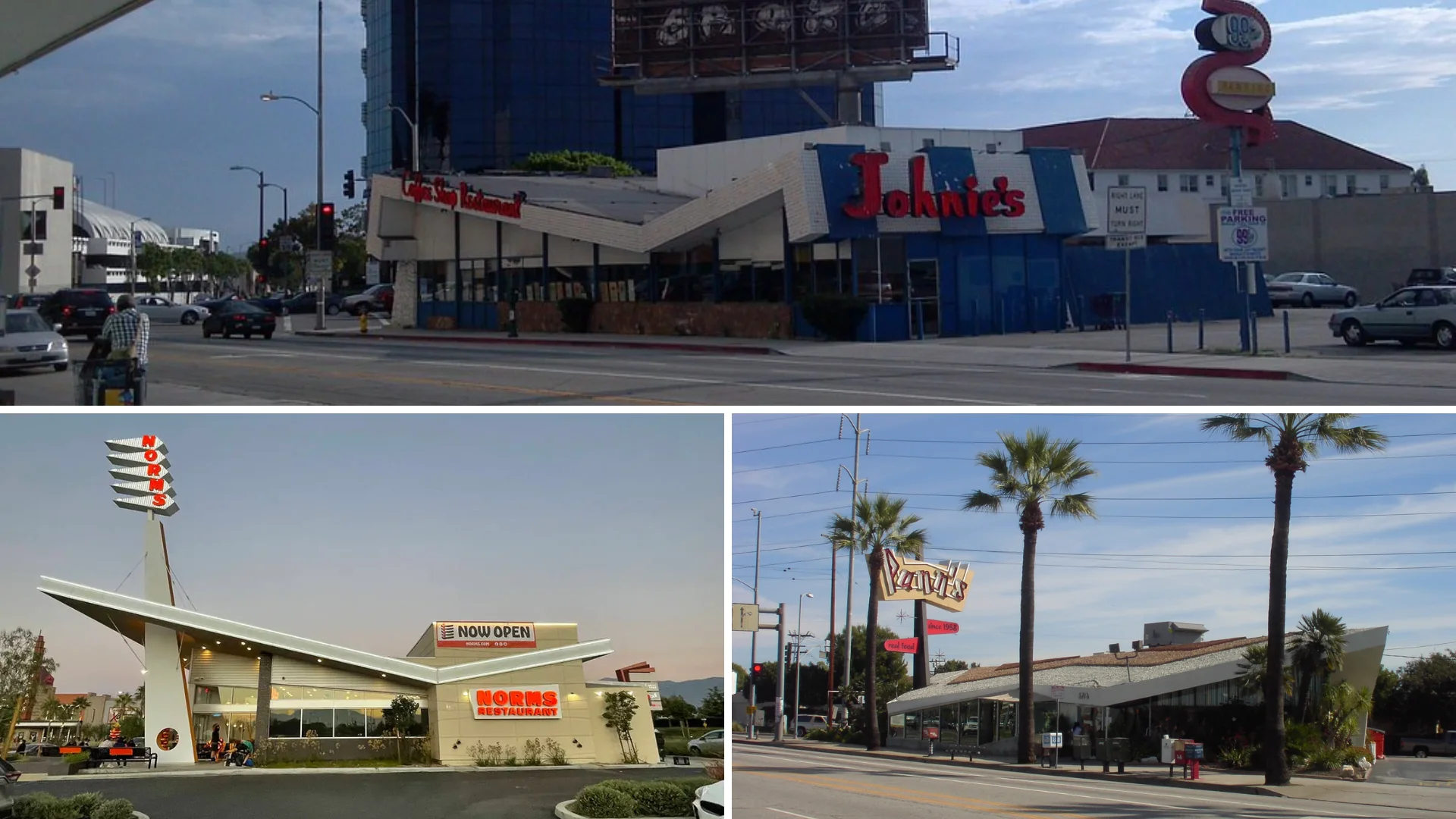
It found its perfect stage in the roadside coffee shops and restaurants of mid-century America.
They were designed to stop traffic on busy boulevards. And some of the most popular buildings are below:
- Norms La Cienega: One of Helen Liu Fong’s iconic designs, Norms La Cienega, has long been associated with the struggle to preserve the style.
- Johnie’s Coffee Shop: Located on the Miracle Mile in Los Angeles, Johnie’s Coffee Shop is another Fong design and a common movie setting.
- Pann’s: Pann’s, close to LAX, is well known for welcoming tourists entering or departing Los Angeles.
Gas Stations
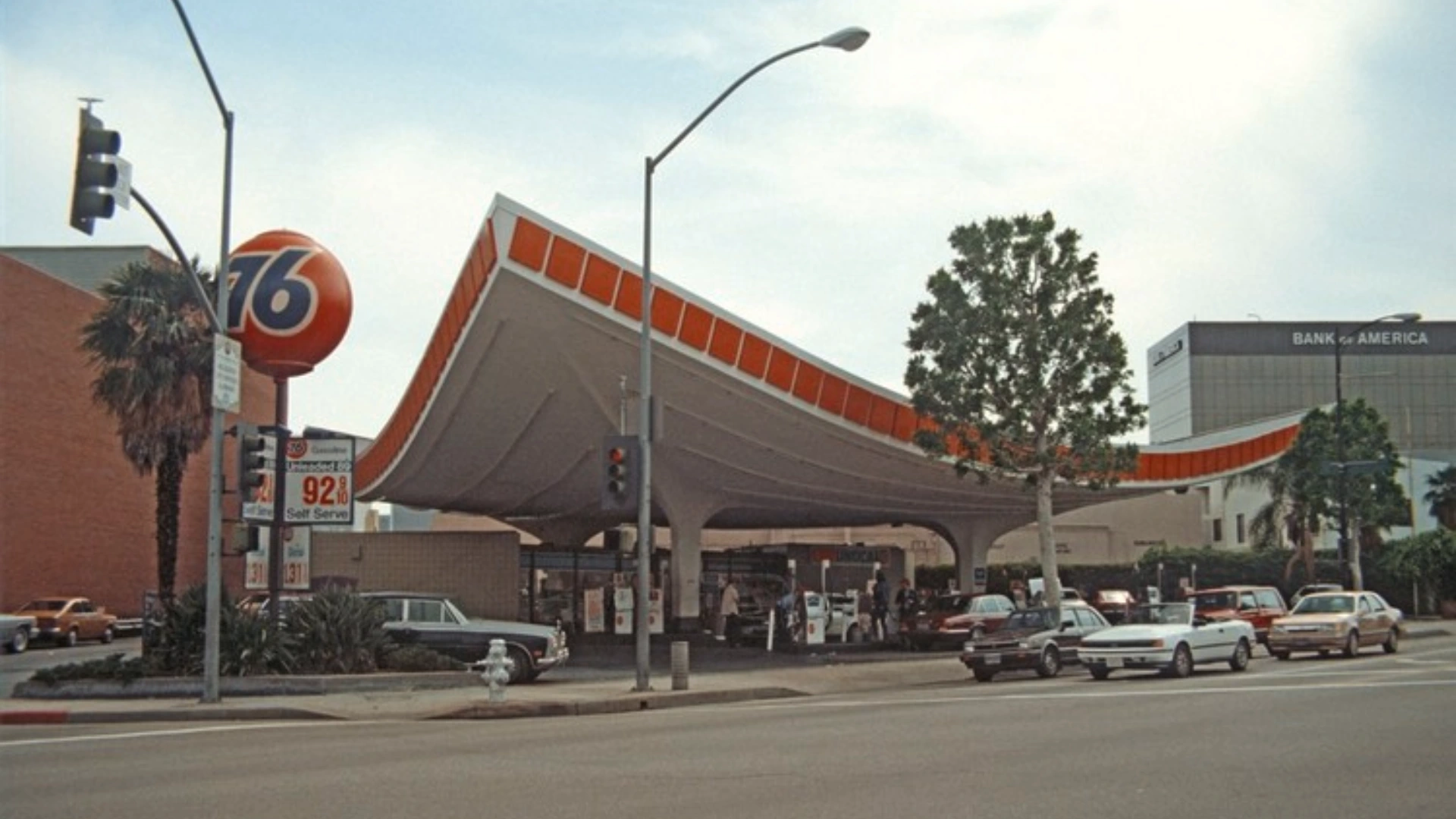
One of the most iconic Googie structures in the world is the Union 76 station at Crescent Drive and Little Santa Monica Boulevard in Beverly Hills.
They have a boomerang-shaped canopy that seems to float over the pumps.
Before moving to its current location, it was first planned for LAX in 1960.
According to staff accounts, the design itself increased gas sales by 100,000 to 150,000 gallons of gasoline per month.
Airports & Civic Landmarks
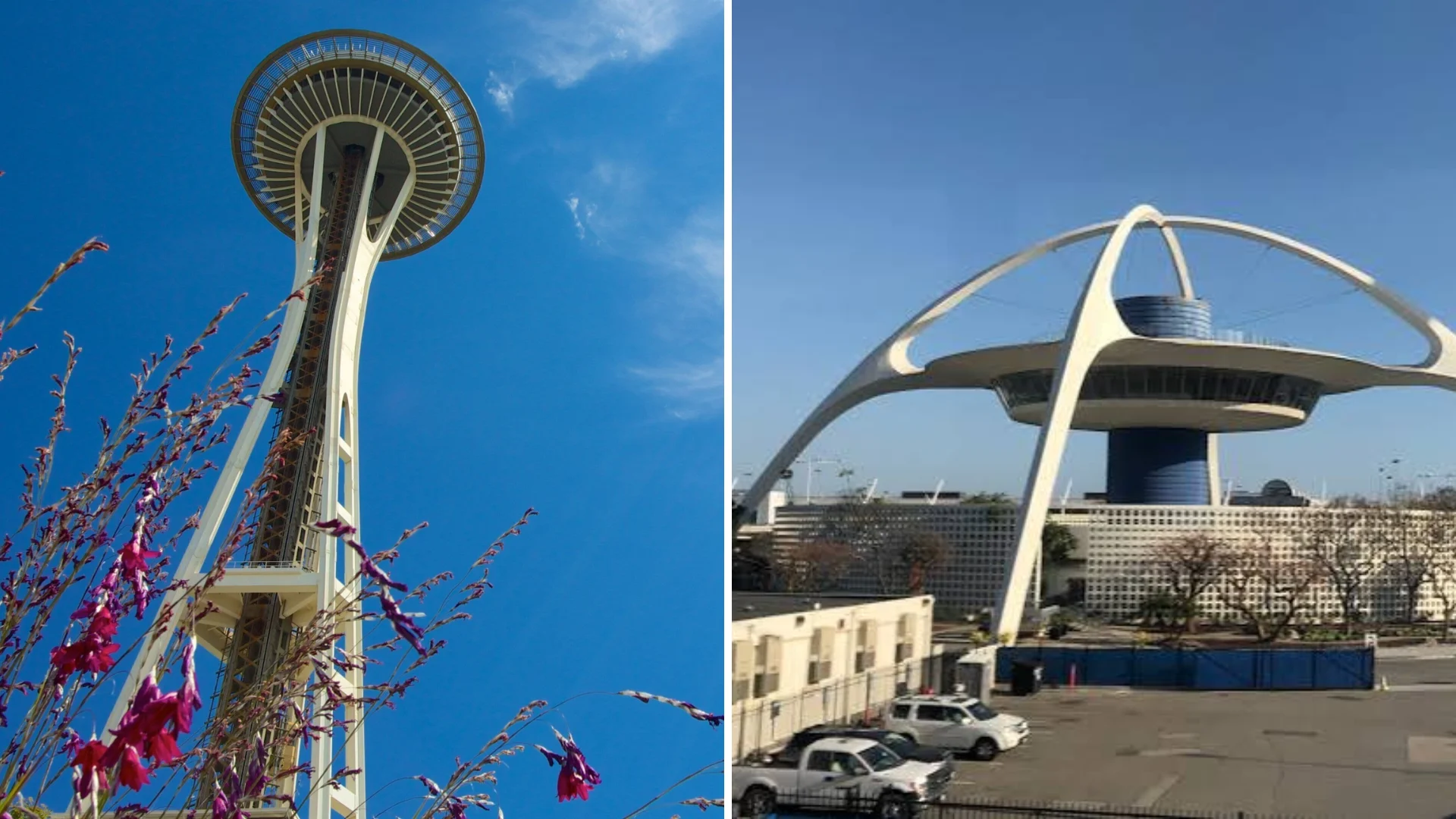
With intersecting parabolic arches and a stucco-covered steel building designed to resemble a spaceship, the 1961 completion of LAX’s Theme Building introduced its vocabulary to public architecture.
Even outside its home base in Southern California, the Space Needle in Seattle, built for the same techno-utopian moment, exudes a similar atmosphere.
Las Vegas Signage & Motels
Credits: @YESCO
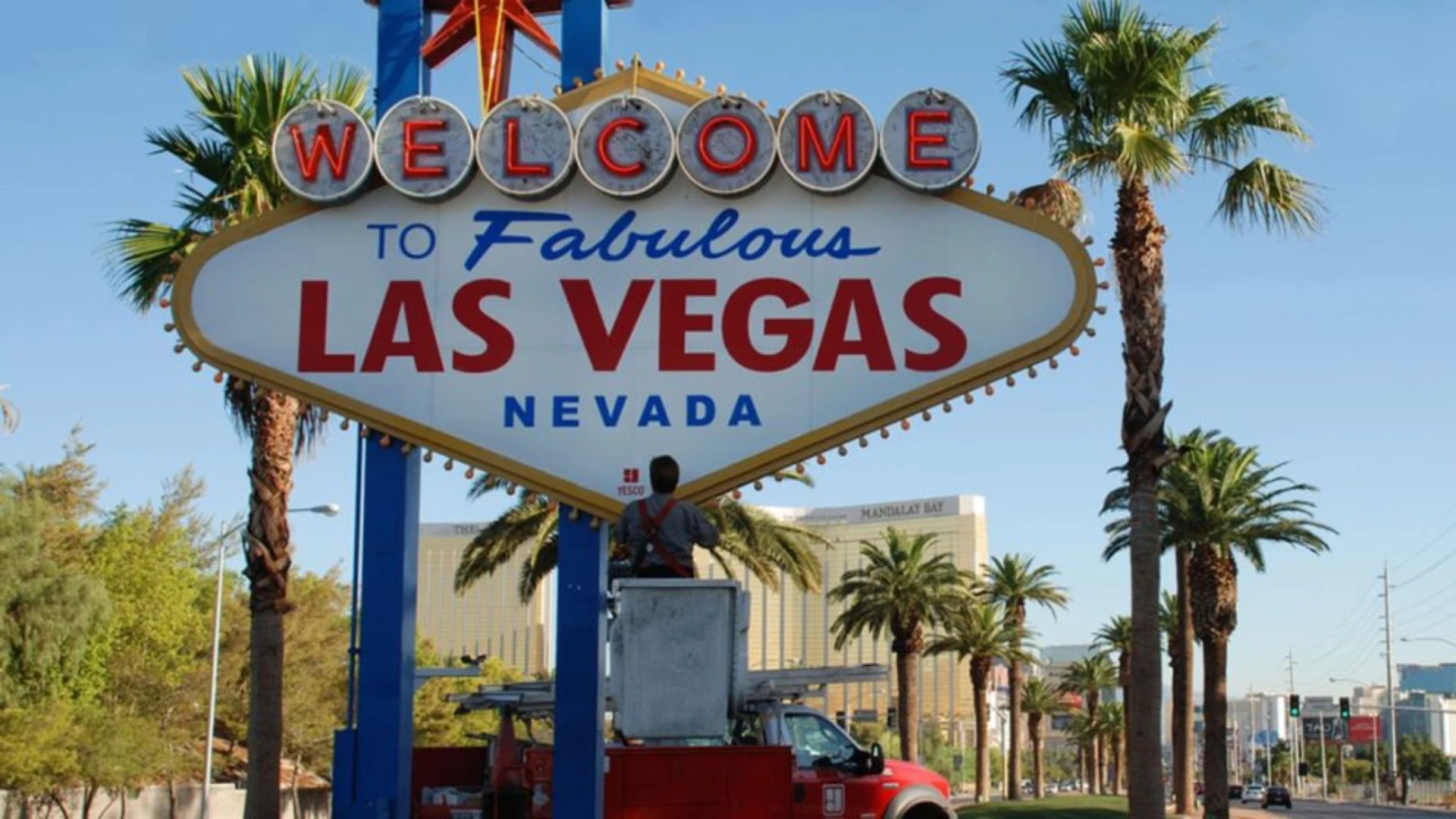
One of the most complete concentrations of the style still in existence today is Las Vegas, which retained its motel facade and Googie signs long after Los Angeles had moved on to newer forms.
The Strip-era motels surrounding it include the same boomerang curves and lighting that characterized the pinnacle of the style.
And the starburst-heavy welcome sign has come to represent the entire aesthetic.
Googie Architecture vs Mid-Century Modern
Aspect | Googie | Mid-Century Modern |
|---|---|---|
Core Focus | Commercial roadside buildings | Residential and broader modern design |
Aesthetic | Exaggerated, theatrical, Space Age flash | Restrained, clean, functional |
Key Features | Upswept roofs, neon, boomerangs, starbursts | Horizontal lines, glass walls, natural integration |
Materials | Steel, glass, neon, plastic | Steel, glass, wood, concrete |
Intent | Grab drivers’ attention from the road | Create calm, livable modern spaces |
Tone | Playful, optimistic spectacle | Elegant simplicity |
How Googie Differs from Similar Styles?
It is not interchangeable with any other style, even though it shares a historical moment with a few others.
In the middle of the century, it is nearly purely commercial and roadside, designed to be noisy rather than quiet.
In contrast, modern architecture spans a much wider range, much of it residential and restrained.
Starbursts, boomerangs, and atomic symbols are some of the recurrent motifs found throughout the furniture, textiles, and graphic design of the “Atomic Age.”
It is not only the adornment on top of those themes; it is the entire architectural style to which they belong.
Conclusion
Googie architecture remains a memory of postwar American optimism, where car culture, atomic dreams, and Space Age wonder collided on the roadside.
From Lautner’s original coffee shop to neon-lit diners still standing today, it turned ordinary buildings into bold statements of the future.
Though often dismissed as kitsch compared to the restraint of Mid-Century Modern, its playful energy and democratic spirit made modernism accessible to everyone.
Frequently Asked Questions (FAQs)
1. Was Googie Architecture Used for Homes?
Googie was mainly used for commercial buildings. Some homes borrowed its dramatic angles, glass walls, and Space Age forms.
2. Is Googie Architecture Making a Comeback?
Not as a major new building style. However, interest in preserving and restoring surviving Googie buildings and signs has grown as they have gained historic value.
3. What is Jetsons Style Called?
The Jetsons style is generally called Googie architecture or Space Age design, known for futuristic curves, starbursts, boomerang shapes, and atomic-inspired details.