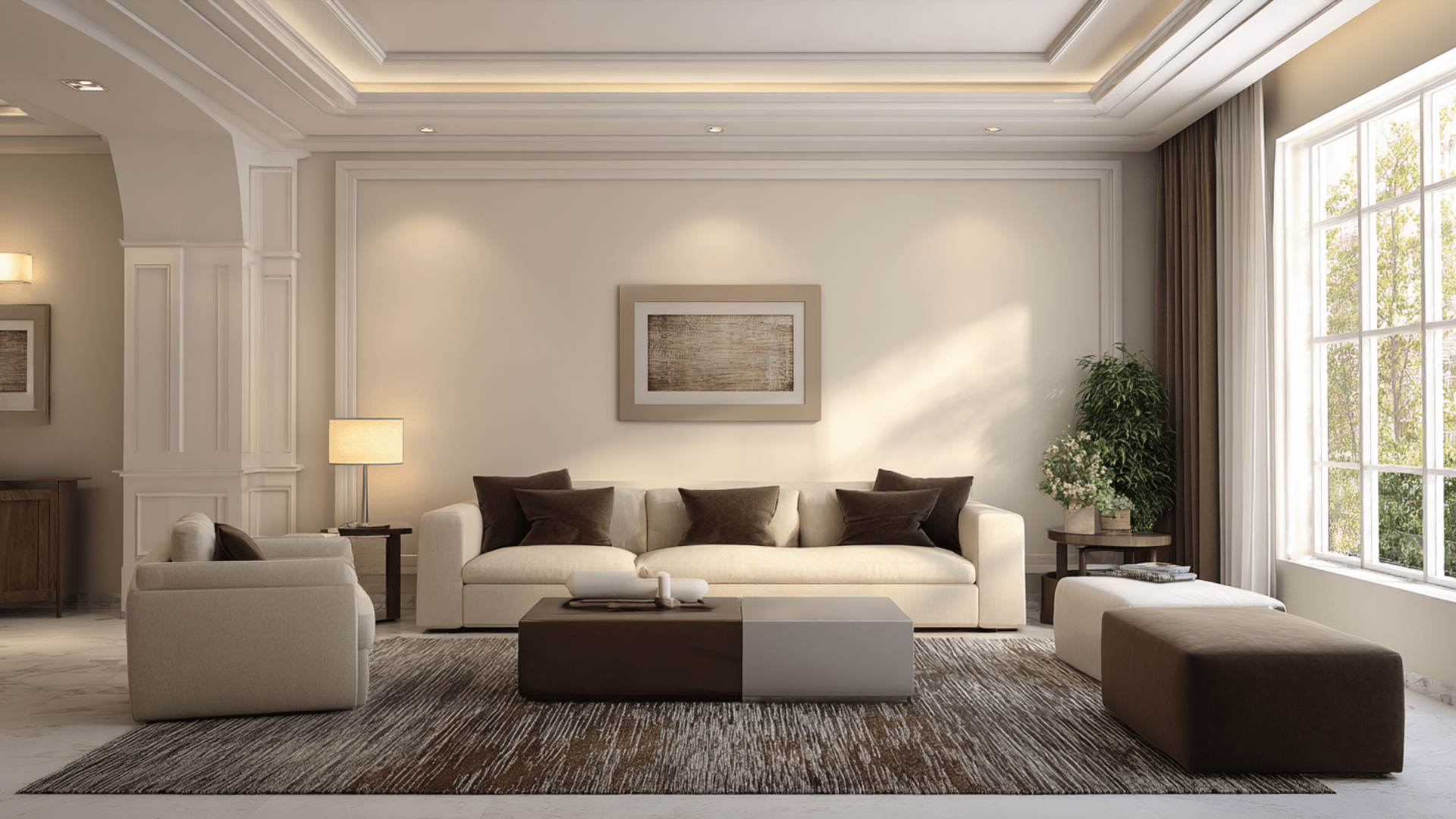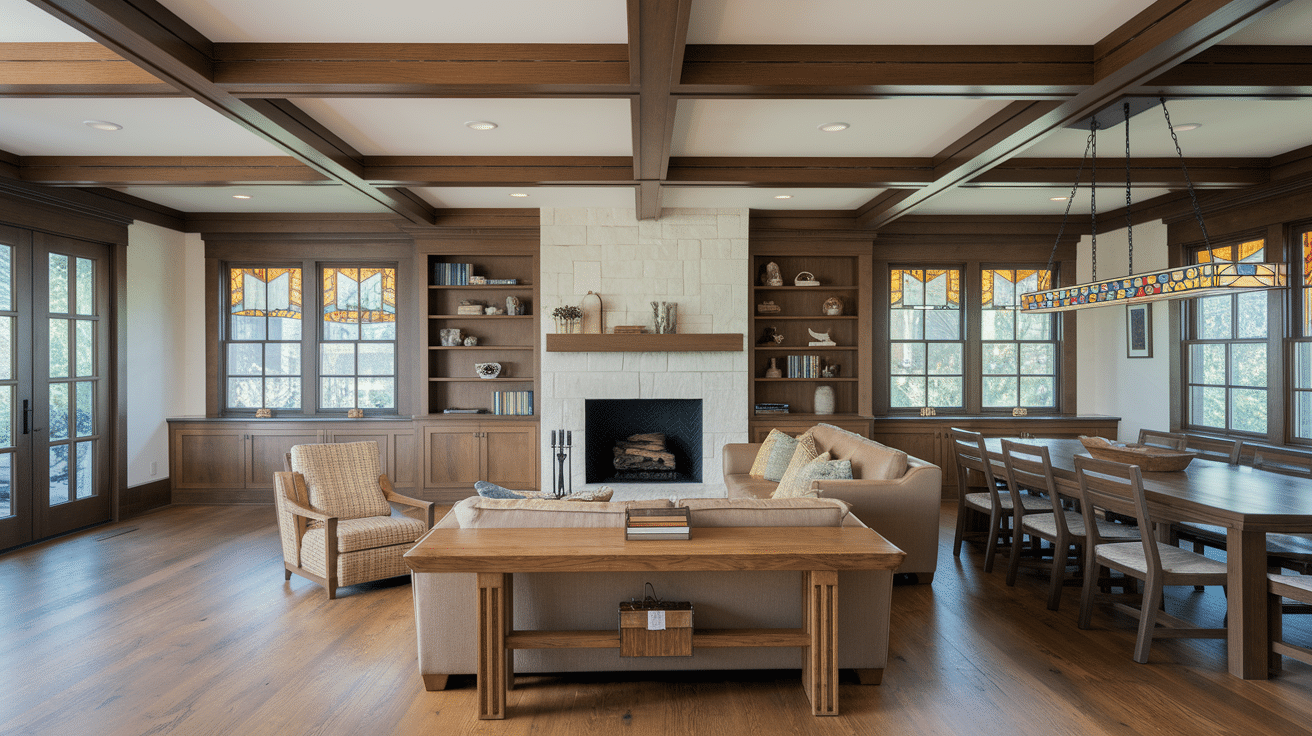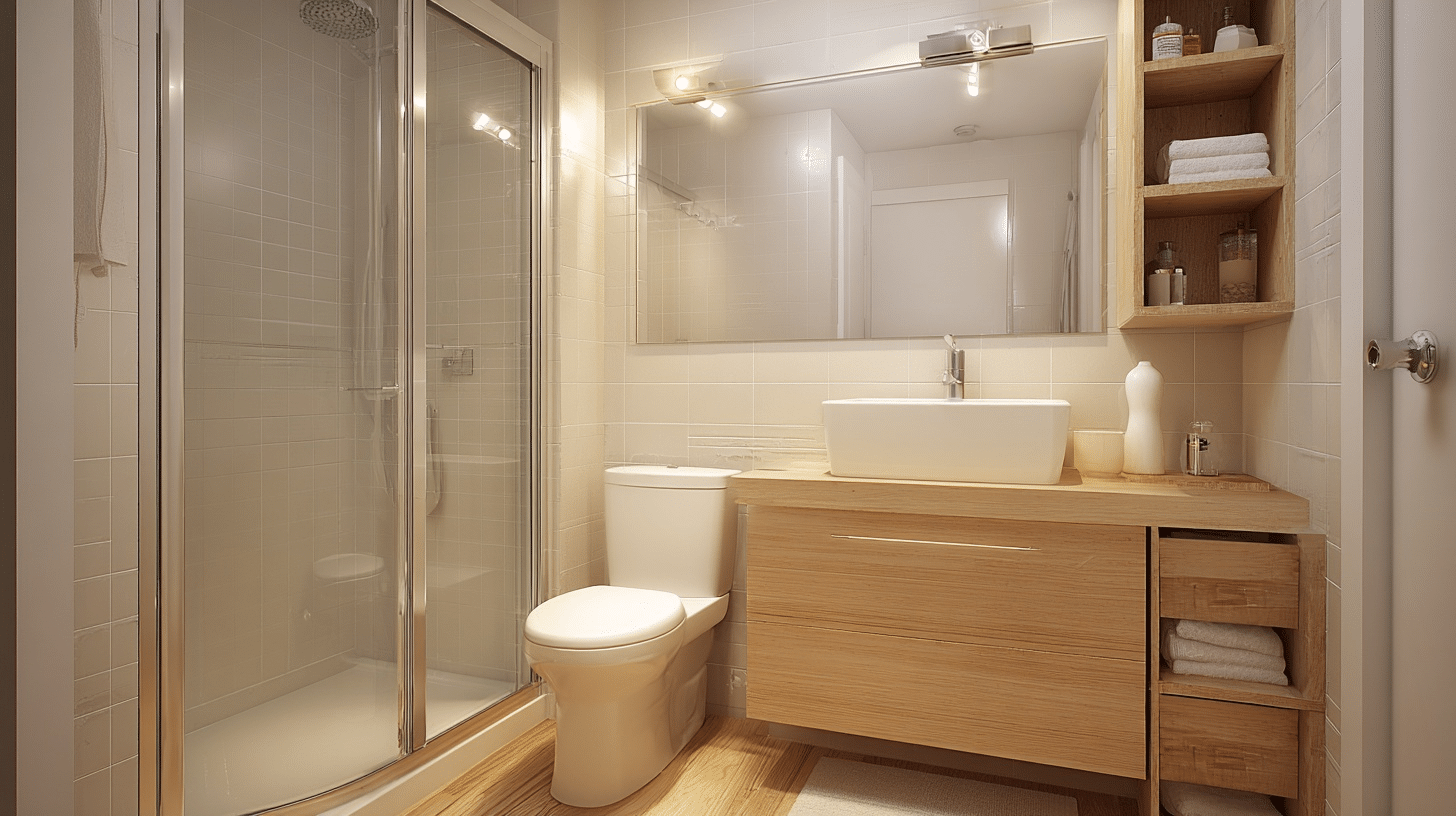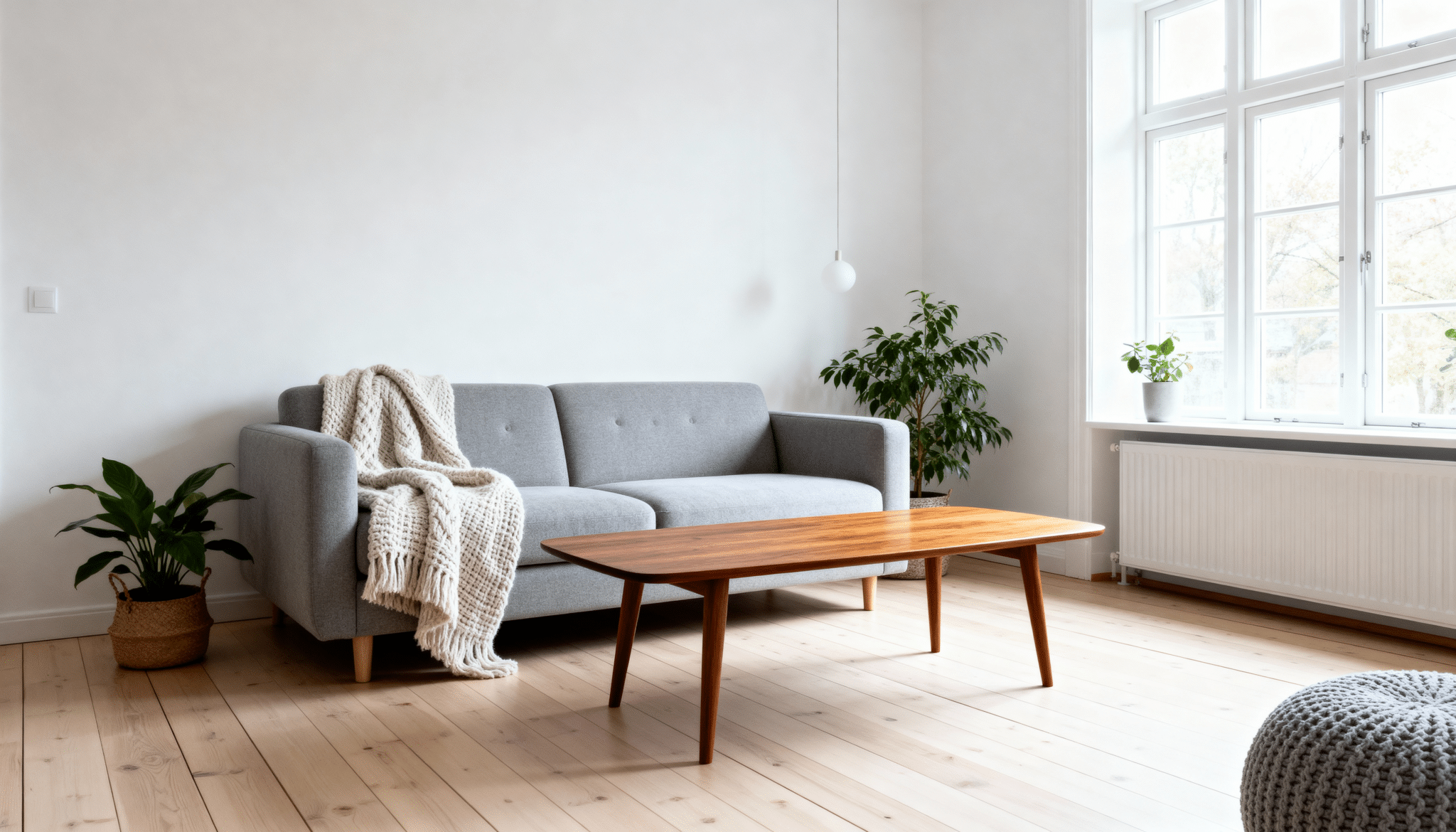
Your furniture choices are quietly harming the planet.
Shocking, right? Most homes contain materials that release toxins and create massive waste. I used to ignore this too, until I saw the real impact of my design decisions.
But creating a sustainable interior design isn’t about sacrificing style or comfort.
It’s simpler than you think, and your space can look even better.
Ready to change your home the right way?
What is Sustainable Interior Design?
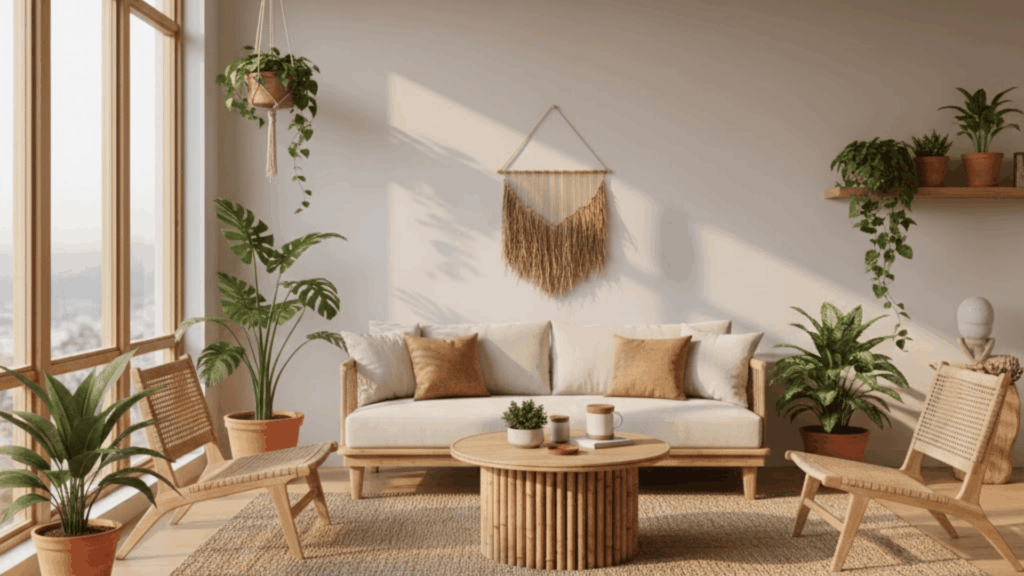
Sustainable interior design means creating spaces using eco-friendly materials that don’t harm the planet. It’s about choosing items that last long and reduce waste.
This approach focuses on three things:
- First, selecting materials that nature can recycle or break down.
- Second, pick furniture that lasts for years.
- Third, reducing energy use through wise choices.
This method makes homes healthier while protecting the environment. It’s designed with purpose.
Key Principles of Sustainable Interiors
Sustainable interiors rest on four core pillars or principles that guide every design decision.
Each pillar works together to build a truly green home.
1. Material selection: The first and main. Choose natural, recycled, or reclaimed resources over synthetic options. Bamboo, cork, and salvaged wood work beautifully.
2. Energy efficiency: This follows next. Use LED lighting and maximize natural light through strategic window placement.
3. Longevity: It matters too. Invest in quality pieces that won’t need replacing soon.
4. Health considerations: This rounds it out. Select low-VOC paints and finishes that keep indoor air clean and safe for families.
Sustainable Interior Design Materials
Choosing the right materials forms the foundation of eco-friendly home design.
These options reduce environmental harm while keeping spaces beautiful and functional.
| Material Type | Examples | Best Used For | Why Choose It |
|---|---|---|---|
| Natural Materials | Bamboo, Cork, Reclaimed Wood | Floors, furniture, cabinets | Fast-growing, durable, and prevents deforestation |
| Recycled Options | Glass, Metal, Plastic Lumber | Countertops, fixtures, and outdoor furniture | Uses post-consumer waste, reduces landfill |
| Organic Textiles | Cotton, Linen, Hemp | Bedding, curtains, rugs | No pesticides, less water usage, and durable |
| Low-Impact Finishes | Low-VOC Paint, Clay Plaster, Water-Based Stains | Walls, trim, furniture | Healthier air quality, fewer chemicals |
Sustainable Bedroom Ideas
Creating a green bedroom starts with thoughtful choices. These ideas help reduce environmental impact while improving sleep quality and comfort.
1. Eco-friendly Bedding & Textiles
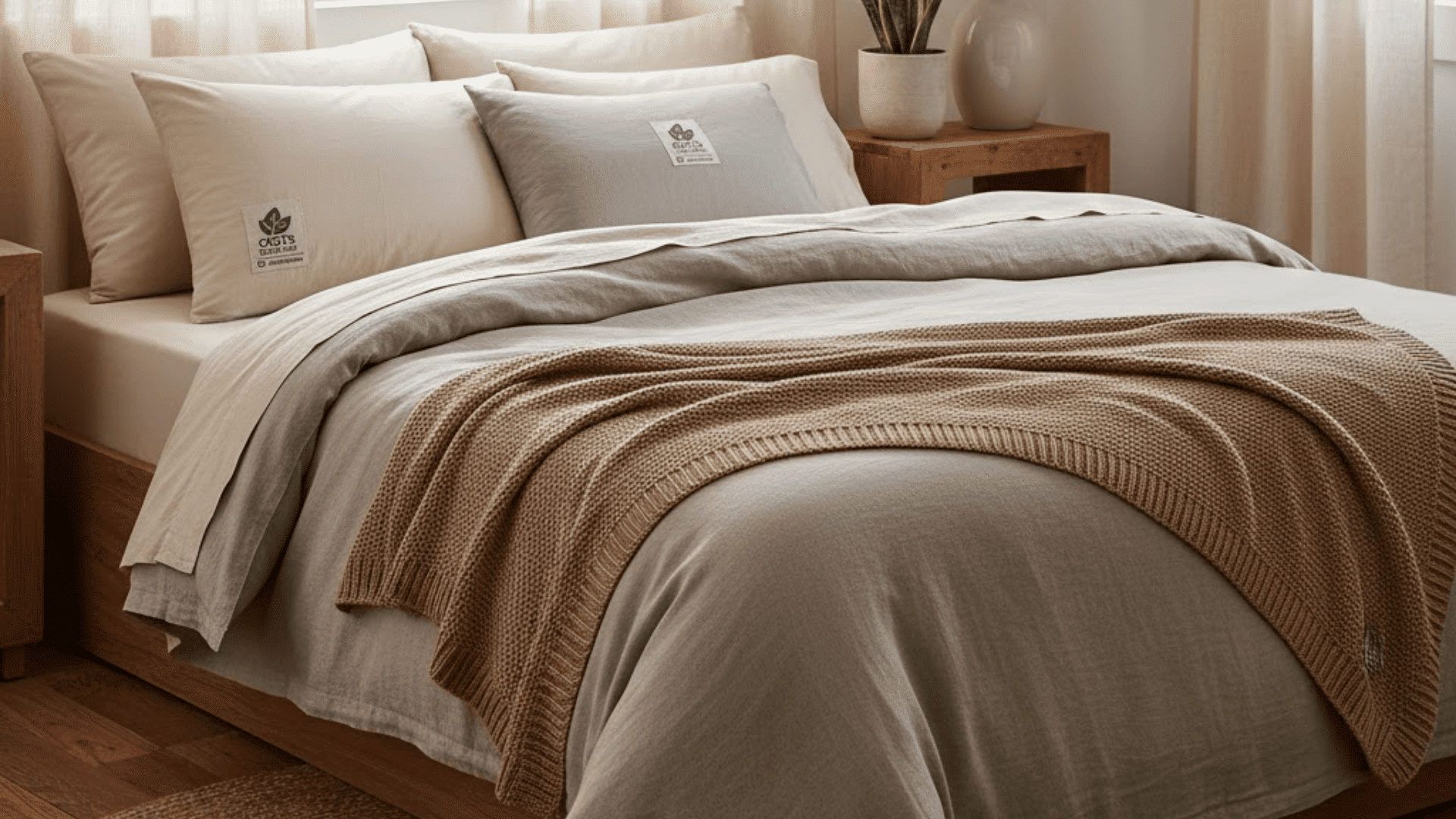
Opt for organic cotton, linen, or bamboo sheets free from harsh chemicals. These natural fabrics breathe better and last longer than synthetic alternatives.
Look for certifications like GOTS to ensure genuine eco-friendly production methods.
2. Energy-Smart Lighting
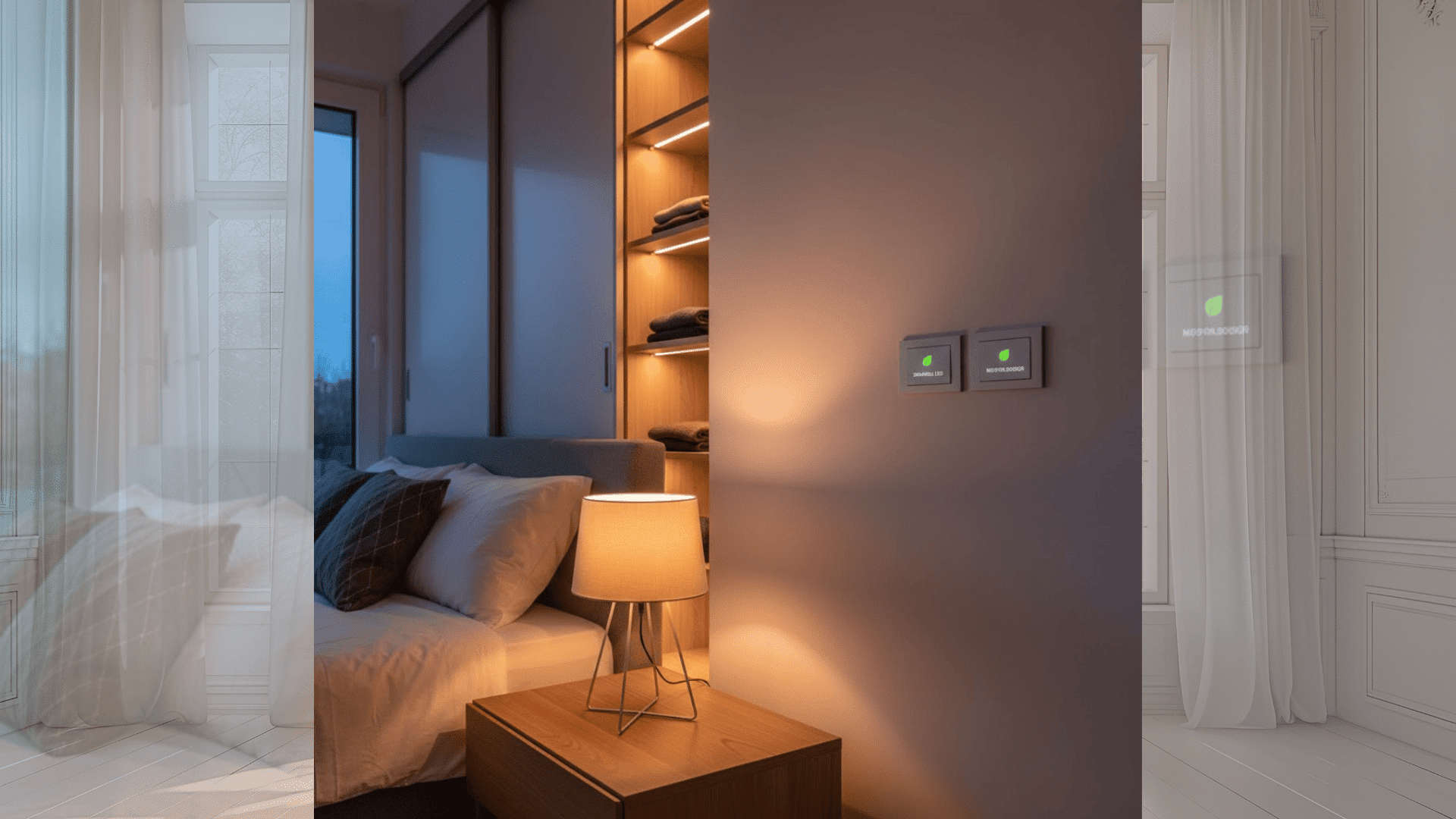
Install dimmer switches and LED bulbs to cut electricity use significantly.
Position lamps near reading areas instead of relying on overhead lights. Consider motion sensors for closets to prevent wasted energy from forgotten switches.
3. Furniture Built for Longevity
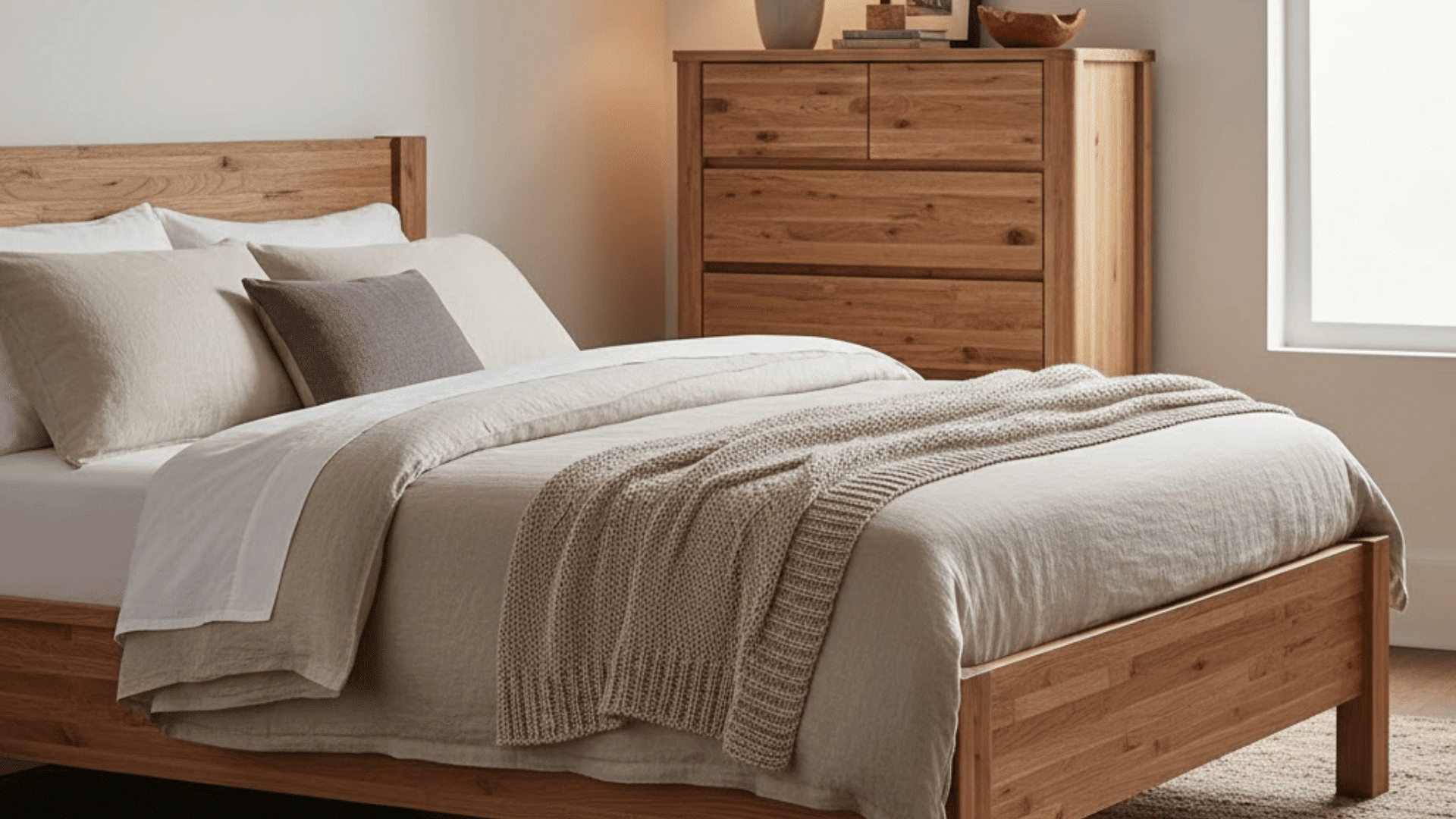
Choose solid wood bed frames and dressers over particleboard options.
Quality construction means fewer replacements and less waste over time.
4. Improved Air Quality
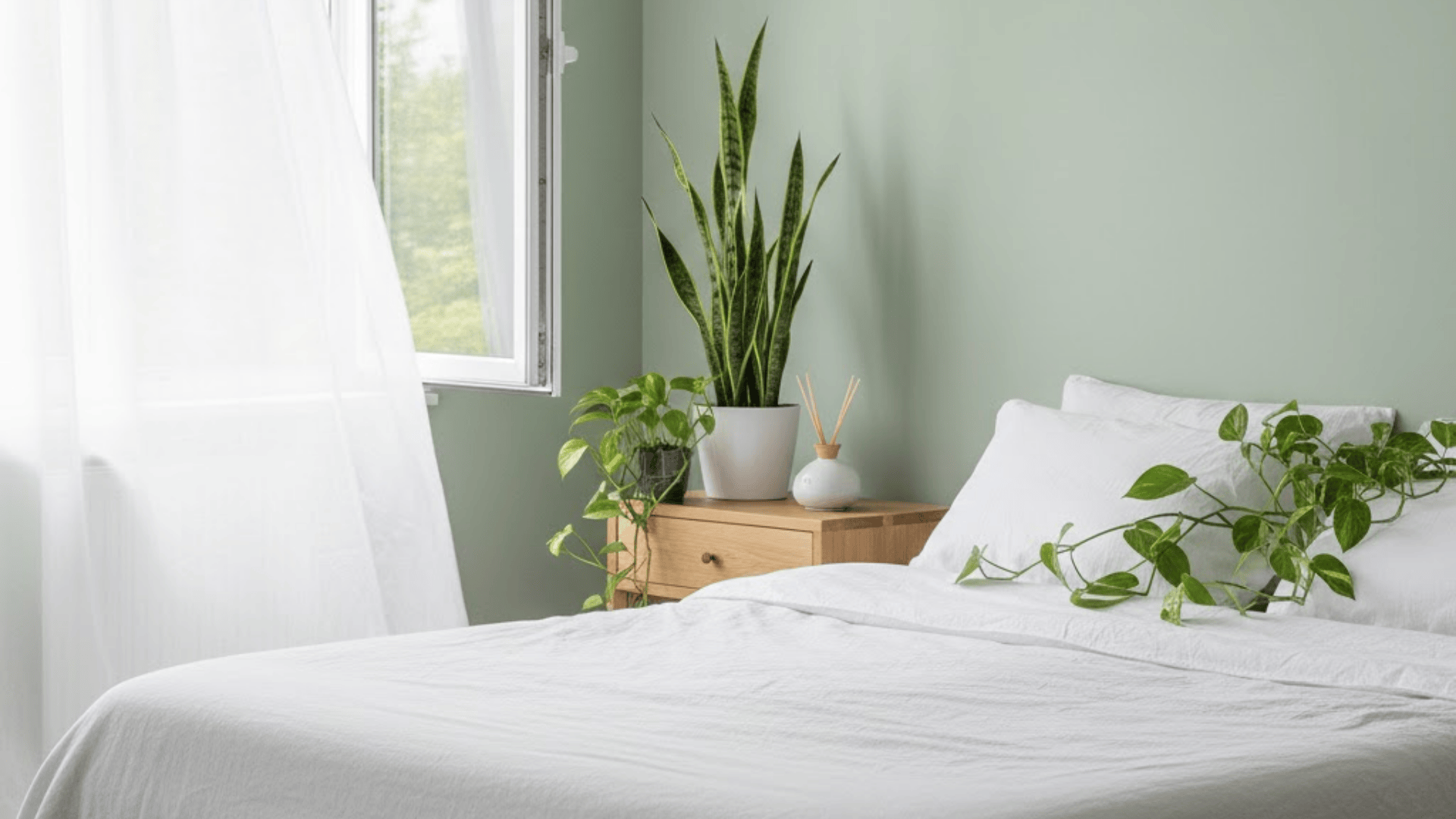
Add indoor plants like snake plants or pothos to filter toxins naturally.
Use non-toxic paints and avoid synthetic air fresheners.
Open windows regularly to circulate fresh air and reduce moisture buildup that causes mold.
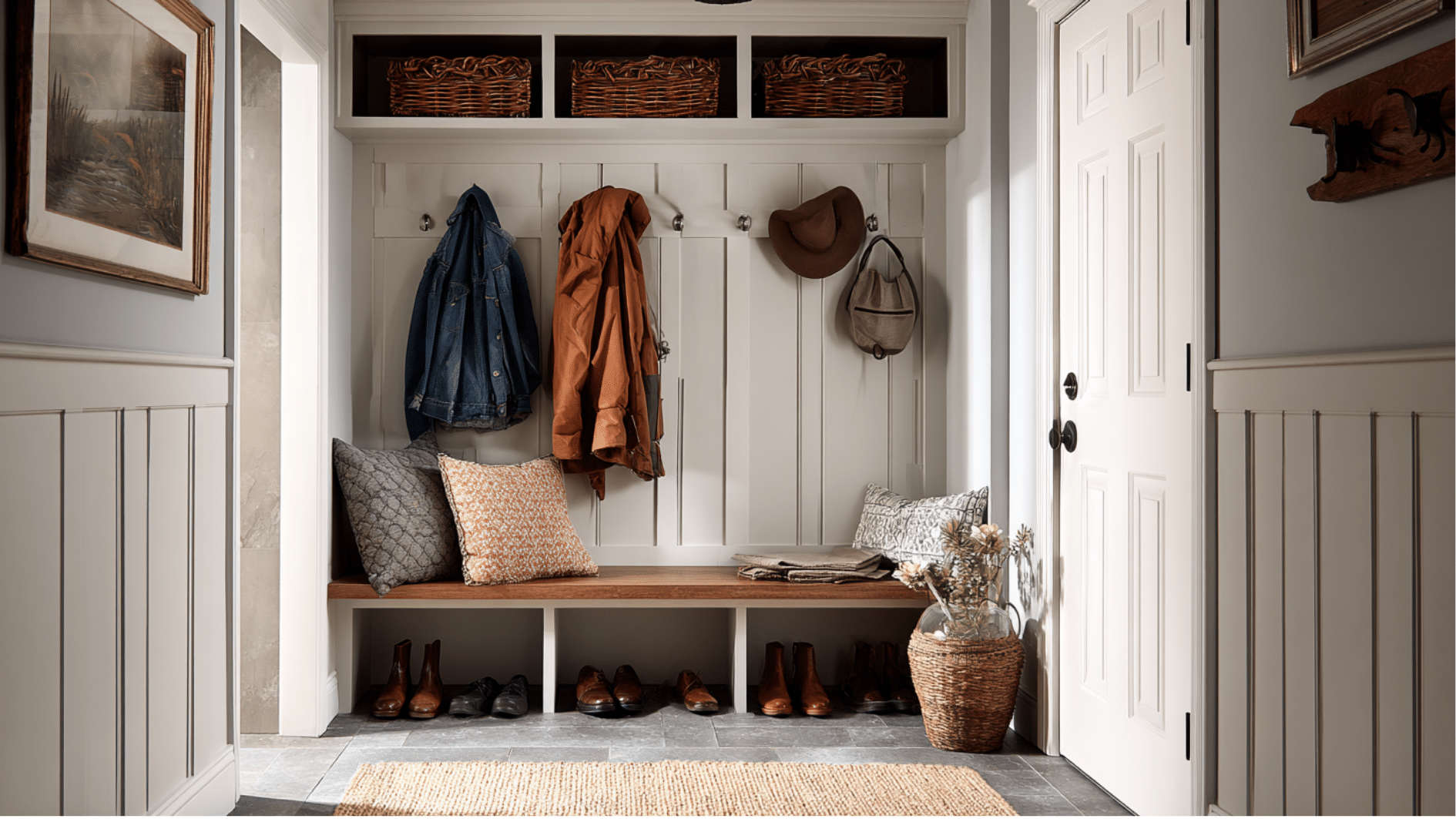
Sustainable Hallway / Entryway Ideas
Hallways and entryways set the tone for your entire home. These simple changes make these high-traffic areas more eco-friendly and practical.
5. Durable, Low-Maintenance Flooring
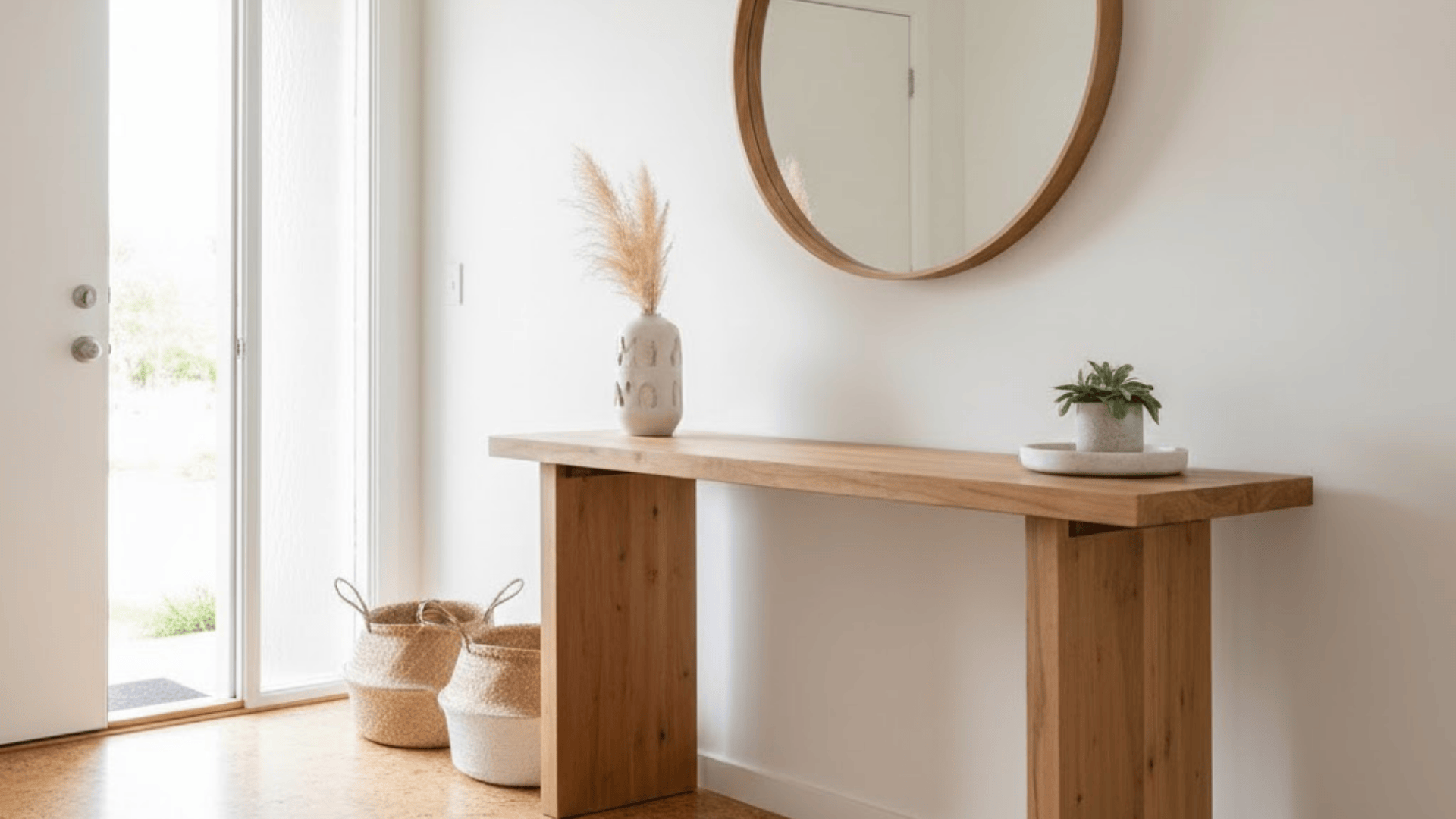
Choose flooring materials that withstand heavy foot traffic without constant replacement.
Cork and linoleum offer renewable options that resist scratches and dents. Reclaimed hardwood adds character while giving old materials new life.
Tip: Avoid vinyl and laminate that contain harmful plastics.
6. Motion-Activated Lights
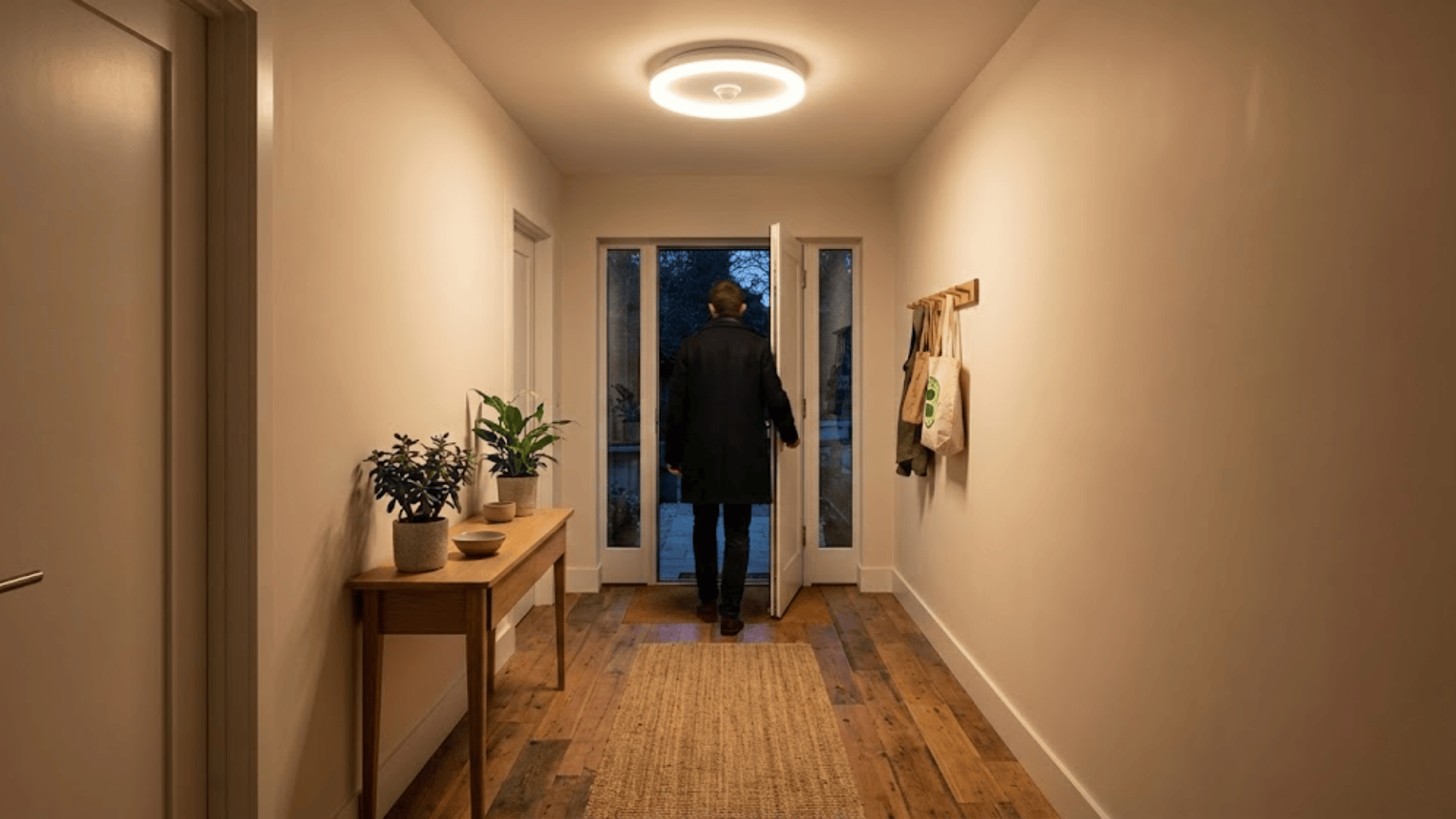
Install motion sensors to eliminate wasted electricity in spaces people pass through quickly.
These lights turn on automatically when someone enters and shut off after a set time. This feature prevents the common problem of leaving hallway lights running all day.
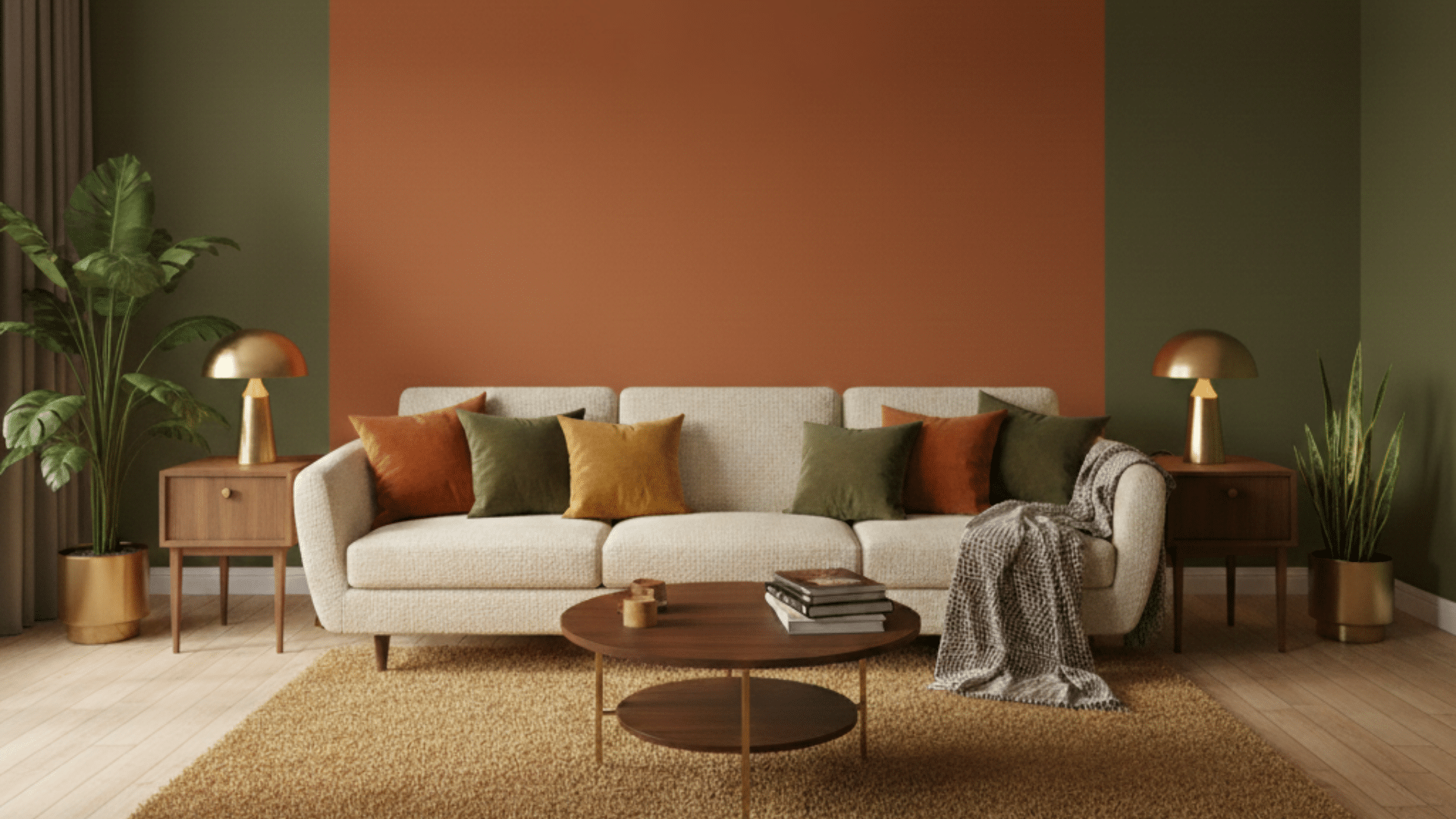
Sustainable Living Room Ideas
These strategies create comfortable, eco-conscious spaces without compromising style.
7. Low-Impact Furniture
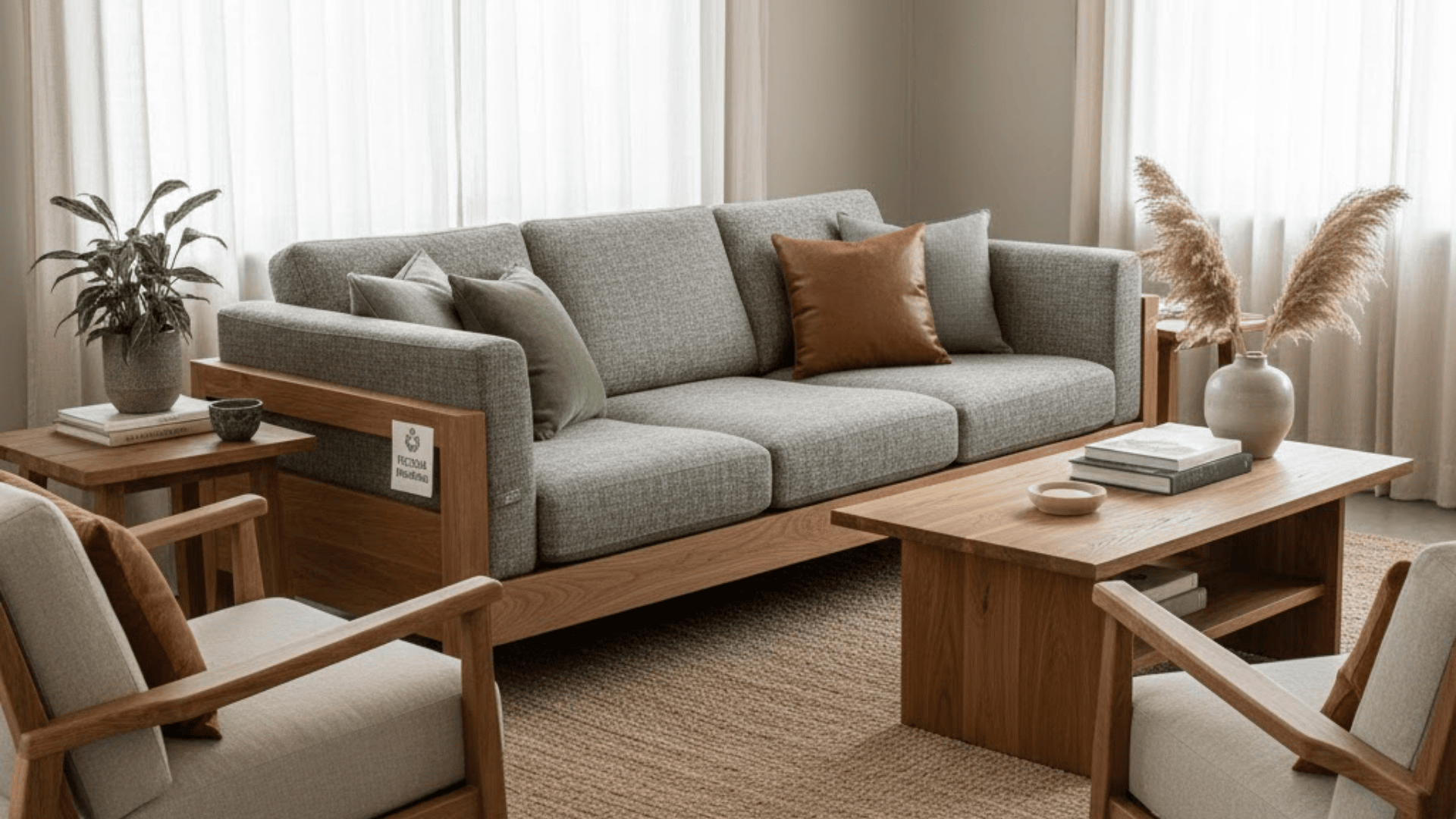
Select sofas made from FSC-certified wood or recycled materials.
Second-hand stores carry solid wood pieces that outlast particle board options.
Tip: Avoid petroleum-based foam and opt for natural latex filling.
8. Daylighting Optimization
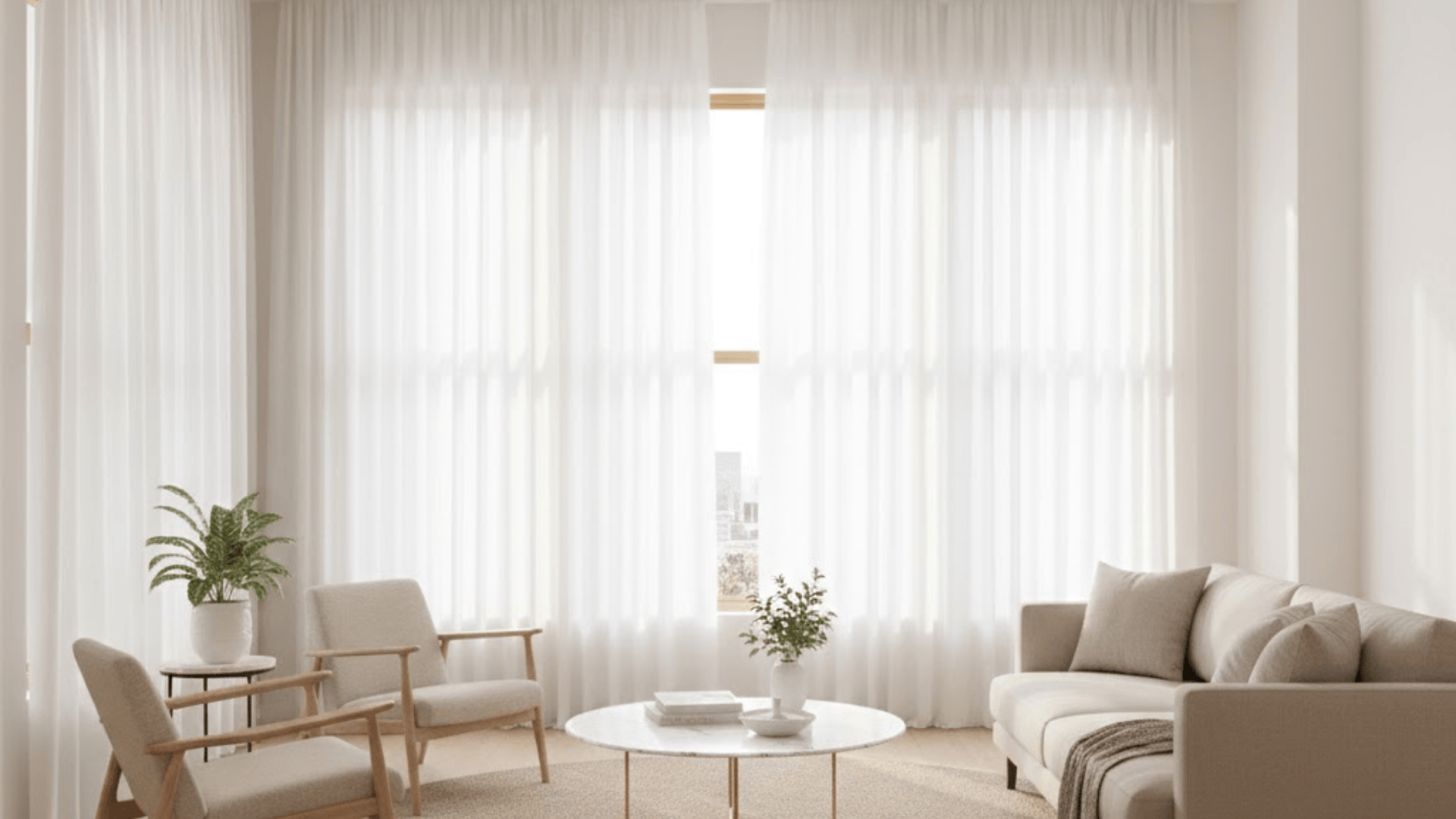
Arrange seating near windows to reduce daytime lighting needs.
Light-colored walls bounce natural light deeper into rooms. Sheer curtains provide privacy while letting sunlight through.
9. Energy-Efficient Temperature Control
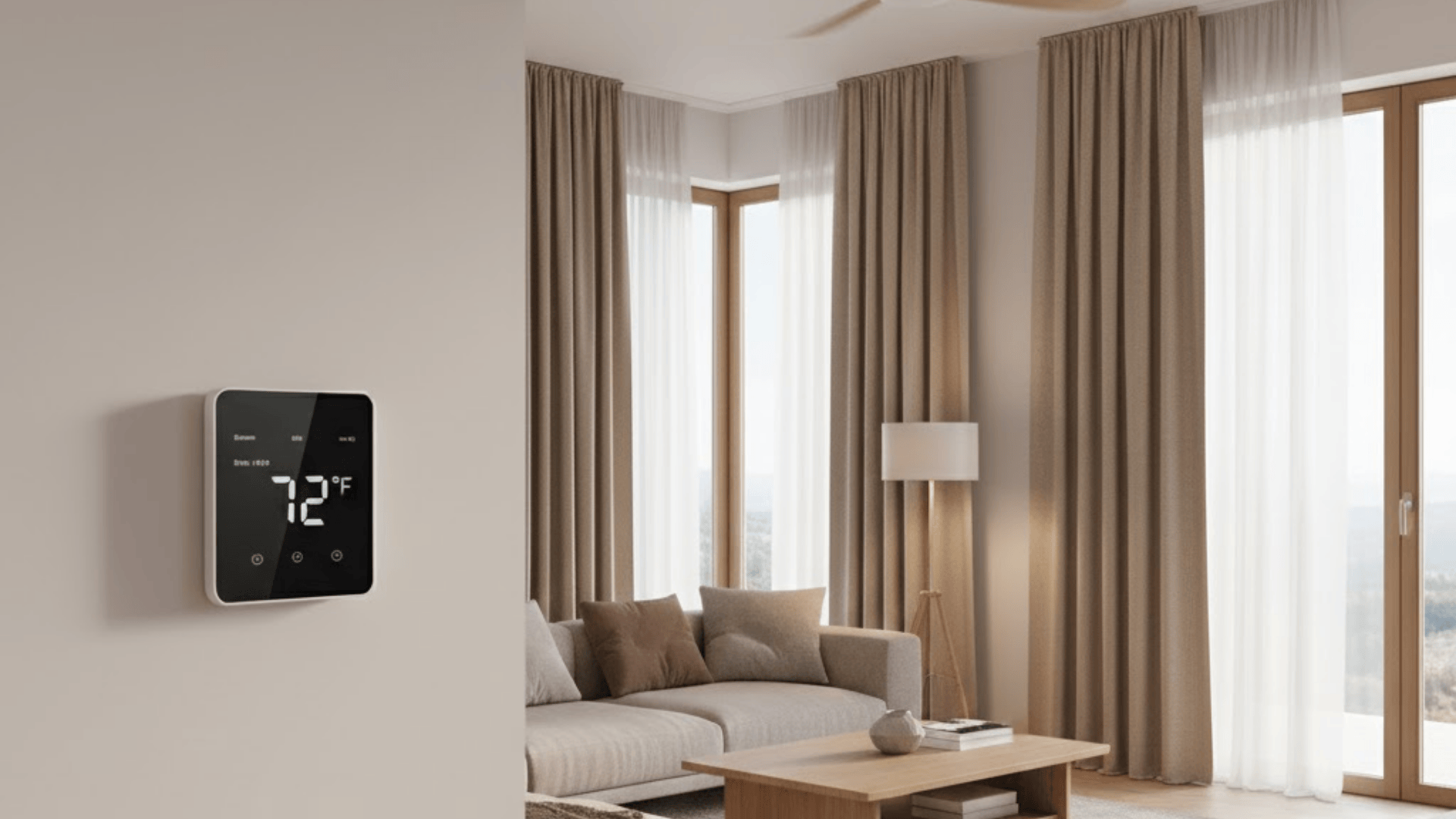
Install programmable thermostats to avoid heating empty rooms. Ceiling fans circulate air effectively without excessive air conditioning.
Thermal curtains block drafts and reduce heating demands.
10. Circular Decor Choices
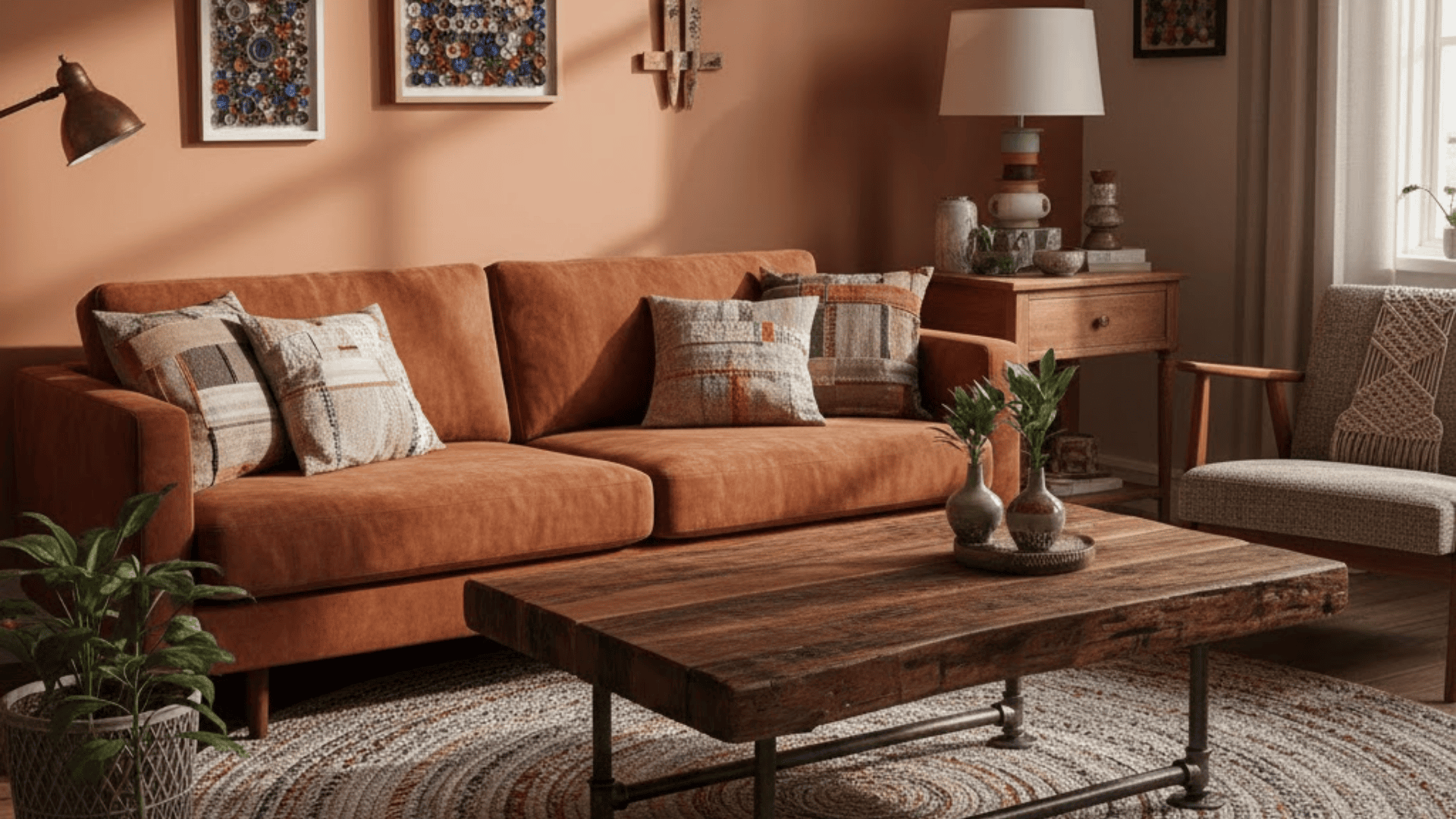
Buy vintage items rather than new mass-produced goods. Choose décor from upcycled materials. Donate old pieces when replacing them.
Sustainable Kitchen Ideas
Kitchens generate substantial waste and consume the most energy in homes.
These changes reduce environmental impact while maintaining functionality and style.
11. Eco-Friendly Cabinetry
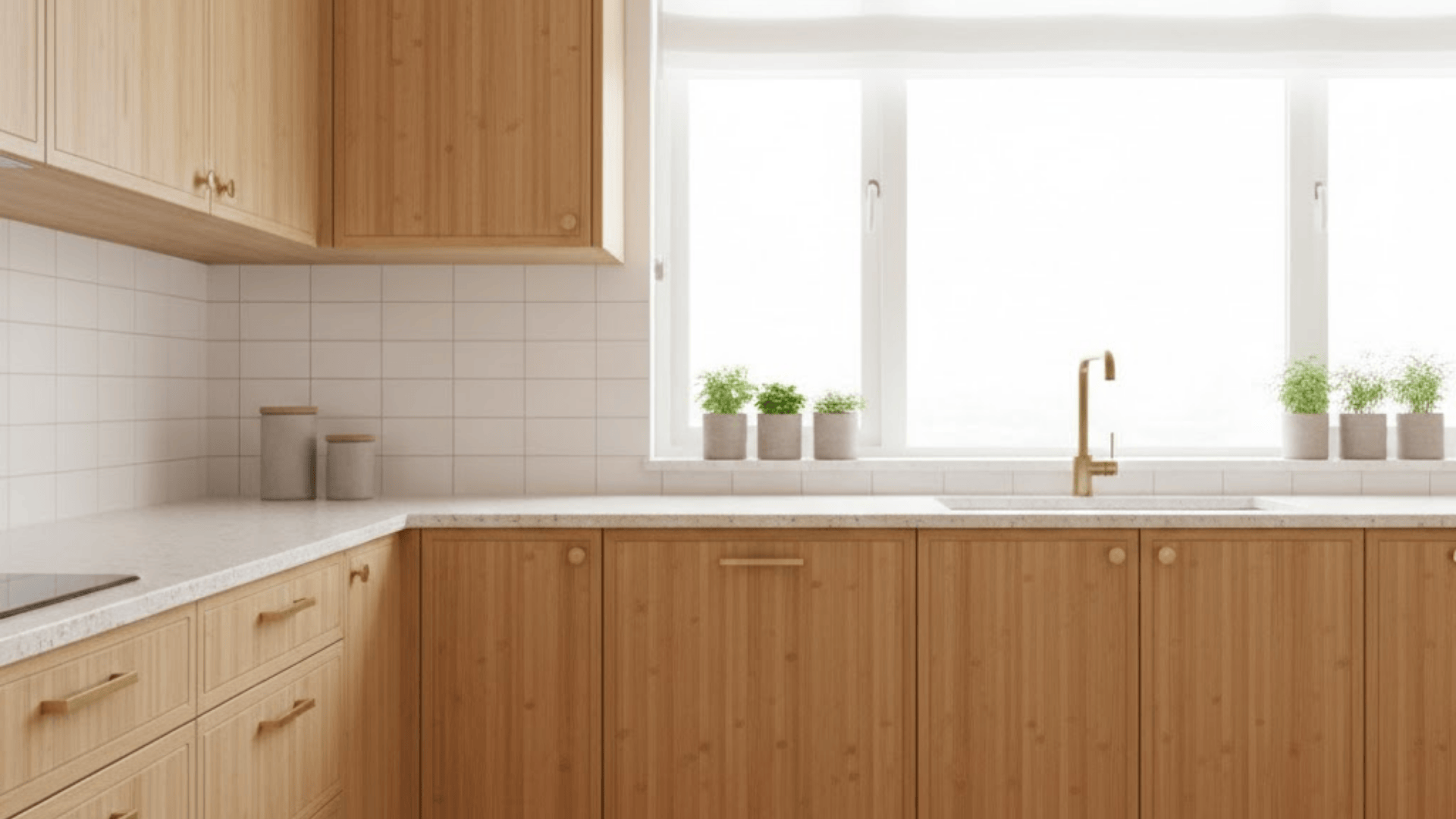
Choose cabinets made from reclaimed wood or bamboo instead of new hardwood.
Look for formaldehyde-free construction and low-VOC finishes that protect indoor air quality.
12. Energy-Efficient Appliances
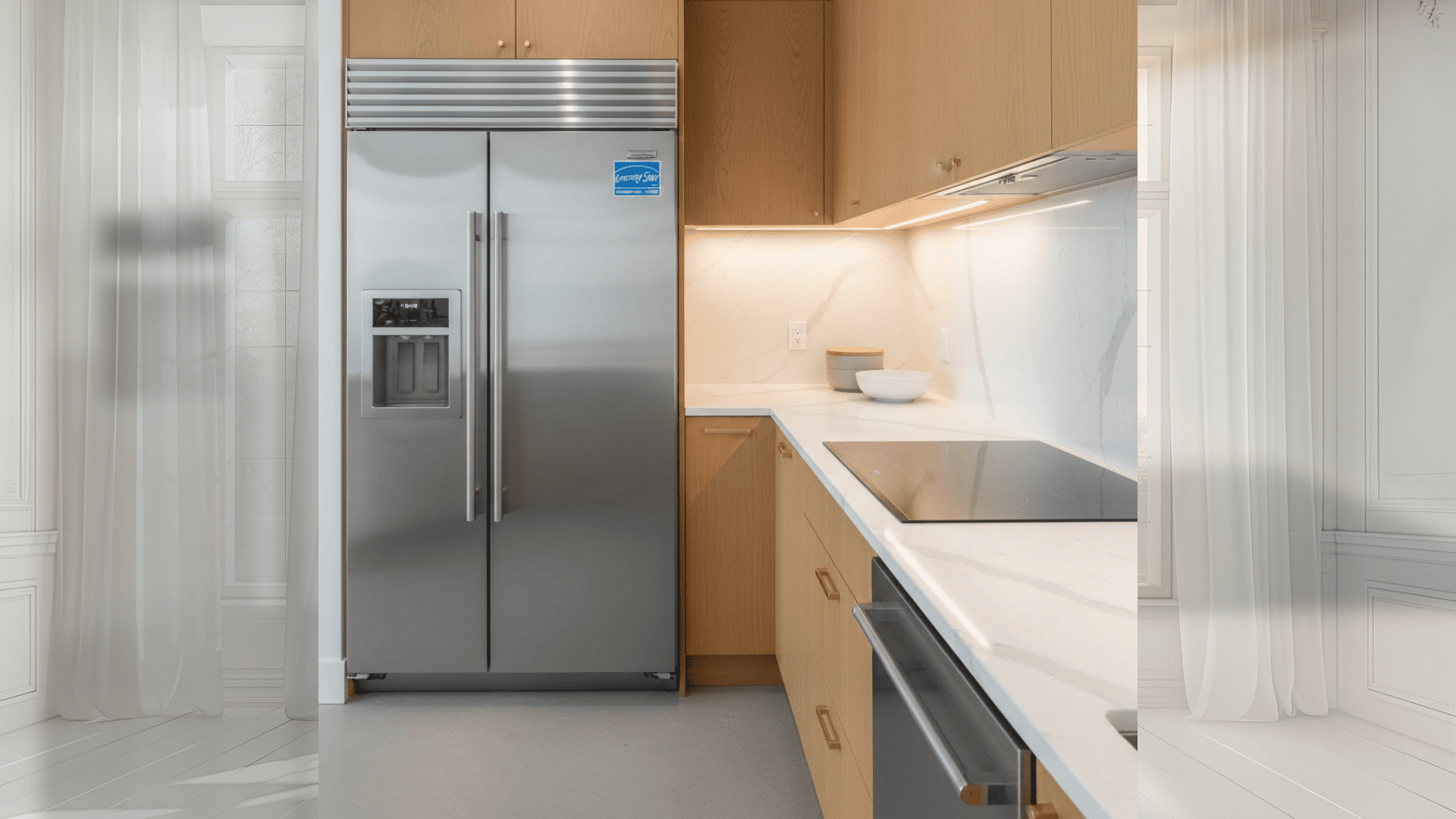
Replace old refrigerators and dishwashers with Energy Star-certified models that use less electricity.
Induction cooktops heat faster while consuming less power than traditional electric or gas ranges.
13. Water-Saving Fixtures
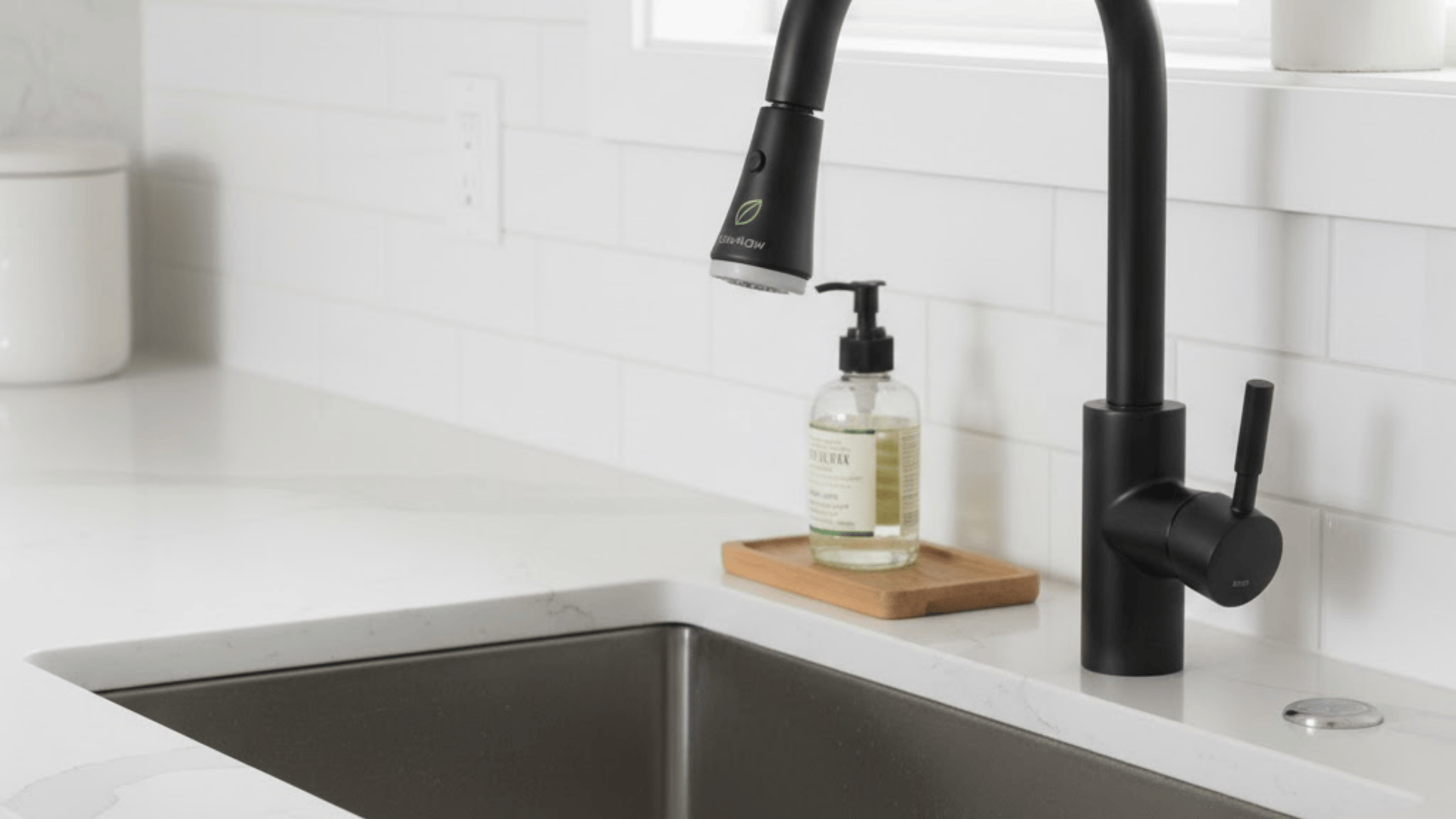
Install aerators on faucets to reduce water flow without sacrificing pressure.
Low-flow faucets cut consumption by nearly half during daily tasks like dishwashing. Consider touchless faucets that prevent water waste from taps left running accidentally.
14. Waste Management Systems
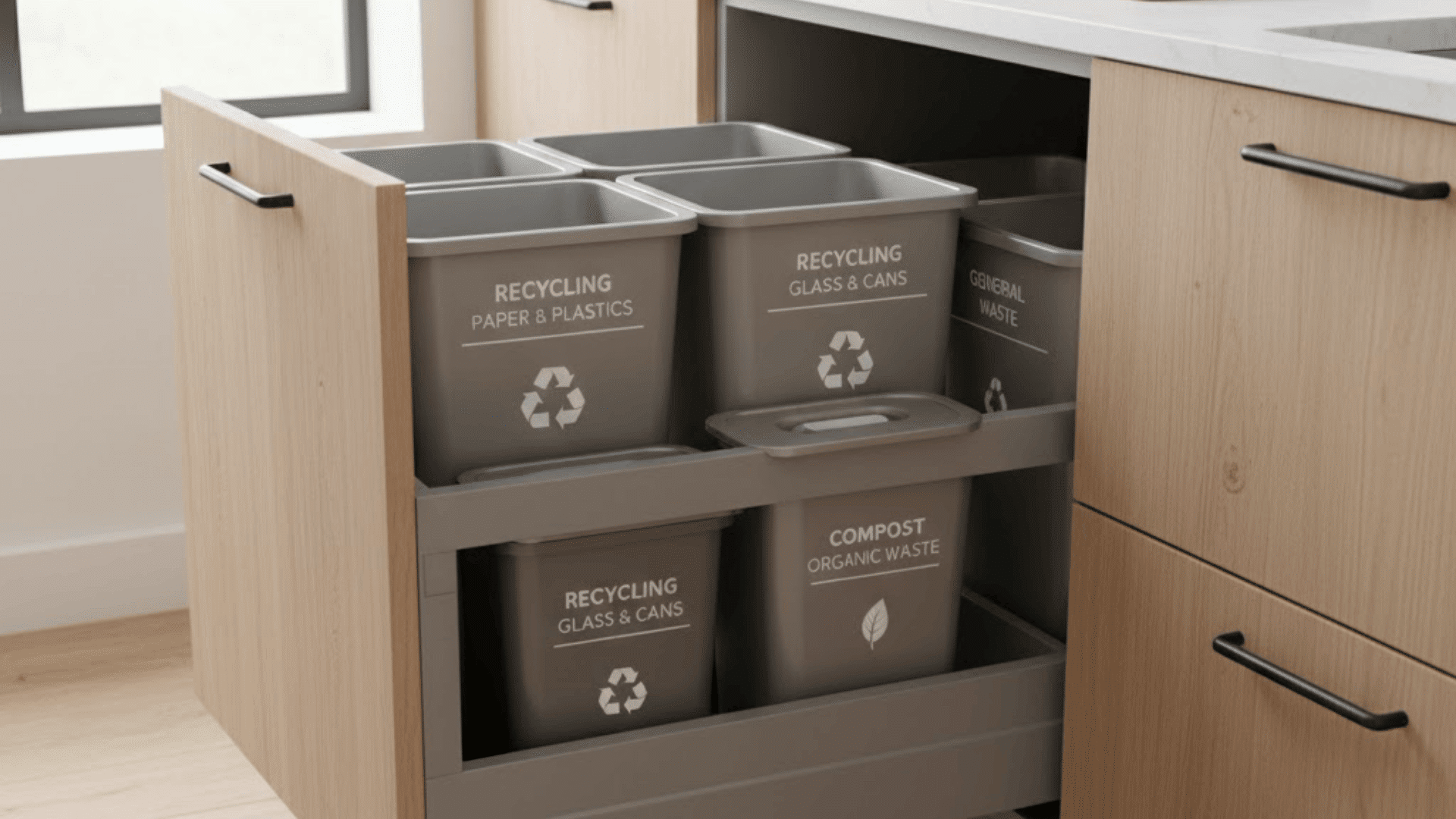
Set up clearly labeled bins for recycling, composting, and trash to make sorting easy.
Built-in compost containers handle food scraps that become garden fertilizer.
Pull-out drawer systems keep waste stations organized and hidden from view.
Sustainable Bathroom Ideas
Bathrooms use massive amounts of water and often contain the most chemicals in homes. These strategies create healthier, more efficient spaces.
15. Water Conservation
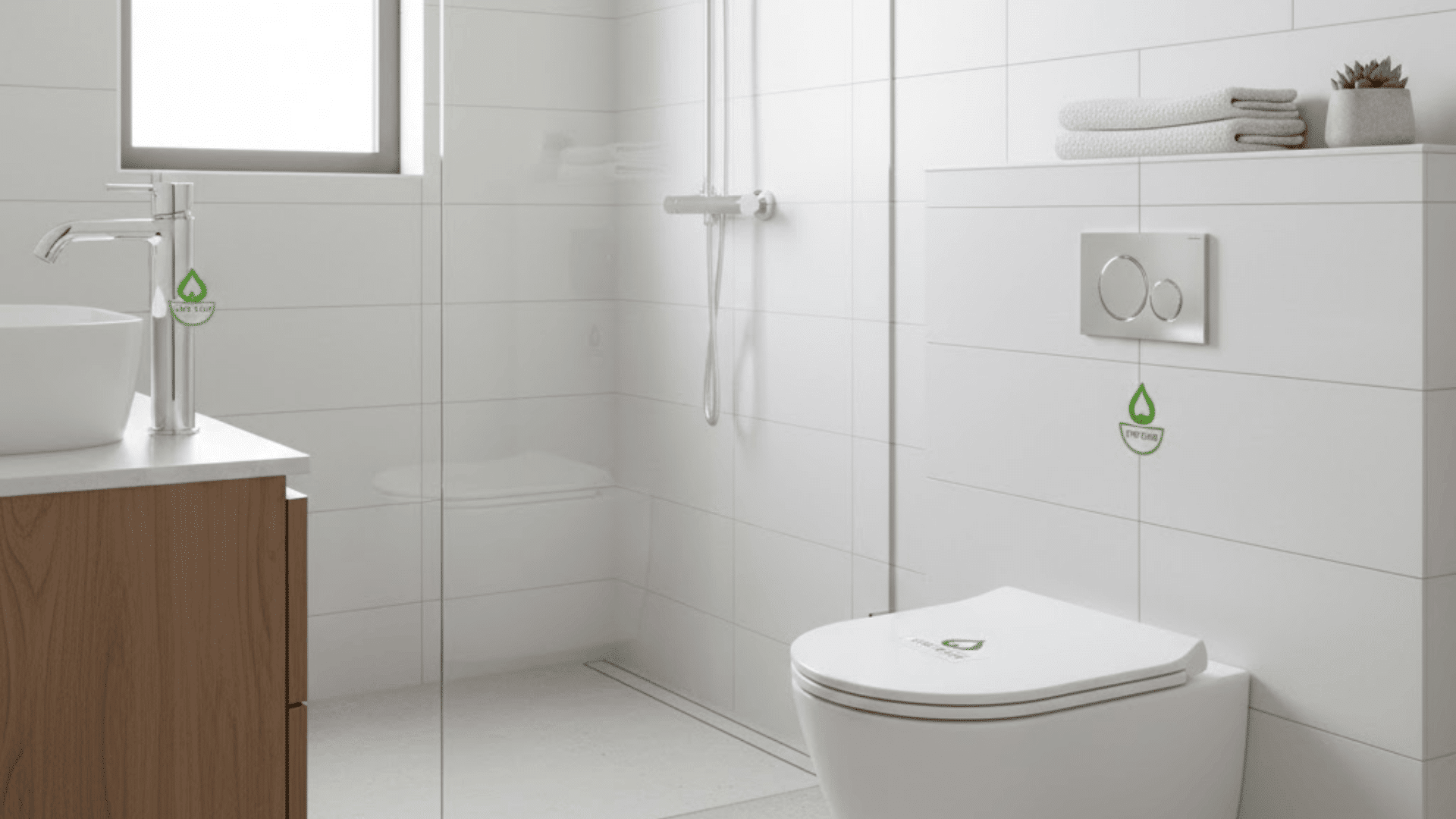
Install low-flow showerheads that reduce water use by 40% without losing pressure. Dual-flush toilets let users choose appropriate water levels for different needs.
- Pro tip: Time your showers to stay under five minutes for maximum savings.
16. Natural Ventilation & Daylight
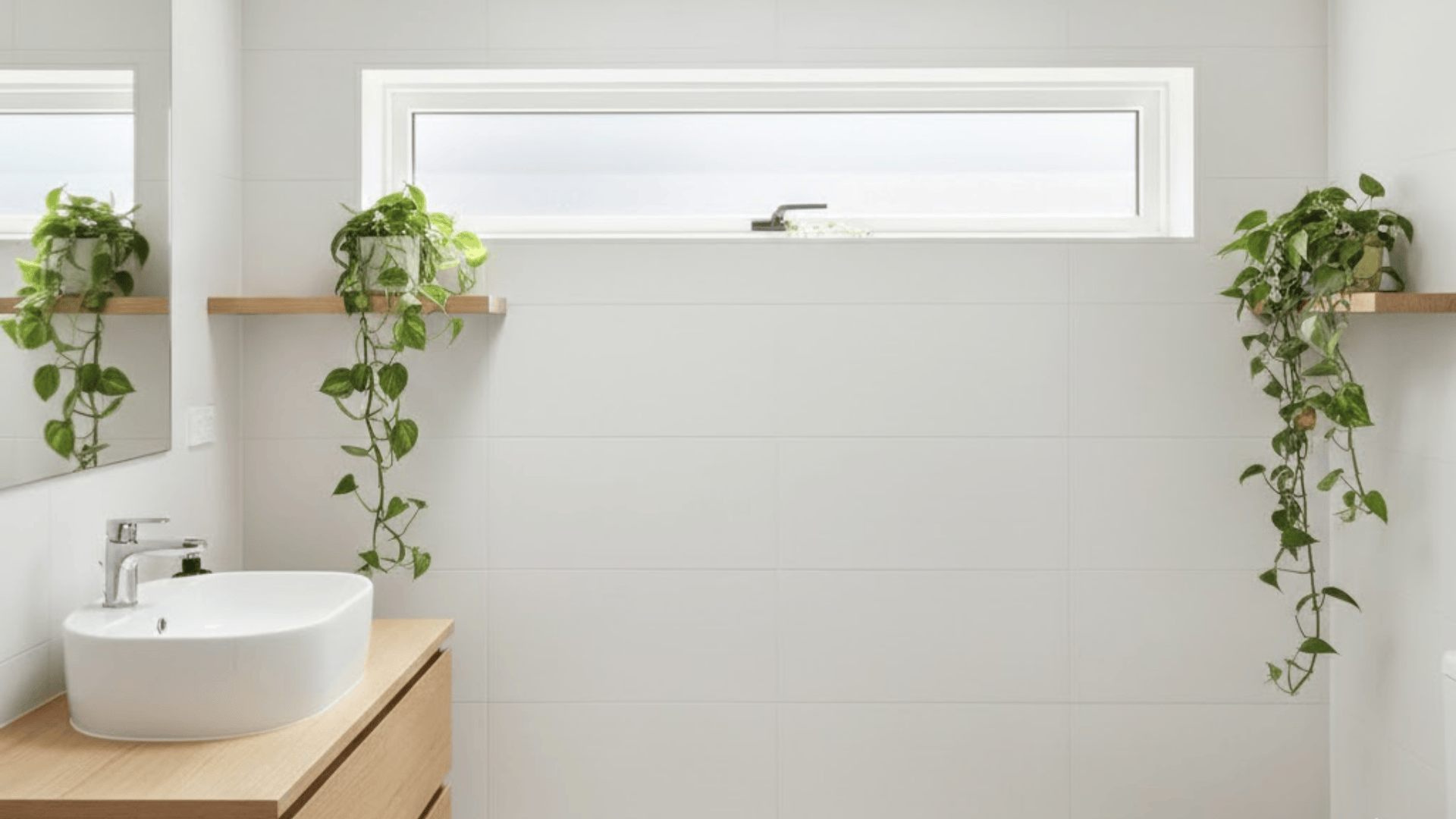
Add operable windows or skylights to reduce mold growth through fresh air circulation. Frosted glass provides privacy while allowing sunshine to brighten spaces.
- Pro tip: Open windows for 10 minutes after each shower to prevent moisture buildup naturally.
17. Non-Toxic Bath Products & Storage
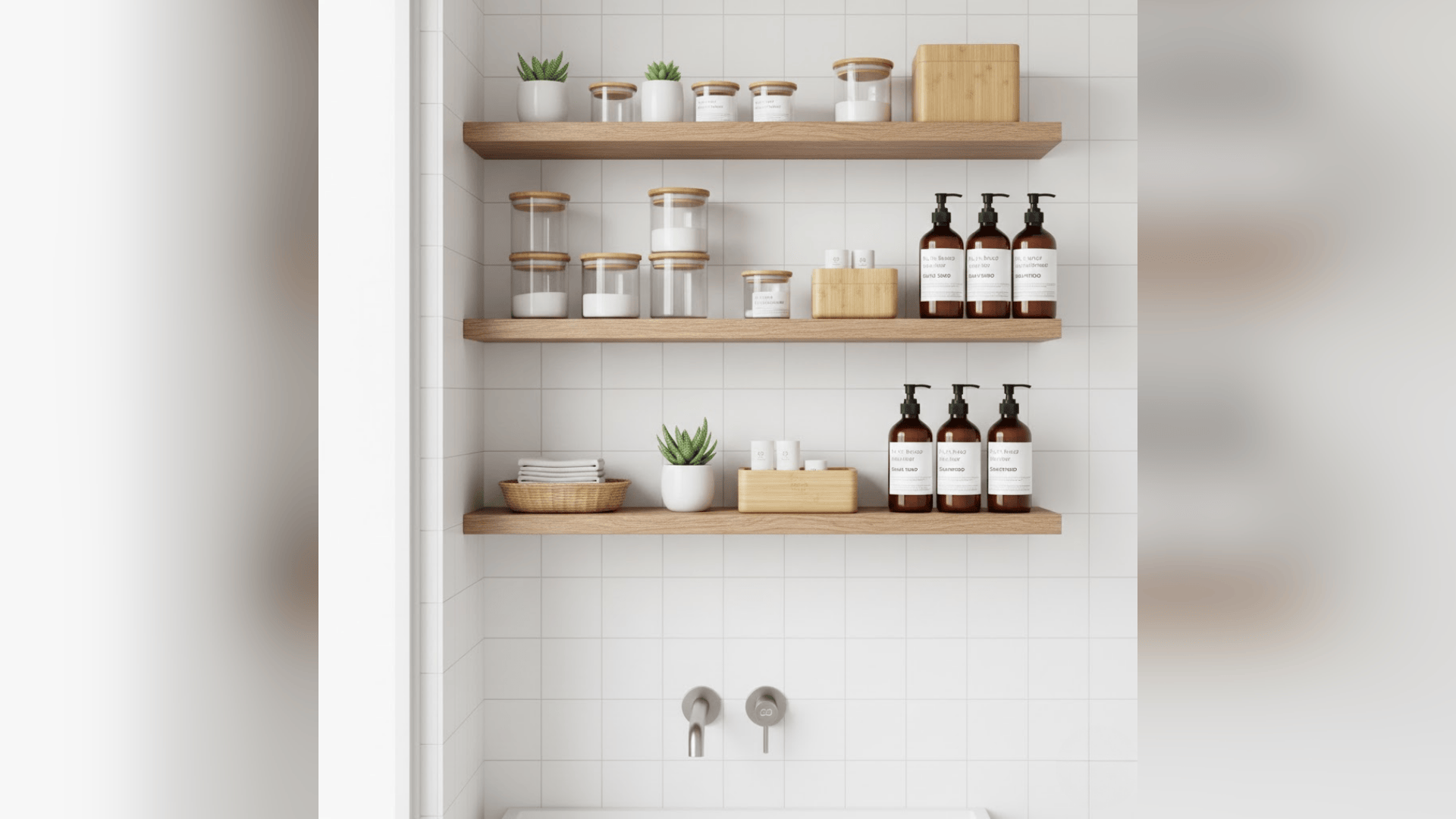
Switch to plant-based soaps free from harsh chemicals and synthetic fragrances. Store products in reusable glass containers instead of plastic bottles.
- Pro tip: Make your own cleaning solutions using vinegar and baking soda.
This is How Sustainable Interior Design Changes Your Home
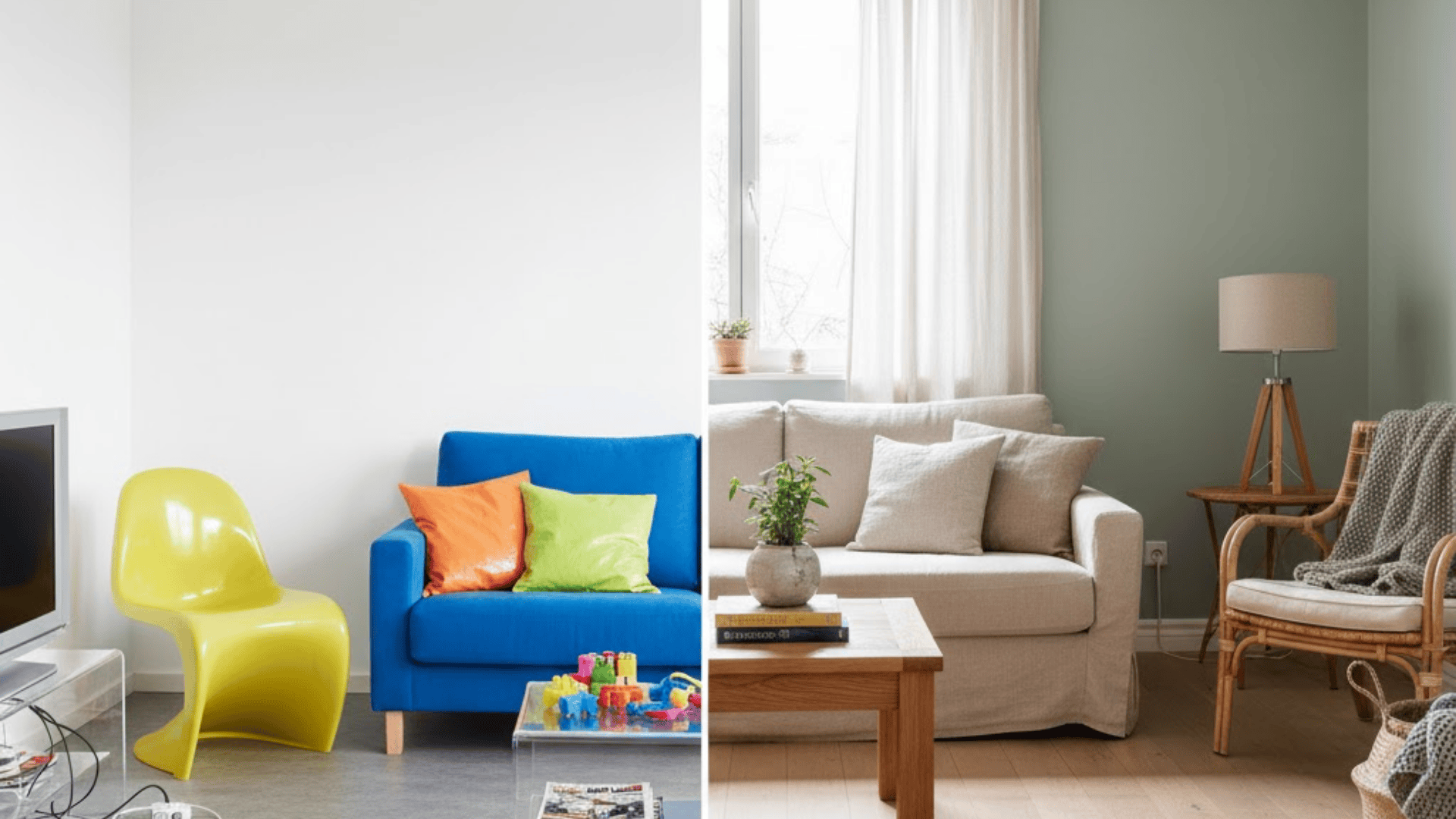
The Future of Sustainable Interior Design
The next decade will bring major shifts in home design. Sustainability is moving from optional to essential.
Move from Low-Impact to Regenerative Design: Homes will actively improve the environment by generating more energy than they consume and purifying air naturally.
Stronger Merging of Technology and Nature: Smart sensors will monitor air quality while indoor gardens regulate temperature automatically.
Sustainable Interiors Becoming Standard: Green design will shift from specialty to mainstream requirement. Building codes will mandate eco-friendly materials as standard practice.
Global Shift Toward Carbon-Neutral Homes: Governments worldwide are setting strict carbon reduction targets. New construction will meet net-zero standards, making sustainable design the only option.
Conclusion
Creating a sustainable interior design doesn’t require perfection from day one. Small changes add up to significant environmental impact over time.
Start with one eco-friendly swap today, whether that’s LED bulbs or second-hand furniture.
Your home reflects your values. Making conscious choices about materials, energy use, and longevity shows commitment to protecting our planet.
The cost savings and health benefits make this approach practical, too.
Ready to make your first sustainable change?