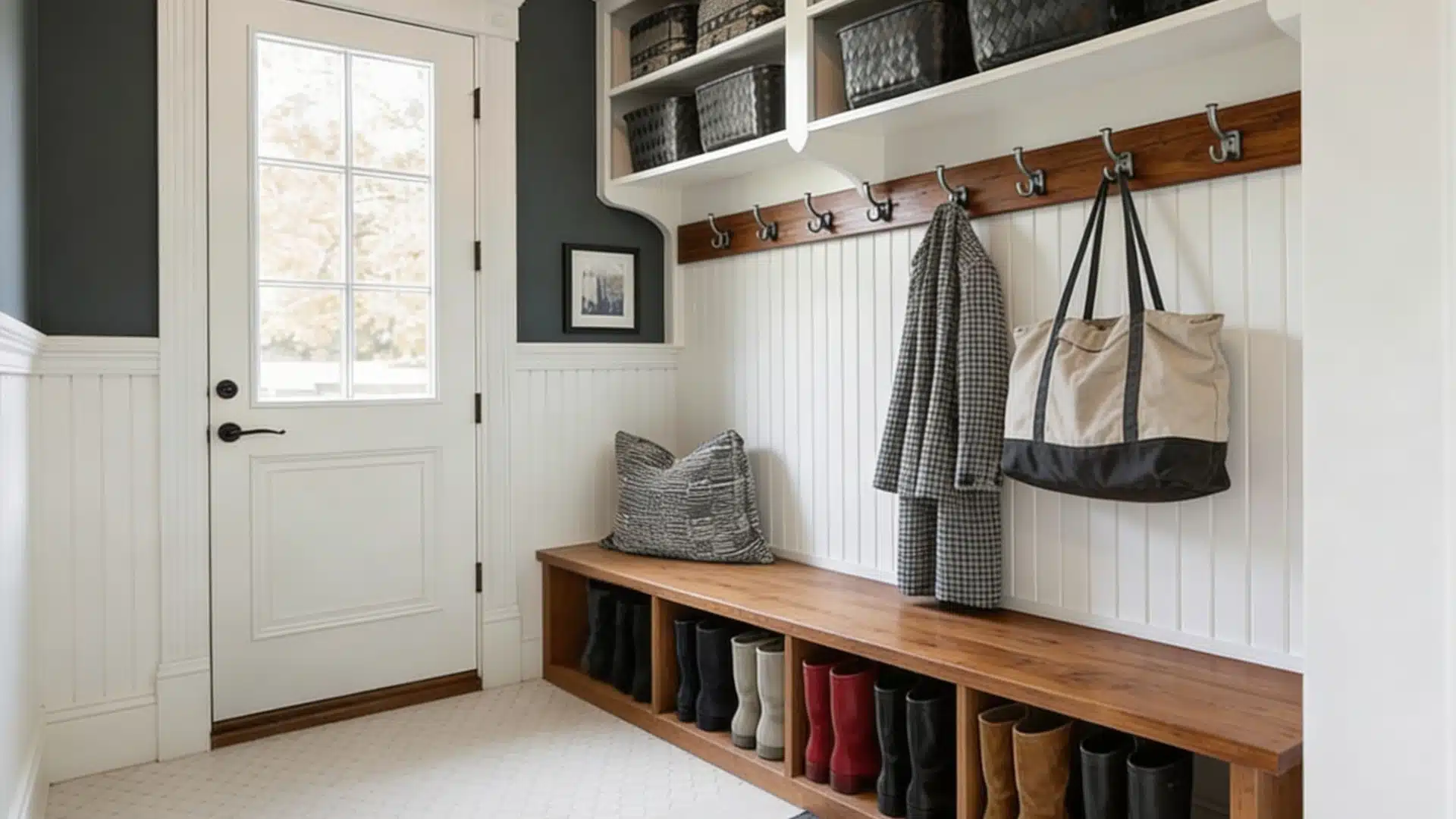
What do you do when you walk into your home, drop your shoes, bags, and coat all over the floor?
Most cluttered entryways aren’t a space problem, but they’re a system problem.
And after seeing many home setups, the fix is just proper organization, and that’s where a mudroom comes in.
If this is you or anyone in your family, then a mudroom is for you.
You don’t need a big house to have one, but even a small mudroom can help your space become functional and organized.
What is a Mud Room? Explained
A mudroom is a transitional space between the outdoors and the home’s living areas.
Think of it as a landing zone for dirty shoes, wet coats, and outdoor gear, keeping them contained instead of spreading throughout the house.
The name comes from its original purpose: keeping mud and dirt from being tracked inside.
Today, these spaces handle much more than just mud.
Key Functions
- Stores outerwear like coats, jackets, and hats
- Organizes footwear to keep shoes off the floor
- Provides seating for putting on or removing shoes
- Holds daily essentials such as bags, keys, and accessories
- Acts as a barrier between outdoor mess and clean living spaces
How Can You Best Utilize a Mudroom?
Getting the most from a mudroom means thinking about daily routines.
Start by identifying what comes in and out regularly: backpacks, sports gear, dog leashes, or keys.
Assign each family member their own zone with hooks and bins. Keep frequently used items at eye level. Store seasonal gear on higher shelves.
Quick Setup Checklist:
- Hooks for each family member.
- Shoe storage or tray.
- Bench or seating.
- Basket/bin for accessories.
Tip: Label each person’s section to avoid confusion and keep belongings organized.
Add a bench for sitting while changing shoes. This simple setup creates a system people will actually use. Speaking of setup, location matters just as much as design.
Where is a Mud Room is Usually Located?
Mudrooms work best near the entrances people use most often. The ideal spot depends on how the household flows throughout the day.
Back Door Entries
Most families choose this location. People naturally enter through the back from garages, yards, or driveways. It keeps dirt away from formal living spaces.
Garage Connections
Perfect for households that park cars and regularly unload groceries. Everything gets sorted before entering the main home.
Basement Access Points
Homes with lower-level outdoor access can benefit from basement mudroom setups.
Side and Front Entrances
Side doors offer direct driveway access without cutting through main areas. Front door mudrooms work when that’s the primary entrance used daily.
The location should feel natural, not forced. Choose where family members actually enter most often. With placement decided, design comes next.
Mudroom Design and Layout Ideas
Design options vary widely based on available space.
Small homes need creative solutions. Larger properties can dedicate entire rooms to mudroom functions.
The key is matching the layout to actual square footage and daily needs.
Small Mudroom Ideas
A small mudroom can make even the tightest entryways feel organized and functional.
With smart use of vertical space, compact furniture, and simple storage solutions. See, apartments and smaller homes don’t need a dedicated mudroom at all.
Three hooks, a boot tray, and a small bench handle the daily load just as well.
These ideas are perfect for apartments, , or small homes with limited space.
1. Hallway Mud Rooms
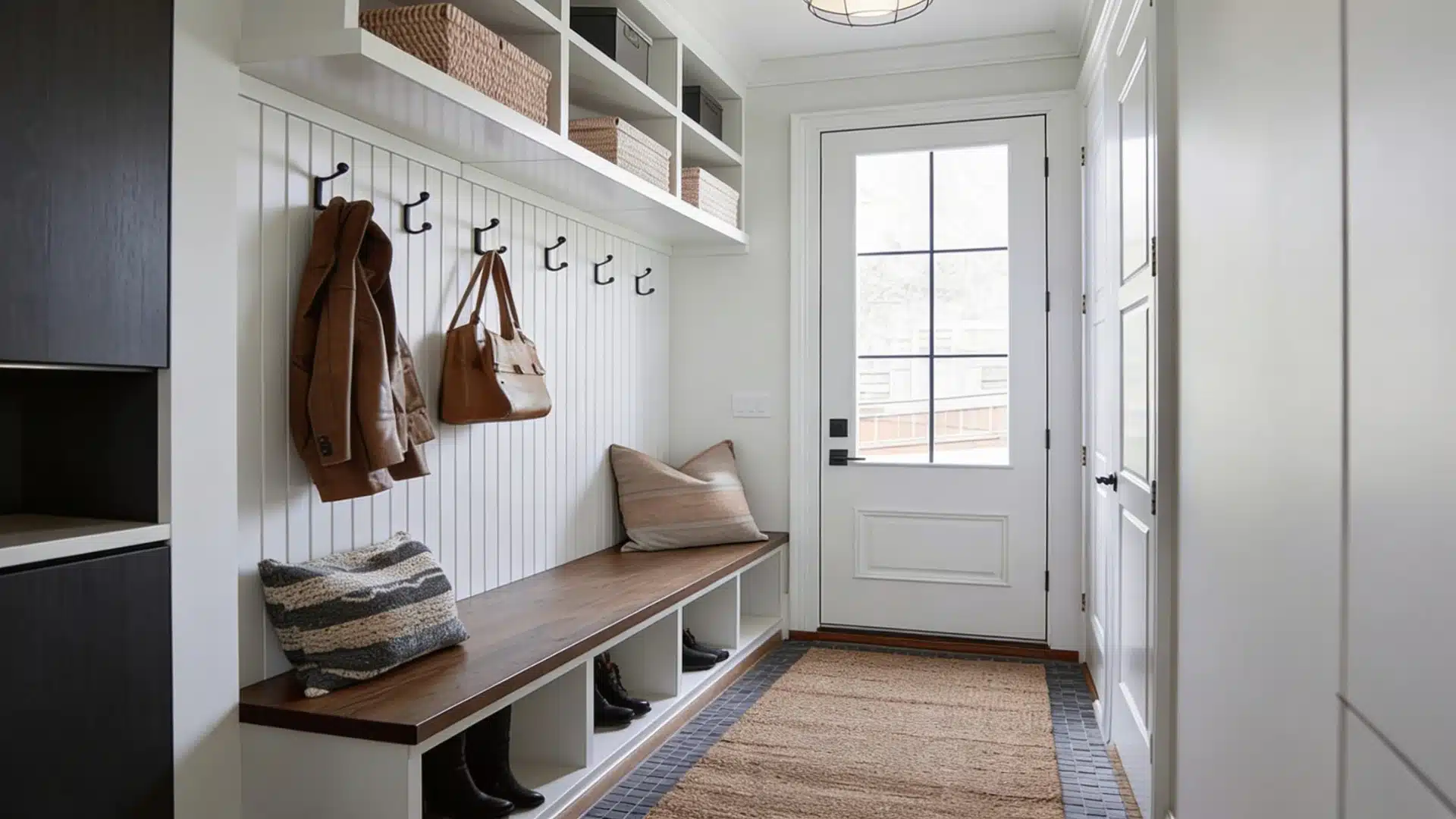
Narrow hallways can serve double duty. Mount hooks along one wall at different heights for adults and kids.
Add a slim shoe rack underneath or a narrow bench that doesn’t block traffic flow.
This approach uses vertical space without eating up floor area.
2. Closet Conversions
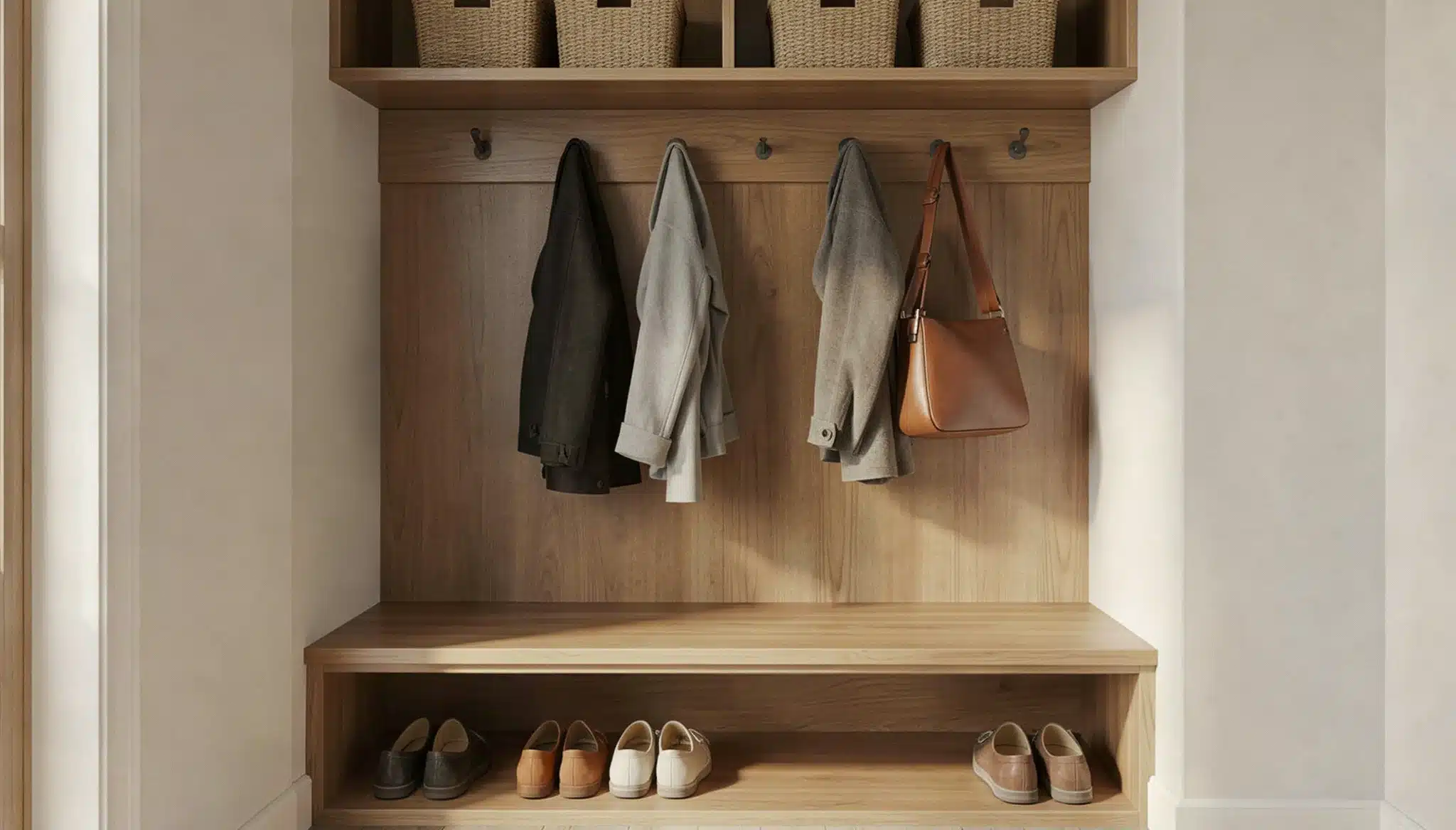
An underused coat closet near the entry can transform into a mini mudroom. Remove the door and install organized storage inside.
- Cubbies for individual storage compartments
- Mounted hooks at varying heights
- Open design for easy accessibility
3. Wall-Only Setups
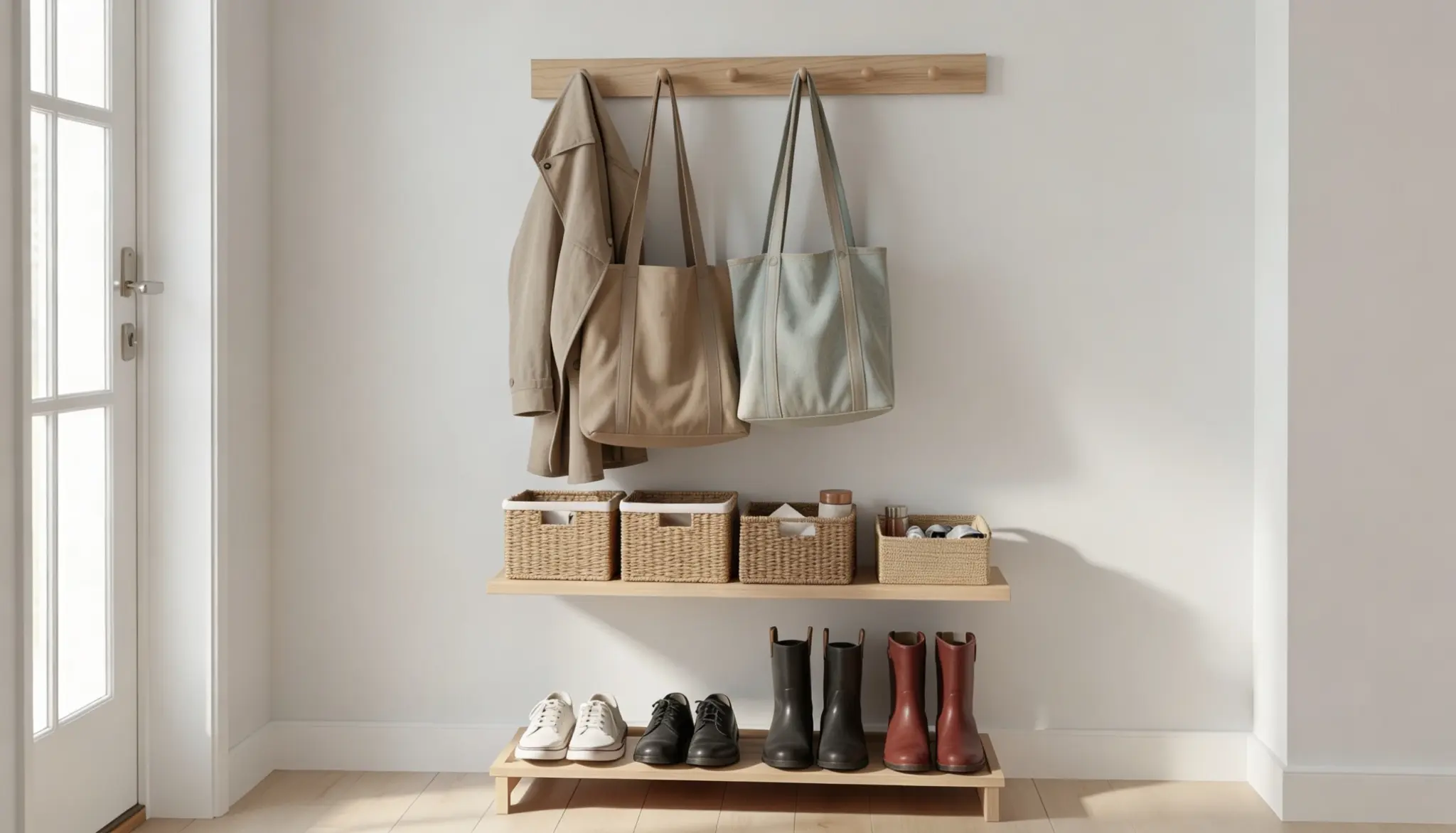
When floor space is limited, walls become the solution. Install a peg rail or mounted hooks for coats and bags. Add floating shelves above for hats and small items.
Place a boot tray or shoes directly on the floor below. No furniture needed, yet everything has a place.
Tip: Mount hooks 40-48 inches high for adults and 30-36 inches for children to encourage independence.
4. Behind-The-Door Setup
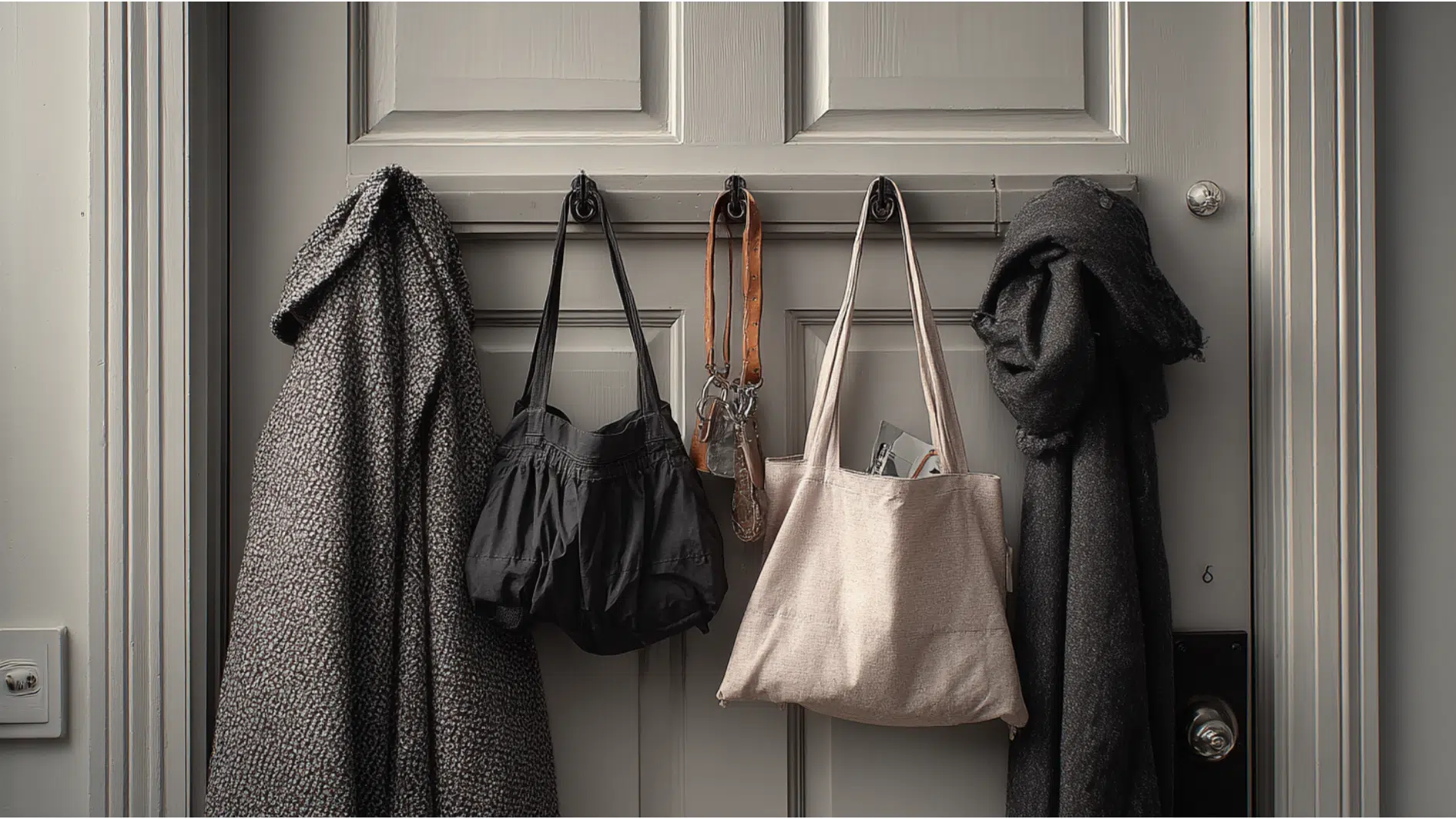
The back of an entry door offers unused real estate.
Over-the-door hooks hold coats, scarves, and bags. Small pockets or baskets can attach to the lower part for gloves and keys.
This invisible storage keeps items handy without taking up any room.
5. Fold-Down Bench Option
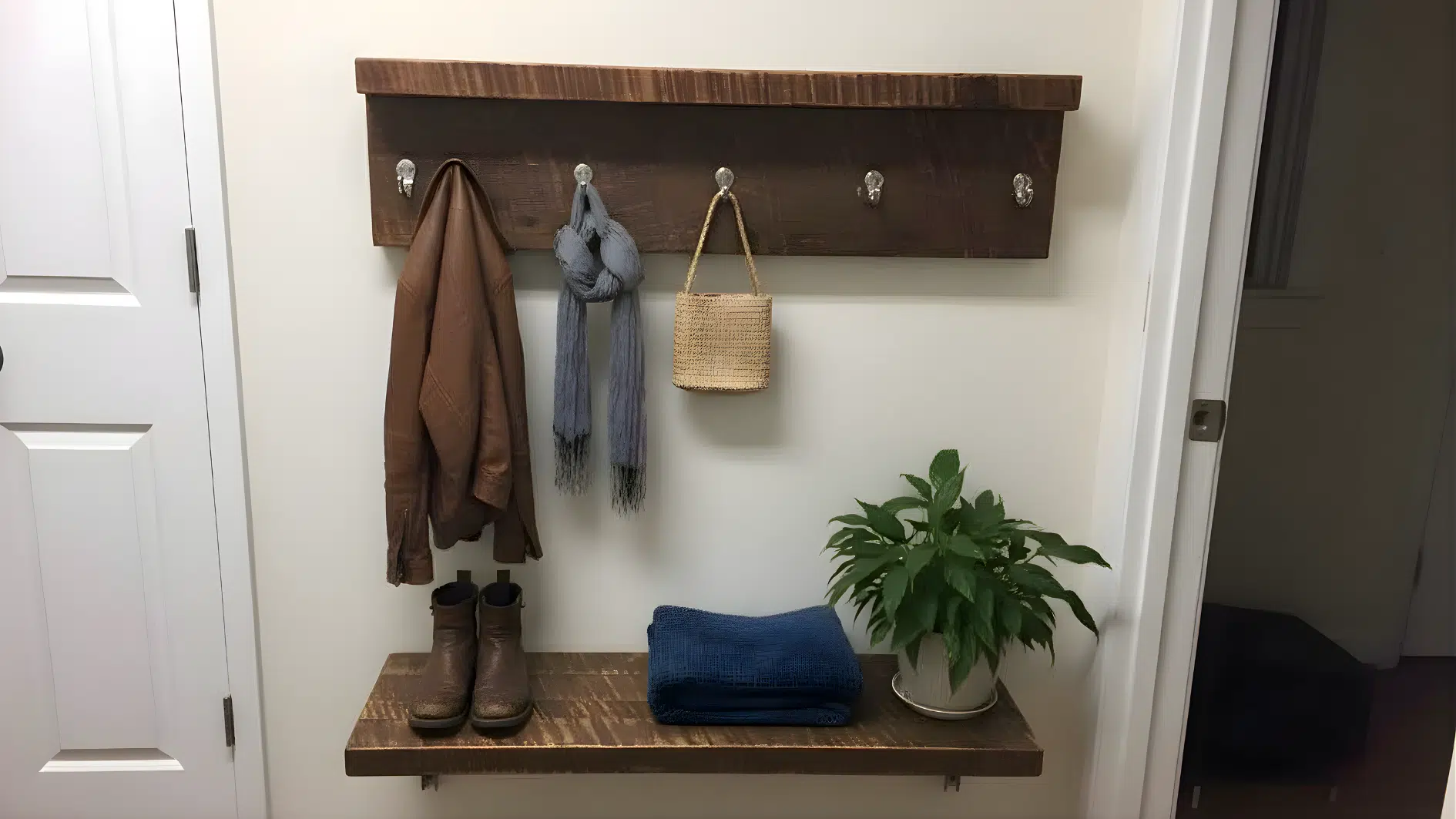
Wall-mounted fold-down benches save serious space.
They flip up when not in use and provide seating when needed. Perfect for tiny entryways where a permanent bench would block the path. Some models include built-in storage underneath.
Small spaces solved, but medium-sized homes have more room to work with.
In hallways under 4 feet wide, a fold-down bench almost always outperforms a fixed one, you can try!
Mudroom Ideas for Medium-Sized Homes
Mudroom ideas for medium-sized homes create the perfect balance between space and functionality.
With a bit more space, you can incorporate benches, cabinets, and dedicated storage zones for better organization. These setups help keep everyday items accessible while maintaining a clean, uncluttered look.
6. Bench and Cabinet Combos
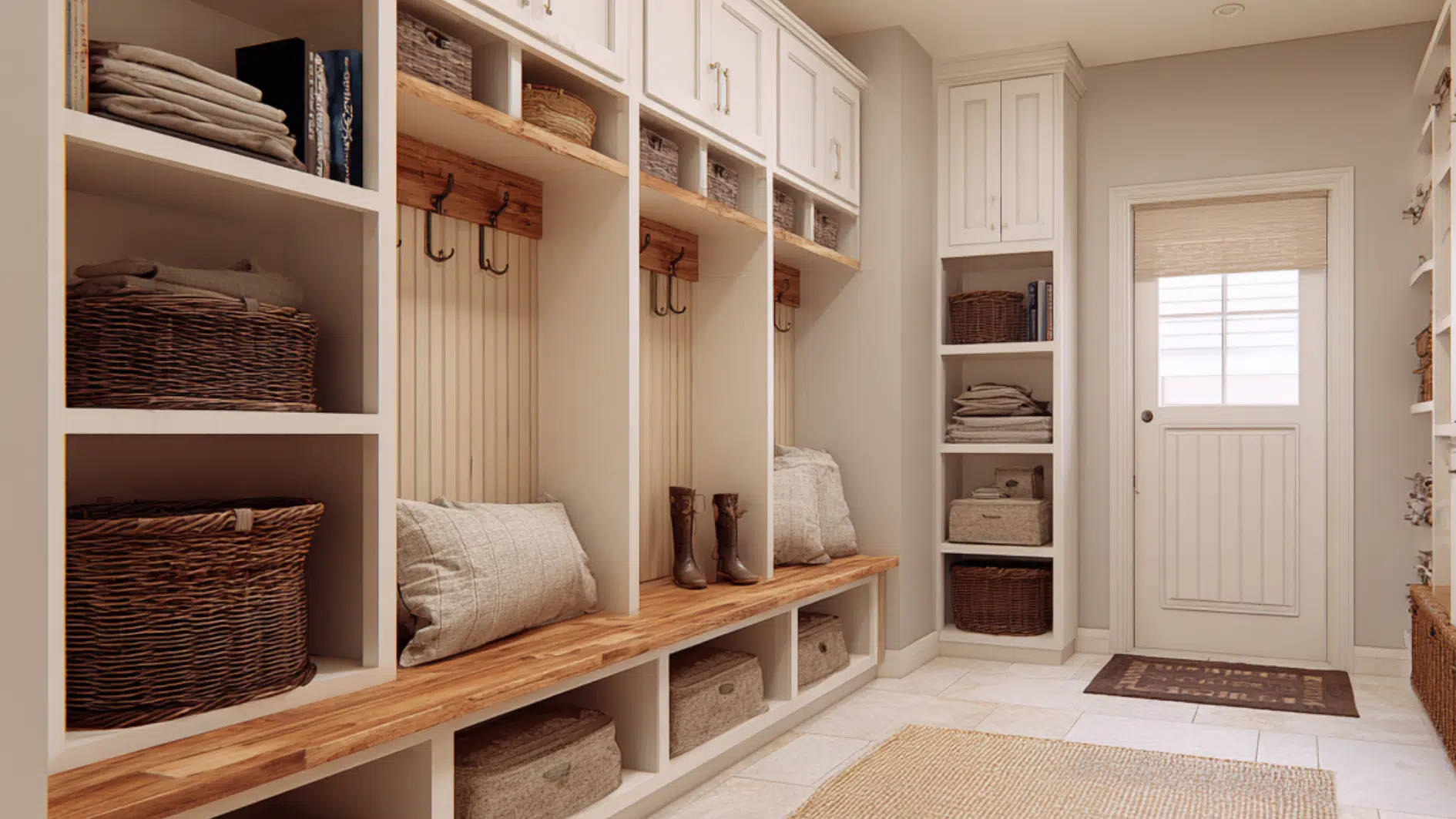
A built-in bench with cabinets above and below maximizes vertical storage.
The bench provides seating while hiding shoes or boots in compartments underneath.
Upper cabinets keep seasonal items out of sight. This all-in-one unit handles most family needs without sprawling. The closed storage reduces visual clutter significantly.
7. Open Shelving Layouts
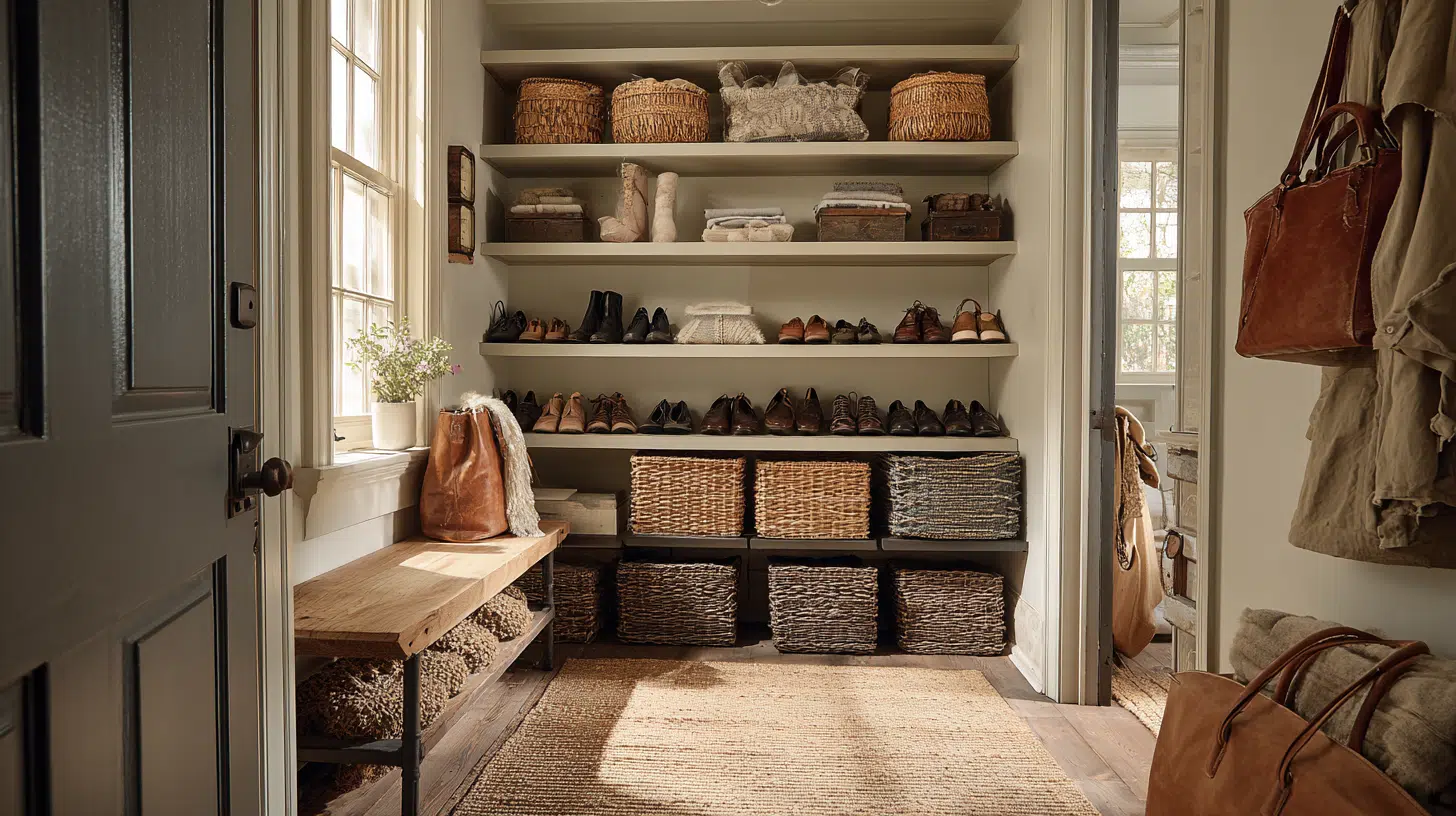
Open shelves create an airy feel while keeping items visible and accessible. Everything stays in plain sight, making morning routines faster.
- Baskets or bins contain smaller objects
- Lower shelves hold shoes
- The middle sections store bags
- Top shelves house hats or seasonal gear
8. Split Wall Layout
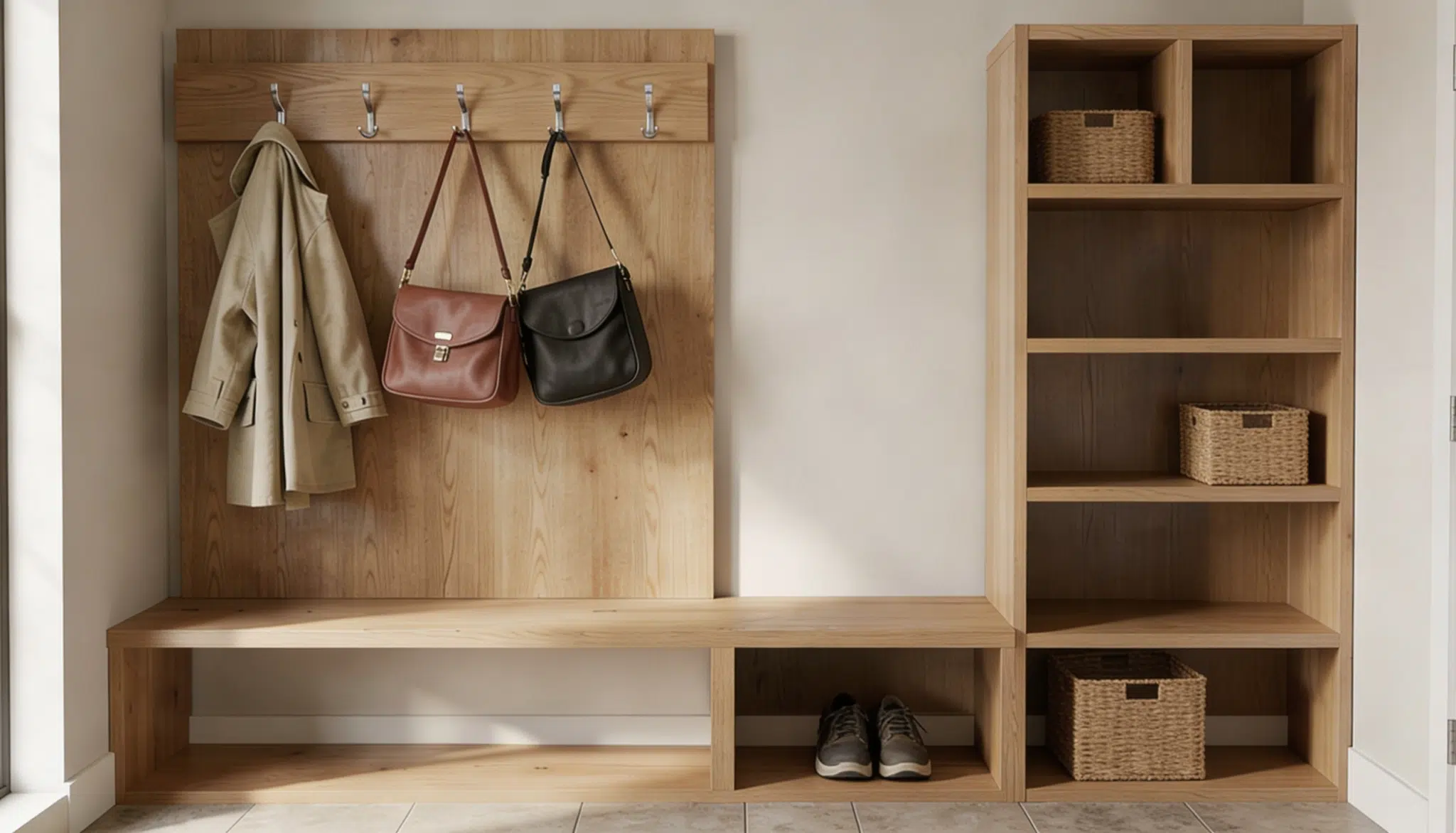
Dividing wall space into zones works well for multiple users. One side handles coats and bags, the other focuses on shoes and sports equipment.
A bench in the middle connects both sections.
This setup prevents one area from becoming overloaded. Each zone maintains its specific purpose without overlap.
Larger homes can go bigger with their mudroom plans.
Dark greens, navy, and warm terracotta are popular for good reason.
Mudroom Styles for Large Homes
Mudrooms in large homes blend style with high-capacity storage, often featuring custom cabinetry, spacious benches, and designated zones for each family member.
Popular styles range from modern minimal with sleek finishes to rustic farmhouse with wood accents and woven textures.
Ample shelving, built-in cubbies, and decorative pieces increase both function and design.
9. Full Room Layouts
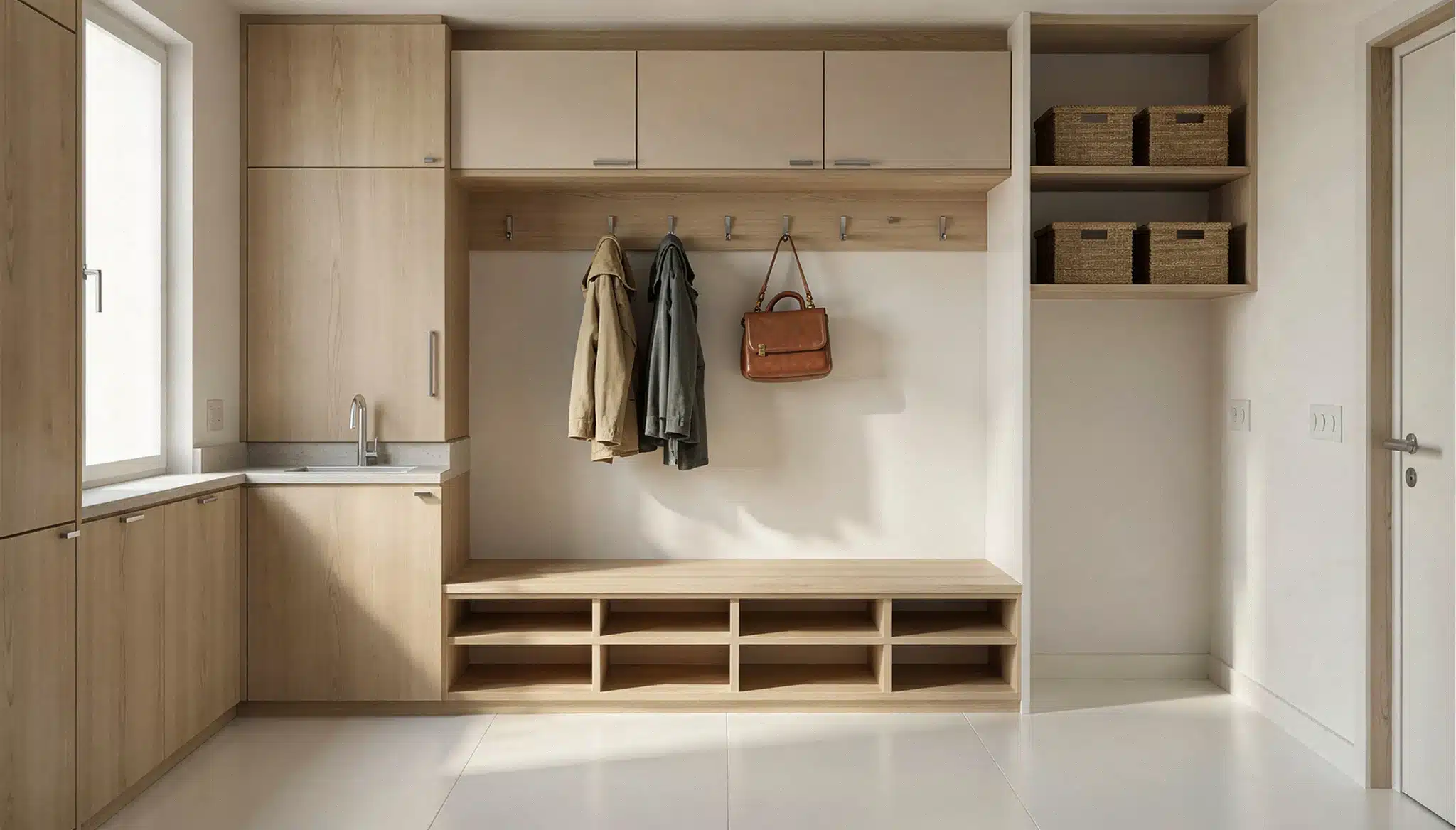
A dedicated mudroom includes everything: built-in storage, countertops, a sink, and ample seating. Separate areas handle different tasks.
Multiple people can use the space at once without crowding.
- Coat and outerwear section
- Pet washing station
- Sports equipment area
- Counter space for sorting items
10. Separate Zones for Family Members
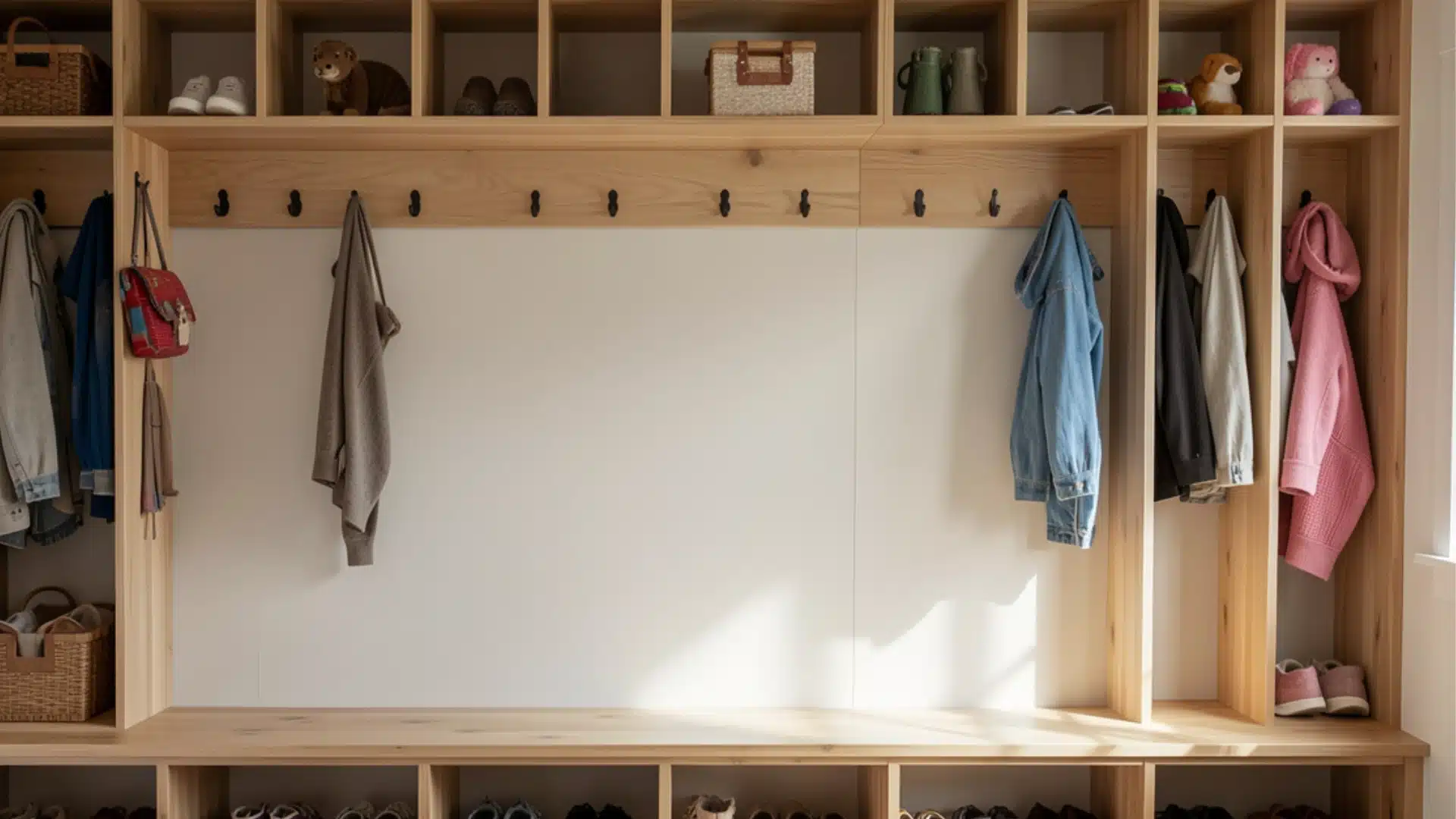
Large mudrooms can assign each person their own complete zone.
Every family member gets personal hooks, cubbies, and shelf space. Names or labels mark each area. This prevents mix-ups and teaches kids responsibility for their belongings.
No more arguing about whose stuff is whose. Individual zones make morning routines smoother for everyone.
Mudroom Ideas by Entry Type
Mudroom designs can be created for different entry points, such as the front, side, or garage, to maximize convenience and flow.
Mudrooms focus on style and first impressions, while garage entries prioritize durability and heavy-duty storage.
Side or back entries are ideal for casual use and easy-to-clean surfaces.
11. Garage Entry Mud Rooms
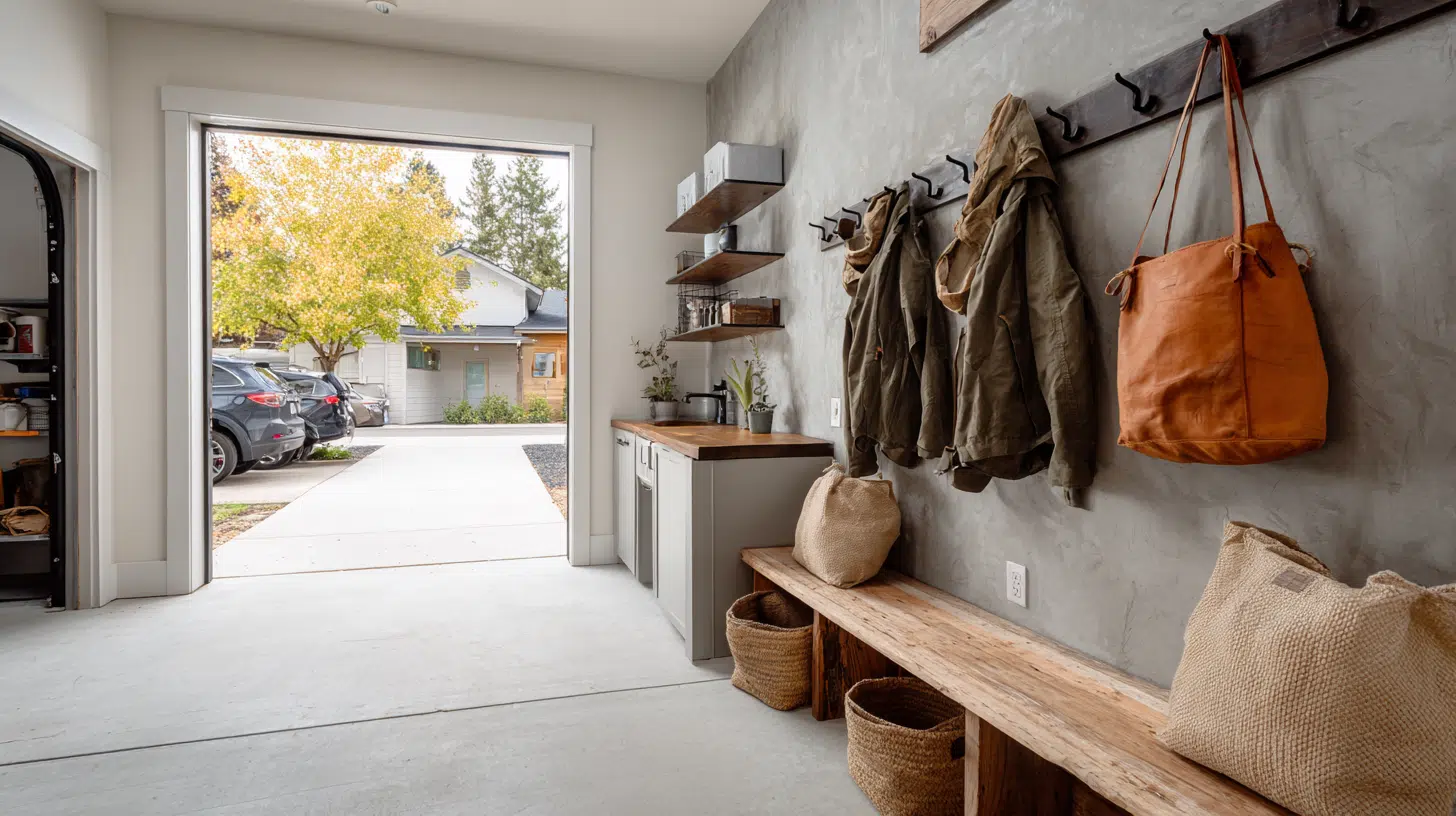
Garage mudrooms handle the heaviest traffic in most homes. They need durable surfaces and lots of storage.
Install hooks near parking spots so people can grab their coats on the way out. Add a counter for setting down grocery bags or packages.
Consider installing a utility sink for hand washing after yard work.
12. Patio or Garden Entry Mud Rooms
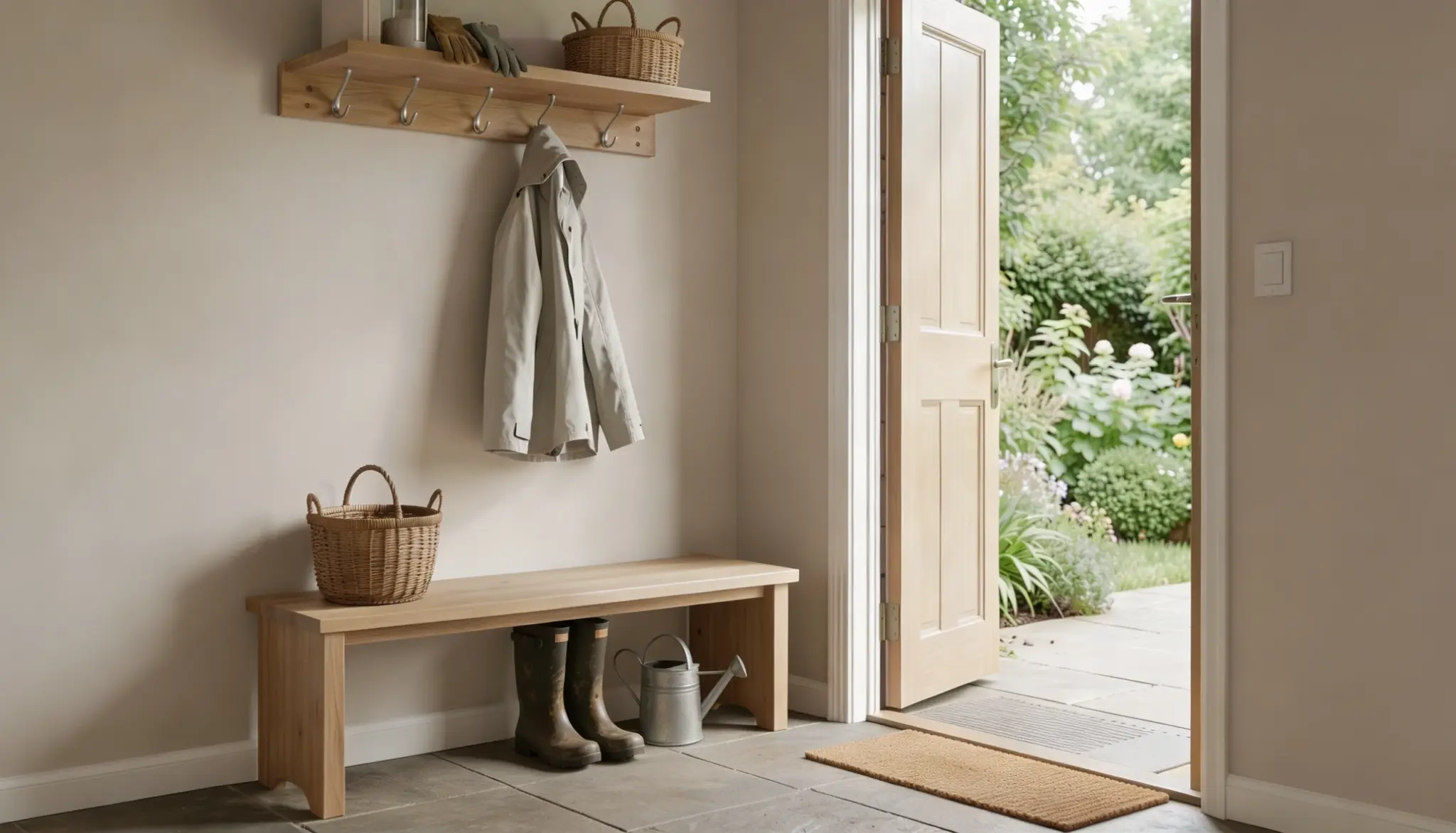
Patio and garden entries need special consideration for outdoor gear. These mudrooms regularly handle gardening tools, dirty gloves, and soil-covered shoes.
Wall-mounted tool racks keep shovels organized vertically.
Tip: Keep a small brush or broom near the door to sweep off dirt before entering. This simple habit prevents soil from spreading inside
13. Shared Laundry and Mud Rooms
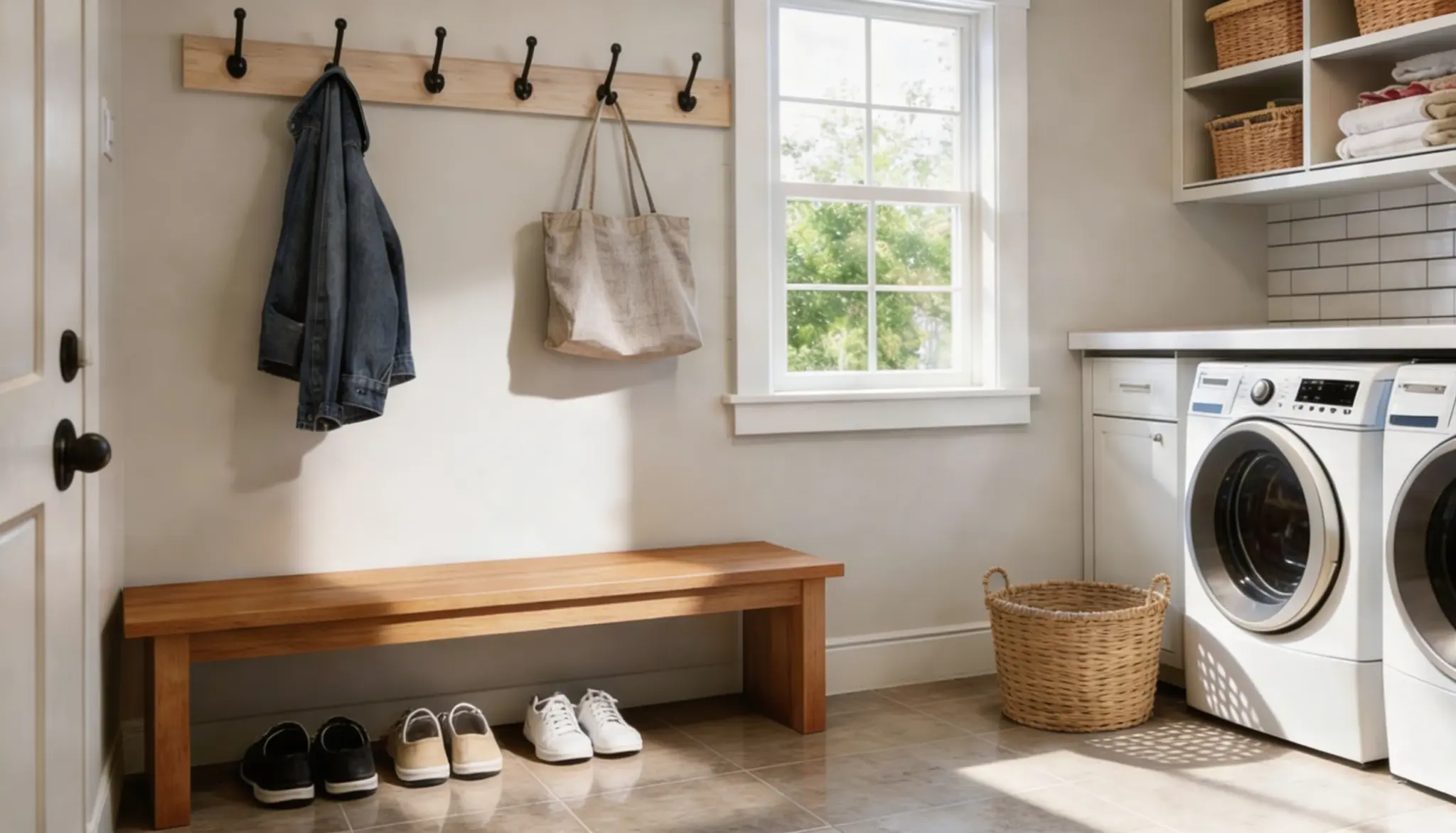
Combining laundry and mudroom functions saves space. Install mudroom storage on one wall and laundry machines on another.
This pairing makes sense since both deal with dirty items. Clothes can go straight from the mudroom to the washer without traveling through the house.
The workflow becomes more efficient this way.
Mud Room Flooring that Handles Daily Use
Mudroom flooring should be durable, moisture-resistant, and easy to clean to handle daily wear and tear.
Popular options include porcelain tile, luxury vinyl, and sealed concrete, all of which stand up well to dirt, water, and heavy foot traffic.
Textured surfaces or matte finishes help prevent slipping, especially in busy households.
14. Tile Options
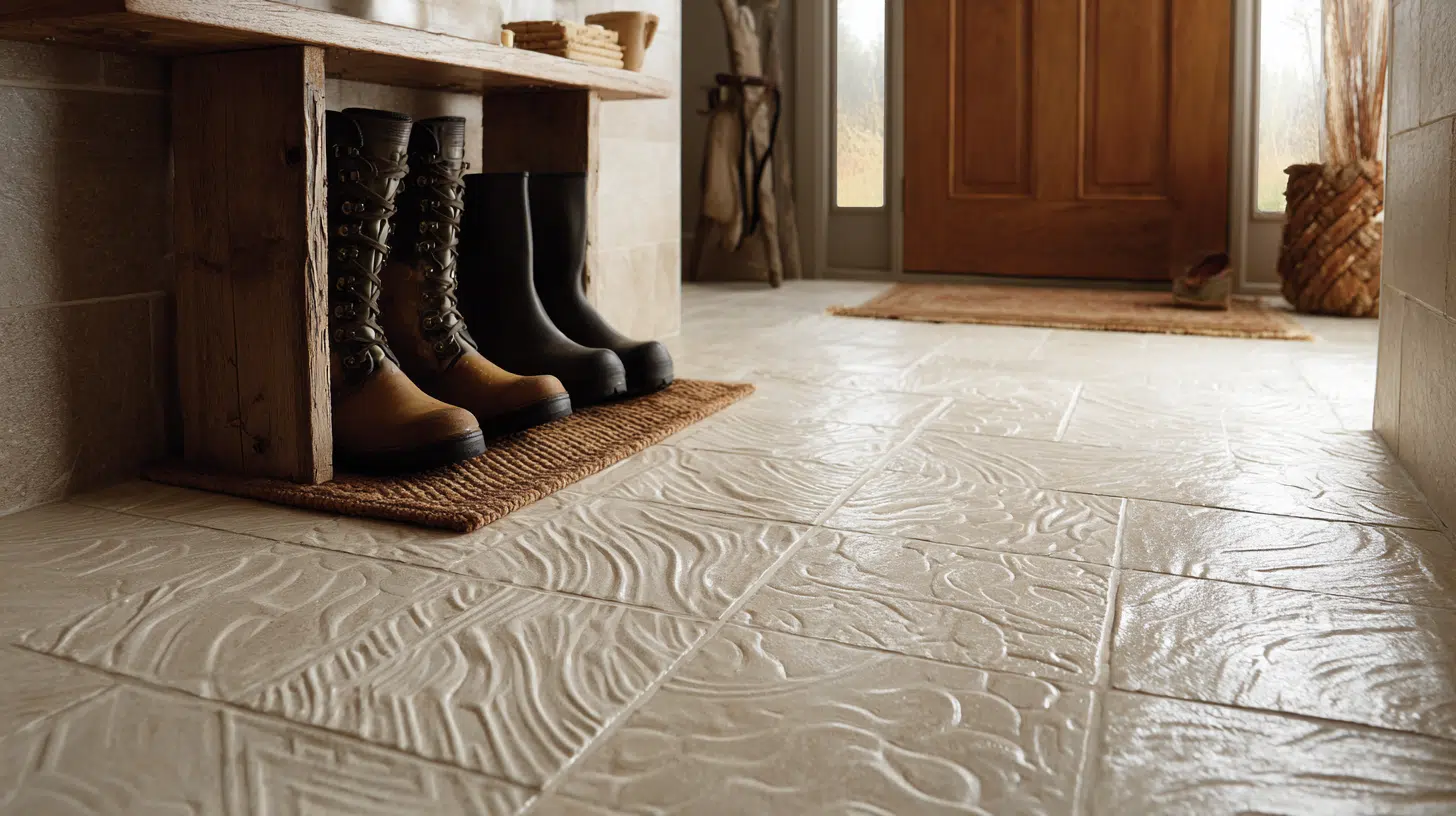
Ceramic or porcelain tile tops the durability list. Water doesn’t harm it, and dirt wipes away easily. Textured tiles prevent slipping when wet.
Dark colors or patterns hide dirt between cleanings. Grout lines do require occasional scrubbing, but the tradeoff is worth it for longevity.
Tile outlasts most other flooring options.
15. Vinyl Options
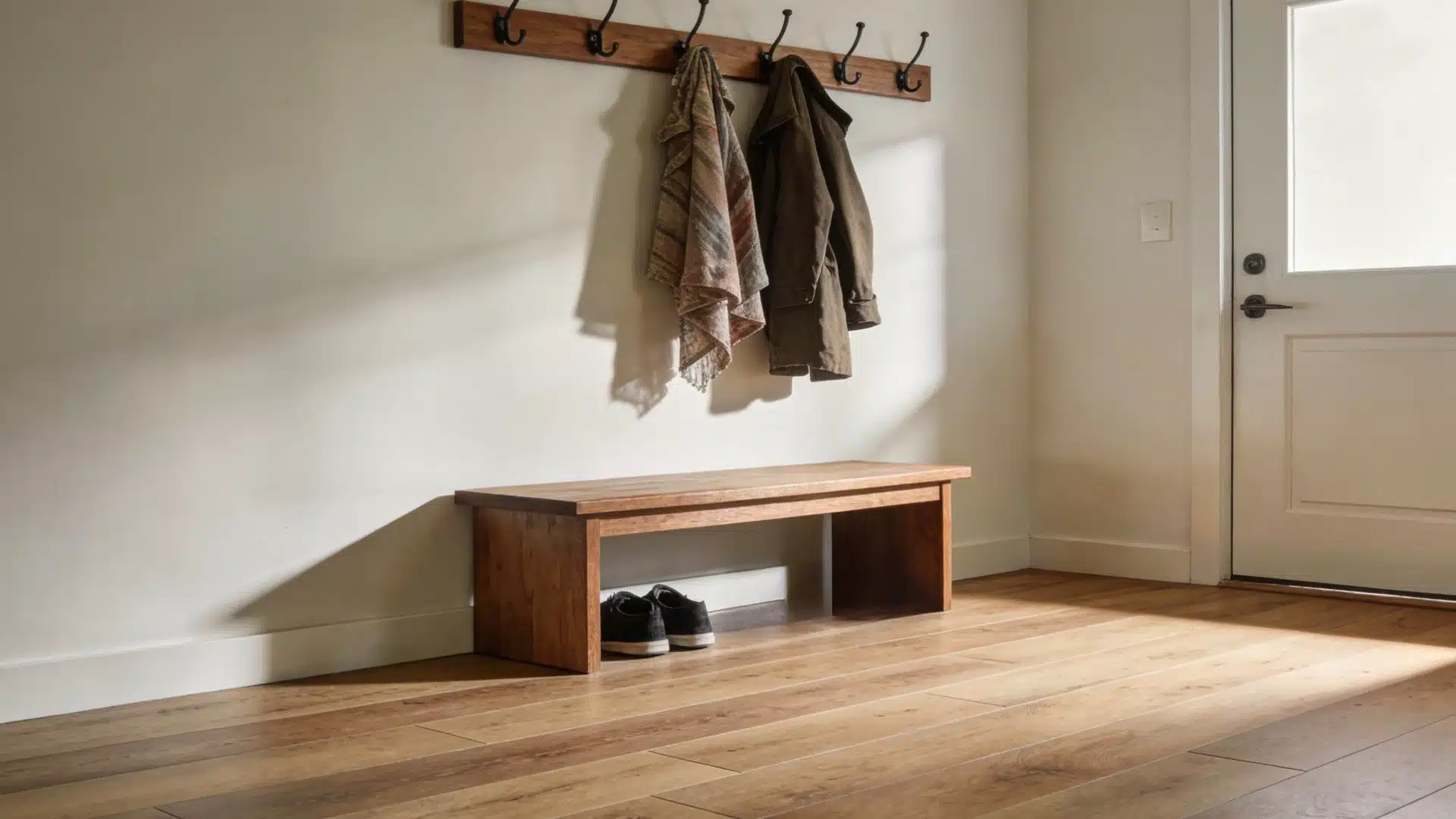
Luxury vinyl plank or sheet vinyl costs less than tile but still performs well.
Modern vinyl looks like wood or stone but handles moisture better. It’s softer underfoot than tile, which some prefer. Installation is often easier, too.
Quality matters here since cheap vinyl won’t last. Higher-grade vinyl can last 15-20 years with proper care.
16. Concrete Finishes
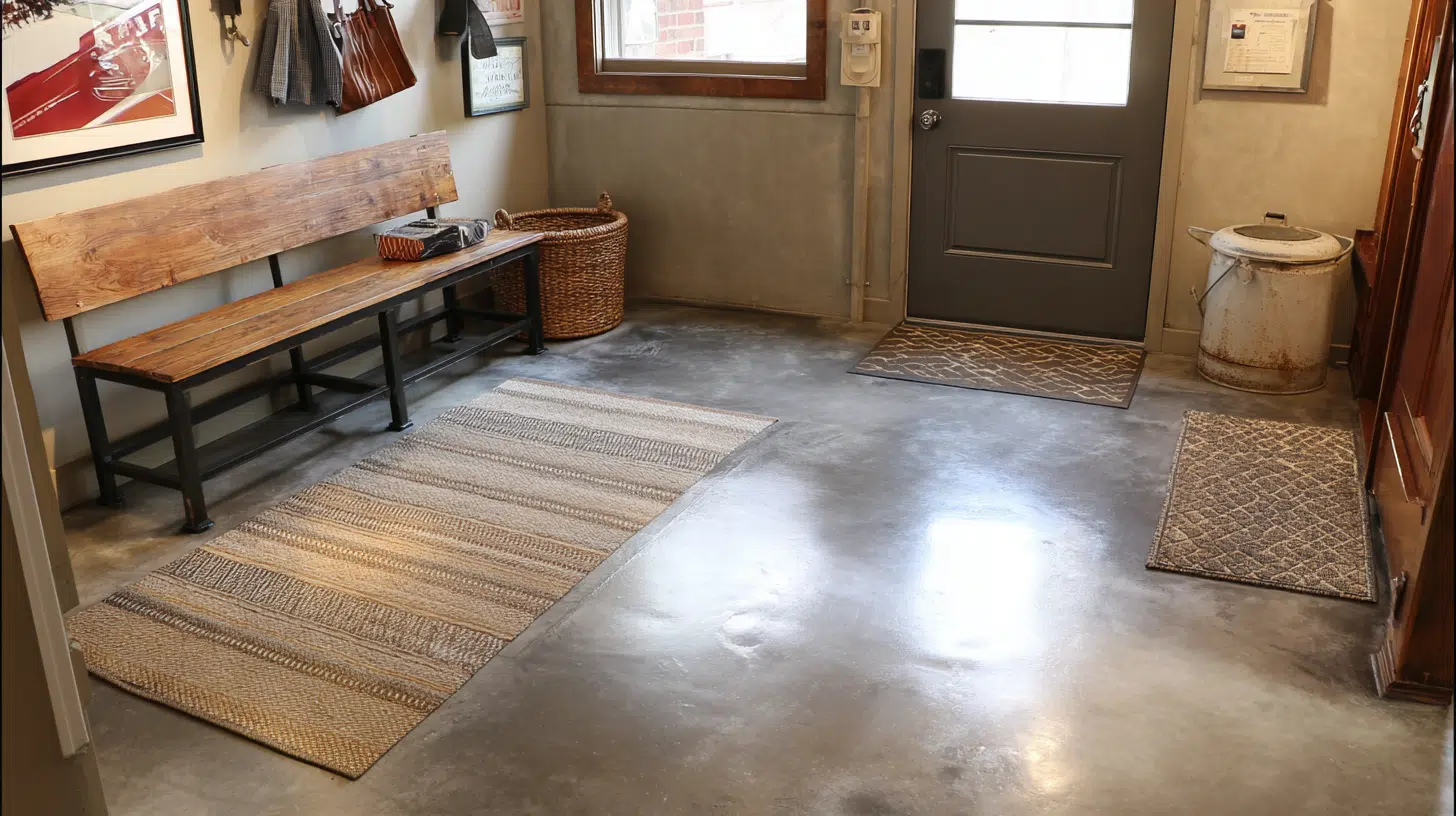
Sealed concrete offers industrial strength at a reasonable price. It handles anything thrown at it and cleans up fast. Staining or painting concrete adds visual interest.
The surface stays cool in summer, which might be a downside in cold climates. Add rugs for warmth if needed.
This option works especially well in garage-connected mudrooms.
Simple Mudroom Ideas You Can Add Without Remodeling
Not everyone can install built-in storage or tear down walls.
These simple additions create mudroom functionality without major construction. Most options require just basic tools and an afternoon of work.
17. Hooks and Racks
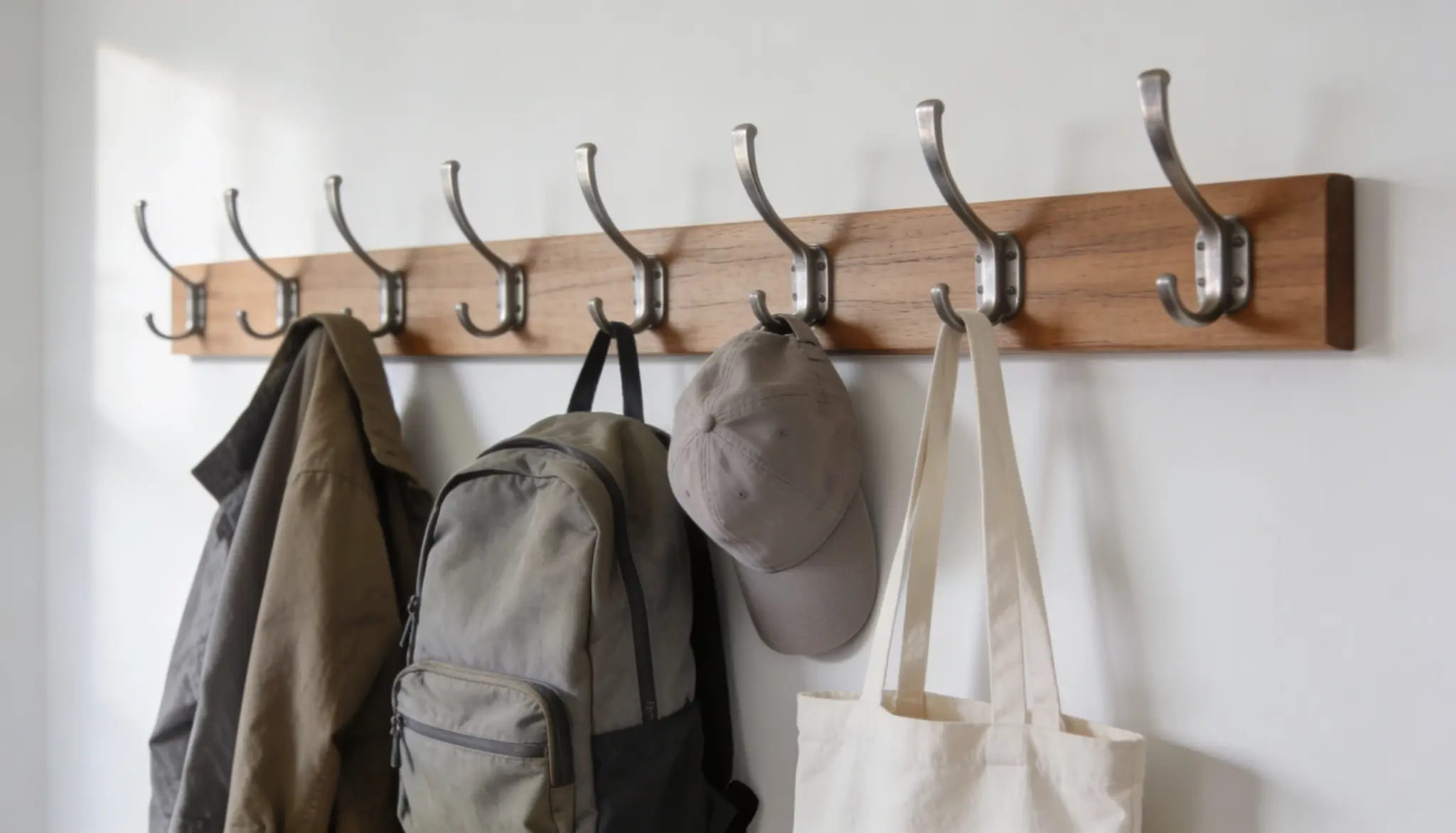
Wall-mounted hooks offer the simplest storage solution. They install in minutes with just a drill and screws.
Heavy-duty hooks handle winter coats, while lighter versions work for bags and hats. Place hooks at different heights so everyone can reach their own.
Of all the small entryway upgrades out there, wall hooks at two heights, one for adults, and one for kids, makes everything convenient.
18. Shoe Trays
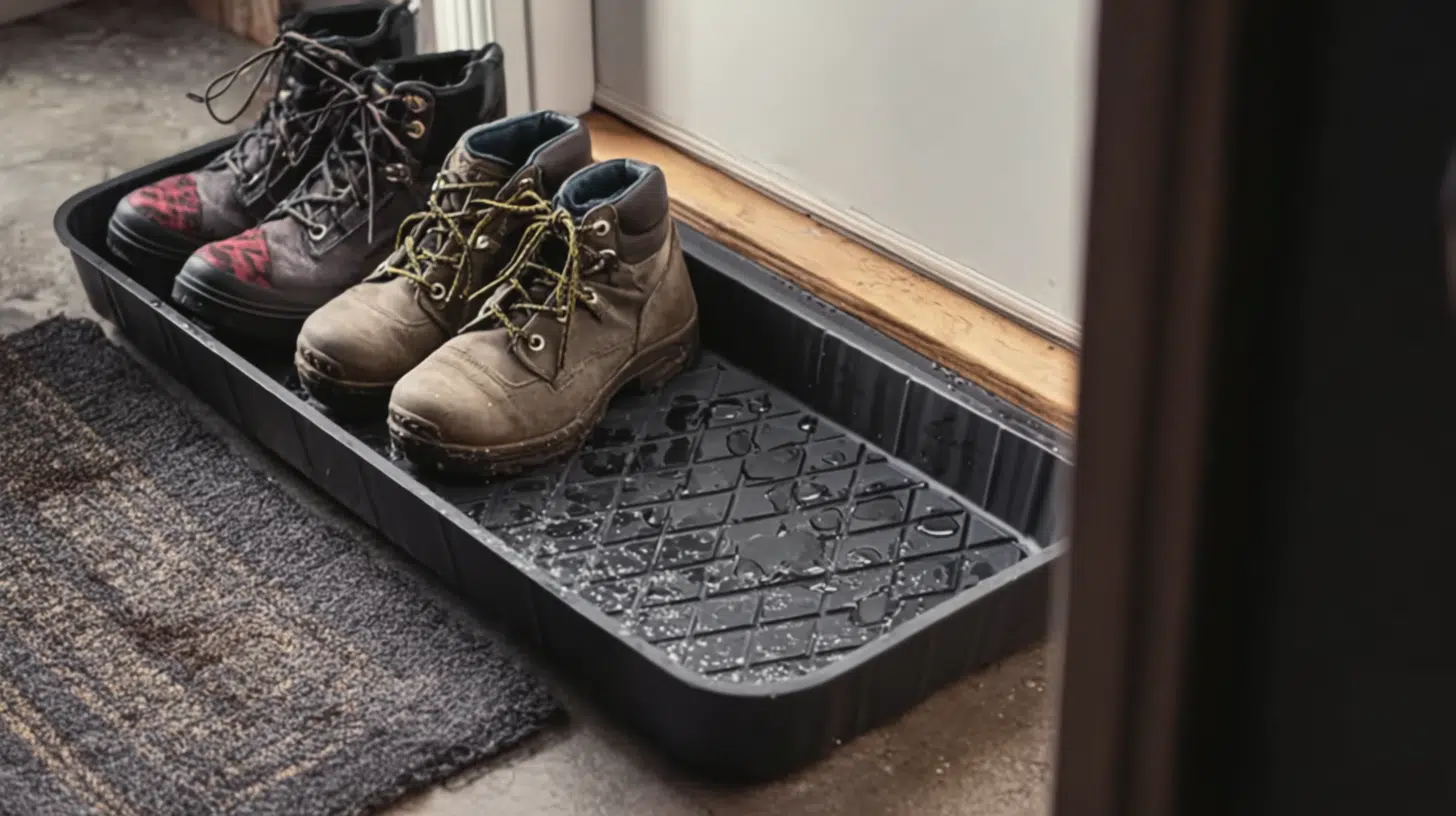
Boot trays catch water and dirt before they spread across floors. These shallow pans sit right inside the door where people naturally kick off their shoes.
Look for trays with raised edges at least 1 inch high to properly contain moisture.
19. Benches
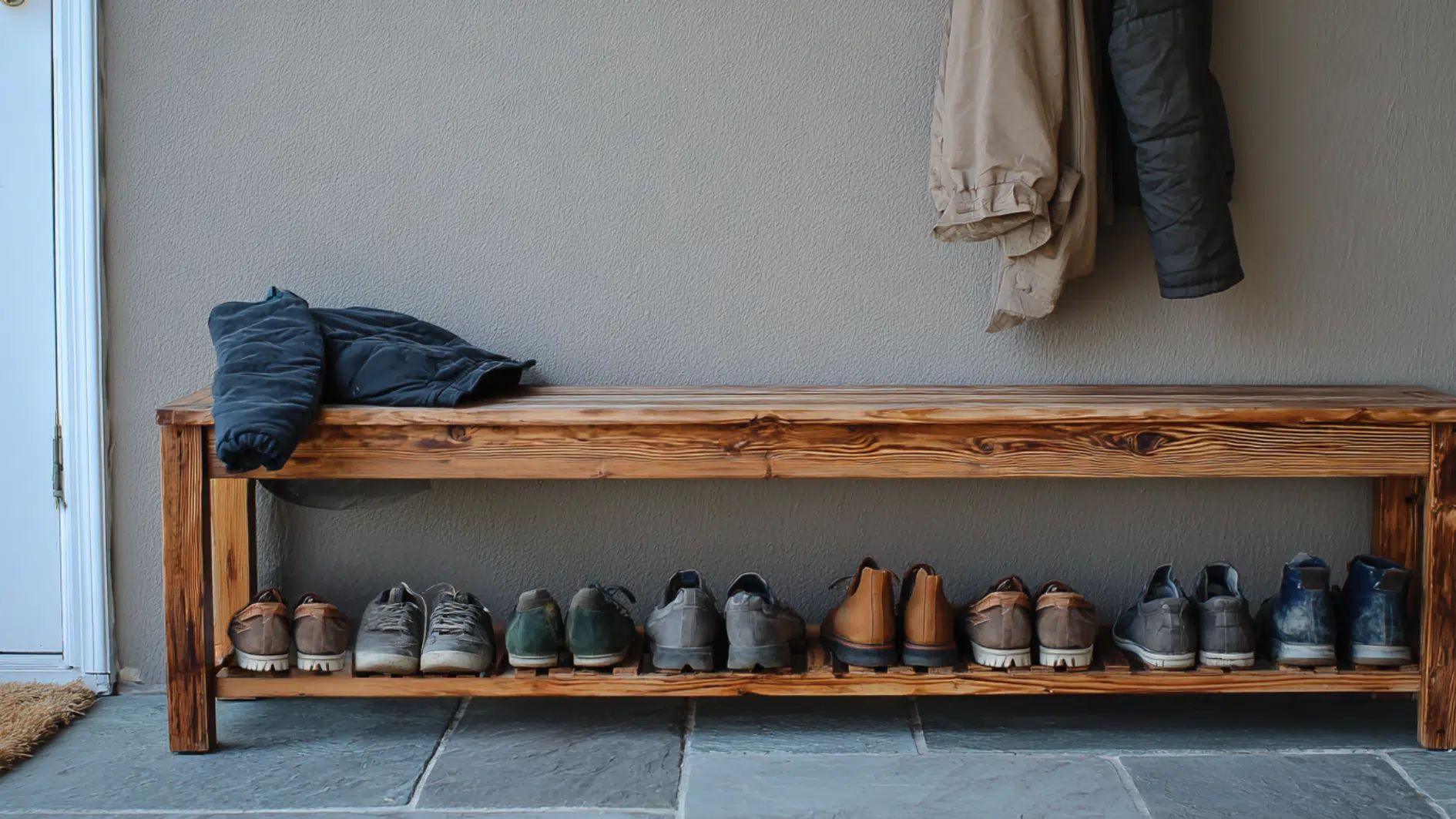
A simple bench transforms how people use an entryway.
Sitting while putting on shoes beats hopping around on one foot. Storage benches offer extra value by providing hidden storage.
Position the bench where it won’t block traffic flow for the best results.
Difference Between a Mud Room and an Entryway
People often use these terms interchangeably, but they serve different purposes.
| Feature | Mudroom | Entryway |
|---|---|---|
| Primary Purpose | Removes and stores dirty outdoor items | Welcomes guests into the home |
| Storage Focus | Functional storage for daily-use items | Decorative storage or minimal storage |
| Location | Back door, garage entry, side door | Front door or main entrance |
| Design Priority | Function over appearance | Appearance over function |
| Who Uses It | Family members daily | Guests and occasional family use |
| Seating | Bench for changing shoes | Optional console or small chair |
| Cleaning Needs | High – handles dirt and moisture | Low – stays relatively clean |
The main difference comes down to purpose. Entryways greet visitors while mudrooms handle daily mess. Some homes have both, others combine the two.
Benefits of Having a Mudroom
Mudrooms solve real problems that families face every day. The benefits go beyond just having a place to drop coats and shoes.
Keeps the Rest of the House Cleaner
Dirt, mud, and snow stop at the mudroom instead of spreading throughout the home. Less tracking means less vacuuming and mopping overall.
Protects Flooring and Carpets
Wet boots damage hardwood and stain carpets.
Mudrooms take the beating instead of the main living spaces. This protection saves money on repairs over time.
Adds Home Value
Buyers appreciate functional spaces. A well-designed mudroom increases property appeal.
Creates Personal Space for Each Family Member
Everyone gets their own zone for belongings. Kids learn organization skills by managing their areas. Personal accountability grows with designated spots.
Mud Room Design Mistakes to Avoid
Even well-intentioned mudroom designs can fall short. Avoiding these common errors ensures the space actually gets used.
- Not Enough Hooks: Too few hooks mean piles on the floor.
- Ignoring Different Heights: Kids can’t reach adult-height hooks, so they stop trying.
- Choosing Light Floors: White shows every mark.
- Skipping Seating: No bench makes putting on shoes awkward and uncomfortable.
- No Shoe Storage: Scattered shoes defeat the purpose.
- Inadequate Lighting: Dark spaces frustrate users during early mornings or late evenings.
- Overcomplicating Systems: Complex setups are quickly ignored.
Bringing it all Together
Whether it’s a full room or just wall hooks, the right setup keeps mess contained and belongings organized.
Start with what the space can handle, then add storage that matches actual needs. The result is a cleaner home and calmer mornings for everyone.
Which mudroom idea fits your space best?
Frequently Asked Questions (FAQs)
1. What is the Difference Between a Foyer and a Mudroom?
A foyer is a formal entry space for welcoming guests, while a mudroom is a functional area for storing shoes, coats, and outdoor gear.
2. How Much Space Do You Need for a Mudroom?
A mudroom can work in as little as 3-4 feet of space. Larger layouts allow for benches, cabinets, and better organization for multiple users.
3. Can a Mudroom Increase Home Resale Value?
Yes. Mudrooms add practical storage and organization, which many buyers value, especially in family homes with garages or outdoor access.