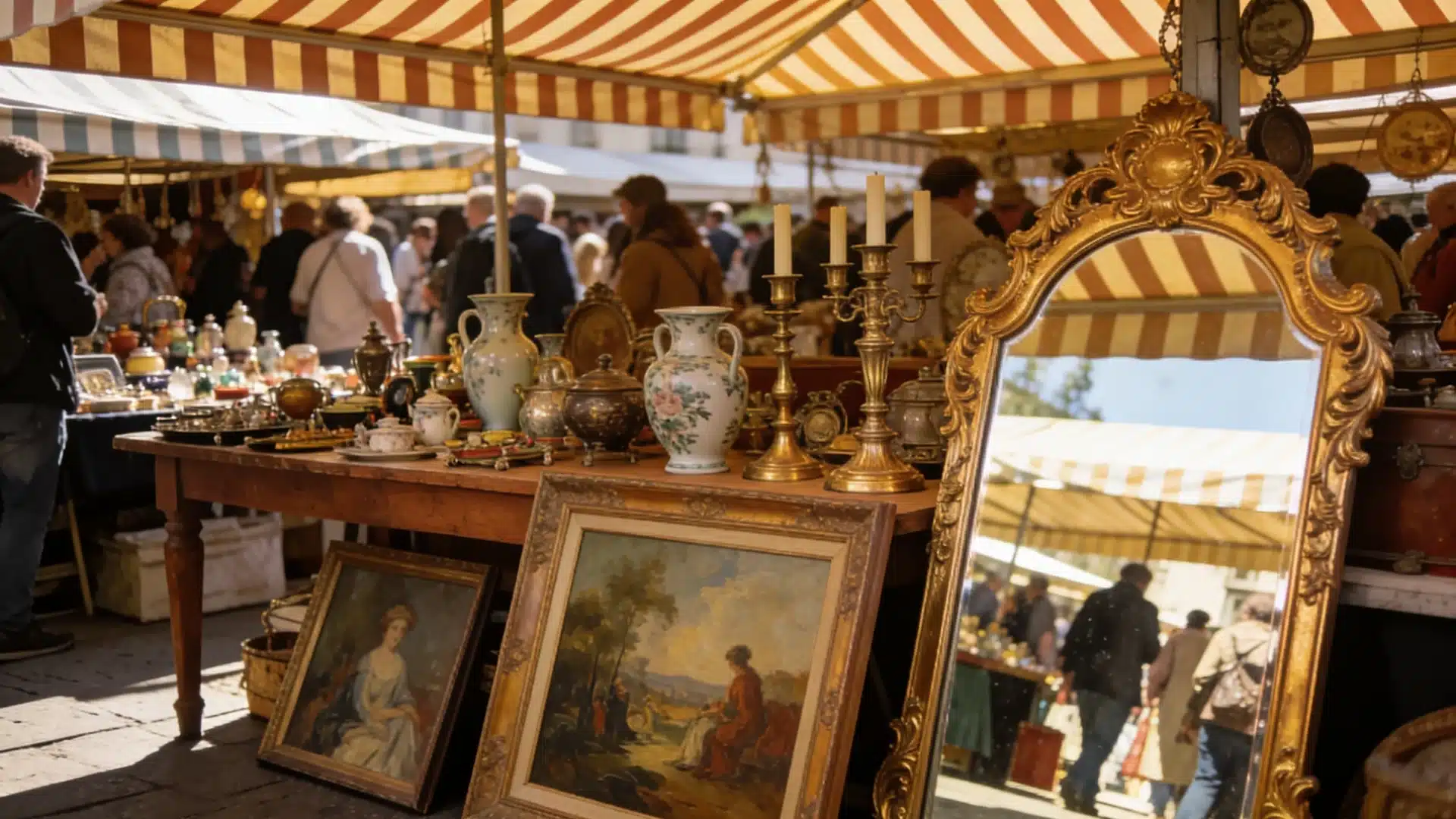
Europe’s furniture markets are not just shopping spots. They’re where real finds happen.
You might have walked past the best stalls without even knowing it.
But what if you could spot a quality piece before anyone else does? Once you know what to look for, every market visit changes completely.
Start reading, your great find is closer than you think.
Market Size of European Furniture Markets
The European furniture market is a big, design-focused part of the EU economy.
It employs about 1 million workers across roughly 130,000 companies and brings in around €96 billion in annual turnover.
That number covers both home and commercial demand.
The following is what makes this market stand out:
- EU producers account for nearly two-thirds of the premium furniture sold worldwide.
- The overall Europe-wide market, production, and retail combined sits in the low hundreds of billions USD.
- It’s expected to grow at a mid-single-digit rate over the next decade.
That growth is being driven by three main factors: renovation activity, the rise of e-commerce, and a growing demand for sustainable design.
Famous European Furniture Markets
Europe has some of the most well-known furniture and antique markets in the world.
From cobblestone streets in Paris to sun-drenched squares in southern Italy, these markets have been drawing buyers for generations.
1. Les Puces De Saint-Ouen, Paris, France
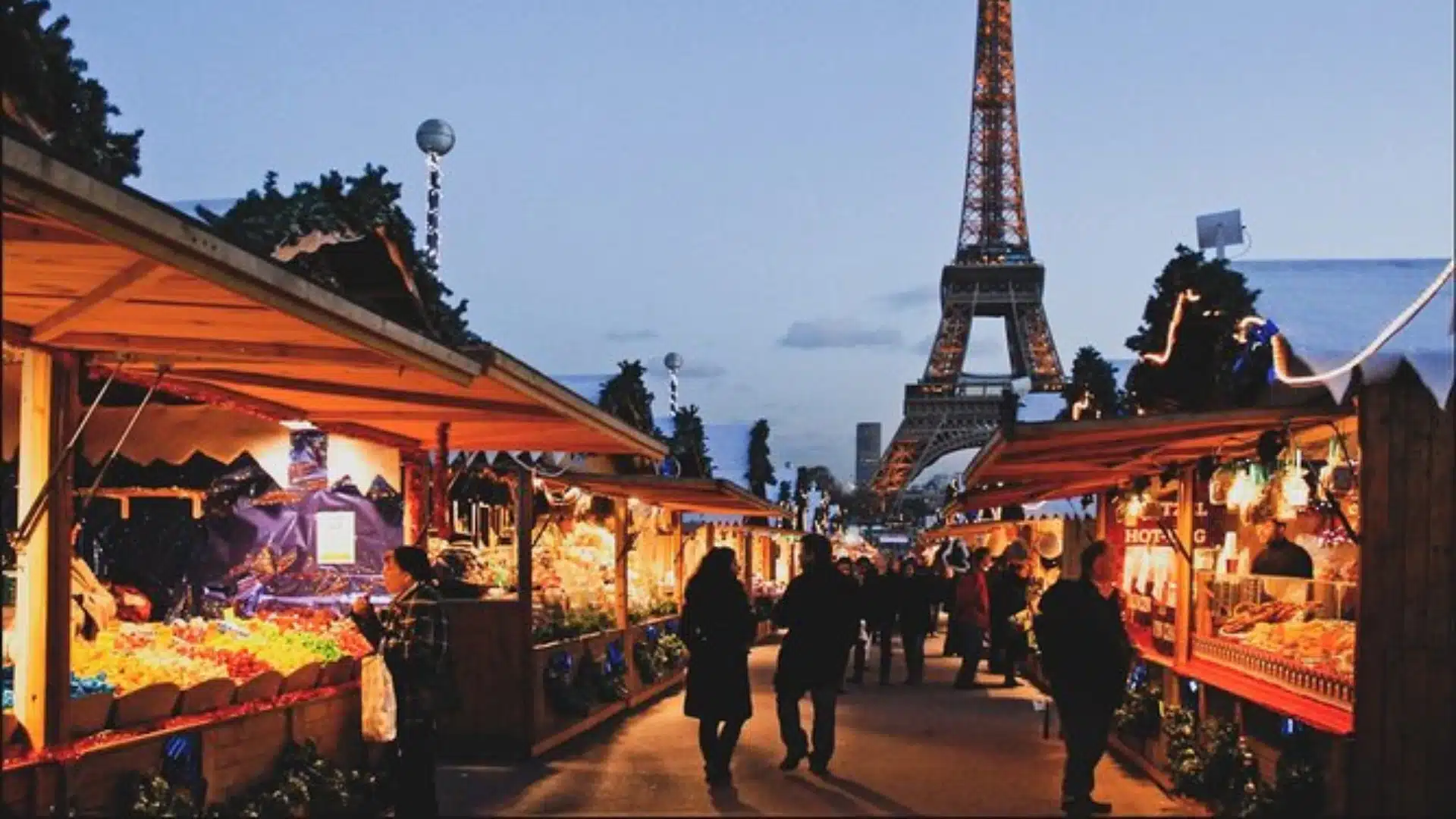
Les Puces de Saint-Ouen is one of the oldest and largest antique markets in the world. It began in the late 1800s, when ragpickers gathered outside Paris city limits to sell secondhand goods.
Over time, dealers moved in, and the market grew into what it is today, a proper destination for serious buyers and curious browsers alike.
It now covers about 9-10 hectares and hosts over 2,000 dealers across 18-19 smaller markets.
- Address: 110 Rue des Rosiers, 93400 Saint-Ouen-sur-Seine, Paris, France
- Timing: Open Saturday, Sunday, and Monday from 9 AM to 6 PM
- What You’ll Find: Antique furniture, vintage lighting, art deco pieces, mid-century modern chairs, mirrors, clocks, silverware, and decorative objects from across Europe
- Best Season to Visit: Spring (April to June) and early autumn (September to October)
2. Brocante De L’Isle-Sur-La-Sorgue, Isle-Sur-La-Sorgue, France
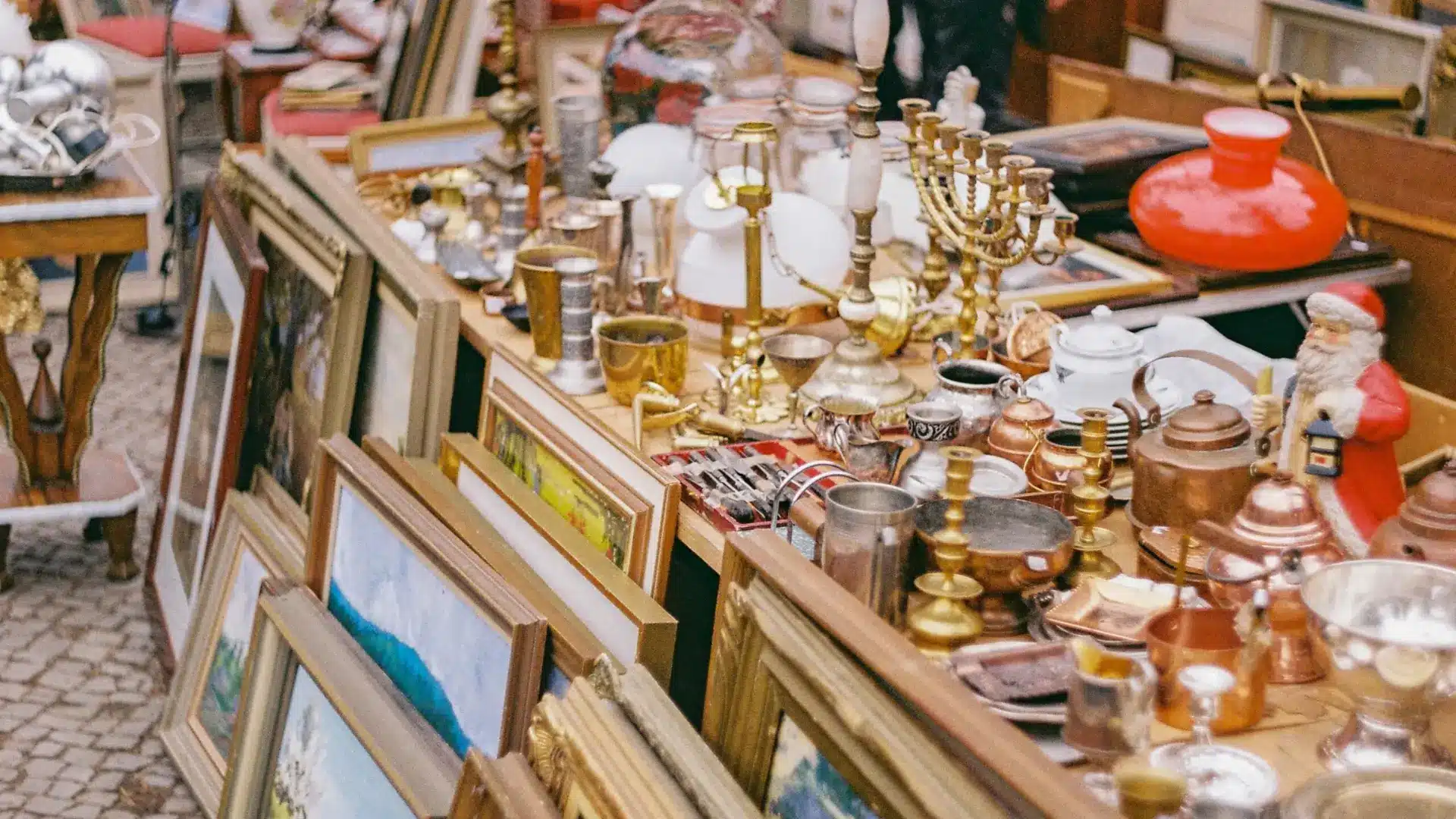
Isle-sur-la-Sorgue has been called the “antiques capital of France” outside Paris, and it has earned that title.
The town sits in the heart of Provence and has hosted antique dealers since the 1960s.
What began as a small weekend market grew into a permanent antiques hub with over 300 dealers based in the town full-time. The market is especially famous during its two big annual fairs.
- Address: Place de la Liberté and surrounding streets, 84800 L’Isle-sur-la-Sorgue, France
- Timing: Weekly markets run every Sunday from 8 AM to 1 PM; the major fairs happen around Easter and mid-August (around August 15)
- What You’ll Find: French provincial furniture, Provençal textiles, vintage ceramics, farmhouse tables, painted armoires, garden furniture, and old copper cookware
- Best Season to Visit: Easter weekend and mid-August for the big fairs; any Sunday in spring
3. Portobello Road Market, London, England
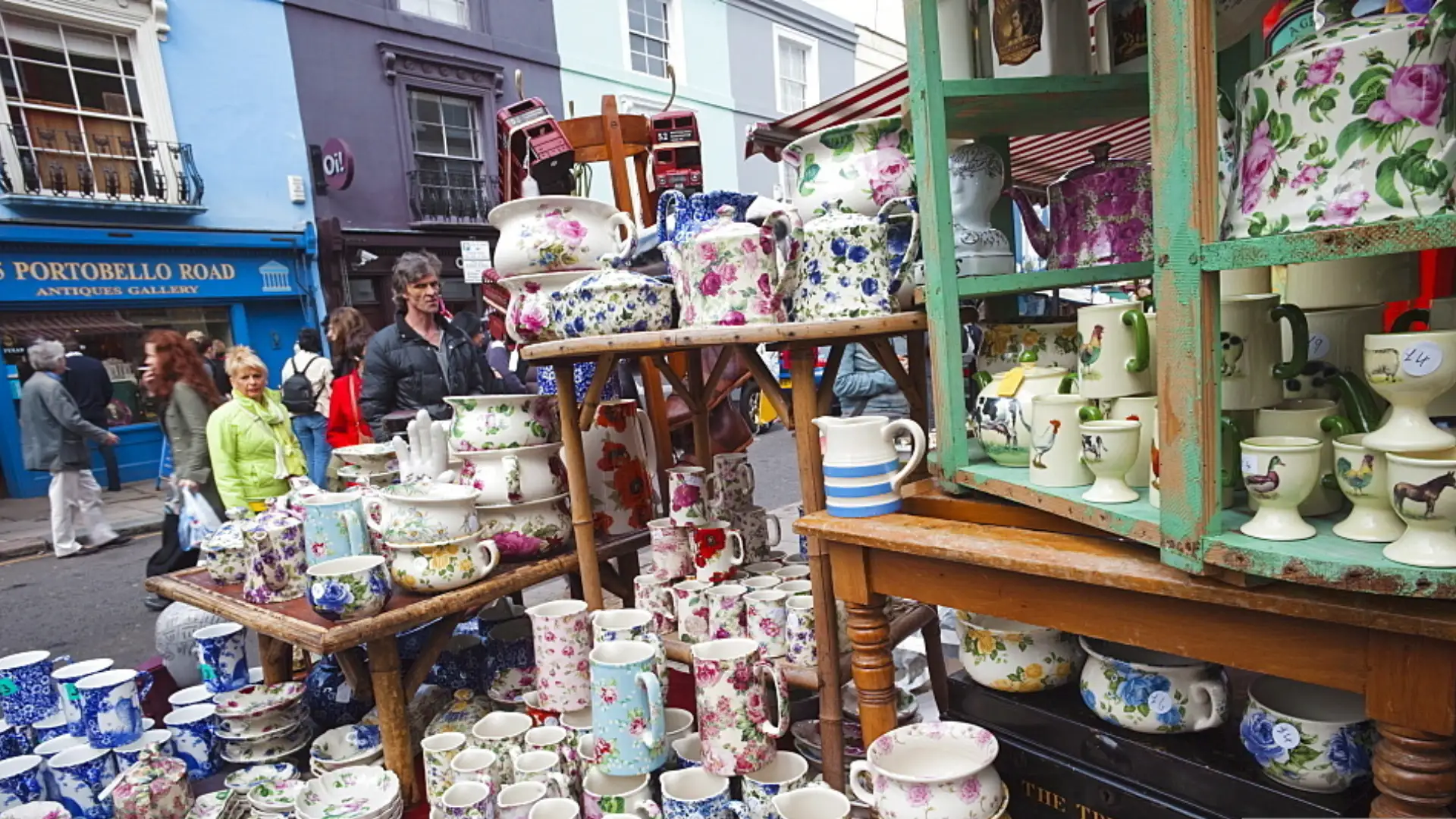
Portobello Road has been a market street since the 1800s, though it became closely tied to antiques in the 20th century.
By the 1950s and 60s, it had become one of London’s most well-known spots for secondhand goods and collectibles.
Today, it stretches over a mile through the Notting Hill neighborhood and pulls in thousands of visitors every week.
- Address: Portobello Road, Notting Hill, London W11, England
- Timing: The antiques section runs every Saturday from 5:30 AM to 5 PM; general stalls operate Monday to Friday with a smaller selection
- What You’ll Find: Victorian and Edwardian furniture, vintage jewelry, silverware, old maps, paintings, clocks, china, and retro homeware
- Best season to visit: Late spring and summer (May to August) for the best weather; arrive early on Saturdays
4. The Arezzo Antiques Fair, Tuscany, Italy
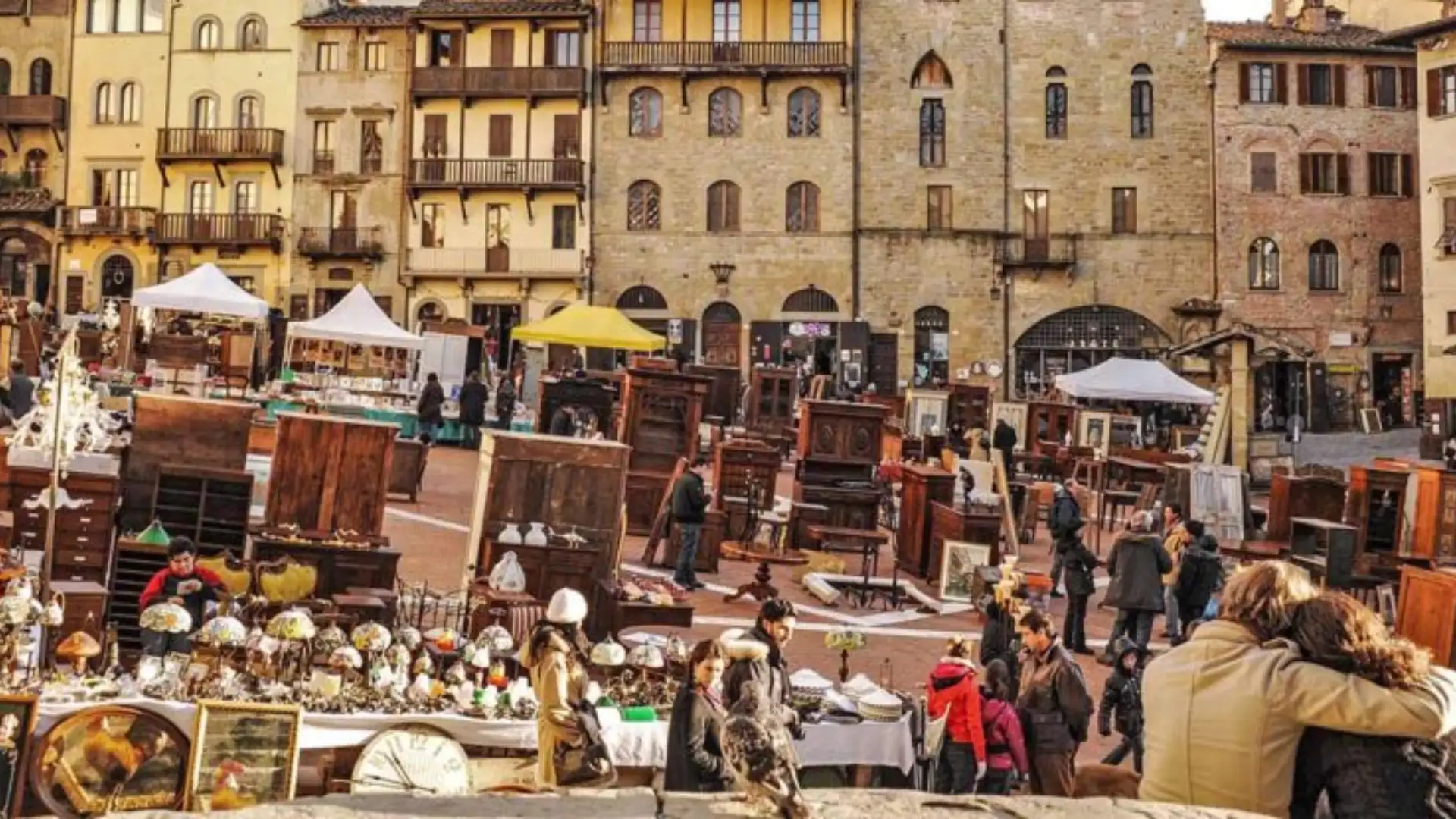
The Arezzo Antiques Fair was founded on 02 June 1968, from an idea by Ivan Bruschi, an antiques dealer and collector. [Source: @Fiera Antiquaria]
It is one of Italy’s most respected monthly antique events.
What started as a small gathering of local dealers has grown into a major fair that fills the old town’s piazzas and streets every month without fail.
- Address: Piazza Grande and surrounding streets, 52100 Arezzo, Tuscany, Italy
- Timing: Held on the first Sunday of every month and the Saturday before it; runs from 8 AM to 7 PM
- What You’ll Find: Italian antique furniture, Renaissance-era objects, oil paintings, bronze sculptures, old books, vintage posters, ceramics, and glassware
- Best Season to Visit: The fair still runs year-round; Spring and autumn months offer the best conditions
5. Flohmarkt Am Naschmarkt, Vienna, Austria
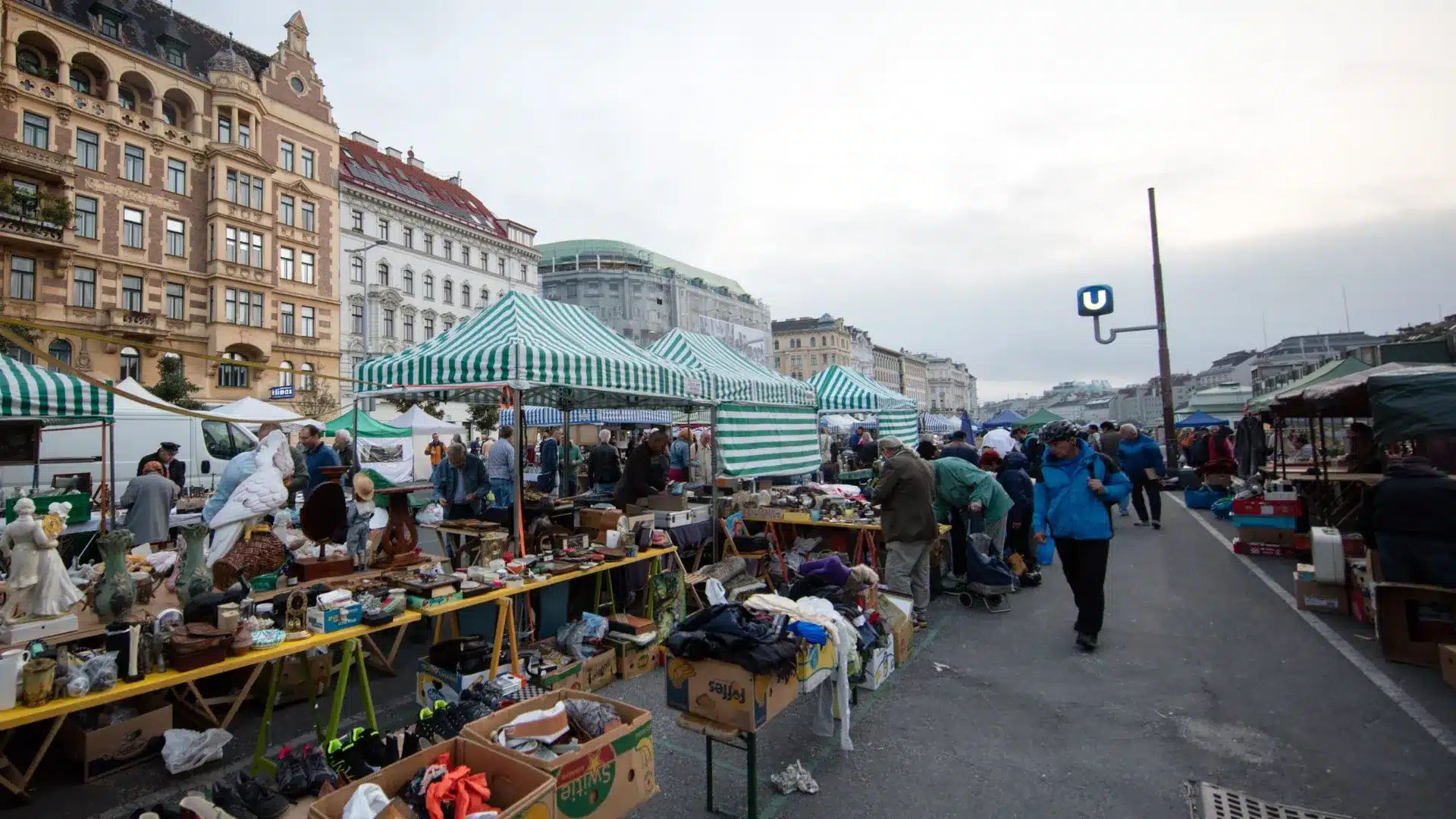
Vienna’s Naschmarkt is one of the city’s most beloved public spaces, and its Saturday flea market has been part of the weekly routine for locals and visitors since the early 20th century.
The market sits along a long open strip in the heart of Vienna, next to one of Europe’s oldest food markets.
It has a relaxed, neighborhood feel that sets it apart from larger commercial fairs.
- Address: Naschmarkt, Linke Wienzeile, 1060 Vienna, Austria
- Timing: Every Saturday from 6:30 AM to 6 PM
- What You’ll Find: Vintage furniture, old books, antique cutlery, paintings, jewelry, vinyl records, retro lamps, china sets, and all kinds of secondhand curiosities
- Best season to visit: May through September for the most pleasant outdoor experience; runs year-round
6. Broc Antwerpen, Antwerp, Belgium
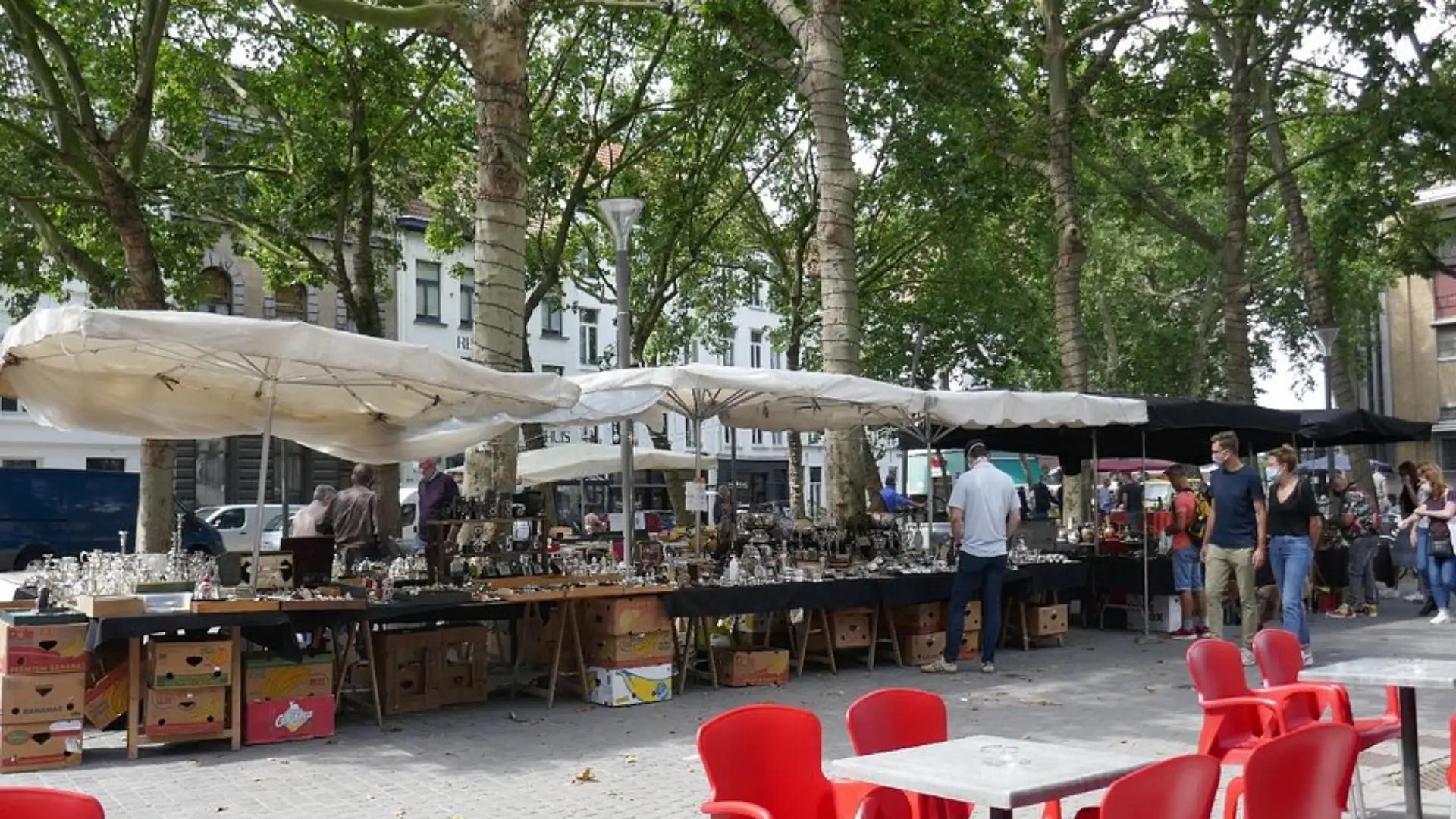
Broc Antwerpen is a well-established antique and secondhand market in the heart of Antwerp.
The city itself has a long history as a trading center, and its market culture reflects that.
Broc Antwerpen attracts a loyal mix of local collectors, interior designers, and visitors seeking something a little different from the usual high-street shopping experience.
- Address: Vrijdagmarkt, 2000 Antwerp, Belgium
- Timing: Every Sunday from 9 AM to 4 PM
- What You’ll Find: Belgian antique furniture, Art Nouveau decorative pieces, vintage mirrors, old clocks, secondhand books, silverware, and retro lighting
- Best Season to Visit: Spring and early autumn; the market runs all year, but spring Sundays are the best
7. Ostuni Antique Market, Puglia, Italy
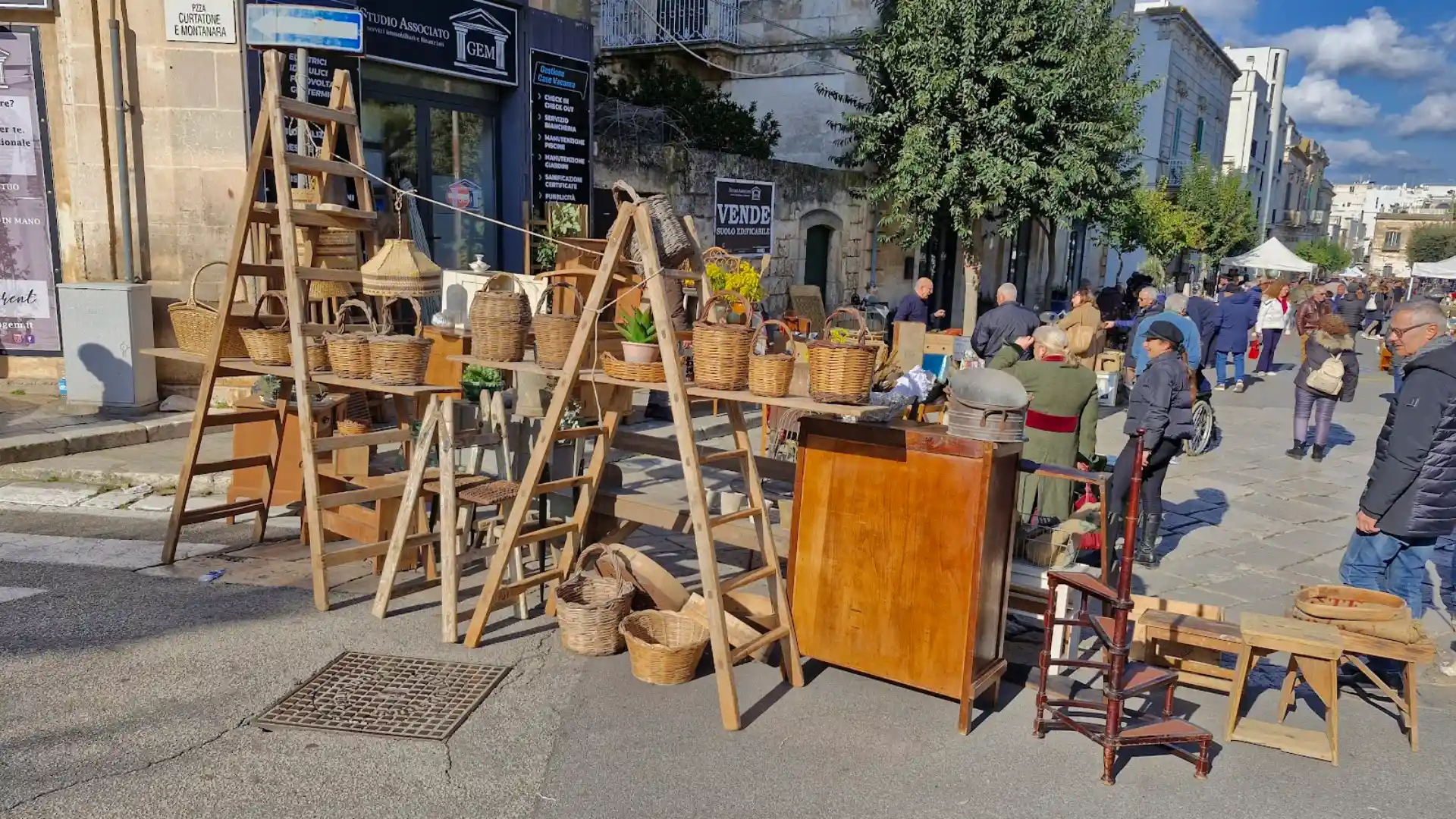
Ostuni, often called the “White City” for its whitewashed buildings, hosts a charming antique market that draws both locals and tourists.
The market fits naturally into the town’s character, slow, warm, and full of old-world detail.
It has been a fixture in Ostuni’s calendar for decades and remains one of the more relaxed antique markets you’ll find in southern Italy.
- Address: Piazza della Libertà and surrounding old town streets, 72017 Ostuni, Puglia, Italy
- Timing: Held on the last Sunday of every month; typically from early morning to early afternoon
- What You’ll Find: Southern Italian furniture, ceramics, vintage fabrics, wrought iron pieces, religious antiques, old farming tools, and local decorative crafts
- Best season to visit: April to June and September to October
8. El Rastro, Madrid, Spain
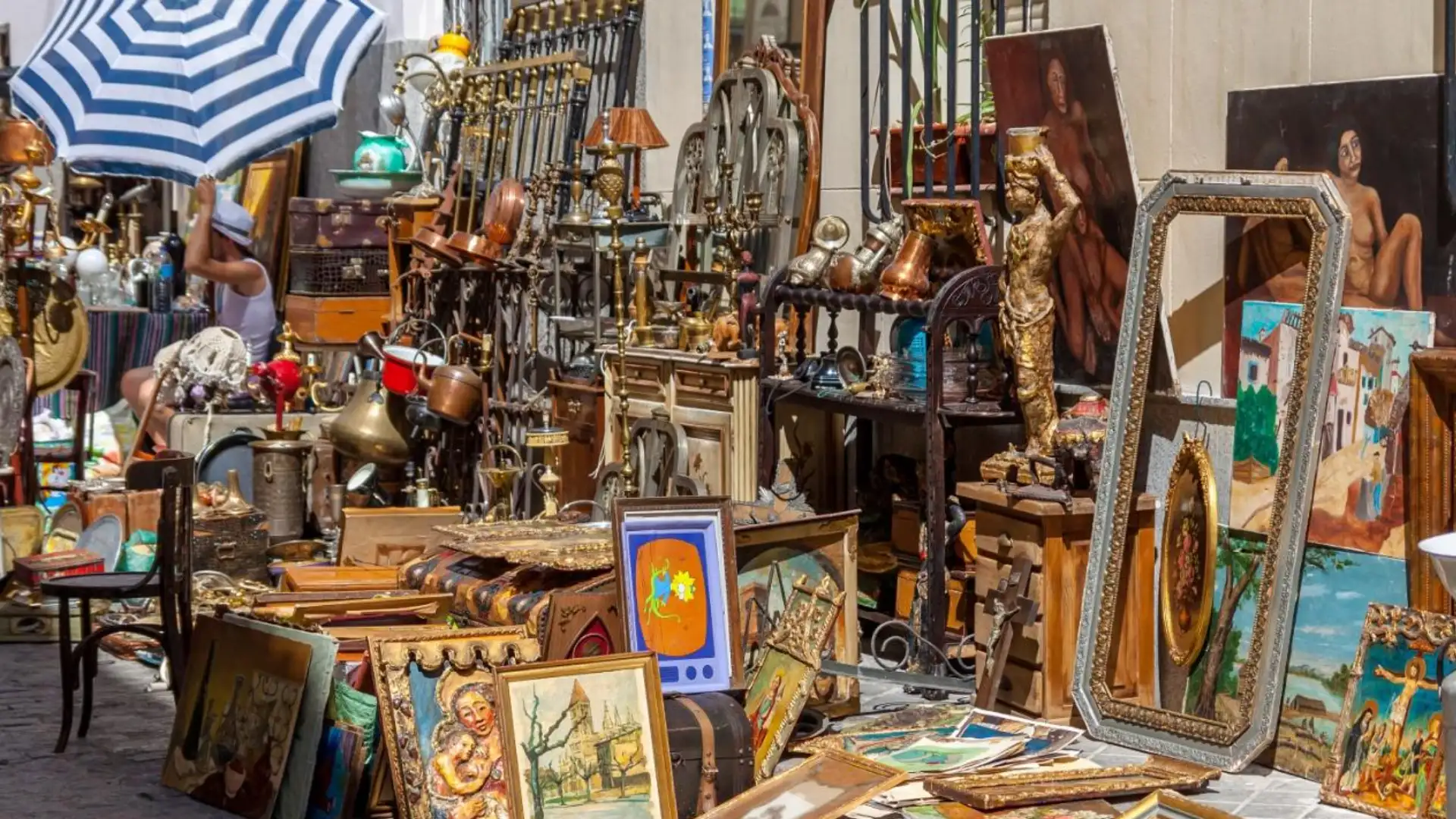
El Rastro is Madrid’s most famous open-air market and one of the oldest in Spain.
It has roots dating back to the 16th century, when the area around the La Latina neighborhood was used for the sale of livestock and goods.
Over the centuries, it shifted toward secondhand items and antiques, and today it is as much a cultural event as it is a market.
- Address: Calle de la Ribera de Curtidores and surrounding streets, La Latina, 28005 Madrid, Spain
- Timing: Every Sunday and public holiday from 9 AM to 3 PM
- What You’ll Find: Vintage furniture, antique mirrors, old tools, leather goods, ceramics, vintage clothing, artwork, coins, stamps, and all kinds of secondhand objects
- Best season to visit: Autumn and spring are the most comfortable seasons
9. Mercantic, Barcelona, Spain
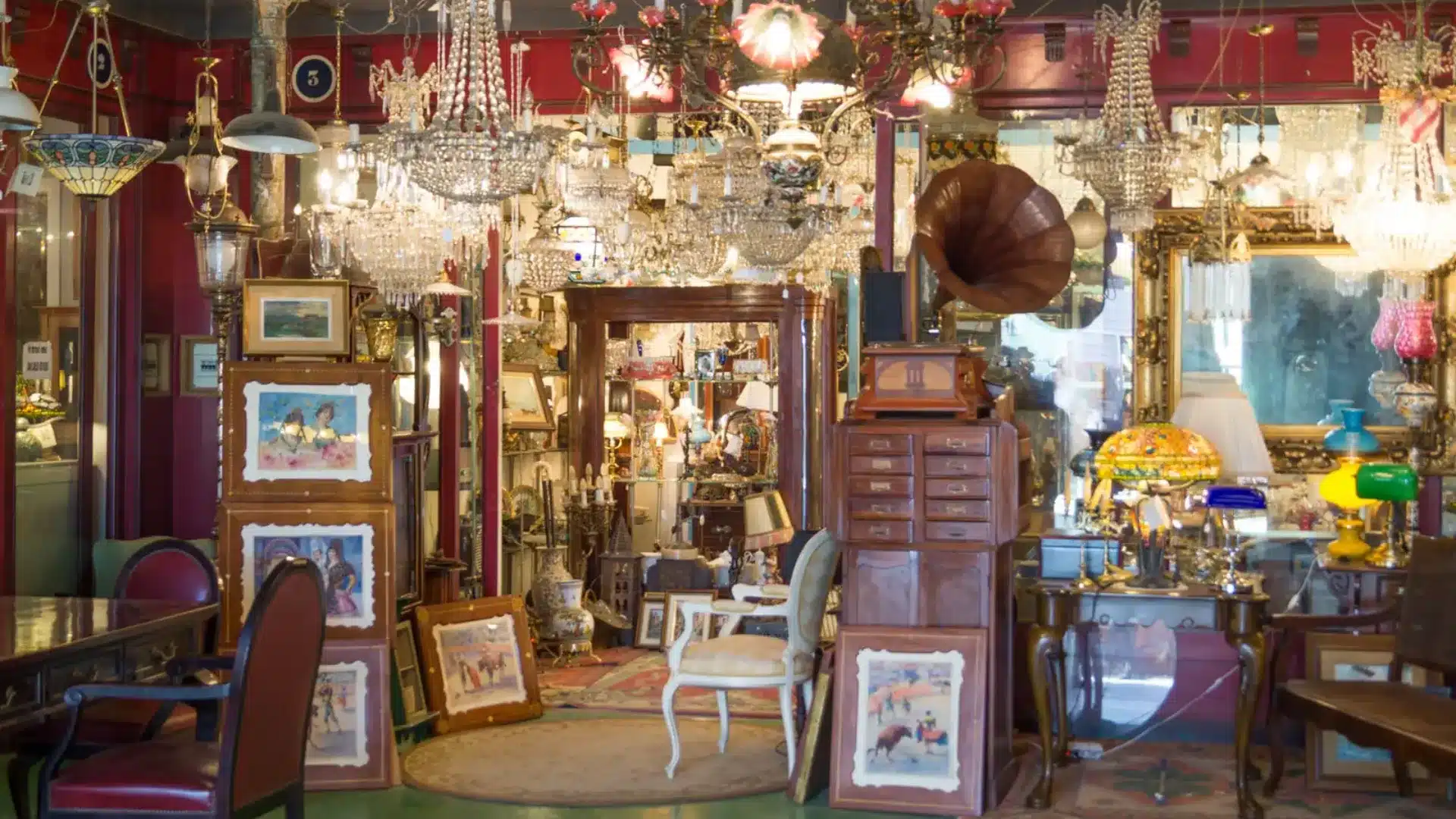
Mercantic is one of Barcelona’s most organized antique spaces.
Unlike an open-air street market, it operates as a permanent antique village with covered and open areas spread across a large site.
It has been running since the 1990s and has built a solid reputation among collectors, designers, and anyone looking for well-priced vintage pieces in a well-laid-out setting.
- Address: Avinguda de Rius i Taulet, 120, 08173 Sant Cugat del Vallès, Barcelona, Spain
- Timing: Thursday to Sunday, 10 AM to 8 PM; the outdoor flea section is busiest on weekends
- What You’ll Find: Mid-century modern furniture, vintage industrial pieces, antique Spanish ceramics, old maps, retro lighting, Art Deco objects, vintage clothing, and decorative items from across Europe
- Best season to visit: Spring and autumn; it works well year-round
10. Antiques Market at Place du Grand Sablon, Brussels, Belgium
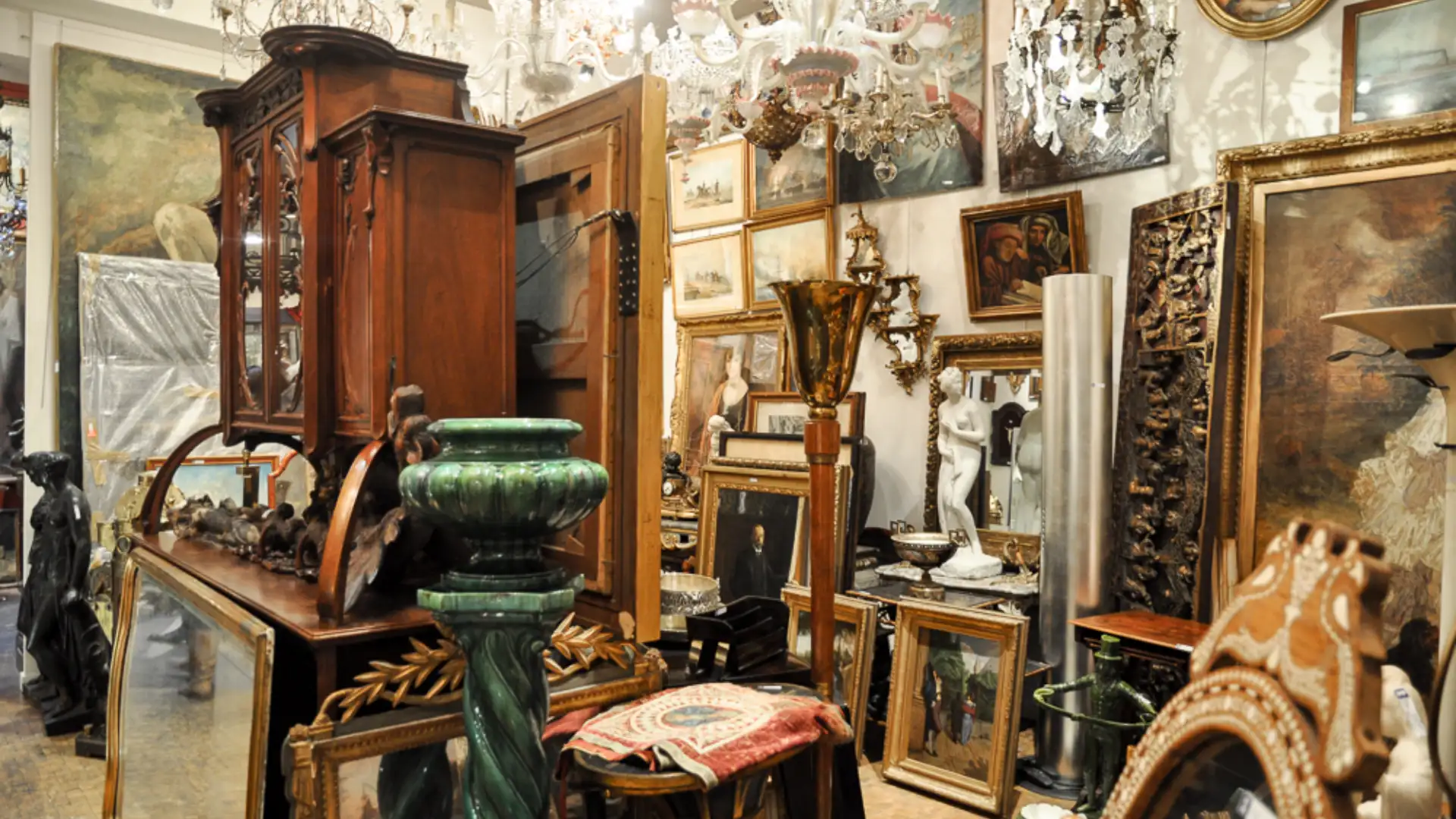
The Grand Sablon antiques market is one of Brussels’ most well-known weekend traditions.
The square itself has been a center of trade and culture in Brussels since the Middle Ages, and the antique market has been a fixture there since the 1950s.
It sits right next to some of the city’s finest antique shops, making the whole area a natural destination for collectors.
- Address: Place du Grand Sablon, 1000 Brussels, Belgium
- Timing: Every Saturday from 9 AM to 6 PM and Sunday from 9 AM to 2 PM
- What You’ll Find: Belgian antiques, silverware, old clocks, vintage maps, oil paintings, Art Nouveau glassware, antique jewelry, porcelain, and fine decorative objects
- Best Season to Visit: Spring and early autumn; the square is beautiful year-round, but warm, dry weekends bring out the best of the market
Tips for Getting the Best Deal and Piece
Getting a good deal at a European furniture market takes a little know-how.
Go in prepared, and you’ll come out with far better pieces at far better prices.
- Always arrive early; the best pieces go fast.
- Do your research on pricing before you visit.
- Bring cash; many dealers don’t accept cards.
- Don’t show too much excitement over a piece right away.
- Buy more than one item from the same dealer to negotiate better.
- Bring a business card if you’re a trade buyer.
- Check for damage before agreeing on a price.
- Ask about the piece’s history; it can affect value.
- Be polite but firm when negotiating.
Wrap Up
Europe’s furniture markets are not just places to shop. They’re where history, craft, and good taste all meet in one spot.
Each market has its own character and its own rewards for those who show up prepared.
Do your research before you go. Know what you’re looking for, bring proof of trade if you have it, and don’t rush. The best finds rarely come to those in a hurry.
And once you’re done browsing? Sort your shipping early, keep your receipts, and enjoy the fact that you picked up something with a real story behind it.
Frequently Asked Questions (FAQs)
1. How to Ship Furniture Home?
Most market dealers work with local shipping agents. Ask them directly; they handle packing, customs, and delivery for you.
2. How do I Get Trade Discounts at European Furniture Markets?
Bring a business card and proof of trade. Many dealers offer 10–20% off once they know you’re a professional buyer.
3. Top Furniture Markets Near Major Airports in Europe?
Les Puces de Saint-Ouen is 30 minutes from CDG. Portobello Road is an hour from Heathrow. El Rastro is close to Madrid Barajas.