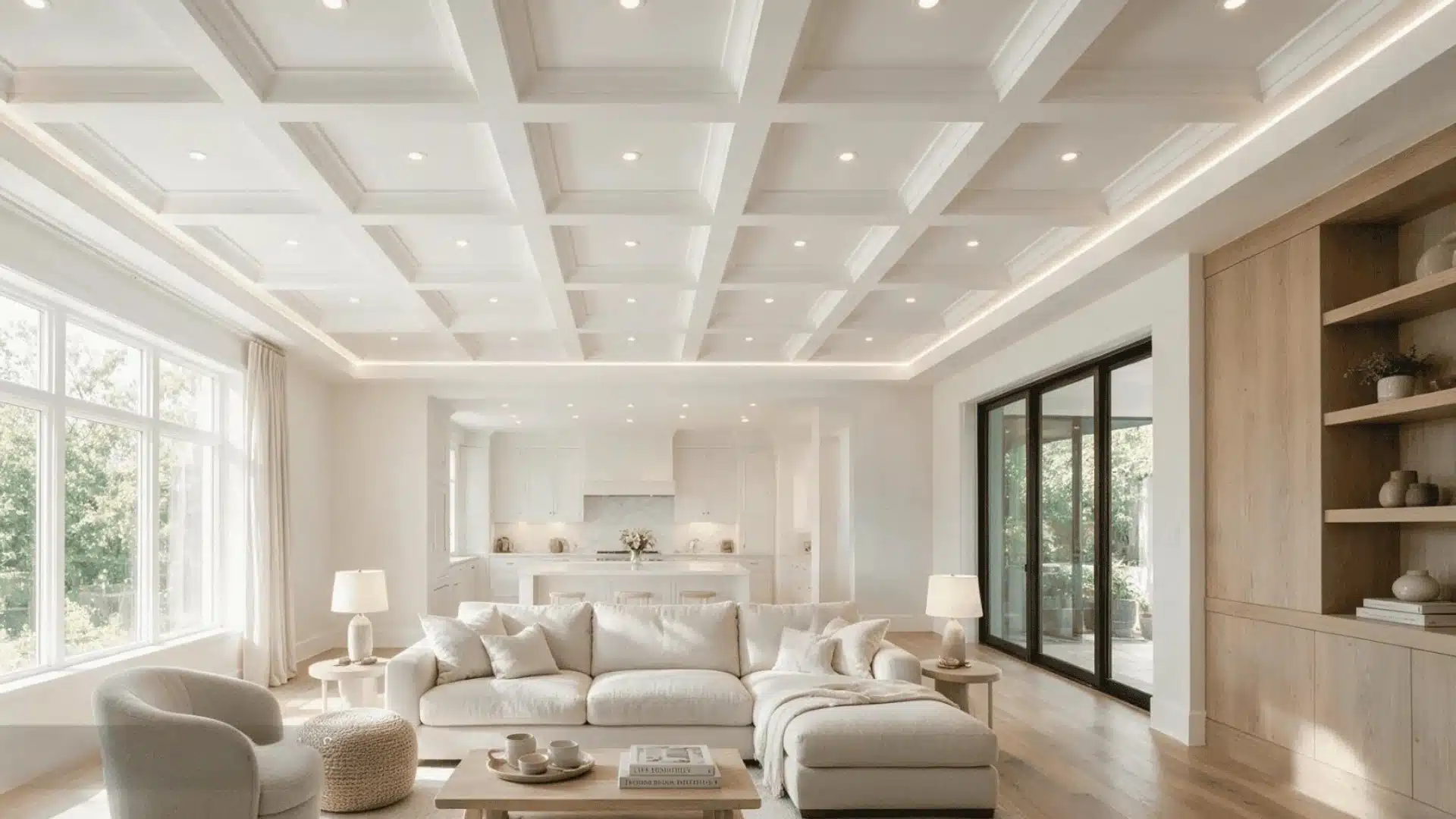
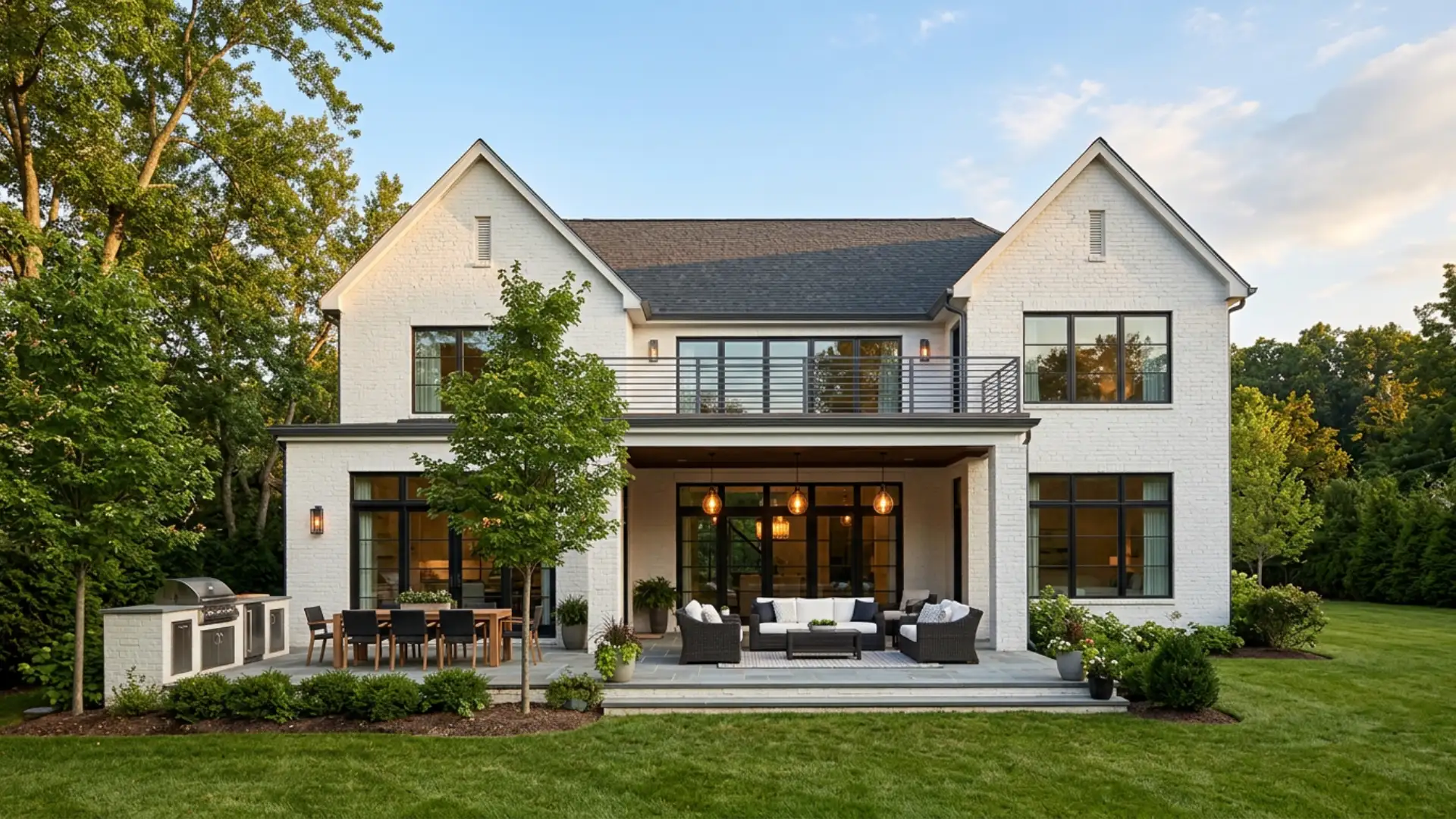
A house built in 1995 can still feel current in the present year. Contemporary style house, it ages well.
These aren’t trends. They’re deliberate design decisions that improve a home’s functionality.
I’ve worked with spaces where one structural wall coming down changed everything: the light, the flow, the way a family actually used the room. Contemporary style isn’t about looking expensive.
That single change cut the need for two extra light fittings and made the kitchen feel twice the size.
It’s about making smart choices with space, material, and light.
What Defines a Contemporary Style House
Contemporary style reflects what’s popular right now.
It’s not tied to any one decade or movement; it keeps shifting over time.
A lot of people mix it up with modern style. But contemporary is what’s happening today.
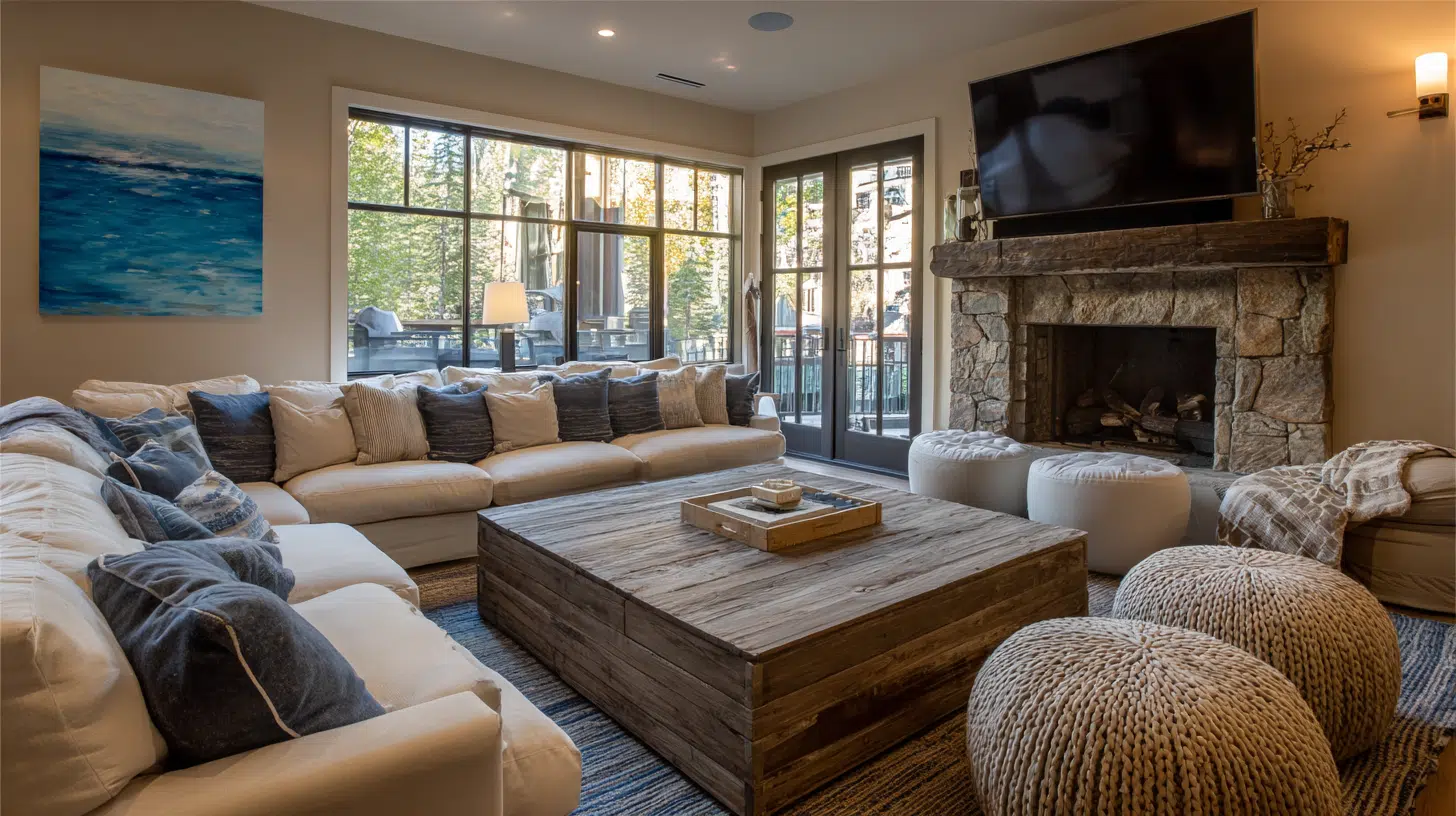
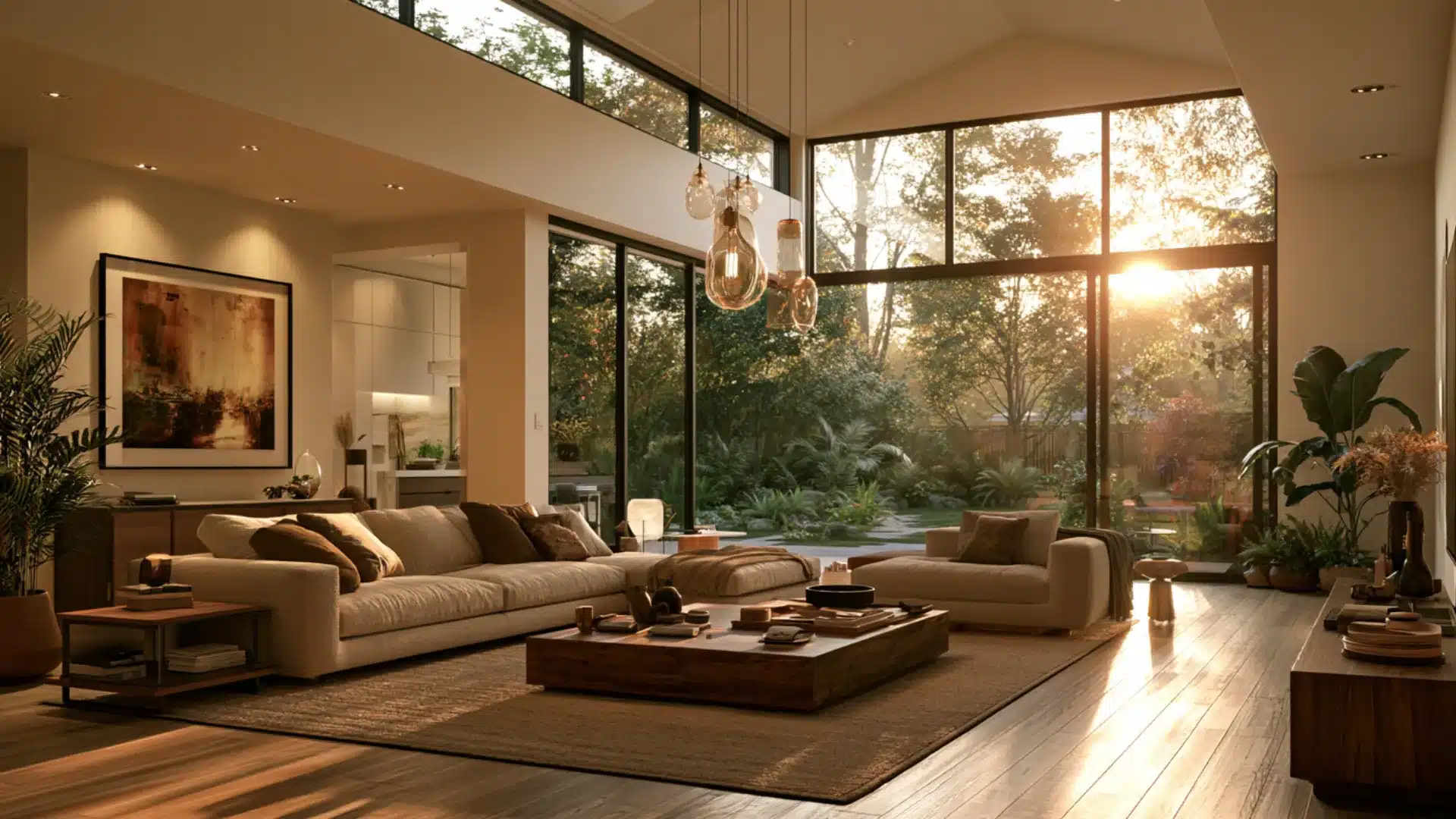
You’ll see it in city apartments with floor-to-ceiling glass and in suburban homes with open-plan layouts that connect the kitchen, dining, and living areas without walls breaking up the space.
The thinking behind the structure design: less clutter, more function, better use of space.
Contemporary vs Modern Houses: Quick Comparison
The biggest difference comes down to time.
Modern style is fixed to a historical period. Contemporary style belongs to right now and will look different again in ten years. Modern homes follow strict design rules set decades ago.
Contemporary homes don’t answer to any single rulebook.
They pull from whatever works best today, including modern style itself, when it fits.
That’s what makes contemporary design harder to pin down, but far more flexible to live with.
Here’s a quick overview:
| Feature | Modern Houses | Contemporary Houses |
|---|---|---|
| Time Period | Mid-20th century (1920s–1970s) | Present day, always current |
| Design Roots | Bauhaus, Scandinavian movement | Borrows from multiple styles |
| Look | Fixed, defined aesthetic | Flexible, keeps changing |
| Materials | Wood, brick, natural stone | Concrete, steel, glass |
| Layout | Defined rooms | Open-plan, connected spaces |
| Outdoor Connection | Limited | Strong indoor-outdoor flow |
| Flexibility | Rigid style rules | Adapts to current trends |
Key Architectural Features of Contemporary Homes
Contemporary houses are built around a few strong design decisions. Each one serves a purpose.
Open Floor Plans: Living, dining, and kitchen areas connect without walls, improving flow.
Space seems larger, movement more natural, and the home functions as one unit.
Clean Lines and Tiniest Ornamentation: Straight edges and geometric shapes define the structure with minimal decorative details. Every element serves a purpose; nothing is added for appearance’s sake.
Large Windows and Natural Light: Floor-to-ceiling windows bring the outdoors in, integrating natural light into the design and reducing daytime artificial lighting needs.
Mixed Materials and Textures: Glass, steel, wood, and concrete are deliberately used together.
The balance between natural heat and industrial finish gives these homes their distinct character.
A Note on Proportions
Getting the window-to-wall ratio right is something many first-time builders underestimate.
Excess glass on west-facing walls causes heat and glare; blinds can’t fully solve this. Architects should calculate solar exposure before window placement.
Contemporary Style House Plans
The plan you choose shapes how light moves, spaces connect, and the home feels daily.
Single-Story Open Plan
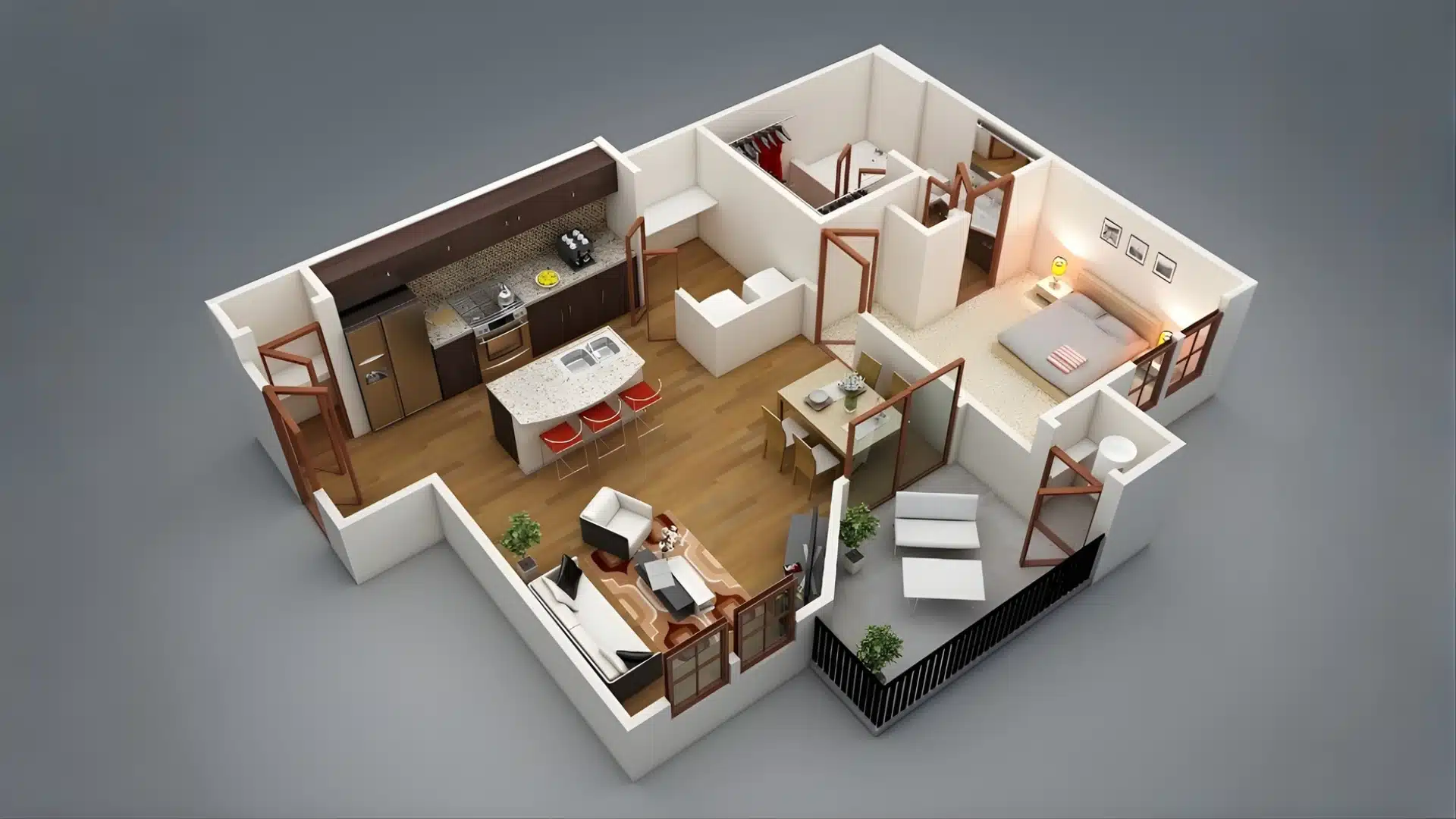
One level, no stairs, everything connected. Living, dining, and kitchen flow freely into one another.
Large sliding doors open directly to outdoor areas. This plan works especially well for families and older people who want easy movement throughout the home.
It also keeps maintenance clear and makes energy costs more manageable.
Two-Story Box Plan
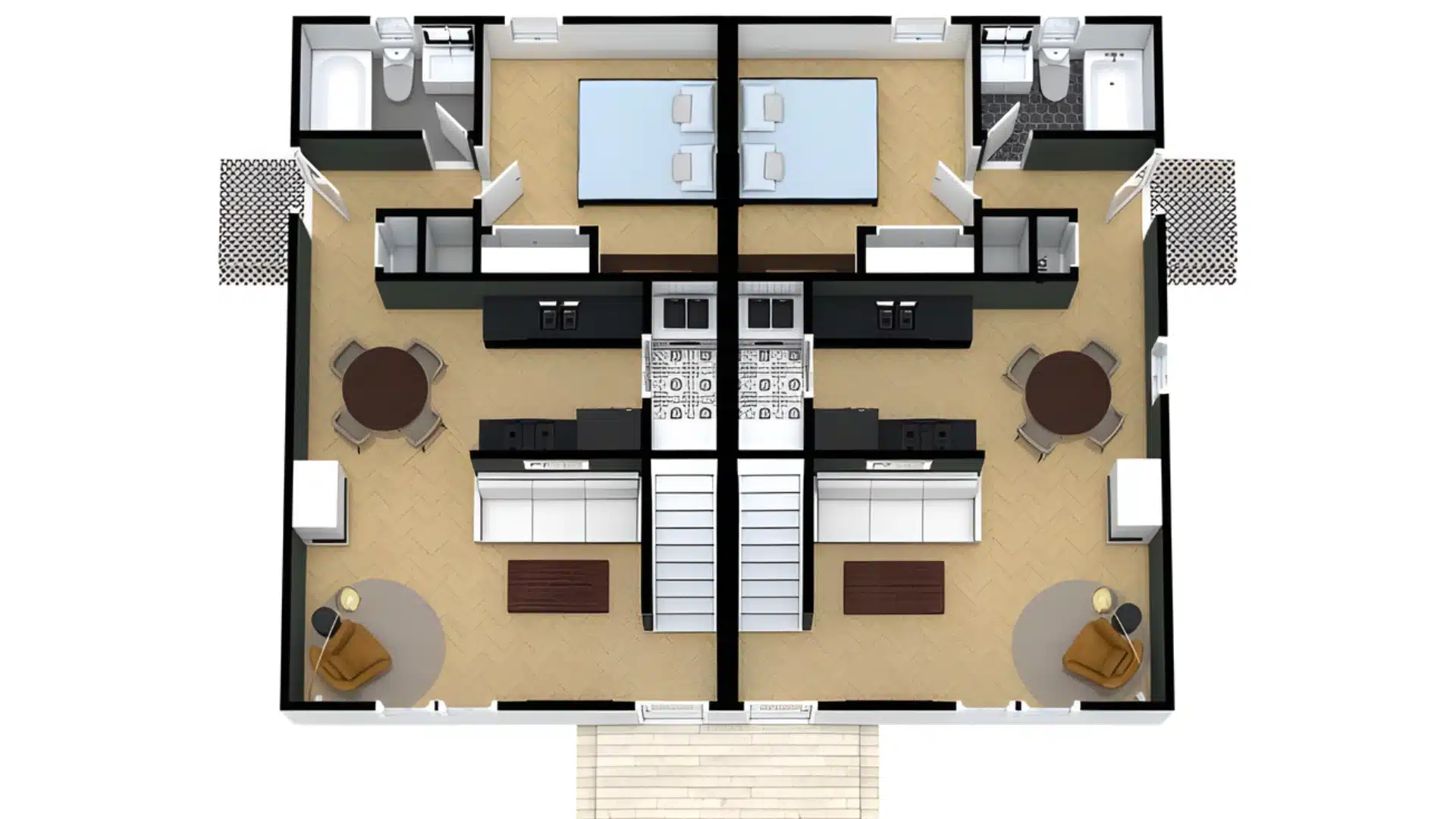
A compact square or rectangular footprint built upward.
Bedrooms sit privately on the upper floor while living spaces occupy the ground level.
Clean exterior lines and flat rooflines give this plan its sharp, recognizable look. The vertical build also makes it a practical choice for smaller plots with limited ground space.
L-Shaped Plan
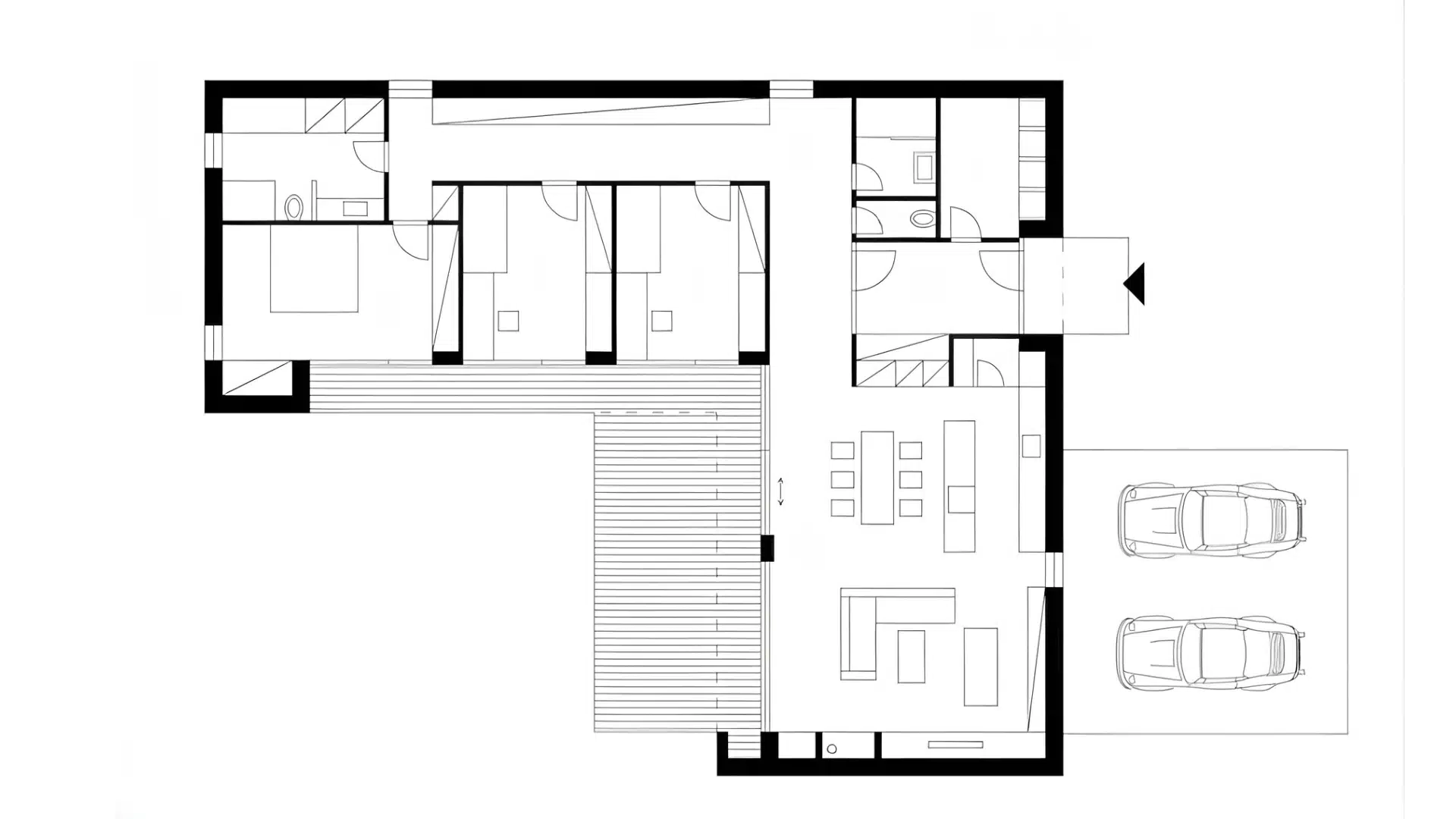
Two wings extending at right angles create a natural courtyard. This layout improves privacy, controls natural light from multiple directions, and works particularly well on suburban corner plots.
The shape enables different home areas to feel separate without internal walls.
Split-Level Plan
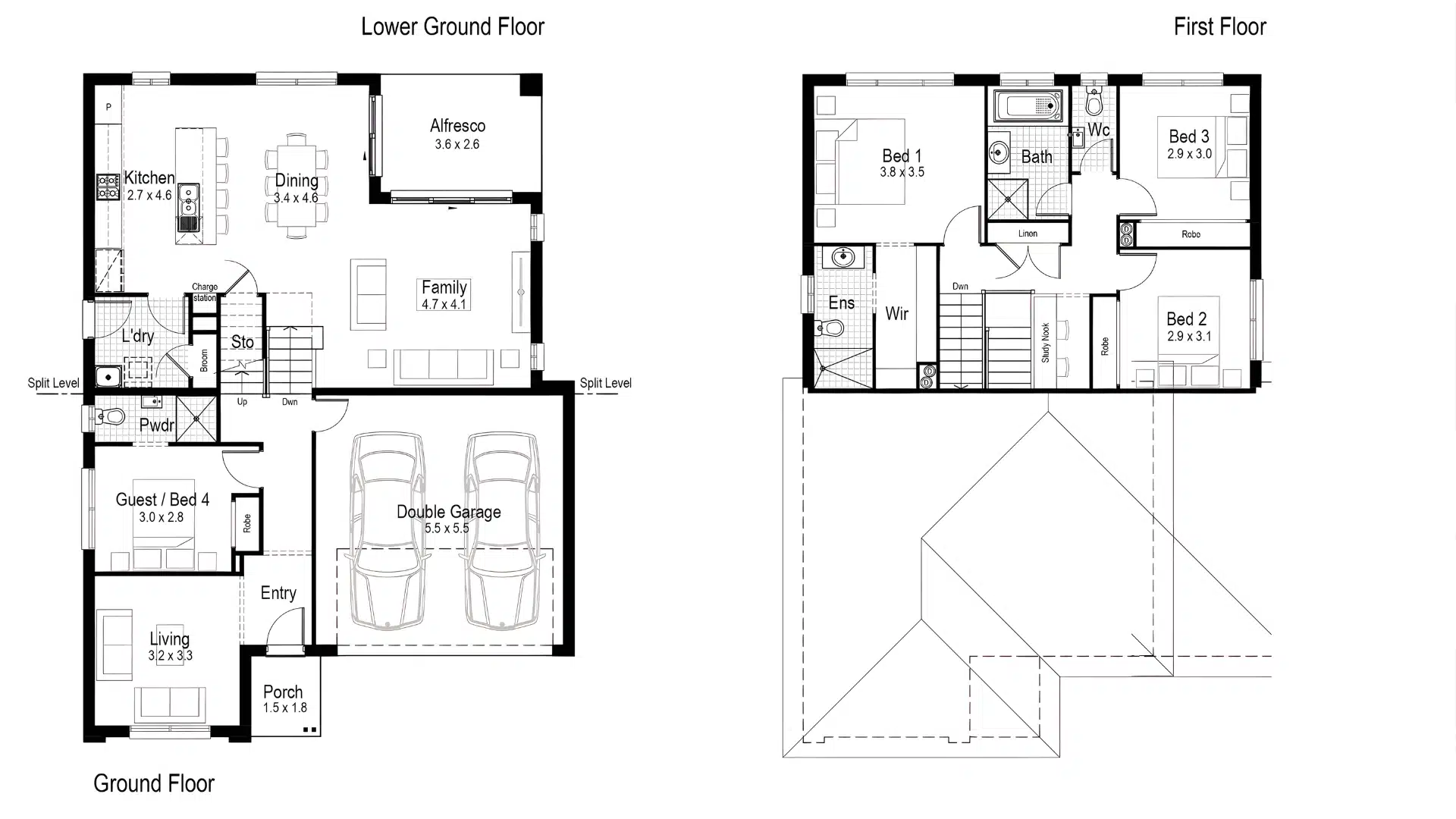
Different areas sit at slightly different floor heights, with no full staircases separating them.
It creates visual separation between spaces while maintaining the open feel.
Popular in homes built on sloped or uneven land. The varying levels also add visual interest to the interior without relying on decoration.
Courtyard Plan
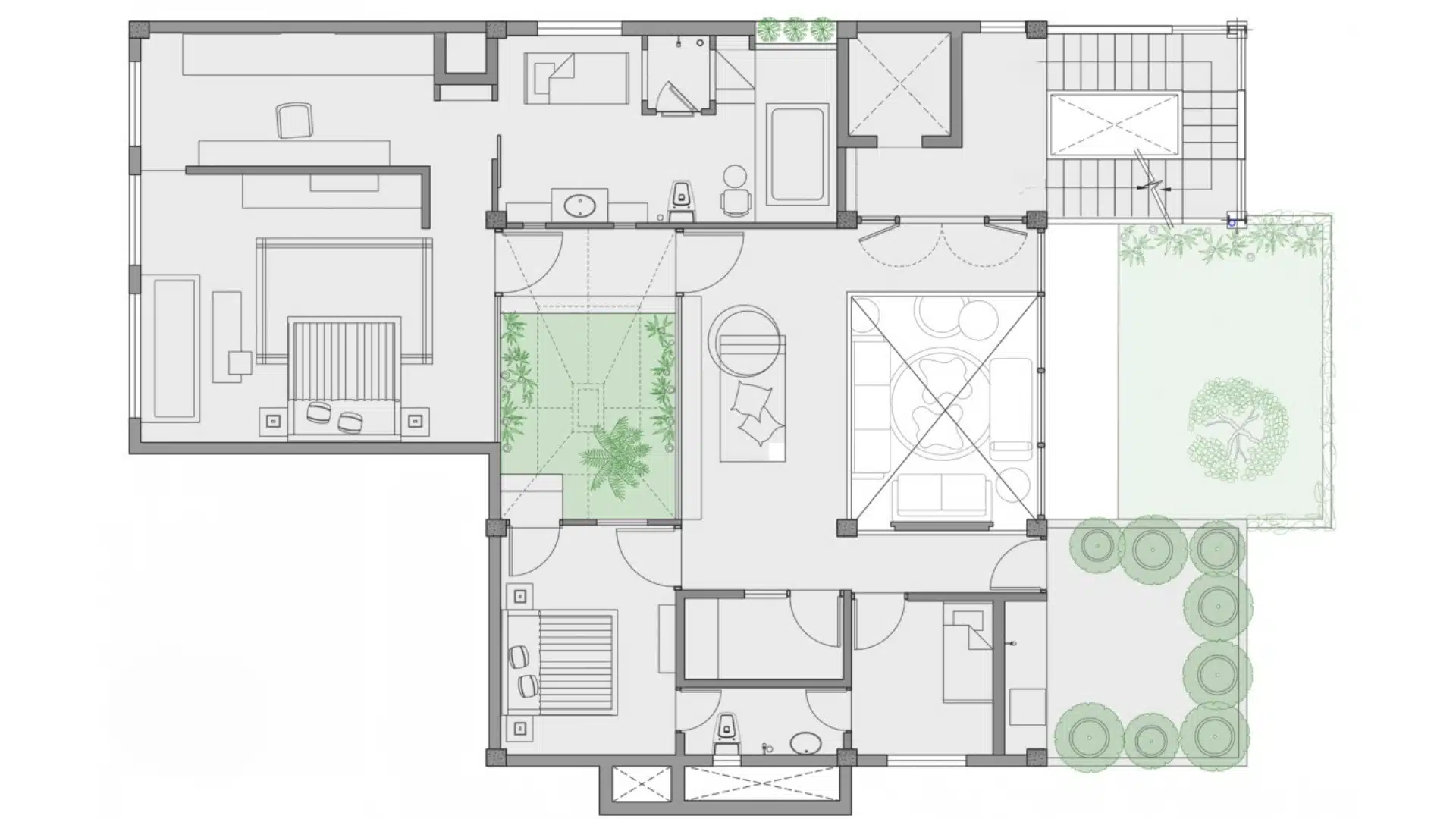
Living spaces wrap around a central outdoor courtyard.
Every main room has direct access to the outdoors and natural light. Common in warmer climates where indoor-outdoor living is a daily priority.
The courtyard also acts as a private outdoor space, sheltered from street noise and neighboring properties.
Contemporary Style House Interior Design Ideas
Getting the interior right comes down to a few deliberate, consistent choices kept throughout the space.
Neutral Color Palettes
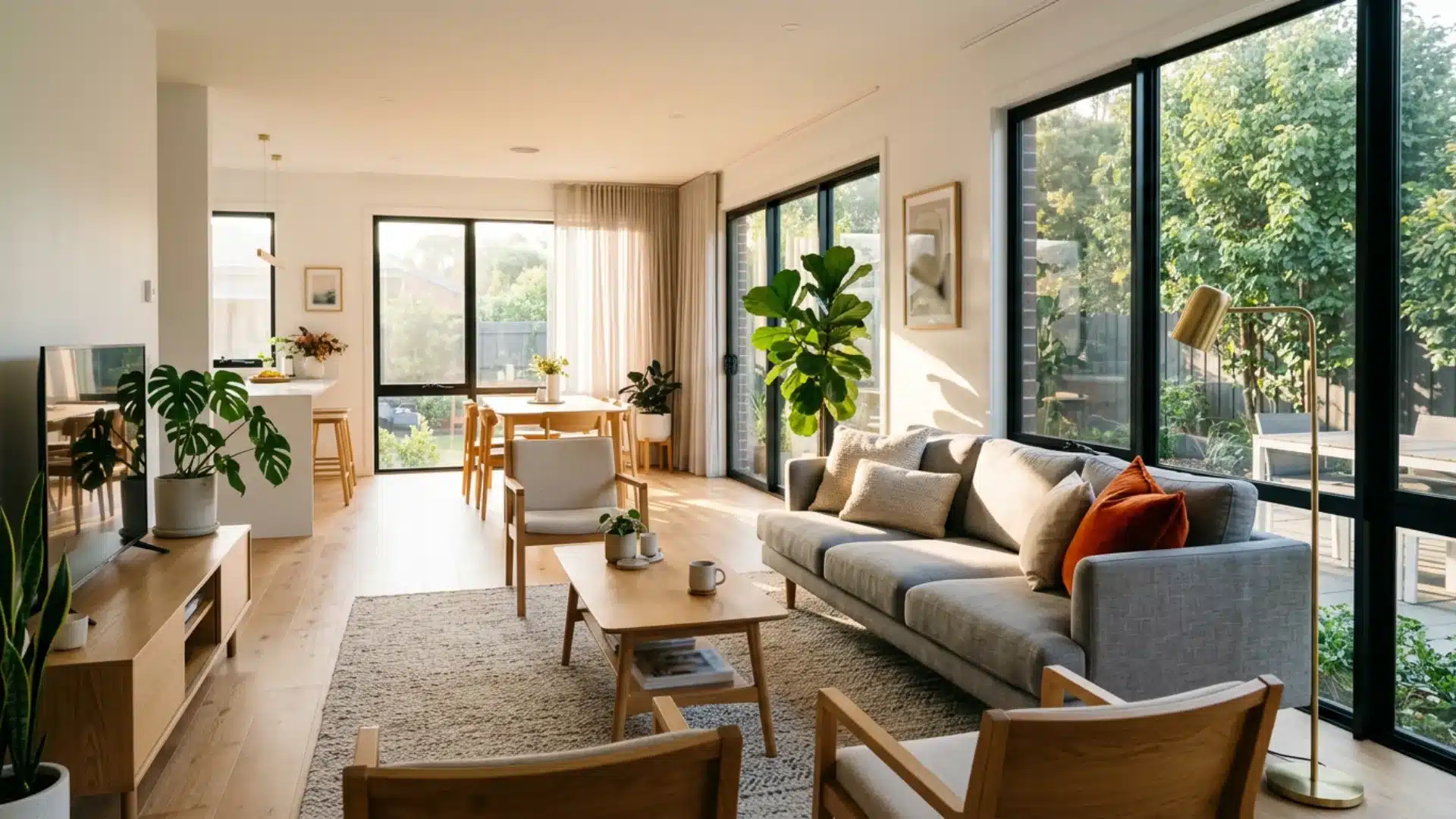
Whites, greys, and earthy tones form the base of most contemporary interiors.
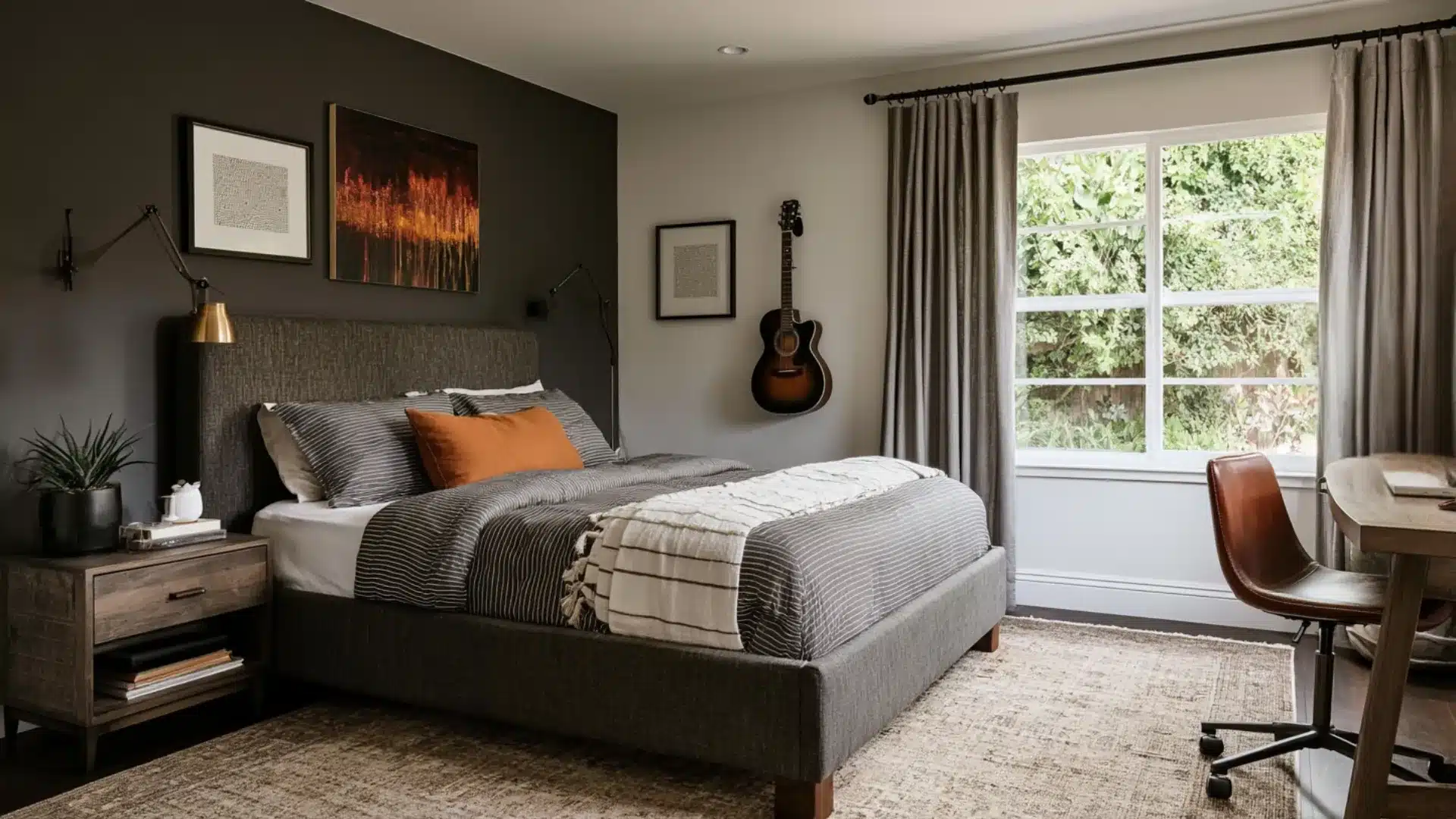
These shades keep spaces feeling open and calm. Accent colors are used sparingly, usually through soft furnishings or a single feature wall.
Functional Furniture with Sleek Profiles
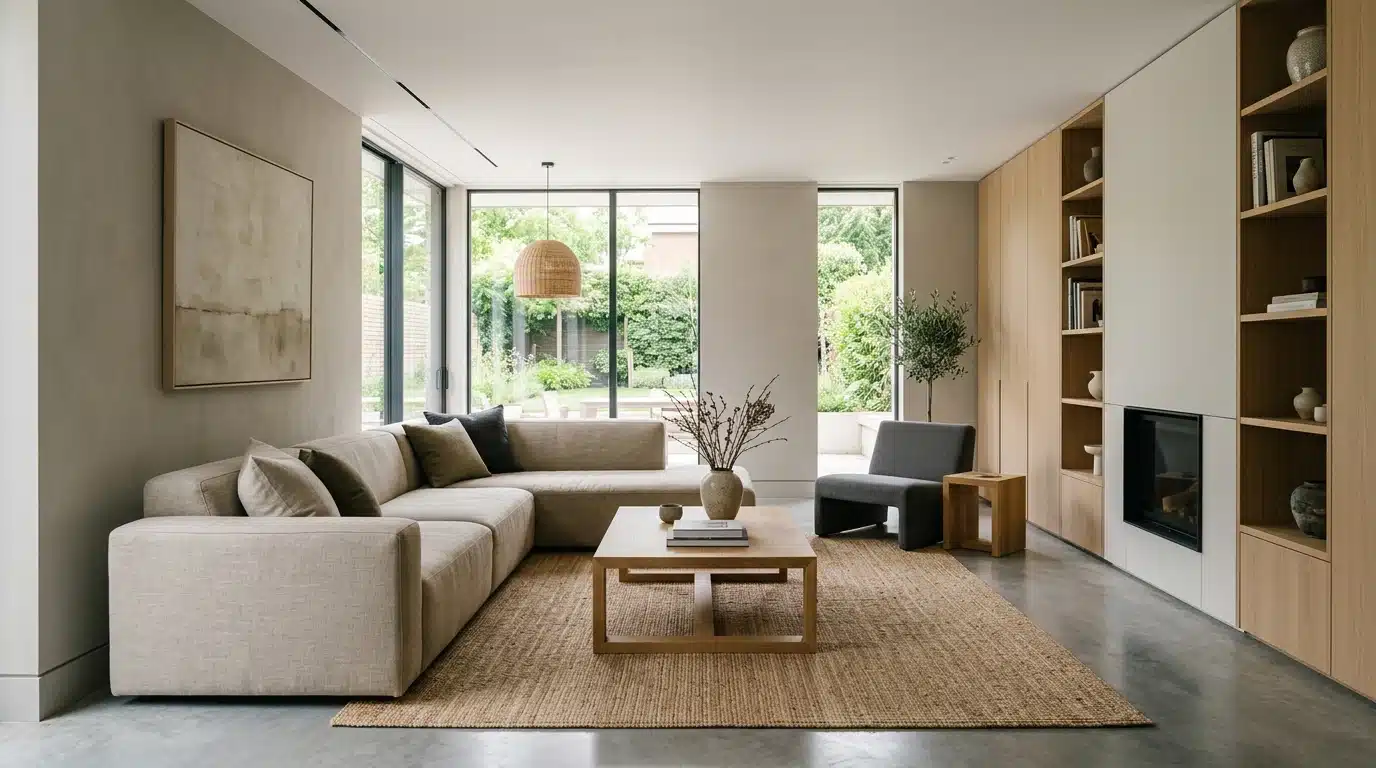
Every piece of furniture earns its place.
Low-profile sofas, straight-edged dining tables, and built-in storage keep the space looking clean.
Bulky or ornate furniture works against the overall feel of the room.
Open Storage and Clutter-Free Spaces
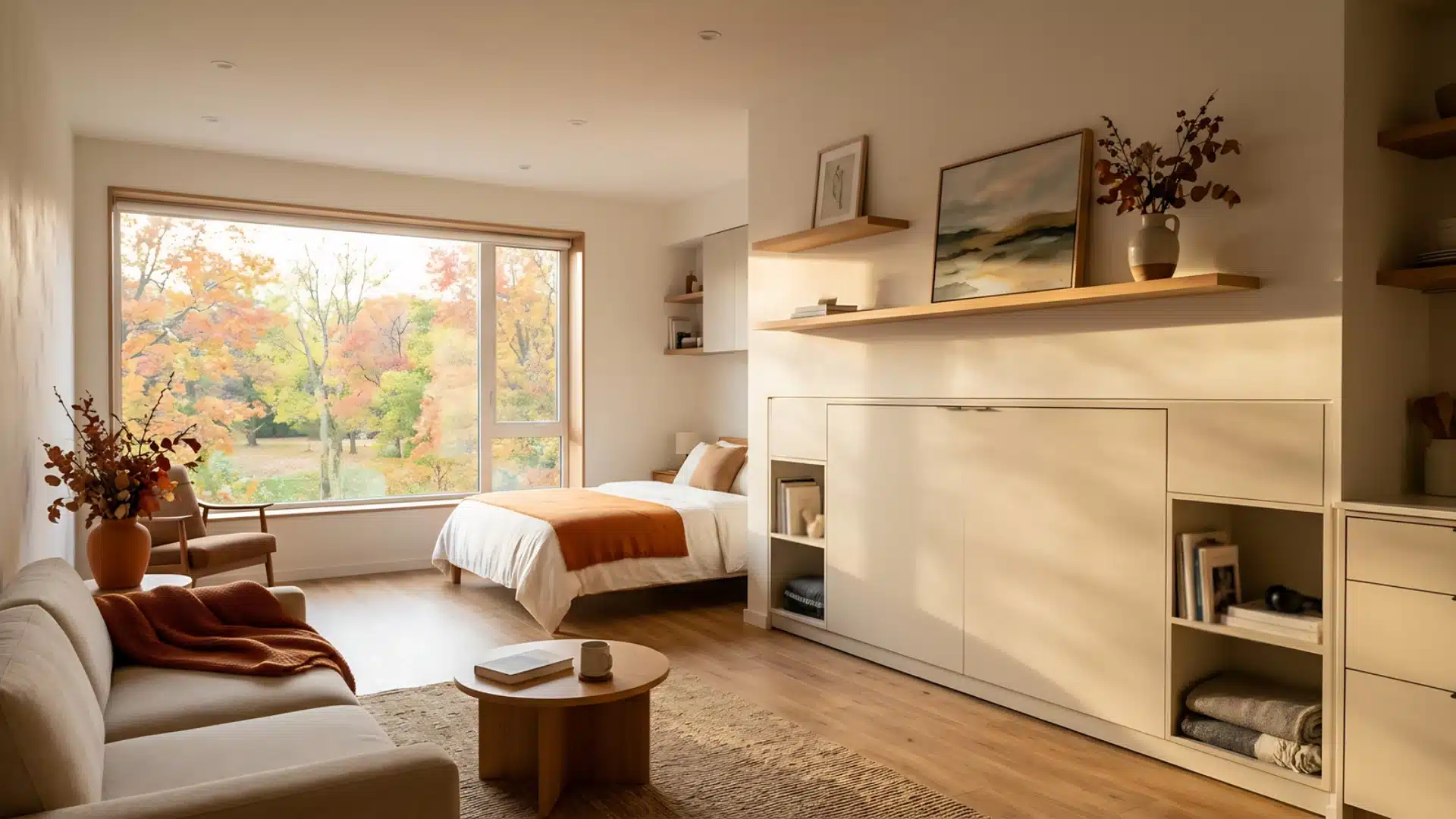
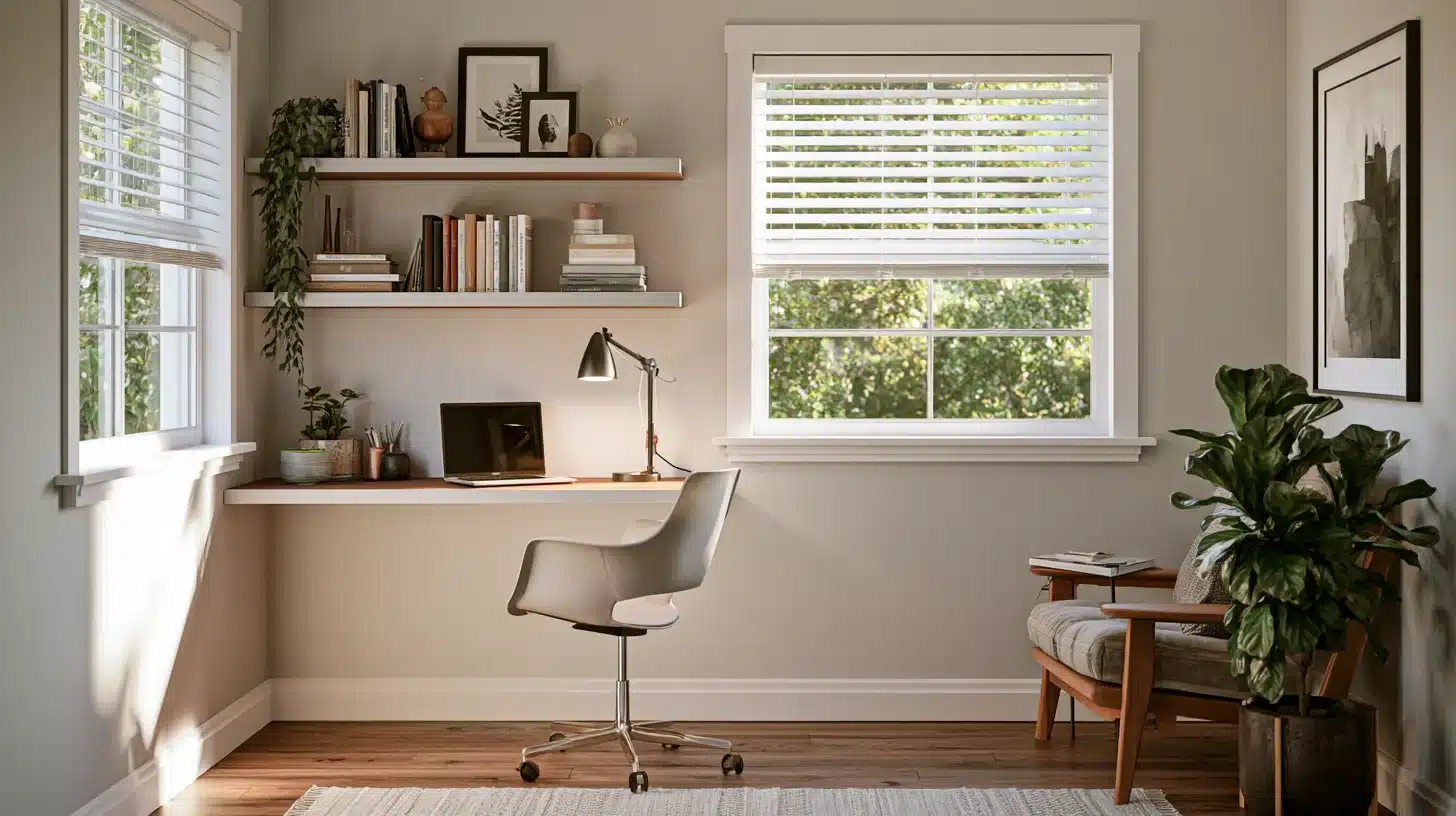
Visible clutter breaks the visual calm that contemporary interiors depend on. Open shelving is used selectively, only displaying items that add to the space.
Hidden storage built into walls and furniture keeps surfaces clear.
Statement Lighting Instead of Heavy Décor
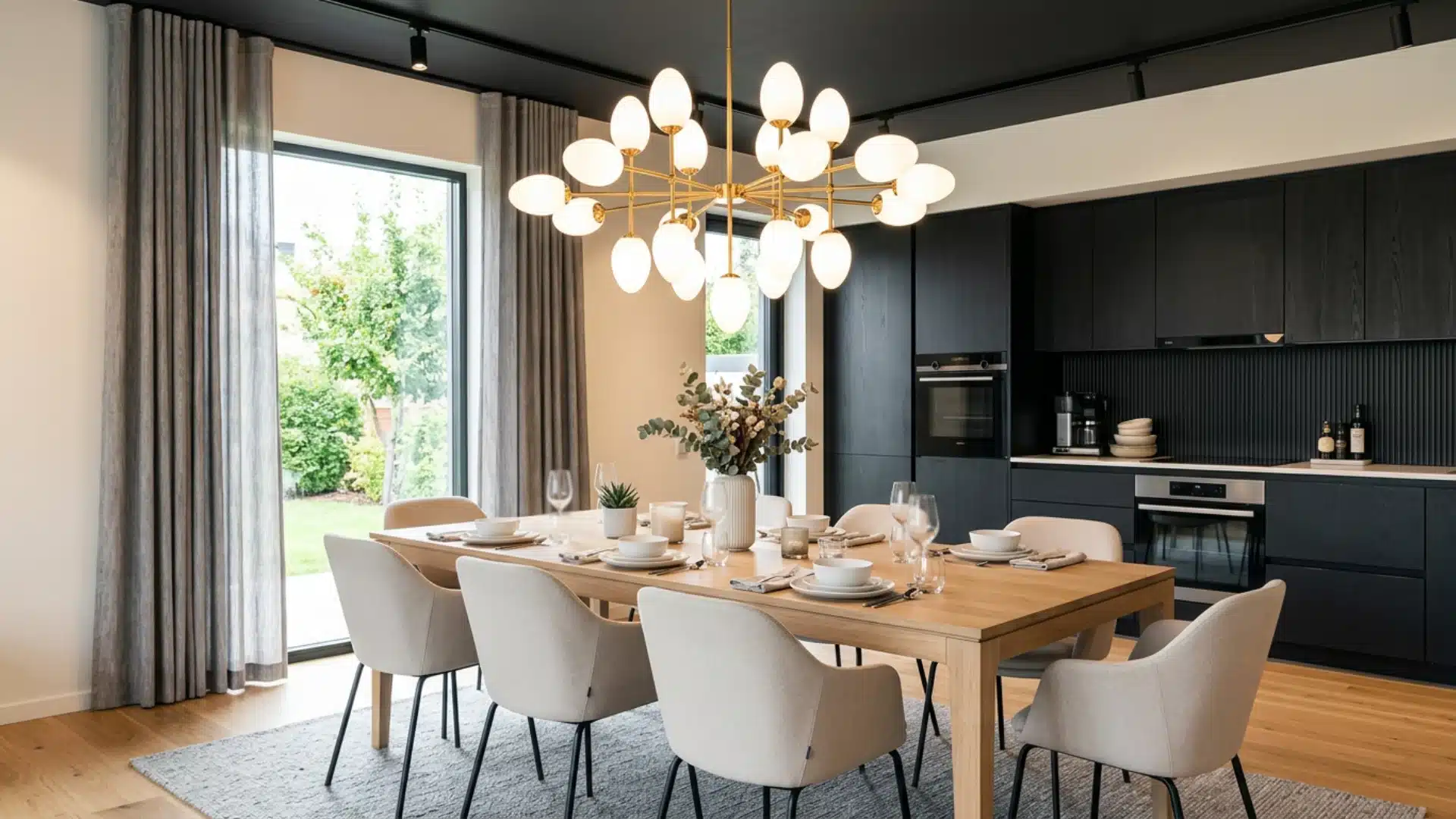
A well-chosen pendant light or a set of recessed ceiling lights does more for a contemporary interior than most decorative pieces.
Lighting shapes how a room feels at different times of day and replaces the need for heavy ornamental elements.
What I’d Prioritize First
If I had one starting point, it would be the lighting layout decided before flooring, before furniture, before paint. It affects everything that comes after.
Sustainable and Smart Features in Modern Homes
Building a contemporary home today means thinking beyond how it looks; how it performs matters just as much.
- Solar panels are integrated flush into flat or low-pitch rooflines.
- Triple-glazed large windows that retain heat without blocking light.
- Rainwater harvesting systems are built into the foundation design.
- Passive cooling through strategic window placement and cross ventilation.
- Automated lighting systems that adjust to natural light levels.
- Underfloor heating controlled through a single app.
- Smart glass that shifts transparency in response to sunlight intensity.
- Energy management systems that track and reduce consumption daily.
These aren’t luxury additions anymore. Most of them pay back their installation cost within a few years through reduced energy bills.
Choosing the Right Contemporary House Plan
Start with your plot. The size, shape, and slope of your land will immediately rule out certain plans and favor others. Think about how you actually use your home daily.
A growing family needs different zoning than a couple working from home.
Budget matters too.
A courtyard plan costs more to build than a single-story open plan on flat ground.
Talk to an architect early. The right plan saves money, time, and a lot of unnecessary changes later.
In my experience, most budget overruns on contemporary builds come from plan changes made after groundwork begins, not from material costs.
Key Takeaway
A contemporary style house works because every decision has a reason behind it.
The open plan, the materials, the light, nothing is accidental. The key is starting with the right plan for your plot, your budget, and how you actually live day to day.
If you’re planning a build or a renovation, get the structure and layout right first.
Everything else follows from there.
Frequently Asked Questions (FAQ’s)
1. What Devalues a House Most?
Poor maintenance, outdated layouts, and limited natural light are the biggest factors in reducing property value.
2. What is the Most Common House Plan Mistake?
Prioritizing room count over how spaces actually connect and flow together.
3. What Colors are Popular in Contemporary Design?
Whites, warm greys, soft beiges, and muted earthy tones dominate contemporary interiors.
4. What is the 3-5-7 Rule in Decorating?
Group decorative objects in odd numbers, three, five, or seven, for visual balance.
5. What are the Four Common Features of Contemporary Style Homes?
Open layouts, clean lines, large windows, and a mix of natural materials.