
Turn off your overhead light right now. That one move costs nothing and works immediately.
Every bedroom that has ever felt comfy had the ceiling light off lamps, soft bulbs, and layered sources that did all the work.
A single harsh overhead bulb can make even a nicely decorated room feel cold and flat.
Getting warm bedroom lighting right does not require starting from scratch.
Start building out with the right bulbs, smart placement, and cozy bedrooms that you can pull off tonight.
Why Overhead Lights Are Ruining Your Bedroom
Ceiling lights push flat, downward light across the whole room.
That kills shadow and depth completely. Shadow is what makes a space feel intimate and pulled together in the first place.
Take it away, and the room just feels bright and hollow.
Every hotel room that ever felt relaxing was lit from the sides.
Lamps, sconces, and corner floor lamps. Not the ceiling. That approach is what separates harsh bedroom lighting ideas from ones that actually feel soft.
Keep the ceiling light on while getting dressed. Turn it off the rest of the time.
The Lighting Layers Every Bedroom Actually Needs
A cozy bedroom does not come from one great lamp.
It comes from three types of light working together. Skip any layer and the room will still feel off, no matter what else you do.
1. Ambient Lighting (Base Layer)
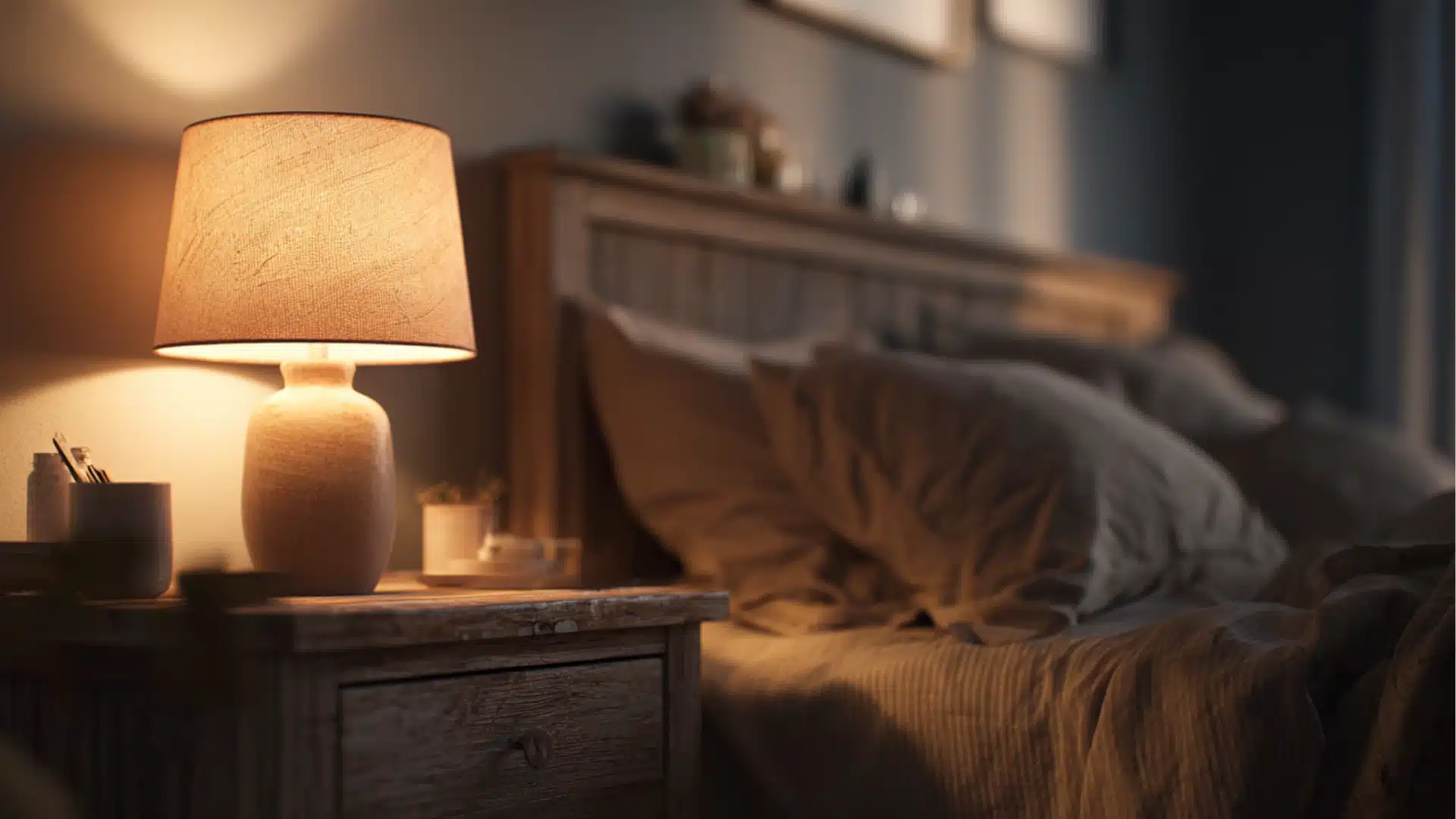
This is your overall soft glow. Two bedside table lamps, one on each side of the bed, are your anchor.
Use bulbs at 2700K or lower.
A rattan or ceramic base adds visual texture even before the light is switched on.
2. Accent Lighting (Mood Layer)
This layer is purely about feel. String lights behind a bed frame, LED strips tucked behind a headboard, or a floor lamp in one corner at low wattage. None of these should be the brightest thing in the room.
They exist to fill dark corners with quiet, low-level light that makes the space feel layered. This is the layer most people skip, and it shows.
3. Task Lighting (Functional Layer)
Strictly practical. A wall sconce or clip-on lamp next to the bed lets you read without lighting up the whole room. Get one with an adjustable arm, so you point it at the page, not the ceiling.
One side stays functional without killing the mood the other two layers are built.
How to Light a Bedroom for a Warm Feel
Start by turning off the overhead light and working from the floor up.
Place your two bedside lamps first since they anchor the whole room and set the tone for everything that follows. T
hen layer in your accent sources, a floor lamp tucked into one corner, LED strips behind the headboard, or string lights running along a shelf.
These do not need to be bright. They just need to show up. Last comes task lighting, a sconce or clip-on for whichever side of the bed does the reading.
Each light should serve one zone: sleep, reading, or relaxing.
Keep brightness low across all three layers. No single source should dominate. When every light feels like it belongs, the room finally does too.
The Bulb Rule Everyone Misses
Most people spend money on a beautiful lamp and then put a cool white bulb in it.
The result looks clinical. 2700K is the ceiling for bedroom bulbs. Anything cooler makes the room feel like a bathroom.
Go lower if you can find it. 2400K or even 2200K is better for bedside use.
Candle-shaped bulbs inside a fabric shade produce the softest glow available without spending much at all.
Quick Setup by Room Size
The right number of light sources depends on the space you have to work with.
1. Small Bedroom
Two bedside lamps plus string lights. Skip the floor lamp entirely.
It takes up floor space that the room does not have. String lights along the headboard or a shelf do the accent work without eating into square footage.
If you are short on space, a simple bedroom lamp idea, like a slim ceramic base or a clip-on sconce, keeps things tight without losing the layered effect.
2. Medium Bedroom
Two bedside lamps, one corner floor lamp, and accent lighting behind the headboard. Three sources, three zones, balanced across the room.
The floor lamp handles the corner that the bedside lamps cannot reach. LED strips behind the headboard tie it all together without adding any bulk.
3. Large Bedroom
All of the above, plus a reading chair with its own dedicated lamp. That extra zone gives the room a pulled-together feel without adding clutter.
A taller arc lamp works well here since it lights the chair without needing a side table.
It also breaks up empty wall space in a way that feels intentional.
The Dimmer Switch is the Cheapest Upgrade You are Ignoring
If you do one thing this week, buy a dimmer switch for your existing ceiling light.
Full brightness in the morning, dropped to around 30% in the evening. It costs under $12 and changes the room’s feel more than any new lamp would.
Most people never think of this. One small swap, and suddenly the same ceiling light that felt harsh is actually usable at night.
Best Bulbs for Bedroom Lighting
Bulb choice matters more than most people realize. You can have the perfect lamp in the perfect spot and still ruin it with the wrong bulb.
For a bedroom, stick to color temperatures between 2200K and 3000K.
This range helps your body wind down and supports your natural sleep cycle. Most designers land at 2700K as the sweet spot.
If you are still figuring out thebest bulbs for bedroom use, that number is the only one you need to remember.
| Feature | What to Look For |
|---|---|
| Color Temperature | 2700K for general use. 2200K for bedside lamps at night |
| Lumens | Under 450 for bedside lamps. Lower still for accent lights |
| Bulb Type | LED labeled “soft white” or “warm white.” Avoid “bright white” or “daylight.” |
| Dimmable | Check the box before buying if your lamp or switch has a dimmer |
Blue light at night suppresses melatonin more powerfully than other colors, so cool white bulbs in the bedroom actively interfere with sleep. Swap them out first.
Start Small, Fix the Light, Feel the Difference
Good cozy bedroom lighting ideas do not require a big budget or a full room overhaul.
Turn off the overhead light, add two bedside lamps at 2700K, layer in a few accent sources, and put a dimmer on anything that needs one.
That is the whole setup.
Small changes in the right order make a bigger difference than expensive fixtures ever will. Start with one thing tonight and build from there.
Frequently Asked Questions
1. What is the Best Color Temperature for Bedroom Lighting?
Stay at 2700K or lower. Anything cooler works against relaxation and sleep.
2. Do I Need Multiple Light Sources in a Bedroom?
Yes. One lamp is never enough. Three-layered sources across different zones is the minimum for a bedroom that feels right.
3. Can Lighting Actually Affect How Well I Sleep?
Cool white and blue-toned bulbs suppress melatonin at night, so yes, the wrong bulb actively makes it harder to fall asleep.