Hosting people sounds fun until you’re stuck with the wrong table.
You’re left with cramped seating, elbows in the way, and unhappy guests. But a simple measurement can change everything.
In this post, you’ll get an idea of what size round table seats 8-10, plus tips on style and decor.
Let’s start right away!
Things to Keep in Mind when Selecting a Round Table
Picking the right round table isn’t just about size.
It affects how your space looks, how you set up your table, how comfortable your guests feel, and how well the room works.
1. Room Size Matters First
Before anything else, measure your room. You need at least 36 inches of clear space around the table so people can pull chairs out and move freely.
A table that fits the room always works better than one that just fits the guest count.
A good-looking table means nothing if it doesn’t fit your space or seat your guests comfortably.
2. Think About How Many People You’ll Seat Regularly
Don’t buy a table based on your biggest dinner party. Think about your everyday use instead.
If you usually eat with four people but host eight occasionally, a mid-sized table with an extra leaf works perfectly for you.
3. Table Diameter Changes Everything
The diameter of your round table decides how close people sit together. A wider table gives everyone breathing room.
But go too wide, and conversations across the table become difficult. Find a size that balances comfort with easy face-to-face interaction.
4. Consider Your Chair Size Too
Your chairs take up more space than you think. Bulky or wide chairs need more room per person.
Always factor in the chair width when calculating how many people can sit comfortably around your table without feeling squeezed.
5. Traffic Flow Around the Table
Think about how people move around the dining area. If the table is too large, it blocks natural movement through the room.
You want enough space for people to walk past the chairs without bumping into anyone seated at the table.
Four-legged tables can restrict legroom for larger groups. A pedestal base is usually the smarter pick.
How to Select Ideal Round Table Sizes?
The right round table size comes down to two things: how many people you’re seating and how much room you have.
A good rule of thumb is to allow 24-28 inches of table space per person.
So for 8–10 people, you’re looking at a table between 72 and 96 inches in diameter.
The following are a few things to check before you buy:
- Measure your dining room first: You need at least 36 inches of clearance on all sides.
- Think about your chairs: Bulkier chairs need more space between seats.
- Consider the base style: A pedestal base works better for larger groups.
- Don’t forget traffic flow: People need to be able to move around the table easily.
Typical Round Table Sizes for 8–10 People
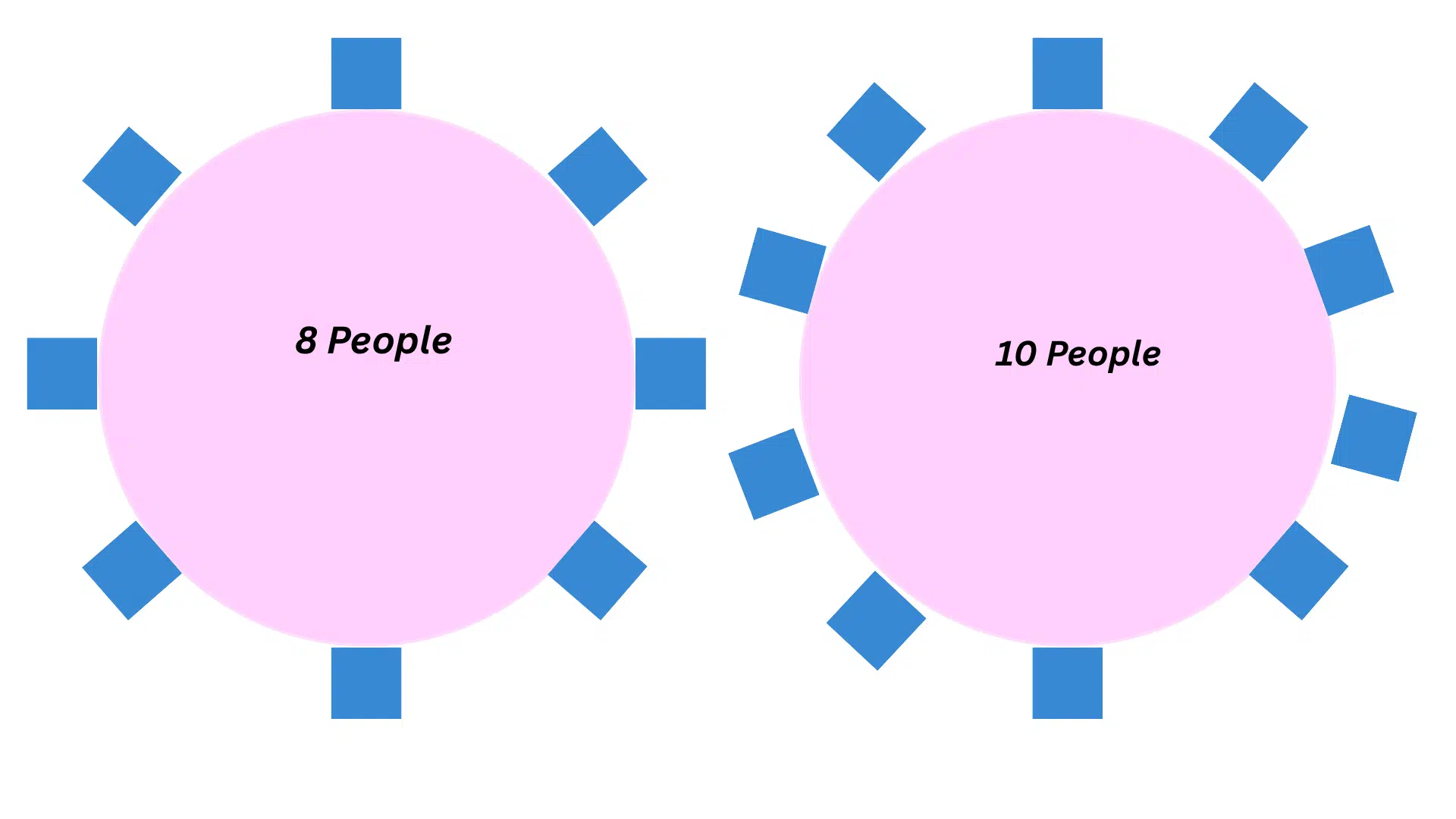
When seating 8–10 people, size really does matter.
Most dining tables in this range measure 72 to 96 inches in diameter.
The following is a quick breakdown:
- 72-inch table (6 feet): Comfortably seats 8 people. It’s a popular choice for most dining rooms.
- 84-inch table (7 feet): Seats 8–10 people well. It gives everyone a little extra elbow room.
- 96-inch table (8 feet): Best for 10 people. You’ll need a larger room to pull this off comfortably.
Keep in mind that these are standard sizes. Your final choice depends on your room size, chair style, and the amount of breathing room you want for your guests.
How Many People Can Sit at a 60 Inch Round Table?
A 60-inch round table comfortably seats 6 to 8 people; most often, 6 people sit comfortably. It’s a great middle-ground size for most dining rooms.
Each person gets around 24 inches of table space, which feels comfortable without being too tight.
If you push it to 8 people, things get a little snug. It works for casual family dinners but might feel cramped for formal occasions.
Pair it with slim-profile chairs to get the most out of your seating space. It’s a solid choice for medium-sized dining rooms.
Room Size vs. Table Size
Before you buy a round table, it helps to know how your room size affects the size of table you can fit.
A room that’s too small for your table makes the whole space feel tight and uncomfortable.
Use this quick reference table to find the right match.
| Room Size | Recommended Table Diameter | Comfortable Seating |
|---|---|---|
| 10 x 10 ft | 48 inches | Up to 4 people |
| 12 x 12 ft | 60 inches | Up to 6 people |
| 14 x 14 ft | 72 inches | Up to 8 people |
| 16 x 16 ft | 84 inches | Up to 8-10 people |
| 18 x 18 ft | 96 inches | Up to 10 people |
| 20 x 20 ft | 108 inches | Up to 12 people |
Round Table Style, Material, and Home Decor Compatibility
Your dining table does more than just hold food; it sets the tone for your entire dining space.
The style, material, and decor you choose say a lot about your home.
1. Table Style
Round dining tables come in many styles: modern, farmhouse, traditional, and mid-century.
The style you pick should match the rest of your dining room. A sleek modern table looks out of place in a rustic farmhouse setting.
Always think about how the table fits your overall room design.
If you entertain guests often, a classic or traditional style tends to work well for most occasions. You can change the style according to the party theme as well.
2. Table Material
The material affects both looks and durability. The following are the most common options:
- Solid wood: Long-lasting and warm-looking. Great for family dining rooms.
- Glass: Looks light and open. Works well in smaller spaces.
- Marble: Stylish but needs regular care and maintenance.
- MDF with veneer: Budget-friendly and available in many finishes.
3. Table Finish
The finish on your table affects how it looks and how easy it is to clean. A matte finish hides scratches better than a glossy one.
If you have kids or host frequent dinners, a durable finish saves you a lot of trouble in the long run.
Go for a finish that matches your lifestyle, not just your taste.
4. Decor and Centerpiece
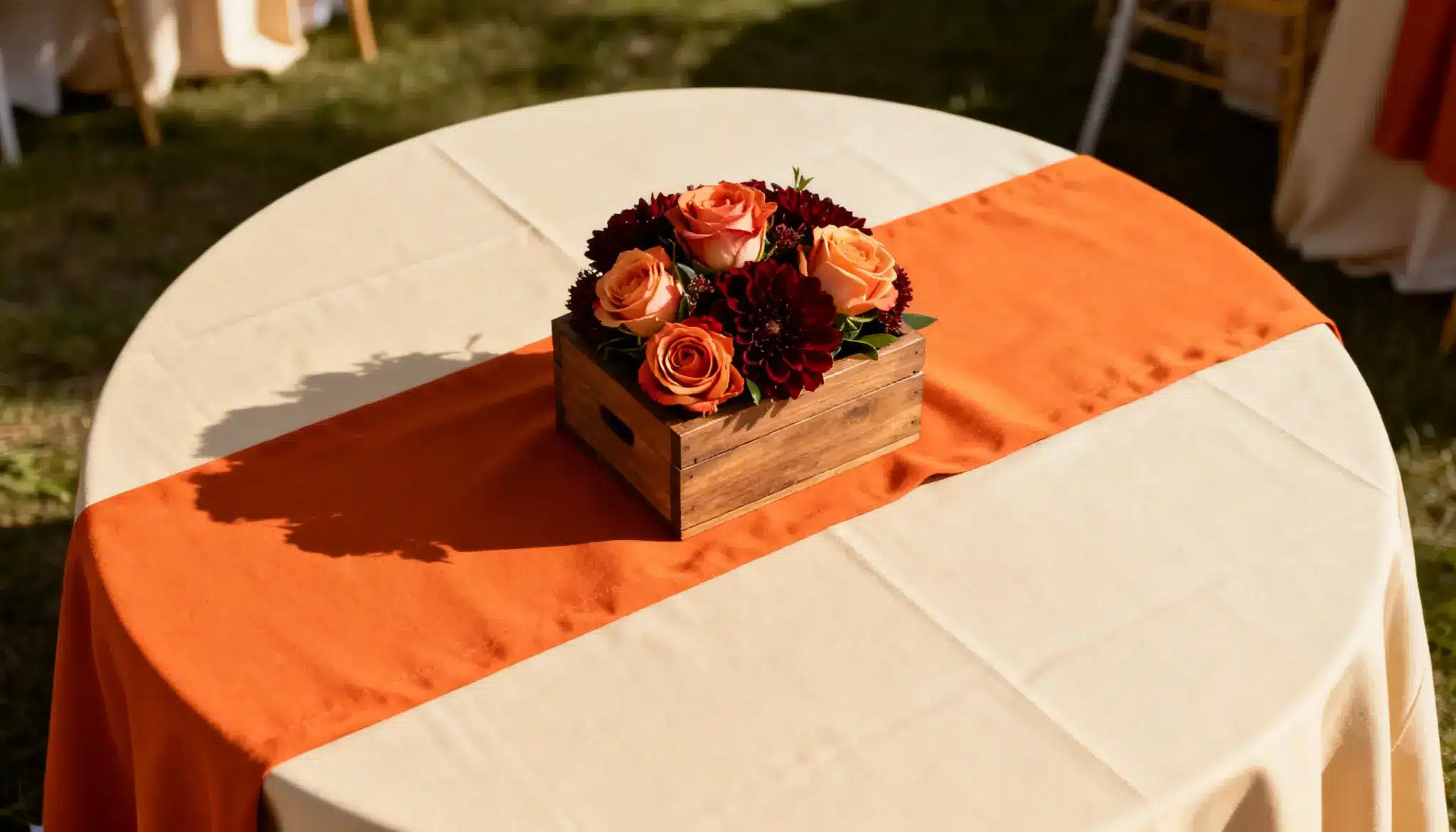
A round table provides a natural focal point for decor. A simple centerpiece, such as a vase, candles, or a fruit bowl, works well.
Keep it low so guests can see each other across the table. Tall centerpieces block sightlines and make conversation harder.
5. Color and Tone
The color of your table should complement your dining room walls and flooring. Light-toned tables make a room feel bigger and brighter.
Dark-toned tables add warmth and a more formal feel. Stick to two or three tones in the room to keep things looking clean and balanced.
If your room gets a lot of natural light, a lighter table color works especially well.
Wrap Up
Getting the right round table is pretty easy. Think about how you will use your dining space.
Do you host big family dinners? Do you entertain guests regularly? Let those answers guide your ideal round table choice.
And don’t just stop at size, the material, finish, and decor all play a part in making your dining room feel right.
Take your time, measure twice, and buy once. The perfect round table for your home is out there. You just need to know what to look for.
Frequently Asked Questions (FAQs)
1. What is the 4-Inch Rule for Dining Seating?
The 4-inch rule means leaving 4 inches between each seated person and the next chair for comfortable dining.
2. What is the 90 90 90 Rule for Seating?
The 90-90-90 rule means your feet, knees, and hips should each be at a 90-degree angle when seated.
3. Is it Better to Buy a Round or a Rectangular Table?
Round tables work best for smaller groups and square rooms. Rectangle tables suit larger spaces and longer guest lists better.