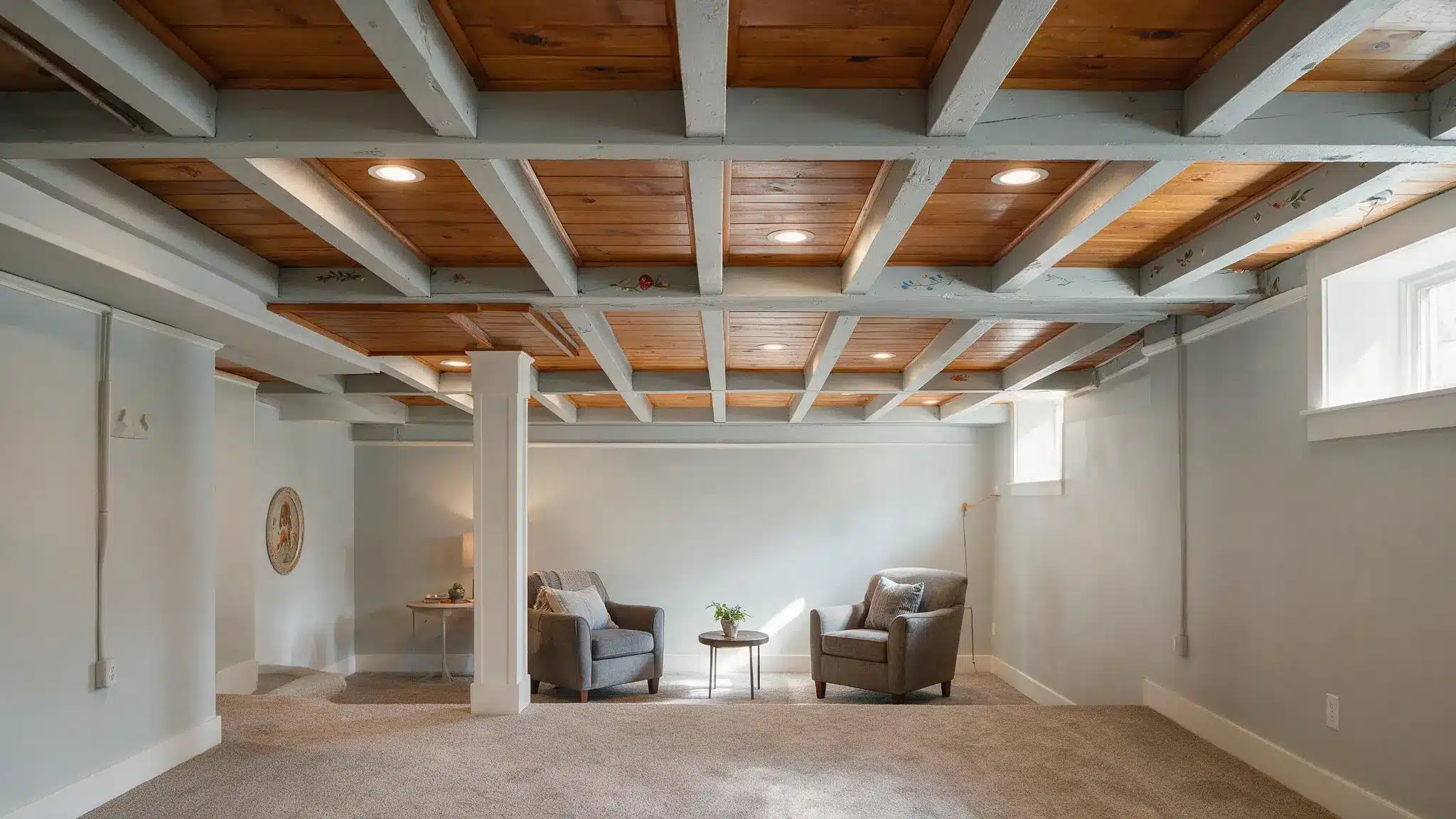
Take a look up at your basement ceiling right now. Ductwork, pipes, wires… definitely not what you imagined.
The upside is that hiding all those things doesn’t necessarily mean spending hundreds of dollars on a cheap-looking ceiling.
Modern basement ceiling ideas include anything from the $50 paint job that will make your ceiling blend into your design seamlessly to wooden boards and drywall ceilings that can rival any room on the main floor.
Running low on cash or ceiling height? There’s always one that will suit you; read to the end to find out.
What Makes a Good Basement Ceiling?
It is important to choose a ceiling for a basement that provides both functional and aesthetic qualities.
The basement ceiling must not only cover and hide utility elements like pipes, ducts, or wiring but also must not make your basement look smaller and unfinished.
It is also very important to have sufficient headroom, because a basement ceiling that takes too much of your ceiling height will make an already low-ceiling basement even smaller.
Accessibility is another aspect to consider, as a ceiling that cannot be removed can cause problems if you need plumbing repairs.
On top of the functionality, the finish of a basement ceiling must fit the purpose of your basement and match the interior.
The most useful basement ceiling design is the one that solves your utility issues while still providing a well-finished room.
Cheap Basement Ceiling Ideas
A finished basement doesn’t have to break the budget. These low-cost options cover exposed utilities and add style without a full renovation price tag.
1. Painted Exposed Joists
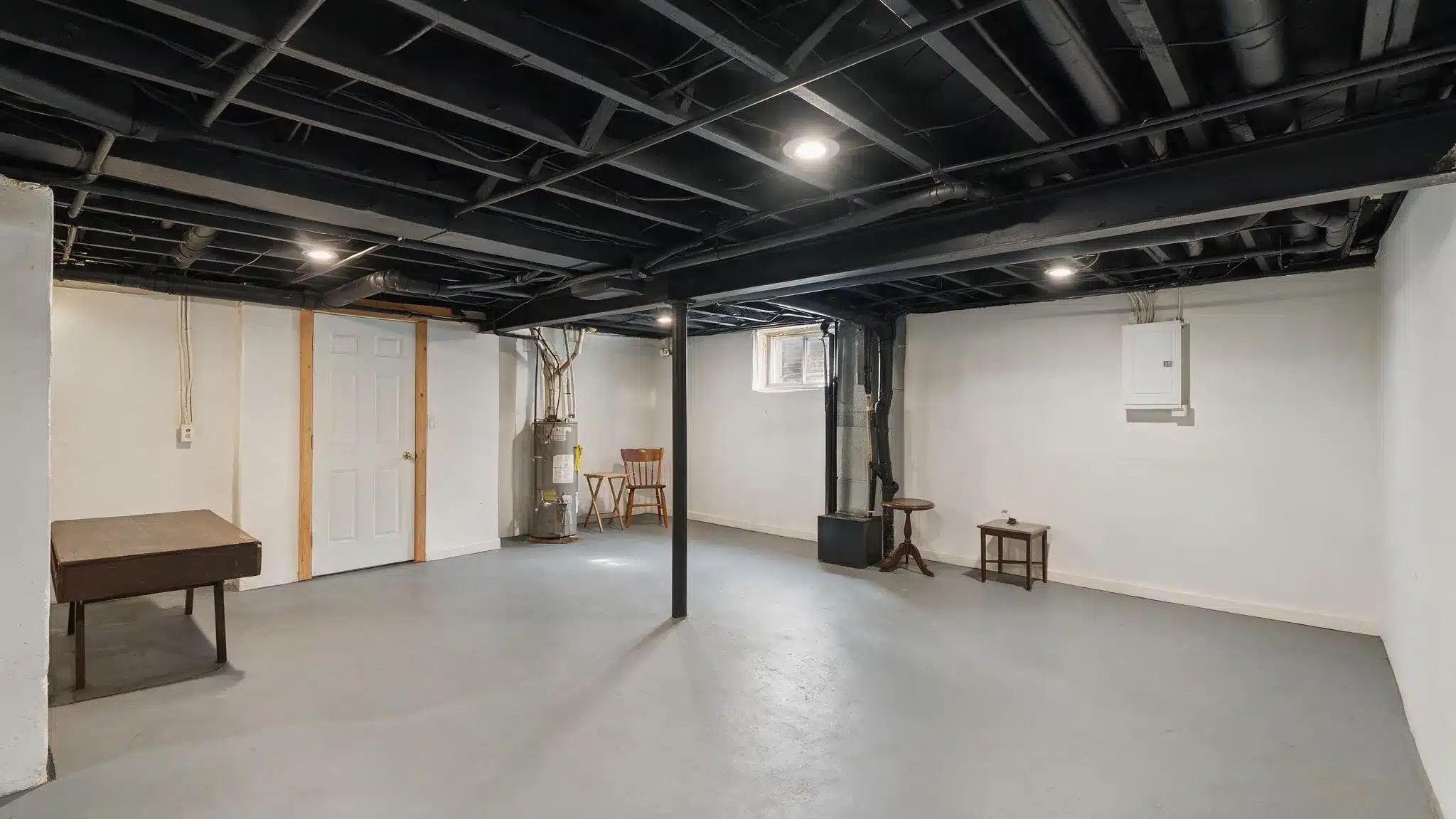
Forget the idea of covering the ceiling and instead coat the pipes and wiring in matte black or dark charcoal paint.
All these will merge into darkness without any contrast, and this is one of the most inexpensive basement ceiling designs because all you have to do is paint the ceiling with a sprayer.
It also keeps every inch of headroom, which matters if anyone in the house is over 6 feet tall and already which matters if anyone in the house is over 6 feet tall and needs to keep every inch of clearance below the joists.
2. Plywood Ceiling Panels
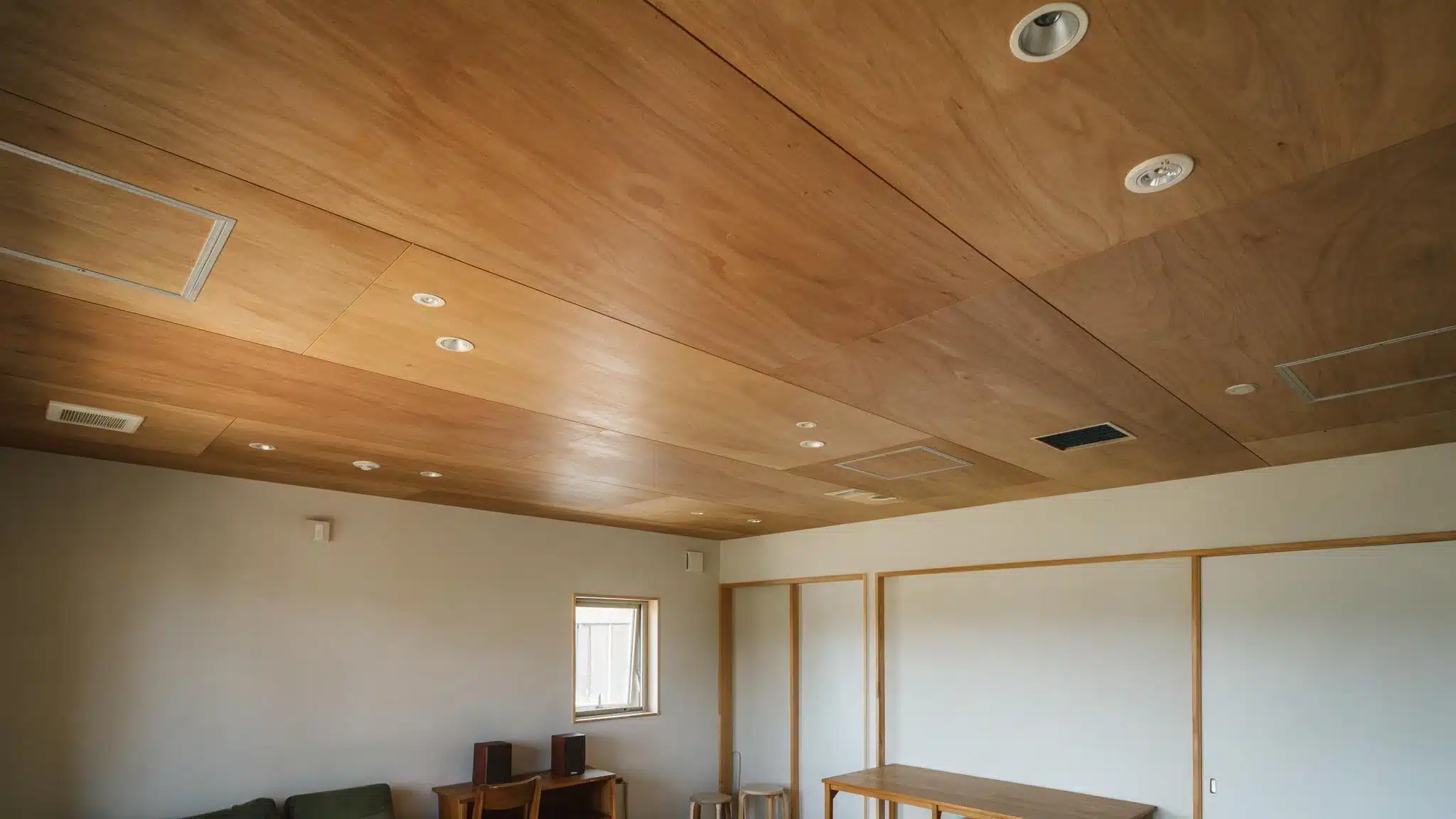
Plywood panels can be stained or painted and make a nice, rustic, economical ceiling option.
- Cheaper than drywall by many dollars per square foot
- Simple to trim around vents and fixtures
- Available in any stain or paint color
- Plywood panels can be easily removed for utility access
3. Budget Drop Ceiling
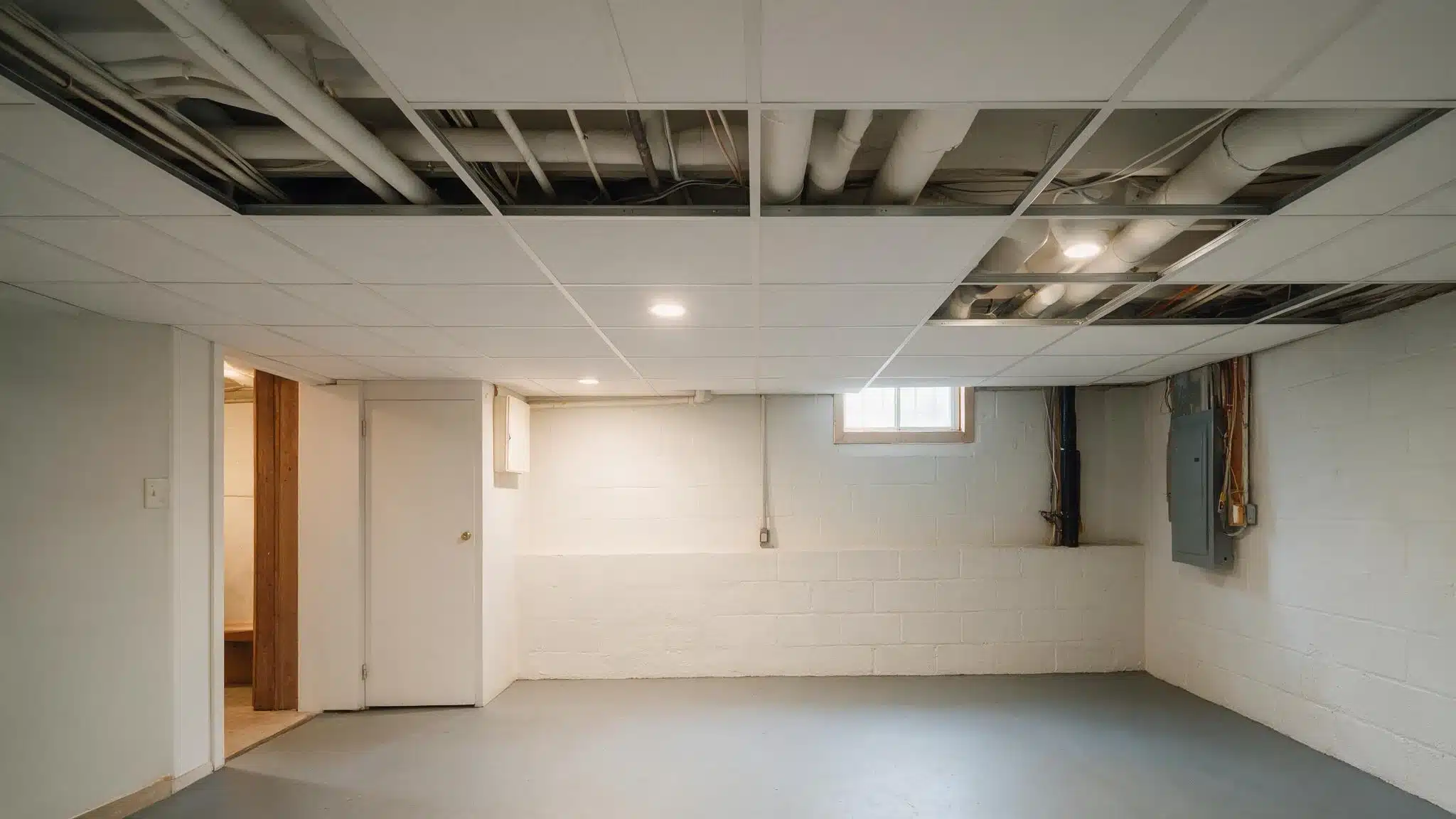
The traditional grid-and-tile system is one of the cheapest ways to cover the ceiling.
They completely conceal ducting, piping, and wiring and provide full access for maintenance work. Starter sets for this ceiling are available from big-box retailers, and tiles are available in many finishes.
This type of ceiling isn’t necessarily the most attractive, but it is quick, cheap, and suitable for beginners.
4. Foam Ceiling Tiles
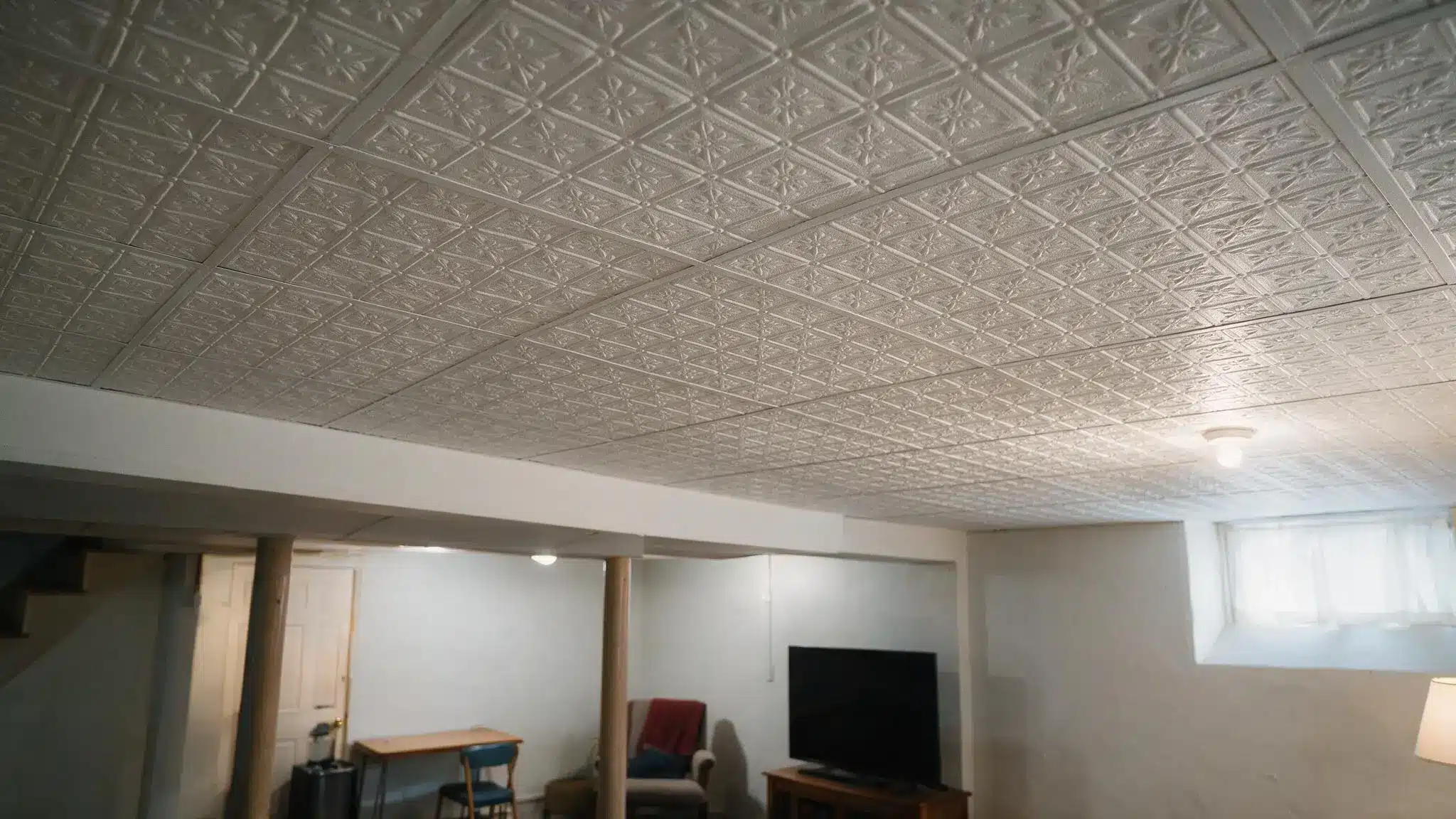
Foam ceiling tiles resemble tin, wood, or coffered ceilings and cost much less.
- Adhesive installation, no grid necessary
- Come in many decorative designs
- Light enough to be installed by one person
- Has soundproofing properties
5. DIY Beadboard Panels
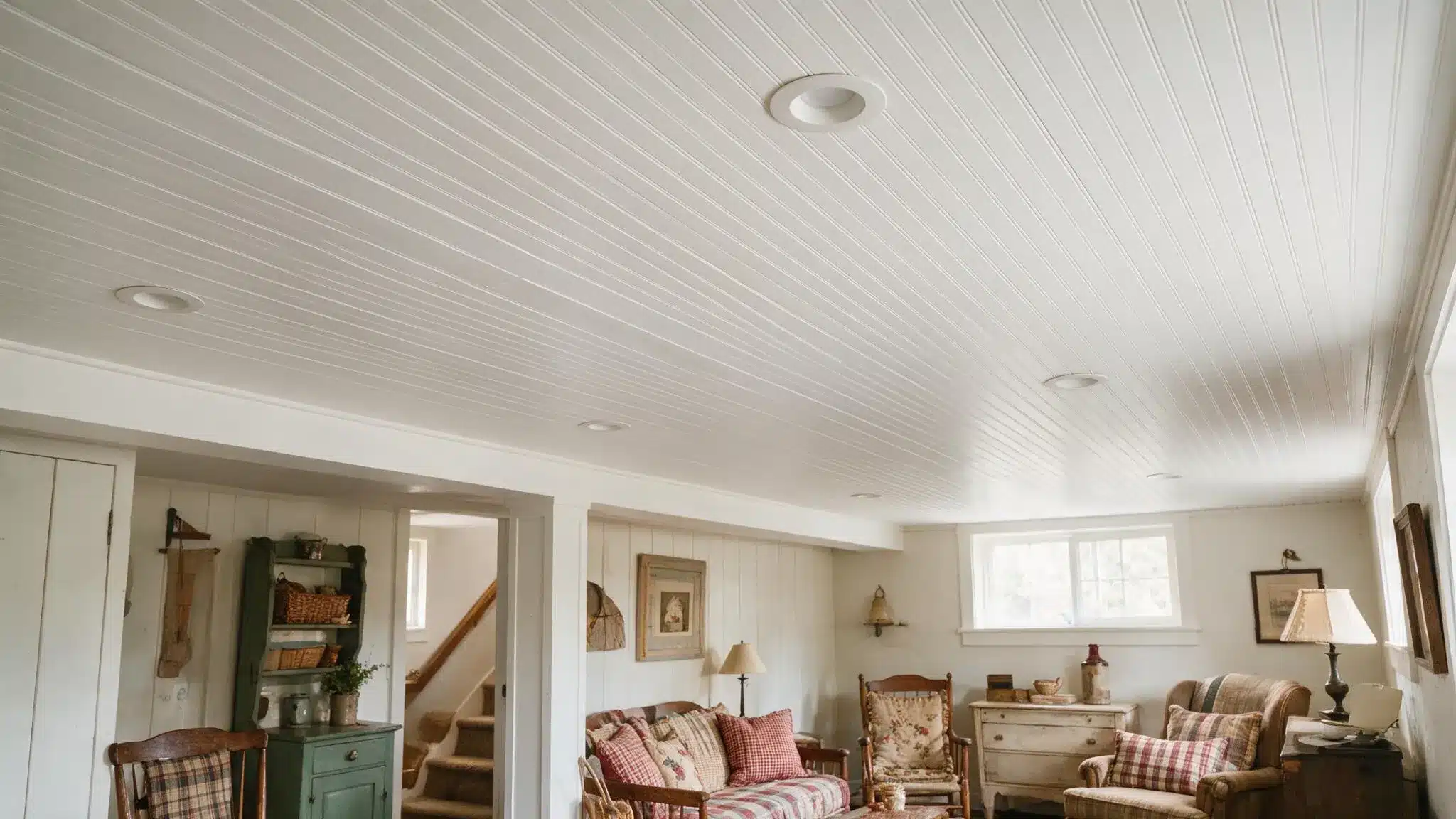
Beadboard paneling brings cottage-style detail to a basement ceiling without costing you the actual price of wooden planks.
Manufactured from MDF or PVC, beadboard panels are easy to install and can be painted any color you want to coordinate with your decor.
It is most frequently used for basement ceilings that are designed to be cozy and not practical.
6. Fabric Ceiling Cover
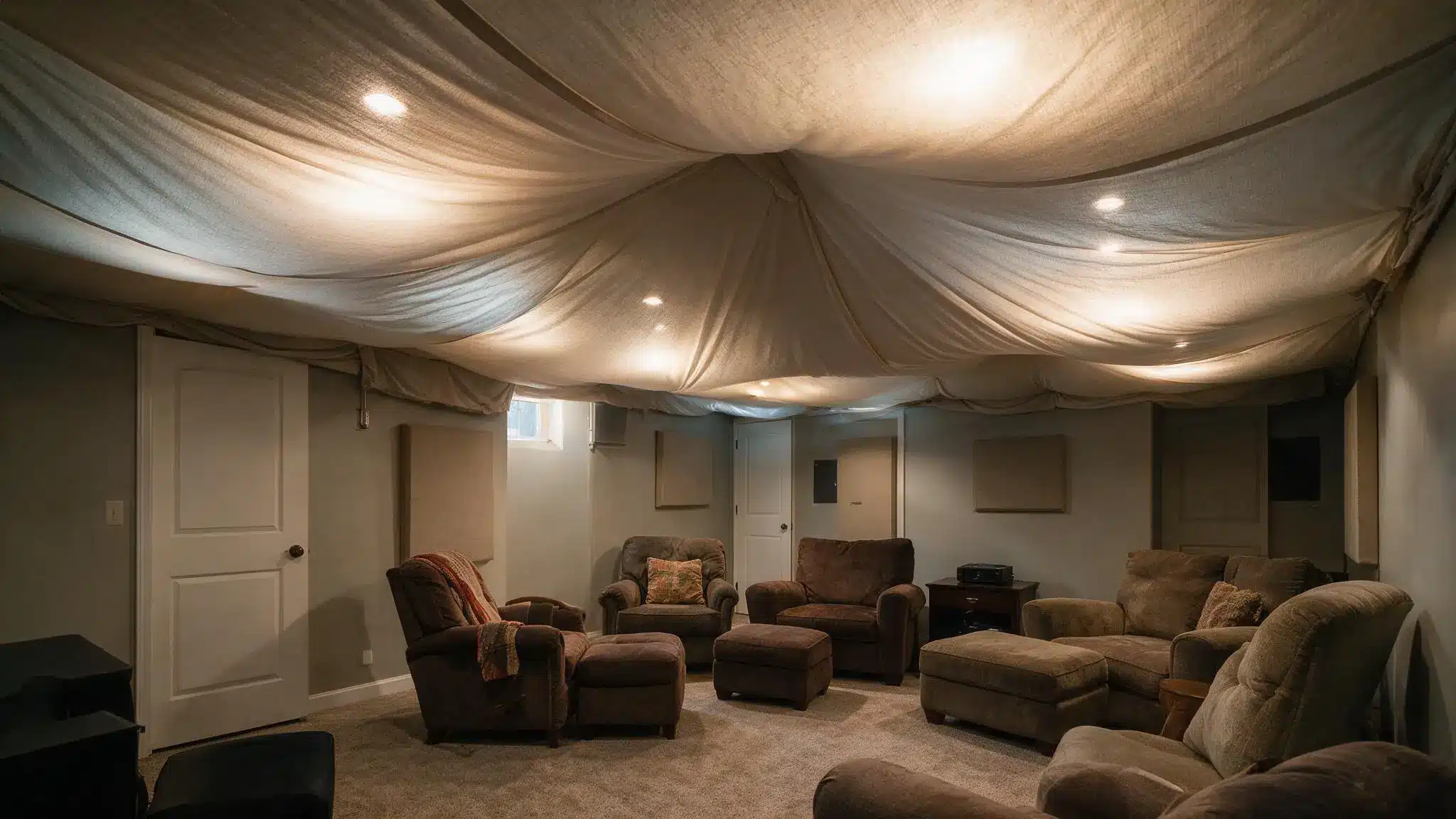
These are stretchable fabric panels forming a ceiling with a tent effect to cover all pipes and wires. They are economical, lightweight, and easy to remove when you need to access utilities.
Apart from the fact that they add texture to your room, they will also help reduce room noise, making this an excellent solution for a media room or a lounge.
7. Repurposed Wood Planks
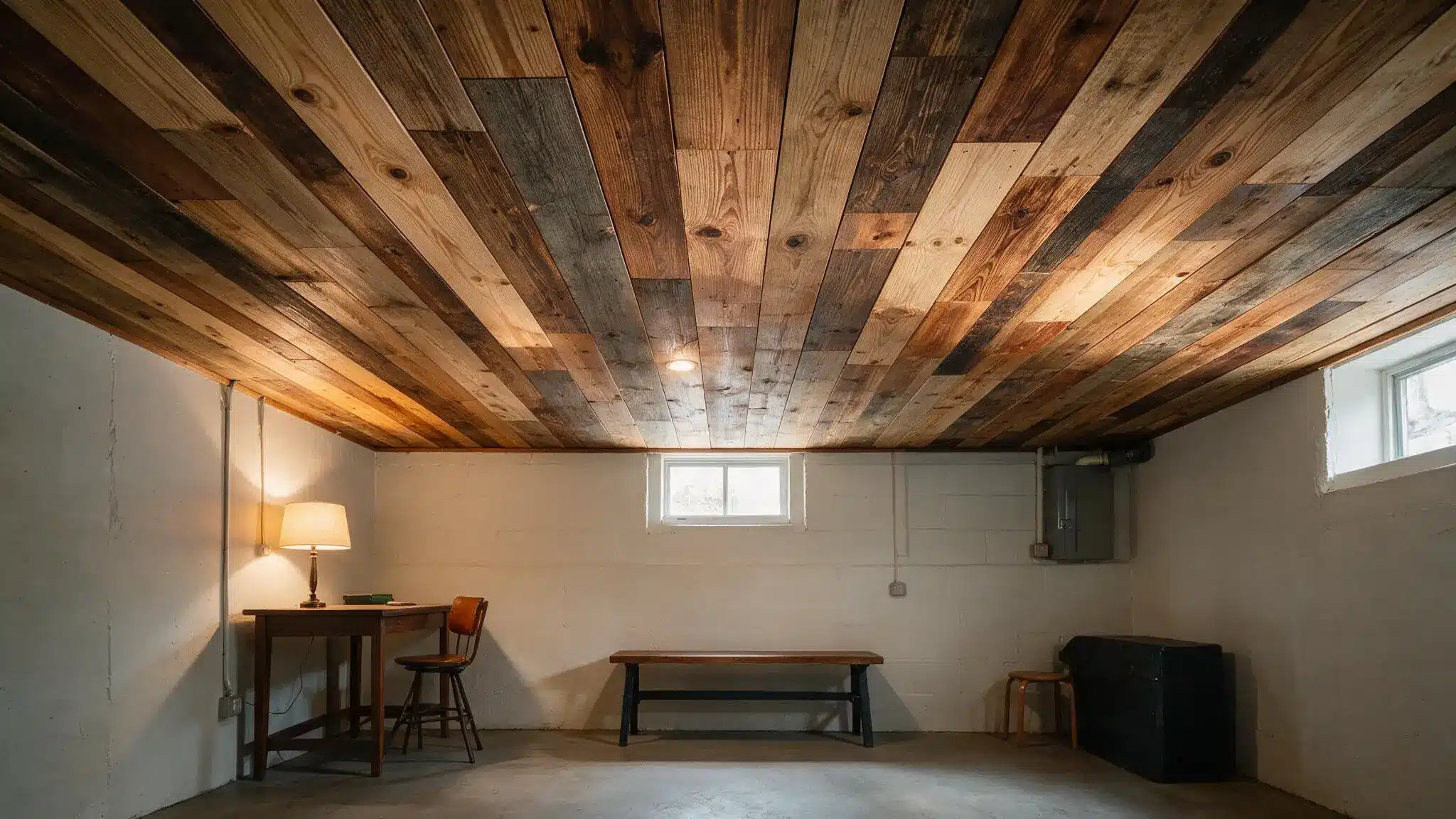
Pallet wood, wooden boards that previously have been used for any purpose, will bring unique style and texture to your basement ceiling at a very low cost.
Each wooden board will provide its own pattern and color due to the naturalness of the material. The only problem with this type is higher labor costs, but not the material cost.
8. Corrugated Metal Panels
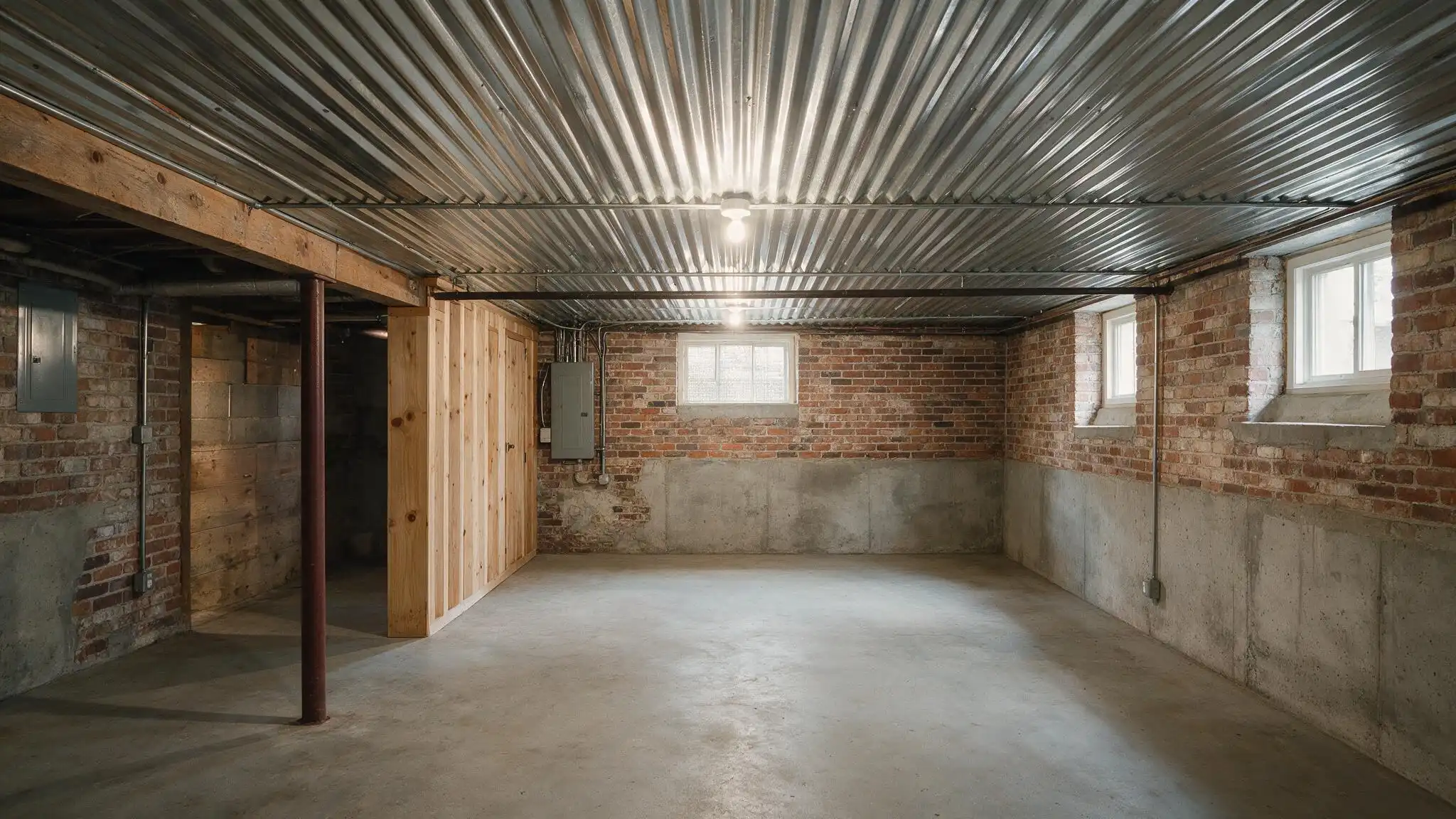
Corrugated metal sheets bring an industrial or modern farmhouse edge to a basement ceiling at a low material cost.
- Sold in large sheets for fast coverage
- Reflects light, brightening dim basements
- Durable and resistant to moisture
- Pairs well with exposed brick or concrete
9. Painted OSB Panels
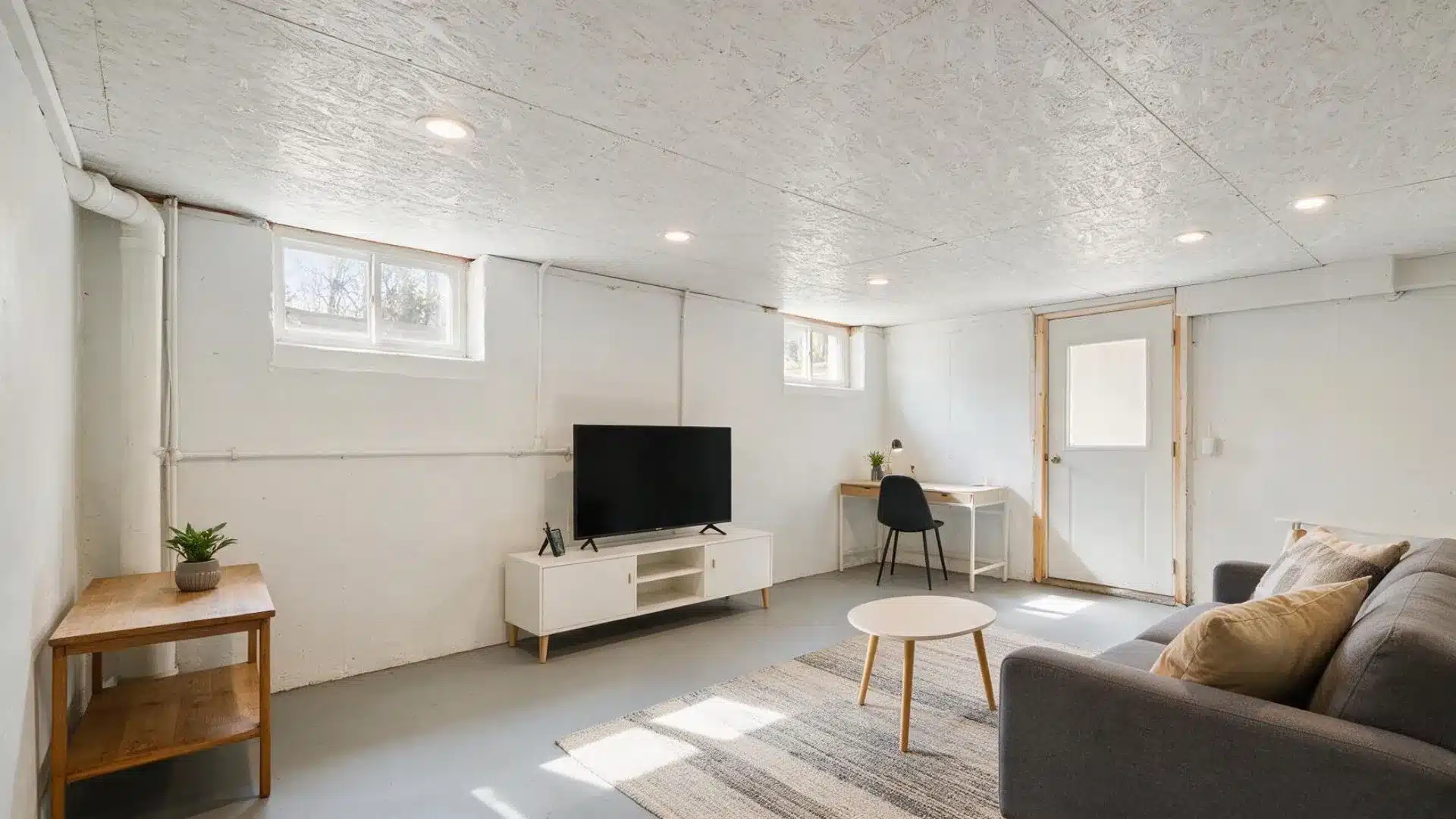
OSB isn’t limited to subflooring. When painted white or another light neutral color, OSB panels create a textured ceiling with an exposed wood-grain appearance, meant to look that way rather than unfinished.
One of the least expensive sheet goods on the market, it can be installed the same way as plywood.
Decorative Basement Ceiling Ideas
For basements meant to feel like true living spaces, these decorative options add architectural interest and a finished, high-end look.
10. Faux Wood Beams
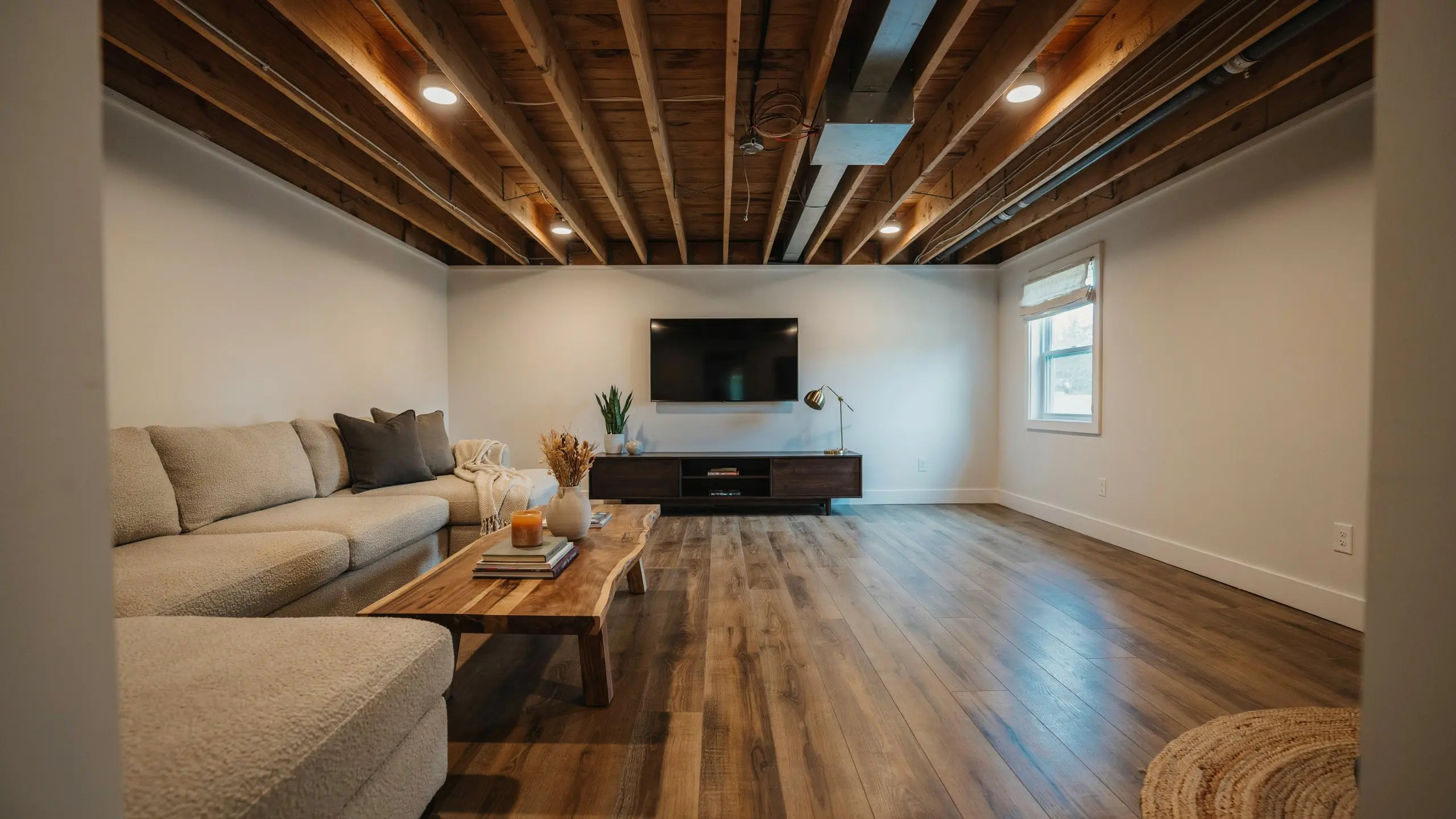
The light polyurethane beams duplicate authentic wood without any extra weight or cost. They are installed on the ceiling or grid and can be stained or painted to fit your style, from rustic farmhouse to modern industrial.
The fake beams are great for hiding ductwork or support beams by making them part of your decor.
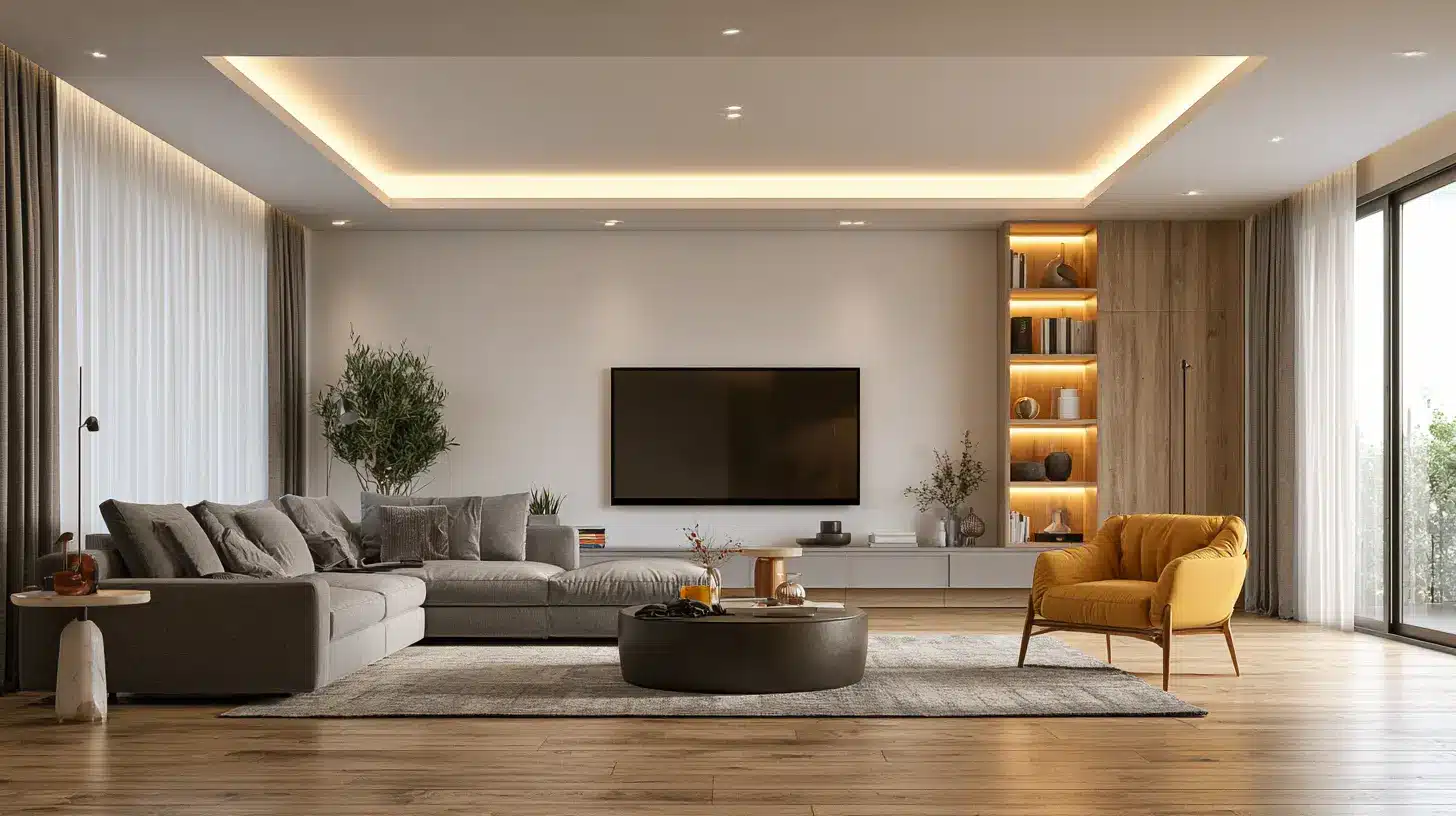
11. Coffered Ceiling
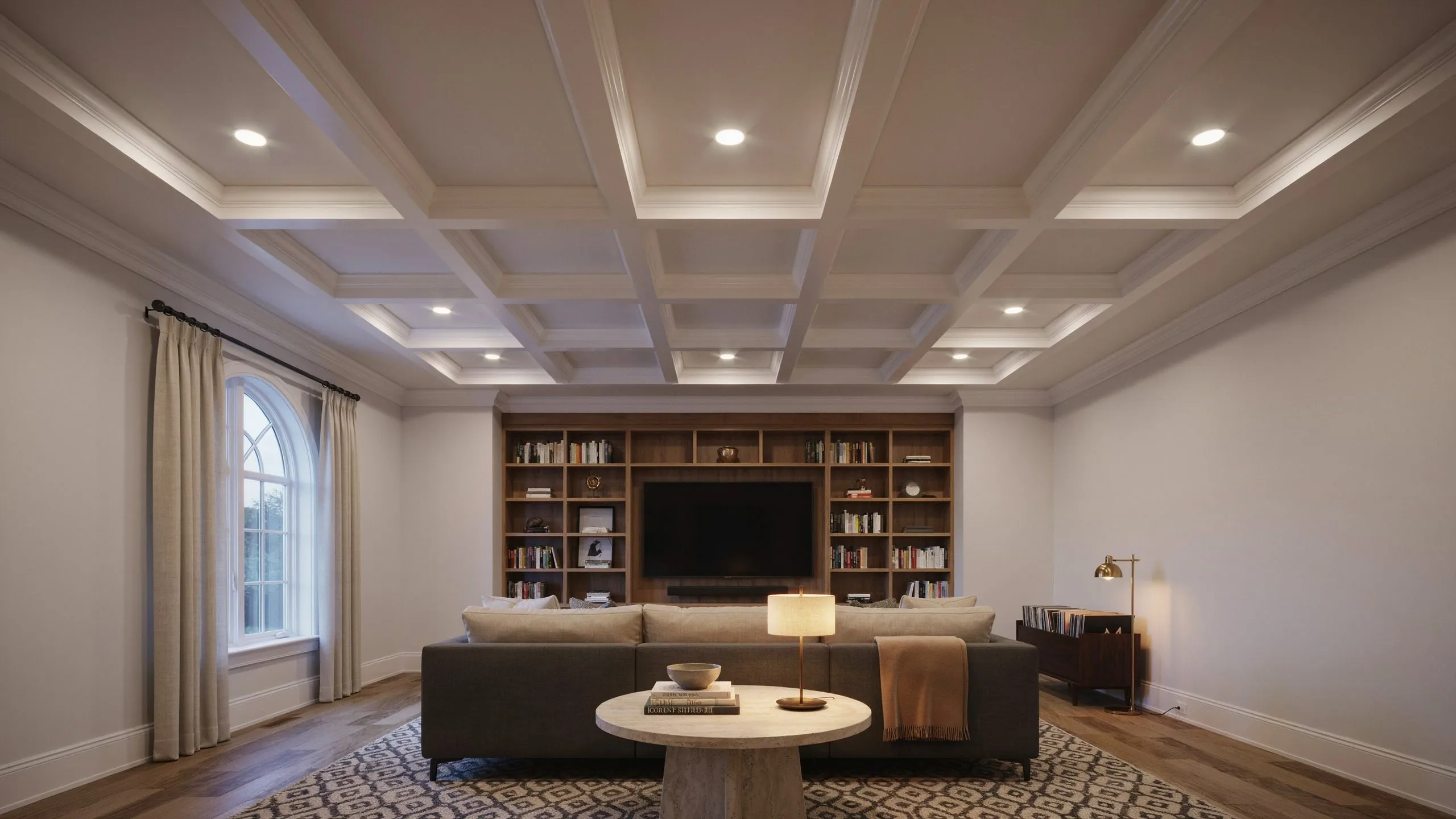
The coffered ceiling adds structure and depth using a grid pattern of depressed panels and decorative beams.
This is a great way to give your basement the polish of a living room, ideal for a home theater or office space.
- Adds visual depth and structure
- Fits in with crown molding
- Fake beam coffered ceiling kits are available
A coat of paint or plywood panels can change the whole feel of the space without a major investment on the main floor level
12. Tin Ceiling Tiles
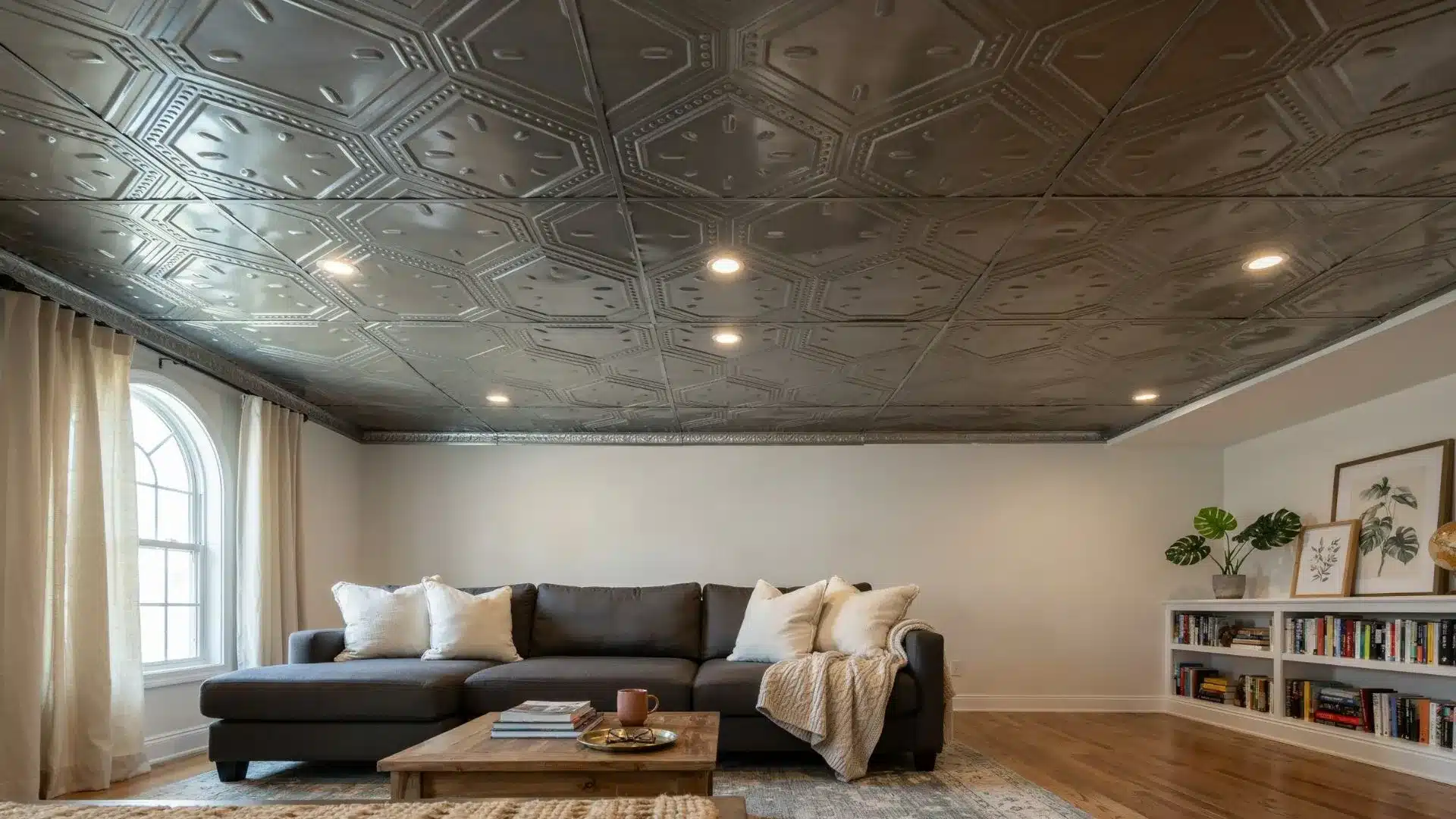
Metallic tin tiles add a traditional touch and reflectivity to your basement ceiling. Originally made from pressed metal, today’s models use lightweight PVC tiles that can be installed just like any other drop tiles.
Different designs ranging from Victorian flowers to geometric shapes will help you complement the style of your basement and hide the piping at the same time.
13. Wallpapered Ceiling
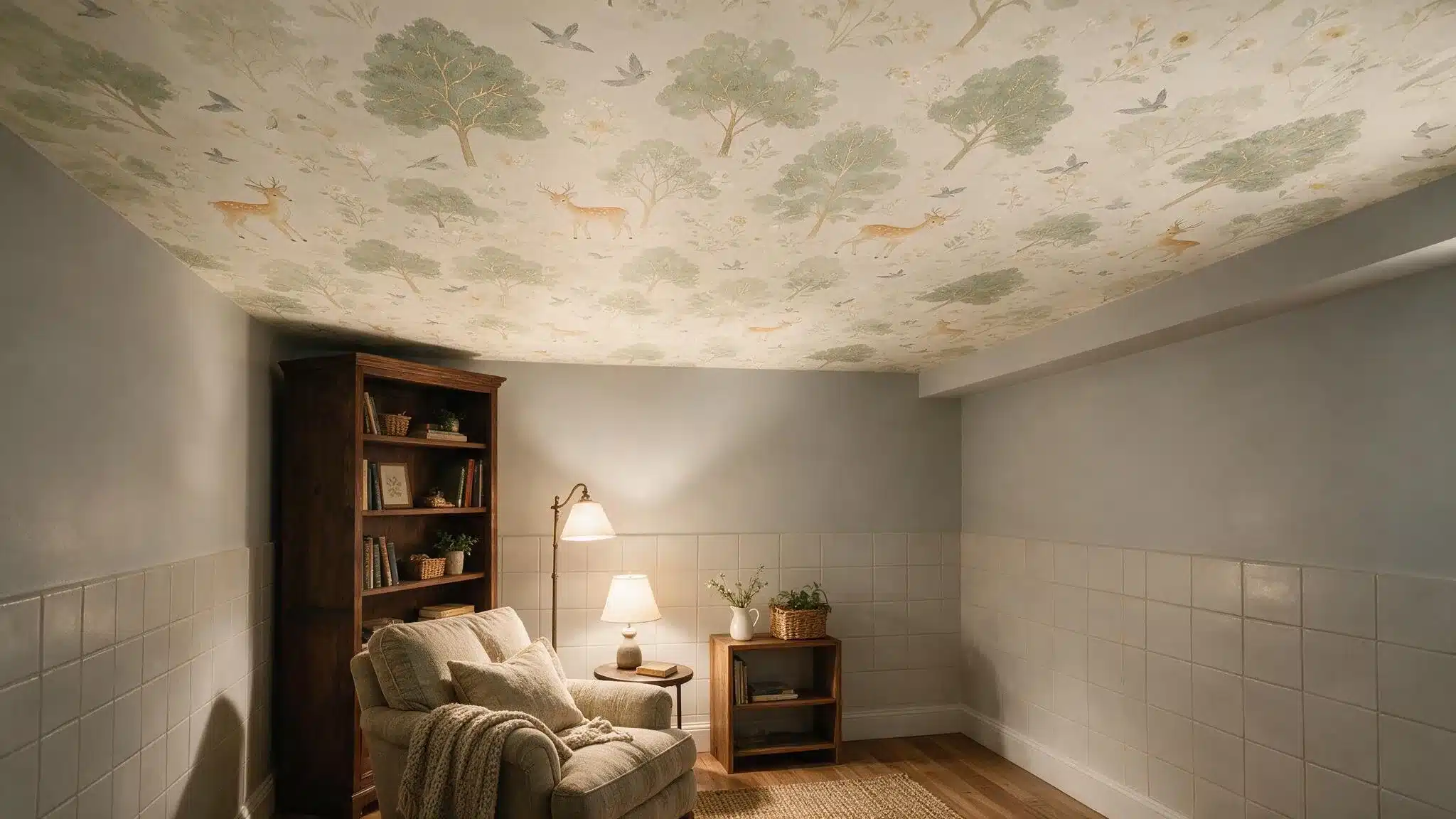
Wallpaper isn’t just for walls; applied to a basement ceiling, it adds pattern and personality that flat paint can’t match.
Peel-and-stick options make this one of the easier DIY basement ceiling projects, since no wet paste or steady hands are required.
Bold prints work well in smaller basement rooms like a powder room or reading nook, while subtler textures suit larger open spaces. It’s best suited to smooth, flat ceilings rather than exposed joists.
14. Decorative PVC Panels
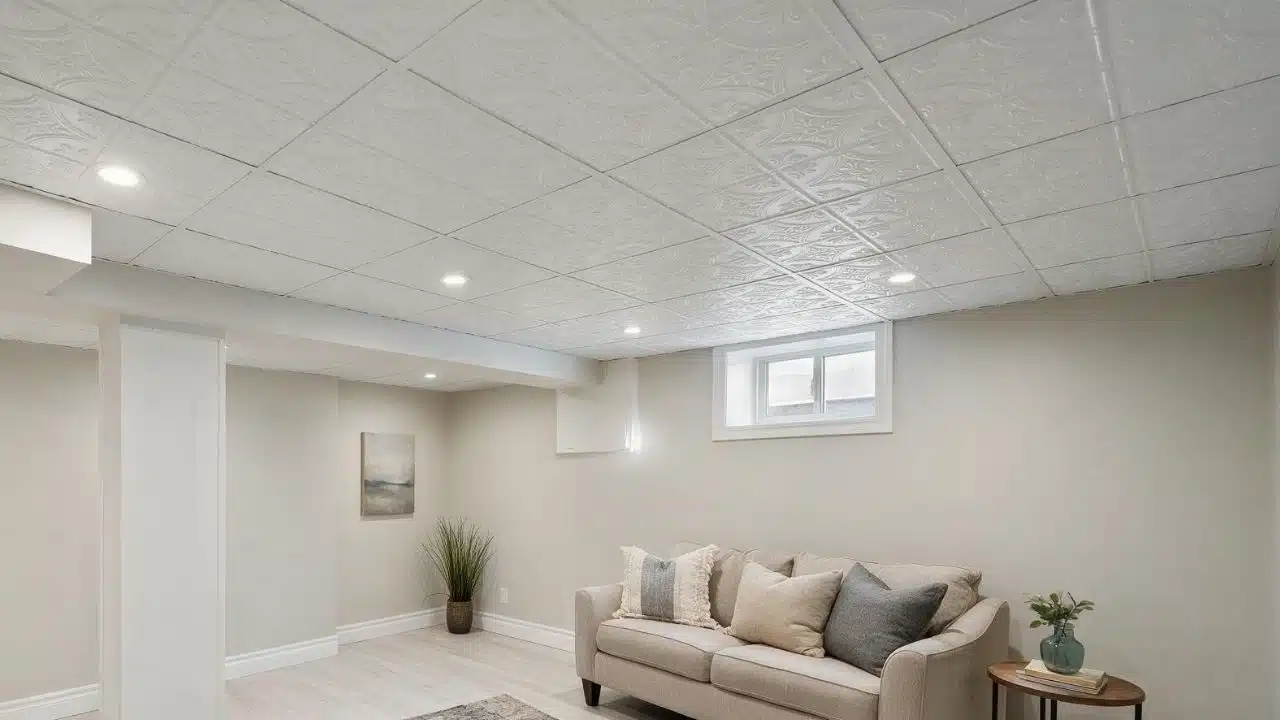
PVC panels mimic the appearance of carved wood or metal and even plaster ceilings at an affordable price. They are moisture-proof, making them ideal for humid basements.
Panels can either be nailed down, screwed in, or glued in place, while prefinished panels avoid any additional painting.
15. Tongue-and-Groove Ceiling
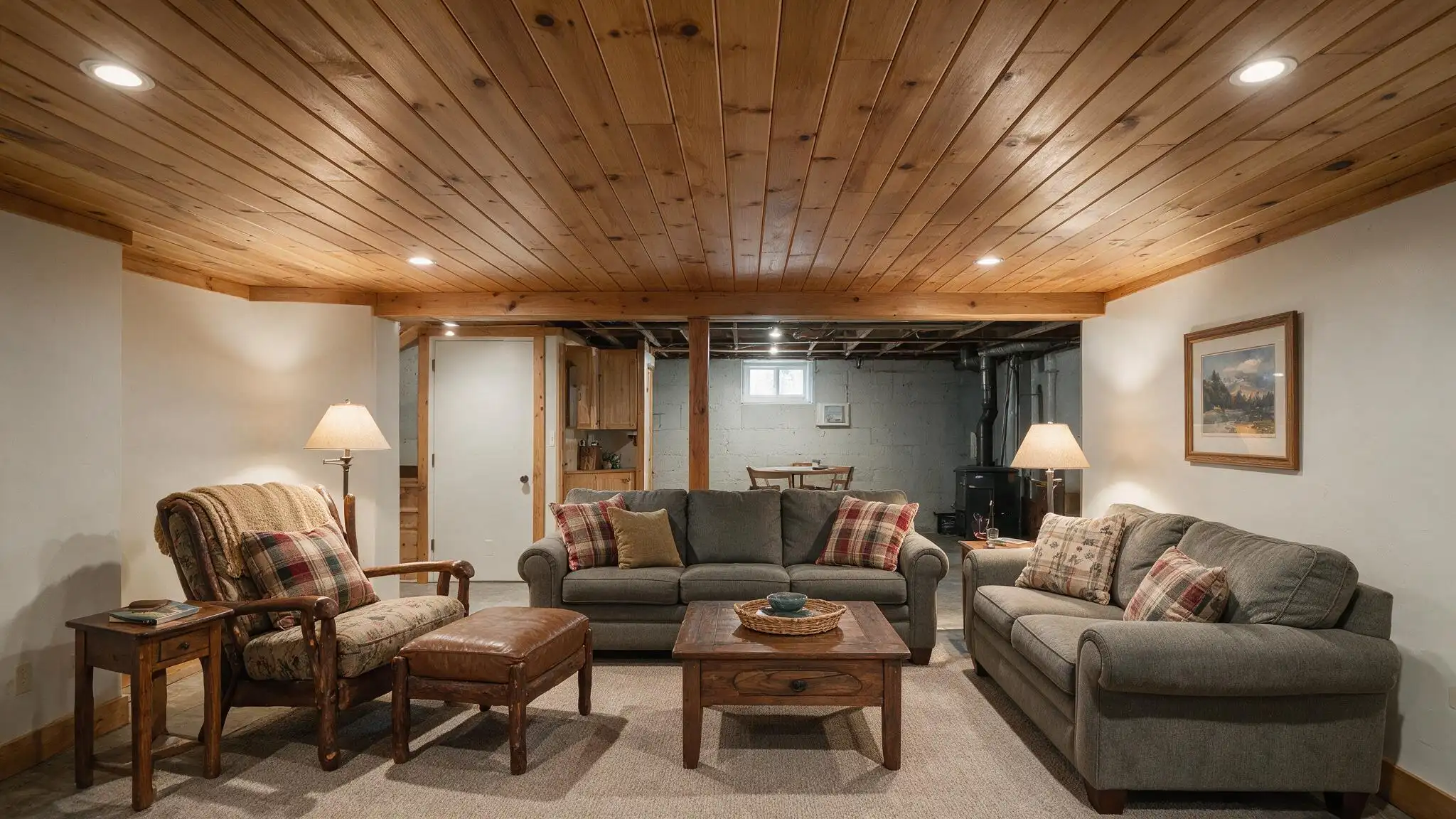
Tongue-and-groove planks lock together to create a graceful, traditional-looking wood plank ceiling that looks homemade, not off the shelf.
This ceiling style is popular for basement rooms that want the look of a cozy cabin or coastal cottage. The locking joints cover up any seams, and boards can be stained, whitewashed, or painted.
Basement Ceiling Cost
The price range for basement ceiling installation depends on the materials used, ceiling height, and how much of the utility installation requires coverage.
The cost can range from $1 to $30+ per square foot, depending on the finish selected. Below is a guide to help you estimate your project budget.
The cost depends on materials and the level of work involved.
An exposed ceiling that is painted may be done at virtually no cost other than the paint and other necessary materials; a coffered ceiling may cost just about as much as a main floor renovation.
- Painted Exposed Joists: $50–$200 total (paint and sprayer only)
- Drop Ceiling: $2–$6 per square foot, tiles and grid included
- Drywall Ceiling: $2–$4 per square foot, plus finishing labor
- Wood Plank or Slat Ceiling: $4–$10 per square foot
- Tin or PVC Decorative Tiles: $5–$12 per square foot
- Coffered Ceiling: $10–$30+ per square foot, depending on beam detail
Labor typically adds 40–60% on top of material costs if hiring a contractor, though many of these options, like painted joists or plywood panels, are DIY-friendly and can cut costs significantly.
Finished vs Exposed Ceilings
Choosing between a fully finished ceiling and an exposed, industrial-style ceiling comes down to budget, headroom, and how much access to utilities matters.
Below is how the two approaches compare.
| Factor | Finished Ceiling | Exposed Ceiling |
|---|---|---|
| Cost | Higher, especially with drywall or coffered designs | Lower, often just paint and minor cleanup |
| Headroom | Reduces ceiling height by a few inches | Preserves maximum clearance |
| Utility access | Limited unless a drop grid is used | Easy, everything stays visible |
| Installation time | Longer, more labor-intensive | Faster, weekend-friendly project |
| Style | Polished, matches main-floor rooms | Industrial, modern, or loft-inspired |
| Sound dampening | Better, especially with insulation added | Minimal, sound travels more freely |
| Best for | Living rooms, home theaters, offices | Home gyms, workshops, casual hangout spaces |
Finishing Your Basement
At the end of the day, the right basement ceiling comes down to priorities: budget, headroom, and how much access to pipes and wiring matters day to day.
From matte black exposed joists to coffered ceilings with faux beams, basement ceiling ideas span every price point and style preference.
Start small if the budget is tight; a coat of paint or plywood panels can change the whole feel of the space without a major investment.
If you’re ready to give that basement a finished look, browse basement ceiling options with tips and inspiration.
Frequently Asked Questions (FAQs)
1. What Ceiling Textures Are Popular Now?
Natural wood slats, matte black exposed beams, and soft cloud-style drywall panels are leading basement ceiling trends right now.
2. What Ceiling Works Best for a Low Basement?
Painted exposed joists or a low-profile drop ceiling preserve the most headroom in basements with limited clearance.
3. How Can I Hide an Unfinished Basement Ceiling?
A budget drop ceiling, foam tiles, or fabric ceiling cover can quickly conceal pipes, wiring, and ductwork.