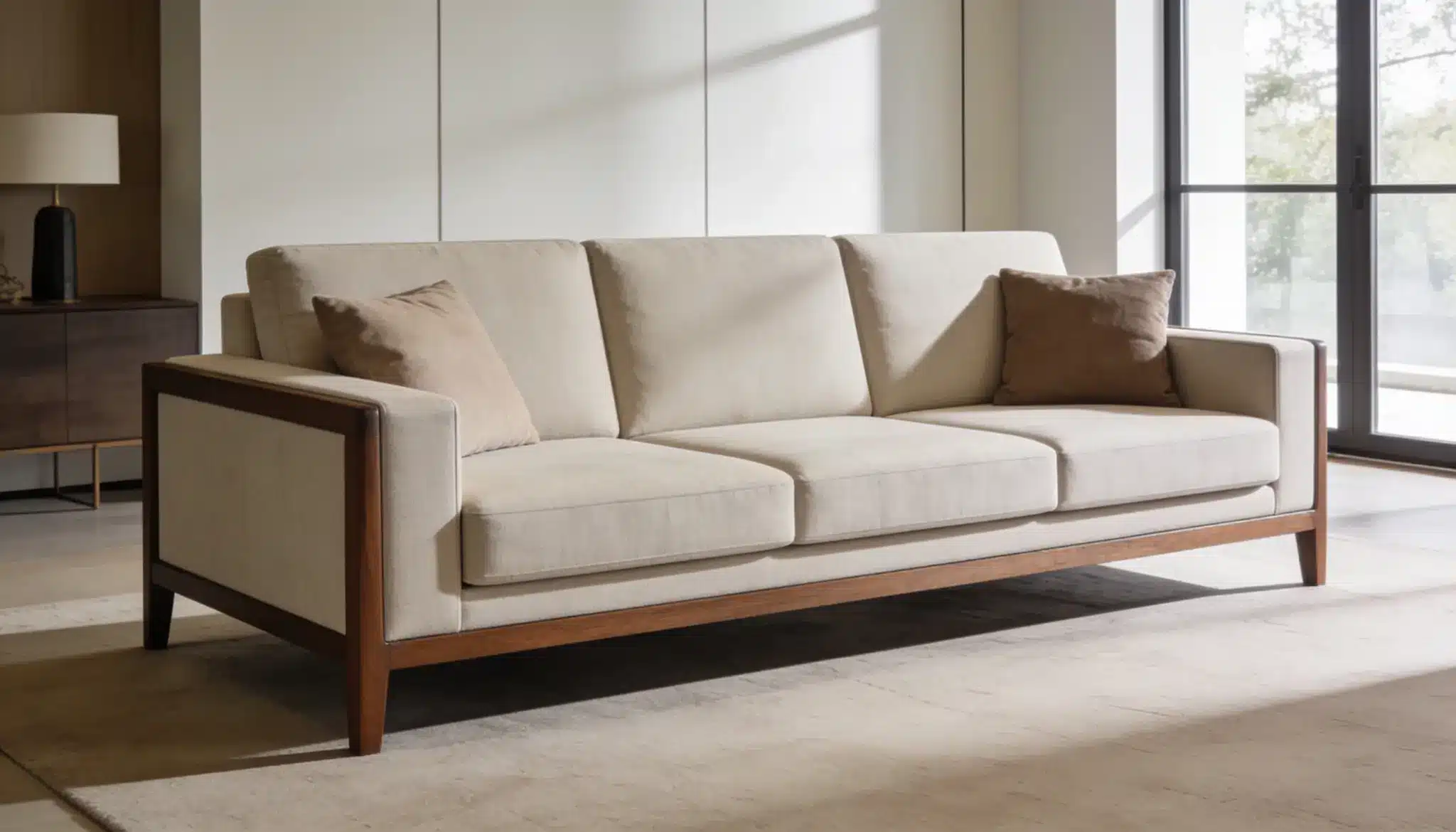
Sofas, loveseats, chaises, and sectionals all look the same and can start to blur together after a while.
A sectional sofa is one of the most popular seating choices for modern homes because it offers more room to sit and more ways to arrange your space.
It also tends to work well for families who like to rearrange furniture as their needs change.
Here’s what to know before you buy one: the terms you’ll hear while shopping, the shapes worth considering, and how to size one for your room.
Keep reading to find out.
What is a Sectional Sofa?
A sectional sofa is a couch made up of two or more separate pieces that connect to form one large seating unit.
Instead of a single solid frame like a traditional sofa, the sections can be arranged in different shapes to suit the room.
Most sectionals include a corner piece, an armless section, and sometimes a chaise for extra lounging space. Some sections can be rearranged or separated, which gives homeowners more control over how the room is set up.
This flexibility is one reason sectionals work well for families or anyone who likes to change up their furniture based on the season or how the space gets used.
Common Sectional Sofa Terms
Shopping for a sectional gets much easier once you know a few basic terms. Here are the ones that come up most often.
- One-arm pieces: These sections have an arm on only one side. The open side is meant to connect with another piece.
- Armless pieces: These have no arms at all and are used to extend the length of a sofa between two sections.
- Chaise: A long seat with no back on one end, made for stretching your legs out.
- Bumper chaise: A shorter version of a chaise with a partial back, leaving one end open and low.
Left-Facing vs Right-Facing Sectionals
This is one of the most common mix-ups when buying a sectional.
The terms describe which side the longer arm or chaise sits on.
Stand in front of the sofa and look at it as if you were about to sit down. If the arm or chaise is on your right side, it is a right-facing sectional. If it is on your left, it is left-facing.
This detail matters more than people expect. The open side of the sectional should face the walking path in your room rather than block it.
Types of Sectional Sofas
Sectional sofas come in several shapes. The right one usually depends on room size and how much seating you need.
1. L-Shaped Sectional

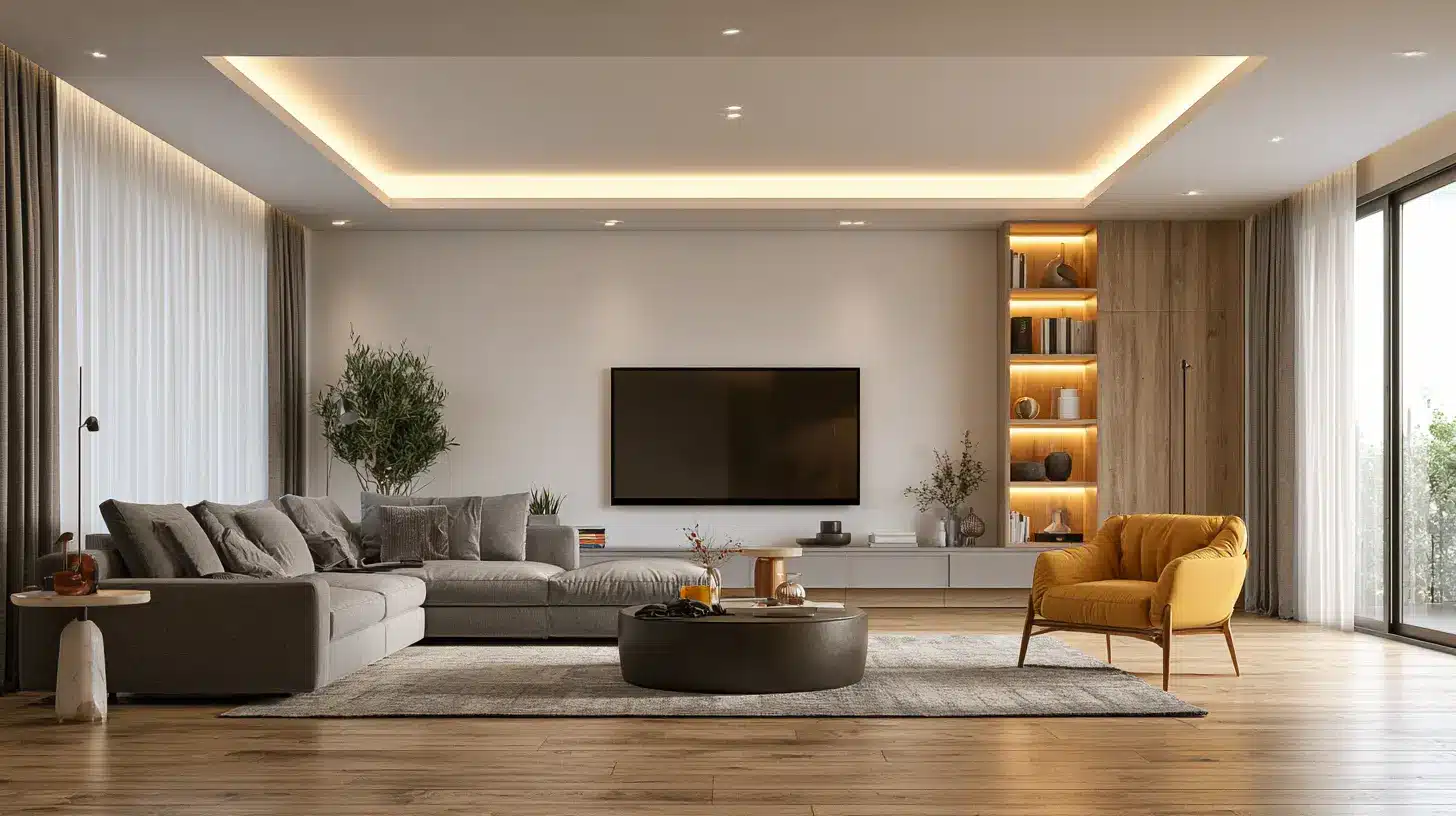
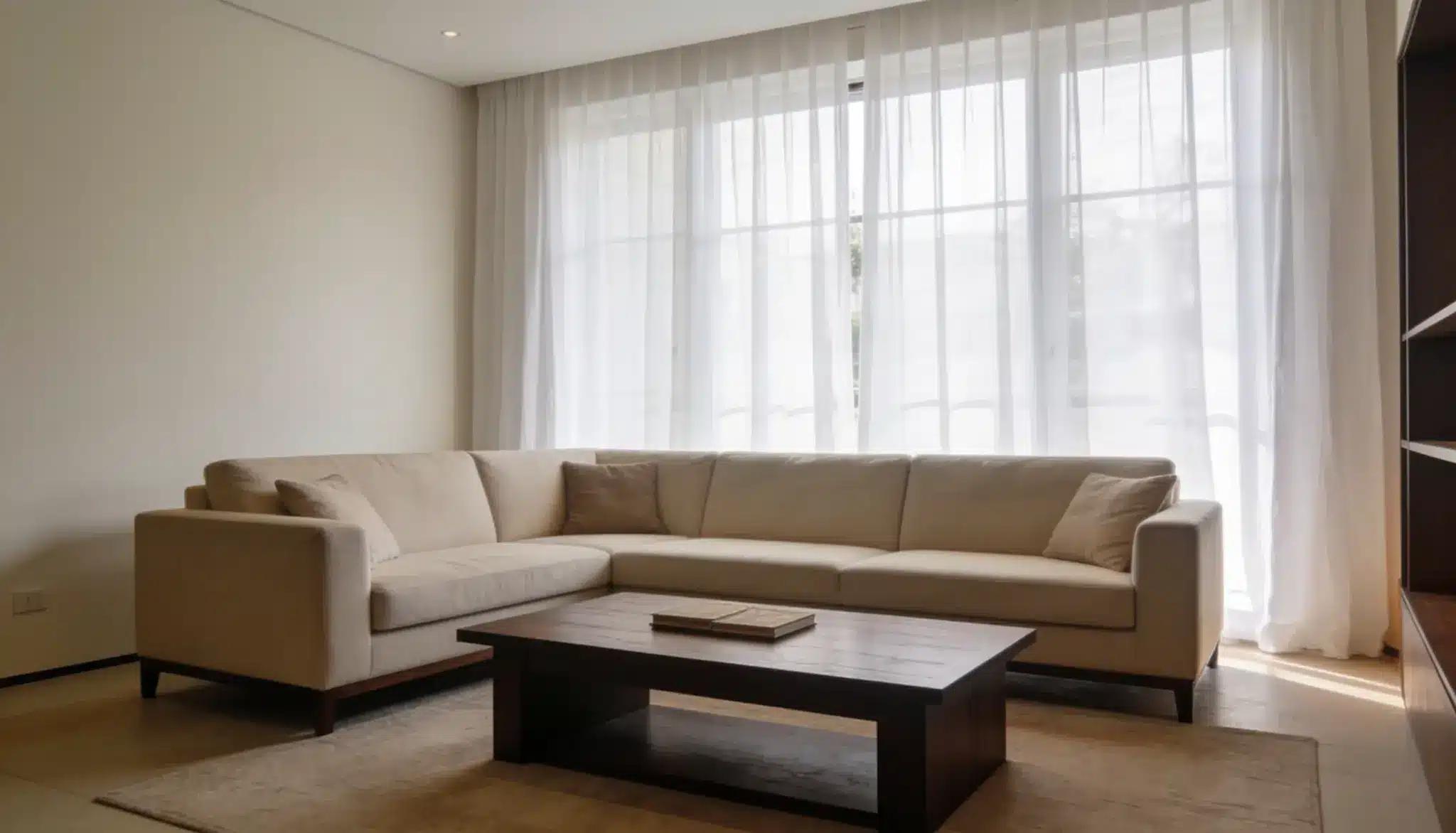
This is the most common type. It has one long section and one shorter section that meet at a corner, forming an L-shape.
It works well in medium to large living rooms and fits nicely against a wall.
2. U-Shaped Sectional
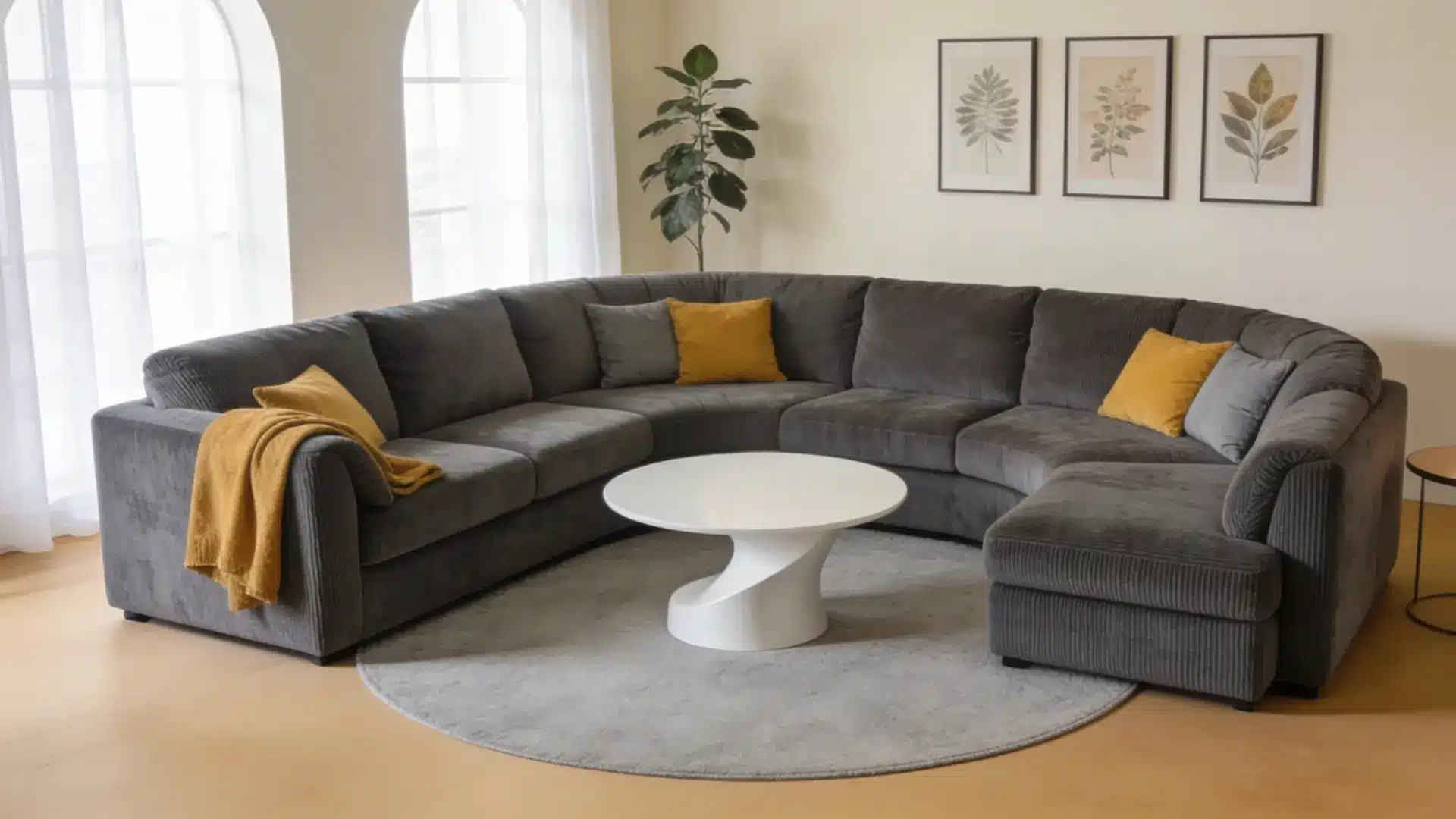
A U-shaped sectional has seating on three sides, which makes it a good option for larger rooms or homes that host guests often.
Keep in mind that this style takes up more floor space, so smaller rooms may feel crowded.
3. Chaise Sectional
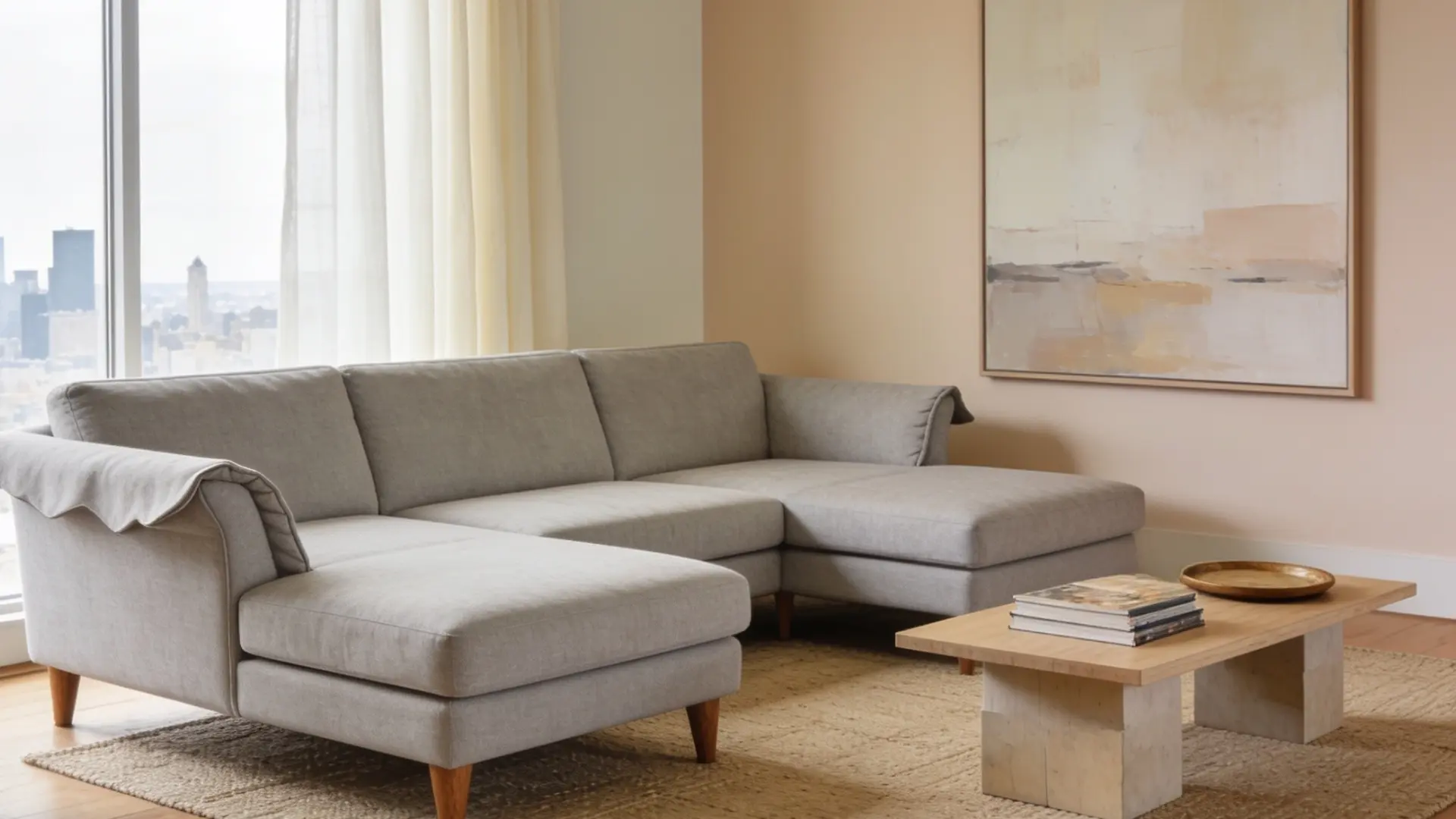
This style pairs a standard sofa with an extended chaise on one end. It gives you extra room to stretch out without needing a full second section.
4. Curved Sectional
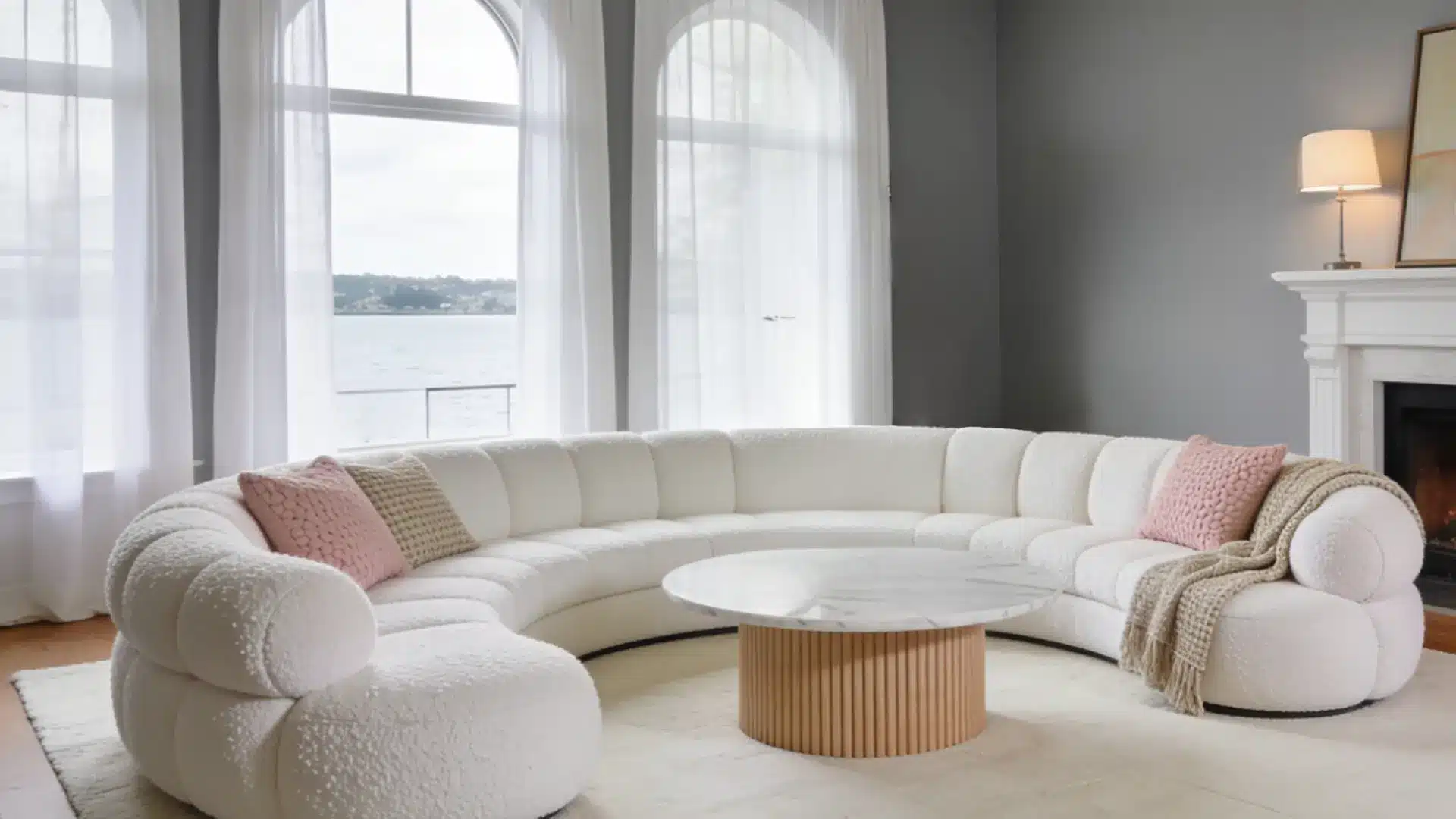
Curved sectionals have a soft, rounded shape instead of sharp corners.
They tend to suit open floor plans or rooms with unusual layouts, though they can be harder to fit against straight walls.
5. Reclining Sectional
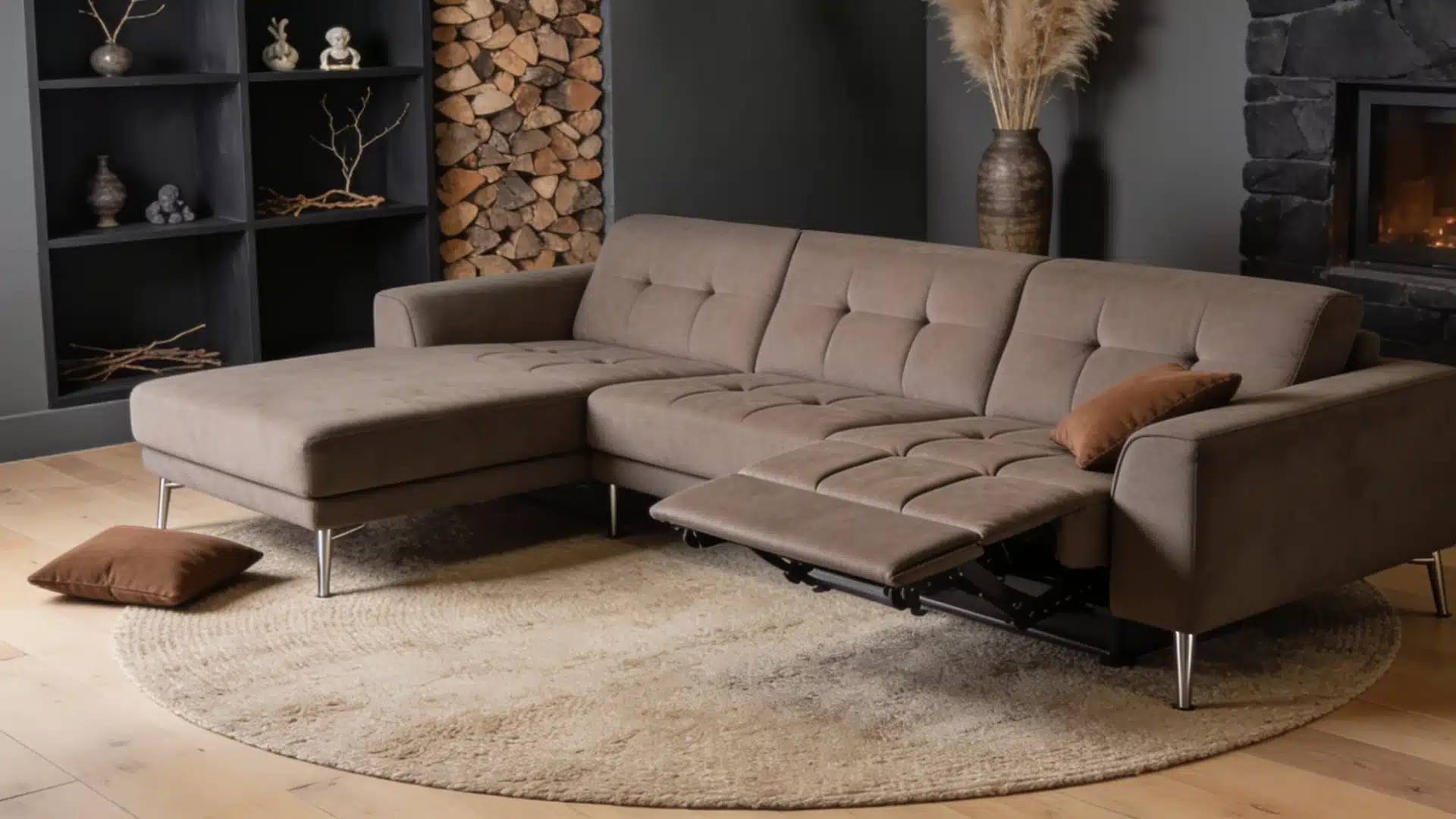
Built for comfort, this type includes built-in recliners on one or more seats.
It works well for movie nights but usually needs more space behind the sofa for the recline function.
6. Modular Sectional
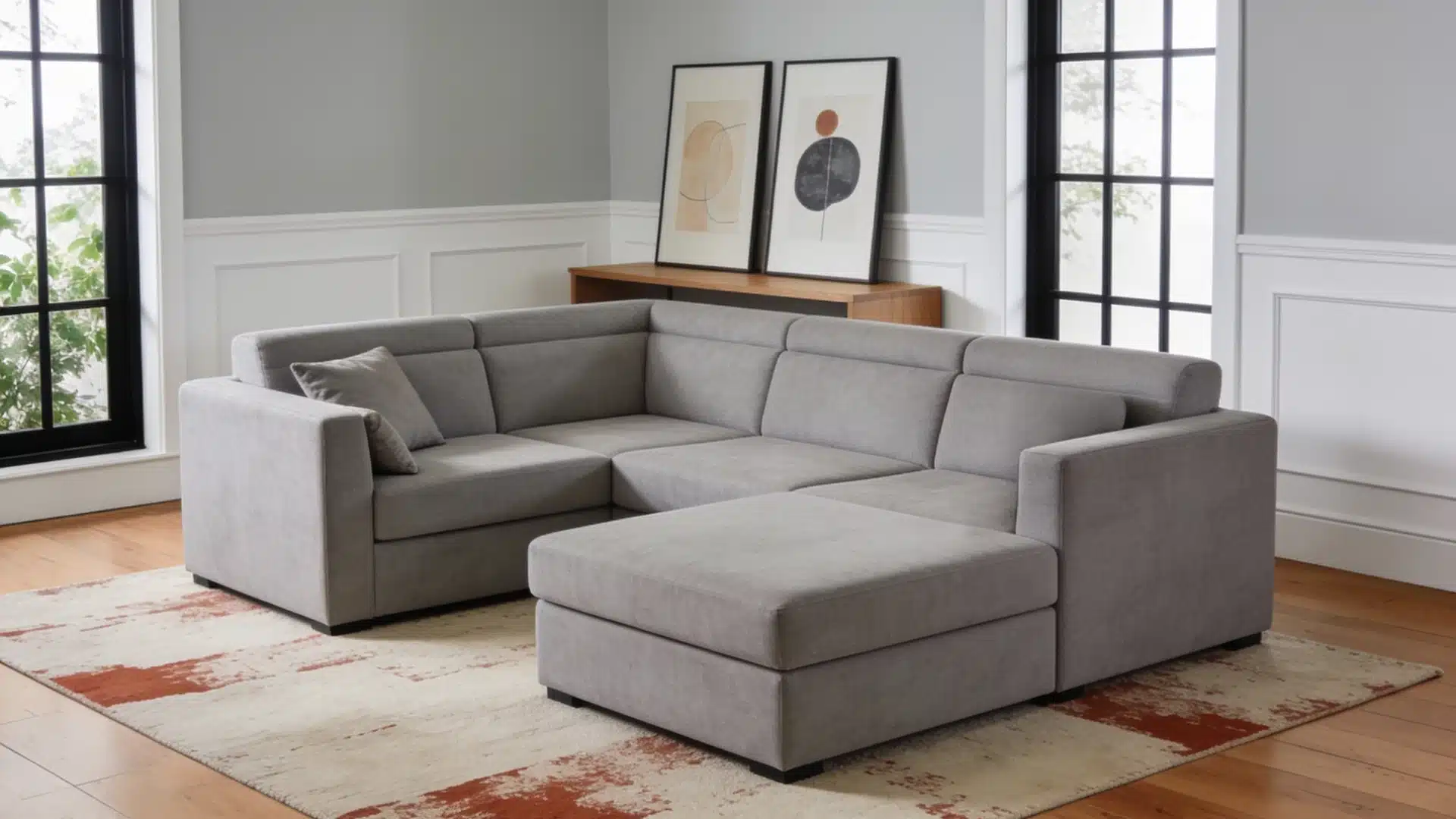
A modular sectional is built from individual pieces that can be added, removed, or rearranged.
This makes it easier to adjust the sofa as your space or needs change over time.
Which Sofa Works Best for Your Home?
The type of sofa that fits your home depends on the setting. A compact space doesn’t necessarily need a full three-piece sectional.
Here’s how a sectional differs from a standard sofa and a modular one.
| Aspect | Standard Sofa | Sectional Sofa | Modular Sofa |
| Structure | Single fixed piece | Multiple pieces joined in a fixed shape (L or U) | Multiple independent pieces |
| Seating capacity | Seats 2–4 people | Seats more people, larger overall | Varies based on configuration |
| Space needed | Works well in smaller rooms/apartments | Needs more floor space; can overwhelm small rooms | Flexible, it can adapt to available space |
| Best for | Limited space, smaller living rooms | Larger rooms need more seating | People who move often or like changing layouts |
| Flexibility/Customization | None, it’s a one fixed piece | Low, its pieces are meant to stay connected | High, its pieces can stand alone or be reconfigured |
| Ease of moving/rearranging | Easiest, since it’s one piece | Harder due to size and connected pieces | Easier than standard sectional, since pieces detach |
Sectional Sofa vs Standard Sofa
A standard sofa is a single fixed piece, usually seating two to four people. It works well in smaller rooms or apartments where space is limited.
A sectional sofa offers more seating and fills a larger room more comfortably. However, it usually needs more floor space and can feel overwhelming in a small living room.
Standard sofas tend to be easier to move and rearrange because they are one-piece.
Sectional Sofa vs Modular Sofa
Every modular sofa is technically a type of sectional, but not every sectional is modular. A standard sectional usually comes in a fixed shape, like an L or U, and the pieces are meant to stay connected.
A modular sofa allows more customization since each piece can stand alone or connect in different configurations.
This makes modular options a good choice for people who move often or like to change their layout regularly.
What to Measure Before You Buy One
Sectional sofas come in a wide range of sizes, so measuring your space first is important.
Standard sizes usually range from 100 to 140 inches in length, though larger U-shaped versions can exceed that range.
Before buying, measure doorways and hallways too. Some larger sectionals need to be moved in pieces, so checking access points can prevent delivery issues later.
Ceiling height and window placement can also affect how a sectional looks in a room, especially if the piece includes a tall backrest.
Conclusion
If you want more seating and the option to reconfigure your layout later, a sectional sofa is worth the extra floor space it asks for.
The right type depends on your room size, daily habits, and how much space you can comfortably spare.
Frequently Asked Questions (FAQs)
1. What Is the 2 3 Rule for Couches?
The 2/3 rule is an interior design guideline stating that your sofa should span roughly two-thirds the length of the wall or area rug it rests on.
2. What Color Furniture Is Popular Now?
Popular furniture colors are pivoting from stark grays to warm, grounding, and moody tones.
3. What to Buy Instead of a Sofa?
For a versatile, space-saving living room setup, ditch the traditional sofa and opt for futons, daybeds, or a pair of oversized armchairs.