Walk into any kitchen showroom, and you will find hundreds of cabinet styles and colors on display.
What most showrooms do not highlight is the finish, and that is where many homeowners make a costly mistake.
Kitchen cabinet finishes determine how your cabinets look, how long they last, and how easy they are to clean. With remodels averaging $14,000 to $40,000, getting this right matters.
You will find every major finish type and sheen level, as well as maintenance requirements, so that you can pick the right fit for your kitchen and lifestyle.
What Options Are Available for Kitchen Cabinet Finishes?
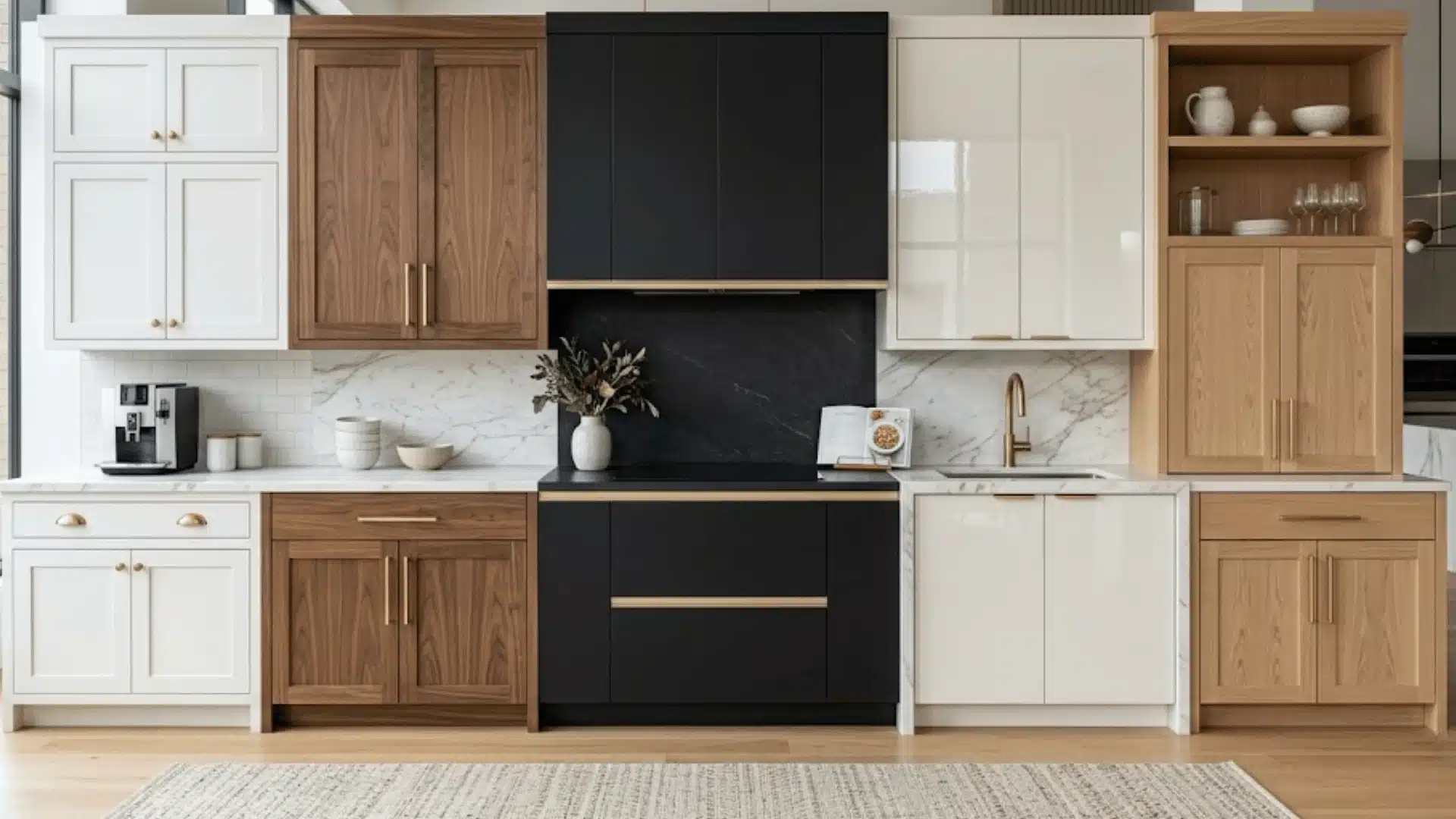
Kitchen cabinet finishes generally fall into three broad groups: surface finishes, protective coatings, and decorative techniques.
Surface finishes like paint and stain change how the cabinet looks.
Protective coatings like lacquer, polyurethane, and conversion varnish are applied on top to seal and protect the surface.
Decorative techniques like glazing, distressing, and cerusing add visual character and are often layered over a base finish.
Many finishes combine all three. A painted cabinet, for example, may also have a lacquer or conversion varnish topcoat for added durability.
Different Types of Kitchen Cabinet Finishes
Below is a detailed breakdown of every major finish type, including what it looks like, where it works best, and the honest trade-offs that come with each one.
1. Painted Cabinet Finish
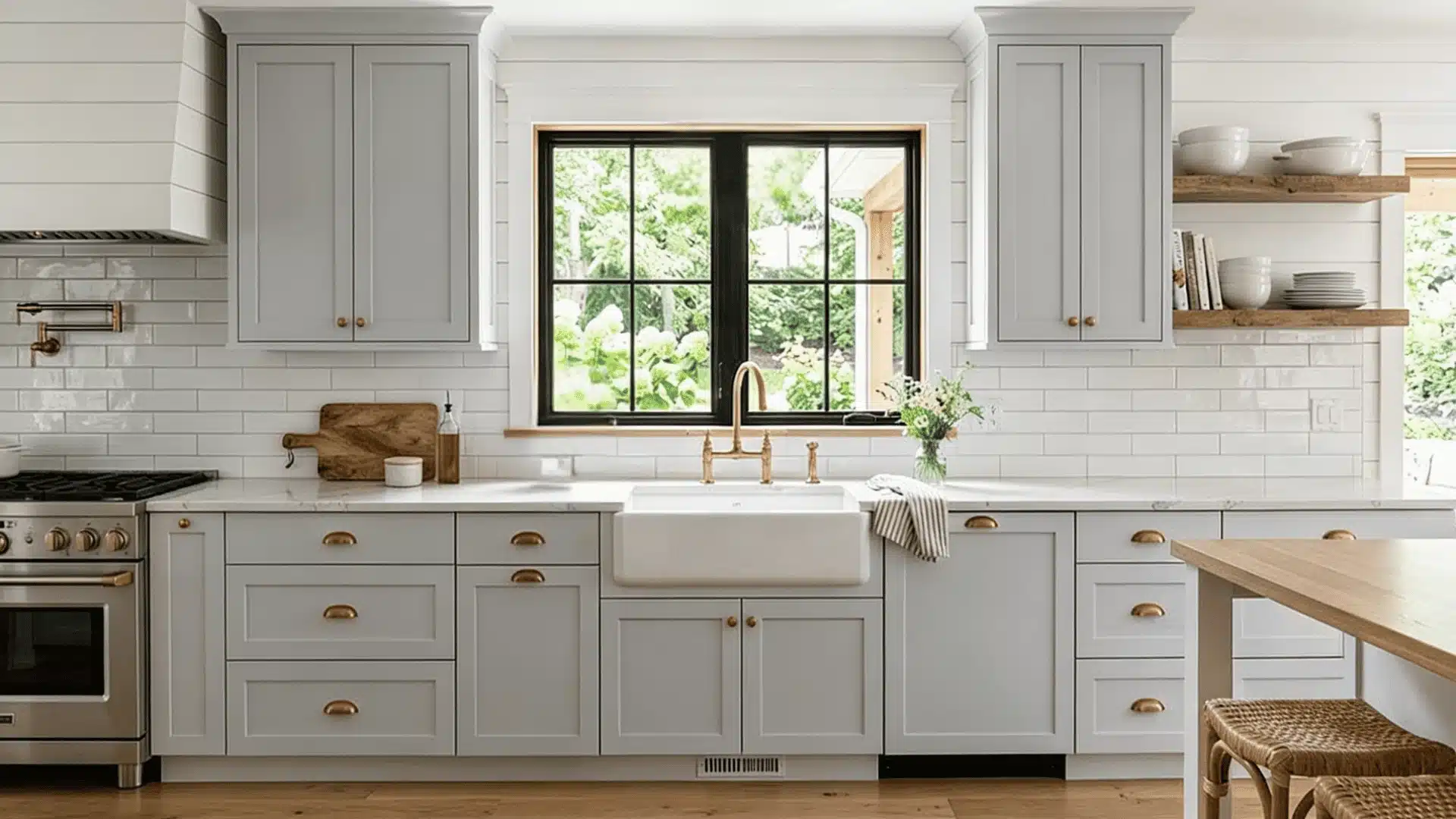
Painted cabinets are the most popular finish choice in American kitchens right now, and it is easy to see why.
They offer more color flexibility than any other finish type and work across a wide range of kitchen styles.
Pros
- Available in virtually any color, which makes it easy to match your kitchen’s overall look
- Creates a smooth, uniform surface that reads clean and polished
- Simple to coordinate with countertops, backsplashes, and hardware
Cons
- Paint can chip along door edges and drawer fronts with regular use, especially in high-traffic kitchens
- Touch-ups are tricky because new paint rarely blends invisibly with aged paint
Painted cabinets are particularly popular in white and soft gray tones right now.
Also read: Top 9 Sherwin-Williams Paints for Cabinets, Ranked
Keep in mind that lighter colors will show scuffs more easily near handles and hinges, so the finish quality and paint grade both matter here.
Best For: Modern kitchens, farmhouse styles, and transitional spaces
2. Stained Wood Cabinet Finish
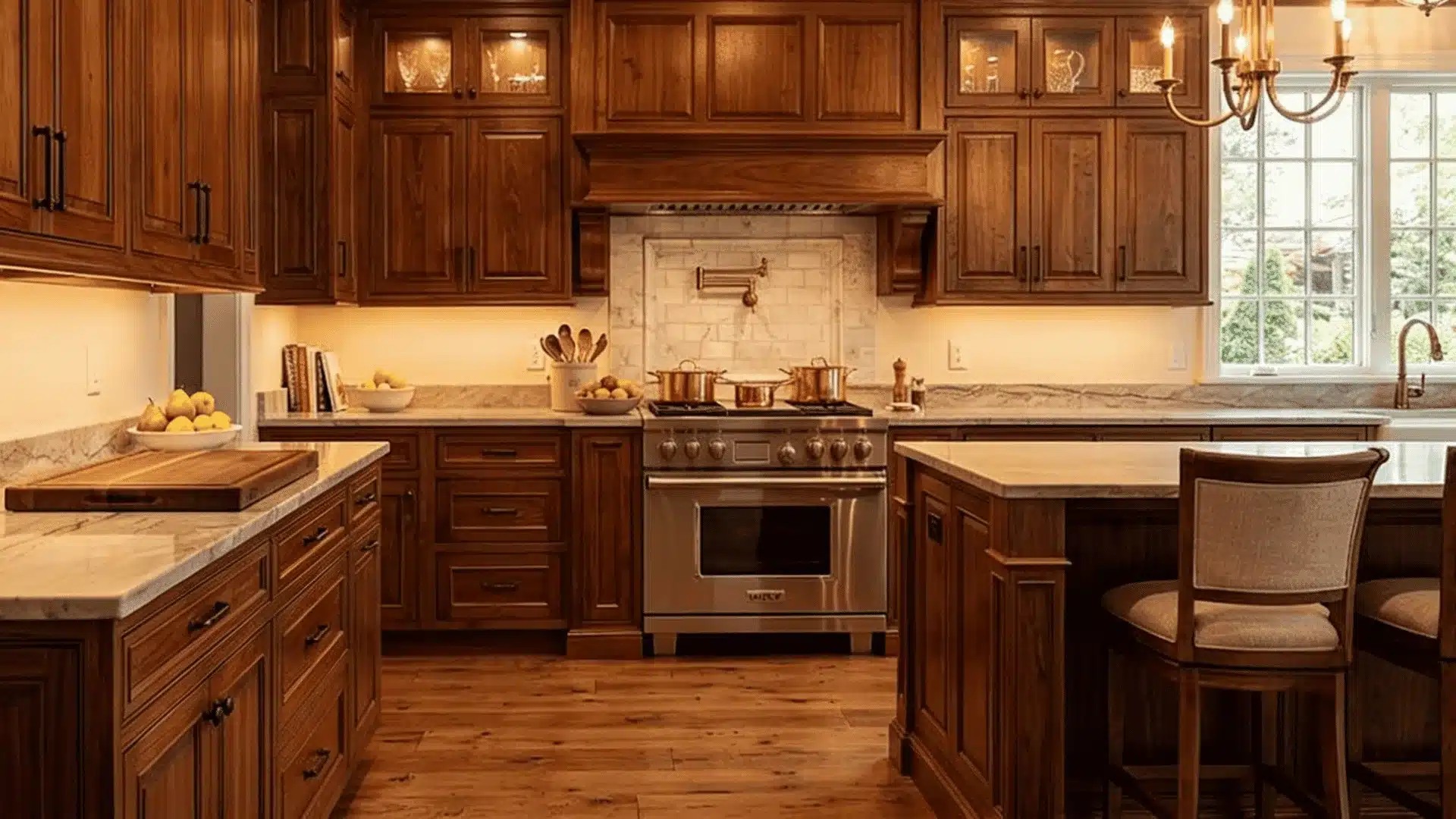
Stained cabinets bring out what is already in the wood.
If the grain and natural character of the material matter to you, stain is the finish that lets them show.
Pros
- Brings out the grain and character of the wood in a way paint never can
- Has a timeless quality that does not go out of style as quickly as some painted trends
- Tends to age well, with minor nicks and marks blending naturally into the surface over time
Cons
- Color options are limited to shades that work with the wood’s undertone
- Grain variation means two cabinet doors from the same batch may look slightly different, which bothers some homeowners more than others
Stained cabinets work best when the wood species is attractive on its own.
Oak, maple, cherry, and walnut are all popular choices. The stain enhances what is already there, so the starting material matters.
Best For: Traditional kitchens, rustic designs, natural wood lovers
3. Glazed Cabinet Finish
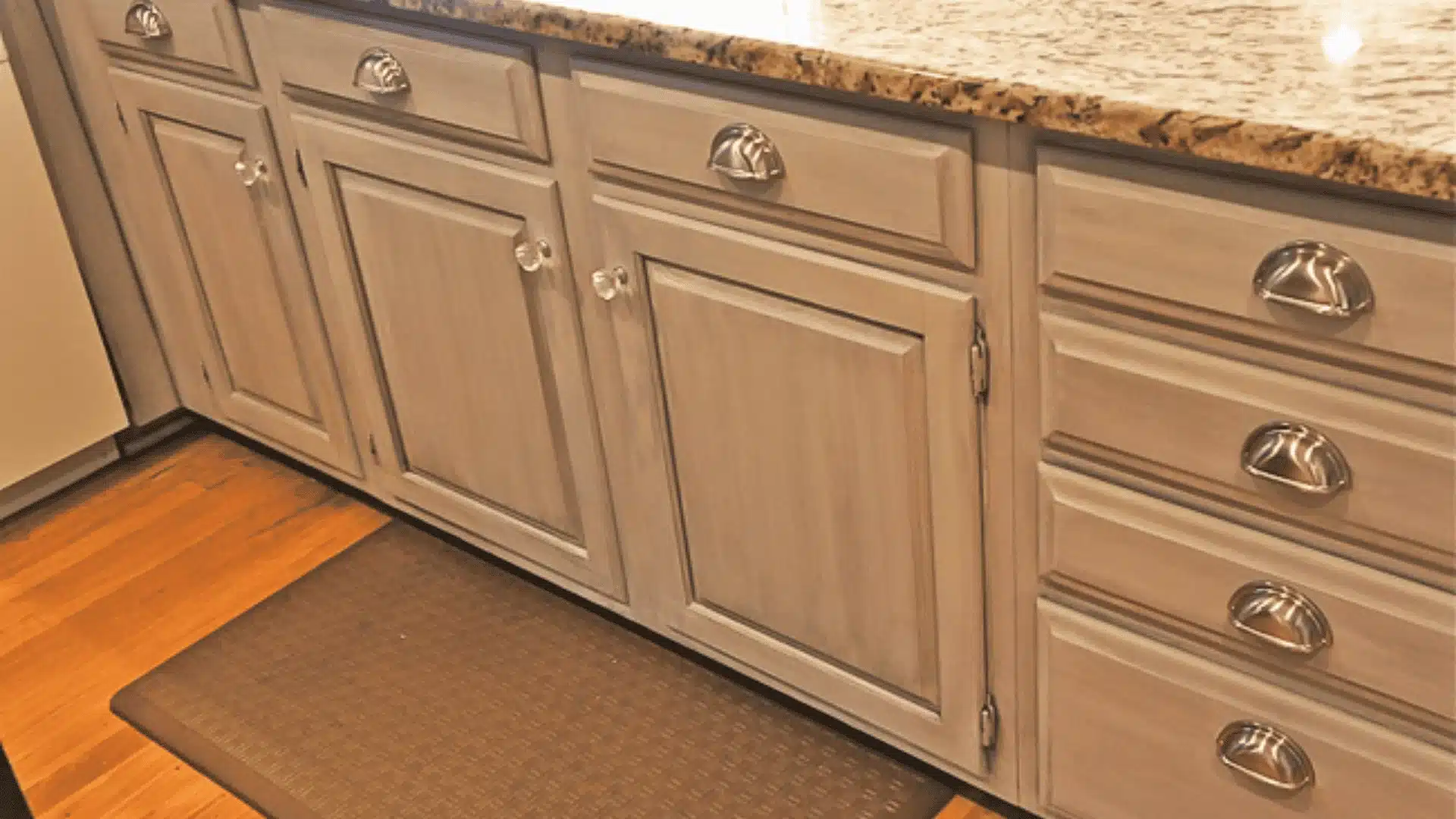
Image Credits: Bella Tucker
Glazing is a layered technique that adds depth, contrast, and a handcrafted quality to cabinet surfaces.
It is one of the few finishes that genuinely cannot be replicated with a single flat coat of paint.
What it is and Why to Choose it?
Glazing involves applying a semi-transparent coating over a painted or stained base.
The glaze is then wiped or brushed to settle into the recesses and detailing of the cabinet door, creating contrast and depth.
Glazed cabinets have a handcrafted, layered look that flat paint cannot replicate. The technique adds dimension to raised-panel doors and gives the cabinetry a sense of history and weight.
Ideal Kitchen Styles
- Traditional kitchens with raised-panel or beadboard doors
- French country kitchens, where an aged, lived-in look is intentional
- Luxury custom kitchens where extra visual detail is part of the design
One thing to be aware of: glazed finishes are harder to touch up than plain painted ones. If the door gets chipped or scratched later, matching the original layered look takes skill.
4. Distressed Cabinet Finish
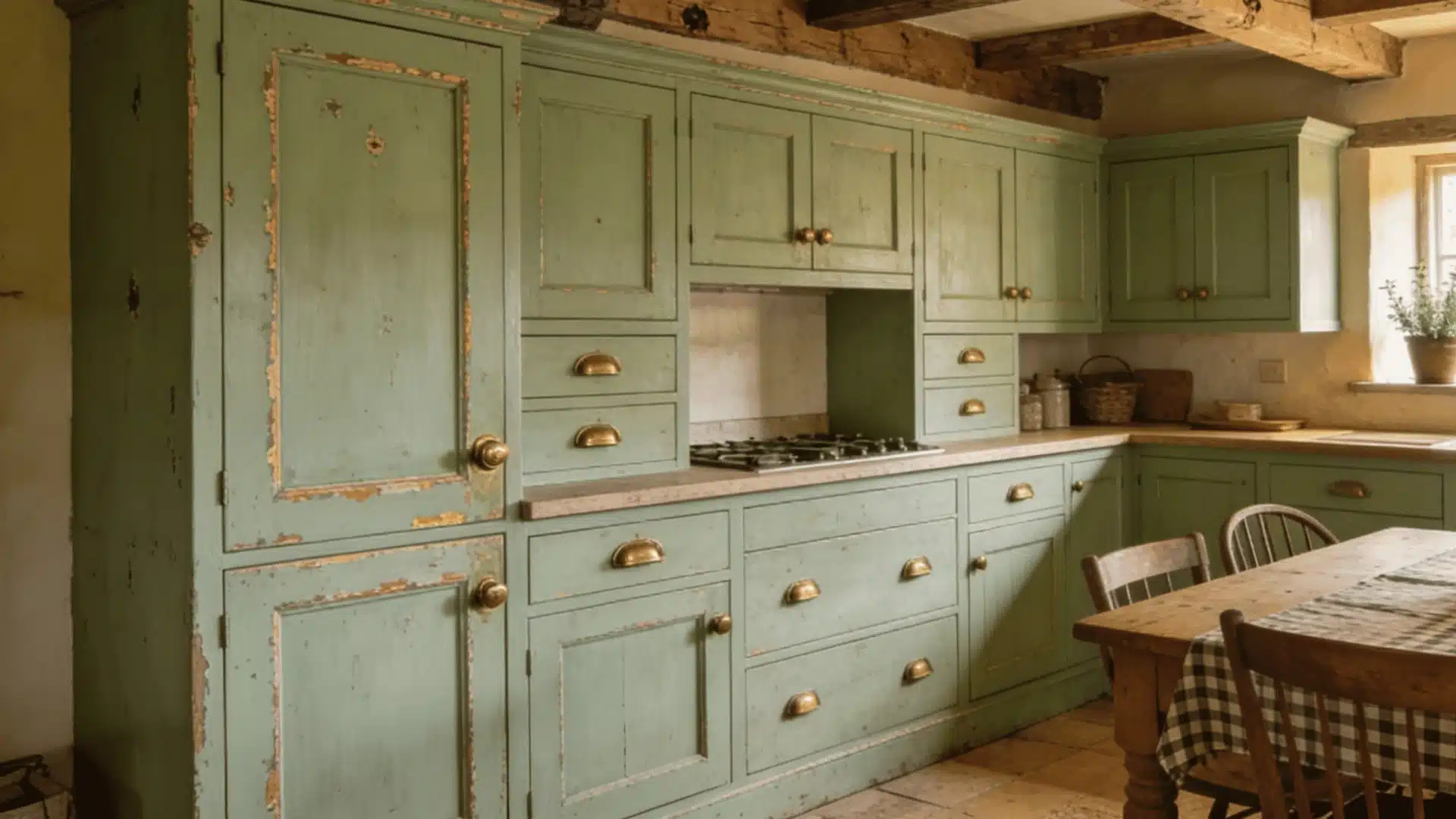
A distressed finish takes the opposite approach to a polished, pristine surface.
The goal is a cabinet that looks like it has a history, and that look has proven consistently popular in cottage, rustic, and farmhouse kitchens.
Distressed finishes are practical in one specific way: because the look is already imperfect by design, new scratches and scuffs tend to blend in rather than stand out.
For a kitchen that gets a lot of daily use, that can be a genuine advantage.
Characteristics
- Edge sanding: Light sanding along door edges and corners reveals the raw wood beneath the paint for a naturally worn look
- Tool marking: Small dents and dings are pressed into the surface to mimic years of everyday contact and use
- Worn paint patches: Paint is selectively removed in high-touch areas to replicate the gradual fading that happens over a decade
Where does it work best? Distressed finishes suit cottage, rustic, and farmhouse kitchens best, spaces where an aged, lived-in look is intentional and a perfectly smooth cabinet surface would feel out of place.
5. Natural Clear Coat Finish
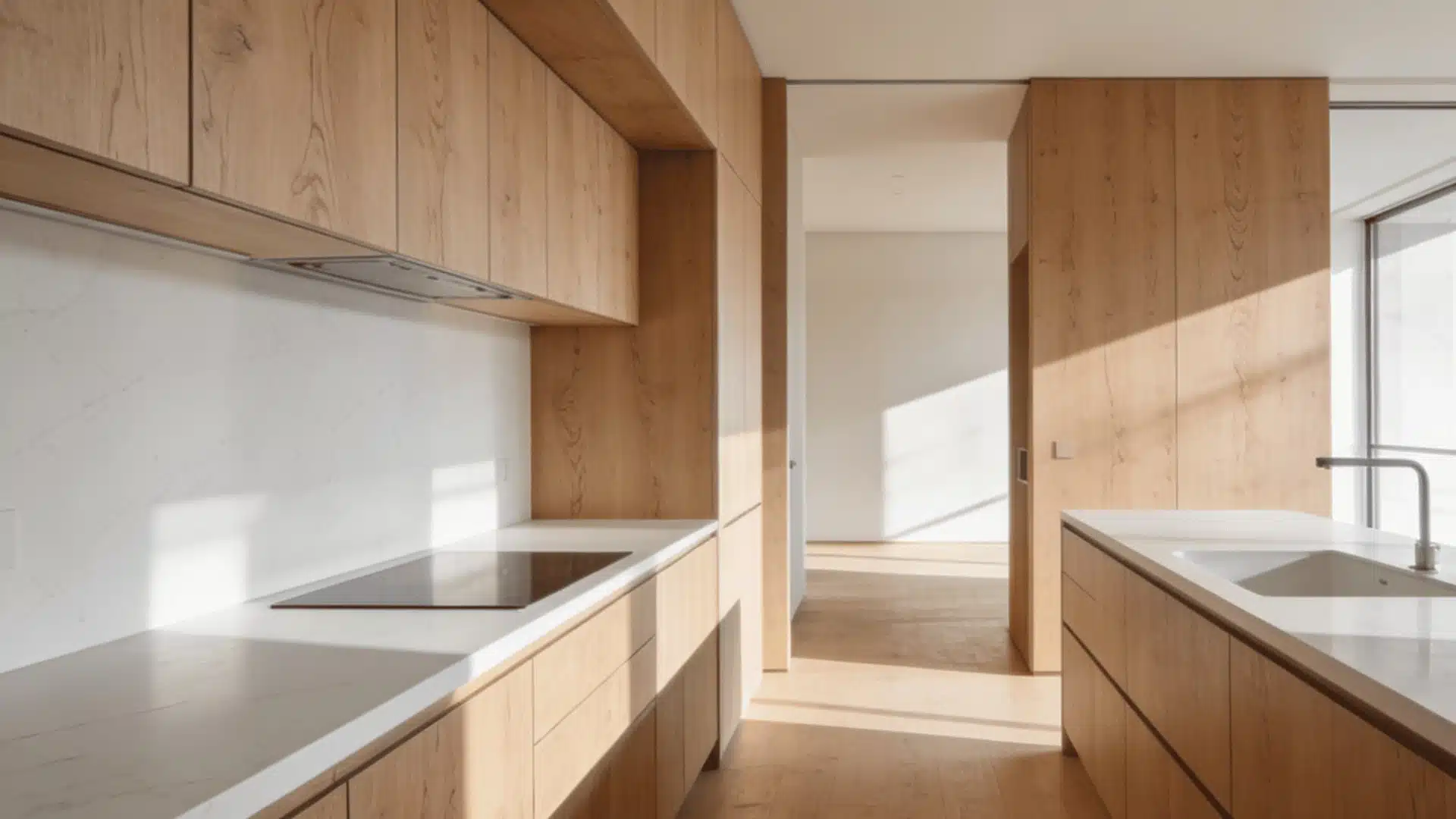
Sometimes the best finish is the one you barely notice. A clear coat lets the wood do the work while still providing the protection a kitchen demands.
What it does
A clear coat finish seals the cabinet surface while leaving the wood’s natural color and grain essentially unchanged. It protects against moisture, grease, and daily handling without adding any visual color.
Benefits
- Keeps the wood looking as close to its raw state as possible
- Works well on high-quality wood species where you want the material to speak for itself
- Highlights natural grain patterns without altering the tone
Clear coat finishes are a solid choice when the wood itself is the focal point.
They do require some upkeep over time, especially in kitchens with significant humidity or heat near the stove.
6. Lacquer Cabinet Finish
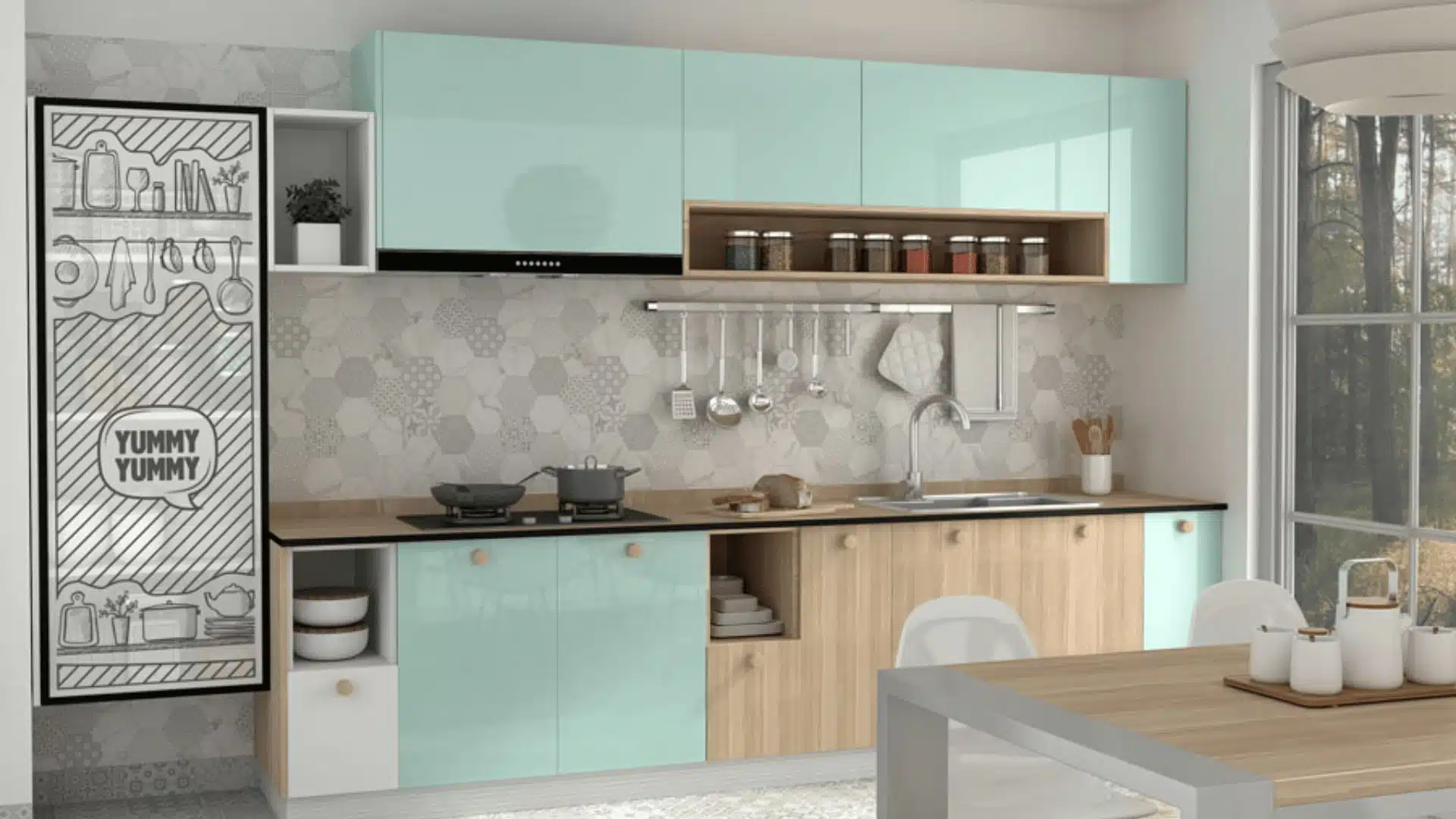
Image Credits: SNIMAY
Lacquer is the finish of choice in high-end contemporary and European-style kitchens.
It produces a surface that looks precise and refined, but it does come with real-world trade-offs worth knowing before you commit.
Lacquer looks impressive in a kitchen that is kept tidy, but it can feel high-maintenance in a household where cabinets take a beating.
It is commonly used in contemporary and high-end European-style kitchens where clean lines and a refined look are the goal.
Advantages
- Cures quickly compared to many other finishes, which speeds up production in custom cabinet shops
- Delivers a rich, consistent surface that looks precise and well-made
Drawbacks
- Scratches are more visible on lacquer than on most other finishes because of how smooth and reflective the surface is
- Repairs generally require a professional to match the sheen and color correctly
7. Conversion Varnish Finish
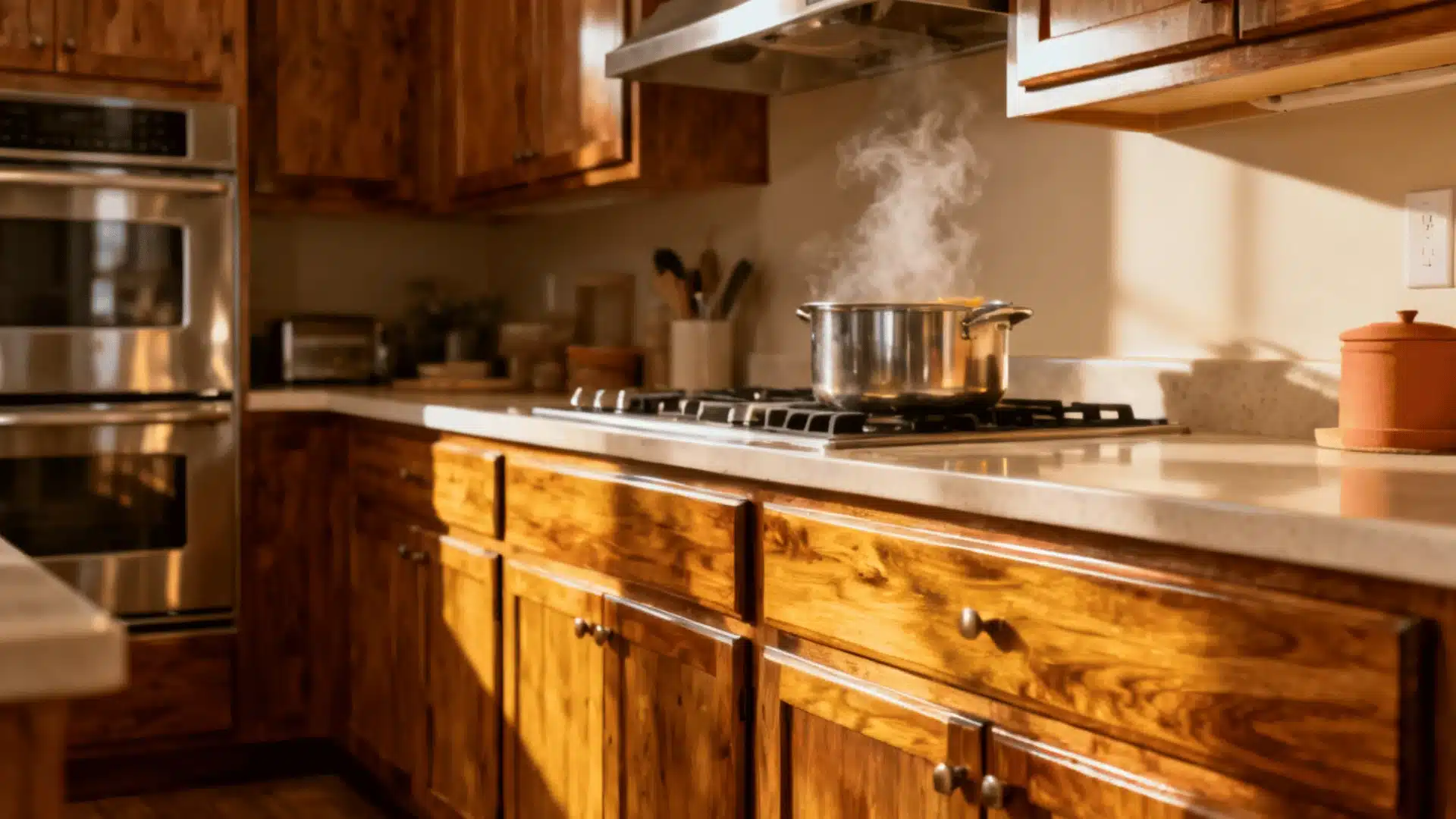
If you want the most durable finish available for a residential kitchen, this is the one professionals point to most often.
Conversion varnish is not the most glamorous name in cabinetry, but its performance record is hard to argue with.
Why do Many Professionals Recommend it?
Conversion varnish is a two-part catalyzed finish that cures into an extremely hard, durable surface. It resists moisture, household chemicals, and surface impact far better than standard paint or lacquer.
And that’s why it is considered the most durable option available for residential kitchens.
Common Applications
- High-traffic family kitchens that see daily heavy use
- Luxury custom cabinetry where longevity is part of the value
- Kitchens designed to perform at a near-commercial level
If durability is your top priority and you want a finish that holds up well over many years with minimal touch-ups, conversion varnish is worth the added cost.
8. Polyurethane Cabinet Finish
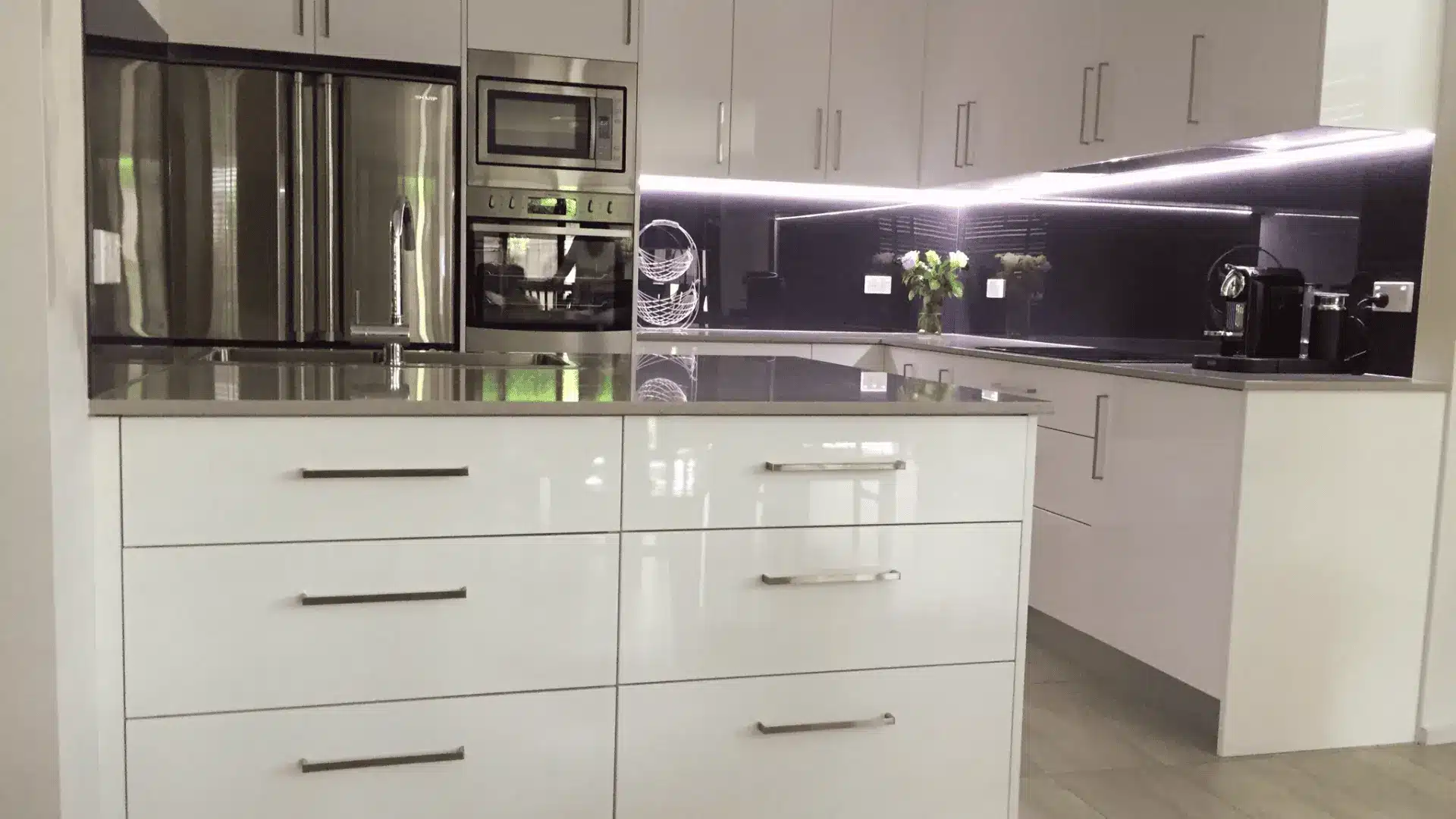
Image Credits: MASTER BATHROOMS AND KITCHENS
Polyurethane is one of the most widely used protective coatings in mid-range cabinetry. It is practical, accessible, and available in both oil-based and water-based formulas, each with its own strengths.
Types
Oil-Based Polyurethane: Oil-based polyurethane is thick, durable, and builds up a strong protective layer. It tends to add a slight amber tone to the surface over time, which can warm up wood tones but may shift the color of lighter painted cabinets.
Water-Based Polyurethane: Water-based polyurethane dries clear and stays that way, making it a better choice for white or light-colored cabinets. It dries faster than oil-based but may require more coats to build the same level of protection.
Benefits
- Provides solid protection against scratches, moisture, and everyday cabinet use
- Available in matte, satin, semi-gloss, and high-gloss sheen levels
- Accessible for both professional applications and careful DIY projects
9. Laminate and Thermofoil Finishes
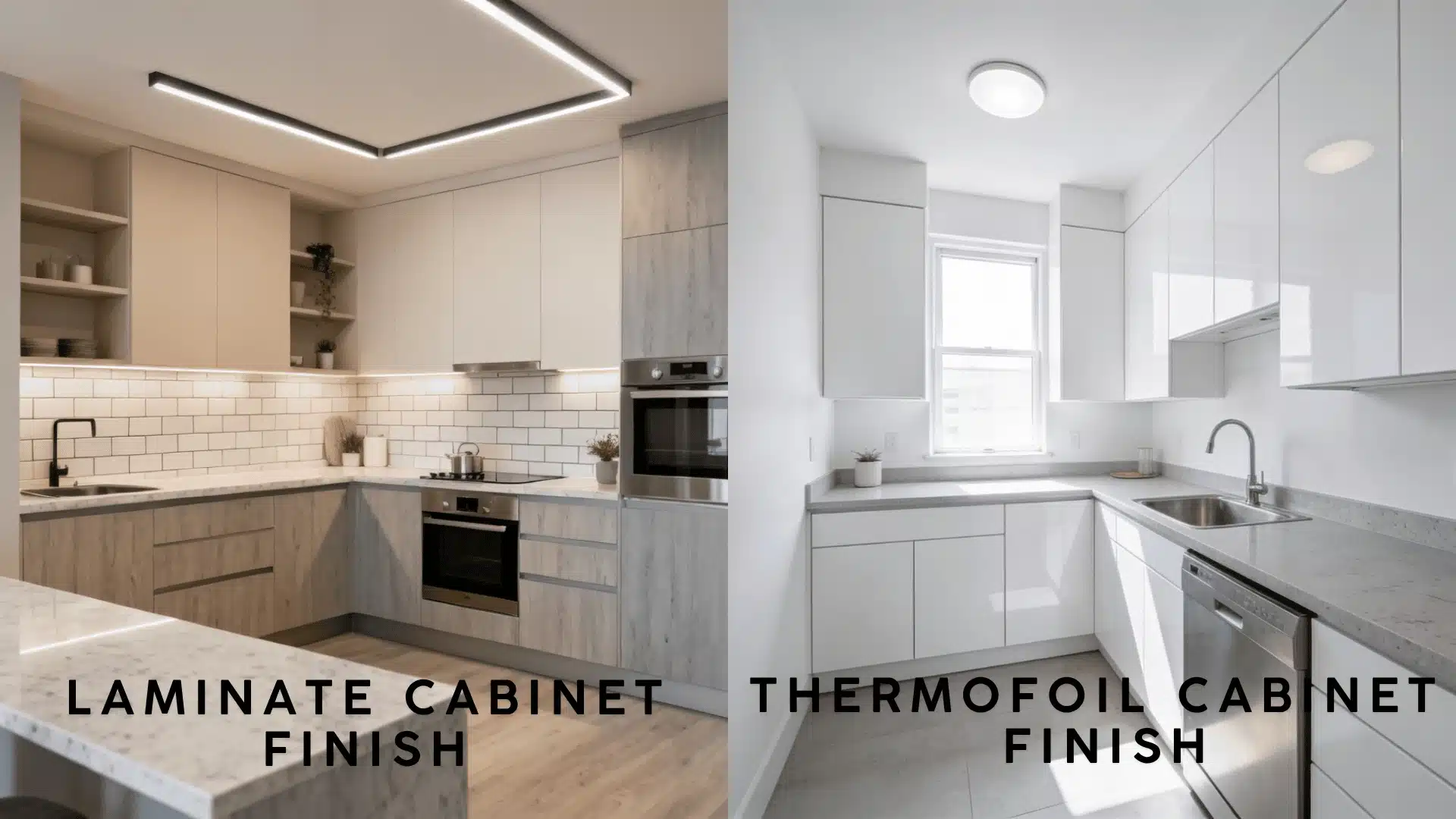
Laminate and thermofoil are the two most common budget-friendly alternatives to painted or stained wood cabinets.
They look similar on the surface but behave quite differently over time.
Laminate Cabinet Finish
What is it?
Laminate is a decorative sheet material bonded directly to the cabinet substrate, usually MDF or particleboard.
The surface layer is printed with a pattern, which can mimic wood grain, solid colors, or abstract textures.
Advantages
- One of the more budget-friendly finish options
- Available in a wide range of colors and patterns, including realistic wood-look options
- Resists stains and moisture reasonably well under normal conditions
Drawbacks
- Difficult to repair if the laminate is chipped or gouged, since patching rarely looks clean
- Edges can start to lift or peel over time, particularly near moisture-prone areas like the sink
Thermofoil Cabinet Finish
What is it?
Thermofoil is a vinyl film that is heat-pressed onto MDF cabinet doors using a vacuum-forming process.
The result is a seamless, smooth surface with no visible edges or seams on the door face.
Advantages
- Clean, uniform look that reads similarly to a painted finish at a lower cost
- Very easy to wipe down since there are no texture variations to collect grease
- A practical option for rental properties or kitchens on a tighter budget
Drawbacks
- The vinyl film can separate from the MDF if exposed to sustained heat, such as near an oven or toaster that vents upward
- Refinishing options are essentially nonexistent since the film cannot be repainted
Specialty Add-Ons and Decorative Finishing Techniques
Beyond the standard finish types, there is a full range of decorative techniques that add texture, age, and visual character to cabinet surfaces.
These are not everyday choices, but the right one in the right kitchen can make a significant difference.
Antiqued Finish
An antiqued finish layers paint, glaze, and sometimes wax to produce a look that mimics old, heirloom-quality furniture.
It works best in traditional kitchens where a sense of history and craftsmanship is part of the overall design.
This is not a finish for a minimal or contemporary kitchen.
Crackle Finish
A crackle finish creates a network of fine cracks across the surface, similar to aged paint on old furniture.
It adds texture and personality but requires a level of care since the cracks can collect grease and grime over time in a kitchen environment.
Rub-Through Finish
A rub-through finish involves sanding through the topcoat in specific areas, usually at edges and corners, to reveal the wood or a contrasting color beneath.
The result looks naturally worn rather than artificially distressed.
Cerused Finish
Cerusing involves working a contrasting pigment or paste into the open grain of a wood species like oak or ash, then wiping away the excess.
The grain fills with color while the surrounding wood stays its natural tone.
The result is striking and works well in modern organic and coastal kitchen designs.
Brushed Finish
A brushed finish uses a brush technique to leave subtle directional marks in the surface, adding texture and visual interest.
It softens the flatness of a solid-colored painted finish without adding dramatic character.
Wire-Brushed Finish
Wire-brushing removes the softer fibers from wood grain, leaving a textured, tactile surface with visible depth.
It is increasingly popular in kitchens that want a natural, material-forward look without going fully rustic.
Color-Washing Technique
Color-washing layers translucent color over a base to create a soft, uneven finish with tonal depth.
It has a hand-applied quality that suits relaxed, artisan-inspired kitchens. It is not a common choice for modern or minimal spaces.
Cabinet Finishes and Maintenance Requirements
Even the best kitchen cabinet finish will start to look worn if it is not properly cared for.
And so here you will know how to clean each finish type, what products to stay away from, and the habits that extend cabinet life the most.
Maintenance According to the Finish
| Finish Type | Cleaning Difficulty | Touch-Up Ease | Durability |
|---|---|---|---|
| Painted | Low to moderate | Moderate | Moderate |
| Stained Wood | Low | Moderate | Moderate to high |
| Lacquer | Low | Difficult | Moderate |
| Conversion Varnish | Low | Moderate | High |
| Polyurethane | Low | Moderate | High |
| Glazed | Moderate | Difficult | Moderate |
| Distressed | Low | Easy | Moderate |
| Laminate | Low | Difficult | Moderate |
| Thermofoil | Low | Very difficult | Moderate |
How Often Should Cabinets Be Wiped Down?
High-use areas like the cabinet faces near the stove, around the sink, and above the dishwasher should be wiped down at least once a week.
Full cabinet cleaning, including the insides of door frames and the tops of upper cabinets, is reasonable every one to three months, depending on how heavily the kitchen is used.
Products to Avoid
- Harsh chemicals like bleach or ammonia-based cleaners, which can break down finish coatings over time
- Abrasive scrubbers, steel wool, or scouring pads, which scratch most finish surfaces
- Wax-based polishes, which can leave a residue that builds up and dulls the finish over time
Sheen Guide for Kitchen Cabinet Finishes
Choosing a finish type is only half the decision.
The sheen level you select within that finish changes how the cabinet looks, how easy it is to clean, and how forgiving it is over time.
Here is what each level actually means in a real kitchen.
Matte Finish
No reflective quality at all. Matte reads as soft and modern and hides surface imperfections and minor scuffs better than any other sheen level.
But it holds onto grease more than glossier options, making it harder to keep truly clean.
Satin Finish
A slight sheen without obvious shine.
Satin cleans reasonably well, does not show every fingerprint, and balances appearance with practicality better than most options, which is why it remains the most commonly chosen sheen level in residential kitchens.
Semi-Gloss Finish
Noticeably shinier than satin and easy to wipe down. Best for kitchens where brightness matters, though it shows fingerprints and surface marks more readily.
High-Gloss Finish
Mirror-like surface that looks sleek and reflects light well.
Every smudge and water spot shows immediately, so it needs frequent wiping in busy households.
Conclusion
There is no single best kitchen cabinet finish only the right one for your kitchen, your cooking habits, and your tolerance for upkeep.
If you cook heavily, conversion varnish is the most durable option and worth the extra cost.
For a clean, modern look on a budget, satin paint with a quality topcoat works well for most households.
If natural wood matters, stain plus polyurethane gives you both character and protection.
Before committing, test physical samples in your actual kitchen lighting. What looks perfect in a showroom can read completely different at home.
Frequently Asked Questions (FAQ’s)
1. Are Painted Cabinets Less Durable than Stained Cabinets?
Not necessarily. Durability depends more on the topcoat than the base. Conversion varnish over paint outperforms basic polyurethane over stain.
2. Which Cabinet Finish Is Easiest to Clean?
Thermofoil, high-gloss lacquer, and conversion varnish are the easiest. Higher sheen levels wipe clean faster than matte or textured finishes.
3. What Finish Hides Fingerprints Best?
Matte and satin finishes hide fingerprints best. High-gloss shows every smudge and water spot, especially on dark or white cabinets.
4. Can Existing Kitchen Cabinets Be Refinished?
Yes. Painted and stained wood cabinets can be sanded and refinished. Therm foil is the exception, as it cannot be repainted reliably.