By 2050, nearly 70 percent of the world’s population will live in cities.
That means more buildings, more energy use, and more pressure on land and resources. How those buildings get designed will matter enormously.
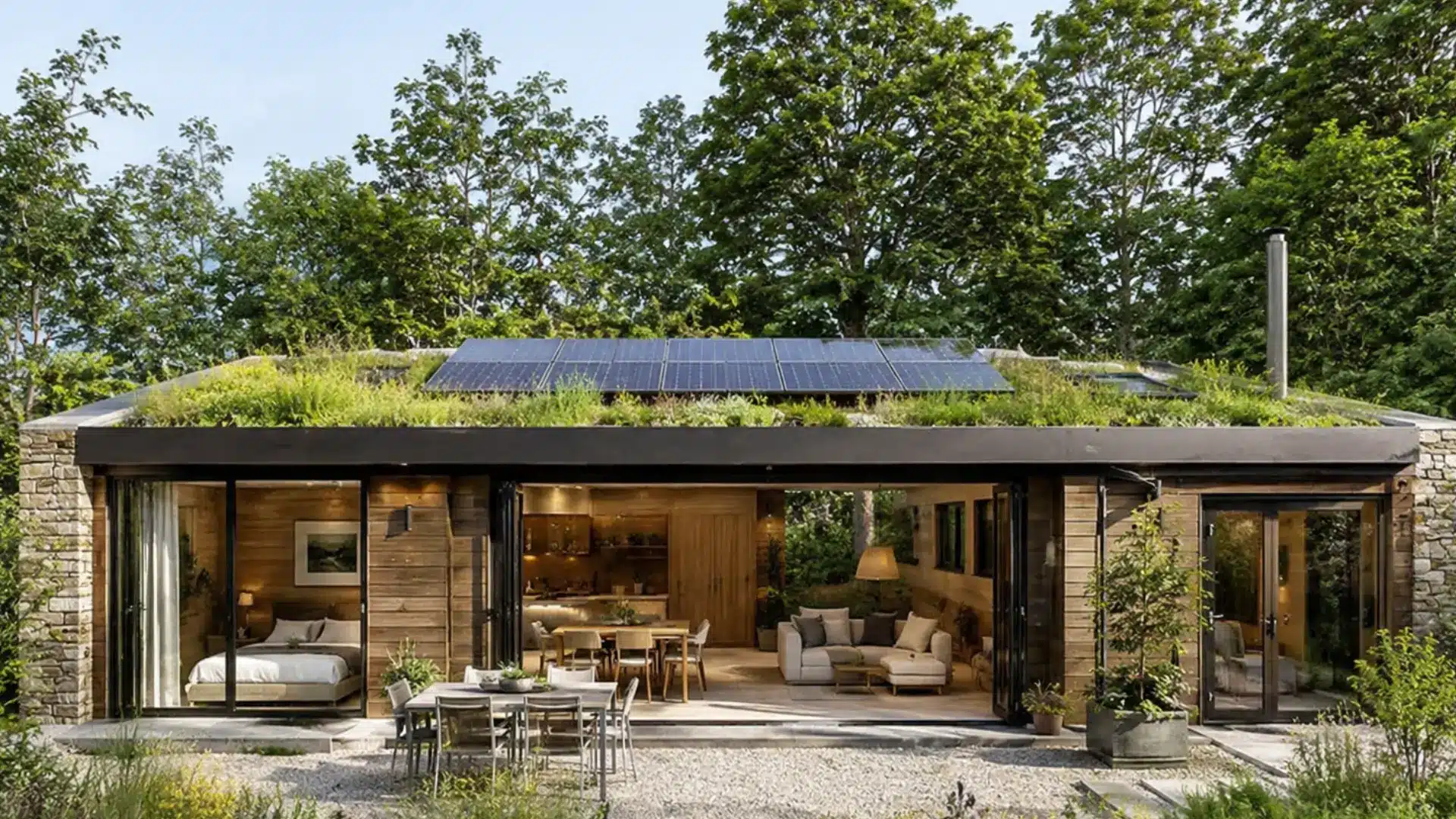
Sustainable architecture is the field trying to get that right. It goes well beyond solar panels and green rooftops.
At its core, it is about creating spaces that work with the environment rather than draining it, without sacrificing good design or functionality in the process.
What is Sustainable Architecture?
Sustainable architecture means designing buildings that use fewer resources, produce less waste, and work with their environment rather than against it.
It draws on environmental science, engineering, and urban planning to create structures built for the long term.
Some design philosophies, like eco brutalist design, take this further by combining raw material expression with environmental intent.
Sustainable design adds energy efficiency, material sourcing, indoor air quality, and community impact to that equation. The goal is straightforward.
Build something that still makes sense thirty years later, when the shortcuts either pay off or come back to haunt.
Sustainable Design in Interior Design
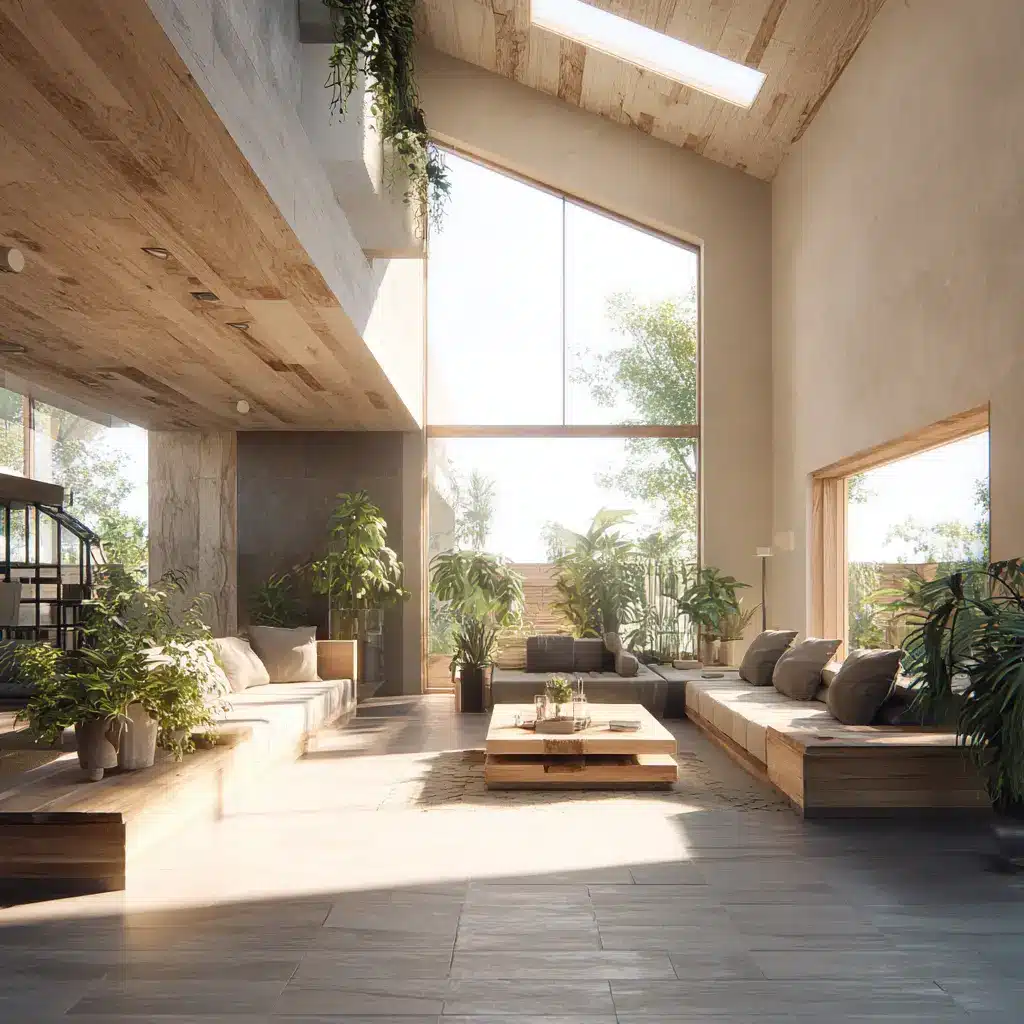
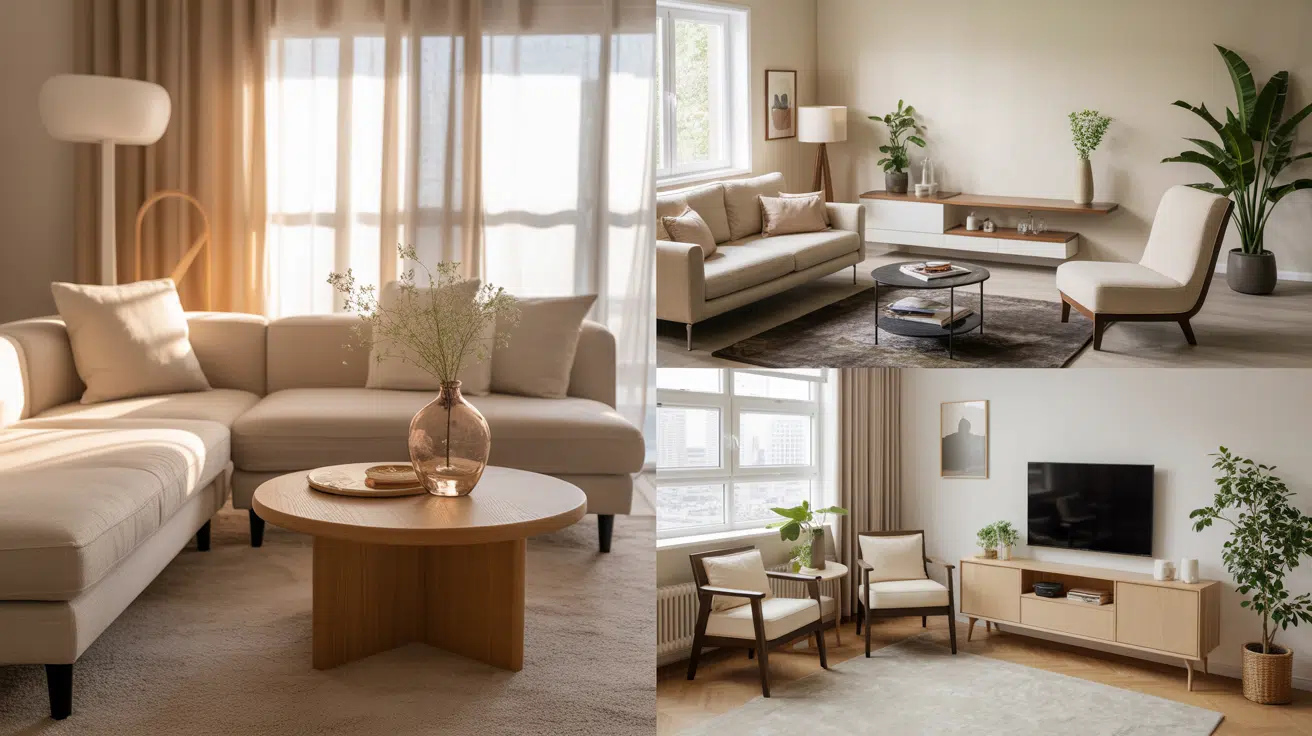
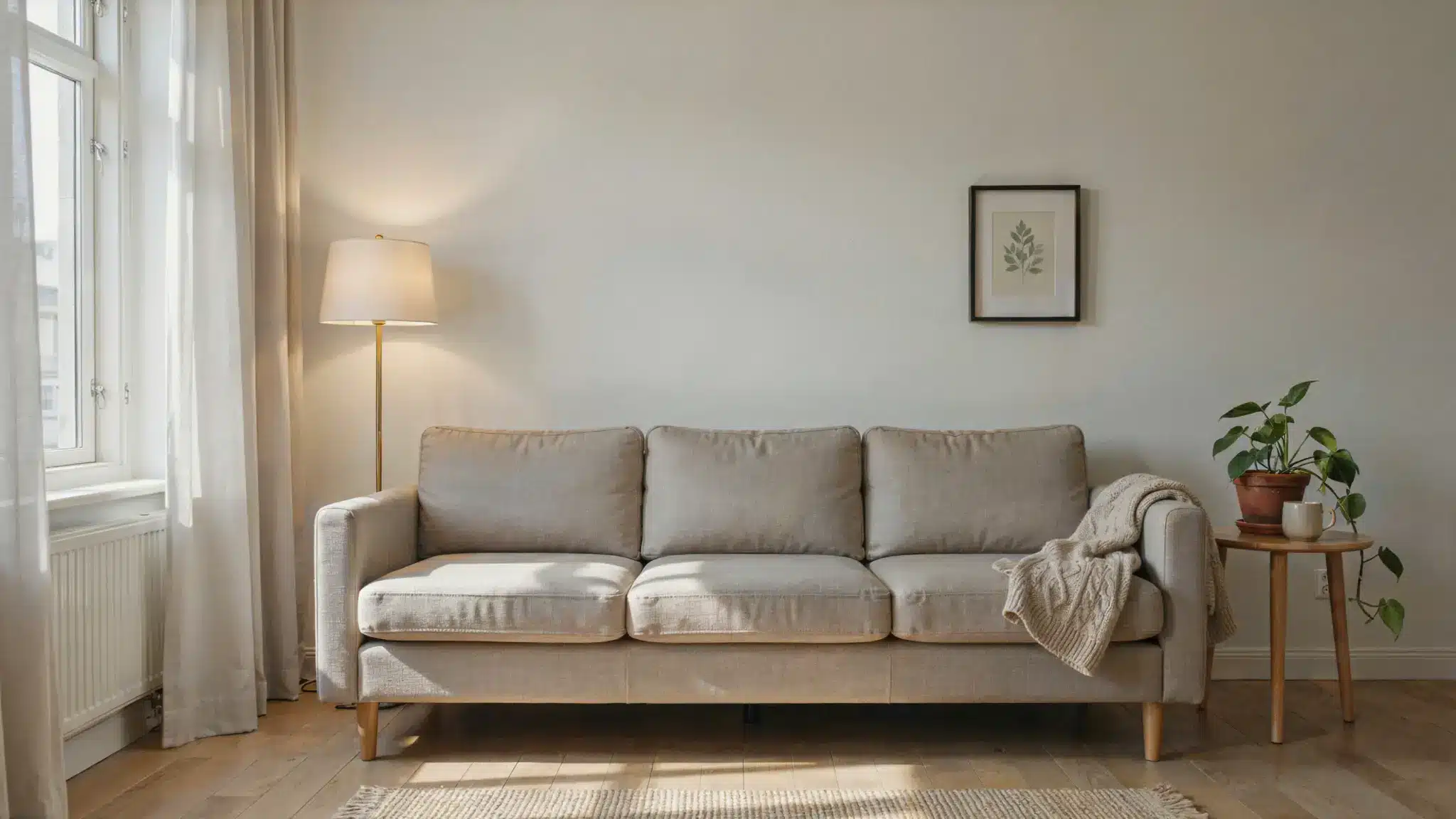
Sustainable design in interior design goes beyond choosing eco friendly materials.
It is about making deliberate decisions at every stage, from layout and lighting to finishes and ventilation, that reduce environmental impact without compromising how a space looks or functions.
A few core principles that guide this approach:
- Using materials that are recycled, locally sourced, or have a low carbon footprint
- Designing for natural light and ventilation to reduce reliance on artificial systems
- Choosing finishes and fixtures that last longer and require less maintenance
- Planning spaces that can adapt rather than requiring a full rebuild
Buildings account for nearly 40 percent of global energy consumption, and interior design choices such as insulation, glazing, and heating systems directly affect that figure.
Related: How to Create a Sustainable Interior Design?
Key Principles of Sustainable Architecture
Sustainable design is not about one green feature.
It is about how energy, water, materials, air quality, and waste are managed together throughout the life of a building.
- Energy efficient design prioritizes passive heating, cooling, and natural light before mechanical systems are introduced.
- Water conservation uses smart plumbing, rainwater harvesting, and greywater recycling to reduce demand on the municipal supply.
- Material selection favors recycled, locally sourced, or low-carbon-embodied options.
- Indoor air quality is treated as a health consideration, with ventilation and low VOC finishes built into the design
- Waste reduction during construction is managed through careful scheduling, prefabrication, and diverting demolition waste from landfills.
Buildings that get this right cost less to run, last longer, and are healthier to be in.
Top 6 Examples Around the World
Each one is a functioning building that has redefined what responsible construction looks like in practice.
From energy surplus offices to vertical forests in city centers, these examples show what sustainable design actually delivers when the right decisions are made from the ground up.
1. The Edge, Amsterdam, Netherlands
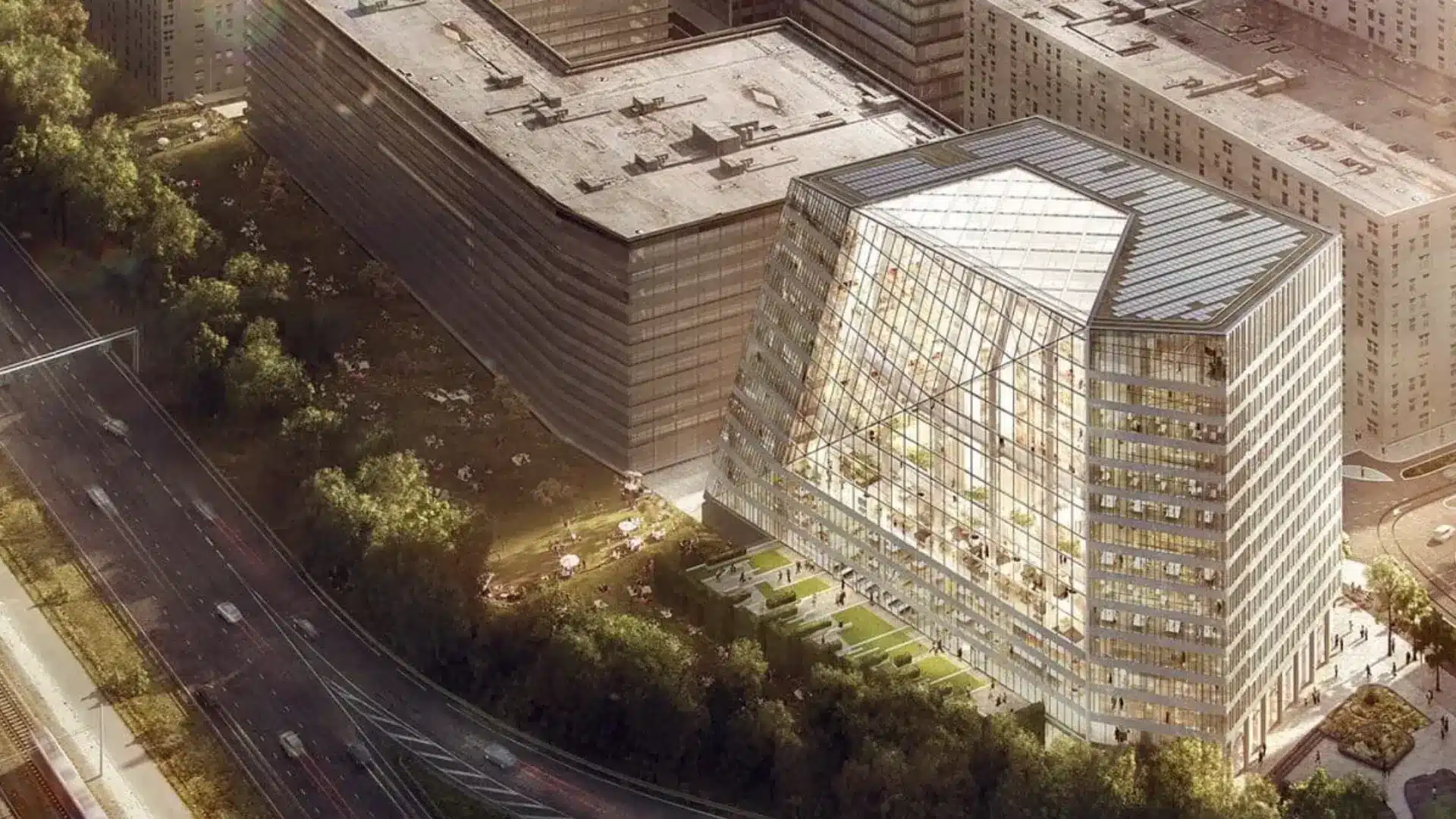
Credits: Parametric Architecture
Completed in 2015, The Edge generates more energy than it consumes through rooftop solar panels and aquifer thermal energy storage.
Smart sensors monitor occupancy, lighting, and temperature across every zone, cutting waste in real time.
Best time to visit: Spring and early autumn offer mild weather and longer daylight hours. The Edge scored 98.4 out of 100 on the BREEAM assessment, the highest score ever recorded at the time.
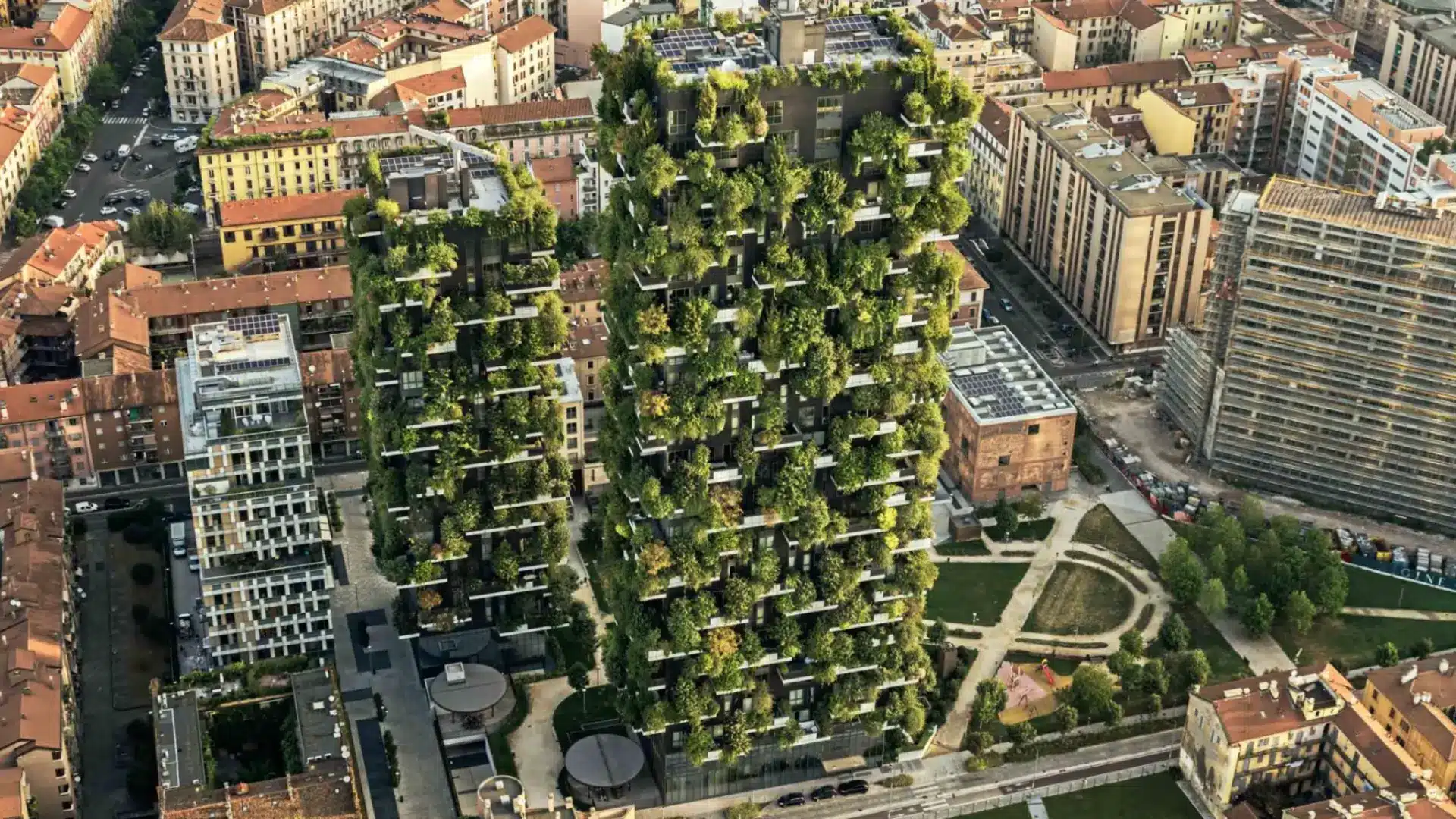
2. Bosco Verticale, Milan, Italy
Credits: Stefano Boeri Architett
Completed in 2014, Bosco Verticale carries over 900 trees and 20,000 plants across two residential towers.
The vegetation absorbs carbon dioxide, provides natural insulation, and creates a self sustaining micro ecosystem in a dense urban setting.
- Plants reduce the urban heat island effect around the building
- Seasonal changes naturally regulate light and temperature inside
- The concept has since inspired similar projects across China, Switzerland, and France
The total plant life on Bosco Verticale is equivalent to roughly two hectares of forest compressed into a vertical urban footprint.
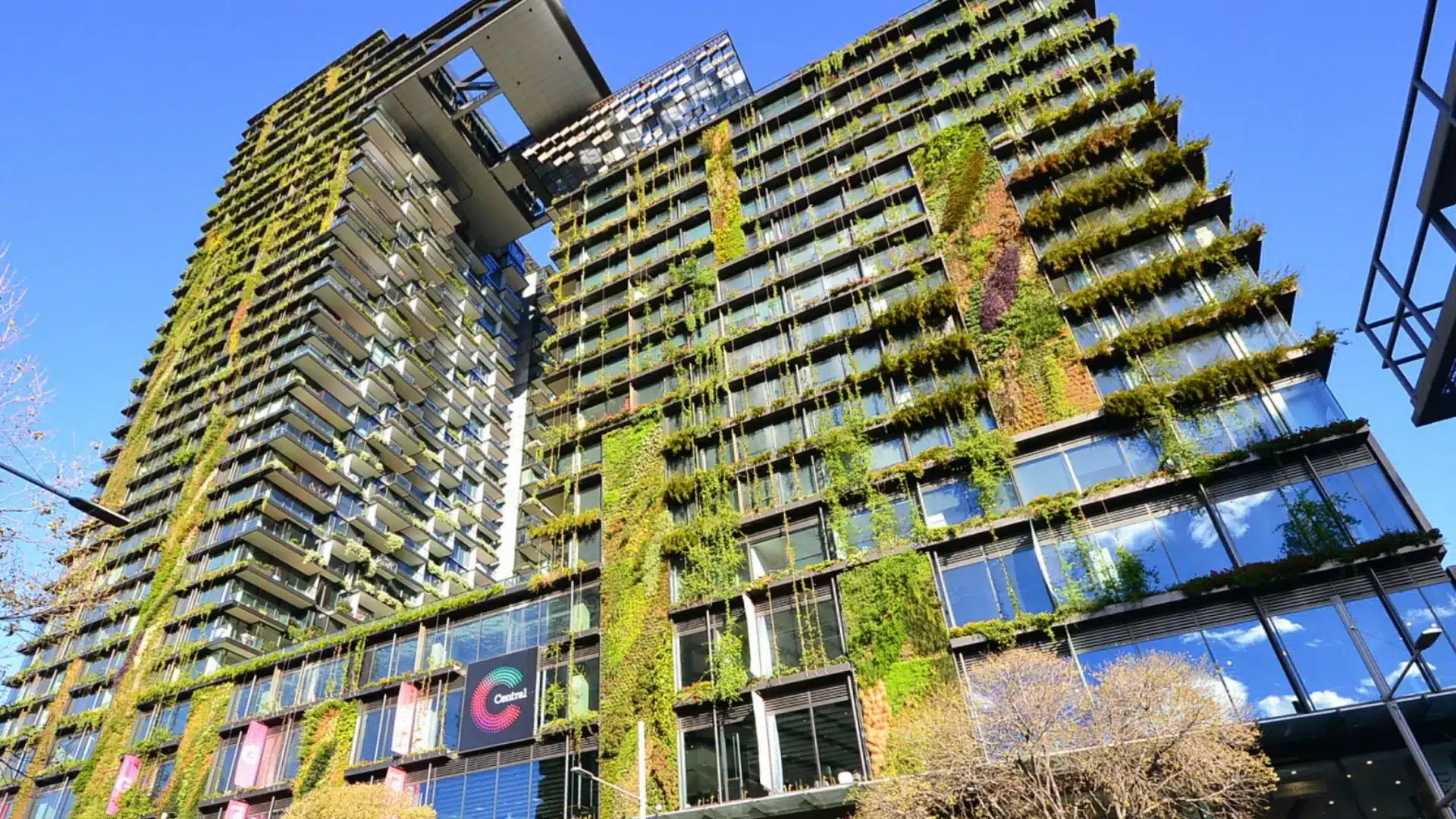
3. One Central Park, Sydney, Australia
Credits: Greenroofs
Completed in 2013, One Central Park features a heliostat system and motorized mirrors that redirect natural sunlight into shaded areas of the building and the surrounding public spaces below.
The winter months from June to August offer the clearest skies, making the heliostat most visible as it tracks the sun throughout the day.
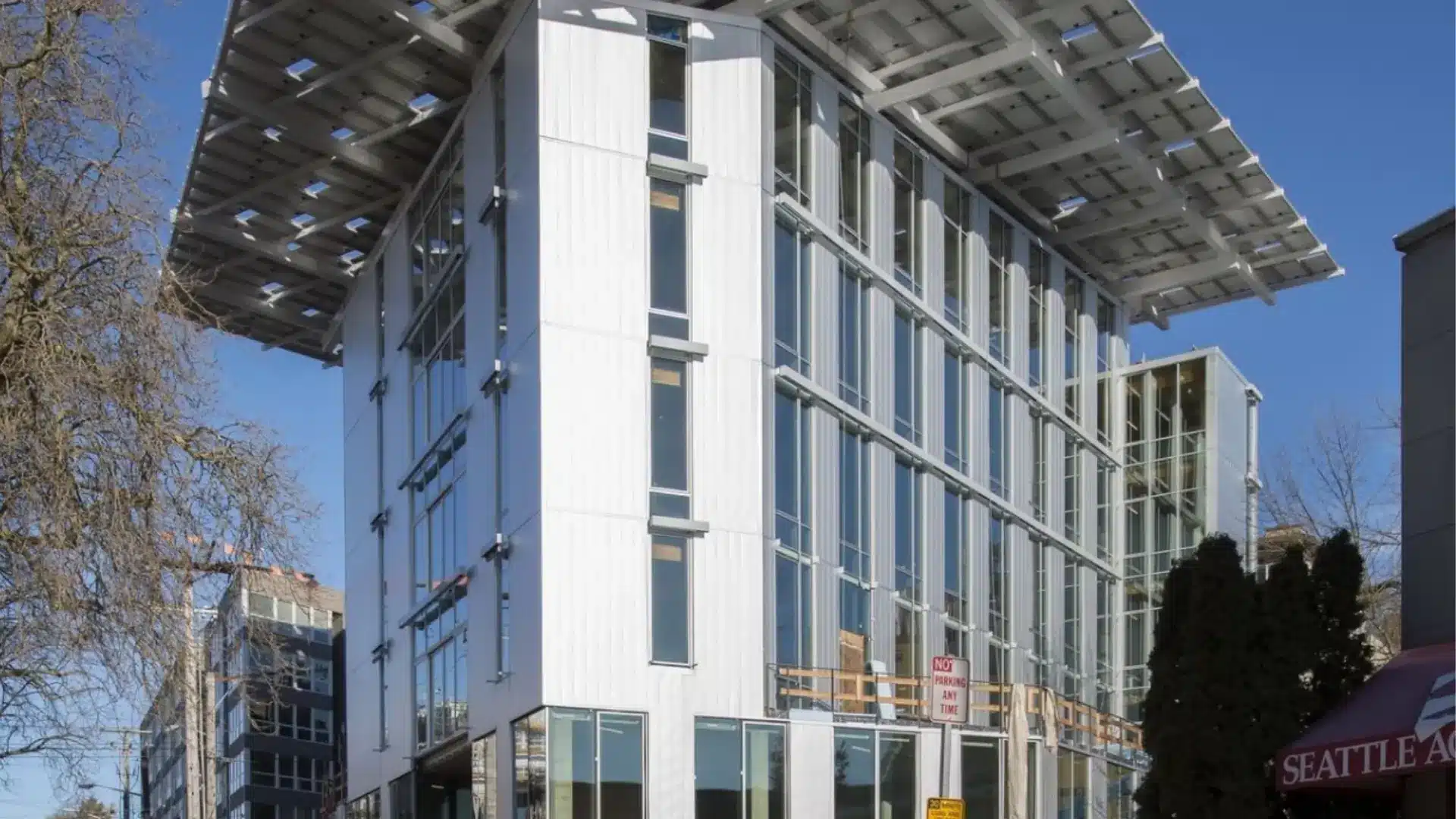
4. Bullitt Center, Seattle, United States
Credit: Archello
Designed to last 250 years, the Bullitt Center generates all its own energy from rooftop solar, collects on-site rainwater, and manages waste without connecting to the municipal sewer system.
- Holds Living Building Challenge certification, one of the most rigorous sustainability standards in existence
- Produces a small energy surplus each year
- All construction materials were vetted against a banned toxic chemicals list
Seattle averages only 144 sunny days per year, making the Bullitt Center’s fully solar powered operation a genuine achievement of passive and active design working together.
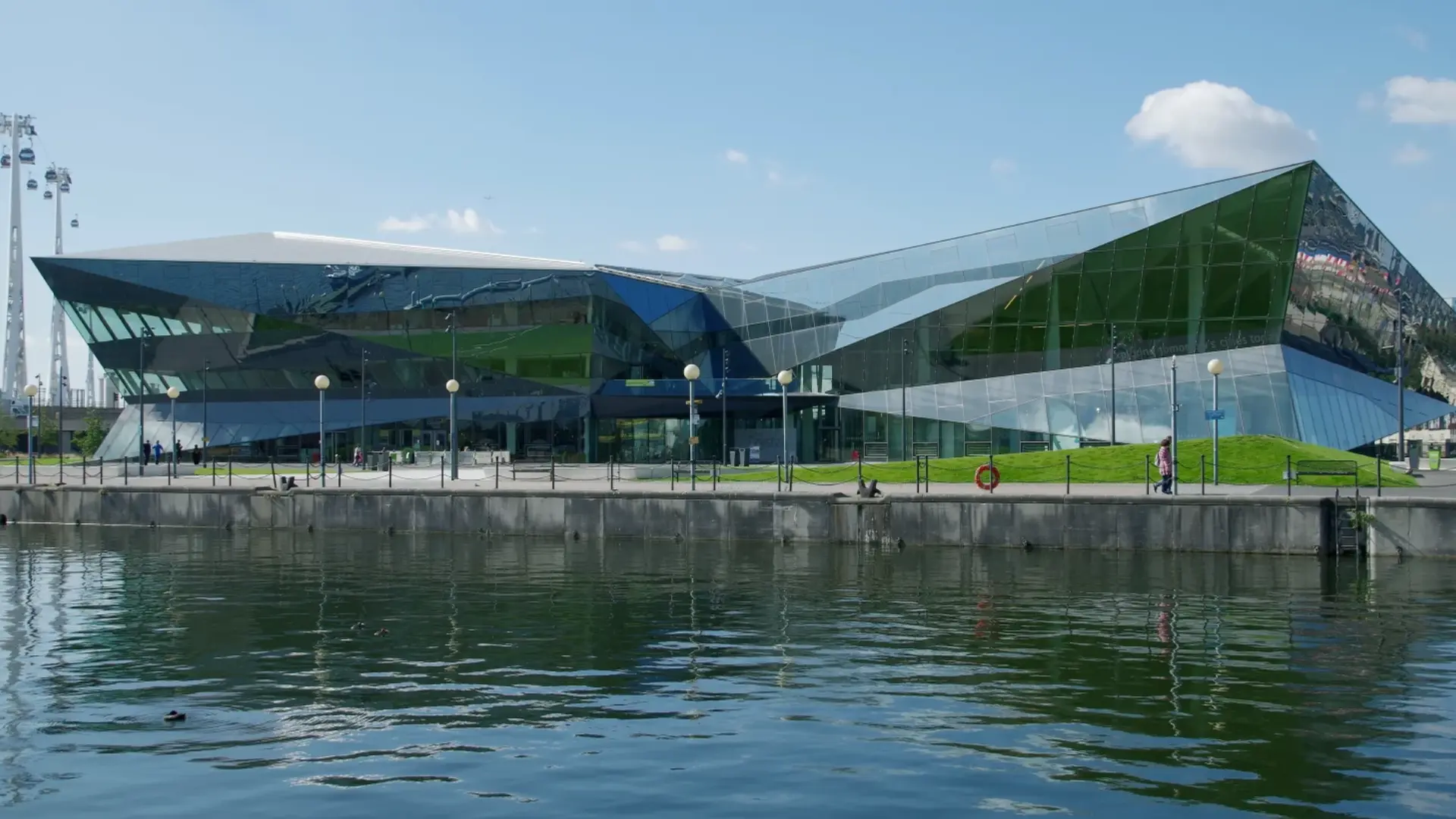
5. Crystal Building, London, England
Credit: Parametric Architecture
Opened in 2012, the Crystal runs entirely on electricity, with no gas connection, powered by rooftop solar and a ground-source heat pump.
Rainwater is harvested and treated on site for toilets and irrigation.
Spring and summer are when you can see the rooftop solar installation and surrounding landscaping at their most active.
The Crystal holds both LEED Platinum and BREEAM Outstanding certifications, which very few buildings globally have achieved at the same time.
6. Pixel Building, Melbourne, Australia
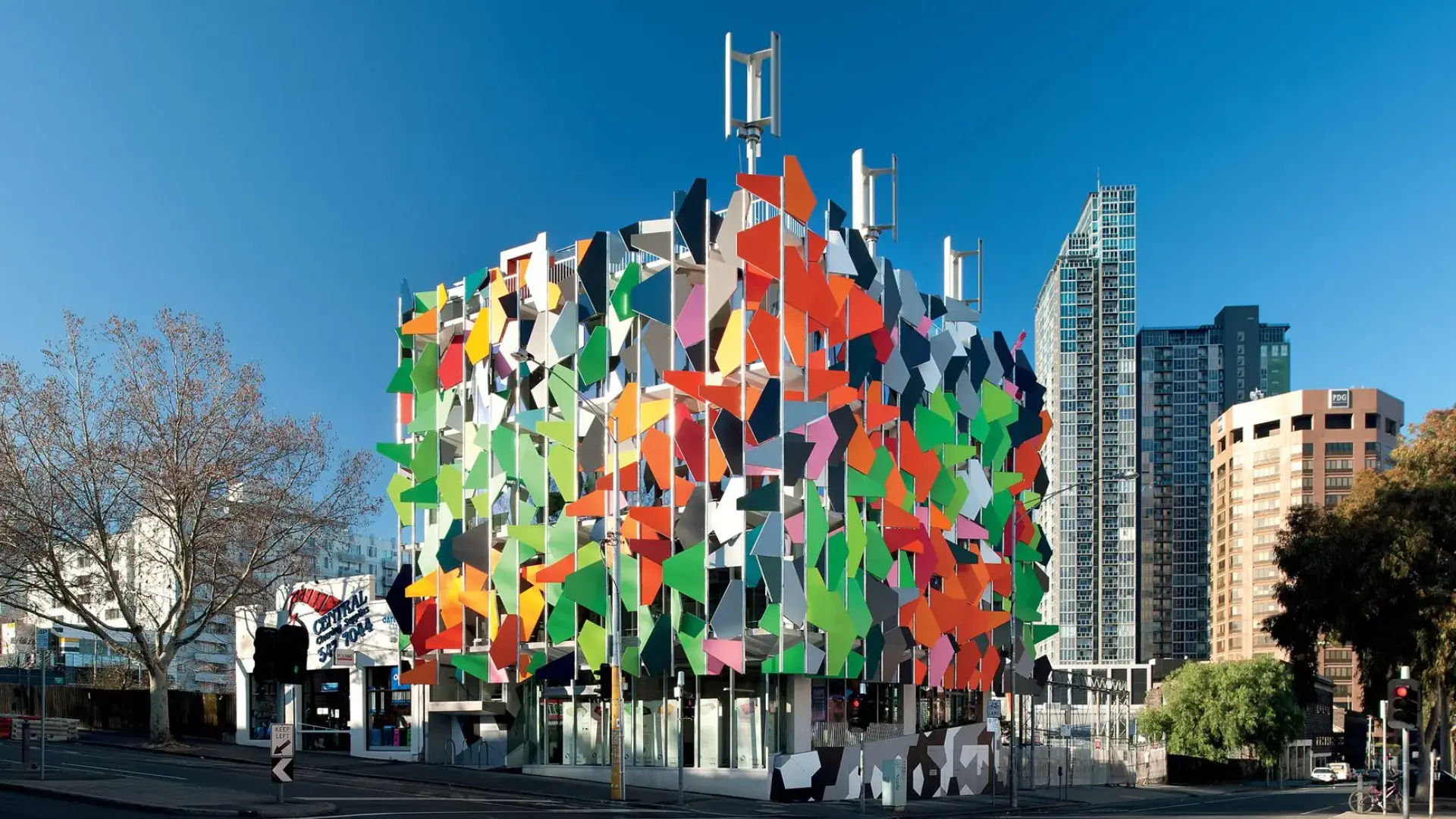
Credit: Decibel Architecture
Completed in 2010, the Pixel Building was the first in Australia to achieve a perfect Green Star rating.
It generates its own energy, harvests rainwater, and treats all on site wastewater. The colored facade panels are angled specifically to control solar heat gain and reduce glare.
- Each panel serves a functional shading purpose based on its orientation
- The building produces zero carbon emissions in operation
- Recycled and reclaimed materials were used throughout the interior
The Pixel Building’s green roof is planted with native species that provide additional insulation and support local biodiversity in the middle of Melbourne’s central business district.
Challenges and Ethical Dilemmas
Sustainable architecture raises difficult questions that the industry has not fully resolved.
Cost, greenwashing, design compromise, and housing equity are all areas where good intentions run into hard realities.
- High upfront costs for green materials and certification put sustainable construction out of reach for smaller firms and public sector projects
- Greenwashing is growing. Buildings are increasingly labeled sustainable based on surface features that do not reflect real environmental performance
- Passive solar design and high performance insulation do not always align with what clients want, forcing architects to negotiate between performance and appearance
- Urban expansion displaces ecosystems in ways that building level sustainability cannot fully address
- Green certified homes carry price premiums that leave the communities most exposed to climate risk with the least efficient housing
Sustainable architecture is one tool in a much larger process. It cannot fix planning failures or policy gaps on its own, but it is a necessary part of the conversation.
Courses and Career Pathways in Sustainable Architecture
This Architecture has moved well past being a niche specialization.
Structured pathways now exist at every level, from full degrees to short certifications that fit around an existing career
The field has matured enough that structured pathways now exist at every level, from full degrees to short certifications that fit around an existing career.
1. Best Degrees
A Bachelor of Architecture is the standard starting point, but specialization shapes your direction.
Many universities now offer dedicated sustainable design streams.
A few degree paths worth considering:
- Bachelor of Architecture with an environmental design concentration
- Bachelor of Science in Sustainable Built Environments
- Master of Architecture with a focus on low carbon or passive design
A postgraduate degree is not always necessary, but it opens doors to research, policy work, and senior roles that a bachelor’s degree alone may not.
2. Top Universities Offering Sustainable Design Programs
Most combine studio based learning with research, giving students practical skills and solid theoretical grounding.
Some of the most respected programs are offered at:
- Harvard Graduate School of Design, known for urban sustainability and ecology
- Delft University of Technology, strong in passive building and climate responsive design
- University College London, which offers dedicated environmental architecture tracks
- Arizona State University, recognized for urban heat, energy efficiency, and desert climate design
3. Skills Needed to Become an Environmental Architect
Technical knowledge matters, but the role demands more than that.
Key skills include:
- Understanding of building physics, thermal performance, daylighting, and passive ventilation
- Proficiency in energy modeling software such as EnergyPlus or IES VE
- Familiarity with rating systems like LEED, BREEAM, and the Living Building Challenge
- Analytical thinking to assess environmental trade offs during the design process
Environmental architects rarely work alone. Collaboration with engineers, urban planners, and sustainability consultants is a core part of the job.
4. Career Opportunities
Demand for architects with sustainability expertise has grown steadily as governments and developers face mounting pressure to meet carbon targets. Career paths include:
- Sustainable design architect at a private practice or large firm
- Environmental consultant advising on building performance and compliance
- Urban sustainability planner within local government or city agencies
- Research architect at a university or think tank focused on built environment policy
Some architects move into materials development, working with manufacturers to bring lower carbon products to market.
5. Certifications and Online Courses for Sustainable Design
Formal degrees are not the only route in.
Certifications that carry real weight include LEED Accredited Professional, BREEAM Assessor, and the Living Future Accreditation.
For online learning, Coursera and edX both offer structured courses in sustainable design principles and energy modeling.
These work well for practitioners already in the field who want to formalize their knowledge without committing to a full degree.
Bottom Line!
The buildings going up today will still be standing in thirty, fifty, and a hundred years.
Getting the energy, materials, and environmental decisions right at the start matters far more than adding green features as an afterthought.
Sustainable architecture is a response to problems that will only grow more pressing over time.
The gap between what it can deliver and what most buildings actually achieve is still significant. Closing that gap is the work.
Frequently Asked Questions
1. What is the Difference Between Green Building and Sustainable Architecture?
Green building focuses on reducing construction impact, while sustainable architecture considers the full lifecycle including design, operation, and long term community effect.
2. How long does a Sustainable Building Take to Design?
Sustainable buildings typically take longer to design than conventional ones because energy modelling, material sourcing, and environmental assessments add significant time before construction begins.
3. Can Existing Buildings be Retrofitted to Meet Sustainable Standards?
Yes, improved insulation, upgraded glazing, renewable energy systems, and better ventilation can meaningfully improve the performance of older buildings.
4. What Role Does a Passive House Standard Play in Sustainable Architecture?
Passive House reduces heating and cooling demand by up to 90 percent through airtight construction, superior insulation, and controlled mechanical ventilation.
5. Is Sustainable Architecture Only Relevant for Large Commercial Projects?
No, sustainable design principles apply to residential homes and small developments too, though the tools and certification systems used may vary by project size.