Some homes just stop you before you even walk in.
Wide front porches, tall white columns, and a roofline that means business. Southern colonial homes have that effect. They are grand without trying too hard and comfortable without feeling plain.
People are drawn to them because they offer something most modern builds do not.
Real scale, real symmetry, and a sense that the house was built to stay.
The architecture, the design choices, and the decorating ideas that make it all come together are all right here.
What is a Southern Colonial House?
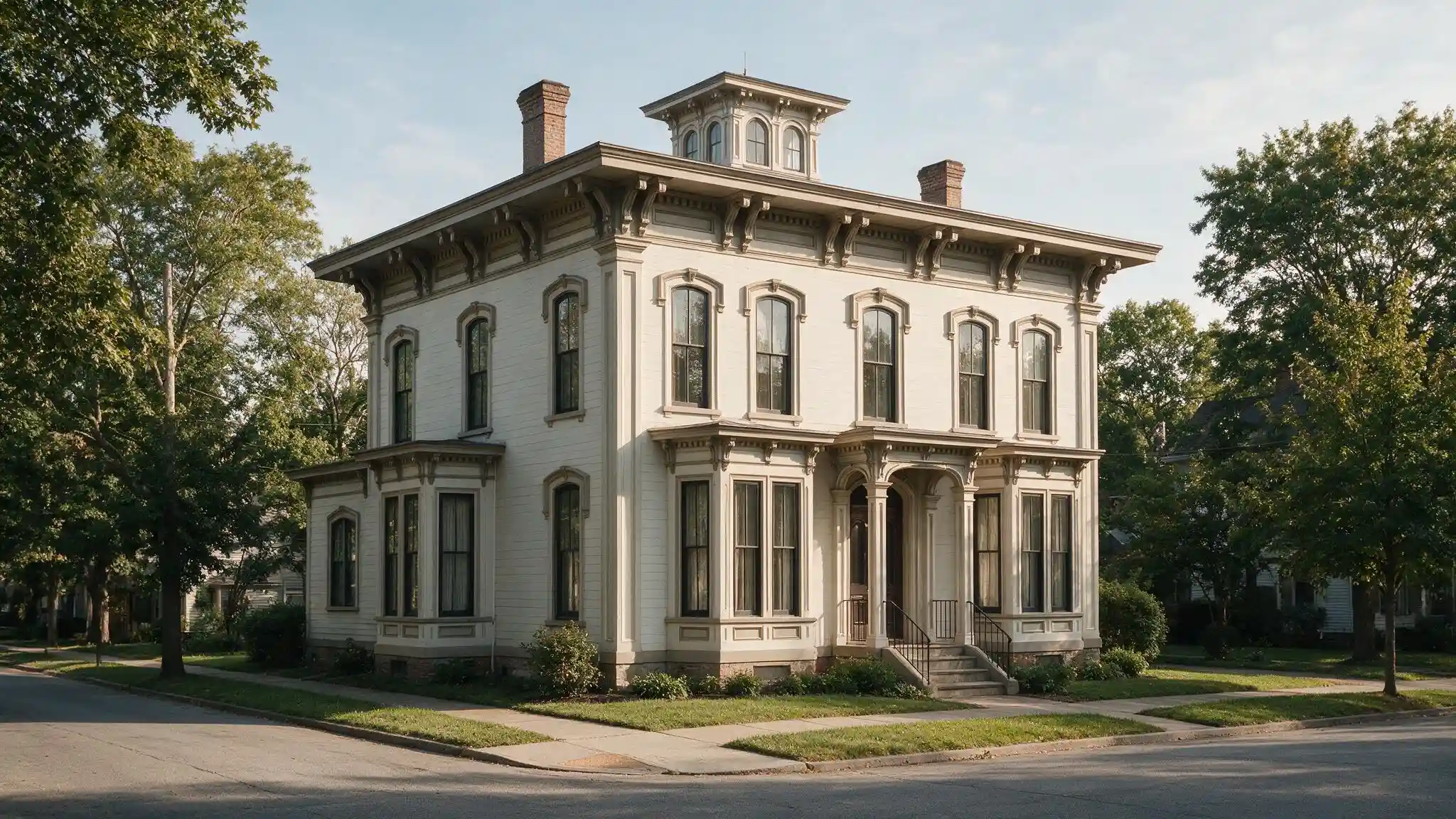
Southern colonial architecture took shape in the 1600s and 1700s across Virginia, Georgia, and the Carolinas.
Wealthy plantation owners built large, symmetrical homes designed to withstand heat and humidity and support a very specific kind of social life.
The style is easy to spot. Tall columns across the front, a wide covered porch, evenly spaced windows, and a centered front door. Everything lines up on purpose.
These homes still stand out today because the proportions are hard to get wrong.
The scale feels generous, the layout is practical, and the curb appeal needs little help.
Southern Colonial House: Key Characteristics!
The details are what make this style so recognizable!
Every element was chosen for a reason, and most of them have been doing their jobs for over 300 years.
1. Grand Columns and Covered Porches
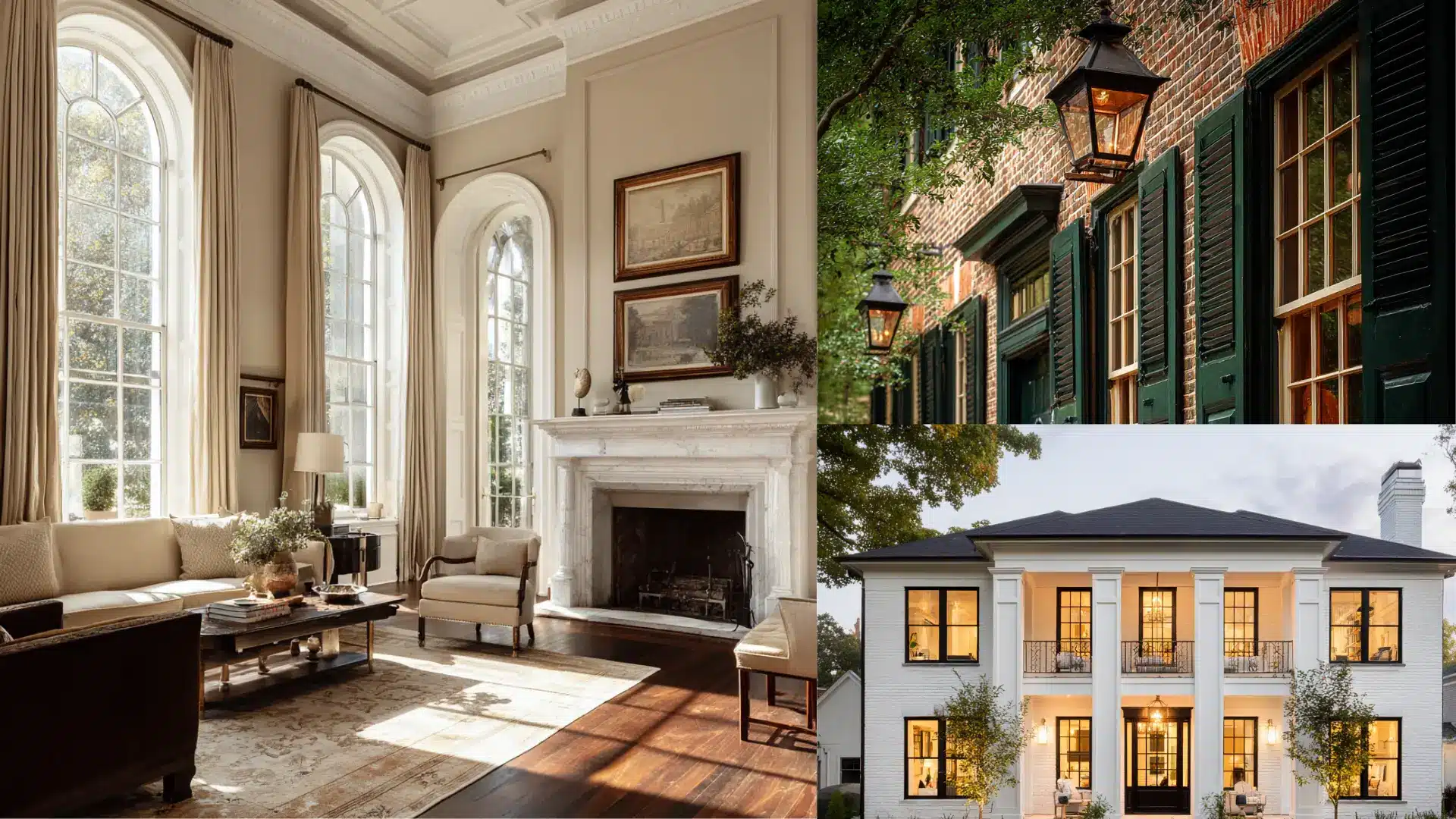
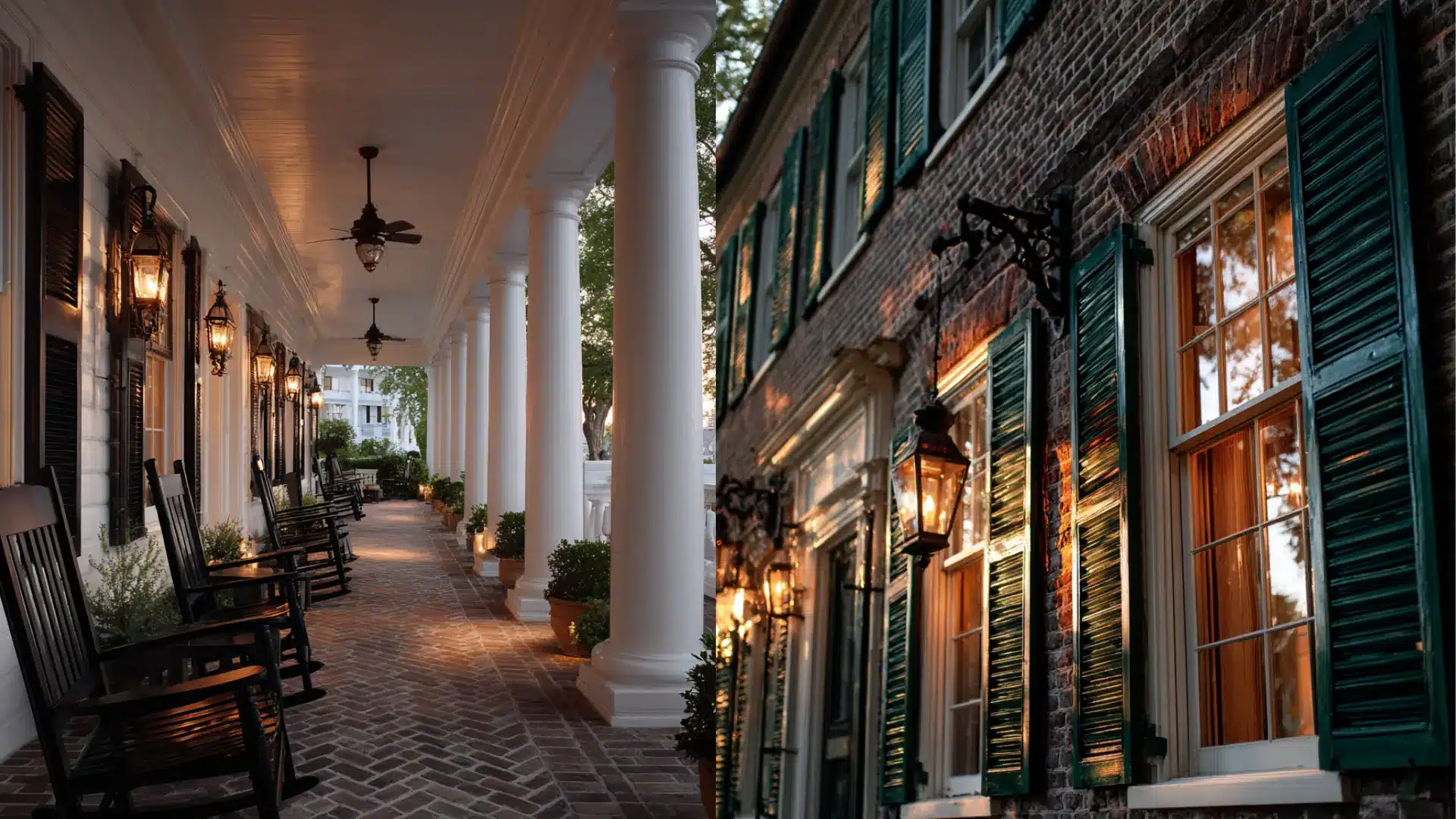
The columns are the first thing you notice. Full height, evenly spaced, and load-bearing. They are not decoration. They hold the roof over a wide front porch that runs the full width of the house.
That porch was built for airflow before air conditioning existed. Today, it is the best seat in the house.
2. Symmetrical Layouts and Balanced Design
Symmetry is the whole point. The front door sits dead center. Windows line up on both sides in equal numbers. Even the chimneys are placed to mirror each other.
This kind of balance gives the house a calm, settled look that feels intentional from every angle.
- Centered front door with transom window above
- Equal window placement on both floors
- Matching chimneys on opposite ends of the roofline
3. Tall Windows, Shutters, and Brick Exteriors
The windows run floor to ceiling in most rooms. Functional shutters, not decorative ones, were used to block heat and manage light.
Brick was the exterior material of choice across the South because it held up against humidity and heat far better than timber alone.
If you are repainting shutters on a Southern colonial home, Sherwin Williams Rookwood Dark Green SW 2809 is one of the most historically accurate and widely used shades for this style.
4. Spacious Rooms With High Ceilings
Ceilings in Southern colonial homes typically run between ten and fourteen feet.
That height was not about showing off!
It kept heat from pooling at head level in rooms without mechanical cooling. Today, those same ceilings make every room feel open, airy, and worth decorating properly.
Modern Southern Colonial House Design Ideas
The bones of a Southern colonial home are hard to improve.
But the way people live inside them has changed. These ideas show how to bring the style forward without losing what makes it worth having in the first place.
1. Mixing Traditional and Modern Architecture
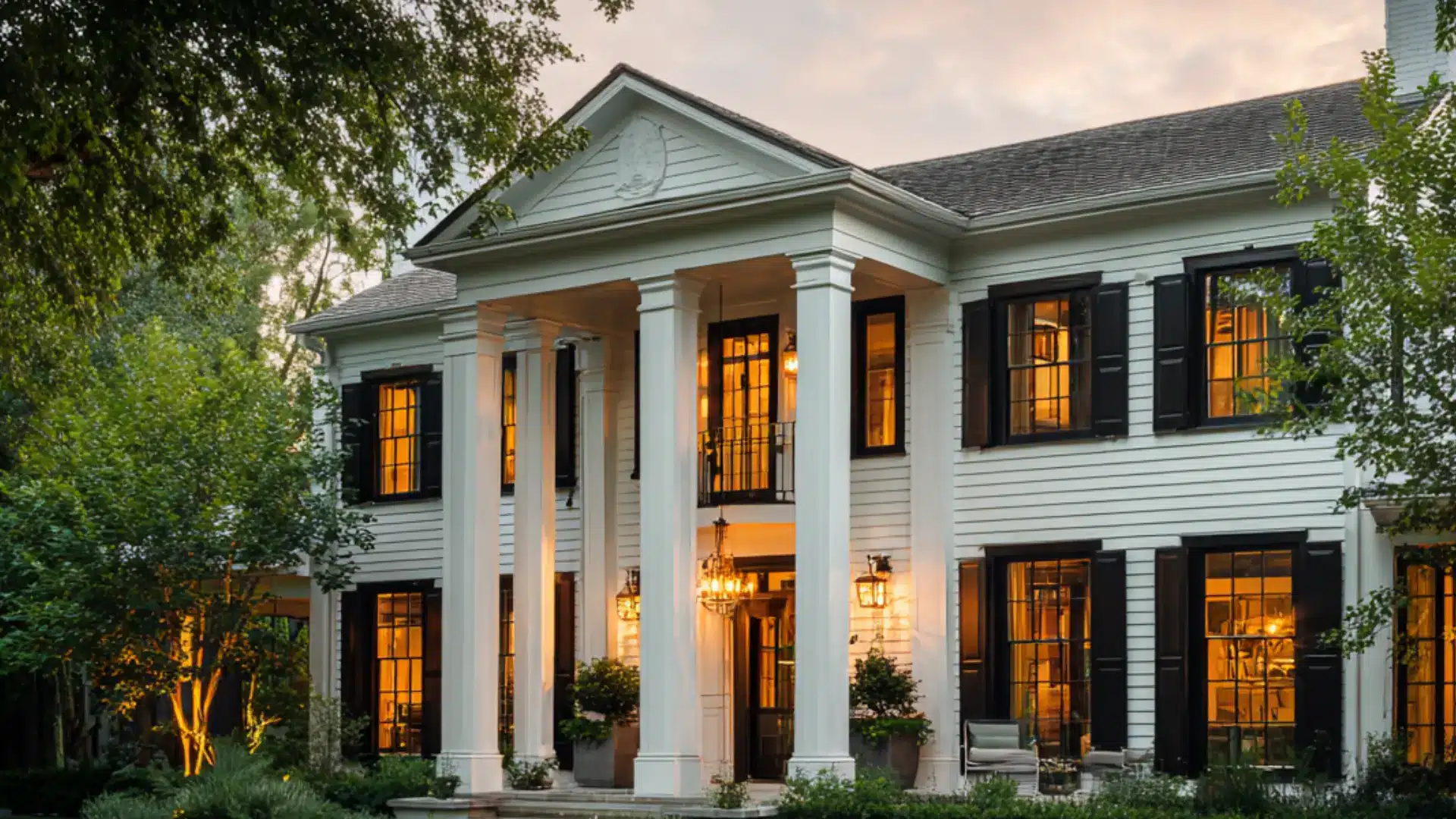
The most successful updates keep the exterior classical and let the interior breathe.
Tall columns out front, clean trim lines, and a symmetrical facade. Inside, open the walls where permitted by load-bearing requirements, and let the layout work for modern living.
- Stick to the original roofline and column proportions when renovating
- Use reclaimed brick where possible to keep the exterior authentic
- Choose a house plan that preserves the centered entry and symmetrical window placement
Before touching any structural wall in a Southern colonial home, get a full architectural assessment. Many of these homes were built with load bearing interior walls that are not obvious from the floor plan alone.
2. Open Concept Southern Colonial Interiors
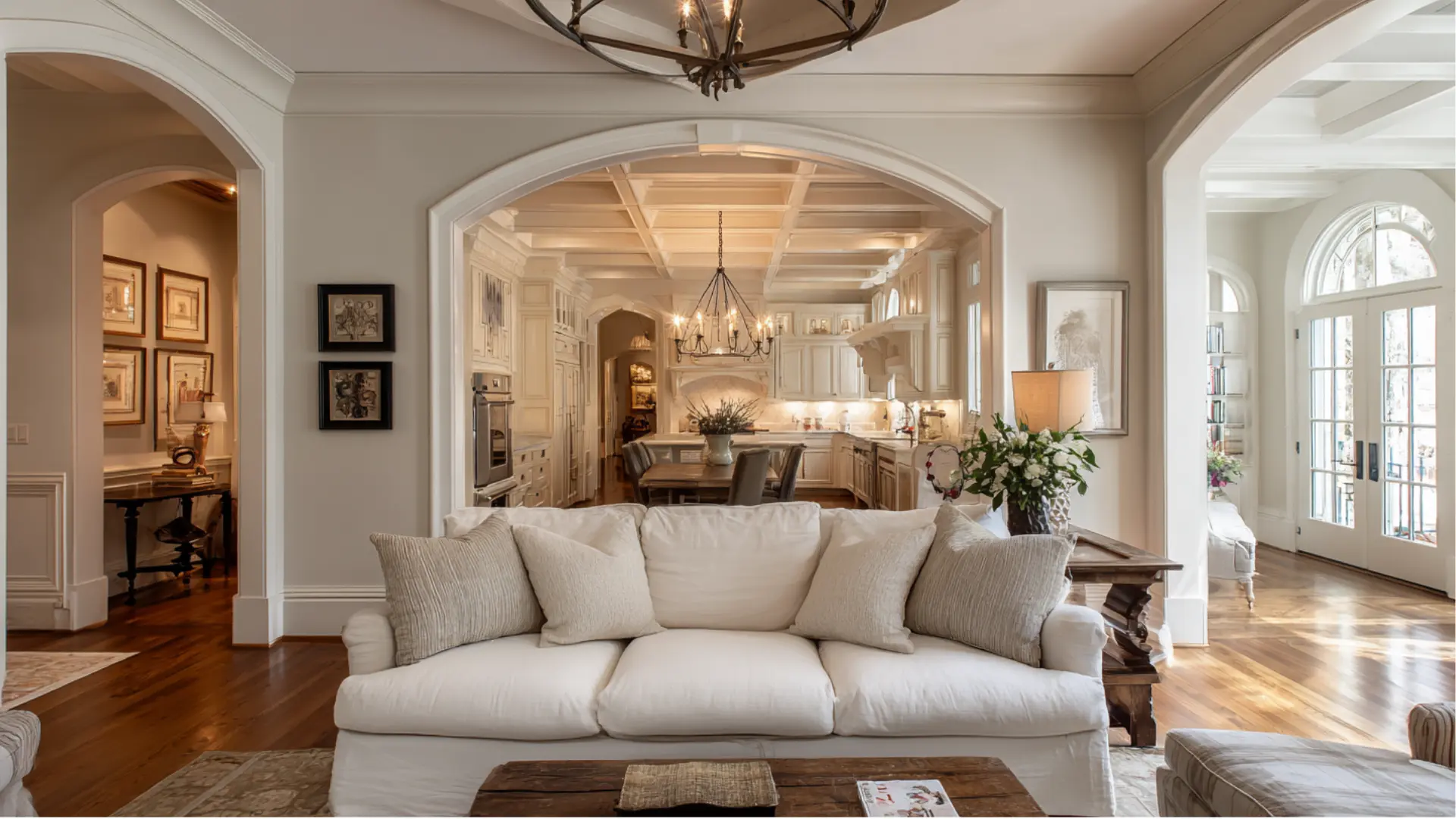
Original colonial layouts were divided into formal rooms.
Parlors, dining rooms, sitting rooms. Modern living does not always need that separation. Removing non-load bearing walls between the kitchen and living area is one of the most common and practical updates.
Open-concept renovations in older colonial homes average between $15,000 and $40,000, depending on wall placement and structural requirements.
Get two structural engineer quotes before committing to a contractor!
3. Minimal Decor With Historic Charm
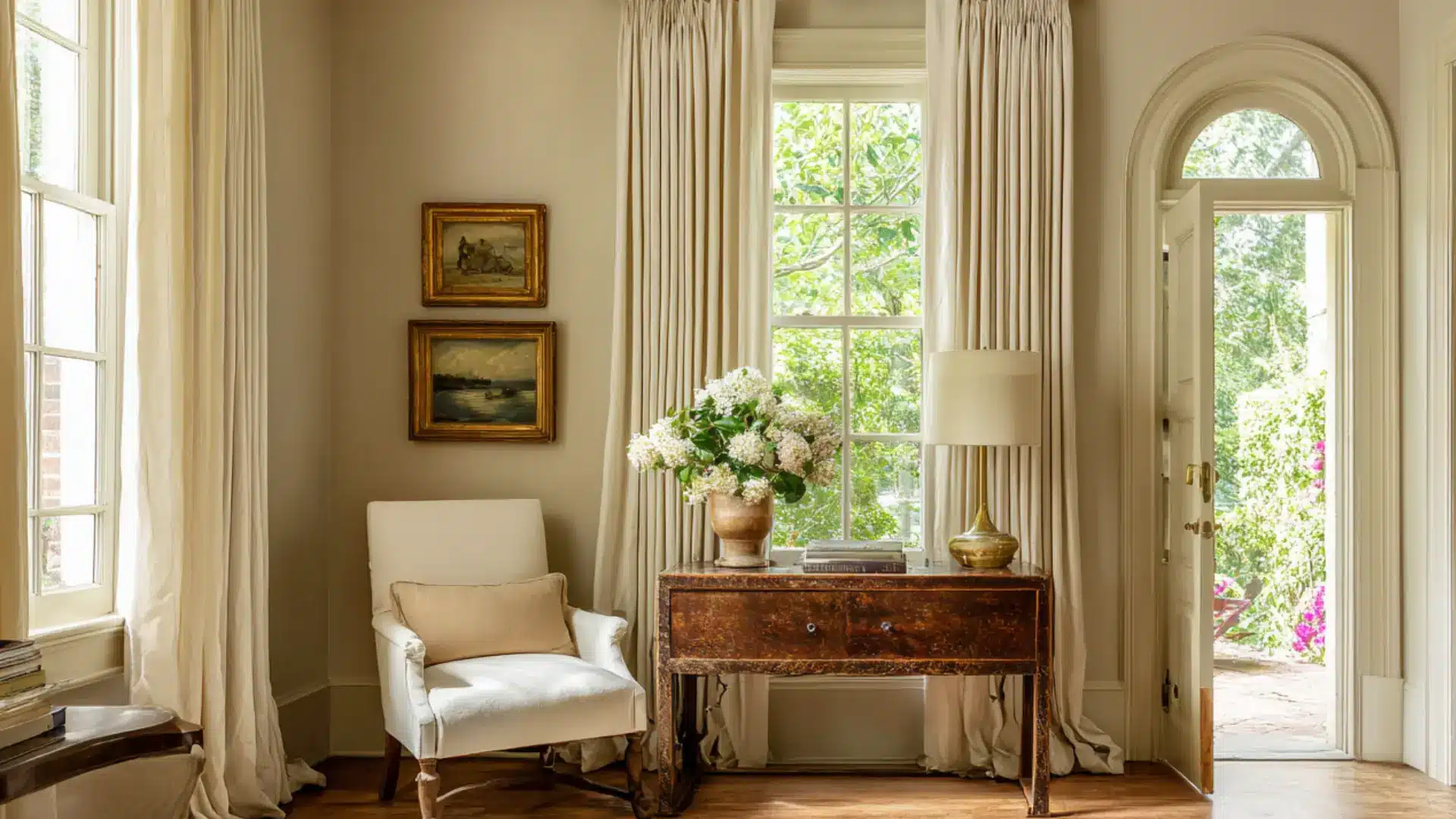
Less works better here!
These rooms have scale and proportion already built in. Overcrowding them with furniture and accessories flattens that effect fast.
- Choose two or three large statement pieces over many small ones
- Keep window treatments simple, floor length linen or cotton in warm neutrals
- Use wide plank hardwood floors where original flooring cannot be restored
- Let the architecture be the decor in rooms with original molding and trim
Climate matters here, too. In humid Southern states, solid hardwood can expand and warp. Engineered hardwood with a thick veneer layer handles humidity better and looks identical from the floor up.
4. Modern Lighting and Updated Finishes
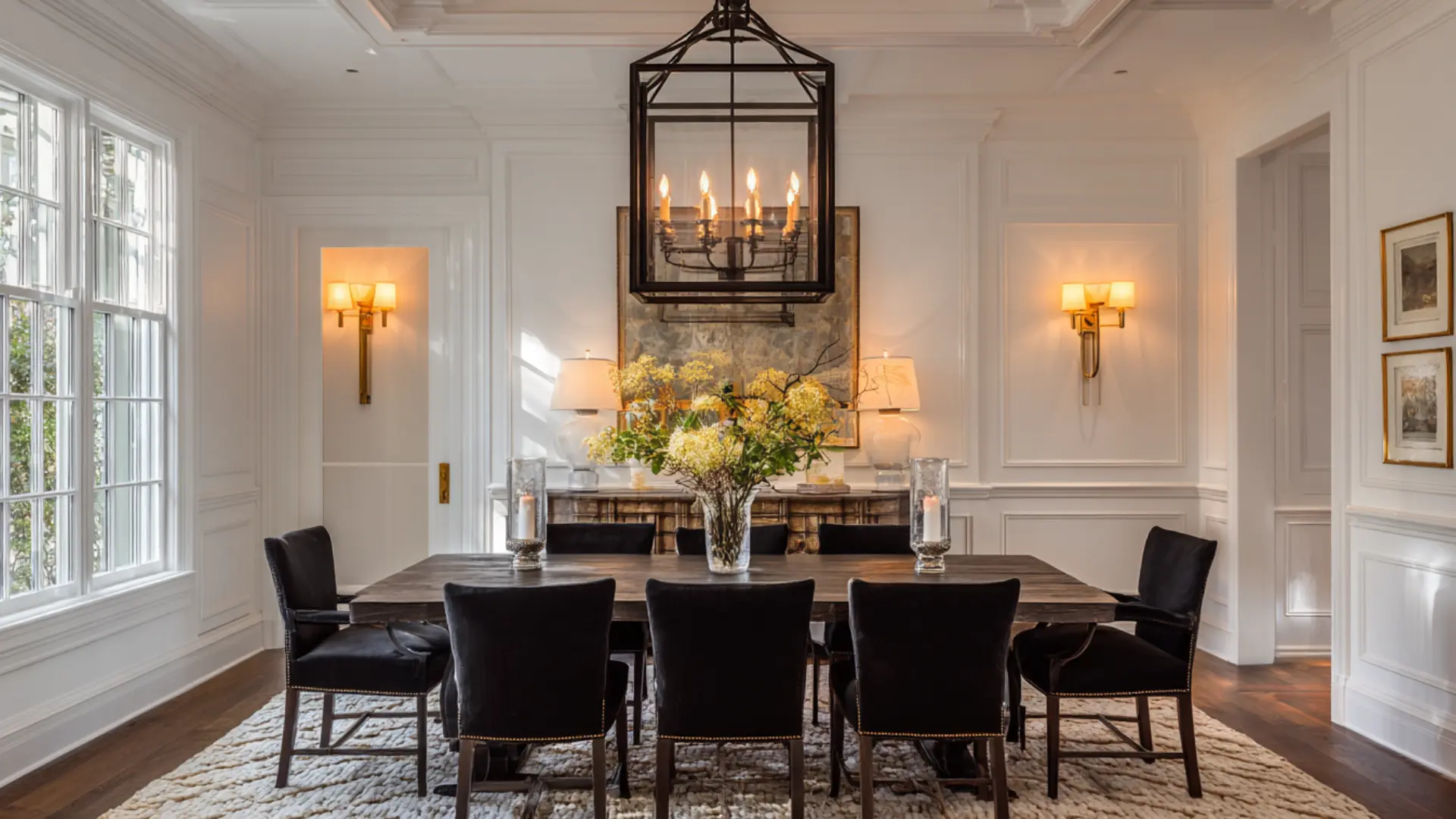
Lighting is where most Southern colonial updates either land or fall apart. The scale of these rooms needs fixtures that match.
A small pendant in a fourteen foot ceiling looks lost.
- Lantern style chandeliers work best in entry halls and dining rooms
- Brass and aged iron finishes hold up visually against original wood trim
- Recessed lighting should be used sparingly and only in the kitchen and utility areas
Matte and eggshell finishes on walls read more authentically in colonial homes than satin. Satin can look modern and slightly plastic against original millwork and trim.
Southern Colonial House Floor Plans That Work Beautifully
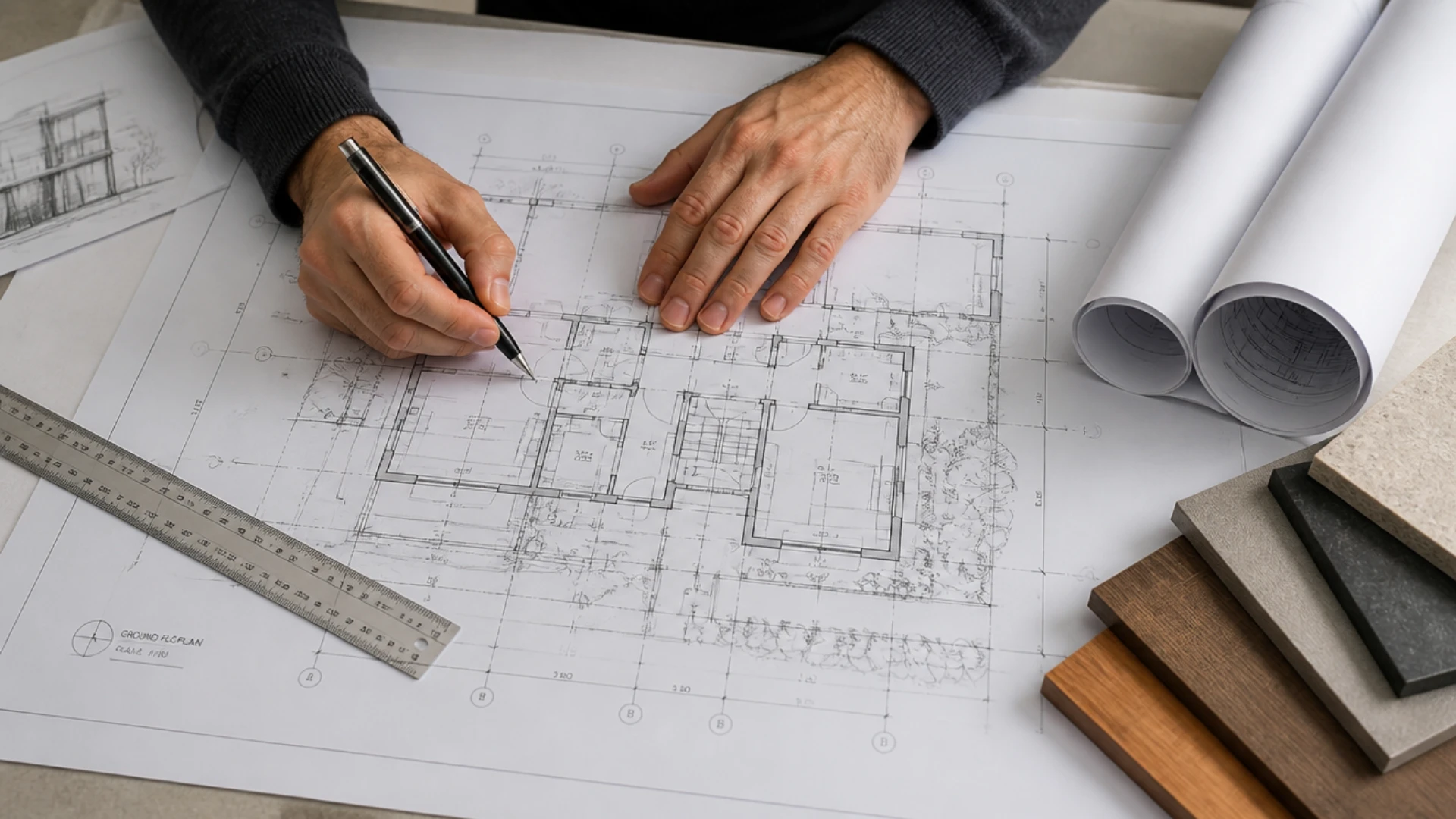
The floor plan is where everything either comes together or falls apart. Southern colonial homes were originally built around formal room divisions.
Today, the best layouts borrow that structure but make it work for how people actually live.
| Floor Plan Type | Best For | One Thing to Watch |
|---|---|---|
| Open Concept | Modern families, entertainers | Keep the ceiling height intact, or the proportion suffers |
| Family Friendly Layout | Larger households, multigenerational living | Avoid layouts that put all bedrooms in one narrow corridor |
| Wraparound Porch Plan | Homes with strong outdoor views | Needs a proper drainage slope, or water sits against the foundation |
| Indoor Outdoor Living | Warm climate homes, garden focused properties | Use the same flooring inside and out to make the transition feel seamless |
Before committing to an open concept layout in an older Southern colonial home, check whether the home is on the National Register of Historic Places. Some renovations require approval and structural changes may be restricted.
How to Decorate a Southern Colonial Home Without Overdoing it?
These rooms do not need much! They just need the right things. Start with furniture that has some weight.
Wingback chairs, a solid mahogany table, and cane back chairs with brass hardware. Dark wood and warm upholstery in deep greens or aged neutrals is really all the brief you need.
Color does a lot of the heavy lifting. Benjamin Moore Pale Oak OC-20 on the walls, white trim, and a deep forest green in the dining room is a combination that looks like it was always meant to be there.
For ceilings, go one shade darker than the walls. It sounds odd, but it works every single time.
Fabrics are where the room starts to feel lived in. Heavy linen, worn Persian rugs, and brass candlesticks on a sideboard. None of it needs to be new. The older it looks, the better it fits.
One real antique does more for a Southern colonial room than a whole cart of new accessories ever could.
Final Thoughts
Southern colonial homes are not complicated. They are just built with more intention than most.
The columns, the symmetry, the wide porches, and the tall ceilings all serve a purpose.
Get the colors right, choose furniture that matches the scale of the rooms, and do not overthink the decorating. One good antique, the right wall color, and a porch worth sitting on.
That is really all a Southern colonial home needs to feel complete!
Frequently Asked Questions
1. How Much Does it Cost to Build a Southern Colonial Home Today?
Building a Southern colonial home typically costs between $200,000 and $500,000, depending on size, location, and material choices.
2. What Landscaping Works Best Around a Southern Colonial House?
Boxwood hedges, magnolia trees, and symmetrical garden beds along the front path suit this style the most naturally.
3. Are Southern Colonial Homes Energy Efficient by Modern Standards?
Older builds need added insulation and updated windows, but the high ceilings and covered porches naturally reduce heat load in warm climates.