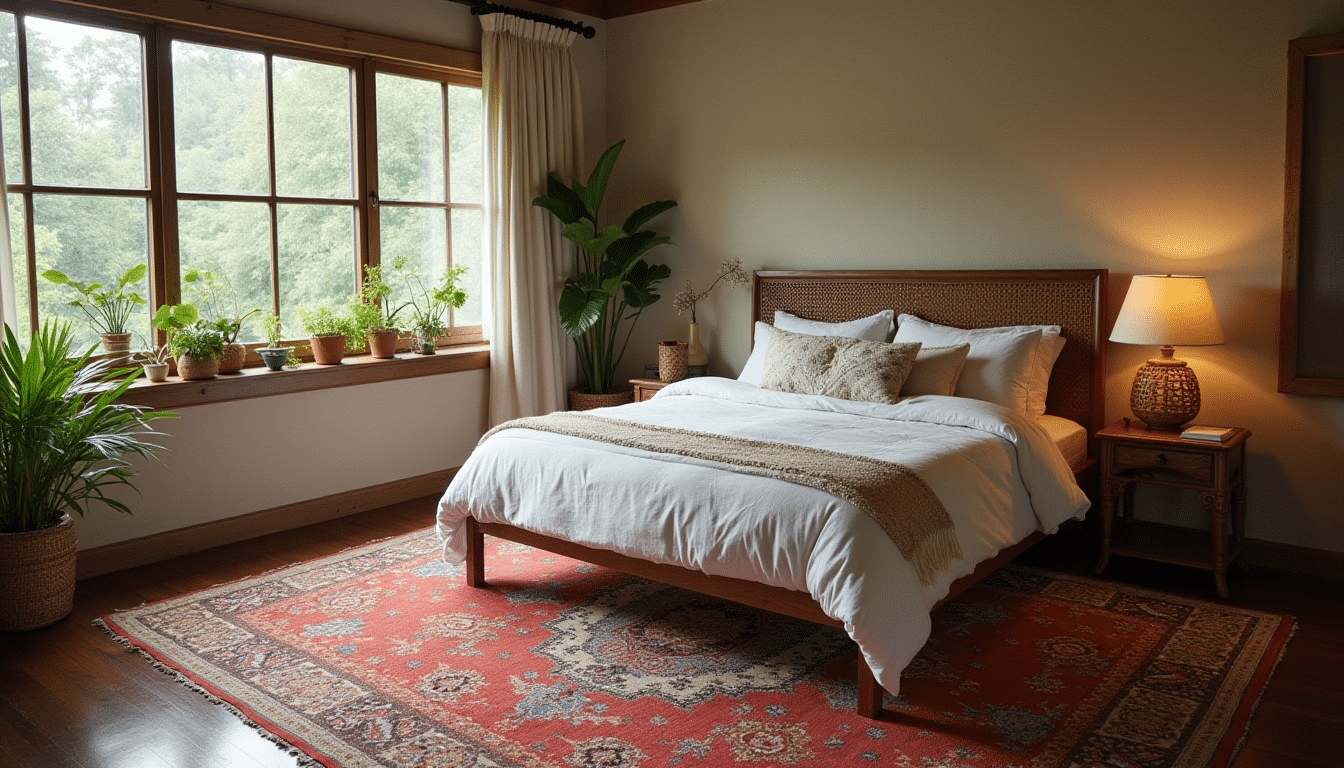
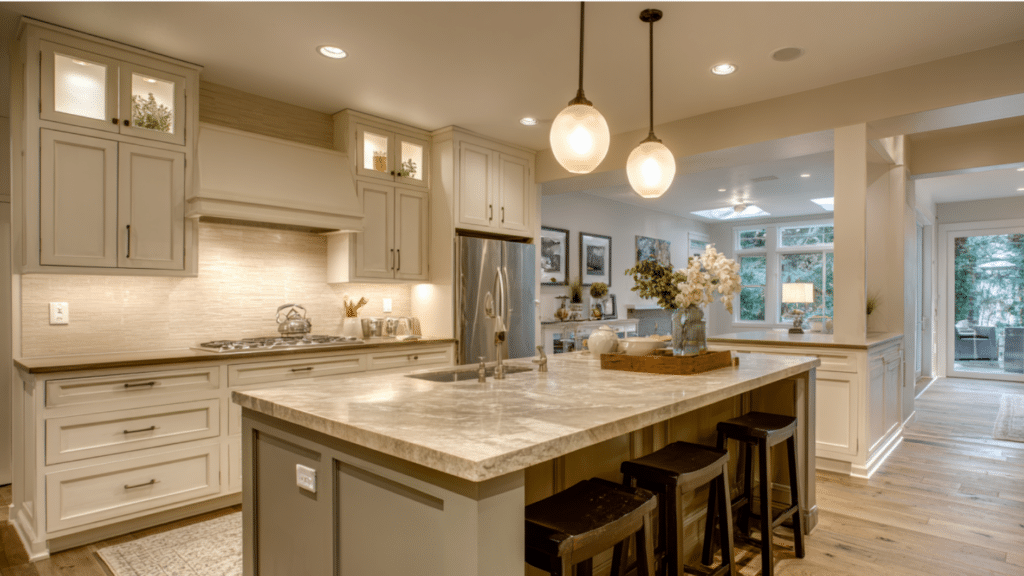
You’ve seen them in magazines. Scrolling through Pinterest at 2 AM.
That kitchen that flows right into the living room, no walls blocking the view. An open concept kitchen changes how your home feels and works.
But what you don’t know about is that it’s not just about knocking down walls. There’s an actual strategy involved.
Layout matters. Flow matters. And yeah, even where you put your trash can matters.
Let’s talk about what actually works.
What an Open Kitchen Concept Really Includes
Most people think it’s just about removing a wall. But there’s more to it than that.
This design removes physical barriers between your cooking area and adjacent living spaces. No door frames. No full-height walls.
The Key Elements
- Shared Sightlines
- Connected Flooring
- Unified Lighting Plan
- Flexible Zoning
You can see from the stove to the sofa. The floor flows between zones. Lighting works together. And you still define areas with islands, rugs, or furniture.
Going open doesn’t mean zero separation. You can have partial walls or cabinetry. The goal is balance. Distinct areas that still feel connected.
Popular Open Concept Kitchen Layout Ideas
These layouts prove there’s no single way to design an open kitchen. Pick what fits your space and how you actually live.
1. Island-Centered Layout
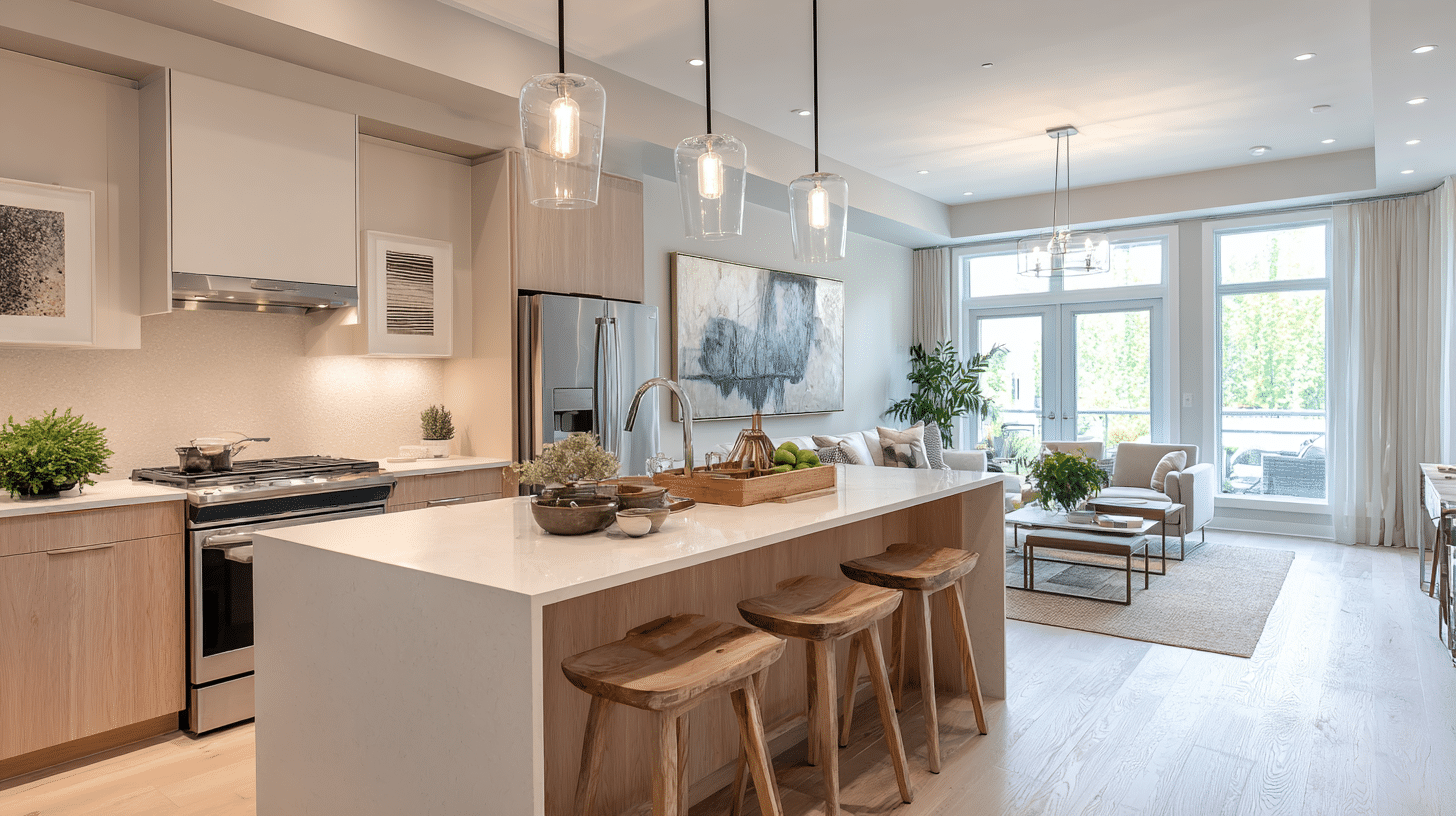
Your island becomes the star here. It sits in the middle, handling prep work, seating, and storage simultaneously.
People naturally gather around it, creating a clear divide between the kitchen and living area without blocking views.
Pro Tip: The trick is sizing it right so you have at least 42 inches of clearance on all sides for comfortable movement.
2. Double-Island Layout
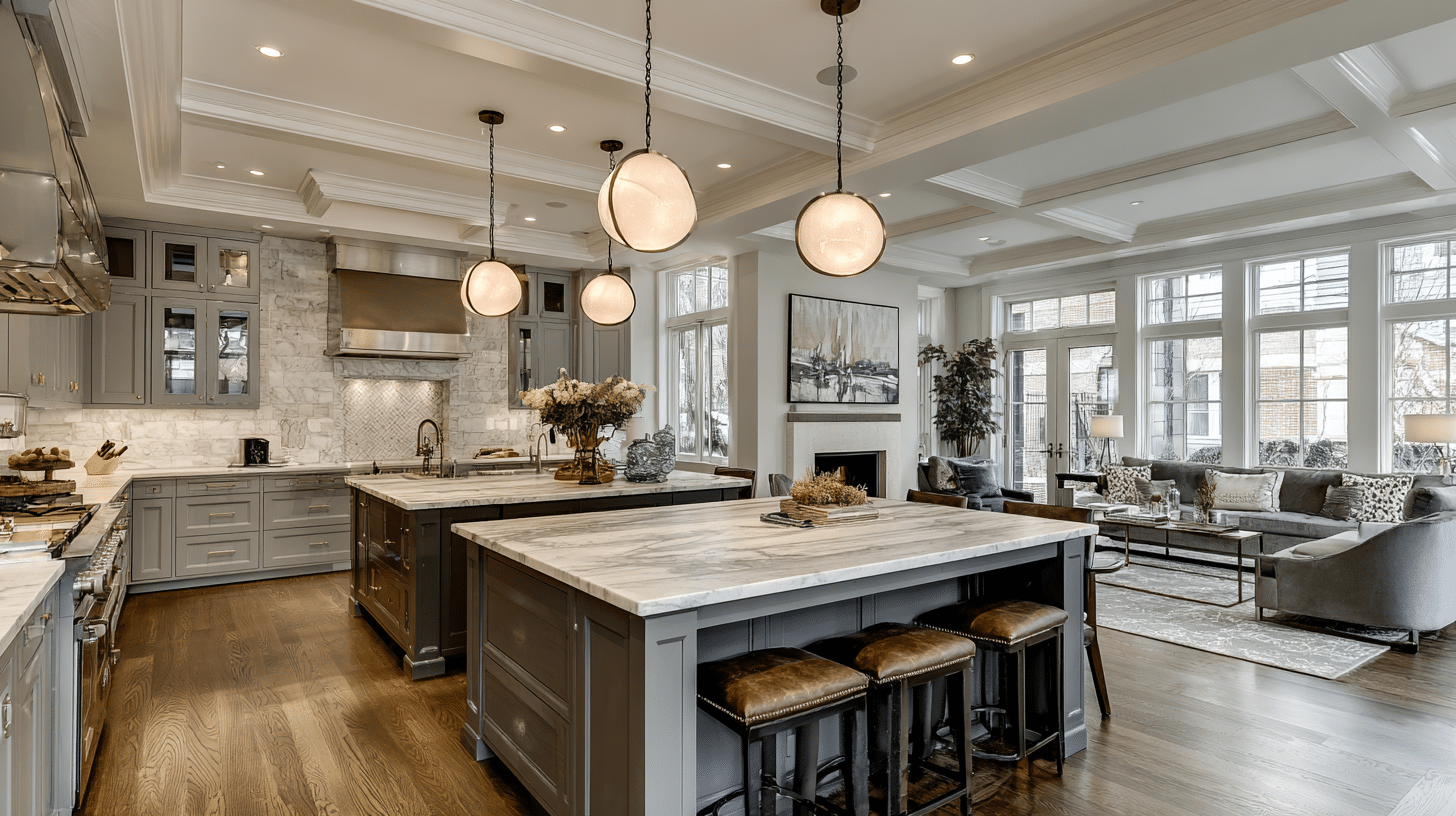
Two islands instead of one. Sounds excessive, but if you’ve got the room, it’s incredibly practical.
One island can handle cooking tasks while the other becomes a serving station or homework spot. Great for families who actually use their kitchen.
Make sure you’ve got at least 48 inches between the two islands so people can pass through comfortably.
3. L-Shaped Kitchen with Island
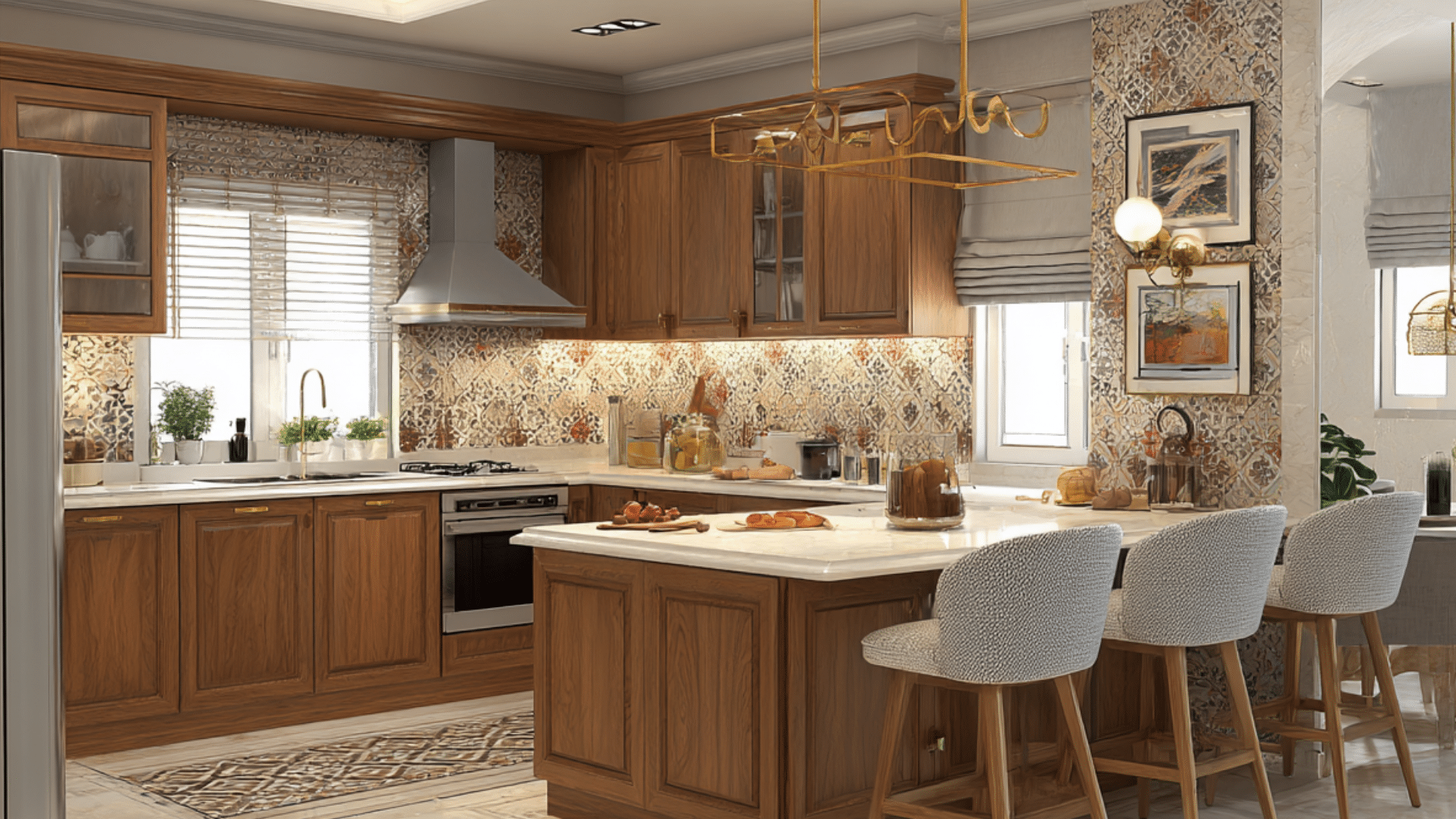
The counters form an L along two walls, and the island floats out front. This setup gives you plenty of counter space while keeping the room open.
It works well in medium to large spaces where you want defined work zones.
Quick Tip: Position your island so it doesn’t interrupt the natural traffic flow between the kitchen and living area.
4. Straight-Line Kitchen with Island
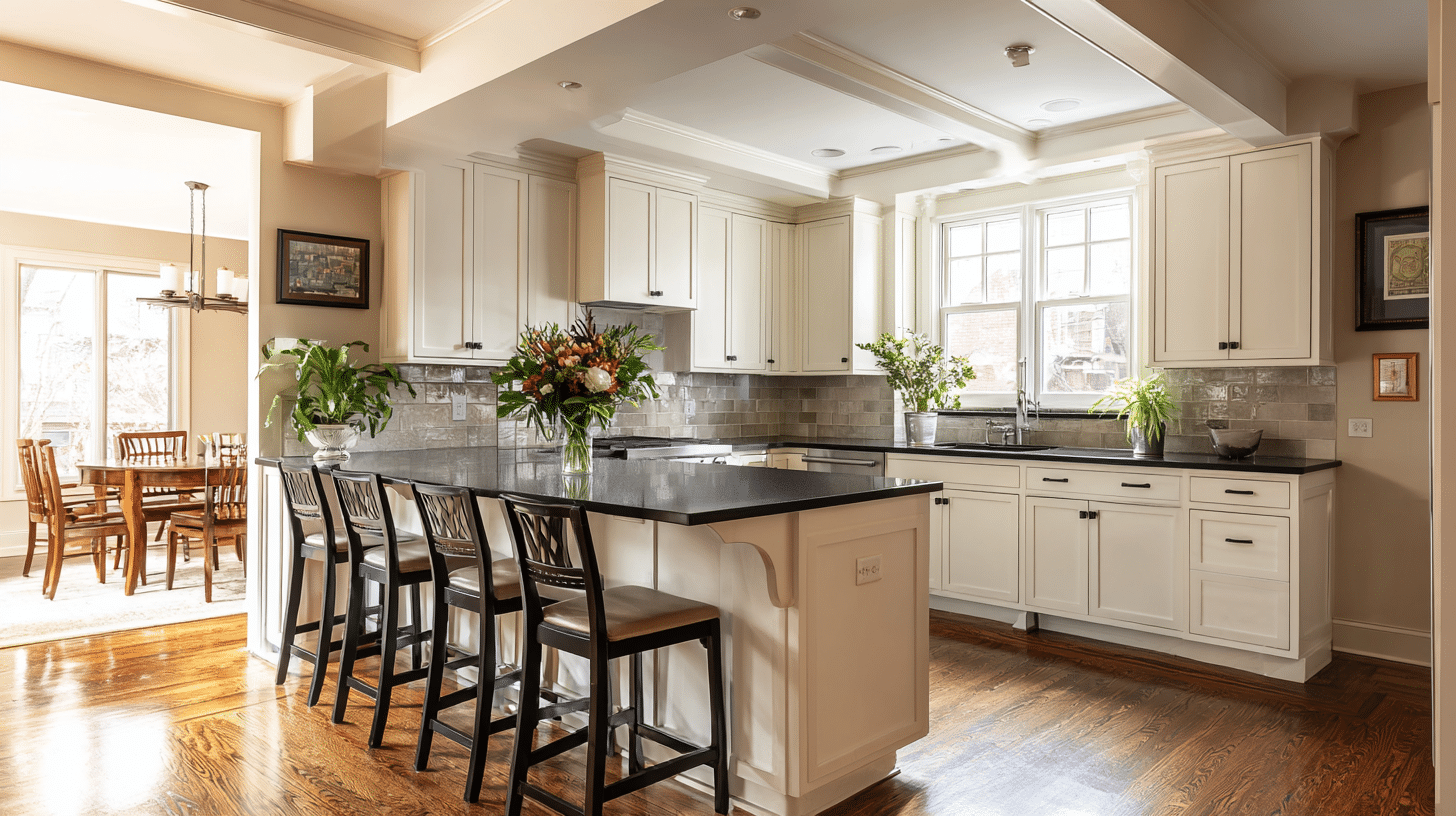
Everything lines up on one wall. The island sits parallel, adding extra surface area and seating.
This works in narrow spaces or studio layouts where you can’t spread out much.
The parallel setup creates a natural walkway that keeps traffic flowing smoothly. It’s also budget-friendly since you’re only building out one wall of cabinetry.
5. U-Shaped Kitchen Open on One Side
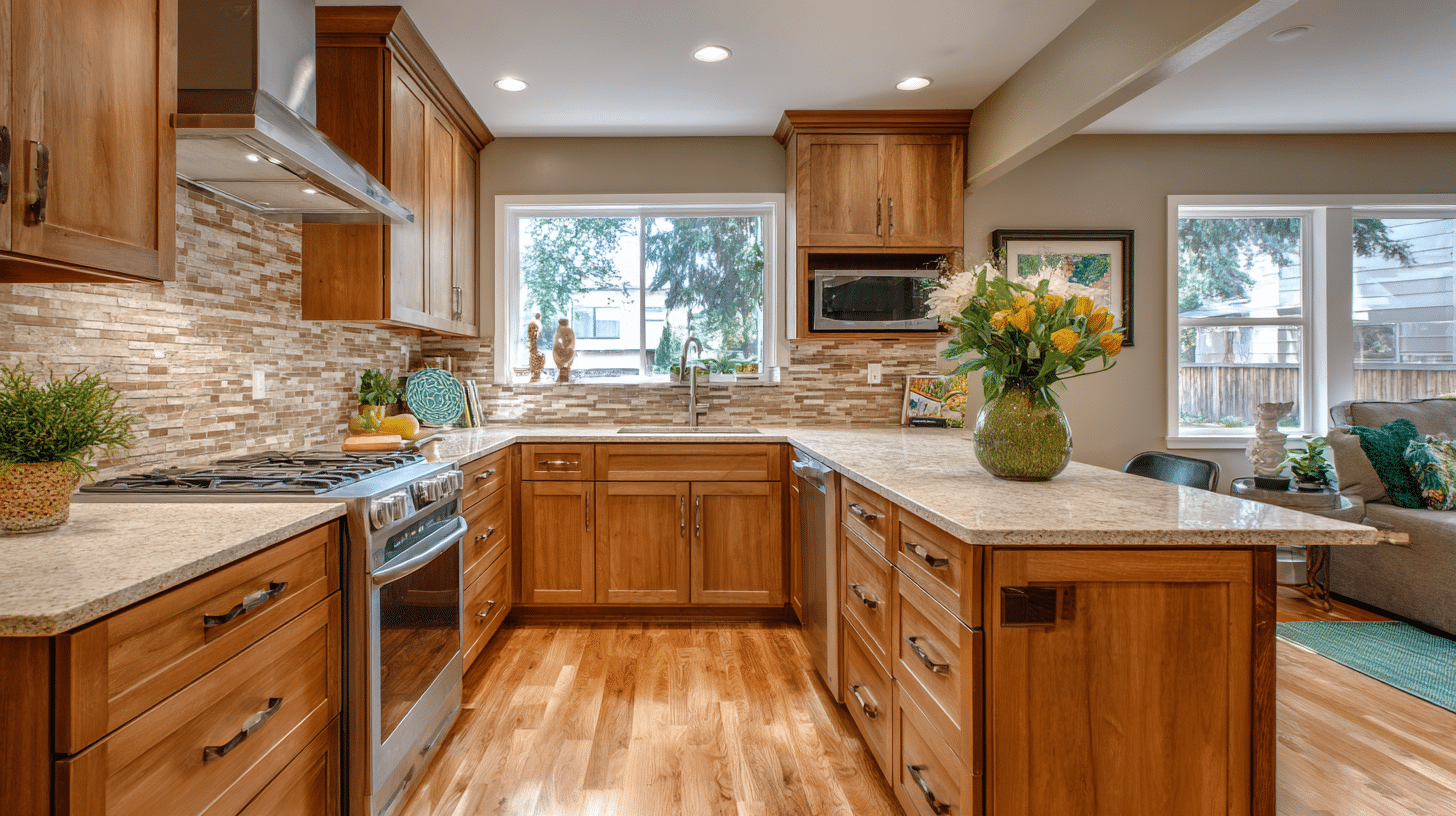
Counters wrap around three walls, but one side stays open to the living area.
You get tons of workspace and storage. The open side lets you chat with guests while you’re chopping vegetables or stirring a pot.
This layout works great if you need serious counter space but don’t want to feel boxed in.
6. Peninsula Layout
Think of it as an island that’s attached to a wall or cabinet run.
It juts out into the room. You get the benefits of an island without needing as much floor space, which is perfect for tighter layouts.
Quick Tip: Add seating on the open side of your peninsula to create an instant breakfast bar.
7. Broken-Plan Layout with Half Wall
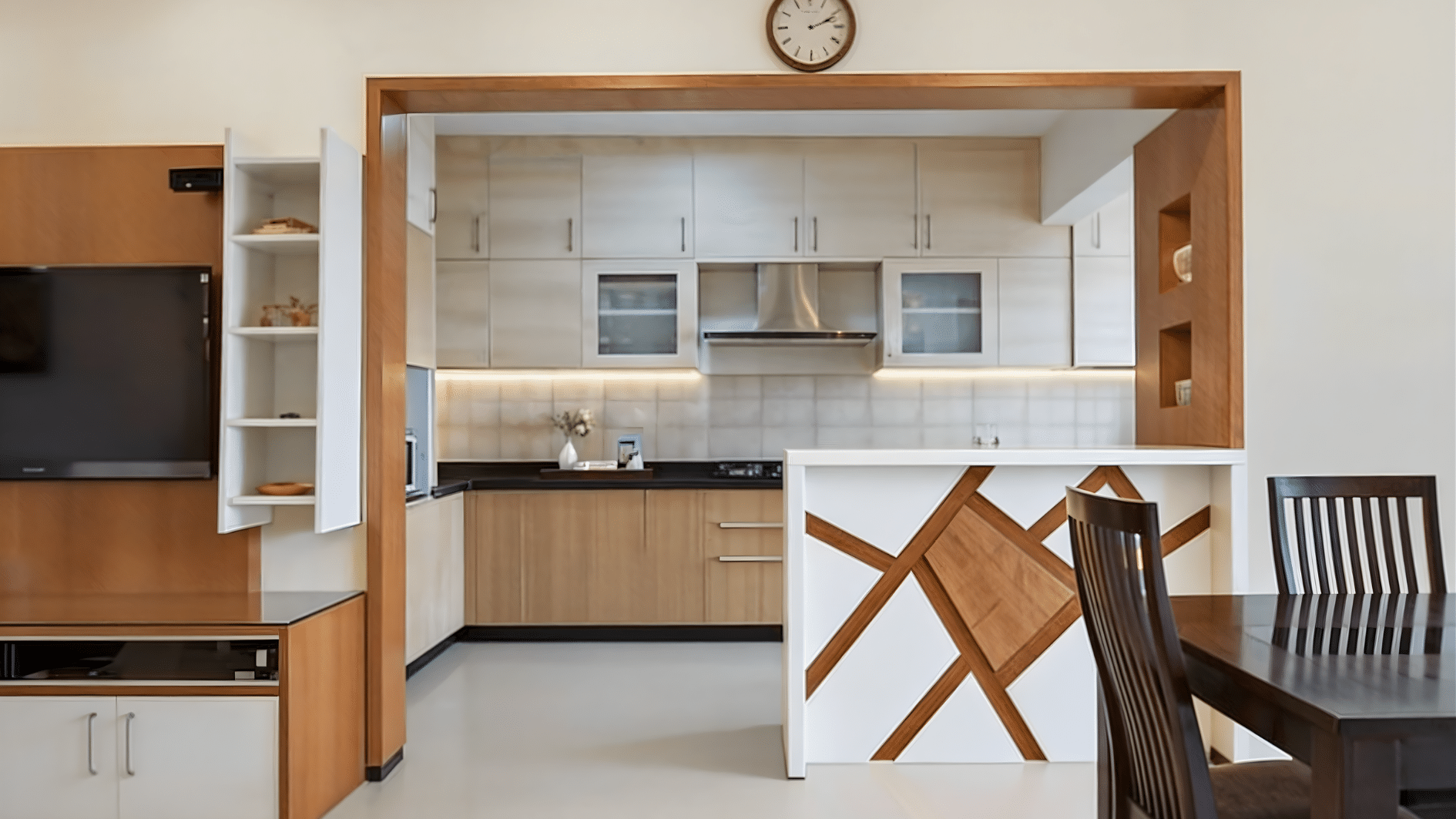
A partial wall or low cabinet separates spaces without closing them off completely.
You maintain some division for noise and mess control. But you still get that connected feeling and can pass plates over the top.
8. Galley Kitchen Opened on One End
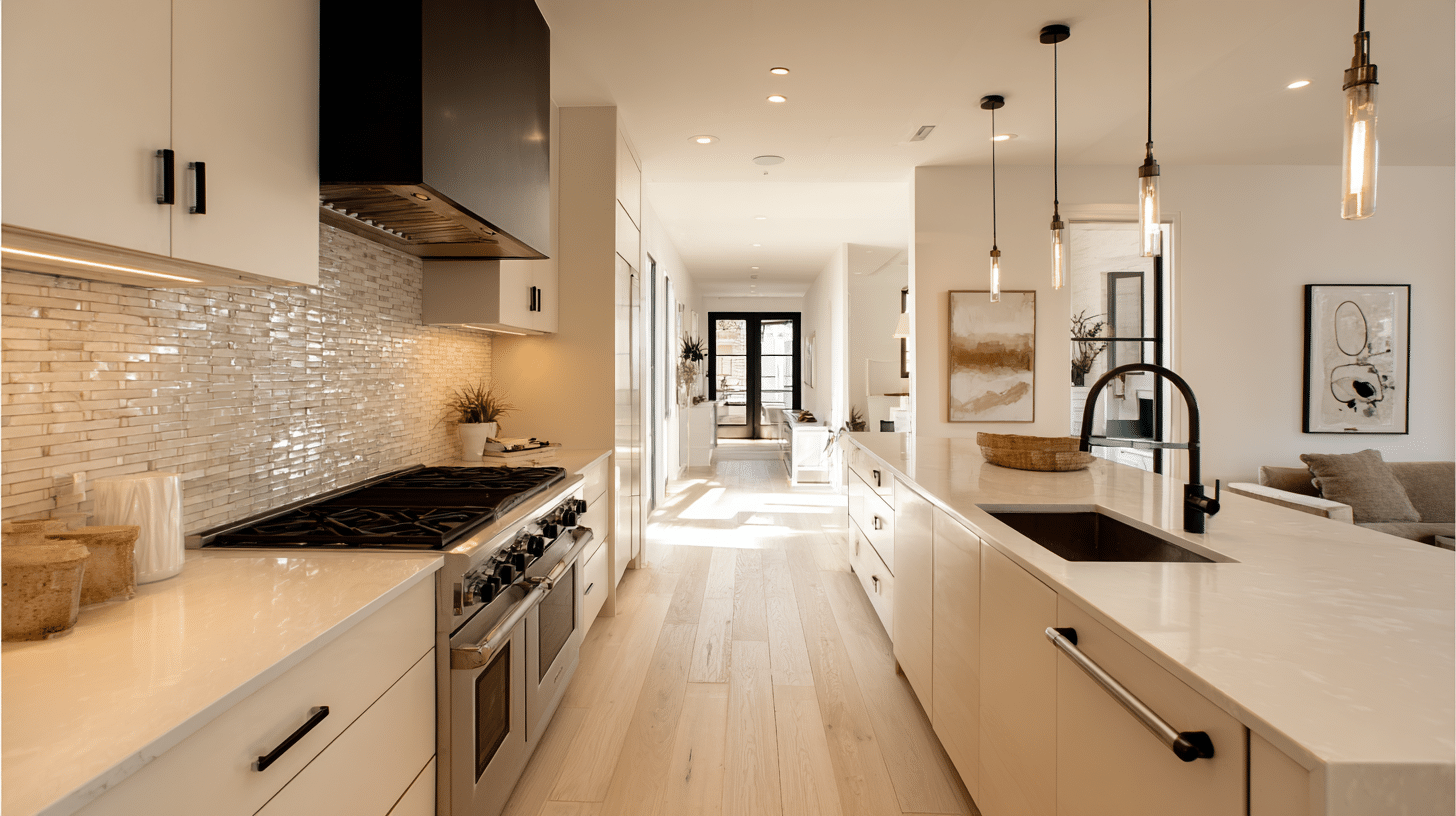
Two parallel counters with one end open to the living space.
The closed end keeps your work triangle tight and efficient. The open end invites people in without them getting underfoot while you cook.
It’s one of the most practical and efficient layouts for small to medium kitchens.
9. Wide Galley Layout with Island
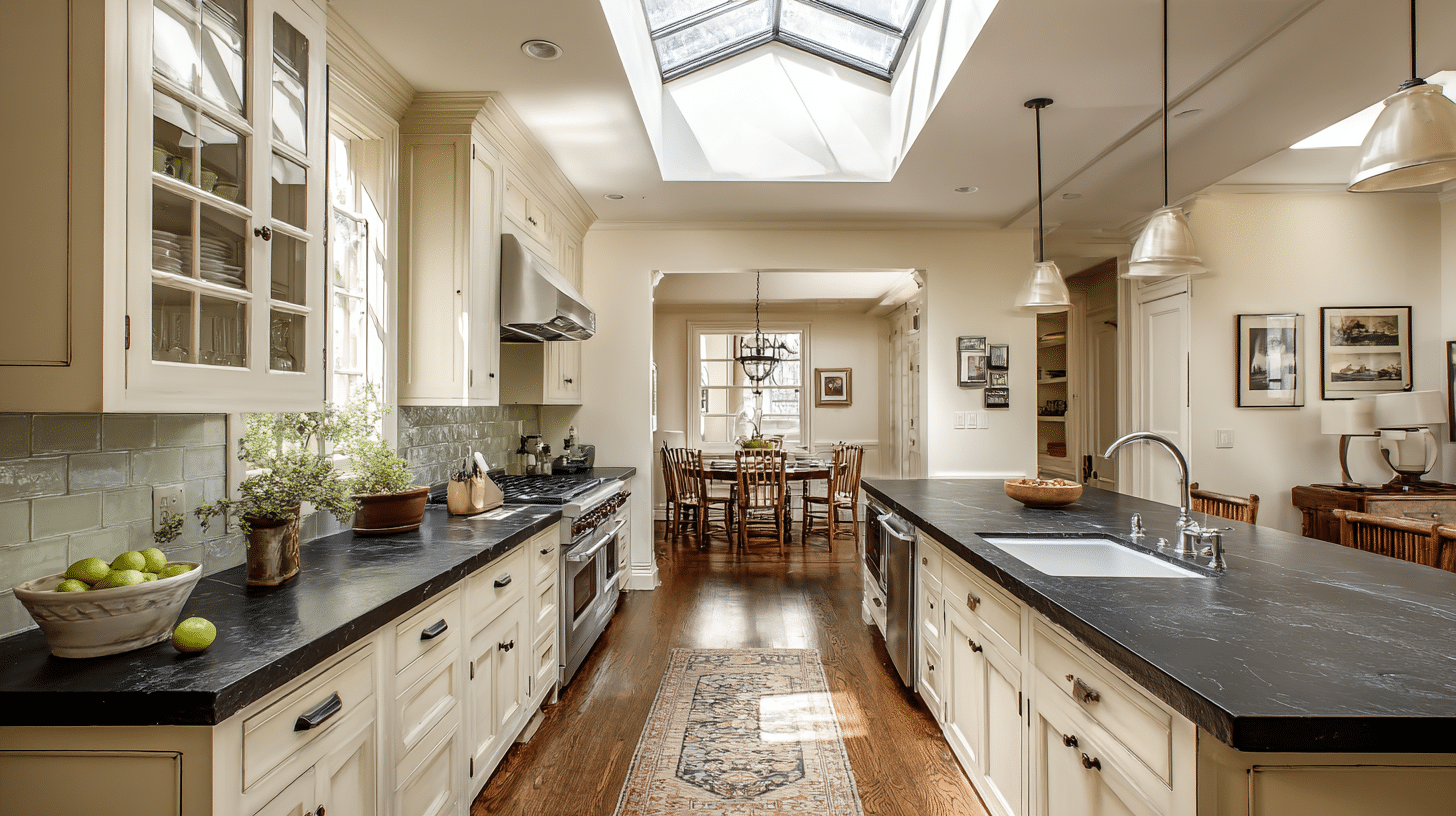
Take a galley kitchen and widen it, then add an island in the middle. You’ve got parallel counters on either side and a central workspace.
The width gives you room to breathe, and the island prevents the space from feeling like a narrow corridor.
Multiple people can work here without constantly saying “excuse me.”
10. Kitchen Behind a Long Island Bar
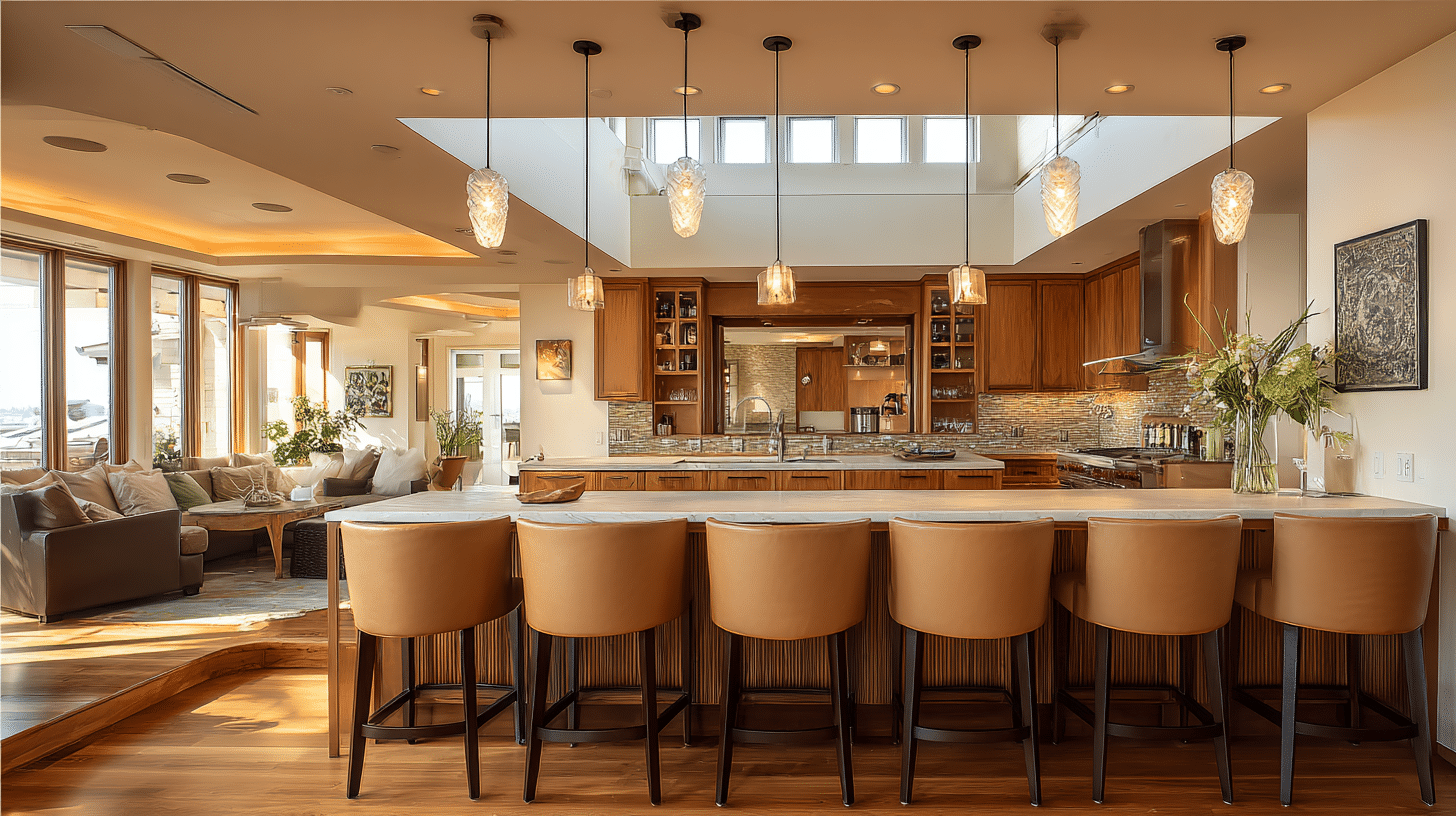
The cooking zone hides behind a long, tall island that feels more like a bar. It blocks the view of dirty dishes and clutter while you’re entertaining.
Your guests see the pretty side.
The height difference also creates natural separation between work and social zones.
11. Kitchen with a Dining Table as Divider
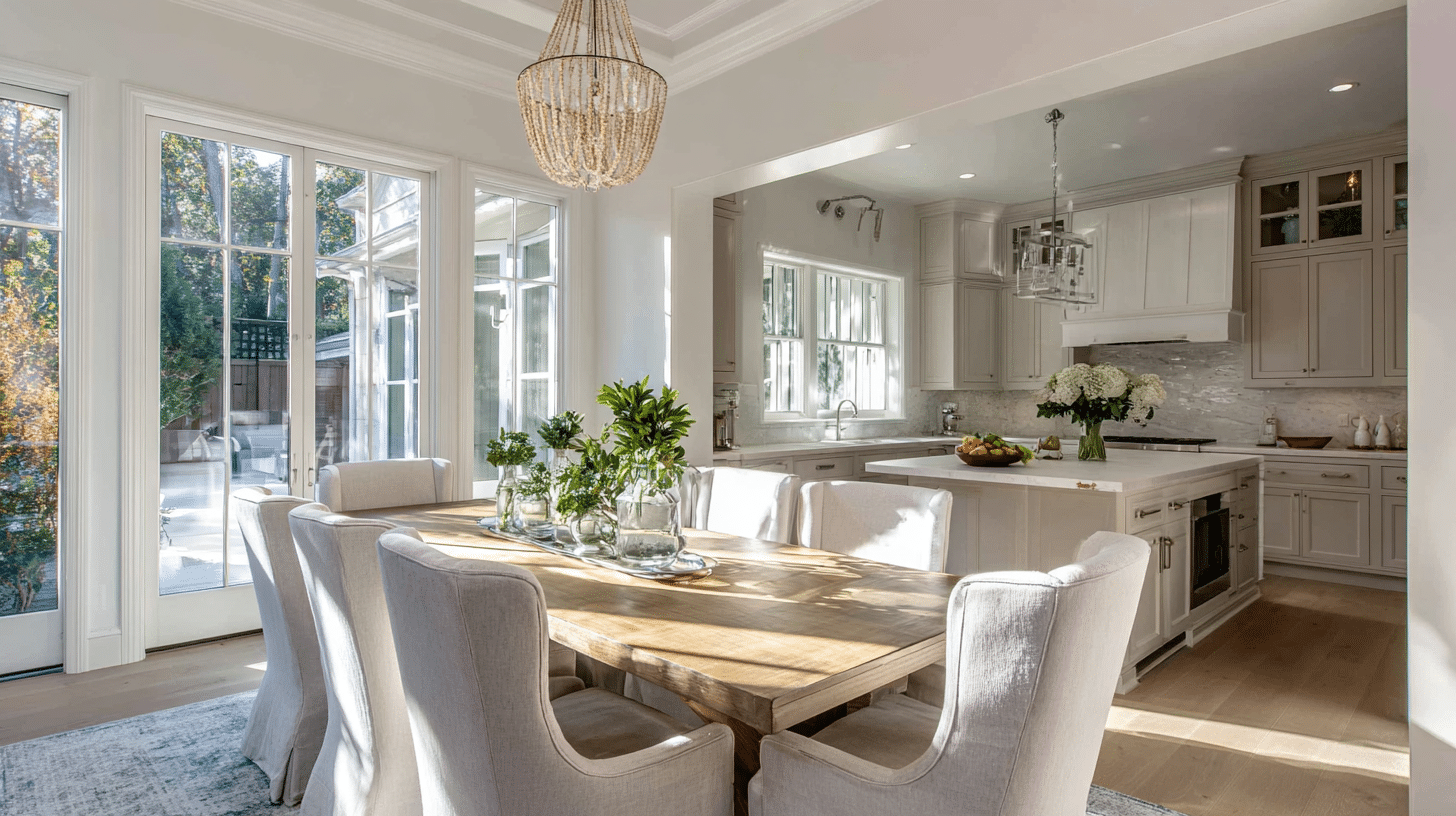
Skip the island and use your dining table to mark where the kitchen ends. It’s a softer, less formal approach.
The table does double duty as a meal prep space when you need it.
Choose a table that’s the right height for both eating and working, usually around 30 inches. This setup feels more like a European kitchen.
12. Open Concept Kitchen with a Floating Shelf Wall
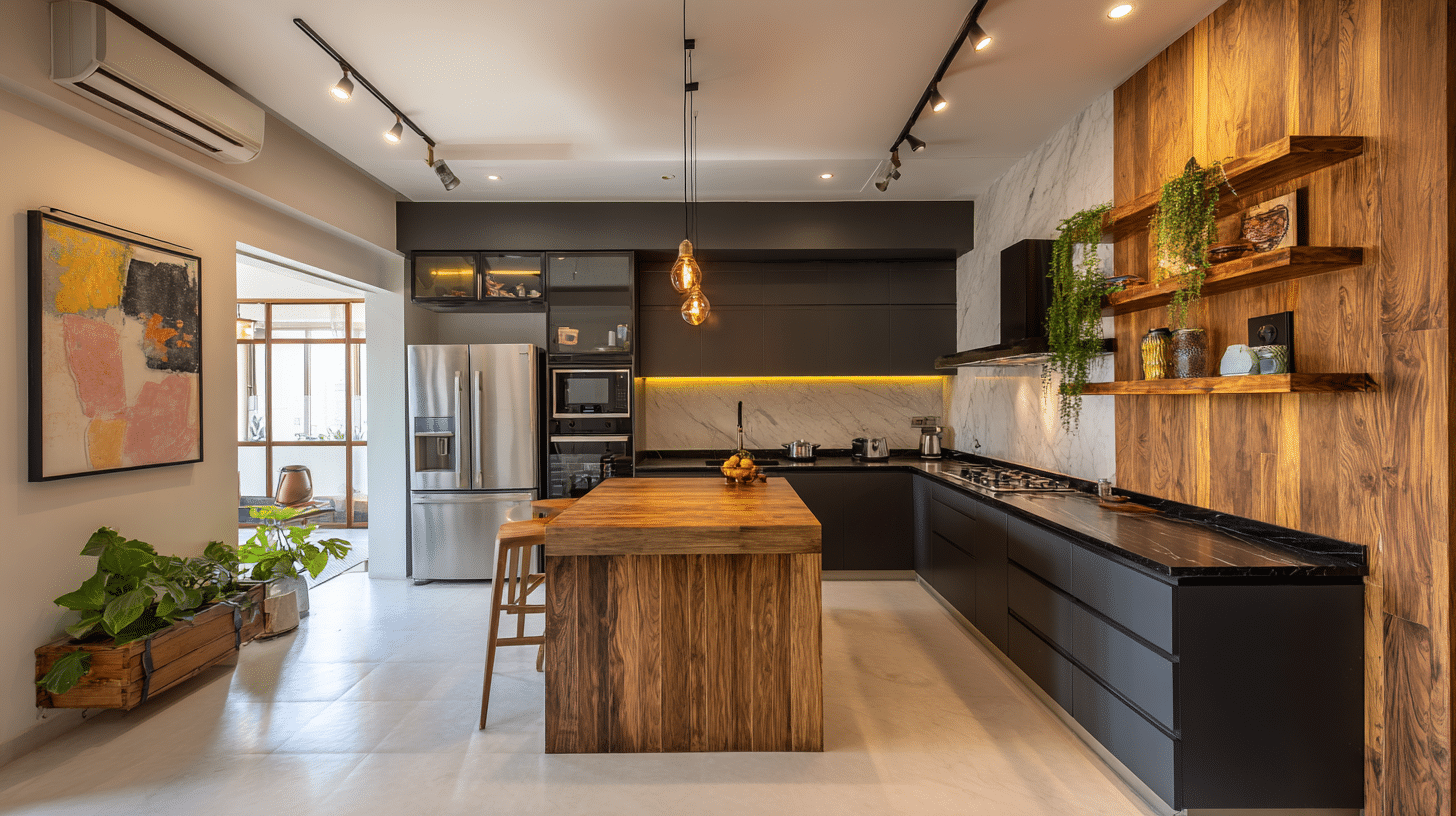
Instead of upper cabinets, you install open shelves that don’t touch the ceiling or go all the way down. They provide storage and a subtle divider.
You’ll need to keep them organized since everything’s on display.
Quick Tip: Use matching containers and dishes on floating shelves to keep the look clean and intentional.
13. Kitchen with A Sliding Glass Divider
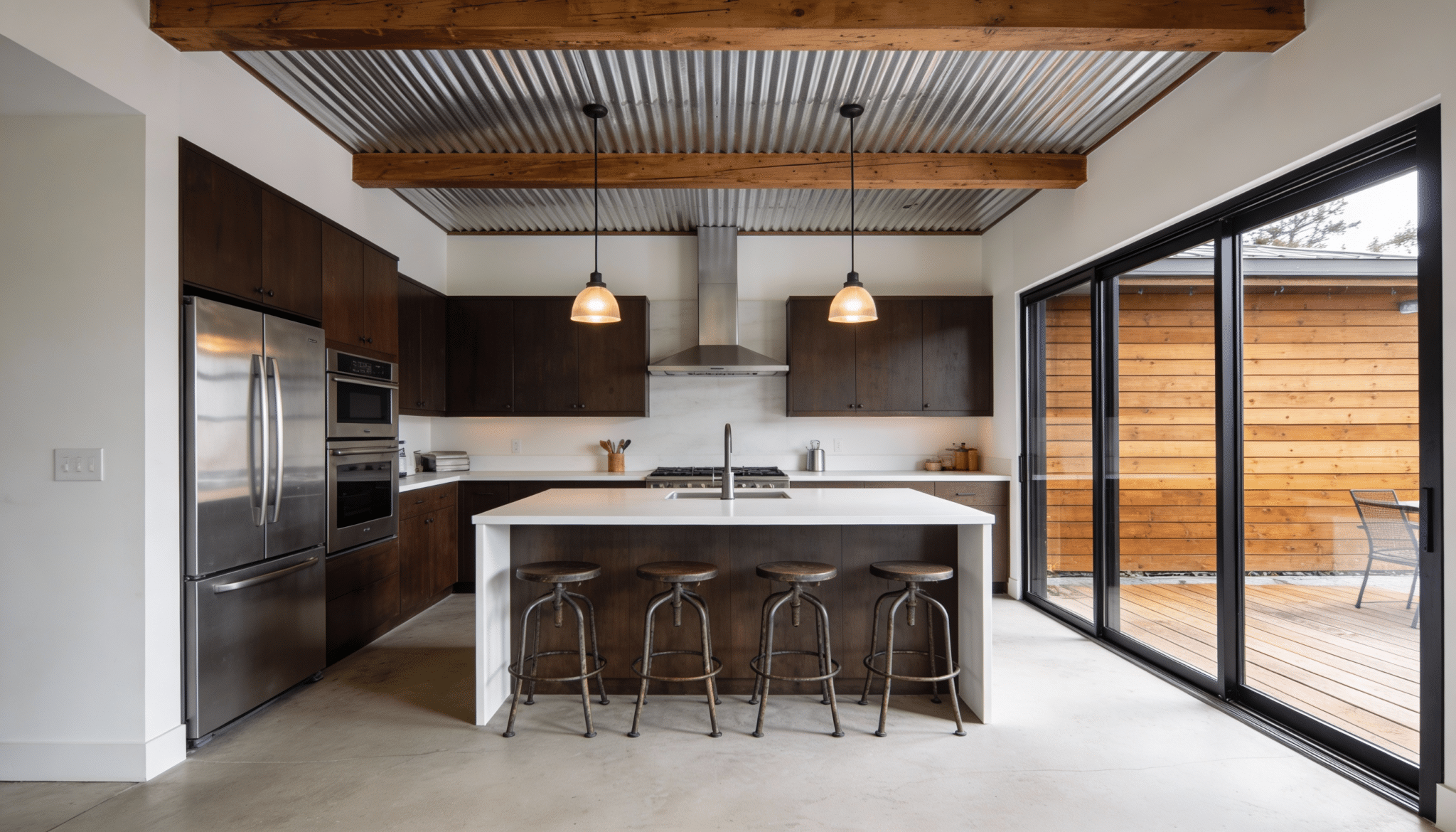
A glass panel slides to close off the kitchen when you want separation. Leave it open most of the time for that connected feel.
Slide it shut when cooking gets messy, or you want to contain noise and smells.
It’s the best of both worlds, giving you flexibility without committing to one layout permanently.
14. Corner Kitchen Overlooking the Living Room
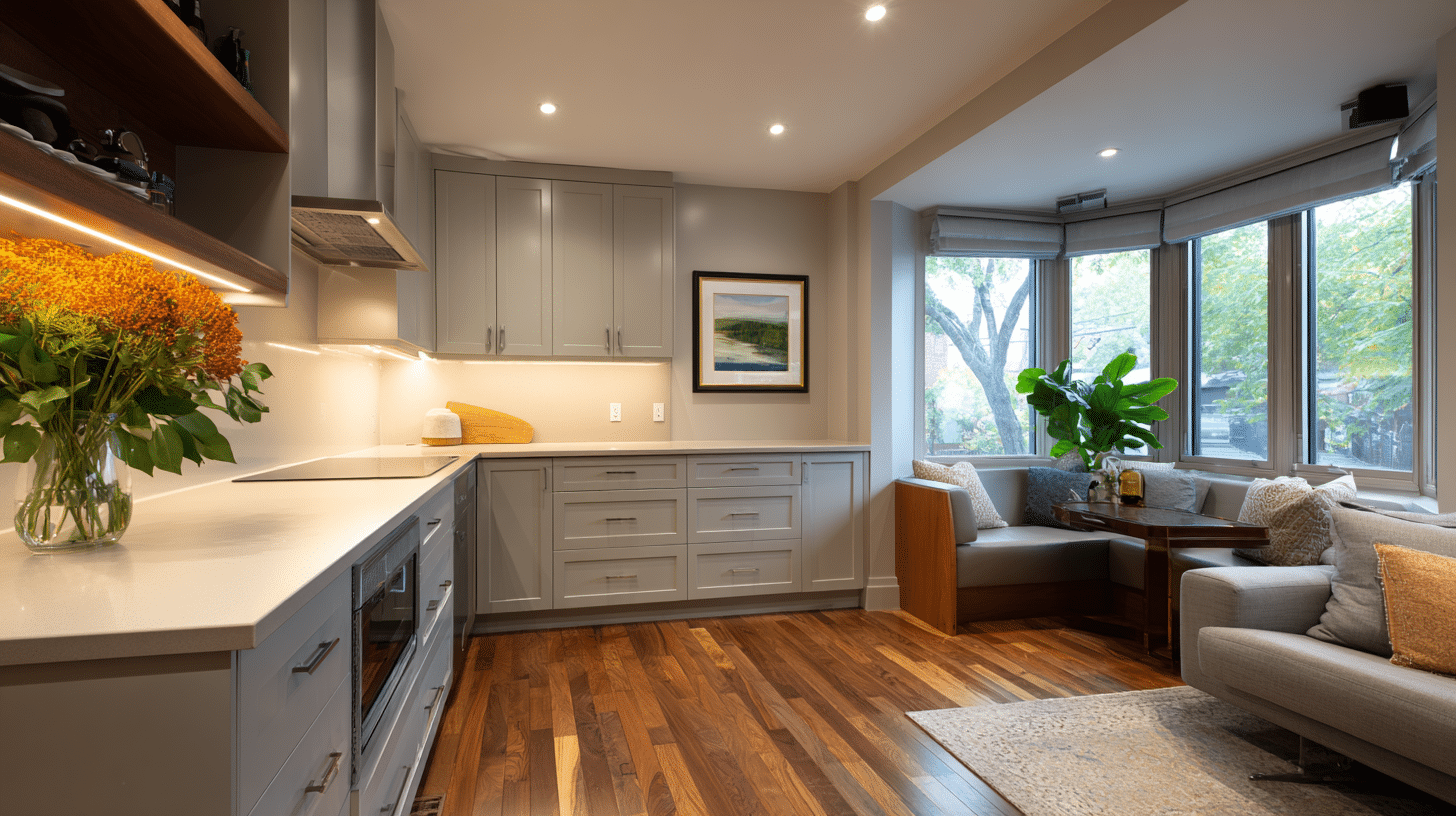
Your kitchen tucks into a corner with counters on two walls.
The other sides stay open, giving you sightlines across the living room. It feels tucked away but not isolated.
Works in odd-shaped spaces. You can maximize corner cabinets for hidden storage, too.
15. Curved Island Layout
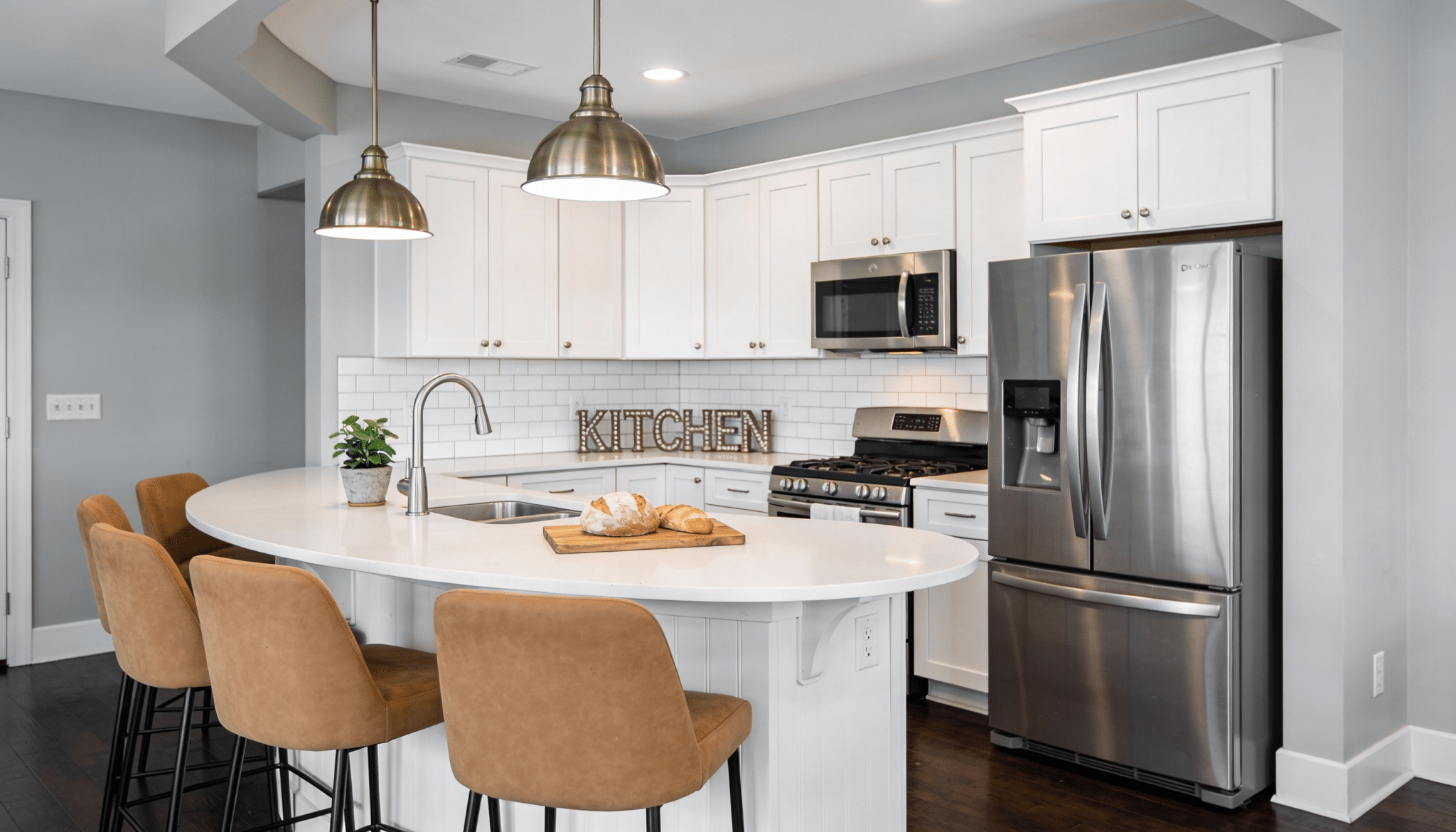
The island curves rather than sitting at right angles.
Softens the look. People can move around it more easily, and it adds visual interest without feeling gimmicky.
The curve also offers more seating options, since people can pull up stools.
16. Open Concept Kitchen Framed by Ceiling Beams
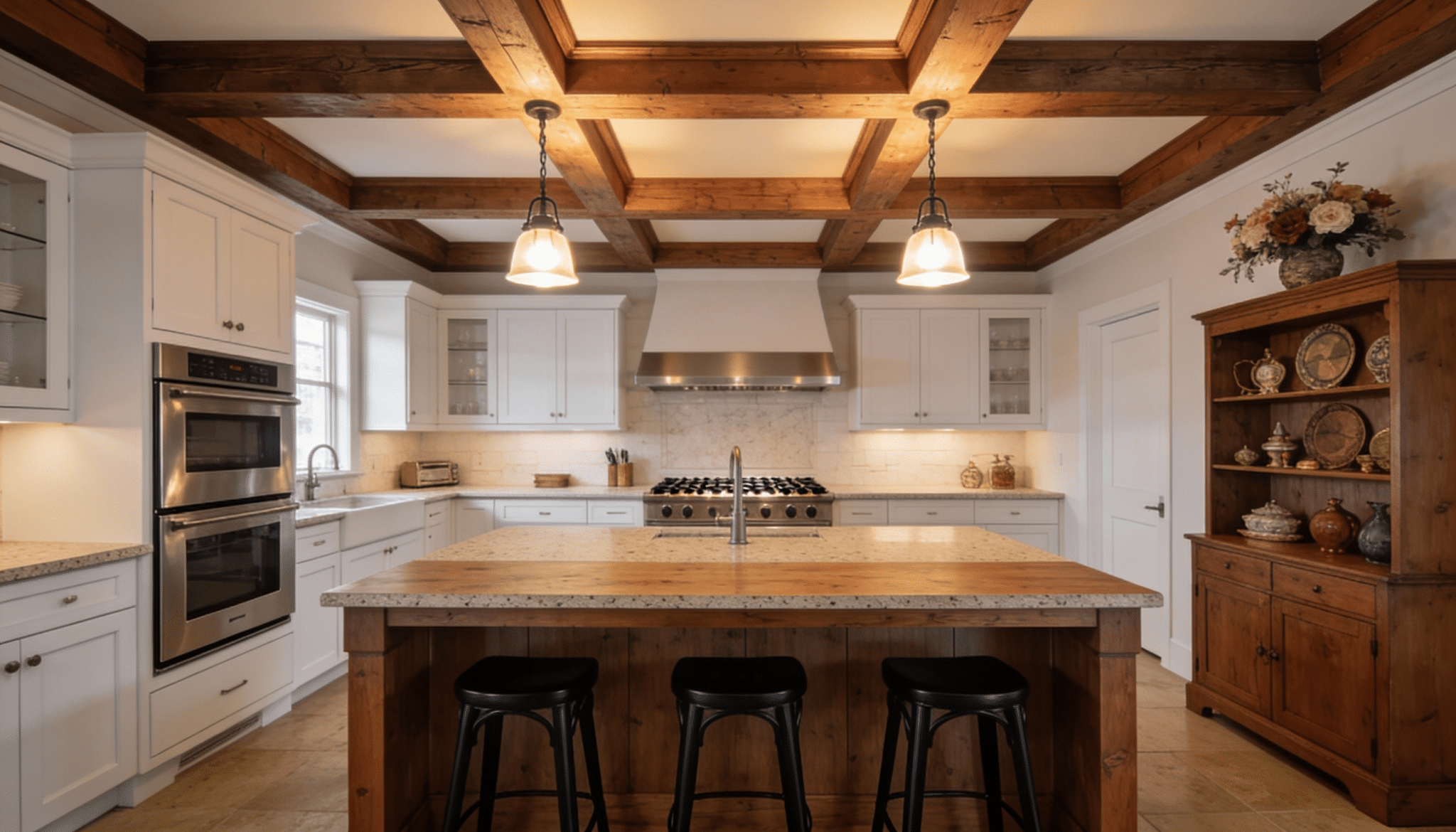
Exposed beams or a dropped ceiling outline the kitchen area above.
The floor stays open, but the ceiling creates a visual boundary. Defines the space without walls.
This works especially well in homes with high ceilings or open lofts. You can even run pendant lights or track lighting along the beams.
17. Open Kitchen Concept with a Raised Bar Counter
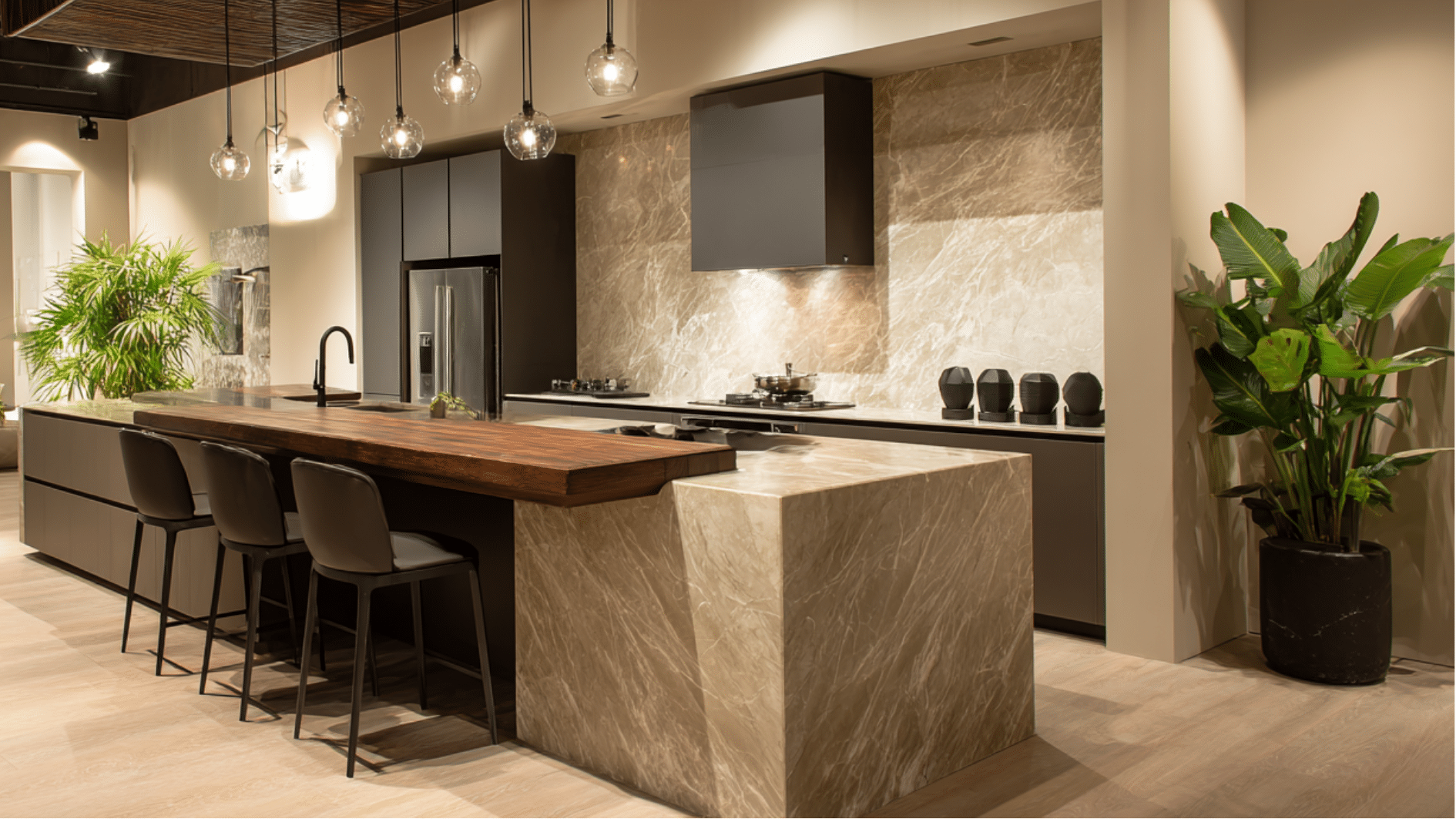
Part of your island or peninsula sits higher than the rest, creating a bar-height ledge. It hides sink messes from the living room and provides casual seating.
Stools tuck underneath when not in use.
Quick Tip: A raised counter that’s 42 inches high works perfectly with standard bar stools.
18. Kitchen with Bench Seating Attached to The Island
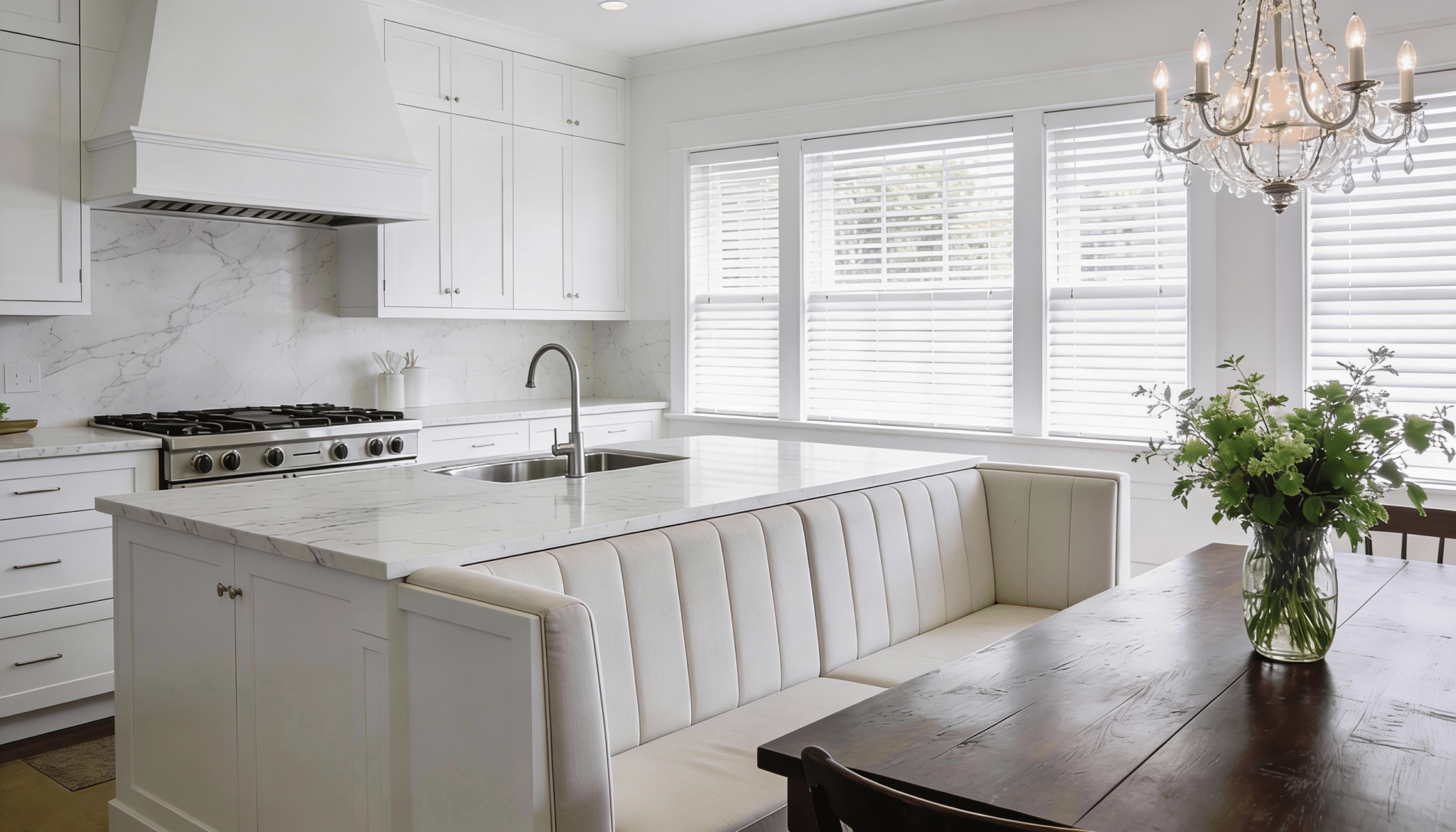
Built-in benches connect to your island instead of using stools. They’re more comfortable for longer meals, and they don’t slide around.
Kids love them, and they create a cozy breakfast nook feel. You can add cushions and storage underneath to make them even more functional and attractive.
19. Parallel Counter Layout
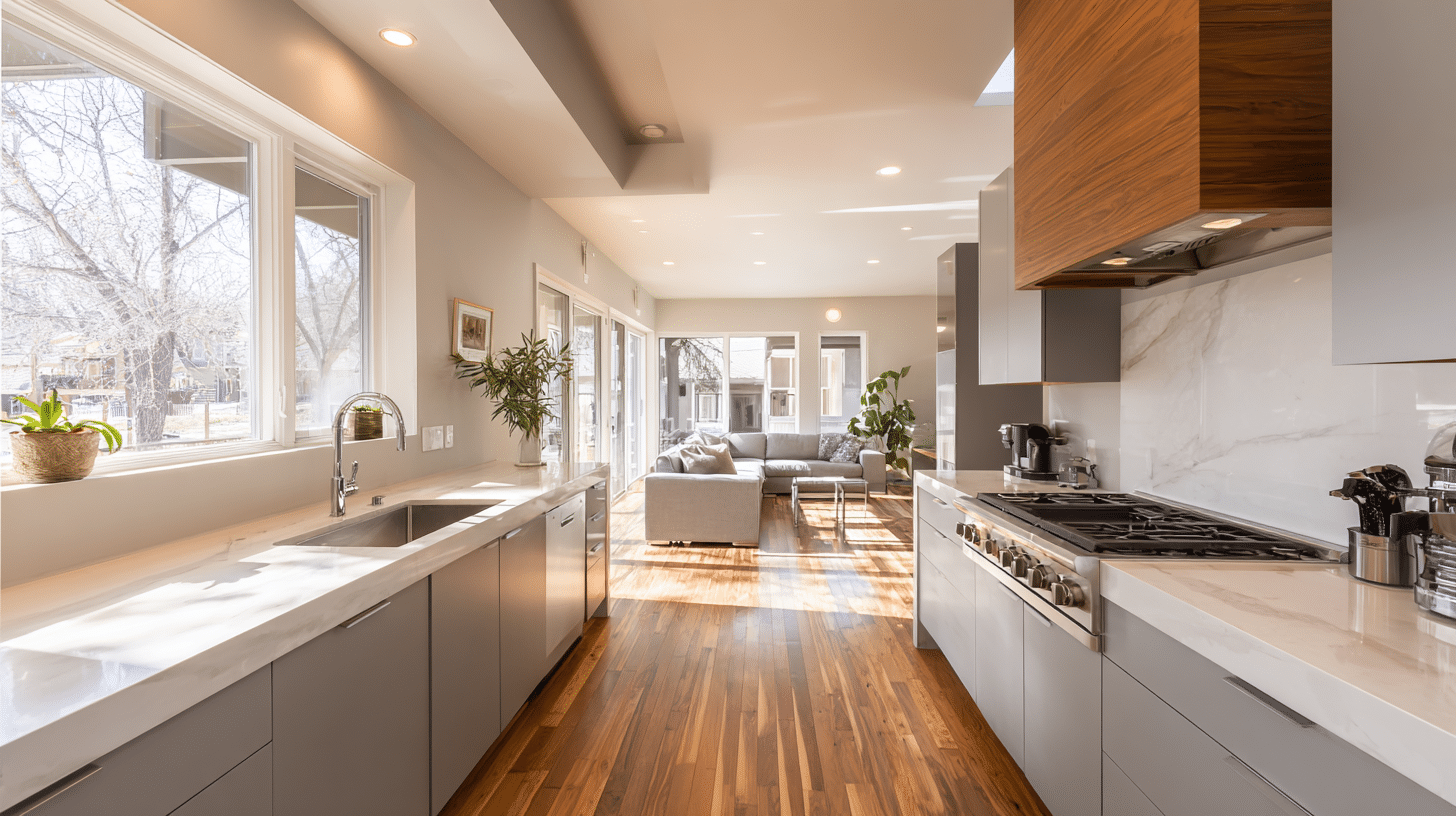
Counters run along two opposite walls with open space between them.
No island. Just a wide aisle. This keeps costs down and works well in rectangular rooms where you want maximum openness.
It’s also one of the easiest layouts to clean since there’s no island to navigate around.
20. Compact Open Kitchen with Wall-Mounted Storage
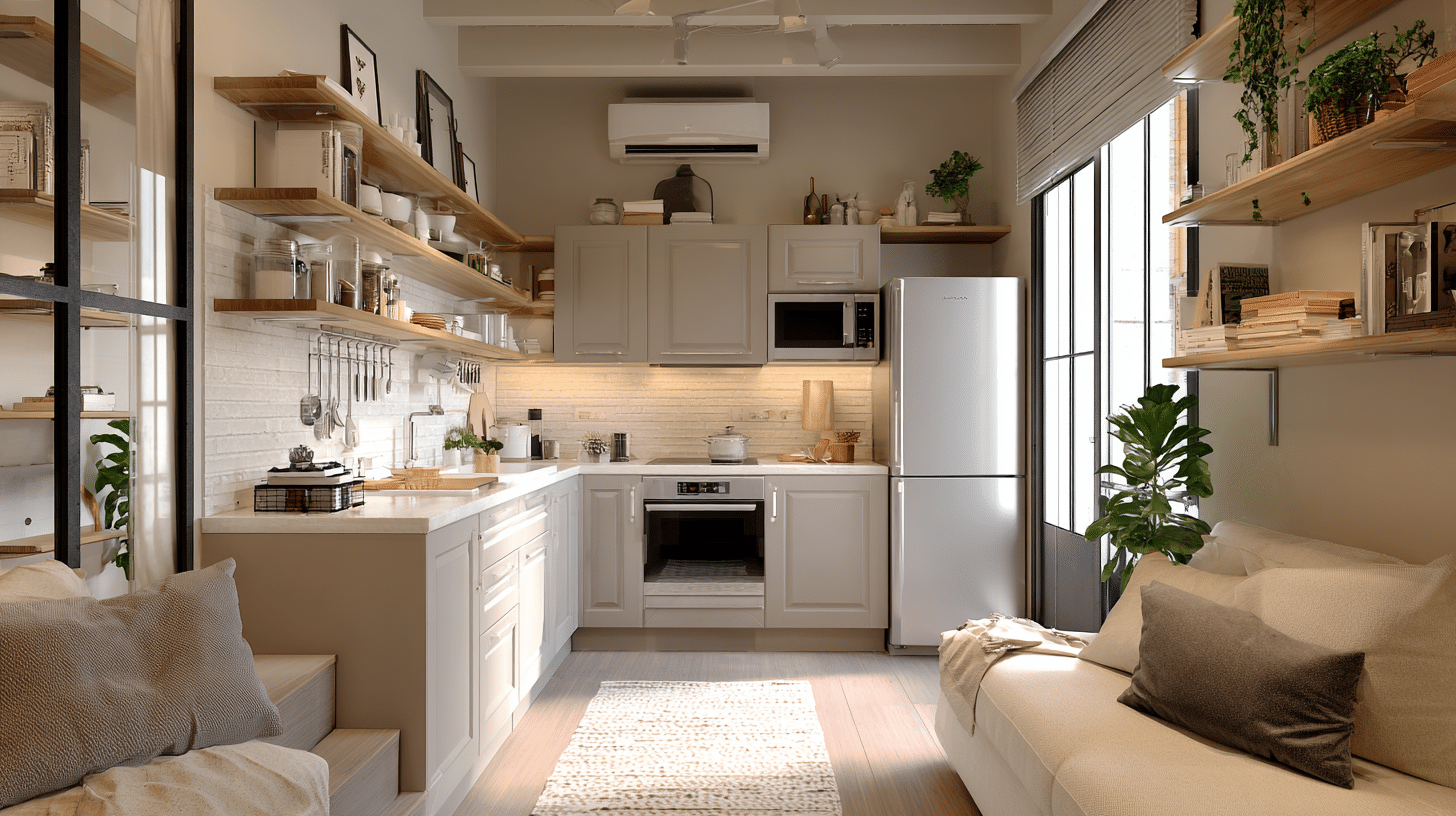
Small space? Mount cabinets and shelves on the walls to free up floor area. Keep the footprint tight but the sightlines open.
Floating vanities and wall-hung appliances give you back precious square footage.
The key is going vertical instead of spreading out horizontally.
21. Open Kitchen with a Large Prep Table
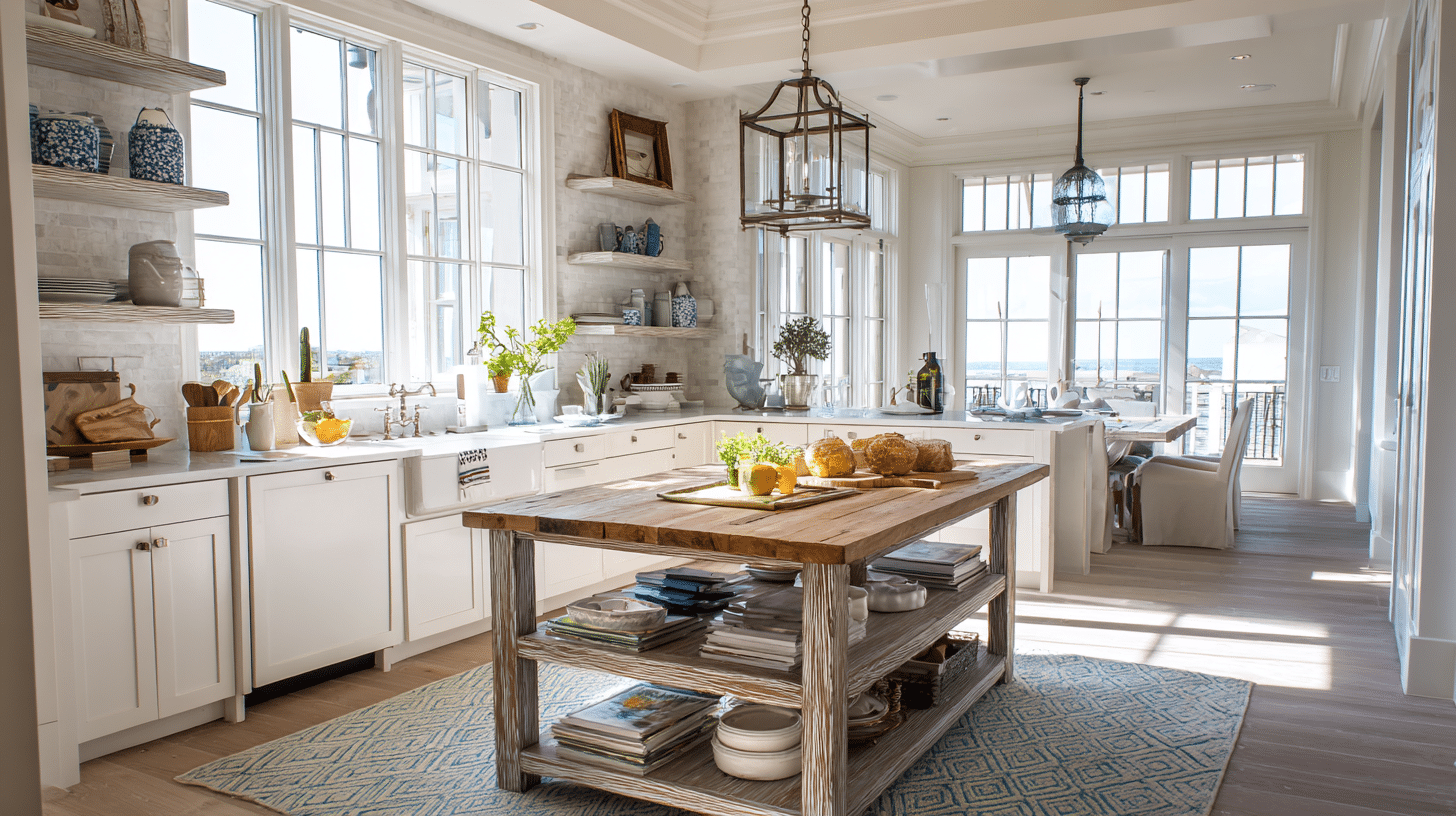
A freestanding table acts as your main work surface instead of a built-in island. You can move it if needed, and it feels less formal than traditional cabinetry.
It works well in farmhouse or industrial-style spaces.
The flexibility is nice when you need to rearrange for a party or deep cleaning.
22. Split Open Concept Kitchen Layout
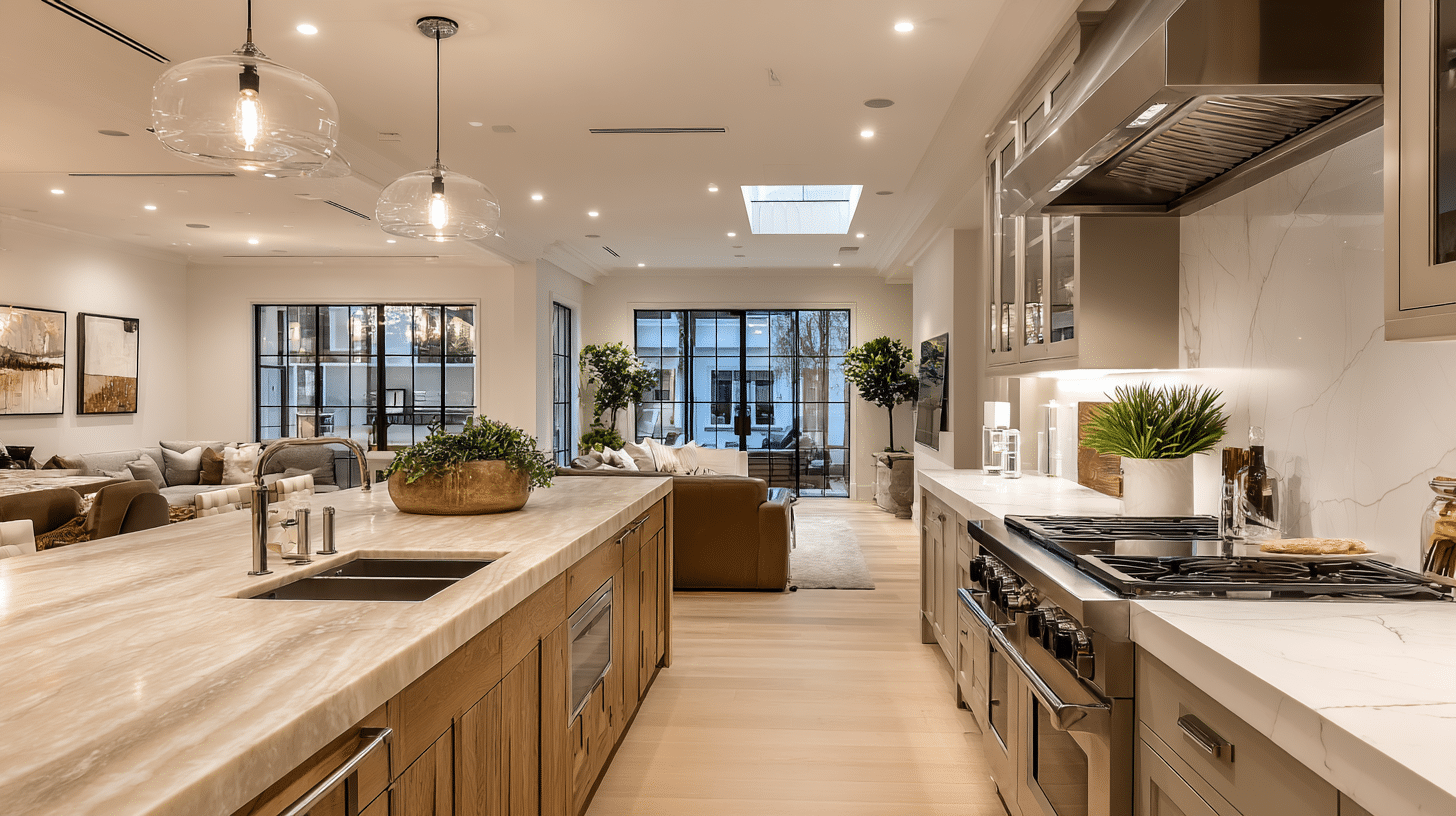
Your cooking zone is divided into two separate areas on different walls.
Maybe your sink and prep area are on one side, and your range and oven on another.
It spreads the work around. Can serve multiple cooks at once. This setup prevents bottlenecks during busy meal prep.
23. Open Kitchen with Wraparound Seating
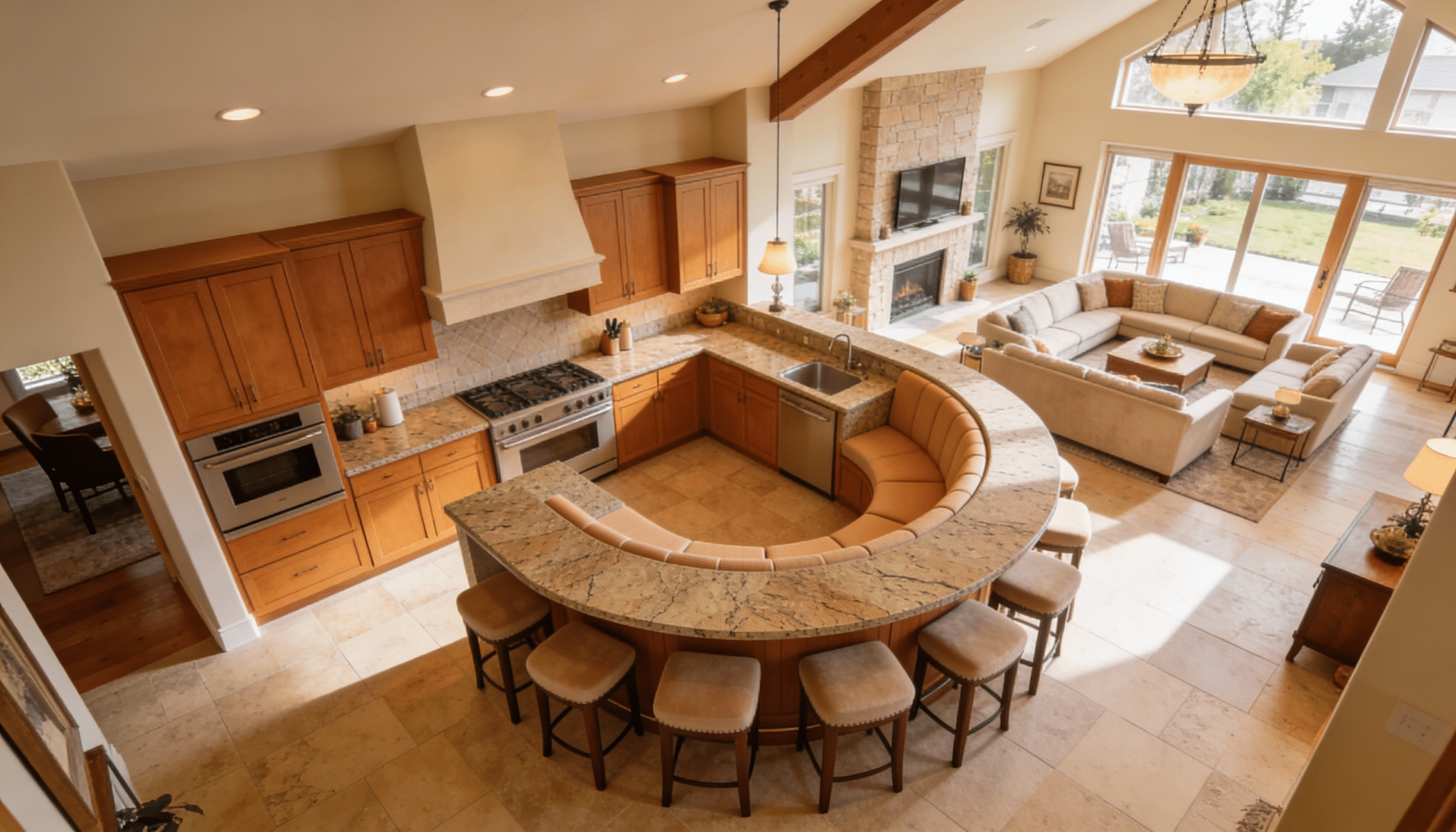
Seating curves around multiple sides of your island or peninsula. More people can sit together, and it encourages conversation.
It’s ideal if your kitchen doubles as the main gathering spot in your home.
Quick Tip: Leave at least one side of your island open for easy access to the seating area.
24. Kitchen with A Passthrough Opening
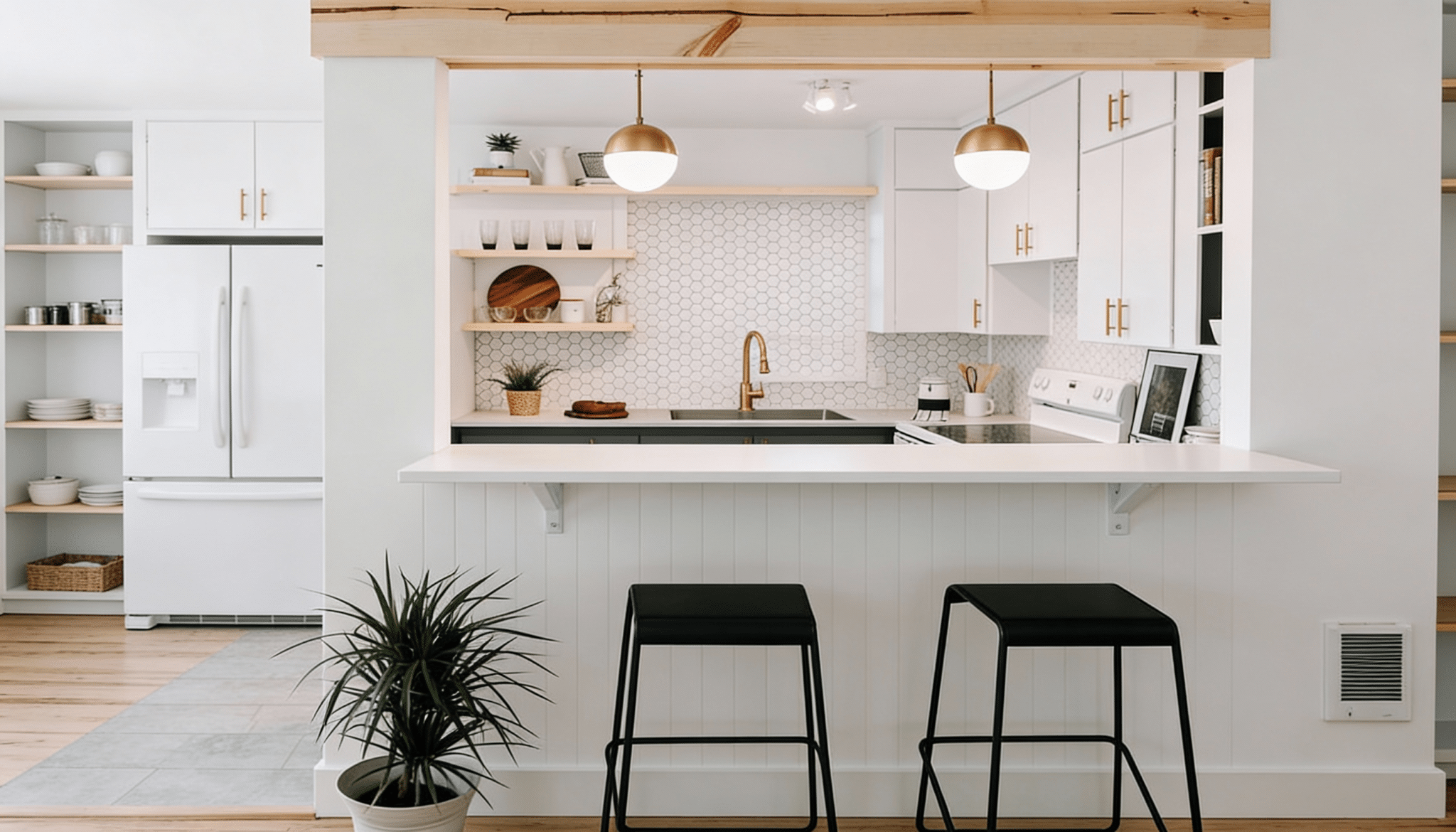
A large window-style opening connects your kitchen to the next room. It’s not fully open, but you can pass food and drinks through.
You get some separation while maintaining that connected vibe. It’s a good middle ground if you’re not ready to commit to a fully open plan.
25. Open Kitchen with A Full-Length Window Wall
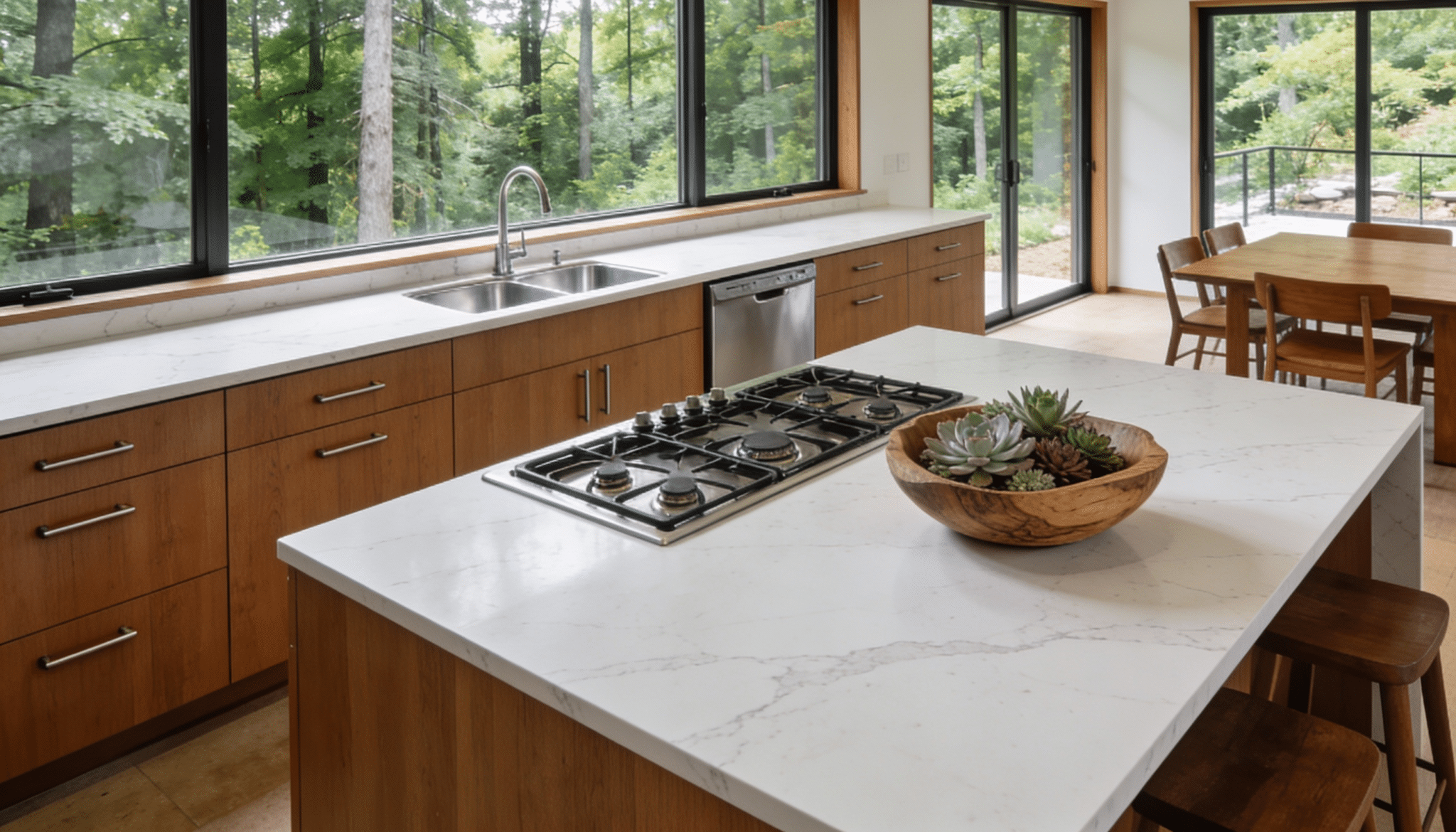
One entire wall is windows from the counter to the ceiling. Natural light floods the space.
The view becomes part of your design. You’ll need to plan your layout carefully since you lose wall space for upper cabinets.
But the trade-off is worth it if you’ve got a view worth showcasing.
26. Open Kitchen Concept with a Central Stove Island
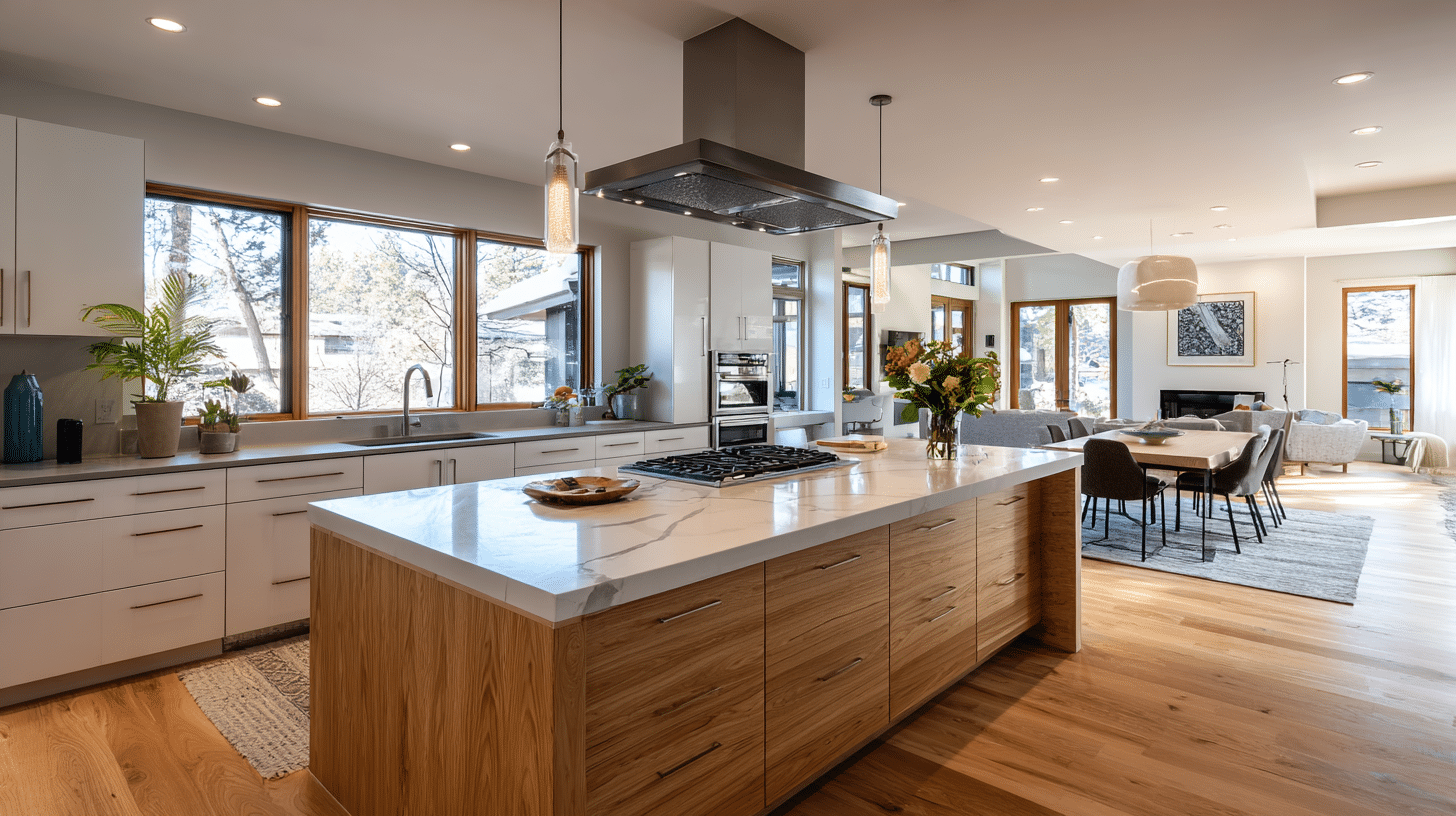
The cooktop sits right on the island so you can face your family or guests while cooking.
It turns the island into the main work zone while keeping the rest of the kitchen open and easy to move through.
This setup works best if you don’t mind people watching you cook.
27. Open Kitchen with a Tall Storage Tower Divider
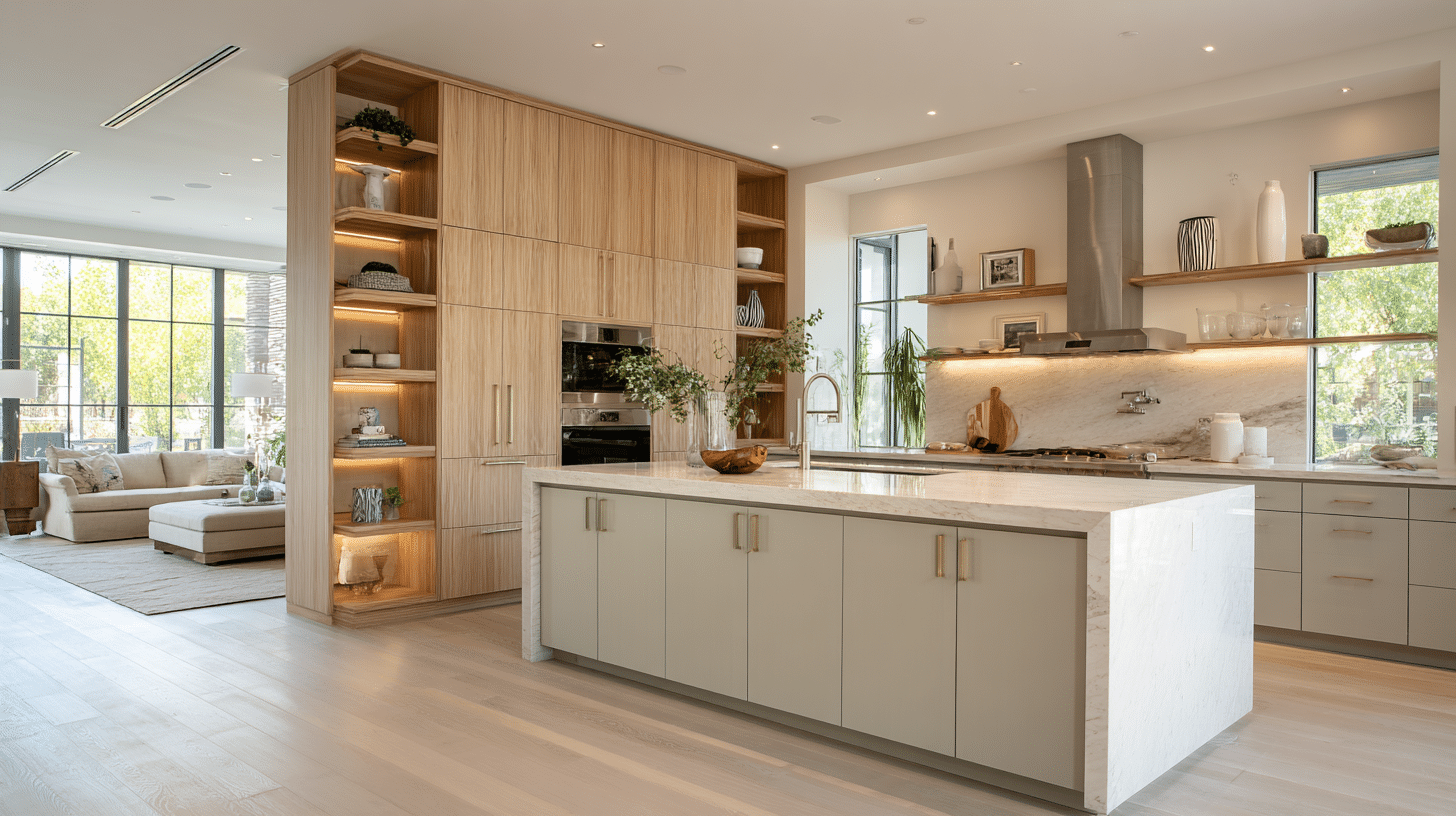
A tall storage tower sits between the kitchen and the living area.
It doesn’t close the room but adds just enough structure to define each zone. The tower can hold dishes, decor pieces, or appliances while keeping the space open.
Consider making it double-sided so both the kitchen and living room can access storage.
Open Concept Kitchen vs. Closed Concept Kitchen
Not sure which layout fits your lifestyle? Here’s a quick breakdown.
| Feature | Open Kitchen | Closed Concept Kitchen |
|---|---|---|
| Layout | No walls separate the kitchen from the living/dining areas | Enclosed by walls with doorways |
| Social Interaction | Easy to chat with guests and family while cooking | More isolated, requires leaving the kitchen to interact |
| Noise & Smells | Cooking sounds and odors travel throughout the space | Noise and smells stay mostly contained |
| Storage | Less wall space for cabinets | More walls are available for upper and lower cabinets |
| Privacy | Kitchen mess is always visible | Can close doors to hide clutter and dishes |
| Space Feel | Makes homes feel larger and more connected | Creates distinct, defined rooms |
Neither option is objectively better. It comes down to how you live, cook, and entertain. Think about what matters most to you before committing to a layout change.
Easy Ways to Update to Open Concept Kitchen Without a Full Remodel
You don’t need to gut the place to make it feel different. Small changes add up.
Paint Your Cabinets: New cabinet color, whole new vibe. Way cheaper than replacing them. Pick a color that ties into your living area since everything’s visible.
Refinish or Replace Countertops: Countertops take up a lot of visual space. Refinish them or install a new surface, such as butcher block or quartz.
Update Your Lighting: Pendant lights over the island make a statement. Swap builder-grade fixtures for something better. Add under-cabinet lighting to reduce shadows.
Swap Out Hardware: Handles and knobs seem minor until you change them. Matte black, brushed brass, or leather pulls shift the entire look.
Install a New Backsplash: Peel-and-stick tiles are a budget-friendly option. Or go for real tile. Either way, it’s a visual refresh without tearing out cabinets.
Change Your Bar Stools: New stools change how the space feels. They’re one of the first things people see in an open layout.
Common Mistakes People Make with Open Kitchens
- Not planning for enough storage. Plan where everything goes.
- Ignoring the noise factor. Use rugs or soft furniture to absorb sound.
- Choosing different styles for each zone. Keep it cohesive.
- Skipping a plan for hiding clutter. Dirty dishes are visible now.
- Making the island the wrong size. Leave 42 inches of clearance on all sides.
- Not thinking about lighting layers. Mix pendants, under-cabinet lights, and floor lamps.
- Using only hard surfaces. Mix in softer materials.
- Forgetting to define zones. Use furniture or rugs to mark areas.
Most of these are fixable. A few tweaks can change how your space works.
Bringing Your Open Kitchen Vision Together
An open concept kitchen works when it fits your cooking, eating, and living.
Start with one layout from this list. Test it against your daily routine. Then tweak the details until it feels right. Don’t overthink it.
The best design is the one you’ll actually use, not the one that looks perfect in photos.
Ready to start planning? Grab some graph paper and sketch out what works for your space.
Frequently Asked Questions (FAQ’s)
1. How Much Does it Cost to Create an Open Kitchen?
Removing a non-load-bearing wall runs $1,500 to $3,000. Load-bearing walls require structural support and can cost $3,000 to $10,000; full renovations can reach $15,000 to $50,000, depending on finishes.
2. Is an Open Kitchen Concept Practical with Kids?
Yes. You can supervise while cooking, though noise travels more, and you’ll need good storage to hide clutter.
3. How do You Deal with Cooking Smells in an Open Layout?
Install a powerful range hood that vents outside. Run it every time you cook and consider opening windows or using an air purifier for strong-smelling foods.
4. What’s the Best Flooring for an Open Kitchen?
Luxury vinyl plank, engineered hardwood, or porcelain tile work well. They’re durable enough for the kitchen and look good in living spaces, too.
5. How do You Create Zones Without Walls?
Use furniture placement, rugs, different lighting, and ceiling treatments. Islands, sofas facing away from the kitchen, and area rugs all create visual boundaries.