When it comes to a hip roof vs gable roof, most people feel stuck.
These two roof styles dominate residential construction, yet the differences aren’t always clear.
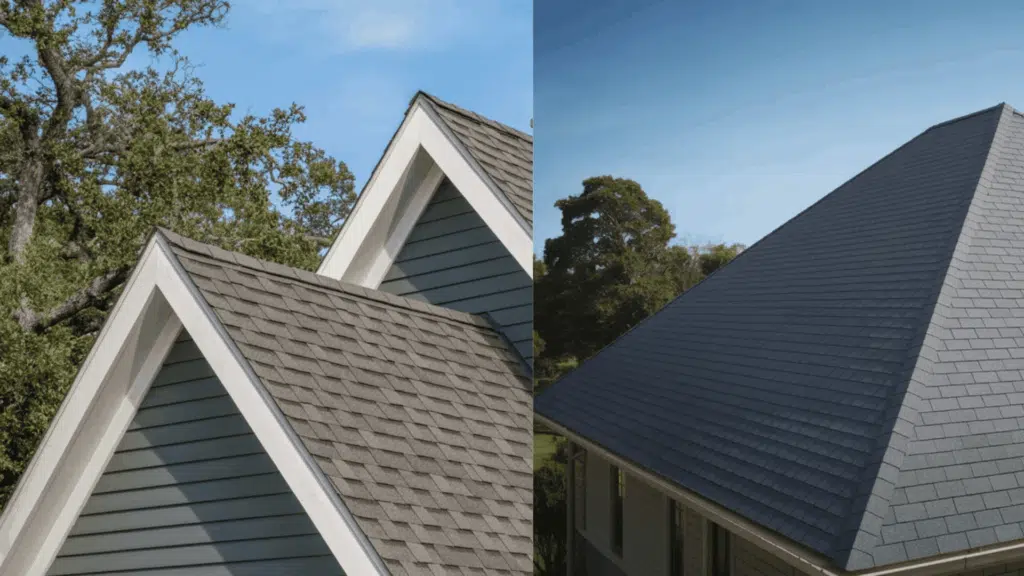
A hip roof slopes on all four sides. A gable roof has two sloping sides with triangular ends. Sounds simple, right?
But here’s the problem: choosing the wrong style can cost thousands in repairs, energy bills, and resale value. This will explain everything about comparisons.
You’ll see the structures, benefits, drawbacks, and costs side by side. So, make the choice that suits your needs and budget.
What is a Hip Roof?
A hip roof slopes downward on all four sides, meeting at a central ridge or peak at the top.
There are no vertical ends, which makes it naturally more stable in high winds and heavy rain. This is why you see it so often in areas that deal with storms and rough weather.
It drains water efficiently and holds up well over time.
The trade off is that it costs more to build and leaves less attic space compared to other roof styles.
What is a Gable Roof?
A gable roof is one of the most common roof shapes around.
It has two sloping sides that meet at a central ridge, forming a triangular shape at each end of the house.
It is simple to build, cost-effective, and does a great job of shedding rain and snow.
The triangular walls also allow for better attic ventilation and more usable space inside.
The one downside is that it can struggle in very high winds if it is not properly braced and supported.
Hip vs Gable Roof at a Glance
Here’s a quick snapshot of hip vs gable roof:
- Hip Roof Structure: Slopes on all four sides that meet at a ridge. Looks like a pyramid stretched over the house.
- Gable Roof Structure: Two sloping sides meet at a peak. The ends form triangles. IIt’sthe classic “house” shape.
- Wind Resistance: Hip roofs handle storms better. Gable roofs can be damaged by strong winds if not built correctly.
- Cost: Hip roofs cost more to build. They need extra materials and labor. Gable roofs are more budget-friendly.
- Attic Space: Gable roofs offer more usable attic space. Hip roofs have less room due to the sloped sides.
- Durability: Hip roofs last longer in harsh weather. Gable roofs work well in mild climates when properly constructed.
| Feature | Hip Roof | Gable Roof |
|---|---|---|
| Slope Design | Slopes on all four sides | Slopes on two sides only |
| End Walls | No vertical end walls | Triangular vertical walls (gables) |
| Peak Structure | All sides meet at the ridge | Two sides meet at the peak |
| Roof Shape | Compact, pyramid-like | Classic triangular profile |
| Material Usage | Needs more roofing material | Uses less material |
| Weight Distribution | Spreads evenly across all walls | Concentrates on two main walls |
| Surface Coverage | Covers the entire structure with slopes | Exposes triangular end sections |
It affects costs, durability, and how each handles weather. Both protect your home well, just in different ways.
Types of Hip Roof
Hip roofs come in several variations. Here are the main types:
1. Simple Hip Roof
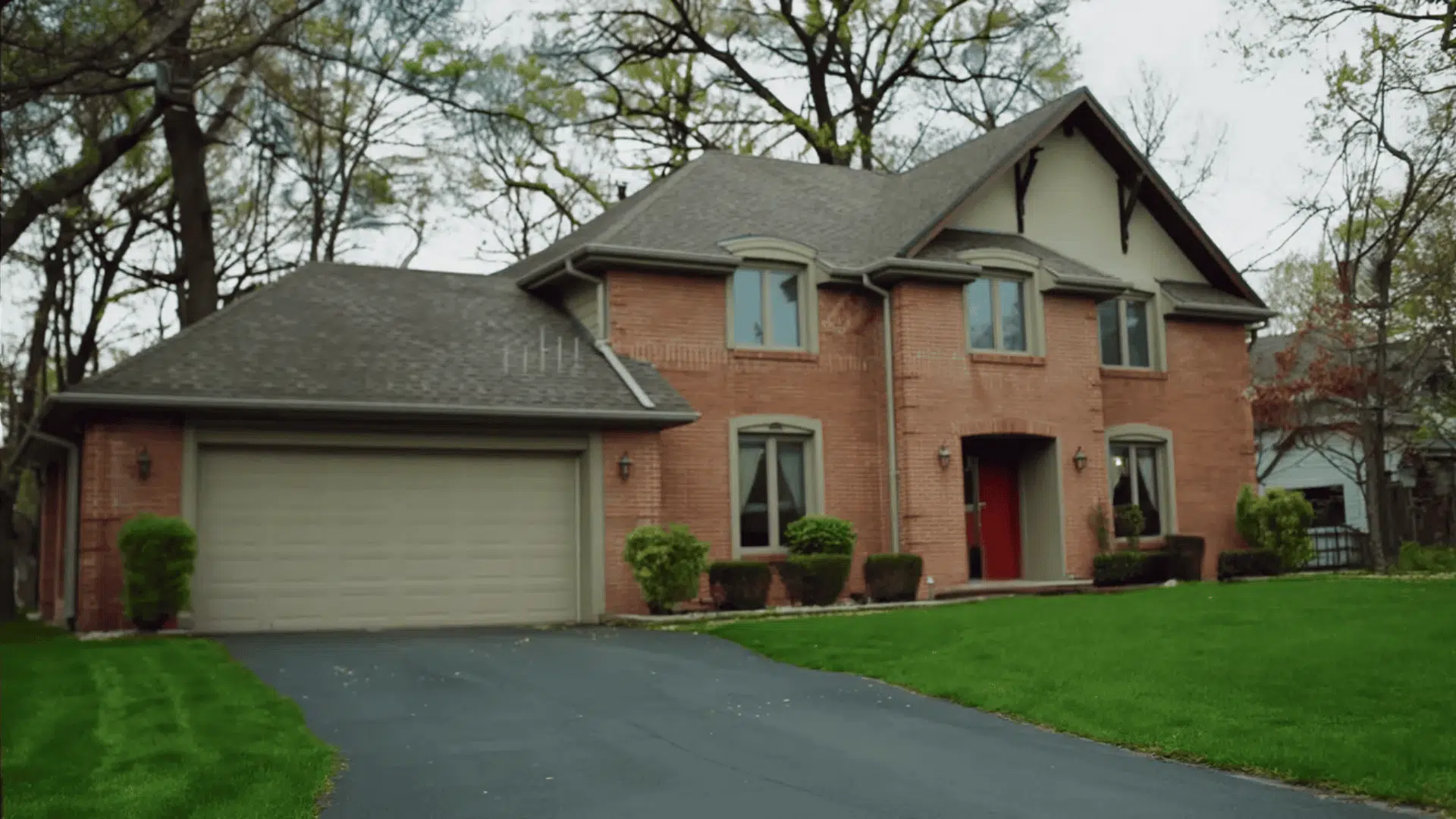
This is the most common type. It has four sides that slope at the same angle.
A rectangular ridge runs along the top. The design works well for rectangular homes.
2. Pyramid Hip Roof
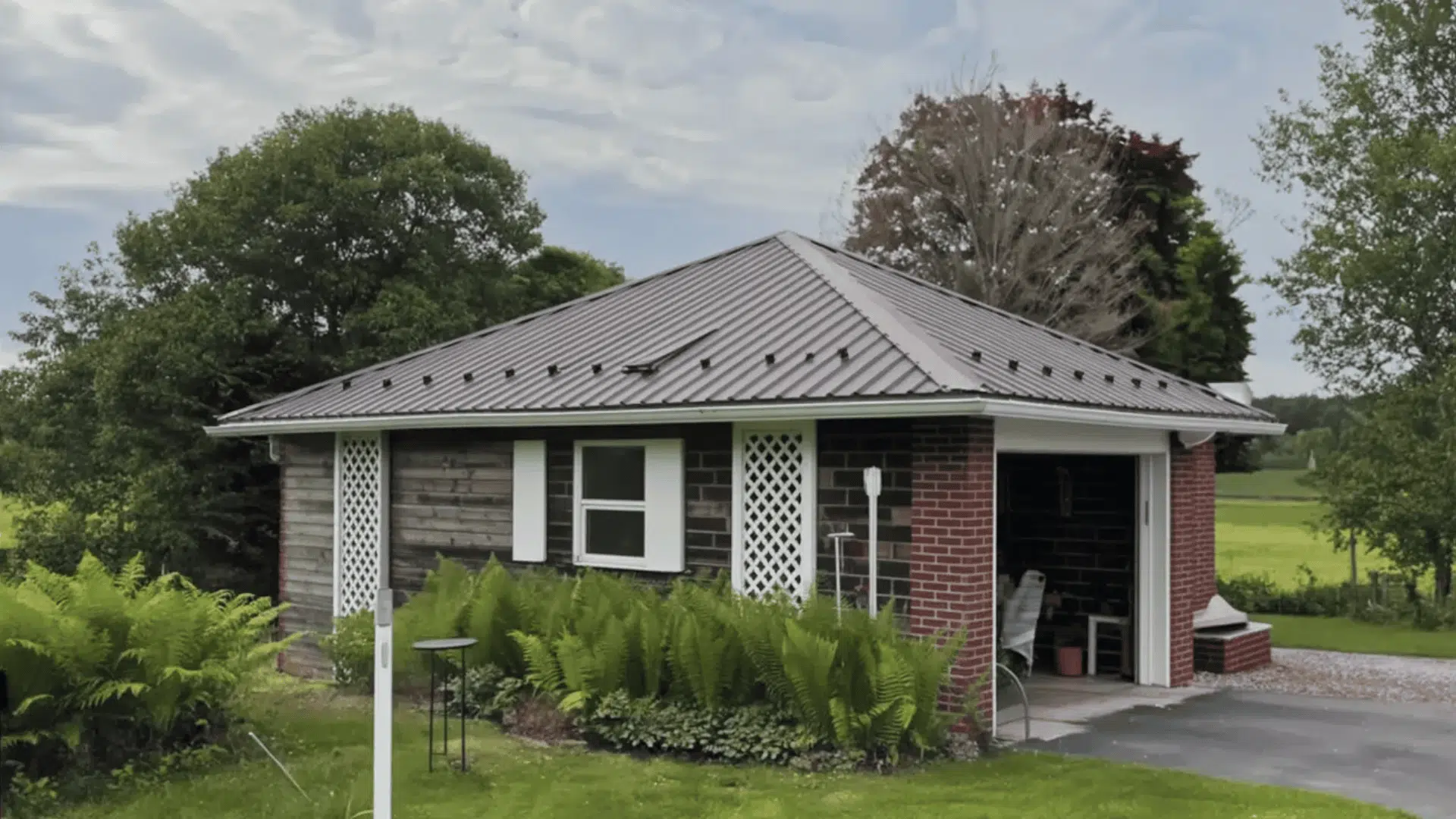
All four sides meet at a single point rather than at a ridge. This creates a pyramid shape.
Square buildings use this design most often.
3. Cross-Hipped Roof
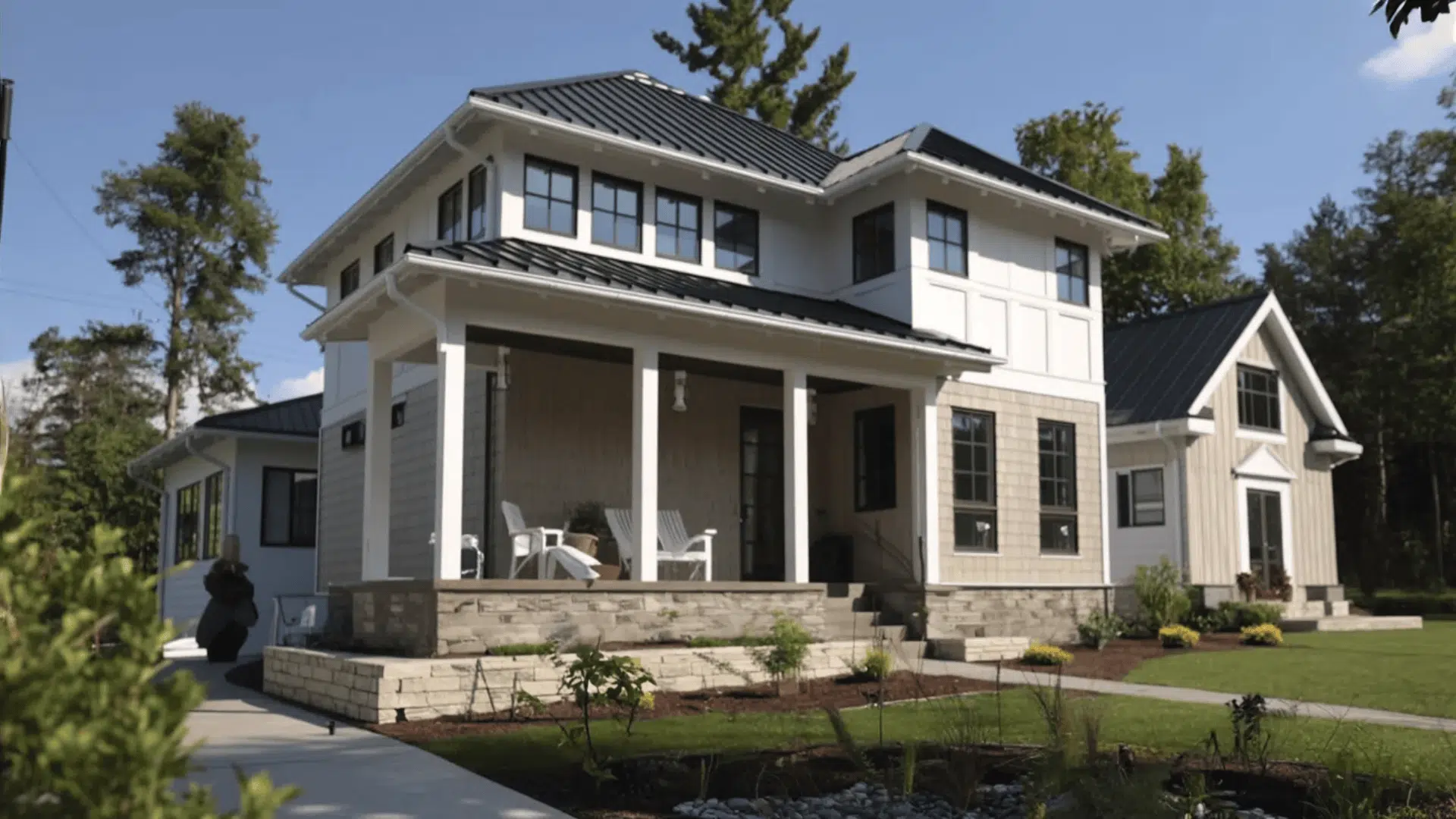
Two hip roof sections intersect at right angles. This design fits L-shaped or T-shaped homes.
The valleys where sections meet need careful construction.
4. Half-Hip Roof
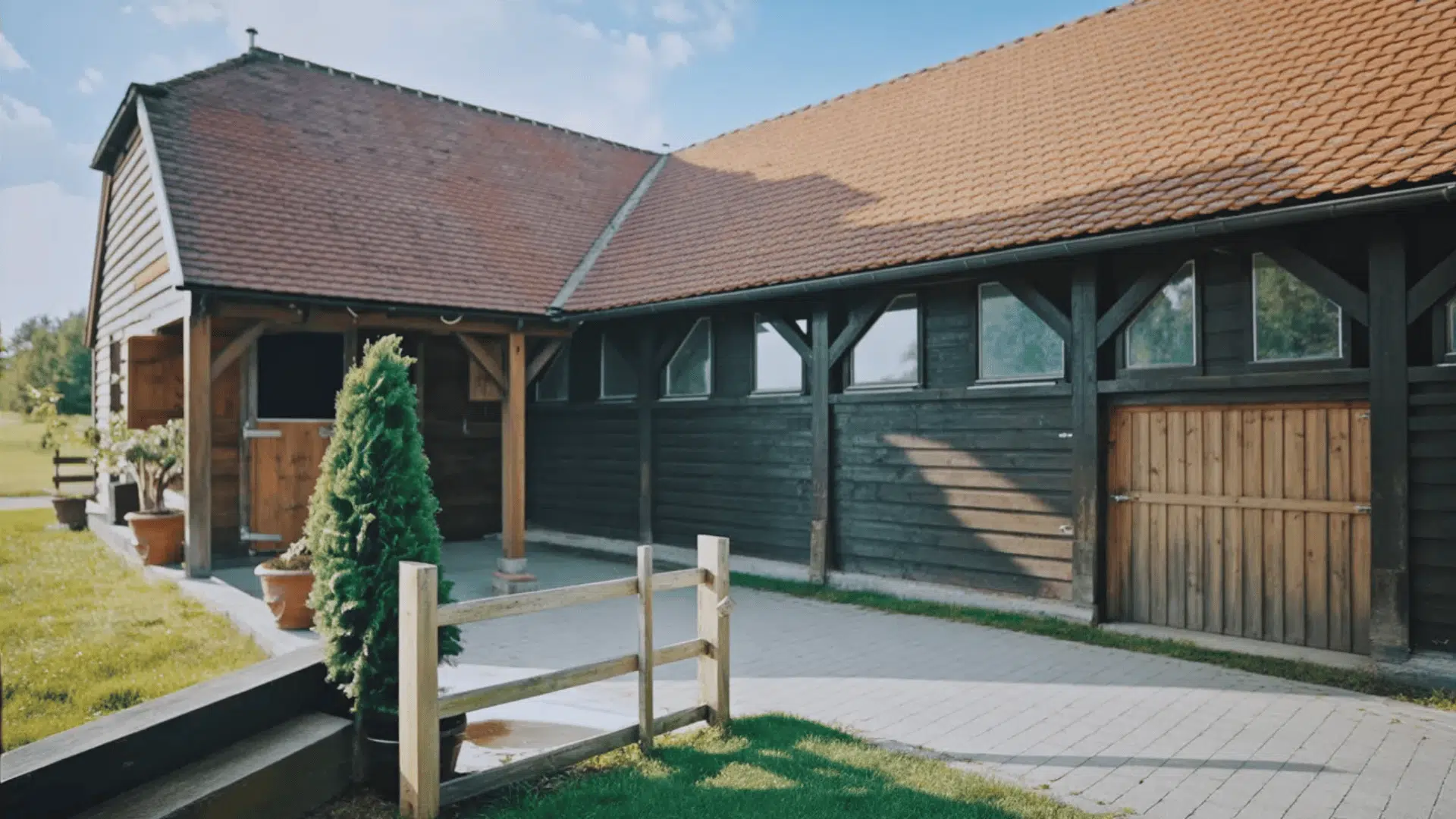
The upper portion slopes like a hip roof. The lower section has a small gable.
This combines the benefits of both styles. It’s also called a jerkinhead roof.
5. Mansard Hip Roof
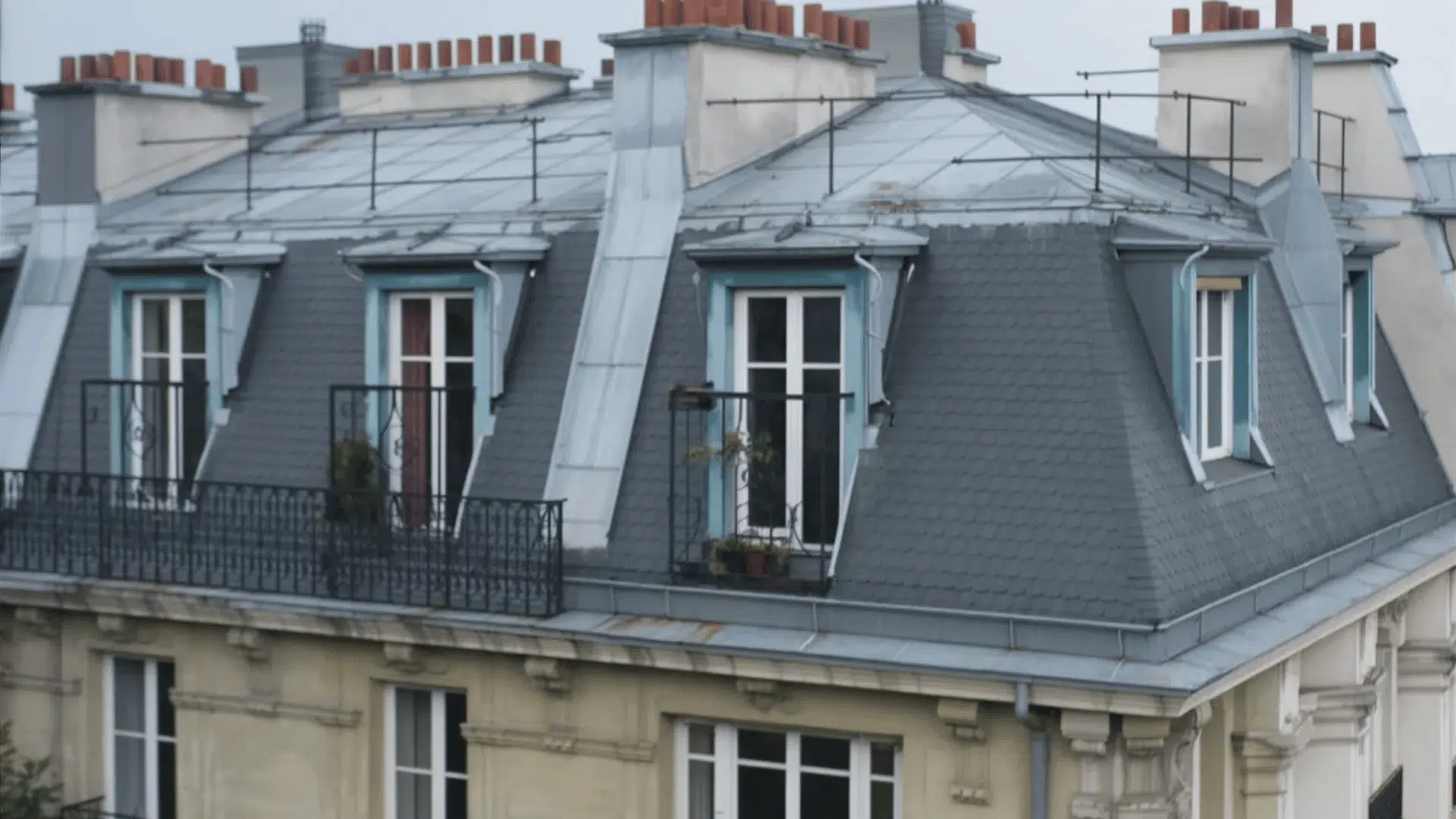
This type has two slopes on each side. The lower slope is steeper than the upper one.
The design creates extra living space. French architecture made this style popular.
Hip Roof Pros and Cons
Hip roofs offer real advantages but also have drawbacks.
Pros of Hip Roofs
- Handles strong winds better.
- Lasts longer in harsh weather.
- Drains water and snow evenly.
- Creates a stable, self-bracing structure.
- Looks symmetrical and polished.
Cons of Hip Roofs
- Costs more to build.
- Provides less attic space.
- Requires complex construction.
- Makes ventilation harder.
Types of Gable Roof
Gable roofs come in different styles. Here are the main types:
1. Side Gable Roof
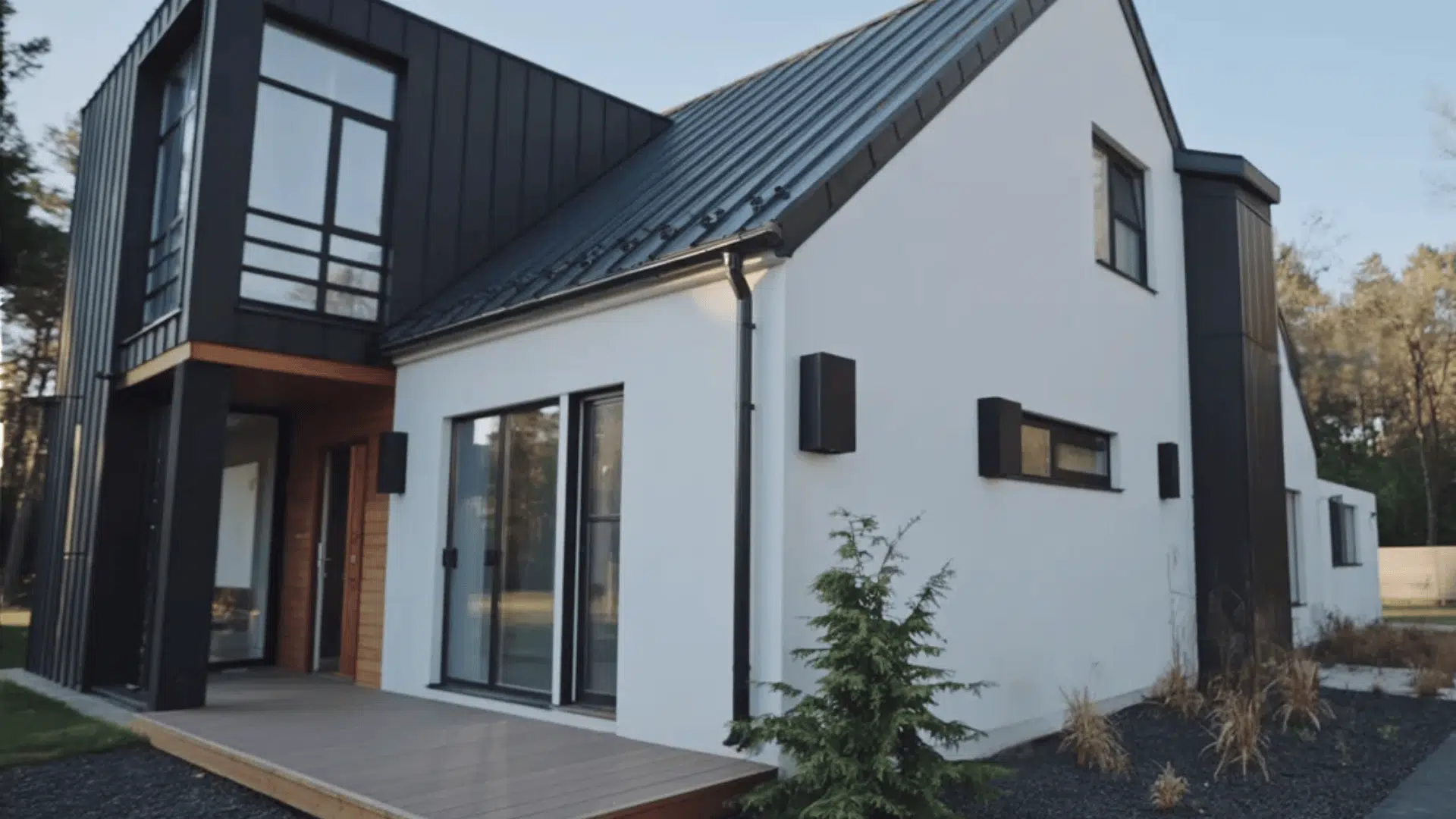
This is the most basic type. Two equal slopes meet at a central ridge.
The gables sit on opposite ends. Most homes use this simple design.
2. Cross Gable Roof
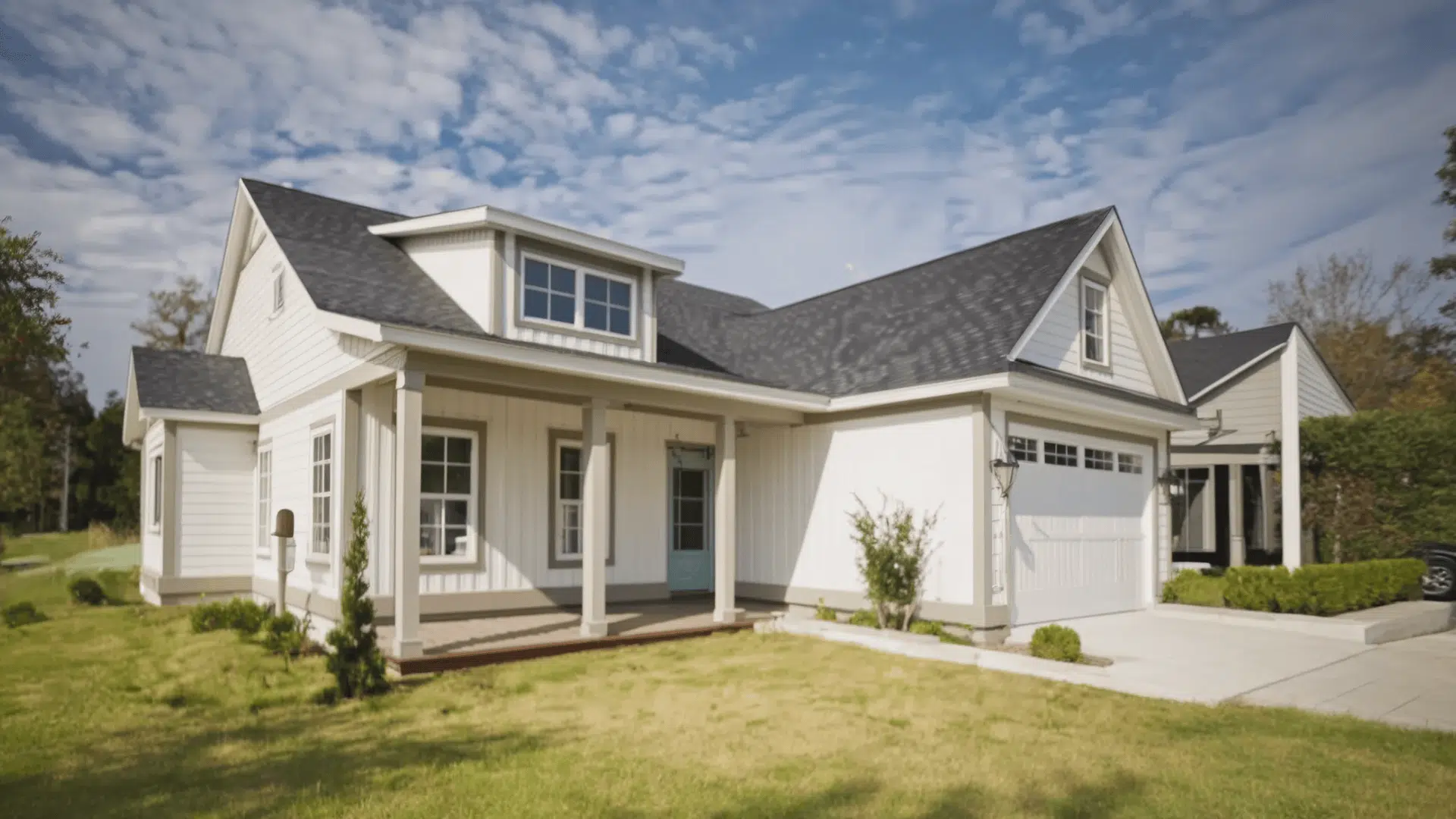
Two gable roof sections intersect at right angles. This creates an L-shape or T-shape.
The design adds visual interest and works well for complex floor plans.
3. Front Gable Roof
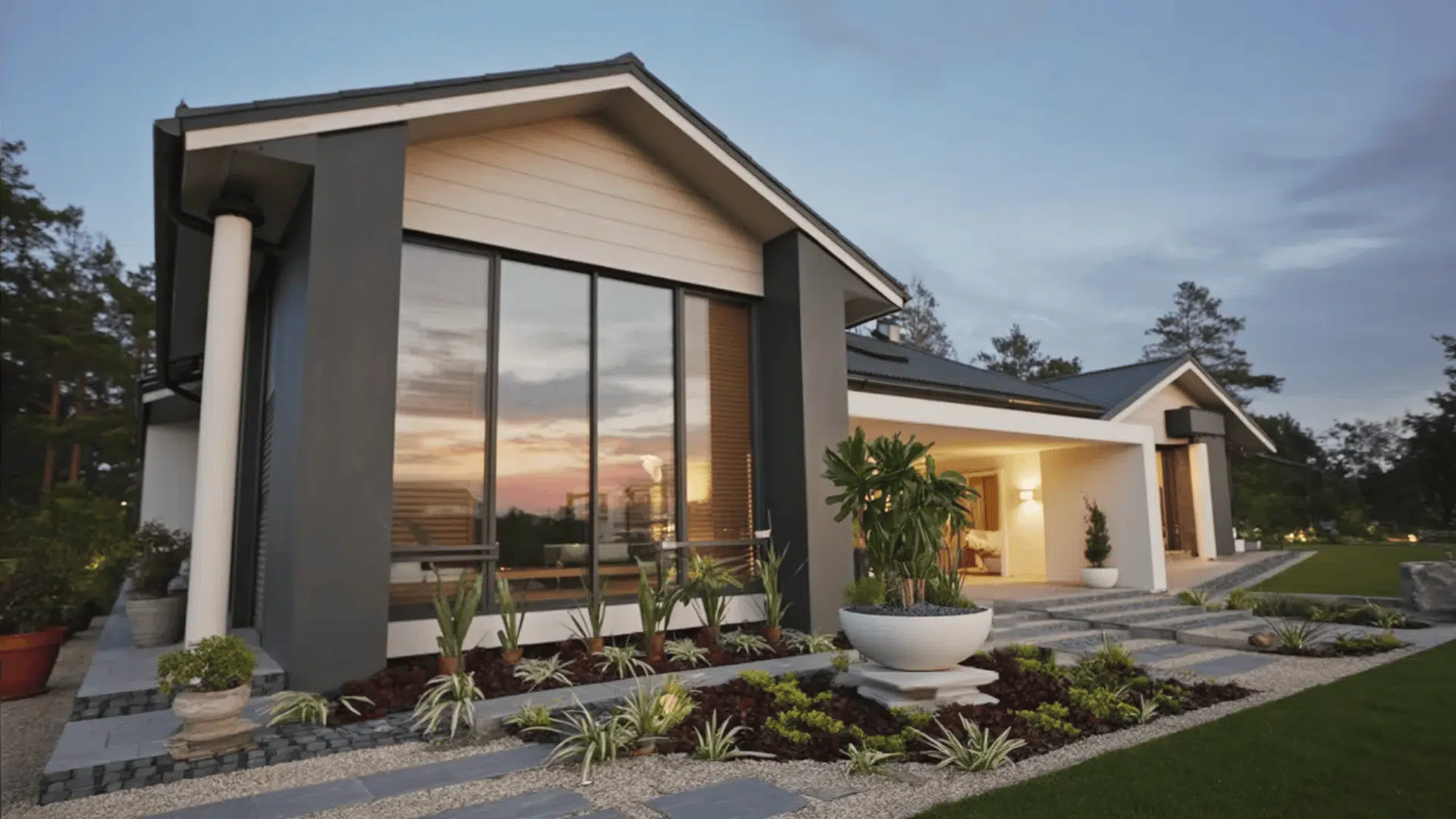
The gable faces the street instead of the side. This creates a bold entrance.
Colonial and Cape Cod homes often use this style.
4. Dutch Gable Roof
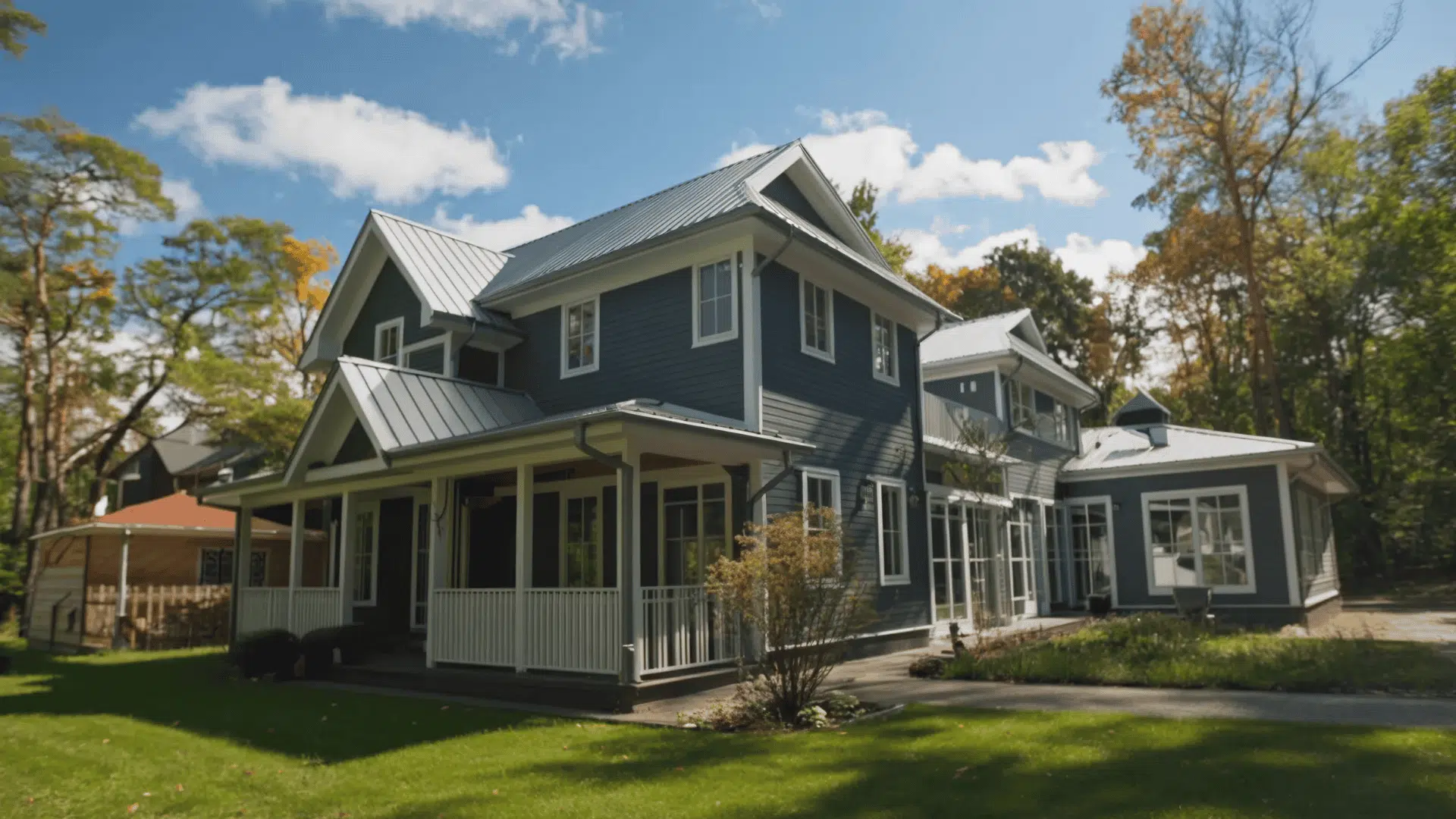
This combines a hip roof with a gable. The lower section is hipped, and a small gable sits on top.
It offers more attic space than a standard hip roof.
5. Gambrel Gable Roof
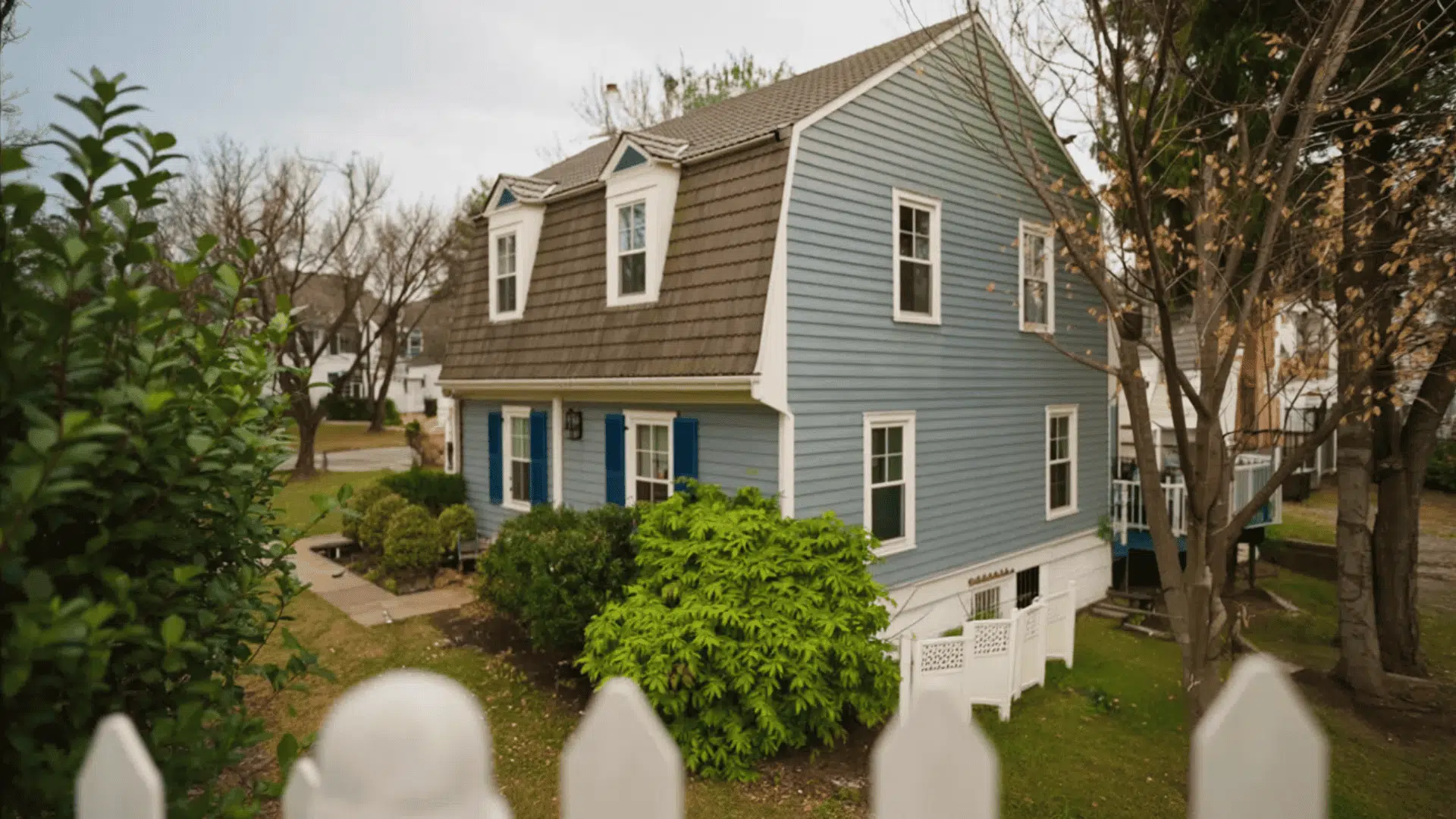
Each side has two slopes. The lower slope is steeper than the upper one.
Barns commonly use this design for maximum storage space.
Gable Roof Pros and Cons
Gable roofs are popular for good reasons, but they also have certain limitations.
Pros of Gable Roofs
- Costs less to build.
- Provides more attic space.
- Easy to add vents and windows.
- Drains water quickly.
- Simple construction process.
Cons of Gable Roofs
- Vulnerable to strong winds.
- Less stable than hip roofs.
- Exposed walls need regular maintenance.
- High winds can lift the roof.
Hip Roof vs Gable Roof Cost Considerations
Here’s a cost comparison between hip and gable roofs:
| Cost Factor | Gable Roof | Hip Roof |
|---|---|---|
| Material costs | Lower | Higher (more materials needed) |
| Labor costs | Less time required | More labor hours |
| Installation complexity | Simple design | Complex structure |
| Typical price range | $8,000 – $12,000 | $10,000 – $15,000 |
| Price difference | Base cost | 15-20% more expensive |
| Maintenance costs | Standard | Similar to a gable |
Hip vs Gable Roof vs Other Roof Types
Different roof types offer unique benefits and drawbacks. Here’s how they line up:
Gable Roof: Costs less and handles rain and snow well. You get plenty of attic space. But strong winds can cause problems without proper bracing.
Hip Roof: Stands up better to storms. All four sides slope down, making it more stable. You’ll pay 15-20% more for this added strength.
Flat Roof: Suitable for modern homes and simple to build. Water pooling and snow accumulation are concerns, though.
Mansard Roof: Gives you nearly a full extra floor of space. It looks distinctive but needs frequent maintenance and costs more.
Gambrel Roof: Maximizes upper-level storage. Wind resistance isn’t great, so check your local weather patterns first.
Shed Roof: Features a single slope, making it inexpensive and easy to install. Works well for additions or contemporary designs, but limits attic space.
Which is Better?
It depends on your priorities.
If you live in high-wind areas, a hip roof makes sense. It handles storms better and lasts longer in harsh conditions.
If budget is your top priority, go with a gable roof. You’ll spend less and get more attic space.
The simple design also makes repairs easier. Think about your local weather first. Then consider your budget.
The right roof balances your needs with what you can afford.
Conclusion
So, hip roof vs gable roof, which one wins? There’s no single answer.
Hip roofs offer better wind resistance and durability, but they cost more. Gable roofs save money and provide extra attic space, but they’re less stable in storms.
Your choice comes down to climate, budget, and what you value most.
Look at your local weather patterns. Check your budget. Then pick the roof that fits your needs.
Frequently Asked Questions (FAQ’S)
1. Is a Hip or Gable Roof Cheaper?
A hip roof is typically more expensive than a gable roof.
2. Do Hip Roofs Increase Home Value?
Hip roofs often increase property value by up to 5% in certain markets.
3. What Type of Roof Adds the Most Value to A Home?
Metal roofing offers up to an 85.9% return on investment due to its durability and efficiency.
4. What Roof Has the Shortest Lifespan?
Asphalt shingles.
5. Which Roof is Best for A Hot Climate?
Metal roofs are ideal for hot areas.