Remember flipping through old magazines and feeling drawn to those groovy 70s living rooms?
The warm colours, funky patterns, and cosy vibes made everything feel alive.
Design experts have spent years studying vintage design, and they also believe that the 70s had something special.
The decade mixed comfort with personality in ways we’re still trying to match today.
Want to renovate your space with that same comfort and character? This post shows exactly how to create an authentic 70s-inspired home that feels fresh, not dated.
Let’s get started.
Key Visual Elements That Instantly Signal the 1970s
This style celebrates texture, colour, and comfort above all else. You’ll find shag carpets you can sink your toes into.
Wood panelling that adds instant cosiness. And patterns that aren’t afraid to make a statement.
Your home should wrap around you like a favourite blanket.
1. Color Palettes
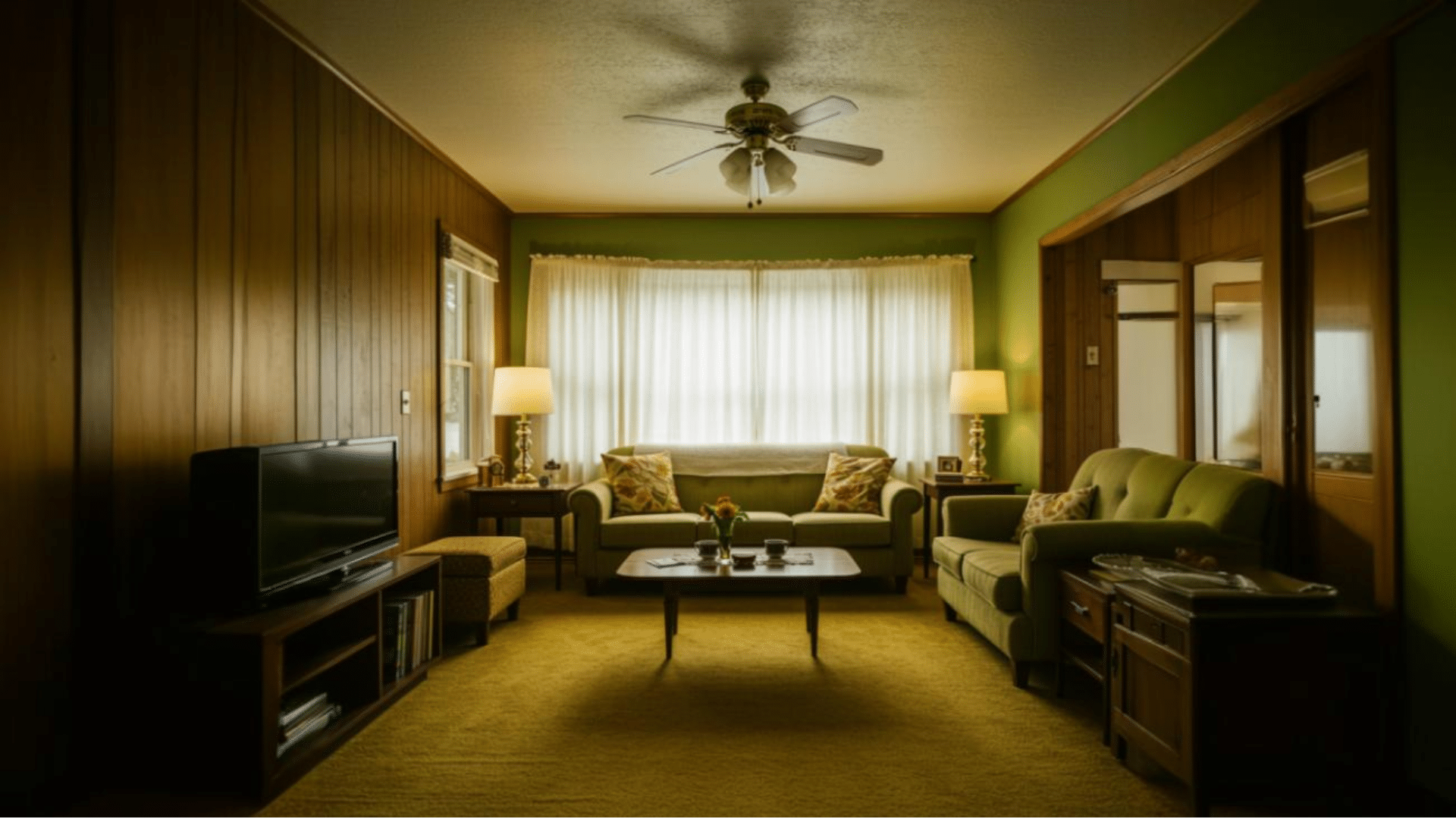
Harvest gold, avocado green, burnt orange, and chocolate brown dominated. These earthy tones brought nature indoors. You’d also see rust, mustard yellow, and deep teal.
2. Materials and Finishes
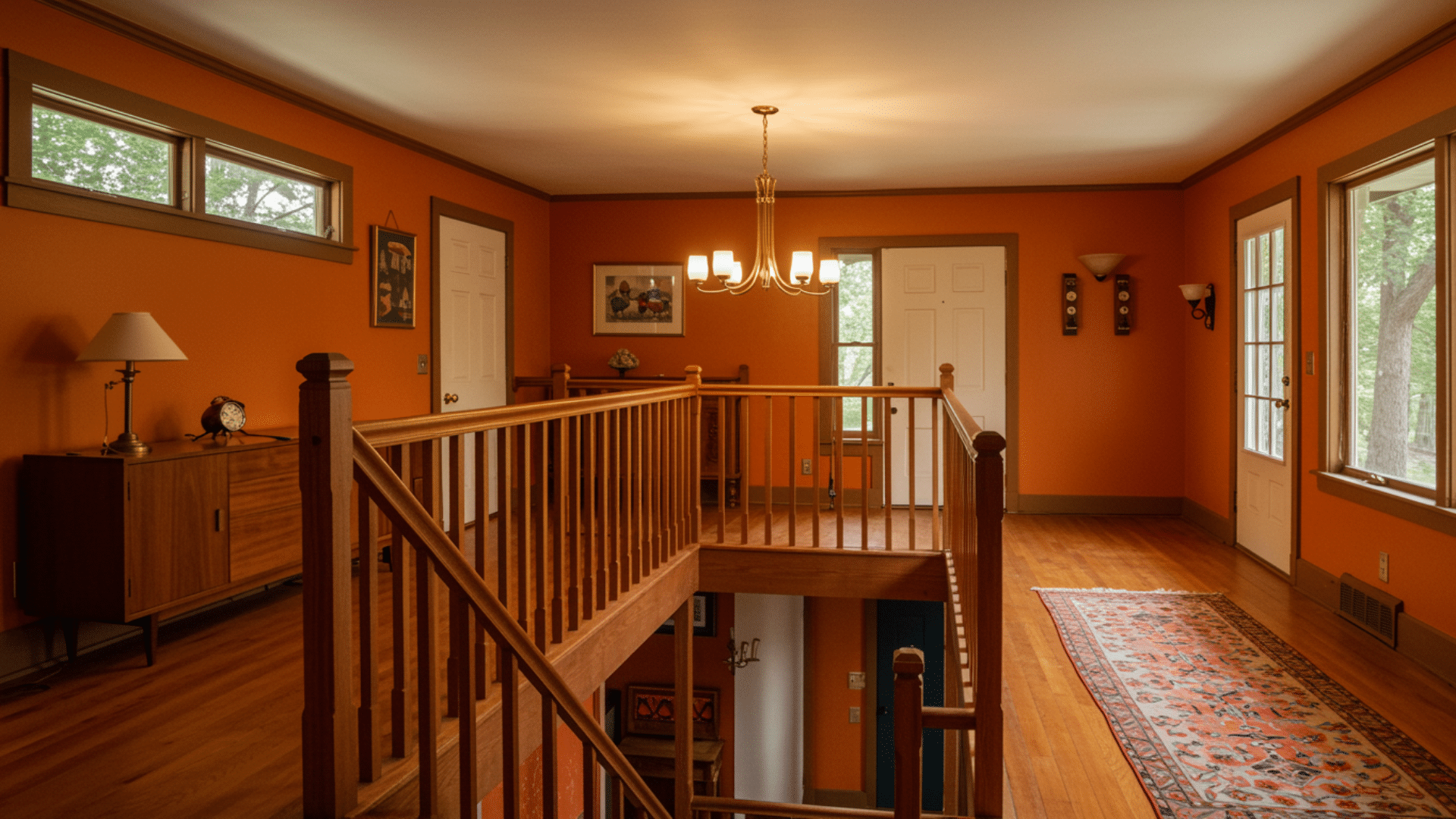
Wood paneling covered the walls. Shag carpeting stretched across floors—velvet, suede, and corduroy upholstered furniture.
Chrome and brass accents added shine. Exposed brick became a feature, not something to hide.
3. Furniture Shapes and Layouts
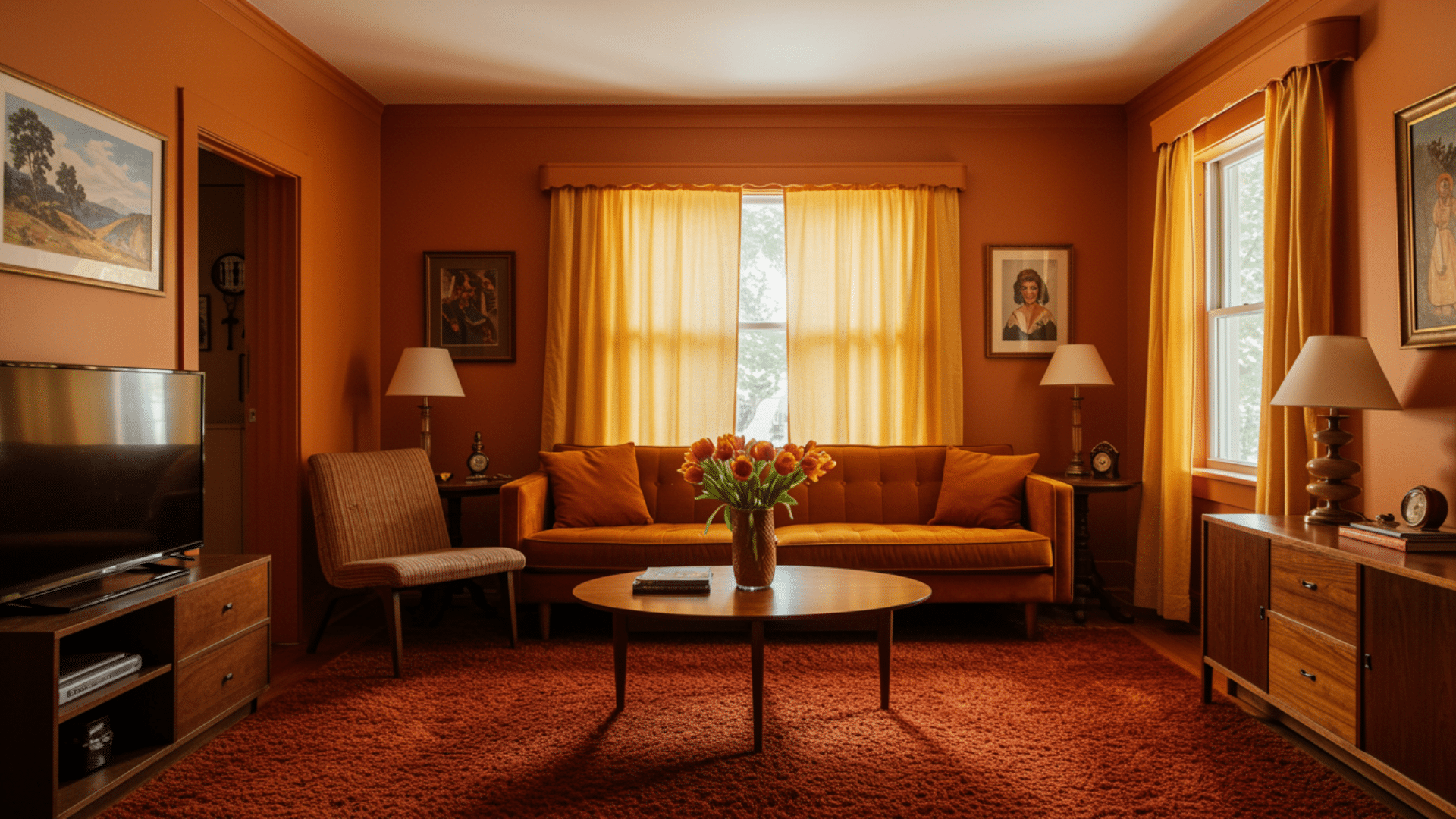
Low-slung sofas invited lounging. Conversation pits created intimate gathering spaces.
Round coffee tables and modular seating allowed flexibility. Everything sat closer to the ground, creating a relaxed, informal vibe.
Design Movements That Shaped 70s Homes
The 70s didn’t follow one rulebook. Instead, multiple design movements collided and created something entirely new and wonderfully unpredictable.
4. Post-modern Influence
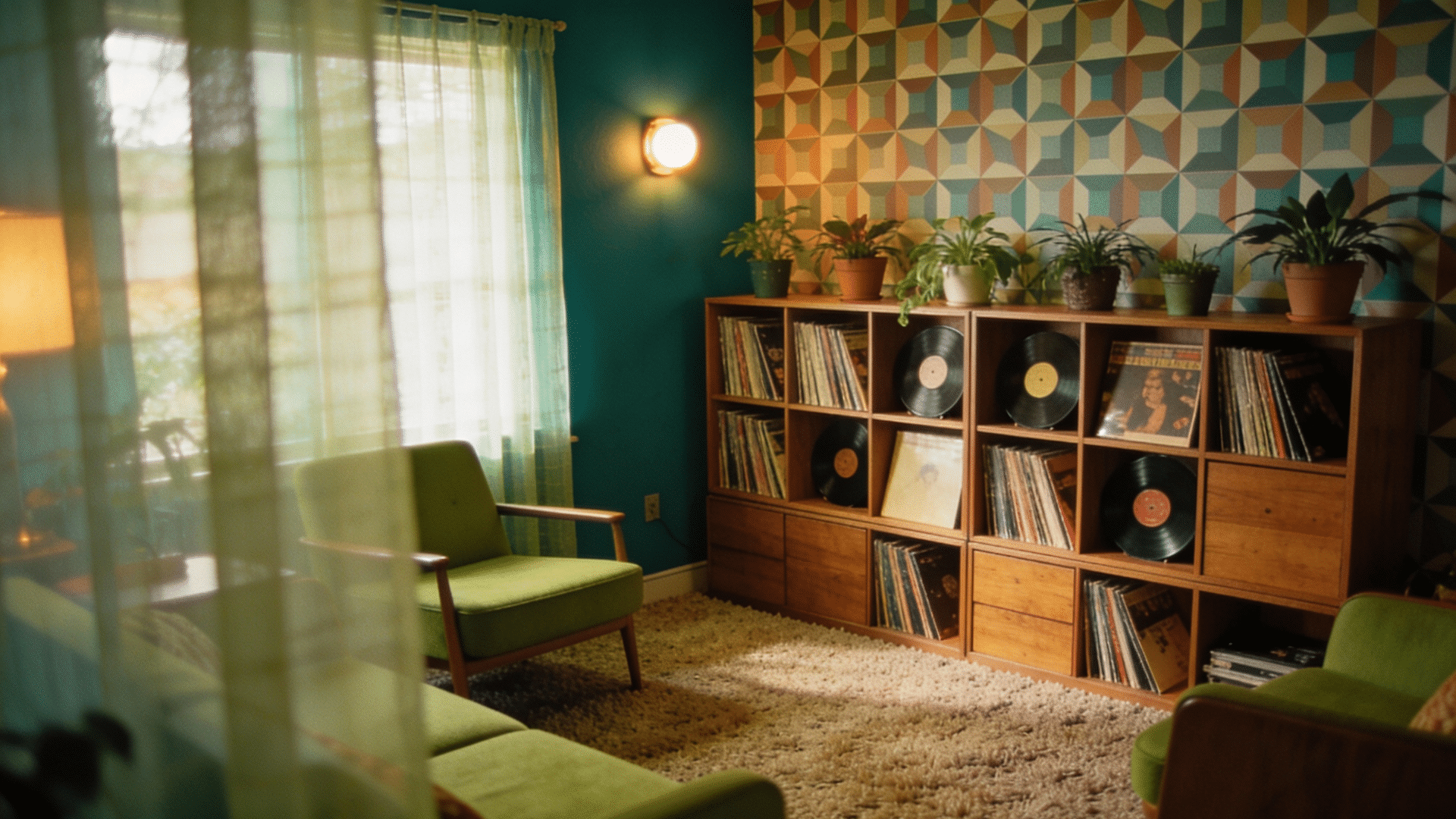
Designers started rejecting the “form follows function” rule. They wanted personality back in homes.
This meant mixing styles freely and not worrying about breaking design rules. Suddenly, traditional elements could sit next to modern pieces.
5. Earth-centric and Bohemian Inspirations
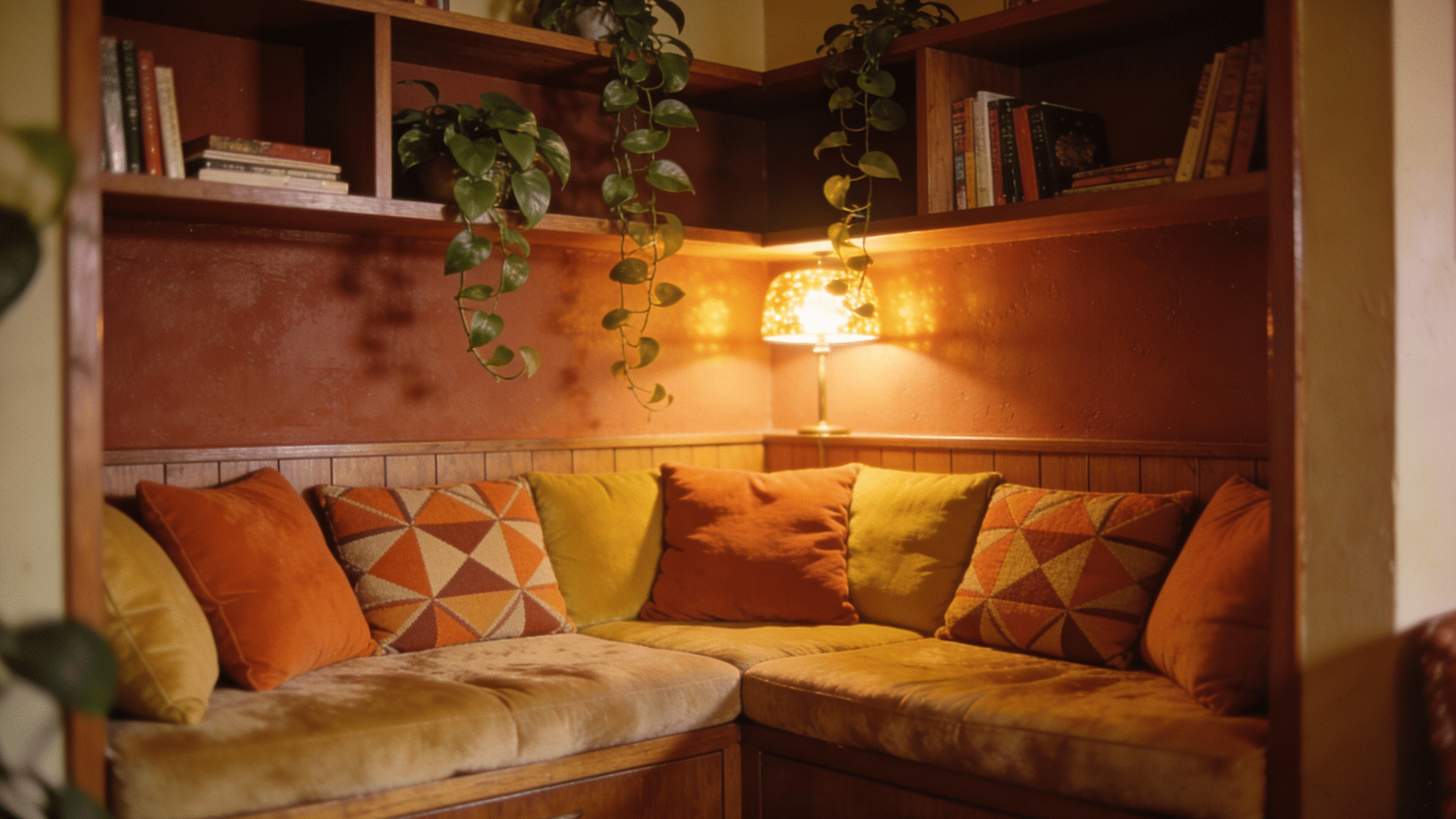
The environmental movement changed how people decorated. Natural materials became essential.
Homeowners filled spaces with plants, rattan furniture, and handcrafted items.
The Bohemian style brought in global textiles, macramé wall hangings, and a “more is more” approach to layering.
6. Reaction Against Minimalism
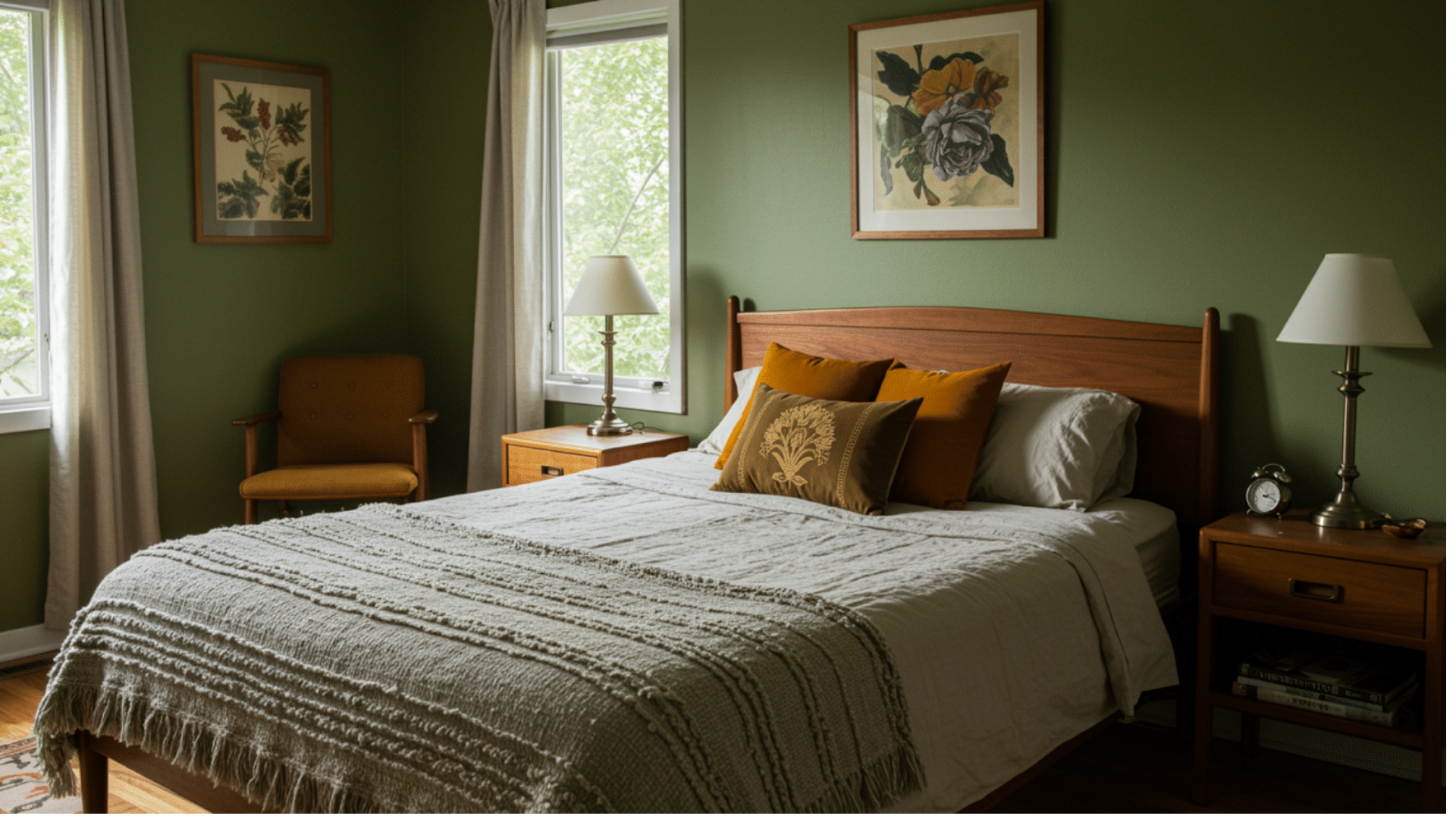
The 60s had stripped homes down to bare essentials. By the 70s, people were tired of cold, stark spaces.
They craved warmth and visual interest. So they added texture everywhere. They chose rich colours over neutral palettes. They picked comfort over sleek lines.
These movements didn’t exist separately. They merged and influenced each other. Walk into any 70s home, and you’d see all of them at once.
Patterns That Dominated Walls, Floors, and Fabrics
The 70s loved patterns. And it means, really loved them. Walls, floors, curtains, and cushions all competed for attention. But somehow, it worked.
7. Geometric Prints
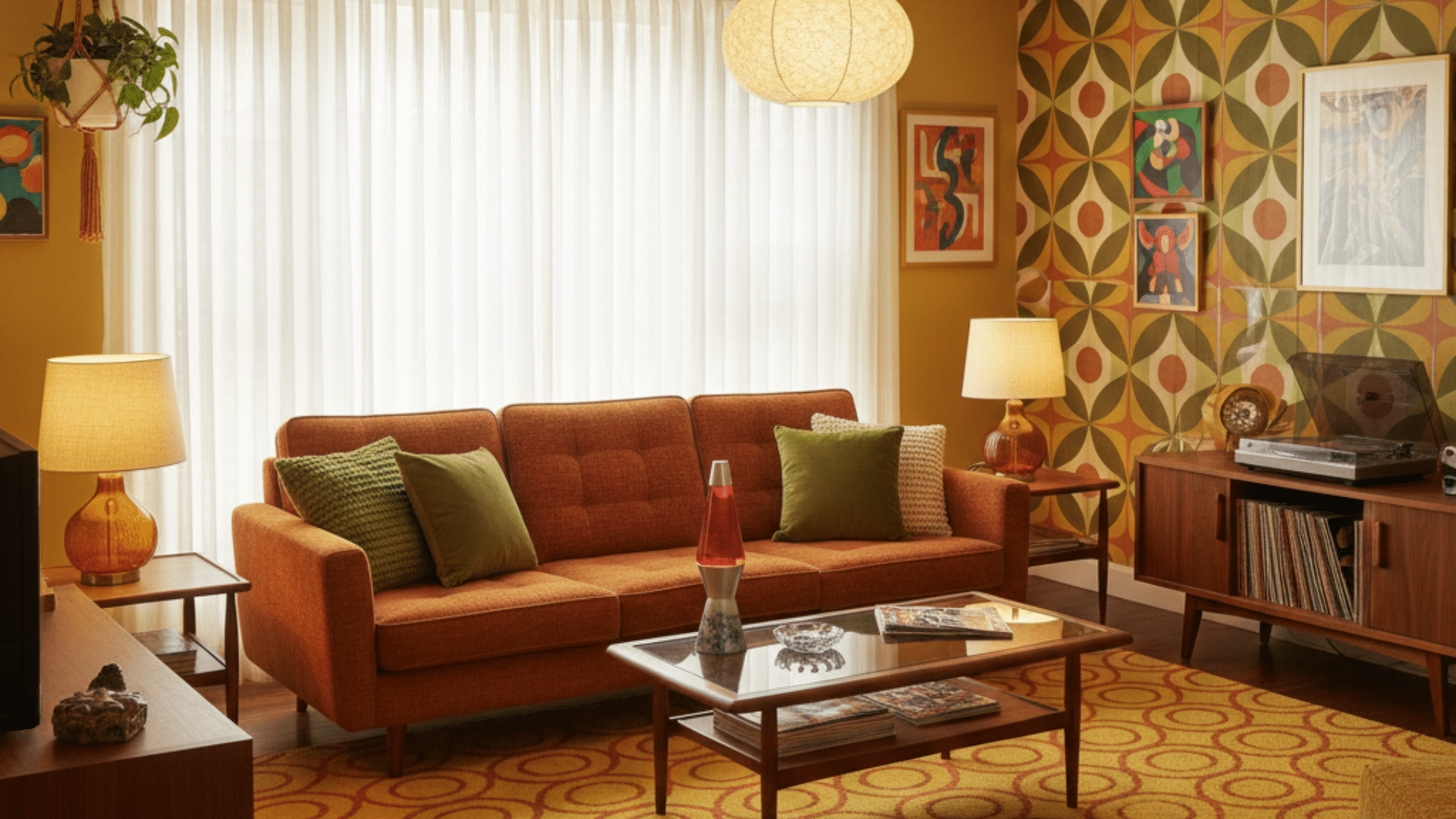
Circles, hexagons, and overlapping shapes appeared everywhere. Wallpaper featured bold repeating patterns. Rugs displayed interlocking designs.
8. Psychedelic Motifs
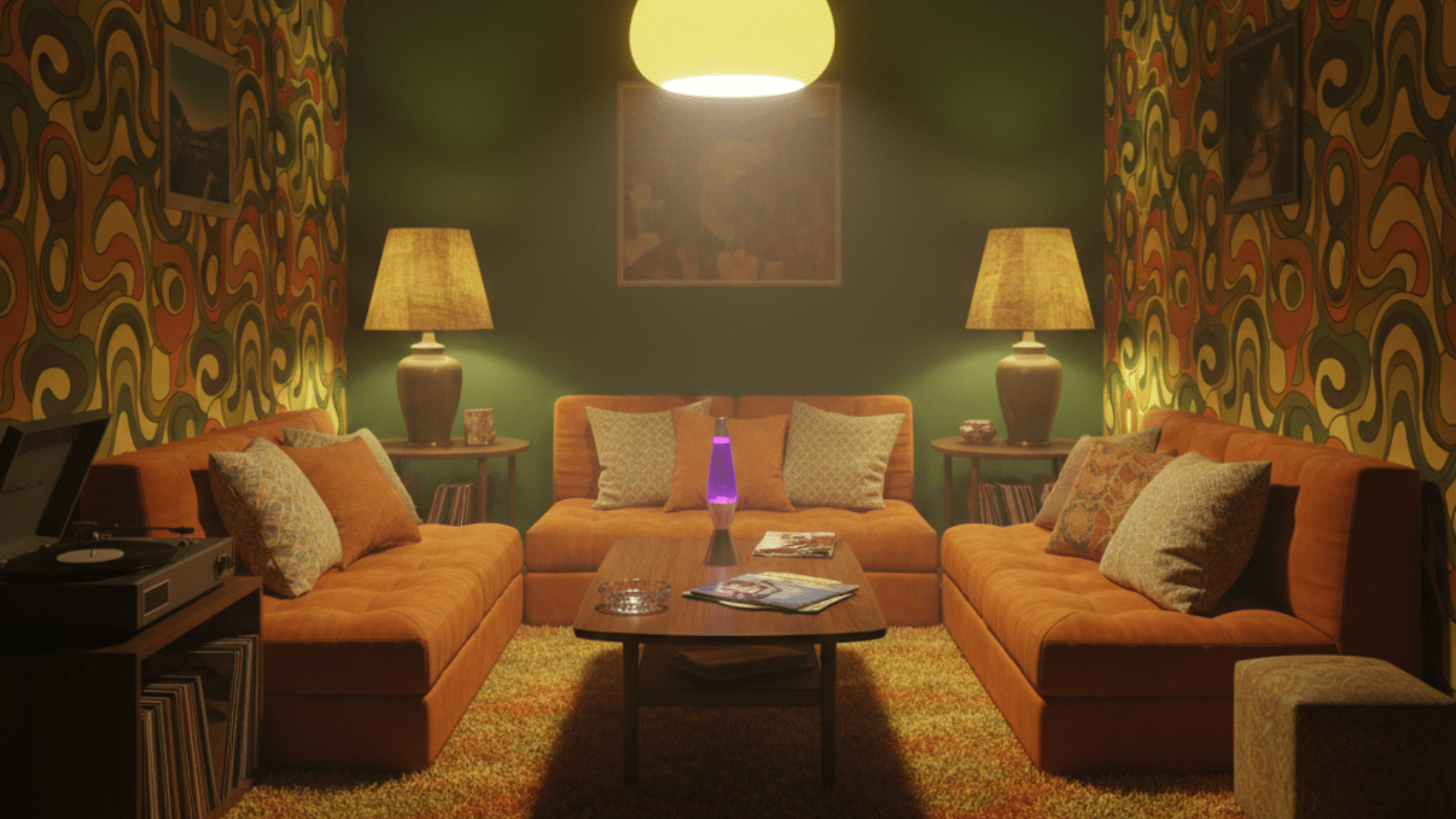
Think wavy lines seemed to move. Colours that shifted from one shade to another. These designs added energy to any room.
9. Organic and Abstract Designs
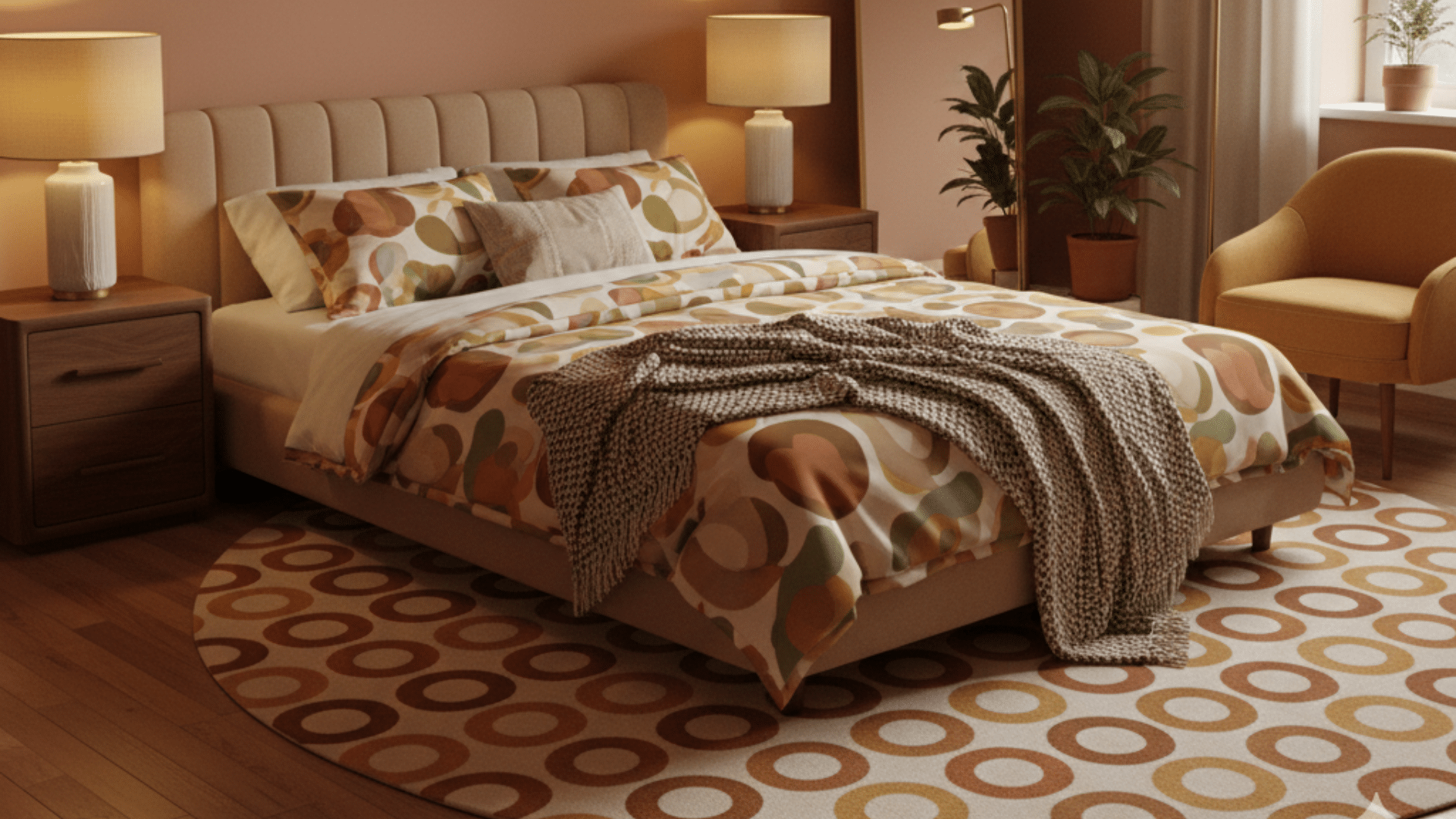
Nature-inspired patterns like oversized florals and leaf prints brought the outdoors in.
Abstract art translated into textiles. Sunbursts, curved lines, and free-flowing shapes decorated everything from lampshades to bedspreads.
Some Authentic Features Found in Almost Every 1970s House
Walk into any 70s home, and you’d spot these instantly.
10. Architectural and Decor Staples
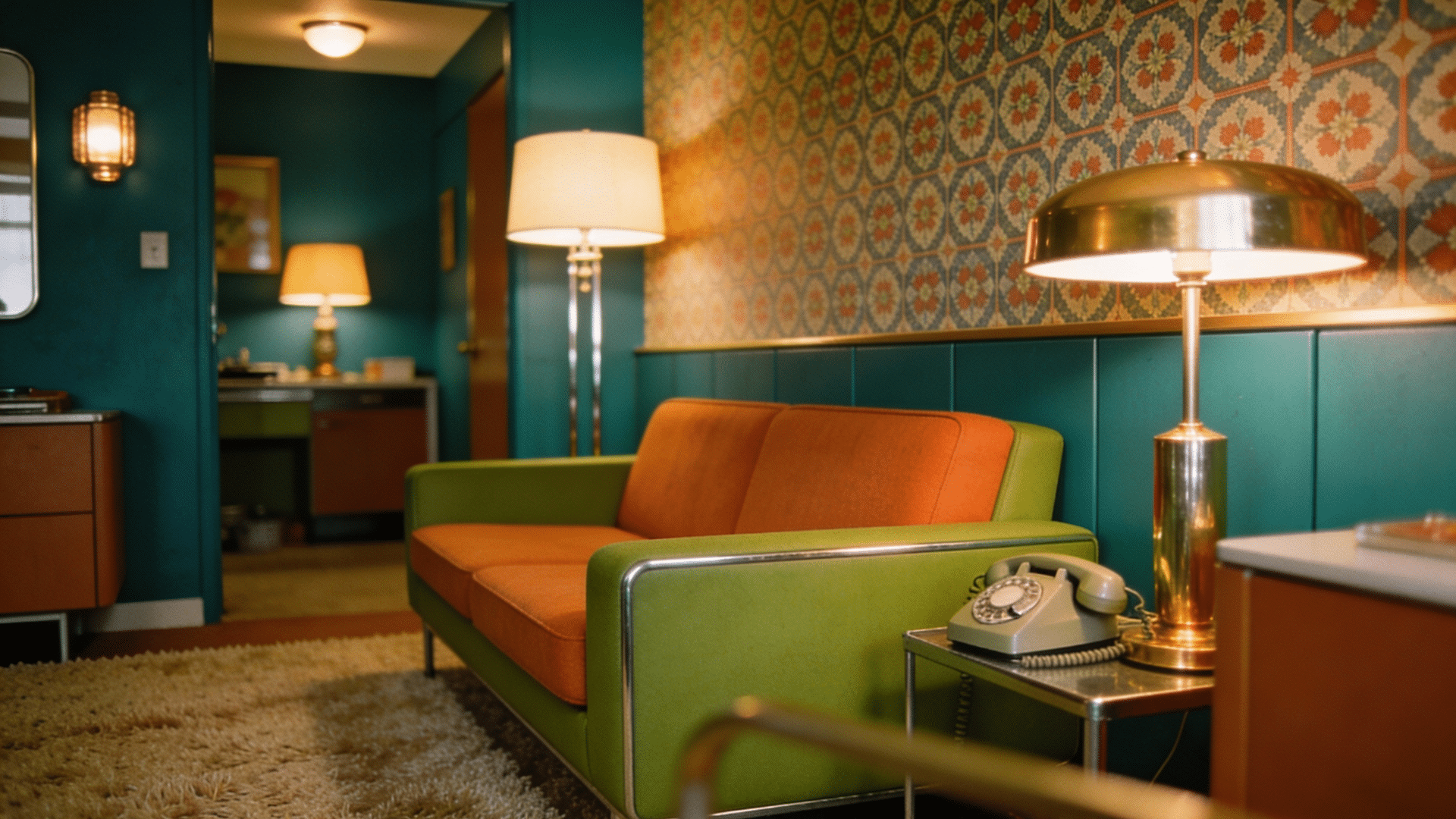
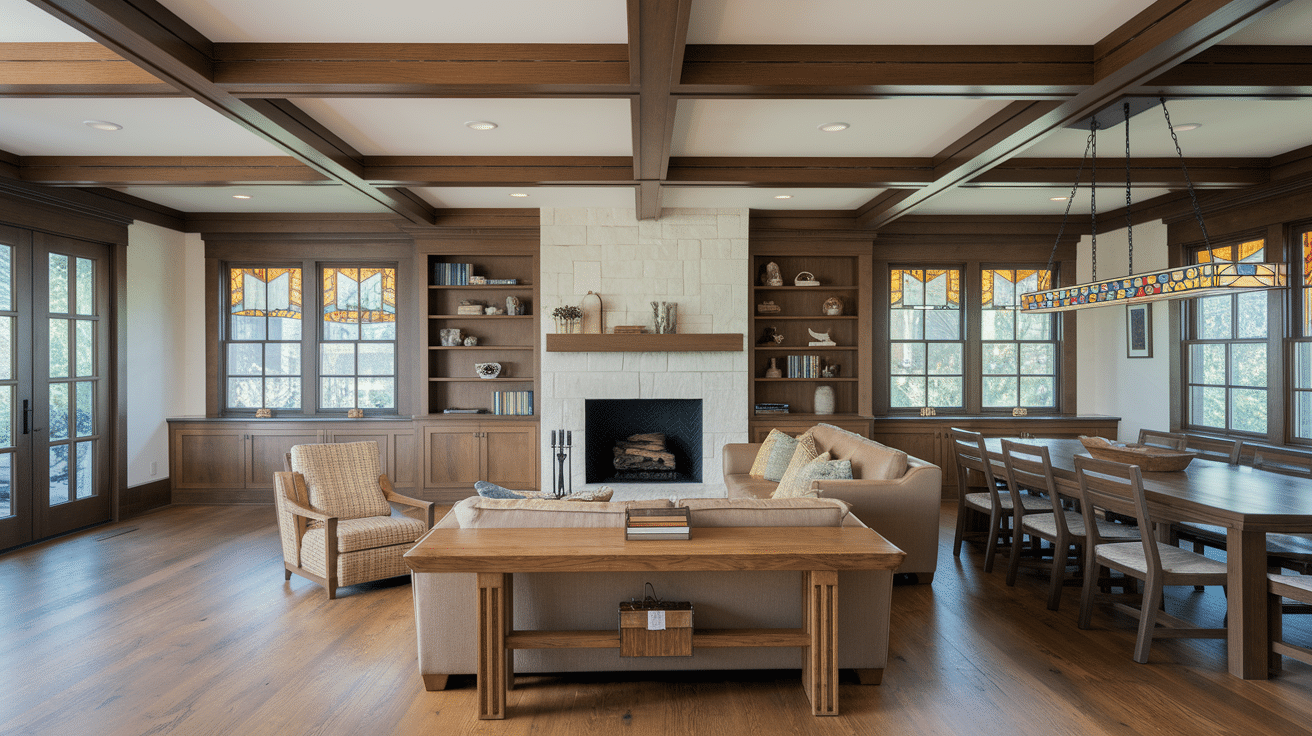
Wood panelling lined living rooms and basements. Dark walnut or lighter pine created cosy, cabin-like walls.
Statement lighting hung from ceilings, think globe pendants, Tiffany-style lamps, and hanging swag lights with colored glass.
Built-ins and shelving maximised space. Room dividers with geometric cutouts separate areas while keeping sight lines open.
11. Furniture and Accessories That Were Everywhere
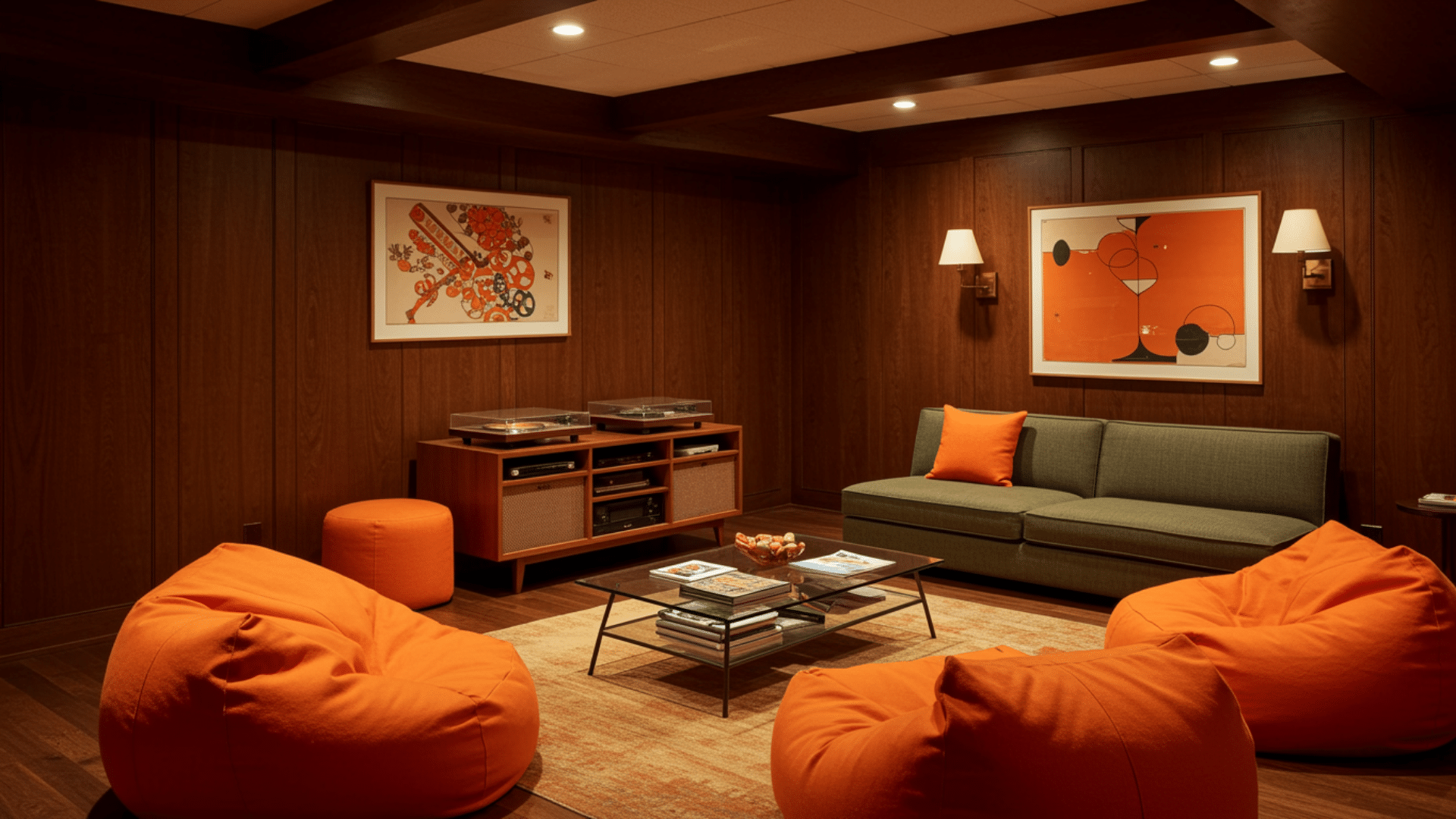
Low-profile sofas in earth tones dominated living rooms. They sat close to the ground with wide, welcoming cushions.
Bean bags and floor seating encouraged casual lounging. Oversized pillows are scattered around for guests to sit anywhere.
Record players occupied places of honour, often housed in wooden consoles.
Wall art included macramé hangings, brass sunbursts, and framed nature photography. Ceramic owls, lava lamps, and houseplants in hanging planters completed the look.
These weren’t just trends. They were everyday features that defined how people lived and gathered in their homes.
Is 1970s Interior Design Making a Comeback in 2026?
Yes, the 70s revival isn’t slowing down; it’s gaining momentum.
Sustainability drives many homeowners to the 70s style. Vintage furniture lasts longer than fast furniture. Natural materials like wood and rattan are renewable.
People appreciate quality craftsmanship that stands the test of time.
Vintage sourcing has become easier and more popular. Online marketplaces connect buyers with authentic 70s pieces.
Thrift stores and estate sales offer treasures at reasonable prices. Owning something with history feels meaningful.
Maximalist interiors challenge the minimalist dominance. Layered textures, bold patterns, and collected objects create personality.
The 70s provide the perfect blueprint for this approach.
How to Incorporate the 70s House Elements in Your Interior?
Ready to bring the 70s into your home? Here are some steps you can follow to incorporate 70s design into your home.
Start With Colour and Materials
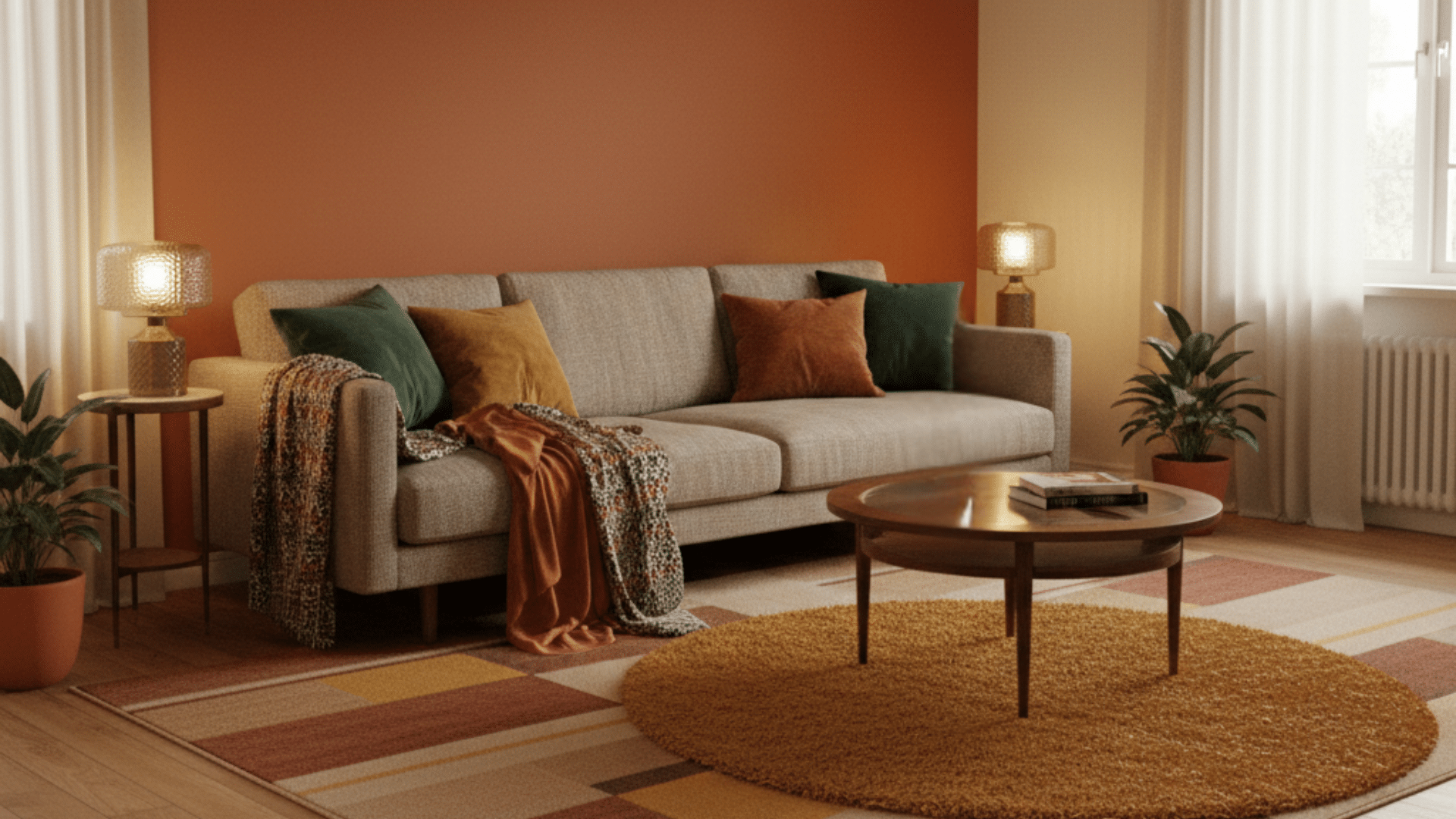
Step 1: Walls
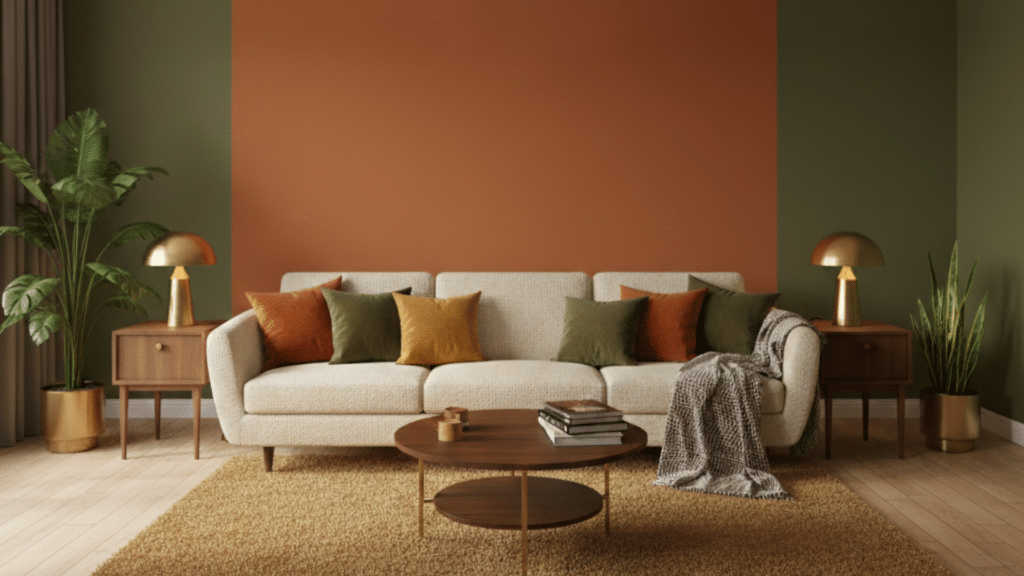
Paint one accent wall in burnt orange, mustard, or olive green. Or try peel-and-stick wallpaper with geometric patterns for commitment-free style.
Step 2: Flooring
If you can’t install shag carpet everywhere, use area rugs in warm tones. Wood floors work beautifully; add texture through textiles.
Step 3: Textiles
Layer velvet cushions, corduroy throws, and woven blankets. Mix patterns confidently.
Choose Furniture That Feels Authentic but Livable
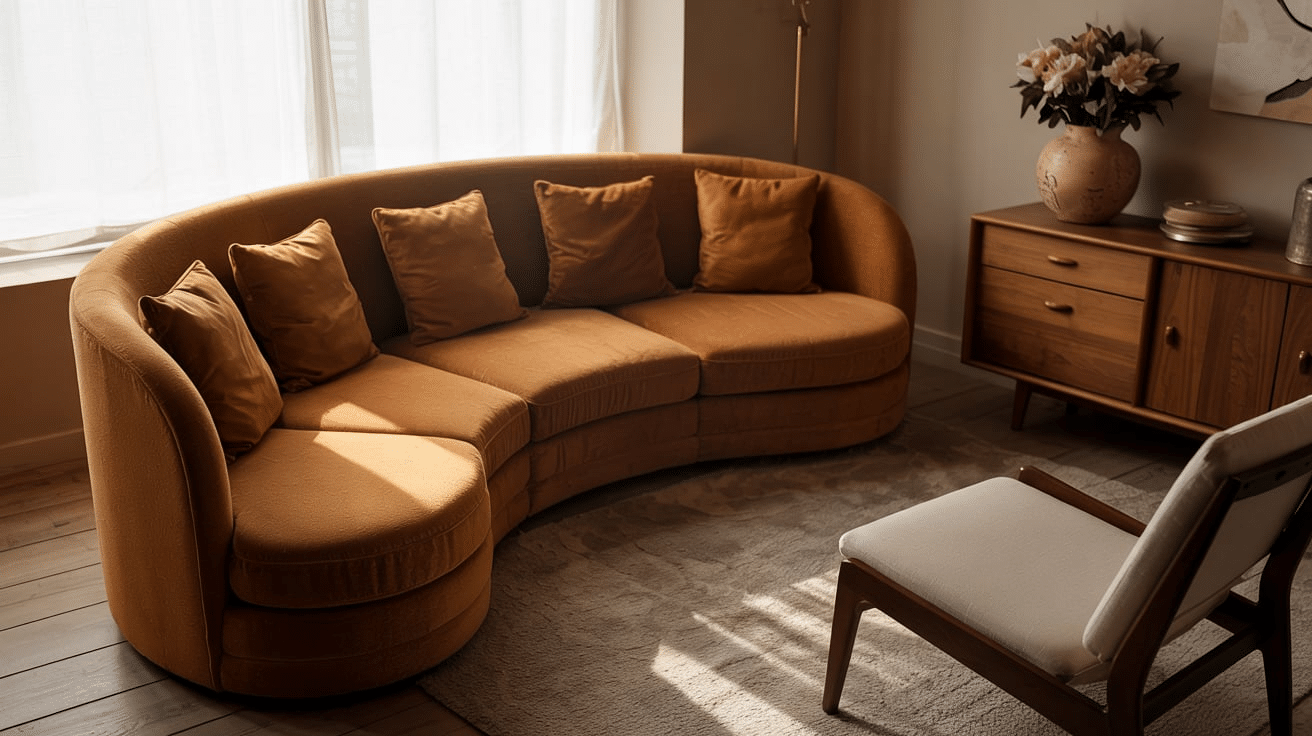
Step 4: Furniture
A quality curved sofa or vintage credenza. These anchor the space and last for decades.
Skip the dated recliners. Choose updated versions with 70s-inspired shapes but better support.
Styling Tips to Avoid Looking Dated
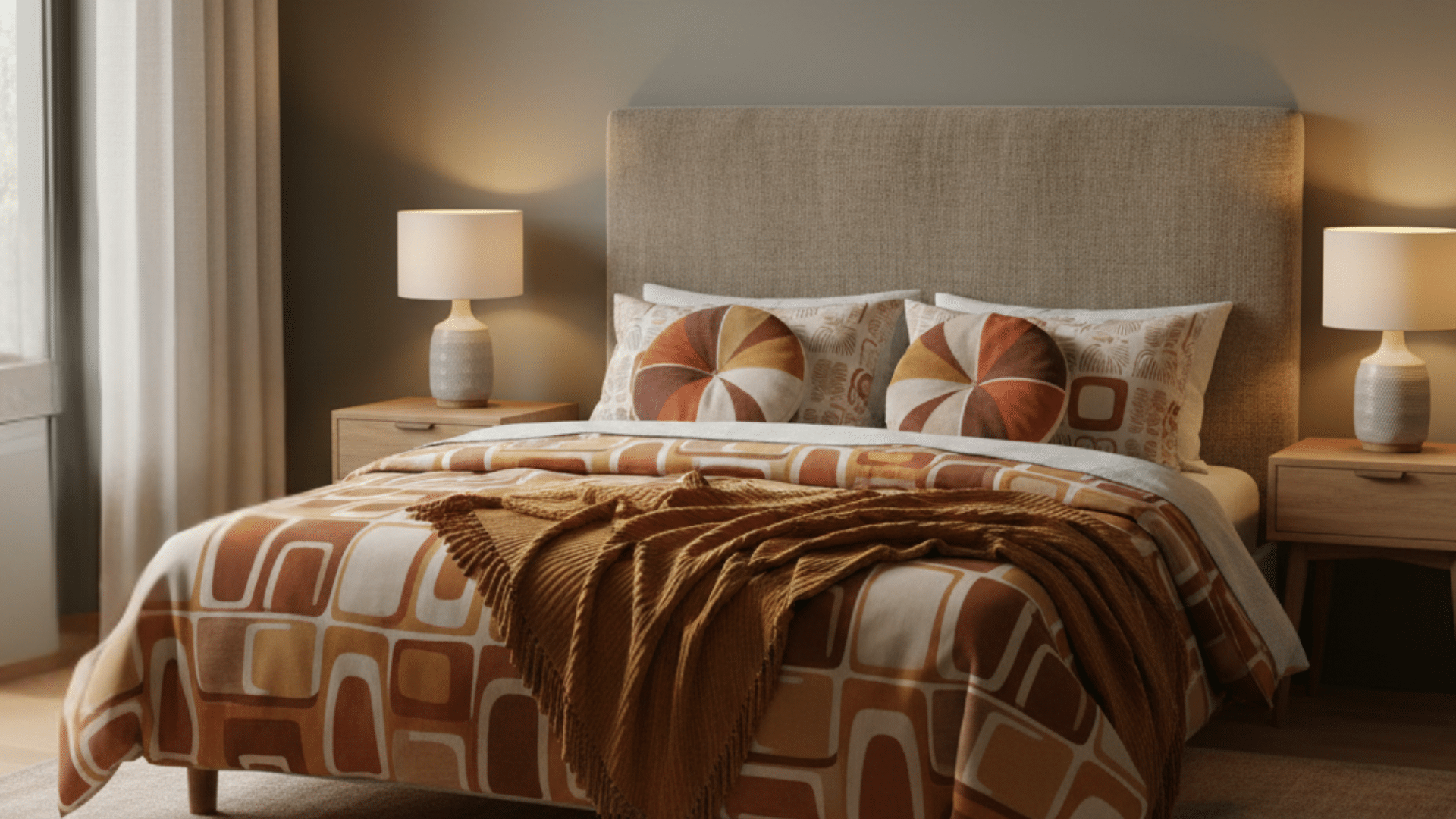
Step 5: Balance bold elements: If your bedding is bright orange, keep walls neutral. One statement piece per room prevents overload.
Step 6: Mixing old and new intentionally: Pair a vintage coffee table with contemporary lighting. Combine thrifted finds with new essentials.
This keeps your space feeling collected, not cluttered.
Conclusion
Creating a retro 70s house interior isn’t about turning your home into a time capsule. It’s about reclaiming the comforting feeling that made those spaces so inviting.
You don’t need to follow every trend from the era. Pick what speaks to you. Maybe it’s the earthy colour palette. Or the plush textures.
Or simply the idea that your home should feel personal, not perfect.
This style adapts beautifully to modern life. Mix vintage finds with contemporary pieces. Balance bold choices with restraint.
Now make your space feel alive.