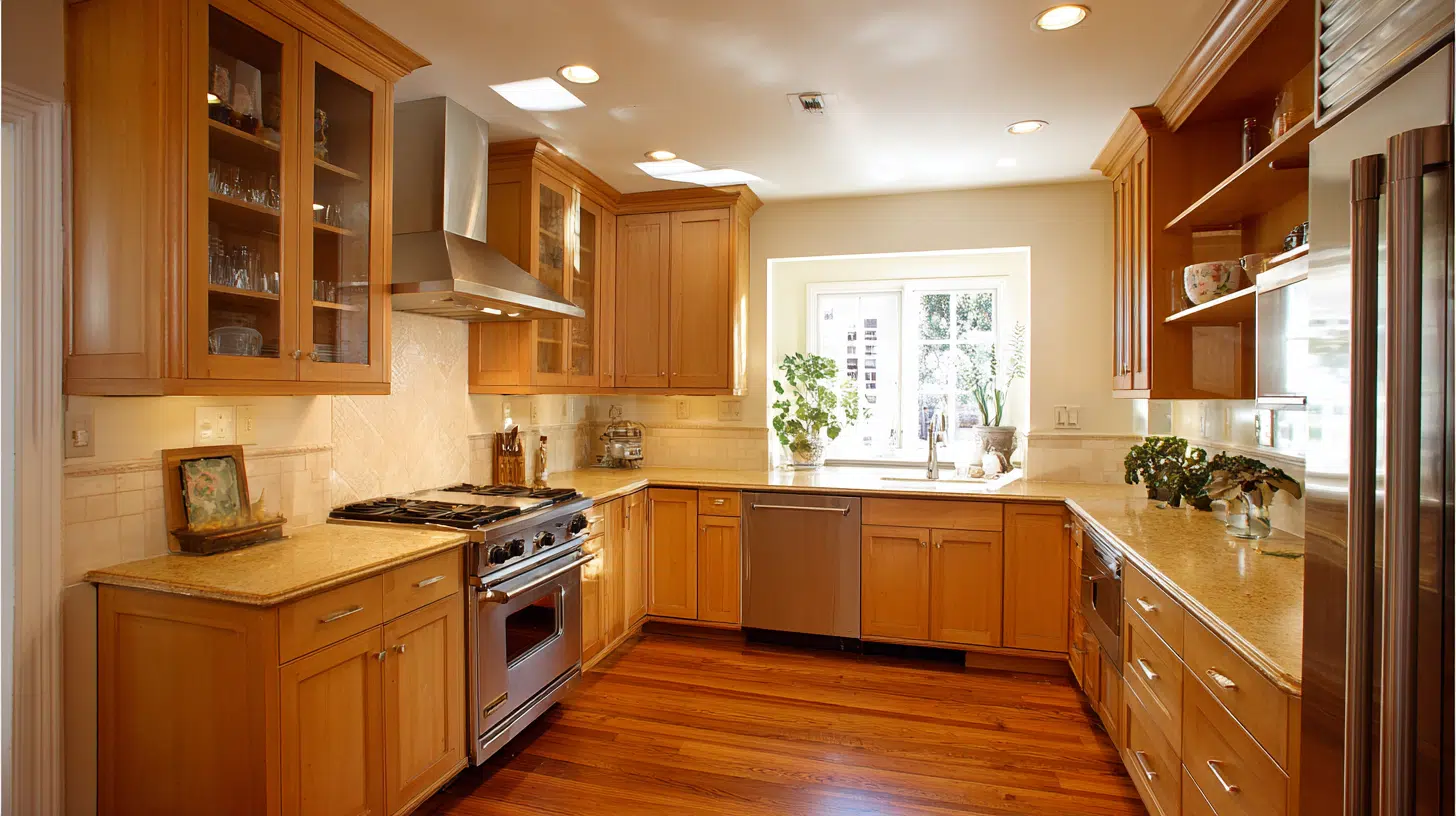
Some kitchen layouts make you work around them. A U shaped kitchen works around you.
This layout wraps counters, cabinets, and appliances across three connected walls, keeping everything within reach and the cooking zone free from traffic.
It has stayed popular because the logic behind it is hard to argue with.
The three wall structure creates natural zones for prep, cooking, and cleanup without requiring much thought.
The layout does not ask you to adjust to it. It adjusts to you.
Color Schemes for U Shaped Kitchens
Color does more work in a U-shaped kitchen than most people expect.
With three walls of cabinetry, the shade you choose covers a lot of surface area and sets the entire mood of the space.
Benjamin Moore Aura holds up well in high traffic kitchens and covers deeply in fewer coats.
Sherwin-Williams Emerald Interior is worth considering for anyone looking to go dark or bold. The pigment depth on greens, navies, and charcoals is noticeably better than most standard ranges.
Farrow and Ball suits sage greens and earthy tones particularly well, though it needs more careful maintenance in a kitchen setting.
Behr Premium Plus is a solid midrange option that performs well on cabinets across a wide range of colors. Always sample on an actual cabinet door before deciding.
What looks right in the store will look like a completely different color across three walls under your kitchen lighting.
U Shaped Kitchen Design Ideas For Small Kitchens
Not every kitchen layout gives you this much to work with.
Three walls of counter space, a natural cooking zone, and room to zone prep, cooking, and cleaning without overlap.
1. Open End Kitchen with Breakfast Counter
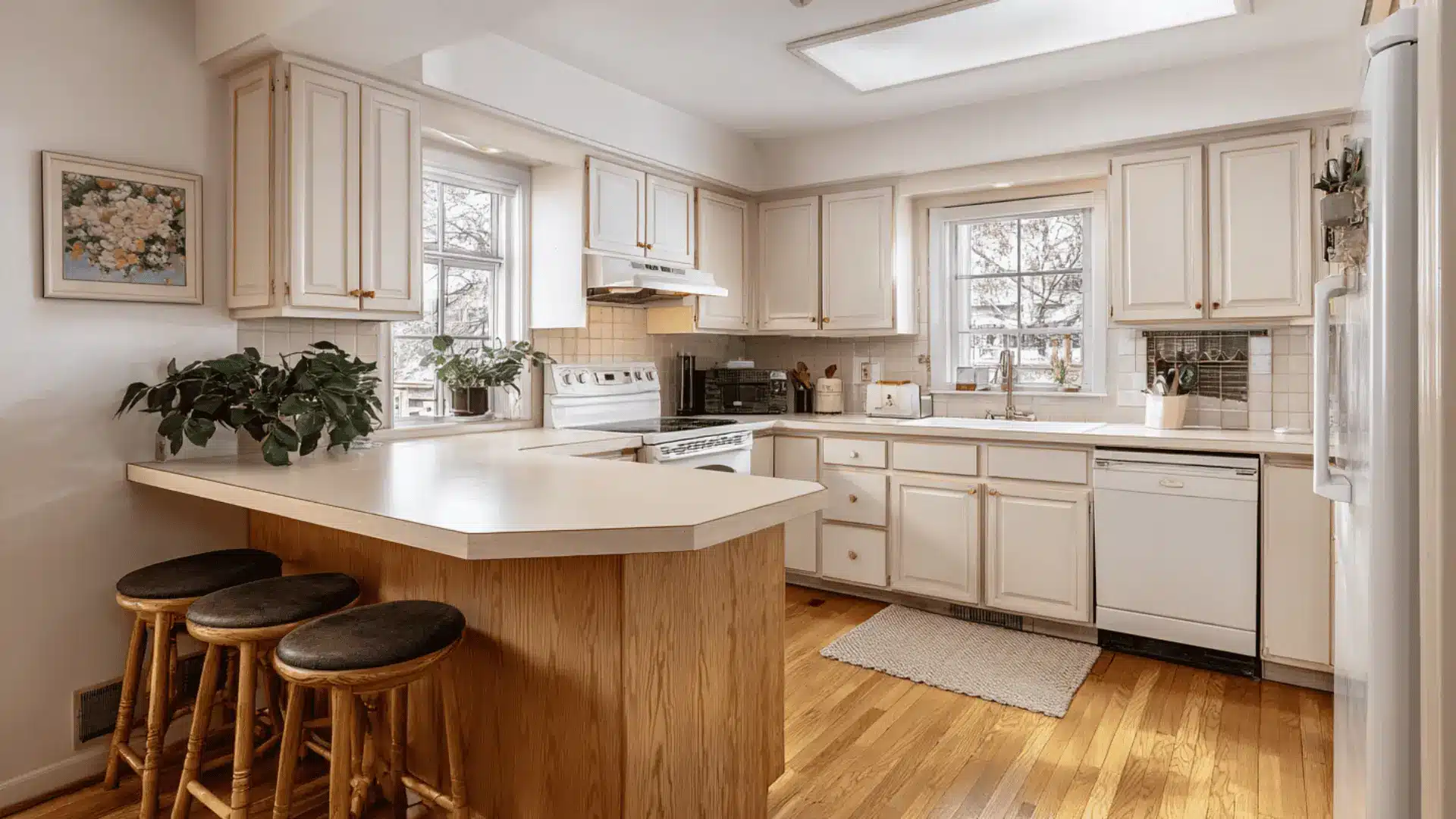
Keep one side partially open and extend the counter to double as a casual dining or coffee zone.
This works well when you want the efficiency of a U-shaped kitchen but still need a spot for quick meals or morning routines. It also helps the kitchen feel less boxed in.
Add bar stools that tuck completely under the counter to save floor space when not in use.
2. Compact Kitchen Designed Around Appliances
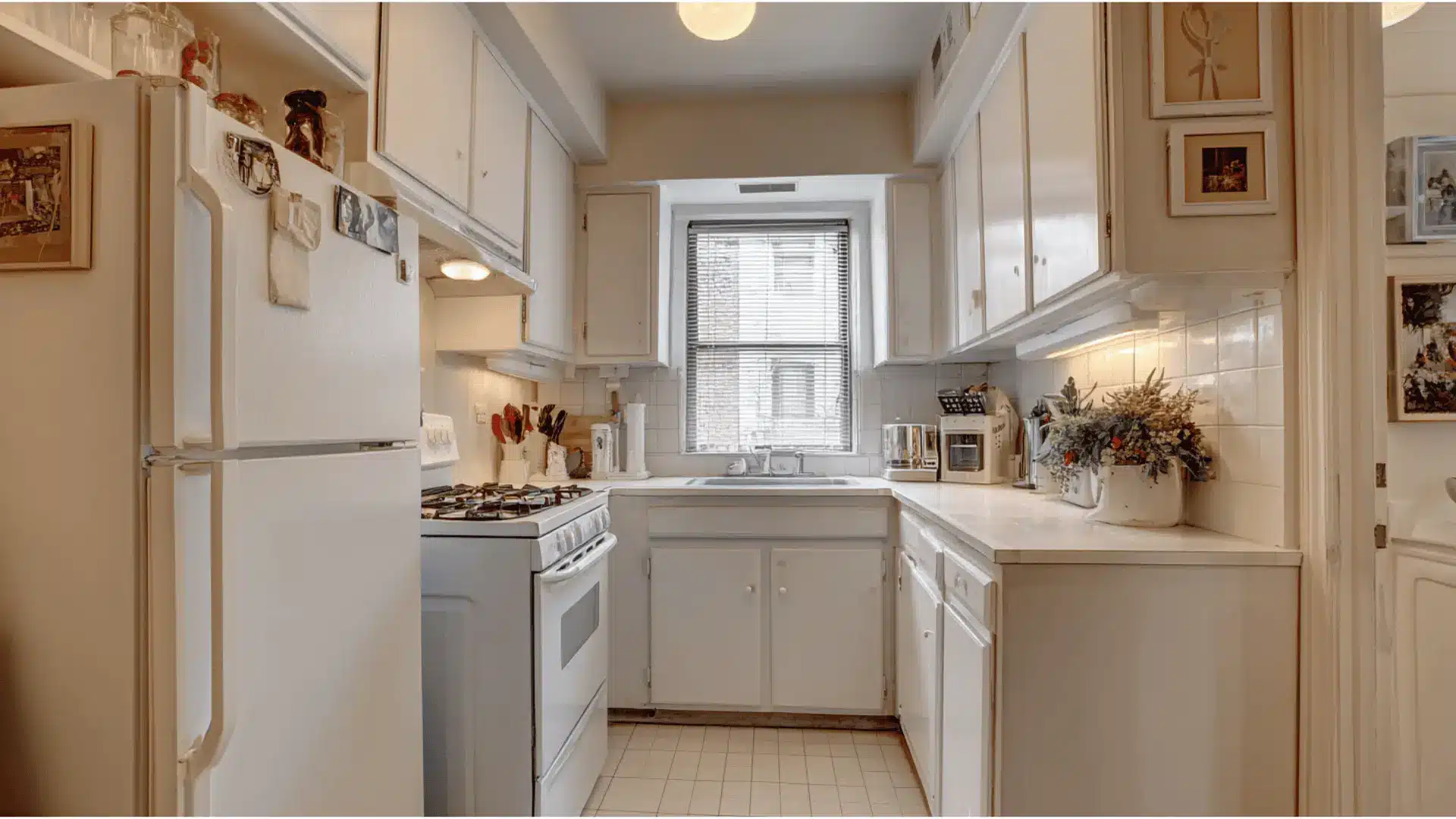
Arrange the layout so major appliances form the core. Your fridge, stove, and sink should create a tight triangle that keeps you from moving back and forth across the room.
In a smaller kitchen, cutting two steps off every task adds up across a full day of cooking.
3. Two Tone Cabinet Kitchen
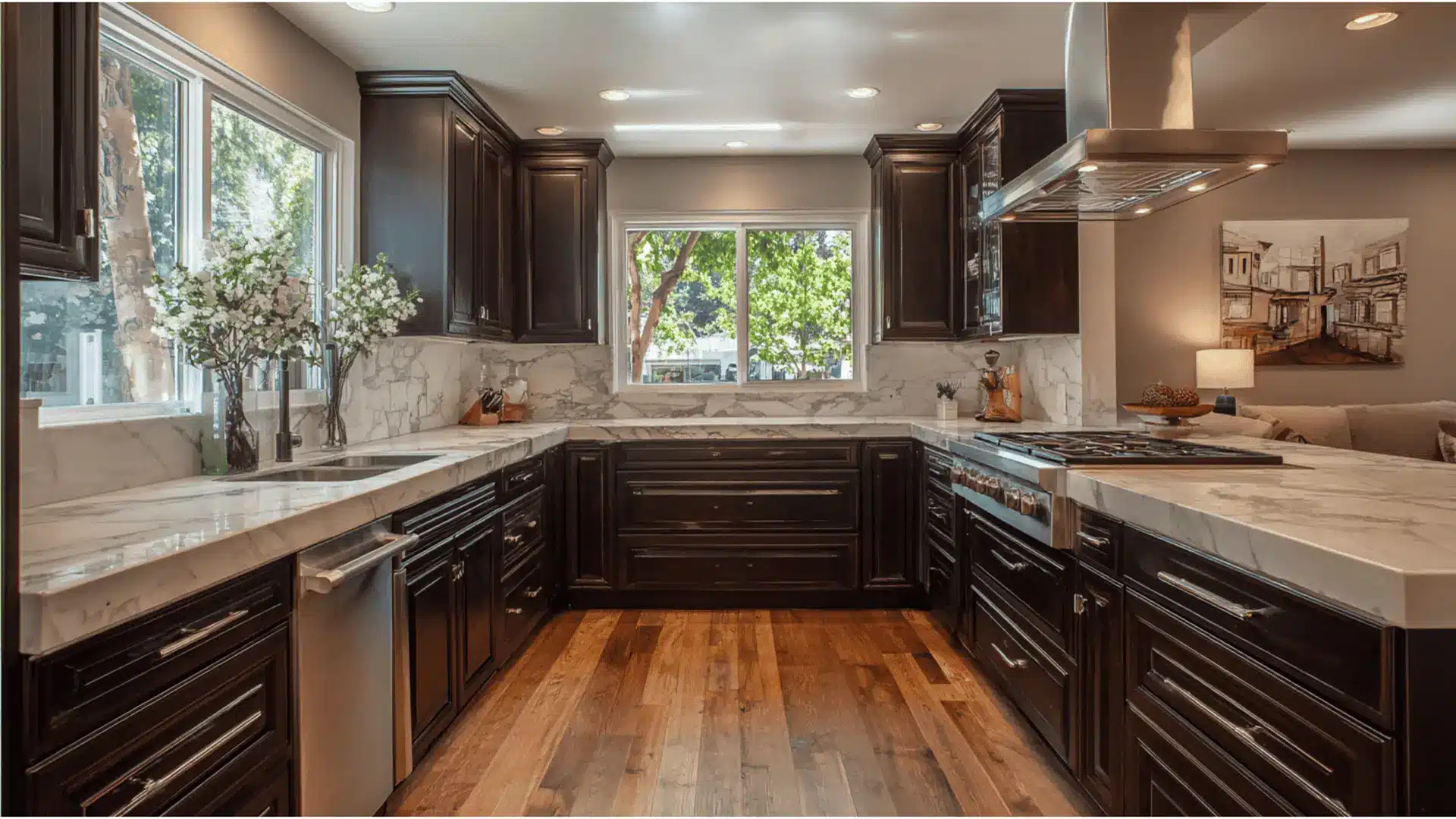
Use contrasting colors for upper and lower cabinets to visually break up the enclosed layout.
Navy blue at the bottom and crisp white at the top is a reliable combination. It breaks up what can otherwise feel like one continuous block of color across three walls.
Decor Tip: Match your hardware finish to the darker cabinet color for a pulled together look.
4. Kitchen with Window Centered Sink
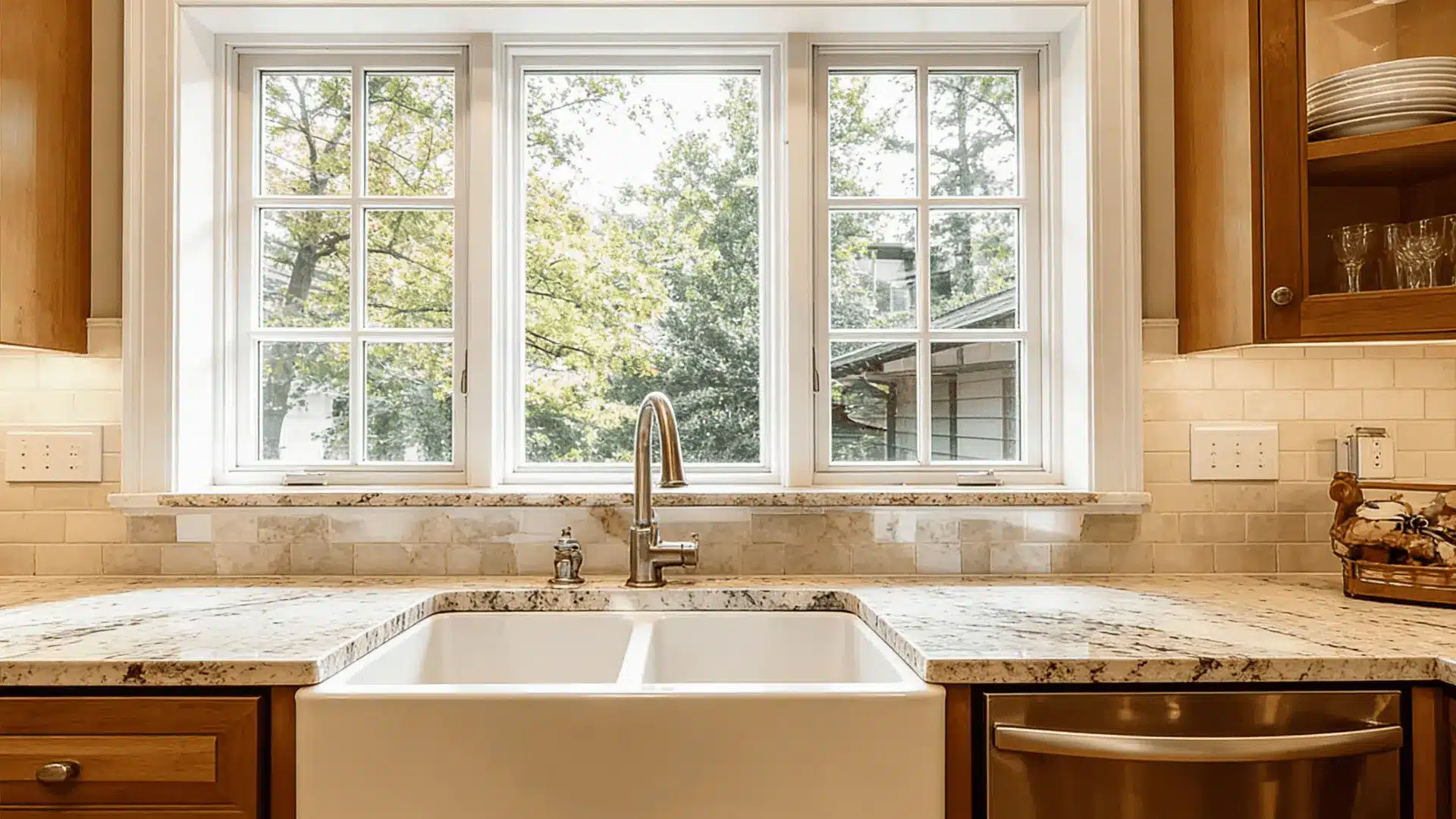
Place the sink on the central wall, facing a window, to improve ventilation and natural light. The light bounces around the room, and the whole space feels less enclosed.
It is one of the simplest layout decisions that noticeably improves daily use.
5. Minimalist Kitchen with Cabinets
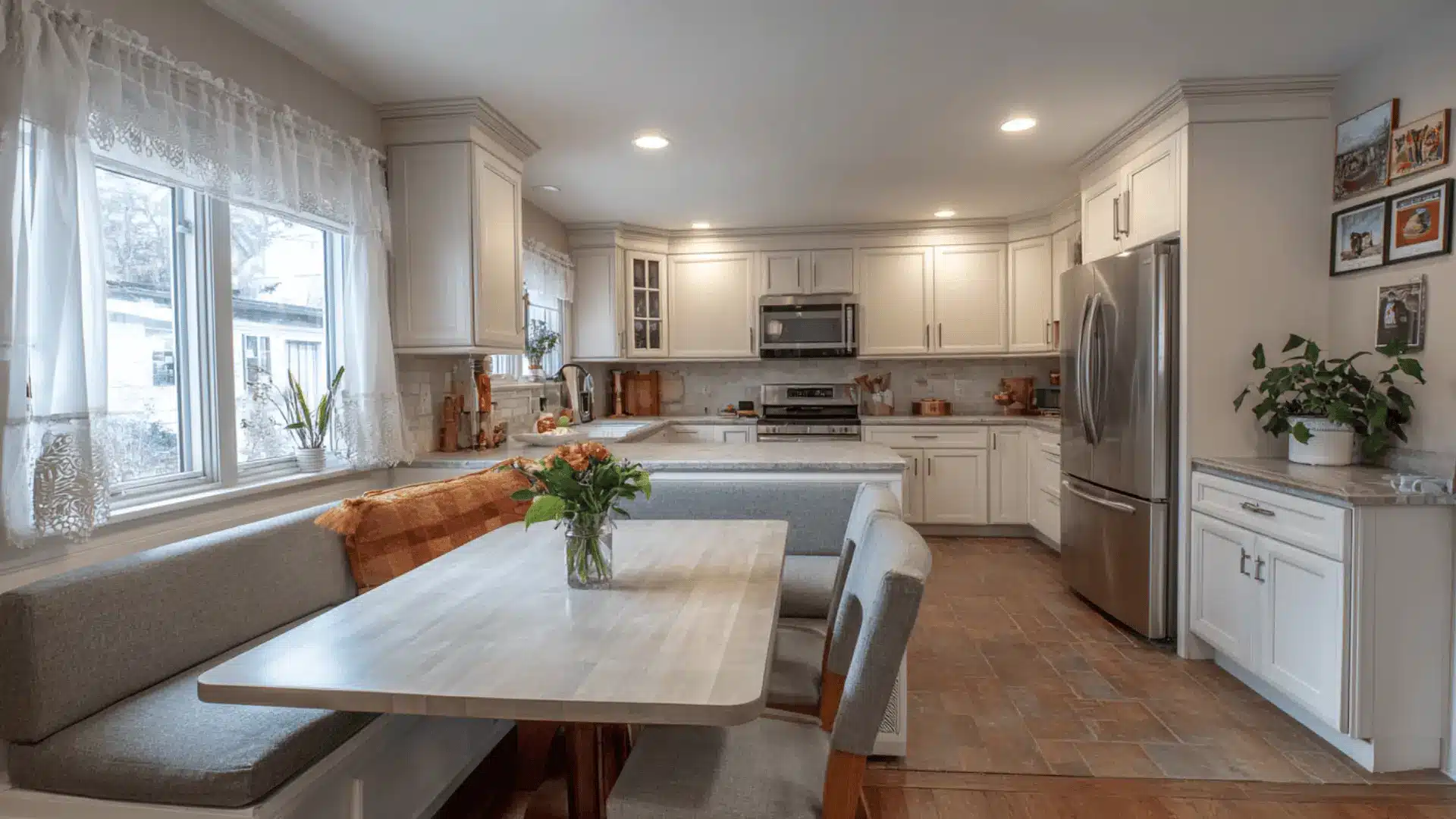
Handleless cabinetry and flush finishes create a clean, uninterrupted visual flow across all three walls.
Push to open mechanisms replace traditional pulls, giving you smooth surfaces from end to end. The cleaner the surface, the more the layout itself becomes the design.
6. Small Kitchen with Open Shelving Ends
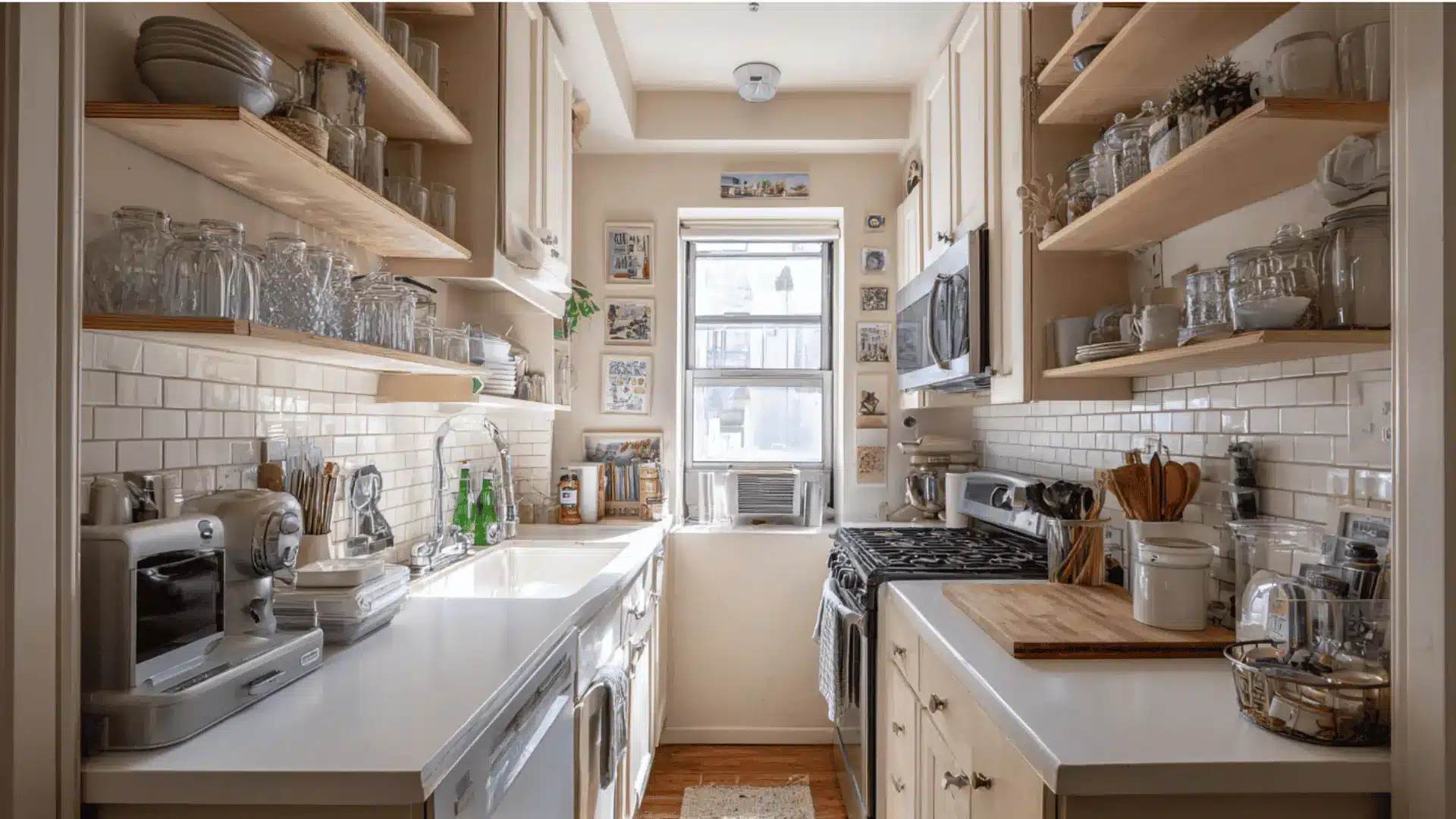
Replace end cabinets with open shelves to reduce visual bulk in tight spaces. Install LED strip lighting underneath for a soft glow at night
A few things that make this work:
- Use shelves for everyday plates, glasses, or cookbooks you actually reach for
- Stick to matching or neutral dishware so the shelves read tidy rather than cluttered
- Keep one shelf clear to avoid the space feeling too busy
7. Kitchen with Integrated Dining Nook
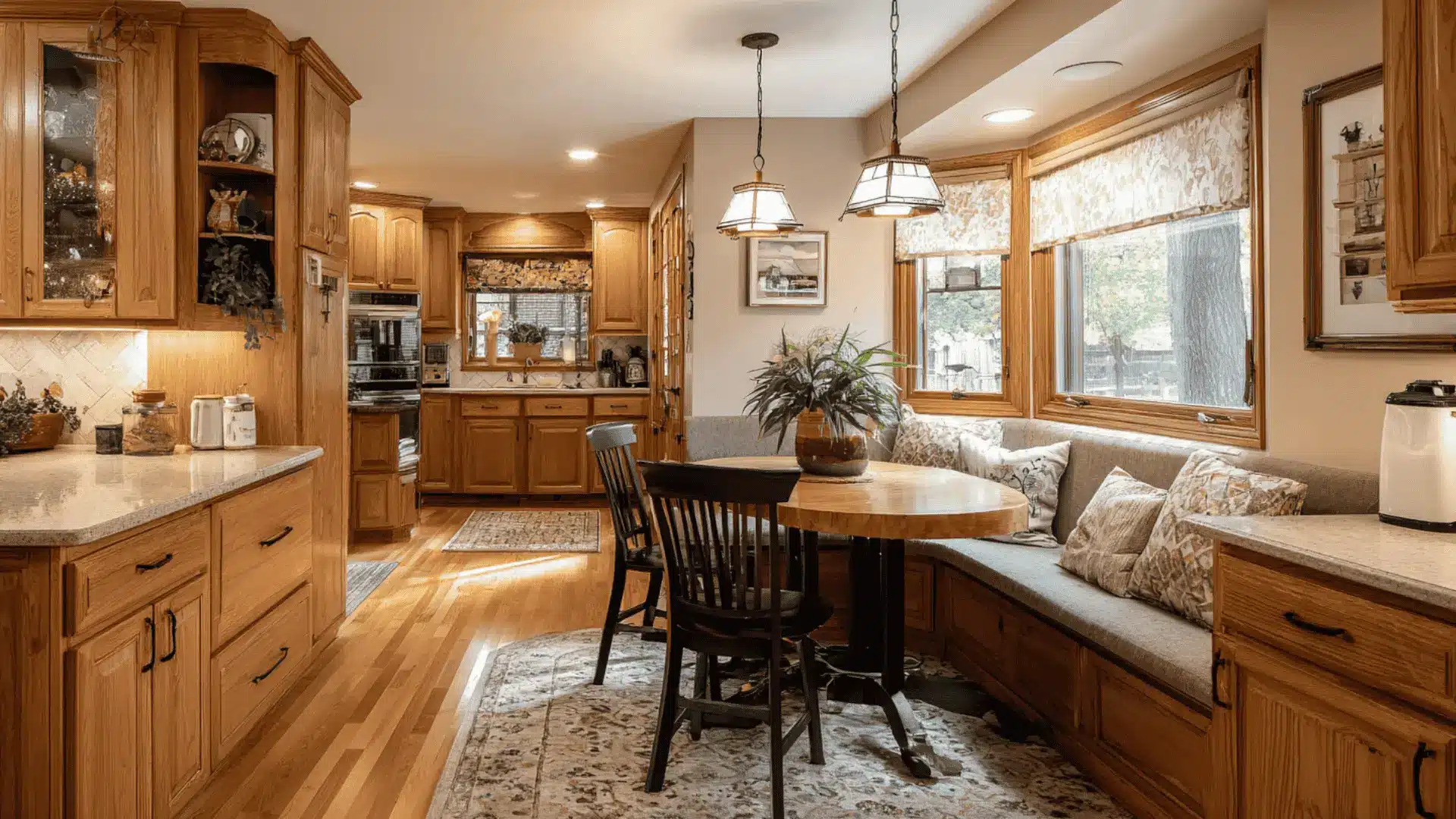
One inner corner is redesigned as a built in seating or breakfast booth. It is a practical use of corner space that would otherwise sit unused.
Add cushions and a small table, and you have a cozy spot that does not take up extra floor space.
8. Monochrome Kitchen with Varied Textures
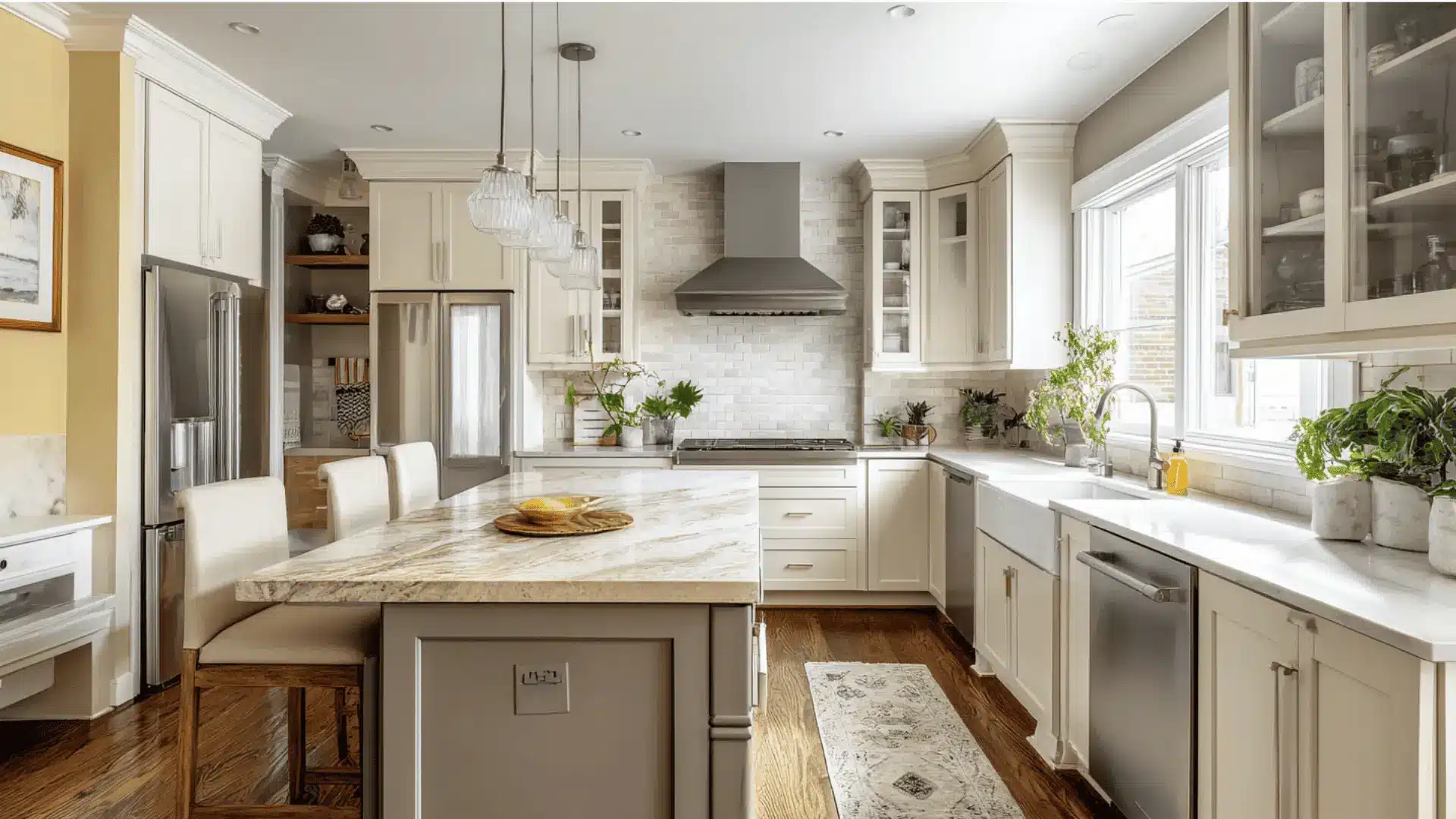
Stick to one dominant color with varied finishes for a cohesive, considered feel. All white reads differently depending on the finish.
Matte cabinets, glossy tile, and textured countertops in the same shade create more visual interest than most people expect. The same logic applies to gray, black, or warm beige.
Introduce contrast with wood cutting boards, woven baskets, or a single potted herb on the counter.
9. Kitchen Focused on Task Zoning
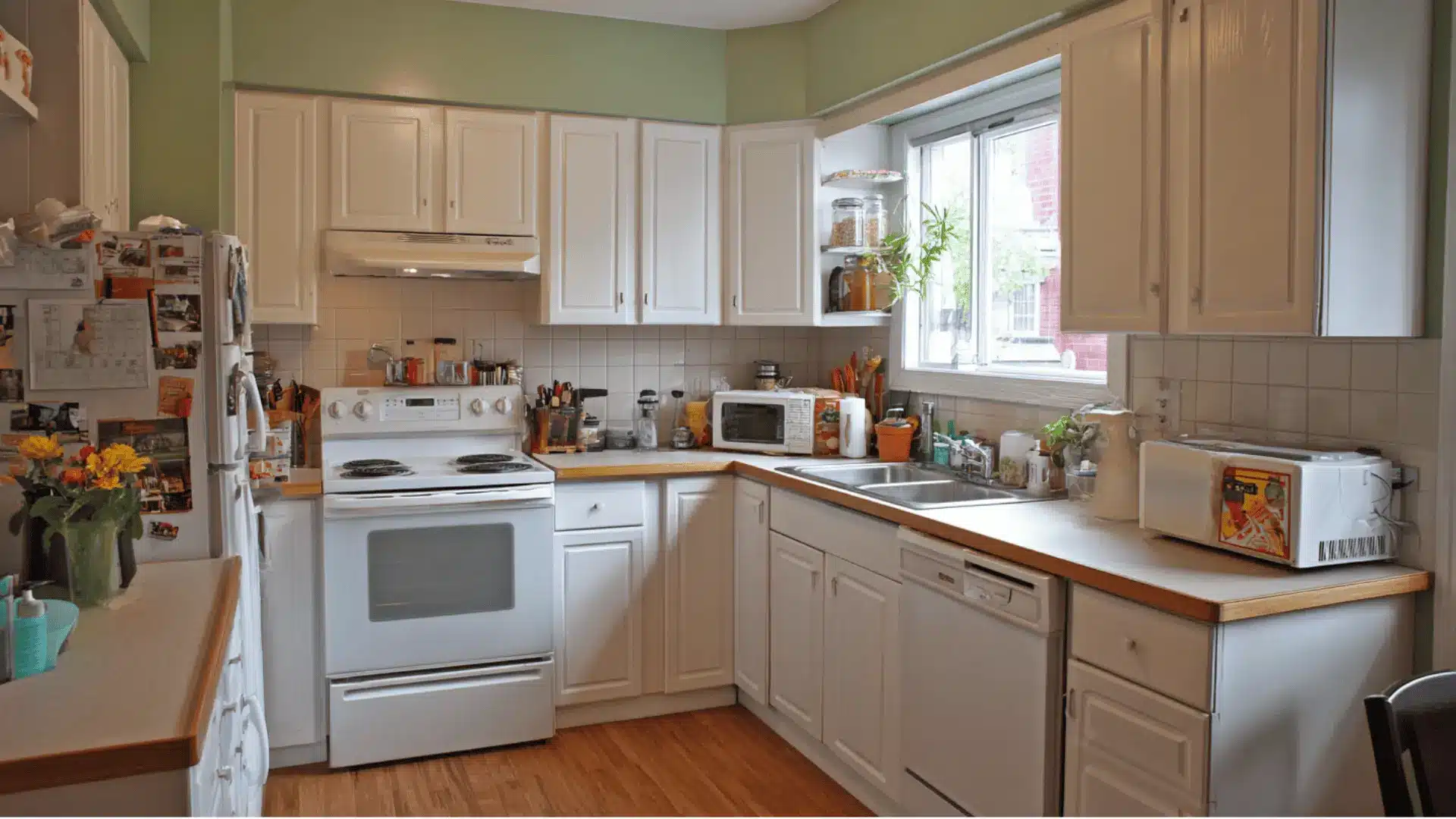
Assign each wall a function: prep, cook, clean. One wall handles washing and drying, another handles chopping and mixing, and the third handles cooking.
This keeps the workflow logical and reduces chaos when you are juggling multiple dishes at once.
10. Industrial Style Kitchen
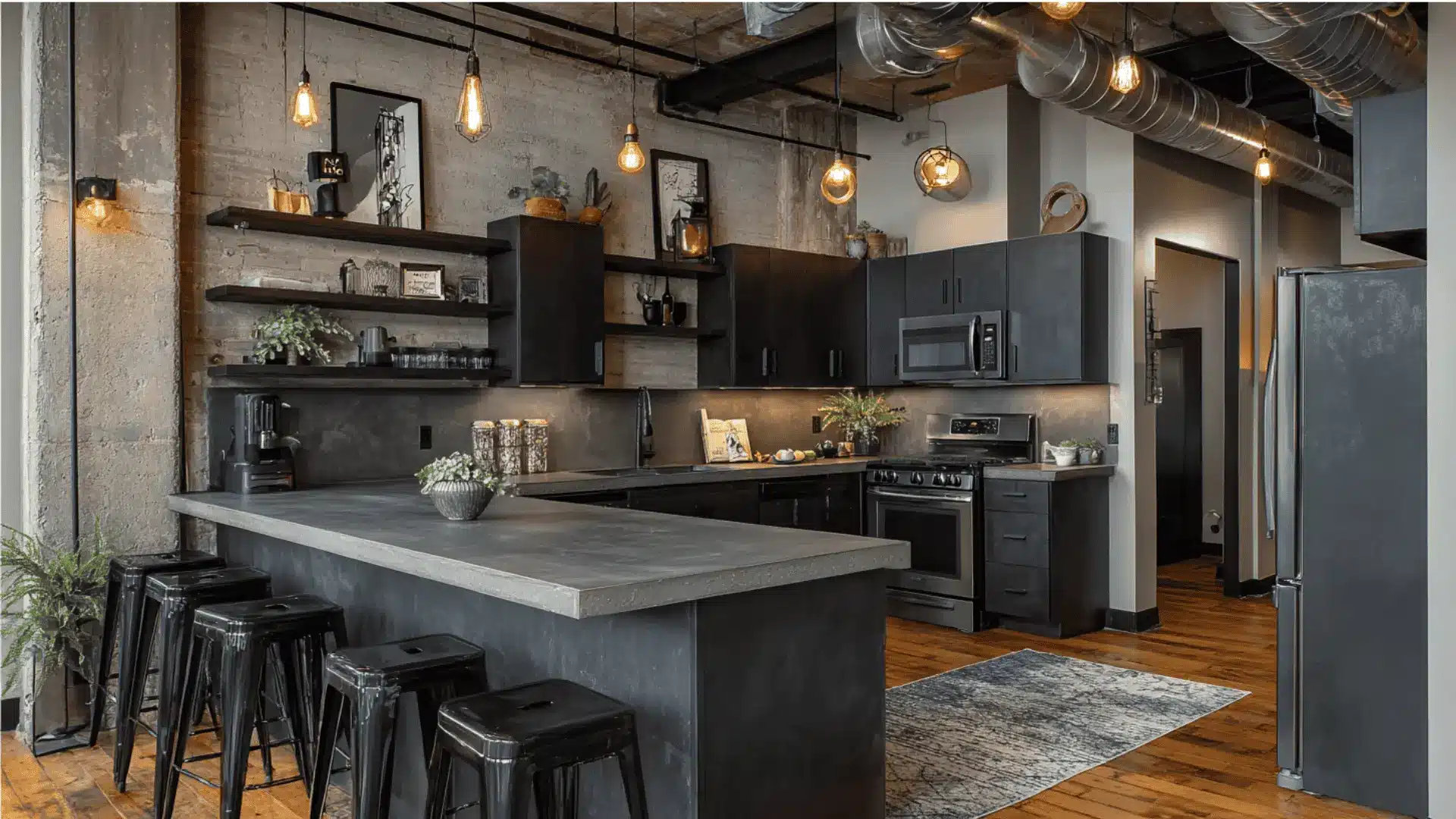
Combine raw materials like concrete finishes, open metal shelves, and matte cabinets. Neutral palette with pops of black or charcoal to anchor the space
A few details that pull the look together:
- Stainless steel appliances to match the overall tone
- Edison bulb pendants for functional mood lighting
- Exposed hardware and reclaimed wood accents for an edge without going too far
11. Kitchen with Statement Backsplash
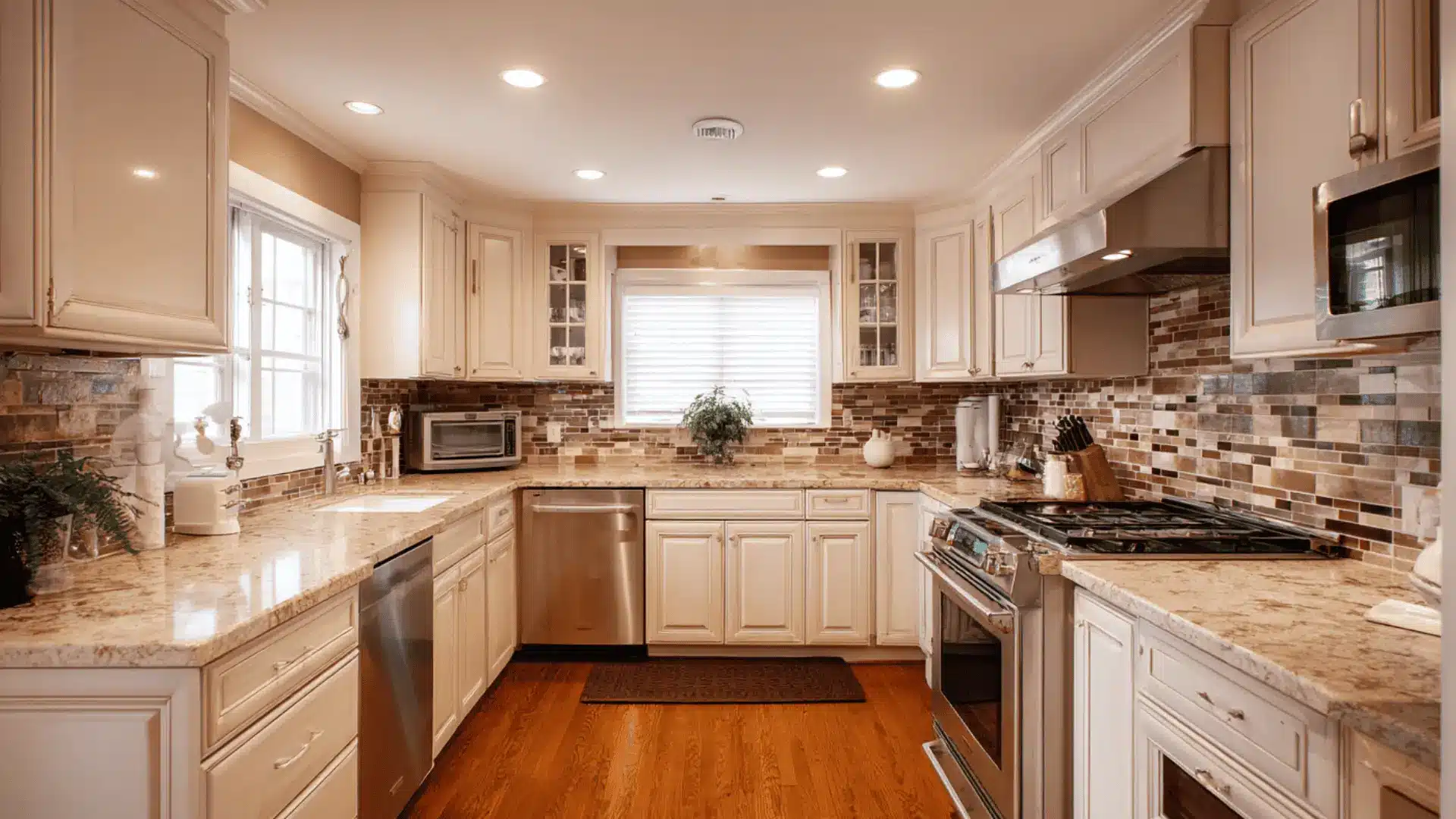
Use bold tile or stone across all three walls to make the kitchen the visual center of the space. Patterned ceramic tile, marble slabs, or colorful subway tile turn the backsplash into the main feature.
Since the layout is already structured, a standout backsplash adds character without creating visual chaos.
Keep cabinets and counters neutral so the backsplash has room to land properly.
12. Kitchen Designed for Multiple Cooks
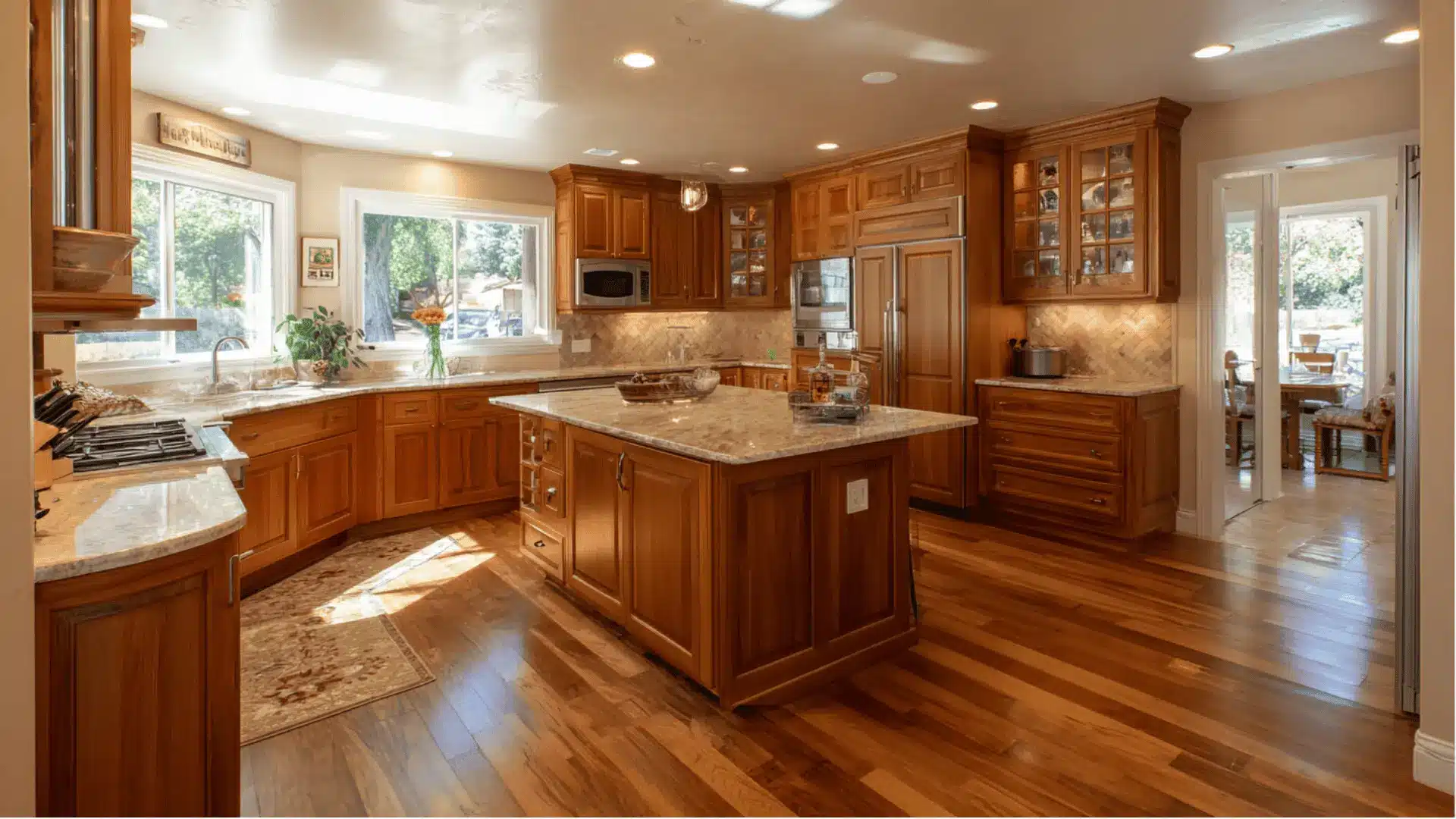
Wider walkways and dual prep zones allow two people to work comfortably without getting in each other’s way.
A few things worth planning for:
- A second sink or prep bowl on one wall
- Separate cutting areas at different stations
- Duplicate tools are stored in different drawers, so nobody has to cross the kitchen to grab the same thing
13. Luxury Kitchen with Built in Appliances
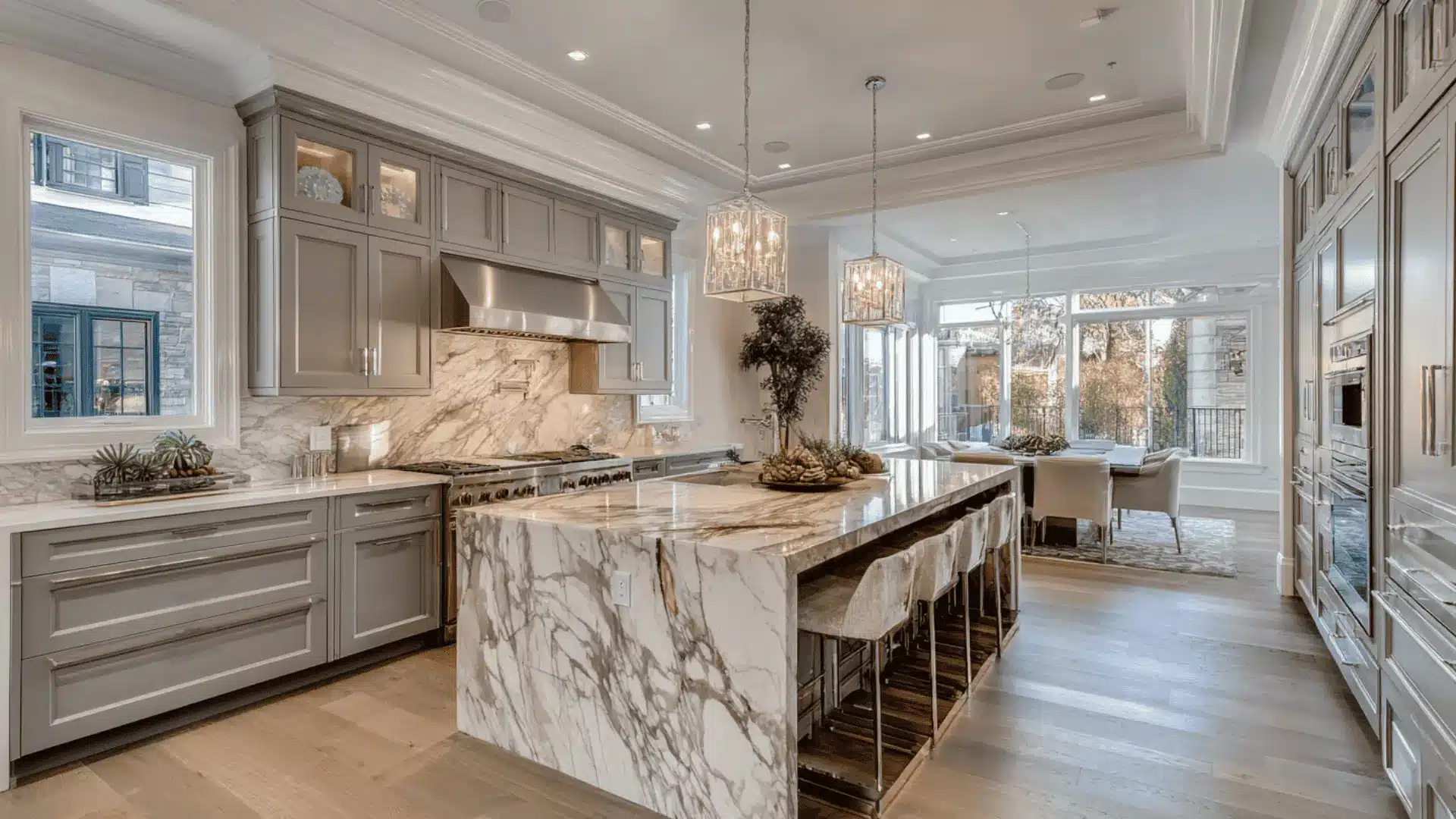
Fully integrated appliances maintain a uniform look across all three walls. The fridge, dishwasher, and microwave sit behind matching cabinet panels so nothing interrupts the clean lines.
It costs more upfront, but nothing else makes a kitchen look more considered from every angle.
14. Kitchen with Accent Lighting Layers
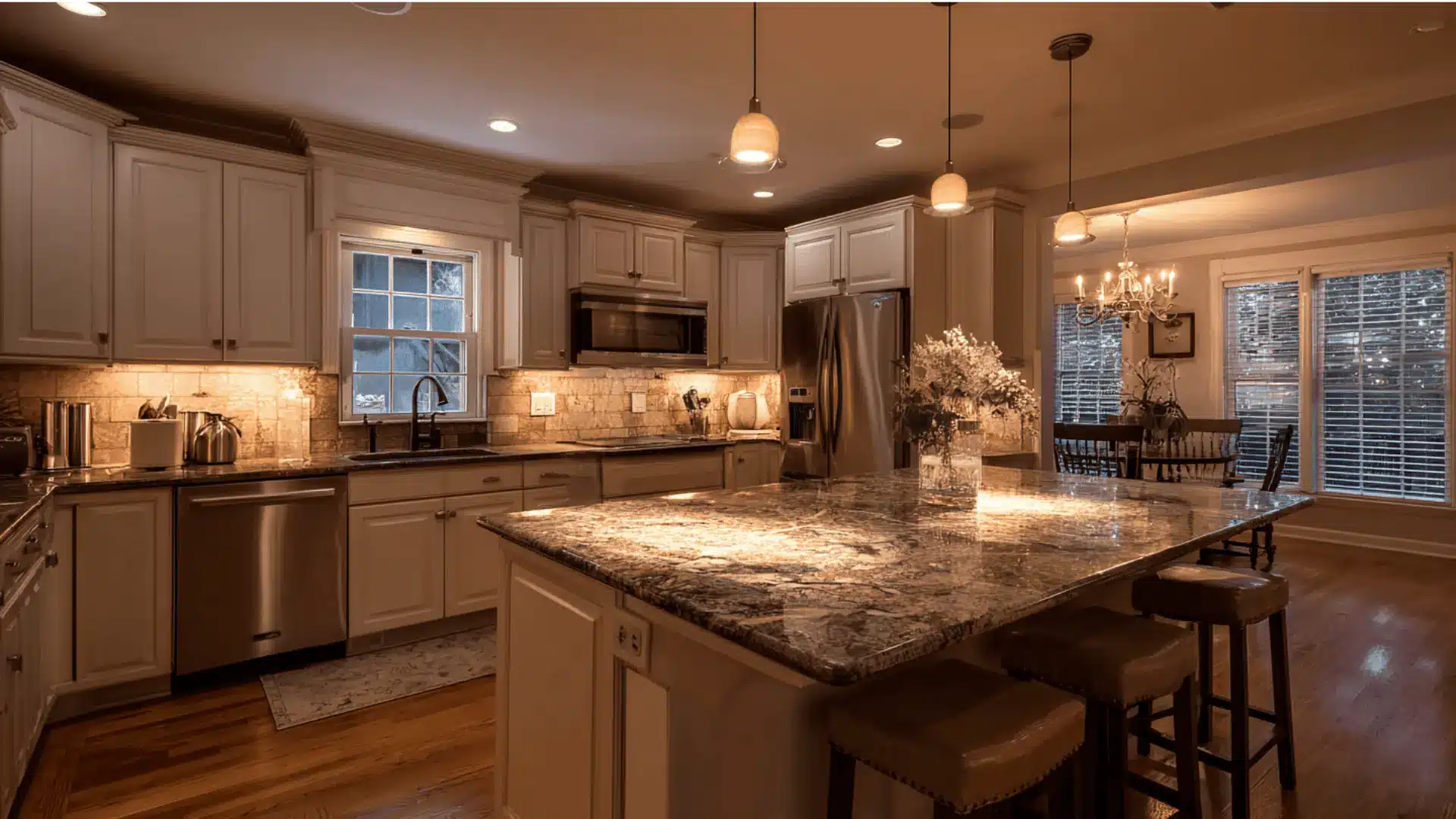
Combine task, ambient, and toe kick lighting to add depth and improve usability at every hour.
Under-cabinet lights brighten the work surface, recessed ceiling lights provide general visibility, and toe-kick LEDs add a subtle glow at floor level.
Use dimmable switches so the lighting transitions between cooking and entertaining modes without changing a single fixture.
15. Kitchen Using Natural Wood Textures
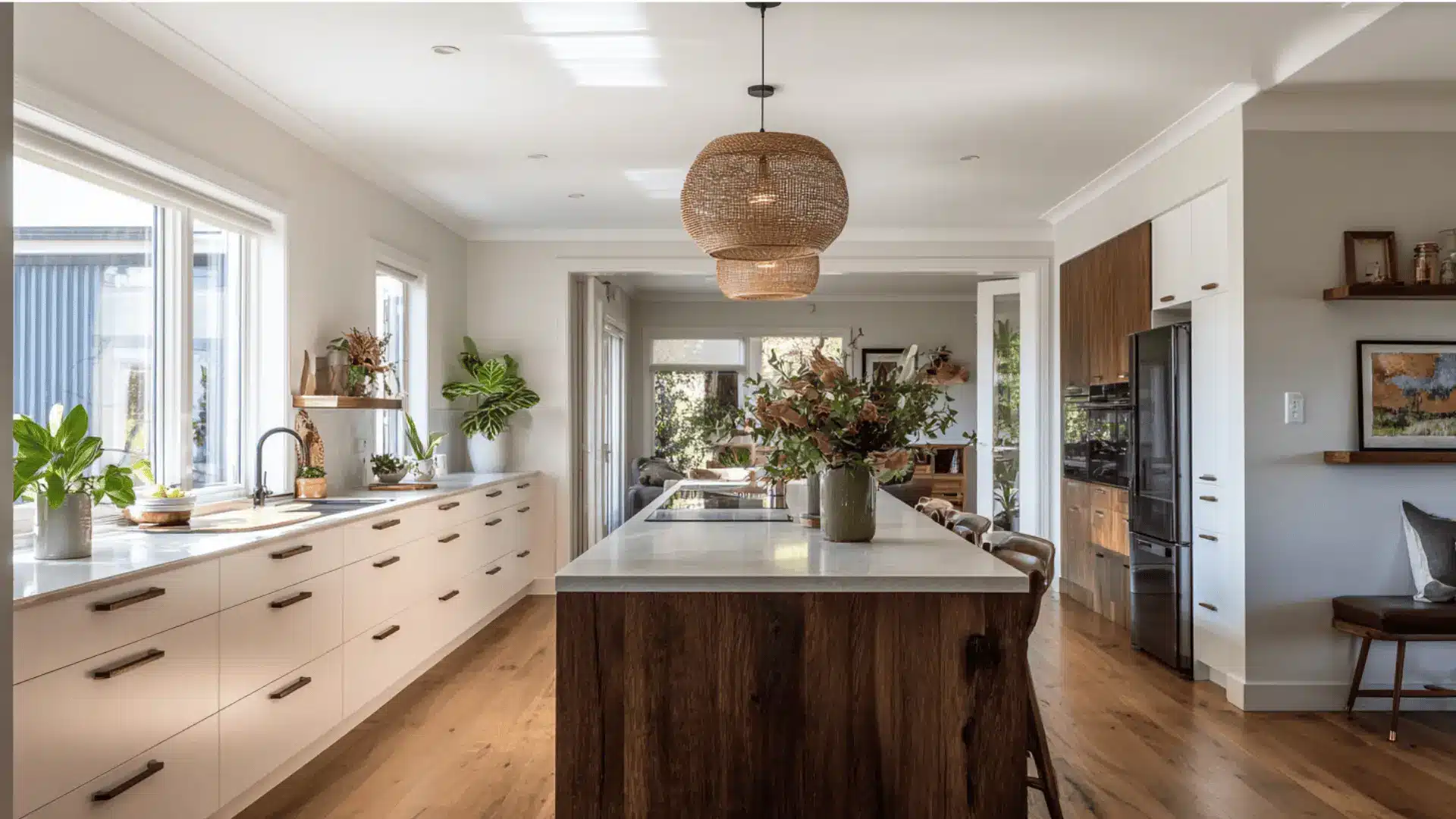
Wood cabinetry adds warmth and softens the enclosed nature of the layout. Oak, walnut, or bamboo brings in organic tones that balance the hard lines of counters and appliances.
It works in both modern and classic kitchens without needing much else around it to look good.
16. Smart Storage Corners
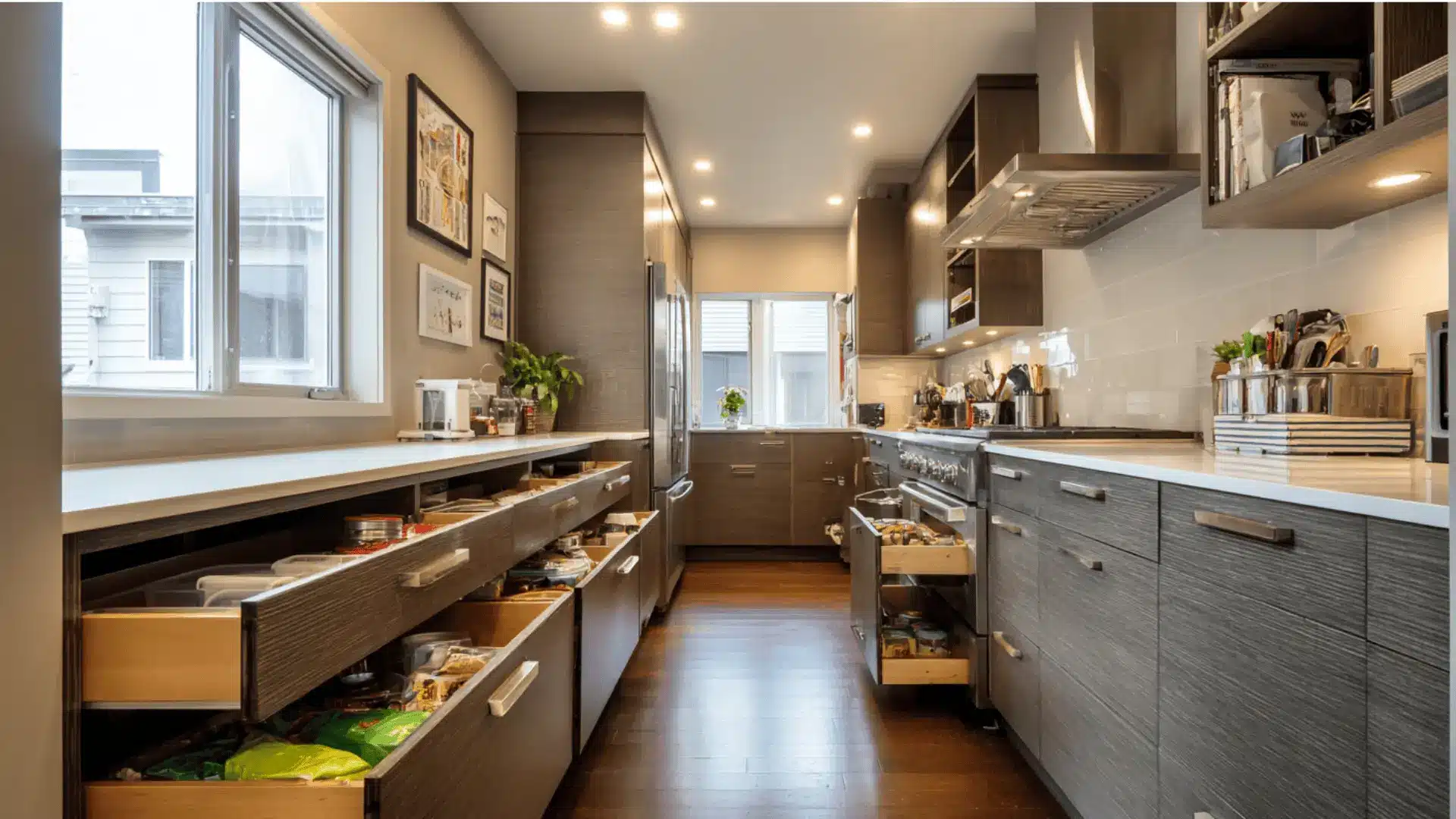
Corners in a U shaped kitchen are notorious for becoming dead space. The right hardware fixes that entirely.
A few options worth considering:
- Lazy Susans for awkward corner cabinets
- Pull out racks that bring everything to the front
- Corner drawers that use the full depth of the space
- Tiered organizers for spices and canned goods on lower shelves
17. Kitchen with Glass Front Upper Cabinets
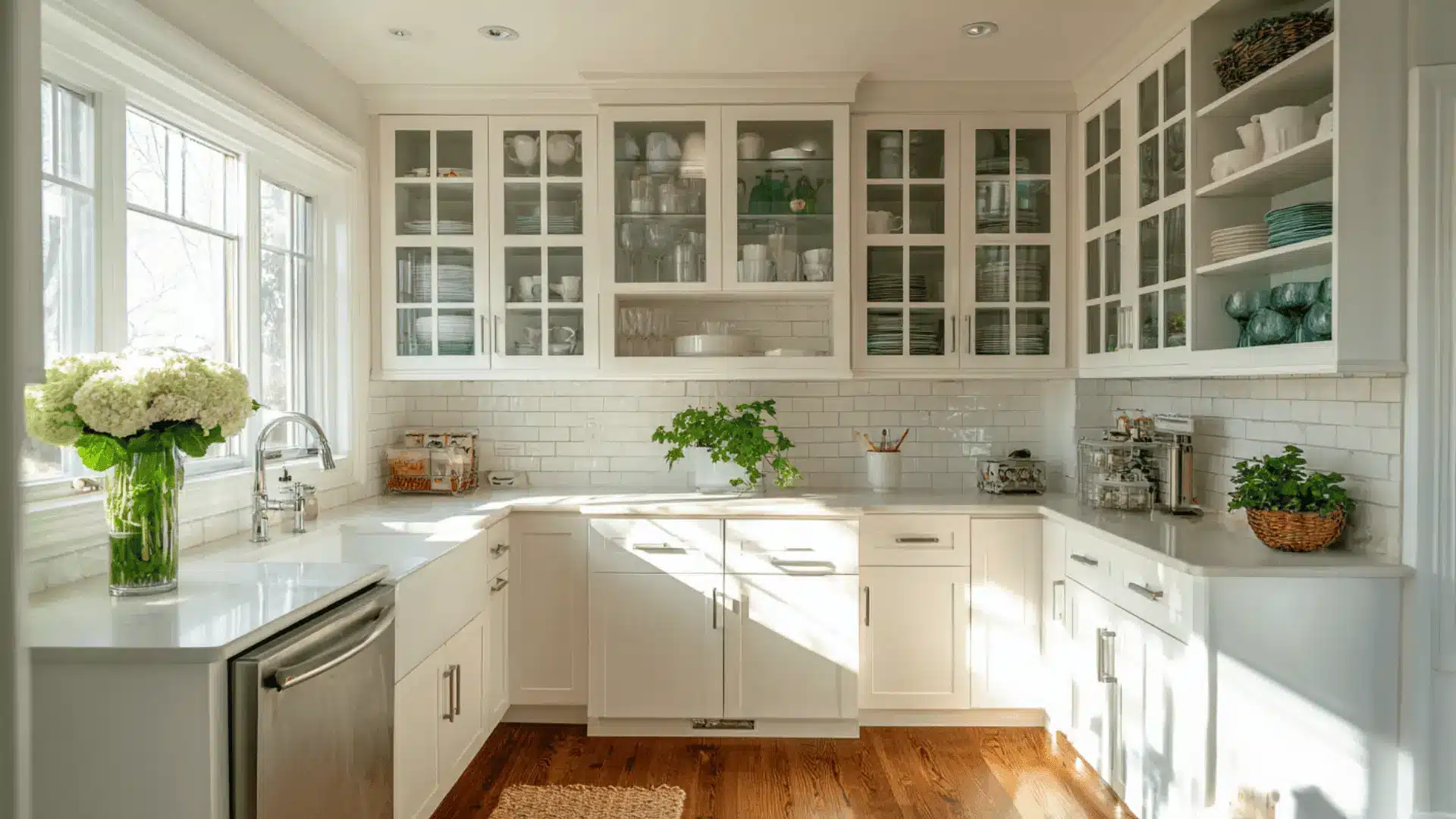
Glass doors prevent the space from feeling boxed in while putting everyday essentials on display. Frosted glass works well if you want a softer look or need to hide less tidy shelves.
It keeps the upper cabinets from reading as a solid wall of storage across all three sides.
18. Matte Finish Kitchen
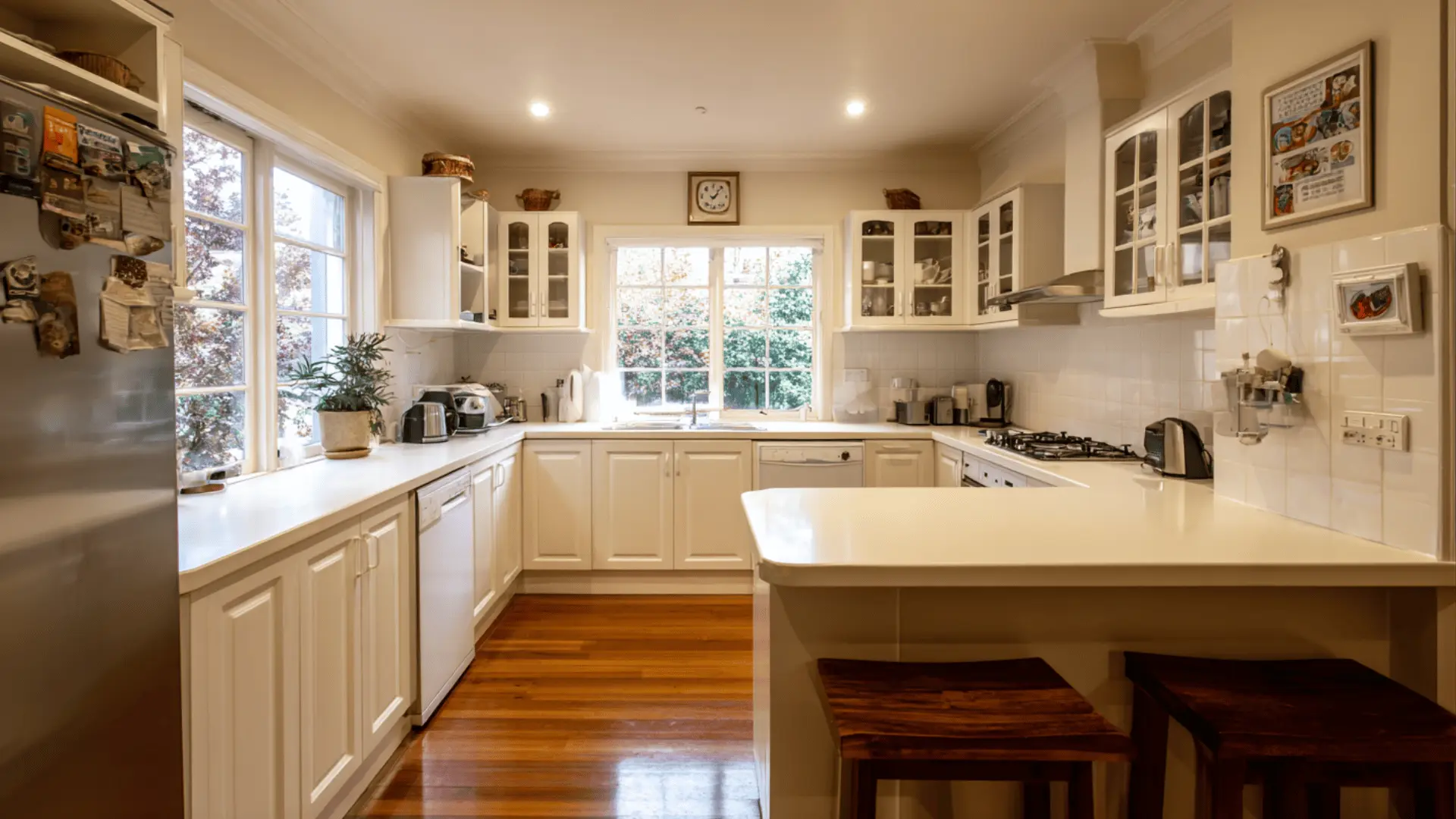
Matte cabinets and counters reduce glare and bring a quieter, more considered quality to the space.
Fingerprints show up less, and the surface reads softer and more considered than gloss in most kitchen settings.
Pair with brushed-metal hardware and add one glossy element, like a backsplash or light fixture, to keep the space from feeling flat.
19. Classic Neutral Kitchen
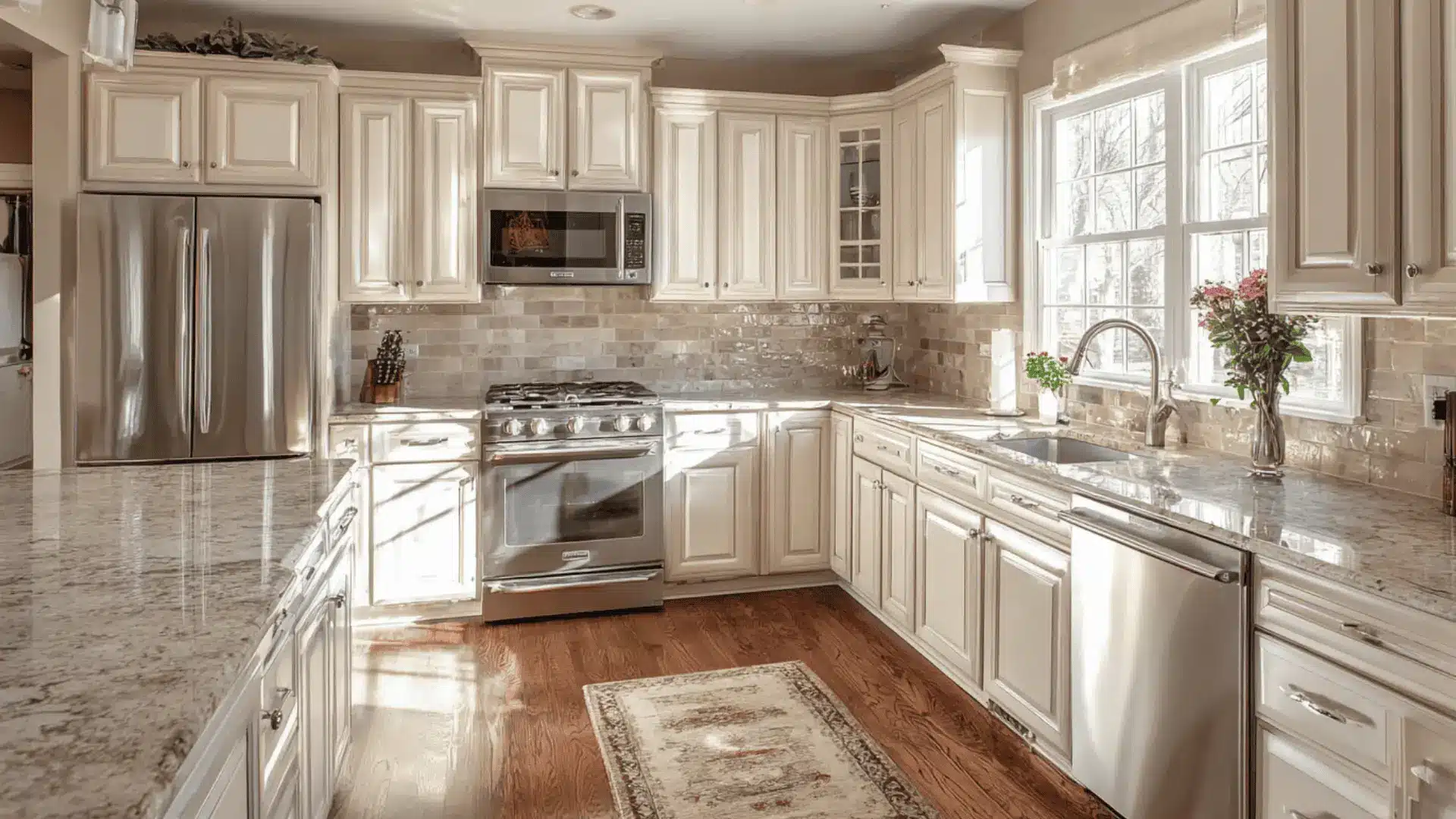
Whites, grays, taupes, and natural wood tones never date badly. A neutral U-shaped kitchen stays functional and relevant through multiple rounds of redecorating elsewhere in the home.
You can always add color through accessories. The kitchen itself stays relevant regardless of what trends come and go.
U Shaped Kitchen Layout With Dimensions
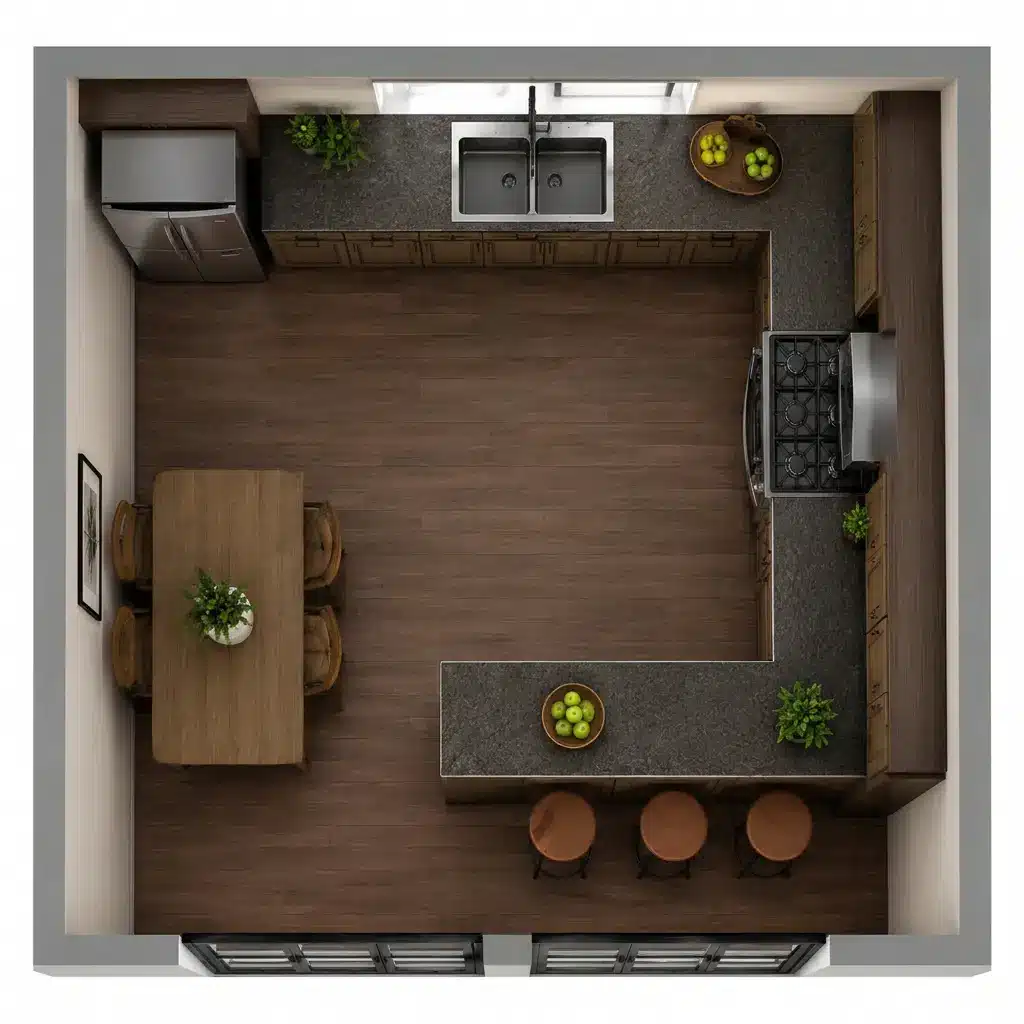
Getting the dimensions right is the most important decision in a U-shaped kitchen. Everything else depends on whether the core measurements work for the space.
The minimum recommended width between two facing walls is 1.2 meters. Anything narrower becomes difficult to move around in once the cabinet and appliance doors are open.
For two people cooking together, 1.5 meters is a more comfortable starting point.
A few standard dimensions worth knowing:
- Minimum floor space for a functional layout is around 10 by 10 feet
- Base cabinets sit at 85 to 90 centimeters high with a depth of around 60 centimeters
- Wall cabinets are usually mounted 45 to 50 centimeters above the countertop
- The work triangle works best when each leg sits between 1.2 and 2.7 meters
In smaller kitchens, the layout still works, but compact appliances and handleless doors help keep things functional without feeling tight.
Mark the dimensions out on the floor with tape before finalizing anything. Walking through the actual scale shows problems that a floor plan on paper never will.
Wrapping Up
A U shaped kitchen gives you the structure to cook, prep, and clean without constantly working against the layout.
The three-wall design holds up in both tight apartments and larger homes equally well.
Small decisions like lighting placement, storage choices, and color selection change how the space feels more than most people expect.
Start by measuring the room properly. Then pick one idea that fits the space and build from there.
A well-planned kitchen does not just function better. It makes the time spent in it noticeably easier.
Frequently Asked Questions
1. What is the Minimum Room Size Needed For a U Shaped Kitchen?
You’ll need at least 10×10 feet to avoid feeling cramped, though 12×12 feet or larger works better for comfortable movement between all three walls.
2. Can a U Shaped Kitchen in an Open Floor Plan?
Yes, by keeping one end open or adding a peninsula, you can connect the kitchen to your living area while maintaining the three-wall efficiency.
3. How Much Space Should be Between Opposite Counters?
Aim for 4 to 6 feet of clearance at the center to allow cabinet doors to open fully and for multiple people to move around comfortably.
4. Do U-Shaped Kitchens Work Well For Small Apartments?
They can work in compact spaces if you use space-saving tricks like open shelving, vertical storage, and light colors to prevent the layout from feeling too enclosed.