You found a leftover can of paint in the garage, but it’s been sitting there for two years. But you’re thinking, is it still good or usable?
Just so you know, paint doesn’t last forever.
People assume a sealed can stays fresh, but that’s not what happens.
Many factors, such as temperature, humidity, and time, can affect even a well-sealed can of paint.
Does Paint Go Bad?
Yes, paint does go bad.
It doesn’t suddenly turn bad. It’s a gradual process affected by how it’s stored, how often it’s been opened, and what type of paint it is.
If you leave any paint in a freezing shed or a sweltering garage long enough, the lifeline is definitely reduced.
But a well-stored can can last well beyond its expected shelf life by years. A neglected can might not even reach the one-year mark.
But an open can is exposed to air and moisture every single time you use it, and that counts.
Most opened paints last from one to five years, depending on the type, but storage conditions also affect their shelf life.
Different Types of Paint and Their Longevity?
The formula inside that can make a big difference in how long it stays usable.
Latex behaves nothing like oil-based paint, and chalk paint has its own set of rules. Before you crack open that old can, it’s worth knowing exactly what type of paint you’re working with.
A two-year-old can of oil-based paint might be perfectly fine, while a two-year-old can of chalk paint could already be expiring.
| Paint Type | Unopened | Opened |
|---|---|---|
| Latex / Acrylic | 2-10 years | 2-5 years |
| Oil-Based | Up to 15 years | 5-10 years |
| Chalk Paint | 1-3 years | 6-12 months |
| Spray Paint | 2-3 years | 1-2 years |
| Milk Paint (premixed) | 1-2 years | 1-2 weeks |
| Primer | 2-5 years | 1-2 years |
So, How Can You Tell If the Paint Has Expired?
If you’re familiar with paint, you know there’s no expiration date stamped on a paint can.
So, how to tell when does paint goes bad?
Just know that the paint itself will tell you, only if you know what to look for.
It Smells Sour or Rotten
Fresh paint has a mild chemical smell, not pleasant.
Paint that’s gone bad smells sour, musty, or sometimes downright rancid. If you open the can and have to take a step back, that’s when you know.
Tip: Always open old cans outside or in a well-ventilated garage. If it hits you before you even get the lid fully off, don’t bother, get rid of it.
The Paint Has Lumps
A little separation in paint is totally normal. Give it a good stir, and it usually comes right back together.
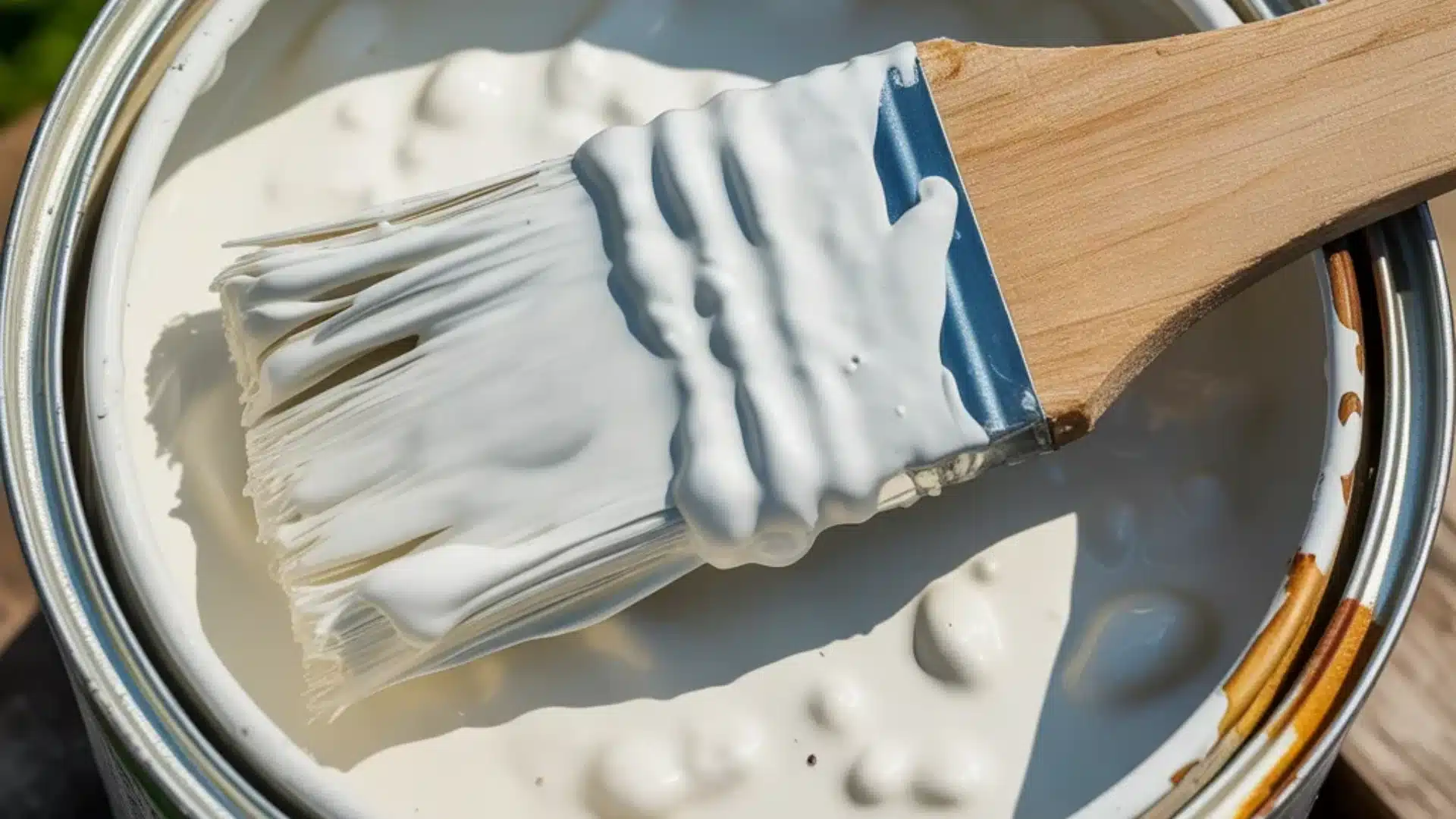
But if you’re stirring and still find hard lumps, clumps, or a rubbery skin that won’t break down, the paint has gone bad.
No stirring, nothing is going to fix that.
It Has a Strange Stringy or Chunky Texture
Good paint should feel smooth and consistent when stirred.
If it looks stringy, gloopy, or has chunks floating around like a bad soup, the formula has broken down. It won’t apply evenly, and it definitely won’t dry properly.
If you try pushing through with chunky paint, thinking you could strain it out. The finish might end up patchy and rough.
The Paint Has Dried Out Completely
This one’s obvious. If you open the can and find a solid dried paint sitting at the top, the paint has gone bad.
There’s no reviving fully dried paint. It’s not coming back, no matter what you add.
Some people try adding water to latex paint or mineral spirits to oil-based paint, hoping to loosen it up, but if it’s fully dried and hardened, you’re just making a mess.
The Color Looks Off
If the color looks different from what you remember, like faded, darker, or just different, then know that the pigment may have broken down.
This is common in paints that have been exposed to freezing temperatures.
Tip: Always keep a small swatch of the original color on a piece of cardboard when you store leftover paint. It makes it so much easier to spot a color shift later on.
Can You Use Expired Paint?
Expired paint isn’t automatically garbage.
Cracked-open cans well past their “best by” date can still have a perfectly smooth finish.
But there can also be some cans that smelled like a gym locker and had the texture of cottage cheese, and that’s a no for those.
The type of paint matters, the storage conditions matter, and the smell, too, obviously.
If it smells rotten or sour, that’s the dead end.
Quick Tip: When you’re unsure about an old can, always do a small test patch on a piece of cardboard first. If it spreads smoothly, dries evenly, and doesn’t smell off, it’s usually good to go.
What to do to Save Your Paint?
Before you throw the can away, try to revive it once. It can be rescued.
But it’s up to you to decide whether it’s gone bad or still in the process and revivable. Try doing this when you’re unsure.
- Stir it thoroughly: Use a proper stir stick and mix from the bottom up for at least two to three minutes.
- Strain out the lumps: Pour it through a paint strainer to remove any small clumps.
- Add a paint conditioner: Products like Floetrol for latex or Penetrol for oil-based paints can help restore consistency.
- Add a tiny splash of water: For latex paint only, a small amount can loosen it if it’s slightly thickened.
How to Get Rid of Expired Paint?
And the paint didn’t survive, so what to do next? Pouring old paint down the drain or tossing it in the regular trash can create different issues.
Never burn oil-based paint. It is flammable, and burning it releases toxic fumes.
Paints, especially oil-based paints, contain chemicals that are harmful to the environment if disposed of carelessly.
- Dry it out first (latex paint): Leave the lid off and let it dry completely in a well-ventilated area, then toss the dried can in regular trash
- Use a paint hardener: Products like Homax Paint Hardener speed up the drying process if you’re in a hurry.
- Drop it off at a hazardous waste facility: Most cities and counties have scheduled collection days for household hazardous waste, including paint.
- Donate usable paint: If the paint is still good but you don’t need it, local community centers, Habitat for Humanity ReStores, and shelters often accept it.
- Check with your local hardware store: Some stores like Home Depot and Lowe’s participate in paint recycling programs through PaintCare.
Quick Tip: PaintCare drop-off sites are available in many states across the US, a quick search for “paint disposal near me” will point you to the closest option in minutes.
Conclusion
At the end of the day, it is pretty good at telling you when does paint go bad. A quick sniff, a stir, and even a small test patch will tell you.
Store it properly.
Label your cans, keep them off the garage floor, and store them somewhere the temperature stays consistent.
And if the paint is really bad, dispose of it responsibly.
Frequently Asked Questions (FAQs)
1. Will Paint Stick to HDPE?
Paint struggles to stick to HDPE because it’s a low-surface-energy plastic.
2. Is 15-Year-Old Paint Still Good?
Oil-based paint stored properly can still be usable for 15 years. Check for bad smell, lumps, and texture.
3. What Kind of Paint Will Bond to Plastic?
Use paints formulated for plastic, like Rust-Oleum Painter’s Touch or Krylon Fusion. These are designed to bond without a primer, giving you a durable, clean finish on most plastics.
4. What Paint Can Last 100 Years?
High-quality oil-based paints and lime-based paints are known for extreme longevity.