Three months later, it sprays sideways, leaves water stains, and takes forever to clean around the fixture.
Bad bathroom upgrades don’t just hurt the wallet; they hurt the environment, too.
People go all-in on stylish tiles, tubs, and luxury fixtures in the bathroom only to rip them out two years later.
The regret is real, and the costs add up fast.
This blog covers the exact upgrades worth skipping so owners can spend smarter and actually love their bathroom for years to come.
Why Some Bathroom Upgrades End up Looking Outdated?
Not every bathroom upgrade ages well. Some choices look sharp on day one but feel outdated within a few years.
The biggest reason? Chasing trends instead of sticking with effortless design.
Bold colors, novelty fixtures, and themed decor all have an expiry date. What feels fresh today can look tired by next season. Over-customization is another trap.
When every single detail is hyper-specific to one person’s taste, the space stops working for anyone else.
It also makes before and after bathroom remodel photos look dramatic, but not always in a good way. Then there’s the functionality problem.
People sometimes pick what looks good over what actually works.
Design Choices that Seem Stylish but Quickly go Wrong
Overly Bold Tiles and Patterns
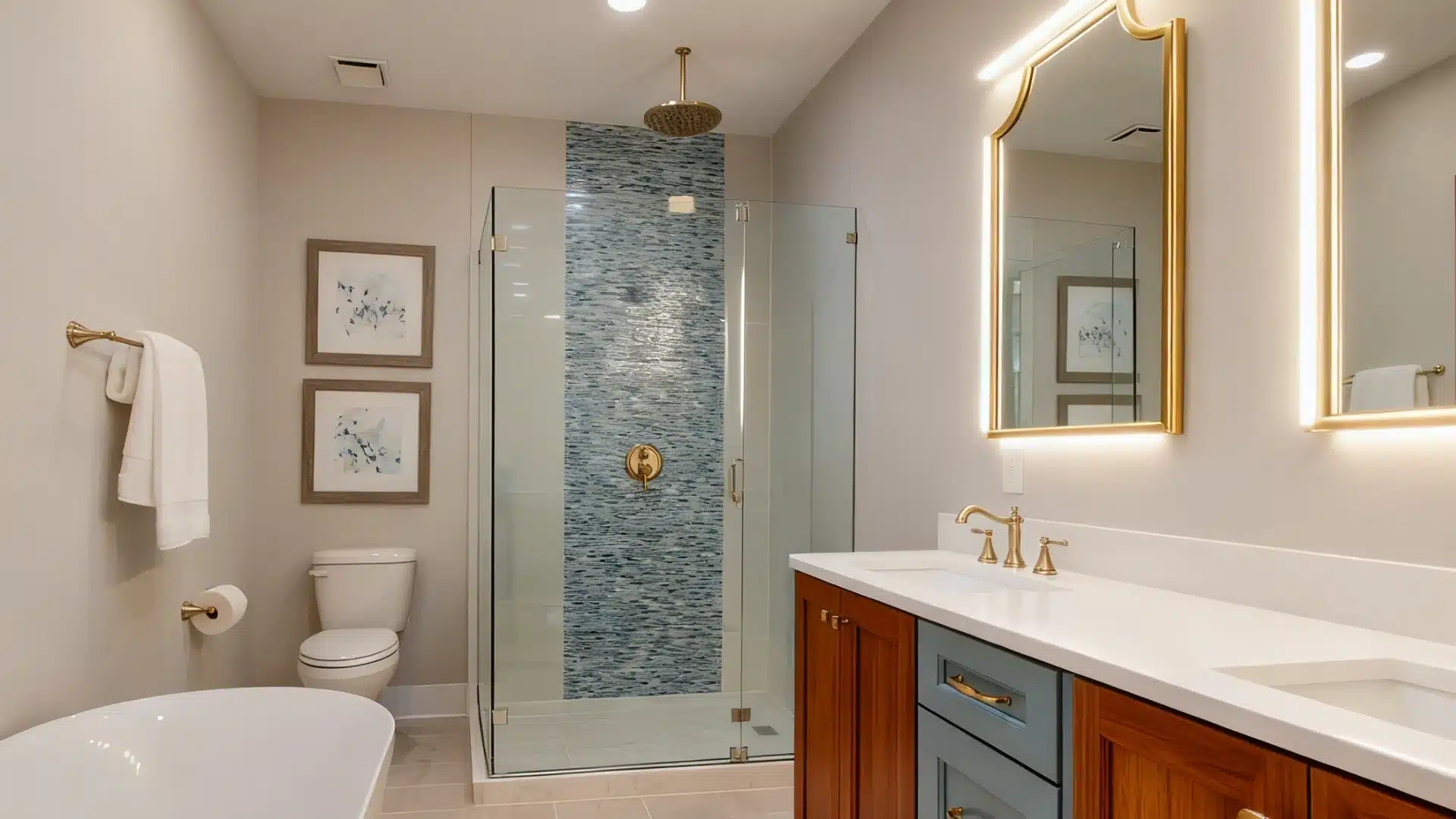
Large geometric tiles or busy mosaic patterns grab attention at first.
They box the entire bathroom into one specific look, making future updates costly.
There’s also a practical problem nobody mentions upfront: if one of those statement tiles cracks a year later, finding an exact match is rarely possible. Discontinued patterns are more common than thought, trust me.
Trend-Heavy Color Palettes
That deep forest green or terracotta orange seen all over bathroom remodel pictures online looks striking in a styled photo.
In real life, it makes the space stylish for 2 to 3 years.
Poor Lighting Decisions
Dim, decorative lighting might look moody in photos.
But it makes everyday tasks like applying makeup or shaving genuinely frustrating.
Layout and Fixture Mistakes that Lead to Regret
Layout mistakes are expensive to fix because they’re usually built in.
| Mistake | Why it Backfires |
|---|---|
| Poor spacing and cramped layouts | Tight spaces make daily use frustrating and feel smaller over time |
| Oversized or undersized vanities | Wrong-sized vanities throw off the entire room’s balance |
| Incorrect shower placement | Bad placement blocks natural movement and wastes usable space |
Budget Mistakes that Cost More Later
- Choosing the cheapest contractor often results in poor workmanship that needs to be redone quickly.
- Skipping a proper waterproofing layer saves money today, but can cause water damage within a few years.
- Buying discounted tiles without extras means mismatched replacements when one cracks later.
- Ignoring plumbing upgrades during a remodel forces a second renovation sooner than expected.
- Picking budget grout over quality grout means regrouting the entire bathroom within two years.
- Cheap ventilation fans fail quickly, leading to long-term mold and moisture problems.
No contingency budget is one of the quieter budget mistakes.
Bathroom renovations almost always surface something unexpected once walls open up: old plumbing, inadequate waterproofing, structural surprises.
A 15–20% buffer isn’t pessimism; it’s experience.
Where Decor Goes Wrong in Bathroom Spaces
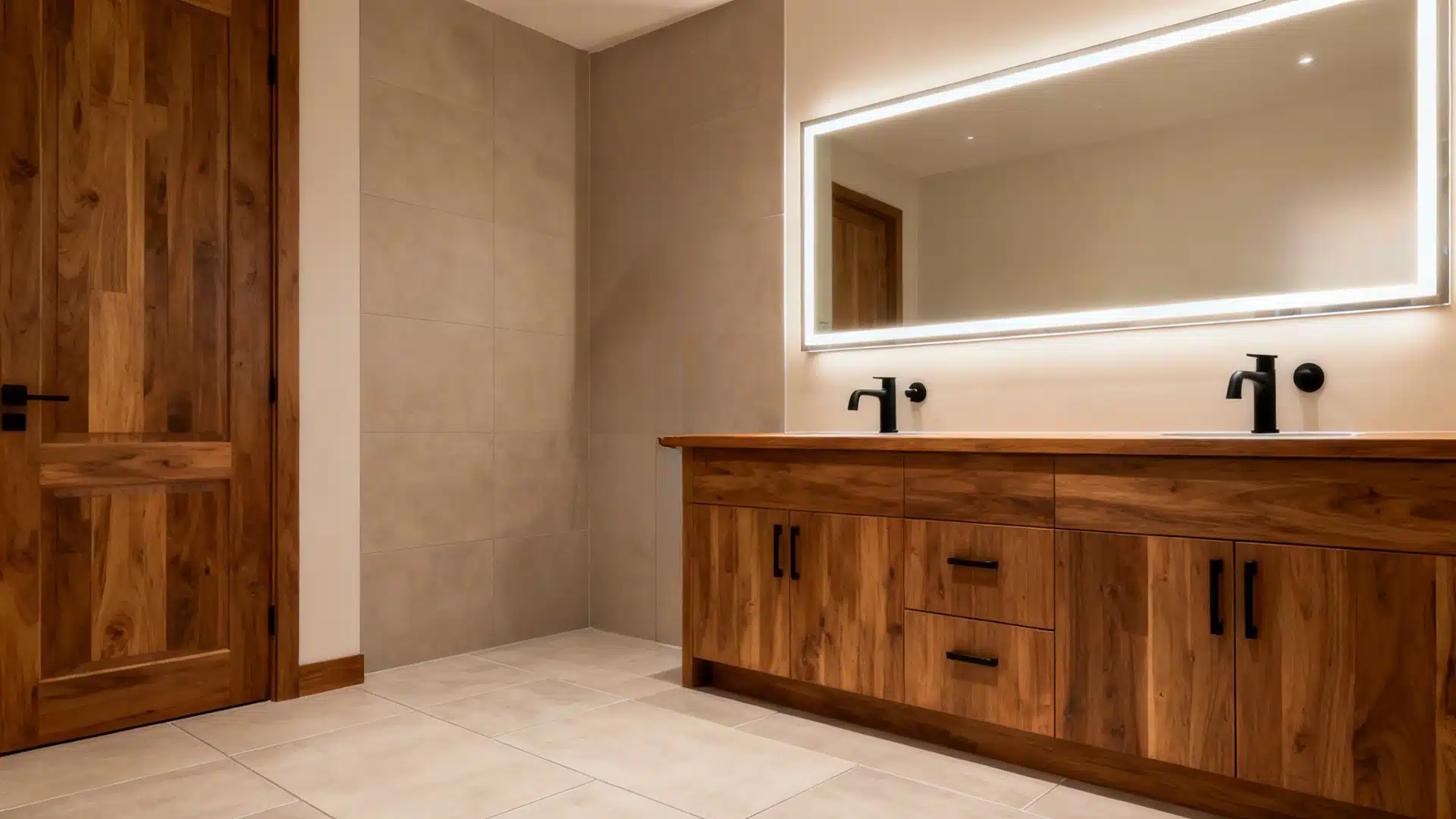
Small bathrooms don’t need more stuff; they need the right stuff.
Too many shelves, candles, and trinkets crammed into a tight space just feels messy, not cozy.
Impractical accessories make things worse. Fabric baskets and open shelving look fine in a store. Give them three months in a humid bathroom, and they’re collecting soap scum and mold.
Also, the bathroom art, oversized prints, cliché quote frames, and poorly mounted pieces warp and peel fast.
What actually works? Small, simple, moisture-safe pieces that don’t compete with the rest of the room.
Storage and Functionality Fails
- Too little storage forces countertops to become dumping grounds for everyday essentials.
- Built-in shelves without doors collect dust and look messy within weeks.
- Vanity drawers placed too close to the toilet door create daily obstacles.
- Tall cabinets installed too high become impossible to reach without a step stool.
- No dedicated spot for towels means they end up draped over everything.
- Mirror cabinets chosen purely for looks often sacrifice usable storage depth.
End Note
Bathroom upgrades should add value, not regret. The mistakes covered here aren’t rare.
The fix is simple. Prioritize function over trends, quality over price, and practicality over what looks good in a photo.
A well-planned bathroom doesn’t need to follow every new style that comes along. It just needs to work well, hold up over time, and feel right for the people using it daily.
Before starting any upgrade, ask one question: Will this still make sense five years from now?
Frequently Asked Questions (FAQ’s)
1. What is the Latest Bathroom Trend?
Warm neutrals, natural stone textures, and minimal fixtures are leading bathroom design right now.
2. What Color Not to Paint a Bathroom?
Avoid very dark colors; they absorb light and make small bathrooms feel cave-like.
3. What Bathroom Upgrades Add the Most Value?
New vanities, high-quality flooring, and updated lighting consistently deliver the highest resale value.
4. What Tile is Outdated?
Small ceramic mosaic tiles and heavily veined dramatic patterns are quickly falling out of favor.
5. What Colors are in for Bathrooms?
Soft whites, warm taupes, and sage greens are the colors performing well right now.