Setting a table seems simple, right? Most people think it’s just about placing plates and silverware.
But walk into a beautifully set table at a restaurant or a friend’s home, and the difference becomes obvious immediately.
Different occasions need different setups. A formal dinner party requires precision and elegance, while a casual brunch calls for something more relaxed and approachable.
Want to impress guests and make every meal feel special? Let’s get started.
What is a Table Set Up?
A table set up is how you arrange plates, utensils, glasses, and napkins on a dining table.
It’s the organization system that guides your guests through their meal.
Each item has a specific spot based on:
- How the meal will be served
- Which courses are you offering
- The formality of the occasion
- How guests will eat and interact
The placement tells diners which utensil to use first, where their drink goes, and what kind of experience to expect.
Why Table Set Ups Matter
The way you arrange a table does more than look pretty. It affects how guests feel, how smoothly meals flow, and the overall dining experience.
First Impressions Count
A thoughtfully arranged table sets the tone before anyone takes a bite. It shows you care about your guests’ experience.
Table standards highlight that proper utensil placement (forks left, knives right) creates functional dining flow.
Practical Benefits
Different settings serve real purposes beyond just looking nice.
The right arrangement makes meals flow smoothly, helps guests feel comfortable, and matches how food will be served and eaten.
The Experience Factor
The right table set up transforms ordinary meals into memorable moments.
It matches the occasion, makes hosting smoother, and helps guests know exactly what to expect.
Seven Types of Table Set Up for Different Occasions
Different occasions call for different table arrangements.
Here are several setups that cover everything from casual weeknight dinners to elegant formal events.
1. Basic Setting
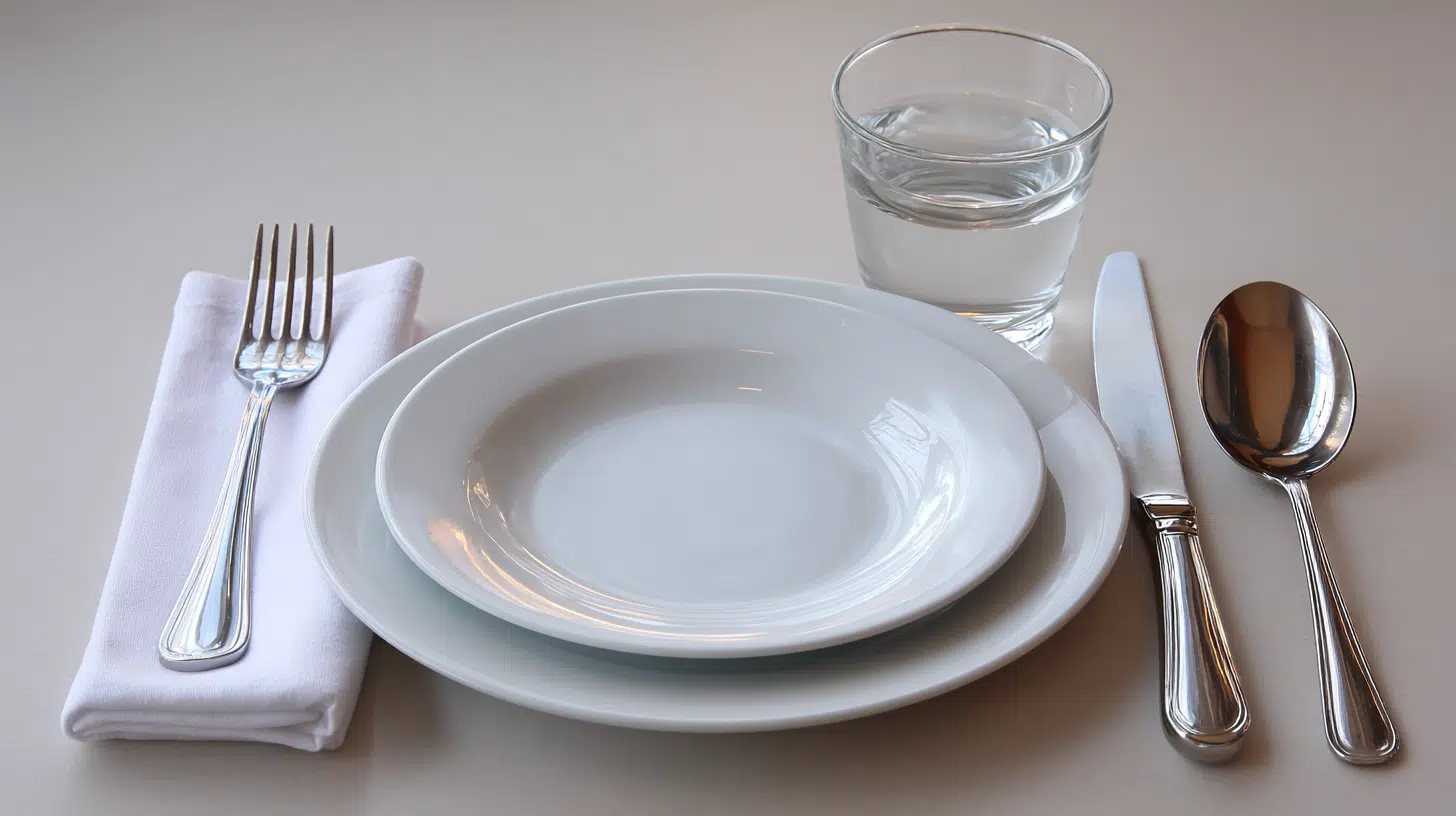
Best for: Everyday meals, quick dinners, casual family eating
The basic setting is your go-to arrangement for simple meals.
A dinner plate sits in the center with a fork on the left and a knife plus a spoon on the right. Add a water glass above the knife, and you’re done.
How to set up:
- Dinner plate (center)
- Fork (left side)
- Knife (right side, blade facing the plate)
- Spoon (right of the knife)
- Water glass (above the knife)
- Napkin (under the fork or on the plate)
2. Casual Setting
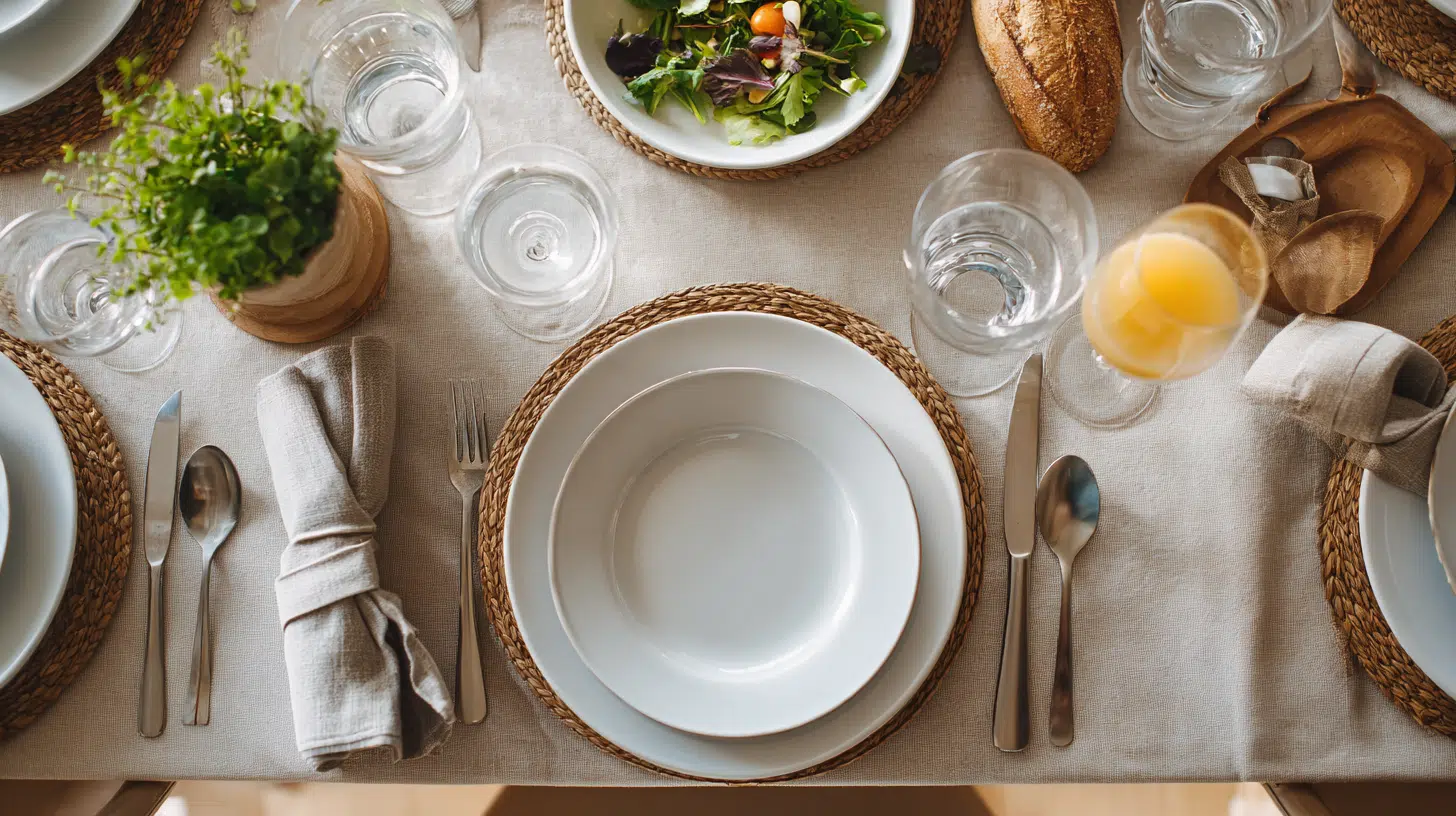
Best for: Weekend brunches, backyard barbecues, relaxed gatherings
Casual settings add one or two extra pieces to the basic setup. You might include a salad plate, an extra glass for juice or wine, and maybe a bread plate with a butter knife.
How to set up:
- Everything from the basic setting
- Salad or bread plate (upper left)
- Butter knife (on the bread plate)
- Additional beverage glass
3. Informal Setting
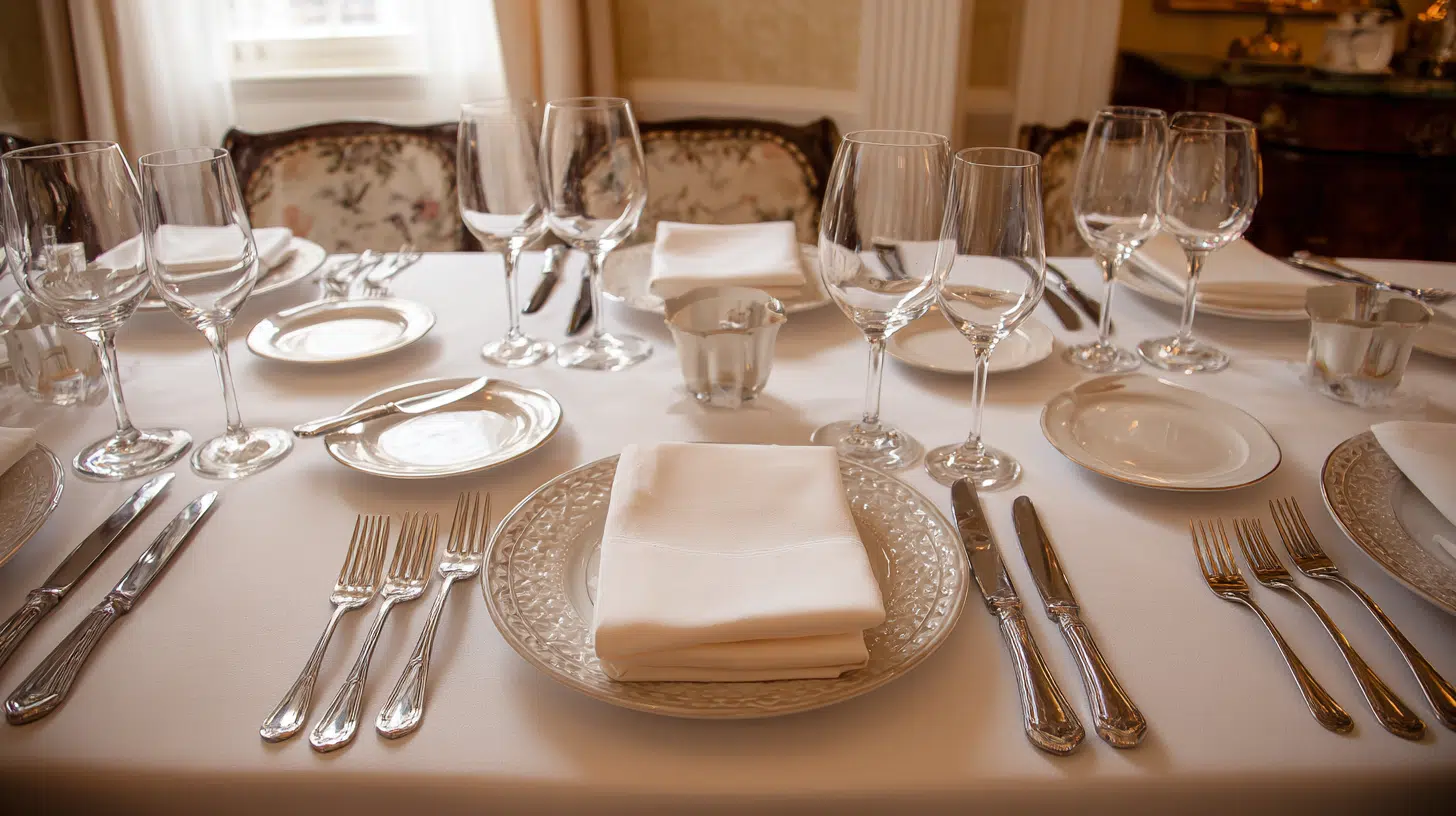
Best for: Dinner parties, holiday meals, special family dinners
Informal settings step things up a notch.
You’ll see multiple forks, a soup spoon, and possibly a dessert utensil at the top of the plate.
This setup handles three-course meals without feeling overly fancy.
How to set up:
- Dinner plate with charger (optional)
- Salad fork and dinner fork (left side)
- Knife and soup spoon (right side)
- Bread plate with butter knife (upper left)
- Water glass and wine glass (upper right)
- Napkin (on the plate or left side)
This is the sweet spot between casual and formal.
4. Formal Setting
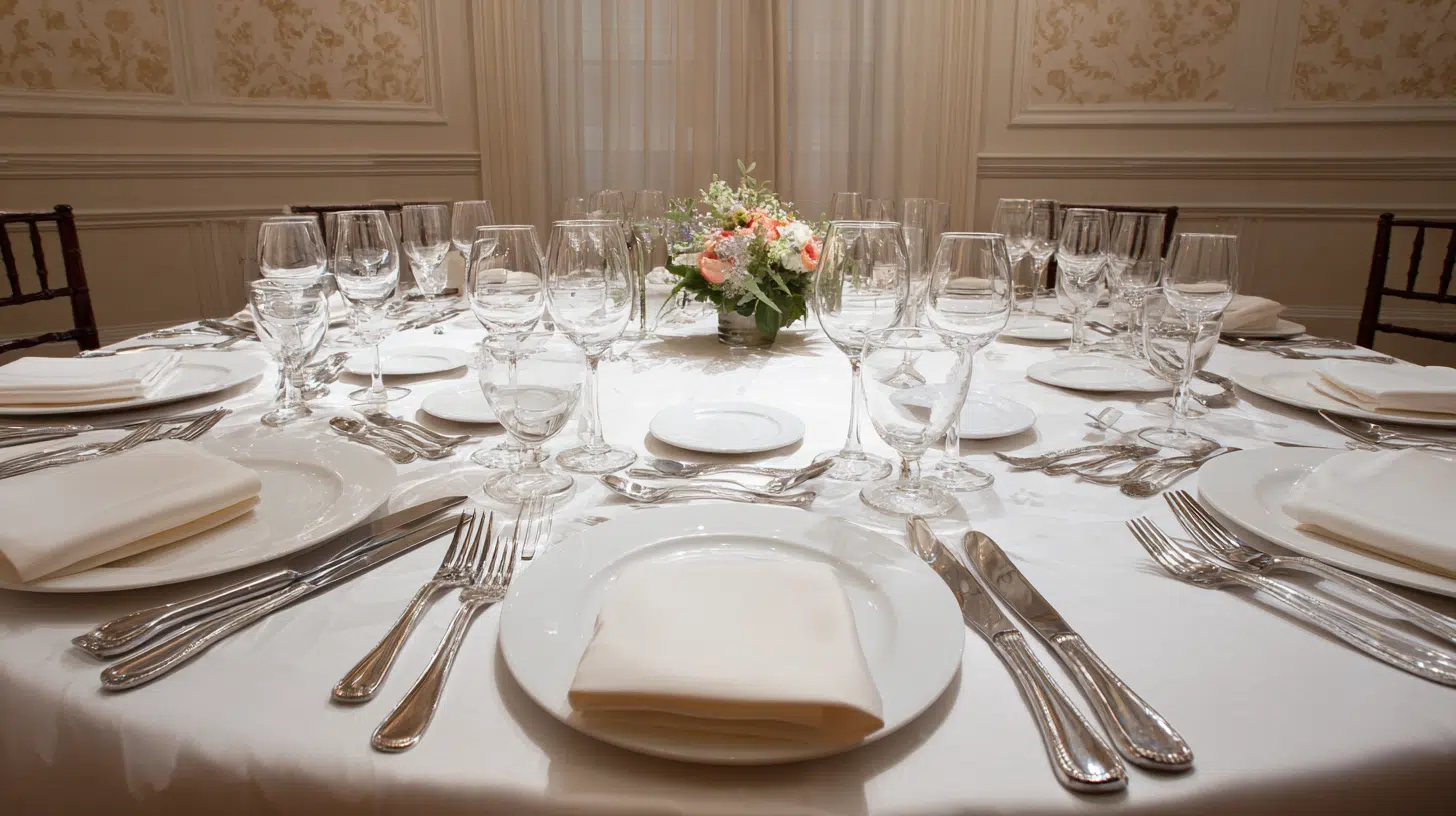
Best for: Weddings, galas, upscale dinner parties, important celebrations
Formal settings are the most elaborate of the table setups.
Multiple utensils line both sides of the plate, arranged in the order they’ll be used (outside to inside).
How to set up:
- Charger plate with dinner plate on top
- Multiple forks (salad, fish, dinner) on the left
- Various knives and spoons on the right
- Multiple glasses (water, red wine, white wine, champagne)
- Cloth napkin (on the charger or lap)
Key rules:
- Utensils are used from the outside in
- Knife blades always face the plate
- Glasses are arranged in order of use
5. Buffet Setting
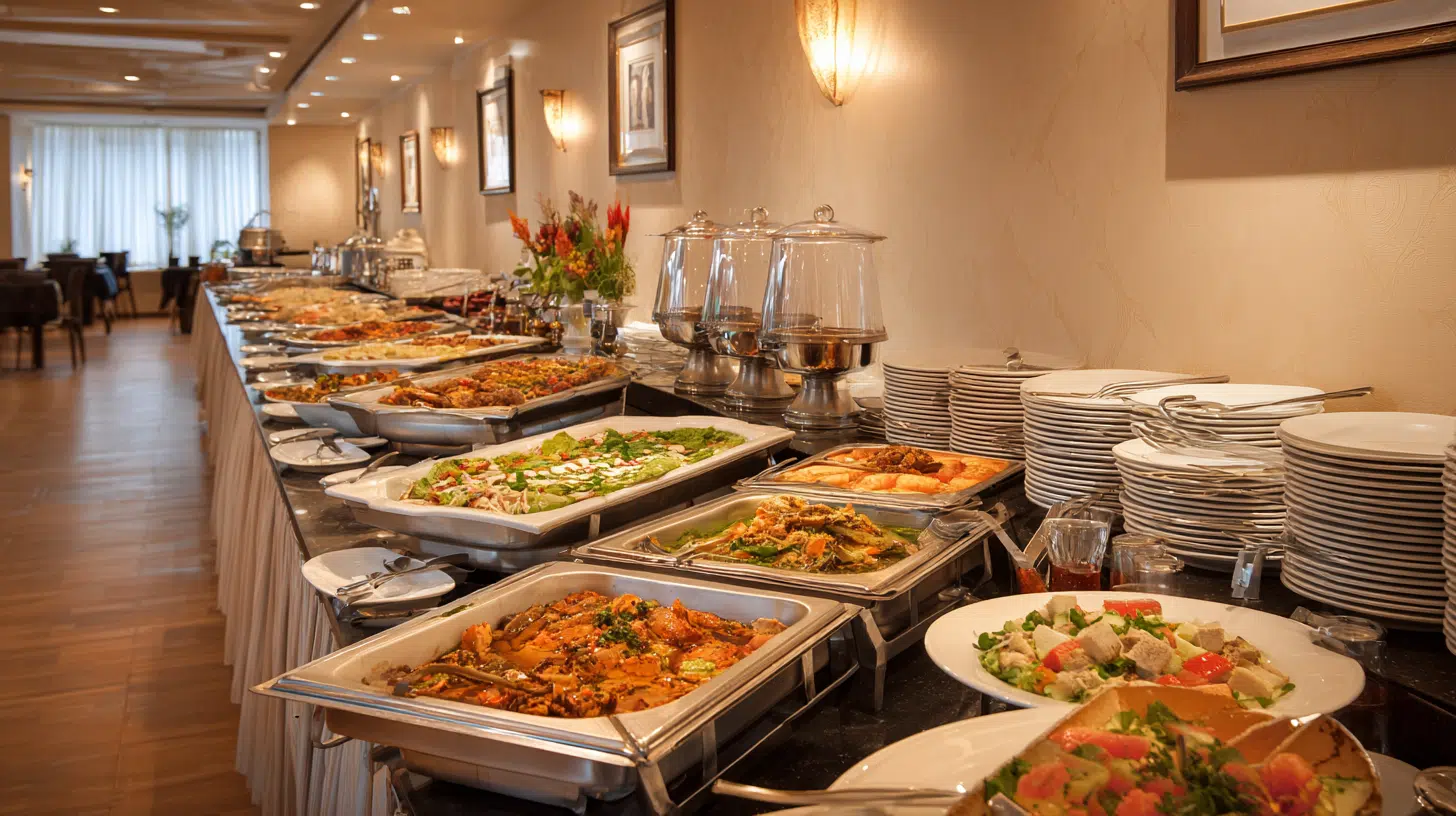
Buffet settings move food service to a central table.
Guests serve themselves, then sit at dining tables with minimal place settings or just beverages and napkins.
Single-Sided Buffet Table Set Up
The most common buffet arrangement.
Food is placed along one side of a table, usually against a wall, with guests moving in one direction.
How to arrange it:
How to arrange it:
- Plates at the start
- Main dishes first, then sides
- Utensils and napkins at the end
Best for:Smaller spaces, tables against a wall
Double-Sided or Island Buffet Set Up
The table sits in the center of the room with food accessible from both sides.
This creates two serving lines and moves guests through faster.
How to arrange it:
- Duplicate items on both sides when possible
- Place shared items (like large roasts) in the center
- Plates at both starting points
- Utensils and napkins at both ends
Best for: Large gatherings, open spaces, events with many guests
6. Family-Style Setting
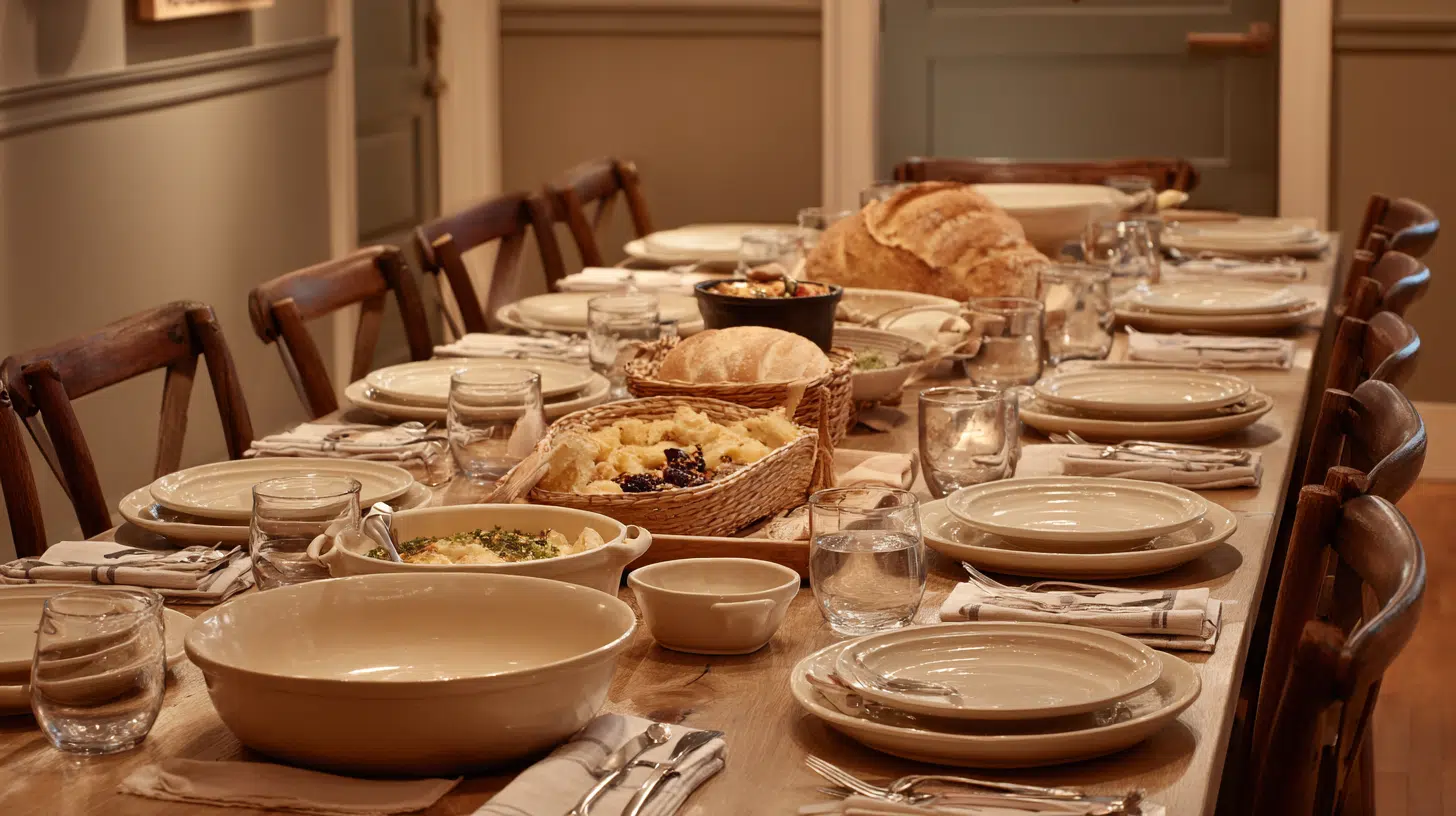
Family-style serving puts large dishes in the center of the table. Guests pass platters and bowls around, serving themselves. Individual place settings are usually casual or informal.
This approach creates a communal atmosphere and encourages sharing and conversation.
Traditional Family Dinner Table Set Up
The classic approach is with one or two large serving dishes in the center.
Works best for smaller tables with 4-8 people.
How to arrange it:
- Main dish in the center
- Side dishes within easy reach
- Serving utensils with each dish
Best for: Regular family dinners, small dinner parties
Large Group Sharing Table Set Up
For bigger tables or multiple dishes, you’ll need duplicates.
Place the same dishes at different spots along the table so everyone can reach without excessive passing.
How to arrange it:
- Multiple serving dishes of the same item
- Keep high-traffic items (bread, butter) in various spots
- Consider lazy Susans for huge tables
Best for: Holiday meals, large family gatherings, long tables
7. Themed or Decorative Setting
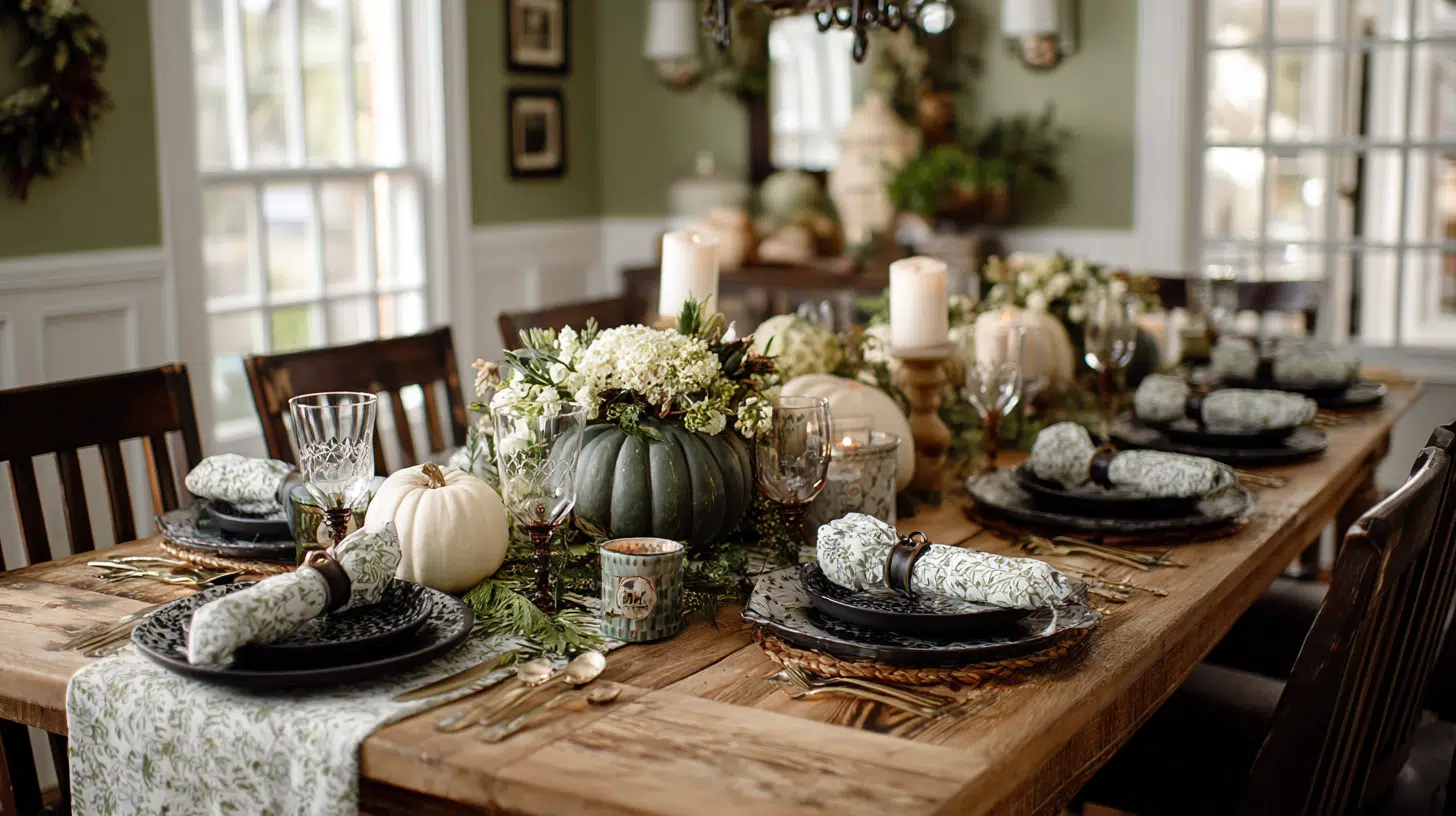
Best for: Holidays, special events, celebrations with a specific aesthetic
Themed settings take any of the above arrangements and add decorative elements that match an occasion, season, or cultural tradition.
Holiday-Themed Table Set Up
Seasonal decorations transform standard place settings.
Think autumn leaves for Thanksgiving, pine cones and candles for Christmas, or pastels and florals for Easter.
Common elements:
- Seasonal centerpieces
- Color-coordinated linens and dishes
- Holiday-specific decorations (pumpkins, ornaments, etc.)
Event-Based or Seasonal Table Set Up
These match specific events or times of year beyond traditional holidays. S
Summer garden parties, fall harvest dinners, or spring brunches each have their own aesthetic.
Common elements:
- Seasonal flowers and greenery
- Weather-appropriate table linens
- Occasion-specific colors
- Relevant decorative accents
Cultural or Celebration-Inspired Table Set Up
These honor cultural traditions or personal celebrations, like rangoli patterns for Diwali or personalized place cards for birthdays.
Common elements:
- Culturally significant colors and patterns
- Traditional serving dishes or decorations
- Meaningful centerpieces
How to Choose the Right Table Set Up?
Picking the correct arrangement of table setups depends on three main factors.
Based on Occasion
Match your setting to the event’s formality level.
- Everyday meals: Basic setting
- Casual gatherings: Casual or family-style settings
- Special dinners: Informal settings
- Important events: Formal settings (weddings, galas, anniversaries)
- Large groups: Buffet settings
Based on Space and Seating
Your available space dictates which setup works best.
- Small dining areas: Basic or casual settings prevent crowding
- Large tables: Family-style or informal settings have room for serving dishes
- Limited seating:Buffet settings let guests eat in different areas
- Long tables: Family-style with duplicate dishes reduces excessive passing
Based on Mood and Experience
Think about the atmosphere you want to create.
- Conversation and connection: Family-style encourages sharing and interaction
- Elegance and sophistication: Formal or informal settings signal special occasions
- Fun and flexibility: Buffet or themed settings let guests customize their experience
- Comfort and ease: Basic or casual settings keep things relaxed
Common Table Set-Up Mistakes to Avoid
Even experienced hosts make these table setting errors. Avoid them to create a better dining experience.
1. Overcrowding the Table
The fix: Choose a simpler setting if space is tight. Skip unnecessary items like bread plates or extra glasses.
2. Wrong Utensil Placement
The fix: Forks go on the left, knives and spoons on the right. Knife blades always face the plate.
3. Mismatched Formality
The fix: Match your table setting to the occasion’s actual formality level.
4. Poor Traffic Flow for Buffets
The fix: Arrange items logically: plates first, then food, then utensils, and napkins last. Keep beverages separate.
Simple Decorating Tips for a Beautifully Set Table
- Use a Centerpiece: Keep it low so guests can see each other. Fresh flowers, candles, seasonal items, or decorative bowls work well.
- Layer Your Linens: Add texture with runners, placemats, or tablecloths. Coordinating napkins ties everything together.
- Fold Napkins Creatively: Skip the basic triangle. Simple folds add instant elegance. Roll and tie with ribbon. Tuck into napkin rings. Or fan fold on the plate.
- Add Place Cards: Personalize each seat with handwritten cards, natural elements, or ribbons tied to napkins.
- Light It Right: Candles, string lights, or dimmed overhead lighting set the mood.
Bringing it all Together
The right table setup changes how people experience a meal. It’s not about perfection or following rigid rules.
It’s about matching your arrangement to the moment. The seven types of table set up give you options for any occasion.
- Basic settings handle everyday meals.
- Casual and informal work for gatherings.
- Formal arrangements suit special celebrations.
- Buffet and family-style settings make hosting larger groups easier.
Start with what fits your next meal.
Pay attention to your space, guest count, and the mood you want to create.
Your guests will notice the effort, and you’ll feel more confident hosting.
Frequently Asked Questions (FAQ’s)
1. What are the 7 Steps of Table Service?
Greet, seat, present the menu, take orders, serve food, check satisfaction, and clear the table.
2. What are the Different Types of Tables Called?
Dining, coffee, console, side, accent, pedestal, and trestle are common table types.
3. What are the Etiquette Rules for the Table?
Chew quietly, keep elbows off, wait for everyone, and put phones away.
4. What are the Three Things You Don’t Talk About at the Dinner Table?
Avoid discussing politics, religion, and money at casual dinner table conversations.
5. What are Two Bad Table Manners?
Talking with a full mouth and reaching across others are bad manners.