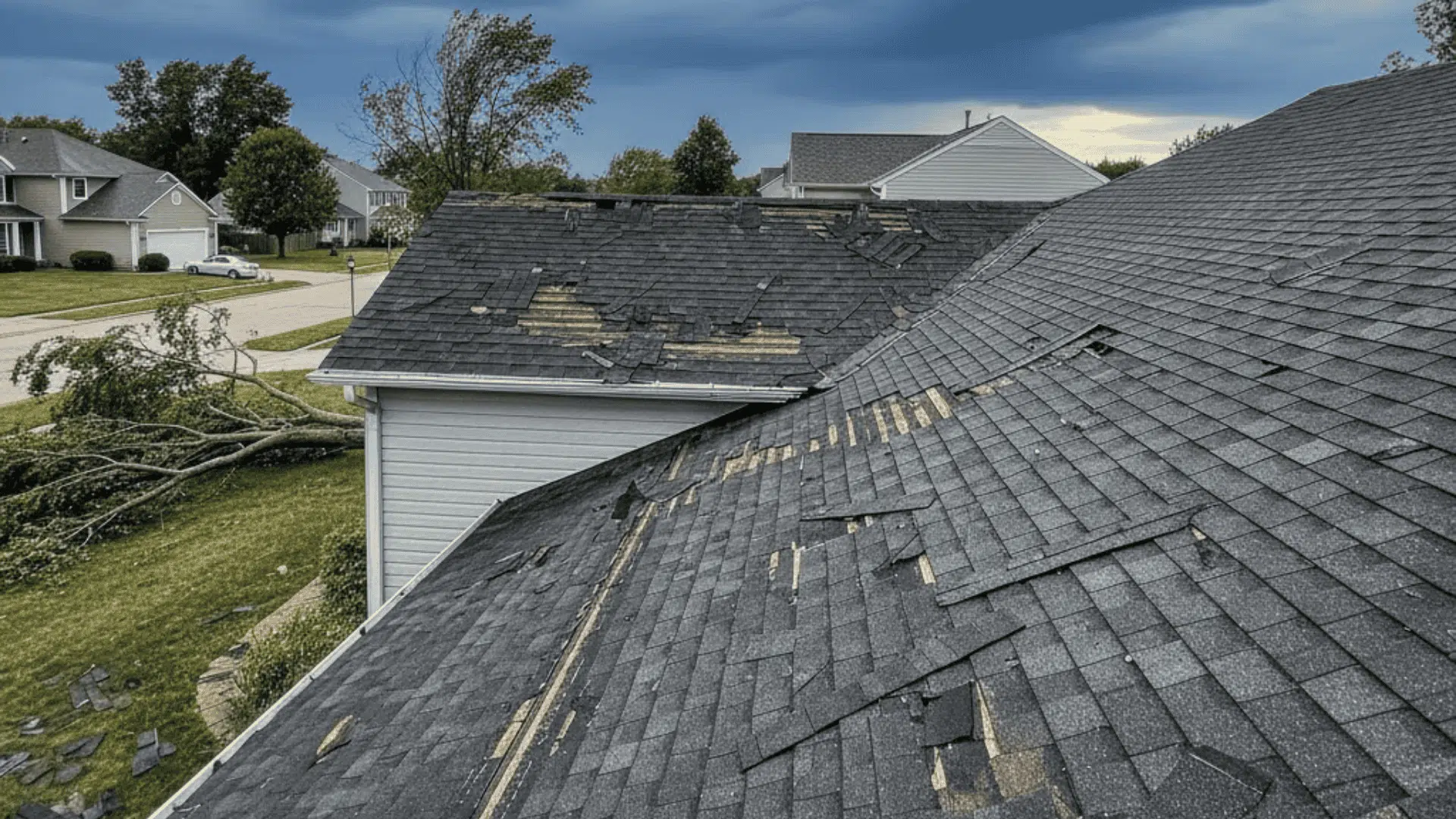
Strong winds can wreak havoc on roofs. Residents often face costly repairs after a storm hits their neighborhood.
Damaged shingles, leaks, and structural issues become real problems fast.
Roofs can be protected, and damage can be repaired before it worsens.
This blog explains:
- Wind damage to roof
- Why it matters
- How winds affect structures
- Signs of damage
- Best materials for windy areas
- Repair options
- Prevention strategies and insurance coverage
- And when to call professionals
Let’s get started.
What DoesWind Damage to Roof Mean?
In most storm-affected homes, the first point of failure is almost always the roof edge, which is where wind pressure builds up fastest.
Wind damage to the roof occurs when strong gusts lift, crack, or tear roofing materials.
It affects both old and new homes during storms. Wind creates an upward force on shingles and other materials.
This force can loosen or remove shingles, and even minor damage needs quick repair.
A missing shingle lets water in, which can damage insulation, wood, and drywall.
Insurance companies often deny claims for old damage, requiring proof that the problems are recent.
Waiting too long costs thousands. Detecting wind damage early saves money and prevents major repairs.
Signs Your Roof has Wind Damage
Most roof damage goes unnoticed. These signs appear quickly if you know what to check.
1. Missing or Lifted Shingles
Look up at your roof after a storm. See any bare patches or shingles sticking up at the edges?
Wind gets under loose shingles and pulls them away. Once one lifts, the ones next to it are at risk too.
2. Curling or Creased Shingles
Some shingles don’t fly off; they just curl up at the corners or develop a crease down the middle.
This still means trouble. Curled shingles can’t seal properly, and water finds its way underneath every time it rains.
3. Bent or Torn Flashing
Check around your chimney and vents.
If the thin metal strips around them look bent, lifted, or pulled back, that’s wind damage. Flashing gaps let water straight into your walls and ceilings, often without any obvious signs at first.
4. Damaged or Dislodged Vents
Roof vents and exhaust pipes stick up above the surface. Wind catches right underneath them.
After a bad storm, check if any look cracked, tilted, or completely gone.
A damaged vent is an open door for rainwater into your attic.
5. Granule Loss in Gutters
After a storm, check your gutters. See dark, coarse, sand-like material collecting at the bottom?
Those are shingle granules. They protect your roof from the sun and rain. When they wash away, shingles wear out faster and break down sooner.
Granule loss is one of the easiest signs to miss. Owners often spot it in their gutters after a storm.
These granules protect shingles from the sun and weather. When they wash away, shingles age faster and fail sooner. Check downspouts and gutter outlets after every major storm.
Heavy granule buildup means shingles are wearing out.
Call a roofing professional if anything looks suspicious.
When to Call a Professional: Call an expert if anything looks wrong. Climbing on roofs is dangerous. Professionals have proper equipment and training to assess damage safely.
How to Repair Wind Damage to Roof
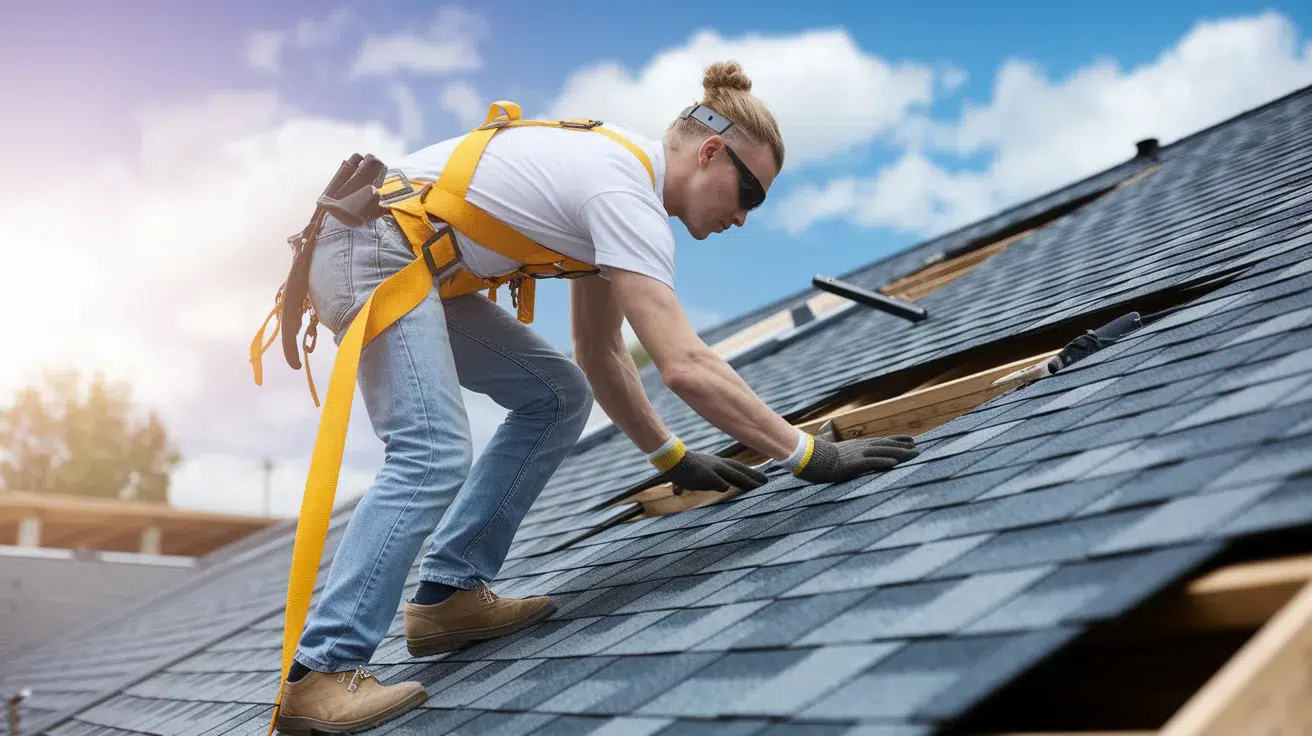
Fixing wind damage promptly prevents minor problems from escalating.
For temporary fixes, use tarps to cover damaged areas. Secure them tightly with boards and nails.
This keeps water out until repairs are done. Place buckets under leaks inside. Small repairs fix minor damage, like replacing shingles or fixing bent flashing. Extensive damage requires full replacement.
If more than 30% of the roof is damaged, replacing the entire roof makes more sense.
Always use quality materials that match the existing roof.
Cheap shingles fail faster. Mixing different materials looks bad and performs worse.
Professional roofers handle most repairs, identifying hidden damage and ensuring proper installation to prevent future issues. DIY repairs may void warranties and cause leaks.
How Wind Damages Different Roof Parts
Wind impacts several key areas of a roof. Understanding these helps owners spot problems early.
Shingles
Shingles are the most visible part of the roof to suffer wind damage during windstorms. Strong gusts lift edges and break the adhesive seals that hold them down.
Some shingles crack under pressure or fly off completely.
Others curl up at corners or develop creases down the middle. Once one shingle lifts, nearby ones become vulnerable too. The damage spreads across the roof with each new storm.
Missing or damaged shingles expose the underlayment to weather and moisture.
Flashing
Flashing around chimneys and vents can bend or tear away during high winds.
This creates gaps through which water seeps directly into the home. Flashing is often installed correctly at first, but it’s a thin metal layer. Over time, the sealant behind it dries out and shrinks.
This makes it far easier for wind to peel it back.
Even small gaps in flashing lead to major water damage inside walls and ceilings over time.
Vents and Exhaust Pipes
Roof vents and exhaust pipes get knocked loose or torn off entirely during severe storms. These fixtures stick up from the roof surface, making them easy targets for strong winds.
The wind catches underneath the vent covers and lifts them away.
Damaged vents allow rainwater to enter the attic, leading to rapid moisture buildup and insulation failure.
Mold develops in damp conditions before homeowners notice.
Decking
The wooden decking underneath the roofing materials also takes damage from wind. Moisture seeps through gaps left by missing shingles, causing wood rot over time.
Rotted decking loses strength and can no longer properly support the roof.
In severe cases, wet decking sags or collapses under weight.
This hidden damage costs thousands to repair because the entire roof structure needs to be rebuilt.
Regular inspections catch decking problems before they become catastrophic.
Hidden Damage
Hidden damage isn’t always visible from ground level or even from a ladder.
Water seeps into tiny cracks and travels along the roof boards.
Leaks develop inside walls and attics long before stains appear on ceilings. By the time people notice moisture spots, significant damage has already occurred behind the scenes.
Inspectors use specialized tools to detect hidden moisture and structural issues that go unnoticed to the naked eye.
Speed Levels That Cause Wind Damage to Roof
Most residential roofs are built to withstand winds up to 90 mph, but only when the materials and fasteners are in good condition.
Different wind speeds result in varying levels of roof damage.
Winds at 45-57 mph can lift loose shingles. Moderate damage occurs between 58 and 73 mph.
Shingles tear off and flashing bends. Winds above 74 mph cause severe damage.
Coastal areas face hurricane-force winds regularly.
Mountain regions face strong downslope gusts; flat plains experience damaging thunderstorm winds.
Best Roofing Materials for High-Wind Areas
The right roofing material makes a huge difference in windy regions.
Here’s how different options compare:
| Material | Wind Resistance | Lifespan | Key Benefits | Considerations |
|---|---|---|---|---|
| Metal | Up to 140 mph | 40-70 years | Interlocking panels stay secure during storms. Best overall wind performance. | Higher upfront cost than asphalt. |
| Asphalt Shingles (Class F/H) | 110-150 mph | 20-30 years | More affordable option. Good wind ratings when properly rated. | Needs replacement sooner than metal. |
| Tile (Clay/Concrete) | Up to 125 mph | 50+ years | Heavy and durable. Long-lasting in the wind. | Requires a strong roof structure. Heavyweight is a concern. |
Metal panels with concealed fasteners hold up far better than exposed-fastener panels; the fastener placement matters just as much as the material itself.
When to Contact a Roofing Professional
Call a roofing professional immediately after severe storms. Also, reach out if you notice missing shingles, leaks, or sagging areas.
Don’t wait for minor problems to grow. Professionals can spot hidden damage that residents miss. They have proper safety equipment and insurance.
Annual inspections catch issues early. Schedule checkups before storm season starts.
How Much Will it Cost to Repair a Damaged Roof?
A good roofer will also check the decking for soft spots, areas where moisture has already begun to weaken the wood beneath the shingles.
Wind damage repair costs vary widely based on severity and roof size.
| Repair Type | Cost Range | What’s Included |
|---|---|---|
| Minor Repairs | $150-$400 | Replacing a few shingles |
| Leak Fixes | $200-$500 | Fixing flashing or sealing leaks |
| Moderate Damage | $1,000-$3,000 | Multiple missing shingles |
| Extensive Damage | $3,000-$8,000 | Large section repairs |
| Full Roof Replacement | $5,000-$15,000 | Complete roof for most homes (asphalt) |
| Metal Roof Replacement | $10,000-$25,000 | Higher upfront cost but longer lifespan |
Insurance coverage reduces out-of-pocket expenses. Get multiple quotes from licensed contractors before starting work.
Does Home Insurance Cover Wind Damage to Roof?
Most standard residential insurance policies cover wind damage to roofs.
This includes damage from storms, hurricanes, and tornadoes, but coverage depends on policy details.
Some insurers require separate windstorm coverage in high-risk areas, and deductibles for wind damage can be higher than regular claims. Insurance companies want documentation of the damage.
Regular maintenance matters too. Insurers may deny claims if the damage was caused by neglect.
Pre-existing problems won’t be covered either.
One tip worth knowing: document the damage before any temporary tarping. Insurers want to see the original state of the roof, not after it’s been partially covered.
Prevention Tips to Reduce Future Wind Damage
Stopping wind damage before it starts saves money and stress. Here are key steps to strengthen roofs:
- Inspect the roof twice a year and after major storms.
- Replace worn or loose shingles immediately.
- Clean gutters regularly for proper drainage.
- Trim tree branches hanging over the roof.
- Add extra adhesive strips under shingles at edges and corners.
- Install metal drip edge along roof perimeters.
- Use ring shank nails instead of smooth ones.
- Seal all flashing with quality caulk or roofing cement.
- Keep shrubs trimmed away from the siding and vents.
Conclusion
Protecting against wind damage to roof starts with awareness.
Landlords who inspect regularly and fix minor issues save thousands in the long run.
Choosing quality materials rated for local wind conditions makes a real difference.
Don’t wait for the next storm to take action.
Strong roofs come from good maintenance and smart upgrades. A little prevention today means fewer repairs tomorrow. The investment protects both the home and everyone inside it.
Frequently Asked Questions (FAQ’s)
1. Will Insurance Pay for Wind Damage to Roof?
Most residents’ insurance policies cover wind damage to roofs, but coverage varies by policy, and some high-risk areas need separate windstorm coverage.
2. What is Considered Wind Damage to the roof?
Wind damage includes missing, lifted, or cracked shingles; bent flashing; loose vents; granule loss; and water leaks caused by strong gusts that tear roofing materials.
3. Who Pays for Roof Damage?
Insurance covers wind damage if it is included in the policy. Residents pay deductibles for damage caused by neglect or pre-existing conditions.
4. How Much Wind Damage is Required to Replace a Roof?
Roofs need to be replaced if over 30% of the roof is damaged. Winds above 74 mph often necessitate full replacement rather than repairs.