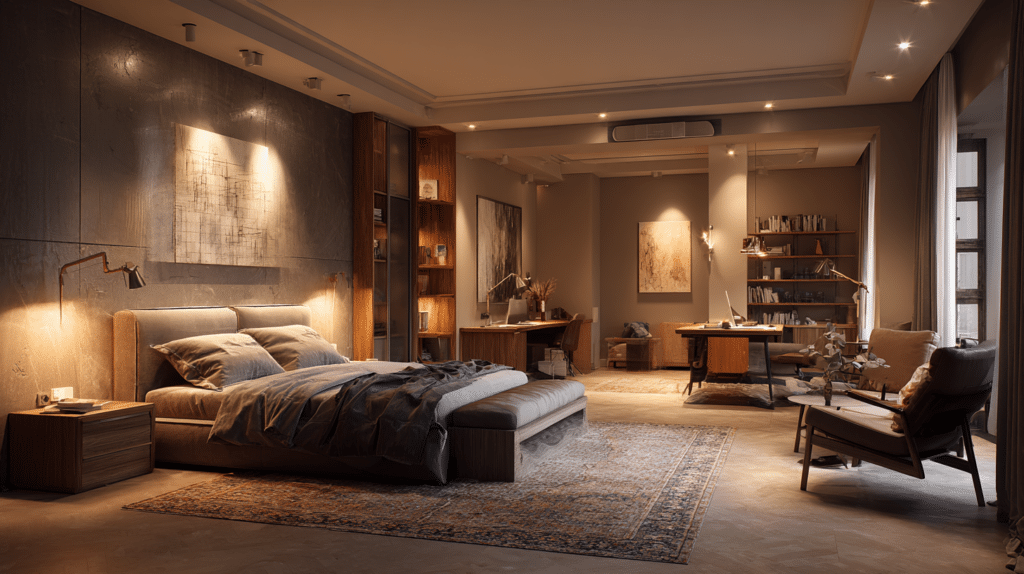
Your main bedroom should feel like a retreat, but sometimes it just doesn’t work.
Maybe your bed blocks the closet, or you’re constantly squeezing past furniture.
That’s a layout problem, not a design one.
Layout is about where things go and how you move through space, while interior design handles colors, textures, and style.
Getting the Layout right first means better lighting, more effortless movement, and actual privacy.
What is a Master Bedroom Layout?
A main bedroom layout is simply the arrangement of your bed, storage, and movement paths within the room.
It’s not about how things look but where they sit and how much space exists between them.
Think of it as the blueprint that determines whether your room feels cramped or comfortable.
Key Zones in a Well-Planned Main Bedroom
Every functional bedroom breaks down into a few essential areas,
Sleeping Zone
This is where your bed lives.
Pacemakers matter because they affect how you enter the room, where light falls, and how easily you can move around.
Storage Zone
Wardrobes, dressers, and closets form your storage backbone.
These pieces need enough room not just to exist but to actually open and function properly.
Relaxation Zone
A chair, reading nook, or small seating area gives you somewhere to unwind that isn’t your bed.
It’s optional but makes a big difference in larger rooms.
Dressing Zone
If you have a vanity or walk-in closet, this becomes its own dedicated space.
Even a small mirror and stool can create a functional dressing area in tighter layouts.
Master Bedroom Sizes and Key Dimensions
Before you start rearranging furniture or picking a layout style, you need to know what you’re working with.
Room size dictates which ideas will actually fit and which ones you should skip.
Small Master Bedroom (10′ x 10′ to 12′ x 12′)
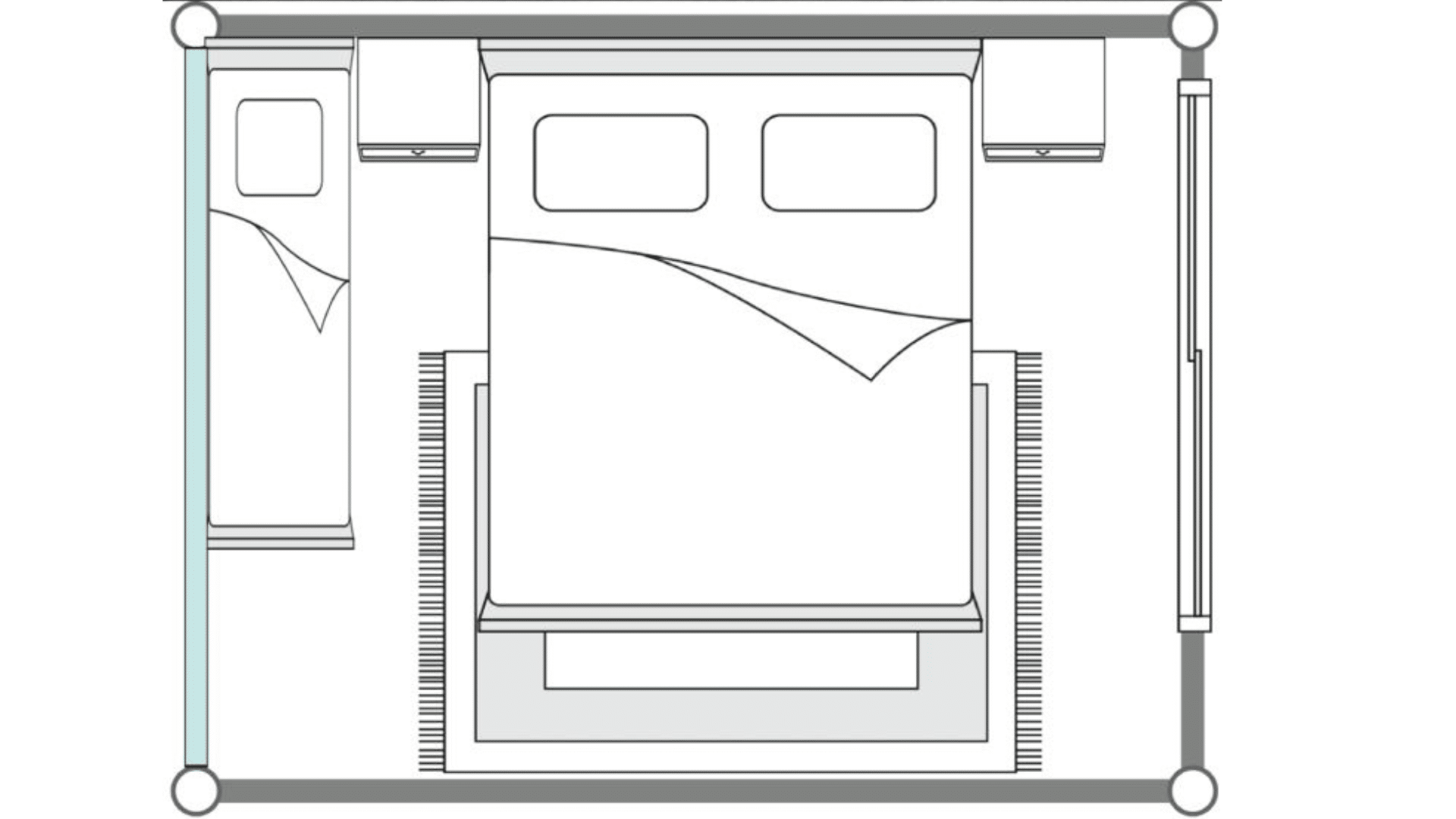
This size ranges from 100 to 144 square feet. A queen bed fits comfortably, but a king might leave you climbing over the footboard.
Focus on minimal furniture and clever storage like wall-mounted shelves, underbed drawers, or corner-oriented layouts.
Medium Master Bedroom (12′ x 14′ to 14′ x 16′)

Most standard homes fall into this range, offering 168 to 224 square feet. You can fit a queen or king bed with basic storage, nightstands, a dresser, and maybe a small chair.
This size gives you flexibility, and most of the 21 layout ideas we covered work well here.
Large Master Bedroom (16′ x 16′ and Above)
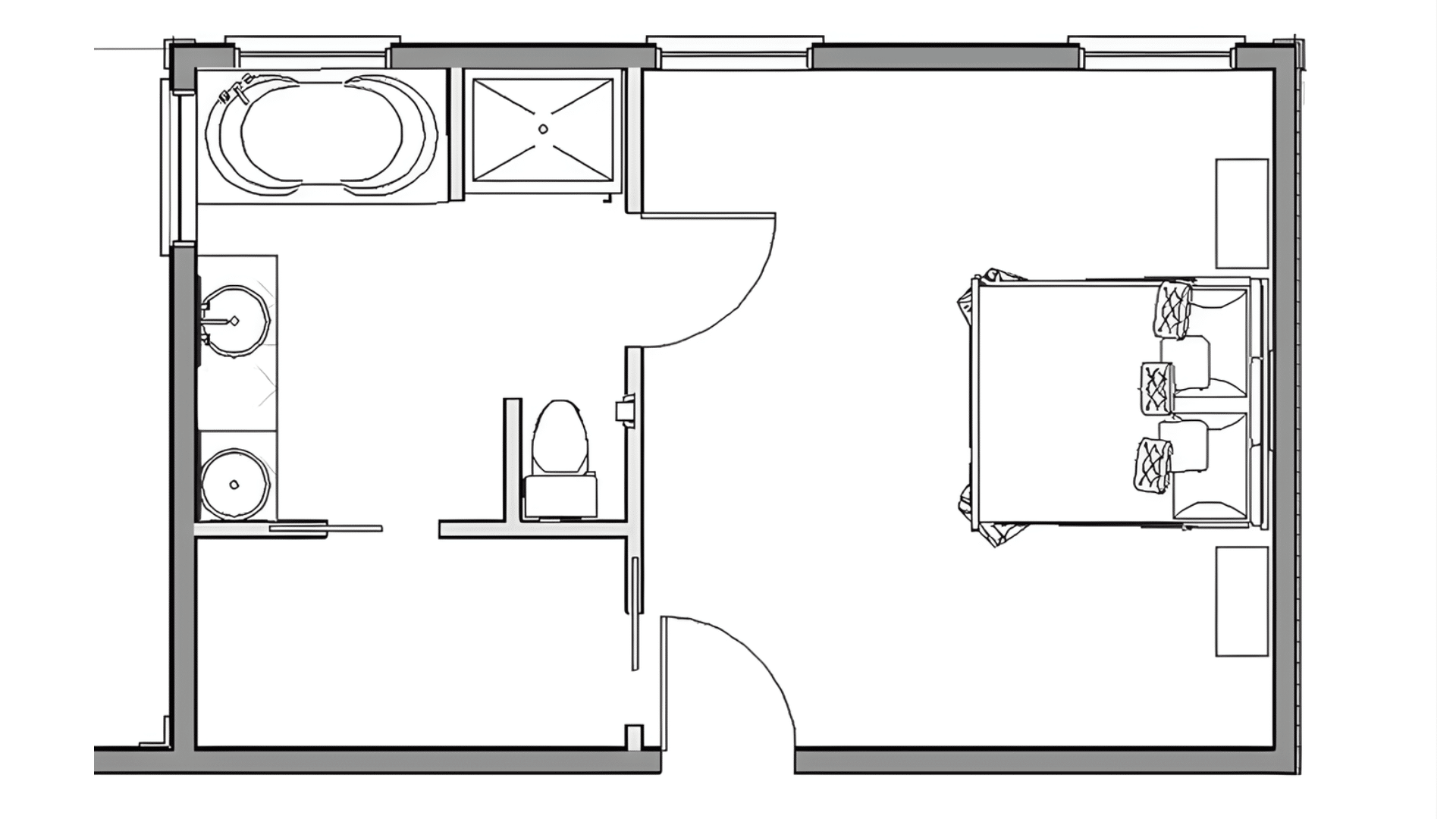
Anything over 256 square feet opens up real possibilities. You can handle multiple zones like seating areas, walk-in closets, or workspaces.
Try centered island beds, lounge-first layouts, or wraparound storage without feeling cramped.
Bed Clearance and Pathway Width
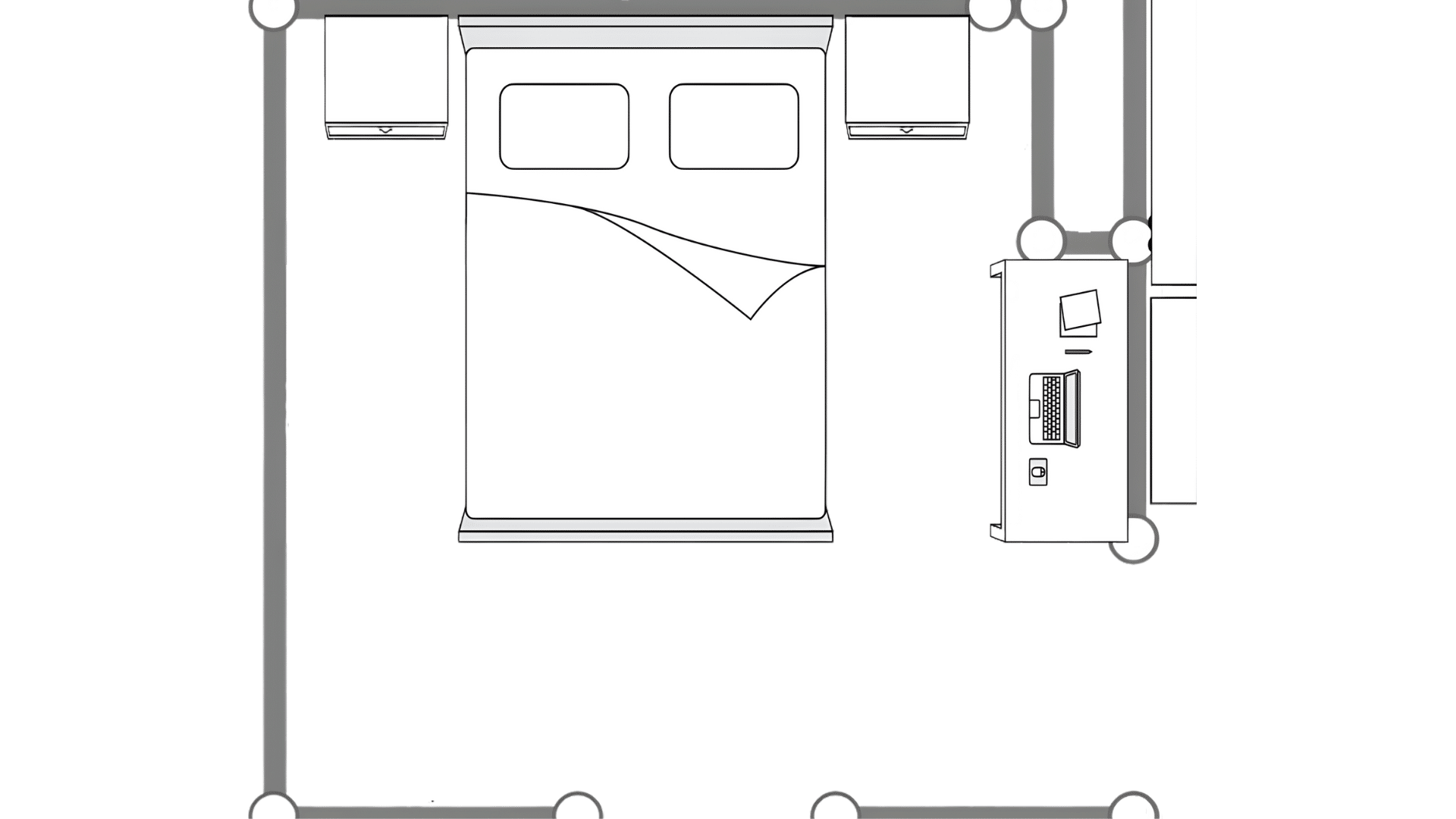
You need 24 to 36 inches of walking space on all sides of the bed. Twenty-four inches is the bare minimum, but 30 to 36 inches feels better.
Clear pathways through the room need at least 30 inches of width for comfortable movement.
If clearances don’t fit, go down a bed size or push the bed against one wall.
Measure pathways after placing furniture, not before, because bulky pieces eat up more space than you think.
Master Bedroom Interior Design and Layout Inspirations
Measurements give you a foundation to work from. Now that you know what fits where, choosing the correct layout becomes a lot easier.
1. Centered Island Bed Layout
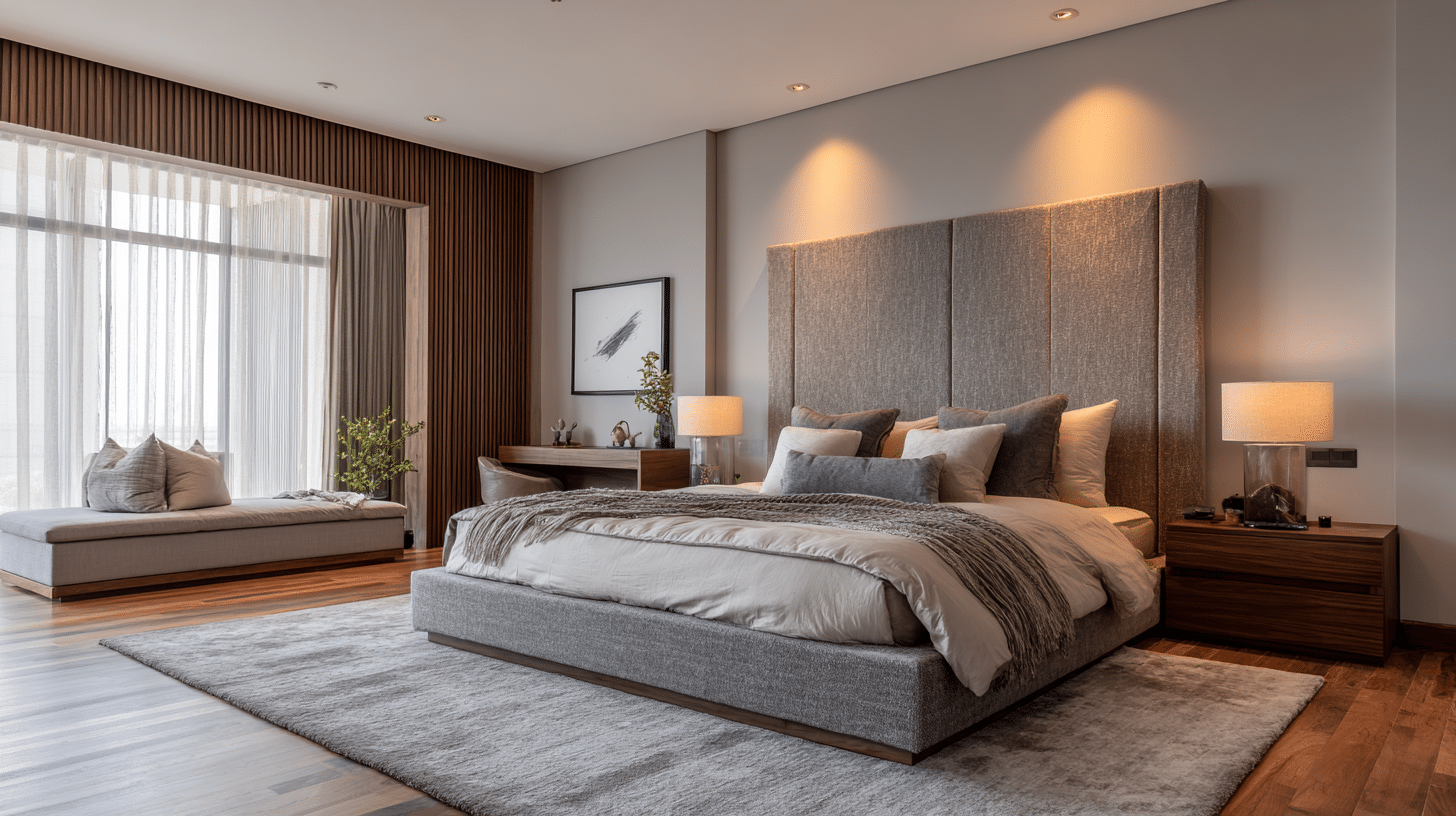
The bed sits away from all walls, centered like an island with equal space on every side.
This creates a hotel-suite vibe and works best in large rooms where circulation isn’t an issue. You’ll need at least 3 feet of clearance around the bed to pull this off comfortably.
Pro Tip: use a Statement Headboard Since the Bed Becomes the Room’s Centerpiece.
2. Wall-Defined Sleeping Zone

A partial partition wall anchors the bed, separating the sleeping area from storage or seating without fully enclosing it. This layout gives you privacy while keeping the room open and connected.
The partition can double as a headboard or even hold shelves for books and decor.
It’s a smart middle ground if you want separation but don’t have the square footage for full walls.
3. Window-Focused Layout
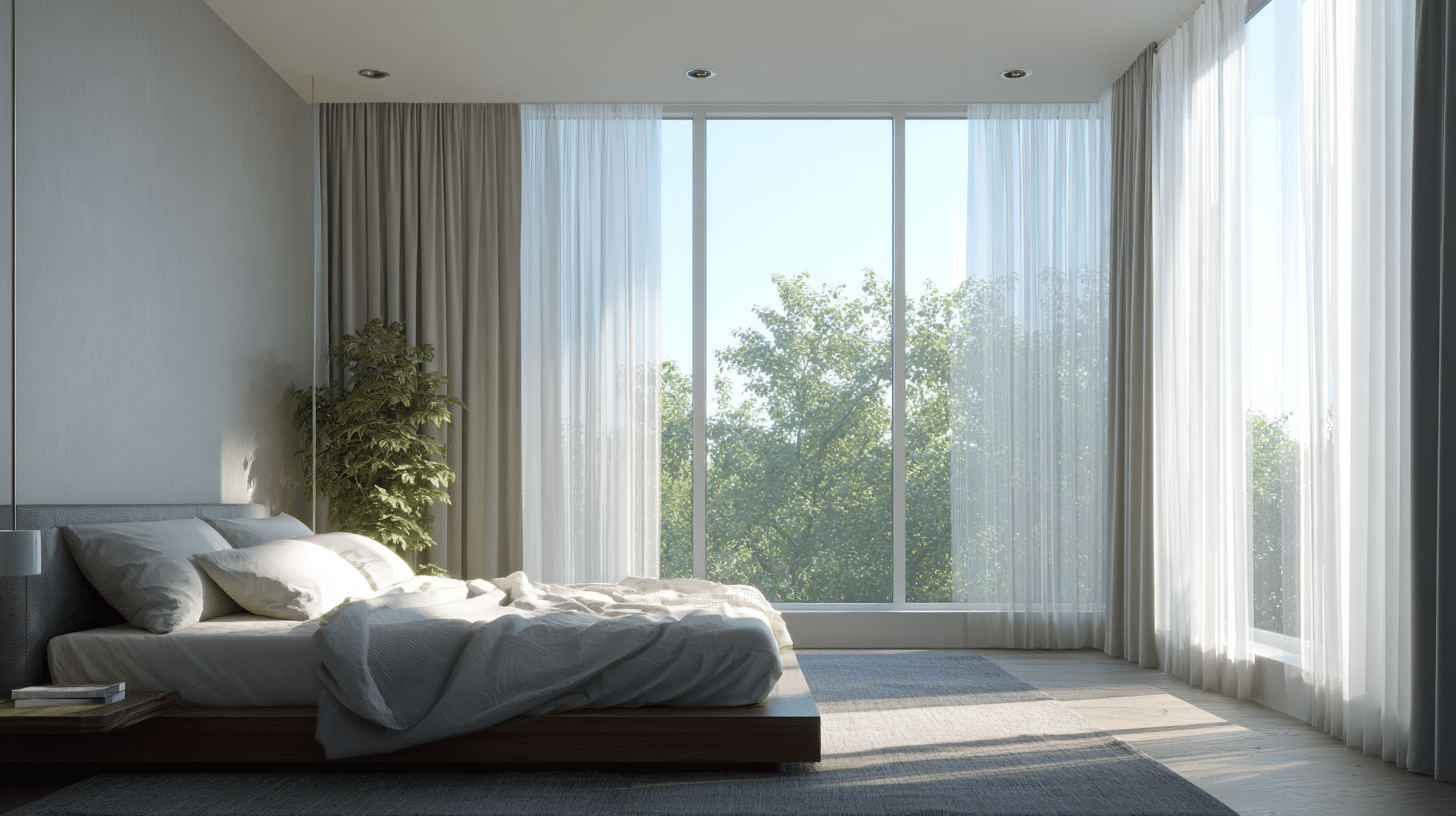
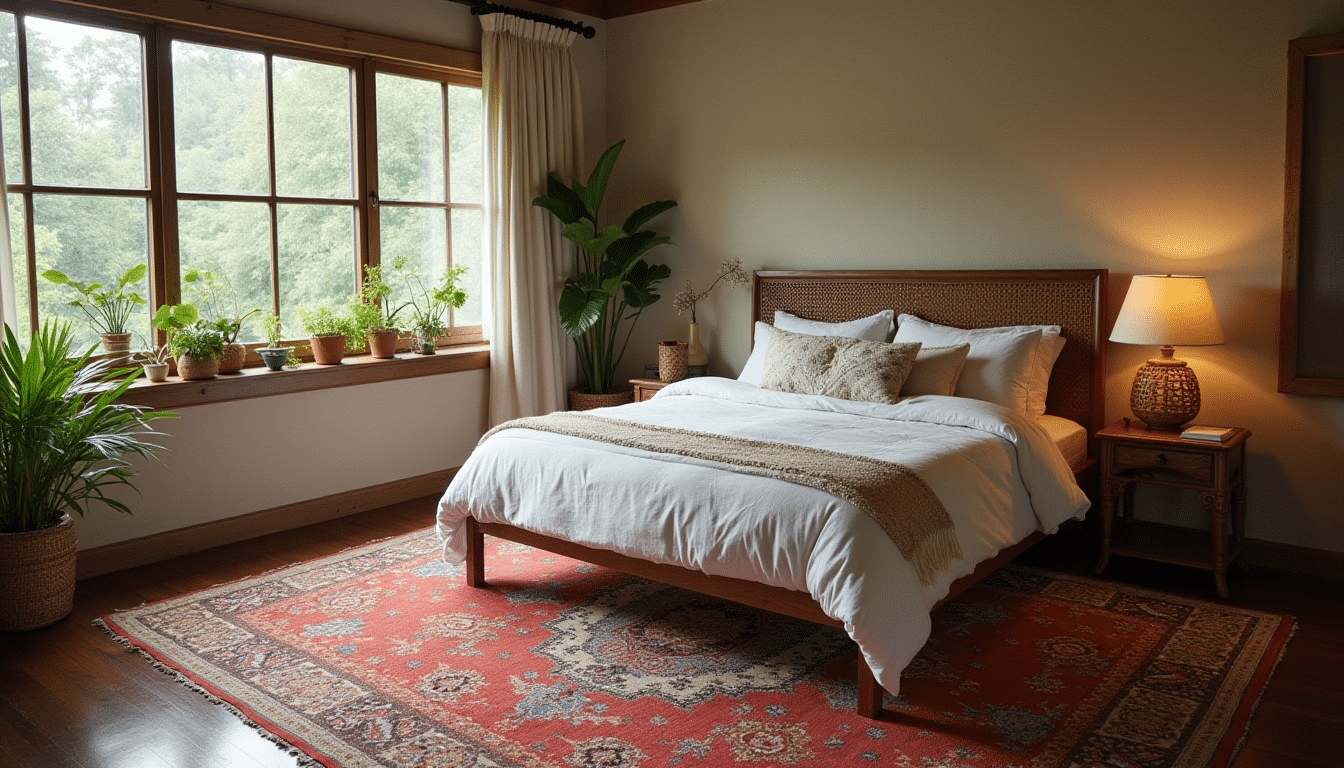
Your bed faces the window, making the view the main attraction.
Storage and seating take a backseat to natural light and outdoor scenery.
- Works best with good views or greenery outside
- Maximizes natural light in the sleeping area
- Get blackout curtains if the morning sun wakes you too early
- Position nightstands so they don’t block the window
4. Linear Walk-Through Layout
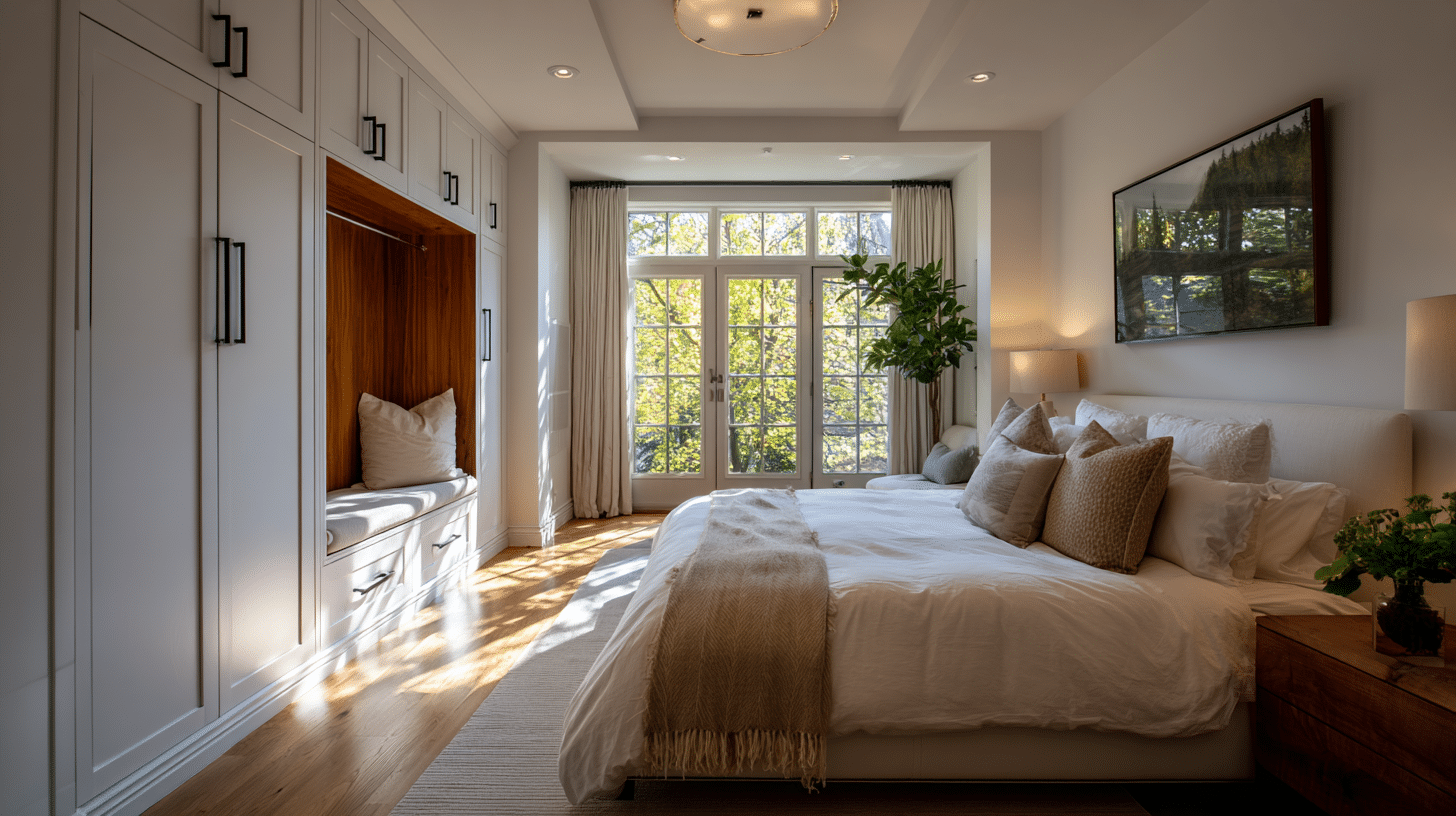
Everything lines up in a straight path: entry, wardrobe, bed, then window. Movement flows without interruption, and the room feels organized and intentional.
This works really well in long, narrow bedrooms where you want clear sight lines from door to window.
The layout naturally guides your eye through the space and makes even compact rooms feel bigger than they are.
5. Diagonal Bed Placement Layout
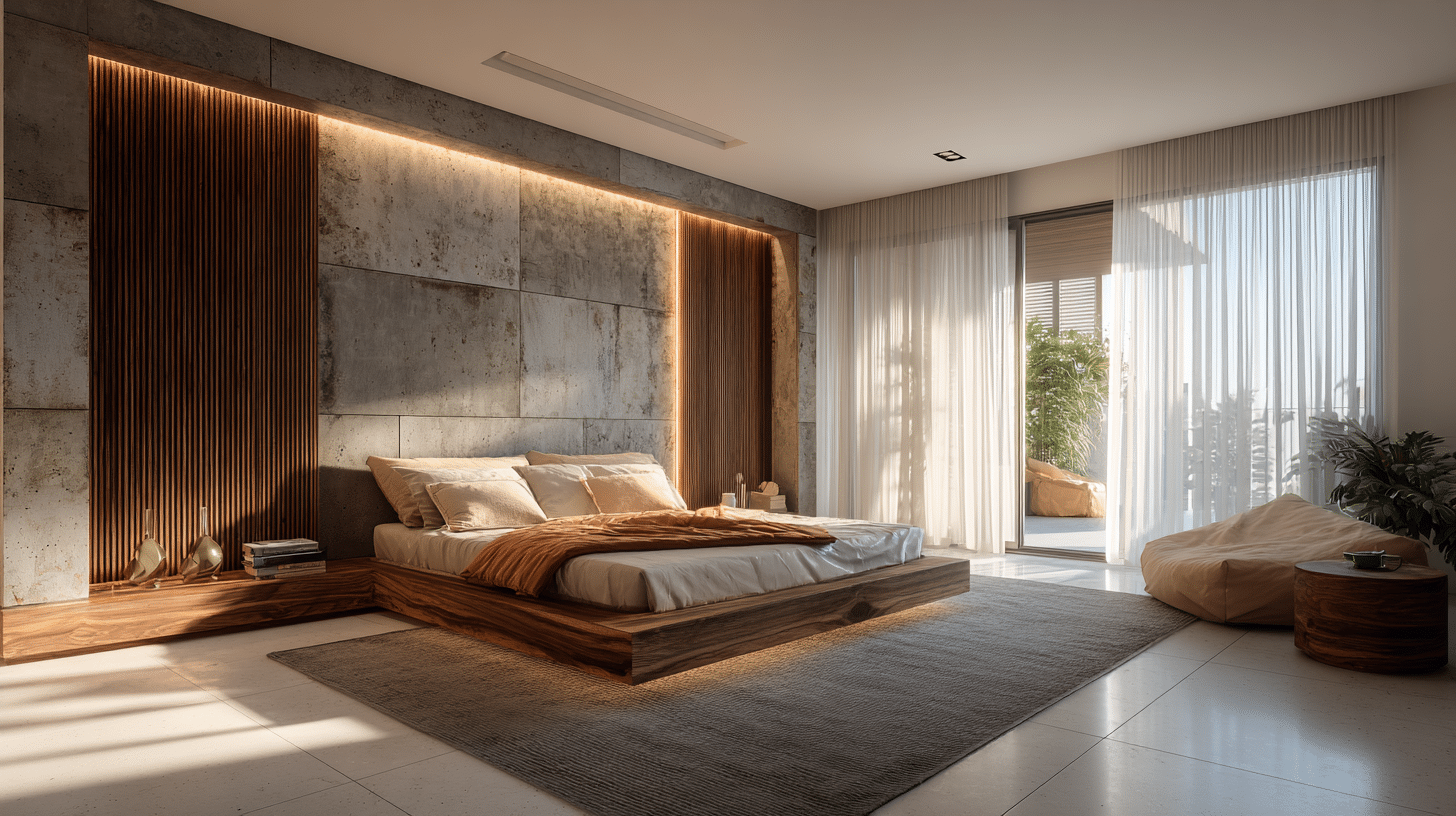
The bed sits at an angle instead of parallel to the walls. It breaks symmetry and creates unusual circulation paths, giving the room a bold, modern edge.
You’ll sacrifice some floor space, so only try it if you have room to spare.
6. Split-Zone Bedroom Layout
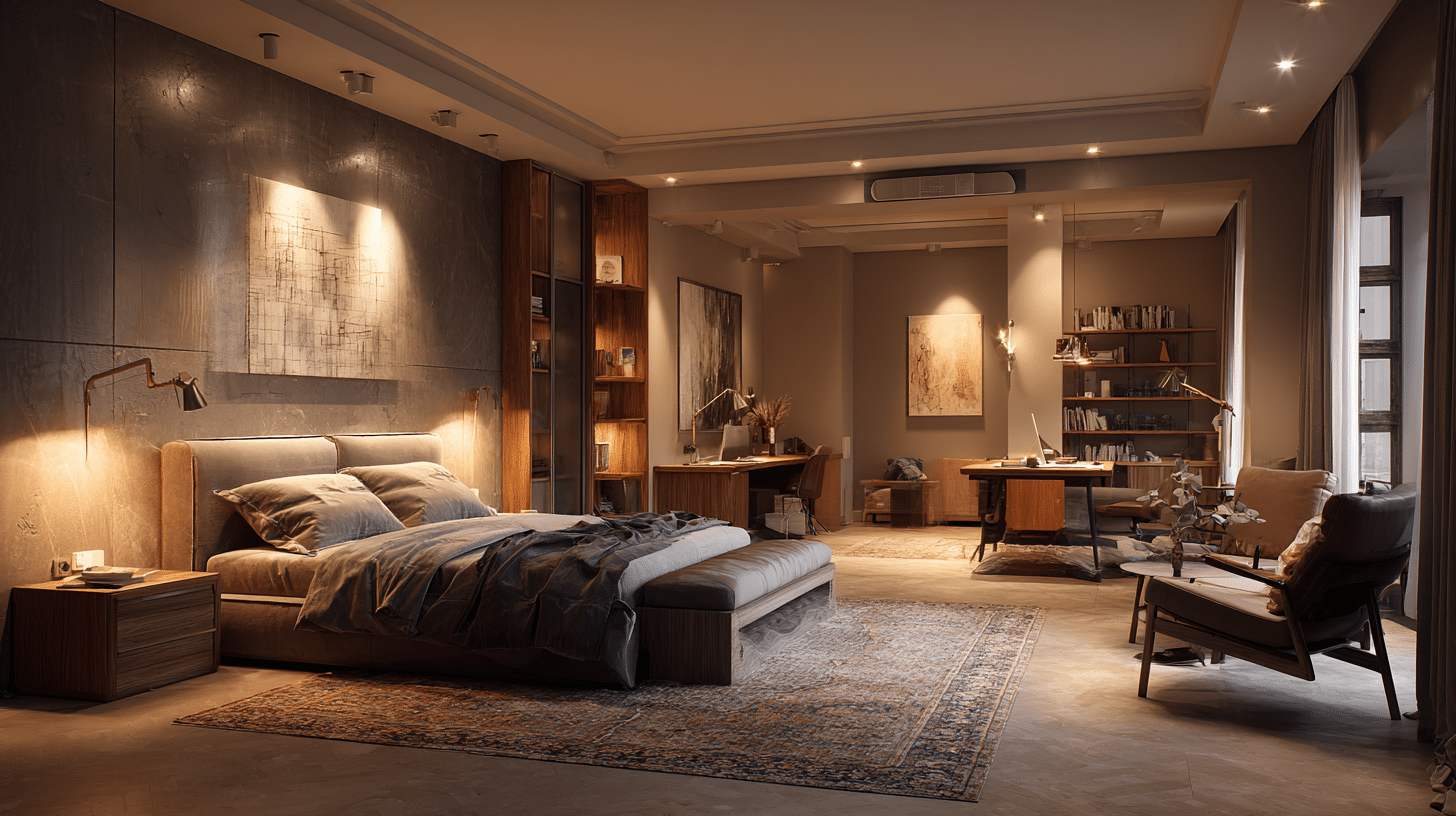
The room is divided into two halves: one for sleeping, the other for work or relaxation.
Each zone has its own identity and purpose.
Sleeping Side: Bed, Nightstands, Soft Lighting
Leisure Side: Desk, Reading Chair, or Small Sofa
A rug or change in flooring can visually separate the zones without adding walls.
7. Bedroom-Within-A-Bedroom Layout
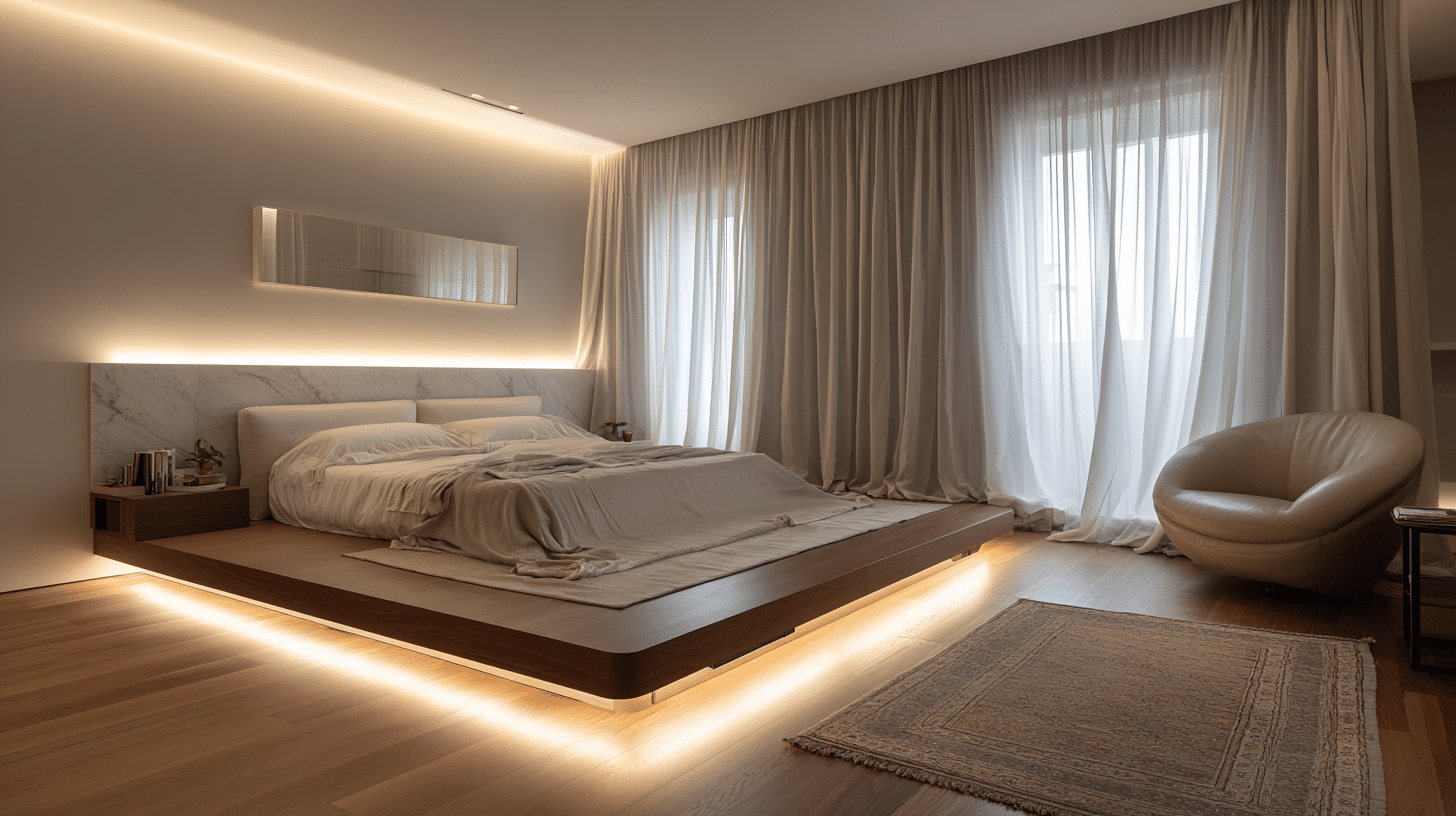
A raised platform or recessed floor defines the sleeping area, making it feel like a private cocoon inside the larger room.
This works incredibly well in open-plan lofts or studio apartments where you want clear separation between living and sleeping areas.
Pro Tip: Add soft lighting under the platform for a floating effect at night that feels almost magical.
8. Backward Entry Layout
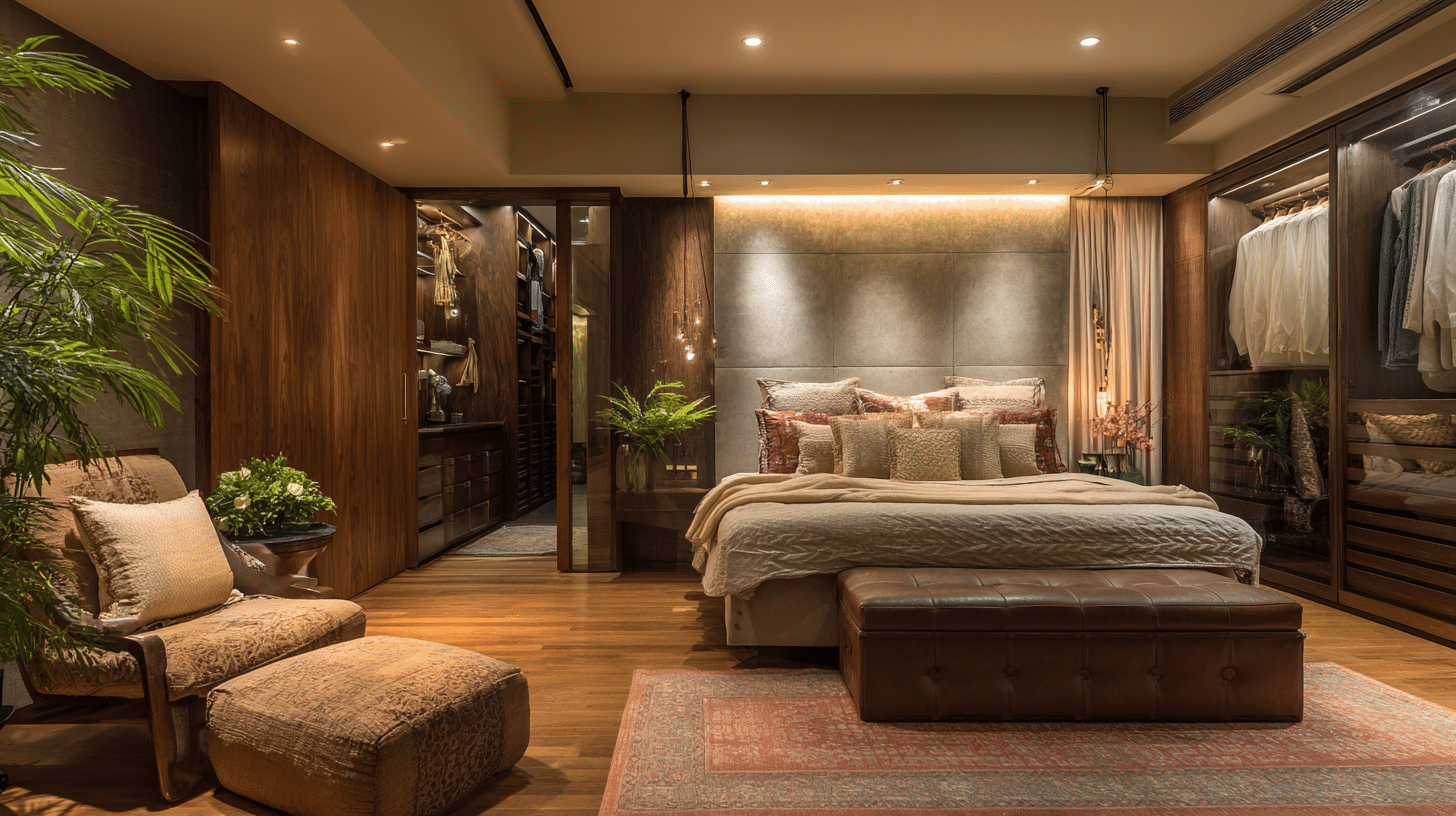
Storage or seating comes first when you walk in, while the bed stays hidden deeper in the room.
This enhances privacy and keeps the sleeping area feeling separate from the entry.
Guests won’t immediately see your unmade bed when the door opens, which is honestly a nice bonus.
9. Corner-Oriented Bed Layout
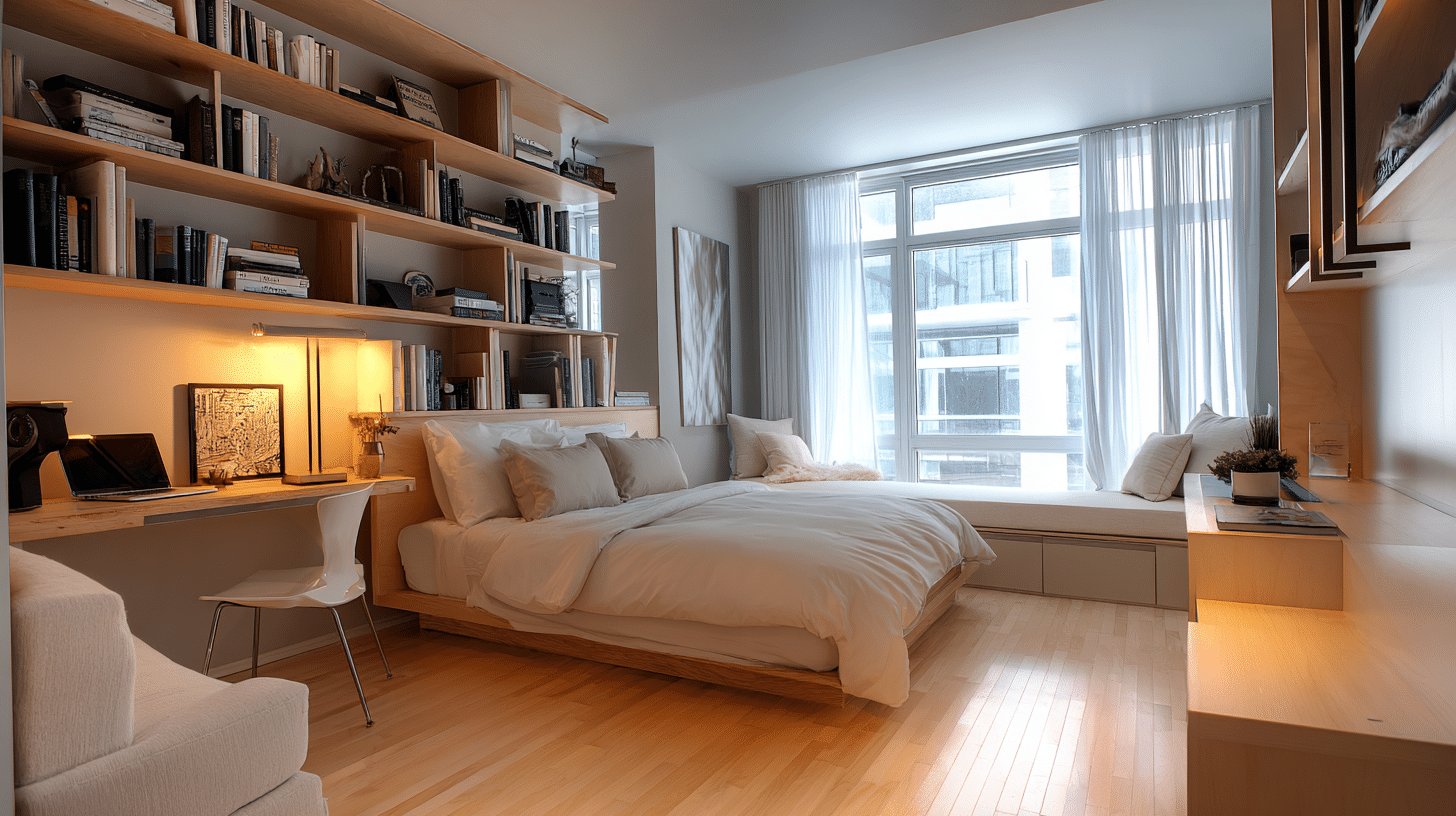
The bed tucks into a corner instead of centering on a wall, freeing up the rest of the room for a desk, seating, or extra storage.
You lose symmetry, but you gain flexibility.
Works Well For:
- Small to medium bedrooms
- Multi-functional spaces
- Rooms with awkward dimensions or angled walls
10. Wraparound Storage Layout
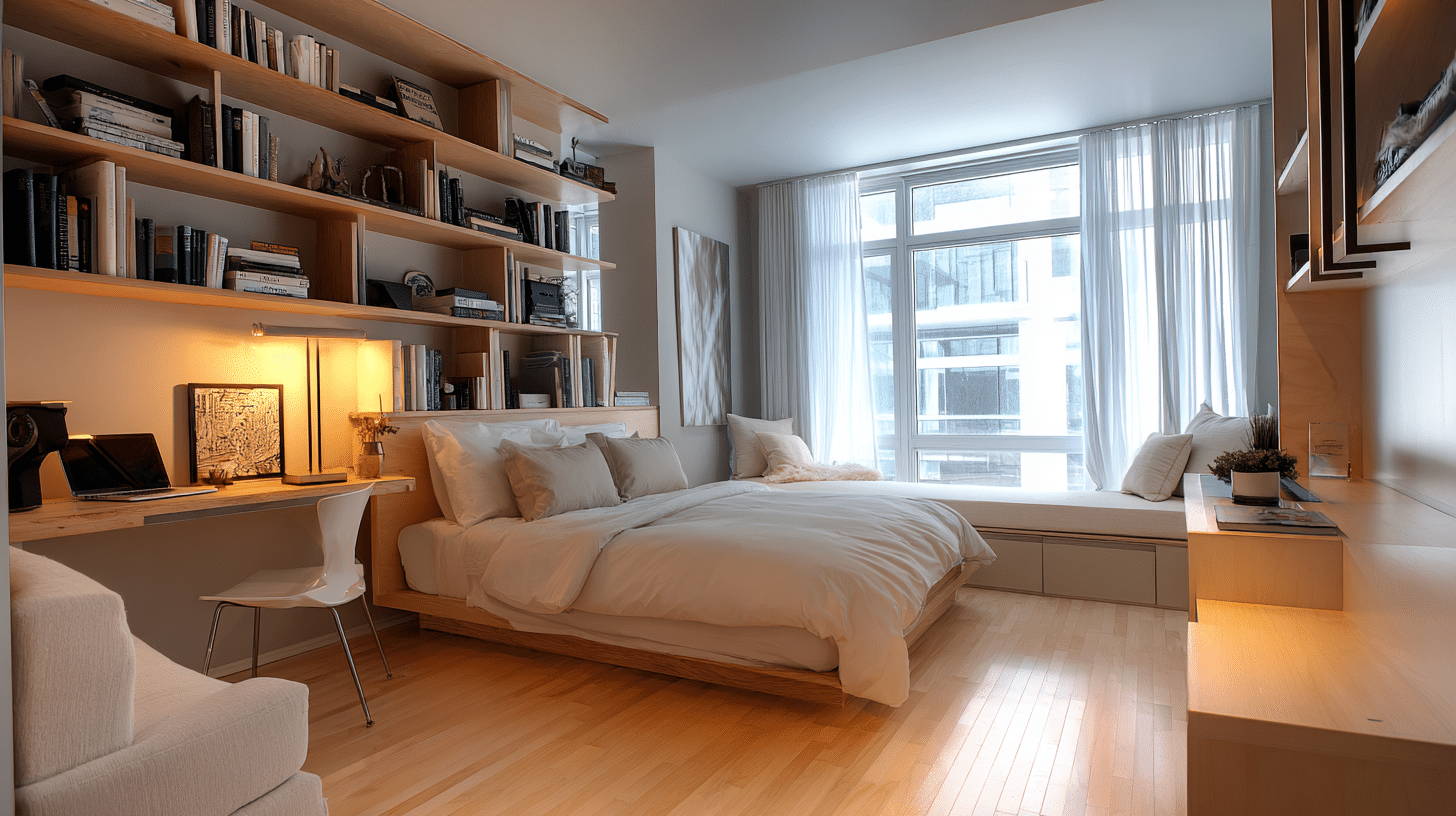
Storage units surround the bed on three sides, turning it into an integrated architectural feature.
Wardrobes, shelves, or cabinets frame the sleeping area and maximize vertical space. Everything you need stays within arm’s reach, which is perfect for rooms with limited floor space but high ceilings.
11. Floating Core Layout
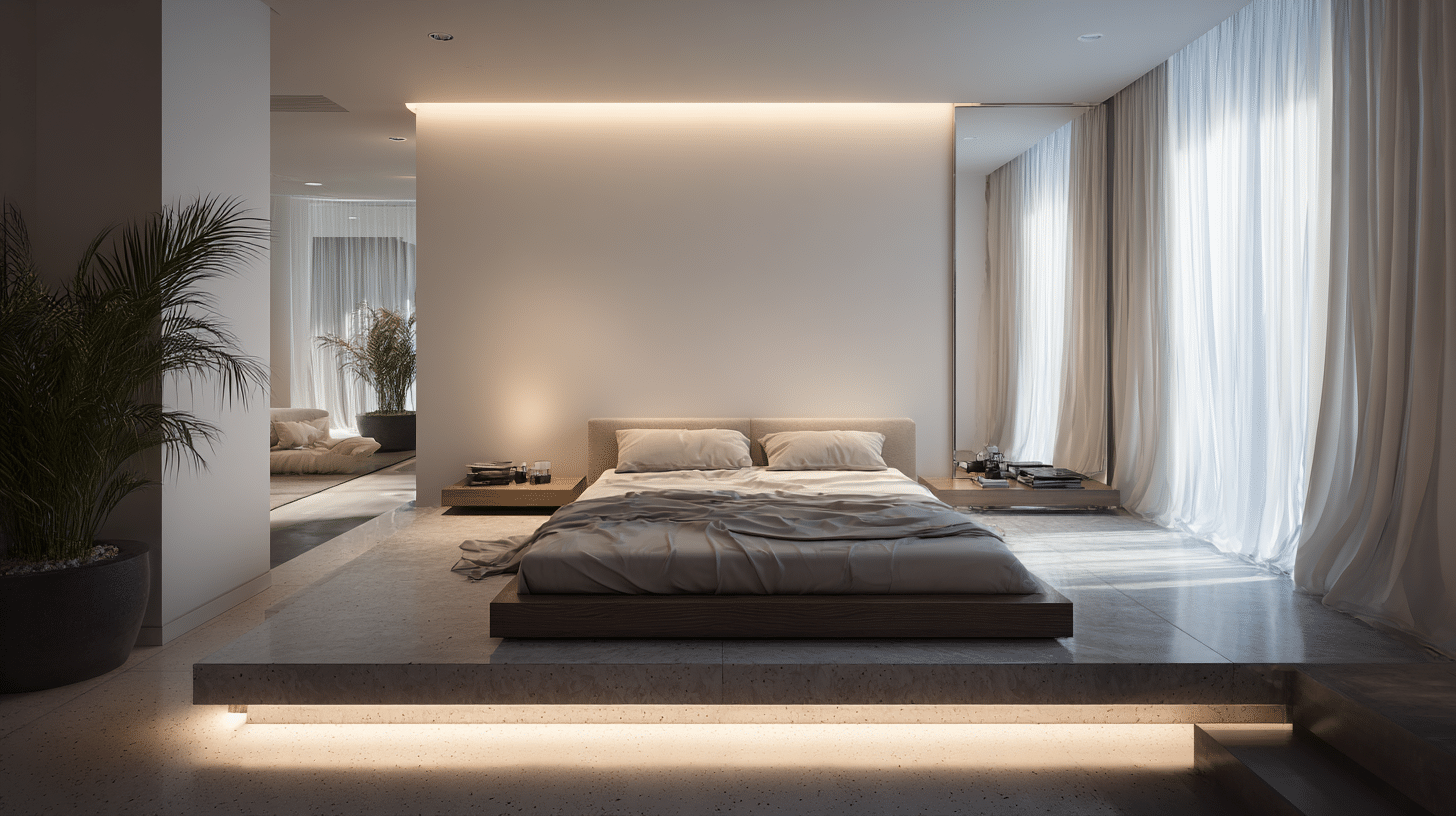
The bed and nightstands sit on a floating platform that’s visually detached from the walls.
The platform doesn’t need to be high; even 6 to 8 inches makes a difference.
Lighting and movement flow underneath, creating a light, airy feel.
12. Passage-Integrated Layout
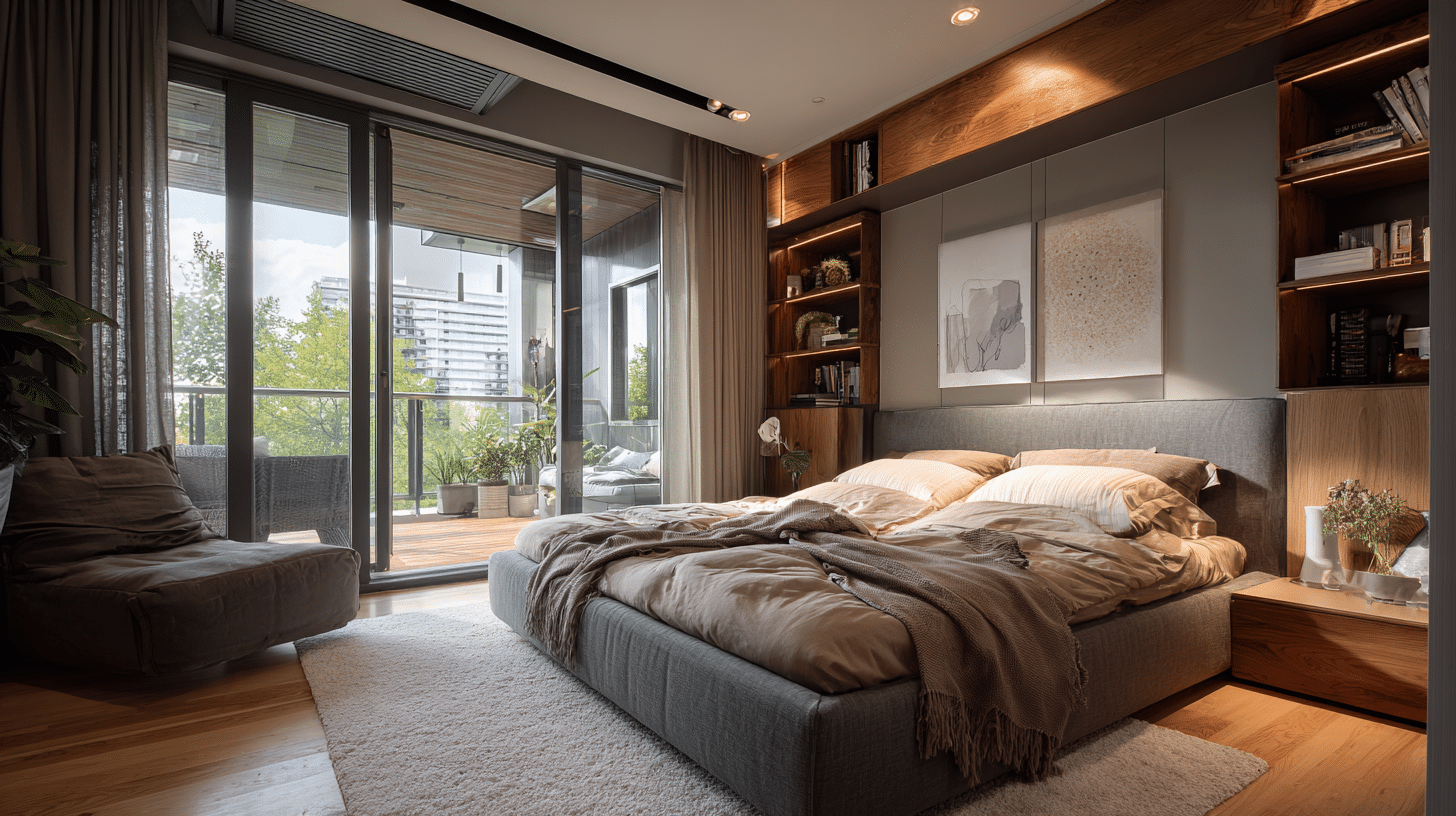
The bedroom doubles as a transition space connecting the balcony, closet, or bathroom.
Despite the traffic, the layout maintains comfort and usability through clever furniture placement. Position the bed away from the main pathway so movement doesn’t disturb rest.
13. Lounge-First Bedroom Layout
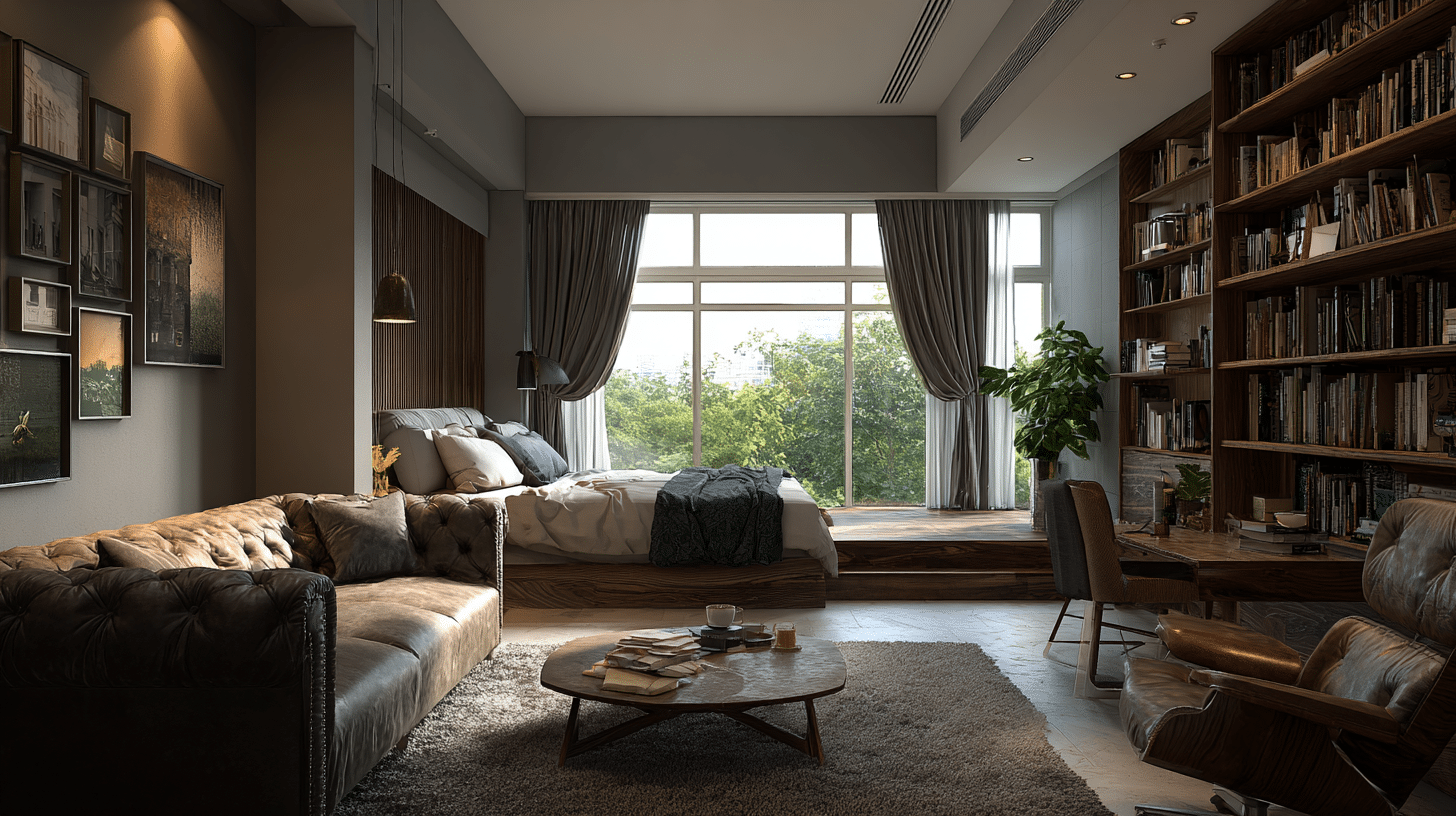
The seating or relaxation area takes center stage, with the bed placed subtly in the background.
This flips the usual bedroom hierarchy and works well if you spend more time reading, watching TV, or socializing than sleeping. A sofa or chaise becomes the room’s anchor instead of the bed, which changes the entire energy of the space.
14. Symmetry-Driven Layout
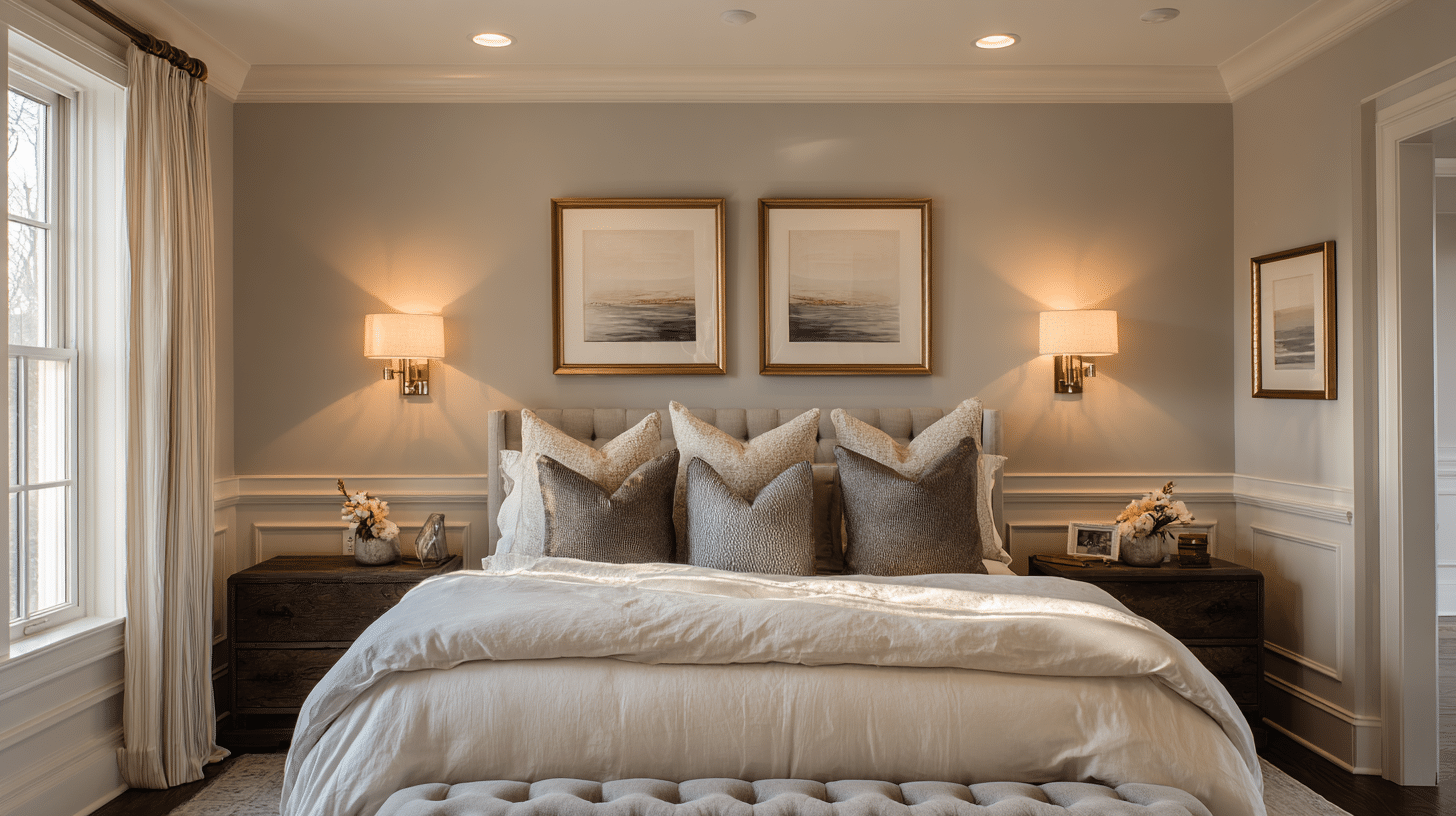
This classic layout feels organized and intentional, especially popular in traditional interiors.
Everything aligns perfectly on both sides of the bed.
- The bed is centered on the main wall
- Identical furniture on each side
- Balanced lighting and decor placement
15. Asymmetrical Free-Flow Layout
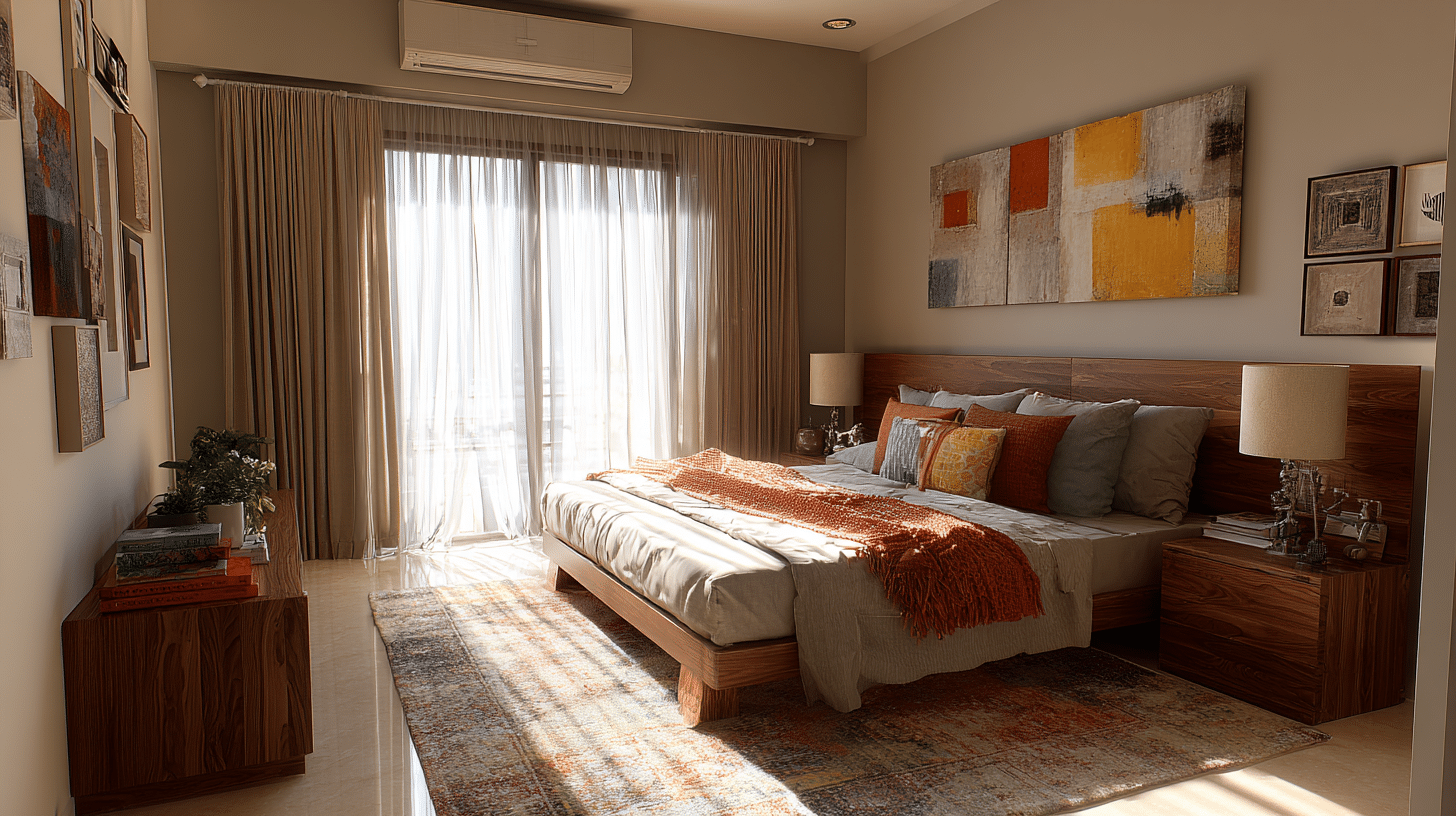
Furniture placement follows movement and comfort instead of balance.
Nightstands don’t match, storage sits where it makes sense, and circulation paths feel organic rather than planned. It feels spontaneous even though it’s still carefully thought out.
16. Bed-Against-Storage Layout
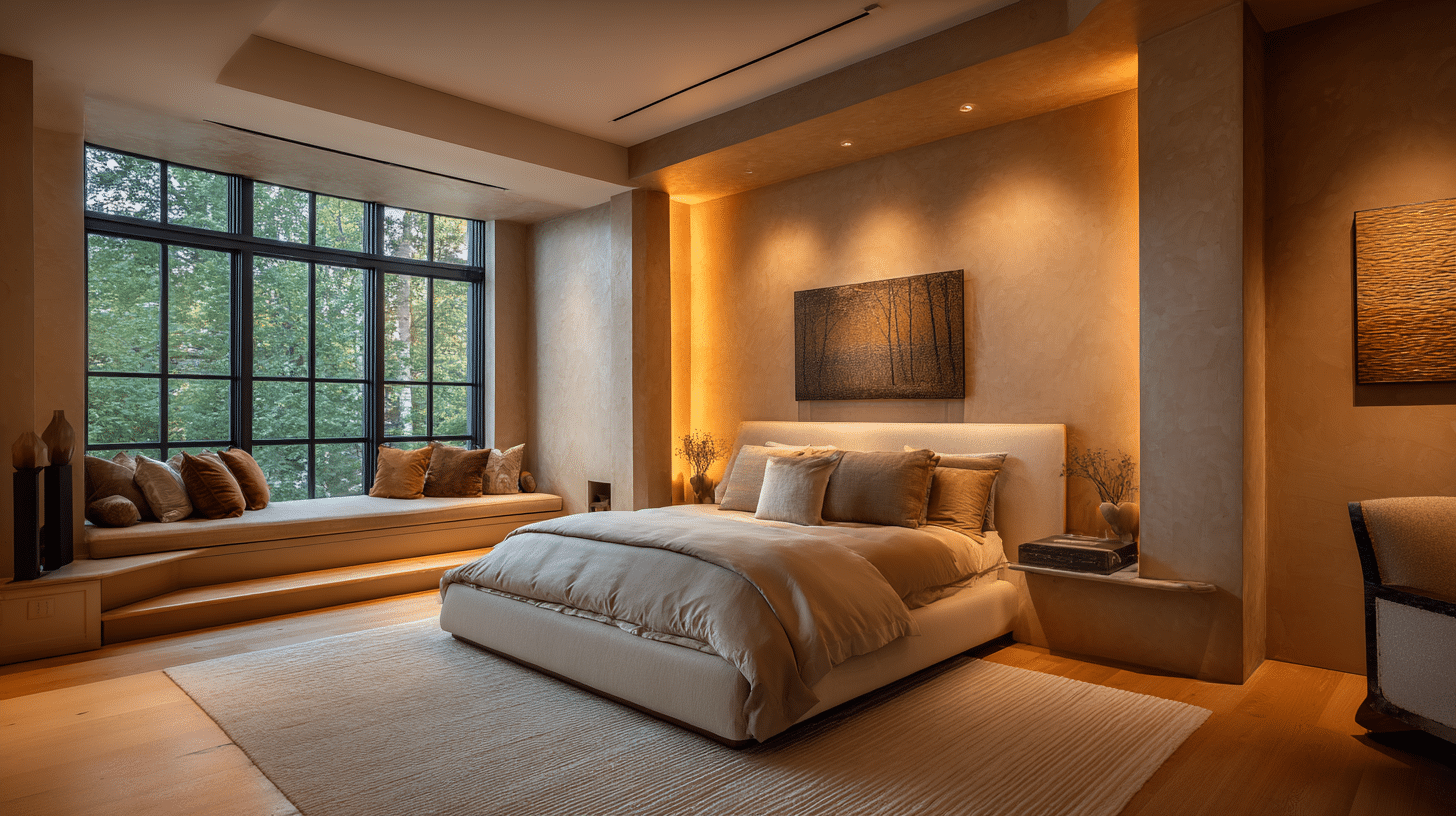
The bed sits directly against a storage wall, blending sleeping and storage into one continuous surface.
The headboard becomes part of the built-in cabinetry or shelving behind it, which saves floor space while giving you tons of storage.
Pro Tip: best for Small Rooms Where Floor Space Is Tight but Wall Space Is Available.
17. Sunken Sleeping Layout
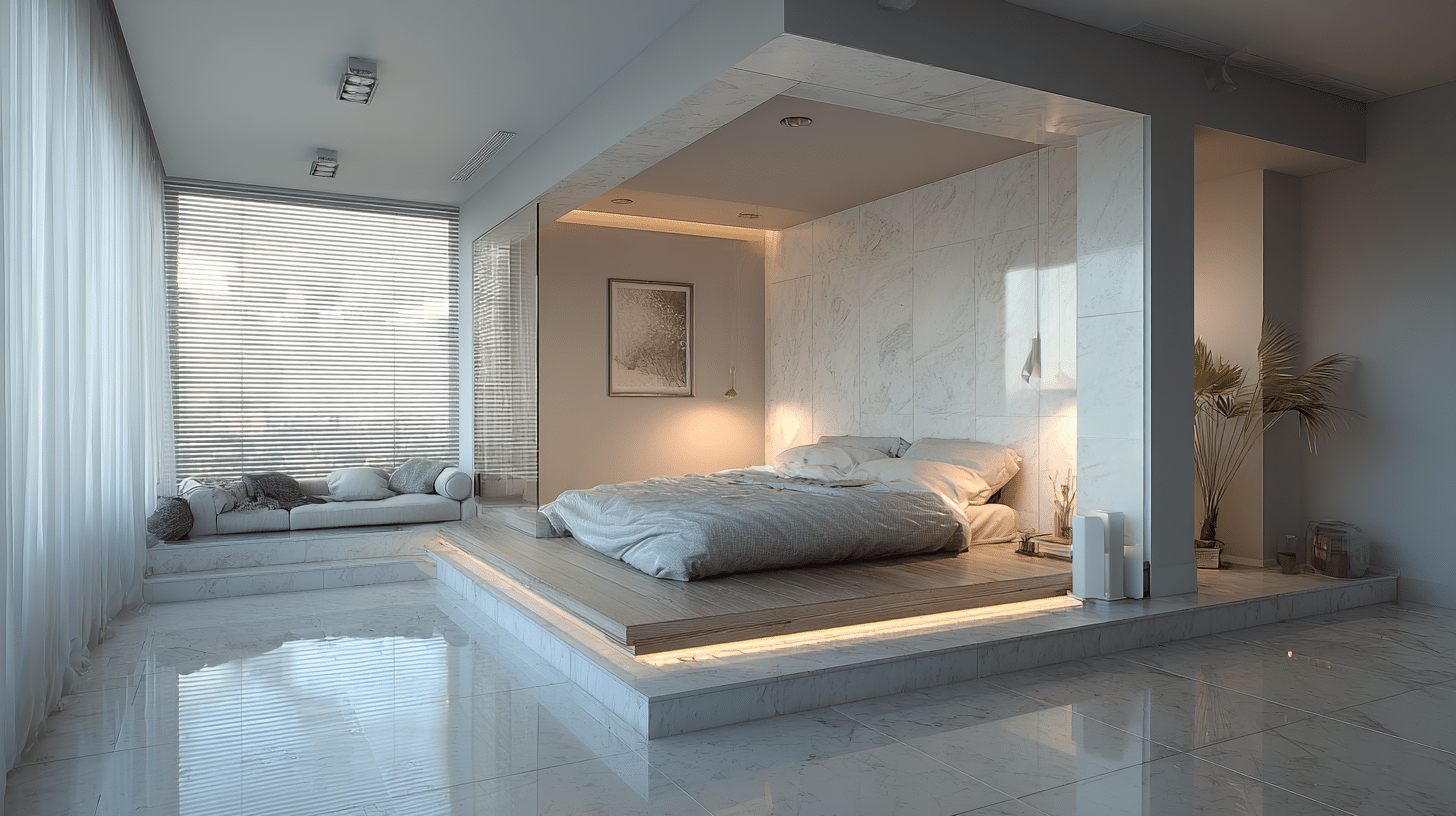
The bed sits lower than the rest of the room, creating a sense of rest and retreat. Stepping down into the sleeping area makes it feel separate and cocooned, almost like descending into a private sanctuary.
This requires structural changes, so it’s not a simple DIY project.
18. Glass-Separated Layout
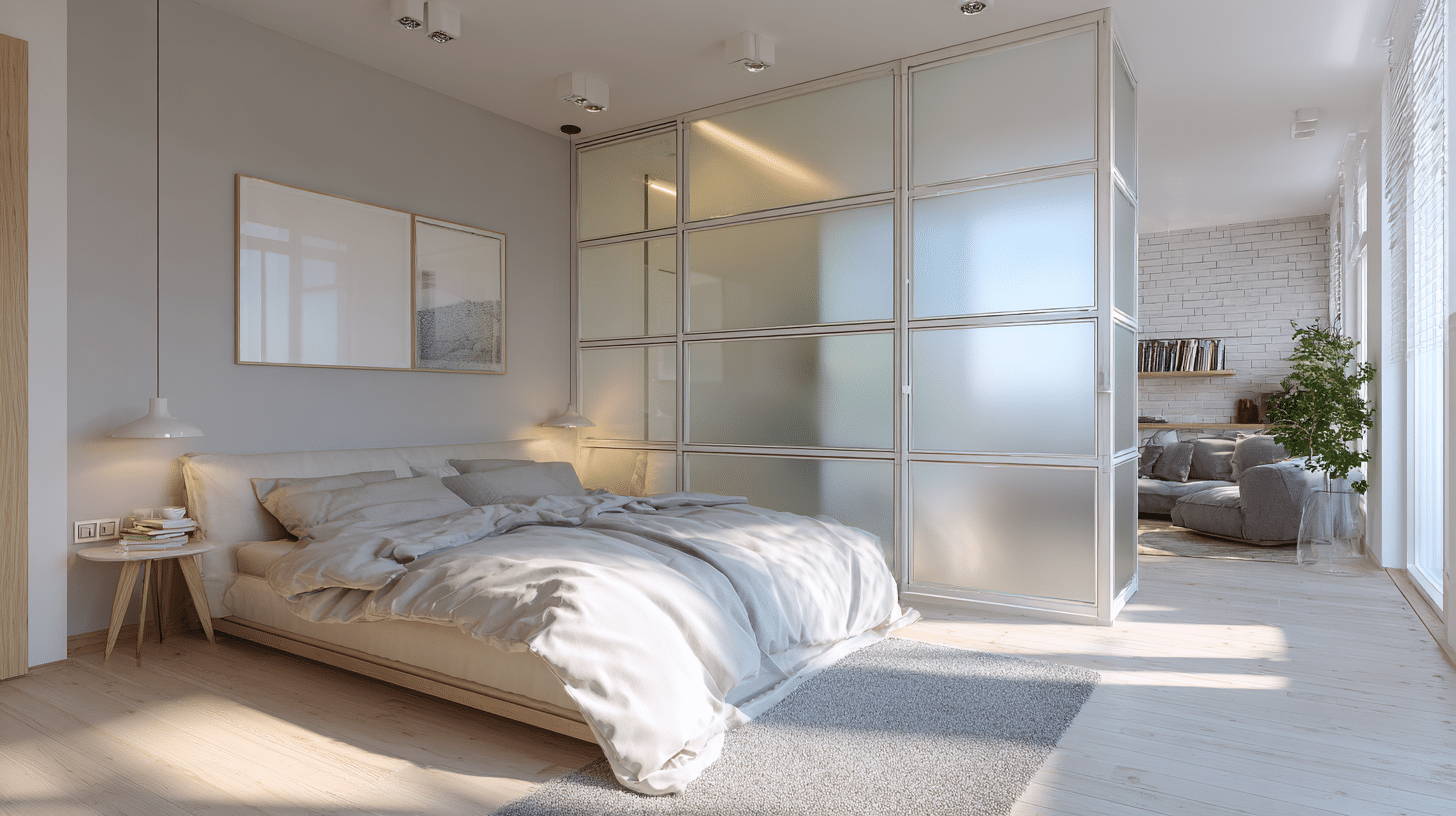
Glass partitions enclose the sleeping area while keeping it visually open.
- Defines zones without blocking natural light
- Maintains visual connection across the room
- Works well in studios or large master suites
- Creates privacy while keeping an airy feel
You get separation from dressing or lounge spaces without losing light or making the room feel smaller.
19. Minimal Footprint Layout
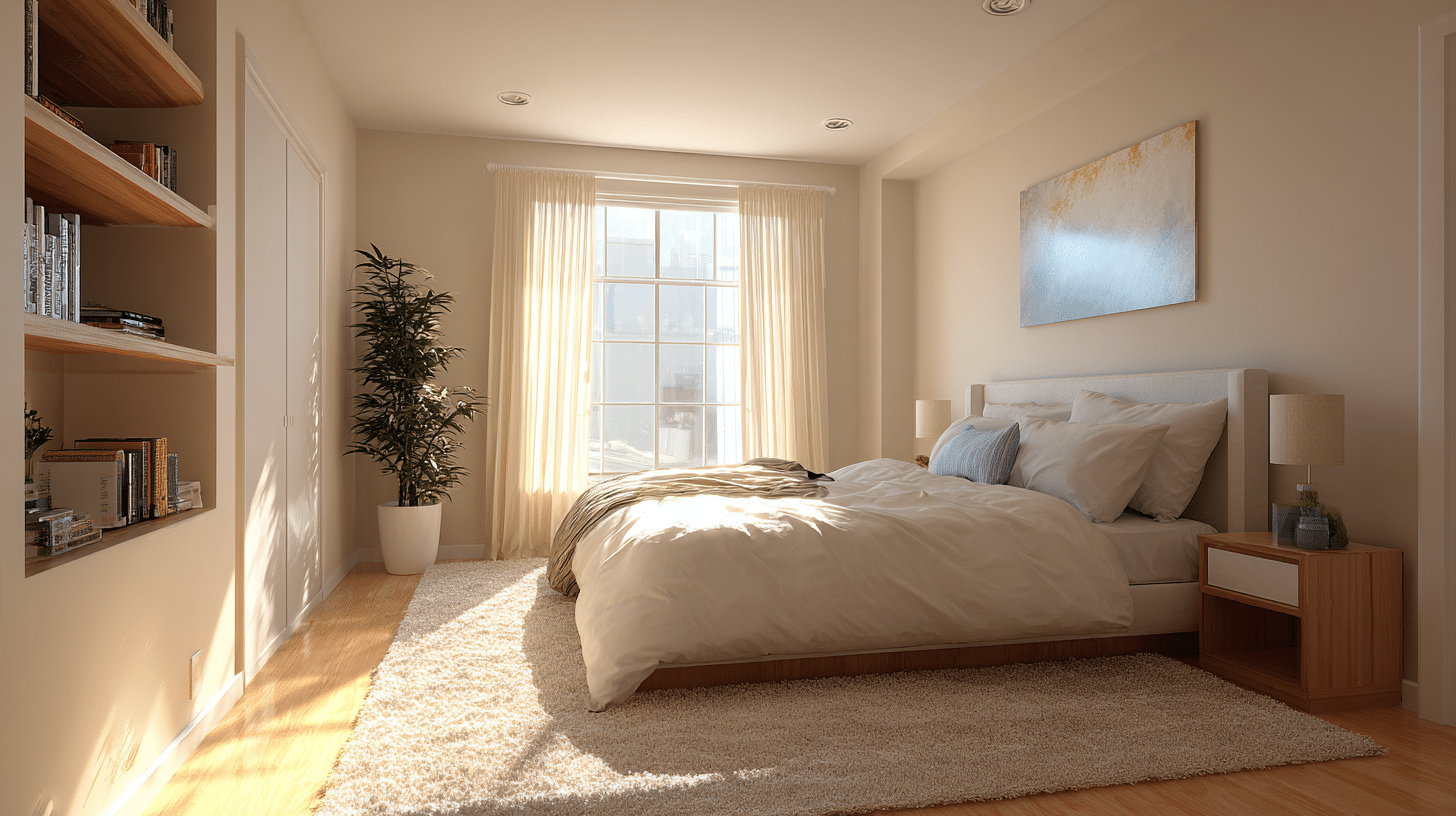
Only the essentials exist: bed, minimal storage, and clear circulation paths.
The goal is maximum openness and zero visual clutter. This layout appeals to people who value simplicity and don’t need a lot of furniture weighing down their space.
20. Corridor Bedroom Layout
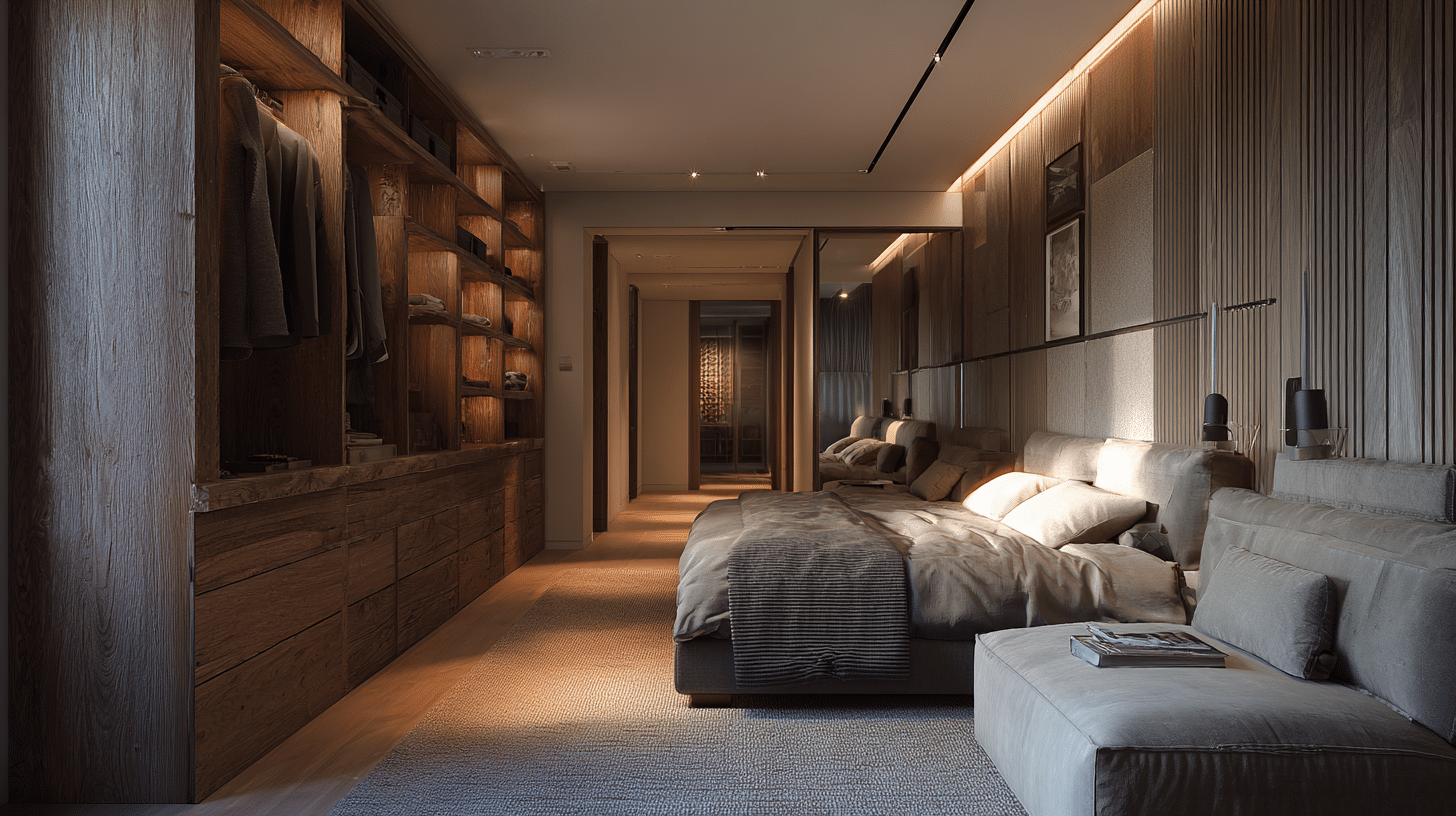
The bed runs parallel to a long wall, creating a corridor-like flow.
- Storage and seating line up along the opposite wall
- Pathways stay clear and functional
- Space-efficient without feeling cramped or claustrophobic
21. Lifestyle-Centric Layout

The entire layout revolves around how you actually use the space.
If you meditate every morning, the bed faces east to catch the sunrise.
If you work late, the desk gets the best light, and the bed tucks away from workspace glare.
This is the most personal approach and requires you to think about your habits before placing furniture. It takes effort but creates a room that feels custom-built for you.
Tips and Tricks for The Main Bedroom Design
Your bedroom should match how you actually feel and function, not just look good in photos.
- Think about your daily habits first. Do you read before bed? Work in the mornings? Let these activities guide where furniture goes, not just what looks balanced.
- Match layouts to your energy level. High-energy people thrive with open, light-filled setups. Introverts need cocooned corners and separated zones for real rest.
- Let natural light guide placement. Don’t block windows with tall furniture. Test layouts at different times of day to see how light moves through the space.
- Plan clearance space around the bed. You need at least 24 inches on each side for comfortable movement. If that doesn’t fit, go down a bed size.
- Don’t overcrowd small rooms. Pick one or two zones and do them well instead of cramming everything in. Not every bedroom needs a seating area and vanity.
Wrapping up
A good bedroom layout isn’t about following design rules.
It’s about understanding your space, knowing how you move through it, and placing furniture where it actually makes sense for your life.
Whether you go with a classic centered bed or try something unconventional like a sunken sleeping zone, the goal stays the same: comfort, flow, and functionality.
Start with measurements, think through your daily routine, and build from there.