Ever stared at your living room and felt stuck?
All the right pieces are there, but they don’t work together. The sofa blocks the walkway. Chairs face the wrong direction. And that coffee table?
It’s either too far from the seating or bumping into shins every time someone passes by.
Learning how to arrange living room furniture isn’t about following strict rules or having a designer’s eye.
It’s about understanding a few simple principles that make any space feel open, welcoming, and functional. Let’s see how it works.
Start With the Purpose of Your Living Room
Before you move a single piece of furniture, ask yourself what you actually do in this room.
- Do you watch TV most evenings? Then your seating should face the screen at a comfortable viewing distance.
- Is it a spot for family game nights? You’ll want furniture arranged to encourage conversation and interaction.
- Maybe you work from home and need a quiet corner for your desk.
Some rooms serve multiple purposes. Just identify your top two or three activities.
Once you know how you’ll use the space, the layout practically plans itself.
Measure Your Living Room Before Moving Furniture
Getting the measurements right saves you time and backaches.
1. Measure the room dimensions: Grab a tape measure and record the length and width of your living room. Write these numbers down somewhere.
2. Measure your furniture pieces: Get the width, depth, and height of your sofa, chairs, tables, and other large items.
3. Check doorways and hallways: Measure these openings to make sure your furniture can actually fit through them.
4. Note fixed features: Mark where windows, electrical outlets, and built-ins like fireplaces are located. These elements will determine where certain pieces can go.
Living Room Layout Ideas by Room Size
Every room is different, and size matters when you’re planning your layout. What works in a spacious family room won’t necessarily fit in a cozy apartment.
Small Living Room Layout Ideas
Small spaces need smart solutions. The key is choosing furniture that fits the scale of your room and arranging it to maximize every inch.
1. Minimalist Sofa and Coffee Table Layout
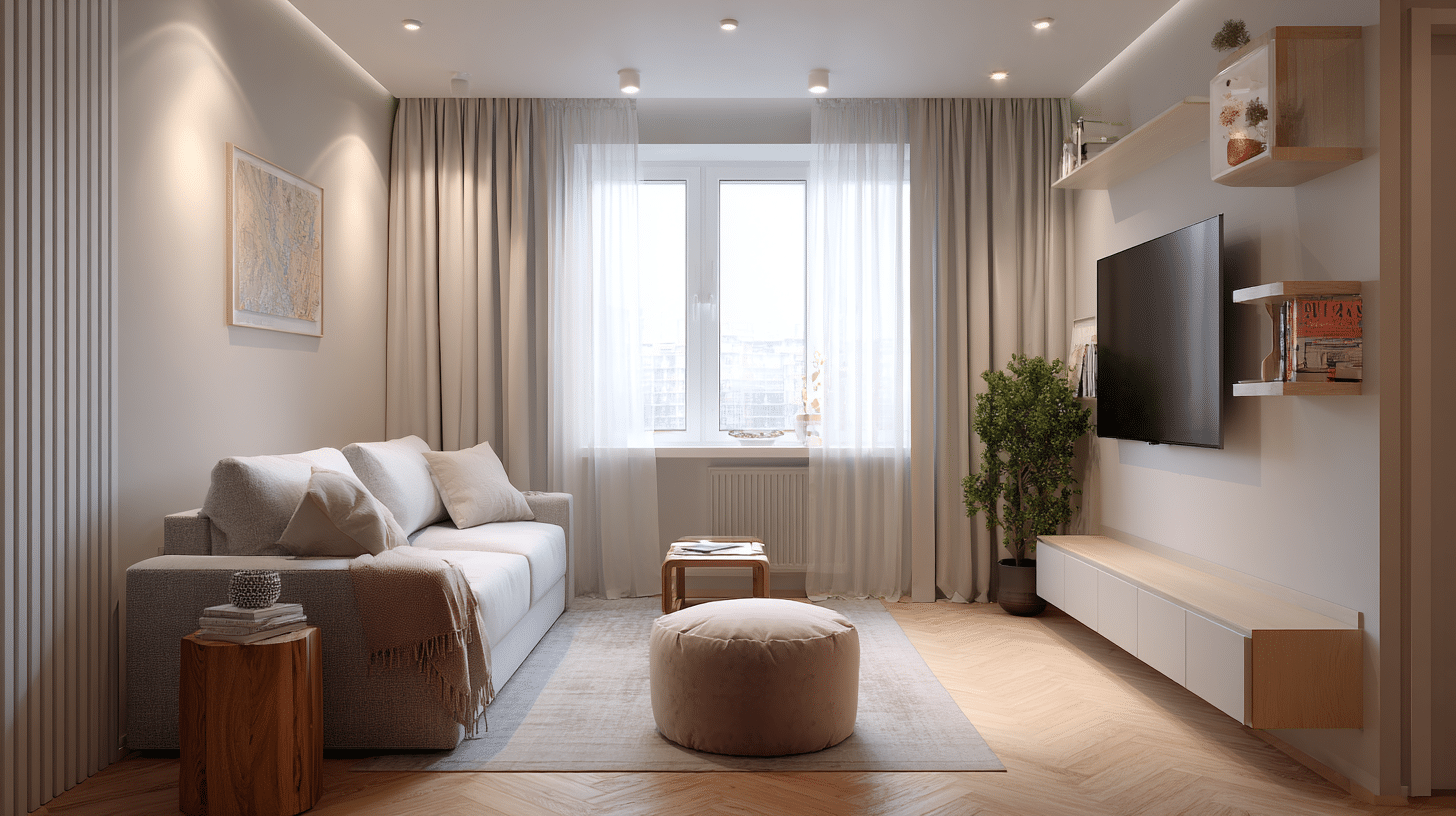
This layout keeps things simple and uncluttered. You place a compact sofa against the longest wall with a small coffee table in front. That’s it.
The minimal approach prevents the room from feeling overcrowded.
Key elements:
- One sofa (loveseat or apartment-sized)
- Small coffee table or ottoman
- Wall-mounted TV to save floor space
2. L-Shaped Sectional for Small Spaces
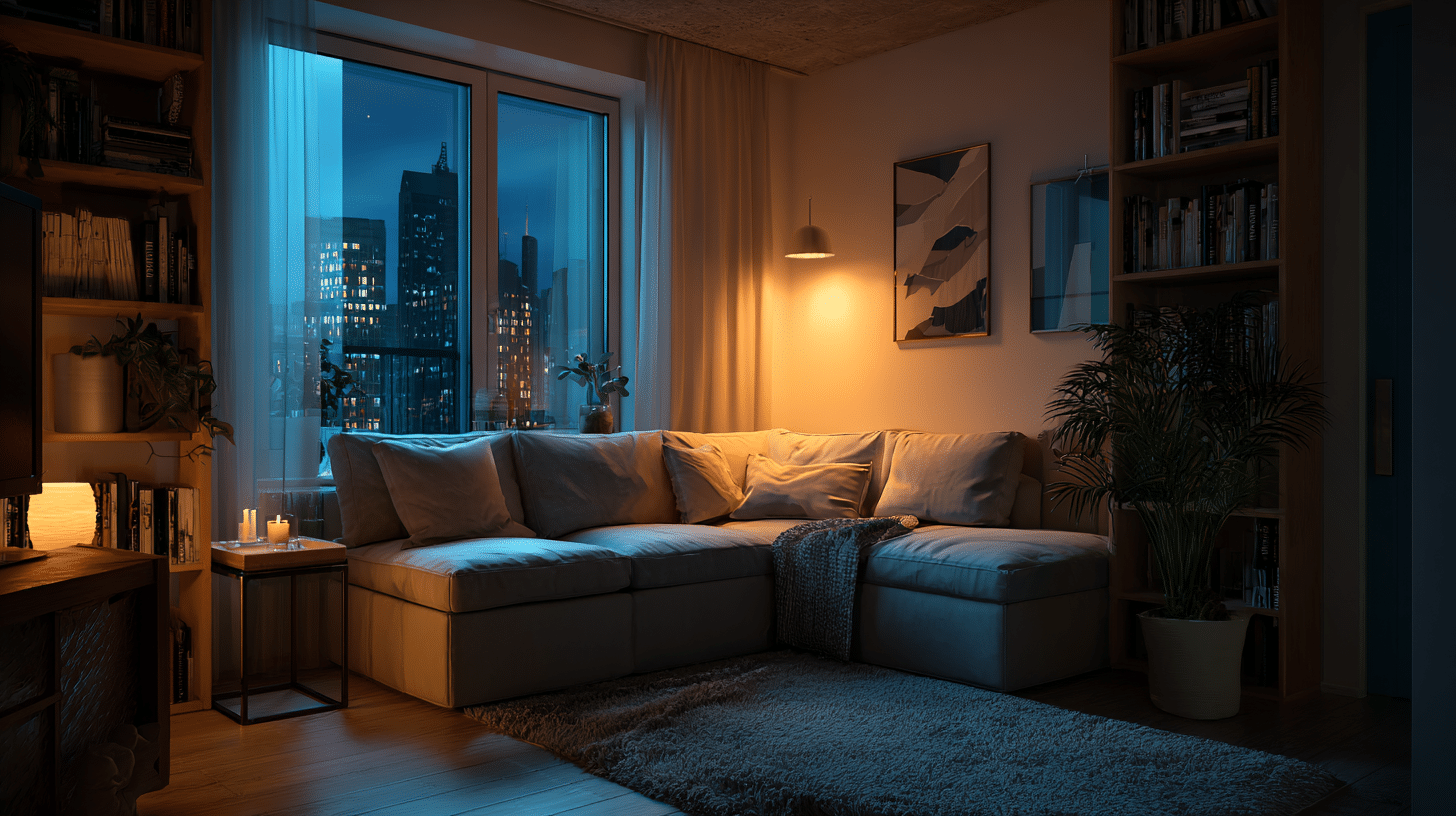
An L-shaped sectional fits snugly into a corner and provides plenty of seating without taking up the center of the room.
It creates a cozy conversation area while leaving the rest of the space open for movement.
Key elements:
- Compact L-shaped sectional in the corner
- Small side table between sections
3. Floating Sofa Layout
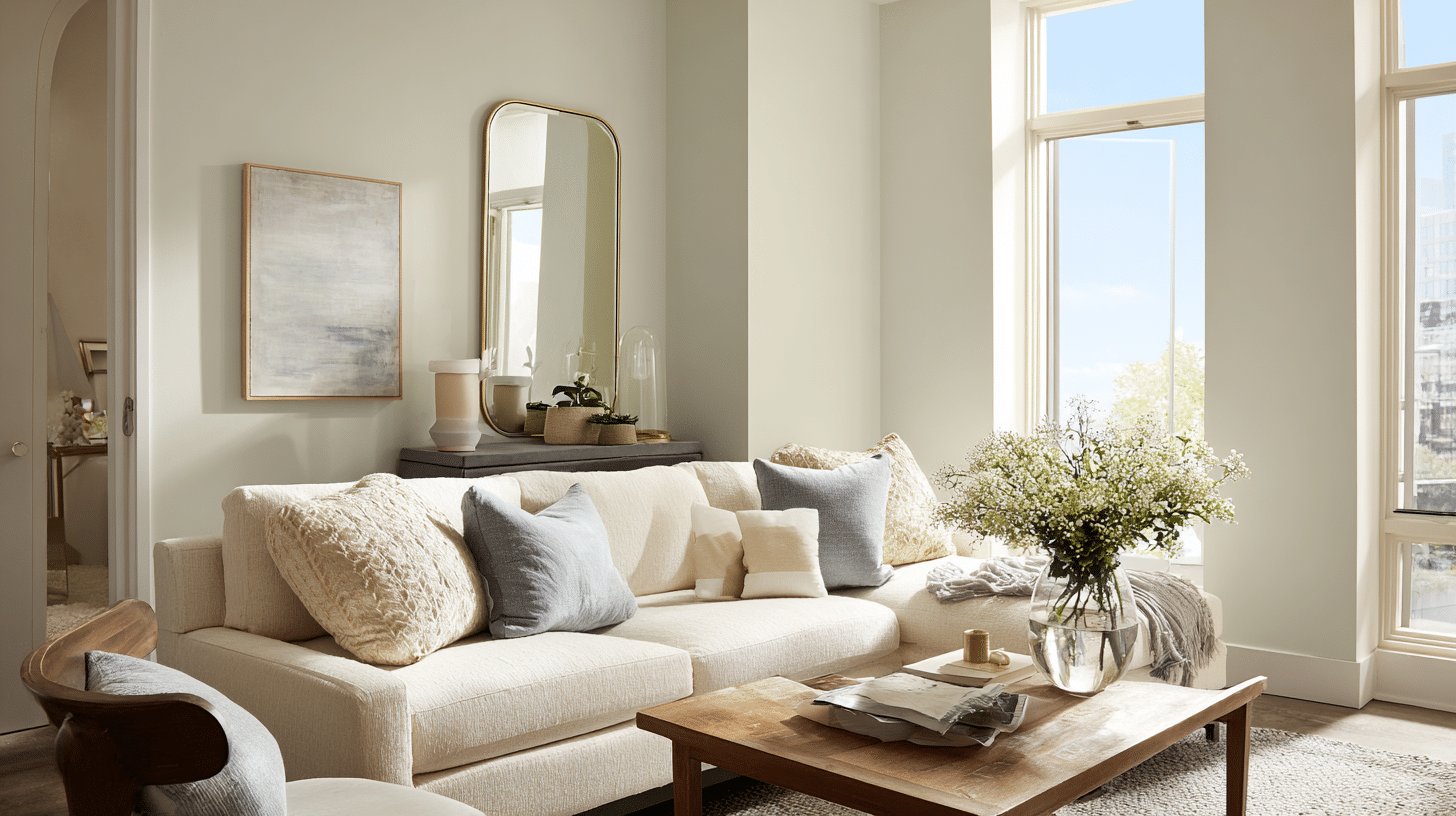
Instead of pushing your sofa against the wall, pull it a few feet into the room. This creates a more intentional seating area and makes the space feel larger, not smaller.
You can use the space behind the sofa to place a console table and place a coffee table at one arm reach from the sofa.
4. Corner Seating Layout
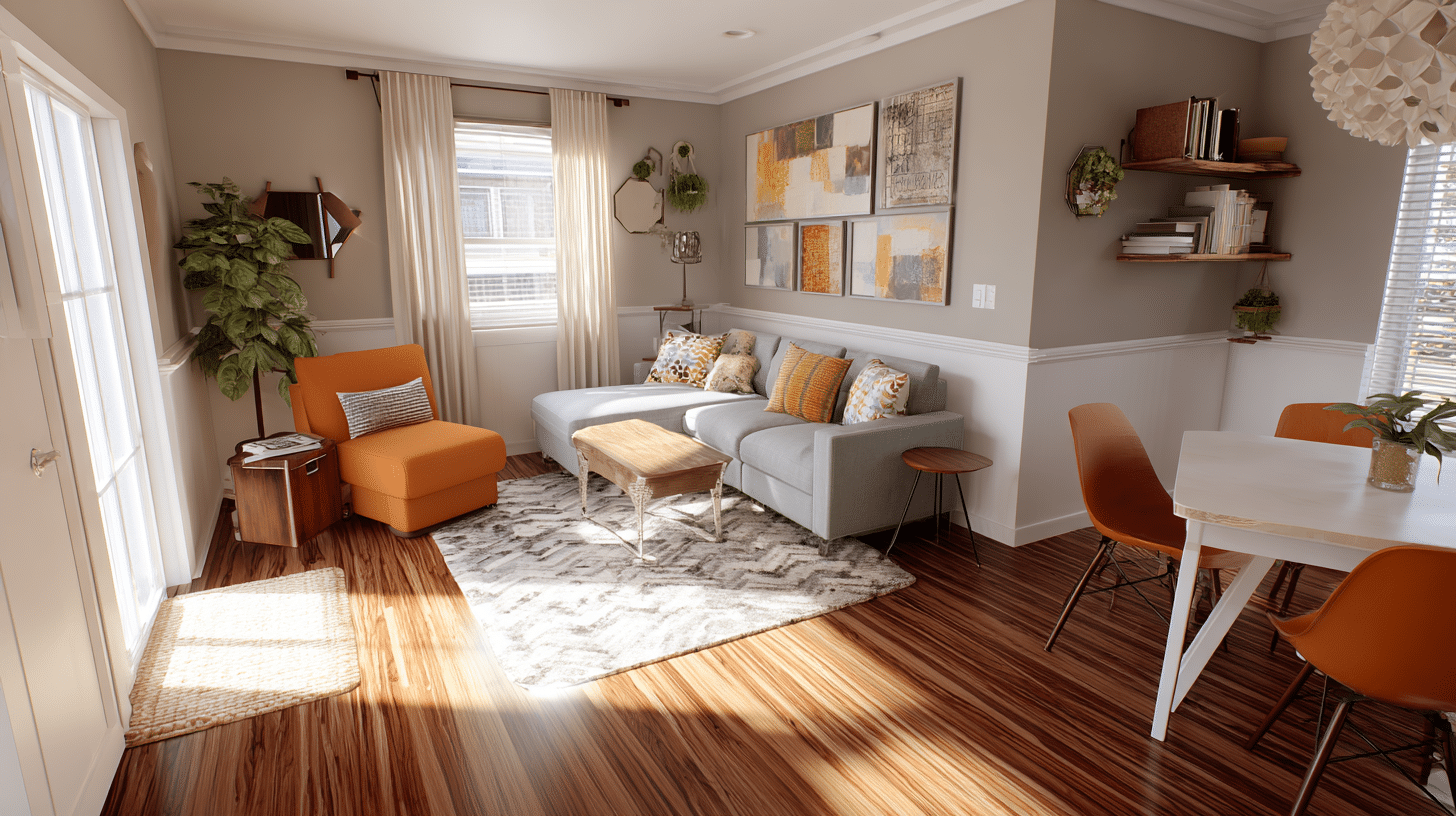
Tuck your main seating into one corner of the room to open up the rest of the space. This works great when you need to combine living and dining areas or create a home office zone in the same room.
Add one or two chairs angled nearby and small side tables for drinks and remotes.
The opposite side stays open for whatever else you need to fit in there.
5. Wall-Hugging Furniture Layout
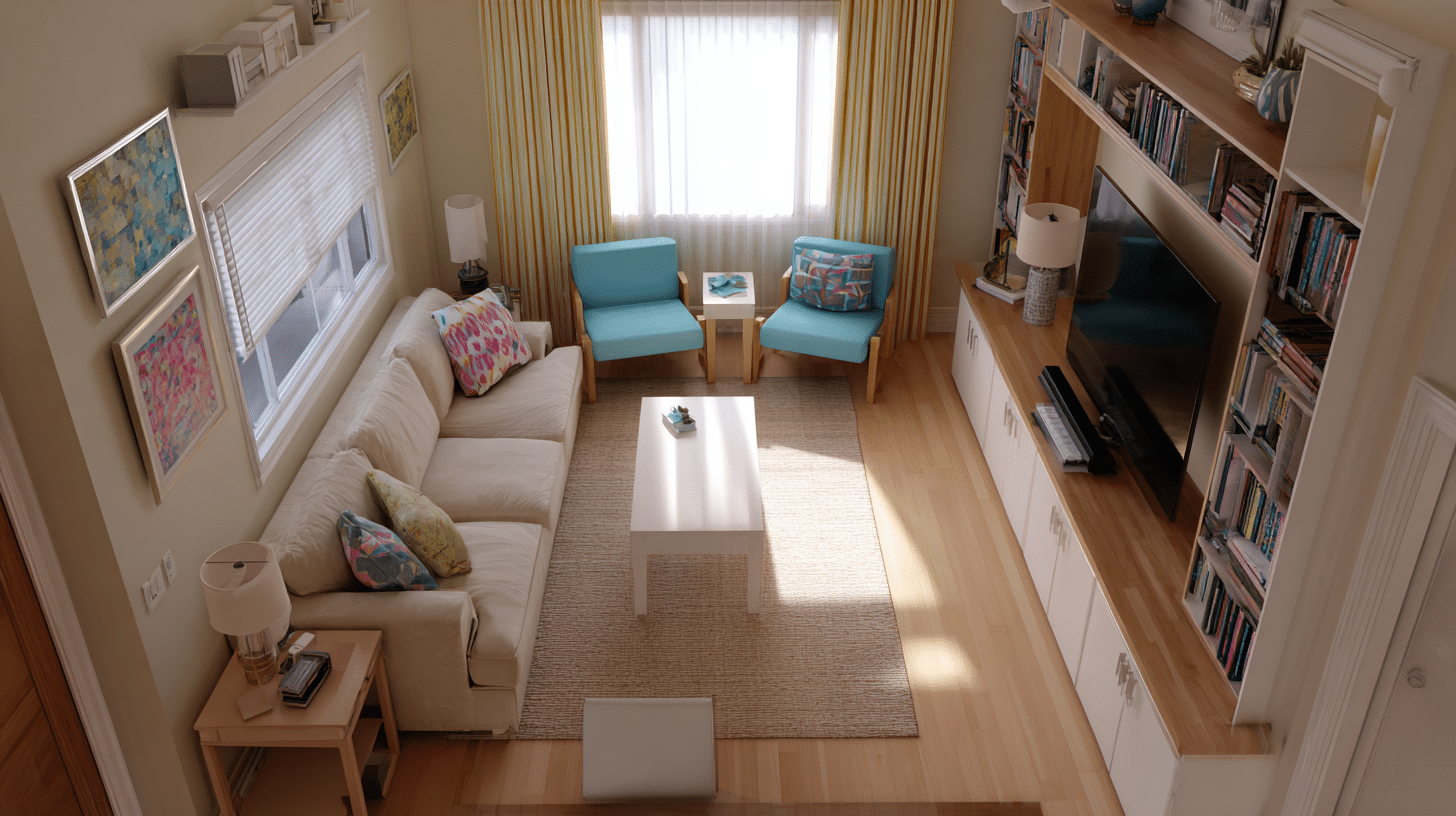
Push everything against the walls to maximize floor space in the center.
This traditional approach works well for small rooms where you need clear pathways for movement and activities.
Key elements:
- All major furniture against walls
- TV mounted or placed on wall unit
- Open center for traffic flow
6. No-Coffee-Table Layout
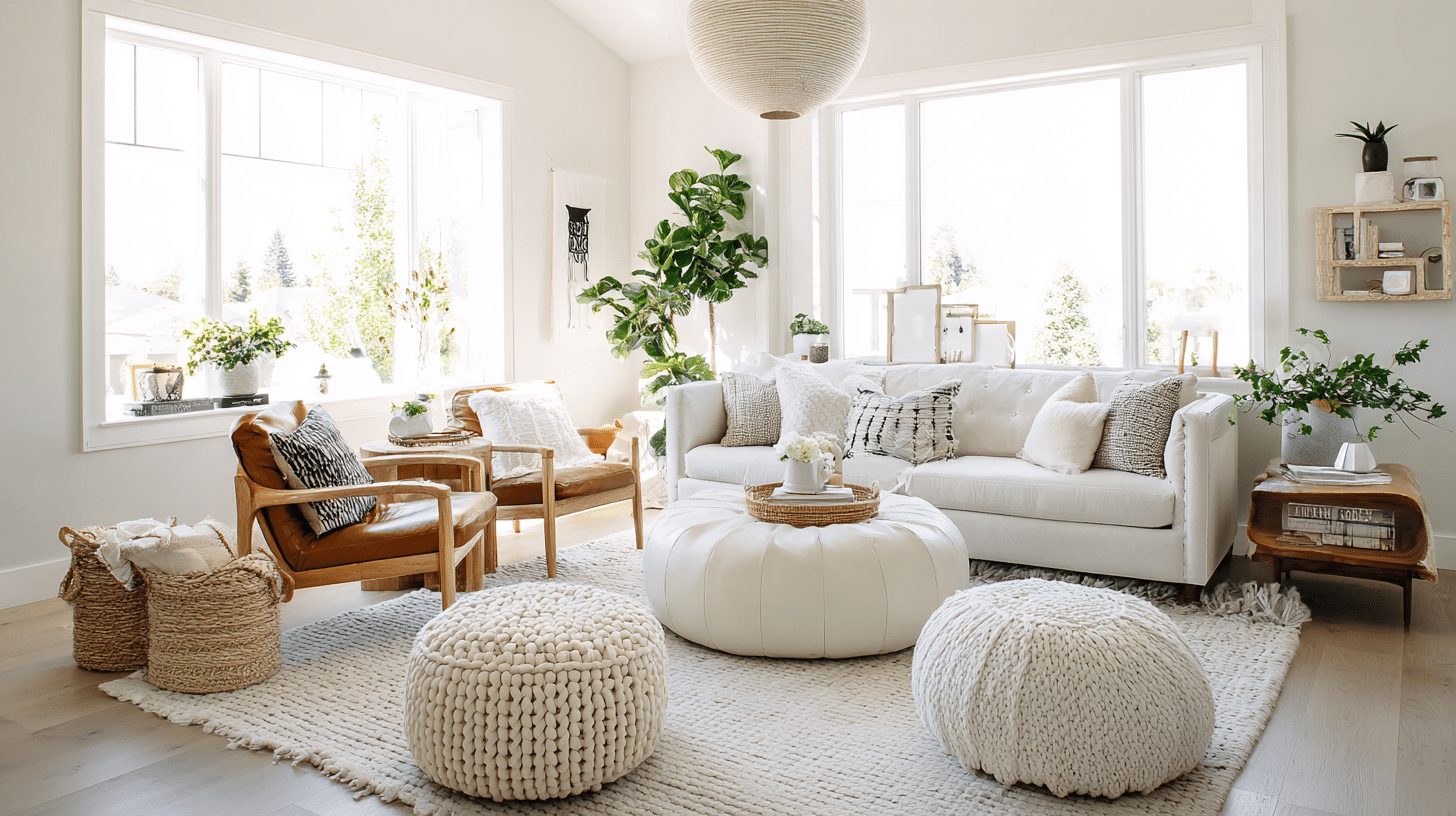
Skip the coffee table entirely and use side tables or ottomans instead.
This frees up valuable floor space and makes the room easier to move through. Place side tables next to each seating piece and add poufs or ottomans that can move around as needed.
The room feels more open and less cluttered without that big table in the middle.
Large Living Room Layout Ideas
Big rooms come with their own challenges. Too much space can feel empty and awkward if you don’t arrange things right.
The goal is to create cozy, defined areas that make the room feel inviting instead of cavernous.
7. Symmetrical Seating Layout
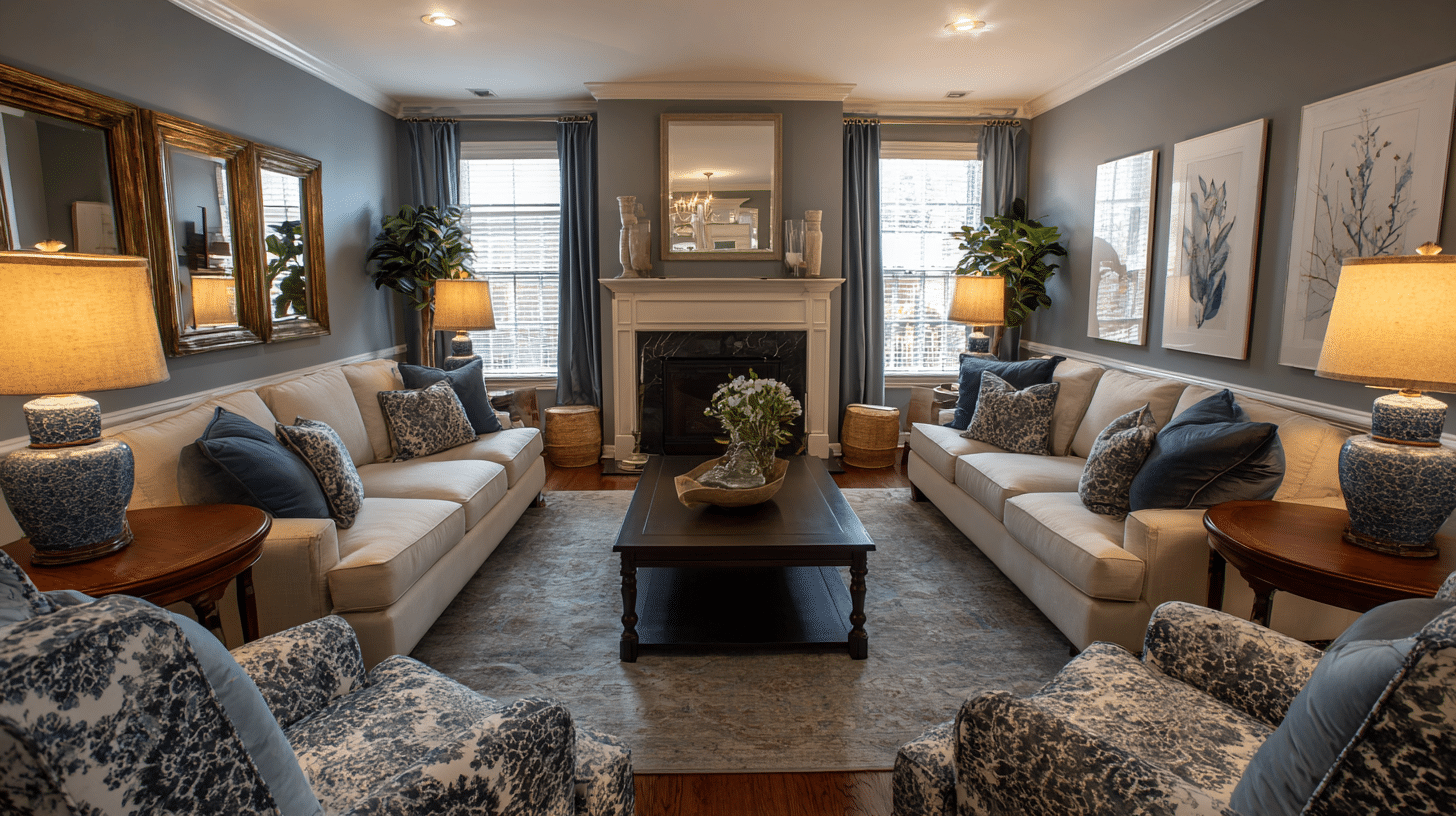
This classic arrangement creates perfect balance in your living room.Place identical sofas or chairs facing each other across a coffee table.
Add matching side tables and lamps on each end.
The symmetry brings a sense of order and formality that works great in traditional homes. It’s also easier on the eyes because everything feels intentionally placed.
Keep at least 3-4 feet between facing sofas so people can comfortably walk through and conversations don’t feel too close.
8. U-Shaped Conversation Layout
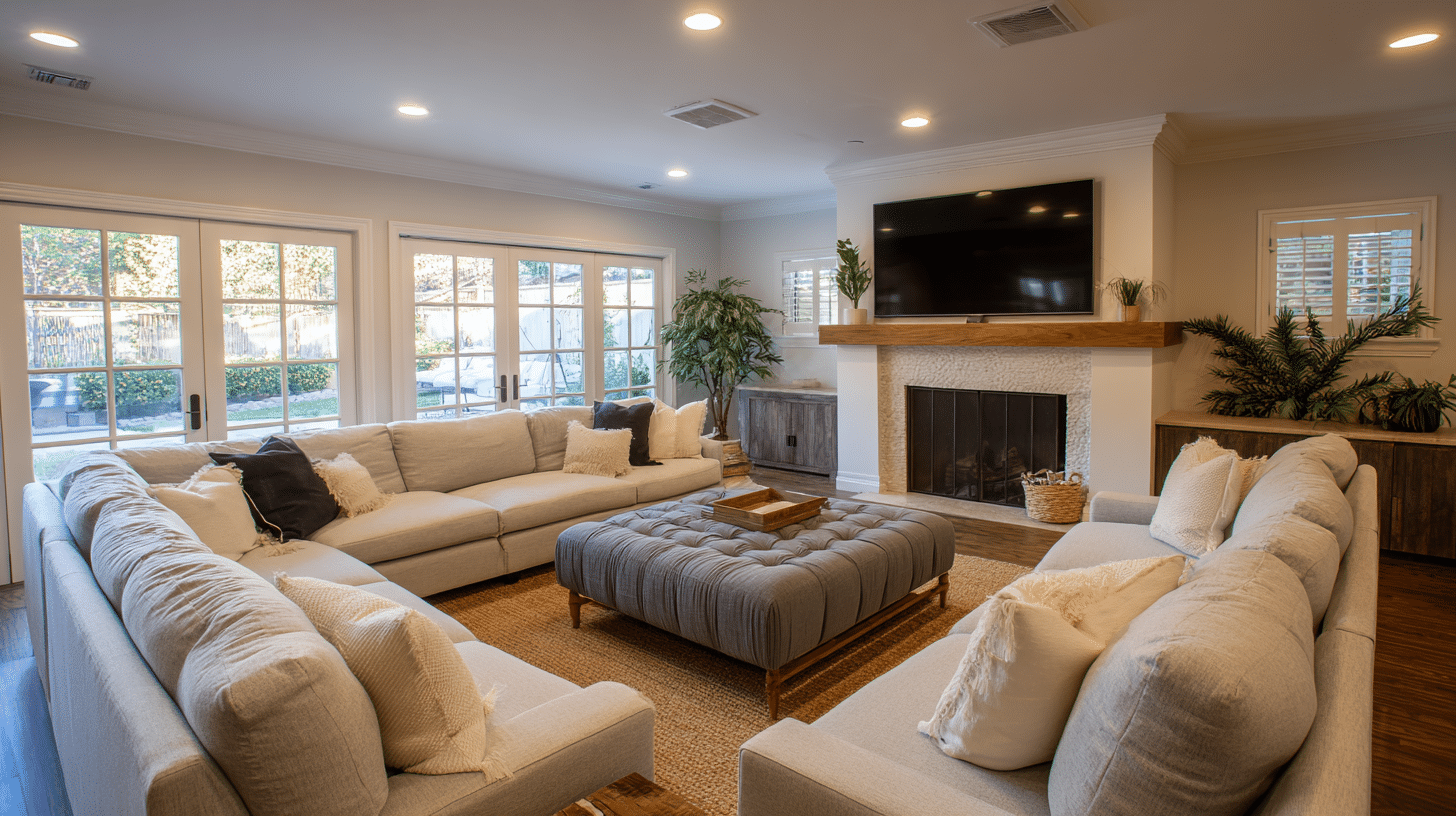
This setup is perfect for families who love to chat and spend time together. Arrange your sofa and chairs in a U-shape around a central coffee table or ottoman.
The open end of the U faces your TV or fireplace. It’s comfortable for both watching movies and hosting game nights.
Key elements:
- One sofa forming the base of the U
- Two chairs or loveseats on each side
- Large coffee table or ottoman in center
9. Zoned Living Room Layout
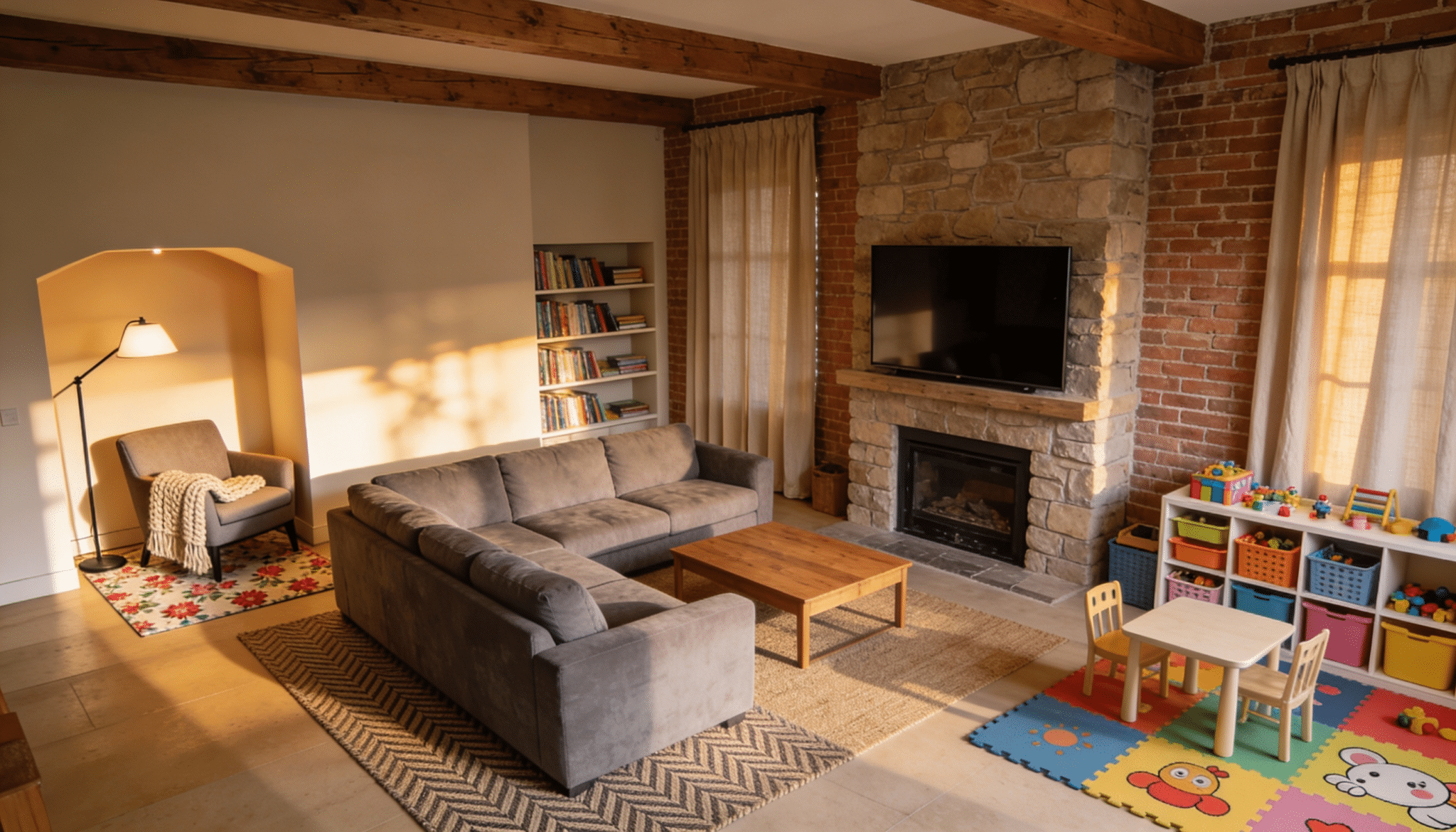
Break your large room into separate activity zones. One area for watching TV, another for reading, maybe a third for kids to play.
Use area rugs to define each zone visually. This approach makes a big room feel purposeful instead of empty.
10. Fireplace-Centered Layout
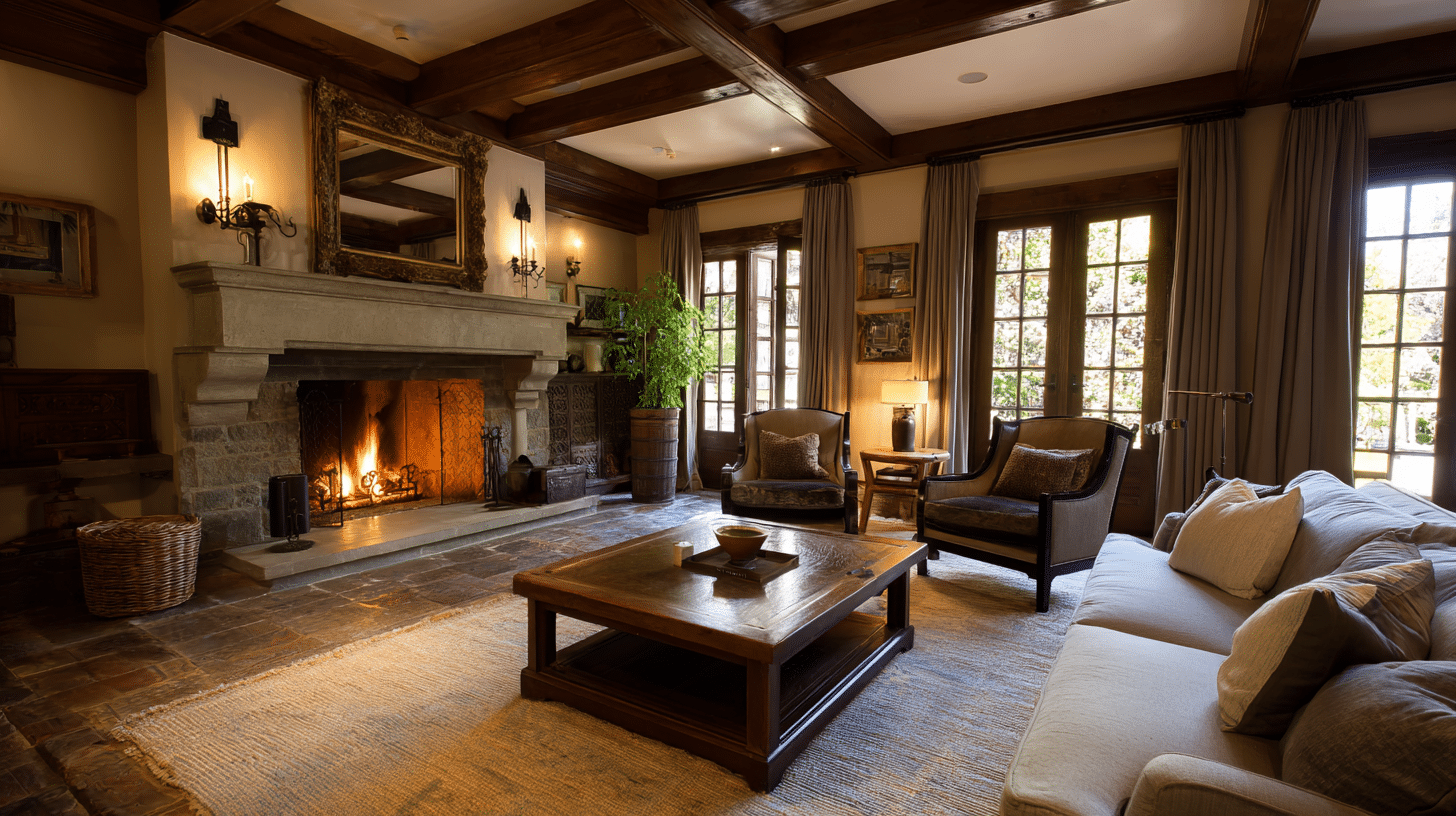
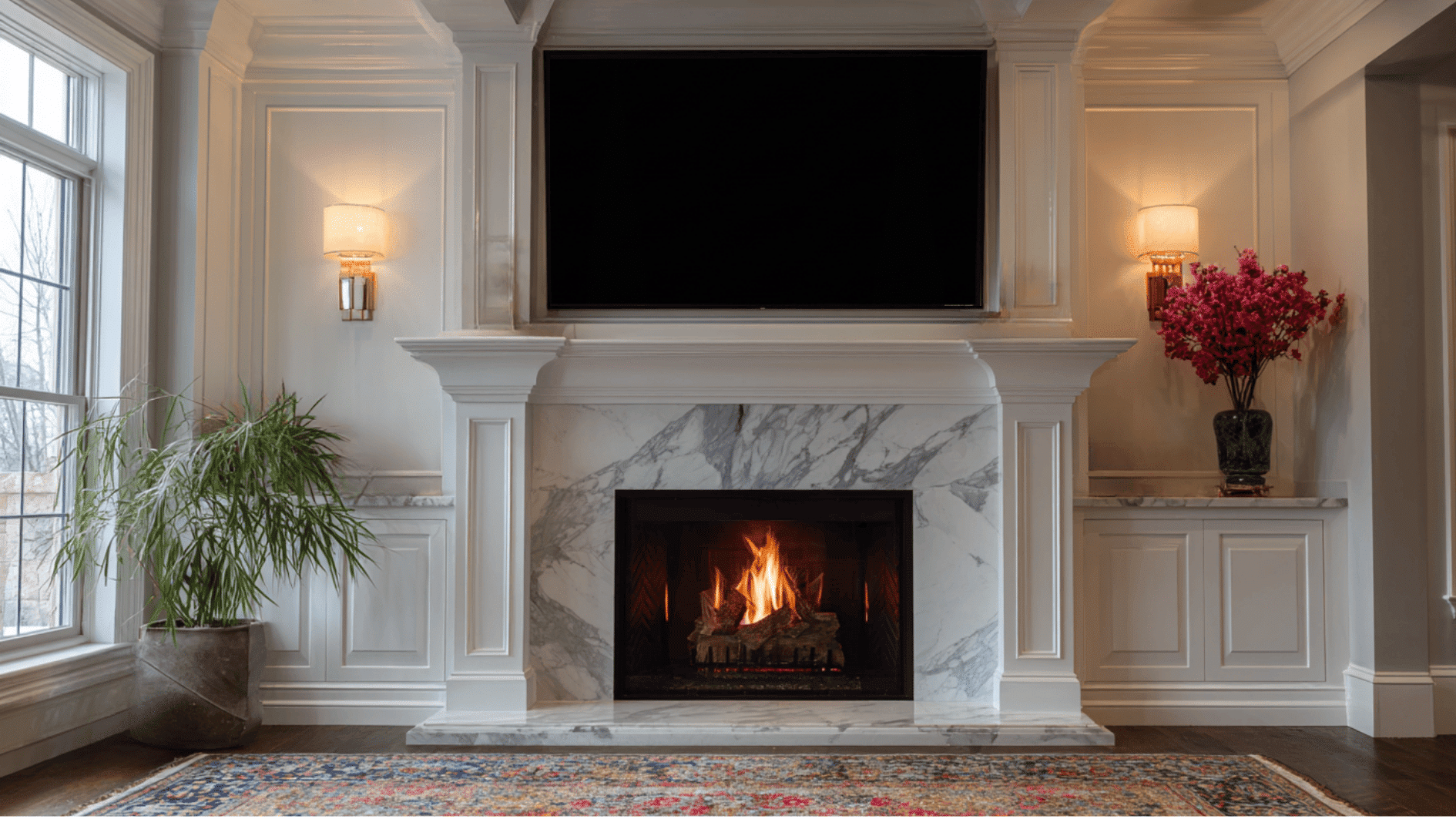
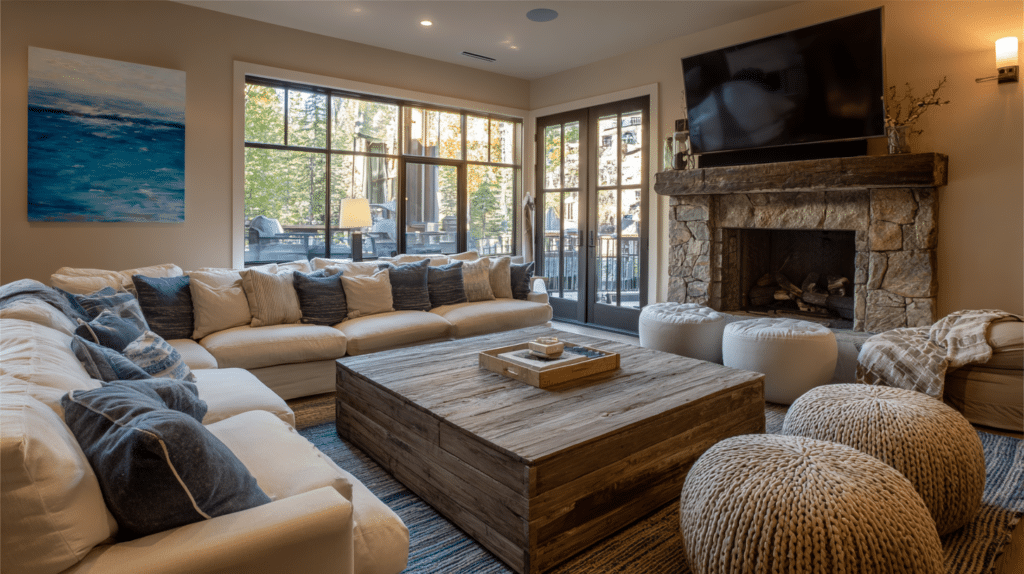
Let your fireplace be the star of the room. Arrange all your seating to face this focal point and create a warm gathering spot. Place your main sofa directly across from the fireplace with chairs angled on the sides.
Add a coffee table in the middle to complete the conversation area.
If your fireplace and TV compete for attention, choose which one matters more to your lifestyle and arrange seating accordingly.
Open-Concept Living Room Layout Ideas
Open-concept spaces are popular but tricky to arrange. Without walls to define areas, you need to use furniture and rugs to create structure and flow.
11. Furniture-as-Divider Layout
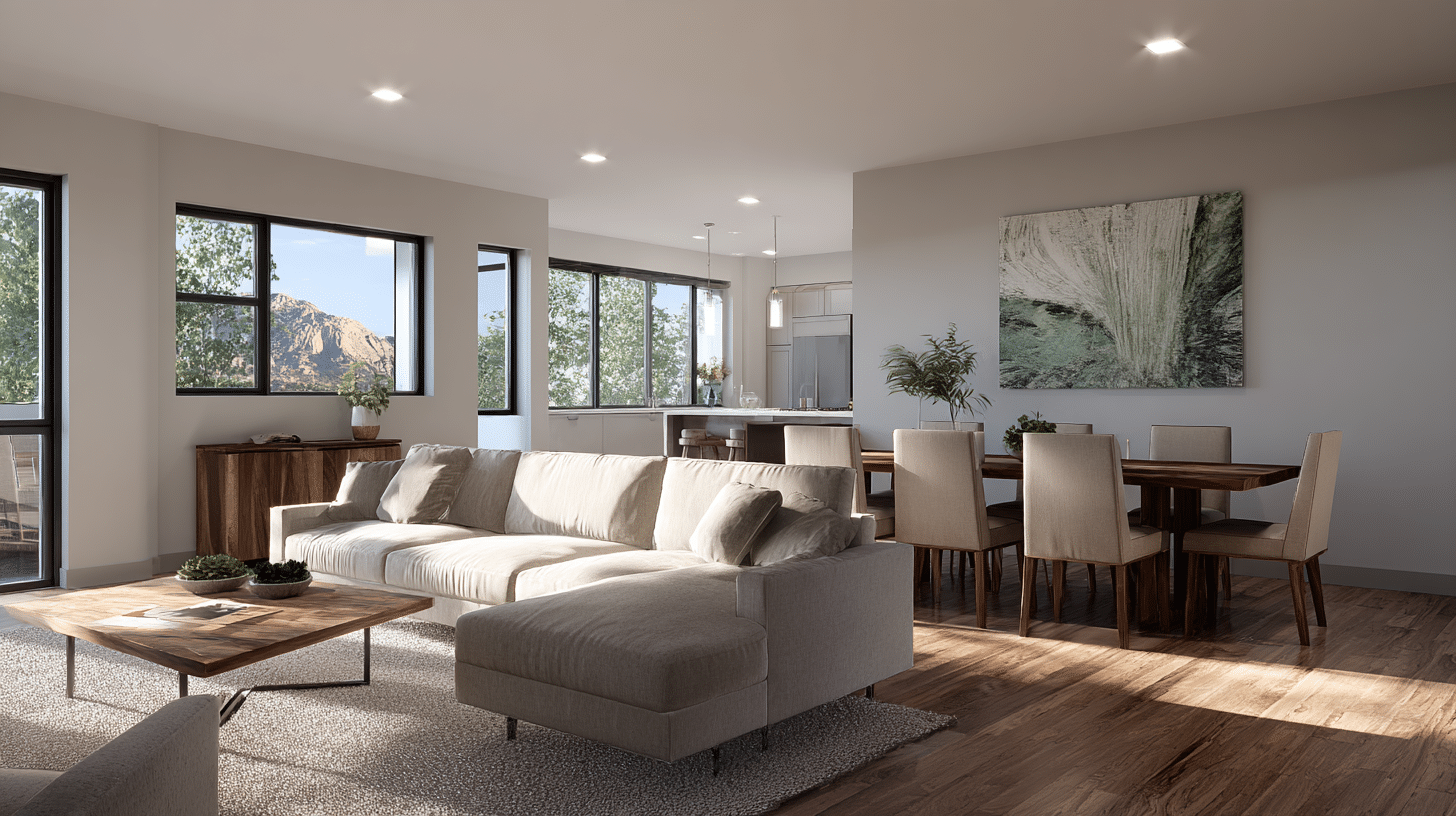
Use your sofa or a bookshelf to separate the living area from the dining or kitchen space. Position a sofa with its back to the dining area to create a visual boundary.
Add a console table behind it for extra storage and definition. This gives each zone its own identity without blocking sightlines or light.
Key elements:
- Sofa placed perpendicular to walls
- Console table or bookshelf as divider
12. TV-Zoned Open Layout
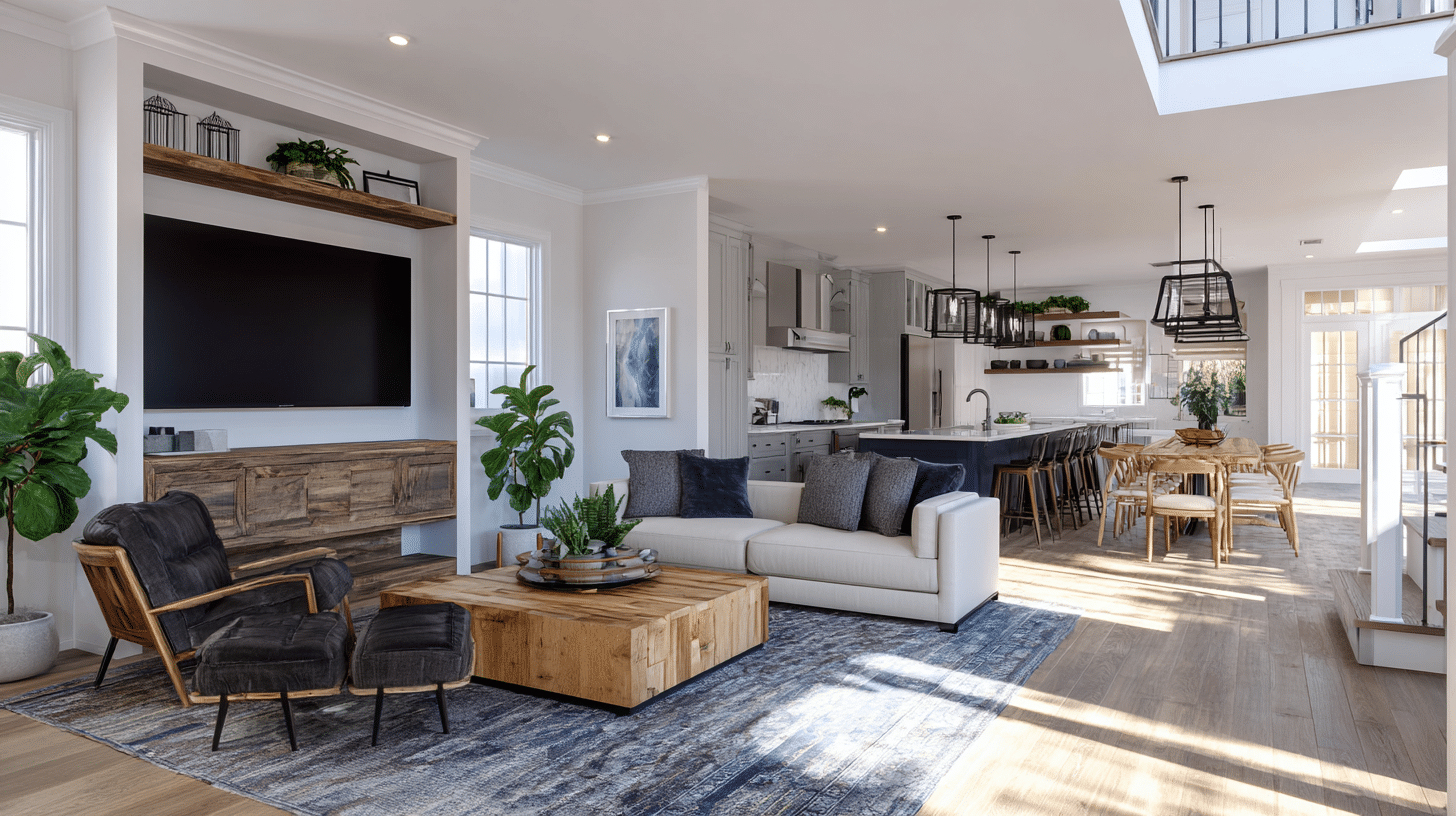
Create a dedicated TV watching zone within your open space. Arrange seating around the television while keeping pathways clear to other areas.
Use an area rug to anchor the TV zone and signal where the living area begins and ends.
This works well when you want entertainment separate from dining or work spaces.
13. Conversation-Focused Open Layout
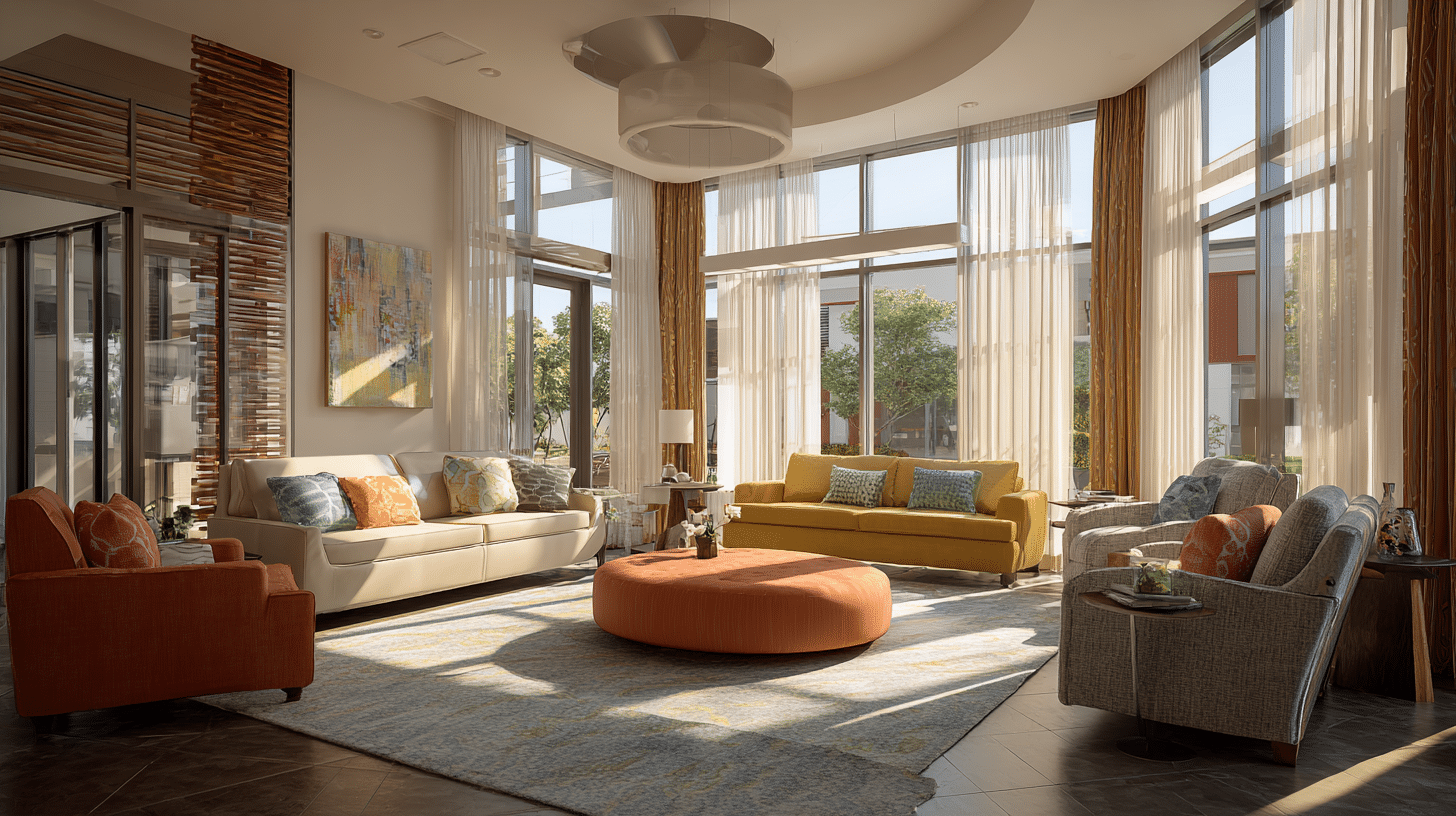
Arrange furniture to encourage face-to-face interaction rather than all seating facing one direction. Position chairs and sofas in a circular or semi-circular pattern.
This layout prioritizes talking and connecting over watching TV. It’s perfect for families who spend more time chatting than streaming shows.
14. Multi-Functional Open Layout
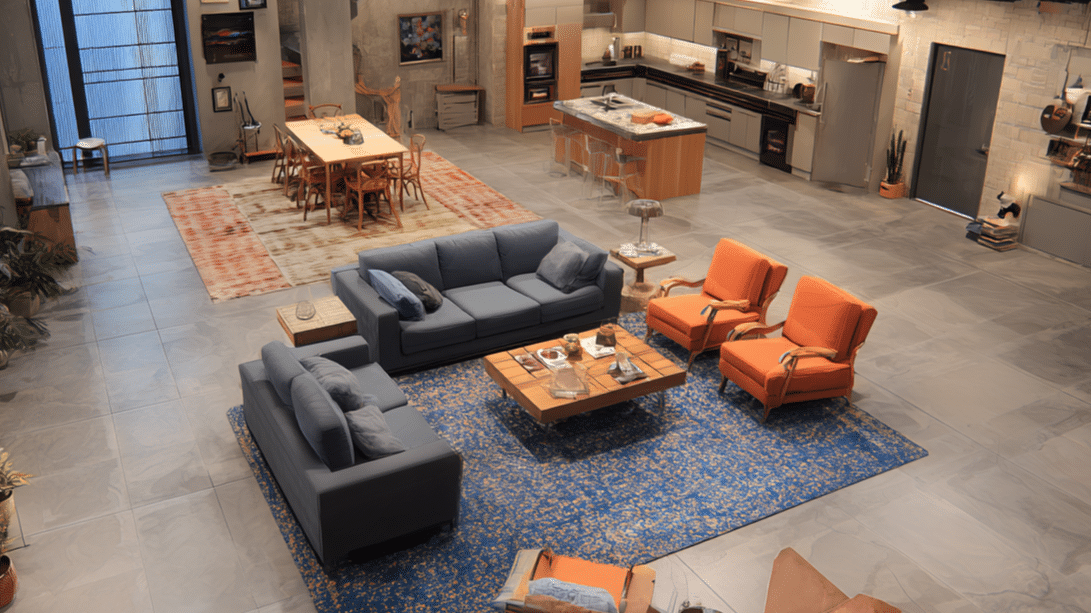
Design your space to handle multiple activities at once.
Combine living, dining, and maybe even a small workspace in one open area. Use rugs and furniture placement to create distinct zones for each function.
Make sure each area has adequate lighting and doesn’t interfere with the others.
Key elements: Flexible furniture that serves multiple purposes
15. Sectional-Based Open Layout
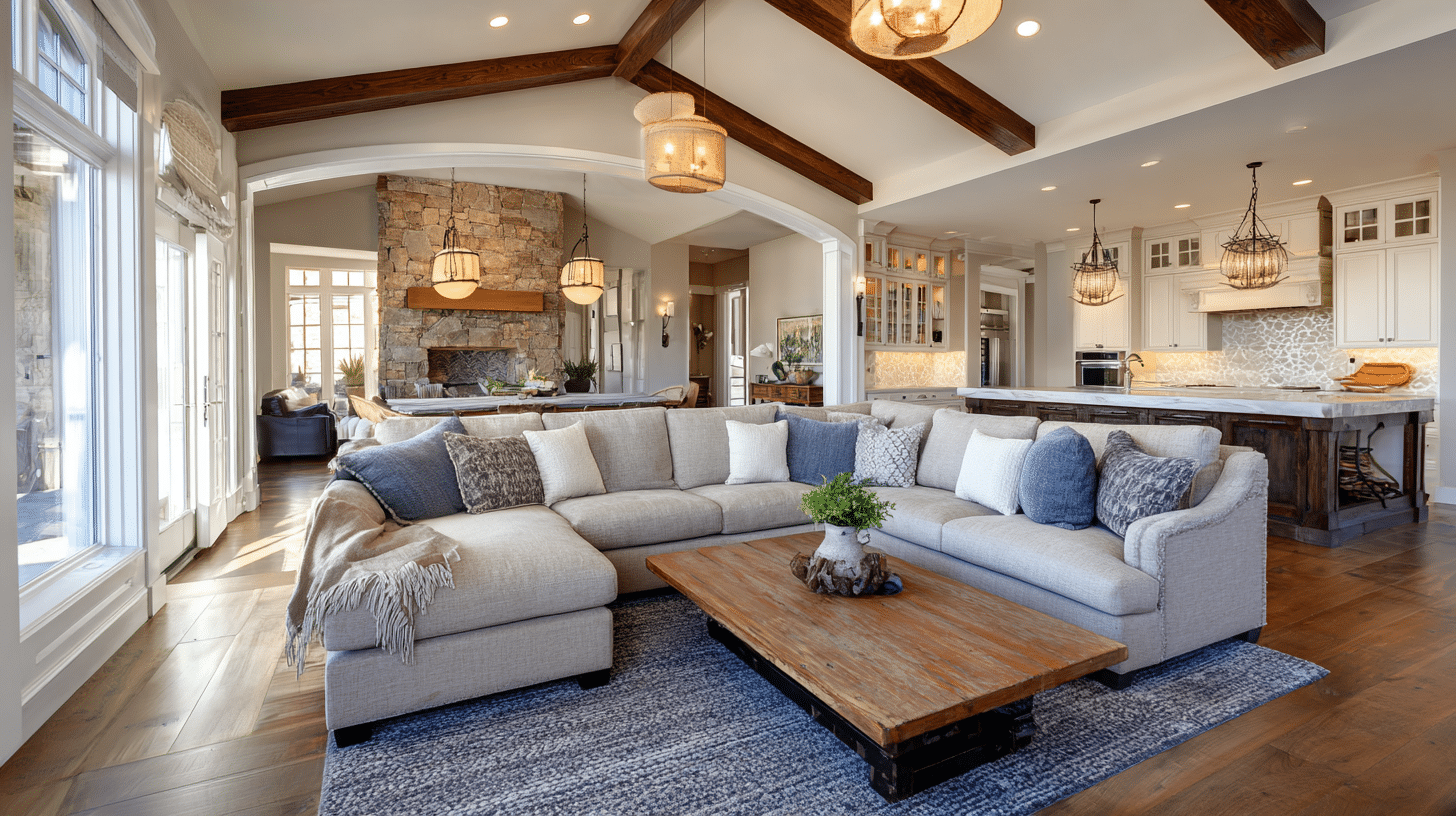
Anchor your open space with a large sectional sofa. The L-shape or U-shape naturally defines the living area without needing walls or dividers.
Position the sectional to face your main focal point and leave the back open to connect with adjacent spaces.
This creates a cozy seating area that still feels part of the larger room.
Key elements: Large sectional as the anchor, Back of sectional faces other zones, Rug underneath to define space
Use Rugs, Lighting, and Accessories to Anchor the Layout
Furniture placement is just the start. Rugs, lights, and accessories pull everything together and make your layout feel complete.
- Area rugs: Define your seating zone and visually ground the furniture. Make sure it’s large enough that at least the front legs of all pieces sit on it.
- Overhead lighting: Provides general illumination for the entire room. Use dimmer switches to adjust brightness for different moods and times of day.
- Floor lamps: Add light to dark corners and create cozy reading spots. Place them next to chairs or at the ends of sofas.
- Table lamps: Bring warmth and task lighting to side tables. Use matching pairs for symmetrical layouts or mix styles for a casual look.
- Throw pillows and blankets: Add color, texture, and comfort to seating. Keep it simple with three to five pillows per sofa.
- Wall art and mirrors: Fill empty wall space and reflect light around the room. Hang art at eye level, about 57-60 inches from the floor.
- Plants and accessories: Bring life and personality to your space. But don’t overdo it, a few well-chosen pieces work better than cluttering every surface.
Common Living Room Furniture Arrangement Mistakes to Avoid
Here are the most common errors people make and how to fix them.
Mistake: Ignoring traffic flow when placing furniture.
Fix: Map out main pathways first, then arrange furniture around them. Don’t make people squeeze past the coffee table to get through.
Mistake: Using a rug that’s too small.
Fix: Get a rug large enough for at least the front legs of all furniture to sit on it. This grounds the seating area visually.
Mistake: Cluttering the coffee table with too many items.
Fix: Keep only essentials like a tray, a few books, and maybe a plant. Leave breathing room on the surface.
Mistake: Arranging everything to face only the TV.
Fix: Create a conversation-friendly setup or designate separate zones for watching TV and socializing.
Mistake: Blocking natural light with tall furniture.
Fix: Keep windows clear or use low-profile pieces near them. Let that natural light flow into the room.
Conclusion
Arranging your living room furniture comes down to three things: measuring your space, choosing the right layout for your room size, and keeping traffic flow in mind.
Start with the basics. Measure everything. Pick a layout that matches how you actually live.
Keep walkways clear and furniture at comfortable distances.
Don’t be afraid to experiment. Move pieces around until it feels right.
Share in the comments how you will be arranging your living room.