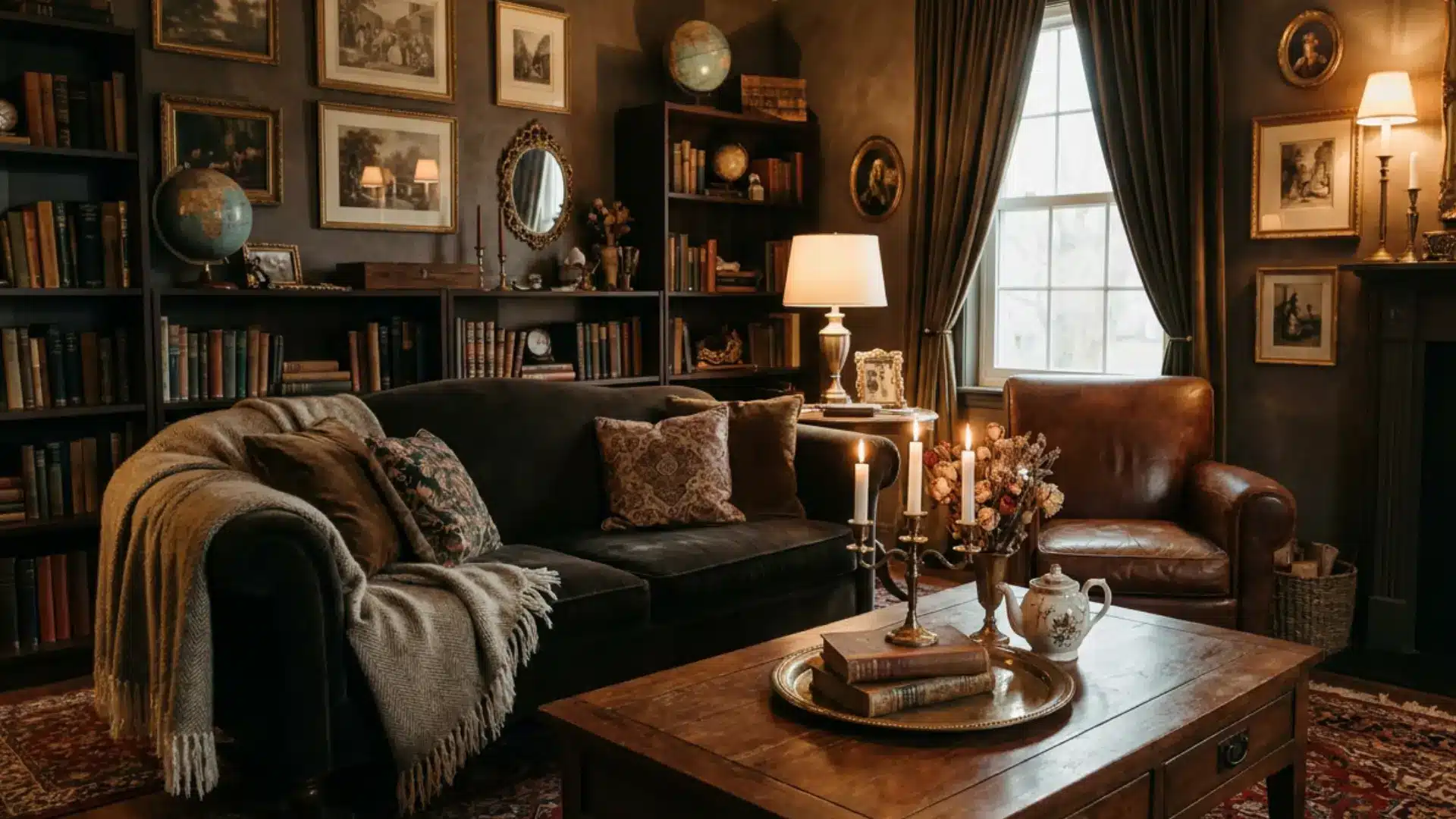
Some rooms feel like they were made for reading at midnight with a candle burning low.
Dark academia interior design is built entirely on that feeling. It pulls from old libraries, Gothic universities, and candlelit studies to create spaces that feel heavy with thought, history, and a particular kind of stillness.
Rich wood, deep colors, worn leather, and stacked books are not decorative choices here. They are the whole point.
This style does not perform. It just sits there and makes you want to be in it.
What is Dark Academia Decor?
Dark academia is rooted in the romance of old knowledge. It draws from Gothic architecture, Ivy League libraries, and European university halls built centuries ago.
The aesthetic lives in dark wood paneling, leather bound books, brass fixtures, and oil paintings.
It feels deliberately aged and rich in detail, like someone built the room knowing it would only get better with time.
People love it because it brings warmth and personality into a space.
It tells a story. And in a world of cold, minimal interiors, that contrast is exactly what makes people stop and actually feel something in a room.
Choosing the Right Color Palette
Color is where dark academia interior design starts.
Get this wrong, and the whole room feels off. Get it right, and every corner feels like a page from a novel you cannot put down.
1. Base Colors
Dark academia builds on deep, grounded neutrals.
Charcoal, near black, and rich dark brown are the anchors. These work best on walls, larger furniture pieces, and bookshelves because they set the entire mood before anything else is added.
Benjamin Moore’s Dramatic Deeps collection pulls together exactly the kind of timeless moody neutrals this aesthetic lives in.
Sherwin Williams moody collection covers deep charcoals and near blacks that read beautifully under both natural and lamp light.
2. Accent Colors
Burgundy, forest green, navy, and deep plum work beautifully in curtains, rugs, throw pillows, and smaller decor pieces.
Benjamin Moore’s Vintage Vogue is a deep, moody green that pairs perfectly with dark wood and brass. For burgundy, go deep wine to maroon for accent walls and reading nooks.
These shades do not compete with the base. They deepen it. Old library meets candlelit study.
3. Metallic and Wood Tones
Brass, antique gold, and dark stained wood are the quiet details that make a dark academia room feel expensive without trying too hard.
Lamp bases, picture frames, drawer handles, and furniture legs are the best spots.
Sherwin Williams forest wood and botanical green tones sit beautifully next to warm brass and aged wood. That ivy-covered campus energy without going too far with it.
4. Balancing Dark and Light
Layer in parchment, cream, and soft muted gray through textiles, wall art, and open shelving. Benjamin Moore warm neutrals work well as trim or ceiling colors to keep the room from feeling closed in.
A deep charcoal wall against a parchment ceiling is one of the easiest ways to keep the space feeling rich rather than heavy.
Test your palette in both natural and artificial light before committing. Dark hues shift significantly depending on light exposure. What reads as moody forest green at noon can look almost black by evening.
What I Learned from Converting My Bedroom into a Dark Academia Space
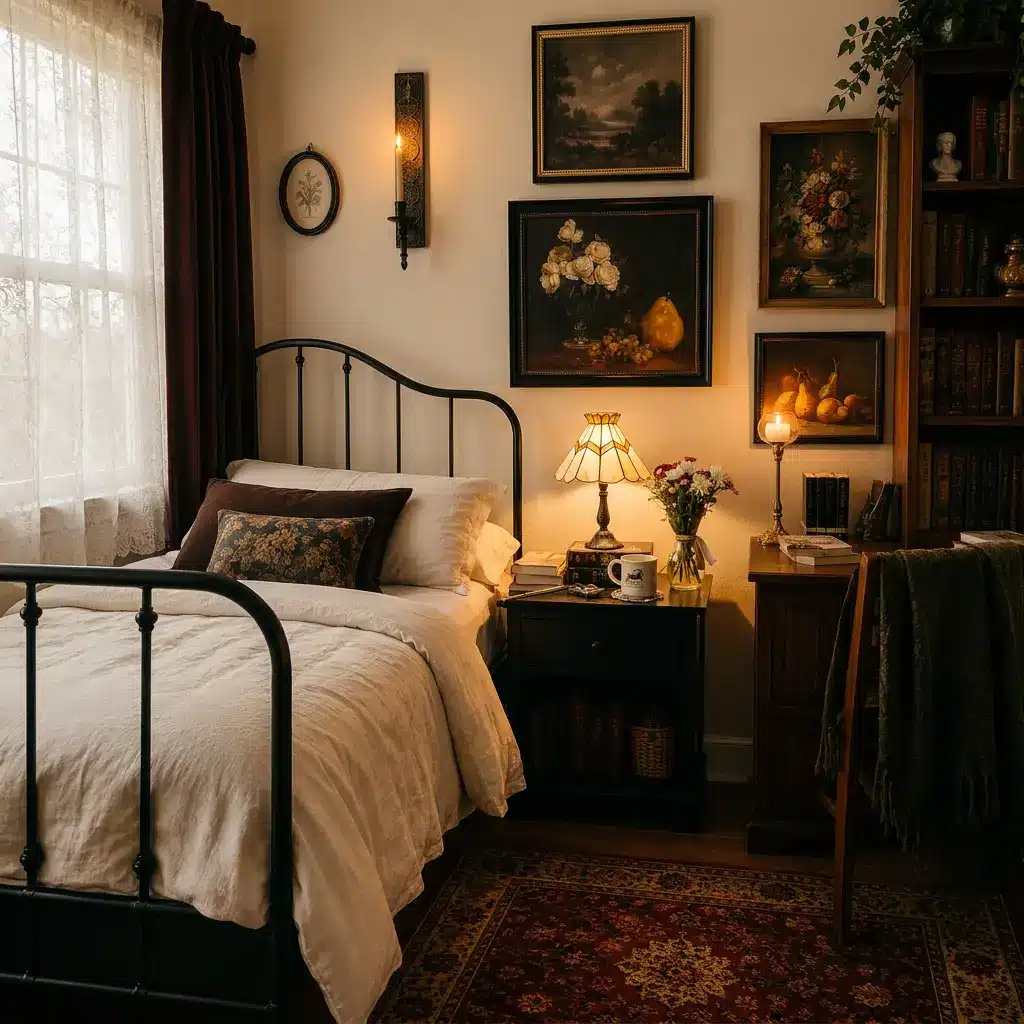
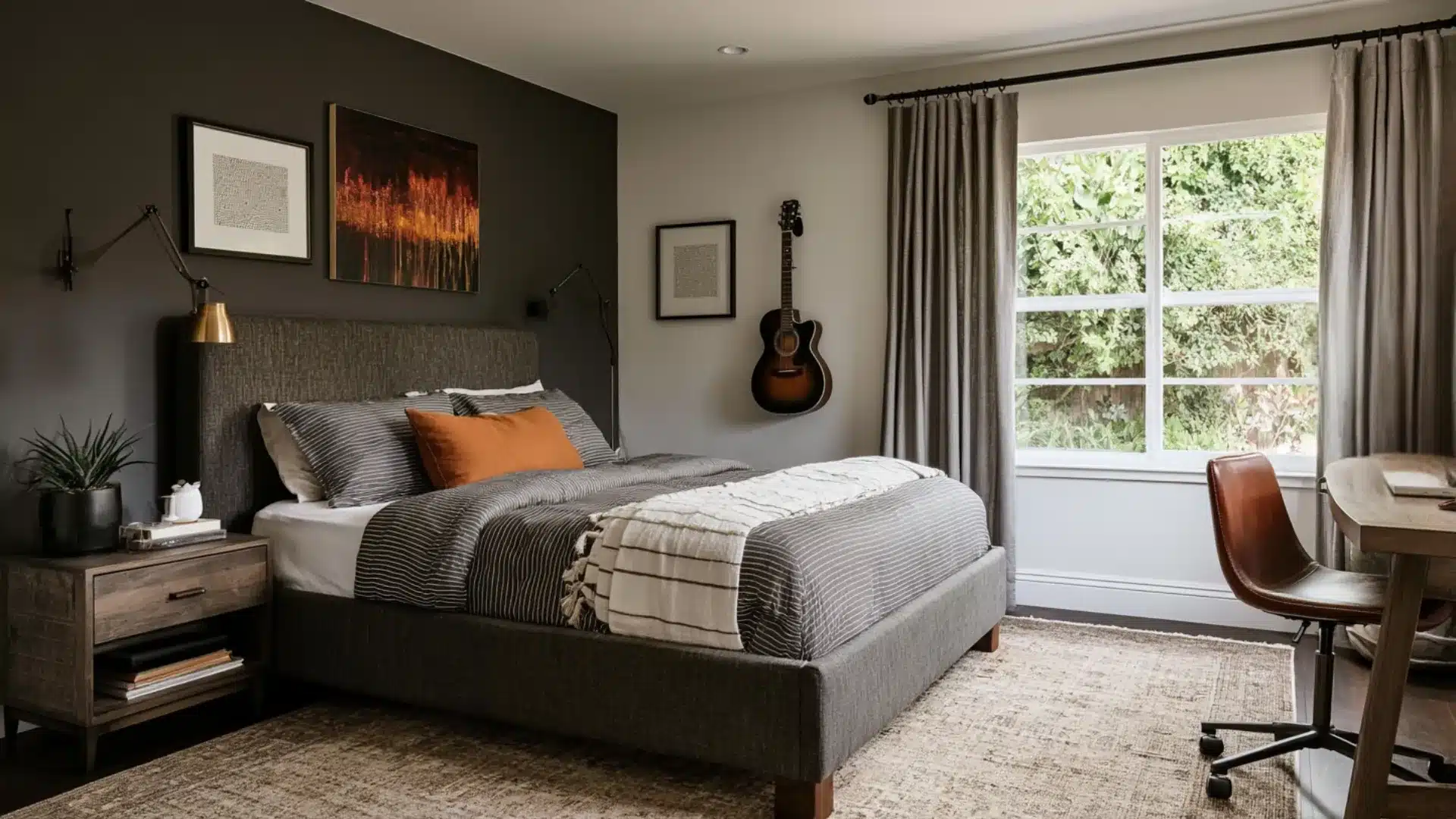
I did not plan to redecorate. One evening of dark paneled libraries and velvet reading chairs online, and I woke up the next morning convinced my room needed to change.
The vision was clear. The execution was not.
Deep charcoal paint that looked stunning on the sample card looked like a power cut on my north facing bedroom walls.
The problem was lighting, and I had completely underestimated it.
A few things I learned the hard way:
- North facing rooms need at least three warm light sources before dark walls read as intentional
- Overhead lighting kills this aesthetic entirely. Switch it off once the lamps are on
- Test paint across a full day. Noon and ten in the evening show two completely different colors
- Warm white bulbs around 2700K make dark walls feel rich. Cool white makes them feel cold
Once the lighting was sorted, everything else followed. A second hand desk, two coats of dark walnut stain, a burgundy velvet throw, and books arranged loosely on a shelf.
Nothing too neat. The room now feels exactly the way I wanted it to. It just took patience and one complete lighting overhaul to get there
Dark Academia Interior Design Ideas for Every Room
Dark academia works across every room in your home, not just the study.
With the right approach, you can bring this mood into your bedroom, kitchen, bathroom, and beyond.
1. Living Room
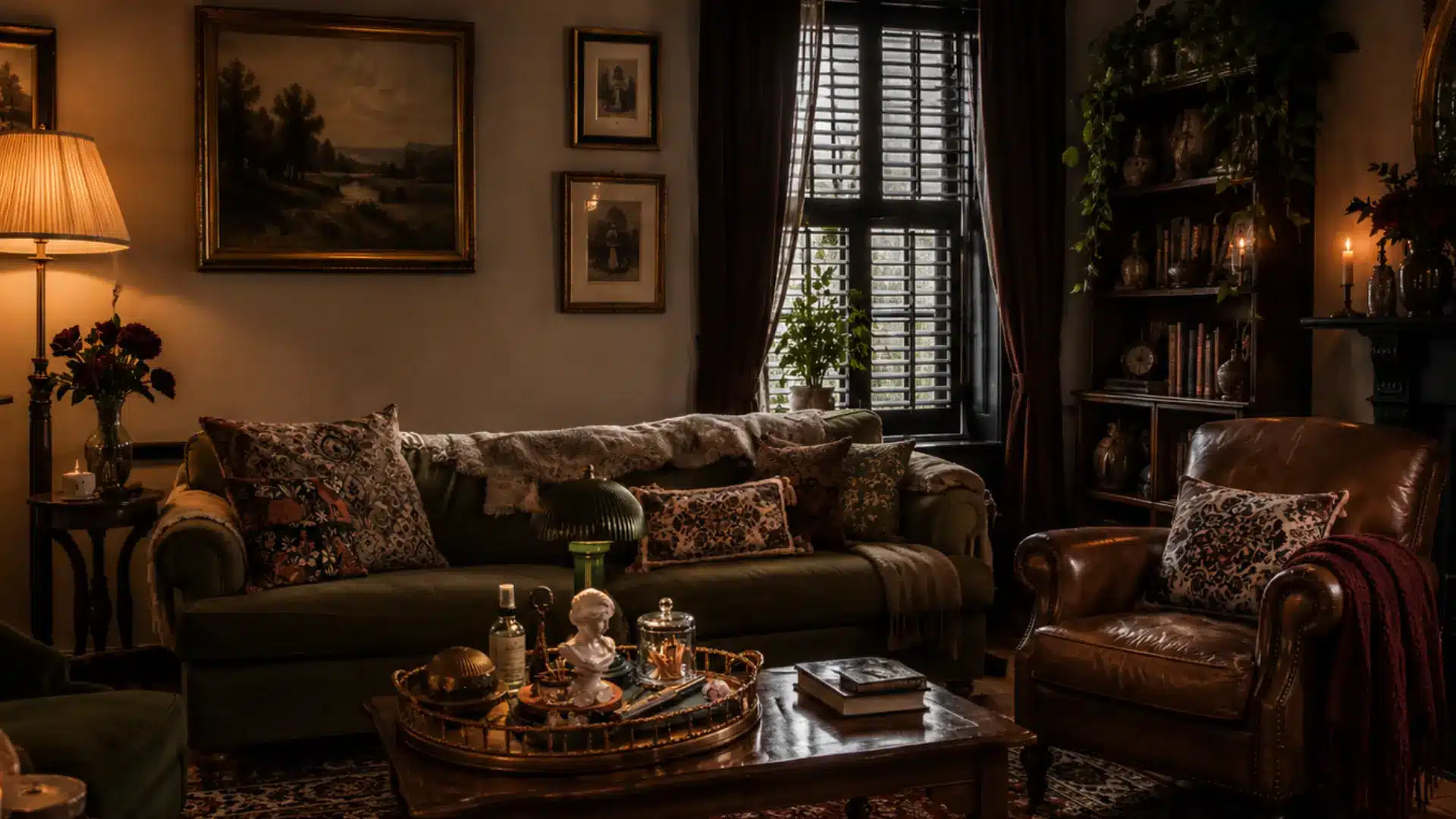
Start with a velvet sofa and an old leather armchair. Let your books look read, not arranged.
Pull a few out at angles, leave a bookmark in one, stack two horizontally. A shelf that looks curated kills the mood.
One floor lamp in the corner does more for the atmosphere than any ceiling light. Heavy curtains and large framed prints keep dark walls from feeling closed in.
A darker ceiling color pulls everything together and gives the room that cocooning quality dark academia spaces are known for.
2. Home Office
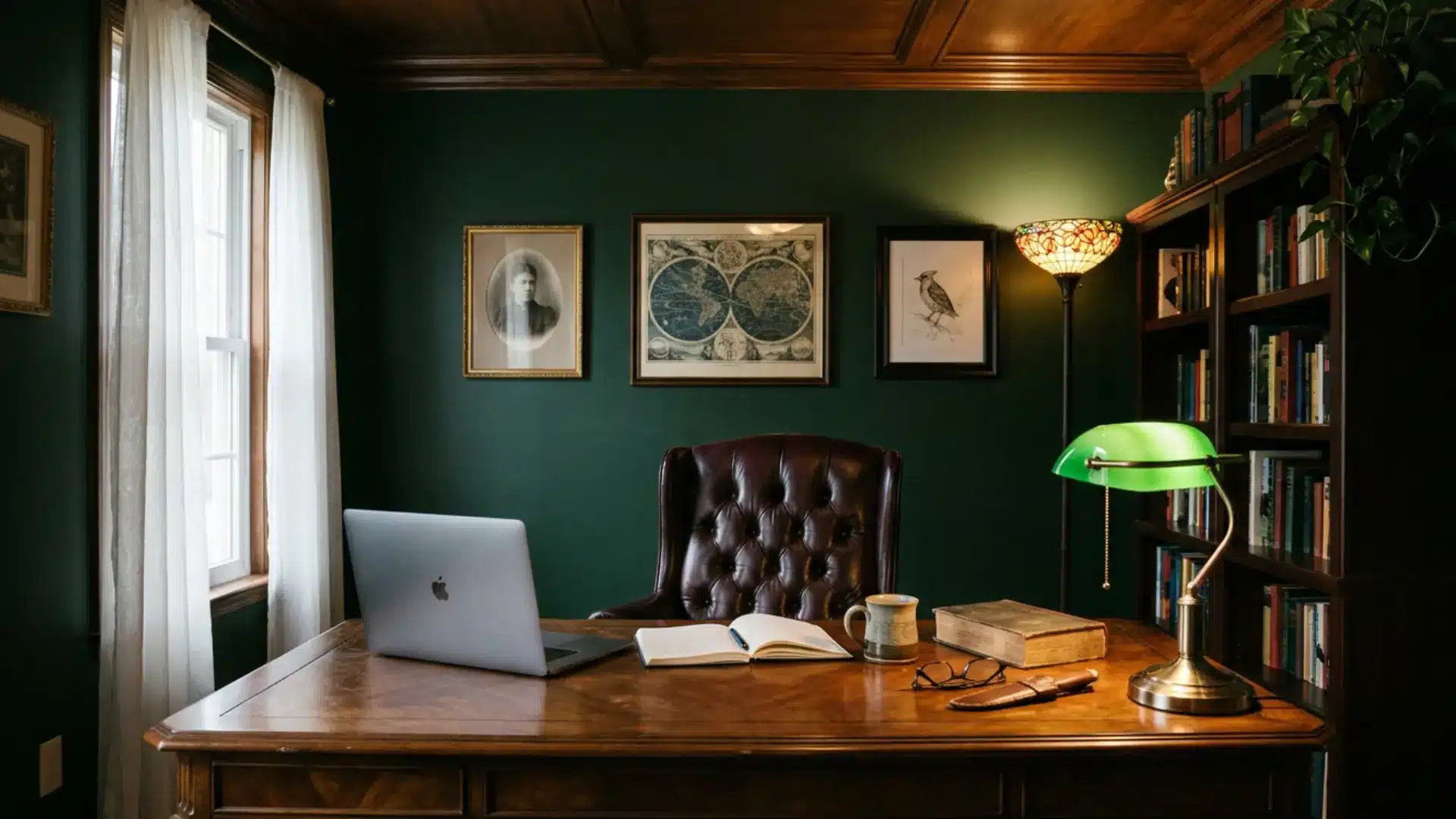
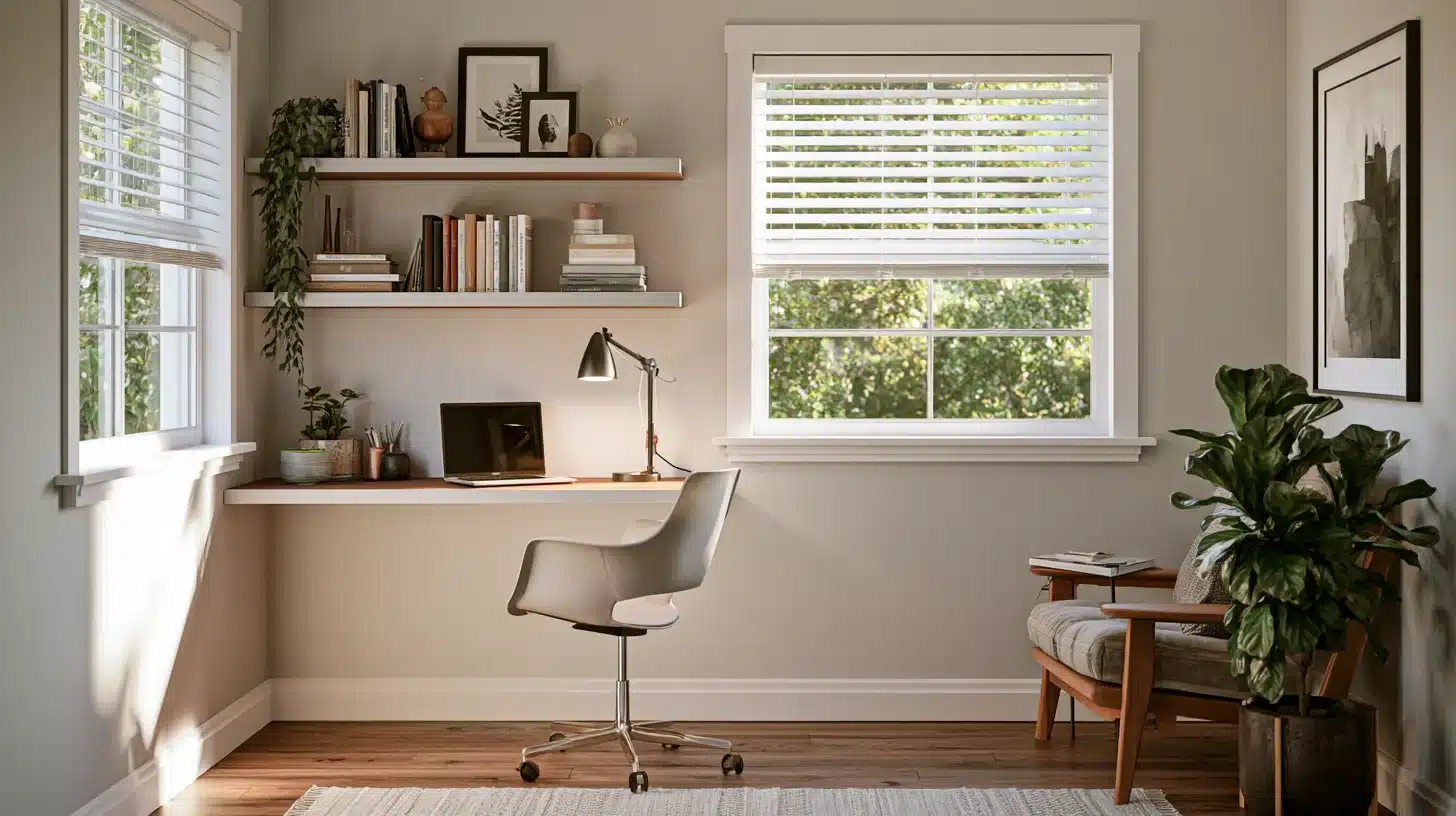
A classic wooden writing desk and a leather chair immediately anchor the space. Line your walls with books organized loosely, not perfectly, and the scholarly atmosphere follows.
Brass desk lamps, glass inkwells, and aged stationery add personality without clutter.
Do not over organize your bookshelf.
Pull a few books forward, let some face spine-out, leave gaps. A shelf that looks used is always more convincing than one that looks styled.
3. Kitchen
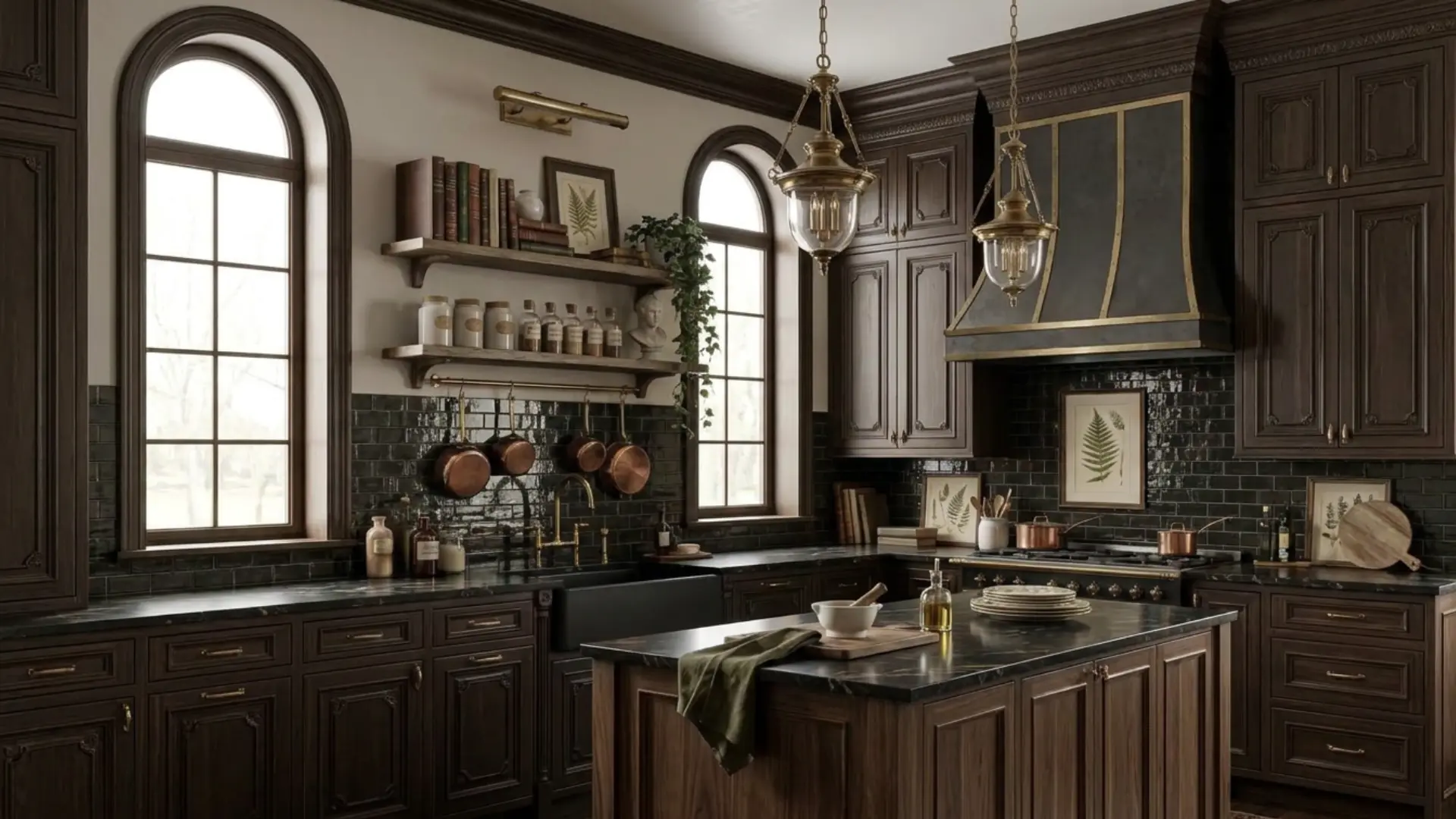
Dark wood cabinets with brass or aged bronze hardware make your kitchen feel warm and considered rather than purely functional.
Deep green against cream walls or charcoal units with terracotta tiles can sound bold, but it works beautifully in smaller kitchens too.
- Swap chrome taps for brass or bronze, they fit the look far better
- Open shelving lets your earthenware and vintage crockery do real work in the room
- A framed botanical print near the window quietly ties everything together
4. Bathroom
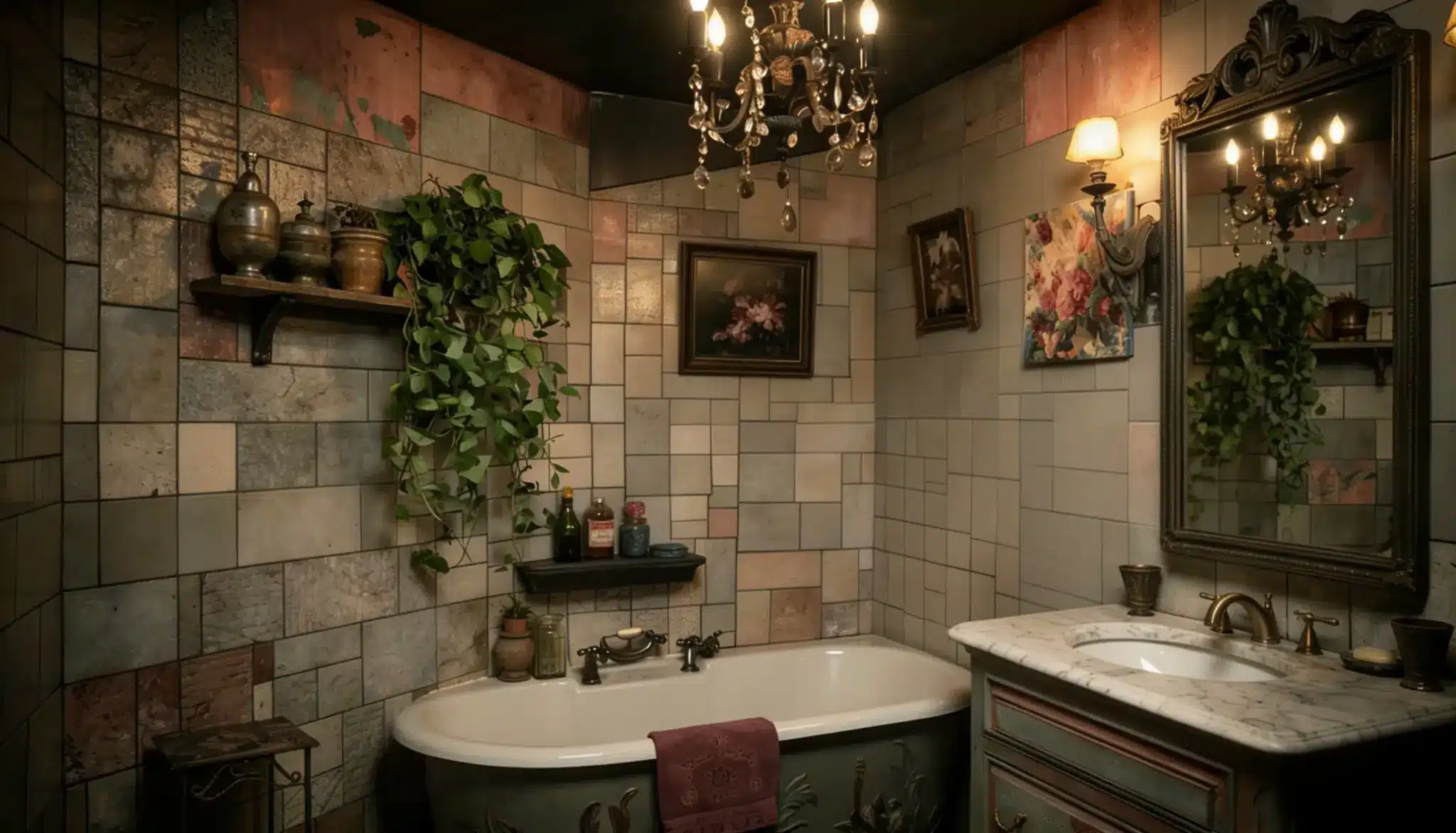
Vintage mirrors with ornate frames, aged brass fixtures, dark tiles, and marble surfaces all belong here. Dark metro tiles or deep green zellige work far better than plain white.
Dark grout on dark tiles reads intentional. Light grout reads unfinished.
Apothecary-style storage with dark glass bottles and labeled jars adds a quiet theatrical touch. A few candles on a shelf shift the entire atmosphere.
5. Dining Room
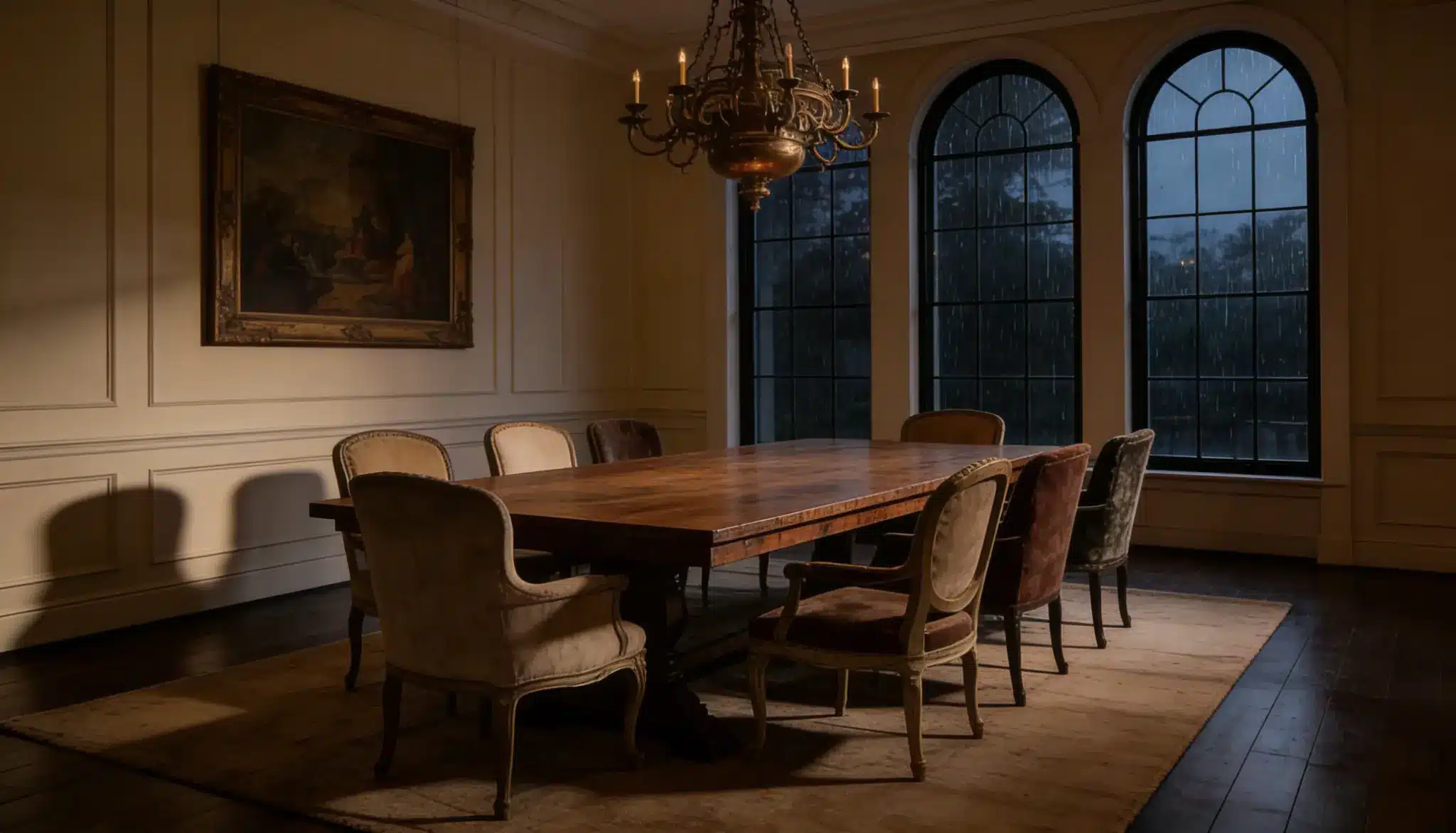
A long wooden table with mismatched classic chairs already feels right. A chandelier overhead and candles on the table handle the lighting.
Antique-style place settings and dried botanicals as a centerpiece, and the room is essentially done.
- Keep artwork large and singular on the main wall
- A velvet or linen table runner in a deep tone adds the right texture
- Mix your chair styles slightly, it looks collected rather than bought as a set
Swap any modern pendant for an aged brass or iron chandelier, and everything falls into place.
Furniture That Defines Dark Academia Decor
Dark academia is not about expensive antiques. It is about pieces that feel like they have a history, even if they do not.
A solid wooden writing desk anchors the whole room and sets the tone before anything else is added. The pieces that define the style are specific.
A tufted leather armchair, open bookshelves in dark stained wood, a canopy bed frame, and a worn chesterfield sofa all belong here.
Secondhand shops and estate sales are genuinely the best places to find them. Avoid flat pack furniture with clean modern lines.
It fights the look every time. In smaller rooms, one lighter surface nearby, a cream wall, a light rug, or open shelving with some breathing room stops the furniture from closing the space in entirely.
Fabrics, Textures, and Lighting
Fabric and lighting are the two details that make or break this aesthetic. Velvet, tweed, wool, and linen absorb light in a way synthetic materials cannot.
Layer them across sofas, beds, and curtains.
Then switch off the overhead light entirely and replace it with warm layered sources instead.
- Velvet in deep jewel tones for cushions, curtains, and reading chairs
- Wool blankets layered over leather or wooden furniture
- Warm amber floor lamps in corners for pooled light
- Brass wall sconces and candle holders for the finishing layer
Aim for bulbs around 2700K. Anything cooler and dark walls go flat.
Conclusion
Dark academia interior design is not about recreating a museum or a film set.
It is about building a space that feels like it belongs to someone who reads, thinks, and notices things.
The style rewards patience more than budget. A room pulled together slowly, with pieces found over time, will always feel more convincing than one assembled in a weekend.
Sort your lighting first. Everything else lives or falls on how well that is handled. Start with one corner. Get that right. The rest follows.
Frequently Asked Questions
1. What is Dark Academia Design?
Dark academia design is a style inspired by old libraries, Gothic architecture, and European universities, built around dark colors, aged furniture, warm lighting, and a love of books and knowledge.
2. What Colors Work Best for Dark Academia Decors?
Deep browns, charcoal, forest green, burgundy, and black form the core palette, with warm amber and dusty gold working well as accent colors throughout the space.
3. Can Dark Academia Design Work in Small Spaces?
Yes, the minimalist version of the style uses the same dark palette and warm lighting with fewer objects and cleaner lines, making it well suited to apartments and compact rooms.