Choosing window coverings is harder than it looks.
Do you go with curtains or blinds? And what even are drapes? Literally, so confusing. Most people (my family and me) stand in the store, just staring. All options have their pros and cons.
So which one actually fits your home and lifestyle?
This post walks you through curtains, blinds, and drapes. By the end, you will know exactly what works best for your space.
What are Curtains?

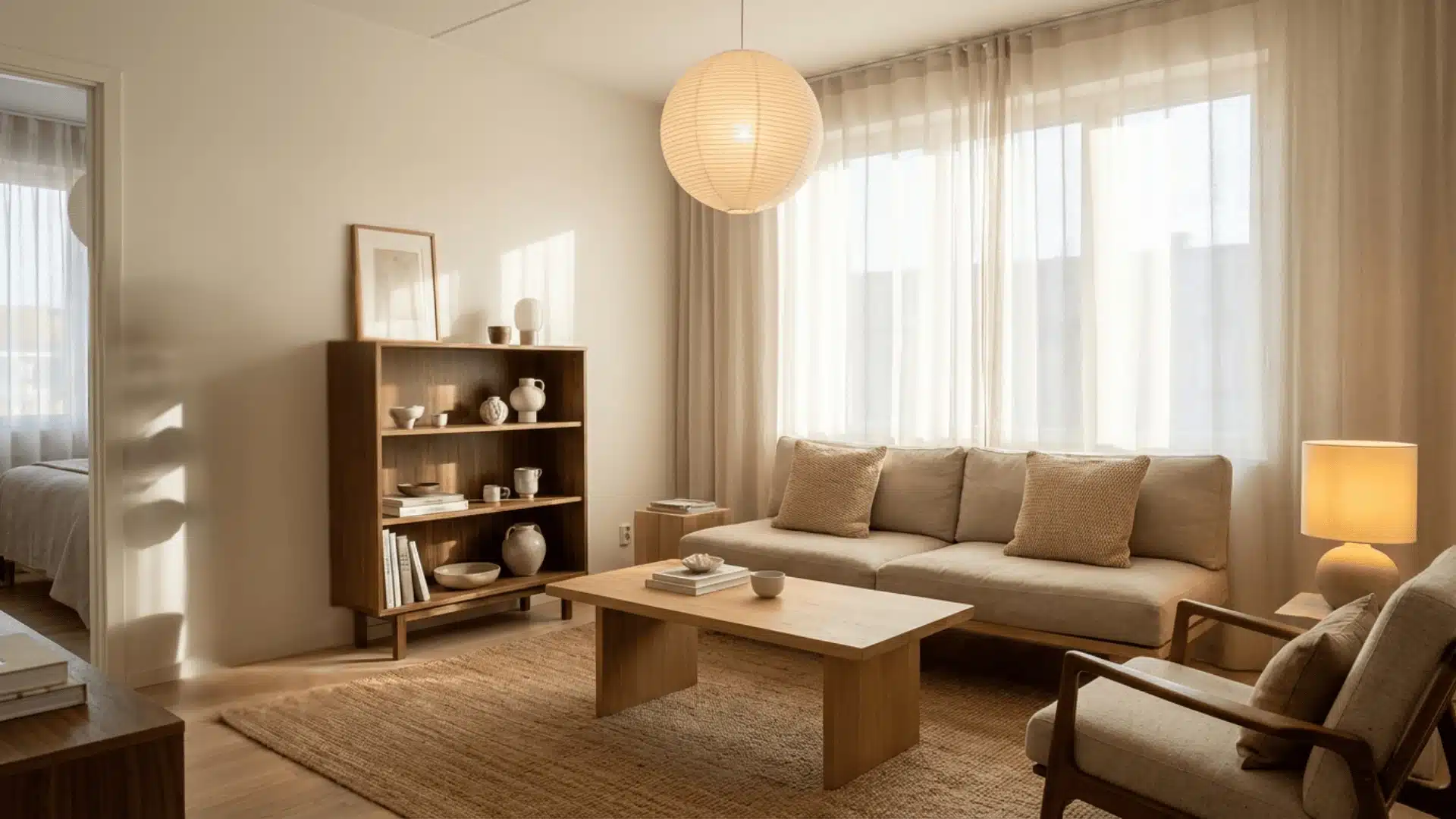
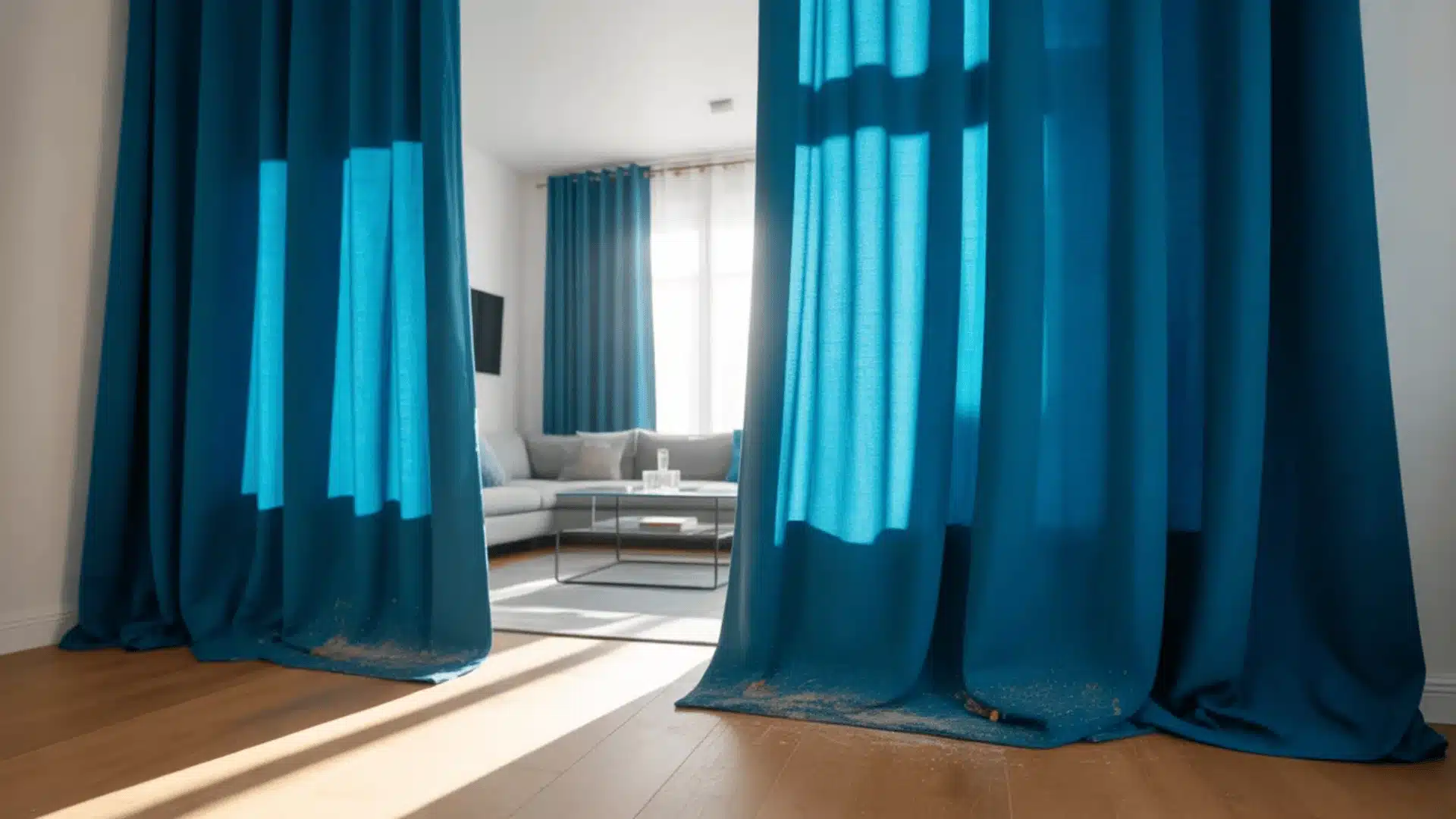
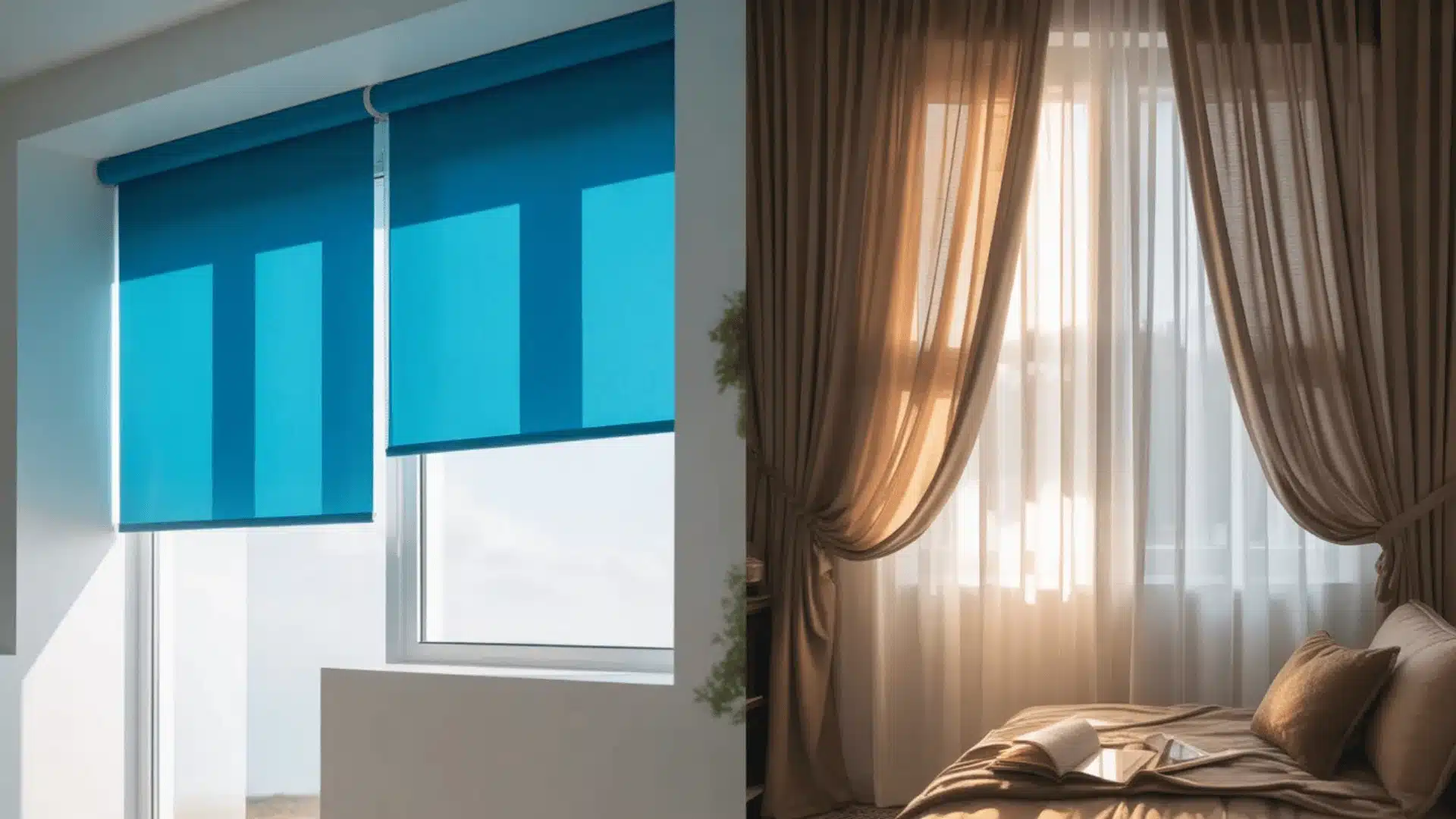
Curtains are fabric panels that hang over your windows. You can find them in almost every home. They come in many colors, patterns, and fabrics.
Light and sheer options let sunlight filter in softly. Thicker ones block light and give you more privacy.
They are easy to swap out when you want a fresh look.
Advantages of choosing curtains:
- They make a room feel homey and comfortable
- Lots of fabric and color options to pick from
- They work great in living rooms and bedrooms
- They help with keeping the heat in during winter
Disadvantages of choosing curtains:
- They catch dust pretty quickly
- Washing them regularly takes time and effort
- In small rooms, they can feel a bit too heavy
- Some thick fabrics need professional cleaning
Before you even think about fabric for curtains, sort out where the rod goes.
Higher than you think: about 4–6 inches above the frame. Wider than the window – about 8–12 inches on each side. That gap makes the ceiling look taller, and the window look bigger.
It’s the kind of thing that looks obvious once you know it, and slightly off forever if you don’t.
What are Drapes? Are they the as Same as Curtains?
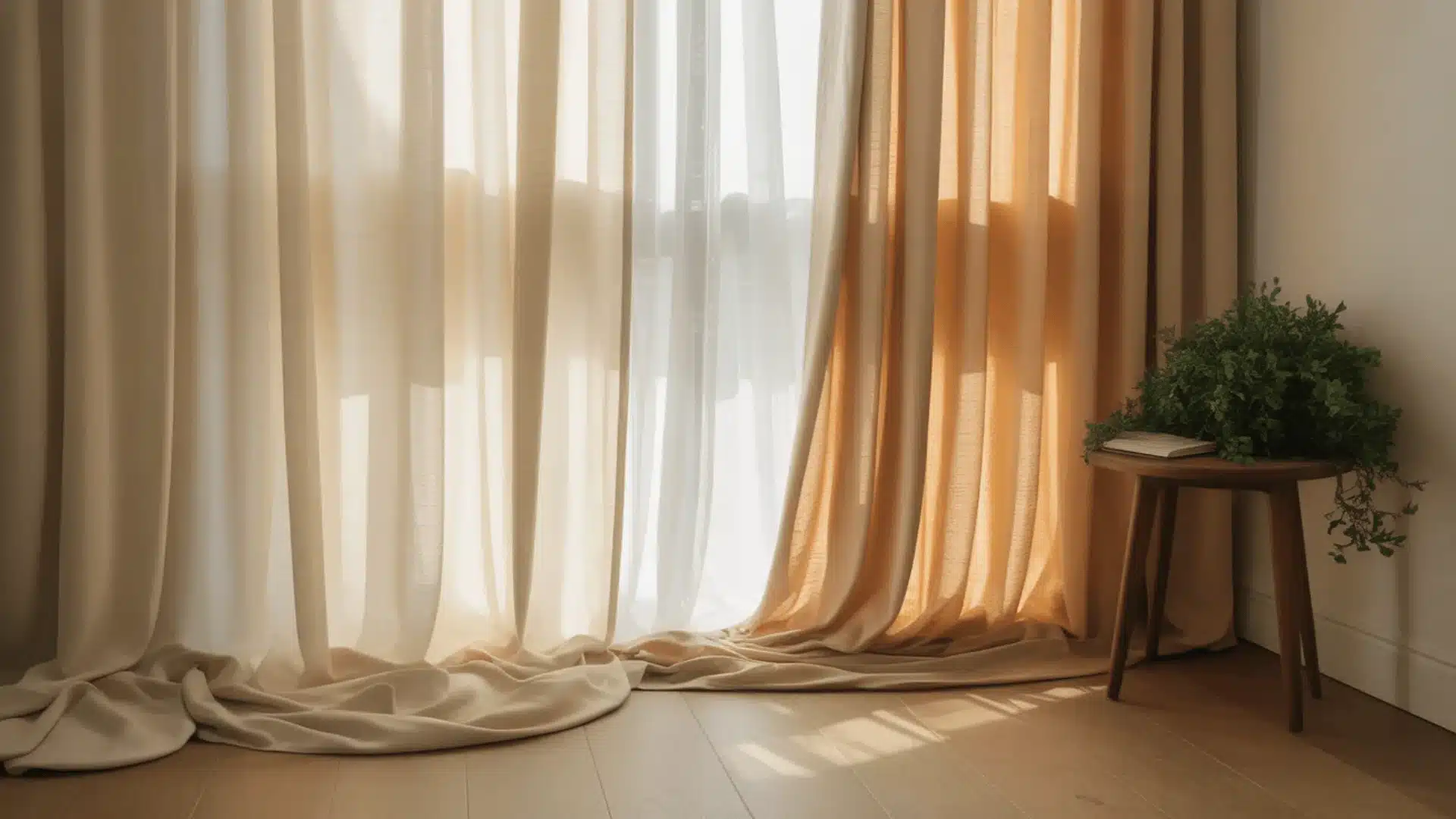
Drapes are similar to curtains, but they are heavier and more formal.
They are usually made from thicker fabrics like velvet, silk, or polyester.
They go from the ceiling right down to the floor. Many people use them in dining rooms and formal living spaces. They make a space appear more refined and completed.
Advantages of choosing drapes:
- They block out light really well
- Great for rooms where you want full privacy
- They help keep noise out more than curtains or blinds
- They make ceilings look taller when hung up high
- Good for insulation and keeping rooms warm
Disadvantages of choosing drapes:
- They cost more than regular curtains
- Heavy fabrics need more care and attention
- Not ideal for small or casual spaces
- They can feel too formal for everyday rooms like kitchens
And, What are Blinds?
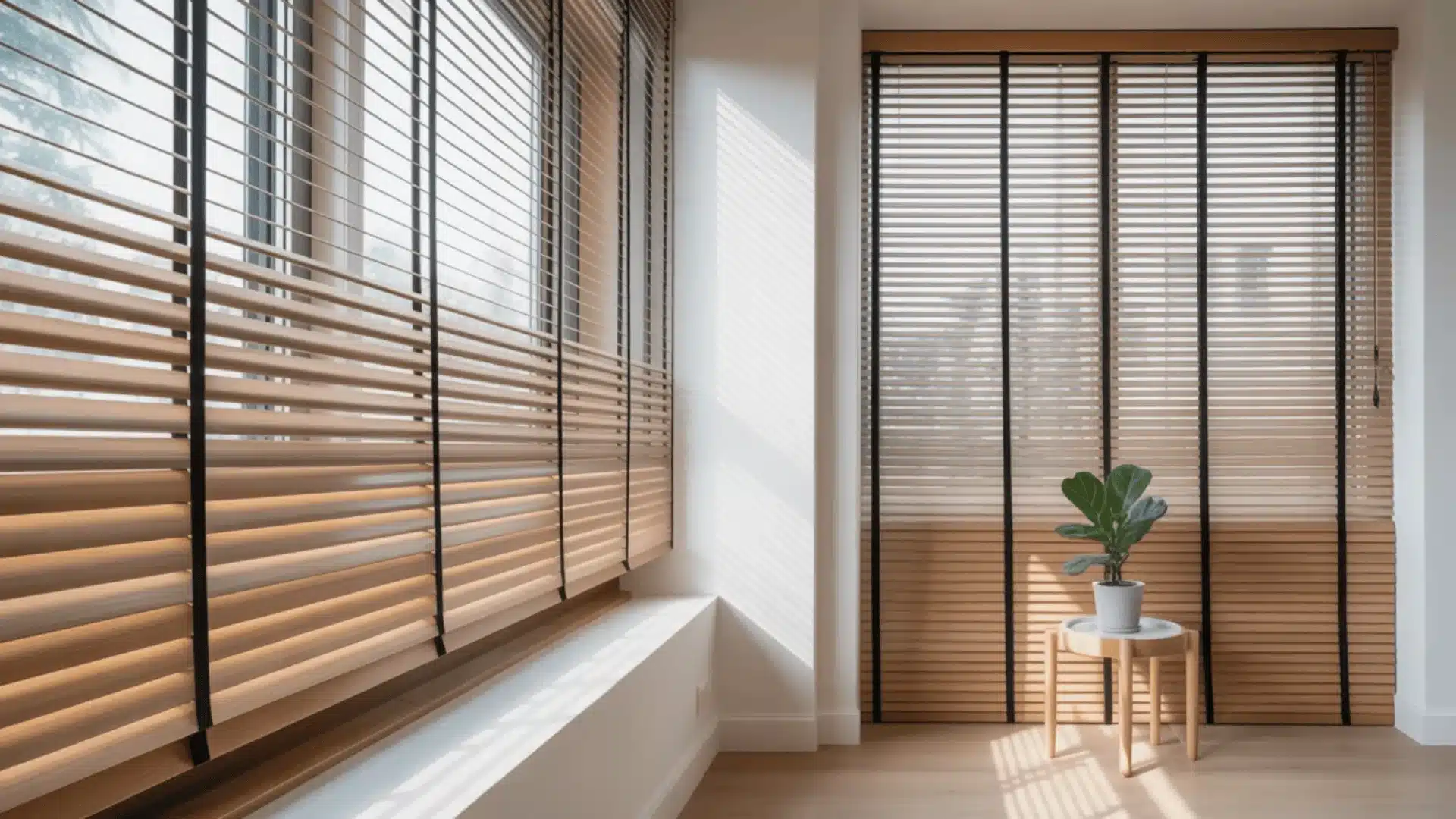
Blinds are sturdy window coverings made from slats or panels.
They can be made from wood, plastic, or metal. You can tilt the slats to control how much light comes in. They are a no-fuss option for most rooms.
Many people use them in kitchens, bathrooms, and home offices.
Advantages of blinds:
- Give you good control over light and privacy
- Work well in humid spaces like bathrooms and kitchens
- Take up less visual space so rooms feel more open
Disadvantages of blinds:
- Can feel a bit cold and impersonal in living spaces
- The slats can bend or break over time
- Not the best option for keeping out cold drafts
- Can be tricky to clean if the slats are very narrow
One practical note for anyone with young children: always choose cordless blinds for any room a child uses or sleeps in.
Looped cords on standard blinds are a documented safety hazard.
Cordless and motorised options are widely available at similar price points and are worth prioritising regardless of the room.
Curtains vs Drapes vs Blinds: Best Materials for Each Option
The covering you choose only works as well as the material it’s made from. Here’s what actually holds up in each category.
Curtains
Linen and cotton are the most reliable choices for everyday curtains.
Linen looks natural, gets better with washing, and handles sunlight without fading as quickly as synthetic blends. Cotton gives you more pattern options and is easier to clean at home.
Velvet works in curtains too, but it’s a heavy factor that in when choosing your rod and fixings.
Avoid polyester if the window gets direct sun for long stretches of the day. It degrades faster than natural fibres and can develop a sheen that looks cheap over time.
Drapes
Velvet, silk, and lined polyester are the standard choices here, each for a different reason.
Velvet is the best all-rounder: it hangs beautifully, blocks light well, and absorbs sound better than most fabrics.
Silk looks the most refined but needs more care and fades in direct sunlight faster than anything else on this list.
Lined polyester is the practical middle ground – it performs close to silk at a fraction of the cost and is far easier to maintain.
Whatever fabric you choose for drapes, the lining matters just as much. A blackout lining controls light. A thermal lining adds insulation.
Skipping the lining defeats most of the reason to choose drapes in the first place.
Blinds
Material here comes down to where the blind is going.
Real wood adds warmth and works well in living rooms and bedrooms, but it warps in humidity – keep it away from bathrooms and kitchens.
Faux wood gives you the same look with moisture resistance, making it the more practical choice for wet rooms. A
luminium is the most durable and the easiest to clean, better suited to offices and utility spaces than living areas.
For anyone wanting something softer, woven natural blinds like bamboo, jute, or grasscloth sit between a blind and a curtain in feel.
They filter light rather than block it, which works well in rooms where you want texture without weight.
One note that applies across all three: always check whether the material has been treated for UV resistance, especially on south or west-facing windows. The fabric or finish can look entirely different after a year of strong light if it hasn’t been.
Curtains vs Blinds vs Drapes: A Side-by-Side Look
So you now know what each one is.
But how do they actually stack up against each other? Here is a quick look at how all three compare across the things that matter most at home.
| Feature | Curtains | Blinds | Drapes |
|---|---|---|---|
| Light Control | Moderate, depending on fabric | Good with adjustable slats | Best for blocking out light fully |
| Privacy | Decent but thin fabrics fall short | Good during the day | Best out of all three options |
| Cost | Mid-range, depending on fabric | Most budget-friendly | Most expensive of the three |
| Maintenance | Regular washing and ironing are needed | Easy to wipe down | Needs professional cleaning |
| Best Room Fit | Bedrooms and casual living rooms | Kitchens, bathrooms, and offices | Formal rooms and dining areas |
| Insulation | Moderate heat retention | Low heat retention | Best for keeping rooms warm |
| Style | Casual and cozy feel | Clean and minimal look | Formal and polished finish |
At the end of the day, each option has its own strength. The right choice really comes down to your room, your budget, and how much upkeep you are okay with.
What steps should you take to make that final decision? Let’s look at that next.
How to Choose Between Drapes, Curtains, and Blinds
This is the part where most people get stuck. And honestly, that is okay.
There is no single right answer. It really comes down to a few simple questions you need to ask yourself.
What Room are You Buying for?
- Kitchens and bathrooms do better with blinds as they handle moisture well
- Bedrooms work great with curtains or drapes for comfort and privacy
- Living rooms can go either way, depending on your personal style
- Home offices are better off with blinds for easy light adjustment
It’s worth noting that the window shape changes the equation. Bay windows work best with individual blinds fitted per pane rather than one wide curtain track.
Sliding doors almost always suit vertical blinds or a wide curtain panel on a track rather than a rod.
The covering should follow the architecture, not fight it.
How Much Natural Light do You Want?
- If you want full darkness, go with drapes
- If you want some light but still want privacy, curtains are a good pick
- If you want to control exactly how much light comes in, blinds are your best bet
What is Your Budget?
- Tight budget? Blinds are your safest option
- Mid-range budget? Curtains give you the most variety
- Bigger budget? Drapes will give your room a more finished look
How Much Time Can You Give to Upkeep?
- Low maintenance? Go with blinds
- Okay with some washing and ironing? Curtains work well
- Fine with professional cleaning once in a while? Drapes are worth it
What Style are You Going for?
- Casual and cozy? Curtains are the way to go
- Clean and simple? Blinds fit right in
- Formal and put together? Drapes are the right call
Think about your room first. Then think about your budget and your lifestyle. Once you answer those questions, the right choice will feel a lot more obvious.
Final Thoughts
Curtains, blinds, and drapes all have their place.
The best pick depends on your room, budget, and how much upkeep you can manage.
When it comes to curtains vs blinds there is no wrong answer. Choose the option that best suits your needs and preferences.
Still unsure? Pick one room and start there.
Got thoughts or questions?
Drop them in the comments below.
Frequently Asked Questions (FAQ’s)
1. Do Modern Homes Have Blinds or Curtains?
Most modern homes use blinds. But many homeowners mix both for a layered and complete look.
2. What is the New Trend for Window Coverings?
Layering blinds with sheer curtains is trending. Natural materials and neutral colors are also very popular right now.
3. Do I Really Need Curtains if I Have Blinds?
Not really. Blinds work fine alone. But adding curtains makes your room feel softer and more put-together.