Concrete buildings don’t have to feel lifeless.
People living in urban areas often feel cut off from nature, which affects their well-being.
Eco Brutalism offers a solution. The structures stay bold but feel more alive. The movement is changing cities worldwide. Buildings now work as small ecosystems.
This blog shows how this architectural style brings nature back to urban spaces.
It proves that concrete and greenery can work together beautifully.
What is Eco Brutalism?
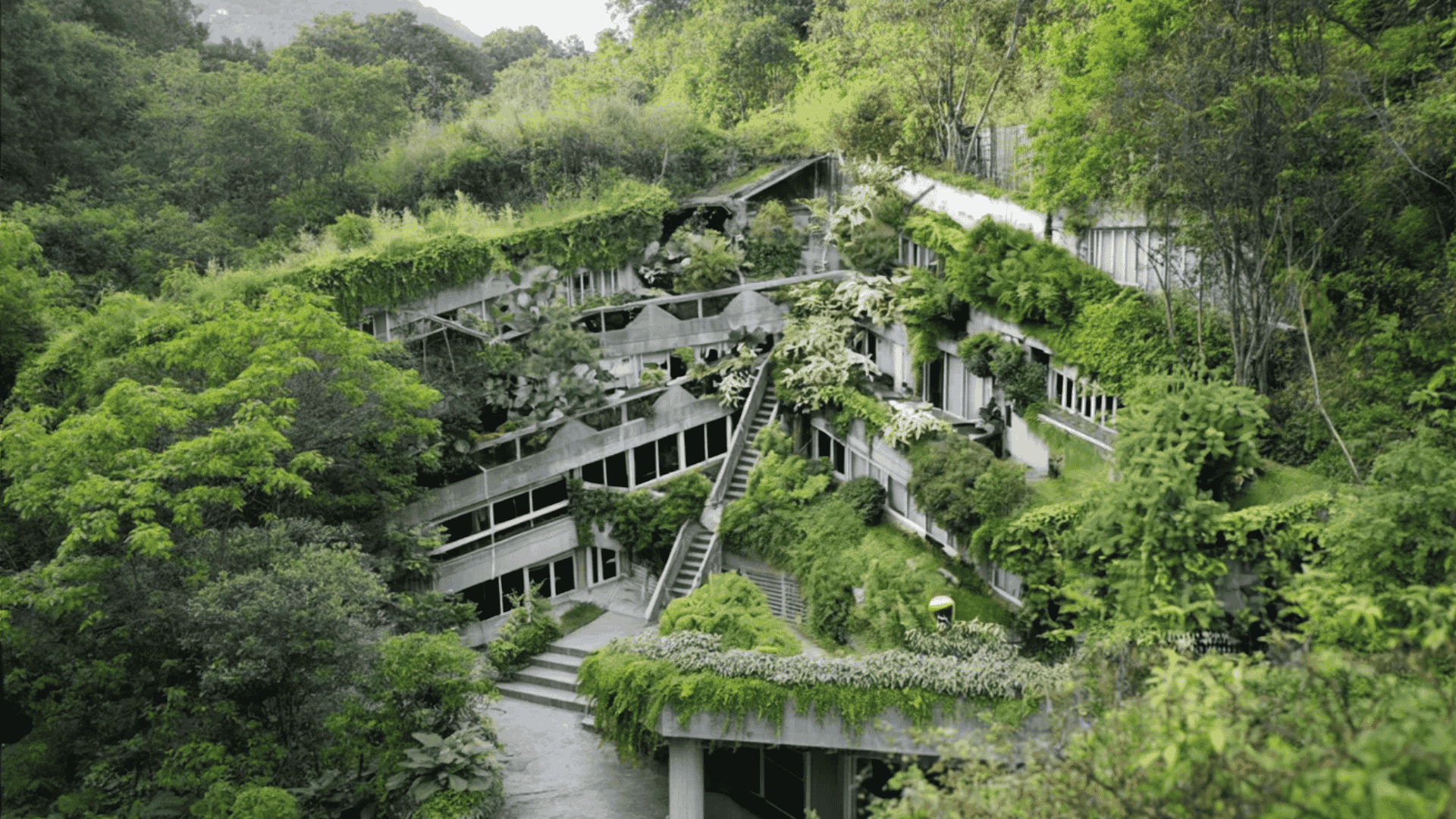
This design style mixes raw concrete with living plants. Green walls cover building sides.
Rooftop gardens bring nature into dense areas. It blends brutalist architecture’s raw concrete with natural elements, such as plants and gardens.
It keeps exposed materials and bold geometric forms while adding green walls, rooftop trees, and natural light.
The style works well in crowded cities.
It allows dense building while keeping nature close.
The plants cool buildings, provide clean air, and give people daily contact with living things.
Key Features of Brutalist Architecture
Brutalist interior design strips architecture down to its essentials.
The style embraces rawness and functionality in ways that challenge traditional design.
- Exposed concrete: No facades or decorative covers hide the building’s actual structure.
- Geometric forms: Massive blocks, sharp angles, and repetitive patterns create bold statements.
- Function over decoration: Every element serves a purpose, and nothing unnecessary remains.
- Raw textures: Board marks and imperfections give surfaces a distinctive character.
- Monumental scale: Buildings dominate their surroundings and command attention.
When Did This Start Gaining Popularity?
It gained attention around 2015.
Social media spread images of green concrete buildings, and projects like Bosco Verticale went viral. The climate crisis pushed people toward sustainable urban solutions.
Younger generations saw potential in brutalist structures and wanted to add natural elements.
By 2020, architecture magazines regularly featured the style. The pandemic demanded urban green spaces.
Today, cities with limited space use vertical gardens.
The movement continues to grow as sustainability becomes more urgent.
Inspiring Examples of Eco Brutalist Architecture
These projects demonstrate how concrete and nature work together.
Each building takes a different approach but shares the same goal.
1. Valley, Amsterdam, Netherlands
Credits: GEBERIT
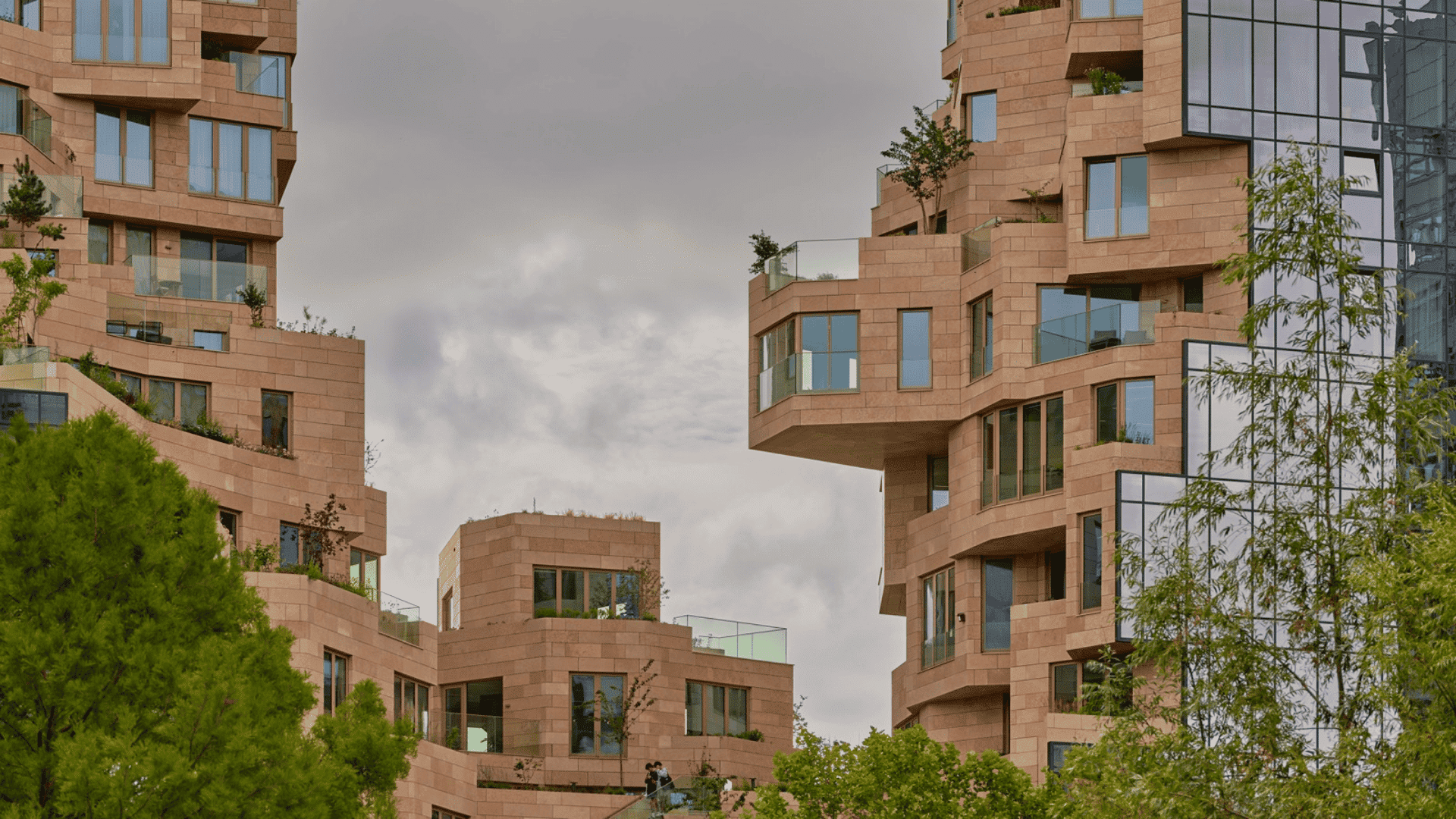
Completed by MVRDV Architects in 2022, Valley features three connected towers with canyon-like facades.
Over 13,500 plants and trees cover terraces at different heights.
The concrete structure stays visible beneath the vegetation. Balconies offer outdoor spaces for residents, with natural stone and greenery softening the bold geometric design.
2. Oasia Hotel Downtown, Singapore
Credits: Oasia Hotel Downtown, Singapore
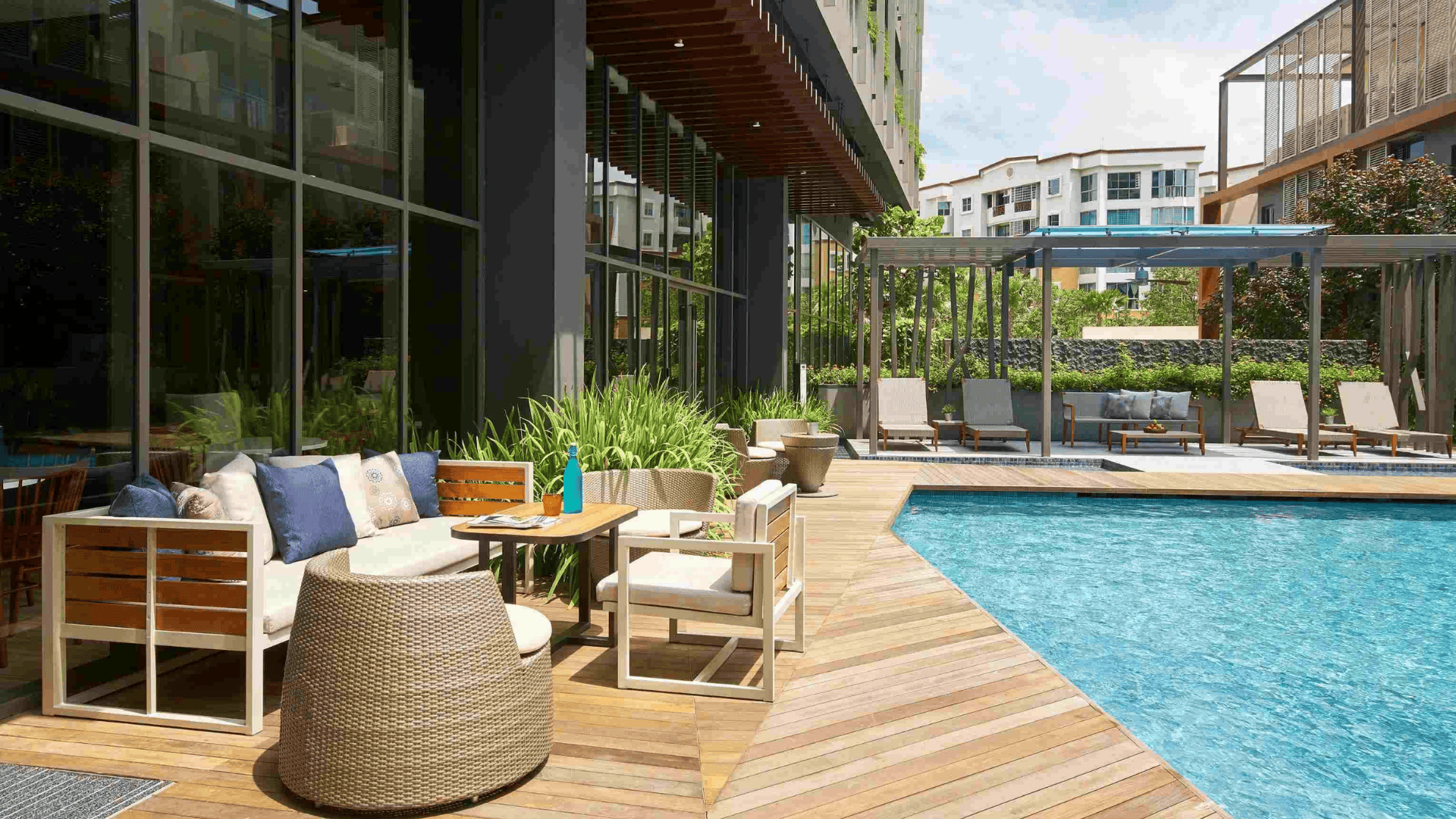
Completed in 2016 by WOHA Architects, this 27-story tower wraps red aluminum mesh around its concrete core. Over 20 species of climbing plants cover the facade.
Four sky terraces with gardens provide natural cooling and improve air quality.
The mesh supports plant growth while maintaining the building’s geometric form.
3. Bosco Verticale, Milan, Italy
Credits: Lonely Planet
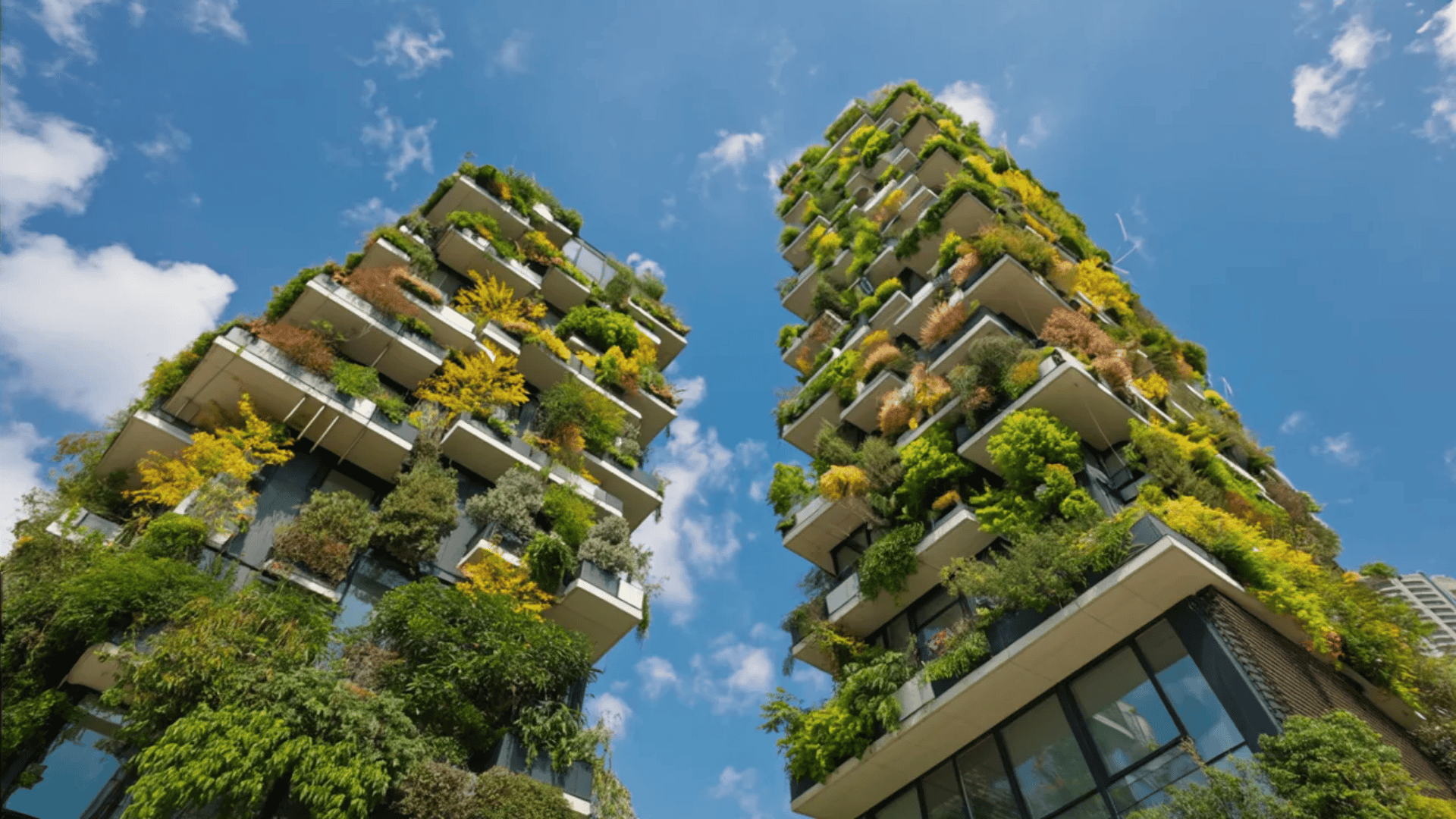
Two residential towers designed by Stefano Boeri in 2014 hold over 900 trees and 20,000 plants.
The concrete structure remains visible beneath the greenery. These vertical forests absorb CO2, filter urban air, and provide natural insulation. It’s dense urban living without sacrificing nature.
4. Caixa Forum Madrid, Spain
Credits: Tripadvisor
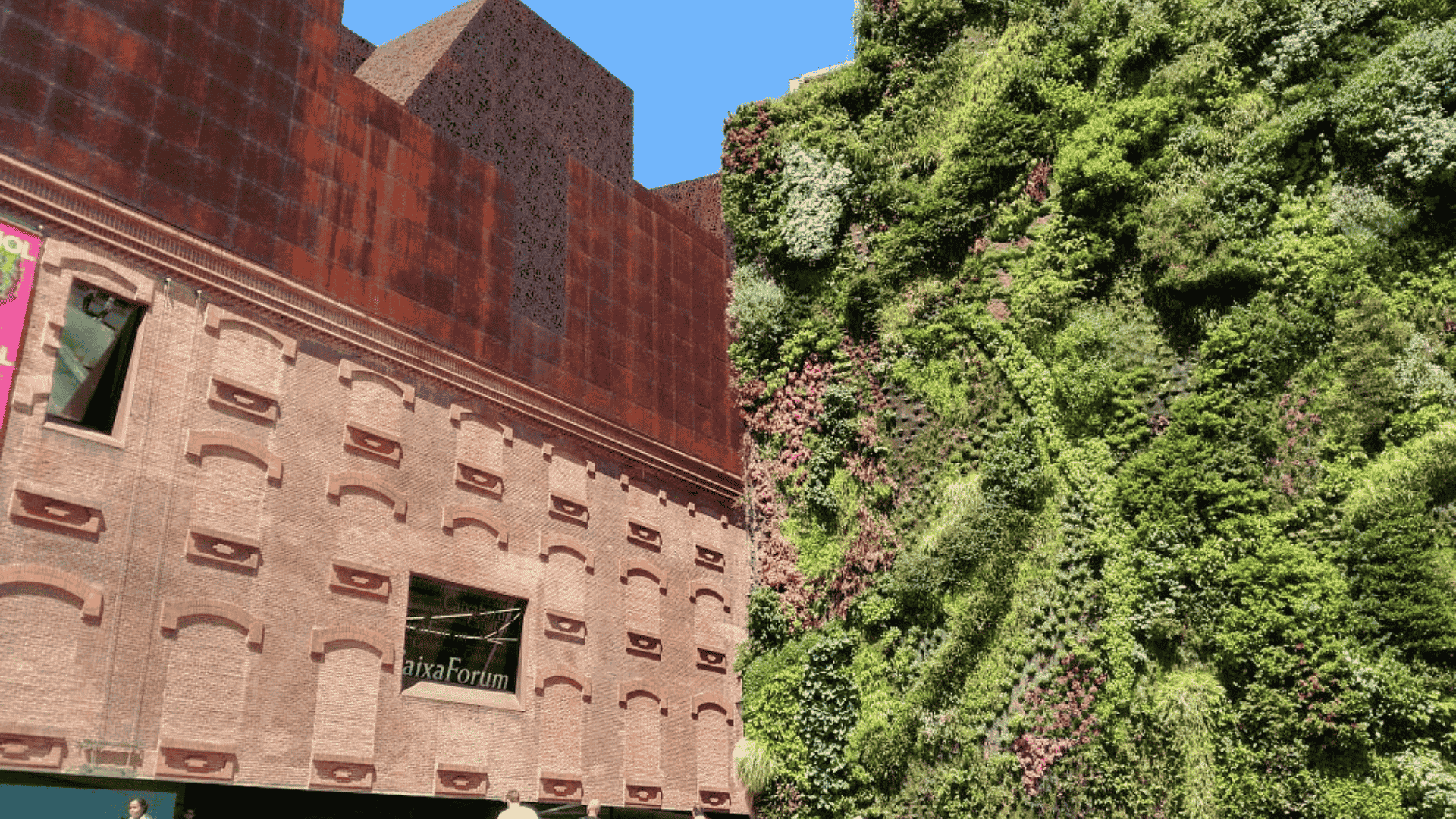
Herzog & de Meuron converted a former power station in 2008, adding a striking vertical garden to its facade.
Patrick Blanc designed the living wall, which features over 15,000 plants from 250 species.
The building seems to float above ground. The green wall sharply contrasts with the weathered industrial materials, creating a dialogue between nature and raw architecture.
5. Namba Parks, Osaka, Japan
Credits: Tripadvisor
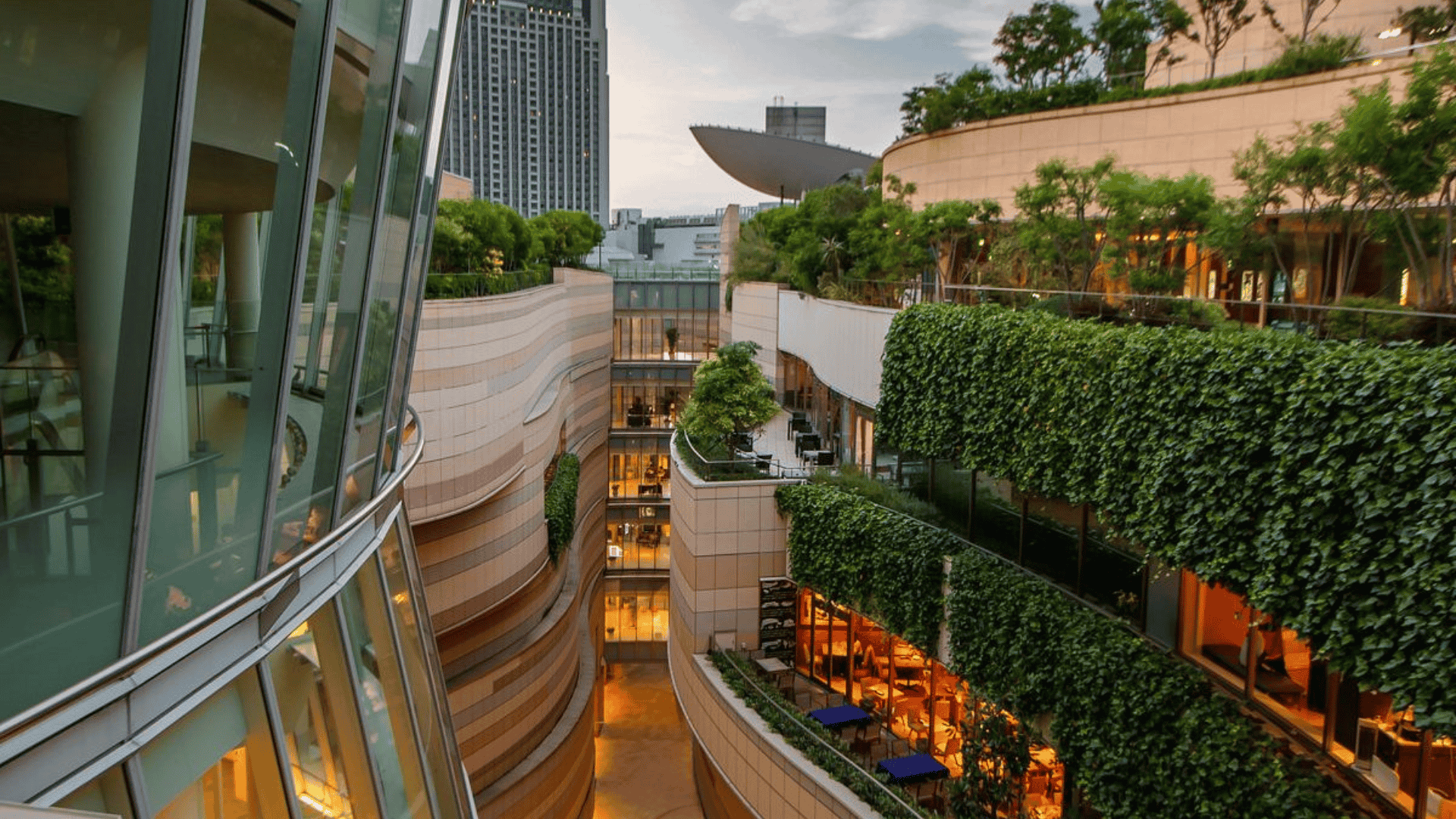
Designed by Jerde Partnership in 2003, this shopping complex features a rooftop park cascading down eight levels. Over 300 tree species and 70,000 plants create a terraced green canyon.
The concrete base supports this layered ecosystem while maintaining geometric brutalist forms.
It successfully changes commercial space into a public green oasis in Osaka’s dense urban center.
6. Barbican Estate, London, UK
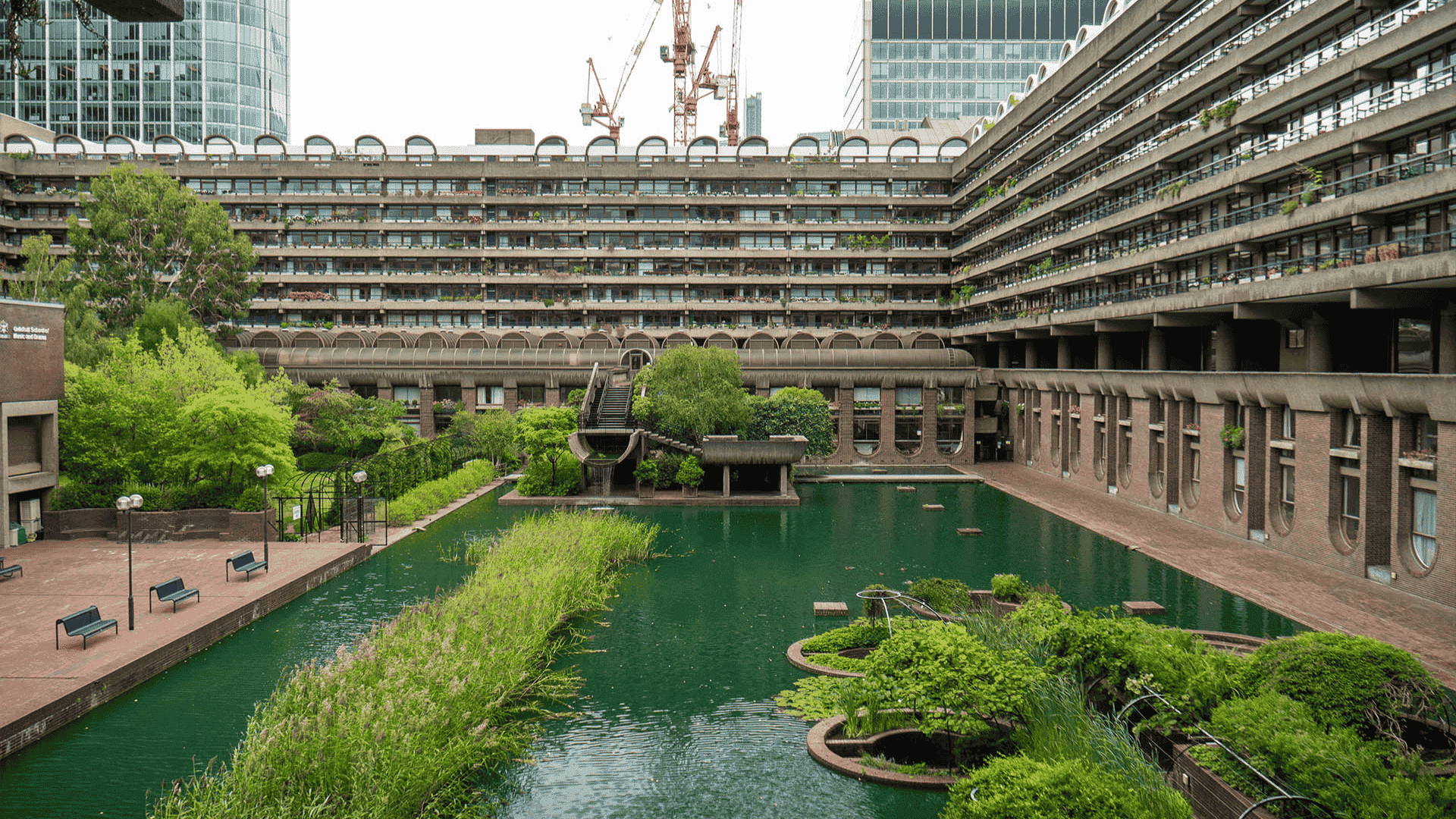
Credits: Greenblue
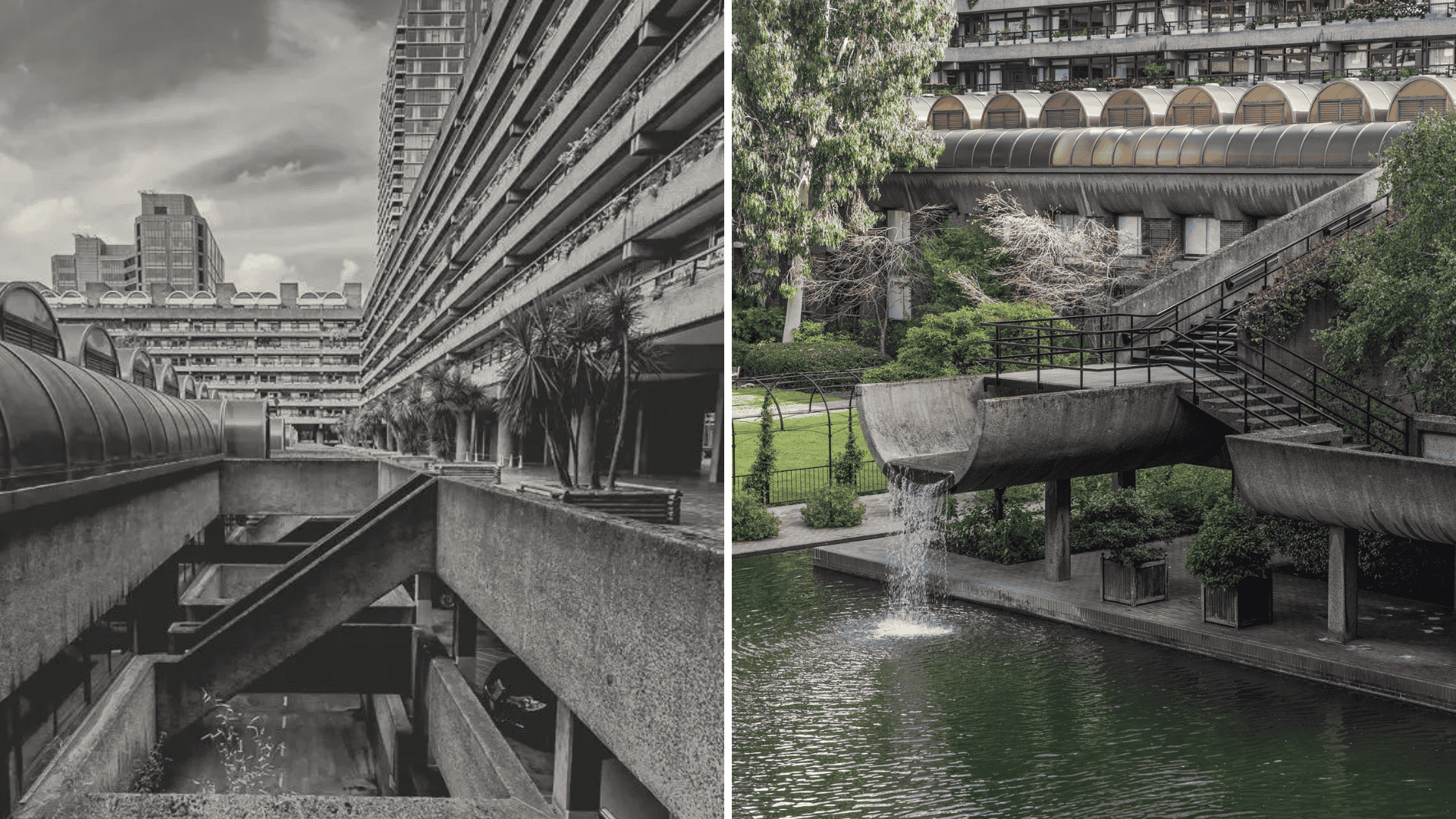
Built between 1965 and 1976, the Barbican integrated nature into brutalist design early on.
The estate features raised walkways, water gardens, and a conservatory with tropical plants. Green spaces balance harsh materials with soft landscaping.
Over 2,000 apartments benefit from private gardens and communal green areas throughout the complex.
7. Habitat 67, Montreal, Canada
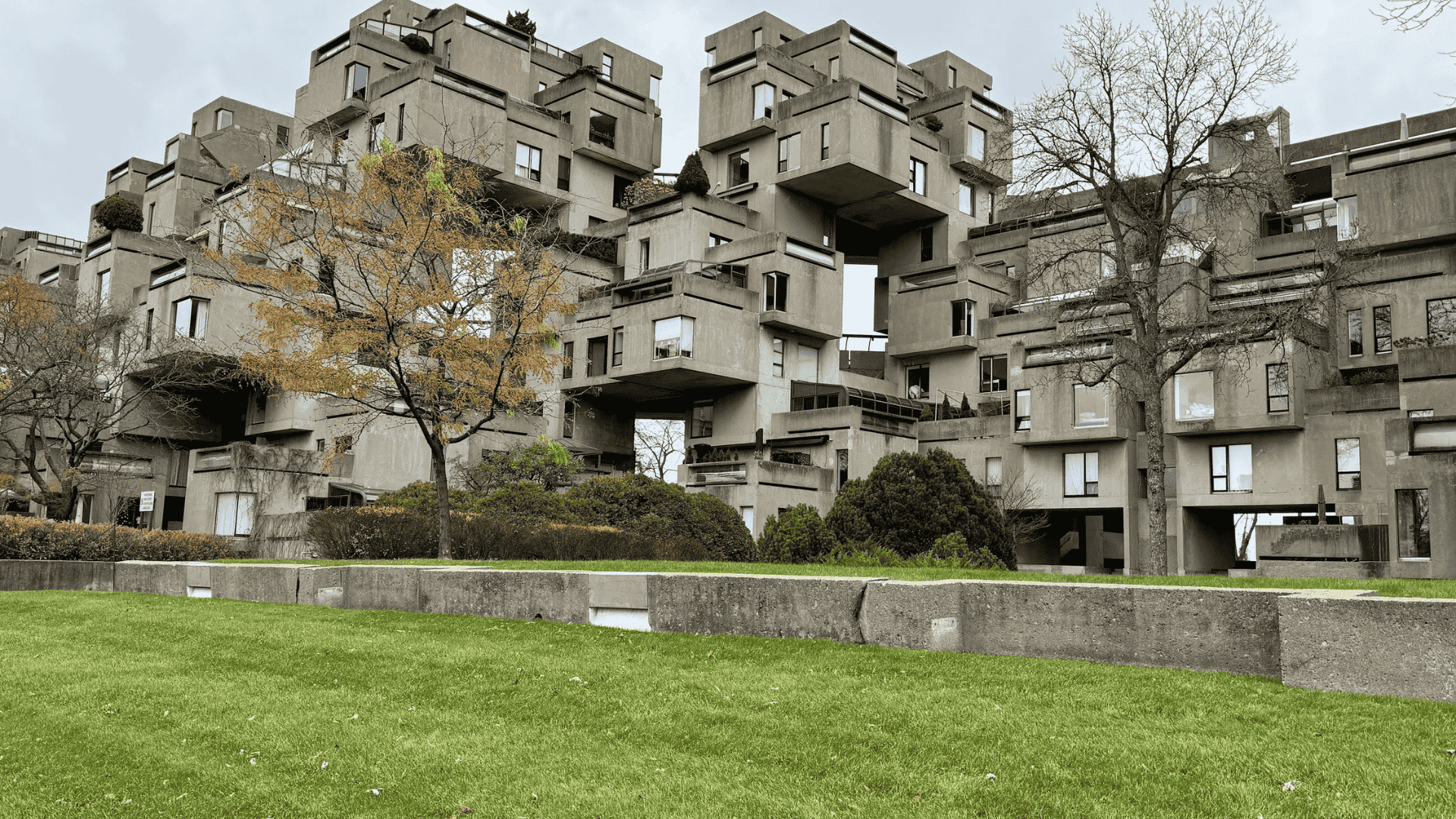
Credits: Modern Traveller
Moshe Safdie designed this experimental housing complex for Expo 67. It stacks 354 concrete modules to form 146 residences, each with a private terrace and garden.
The modular design allows natural light to enter from multiple angles.
Rooftop gardens on lower units create green spaces for upper residents.
Why is It Important?
Cities are running out of space, but populations keep growing. It integrates nature vertically, solving density challenges without horizontal expansion.
- It’s a practical architecture for climate challenges.
- The style shows that sustainability and bold design can coexist.
- Green facades reduce urban heat, improve air quality, and support biodiversity.
- Mental health matters too.
- Access to nature reduces stress and improves well-being, bringing greenery to people who lack nearby parks.
How Does it Connect Humans with Nature?
Eco Brutalism brings nature to where people live and work.
Greenery appears on balconies and terraces, rather than in distant parks. Visual contact happens daily. Residents watch as seasons change, with plants blooming and shifting colors.
This reconnects urban living with natural cycles.
Sky gardens become gathering spots where people interact with nature.
Sensory experiences improve, fresh air flows through planted areas, and birds visit vertical gardens.
When nature is present in living spaces, people experience it regularly.
The Future of Eco Brutalist Architecture
The movement is growing fast. Smart systems will monitor plant health and automatically adjust irrigation.
Old brutalist structures could receive green upgrades, preserving history while meeting sustainability goals.
Climate change drives innovation by providing natural cooling and stormwater management.
Expect taller vertical forests and more retrofitting projects. Urban density and nature will thrive together.
How to Adapt Eco Brutalism into Your Lifestyle
Bringing this style home starts with simple steps. Anyone can make these changes.
In your space:
- Keep walls raw, exposed brick or concrete adds character.
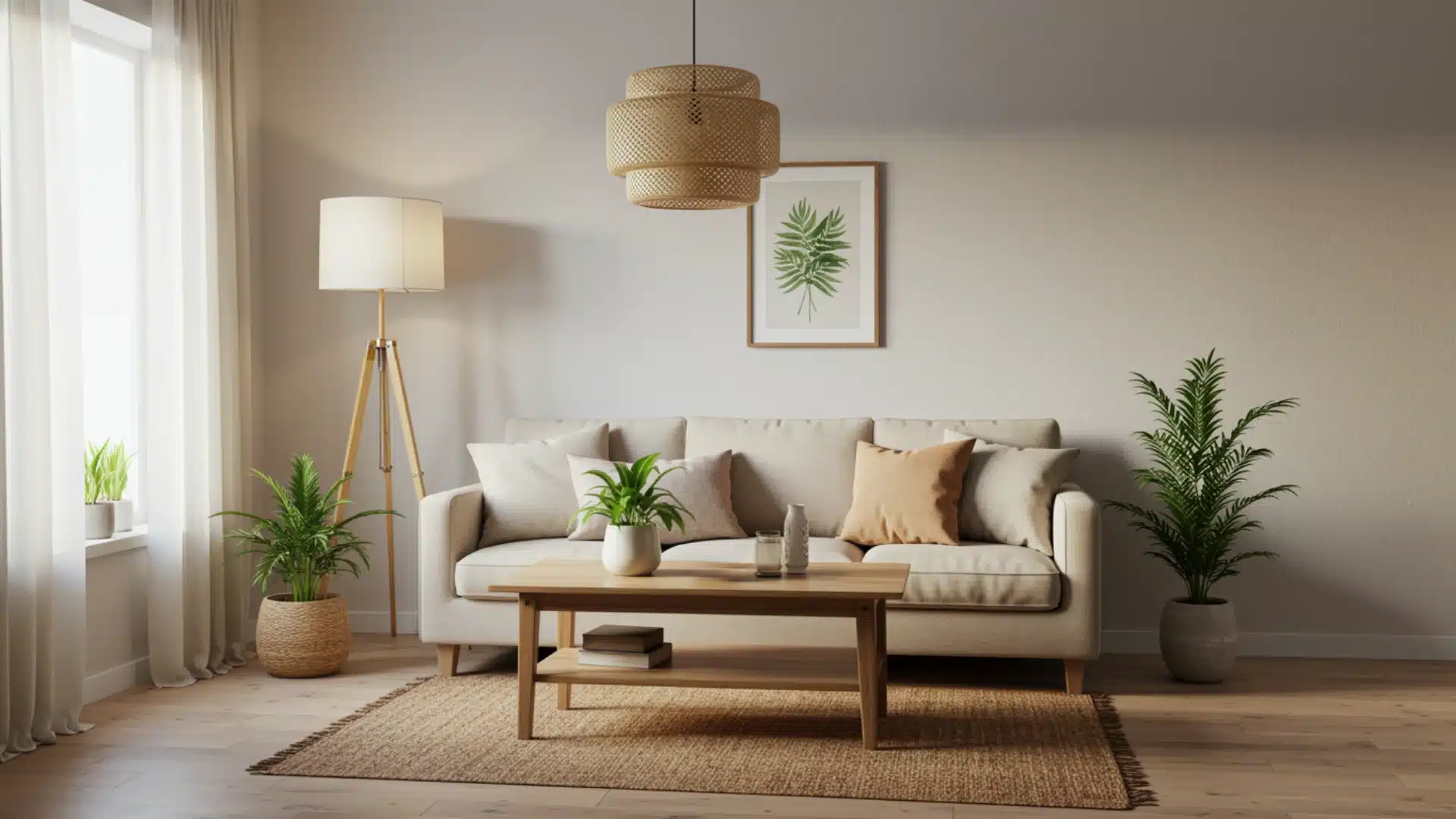
- Add plants on shelves, windows, and balconies.
- Use wall-mounted planters to create vertical gardens.
With furniture:
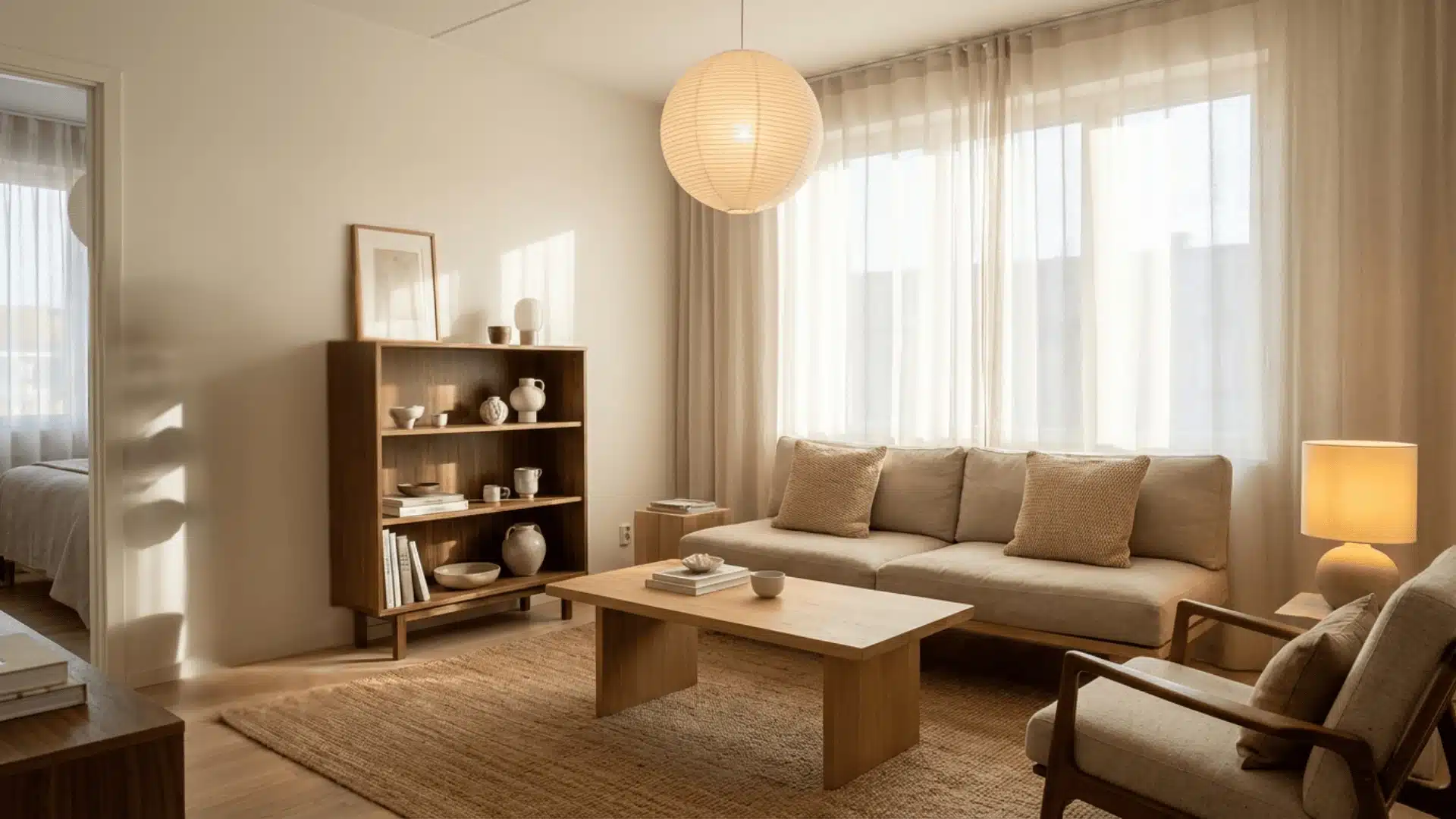
- Choose wood, metal, or concrete items.
- Don’t hide construction, make it visible.
In your community:
- Ask for rooftop gardens on local buildings.
- Support green wall projects.
You don’t need major renovations or big budgets. It’s about making thoughtful choices that connect you with both materials and nature.
Wrapping Up
This architectural style addresses real urban challenges, limited space, climate change, and our need for nature.
From the Netherlands Valley to Habitat 67, these buildings support both people and ecosystems.
They’re practical solutions for modern cities. The movement shows that cities can be dense and green at the same time.
What’s your take on Eco Brutalism? Share your thoughts in the comments below.
Frequently Asked Questions (FAQ’s)
1. Is Brutalism Bad for the Environment?
Traditionally, brutalism has faced criticism for its environmental impact.
2. Why do Engineers Not Like the Brutalist?
It wasn’t historically accurate and didn’t portray the architectural process well.
3. Is There Brutalist Architecture in the USA?
Brutalist architecture gained traction in the U.S as part of the Modern Movement in the 1960s.